Home Blog Page 62

Nigerians seek pricing relief as naira-for-crude fails to stop petrol price hike

0

NIGERIANS are seeking relief from high transport costs and rising prices from both the federal and state governments as global oil price shocks push up pump prices across the country.

Despite a naira-for-crude swap between Dangote Refinery and some modular refineries with the Federal Government, Nigerians have to bear the brunt of volatile global oil shocks through intermittent price increases.

In recent weeks, global crude oil prices surged from about $65 per barrel to over $100 per barrel, representing an increase of more than 50 per cent within weeks.

Accordingly, the petroleum retail oil outlets across the country have been increasing prices, citing the global rise in oil prices, which was occasioned by the United States-Iran conflict.

“The Naira-for-crude doesn’t mean that you’re insulated from global market shocks. The crude oil producers value their crude oil in dollars. So, the swap rarely has an impact on the price as the market is already deregulated and influenced by global market prices,” a professor of Energy Economics, Adeola Adenikinju, told The ICIR.

He stressed that Nigeria had not been able to meet all the crude oil demand of Dangote, which means it pushes the firm to import and exposed to price volatility.

He added, “The relief and cushion are not going to come from Dangote, but how the government seeks to ameliorate the pains on the people through various kinds of interventions.”

He suggested that the government could engage the stakeholders and see how best to ameliorate the pains of transportation and energy prices while working with transportation unions.

He further said that the Petroleum Industry Act (PIA) liberalised the sector, noting that any intervention on pricing would amount to subsidy payment.

“A strategic oil reserve could have helped keep prices stable to some extent. However, the federal government did some forward sales of crude in the past, which is also affecting the government’s interventions,” he stressed.

With the rising cost of transport logistics and the general cost of living across the country, the Nigerian Labour Congress (NLC) has lent its voice and asked the federal and state governments to urgently grant wage awards and cost-of-living allowance to cushion inflation concerns.

“The Nigeria Labour Congress subsequently demands an immediate Wage Award and Cost of Living Allowance (COLA) for all workers to cushion the high cost of living. An expansion and overhaul of cash transfers to ensure transparency and that they reach the most vulnerable, with increased value to match inflation,” the President of NLC, Joe Ajaero, said in a statement issued on Sunday, March 15.

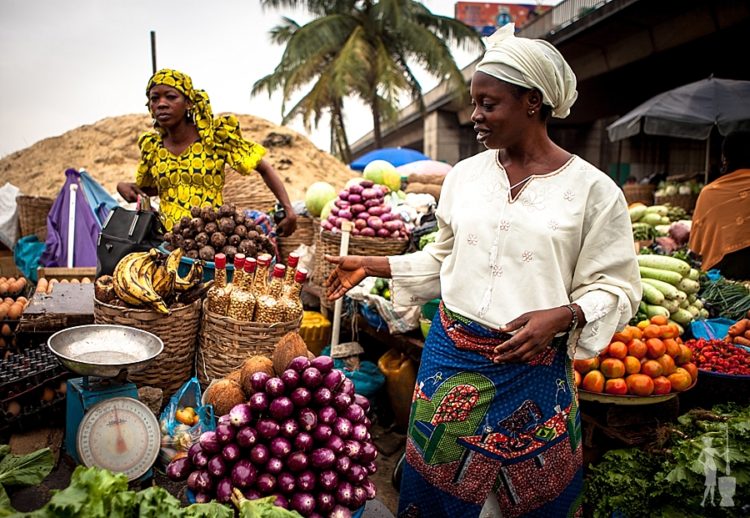
The ICIR reports that petrol currently sells for an average of N1,300 in Nigeria’s Federal Capital Territory and N1,500 in some states in the southeastern part of the country.

Most Nigerians have to bear the brunt of the spontaneous transport fare price increase across the country, caused by global oil price shocks.

At a time when the petrol market in Nigeria is increasingly reliant on domestic refining, the Nigerian Midstream and Downstream Petroleum Regulatory Authority (NMDPRA) said that Dangote refinery dominated the market in February, with nearly 93 per cent share of average daily petrol supply, while importers account for just over seven per cent.

Domestic refining, which could have seen the price go down, failed to achieve this as transport and logistics costs have gone up in response to global market shocks.

“Crude oil feedstocks for refineries are priced using international benchmark prices and denominated in United States dollars, irrespective of the location of the refinery. Consequently, domestic refineries in Nigeria procure crude oil at prices that reflect prevailing global market conditions,” the former director general of the Lagos Chamber of Commerce and Industry (LCCI), Muda Yusuf, told The ICIR.

Already, businesses are contending with multiple macroeconomic pressures, including high inflation, elevated interest rates and weak consumer purchasing power.

He suggested relief supports and tax incentives for small-scale businesses to enable them to scale through the price volatility.

“A more reliable electricity supply would significantly reduce the heavy dependence
of businesses on diesel and petrol generators, which currently constitute a major
component of operating costs. Improving power sector performance would,
therefore, lower production costs across the economy, enhance business
competitiveness, and provide much-needed relief for small and medium enterprises, “he added.
Tinubu departs for UK amid worsening insecurity in Nigeria

1

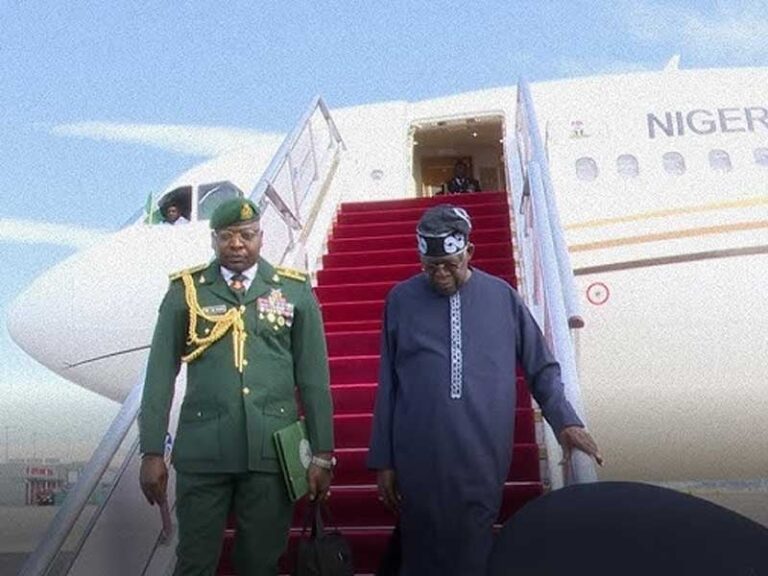
PRESIDENT Bola Ahmed Tinubu departed Abuja on Tuesday, March 17, for a state visit to the United Kingdom at the invitation of King Charles III and Queen Camilla.

The President, accompanied by the First Lady, Oluremi Tinubu, will be hosted at Windsor Castle from March 18 to 19.

The visit is considered historic, marking the first state visit by a Nigerian leader to the UK in 37 years, and the first time a Nigerian president will be received by a British monarch at Windsor Castle.

According to the Presidency, the trip is aimed at strengthening bilateral relations between both countries, with key discussions expected to focus on trade, investment, immigration, and cultural exchange.

During the visit, Tinubu and his wife will view a special Royal Collection exhibition featuring items connected to Nigeria. The president is also expected to hold private talks with King Charles III and participate in engagements with organisations involved in interfaith dialogue.

A state banquet will be hosted in honour of the Nigerian delegation.

Tinubu will also meet with UK Prime Minister Keir Starmer at 10 Downing Street, where both countries are expected to sign agreements covering trade, investment, defence, and cultural cooperation.

The president is expected to witness the signing of a £746 million financing deal involving UK Export Finance and Nigerian authorities, including the Nigerian Ports Authority, to support the rehabilitation of the Lagos Port Complex in Apapa and the Tin Can Island Port Complex.

He will also attend the Nigerian Modernism exhibition and engage with business leaders as well as members of the Nigerian diaspora.

Meanwhile, authorities in Windsor have rolled out tight security measures ahead of the visit. Thames Valley Police say they are working with local authorities, the Royal Household, and other agencies to coordinate security operations for the high-profile event.

The police announced that airspace restrictions over Windsor Castle would be extended on March 18, alongside road closures and parking limitations expected to take effect from March 17, which might disrupt movement in the area.

Officials said the operation would include the deployment of specialised units such as armed officers, search teams, mounted patrols, and road policing personnel. Additional measures include surveillance systems and protective barriers to ensure public safety throughout the visit.

The visit comes amid a surge in killings across parts of Nigeria, with recent incidents of violence raising concerns about the country’s security situation.

Tbe ICIR reported earlier today that at least 23 people were confirmed dead following multiple explosions in Maiduguri, Borno State capital Monday night.

The Borno State Police Command, in a statement, said 108 others sustained varying degrees of injuries in the attacks, which were carried out by suspected suicide bombers.

According to the police, the explosions occurred at about 7:24 p.m. at three locations — Monday Market, the gate of the University of Maiduguri Teaching Hospital, and the Post Office Flyover area.

The attacks are the latest in a chain of killings, abductions and other criminal activities in Nigeria under Tinubu’s watch.


FG moves to evacuate Nigerians as Middle East crisis worsens

THE Federal Government has begun the move for a possible evacuation of Nigerians caught in the escalating Middle East conflict.

According to Punch, the spokesperson of the Ministry of Foreign Affairs, Kimiebi Ebienfa, on Monday said that evacuation planning was in motion, noting that authorities were fine-tuning administrative processes while preparing funds to kick-start the operation.

“The government is working out the necessary administrative details and the release of funds to commence evacuation,” Ebienfa said.

This development follows the growing concern over Nigerians stranded in countries such as Iran, Israel, the United Arab Emirates, Kuwait, and Qatar, where flight cancellations and airspace restrictions have complicated exit plans since the February 28 coordinated strikes on Iran by the United States and Israel, which have since triggered a chain of retaliatory incidents and widespread disruption.

Last week, the ministry said that priority was being given to Nigerians in high-risk zones, like Iran and Israel where evacuation was proving most complex, noting that in Iran, plans involved moving stranded students across multiple cities to the Armenian border, navigating both security risks and strict entry conditions.

The ministry had explained that it was also weighing multiple evacuation routes, including the potential deployment of Nigerian Air Force aircraft, though volatile conditions have made flight approvals uncertain, adding that most of the Nigerians stranded in Qatar were transit passengers whose flights were disrupted, but who were being taken care of by their airlines.

“Qatar Airways has started operating flights to Nigeria. There was a flight to Lagos today (Monday) from Doha. So, in a few days, the category of Nigerian stranded due to transit flights that were affected by the crisis will all be in Nigeria. This is in addition to flights to Cairo, Egypt and Nairobi, Kenya that included some Nigerians,” Ebienfa said.

Similarly, Iran’s Ambassador to Nigeria, Gholamreza Raja, on Monday said that Tehran was ready to work with Nigerian authorities to ensure the safe exit of Nigerians who choose to leave the country, reaffirming Iran’s commitment to protecting foreign nationals, including Nigerians, amid the ongoing tensions.

“Naturally, the Nigerian Embassy in Tehran has taken the necessary measures to assist and support its nationals, and it remains in contact with members of the Nigerian community to provide guidance where needed,” the ambassador said.

He noted that the Nigerian Embassy in Tehran had already activated support measures and remained in close contact with the Nigerian community, providing guidance and assistance where necessary.

“Currently, Iran’s land borders with neighbouring countries are open, and normal movement through these routes is ongoing. Many foreign nationals are already using these land routes for travel or departure. Reports indicate that the routes are safe and can be used without difficulty. Nigerian citizens can therefore make use of these routes if they choose to do so,” Raja said.

The ICIR reports that the conflict, which has lasted for over two weeks, has unsettled markets as oil prices climbed above $104 per barrel, while Asian equities slipped amid concerns over potential disruptions to Middle East energy infrastructure.

US president Donald Trump had urged major energy-importing nations to help reopen the waterway amid escalating tensions from the conflict, which has rattled global energy markets and heightened fears over Middle East oil supplies, as nearly 20 per cent of the world’s oil shipments pass through the narrow maritime corridor.

However, Japan and Australia have rejected Trump’s call, noting that they had no plans to deploy warships to escort commercial vessels through the vital oil transit route.

23 killed, 108 injured in Maiduguri triple explosions

1

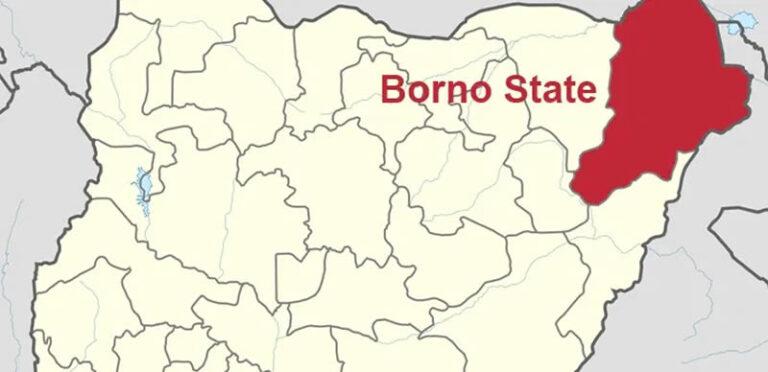
AT least 23 people have been confirmed dead following multiple explosions in Maiduguri, Borno State capital.

The Borno State Police Command, in a statement on Tuesday, March 17, said 108 others sustained varying degrees of injuries in the attacks, which were carried out by suspected suicide bombers.

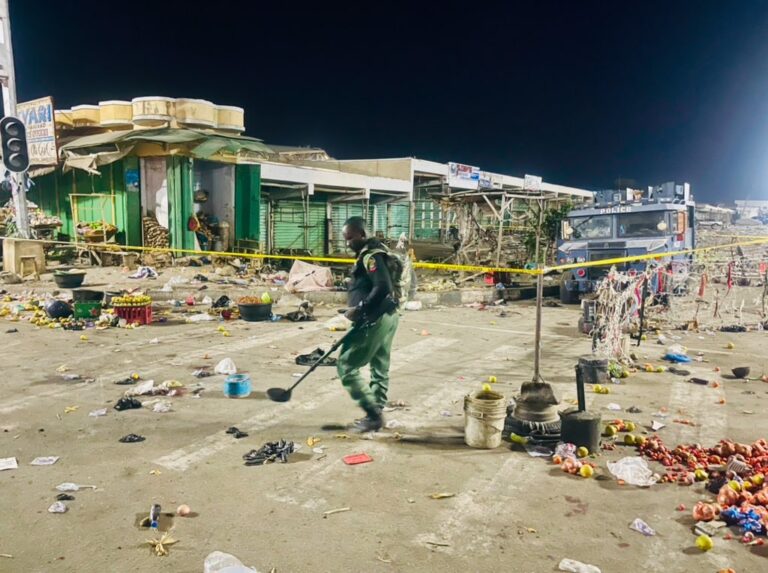
According to the police, the explosions occurred at about 7:24 p.m. at three locations — Monday Market, the gate of the University of Maiduguri Teaching Hospital, and the Post Office Flyover area.

The ICIR reported that the explosion occurred in no fewer than two locations, with residents expressing concern over the attack.

Reacting further on the attack, the police PRO said “preliminary investigation reveals that the incidents were carried out by suspected suicide bombers. Regrettably, a total of twenty three (23) persons lost their lives, while one hundred and eight (108) others sustained varying degrees of injuries

“Following the incidents, a combined team of Police Tactical Units, the Military, and other Joint Security Operatives were swiftly deployed to the affected areas. The scenes were immediately secured, cordoned off, and subjected to thorough sweep operations by Police Explosive Ordnance Disposal (EOD) Unit Base 13 Maiduguri to rule out the presence of any additional threats,”

The statement noted that emergency responders, including the National Emergency Management Agency and the State Emergency Management Agency, evacuated the injured to medical facilities where they are receiving treatment.

The police said normalcy had been restored in the affected areas, with heightened security presence across Maiduguri and its environs to prevent further incidents.

Although no terrorist group has taken responsibility of the attacks, the police said investigations were ongoing to determine the circumstances surrounding the attacks.

Zulum calls for calm

Meanwhile, the Borno State Governor Babagana Zulum has called for calm following the tragedy.

In a statement shortly after the incident, the governor condemned the attacks, describing them as “utterly condemnable, barbaric and inhumane”.

He said targeting civilians and places of worship was unacceptable, particularly at a time when Muslim faithful are engaged in acts of devotion.

Zulum extended condolences to families of the victims and prayed for the speedy recovery of those injured.

He also urged residents to remain calm but vigilant, calling on communities to strengthen security awareness in mosques, churches, markets and other public gatherings.

The governor added that security agencies had launched investigations to identify and apprehend those responsible, assuring residents that the perpetrators would be brought to justice.

Explosion adds to growing attacks in North-East

The latest explosions come amid a renewed wave of attacks by insurgent groups in Borno State and the wider North-East.

In recent weeks, fighters linked to Boko Haram and its splinter faction, Islamic State West Africa Province, have intensified assaults on military formations and communities across the region.

The attacks have targeted army bases, checkpoints and remote settlements, raising fresh concerns about the security situation in the state

Earlier this month, insurgents reportedly carried out coordinated raids on several military bases in the North-East, killing dozens of soldiers and carting away weapons and military hardware after briefly overrunning some bases.

Police confirm explosions in Maiduguri

0

THE Borno State Police Command has confirmed an explosion in Maiduguri, the state capital.

In a statement by the police spokesperson, Nahum Keneth, on Monday , March 16, the command said the explosions were reported around 7:20 p.m. near Monday Market and the gate of the University of Maiduguri Teaching Hospital.

“Following reports of a suspected explosion at Maiduguri Monday Market  and UMTH gate at about 7:20pm, joint security operatives and emergency responders have been deployed. Police EOD Unit, Base 13 Maiduguri, is on ground,” the statement read.

The command advised residents to remain calm and avoid the affected areas while security operatives conduct assessments.

Daily Trust reported how residents were thrown into panic after hearing multiple loud explosions across the city shortly after Muslims broke their fast around 7 p.m.

The affected areas were reported to include the gate of the University of Maiduguri Teaching Hospital, Monday Market Roundabout and Elkanemi.

The report noted that the improvised explosive devices might have been planted by fighters linked to Boko Haram, although authorities have yet to officially confirm the cause of the explosions.

The incident occurred hours after suspected terrorists attacked a military location in Ajilari, an outskirt of Maiduguri, where they engaged the Nigeria military in a gun duel before retreating into the bush.

The latest explosions come amid a renewed wave of attacks by insurgent groups in Borno State and the wider North-East.

In recent weeks, fighters linked to Boko Haram and its splinter faction, Islamic State West Africa Province, have intensified assaults on military formations and communities across the region.

The attacks have targeted army bases, checkpoints and remote settlements, raising fresh concerns about the security situation in the state

Earlier this month, insurgents reportedly carried out coordinated raids on several military bases in the North-East, killing dozens of soldiers and carting away weapons and military hardware after briefly overrunning some positions.

Nigerian inflation drops to 15% in February – NBS

NIGERIA’s headline consumer ‌inflation slowed slightly in February, to 15.06 per cent year-on-year from 15.10 per cent in January, the ​National Bureau of Statistics (NBS) said ​on Monday.

The latest data was the 11th consecutive ⁠monthly slowdown, though the declines ​were minimal in January and February.

The ​Central Bank of Nigeria (CBN), which resumed monetary policy easing with a small interest rate cut last ​month, expects inflation ​to continue falling.

Consequently, food inflation, which has been the ‌main ⁠driver of headline inflation in Africa’s most populous country, picked up in February to 12.12 per cent year-on-year from ​8.89 per cent in ​January, the ⁠NBS said.

While the drop is minimal, it marks a persistent trend of moderation that policymakers at the Central Bank of Nigeria will be watching closely as they struggle to steer the economy toward price stability

The agency recently adopted a revamped methodology, using ​a 12-month reference period instead ​of ⁠a single month. This methodology has continued to impact on the downward trend of inflation, although most Nigerians believe it’s a sharp contrast when compared with the market realities.

The apex bank says that the lagged transmission of previous monetary tightening, exchange rate stability, and an enhanced food supply are helping to bring down inflation.

Nepal celebrates first transgender lawmaker

0

NEPAL is celebrating “historic milestone” as activist Bhumika Shrestha joins the national parliament, becoming the country’s first transgender lawmaker.

Shrestha, 37, was appointed to the 275-member House of Representatives through the proportional representation system, representing the Rastriya Swatantra Party.

“I am very excited but also feel the responsibility on my shoulders” Shrestha said.

She has been a vocal advocate for LGBTQ rights for years, working closely with the Blue Diamond Society (BDS), a leading organisation supporting sexual and gender minorities.

Celebrating her appointment, supporters visited the BDS office in Kathmandu, presenting her with flowers, scarves, and gifts, including a pen meant to symbolise her new legislative role.

She noted that her position would allow her to bring the concerns of gender minorities into national policymaking.

“Our constitution has provisions for our community, but they have not been translated into laws and policies. Our community expects me to raise our issues (in parliament).”

Nepal has some of the most progressive LGBTQ laws in South Asia. Discrimination based on gender or sexual orientation was outlawed in 2007, a third-gender option for official documents was introduced in 2013, and passports recognising an ‘others’ category were added in 2015. In 2023, the Supreme Court allowed same-sex and transgender couples to register their marriages.

Despite these reforms, members of the LGBTQ community have rarely held public office. The last was an openly gay man in 2008, also nominated through proportional representation. Today, more than 900,000 people in Nepal identify as sexual minorities, according to BDS.

Umisha Pandey, BDS president, described Shrestha’s election as a ‘historic’ moment, praising it as a step toward greater visibility and political inclusion for the country’s gender minorities.

“Our pains, our sufferings, our feelings, our stories and our every problem is only understood by us, not by others”.

Nigerian Police, FAAN differ over bandits’ arrest at Akure Airport

0

THE Ondo State Police Command, on Monday, March 16, denied a claim by the Federal Airports Authority of Nigeria (FAAN) that bandits were arrested at Akure Airport.

A statement by the command’s spokesperson, Abayomi Jimoh, said “no such incident occurred at the Akure Airport, and there was no security breach of any kind at the facility.”

While FAAN did not categorically report any security breach at the airport, it announced that four suspected bandits were apprehended “within the vicinity of the Akure Airport” following a joint security operation involving aviation security, the Army, Air Force, Police and other security agencies.  

In a press statement dated March 15, FAAN stated that “four suspected bandits were today apprehended within the vicinity of Akure Airport, Ondo State, following a coordinated security operation involving aviation and local security agencies.”

According to the organisation, the arrest followed a distress alert about suspicious individuals seen behind the airport perimeter near the Eleyewo community.

“The arrest followed a distress alert that suspicious individuals were sighted behind the airport perimeter towards the Eleyewo community. In response, security personnel comprising FAAN’s Aviation Security (AVSEC), the Nigerian Air Force (NAF), the Nigerian Army, the Nigeria Police Force (NPF), and other local security outfits immediately launched a joint search operation,” the statement read.

The agency further claimed that four suspects were eventually apprehended by the joint security team and were handed over to the Nigeria Police Force Area Command for further interrogation.

However, the police in Ondo State, whose officers participated in the arrest, dismissed the claim.

In a statement, the police said: “The Ondo State Police Command wishes to categorically refute the misleading reports currently circulating across some media platforms alleging that four bandits were arrested at the Akure Airport.”

The command stressed that the incident did not happen in the airport vicinity.

According to the police, operatives acted on intelligence about suspected kidnappers operating around the Eleyewo axis of Akure, which led to the arrest of two suspects.

“The command, however, received credible intelligence from a concerned citizen regarding the activities of suspected kidnappers around the Eleyewo axis of Akure. Acting swiftly on the tip-off, operatives of the command launched a targeted operation in the area which led to the arrest of two suspects,” the police said.

The command added that preliminary findings indicated the suspects were providing logistical support to kidnapping operations in the state.

“Preliminary investigation reveals that the suspects are kidnap logistics suppliers aiding kidnap activities within the state. They have since made useful confessional statements that are currently aiding ongoing investigations and efforts to apprehend other members of the criminal network.”

The police urged the public to ignore claims that bandits were arrested at the airport, warning that such reports could create unnecessary panic.

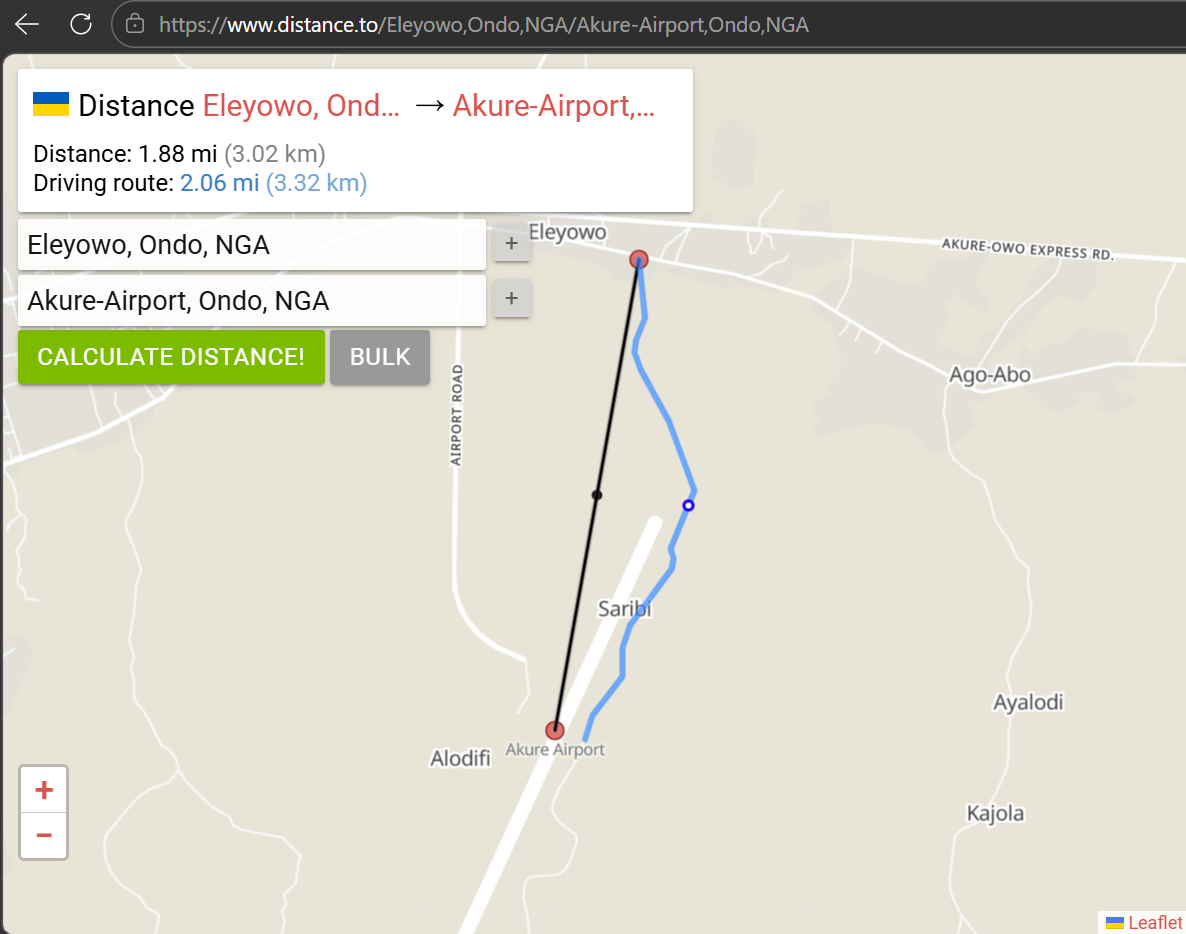
Meanwhile, The ICIR checks showed that the Eleyowo community where the bandits were arrested is just three kilometres from the airport, which makes the community qualify to be within the airport environment.

Distance between Eleyowo community and Akure Airport

Recent events show how bandits have been terrorising Akure North Local Government Area, where the airport is located.

The bandits have kidnapped and killed many people in communities within the local government, forcing residents to force the Akure-Owo road at different times.

Passengers injured as Abuja–Kaduna train coaches detach, collide near Jere

0

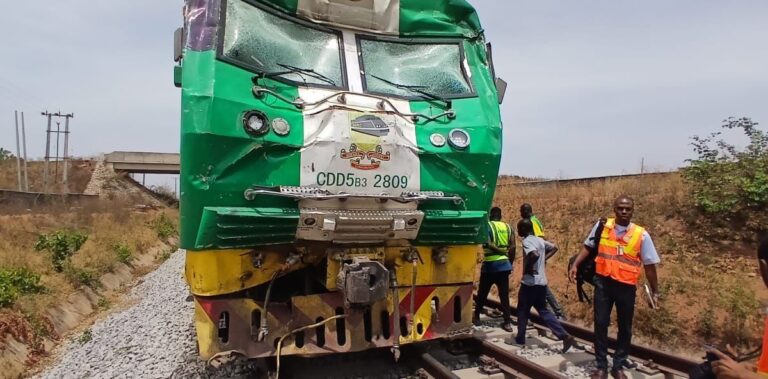
SEVERAL passengers were injured on Monday after coaches of the Abuja–Kaduna train reportedly detached and collided near Jere station, causing panic and leaving hundreds of travellers stranded.

A social media user, Sada Malumfashi, who identified as one of the passengers on board, said the incident occurred shortly after the train departed the Jere station. Malumfashi said a loud bang was heard and the train suddenly jolted to a halt.

“We heard a loud bang and the train jolted to a stop, flinging people across. Passengers got hit and most are bleeding and severely injured,” the passenger said.

According to Malumfashi, the train remained stationary for about 30 minutes before it eventually resumed its journey toward Kubwa. 

The passenger also complained that there was no immediate communication from the Nigerian Railway Corporation (NRC) on the incident.

A video sighted by The ICIR showed that the incident did not involve two separate trains as some posts online claim. Instead, the front coach detached during the journey, causing the rear section of the train to ram into the detached front coach.

The exact cause of the detachment remains unclear, and it could not immediately be confirmed how many passengers were injured in the incident.

Passengers were seen in the footage moving around the tracks, while others appeared visibly shaken by the impact.

Hundreds of passengers were also left stranded following the disruption along the Abuja–Kaduna rail corridor.

As of the time of filing this report, the Nigerian Railway Corporation had yet to issue an official statement on the cause of the incident or provide details of any casualties and the extent of damage to the train.

The ICIR reports that the Abuja-Kaduna rail corridor has recorded several accidents or derailments since inception, resulting in its closures. It has also been attacked by terrorists.


Japan, Australia reject Trump plan to secure Strait of Hormuz

JAPAN and Australia have pushed back against United States President Donald Trump’s call for an international naval coalition to secure the strategic Strait of Hormuz.

The two nations said they had no plans to deploy warships to escort commercial vessels through the vital oil transit route.

Trump had urged major energy-importing nations to help reopen the waterway amid escalating tensions from the Iran–Israel conflict, which has rattled global energy markets and heightened fears over Middle East oil supplies, as nearly 20 per cent of the world’s oil shipments pass through the narrow maritime corridor.

Speaking aboard Air Force One on the way from Florida to Washington, Trump said countries that relied heavily on Gulf oil should take responsibility for safeguarding the route. 

“I’m demanding that these countries come in and protect their own territory because it is their territory. It’s the place from which they get their energy,” he said.

However, Japanese Prime Minister Sanae Takaichi said Tokyo had made no decision to send naval escorts, citing constitutional limits on military deployments despite the country sourcing about 95 per cent of its oil from the Middle East.

“We have not made any decisions whatsoever about dispatching escort ships. We are continuing to examine what Japan can do independently and what can be done within the ​legal framework,” Takaichi told parliament.

Similarly, Australia ruled out contributing naval forces, as the Transport Minister, Catherine King said Canberra recognised the strait’s importance but had neither been formally asked nor planned to take part in such an operation.

“We know how incredibly important that is, but that’s not something ​that we’ve been asked or that we’re contributing to,” King, a member of Prime Minister Anthony Albanese’s cabinet, said in an interview with state broadcaster ABC.

The hesitation from two key Indo-Pacific partners underscores the diplomatic challenge facing Washington as it seeks broader support to stabilise the chokepoint.

Trump also intensified pressure on European allies to help safeguard the Strait of Hormuz, warning that the future of NATO could be “very bad” if member states fail to support Washington’s efforts.

Trump said the United States had contacted several countries including China, France, South Korea and the United Kingdom urging them to participate.

He told the Financial Times on Sunday that he expected China to play a role in reopening the Strait of Hormuz ahead of his planned meeting with Chinese President Xi Jinping in Beijing later this month, warning that the trip could be postponed if Beijing failed to offer support.

However, the European governments are weighing whether to strengthen an existing maritime mission in the region, though diplomats say there is no immediate decision to extend operations into the Strait of Hormuz.

According to Reuters, a Downing Street spokesperson said on Sunday that British Prime Minister Keir Starmer had discussed the need to reopen the Strait of Hormuz with Trump and Canadian Prime Minister Mark Carney, while South Korea said it would carefully consider Washington’s request for support.

The standoff between US-Israel and Iran has already unsettled markets as oil prices climbed above $104 per barrel, while Asian equities slipped amid concerns over potential disruptions to Middle East energy infrastructure.

Similarly, the conflict, which has lasted for over two weeks, has disrupted regional aviation hubs such as Dubai, Doha and Abu Dhabi, forcing widespread flight cancellations and raising concerns about jet fuel supplies across parts of Asia.   

Iran’s Foreign Minister Abbas Araqchi dismissed claims that Tehran was seeking negotiations, saying the country remained prepared to defend itself “for as long as it takes.”