Home Blog Page 621

Deloitte raises concern over Fidelity Bank’s loan impairment rise to N144bn

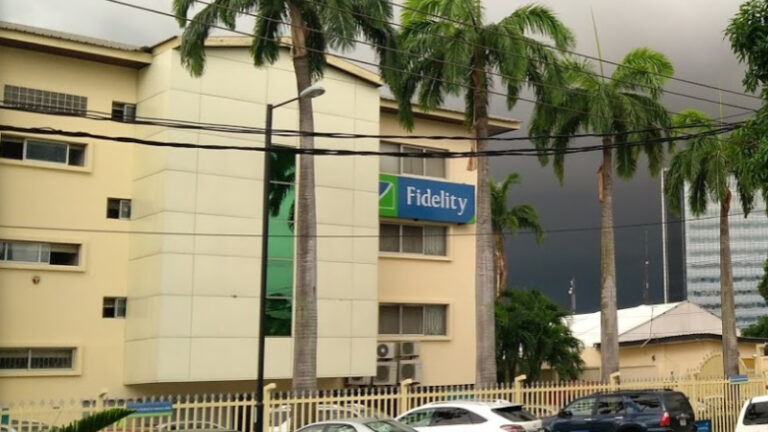
DELOITTE, an audit firm for Fidelity Bank Plc, has expressed concern over the bank’s impairment on loans and advances, which surged by 78.74 per cent to N143.97 billion.

In its ‘independent auditor’s report’ on the bank’s annual and financial statements for the year ended December 31, 2023, Deloitte stated that the loan impairment was a critical audit matter.

It said, “In view of the size of loans and advances portfolio, the audit of loan impairment is considered a key audit matter.

“Key audit matters are those matters that, in our professional judgement, were of most significance in our audit of the consolidated and separate financial statements of the current period.


Read Also:


The ICIR reports that following the implementation of the International Financial Reporting Standards (IFRS), a loan is now regarded as impaired on the balance sheet date when there is objective evidence of a loss.

Analysis of Fidelity Bank’s audited financial statements revealed that loans and advances accounted for 51.9 per cent of the bank’s total assets of N6.24 trillion.

As of December 31, 2023, Fidelity Bank’s gross loans and advances rose by 47.36 per cent to N3.24 trillion from N2.196 trillion in 2022.

The N3.24 trillion figures comprise local and foreign-denominated loans, against which total loan impairment was N143.97 billion, increasing by 78.74 per cent compared to N80.55 billion in 2022.

The loan impairment resulted in the bank posting a net loan balance of N3.092 trillion in the review years, relative to N2.116 trillion in the preceding year.

Further analysis of the bank’s 2023 financial performance showed that Fidelity Bank posted a N99.45 billion profit for the year, less than the bank’s loan impairment.

A check by The ICIR reveals that the loan impairment is also higher than the N100.3 billion the bank held as credit risk reserves as of December 31, 2023.

“We focused our testing of the impairment on loans and advances to customers on the key assumptions and inputs made by directors,” Deloitte stated.

According to the audit firm, the basis of the impairment on loans and advances is summarised in the accounting policies to the audited consolidated and separate financial statements.

It also said that the directors had assessed the bank’s loan loss impairment using the expected credit loss model provided in the IFRS 9 Financial Instruments.

“We challenged management’s judgements on loans that were not reported as being impaired in sectors that are currently experiencing difficult economic and market conditions, such as the oil and gas and power sectors,” Deloitte added.

Fidelity Bank concentrated N1.11 trillion in loans to the oil and gas sector, the highest amount it advanced to any industry in 2023, and N241.95 billion to the power sector.

According to the Statutory Audit Committee report signed by its chairman, Frank Onwu, the committee “reviewed the External Auditors Management Report for the year ended 31 December 2023 and is satisfied that management is taking appropriate steps to address the issues raised.”

FG vows tough measures against traders inflating commodity prices

0

The federal government has threatened to take stringent regulatory measures against traders who unfairly inflate prices of goods and commodities.

Through the Federal Competition and Consumer Protection Commission (FCCPC), the government expressed worry over the sustained rise in prices of goods and commodities despite the recent appreciation of the naira against the dollar.

The commission’s chief executive officer, Adamu Abdullahi, gave the warning in a statement on Wednesday, April 17.


Read Also:

While the naira has been appreciating against the dollar in recent weeks, several Nigerians have taken to social and conventional media to express their grievances about the ongoing rise in commodity prices.          

Some have alleged that traders are swift to hike prices whenever the naira depreciates but are reluctant to reduce prices when the dollar falls, even after several days.

Reacting to the development, the FCCPC stated that the continuous increase in the price of commodities was unacceptable, adding that it was committed to protecting consumers from exploitation

“The FCCPC understands the significant financial strain these rising prices are placing on Nigerian households. As a result, the commission is taking proactive steps to address this issue.

“While the FCCPC cannot directly regulate prices, the commission will utilise its existing legal framework to enforce fair competition and consumer protection provisions.

“This includes monitoring and investigating unusual price hikes, addressing complaints filed by consumers, and taking action against any businesses found to be engaging in anti-competitive practices such as price-fixing, price gouging or cartel formation.”

The FCCPC further stated that its operatives had been directed to intensify monitoring of both formal and informal markets, where businesses may take advantage of market conditions to inflate prices unfairly.

“The operatives will be working collaboratively with trade associations, farmer groups, and other stakeholders to identify and remove unnecessary barriers to entry in various sectors, combat price-fixing, and dismantle cartels. This will encourage increased competition, ultimately leading to lower prices for consumers,” the organisation added.

Kano court affirms Ganduje’s suspension from APC

A KANO State High Court has affirmed the suspension of the National Chairman of the All Progressives Congress (APC), Abdullahi Ganduje, from the party.

The court granted an ex parte order restraining Ganduje from parading himself as the party’s chairman.


Read Also:

The judge, Usman Na’abba, granted the application on Tuesday, April 16, in response to an ex parte motion filed by Ibrahim Sa’ad on behalf of the plaintiffs, Laminu Sani and Haladu Gwanjo, two executive members of Ganduje’s ward in Dawakin-Tofa Local Government Area. 

The four respondents in the case are the APC, APC National Working Committee, APC Kano State Working Committee, and Ganduje.

The court has asked them to maintain the status quo ante belum as of April 15, 2024, until the substantive litigation is heard and decided on April 30, 2024.

Na’abba prevented the APC Kano State Working Committee from meddling with the “legally and legitimately weighed choice” made by the Ganduje Ward executives, which was fundamentally based on action supported by a two-thirds majority of the executives as stipulated by the party constitution.

The ex parte ruling stated as follows: “An order is hereby granted directing all parties in the suit, Dr. Abdullah Umar Ganduje (fourth), APC National Working Committee (second), APC State Working Committee (third), and APC (first), to maintain status quo ante belum as of April 15, 2024.”

The court held that “the fourth respondent (Ganduje) is prohibited from parading himself as a member of APC or doing any act that may portray him or seem to be a member of APC pending the hearing and determination of the substantive suit.”

The ICIR reported that Ganduje was suspended on Monday, April 15.

Nine members of Ganduje’s ward executives proclaimed his suspension over the Kano State Government’s corruption allegation against him.

The party’s legal adviser at the ward, Gwanzo, made this known while addressing journalists in the state on Monday.

Gwanzo cited the state government’s allegations of bribery against Ganduje as the grounds for his suspension.

The ICIR reports that Ganduje, the immediate past governor of the state, would face charges in court on Wednesday, April 17, regarding allegations of bribery, diversion, and misappropriation of funds, which include diversion of funds, criminal conspiracy, misappropriation, and criminal breach of trust.

Meanwhile, Ganduje said he is unshakeable and remained the party’s National Chairman.

He said this in a viral video amidst party supporters on Tuesday.

He boasted that he had met with President Bola Ahmed Tinubu and the President had guaranteed his position as party chairman.

“Tell Kano State Government that the seat of National Chairman of APC in Nigeria is on Abdullahi Umar Ganduje. We are here unshakable,” Ganduje stated.

Naira abuse: Cubana Chief Priest pleads not guilty, granted N10m bail

0

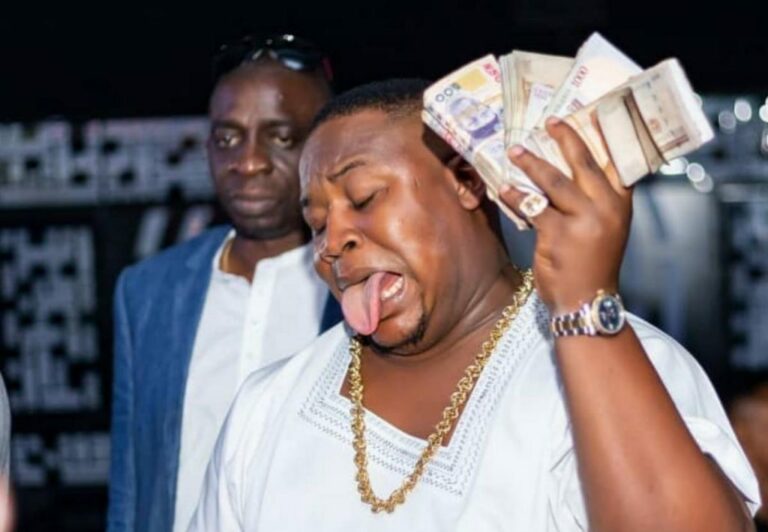
A POPULAR Nigerian celebrity, Pascal Okechukwu, better known as Cubana Chief Priest, has pleaded not guilty to tampering with and abusing the naira during his trial at the Federal High Court, Lagos, on Wednesday, April 17.

After pleading not guilty, the judge, Kehinde Ogundare, granted him ₦10 million bail with two sureties in like sum who must be gainfully employed with the federal or state government and not less than grade level 16.

The sureties are to have landed property, and the court must verify the lands’ documents.


Read Also:

Cubana Chief Priest must also submit his travel passport to the court.

Cubana Chief Priest was arraigned on three counts bordering on abuse of naira.

He was accused of allegedly spraying and tampering with the nation’s currency at a social event, contrary to the provisions of the Central Bank Act of 2007.

He was alleged to have sprayed the naira on February 13, 2024, at Eko Hotel.

He was said to have tampered with funds in the denomination of N500 notes issued by the CBN by spraying the same for two hours.

The ICIR reported that the Economic and Financial Crimes Commission (EFCC) detained Cubana Chief Priest on Tuesday, April 16, for allegedly abusing the naira at a social event. 

The case against him was filed on April 4 by Rotimi Oyedepo, a senior advocate, and seven other lawyers representing the EFCC chairman.

Count one of the cases alleged: “That you, Okechukwu Pascal, on February 13 2024, at Eko Hotel, within the jurisdiction of the court, while dancing during a social event, tampered with funds in the denomination of N500 issued by the Central Bank of Nigeria by spraying same for two hours, and you thereby committed an offence, contrary to and punishable under Section 21(1) of the Central Bank Act 2007.”

The case against Cubana Chief Priest is coming barely two weeks after the EFCC arrested and arraigned controversial cross-dresser Idris Okuneye, also known as Bobrisky, for naira abuse.

He was arrested on the night of Wednesday, April 3, in Lagos State.

Consequently, the Federal High Court, Lagos State, sentenced Bobrisky to six months imprisonment without the option of a fine on Friday, April 12.

In her ruling, the judge, Abimbola Awogboro, said the judgment would deter others from abusing the naira.

Selective arraignment?

Meanwhile, The ICIR reported that several videos have surfaced on social media platforms, including X, Instagram, and TikTok, showing public officials, monarchs, and some Nigerian celebrities spraying the naira notes in public. 

As of the time this report was filed, the EFCC and related agencies had not arrested any of them.

Some of these videos and reports exposed the Governor of Niger State, Umaru Bago, a lawmaker from Borno State, Ibrahim Abuna, and the Minister of Arts, Culture and Creative Economy, Hannatu Musawa abusing the naira. 

The CBN had said it would prosecute the minister, but she has continued as a cabinet member in President Bola Tinubu’s government without an arrest. 

Another video showed how the Olu of Owode-Egba, Ogun State, Aremo Sowemimo, sprayed naira on a musician during an event. The ICIR reported that the monarch was suspended for two months by his aggrieved fellow monarchs but has not been arrested by relevant government institutions and prosecuted for it.


Police to probe NANS factional leaders over bloody attack in Abuja

0

THE Federal Capital Territory (FCT) Police Command said on Tuesday, April 16, that it would investigate the alleged attack and counterattack launched by the factional leaders of the National Association of Nigerian Students (NANs).

The attack, as observed by The ICIR, resulted in serious injury to at least three members who were believed to be affiliated with the organisation.

Some yet-to-be-identified persons seriously assaulted one of those injured.

One of the victims is currently undergoing surgery in an Abuja hospital, The ICIR can confirm.


Read Also:

Police parade 21 Yoruba nation agitators over Oyo secretariat invasion

NANS: The student body has come a long way, but has it maintained its status?

Degree mill: 15,000 Nigerian students in Benin Republic affected by ban – NANS


In a video shared by the media aide of the Kwara State governor, Ibraheem Abdulateef, on his X page on Tuesday, April 16, some people with cutlasses ran into a peaceful setting of some group of people and attacked them.

They also destroyed an 18-seater bus with the pictures and name of one of NANS’ factional leaders, Chibuzo Obi Pedro, who was tagged as the organisation’s president on the bus.

The attack, which happened on Monday, April 15, in Area 8, Abuja, took place shortly after the factional president, Pedro, left a meeting they held regarding their inauguration.

Calling on the attention of the Police Force public relations officer, Olumuyiwa Adejobi, Abdulateef wrote: “ Hello esteemed PPRO @Princemoye1, Are you aware of the attacks and counter-attacks factional NANS leaders have been launching against one another in Abuja? A young man from Kwara was caught in the latest at Zone 8 and was butchered to near death in broad daylight. It is crazy.

“The Force should invite the leadership for questioning before we have a further breach of law and order and a possible loss of life. This is criminality on the loose.”

Meanwhile, reacting to the post, the FCT police command, in a statement signed by its spokesperson, Josephine Adeh, said the police were aware of the incident and were looking into the matter.

The statement reads: “The FCT police command is aware of the news making rounds about the recent attacks and counterattacks launched by the factional NANS leaders against one another in the Federal Capital Territory and therefore wishes to state that the police command has commenced an investigation into the matter and is ensuring no disruption of peace being enjoyed by residents is allowed. Further development would be communicated.”

This incident has, however, generated public outrage as many Nigerians called on the authorities to wade into it and bring those behind it to justice.

Some also called on the authorities to suspend or reform the student body, citing its transformation into a tool of Nigerian politicians.

The ICIR gathered that following its last year’s elections, NANs has had two leadership camps fighting for recognition.

EFCC arraigns Cubana Chief Priest Wednesday over naira abuse

0

THE Economic and Financial Crimes Commission (EFCC) is set to arraign a popular Nigerian celebrity, Pascal Okechukwu, better known as Cubana Chief Priest, for allegedly spraying and mishandling the Nigerian currency – naira- at a social event.     

He will be arraigned on Wednesday, April 17, 2024, before Kehinde Ogundare, a justice of the Federal High Court, Lagos State.

Okechukwu is facing three counts of allegedly spraying and tampering with the naira at a social event, contrary to the provisions of the Central Bank Act of 2007.


Read Also:


The case was filed on April 4 by EFFC’s prosecutor, Rotimi Oyedepo (SAN), along with seven other lawyers representing the commission’s chairman.

Count one of the case alleged: “That you, Okechukwu Pascal on 13th Feb. 2024, at Eko Hotel, within the jurisdiction of the court, while dancing during a social event, tampered with funds in the denomination of N500 issued by the Central Bank of Nigeria by spraying same for two hours, and you thereby committed an offence, contrary to and punishable under Section 21(1) of the Central Bank Act 2007.”

In count two, it was alleged: “That you, Okechukwu Pascal, sometime in 2020, in Lagos during a social event, tampered with funds in the denomination of N500 issued by the Central Bank of Nigeria by spraying same for two hours, and you thereby committed an offence, contrary to and punishable under Section 21(1) of the Central Bank Act 2007”.

Also, count three of the offences against the accused alleged: “That you, Okechukwu Pascal, sometime in January 2024, in Lagos during a social event, tampered with funds in the denomination of N500 issued by the Central Bank of Nigeria by spraying same and you thereby committed an offence, contrary to and punishable under Section 21(1) of the Central Bank Act 2007”.

This is coming barely two weeks after the EFCC arrested and arraigned controversial cross-dresser Idris Okuneye, also known as Bobrisky, for naira abuse.

He was arrested on the night of Wednesday, April 3, in Lagos State.

Consequently, the Federal High Court, Lagos State, sentenced Bobrisky to six months imprisonment without the option of a fine on Friday, April 12.

In her ruling, the judge, Abimbola Awogboro, said the judgment would serve as a deterrent to others fond of abusing the naira.

Selective arraignment?

Meanwhile, The ICIR reported that several videos have surfaced on social media platforms, including X, Instagram, and TikTok, showing public officials, monarchs, and some Nigerian celebrities spraying the naira notes in public. 

As of the time this report was filed, the EFCC and related agencies had not arrested any of them.

Some of these videos and reports exposed the Governor of Niger State, Umaru Bago, a lawmaker from Borno State, Ibrahim Abuna, and the Minister of Arts, Culture and Creative Economy, Hannatu Musawa abusing the naira. 

The CBN had said it would prosecute the minister, but she has continued as a cabinet member in President Bola Tinubu’s government without an arrest. 

Another video showed how the Olu of Owode-Egba, Ogun State, Aremo Sowemimo, sprayed naira on a musician during an event. The ICIR reported that the monarch was suspended for two months by his aggrieved fellow monarchs but has not been arrested by relevant government institutions and prosecuted for it.

Kaduna assembly sets up panel to probe El-Rufai

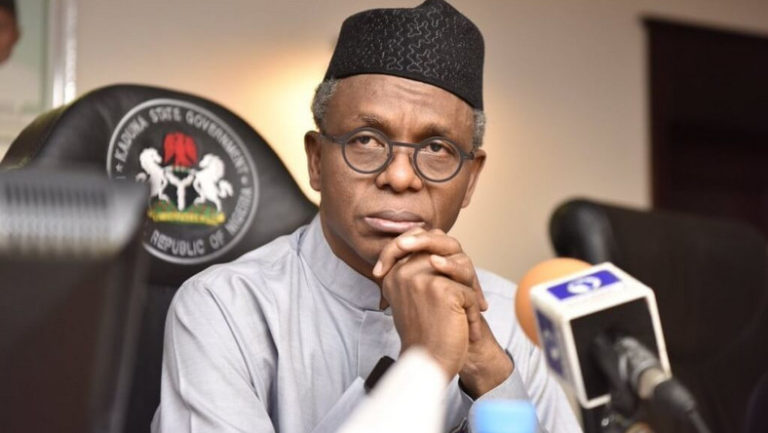
The Kaduna State House of Assembly has set up a committee to investigate all finances, loans, and contracts awarded under former Governor Nasiru el-Rufai’s administration.

The committee has been tasked with examining loans, grants, and project implementation from 2015 to 2023, during which El-Rufai served as the state governor.

The chairman of the House Committee on Information, Henry Zacharia, confirmed the development on Tuesday, April 16.


Read Also:

Zacharia said the eight-member fact-finding committee was set up during Tuesday’s plenary “to investigate the state’s financial dealings under the former governor.”

The committee is also expected to investigate the activities of Jimi Lawal, the former governor’s senior aide and investment counsellor.

The State Assembly ordered the committee to invite notable individuals, such as previous speakers of the 8th and 9th Assembly, commissioners of finance, former managing directors of Kaduna Markets, commissioners of budget and planning, and commissioners of finance.

During a town hall meeting on Saturday, March 30, the state Governor, Uba Sani, lamented the huge debt he inherited from El-Rufai.

He said his government could not pay salaries because of the debt.

The governor claimed he inherited about $587 million from the former governor.

He also alleged that his government inherited N85 billion and 115 contract liabilities from the previous administration.

He, however, noted that his administration was working to find a way around the situation.

“Despite the huge debt burden of $587 million, N85 billion, and 115 contractual liabilities sadly inherited from the previous administration, we remain resolute in steering Kaduna State towards progress and sustainable development. We have conducted a thorough assessment of our situation and are sharpening our focus accordingly.

“It gladdened my heart to inform you that despite the huge inherited debt on the state to date, we have not borrowed a single kobo,” Sani said.

He also said the devaluation of the naira made it more challenging to pay back the debt.

He noted that a huge chunk of the federal allocation was being channelled towards debt servicing, leaving the state with inadequate funds to pay salaries.


Reps give SEC ultimatum on alleged N45bn unremitted funds

0

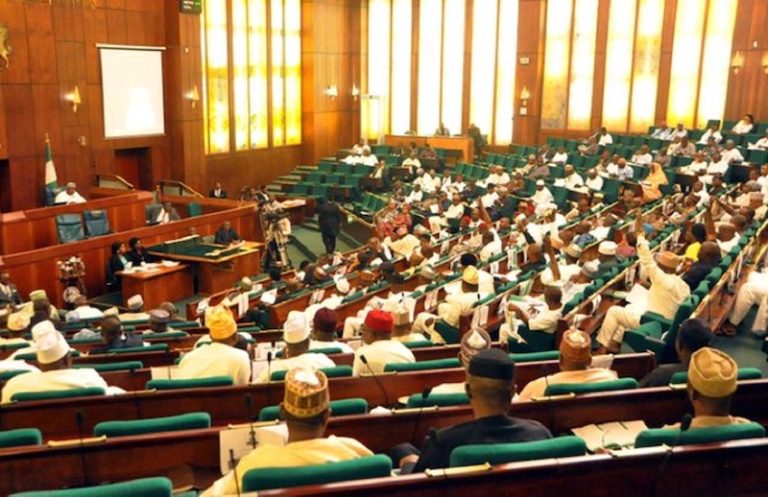
THE Public Accounts Committee of the House of Representatives has set a 21-day deadline for the Securities and Exchange Commission (SEC) and the Fiscal Responsibility Commission (FRC) to reconcile the unremitted operating surplus of N45 billion, documented from 2007 to 2021.

The committee chairman, Bamidele Salam, announced its decisions following its findings on the audit report, which highlighted the unaccounted funds during the committee’s public hearing on government revenue leakages. 

The committee summoned the SEC after the FRC reported that the SEC had not responded to its 2022 report, which revealed a liability of N45.013 billion for unremitted funds.


Read Also:


Addressing the committee, Bello Aliyu, an FRC representative, said the FRC wrote to the SEC in December 2022 seeking its reaction to its findings but did not get a response over 15 months later.

“We have written SEC on December 20, 2022, intimating the commission of our computed liability for the period 2007–2021, and the said liability amounted to N45,013,010,229 only.

“Up till now, we have not received any response from them, so as far as we are concerned, they have accepted the liability, and that is what we have recorded against the commission,” he said.

He further stated that from the period till now, the SEC had made no effort to reconcile the figure outlined in the report. 

Aliyu noted that, according to the law, any remaining balance of an operating surplus must be transferred to the federal government’s consolidated revenue fund within one month of the statutory deadline.

While reacting to the allegation, the Director General of SEC, Lamido Yuguda,  said the commission had reconciled its operating surplus with the Office of the Accountant General of the Federation (OAGF).

“I think if the FRC had actually done a little more work, they would have really seen from the OAGF all the efforts that we have made to reconcile the surplus figure from 2007 when the FRC came into being,” Yuguda told the committee.

On his part, the committee chairman noted that the FRC was empowered by law to ensure that all agencies and government corporations listed in its enabling Act behave responsibly regarding remittances and revenue management.

“I don’t know why SEC is more comfortable with the Accountant General Office, and I don’t want to insinuate anything, but I want to assure the FRC that from now on, all that will stop.

”We are going to ensure that all agencies make FRC the major body of government that should ensure compliance with the provisions of the Act,” Salam said.

IPC condemns harassment of Executive Director by SSS

0

THE International Press Centre (IPC) has condemned the harassment of its Executive Director Lanre Arogundade by officials of the State Security Service (SSS).

This was contained in a statement signed by the IPC Press Freedom Officer Melody Akinjiyan on Tuesday, April 16.

According to the statement, SSS officials accosted Arogundade at the Murtala Mohammed International Airport (MMIA) on Thursday, April 11.

“The incident of Thursday April 11, while Mr. Arogundade prepared to board a late-night Air France Flight to Berlin, Germany to participate in the respective general meetings and conferences of the African Freedom of Expression Exchange (AFEX) and the International Freedom of Expression Exchange (IFEX) would be the umpteenth of such unwelcome development.

“Mr. Arogundade is a renowned journalist, advocate for social justice and democracy, former Chairman of the Lagos State Council of Nigeria Union of Journalists and former President of the National Association of Nigerian Students. We believe these roles and positions should not warrant his unending torment by the DSS,” the statement read.

Arogundade had been held down by SSS officials for 40 minutes at the airport on Thursday over claims that his name was on their watch list.

According to the statement, he said that two years ago, the SSS Director-General Yusuf Magaji Bichi said his name had been taken off the Service’s watch list during a meeting with members of the International Press Institute (IPI).

“Mr. Arogundade additionally informed IPC management that the senior DSS official to whom he was referred threatened to bar him from traveling unless he produced his old passports, describing the request as ‘bizarre and ridiculous.’

“IPC holds that the persistent harassment violates Mr. Arogundade’s right to freedom of movement while undermining basic democratic principles,” the statement read.

The organisation urged the Director-General and officials of the SSS, especially those stationed at the MMIA to desist from further harassing Arogundade.

Recently, a Nigerian journalist, Segun Olatunji, had been abducted by the military and detained in an unknown location for nearly two weeks.

His detention was linked to a report, “Revealed: Defence Chief running office like family business – Public Interest Lawyers,” which was published by his organisation.

The IPI, Nigeria Guild of Editors (NGE) and NUJ representatives, Mojeed, Iyobosa Uwugiaren and Chris Isiguzo, respectively, during a press briefing, disclosed that efforts to find out his location and secure his release initially proved abortive, despite the involvement of top government officials.

Both men are among the many journalists who have been attacked or harassed, especially by state actors in Nigeria.

The ICIR reported that at least 39 journalists were harassed by state and non-state actors in 2023 alone.

IMF reviews Nigeria’s economic growth to 3.3%

THE International Monetary Fund (IMF) has upgraded Nigeria’s economic growth to 3.3 per cent in 2024 from 3.0 per cent.

The Bretton Wood Financial Institution gave the upward review in its latest forecast released today, April 16.

In its January 2024 World Economic Outlook, IMF downgraded the country’s economic growth forecast to 3.0 per cent from a 3.1 per cent projected in October 2023.


Read Also:


In 2023, the IMF estimated the country’s economy to grow by 2.9 per cent amid various macroeconomic headwinds.

However, in its last report, ‘World Economic Outlook, April 2024: Steady but Slow: Resilience amid Divergence,’ the IMF stated that Nigeria’s economy would grow to 3.3 per cent this year but slid back to 3.0 per cent in the coming year.

The ICIR reports that the latest forecast represents a 0.3 per cent growth in 2024. However, Nigeria’s economy is expected to slide to 3.0 per cent in 2025.

In the sub-Saharan Africa region, growth is projected to rise from an estimated 3.4 per cent in 2023 to 3.8 per cent in 2024 and 4.0 per cent in 2025 as the adverse effects of earlier weather shocks subside and supply issues gradually improve.

Global growth, estimated at 3.2 per cent in 2023, is projected to continue at the same pace in 2024 and 2025.

According to the IMF, high borrowing costs, with­drawal of fiscal support, longer-term effects from the COVID-19 pandemic, Russia’s invasion of Ukraine and the conflict in Gaza and Israel, weak growth in productivity, and increasing geoeconomic fragmentation are factors affecting the global economy and could raise interest rate expectations and reduce asset prices.

Amid high government debt in many economies, a disruptive turn to tax hikes and spending cuts could weaken activity, erode confidence, and sap support for reform and spending to reduce risks from climate change.

An IMF team recently visited the Nigerian Minister of Finance, Wale Edun, the Central Bank Governor, Olayemi Cardoso, other key government officials, representatives from subnationals, the private sector, and civil society, and flagged the country’s critical challenges.

“With about eight per cent of Nigerians deemed food insecure, addressing rising food insecurity is the immediate policy priority,” the team urged.

The team also pointed out that the approved targeted social safety net programme, which is expected to provide cash transfers to vulnerable households, needed to be fully implemented before the government could address costly, implicit fuel and electricity subsidies in a manner that would ensure the protection of low-income households.

Despite the CBN tightening monetary policy to curb the surging inflationary pressure, a recent release by the National Bureau of Statistics showed that headline inflation rose to 33.2 per cent in March, the highest since 1996, and food inflation to 40.01 per cent.

Since this year, the CBN has raised the monetary policy rate by 600 basis points in its last two consecutive meetings, held in February and March. However, the measure has not helped to contain the rising inflation figure that the IMF anticipated.