FACTCHECK Africa is calling on journalists across West Africa to apply for its 3- months 2024 AI Journalism Fellowship.
The Fellowship programme seeks to bring together journalists and expert technologists from around West Africa to explore the use of artificial intelligence technologies to enhance journalism processes.
Forty journalists across West Africa will be selected to join the cohort and trained for three months (May to July) to understand the transformative potential of AI in the media industry.
Participants will engage in insightful discussions about potential biases, privacy concerns and misinformation risks associated with AI technology as well as explore the intersection of journalism and AI, paving the way for impactful storytelling and informed public discourse.
They will also learn the various ways AI can enhance news gathering, fact-checking, data analysis and content creation.
For eligibility, participants would need to have some experience working as a journalist. You would also need to have basic proficiency in using technological tools.
After the programme, fellows will be given a certificate of participation and access to FactCheck Africa’s membership network, exclusive resources, advanced training sessions, and networking.
The deadline for application is April 27. Interested journalists can apply here.
GRAMMY-Award-winning Nigerian artiste Damini Ebunoluwa Ogulu, known as Burna Boy, has made the list of Times Magazine’s 100 most influential people of 2024.
The list was released on Wednesday, April 17.
This list is an annual compilation by Time Magazine to celebrate individuals who have made significant contributions to the world through their work in various fields.
The list categorises individuals into six categories: Titans, Innovators, Pioneers, Artists, Leaders, and Icons. Burna Boy earned the ‘Icon’ title.
Celebrating Burna Boy’s latest achievement, multi-award-winning Beninese singer Angelique Kidjo praised him in a tribute she wrote on Time’s website, describing him as a “history-making artiste”.
“Burna Boy has made that vision a global reality. Inspired by the fantastic drums of Nigerian folk music and studied in the craft of the great African singer-songwriters, he follows in the footsteps of Fela Kuti—the internationally celebrated Afrobeats artiste and activist.
“Burna Boy’s deeply original flow and his signature groove have conquered the world with an impressive series of firsts: in 2023, he became the first African artist to sell out a U.S. stadium, and in 2024, he became the first Afrobeats artiste to sing at the Grammys. He is history in the making. Now a whole generation of young people from the continent is looking up to him,” she said.
Burna Boy started his music career in 2010 with his debut album, ‘Burn Notice’. He rose to prominence in 2012 after his single, ‘Like to Party’ gained mainstream recognition in Nigeria.
In addition to being a Grammy winner with several other nominations, he emerged as the first African to perform during the awards ceremony after performing at the 66th Grammy Awards.
His impact on the music industry and cultural landscape has solidified his status as one of Africa’s most influential and successful musicians.
Also making the list of Time Magazine’s 100 most influential people of 2024 are British-Nigerian stars, Skepta and Damson Idris.
IN recent weeks, Nigeria’s currency naira has been strengthening against the dollar, but this is not leading to lower prices for bread, rice, millet, and other commodities prices in Nigeria, findings have shown.
To state the least, the prices of goods and services in Nigeria have continued to soar despite the gains of the Naira against the dollar in the foreign exchange market.
According to the National Bureau of Statistics (NBS), headline inflation jumped to 33.20 per cent in March, and food inflation surged to 40.01 per cent.
Several factors such as a global surge in energy prices triggered by the Russian-Ukraine War, Nigeria’s food importation bill, and insecurity in Nigeria’s food belt have been identified as factors that affect rising commodity prices.
The implication is that Nigerians continued to pay more for food and other services in March despite the appreciation of Nigeria’s naira against the dollar.
The naira exchange rate against the United States dollar has sustained its rally as it appreciated a seven-month high to close at N1000/$1 on the parallel market.
On the Nigerian Autonomous Foreign Exchange (NAFEM) official window on Monday, also, the naira extended its upward trend, maintaining its one-month gain as it closed at N1,136.04/$, gaining N6.32, compared to the N1,142.38/$1 it closed on Friday.
The national currency’s appreciation came as the NBS disclosed that the Consumer Price Index (CPI), which measures the rate of change in prices of goods and commodities, further increased to 33.20 per cent in March 2024, compared to 31.70 per cent in February.
The appreciation recorded by the naira against the greenback on the parallel market marked the first time the naira reached this level since September 26, 2023.
The daily foreign exchange (FX) turnover, however, saw a decline of 10.57 per cent, reaching $251.60 million on Monday, compared to the $281.34 million recorded on Friday.
Furthermore, the highest spot rate observed on Monday stood at N1,227, with the lowest spot rate recorded at N1,000
What NBS says about commodity price surge
According to the NBS, the rise in food inflation on a year-on-year basis in March was caused by increased prices of Garri, millet, bread and cereal, yam, dried fish, meat, and fruits.
“On a month-on-month basis, the good inflation rate in March 2024 was 3.62 percent which shows a 0.17 percent decrease compared to the rate in February 2024 (3.79 percent),” NBS said.
NBS found that the decline in food inflation on a month-on-month basis was caused by a fall in the rate of increase in the average prices of Guinea corn flour, Plantain Flour, among others(Under Bread and cereal class), Yam, Irish Potatoes, Cocoa Yam, Irish Potatoes, Cocoa Yam(Under Potatoes, Yam and other Tubers class), Titus fish, Mudgish Dried(Under Fish Class), Lipton, Bournvita, Ovaltine(Under Coffee, Tea and Cocoa class)
Why Naira appreciation is not affecting commodity pricedeceleration
Despite the naira’s appreciation against the dollar economy watchers listed rising global energy prices, structural challenges(Poor state of rural roads infrastructure), and insecurity in Nigeria’s food belt as a major cause of rising food inflation.
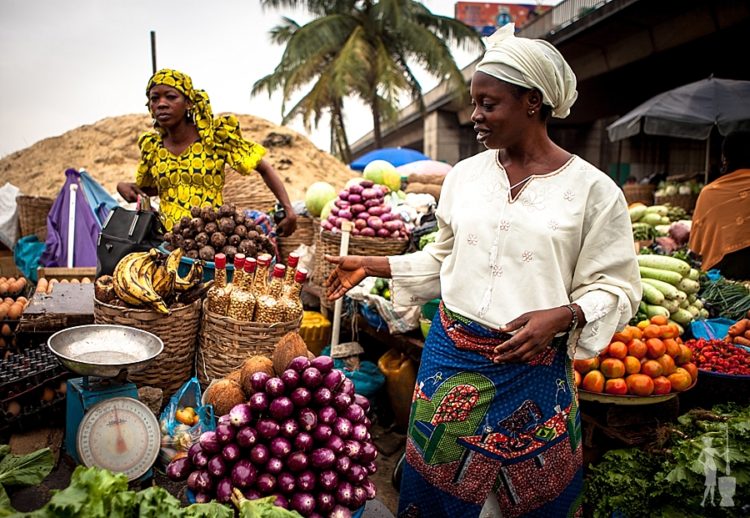
File Photo of a typical Nigerian market
A development economist, Kalu Aja, frowned at the rising food inflation, adding that, “40 per cent food inflation is overwhelmingly high for the Nigerian economy and at N30 000 minimum wage, many Nigerians would be struggling to feed.”
According to Kalu, “The naira strengthening doesn’t solve the problem of rising food prices because there’re structural problems of insecurity, poor road infrastructure, poor storage facilities and insecurity around Nigeria’s food belt.
He added, “We have to increase the supply of goods to the economy to bring down the food inflation. This is the time to allow the security guys to help farmers increase their food production. Harvest yields are down, farmers cannot farm.”
Commenting further on why commodity prices are increasing, despite naira’s appreciation, a senior economist at Stears Incorporated, Dumebi Oluwole said, several factors such as a global surge in energy prices and high importation costs influence commodity price rise.
“We are all witnesses to how Geo-political tension spill over to Nigeria. The issue with the Swiss canal, and rising global Energy prices as a result of the Russian-Ukraine Invasion, would feed into the global inflation outlook in Europe and America.
She stressed that these have implications for higher importation costs for Nigeria despite Naira’s appreciation against the dollar.
She further cited petrol import into the country as a trigger to higher commodity prices, adding that Dangote refineries’ coming on stream will take time before it influences commodity price decrease.
She noted that the electricity tariff increase would also affect companies that would factor in ‘energy price’ in their production costs for their respective commodities.
“You see a recent tariff increase that targeted band A users where the majority of Industrial clusters are. They will capture their energy price into their commodity pricing.
“Most of these companies purchase diesel and essentially the escalation of diesel price is affecting commodity prices and it’s not a good experience for the Nigerian consumers,” Dumebi added.
Bread manufacturers are also complaining of the high cost of running the business and poor access to funds at single-digit interest rates from commercial banks.
They also cited the Russian-Ukraine war as a major factor that affected the high spike of their raw material for bread production.
“Banks are running like carpet baggers and are not funding businesses like ours. The high cost of diesel, sugar, flour, wheat, and other costs for making bread is why bread prices are rising in Nigeria, “the President of the Premium Bread Makers Association of Nigeria, Emmanuel Onuorah said.
Notably, the Central Bank of Nigeria (CBN) target for 2024 is 21.4 percent, with Governor Olayemi Cardoso stressing at the last monetary policy committee meeting in March that the apex bank’s target is to improve the purchasing power of Nigerians by lowering inflation.
Analysts say this may not be achieved unless the interest rate is revised downward from its present 22.5 per cent by the apex bank which makes lending to businesses by commercial banks at single digits a difficult target.
THE Central Bank of Nigeria (CBN) on Wednesday, April 17, said the drop in Nigeria’s foreign exchange reserves was not a result of the apex bank’s defence of the naira.
The CBN Governor, Olayemi Cardoso, said this at the ongoing spring meetings of the International Monetary Fund and World Bank in Washington.
The ICIRreported that Nigeria’s foreign exchange reserves dipped by about $2.16 billion, shrinking to $32.29 billion as of 15 April.
These developments come amid significant appreciation in the value of the naira against the US dollar in recent weeks.
Economy watchers say the naira’s gains against the US dollar are not unconnected with the dip in Nigeria’s FX reserve since Nigeria is largely an import-dependent economy with weak exports of the non-oil sector.
Notably, the local currency appreciated from a low of about N1,900/$1 earlier in the year to a high of about N1,200/$1, on average, across foreign exchange markets.
Recently, media reports claimed that the Central Bank might be using Nigeria’s foreign reserves to support the naira despite earlier promises to allow the currency to float.
However, Cardoso, while addressing the concerns raised by several media outlets on the interference of FX reserve in the naira’s defence, explained that the movement of the reserves had nothing to do with the recent gains recorded by the Nigerian unit in the forex market, noting that the apex bank had no intention of defending the naira.
“It is not in our intention to defend the naira, and much as I have read in the recent few days, some opinions concerning what is happening with our reserves and the CBN defending the naira.
“If you think back to what our overall policy and philosophy has been here, you can see it’s counterintuitive. The shift you see in the reserve has nothing to do with defending the naira, and that’s certainly not our objective,” he said.
He likened the shift to a common occurrence in any country’s reserve management, adding that such shifts often occur when debts are due or certain payments must be made to maintain the country’s credibility.
He hinted at a future where CBN interventions would be required in highly unusual circumstances.
“Basically what we are encouraging is for the market to have willing buyers and willing sellers for price discovery, and ultimately, I perceive a future where CBN will not need to intervene, except in very, very unusual circumstances,” Cardoso said.
He emphasised the need for a strong currency market, suggesting that CBN intervention might not be needed if there is enough liquidity in the FX market.
In recent times, the CBN has taken several measures to stabilise the FX market, regulate participants’ activities, and increase market transparency.
In March, the bank announced it had cleared all ‘valid’ foreign exchange backlogs, mainly to restore confidence in the Nigerian economy.
The CBN also removed the +/- 2.5 per cent rate on the NAFEX rate for International Money Transfer Organisations (IMTOs) and issued specific guidelines on IMTO services, including minimum capital requirements and prompt repatriation of export proceeds.
It equally directed all banks to stop using foreign currency as collateral for naira loans and reviewed the Cash Reserve Ratio (CRR) framework.
During this period, the local unit has appreciated significantly against the greenback and is rated one of the best-performing currencies worldwide.
The appreciation in the value of the local unit, amounting to 12 per cent against the dollar in April and following a 14 per cent rise in March, is attributed to capital inflows, interest rate hikes, and the CBN’s market reforms.
The director of the MacArthur Foundation in Nigeria, Kole Shettima, said the lack of a regional approach to tackling insecurity in the Northwest of Nigeria has made the region battle the menace without success.
Shettima said this while speaking on “Mobilizing Stakeholders Towards Peacebuilding In Northwest Nigeria: Strategies, Lessons and Challenges” at the Northwest Regional Conference On Women Peace And Security, organised by Global Rights in Abuja.
According to Shettima, insecurity has remained a challenge in Nigeria because many citizens don’t see it as a national problem.
He said the country must address the drivers of violence in the communities.
He suggested that inefficient utilisation of resources and the need to prioritise security must also be considered.
The Director of the MacArthur Foundation, Kole Shettima
“We must organise ourselves in terms of regional perspective. As civil society, we are not the government, but we can work together with the government.”
“It’s a very difficult and very touching issue. I think that for those who listen to radio stations in the morning, whether you listen to the Voice of America, the BBC, or Radio France International…you hear about our children, our grandchildren, our mothers, our people physically being carted away and taken out to other countries or other places, other communities,” Shettima stated.
He said the situation should not be viewed as a Northwest problem but rather as a general problem that required joint attention.
“I think that one of the lessons that we have to learn is to avoid the segregation, compartmentalisation and stereotyping by people that this can only happen in this part of the country or the other part of the country, and that it cannot happen to us. Therefore we as a people in this country, we must change this notion that this is a national problem,” Shettima stated.
Shettima said the involvement of civil society was critical in the fight against insecurity in the Northwest.
In her contribution, The Executive Director of Partners West Africa Nigeria (PWAN) Northwest region, Kemi Okenyodo, claimed that over 8,000 people have been killed and 200,000 displaced in the Northwest region.
“Conflict comes with burdens to the people in the community, especially women, exposing them to different forms of sexual assault. Sex for survival has also become a trend in exchange for food for survival and other items due to insecurity,” she stated
Also speaking at the event, the President of the Deaf Women Association of Nigeria, Helen Beyioku Alase, said insecurity also affects people with disabilities.
“We need to play our roles in ensuring deaf people are carried along. Insecurity has affected deaf people so much and caused loss of lives in the deaf community. For instance, in the areas with insecurity, when there are explosions from bombs and people run, deaf people don’t hear. And no one stops to let them know what is happening. This is very sad for us,” She said.
THE Central Bank of Nigeria (CBN) has reviewed its loan-to-deposit ratio (LDR) policy to align with its current monetary tightening, reducing the LDR by 15 percentage points to 50 per cent.
The apex bank disclosed this in a circular issued on Wednesday, April 17, titled ‘Re: Regulatory Measures to Improve Lending to the Sector of the Nigerian Economy’, and signed by the acting director of the Banking Supervision Department, Adetona Adedeji,.
According to the bank, the decision followed a shift in its policy stance towards a more contractionary approach.
With this reduction, all deposit money banks are restricted in their ability to offer credits/ loans to businesses and individuals.
The circular read, “Following a shift in the Bank’s policy stance towards a more contractionary approach, it is imperative to review the loan-to-deposit ratio (LDR) policy to align with the current monetary tightening by the CBN.
“Accordingly, the CBN has decided to reduce the LDR by 15 percentage points to 50 per cent, in a similar proportion to the increase in the CRR rate for banks.
“All DMBs are required to maintain this level and are further advised that average daily figures shall continue to be applied to assess compliance.”
Analysts say the policy will further squeeze lending to businesses and the manufacturing sector, many of whom are not getting funds from commercial banks to drive their businesses, with CBN’s lending rate at 24.75 per cent.
“We cannot keep out the commercial and merchant banks from funding businesses. It will spell doom for the economy. The apex bank as it plans to recapitalise should ensure that banks have the financial strength to fund the manufacturing sector for the growth of the economy,” former Director-General of the Lagos Chamber of Commerce (LCCI) Muda Yusuf told TheICIR.
With the new policy, banks must now recalibrate their lending strategies, adhering to the revised LDR of 50 per cent. This measure is anticipated to influence the banks’ ability to offer credit, particularly impacting large and medium-scale enterprises that are dependent on bank financing for their operations.
This reduction might tighten the credit available to businesses, potentially escalating interest rates. However, it also positions the banks to be more circumspect in their lending operations, potentially safeguarding the financial system against undue risk exposure
Recall that the apex bank’s Monetary Policy Committee (MPC) hiked the benchmark interest rate by 200 basis points to 24.75 per cent in March.
The governor of the apex bank, Olayemi Cardoso, also announced that the Cash Reserve Ratio (CRR) of deposit money banks would remain at 45 per cent. However, the MPC adjusted the CRR of merchant banks from 10 per cent to 14 per cent.
The committee also retained the liquidity ratio at 30 per cent.
Analysts say further monetary tightening without incentives to manufacturers and the real sector is not good for the economy, with inflation at 33 per cent.
“The fiscal side must support efforts of the monetary policy. Further tightening is crowding out the private sector from bank lending,” an economist, Dumebi Oluwole, said.
IN today’s ever-changing global healthcare landscape, the quality of life of children has seen significant improvements. However, when we turn our attention to Africa, we uncover a grim reality of persistently high rates of infant and neonatal deaths that continue to cast a dark shadow in developing nations such as Nigeria.
The current Sustainable Development Goals (SDGs) framework presents an ambitious goal, which is to reduce the global neonatal mortality rate to seventy deaths or fewer per 100,000 live births by the year 2030.
Achieving this goal is possible, but there are significant challenges, some of which may seem simple but have the potential to worsen an already challenging situation. More so there are easy and practical ways of preventing some of these diseases, some of which are readily available vaccines.
The use of unsterilised objects during childbirth leads to maternal tetanus, which can be just as fatal as other complications like pre-eclampsia – a condition that is often very fatal and occurs when there is uncontrolled high blood pressure in pregnancy.
Maternal tetanus strikes during pregnancy, sometimes as early as six weeks of its conception, potentially causing neonatal infection through the umbilical cord. This occurs when the pregnant woman encounters contaminated instruments or becomes exposed to hazardous substances carrying the bacteria.
Regrettably, these issues remain underreported, primarily due to systemic deficiencies in the Nigerian healthcare sector. Many women of childbearing age are unaware of the Tetanus Toxoid (TT) vaccine, a crucial tool in preventing these untimely deaths. The Tetanus Toxoid (TT) vaccine, a medical marvel was discovered in the 1920’s has remained a formidable shield against this persistent adversary. TT vaccine is administered to women typically beginning at the age of fifteen, serving as a guardian of both mother and newborn.
Tetanus, a disease caused by the malevolent Clostridium Tetani bacteria thrives in unsanitary conditions, hence its ability to hide in unsterilised instruments and hazardous substances.
A medical doctor and a senior registrar in the Department of Pediatrics at Usman Danfodiyo University Teaching Hospital, explains, Chris Inalegwu, “Tetanus toxoid is the vaccine administered to prevent tetanus infection in children. Much like its vaccine counterparts, it contains inactivated tetanus toxins, which, when administered, stimulate the child’s immune system, promoting the development of antibodies against the harmful tetanus toxin, thus conferring protective immunity.”
Tetanus Toxoid Vaccine
The challenges contributing to maternal and neonatal tetanus are complex, but one critical issue is the failure of healthcare officials to consistently administer the vaccine. It is imperative that pregnant women have access to information about maternal tetanus.
The struggle of pregnant women for information
Pregnant women, regardless of their location, often struggle to find the right information about maternal tetanus. Women in urban areas are not offered the information because it is perceived they do not need it, while women in rural areas are bombarded with so much information that essential information like TT vaccine falls through the cracks. However, an alarming number of pregnant women who even receive the TT vaccine only do it out of necessity, with little understanding of its purpose.
The gap between healthcare professionals and community health workers, who should be attending to these women is large and, in many cases, the community health workers lack the necessary patience and resources to explain vital information to pregnant women in a way that is easily understood.
Most times women reject the vaccine because adequate information is not given. Amina Adamu, a mother and stay-at-home spouse in Bossa local government Niger state expressed confusion, saying, “I don’t know about the vaccine, but I know that whenever I become pregnant and go for antenatal sessions, they give me an injection into my left arm.” Her words, in Pidgin English, reflecting the reality faced by many women.
Kainji Medical Centre, New Bussa, Niger State
Though it is important for pregnant women as well as girls of childbearing age to take TT vaccine, they are also entitled to know what is being put into their bodies, because lack of consultation brings about distrust. An obstetrician and gynecologist in Minna General Hospital Niger state, Aishat Ahmad, emphasized the importance of proper consultation, “In an ideal world, every woman visiting a hospital should have the right to be informed about her condition, educated about relevant aspects of her care, and provided with comprehensive information.
Unfortunately, we find ourselves struggling with a lack of communication skills, which is symptomatic of our understaffed facilities. Antenatal coverage, especially in primary healthcare settings, is increasing, yet the number of women addressed by skilled healthcare workers remains dismally low. Regrettably, the luxury of time eludes us, preventing us from educating these women in a way that fosters genuine understanding.”
Neonatal Hospital, Minna Niger State
Challenges with Community Health Workers
Community health workers, often hailed as the bridge between communities and healthcare facilities, sometimes fail to stress the importance of the TT vaccine. This is especially challenging for women in rural communities with barrage of information shoved at them.
Loko Primary Health Care, Minna, Niger State. Also Known as Asibitin Mata
Abdulbasit Abdulsalam, a community health worker in Loko Primary Health Care Minna Niger state, said these women are the most vulnerable in terms of encountering instruments that may be carrying the tetanus bacteria and not much is available to them by way of meaningful information on how to adequately protect themselves, “On occasions, these women come from rural communities with limited access to healthcare professionals and when they converge on our hospital, we are invariably outnumbered, and the task of attending to them becomes a Herculean ordeal.”
The Entrance of Asibitin Mata
Impact of societal beliefs and ignorance
Cultural beliefs sometimes lead to ignorance and a misunderstanding of vaccines and injections. Some cultures encourage the use of unsterilised objects during childbirth, and there is inadequate information on proper sterilisation methods. This is because in some families, there is a notion that women should avoid medical facilities during pregnancy, rejecting any form of care, including injections, as foreign influences from the West. Women who choose home births are seen as examples of strength and courage forgetting that these societal beliefs are ancient and only make it almost impossible to avoid maternal and neonatal tetanus.
A community health worker in Old Airport Clinic, Minna, Shamsiya Maiyaki, notes, “One of the most formidable challenges we face is the stubbornness of certain village women. They often cite religious and cultural prohibitions against receiving injections. Sometimes, we even offer tokens of goodwill to tip the scales in favor of rationality.”
This deeply rooted cultural belief systems sometimes extends to the husbands, who may discourage their wives from seeking healthcare or subject them to maltreatment if they discover that their wives have visited healthcare facilities without their consent. The obstetrician and gynaecologist in Minna General Hospital earlier mentioned, Ahmad, underscores the importance of involving husbands in the maternity process to ensure that newborns are safe. “It is essential that we actively engage husbands, empowering them to facilitate their wives’ timely access to healthcare facilities, guiding them away from the perils of home births.”
Customs and health risks
Inalegwu, the senior registrar in the Department of Pediatrics at Usman Danfodiyo University Teaching Hospital, earlier mentioned explains that some cultural customs and traditions have caused more harm than good, especially for women who choose home births. “Tetanus in newborn children often results from a combination of factors like inadequate healthcare, poor hygiene, lack of knowledge about proper newborn care, and certain cultural practices.”
Newborns in these settings are at risk of exposure to Tetanus-causing microorganisms, as the umbilical cord may be severed using unclean tools. Traditional practices like skin markings, tribal tattoos, and ear piercings, performed with old and infected instruments, further compound the risks. Traditional uvulectomy, conducted by traditional practitioners using unsterilised and unsanitary instruments, poses yet another danger.
The role of government
One of the significant contributors to the prevalence of neonatal and maternal Tetanus is the apathy shown by government authorities responsible for maternal healthcare.
The 2023 budget allocation to Nigeria’s healthcare sector reveals a sum of N1.17 trillion which has been described as insufficient. Women visit hospitals only to be told that vaccines are unavailable, forcing them into a cycle of repeated visits that result in despair.
Government hospitals, often in a state of disrepair, force pregnant women to navigate staircases due to malfunctioning elevators or lack thereof, compounding their woes.
The shortage of healthcare staff further worsens the problem, resulting in overcrowded antenatal clinics, where a solitary consultant must attend to an overwhelming throng of around two hundred women.
Once the clock strikes noon, these consultants often end their shifts, casting a dark shadow over the prospects of women traveling from far-flung regions in pursuit of specialised care. Therefore, it is very pertinent for government to pay more attention to the healthcare sector, thereby providing good infrastructures and employing more skilled staff.
“Delivering improved quality heath is an underpinned factor in my promise of renewed hope to Nigerians. That hope is ignited here today with the support of all mutilated partners and agencies. Health is back on the front burner” A statement by President Bola Ahmad Tinubu at a conference in Lagos. We hope he keeps his word.
Lack of awareness
The challenges arise from the dearth of knowledge among women of childbearing age regarding the Tetanus Toxoid vaccine. In rural communities, radio broadcasts and door-to-door campaigns constitute the primary sources of information.
Privately owned radio stations and government-owned broadcasters often prioritise government-related programmes and sponsored adverts, leaving little room for disseminating knowledge about the vaccine while the primary obligation of media houses is to inform and educate because they are the eyes and ears of the people. Media houses should do more in disseminating information about the vaccine first as a form of social responsibility.
Urban centres like Minna and some parts of the city of Kano lack sufficient informationabout the vaccine unless individuals seek counsel from medical professionals in hospitals or community health workers in primary health care.
Single women often exhibit lower level of knowledge and awareness of the vaccine. In a cross-sectional study conducted by Victorine M, Mounting G, and Emmanuel N Tufon of Saint Louis University institute of health and Biomedical sciences, revealed that Married women are three times more likely to be engaged in Tetanus toxoid vaccine than single women. However, it is very important to have broad and inclusive sensitisation programs because if girls from the age of 15 take their vaccine and are well sensitised, there will be less pressure on the health sector on the need to do it again especially during pregnancy as the women must have already taken all the required steps at that stage.
Primary healthcare facilities frequently lack a sufficient supply of Tetanus vaccines, leaving women frustrated after repeated visits. This continuous cycle of disappointment leads many women to give up their search for immunisation and are resigned to their fate.
Inalegwu, the senior registrar in the Department of Pediatrics at Usman Danfodiyo University Teaching Hospital, clarifies further, “The Tetanus Toxoid vaccine is an integral component of the Expanded Program on Immunisation. A child should receive a dose at birth, another at six weeks, followed by a third at ten weeks, as part of a pentavalent vaccine. Subsequently, two more doses are administered at 3-4 years and 14 years. However, these shots do not confer lifelong protection. Booster shots are requisite to maintain immunity effectively.”
Addressing the dangers
Several actions need to be taken to ensure that the risks of contracting tetanus are reduced towards the overarching goal of achieving a lower rate of infant mortality. These include ensuring a mandatory and comprehensive immunisation of women of childbearing age from age 15 and guaranteeing that they receive and complete their vaccine doses as expected. This will vastly reduce the risk of contracting the infection and as well foster a healthy society.
Lack of awareness is one of the major concerns. When people are not aware of some of the dangers that they are vulnerable to, they tend to have a carefree attitude towards it. But if knowledge about the vaccine is widely disseminated, targeting women, men, and expectant couples, there would be a better take-up of the vaccine. House-to-house campaigns should be highly encouraged especially in rural communities so that people who do not have access to phones, Radios and TV will as well be aware of the vaccine. This can go together with educating Parents, especially mothers to promote hygienic practices, even if they already do so. By so doing, mothers will take care of themselves and their daughters, preparing them well even before they attain the age of marriage.
Bad sterilisation practices are also one of the problems. Channeling enlightenment campaigns on the need to strictly adhere to equipment sterilisation protocols both in rural and urban centers will go a long way. Traditional Birth attendants in remote regions should be carefully trained on how to locally sterilise equipment before and after use to reduce the risk of contracting Tetanus infection. City hospitals should also be supervised to ensure that they maintain sterilisation protocols for the safely of mothers and their infants.
There should be more qualified healthcare staff with the existing staff given on the job and regular capacity training. This will ensure a seamless vaccine supply, reduce workload on the staff, and foster patient commitment where every patient will be attended to on time and appropriately.
The battle against maternal and neonatal Tetanus is a collective work that transcends borders and boundaries. Women and children are the bearers of our future, and it is our responsibility to safeguard their well-being. Government commitment, community awareness, and healthcare improvements are the headlight on the path to a brighter and healthier future for all. Maternal Tetanus should be taken seriously, as it is not just a health concern but a societal issue that impacts the well-being of our most vulnerable members – mothers and newborns. It is only through a concerted effort that we can protect our tomorrow.
This report was produced with support from the Women Radio Centre and MacArthur Foundation
PRESIDENT Bola Tinubu has directed the Ministry of Education to include National Open University of Nigeria (NOUN) graduates in the National Youth Service Corps (NYSC) scheme.
He also directed graduates of the Law faculty in the institution to be allowed to enrol in Law School upon graduation.
According to Punch, Tinubu gave the orders through the Deputy Executive Secretary of the National Universities Commission (NUC), Biodun Saliu, who represented the President at the institution’s 13th convocation ceremony on Saturday, April 13.
“With the changing demographics of our great nation, the government has recognised the importance of allowing NOUN graduates to participate in the NYSC scheme. The doors of the Law School are now open to the graduates, ensuring equal opportunities for all. Any remaining concerns or uncertainties should be promptly addressed by the Federal Ministry of Education.
“We will continue to do this in order to improve quality, access, and affordability. Government is, therefore, committed through the Federal Ministry of Education and the NUC to provide the enabling environment to ensure a good delivery of this mode of education in Nigeria,” Saliu was quoted as saying.
He also said Tinubu’s administration was committed to enhancing distant learning in the country as part of measures to attain the Sustainable Development Goals (SDGs) by 2030.
It was reported that few days to the convocation, NOUN Vice-Chancellor Olufemi Peters said graduates of the university would soon begin to be mobilised for NYSC.
He also disclosed that the institution would begin its Law programme, which had earlier been suspended, following advice from the Council of Legal Education.
THE Economic and Financial Crimes Commission (EFCC) has obtained a warrant for the arrest of Yahaya Bello, the former governor of Kogi State, from a Federal High Court in Abuja.
However, another judgment from the Kogi State High Court prevented the commission from enforcing the arrest.
The Abuja order was in preparation for his planned arraignment on Thursday, April 18, though he had not yet been arrested as of the time this report was filed.
Reports say the Kogi State governor, Ahmed Usman Ododo, has smuggled out the former governor.
Ododo drove into Bello’s residence while the EFCC surrounded the building Wednesday afternoon.
According to reports, the development forced the commission’s operatives to leave Bello’s residence.
Gunshots allegedly rented the air while the former governor was being smuggled out of the premises by his successor, widely believed to be his kinsman.
An EFCC official could be overheard speaking with someone suspected to be his superior on the phone, stating that Bello was inside Ododo’s car, which departed, as reported by The Cable.
The ICIRreported how the commission’s operatives laid siege on Bello’s Abuja home on Wednesday in an attempt to arrest him.
Confusion as Kogi, Abuja courts issues conflicting judgements
Emeka Nwite, a justice of the Federal High Court, granted Bello’s arrest warrant on Wednesday, April 17, at the EFCC’s request.
The Abuja ruling contradicted the judgement obtained by Bello in Kogi State.
The Kogi order restrained the commission from arresting, detaining, and prosecuting the state’s former governor.
The State High Court in Lokoja, presided over by Judge I.A. Jamil, declared on Wednesday, that encroaching upon the fundamental human rights of the former Kogi was invalid unless authorised by the court.
Although the EFCC had challenged the court’s jurisdiction over the case, the judge ruled that it did have jurisdiction over the case, contrary to the EFCC’s claim.
“This honourable court has jurisdiction to entertain this application.
“Therefore, the substantive issues of fundamental human rights sought by the applicant succeed,” the judge said.
He gave the order of restrainment in a two-hour judgment delivered in suit no HCL/68/M/2020 in Lokoja.
“By this order, the EFCC is hereby restrained from arresting, detaining and prosecuting the applicant except as authorised by the court.
“This is a definite order following the earlier interim injunction given,” the presiding judge said.
OPERATIVES of the Economic and Financial Crimes Commission (EFCC) stormed the Abuja home of the immediate past governor of Kogi State, Yahaya Bello, on Wednesday, April 17, to arrest him.
The planned arrest is likely over the alleged sleaze he perpetrated while in office.
Bello currently has a case before James Omotosho, a judge of the Federal High Court, Maitama, Abuja, where he is accused with his nephew Ali Bello and two others, Dauda Sulaiman and Abdulsalam Hudu, of allegedly laundering N84 billion.
His house in the Wuse Zone 4 area of the nation’s capital was cordoned off as the operatives made spirited attempts to gain entry.
However, according to a live broadcast of the siege by Arise Television, there are three major hurdles for the EFCC’s officers.
First, the former governor’s security aides are resisting the arrest because a court injunction restricts the EFCC from arresting the accused.
Second, the state’s incumbent governor, widely believed to be Bello’s kinsman, Ahmed Ododo, arrived at the compound with his security and other retinue of aides while the siege was on.
Third, many Bello supporters have thronged the area, chanting solidarity songs for him in apparent protest against the planned arrest.
Bello has yet to be arrested as of the time of filing this report, and he is most likely in the house.
The EFCC operatives, wielding dangerous arms as other security officers of Bello and Ododo on the streets, remained unfazed in their bid to smoke the former governor out of the house.
Reacting to the development, the ex-governor’s media office, in a statement, condemned the EFCC’s action and urged President Bola Tinubu to call the anti-graft agency to order.
According to the statement, the presence of the operatives in Bello’s residence negated the order of injunction granted on February 9, 2024, by the High Court of Justice, Lokoja Division, in Suit No. HCL/68M/2024 between Yahaya Bello v. EFCC, restraining the commission by itself or its agents from harassing, arresting, detaining, or prosecuting the former governor, pending the hearing and determination of the substantive fundamental rights enforcement action.
The statement said the EFCC was duly served with that order on February 12, 2024.
It added that the commission filed an appeal (Appeal No.: CA/ABJ/CV/175/2024) against the said order to the Court of Appeal Abuja Division on February 26, 2024.
“It is a surprise that an agency led by a lawyer could flagrantly disobey a subsisting court order by taking actions contrary to the reliefs granted.
“We are aware of the total commitment of President Bola Tinubu’s current administration to the rule of law and can say categorically that the EFCC leadership might have offered the agency on a platter of gold to desperate politicians to convert it to their score-settling tool without minding the effect on its integrity and the image of Nigeria as regards the rule of law,” the statement added.
According to Bello’s media office, the anti-graft agency was allegedly planning to humiliate and harass the former governor through false accusations.
The ICIR reported on March 15 that the EFCC filed charges against Bello, his nephew Ali Bello, Dauda Sulaiman, and Abdulsalam Hudu for alleged N84 billion money laundering.
The case was initiated before James Omotosho of the Federal High Court, Maitama, Abuja, on Thursday, March 14, 2024.
The EFCC is prosecuting them on an amended 17-count charge of money laundering, breach of trust and misappropriation of N84 billion.
To allow for Yahaya Bello’s inclusion in the trial, Rotimi Oyedepo, a senior advocate, informed the court of an application to amend the charges against the defendants.
The judge granted the prayer, overruling objections from A.M Aliyu SAN and Olusegun Joolawo SAN, lawyers to Ali Bello and Suleiman, the first and second defendants.
According to a statement by the EFCC spokesperson, Dele Oyewale, while Bello and Hudu were at large, Ali Bello and Suleiman, first and second defendants, respectively, who were present in court, “pleaded not guilty” to all the charges when they were read to them.