Home Blog Page 622

Bobrisky: EFCC turns blind eye on governor, minister, others who abused naira

0

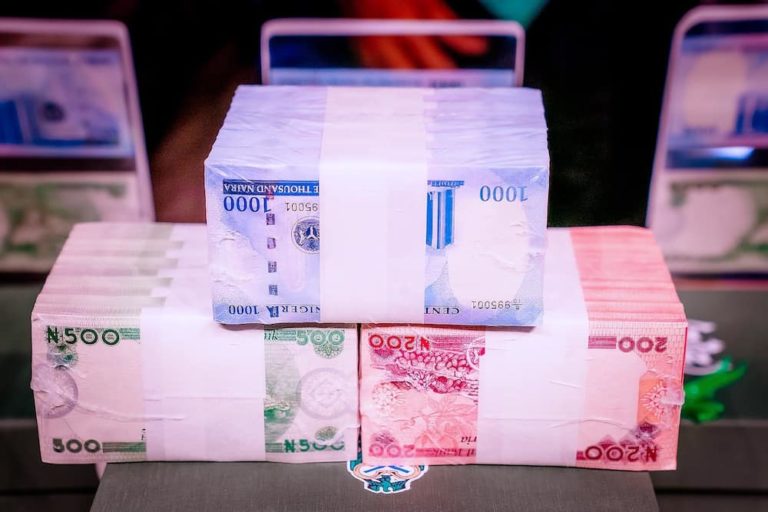
ON April 3, 2024, the Economic and Financial Crimes Commission (EFCC) arrested and detained popular Nigerian crossdresser Idris Olanrewaju, known as Bobrisky, for naira abuse and currency mutilation.

Bobrisky was arrested for violating the Central Bank Nigeria (CBN) Act, Section 21, which states that “Anyone caught tampering with the naira note will face legal consequences.”

The EFCC spokesperson, Dele Oyewale, was quoted as saying during the arrest, “Bobrisky is with us. He was arrested last night in Lagos, and he is at our Lagos command. We arrested him for alleged abuse of naira notes, spraying of naira notes, and currency mutilation, among other things. We are very serious about restoring the dignity of the naira.”


Read Also:


The ICIR reported that some days after, the crossdresser was charged to a Federal High Court in Lagos, where he was sentenced to six months imprisonment without an option of a fine.

The court’s judgement on Bobrisky generated mixed reactions. Many Nigerians criticised the anti-corruption agency for being selective in prosecuting naira abusers. 

In 2023, the then Inspector General of Police, Usman Alkali Baba, ordered the arrest and prosecution of Nigerians selling, spraying or generally abusing naira notes in the country.

Several videos have surfaced on social media platforms, including X, Instagram, and TikTok, showing public officials, monarchs, and some Nigerian celebrities spraying the naira notes in public. As of the time of filing this report, the EFCC and related agencies are yet to arrest any of them.

Some of these videos and reports exposed the Governor of Niger State, Umaru Bago, a lawmaker from Borno State, Ibrahim Abuna, and the Minister of Arts, Culture and Creative Economy, Hannatu Musawa abusing the naira. 

The CBN had said it would prosecute the minister but she has continued as a cabinet member in President Bola Tinubu’s government without an arrest. 

Another video showed how the Olu of Owode-Egba, Ogun State, Aremo Sowemimo, sprayed naira on a musician during an event. The ICIR reported that the monarch was suspended by his aggrieved fellow monarchs for two months.

There are also social media post  of children of politically exposed persons of spaying the the naira notes.

Another popular businessman known as Cubana chief priest, was recorded abusing the naira note at an outdoor event. 
NAF aircrafts blast illicit refineries in Rivers

0

THE air component of Operation Delta Safe of the Nigerian Air Force has destroyed seven illegal refining stations in different locations in Rivers State.

In addition, military planes sent out for the operations attacked four vessels carrying illicitly processed goods sailing southwards.

In a statement released on Sunday, April 14, 2024, the Nigerian Air Force spokesperson,  Air Vice Marshal Edward Gabkwet, stated that the operations took place in the River State communities of Idama, Ogbomkiri, Arugbana, Ivy Island, and Samkiri on April 12 and 13.

Read Also:

“Air strikes by the Air Component of Operation Delta Safe have continued to record tremendous successes against the activities of economic saboteurs operating in the Niger Delta Region.

Specifically, air strikes carried out from  April 12 to 13,  2024 at some locations in Rivers State have significantly diminished the capabilities of oil thieves to continue in their nefarious efforts at bursting and siphoning crude oil.” Gabkwet stated.

He added that a functioning illicit refining plant was seen and investigated in the Idama community while four boats carrying illicitly processed goods were seen sailing southward during armed reconnaissance over Yellow Island and Cawthorne Channel, after which the boats were destroyed.

He said comparable reconnaissance flights were carried out over Ogbomkiri, Arugbana, Ivy Island, and Samkiri. While over Ogbomkiri, an active illegal refining site was located, and appropriate action was taken.

Oil thieves were observed attempting to establish an unauthorized refinery plant near Arugbana. Upon noticing an approaching aircraft, they hastily fled for safety.

The Force added that other unlawful locations were also noticed, investigated, and demolished.

“Approximately seven illicit refining locations and four boats were found and demolished during the two-day operation.”

85% of Nigerians still enjoy electricity subsidy – FG

0

THE Federal Government has said despite the new electricity tariff hike, approximately 85 per cent of Nigerians still benefit from electricity subsidy.

The government said this in response to criticisms of the decision by Nigerians.

On April 3, the Nigerian Electricity Regulatory Commission (NERC) declared that Band A customers would see an instant increase in power tariff from N68 to N225 per kilowatt-hour.

Read Also: 

According to the regulator, Band A customers, who constitute around 15 per cent of all power users nationwide, would no longer receive electricity subsidy due to the new rate.

However, according to a statement released on Saturday, April 13, by the Minister of Information and National Orientation, Mohammed Idris, and signed by his spokesperson, Rabiu Ibrahim, 85 per cent of Nigerians who fit into various categories under the new electricity supply regime continue to receive the subsidy.

He claimed that only 15 per cent of the population, allegedly comprising mostly wealthy individuals and industrial clusters, benefited from the disproportionate 40 per cent electricity subsidy, said to provide electricity for around 20 hours a day.

In addition, the minister said the new Electricity Act signed by President Bola Tinubu strengthened the NERC’s governance framework and gave the agency the authority to impose harsh penalties on electricity distribution companies that violated billing and customer electricity supply laws.


US intercepts ‘nearly all’ Iranian drones headed to Israel – Biden

0

THE United States intercepted a barrage of drones Iran fired at Israel overnight Saturday, according to American President Joe Biden.   

Iran’s Islamic Revolutionary Guards Corps had, on Saturday, April 13,  launched dozens of drones and missiles at Israel in an attack that may trigger a major escalation between the countries.

Biden, however, in a statement posted on his X handle in the early hour of Sunday, April, said the United States helped Israel take down “nearly all” of the attacking drones and missiles.

Biden, who returned to Washington earlier on Saturday to meet with advisers about the attack, condemned Iranian attacks on military facilities in Israel and pledged a coordinated G7 diplomatic response, adding that the  U.S. forces and facilities had not been hit. 

“Earlier today, Iran – and its proxies operating out of Yemen, Syria and Iraq – launched an unprecedented air attack against military facilities in Israel. I condemn these attacks in the strongest possible terms.

“At my direction, to support the defence of Israel, the U.S. military moved aircraft and ballistic missile defence destroyers to the region over the course of the past week. Thanks to these deployments and the extraordinary skill of our servicemembers, we helped Israel take down nearly all of the incoming drones and missiles.”

Biden reaffirmed America’s unwavering support for Israel’s security, saying that Israel demonstrated a remarkable capacity to defend against and defeat even unprecedented attacks.

“Tomorrow, I will convene my fellow G7 leaders to coordinate a united diplomatic response to Iran’s brazen attack. My team will engage with their counterparts across the region. And we will stay in close touch with Israel’s leaders. And while we have not seen attacks on our forces or facilities today, we will remain vigilant to all threats and will not hesitate to take all necessary action to protect our people,” the statement added.

Confirming the interception of the massive drones, Israel’s military said on Sunday that “99 per cent” of drones and missiles fired by Iran were intercepted by Israel and its partners, with only “a small number” of ballistic missiles reaching Israel.

According to reports, the partner countries were believed to be Jordan, the United Kingdom and France.

Israel’s military spokesman, Daniel Hagari, stated that the ballistic missiles that successfully reached Israel landed at the Netavim Air Base in southern Israel, resulting in only minor structural damage.

He added that the base remained operational despite the attack, with aircraft continuing to utilise its facilities.


Read Also:


Hagari labelled the deployment of ballistic missiles as an “escalation factor.” 

When asked about potential offensive measures from Israel, he added that Israel had formulated plans and was weighing its options.

“We have plans; the situation is still ongoing. We are assessing the situation, we are showing the cabinet the plans, and we are ready to do what is necessary for the defence of Israel.

“I want you to show me another country facing over 110 ballistic missiles and the drones. I think Iran meant to get results and didn’t get results. The ballistic missiles are an escalatory factor. And when they used these numbers, they wanted more significant results than what happened,” he said.

The military had on Saturday disclosed that Iran launched over 170 drones, in addition to more than 30 cruise missiles and over 120 ballistic missiles, targeting Israel.

The attack was coming barely two weeks after a suspected Israel strike resulted in the death of two Iranian generals and seven members of the IRGC were killed in Syria.

Justifying the attack, the Iran Islamic Revolutionary Guard Corps (IRGC) said it was responding to an “attack on the consular section of the Iranian embassy in Damascus” on 1 April.

Nigerian Military retrieves over 66,000 firearms from non-state actors

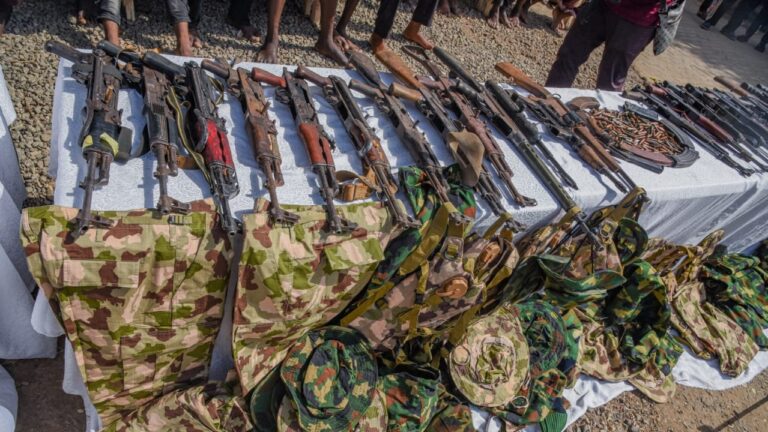
BETWEEN January and April 2024, the Nigerian military recovered 66,692 arms and ammunition in various operations against bandits and terrorist groups across the country. 

The military noted that the firearms were recovered from terrorist groups, bandits, kidnappers, and ethnic or secessionist groups.

A breakdown of the figures showed that troops captured 3,117 dangerous arms and 63,575 ammunition.


Read Also: 


Section 428 of Nigeria’s Criminal Code Act prohibits the possession of firearms by any person who is not a member of a security agency.

Data analysed by The ICIR from the Armed Conflict Location & Event Data Project (ACLED) revealed that 2,336 people were killed by various insecurity attacks across the country in the first quarter of 2024. 

The data showed that states like Borno, Zamfara, Katsina and Benue recorded the highest number of deaths within the period.

Some of the arms recovered during this period included 1,619 AK-47 rifles, 24 automatic pump action guns, and 47 locally fabricated guns, among others.

Other were 36,007 rounds of 7.62mm special amm, 12,698 rounds of 7.62mm NATO, 948 assorted arms and 5,520 assorted ammunition,  47 locally fabricated guns, 47 Dane guns, 24 automatic pump-action guns, eight locally fabricated pistols, two locally made single-barrel guns, one double-barrel gun, one hand grenade, and one IED.

There were also 1,686 rounds of 7.62mm NATO, 116 rounds of 9mm ammo, 133 rounds of 7.62 x 39mm ball ammo, 151 rounds of 7.62 x 39mm ammo, 619 live cartridges, and 34 magazines, among others.

In February, The ICIR reported how Kaduna State Governor Uba Sani alleged that 80 per cent of the illegal firearms in West Africa were in Nigeria. 

The governor stated that about 200 million out of 250 illegal firearms were illegally possessed within the country, further demanding that Nigeria’s gun laws be reviewed.

Meanwhile, in 2022, the SBM Intelligence report said that 6,154,000 firearms were in the possession of civilians in the country.

The firearms, according to the report, were put at 3.21 per 100 persons, while 224,200 and 362,400 firearms were in the possession of the military law and other law enforcement agencies, respectively.

Group takes responsibility for cyber attack on Israel

0

A GROUP with ties to Iran, “Cyber Avengers” have announced that they were responsible for the recent power outages across Israel, a post shared on X by a UK investigative journalist, Suleiman Ahmed, says.

“The ‘Cyber Avengers’, a group with ties to Iran, have proudly announced their responsibility for the recent power outages across Israel, hitting major urban centres such as Tel Aviv and Netanya.

“They’ve lambasted Israeli officials for downplaying the events as mere technical mishaps, alleging a deeper loss of control over their electricity networks. In a bold display of power, the group has issued a stern warning of further, more impactful cyber assaults targeting critical Israeli infrastructure”, the statement reads further.

During the late hours of Saturday, April 13, Iran launched dozens of drones and missiles from its territory to attack Israel. Also, some Iran proxies – Hizbollah in Lebanon and the Houthis in Yemen launched drone attacks on Israel.

The attacks made Israel and its border countries, Jordan and Iraq, close their airspace, after which it was opened. Also, military and commercial flights to Israel have resumed.

Israel noted that over 300 drones were launched at it from Iran, Iraq and Yemen, but most of them were intercepted with the support of the US and UK.

After the attack, Israeli Prime Minister Benjamin Netanyahu spoke over the phone with US President Joe Biden, who affirmed that the US would continue to assist Israel’s defence but would not take any hostile actions against Iran.

Meanwhile, Israel’s National Security Minister, Itamar Ben-Gvir, stated that the government must take severe retaliatory steps against Iran.

It is unclear if Israel will launch direct revenge assaults on Iran since American officials have stated that the US would not take any military action.

However, Prime Minister Netanyahu, who has faced large protests and calls for his resignation from Israelis, may respond with retaliatory attacks to appease his far-right cabinet.

Rotimi Sankore: (1968 – 2024) What you need to know about Nigerian veteran journalist

NIGERIAN seasoned journalist Rotimi Sankore breathed his last on Friday, April 12, throwing the nation’s media industry into mourning.

Born in Lagos on June 5, 1968, he plied his journalism trade across the local, continental, and global stage, serving in and leading several groups promoting journalism practice, human rights, good governance, and equality of the human race.

Sankore was a writer, trainer, researcher and leader.

He was the Executive Director/Editor-In-Chief, Africa Centre for Development Journalism, a centre offering strategic communication support to organisations whose goals are to effect social, political and economic change in Africa.

According to Edugist, an education and news platform, until recently, the ace journalist was editorial board chair of Nigeria Info Radio group, part of AIM Media Group, having 13 stations in Lagos, Abuja, Kano, Port Harcourt, and Onitsha (incorporating Nigeria Info, WaZoBia, Cool FM, and Arewa Radio Stations).

He was the founding Editor-in-Chief of Africa Human & Social Development Information, which pioneered the use of data and statistics for journalism and policy advocacy during the Millennium Development Goals/MDGs (2000 – 2015)

Sankore was the pioneer editor in the mid to late 90’s of the Belgium-based International Federation of Journalists (IFJ) website for African journalists reporting on public accountability, corruption, democracy and rights-related issues.

Edugist further states that the deceased worked with/contributed to publications in The News & Tempo Weekly Magazines (Nigeria) in the early 90’s, Guardian Newspapers (Nigeria); The Guardian UK, Global Index on Censorship, Mail & Guardian (South Africa) the Global New African Magazine, The Journalist (UK), and New African Woman Magazine amongst others.

He also worked as a broadcast journalist hosting The Public Square, a flagship programme on Nigeria Info Radio focusing on democracy, development, governance and policy issues.

His global and Africa-wide development advocacy work includes consultancy and project lead work on partnership projects with UNFPA, UNAIDS, WHO, the Geneva-based Global Partnership for Maternal, Newborn & Child Health, the Africa Development Bank, and the African Union Commission.

He was Secretary of the Africa Health, Human & Social Development Parliamentary Network, a network of chairs of parliamentary committees on health, finance, gender & development issues that worked with United Nations agencies and regional bodies of ECOWAS (West Africa), EAC (East Africa), SADC (Southern Africa), UN Economic Commission for Africa (UNECA) and the African Union Commission to advance Heads of States & Ministers of Finance commitments on development policy and investment.

He also coordinated the Africa 15 per cent Plus Campaign on Development & Health Financing, which was chaired by South African democracy and rights advocate Archbishop Desmond Tutu, a Nobel Peace Prize Laureate.

The deceased was a feminist/gender equality advocate focusing on the role of equality and women’s rights in sustainable development and democracy.

In one of its programmes, Report Women gave a brief profile of the deceased. It said Sankore, among other things, worked to represent journalists from minority communities, advocated against racism and women’s rights, trained journalists and advocates, and coordinated the Centre for Research & Development of Rights in Africa (CREDO) for Freedom of Expression and Associated Rights.

Veteran journalist Ahmed Kadaria Ahmed broke the news of his passing on her Facebook page on Saturday, sending a shock wave across the nation’s media industry.

Ahmed wrote: “It is with deep sorrow that I announce we have lost one of Nigeria’s finest journalists and excellent all-round human beings, Rotimi Sankore. Rotimi loved Nigeria with a passion that allowed him to be honest about her problems and what needed to be done to solve them.

“Over the years, Rotimi spent time and energy trying to make sure those in government, policymakers and ordinary Nigerians understand what the numbers show, how they came about, what they mean and how they can help us understand what needs to be done.

“His work was insightful and significant, and it is his legacy. His death is a big loss. We will miss him. My heartfelt condolences to his daughter and his family.”


Onakoya set to break Guinness World Record for longest chess marathon

0

IN an effort to support the aspirations of millions of children in Africa who lack access to education, Nigerian chess champion Tunde Onakoya has declared his intention to break the record for the longest chess marathon.

This was revealed by Onakoya on Friday, April 12, 2024, in a post on his X handle, where he said he would attempt to play chess for 58 hours without losing a game.

“On the 17th of April 2024, I will attempt to break the Guinness World record for the longest Chess marathon in the heart of Times Square, New York City, for 58 hours without losing a game. Doing this for the dreams of millions of children across Africa without access to education.” Onakoya wrote.


Read Also:


The event is set to take place in Times Square, New York City, on April 17, 10 a.m. to April 19, 8 p.m.

Onakoya appealed to Nigerians to support the ambition.

“You guys have been rock solid for me through the years, so I need all of us to come together now more than ever to show the world that the Nigerian spirit is unwavering and we can do great things from a small place against all odds,” he wrote.

Chess in Slums Africa is a non-profit organisation founded by Onakoya to utilise chess education materials to guide and empower underprivileged youngsters.

According to the Guinness World Records, the longest chess marathon, lasting 56 hours, 09 minutes, and 37 seconds, was accomplished on November 11, 2018, by Norwegians Hallvard Haug Flatebø and Sjur Ferkingstad.

The ICIR reported how many Nigerians indicated interest in breaking the Guinness world record after Hilda Baci successfully attempted the longest cooking marathon in May 2023.

Hilda Baci broke the record for the longest cooking marathon (individual), cooking for 93 hours and 11 minutes.

Her feat was acknowledged by Guinness World Record, and in June 2023, she was confirmed as the record holder.


Nigeria recorded 806 cases, 150 deaths from Lassa fever in 3 months

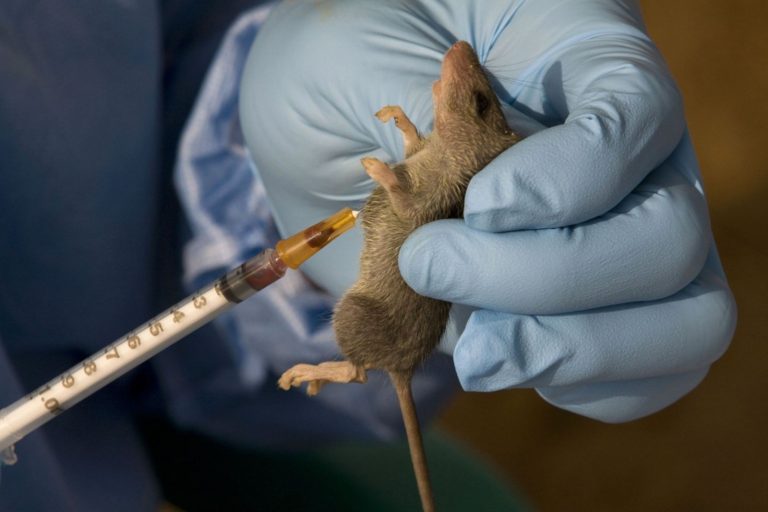
A situation report by the Nigeria Centre for Disease Control and Prevention (NCDC) revealed that 806 cases of Lassa fever were recorded across the country in the first quarter of 2024.

Also, the virus killed 150 people within the period, the NCDC report published on its website and analysed by The ICIR showed. 

By calculation, this is an average of nine cases and two deaths reported daily within the first 13 weeks of 2024.


Read Also:


Lassa fever is an acute viral hemorrhagic illness transmitted to humans through contact with food or household items contaminated by infected rodents or contaminated persons. 

Its symptoms include fever, headache, sore throat, general body weakness, cough, nausea, vomiting, diarrhoea, muscle pains, chest pain, and, in severe cases, unexplainable bleeding from ears, eyes, nose, mouth and other body openings.

From Week 1 to 13, the case fatality rate (CFR) of Lassa fever rose 18.6 per cent. This is higher than the CFR for the same period in 2023 (17.5 per cent).

The states with the highest reported cases are Ondo, Edo, Bauchi and Taraba states, with 192, 179, 127 and 95 cases, respectively.

However, the death rates were predominant in Bauchi state (28 deaths), Kogi state (24 deaths) and Edo state (23 deaths). 

According to the NCDC, “27 states have recorded at least one confirmed case across 125 Local Government Areas in 2024. 62 per cent of all confirmed cases were recorded from Ondo, Edo, and Bauchi, with Ondo State accounting for 24 per cent, Edo 22 per cent, and Bauchi 16 per cent.”

According to the report, 32 health workers were infected within the first quarter.

The NCDC noted that the National Lassa Fever Multi-partner, Multi-sectoral Incident Management System had been activated to coordinate response at all levels at the Emergency Operations Centre.

The ICIR reported that between January 1 and February 28, 2024,  477 cases were confirmed by the NCDC. This means that 330 cases were added in March. 

The agency stated that some challenges in the fight against Lassa fever, including the late presentation of cases leading to increased CFR and poor health-seeking behaviour.

It stressed that the high cost of treatment and clinical management of Lassa fever, as well as poor environmental sanitation and awareness in high-burden communities, are leading causes. 

The ICIR reported Nigeria might have recorded its highest number of Lassa fever cases in 2023, with 8,542 suspected cases, 1,170 confirmed cases, and 200 deaths across 28 states.

Naira appreciates to 7.2% against dollar at official market

0

ON Friday, April 12,  the official market saw a sharp increase in the value of the naira, which traded at N1,142.38 to the dollar.

The naira increased by N88.23, according to data from the official trading platform of the FMDQ Exchange, which is in charge of the Nigerian Autonomous Foreign Exchange Market.

This implies a 7.16 per cent rise compared to Monday, April 8, 2024, the previous trading date, when the currency traded at N1,230.61 to the dollar before the Sallah holiday.


Read Also:


News Agency of Nigeria (NAN) reported on Saturday, April 13, that the overall daily turnover rose to $281.34 million on Friday from $125.55 million on Monday.

In the meantime, the naira traded between N1,265 and N1,100 to the dollar at the Investor’s and Exporter’s window.

In its February and March 2024 policy sessions, the CBN raised interest rates by 600 basis points.

In March 2024, the value of the Nigerian Naira relative to the US dollar increased significantly, signalling a substantial shift in Nigeria’s exchange rate strategy.

The ICIR  reported the Bureau De Change’s (BDCs) suggestions that the naira could only sustain gains against the dollar by sustaining liquidity in the foreign exchange market.

According to official figures, the naira increased from N1595.11/$1 at the end of February 2024 to N1309/$1 on the final trading day of the month.