A GROUP with ties to Iran, “Cyber Avengers” have announced that they were responsible for the recent power outages across Israel, a post sharedon X by a UK investigative journalist, Suleiman Ahmed, says.
“The ‘Cyber Avengers’, a group with ties to Iran, have proudly announced their responsibility for the recent power outages across Israel, hitting major urban centres such as Tel Aviv and Netanya.
“They’ve lambasted Israeli officials for downplaying the events as mere technical mishaps, alleging a deeper loss of control over their electricity networks. In a bold display of power, the group has issued a stern warning of further, more impactful cyber assaults targeting critical Israeli infrastructure”, the statement reads further.
During the late hours of Saturday, April 13, Iran launched dozens of drones and missiles from its territory to attack Israel. Also, some Iran proxies – Hizbollah in Lebanon and the Houthis in Yemen launched drone attacks on Israel.
The attacks made Israel and its border countries, Jordan and Iraq, close their airspace, after which it was opened. Also, military and commercial flights to Israel have resumed.
Israel noted that over 300 drones were launched at it from Iran, Iraq and Yemen, but most of them were intercepted with the support of the US and UK.
After the attack, Israeli Prime Minister Benjamin Netanyahu spoke over the phone with US President Joe Biden, who affirmed that the US would continue to assist Israel’s defence but would not take any hostile actions against Iran.
Meanwhile, Israel’s National Security Minister, Itamar Ben-Gvir, stated that the government must take severe retaliatory steps against Iran.
It is unclear if Israel will launch direct revenge assaults on Iran since American officials have stated that the US would not take any military action.
However, Prime Minister Netanyahu, who has faced large protests and calls for his resignation from Israelis, may respond with retaliatory attacks to appease his far-right cabinet.
NIGERIAN seasoned journalist Rotimi Sankore breathed his last on Friday, April 12, throwing the nation’s media industry into mourning.
Born in Lagos on June 5, 1968, he plied his journalism trade across the local, continental, and global stage, serving in and leading several groups promoting journalism practice, human rights, good governance, and equality of the human race.
Sankore was a writer, trainer, researcher and leader.
He was the Executive Director/Editor-In-Chief, Africa Centre for Development Journalism, a centre offering strategic communication support to organisations whose goals are to effect social, political and economic change in Africa.
According to Edugist, an education and news platform, until recently, the ace journalist was editorial board chair of Nigeria Info Radio group, part of AIM Media Group, having 13 stations in Lagos, Abuja, Kano, Port Harcourt, and Onitsha (incorporating Nigeria Info, WaZoBia, Cool FM, and Arewa Radio Stations).
He was the founding Editor-in-Chief of Africa Human & Social Development Information, which pioneered the use of data and statistics for journalism and policy advocacy during the Millennium Development Goals/MDGs (2000 – 2015)
Sankore was the pioneer editor in the mid to late 90’s of the Belgium-based International Federation of Journalists (IFJ) website for African journalists reporting on public accountability, corruption, democracy and rights-related issues.
Edugist further states that the deceased worked with/contributed to publications in The News & Tempo Weekly Magazines (Nigeria) in the early 90’s, Guardian Newspapers (Nigeria); The Guardian UK, Global Index on Censorship, Mail & Guardian (South Africa) the Global New African Magazine, The Journalist (UK), and New African Woman Magazine amongst others.
He also worked as a broadcast journalist hosting The Public Square, a flagship programme on Nigeria Info Radio focusing on democracy, development, governance and policy issues.
His global and Africa-wide development advocacy work includes consultancy and project lead work on partnership projects with UNFPA, UNAIDS, WHO, the Geneva-based Global Partnership for Maternal, Newborn & Child Health, the Africa Development Bank, and the African Union Commission.
He was Secretary of the Africa Health, Human & Social Development Parliamentary Network, a network of chairs of parliamentary committees on health, finance, gender & development issues that worked with United Nations agencies and regional bodies of ECOWAS (West Africa), EAC (East Africa), SADC (Southern Africa), UN Economic Commission for Africa (UNECA) and the African Union Commission to advance Heads of States & Ministers of Finance commitments on development policy and investment.
He also coordinated the Africa 15 per cent Plus Campaign on Development & Health Financing, which was chaired by South African democracy and rights advocate Archbishop Desmond Tutu, a Nobel Peace Prize Laureate.
The deceased was a feminist/gender equality advocate focusing on the role of equality and women’s rights in sustainable development and democracy.
In one of its programmes, Report Women gave a brief profile of the deceased. It said Sankore, among other things, worked to represent journalists from minority communities, advocated against racism and women’s rights, trained journalists and advocates, and coordinated the Centre for Research & Development of Rights in Africa (CREDO) for Freedom of Expression and Associated Rights.
Veteran journalist Ahmed Kadaria Ahmed broke the news of his passing on her Facebook page on Saturday, sending a shock wave across the nation’s media industry.
Ahmed wrote: “It is with deep sorrow that I announce we have lost one of Nigeria’s finest journalists and excellent all-round human beings, Rotimi Sankore. Rotimi loved Nigeria with a passion that allowed him to be honest about her problems and what needed to be done to solve them.
“Over the years, Rotimi spent time and energy trying to make sure those in government, policymakers and ordinary Nigerians understand what the numbers show, how they came about, what they mean and how they can help us understand what needs to be done.
“His work was insightful and significant, and it is his legacy. His death is a big loss. We will miss him. My heartfelt condolences to his daughter and his family.”
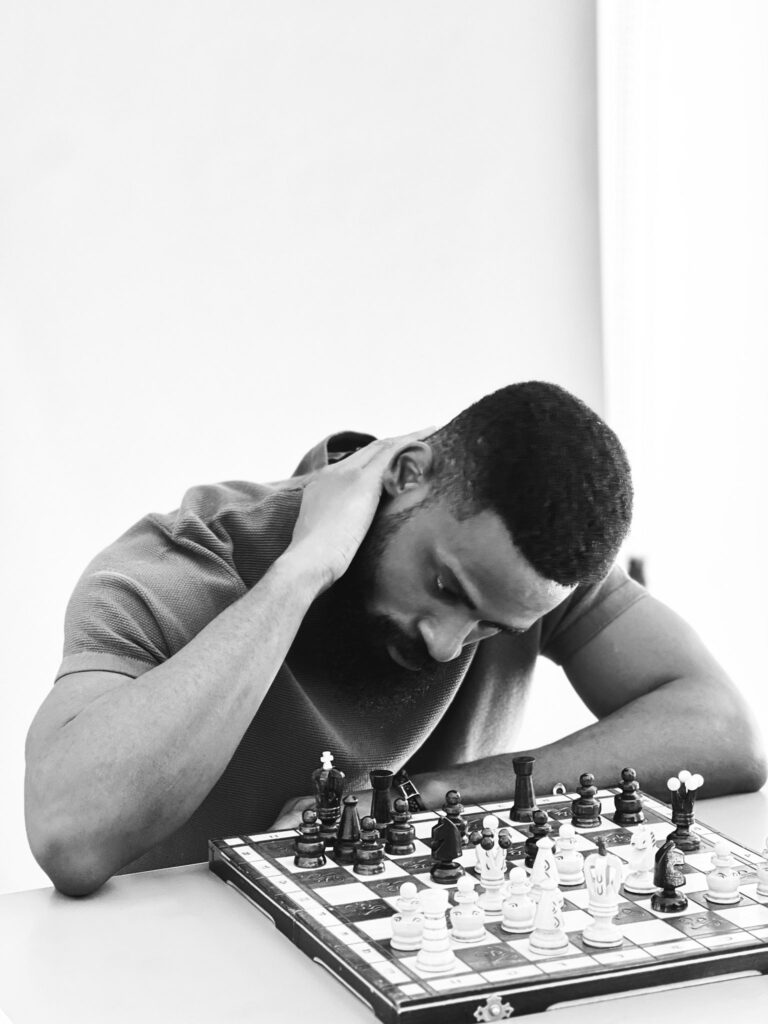
IN an effort to support the aspirations of millions of children in Africa who lack access to education, Nigerian chess champion Tunde Onakoya has declared his intention to break the record for the longest chess marathon.
This was revealed by Onakoya on Friday, April 12, 2024, in a post on his X handle, where he said he would attempt to play chess for 58 hours without losing a game.
“On the 17th of April 2024, I will attempt to break the Guinness World record for the longest Chess marathon in the heart of Times Square, New York City, for 58 hours without losing a game. Doing this for the dreams of millions of children across Africa without access to education.” Onakoya wrote.
The event is set to take place in Times Square, New York City, on April 17, 10 a.m. to April 19, 8 p.m.
Onakoya appealed to Nigerians to support the ambition.
“You guys have been rock solid for me through the years, so I need all of us to come together now more than ever to show the world that the Nigerian spirit is unwavering and we can do great things from a small place against all odds,” he wrote.
Chess in Slums Africa is a non-profit organisation founded by Onakoya to utilisechess education materials to guide and empower underprivileged youngsters.
According to the Guinness World Records, the longest chess marathon, lasting 56 hours, 09 minutes, and 37 seconds, was accomplished on November 11, 2018, by Norwegians Hallvard Haug Flatebø and Sjur Ferkingstad.
The ICIRreported how many Nigerians indicated interest in breaking the Guinness world record after Hilda Baci successfully attempted the longest cooking marathon in May 2023.
Hilda Baci broke the record for the longest cooking marathon (individual), cooking for 93 hours and 11 minutes.
Her feat was acknowledged by Guinness World Record, and in June 2023, she was confirmed as the record holder.
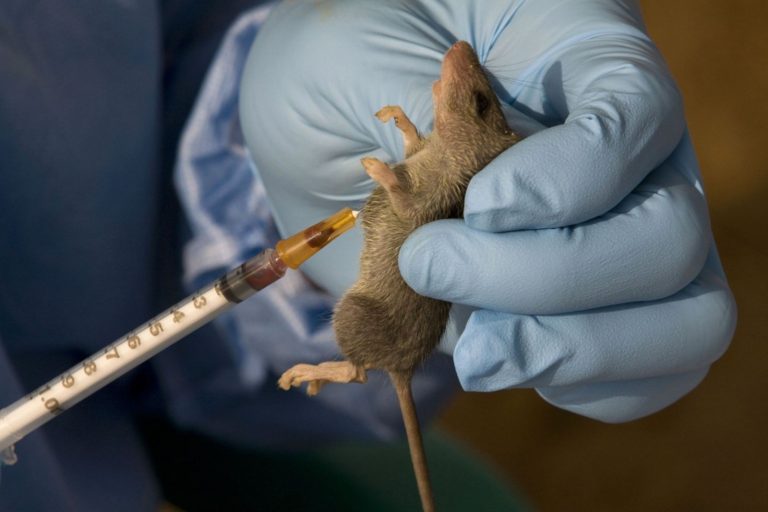
A situation report by the Nigeria Centre for Disease Control and Prevention (NCDC) revealed that 806 cases of Lassa fever were recorded across the country in the first quarter of 2024.
Also, the virus killed 150 people within the period, the NCDC report published on its website and analysed by The ICIR showed.
By calculation, this is an average of nine cases and two deaths reported daily within the first 13 weeks of 2024.
Lassa fever is an acute viral hemorrhagic illness transmitted to humans through contact with food or household items contaminated by infected rodents or contaminated persons.
Its symptoms include fever, headache, sore throat, general body weakness, cough, nausea, vomiting, diarrhoea, muscle pains, chest pain, and, in severe cases, unexplainable bleeding from ears, eyes, nose, mouth and other body openings.
From Week 1 to 13, the case fatality rate (CFR) of Lassa fever rose 18.6 per cent. This is higher than the CFR for the same period in 2023 (17.5 per cent).
The states with the highest reported cases are Ondo, Edo, Bauchi and Taraba states, with 192, 179, 127 and 95 cases, respectively.
However, the death rates were predominant in Bauchi state (28 deaths), Kogi state (24 deaths) and Edo state (23 deaths).
According to the NCDC, “27 states have recorded at least one confirmed case across 125 Local Government Areas in 2024. 62 per cent of all confirmed cases were recorded from Ondo, Edo, and Bauchi, with Ondo State accounting for 24 per cent, Edo 22 per cent, and Bauchi 16 per cent.”
According to the report, 32 health workers were infected within the first quarter.
The NCDC noted that the National Lassa Fever Multi-partner, Multi-sectoral Incident Management System had been activated to coordinate response at all levels at the Emergency Operations Centre.
The ICIR reported that between January 1 and February 28, 2024, 477 cases were confirmed by the NCDC. This means that 330 cases were added in March.
The agency stated that some challenges in the fight against Lassa fever, including the late presentation of cases leading to increased CFR and poor health-seeking behaviour.
It stressed that the high cost of treatment and clinical management of Lassa fever, as well as poor environmental sanitation and awareness in high-burden communities, are leading causes.
The ICIRreported Nigeria might have recorded its highest number of Lassa fever cases in 2023, with 8,542 suspected cases, 1,170 confirmed cases, and 200 deaths across 28 states.
ON Friday, April 12, the official market saw a sharp increase in the value of the naira, which traded at N1,142.38 to the dollar.
The naira increased by N88.23, according to data from the official trading platform of the FMDQ Exchange, which is in charge of the Nigerian Autonomous Foreign Exchange Market.
This implies a 7.16 per cent rise compared to Monday, April 8, 2024, the previous trading date, when the currency traded at N1,230.61 to the dollar before the Sallah holiday.
News Agency of Nigeria (NAN) reported on Saturday, April 13, that the overall daily turnover rose to $281.34 million on Friday from $125.55 million on Monday.
In the meantime, the naira traded between N1,265 and N1,100 to the dollar at the Investor’s and Exporter’s window.
In its February and March 2024 policy sessions, the CBN raised interest rates by 600 basis points.
In March 2024, the value of the Nigerian Naira relative to the US dollar increased significantly, signalling a substantial shift in Nigeria’s exchange rate strategy.
The ICIRreported the Bureau De Change’s (BDCs) suggestions that the naira could only sustain gains against the dollar by sustaining liquidity in the foreign exchange market.
According to official figures, the naira increased from N1595.11/$1 at the end of February 2024 to N1309/$1 on the final trading day of the month.
A feud between an illegal oil bunker, Endurance Okodeh alias Amangbein and a sophisticated cartel of powerful illegal oil bunkers led to the killing of 17 soldiers in the Okuama community in Ughelli South LGA of Delta, investigations revealed.
Findings unmasked how the leader of the cartel, ex-militant leader Government Ekpemukpolo alias Tompolo who operates a private security company, in a bid for total control of the creeks of Niger Delta, earlier warned Amangbein, who is an ally of a sitting governor in one of the Niger-Delta States, to stay off illegal oil business, a development the latter saw as oppression.
Amangbein, a known ex-militant, hails from the Igbomotoru community in the Southern Ijaw Local Government Area (LGA) of Bayelsa state. He is also a leading voice against Tompolo and the ex- Nigerian Maritime Administration and Safety Agency, (NIMASA) boss, Patrick Akpobolokemi, in both the creek business and the Okuama/Okoloba land dispute.
Investigations revealed that the military authorities zeroed in on Amangbein in search of the leader of the militant group that killed 17 officers and soldiers of the 181 Battalion of the Nigerian Army that went to Okuama community to free one Anthony Aboh, said to be an ally of Akpobolokemi.
The former NIMASA chief allegedly built a mansion in the disputed land between Okuama and Okoloba communities. The building of the house on the disputed land is said to be the genesis of the debacle that led to the killing of the soldiers.
Amangbein’s mother hailed from Okuama, an Urhobo community in Ughelli South LGA, in Delta state. He is now said to have fled to his paternal community in Bayelsa state, apparently informed of the military’s raid of the Igbomotoru community, which left several residents injured and properties destroyed.
A general and the chief of defence staff, Christopher Musa, had earlier said that the 17 military personnel, including four officers and 13 soldiers, were murdered in relation to illegal bunkering business. But Okuama community insisted that the soldiers stormed the community, accusing them of being in possession of one Anthony Aboh, whose lifeless body has since been recovered floating in Forcado River near Ayakoroma community.
Sources said the lifeless body of Anthony Aboh was recovered floating on River Forcados close to the Ayakoromo community in Delta state. One of the sources in Okoloba said, “We found the lifeless body of Mr. Anthony Aboh floating on River Forcados near Ayakoromo community.”
How the illegal oil cartel works
The illegal oil cartel in the Niger Delta comprises influential Nigerians and foreigners, including top military operators, government officials, highly-placed and retired oil industry players, politicians and business persons, and they are the financiers of oil bunkering syndicates, which over the years have plunged the country’s economy in the abyss of decline.
Their oil bunkering cartel, working with insiders, steals crude directly from major crude oil pipelines in the oil-rich region while officials pump crude to the different terminals. They know the time and duration of pumping and the exact pipelines.
The damage inflicted by small oil bunkers who illegally refine crude oil in the Niger Delta region is child’s play compared to the havoc the almighty cartel that owns giant vessels and equipment wreaks on the nation’s economy.
File: A military burial in Nigeria.
There are local oil mafias who also siphon from major pipelines and later sell their product to the big oil players, who use superior tubes and experts to drain off crude oil.
Every security officer involved in the business is well ‘taken care of’ and so, secrecy is maintained. Security operatives who mount sentry on waterways also collect levies from local oil bunkers, and many want to serve in such lucrative beat. They also make returns to superior officers, an insider told this reporter.
This reporter gathered that even with the militarisation of the waterways and the award of security contracts to Tompolo to secure crude oil, the illegal oil business has continued to blossom in Niger Delta. A development the Nigerian National Petroleum Corporation (NNPC) GMD, Mele Kyari ascribed to Nigerian professionals and elites as the brain behind oil theft in the region.
This claim was controverted by Niger Delta elder statesman Edwin Clarke, who fingered the NNPC and the military as the big-time oil thieves.
Crux of the killing
The incident leading to the current crisis is said to have started as unrest in January 2024, following an age-long land dispute between the people of Okoloba and Okuama, leading to a deadly conflict that has brought about loss of lives on both sides. Consequently, the military command unit of the JTF at Bomadi was invited to the scene. It was, however, said that the invitation of the military was at the behest of the ex-NIMASA boss, who had allegedly used his influence to skew the military intervention in favour of his community, Okoloba.
According to Okuama community president-general James Oghoroko, Akpobolokem is an ally of Tompolo, who works closely with the military to secure the creeks. The military’s involvement in the dispute has elicited great suspicion from the people of Okuama, who feel unfairly treated.
Consequently, the attempt by the military personnel to invite the leaders of Okuama was greatly resisted, as it was believed that it was merely an attempt to unduly victimise the people of the community. Until the military authorities can explain the exact nature of the ‘peace mission’ warranting the soldiers’ presence in the community, the street narrative of the military intervention of working under the dictates of Tompolo and Akpobolokem may become attractive and may snowball into a nationwide narrative.
The ICIR also gathered that Akpobolokem, who is being prosecuted by the Economic and Financial Crimes Commission (EFCC) for a N754 million fraud, built a white mansion on the disputed land, a development that Amangbein and Okuama community elders challenged. It was gathered that an ally of the ex-NIMASA boss, Anthony Aboh, was taken hostage by Okuama people rising from the house built on the disputed land. Residents said that it was this person’s abduction that the military had come to investigate and, perhaps, effect his release, not any peace mission as claimed by the military authorities.
Who killed the 17 soldiers?
Although no group has claimed responsibility for the attack on the soldiers, according to Army sources, 17 military personnel, including a Commanding Officer, two Majors, one Captain and 12 soldiers were murdered by suspected youths of Okuama community. Insiders confided to The ICIR that the soldiers used a speed boat owned by Tantita security outfit, Tompolo’s private security outfit.
The soldiers: Cpl Yahaya Danbaba; Cpl Kabir Bashir; LCpl Bulus Haruna; LCpl Sole Opeyemi; LCpl Bello Anas; LCpl Hamman Peter; LCpl Ibrahim Abdullahi; Pte Alhaji Isah; Pte Clement Francis; Pte Abubakar Ali; Pte Ibrahim Adamu, and Pte Adamu Ibrahim. Others include, Lt. Col. AH Ali (Commanding Officer, 181 Amphibious Battalion); Major SD Shafa; Major DE Obi; Capt. U Zakari and Sgt. Yahaya Saidu were reportedly lured into the creek opposite Okuama community and were all killed but no one has questioned why trained soldiers were killed and those that conveyed them with speed boat survived. The question begging for an answer is, does Tantita security rent their speed boats? Does it mean that the 181 Amphibious Battalion has no speed boat they use for routine patrol?
Tompolo refuses to speak.
Since there were allegations that the speed boat used by the slain soldiers belonged to Tantita security firm, which Tompolo owns, The reporter went to Oporoza on Saturday, March 30, 2024, to obtain comments from the ex-militant leader but was told that all media activities of the ex-militant leader is being handled by his media consultant, Paul Bebenimibo.
The ICIR contacted Paul Bebenimibo on his known MTN cell phone number but he did not take his calls. Short message service (SMS) and WhatsApp messages were sent to him on March 31 and April 1, 2024, asking him to clarify his boss’ stance on the use of the Tantita speed boat by the soldiers and whether the firm rents out its speed boats and whether Tompolo was in cold war with Amangbein. However, all attempts were unsuccessful, as he did not return calls or respond to the SMS or WhatsApp messages sent to his cell phone.
Who are the oil mafia?
According to a Port Harcourt environment activist, Imabong Cliff, the government has not demonstrated seriousness to fight the oil theft, and “whatever tough measures are said to have been adopted have not put off the cartel.”
An activist with Young Nigerian Rights Organisation based in Asaba, Delta state, Victor Ojei, also criticised government efforts at dealing with the issue of oil theft and illegal bunkering in the Niger Delta.
“The tenacious ascent in oil robbery despite significant interests in securing oil pipelines brings up issues about the adequacy of the public authority’s methodology. It is conceivable that the actions taken to this point by the federal government of Nigeria have not sufficiently tended to the main drivers of the issue or have been inadequate to counter the refined strategies utilised by the oil criminals.
A knowledgeable source said that the cartel, over the years, successfully sold a decoy, making successive governments believe that oil theft was being carried out by small-time oil bunkers and Niger Delta militants bent on destroying the country’s economy, and so they must be eliminated. The Presidency believed that the big-time oil thieves continued their brisk business with protection from security operatives.
How Tompolo was awarded a surveillance contract
But the real challenge is not the small-time oil thieves, it is the influential cartel that is strongly connected and has continued to operate with impunity despite the security measures in place.
A security expert said, “There is no way they can fetch out the illegal oil cartels for possible persecution under the current set-up because those in charge of security are part of the cartel and those saddled with oil pipelines protection contracts.”
Prior to awarding the surveillance contract to Tompolo in 2022, the federal government had understudied the system and came to the understanding that, because of his knowledge of the creeks, ex-militant Tompolo could help the government stop pipeline vandalism and reduce bunkering. It was an idea that top military shots during President Muhammadu Buhari’s regime bought into.
How Tompolo uses military, militants in the creek
Before President Bola Tinubu renewed the Tompolo’s security contract, there were agitations by other ethnic nationalities on the need for them to secure pipelines within their domain instead of giving all the contracts to Tantita Security Company. However, it is alleged that since Tompolo fulfilled his part of the political deal sealed with President when he visited him in his hometown in Oporoza by mobilising for Tinubu Presidency in the region, Tinubu ignored the agitations of other ethnic groups like the Isoko, Urhobo amongst others to give same surveillance contract for them to secure pipelines in their domain and renewed the pipelines surveillance contract to Tompolo through the NNPC GMD
After the re-award of the contract, many expected to get jobs and other benefits, including politicians and security agents, who all have roles to play.
A very reliable source told The ICIR that immediately after the contract was renewed, a former JTF commander, Major-General Sarkin Yarkin-Bello, who tormented Tompolo in 2009 in the oil-rich region, was in Oporoza on one of the weekends, where he assured Tompolo that Operation Delta Safe would work with him.
Tompolo is also said to have invited some militant leaders, including Amangbein, to work with him, saying he would work out modalities to ensure their interest was accommodated. Since then, Tompolo has been said to control both the military and civilian security operators in the creeks. But Amangben turned down Tompolo’s invitation, and the latter allegedly boasted that the former would have himself to be blamed in the creek.
Wike statement on military involvement in Oil theft playing out?
In 2019, former governor of Rivers State, Nyesom Wike, bravely told the nation that top military operators were involved and sponsoring illegal oil bunkering in the Niger Delta region.
He fingered a General Officer Commanding, GOC, a major general, Jamil Sarhem who he alerted, had raised a team of soldiers to steal and sell petroleum products in the region.
Not many believed him because they thought he was playing politics, but Wike spoke from information available to him as the chief security officer of Rivers state.
Wike, however, did not substantiate his allegation. What is known is that the big oil mafias have the support of top military generals, who instruct their subordinate commanders in the area of responsibility, AOR, not to disturb his “friends,” and the benefits go around.
Policemen and operatives of Nigeria Security and Civil Defence Corps (NSCDC) had time without number clashed with the military in the Niger Delta region over the protection of alleged oil bunkering sites.
Army contradicts self on Okuama killings.
The military contradicted itself with the statement of the chief of defence staff, a general, Christopher Musa, who said that the deceased four military personnel and thirteen soldiers who went to Okuama were killed in relation to illegal oil bunkering while the army acting director defense information, a brigadier general, Tukur Gusau said they were on a peacekeeping mission.
Gusau said, “The troops of 181 Amphibious Battalion, Bomadi Local Government Area of Delta State, while on a peace mission to Okuama community in Ughelli LGA of Delta State, were surrounded by some community youths and killed on Thursday, March 14, 2024.
“The unfortunate incident occurred when the troops responded to a distress call after the communal crisis between the Okuama and Okoloba communities, both in Delta State.”
The reinforcement team led by the commanding officer was also attacked, leading to the deaths of the commanding officer, two majors, one captain, and 12 soldiers.
Finding revealed that the military officers and soldiers who stormed Okuama community were not in any way connected to land issue but a battle of supremacy on who controls the creeks with some members of the illegal oil cartel using the military to achieve their purpose.
Sources within sister security agencies in the area said the military did not inform them neither the Ughelli south Local government chairman, who is the chief security officer of the Local government, nor the Okuama monarch, a development the Ewu monarch confirmed while briefing newsmen before he eventually surrendered himself before the Delta state police command of their peace mission being claimed by the military authority.
We are just poor fishermen—Okuama community
Some Okuama residents have come forward to deny the killing of the soldiers, alleging serious conspiracy against them and insisting that they are poor fishermen and petty farmers and could not have gotten such sophisticated arms to fight or kill 17 soldiers. They claimed that the attackers are militiamen dressed in army uniforms, invaded the community, resulting in the loss of many lives and properties.
Onajite Idiaphoro, an indigene of Okuama community said; “We were holding our regular community meeting on that fateful day when some men in army uniform, with a gunboat used by this private security company, invaded the meeting demanding to see our community chairman.”
“As soon as our chairman was identified, the men said that they were taking him to Bomadi for questioning, but the community women resisted the approach because Okuama community is under Ughelli South Local Government Area and the chairman did not commit any crime neither the community that demands military invasion.
“The men started shooting, killing two persons instantly and injuring many persons before driving away.”
Further, Idiaphoro said that after the first shooting, residents of the community, especially the men, started moving out, fearing the worst could happen later. “After four hours, the men came back with many gunboats, shooting indiscriminately, killing many persons, including women and children, before burning houses.
“How do our people who are mere fishermen and farmers have guns to fight, talk less of killing a whole 17 army officers as claimed.”
Military continue havoc in Urhobo communities
Soldiers have continued operations against more Urhobo communities in the Ewu-Urhobo Kingdom, apparently in retaliation for the heinous crime of the killing of their officers and men.
This is coming as several riverine communities in Ewu-Urhobo Kingdom raised alarm over military siege and forceful invasions of their community.
It was gathered that several houses have been burnt in Orere, Omosuomo and Olota communities, all neighbouring communities to Okuama community.
Sources told this reporter in Ewo’s main town, Okwagbe, that the youths in the neighbouring communities who have nothing to do with the crisis in Okuama are being assaulted on a daily basis.
The eight persons declared wanted by the DHQ for the killing of 17 soldiers in Okuma, Delta state. Picture courtesy of @DefenceInfoNG
Adjoka Morrison, a local boat operator who narrated his ordeal, said, “On March 21, I was at the riverside preparing for my daily business when I saw the Nigerian Army with five gun boats and four Hilux loaded with soldiers.
“They held and bundled me into one of the gunboats and took me to the other river bank of the community, and as they were taking me into the community, they were shooting sporadically; they messed so many of us up, one the army personnel punched my right eye.”
Orere community chairman, Michael Edameneri, narrated his ordeal and said “We woke up to hear the sound of gunshots at the waterside of our community, and I saw both old and the young running and scampering for safety.
“As the community chairman, when I came out, I saw a multitude of the Nigerian Army entering the community from different directions, and I introduced myself to them, and they took me to the town hall.
“Before we got there, they had assembled almost everyone for interrogation; our former chairman, Mr Ighoteguono, was injured in his head with their gun butt.
“They separated me from others as they started interrogating me, they asked me to take them to where we keep our guns, I told them we don’t have any guns except for our local vigilantes.
They were interrogating me at gun point and they were also having me videoed, and a drone with the threat to kill me if I should lie to them but I insisted that we do not have any gun or refugees in the community.
“One of the army told me point blank that our people have been killing their colleagues at the riverside and they are ready to kill anyone.
“While interrogation was going on, one of the army personnel used a key to open a room store at the town hall in search for what I could not explain. They went to my compound and destroyed doors, bust into many houses in Orere, but they did not find anything.
“They also asked me to agree that the community should be burnt down because we are hiding people from them or they will take me along with them.
“They took me to the entrance of the community, where the shrine is situated; they destroyed and desecrated the entire place in search of guns and people.
The situation was, however, not different in Omosuomo community where soldiers were said to have set three houses ablaze. The soldiers were said to have stormed the community in their numbers as villagers fled for safety.
A top member of the community, who spoke on the condition of anonymity for fear of arrest, noted that no fewer than 15 persons were injured during the military raid on Ewu community, adding that two indigenes namely Diamond Godday Umukoro and Micheal Omeyadonor were arrested.
He said contrary to social media reports, many houses were still untouched in the two communities, stressing that the buildings that were touched were mainly those linked with the suspected killers.
“Contrary to social media reports and analysis on broadcast media, many buildings are still standing in the affected communities. The communities were not razed down as being insinuated. At the appropriate time, the military will open the places for the media to visit and assess what’s on the ground,” he added.
Security expert, Urhobo Union, stakeholder want FG to set up independent panel
Amid the mixed reactions that has trailed the circumstance surrounding the killing of the four officers and thirteen soldiers, Lagos based security expert and security consultant to Ametokun, Hassan Stan Labo, the Urhobo Progress Union youth wing legal adviser, Princess Omeyoma Eshemitan and former commissioner in Delta state, a professor, Patrick Muboghare who spoke with this reporter has tasked President Bola Tinubu to set up independent panel of inquiry to unearth the root cause that led to the killing of the slain officers and men of the Nigeria military.
They expressed divergent views over the claims of the military authorities saying the slain officers and men of the military were in Okuama community on a peace mission but wondered why the military would not not pre-inform sisters security agencies in the area for collaboration.
For Hassan Labo “it is not out place if the military did not inform sister security agents of their coming if it is on discreet information.”
The trio agreed that the military has no constitutional powers to investigate a case of alleged murder.
Muboghare stated that section 214 of the Nigeria constitution clearly defines who has power to investigate and persecute murder case suspect and not the military.
“The recent events surrounding the handing over of the King of Ewu Kingdom, to the army authority by the Delta State police command calls for concern over the obedience to constitutional duties and proper procedure in law enforcement within the confines of Nigeria law.”
“This incident shows a clear breach of the constitutional duties assigned to the police force as established by the 1999 Constitution of the Federal Republic of Nigeria.
Under the constitutional framework, the police are entrusted with the responsibility to prevent, detect, and prosecute offenses, including murder, within the country, while that of the military primarily revolves around defense against external aggression and the maintenance of territorial integrity.”
“The king already displayed a superior understanding of the law by turning himself up to the police instead of the Nigerian military, which had declared him wanted.”
“However, in the case at hand, the decision to surrender the King to the military instead of conducting an independent investigation or collaborating with the army for assistance raises questions about the proper execution of these constitutional mandates. Section 214 of the Constitution and the Police Act unequivocally designate the police as the primary authority for handling criminal matters, including murder cases.”
“The act confers upon the police the power to prosecute offenses relating to murder in any guise. Therefore, the decision of the Delta State police command to hand over the King to the army authority represents a departure from established legal norms and procedures. The implications of this decision extend far beyond misplaced priorities and irregularities. It is a miscarriage of Justice. By surrendering the King to the army authority, the police have effectively renounce their responsibility and violated the principles of due process and the rule of law.”
The Nigerian film industry suffered a string of losses in 2024, with not less than ten actors and actresses giving up the ghost between January 1 and April 10.
The ICIR reports that Nollywood covers the different regional and languages in an industry, contributing to the country’s gross domestic product (GDP).
Here are ten actors and actresses who died in the sector during the first four months of 2024:
Veteran actor Adedeji Aderemi, often known as Olofa Ina, died in January aged 73 after battling an illness. He was born on May 15, 1950.
In 1972, he formed a theatre group with his friends named “Olofa Ina Theatre Group”.
He started his major acting career in 1980, with his debut film being ‘Ejo Ngboro’ by Tunbosun Odunsi
Jimi Solanke
The veteran actor, poet, and playwright died on February 5 after a prolonged illness. He was 81.
He was often referred to as Uncle Jimi and was well-known for his roles in Kongi’s Harvest, Sango, Shadow Parties, Death and the King’s Horseman, Kurunmi, and The Divorce, among others.
Ethel Ekpe
Ethel Ekpe, a veteran Nollywood actress known for playing the role of ‘Segi’ on the Nigerian Television Authority sitcom, ‘Basi and Company’ died on February 7 after a long battle with cancer.
Sisi Quadri
The actor, whose real name is Tolani Quadri Oyebamiji, died on March 1 at the age of 44 after an undisclosed illness.
He rose to fame in 2004 after his role in Seniyan Seranko and the 2020 film Ebundola.
He also starred in Kunle Afolayan’s Netwlfil original, Anikulapo: The Return of Sceptre, which was scheduled to be released on the day he died, March 1.
Mr Ibu
The death of actor John Okafor, popularly called Mr Ibu, occurred a few hours after Sisi Quadri died.
Mr Ibu died at the age of 62 on March 2 after a prolonged illness that led to a series of surgeries.
He was one of the famous faces in Nollywood and admired for his comic roles in films.
Andy Best
The Nollywood producer, Ikechukwu Nandi, also known as Andy Best, passed away on March 19.
He hailed hailed from Umunkwo, Isiala Mbano Local Government Area, Imo State and was a famous producer and marketer with decades of experience in the industry.
He was the chief executive officer of Andy Best Production.
He produced several movies, including Lion of Africa, White Poison, and My Father’s Cup.
Amaechi Muonagor
Amaechi Muonagor, died on March 24 after suffering from kidney disease.
He was 61.
He was in the industry as an actor and producer for over three decades and was well known for his comic roles in Nollywood films.
Adejumoke Aderounmu
Aderounmu, famous for her role as ‘Esther’ in the popular sitcom Jenifa’s Diary, died on April 6. She started her acting career in 2008, appearing in various Nollywood sitcoms and films, including Jenifa’s Diary, Dazzling Mirage, Alakada 2, and Arugba.
Saratu Gidado
Gidado, often known as Saratu Daso, was a famous Kannywood actress who died on April 9.
She was 56. A successful and prominent figure in the Hausa film industry for over two decades, her death was shocking to many because days and even hours before her death she was active on social media.
Jnr Pope
Actor Junior Pope Odonwodo, mostly known as Jnr Pope, died Wednesday, April 10, after he was involved in a boat mishap on his way back from the location of a movie shoot.
He joined Nollywood in 2006 and rose to fame after starring in the hit movie Secret Adventures, directed by Tchidi Chikere.
THE World Bank projects that the economic activities in Western and Central Africa may increase by 3.7 per cent in 2024, but this will be largely determined by Nigeria’s economic performance in the same year.
The Bank says this will increase by 0.5 per cent from the 3.2 per cent recorded in 2023.
It further notes that the subregion’s performance will be held back if Nigeria’s economic growth is ‘lower-than-average’.
In its report on the economic outlook of Western and Central Africa, the Washington-based lender says the Western and Central subregion (AFW) is projected to grow by 4.4 per cent in 2024 and 5 per cent in 2025–2026.
It projects Nigeria’s economic growth at 3.3 per cent in 2024 and 3.6 per cent in 2025 to 2026 as macroeconomic and fiscal reforms gradually start to yield results.
The Bank further notes that, “A more stable macroeconomic environment, as the reforms’ initial shock dissipates, will lead to sustained but still slow growth of the non-oil economy. The oil sector is expected to stabilise with a recovery in production and slightly lower prices.
“Structural reforms will be needed to foster higher growth. Average inflation will remain elevated at 24.8 per cent in 2024, although it is expected to ease gradually to 15.1 per cent by 2026 on the back of monetary policy tightening and exchange rate stabilisation.”
Also, in Côte d’Ivoire, also located in West Africa, economic activity is set to grow at 6.6 per cent in 2024 and to stay firm at 6.5 per cent in 2025–26.
The ICIRreported how Nigeria’s gross domestic product (GDP) declined to 3.46 per cent year-on-year in real terms in the fourth quarter (Q4) of 2023. This decline brought the annual GDP to 2.74 per cent in 2023 compared to 3.10 per cent reported in 2022.
Challenges in the subregion
The World Bank notes that countries in the subregion are suffering from the impacts of multiple overlapping crises like Russia’s invasion of Ukraine, increased violent attacks, and military coups that suspended some economic activities in affected countries.
The ICIRreported how Burkina Faso, Mali, and Niger juntas threatened to leave the Economic Community of West African States after they were sanctioned by the regional body for overthrowing democratic governments.
“Persistent conflict and organised violence may disrupt production and access to food staples in several countries (Burkina Faso, Mali, Niger, among others). Food security problems are amplified by climatic shocks.
“Disruptions of rainfall patterns, along with the black pod disease, are threatening cocoa production and the livelihoods of farmers in Côte d’Ivoire and Ghana. Moreover, factors like soil degradation, pests, and market fluctuations exacerbate the difficulties faced by agricultural communities,” the World Bank says.
However, the World Bank states that in fiscal 2023, it approved $12.0 billion in lending to Western and Central Africa for 73 operations, including $564 million in IBRD commitments and $11.4 billion in IDA commitments.
THE Nigerian budget funding largely benchmarked on crude oil production is under threat following a drop in the country’s crude oil production in March to 1.23 million barrels per day (bpd).
This figure is based on the latest daily data from the Organisation of Petroleum Exporting Countries (OPEC) monthly oil market report for March.
The figure shows a 92,000 barrel drop from the 1.32 million daily production in February 2024.
According to the Federal Government’s 2024 budget, the oil price was benchmarked at US$77.96
Brent crude, selling at $92.09 per barrel, could have given Nigeria more money for its foreign exchange reserves, but the nation is not meeting its daily production target.
Crude oil proceeds form a greater percentage of revenue allocations to the Federation Account.
The sharp drop in oil production has persisted over time, with factors such as pipeline vandalism and crude oil theft responsible for the drop.
These occur despite the Nigerian National Petroleum Company’s engagement of the private security outfits, Tantita Security Services, to protect the country’s oil assets.
Economic watchers are concerned that the drop in oil production will affect Nigeria’s foreign exchange reserves and possibly affect the naira’s current appreciation in the foreign exchange market.
“Crude oil exports down, interesting and disappointing. We must face oil squarely. It is still our main revenue source. Agriculture is a medium to long-term. Crude oil and gas exports still contribute highest to our reserve,” a development economist, Kalu Aja, said.
With this development, federal, state, and local allocations are expected to drop, and Nigeria’s foreign exchange reserves could also drop.
“If we want the fiscal side to do well, we must stop the oil theft and improve on our oil revenue resources, improve lending to manufacturing, and ensure a stable exchange rate,” former Director-General of Lagos Chamber of Commerce (LCCI) Muda Yusuf told The ICIR
The country’s crude oil production in March was the lowest this year, falling below the benchmark of 1.78 million barrels daily set in the 2024 budget.
With this figure, Nigeria was displaced as the biggest oil producer in Africa as Libya produced a higher figure of 1.236 million bpd – a 5,000 barrel difference. This makes Libya the largest oil producer in Africa for March 2024.
The drop in crude oil production means lower receipts from oil sales and reduced foreign exchange for the federal government.
According to the report, Saudi Arabia maintained its position as the biggest oil producer among OPEC member countries, with an average daily production of 8.97 million bpd- a drop of 39,000 barrels. Iraq followed the Kingdom with 3.9 million bpd and the United Arab Emirates with 2.91 million barrels daily.
In March, the value of the OPEC Reference Basket (ORB) rose by $2.99, or 31.7 per cent, month over month, reaching an average of $84.22 per barrel.
After the abduction, the Nigerian Union of Journalists reported that the abductors contacted his wife, demanding a ransom of N30 million for his release
“The NUJ is deeply concerned about the escalating insecurity faced by journalists and media practitioners in the country. “It is distressing that individuals involved in the vital work of informing the public have become targets of criminal activities. “The NUJ hereby appeals to the Government of Rivers State and relevant security agencies to prioritise efforts towards securing the safe and immediate release of Rogers,” the NUJ President,Chris Iziguzo, told the News Agency of Nigeria, NAN.
Meanwhile, confirming his release, the management of Channels Television appreciated the support of Nigerians.
“Channels Television reporter Joshua Rogers, who was abducted last night in Port Harcourt, Rivers State, has been freed.
“We thank our viewers and all those who expressed concern over the unfortunate incident,” the organisation said.
The attack on Rogers was not the first on Channel’s TV journalists. It was also an addition to attacks on media practice in Nigeria.
In 2019, a Channel’s TV reporter, Friday Okeregbe, was abducted in Abuja and was later released.
Attacks on journalists come too often in Nigeria. In 2023 alone, at least 39 journalists were harassed by state and non-state actors, with about half of the incidents occurring during the 2023 general elections held between February and March.
One such attack was on the Niger state correspondent of Aljazeera newspapers, Samson Alfa, who raised an alarm over threats to his life following his discovery of a facility suspected to have been used for rigging the Presidential and National Assembly elections.
He said he had been receiving death threats via calls from politicians warning him to stay away from the story.
Also, a freelance photojournalist, Ben Uwalaka, who reports for Daily Trust Newspaper, was attacked by a Police officer in Lagos while covering a protest by aviation workers in April 2023.