FORMER Nigerian international and 1980 Africa Cup of Nations (AFCON) winner, Henry Nwosu, has passed away at the age of 62.
The legendary midfielder died at the Lagos State University Teaching Hospital (LASUTH), Ikeja, at approximately 4:00 am on Saturday, March 14, where he was receiving intensive care.
The news of his passing was confirmed by football icon, Segun Odegbami, in a statement shared on Facebook. Odegbami, who referred to the deceased by his popular nickname, “Youngest Millionaire”, expressed sorrow over the loss.
“After five days in hospital battling for his life, the one I call ‘Youngest Millionaire’ passed on at 4:00 am this morning at the Lagos State University Teaching Hospital, Ikeja, Lagos where he had been in Intensive Care since Wednesday,” Odegbami wrote.
“It is with deep pain in my heart that I have to be the conveyor of the news of the death of Henry Nwosu MON, the youngest of the victorious 1980 AFCON squad. May he rest peacefully with our Creator in Heaven,” Odegbami added.
Nwosu holds a revered place in the history of Nigerian football as the youngest member of the victorious 1980 AFCON squad that clinched the country’s first continental title.
A Member of the Order of the Niger (MON), who was celebrated for his technical skill and vision during a career that spanned the peak of the Green Eagles era, Nwosu had his career at home with New Nigeria Bank (NNB) and African Continental Bank (ACB)
He also featured for ASEC Mimosas in Ivory Coast and Racing FC Bafoussam in Cameroon.
His death marks the end of a chapter for a generation of athletes who brought immense pride to the nation on the football pitch.
Nwosu death came four days after the former senior male national football team’s coach, Adegboye Onigbode passed on.
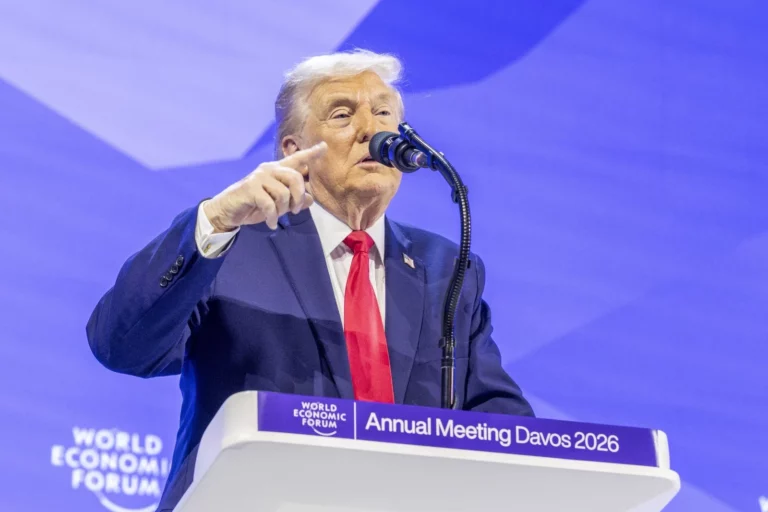
THE United States (US) has launched a major airstrike on Kharg Island, a strategic Iranian oil hub in the Persian Gulf, with the US President Donald Trump boasting that American forces destroyed military targets on the island.
He also issued a stern warning to Tehran against interfering with shipping through the Strait of Hormuz.
In a statement on Saturday, March 14, Trump said the operation was carried out by his country’s Central Command, describing it as one of the most powerful bombing raids in the Middle East.
“Moments ago, at my direction, the United States Central Command executed one of the most powerful bombing raids in the History of the Middle East and totally obliterated every military target in Iran’s crown jewel, Kharg Island,” he said.
Trump noted that the strike targeted military installations on the island but deliberately avoided damaging oil infrastructure.
“Our weapons are the most powerful and sophisticated that the world has ever known but, for reasons of decency, I have chosen not to wipe out the oil infrastructure on the island,” he said, warning that the facilities could become targets if Iran interferes with shipping routes.
“Should Iran, or anyone else, do anything to interfere with the Free and Safe Passage of Ships through the Strait of Hormuz, I will immediately reconsider this decision,” he added.
Trump also reiterated Washington’s stance on Iran’s nuclear programme, declaring that Tehran would “never have a nuclear weapon” and asserting that the country lacked the capacity to face America’s military strength.
Kharg Island, located about 25 kilometres off Iran’s coast in the Persian Gulf, is the country’s most important oil export terminal and handles the bulk of Iran’s crude shipments.
Because of its significance to global energy markets, any attack on the island is widely seen as a potential trigger for disruptions to international oil supplies and price volatility.
The Strait of Hormuz, which links the Persian Gulf to the Gulf of Oman and the Arabian Sea, is one of the world’s most critical energy chokepoints, with a large share of global oil shipments passing through the narrow waterway daily.
While the US noted that it had avoided critical oil infrastructure, Israel’s Air Force struck two oil refineries and two fuel depots on Saturday, March 7, sending thick black smoke billowing across Tehran and plunging parts of the Iranian capital into ‘apocalyptic’ darkness.
Missile attack hits US embassy in Baghdad
Meanwhile, tensions in the Middle East intensified further after the US embassy in Baghdad came under missile attack on Saturday.
According to Aljazeera, a projectile struck a helipad inside the embassy compound located in the heavily fortified Green Zone, causing smoke to rise from the facility.
Officials who spoke with the platform, said the missile damaged part of the embassy’s air defence system, though there was no immediate confirmation of casualties or the extent of the damage.
The attack marks the second time the US embassy in Baghdad has been targeted since the start of the current conflict on February 28.
The ICIR reports that Iran-aligned armed groups operating in Iraq have repeatedly threatened to target US interests in the region in retaliation for strikes carried out by Washington and its allies.
The attack occurred shortly after US strikes reportedly hit positions belonging to Kataib Hezbollah, an Iran-backed armed group in Iraq, killing two members including a senior figure, according to security sources.
Several Tehran-aligned groups operating under the umbrella movement known as the Islamic Resistance in Iraq have claimed responsibility for drone and rocket attacks against US bases across the region.
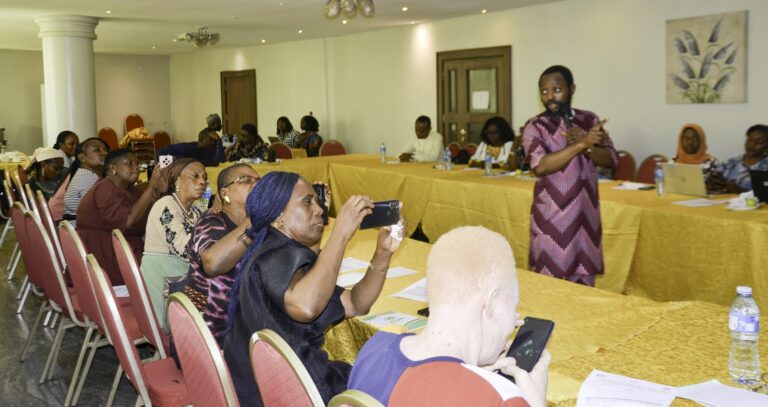
WOMEN leaders from across Nigeria’s informal business sector have received specialised training on record-keeping and compliance with the country’s new tax reforms at a two-day National Master Trainers’ Capacity Building Workshop held in Abuja.
The workshop, which took place on March 11 and 12 was organised by the Civil Society Legislative Advocacy Centre (CISLAC) in collaboration with Christian Aid and the Tax Justice and Governance Platform.
Designed as a “train-the-trainer” programme, the workshop aimed to equip leaders of nano and small women-owned businesses with practical knowledge about record-keeping and compliance with Nigeria’s new tax laws. Participants are expected to cascade the knowledge to members of their organisations and communities.
According to the statement made available to The ICIR, the event brought together representatives from several women-focused associations and informal sector groups, including the Association of Nigerian Women in Business Network (ANWBN), the Association of Women in Trade and Agriculture (AWITA), the Small‑scale Women Farmers Organisation of Nigeria (SWOFON), the Joint National Association of Persons With Disabilities (JONAPWD), the Female Drivers Association (FIWON) and the Federation of Informal Workers’ Association of Nigeria, alongside representatives from the media and civil society.
Speaking during the opening session, Auwal Ibrahim Musa Rafsanjani, Executive Director of CISLAC, represented by Magaji Mato said the workshop was organised in the spirit of the International Women’s Day 2026, which emphasises the theme “Give to Gain.”
He described women as critical drivers of Nigeria’s economy, particularly within the informal sector.
According to him, the sector accounts for more than half of Nigeria’s Gross Domestic Product and nearly 93 per cent of employment, citing estimates by the International Labour Organization. He noted that women entrepreneurs play a significant role as traders, farmers and innovators who sustain households and local economies across the country.
However, he added that many women running nano and small businesses face difficulties navigating the tax system due to limited access to information, poor record-keeping tools and uncertainty about tax compliance.
“It is within this context that this workshop becomes both timely and important,” he said, noting that the initiative aims to create a national network of master trainers who will act as knowledge multipliers within their associations and communities.
The workshop featured several simplified learning modules tailored to informal sector operators. These included: Understanding the new tax reforms in simple terms, tax compliance for informal businesses, simple record-keeping for small enterprises, how nano and small business owners can file tax returns.
Participants also took part in practical bookkeeping exercises and plenary discussions.
The training sessions were facilitated by Simeon Olatunde, Coordinator of the Tax Justice and Governance Platform in Kaduna State, alongside Sadiq Muhammad Mustapha and Chinedu Bassey.
By the end of the workshop, participants pledged to serve as “tax ambassadors” within their organisations and communities, helping to spread awareness about record-keeping and responsible tax practices.
The new tax laws came into effect on January 1, 2026, introducing a major reform of the tax system. The reforms are contained in four key legislations: Nigeria Tax Act (NTA), the Nigeria Tax Administration Act (NTAA), the Nigeria Revenue Service Act (NRSA), and the Joint Revenue Board Act (JRBA). These laws were signed in June 2025.
SINCE early 2025, Nigeria’s northeast, where Boko Haram and its splinter faction, the Islamic State West Africa Province (ISWAP), operate, has witnessed renewed attacks on military formations.
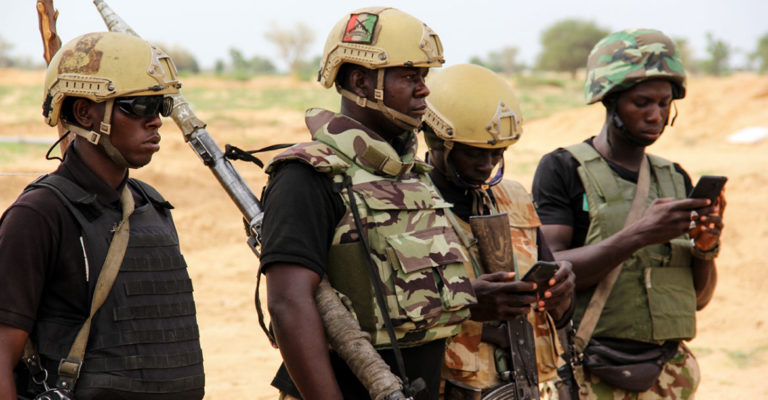
In recent months, insurgents have carried out coordinated assaults on several miliitary bases, killing soldiers, senior officers, civilians working closely with the Joint Task Force, destroying military assets and seizing weapons and vehicles. While some of the attacks were successful, others were repelled by troops.
In an investigation by The ICIR, a former top commander of the group said many Boko Haram/ISWAP commanders who had previously surrendered returned to the battlefield after the Nigerian government allegedly failed to fulfil promises made to them. According to him, authorities had pledged housing and vocational training as part of their reintegration.
The ICIR has documented all attacks launched by these groups on military bases from January 2025 to the most recent incidents. The findings show that 11 of the 12 attacks occurred in Borno State, while one took place in Yobe State.
An infographic spotlighting the timeline of attacks on military bases by Boko Haram/ISWAP insurgents
March 9, 2026 – Gujba, Yobe State
Terrorists attacked a military formation in Goniri, Gujba Local Government Area (LGA) of Yobe State on Sunday night through the early hours of Monday, March 9, 2026. During the attack, the terrorists destroyed military operational vehicles. However, troops of the Joint Task Force (North-East), Operation Hadin Kai,repelled the attack as the terrorists were eventually forced to retreat after suffering heavy casualties.
March 9 2026 – Kukawa, Borno State
In another attack by the Islamist terrorists during the early hours of the day stormed a town in Kukawa LGA, Borno State from multiple directions and launched an attack on the military camp in Borno State. They killed the Commanding Officer, identified as Umar Farouq, a Lieutenant Colonel who was in charge of military operations in Kukawa and other military officers. Farouq sustained critical injuries and died on his way to Maiduguri for medical treatment. Other soldiers lost their lives as a result of the attack.
March 5-6, 2026 – Konduga, Mainok, Jakana and Marte, Borno State.
The insurgents simultaneouslyattacked four military bases. The terrorists attacked Konduga, Mainok, and Jakana around 10:30 pm on Thursday night. They eventually launched another attack in Marte town around 3:00 am on Friday.
The Commanding Officer of 222 Battalion Konduga a Lieutenant Colonel, SI Iliyasu, was killed along with some soldiers during the attack.
According to Uba Sani, the Spokesperson for Operation Hadin Kai, the military, in repelling the attacks killed scores of Boko Haram terrorists.
March 1, 2026 – Bama, Borno State
The terroristscarried out a deadly attack on the Forward Operations Base, a military position in Mayanti, Bama LGA, Borno State. The terrorists killed its commander, Umar Ibrahim Mairiga alongside three soldiers and a hunter.
January 29, 2026 –Bama, Borno State
A forest guard attached to a military formation was killed and an army lieutenant was also declared missing when the insurgentsattacked a military base in Kawuri community located in Bama LGA, Borno State. The attackers were also reported to have set fire to parts of the military base before retreating into the surrounding hills under the cover of darkness.
January 23, 2026 – Damasak, Malam-Fatori, Borno State
At least 20 Nigerian soldiers were reportedly killed while several others were injured in a suspected attack by fighters from the ISIL affiliate in West Africa Province (ISWAP) after the attackerstargeted an army base in the remote Malam-Fatori town in Borno State. One of the surviving victims said the attack lasted for more than three hours.
In another attack, ISWAP fighterslaunched an attack on a military patrol and killed a Nigerian Army major in Damasak, headquarters of Mobbar LGA in Borno State. According to sources, the deceased officer was leading a foot patrol of about 30 soldiers when the team came under explosives and gun attack by the insurgents.
September 19, 2025 – Bama, Borno State
Suspected insurgentsraided Banki, a town in Bama LGA in Borno State and seized ammunition and weapons from the military barracks. One soldier from 152 Battalion, stationed in the town, said the insurgents came in large numbers, forcing security forces to retreat after heavy gunfire.
May 30, 2025 – Gwoza, Borno State
Suspected terroristsattacked troops from Sector One’s 26 Task Force Brigade station at Bita military base in Gwoza Local Government Area of Borno State. In an effort to repel the attack on its base, the Nigerian Army killed at least 60 Boko Haram terrorists.
May 12, 2025 – Marte, Borno State
Suspected Boko Haram terroristslaunched an attack on a Nigerian Army base in Marte Local Government Area of Borno State, resulting in casualties and the capture of some soldiers. Local and security sources confirmed that the incident occurred around 3 a.m. on Monday, at the Forward Operation Base of the 153 Task Force Battalion. During the encounter, several soldiers were killed, some were captured, and others fled towards Dikwa.
March 25, 2025 – Ngala, Borno/Cameroonian border
Armed fighters in light tactical vehiclesstormed a military outpost in Wulgo, a village about 12 kilometres from the Cameroonian border town of Fotokol. According to Cameroon’s Defence Ministry, the armed men killed 12 soldiers and injured a dozen others.
March 24, 2025 – Damboa, Borno State
The terroristsstruck an army base in the Wajiroko, Damboa LGA of Borno State and set military equipment on fire. The insurgents were suspected to have initially launched their attack using drones before advancing with a ground assault. One of the soldiers in the Wajiroko brigade said at least four soldiers were killed and several others injured, including the brigade commander.
January 4, 2025 – Damboa, Borno State
According to the Defence Headquarters (DHQ), six soldiers were killed and several others missing during a terroristattack on a military base at Sabon Gari in Damboa LGA of Borno State. In a statement by Edward Buba, Director of Defence Media Operations, 34 members of the ISWAP were killed, while 23 AK-47 weapons, and over 200 rounds of ammunition were recovered.
OUTRAGE has greeted the death of a pregnant woman at the Bwari General Hospital in Abuja after the facility allegedly failed to provide the oxygen she needed.
This is even as the facility’s management has denied claims by a relative of the deceased that the absence of oxygen caused her death.
The case became public after the deceased’s sister, Deka George, a social media influencer, shared the story while mourning her passing.
George said her sister, Evans Akinloye Chiamaka, was expecting a baby and developed health challenges that required her to be rushed to hospital.
She alleged that the medical facility could not provide oxygen when it was urgently needed. She wrote in her post, “Nigeria failed you. A whole general hospital didn’t have oxygen.”
However, the hospital’s Medical Director, Ibrahim Mijinyawa, a doctor, debunked the claim. He said the hospital had enough oxygen that it often shared with other facilities.
Mijinyawa challenged anyone who doubted him to come to the facility and check its oxygen plant. According to him, Global Fund recently donated an oxygen plant to the hospital, which he said the facility could not exhaust.
Although he could not discuss the real cause of death over the phone, the medical director said doctors, including consultants, and nurses did their best to save the woman’s life, but they could not.
“We have a brand-new oxygen plant donated by the Global Fund that is functional. We give oxygen to other hospitals. The issue that the woman did not receive oxygen, I don’t know how her sister got that kind of information.
“Unfortunately, the woman is no more. She had surgery. All that was needed to be done, we as human beings, our doctors on call, including our consultants and nurses did everything they needed to do. But the patient died. To say that we didn’t give oxygen, oxygen is the least of our problem,” he stated.
Meanwhile, the deceased’s sister expressed regret over missing calls from her sister shortly before her death. According to her, “I missed your calls because I was in court.”
Outrage
The incident has triggered widespread reactions online, with many Nigerians raising concerns about the condition of healthcare facilities and the availability of critical medical equipment in hospitals across the country.
Medical oxygen is very important in emergency treatment, especially for patients who have trouble breathing or are in critical condition. Health experts say when oxygen is not available at the right time, it can make a patient’s condition worse and could lead to death.
In many developing countries, including Nigeria, some cases that result in patients’ death are linked to weak health systems, poor funding, and shortages of essential medical supplies. According to the World Health Organization, basic resources such as oxygen, medicines, trained staff, and functional equipment are critical for saving lives in hospitals.
While the management of the Bwari General Hospital absolved the facility of negligence or alleged failure to provide oxygen the deceased needed to survive, cases of medical negligence abound in Nigeria.
Consequently, Nigerians are quick to blame hospitals when patients fail to make it out of the facilities.
Examples of medical negligence that were reported in Nigeria recently include the case in which Kano State Hospitals Management Board confirmed that surgical scissors were mistakenly left inside a patient’s body during surgery. It admitted negligence in the case.
The ICIR reported another case of medical negligencewhen author Chimamanda Ngozi Adichie accused a Lagos hospital of negligence after the death of one of her 21-month-old twin boys, Nkanu Nnamdi, who died on 6 January 2026 after a brief illness.
THE Central Bank of Nigeria (CBN) erupted in jubilation following the ‘sacking’ of Deputy Governor, Operations Directorate, Bala Mohammed Bello, just two and a half years after his appointment on October 5, 2023.
An investigation by Pinnacle Daily revealed that former staff and insiders described his dismissal as long overdue, citing years of alleged misconduct, controversial redeployments, and staff grievances during his tenure.
President Bola Tinubu, in a statement from his Special Adviser on Information and Strategy, Bayo Onanuga, has nominated former Securities and Exchange Commission Director-General Lamido Yuguda as Bello’s replacement, pending Senate confirmation.
Meanwhile, Bello has been appointed Special Adviser to the President on Political Economy, a move believed to both preserve political alliances and pacify northern discontent following recent appointments.
‘Bello’s SA appointment is to pacify the North’
The appointment of Bello as Special Adviser is based on two factors, according to top management sources from both the CBN and Aso Villa. Bello is believed to be a political ally of a senior security official close to the president, whose advice was sought on how best to manage the situation.
The second reason for his appointment was the need to address growing discontent in the North following Tinubu’s recent political appointments. This includes a general, Christopher Gwabin Musa’s replacement of Mohammed Badaru Abubakar as Minister of Defence and the replacement of the immediate past APC chairman, Abdullahi Ganduje, by Humanitarian Affairs Minister Nentawe Yelwata.
Pinnacle Daily’s investigation revealed that the last time a similar removal took place was during the tenure of Professor Chukwuma Soludo as CBN Governor.
This incident involved Obadiah Mailafia’s tenure as Deputy Governor of the CBN, which did not last the full five years. He was appointed in May 2005 and left office in March 2007, meaning his tenure lasted approximately one year and ten months instead of five years.
It should also be recalled that in September 2023, President Bola Tinubu removed the then Governor of the CBN, Godwin Emefiele, and all four Deputy Governors serving at the time – AIshah Ahmad, Folashodun Shonubi, Edward Lametek Adamu, and Kingsley Obiora.
The journey to the inevitable end of Bello as Deputy Governor
Senior management sources from the CBN disclosed that the sacking of Bello was connected to gross misconduct, which also led to the dismissal of Ibrahim Hassan Umar, a director, three weeks ago.
According to one of the sources, “the Bank has new houses for the Governor and the Deputy Governors, but Cardoso refused to take or move into his own, which was where Emefiele stayed. So, they had to buy him another one worth billions of naira. It was this transaction that caused the problem that Bello and the Director were involved in.”
Investigation further revealed that the details of the said director, Umar, have been removed from the CBN website. Umar, a certified fraud examiner, was confirmed by Cardoso as the Director of the Development Finance Institutions Supervision Department on 3rd March 2025, after previously serving in an acting capacity as Director of Procurement under Bello as Deputy Governor, Corporate Services.
A senior source said an internal investigation was conducted, which found the Director and others guilty, leading to their sack. The insider also stated that there were several other indictments, which had earlier forced CBN Governor Cardoso to redeploy Bello from Corporate Services to Operations in a quiet reshuffling. This reshuffling saw Ms Emem Usoro take over Corporate Services.
“There was also a need to deal with this issue in a very mature manner, so as not to negatively affect the reputation of the bank, especially considering the recent positive performance and public perception,” said a senior management source.
Further findings revealed that there was no love lost between the staff of the apex bank and Bello. He supervised the controversial redeployments of staff from the CBN headquarters in Abuja to Lagos, with many of the affected staff eventually being sacked months later.
He also oversaw the removal of several directors, eventually resulting in their dismissal. The CBN conducted what it termed “disengagements based on reorganisation”. In March, April, and May 2024, staff members ranging from executives to senior and junior staff were arbitrarily and unilaterally disengaged, with only three months’ notice in lieu of severance.
Data on forced exits under the guise of reorganisation and restructuring in March, April, and May 2024 showed that a total of 218 staff were affected. Their bank loans were deducted in full from their gratuity payments, with some staff reportedly leaving with as little as N5,000 to N6,000, as their loan deductions exceeded their gratuity payments. Some were even said to owe the bank after deductions. The matter is currently in court.
Before the reorganisation exercise, “Bello redeployed his younger brother, Bashir Bello, from the Development Finance Department—a department whose staff were constantly fearful of their fate—to the Governor’s department,” said a senior management source.
Upon resuming at the CBN, he cancelled the registration of all accredited contractors, even though they were yet to complete their two-year term. He then registered a new set of contracting firms, which included registered enterprises and ventures, rather than solely limited liability companies as required by CBN’s procurement policies.
Bello was also involved in several spats with staff members, where he was alleged to have called them “incompetent” and “criminals” during his early days as Deputy Governor. He also objected to being addressed as ‘Mr Bello’, insisting instead on being addressed as ‘Dr’, despite not holding a Doctor of Philosophy (PhD), as stipulated by the Federal Ministry of Education.
In his official profile on the CBN website, it is stated that, “He was conferred with a Doctor of Business Administration (Honoris Causa) by Commonwealth University in conjunction with the London Graduate School and a Doctor of Philosophy (Honoris Causa) in Leadership and Management by ESAE University, Republic of Benin.”
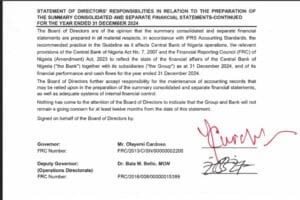
However, our investigation found that even in official documents signed by Bello, such as the 2024 financial statement of the CBN, he insists on being addressed as ‘Dr’. This is particularly notable given that Cardoso also holds an honorary degree but correctly uses ‘Mr’ as the prefix on his portrait and official documents.
This report is republished from Pinnacle Daily, read the original here.
WHEN President Bola Tinubu appointed former Chief of Defence Staff, Christopher Musa, as Nigeria’s defence minister in December 2025, the majority of people in the country were elated with the decision.
Among Tinubu’s cabinet appointments, Musa’s nomination was arguably the most widely hailed by Nigerians.
Musa, a retired general, took over the defence portfolio when Nigeria was battling multiple security crises, including the insurgency in the North-East, banditry in the North-West and killings and kidnappings across the North-Central.
His appointment elicited high expectations largely because of his vast experience in counter-insurgency campaigns and how outspoken he was against terrorism.
As today, Friday, March 13, marks his 100 days in office, the security situation across the nation has remained volatile, with renewed insurgent attacks, military casualties, and communities still under threat.
Fresh attacks show Musa’s strategies not working
In recent weeks, insurgents linked to Islamic State West Africa Province and Boko Haram have intensified attacks on military formations in Borno State, exposing the continued vulnerability of security forces in the country.
Reports indicate that terrorists overran military bases in the state during coordinated attacks in early March, killing dozens of soldiers and carting away weapons and vehicles.
During these coordinated attacks, at least three commanding officers were reportedly killed alongside dozens of junior officers.
The onslaughts, The ICIR reports, were part of a wider surge in insurgent activity in the North-East that has reportedly left at least 65 soldiers dead within two weeks, according to report. Recall that the region has faced nearly two decades of attacks by the marauders.
While most residents whisked away by insurgents are yet to be freed, the military said it retook one of the villages that came under attack on Wednesday, March 11.
The ICIR reports that although the nation’s armed forces daily ransack forests and other hideouts of criminals, neutralising and apprehending as many as they can, the toll on the military and the continued incursions and recruitment by terrorists remain a huge test of Musa’s competence.
Civilian communities still vulnerable
Beyond attacks on military formations, civilian communities have also continued to bear the brunt of the violence.
Earlier in March, militants reportedly abducted more than 300 residents, including women and children, in Ngoshe, a community in Gwoza area of Borno State, during raids by the terrorists.
Several communities around Konduga, Marte, and Jakana have also witnessed repeated attacks despite ongoing military operations in the North-East.
Similar attacks were reported in the North-West and North-Central, with Kogi and Kwara states experiencing persistent bandit attacks and kidnappings.
About 200 people were killed during an attack on Woro community by terrorists in Kwara state in February 2026. The attackers also abducted dozens of villagers in a rampage that lasted for over 10 hours. The Northcentral state has seen a sharp increase in violent attacks committed by non-state armed groups, more recently from groups such as Lakurawa and Mamuda.
In a separate incident on the same day, another 21 people were killed in Katsina, where armed assailants reportedly moved from house to house, shooting residents.
Similarly, in the South-West, specifically in Akure North and in Owo Local Government areas of Ondo State, communities have been persistently attacked, with people residents repeatedly killed and abducted for ransom under Musa’s watch.
Policies fail to achieve visible gains
Since assuming office, Musa has rolled out a number of initiatives aimed at strengthening Nigeria’s response to insecurity.
These include plans to deploy military veterans to help secure “ungoverned spaces” and strengthen collaboration with neighbouring countries to tackle cross-border terrorism.
He also warned that individuals providing financial or logistical support to terrorists would face prosecution, signalling a tougher approach to terror financing networks.
Despite these policy signals, the security situation on the ground has yet to show significant improvement, according to analysts and residents in affected regions.
The minister on March 12 ordered military commanders to recalibrate operations across multiple theatres after what officials described as a surge in brazen terrorist attacks.
The ICIR reports that Musa summoned the service chiefs on Wednesday, March 11, acknowledging the killings of military operatives, while noting that the casualties were higher on the terrorists’ side.
Addressing the public after the meeting, the minister said the meeting focused on reviewing the recent wave of attacks and evaluating the performance of ongoing military operations, after which fresh operational directives were issued to counter terrorist and bandit groups across the country.
Although he noted that details of the new tactical adjustments would remain confidential to safeguard troops and ensure operational success, Musa disclosed that the military leadership had ordered forceful recalibration of ongoing operations in affected regions.
According to him, the service chiefs were instructed to immediately intensify and adjust military strategies across operation theatres in a bid to dismantle the networks of terrorists and bandits threatening national security.
Nigerians fear worst-case scenario
Despite assurances from the military authorities, many Nigerians remain anxious about the country’s worsening security situation, particularly in the North-East where insurgent attacks have intensified in recent weeks.
Security analysts are warning that the recent destruction of military bases and coordinated assaults on communities raise concerns that armed groups may be regaining operational strength.
This development has heightened fears among residents of affected areas that the attacks could signal a return to the intense insurgency experienced between 2011 and 2016.
The attacks have also sparked fresh debate over the effectiveness of current security architecture and strategies, as citizens and experts call for stronger intelligence gathering, better equipment for troops, and improved coordination among security agencies.
IN what may represent one of the most coordinated and destructive offensives in recent months, fighters from the Islamic State West Africa Province (ISWAP) reportedly inflicted casualties and equipment losses on Nigerian military forces across multiple locations in Borno State during a single night of attacks on 5 March 2026.
According to audiovisual operational claims disseminated by the Amaq News Agency and social media channels affiliated with the Islamic State, the insurgents claimed to have killed at least 16 soldiers and officers in the attacks. The following day, a suicide vehicle-borne improvised explosive device (SVBIED) detonated near Njimya village inside the Sambisa Forest, reportedly causing an additional 20 casualties among government forces and forcing troop withdrawal from the base.
If true, the human toll from these attacks is significant, and it represents only part of the operational impact. The more consequential dimension lies in the reported loss of military equipment. A compilation of data from the ISWAP claims shows that more than 53 vehicles were destroyed or captured, alongside 84 motorcycles that were seized or burned. The group also claimed to have captured a substantial cache of weapons, including 54 rifles, 20 machine guns, and eight heavy support weapons such as rocket-propelled grenade launchers and mortars. Again, if true, such losses within a single operational cycle represent a logistical setback for a military already confronting constraints in equipment availability and maintenance.
Particularly notable is the capture of 71 motorcycles, reportedly taken largely during the Konduga attack. In the difficult terrain of the Sambisa Forest and surrounding areas, motorcycles remain a critical platform for insurgent mobility. They allow fighters to traverse narrow forest tracks, conduct rapid hit-and-run attacks, and circumvent established military checkpoints. The seizure of this number of motorcycles, therefore, not only deprives government forces of mobility assets but simultaneously replenishes and reinforces ISWAP’s own logistical capabilities, potentially strengthening its operational reach in the forest belt.
The geographical spread and timing of the attacks also highlight a high degree of coordination. Assaults were reportedly conducted against military positions in Jakana, Konduga, Mainok, and Marte during the same night. In parallel, diversionary actions occurred in Benisheikh, Kauri, and Dalori, bringing to seven the total attacks carried out in one night. Such a pattern suggests deliberate operational planning designed to stretch military response capacity, complicate command decisions, and limit the ability of security forces to reinforce threatened positions. The attacks illustrate the group’s ability to operate across multiple axes simultaneously, a capability associated with improved command, control, and battlefield intelligence.
These operations form part of what ISWAP’s “Burning of the Camps” campaign, an ongoing series of attacks launched in February 2025 targeting military bases across the Lake Chad Basin. Since its launch, bases belonging not only to Nigerian forces but also to regional militaries in Niger and Cameroon have been reportedly targeted. The campaign appears designed to systematically degrade fixed military positions, which insurgent strategists often view as both symbolic and logistical nodes of state authority in contested territories.
For the Nigerian military, the reported scale of equipment losses raises questions about force protection and base defence practices. The targeting of armoured vehicles – particularly in Marte, where insurgents reportedly employed rocket-propelled grenades – suggests that ISWAP has refined tactics aimed at neutralising the military’s most protected assets. When large numbers of vehicles are destroyed or captured within a short timeframe, the effects extend beyond the immediate battlefield. Logistics chains, troop mobility, reinforcement capacity, and patrol operations may all be affected for extended periods while replacements and repairs are organised.
At the beginning of 2026, the Nigerian military appeared to have regained momentum in the conflict following coordinated operations that dislodged ISWAP fighters from their stronghold in the Alagarno Forest. During those operations, troops reportedly destroyed detention facilities, workshops, and other logistical infrastructure used by the insurgents. The offensive was widely interpreted as a significant disruption to ISWAP’s operational networks and supply chains.
However, the group’s ability to recover from these losses and subsequently mount large-scale attacks indicates a worrisome degree of organisational resilience. The military needs to know that insurgent groups that maintain decentralised command structures and diversified supply networks like ISWAP can often absorb short-term setbacks and regenerate operational capacity relatively quickly. The recent attacks, therefore, illustrate how tactical defeats do not necessarily translate into long-term strategic weakening for insurgent organisations.
The Sambisa attack also reflects evolving battlefield tactics. ISWAP claimed that it employed an SVBIED as the decisive element of the assault. Fighters reportedly initiated an exchange of fire with government troops in order to fix their attention and limit their ability to manoeuvre. During this engagement, the suicide vehicle advanced toward the position before detonating. Such tactics – combining direct fire engagements with suicide operations – have been observed in several theatres associated with Islamic State-linked groups and are intended to overwhelm defensive positions by forcing simultaneous threats.
Another factor frequently cited in discussions of ISWAP’s tactical evolution is the role of foreign fighters. Fighters originating from North Africa, the Middle East, the Sahel, and occasionally Europe have reportedly contributed to knowledge transfer within the organisation. This transfer includes ideological reinforcement, training in explosives, operational planning, battlefield coordination, and the integration of new technologies into insurgent operations, such as the recent increase in the use of drones for attacks. Such contributions can strengthen organisational cohesion and introduce new tactical approaches drawn from other conflict theatres where Islamic State affiliates have operated.
Some of these foreign fighters have also been deployed alongside local fighters to the battlefield. The deployments, however, have produced casualties on the part of the foreign fighters. According to sources, at least 10 foreign fighters are believed to have been killed in the past two years during engagements with regional security forces. The latest such incident occurred in February 2026 during an operation by Cameroonian forces. Earlier, around July 2025, three foreign fighters were reportedly killed by Nigerian troops in Mallam Fatori in Abadam Local Government Area (LGA) of Borno State. Among those killed so far, according to the sources, is a Senegalese national who previously resided in Sweden before travelling to join ISWAP.
Recent developments have also coincided with the deployment of United States military personnel to Nigeria for training and security cooperation purposes. The presence of these troops raised expectations that Nigerian forces would benefit from enhanced training and intelligence support. Some local observers initially speculated that the recent surge in insurgent attacks might be linked to the deployment. However, experts have suggested that the timing is unrelated and instead reflects internal mobilisation dynamics within ISWAP.
According to these sources, the recent escalation may partly stem from renewed mobilisation among ISWAP fighters, reinforced by ideological messaging and battlefield motivation from experienced foreign fighters. Such mobilisation reportedly includes an increased willingness among some fighters to undertake suicide operations designed to prevent security forces from penetrating deeper into insurgent strongholds.
The recent attacks also highlight a broader strategic dynamic: insurgent groups often regain operational initiative when military pressure decreases or becomes less sustained. The timing of the current wave of attacks appears to coincide with a period during which Nigerian military offensives have slowed relative to earlier operations in the year. In such circumstances, insurgent organisations can exploit the opportunity to regroup, replenish supplies, and launch counter-offensives intended to reassert battlefield momentum.
Another persistent concern relates to the insurgents’ acquisition of weapons. For more than a decade, attacks on military bases have been one of the principal ways through which ISWAP and other insurgent groups have obtained arms, ammunition, and vehicles. The capture or destruction of military equipment therefore has implications beyond immediate tactical losses. It risks strengthening insurgent arsenals and sustaining their ability to conduct further operations.
This dynamic also raises concerns regarding the potential diversion of externally supplied military equipment, notably those recently acquired from the United States. If military bases remain vulnerable to large-scale raids, there is a risk that some of these assets could ultimately be captured and repurposed by ISWAP. Strengthening base fortifications, early-warning systems, and rapid-response capabilities therefore remains a critical component of efforts to prevent equipment capture and reduce the operational advantages ISWAP currently enjoys.
Malik Samuel is a senior researcher at Good Governance Africa-Nigeria. Before joining GGA, he was a researcher with the Institute for Security Studies, specialising in the Boko Haram conflict in the Lake Chad Basin Region.
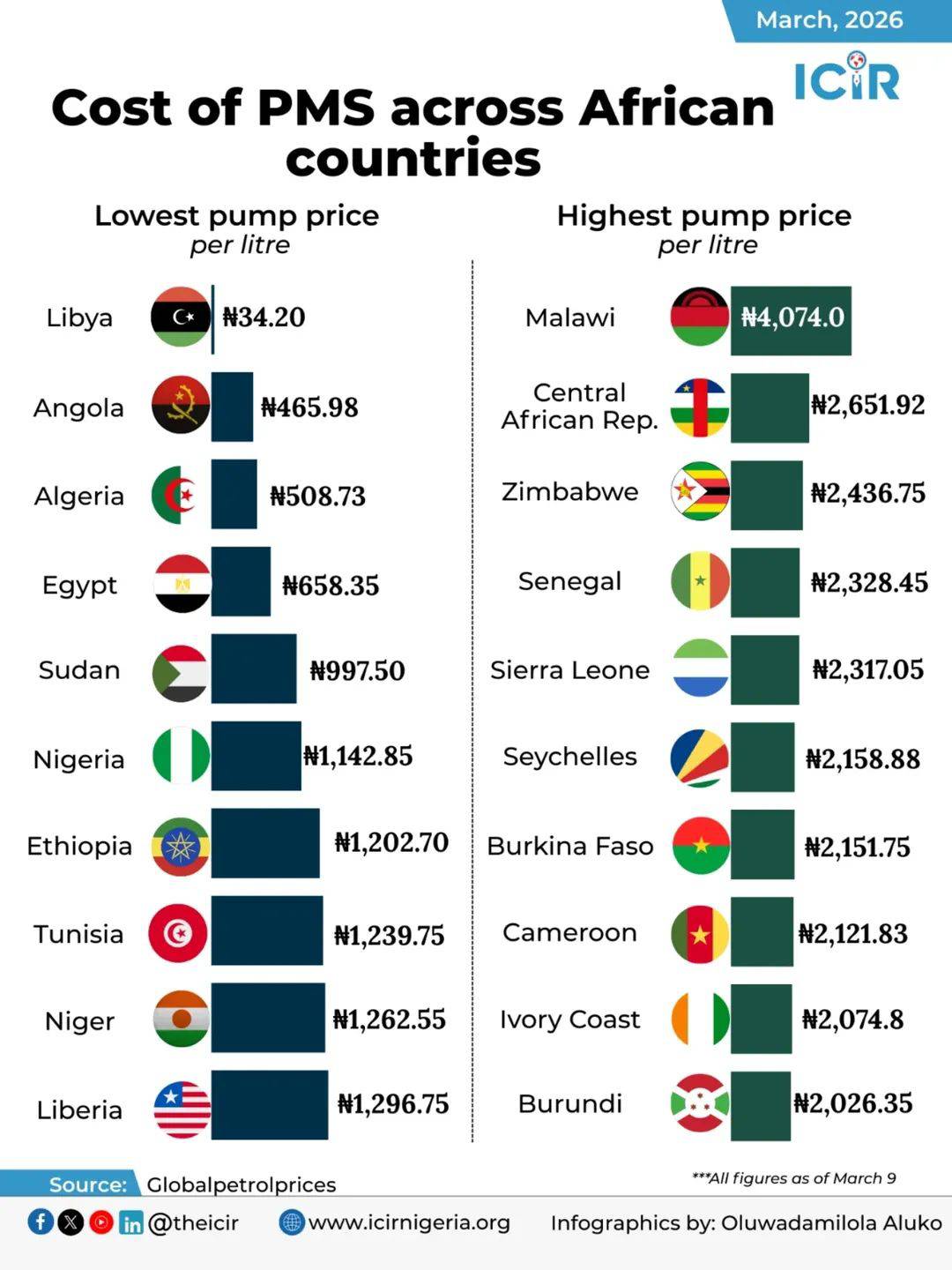
PETROL in Libya costs about ₦34.20 per litre, while the price in Nigeria stands at about ₦1,142.85 per litre, according to new data compiled by GlobalPetrolPrices.
An analysis by The ICIR shows that Libya currently has the lowest petrol price in Africa, while Malawi records the highest, selling for N4,074 per litre. The figures are based on petrol prices as of March 9, 2026.
The data shows Libya leading with ₦34.20 per litre, followed by Angola at ₦465.98, and Algeria at ₦508.73.
Others with relatively lower petrol prices include Egypt, ₦658.35; Sudan, ₦997.50; and Nigeria, ₦1,142.85 per litre.
The list also places Ethiopia at ₦1,202.70, Tunisia, ₦1,239.75; Niger, ₦1,262.55; and Liberia at ₦1,296.75 among countries with comparatively lower petrol prices on the continent.
Infographic showing fuel prices across Africa countries
At the other end of the spectrum, Malawi has the highest petrol price in Africa, with the product costing ₦4,074 per litre.
The country is followed by the Central African Republic at ₦2,651.92, Zimbabwe, ₦2,436.75; Senegal, ₦2,328.45; and Sierra Leone, ₦2,317.05.
Others with high petrol prices include Seychelles, ₦2,158.88; Burkina Faso, ₦2,151.75; Cameroon, ₦2,121.83; Ivory Coast, ₦2,074.80; and Burundi₦, 2,026.35.
According to GlobalPetrolPrices, the average petrol price globally stood at about $1.35 per litre as of March 9, 2026, though prices vary widely across countries.
The report noted that wealthier countries generally recorded higher petrol prices due to higher taxes, while poorer nations or oil-producing countries often maintained lower prices through subsidies.
Although countries buy crude oil at similar prices on international markets, governments impose different tax regimes, subsidies, and price controls, which explains the huge differences in retail prices.
In countries with liberalised fuel markets, prices can change weekly. However, in countries where fuel prices are regulated by the government, adjustments are often made monthly or less frequently.
Iran war pushing global fuel prices higher
The comparison comes as global energy markets experience volatility following the ongoing war involving Iran, Israel and the United State, which has disrupted oil production and shipping routes across the Middle East.
The conflict has significantly affected global oil supply, particularly due to disruptions around the Strait of Hormuz, a critical maritime route through which roughly 20 per cent of the world’s oil supply normally passes.
Attacks on regional oil facilities and shipping routes have forced many tankers to halt movement through the strait, tightening global supplies and pushing crude oil prices sharply higher.
International benchmark Brent crude surged above $110 per barrel in the first week of the conflict, the highest level in more than three years, before fluctuating around $100 mark amid market volatility.
International Energy Agency warned that the disruption could become one of the most significant in the history of global oil markets if the conflict persists, potentially removing millions of barrels of oil from global supply.
“The war in the Middle East is creating the largest supply disruption in the history of the global oil market,” the IEA said in its monthly market report.
“Disruptions are not limited to upstream production and exports, with several refineries and gas processing facilities shut down due to attacks or for safety concerns.
“The closure of the Strait is also forcing export-oriented refineries to cut runs or shut completely as product storage tanks top up.”
Nigeria records sharp fuel price increase
GlobalPetrolPrices data also shows that Nigeria recorded one of the sharpest fuel price hikes since late February, with petrol rising by about 39.5 per cent and diesel by 62.5 per cent in the period following the escalation of the Iran conflict.
The latest figures highlight the continued pressure on energy markets globally and the significant variation in petrol prices across African countries despite many being oil-producing nations.
The ICIRreported that Nigerians would experience a hike in fuel prices following gantry price increase by Dangote Refinery.
The increase was occasioned by an increase in global oil prices following hostilities in the Middle East.
Both the Independent Petroleum Marketers Association of Nigeria and the Petroleum Products Retail Outlets Owners Association of Nigeria (PETROAN) had confirmed that fuel prices would go up from Tuesday, March 10.
PETROAN’s National President, Billy Gills-Harry, warned that continued volatility in crude prices would further strain consumers and businesses already grappling with economic challenges.
THE ancient town of Oyo is known for its rich cultural heritage and blooming agricultural practices. The town, renowned for its rich Yoruba cultural heritage, is now facing a silent struggle. Although industrialisation is not at its peak, the Awe community of Oyo town has had to face a seemingly unending battle for survival, especially as residents accuse Bond Chemical Industries of polluting their water sources.
It was evening when this reporter arrived at the Adesakin Layout of Awe community, Oyo State. The street was relatively quiet, with a mix of modern and old houses. A walk through it revealed the stench in the atmosphere, the pungent smell of chemicals emanating from the waterway.
This community is battling a water crisis, and residents have been forced to get it elsewhere, abandoning the sources that have served them for years, but now seem to be polluted, allegedly by Bond Chemical Industries.
A closer look at this waterway revealed the cracks caused by chemical spillage, with residues evidently seen beside these cracks.
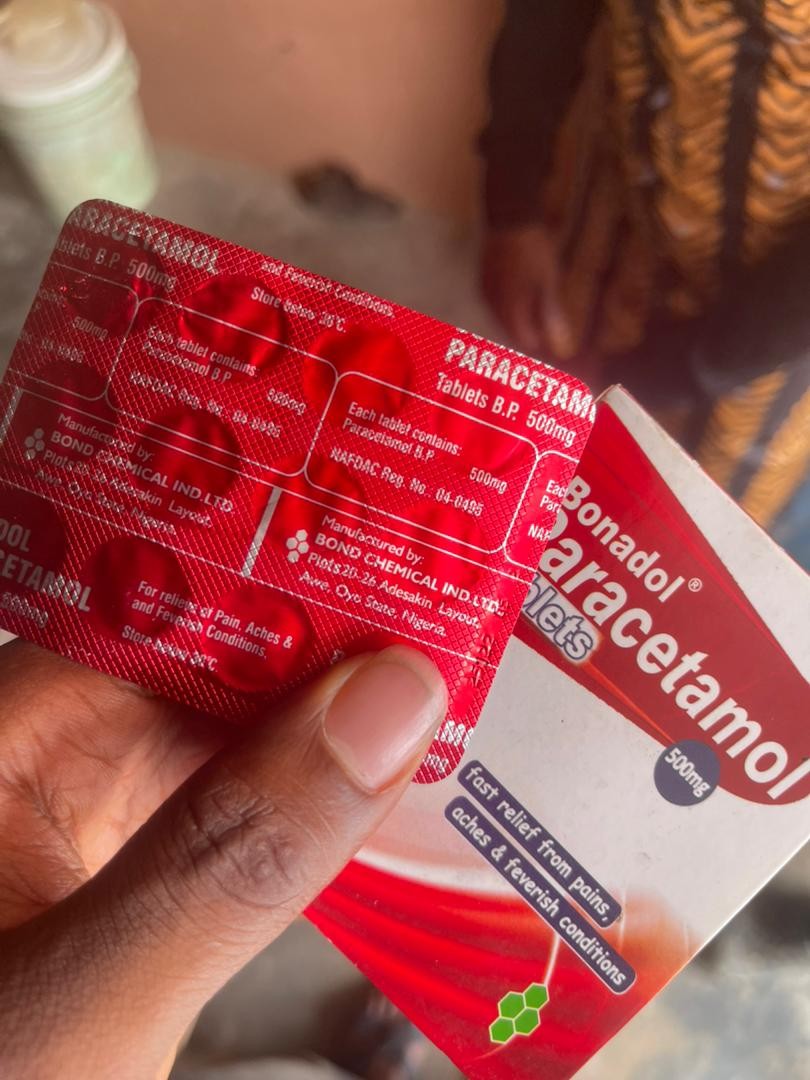
Bond Chemical Industries Ltd produces a variety of products, including medicines. Some of these medicines include Bonadol, Parafen Caplets, and Ibuprofen, amongst others. It also produces water and a variety of drinks.
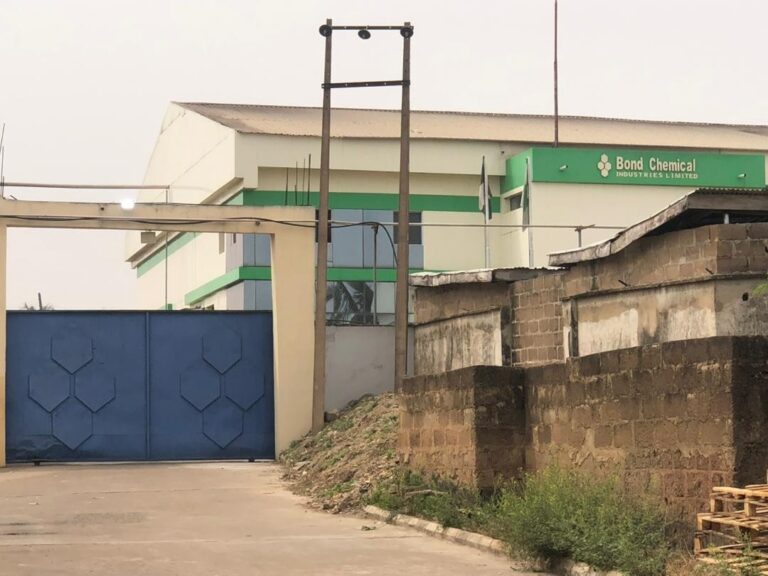
One of the products of Bond Chemicals Ltd. PC: Caleb Ijioma/ ICIR
The manufacturing plant of Bond Chemicals Industries is situated within the Adesakin Layout of Awe community.
After walking some meters, The ICIR met a resident who lives in the area. An elderly man, in his 60’s, sitting on a wooden chair, and looking out from an incomplete building, he had a nervous look when this reporter greeted him. “ Ekale, Sir,” this reporter said in the Yoruba dialect, which means Good evening sir. As the conversation continued, his facial expression changed, depicting comfort.
Identified as *David, he sad he has lived in this area for a long time, narrating how Bond Chemicals has been situated in that community for over 10 years, with residents affected by its operation.
One of the residents, David, spoke to ICIR. PC: Caleb Ijioma/ ICIR
“ When they flush out these chemicals, and it passes through the gutters, it smells, and it is not good to inhale,” David said, pointing to the waterways where chemicals pass through.
He explained how residents have been forced to get water elsewhere where Bond Chemicals’ spillage does not affect.
David had to move to the affected area a few months ago, but still goes back to fetch water in his former residence. For a man of his age, he cannot risk using the water from where he currently lives.
“You’ll have to fetch water from the other side for drinking,” he said with a sombre expression.
Residents are forced to go elsewhere for water
The Adesakin Layout of Awe community is a long street, with residential buildings on both sides. On one side is where Bond Chemical Industry is built. Liquid wastes coming from this industry are connected to the waterway. The liquid waste contains chemicals that residents have said contaminate water sources, making it difficult for them to access clean water.
The waterway is the only path through which wastes from Bond Chemical Industries can flow. All houses on this side of the road are affected, and residents have been forced to painstakingly depend on the other side of the area to get clean water, or end up putting their lives at risk.
Research has warned that Arsenic and heavy metals deposited in water from industrial waste usually infiltrate underground water and wells, resulting in physical, muscular, and neurological degenerative processes that cause brain disorders and nervous system diseases in people.
This reporter, who sought to understand the impact this has on families residing in the affected part of the area, posed as an industrial worker in search of a house.
The building he walked into had some parts yet to be completed, and was closer to the waterway through which the chemical waste from Bond Chemical Industries flows.
*Folorunsho, who was carrying his little child, lives in this part of the area with his family. His wife, a trader, sells provisions and other items in a shop attached to the house.
Folorunsho advised the reporter to explore other areas for houses, saying residents are affected by contaminated water from Bond Chemical Industries.
“The traces in the gutter are the bad water I’m referring to from Bond industry down the street. However, the industry is not affected in any way because the waste is coming out of their factory.”
He said visitors from other parts of the country, who sought comfort in the area, barely survived, unlike him, who is now used to the water situation.
“ Those at the back of the street are affected as well, including non indigenes, and NYSC members that lived around the area, managed to cope”
As a result of the contaminated water, Folurunsho has been forced to walk down the street daily in search of clean water so that his family can be safe. He told The ICIR thatbefore now, the water was used to bathe and wash sometimes, but became worse with the company’s resumption.
“Ever since they resumed operation, it has been worse, and now we can’t even use it at all anymore,” he said.
The house Folorunsho lives in depends on a well very close to the building, which also serves many residents in the area. This well has been contaminated with chemicals from the waterway.
My children can’t use this water – Father
Folorunsho said that he cannot risk having his children make use of the water. Children in affected area are prone to contracting several diseases and are at the mercy of Bond Chemical Industries.
He fears that using this water for his children can have severe health implications.
“ I still bathe with the water myself but my kids can’t because I grew up using the water. But I had to fetch water from a clean source for my kids’ usage because they’re still little with soft skin,” he said.
Residents now have to make extra effort to make the water from the well cleaner, but this comes with a cost. One resident who spoke to The ICIR, said her family uses chlorine to make the well water clean. Findings revealed that a drum of chlorine costs about N130,000, with small sizes costing around N6,500.
“ We use chlorine to clean the water once every three months. We pour chlorine inside the well and we don’t use the water for seven days. After, we use the water to wash and cook,” the source said.
Chemical spills breach regulatory provisions
Chemical spills breach environmental laws in Nigeria by violating statutory regulations designed to protect air, land, and water resources, often resulting in significant ecological damage and public health crises.
Ayo Ademuluyi, an environmental and sustainability lawyer stated that chemical spills from Bond Chemicals Ltd contravene section 27 of the National Environmental Standards and Regulations Enforcement Agency (NESREA) Act, which explicitly prohibits the discharge of hazardous substances into the environment.
“Section 27 of the NESREA Act clearly forbids the release of hazardous substances into the environment. Any chemical spill that contaminates land or water sources is a direct violation of this provision,” he said.
He noted that the constitutional rights of residents living in the Awe community were breached, adding that the Supreme Court of Nigeria has recognised that the right to a clean and healthy environment forms part of the fundamental right to life as contained in Section 33 of the 1999 Constitution.
“When pollution from chemical discharge affects the health and livelihoods of residents, it raises serious constitutional concerns because the right to life under section 33 also implies the right to live in a safe and healthy environment,” Ademuluyi explained.
According to him, the NESREA (Establishment) Act 2007 also prohibits the discharge of harmful quantities of hazardous substances into the air, land, or waters of Nigeria, including adjoining shorelines.
He emphasised that this provision is also reflected in section 21(1) of the Federal Environmental Protection Agency (FEPA) Act, which similarly prohibits the release of dangerous substances into Nigeria’s environment.
“These legal provisions collectively impose a duty on companies to ensure that their operations do not contaminate water bodies, soil, or surrounding communities,” he added.
Test reveals water is unsafe for use
To clarify if this well water has been contaminated, The ICIR took water sample from one of the affected wells and conducted a chemical and microbial test.
Findings certified by the Institute of Public Analysts of Nigeria (IPAN) revealed the presence of brown coloration and suspended particles, indicating possible sediment contamination or iron-related discoloration. While the test result of the well water didn’t detect toxic metals, there was a high concentration of ammonia (3.72 mg/L), which suggests possible contamination.
Results from the well water tested in the Lab and certified by the Institute of Public Analysts of Nigeria (IPAN), revealed elevated ammonia. PC: Caleb Ijioma/ ICIR
The test concluded that the groundwater sample does not fully meet potable water standards due to poor physical quality and elevated ammonia levels
A lab scientist, who pleads anonymity, says that consumption of this untreated groundwater with suspended particles may expose residents to microbial pathogens, including bacteria, viruses, and protozoa.
He said that with the elevated ammonia, potential health outcomes include gastrointestinal infections, diarrhoea, and other waterborne illnesses, and poses a health risk to Vulnerable groups such as infants, elderly individuals, and immunocompromised persons.
Reinnet Awoh, a public health expert, explained that although the nitrate concentration in the analysed water sample is currently below the recommended guideline limit, the presence of elevated ammonia levels raises concerns about possible chemical changes in the water over time.
According to him, ammonia can undergo natural chemical and biological transformations that may increase the concentration of other nitrogen compounds, such as nitrites and nitrates, which could eventually pose health risks.
He warned that prolonged exposure to contaminated water could lead to serious health complications, including methemoglobinemia, commonly known as “blue baby syndrome.” The condition, which primarily affects infants, reduces the blood’s ability to carry oxygen and can result in potentially life-threatening complications.
Awoh also cautioned that if the water is microbiologically contaminated, it could expose residents to gastrointestinal illnesses.
“Consumption of microbiologically contaminated water can lead to gastrointestinal illnesses, including diarrhoea, vomiting, abdominal pain, and dehydration. Such infections are particularly dangerous for young children, elderly individuals, and people with weakened immune systems,” he said.
Authorities react to claims
TheICIR reached out via email to the National Environmental Standards and Regulations Enforcement Agency (NESREA), the agency responsible for enforcing all environmental laws, guidelines, policies, standards and regulations in Nigeria. NASREA assured that the complaints of chemical spills from Bond Chemicals will be investigated.
Bond Chemicals Ltd was contacted if the company is aware of this issue. The Head of Human Resources said no complaints have been made, He claimed that the company is not aware of this issue affecting residents of the Awe community.
However, messages sent to the National Agency for Food and Drug Administration and Control (NAFDAC) got no feedback as at the time of writing this report.