Home Blog Page 640

NAFDAC, police burst illegal alcohol factories in Lagos

0

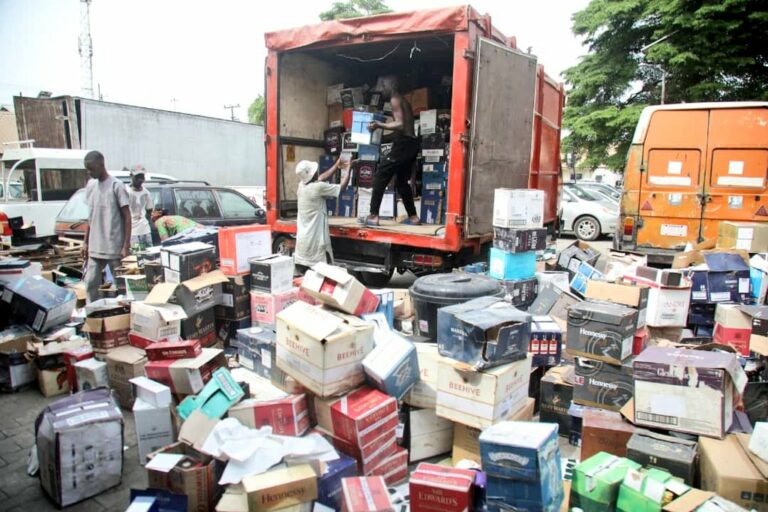
THE National Agency For Food And Drug Administration and Control (NAFDAC) has uncovered illegal activities involving the production and distribution of various brands of alcoholic beverages at the Trade Fair Complex in Lagos State.

NAFDAC, in a statement on Thursday, March 22, said its Investigation and Enforcement Directorate discovered the facilities operating within shop 34, shop 17/24, and attachment 17/2 in the Niger 4 Plaza of the complex while acting on credible intelligence.

The statement added that the team found mini plastic mixing tanks, improvised filters, cartons of empty bottles with intact labels, corks, packaging materials, and assorted drinks that had already been produced and packaged during the operation.


Read Also:


It noted that over 3,452 cartons of empty and filled bottles, valued at over N250 million, had been seized and evacuated from the location.

The NAFDAC, however, called on the public to remain vigilant and report any suspicious activities to the nearest NAFDAC office.

Similarly, the Lagos State Police Command announced that its operatives had busted a fake drink factory in the Agege area of the state and arrested four suspects connected to the illegal factory on the same day.

The command’s public relations officer, Benjamin Hundeyin, revealed this in a brief message on his X page on Thursday.

The police also said it initiated an investigation into the suspects’ alleged production and distribution of counterfeit drinks following credible information.

According to Hundeyin, during the raid, four suspects believed to be the masterminds behind the illegal distillery were apprehended, and their products were seized, among other items.

“Officers of Isokoko Division, acting on credible information, raided a house in Agege where fake alcoholic drinks were being produced. The police arrested four people behind the illegal distillery and recovered fake drinks, empty bottles and labels of different brands. Investigation is ongoing,” Hundeyin said.

Alleged N29bn fraud: EFCC re-arraigns ex-governor Nyako, son

0

THE Economic and Financial Crimes Commission (EFCC) has re-arraigned a former governor of Adamawa State, Murtala Nyako‎, his son, Abdulaziz and others at the Federal High Court in Abuja.

They were re-arraigned on Thursday, March 21, on 37 counts of allegedly laundering N29 billion.

Prosecuting agency, the EFCC, said the accused allegedly committed the fraud while Nyako was governor of Adamawa State.


Read Also:

Also arraigned with them were Abubakar Aliyu and Zulkifik Abba.

The companies allegedly involved in the money laundering were added as fifth through ninth defendants, respectively, including Blue Opal Limited, Sebore Farms & Extension Limited, Pagoda Fortunes Limited, Tower Assets Management Limited, and Crust Energy Limited.

The re-arraignment followed the elevation of the former trial judge, Okon Abang, to the Court of Appeal.

When the matter was mentioned in court, the prosecuting lawyer, Oluwaleke Atolagbe, informed the court that the case was being handled “de novo” (afresh) because the first two judges assigned to the case were no longer available.

“Justice Evoh Chukwu first handled the matter where we called eight witnesses before he died. It was then transferred to Justice Okon Abang, where we called 21 witnesses and closed our case.

“Unfortunately, Justice Abang was elevated to the Court of Appeal, and that is why we are before you today, my lord,” Atolagbe stated.

The trial judge, Peter Lifu, ordered that the defendants be updated on the charges so they might enter a plea.

All the defendants maintained their not guilty plea.

Counsel to the defendants, Michael Aondoakaa, SAN, pleaded with the court to grant his client’s request to continue attending trial on bail under the same terms and circumstances as were set down when the court initially accepted their plea.

“We pray the court will allow us to continue enjoying that bail, and for our part, we promise not to default even now,” Aondoakaa urged.

The judge inquired whether the sureties remained available.

The judge permitted them to continue under the same bail terms after counsel confirmed that the sureties were still available and the prosecution had not objected.

Besides, the prosecution informed the court that attempts had been made to reach a plea agreement before Abang’s elevation.

Atolagbe stated that the prosecution was prepared to listen to the defendants if they were open to considering that alternative.

But Aondoakaa clarified that given the former governor’s advanced age, the agreement was more about “settling the matter amicably” than a plea deal.

The judge then scheduled a new trial date for May 10 and 13.

The EFCC claimed that between January 2011 and December 2014, the defendants allegedly took money out of the Adamawa treasury.

According to the commission, they used businesses as covert channels to steal billions of dollars, which they transferred into personal accounts and transferred to Abuja, where they were used to construct private estates.

They were charged with 37 counts of criminal conspiracy, theft, abuse of office, and money laundering by the EFCC.

The anti-graft agency called 21 witnesses throughout the trial to support its allegations against the defendants in its case, which started in 2015.

Nyako, 81 years old and a retired military officer, was the governor of Adamawa State from 2007 to 2008 and from 2008 to 2014.

The ICIR reported that the Supreme Court dismissed an appeal by Nyako in 2016, seeking an order from the court to reinstate him as governor of Adamawa State to enable him to complete his truncated second term.

Nyako was removed as governor of the state on July 15, 2014, about ten months away from the expiration of his tenure.

Gumi faults FG’s list of terror financiers, says no Nigerian funds terrorism

0

CONTROVERSIAL Islamic cleric Ahmad Gumi has raised objections to the recent list of terror financiers released by the Federal Government.

He said no Nigerian was involved in financing terrorism.

Gumi, in an X space organised by Daily Trust, on Thursday, March 21, criticised the government’s approach, noting that the security agencies had no right to label anyone a terrorist financier.

The Federal government had, on Wednesday, March 20, named 15 entities, including nine individuals and six BDC operators and firms, for alleged involvement in terrorism financing.

It said details of the development were contained in a document revealed by the Nigerian Financial Intelligence Unit (NFIU).

Among the individuals named in the document was Gumi’s spokesperson and Kaduna-based publisher, Tukur Mamu.

According to the report, Mamu “participated in the financing of terrorism by receiving and delivering ransom payments over the sum of $200,000 US in support of ISWAP terrorists for the release of hostages of the Abuja-Kaduna train attack.”

Mamu, the publisher of Desert Herald Newspaper, was arrested by Interpol while in the company of his two wives and one other person as they awaited a connecting flight to Saudi Arabia for the lesser Hajj in September 2022.

The Egyptian authorities arrested him based on a request by the Nigerian government. The State Security Service (SSS) subsequently picked him up at the Mallam Aminu Kano International Airport in Kano on his repatriation to Nigeria.

Although Mamu led negotiations for the release of passengers abducted on the Abuja-Kaduna train, he was alleged to have been working for the terrorists that masterminded the abduction of the train passengers. 

Reacting to the government’s decision naming him and others as terrorists’ financier on Thursday, Gumi claimed that no Nigerian would finance terrorism.

He argued that terrorists sustain their activities through funds acquired from ransom payments made by the families of kidnapped victims.

“No Nigerian will put his money into terrorism. We’re beyond that. These people are financing themselves by taking our children for ransom.

“So, how can we say some people are financing terrorism because there is a misunderstanding between them?” the cleric queried.

According to him, it’s ‘rubbish’ for the government to frame its political opposition as terror financiers.

Speaking on the alleged involvement of Mamu in terrorism, Gumi said the embattled publisher should face punishment if proven guilty both in a court of law and in the court of public opinion.

“Mamu’s case is in the court. Let’s wait to hear from the court. It’s wrong to resort to media trial. Let’s wait for the court to state if he is a financier or not. I think if he is acquitted, he has a strong case to make on libel.

“Who declares someone a terrorist financer? Is it the court of law or a security agency? The security agency has no right to declare anyone a terrorist financier. The case is already in court, so why are they judging him on the pages of the newspaper? Once a case is in court, you allow the court to decide,” he added.

The ICIR reported how the controversial cleric appealed to the Federal Government to dialogue with the bandits who abducted school children in Chikun Local Government Area of Kaduna State as a way of rescuing the students.

On Thursday, March 7, this organisation reported how gunmen invaded a school in Kaduna State and reportedly kidnapped about 287 children, alongside some staff.

Gumi also asked Tinubu to allow him to lead the dialogue.


READ ALSO:


Before his Thursday’s position, the Federal Government terror financiers list had sparked a wave of reactions among civil society organisations and other Nigerians, with some voicing concern over the procedures of coming out with such a list while many criticised the ‘apologists’ for allegedly sympathising with armed groups and downplaying the severity of the terrorism threat facing Nigeria.

In its position, the National Treasurer of the Association of Bureaux De Change Operators of Nigeria (ABCON), Gbadamosi Moh-Murtala, said terrorism financing had been a known issue but that it was worrisome that anyone on the street exchanging dollars is regarded as a BDC operator who could be viewed as a potential terrorist sponsor.

He said for the Federal Government to have named them meant it had evidence at its disposal.

FG restates plans to close metering gaps, de-risk power sector

The Nigerian government has assured that it would close the metering gaps, de-risk the power sector, and address the financial liquidity challenges facing the nation’s power sector.

The Special Adviser on Energy to President Bola Tinubu, Olu Verheijen, gave the assurance on Wednesday, March 20, during a session at the 2024 edition of CERAWeek by S&P Global held in Houston, the United States.

The session with the theme, “Energizing Tomorrow: Charting a successful path for Africa’s energy transition.” was moderated by the Research and Analysis Executive Director, S&P Global Paul McConnell.

Read Also:

Panelists at the session included the Commissioner for Infrastructure, Energy and Digitisation, African Union, Amani Abou-Zeid, and the Research Director and Senior Fellow, Energy Security and Climate Change Program, Centre for Strategic and International Studies, Gracelin Baskaran.

Speaking at the session, Verheijen said the Federal Government was working on several initiatives to decentralise energy transmission.

On the power distribution side, she explained that the government was deploying different technologies to guarantee an increased electricity supply, especially for customers who consumed more.

Given that the government is faced with fiscal constraints, the presidential adviser explained that many creative initiatives were being implemented to de-risk the power sector in Nigeria.

She said while the International Energy Agency, IEA had estimated an investment gap of $190 billion, the government might be unable to raise such funding considering the tight fiscal environment.

Despite the constraints, she assured me that many initiatives would be implemented to unlock the sector’s potential.

“So, what are we trying to do to make sure we can scale faster? We are making sure that we creatively target certain aspects that we think are catalytic to the rest of the entire value chain.

“So, we launched a presidential initiative recently. What are we using that to do? We say we need about $10 billion to double our transmission capacity. We don’t have that, but maybe we have a fraction of that, and we can then make sure we procure meters, convert all of the six million customers that we currently have into paying customers with digital technology and smart meters and make sure we grow revenue that way,” she said.

She assured that the Federal Government was determined to improve the financial viability of the public utilities and attract capital.

“When you’ve de-risked that entire value chain, we can then have more capital to that grid and then expand access and grow consumption,” she added.


African Games: Tobi Amusan wins third consecutive gold medal in 100m hurdles 

0

NIGERIA’S world record holder Tobi Amusan on Wednesday night won the gold medal in the women’s 100-metre hurdles at the ongoing African Games in Accra, Ghana.

Tobi, a cynosure of eyes on the track, was booked for a yellow card after beating the gun for the first time, forcing the race to restart.

At the blast of the gun the second time, she dashed into the air, stretching her legs with a low flight to scale the hurdles and finish the race at 12.89s (-2.1).

Read Also

Tobi Amusan wins Stockholm Diamond League women’s 100 metres hurdles 

African Games: Nigeria wins nine gold in weightlifting 

Jamaica’s Danielle Willams denies Tobi Amusan’s World women 100m hurdles title defence

The win offered Amusan a hat-trick of African Games titles, having won the last two editions held in Congo Brazzaville (2014) and in Rabat (2019), igniting jubilation in the Team Nigeria camp.

Nigeria’s sprinter competed against Madagascar’s Sidonie Fiadanantsoa, who ran 13.19s to finish second and Zimbabwe’s Ashley Tinashe Kamangirirain, who ran 13.59s.

The fourth position was secured by the second Nigerian athlete in the race, Faith Osamuyi, who ran 13.77s.

In women’s 4x100m, Amusan also led Nigeria’s team to win another gold, hitting the breast tape in a time of 43.06s.

Justina Eyakpobeyan, Olajide Olayinka, Fore Abinusawa and Amusan achieved the feat and added to the country’s gold medal haul.

Also, in the men’s 4x100m final, Team Nigeria outclassed Ghana and Liberia to claim the gold medal.

Team Nigeria ended the race in a time of 38.41 seconds, while Ghana finished behind at 38.43 seconds, with Liberia at 38.73 seconds to secure the silver and bronze, respectively.

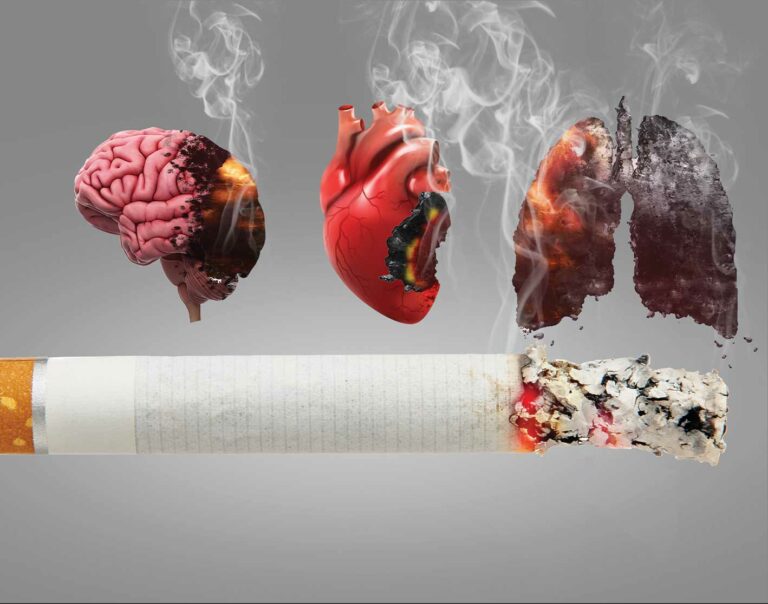
The problem with N10m tobacco control fund

0

By Robert EGBE

THE national budget for 2024 saw Nigeria double its financial commitment to the Tobacco Control Fund (TCF) from N4.7 million in the previous year to N10 million, heeding long-standing stakeholder calls for increased funding.

The money earmarked for tobacco control aligns with Section 8 of the Nigeria Tobacco Control Act (NTCA), 2015, which stipulates funding for the National Tobacco Control Committee (NTCC) and Tobacco Control Unit (TCU) to carry out their obligations.

This fund, drawn from various government revenues, support the work of relevant government institutions in health promotion initiatives, tobacco control programs, and enforcement activities to ensure compliance with set laws and regulations.


Read Also:


By outlining a dedicated fund for tobacco control in the NTCA, the federal government indicated that it appreciated the necessity and capacity of such measures to facilitate the security of public health.

Nonetheless, the journey towards operationalising the fund has been fraught with challenges and protracted, with the current allocation being very modest.

To be clear, the budget increase to N10 million, though a step in the right direction, still falls short of the broad spectrum of tasks and necessary financial resources required for the tobacco control committee to discharge its responsibilities effectively.

For instance, the committee is expected to meet at least four times annually, as stated in the NTCA. Yet, last year, the committee noted that convening even a single meeting alone costs a minimum of N4 million. The figure does not include expenditure for other essential activities such as the coordination of public health campaigns, population-wide cessation and anti-smoking programs, and collaborations with a variety of stakeholders among other initiatives.

The NTCA, in another case, is expected to work with the Ministry of Agriculture and other relevant agencies on alternative cropping for tobacco farmers. Such a transition would require ongoing trainings, distribution of substitute seedlings, and potentially, the provision of even soft loans to aid farmers make the switch.  Evidently, N10 million is nowhere adequate for the gamut of interventions and programming essential for robust tobacco control in the country.

This paucity of funds also indirectly facilitates the tobacco industry’s strategy of utilizing Corporate Social Responsibility (CSR) initiatives, to market its brand and cultivate harmful relationships with state authorities and strategic institutions in society.

By forming partnerships with government bodies, youth-focused agencies, and tertiary institutions to undertake ‘‘socially responsible’’ initiatives such as organising farm fairs and agribusiness trainings for farmers and young school graduates, tobacco corporations not only position themselves as benefactors but also subtly promote their brands and earn public endorsements for it.  This scheming not only sidesteps Nigeria’s tobacco control laws but also raises conflict of interest concerns, all of which undermines efforts to regulate tobacco consumption.

As tobacco corporations tirelessly seek to circumvent national regulations and laws, their substantial financial resources significantly aid them.

Only last November, the Federal Competition and Consumer Protection Commission (FCCPC) fined British American Tobacco Nigeria Limited (BATN) and its affiliates an unprecedented $110 million for violating national tobacco control regulations, among other laws. The fine was one of the highest in Nigerian quasi-judicial history, with the FCCPC granting them grace period of a few years to liquidate the penalty. But just days after the announcement of the fine, BATN issued a statement saying it had paid up, reflecting the deep pockets of the organisation.

Up against a public enemy as the tobacco industry with deep pockets, the case for an improved tobacco control funding to fortify public health is made even more urgent. As the leading preventable cause of deaths and diseases, tobacco kills half of its regular users. In fact, by the Federal Government’s own records, no fewer than 26,800 persons die in Nigeria each year from tobacco or tobacco-linked diseases. Yet, the ‘‘casualties are not only those who are dead”, to borrow the words of the late Nigerian poet and playwright, John Pepper Clark.

According to the United States Centres for Disease Control and Prevention, for every person who dies because of smoking, at least 30 people live with a serious smoking-related illness, including cancer, heart disease, stroke, lung diseases, diabetes, and chronic obstructive pulmonary disease (COPD), which includes emphysema and chronic bronchitis. Thus, thousands of other tobacco consumers in Nigeria are racked with costly, debilitating non-communicable diseases.

Tobacco control is not merely a health issue but also an economic and environmental concern. The costs associated with treating tobacco-related diseases, environmental cleanup, and loss of productivity due to illness and premature deaths run into billions of naira annually. A robust tobacco control strategy, backed by substantial financial resources, can mitigate these burdens, and safeguard the well-being of Nigerians.

On this note, the federal government must recognize the urgency of increasing its allocation to the tobacco control fund in the next budget cycle commensurate with the scale of the problem. This would be a significant step towards empowering relevant agencies to wage powerful campaigns and interventions against tobacco consumption. This investment in public health will yield dividends in the form of reduced healthcare costs, a healthier population and workforce, and a cleaner environment for future generations.

Robert Egbe is the Communication Officer at pan-African not-for-profit, Corporate Accountability and Public Participation Africa (CAPPA) www.cappaafrica.org. He can be reached via regbe@cappaafrica.org

Senate extends 2023 budget implementation period till June 2024

THE Senate has extended the implementation period for the capital component of the 2023 budget till June 30, 2024.

The Senate had extended the budget’s life span from 31st December 2023 to March 31, 2024.

The latest extension followed a request by President Bola Tinubu, through a letter read by the Senate President, Godswill Akpabio, on Wednesday, March 20.

Tinubu, in the letter, said the extension was necessary to ensure that the provisions of the budget were fully implemented.

Read Also:

The Senate Leader Bamidele Opeyemi, while presenting the Bill for an Act to re-enact the 2023 appropriation Act to extend the period of implementation to June and a bill for an Act to amend the 2023 Appropriation Act to extend its implementation period to 30th June 2024, said the release of the capital component of the budget to the MDAs was unlikely to be utilised before March 31, 2023, if it was not extended.

“I therefore urged the Senate to amend the 2023 budget implementation to June 30,” Bamidele said.

On Tuesday, March 19, the Senate passed a bill extending the implementation period of the N1.3 trillion 2023 supplementary budget from March 31 to June 30, 2024.

“The Bill for an Act to Amend the 2023 Supplementary Appropriation Act, to extend the implementation year from 31st March 2024 to 30th June 2024, and for related matters,” was sponsored by the Senate leader Opeyemi Bamidele and received expeditious consideration as it passed the second and third reading during plenary on Tuesday.

Bamidele observed that the budget could not be expended due to the late release of funds and sought an extension to the expiration clause of the Act.

He argued that an extension was critical to avoid compounding the problem of abandoned projects and allow its full utilisation to reflate the economy.

CBN clears valid FX backlog as external reserves rise to $34.11bn

THE Central Bank of Nigeria (CBN) said it had cleared all valid foreign exchange(FX) backlogs.

The Bank disclosed this through its Acting Director of Corporate Communications, Hakama Sidi Ali, in Abuja on Wednesday, March 20.

Ali said the action fulfilled “a key pledge of the CBN Governor, Olayemi Cardoso, to process an inherited backlog of US$7 billion in claims.”

She noted that the CBN recently concluded the payment of $1.5 billion to settle obligations to bank customers, effectively settling the residual balance of the FX backlog.

She also disclosed that independent auditors from Deloitte Consulting ‘meticulously’ assessed these transactions, ensuring that only legitimate claims were honoured.

“Any invalid transactions were promptly referred to the relevant authorities for further scrutiny,” the CBN spokesperson added.

Read Also:

The ICIR reported that Cardoso had confirmed clearing the FX backlog for the aviation sector when international airlines threatened to halt their operations in Nigeria.

“We made clear the FX backlog a priority to restore credibility and confidence in the Nigerian economy.

“We needed to go through an independent and credible process that would determine the authenticity of those obligations, and, at this point, I can tell you that we have now cleared all genuine, verifiable transactions. This encumbrance to market confidence in the country’s ability to meet its obligations is now totally behind us,” Cardoso recently said.

Notably, clearance of the foreign exchange transactions backlog is part of the overall strategy detailed in last month’s Monetary Policy Committee meeting to stabilise the exchange rate and thereby curb imported inflation, spurring confidence in the banking system and the economy.

Cardoso used the MPC meeting and a subsequent conference call with foreign portfolio investors to set targets for sustained increases in Nigeria’s foreign currency reserves and improved liquidity in the foreign exchange market.

On the heels of this clearance, CBN reported a significant increase in external reserves, rising by $993 million to $34.11 billion as of March 7, 2024, the highest level in eight months.

The CBN confirmed further that the month-on-month increase was driven by a marked advance in remittance payments by Nigerians overseas and higher purchases of local assets, including government debt securities by foreign investors.

ABCON expresses concern over BDCs named among 15 terrorism financiers

0

THE Association of Bureaux De Change Operators of Nigeria (ABCON) said it was concerned about the naming of six Bureaux De Change (BDC) among 15 terrorism financiers.

The Federal government had uncovered and identified 15 entities, including nine individuals and six BDC operators and firms, for alleged involvement in terrorism financing, the Punch reported.

It said details of the development were contained in a document revealed by the Nigerian Financial Intelligence Unit (NFIU).

“The Honourable Attorney General of the Federation, with the approval of the President, has thereupon designated the following individuals and entities to be listed on the Nigeria Sanctions List,” it quoted.

According to Punch report, the six BDCs and firms are:

  • West and East Africa General Trading Company Limited
  • Settings Bureau De Change Limited
  • G. Side General Enterprises
  • Desert Exchange Ventures Limited
  • Eagle Square General Trading Company Limited
  • Alfa Exchange BDC

The nine individuals under sanctions are:

  • Tukur Mamu
  • Yusuf Ghazali
  • Muhammad Sani
  • Abubakar Muhammad
  • Sallamudeen Hassan
  • Adamu Ishak
  • Hassana-Oyiza Isah
  • Abdulkareem Musa
  • Umar Abdullahi

Reacting, the National Treasurer of ABCON, Gbadamosi Moh-Murtala, said terrorism financing had been a known issue but that it was worrisome that anyone on the street exchanging dollars is regarded as a BDC operator.


Read Also:


“In Nigeria, we have licensed Bureaux De Change by the Central Bank. Someone trading in currency on the street calls himself “Bureaux De Change.”

“Notwithstanding, you see some bad people in any sector or organisation. That is not to say that some of our members are not involved, but they are minimal.”

He said for the Federal government to have named them means it had evidence at its disposal.

Stressing that the majority of the people engaged in terrorism financing were not licensed BDCs, he said the bad elements usually used different accounts to carry out illegal operations.

“That is why I can’t say what the Federal Government is saying is wrong; they are right.

“It is a thing every one of us knows; the Federal Government knows, even foreigners. It is not a secret thing.”

Moh-Murtala argued that the banks were the ones pushing the funds. He decried why the government and security agencies were appearing silent on the activities of the commercial banks in terrorism financing.

“It is not a thing we can deny; it is a reality. Those doing it among us are not more than five per cent,” he said.

He also noted that the people involved in the activities were people who had funds, adding that those funding them were outside the BDC business.

“Most of the time, when caught, the security agencies use them as witnesses, not as the real financiers.

“What they get from the millions they transfer for them is minimal. They don’t even know they are cheating them,” Moh-Murtala said.

Police unable to access Okuama – Commissioner

0

THE Delta State Commissioner of Police, Abaniwonda Olufemi, has said the police had been unable to access the troubled Okuama in the Bomadi Local Government Area of the state, where 15 soldiers were confirmed killed by suspected youths on Thursday, March 14.

In an interview with Arise TV on Wednesday, March 20, Olufemi stated that he would need clearance before deploying officers to the area.

He said the police had been supportive in the ongoing investigation to fish out the killers.

This was as the Senate president Godswill Akpabio expressed doubt that the soldiers’ killers were from the Niger Delta region.

Akpabio stated this during a debate on the killings at the plenary session on Tuesday, March 20, emphasising that no community would resort to killing such a large number of its nation’s soldiers.

The ICIR reported how 15 military personnel, consisting of two majors, one captain, and 12 soldiers, were murdered allegedly by some youths in the Okuama community.

The incident occurred on Thursday, March 14, when the deceased were responding to a crisis between Okuama and Okoloba communities in Delta State.

Reacting to the situation, the state police commissioner said the atmosphere had been calm, adding that most of the area was deserted. 

He said the Okuama and Okoloba communities had had perennial disputes over fishing rights. 

“We have not been able to move into this community. Of course, it is our responsibility as the primary line of defence in internal security. But when you have another sister agency conducting an operation, the reasonable thing to do is to wait for them to finish.

“We have not been able to get into Okuama because of the volatile nature of what is going on around that environment.

“I might not be able to accurately respond to these questions [if buildings are torched or more civilian casualties have occurred], but what is important to note is that these things are ongoing. We must seek to be collaborative.

“For us to get to Okoloba or Okuama, we must get clearance.”

Olufemi further stressed that the clearance would be obtained from either a military theatre commander or the operation commander, noting that he had to be sure that the military’s presence would not hurt the officers he would send in.