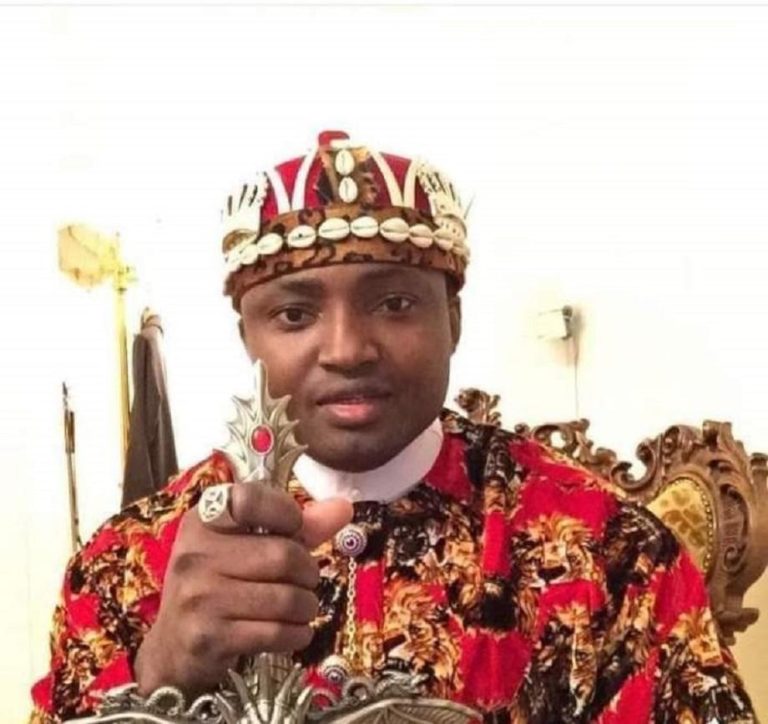
The Defence Headquarters (DHQ) has declared the factional leader of the proscribed Indigenous People of Biafra (IPOB), Simon Ekpa, and 96 others wanted.
Among the wanted individuals are suspected terrorists, insurgents, and others believed to have been involved in other crimes undermining the nation’s security.
The DHQ released the names and pictures of those on Friday, March 22, through its director of defence media operations, Edward Buba, a major general.
Names and pictures of suspects wanted by the Defence Headquarters in Nigeria
Thirty-three people were declared wanted in the North-East, which terrorists belonging to the Boko Haram and Islamic State for West Africa Province (ISWAP) have tormented for over a decade.
Some of them are Abu Zaida; Modu Sulum; Baba Data; Ahmad; Sani Teacher; Baa Sadiq; Abdul Saad; Kaka Abi; Mohammad Khalifa; Umar Tella; Abu Mutahid; Mallam Mohammad; Mallam Tahiru Baga; Uzaiya and Ali Ngule .
In the North-West devastated by banditry, 43 people were listed as wanted, including Alhaji Shingi; Malindi Yakubu; Boka; Dogo Gide; Halilu Sububu; Ado Aliero; Bello Turji; Dan Bokkolo; Labi Yadi; Nagala; Saidu Idris; Kachalla Rugga and Sani Gurgu.
A total of 21 insurgents and violent criminals were declared wanted in the South-East and North-Central.
They are Simon Ekpa; Chika Edoziem; Egede; Zuma; ThankGod; Gentle; Flavour; Mathew; David Ndubuisi; High Chief Williams Agbor; Ebuka Nwaka; Friday Ojimka; Obiemesi Chukwudi aka Dan Chuk; David Ezekwem Chidiebube; and Amobi Chinonso Okafor aka Temple.
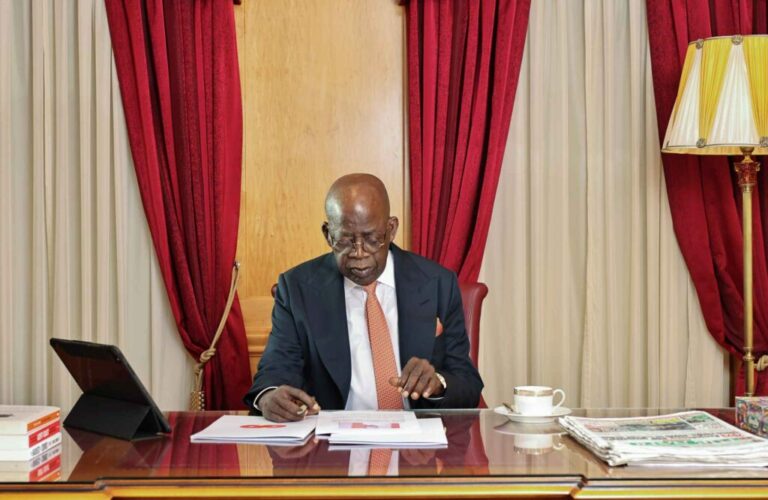
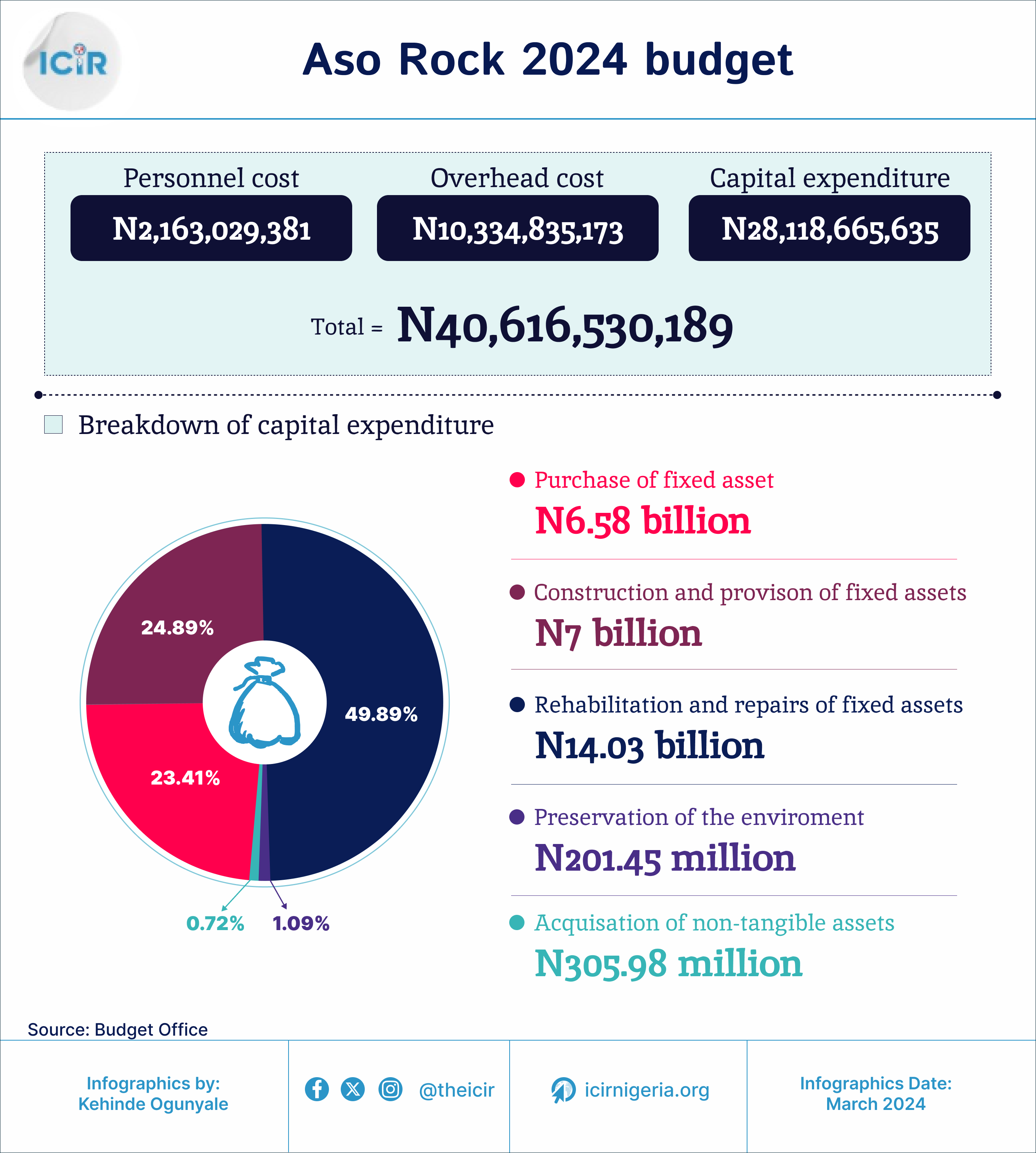
DESPITE the hardship facing Nigeria and the country’s current wobbling economy, President Bola Tinubu approved N40.62 billion of public funds for the renovation and maintenance of the State House headquaters, otherwise known as Aso Rock Villa, in the nation’s capital, Abuja, findings from the 2024 budget have shown.
The ICIR compared the amount Tinubu approved for the Villa renovation with what three past presidents approved for the same purpose in their first year in office.
The data revealed that Tinubu’s allocation is the highest ever.
Tinubu’s approval for the renovation and maintenance of the Aso Villa is more than 150 per cent higher than the budget approved by any other past president during their first year in office.
For instance, under former president Muhammadu Buhari, who came into power in 2015, his first budget approval in 2016 for the renovation of Aso Rock was N11.55 billion.
Also, former President Goodluck Johnathan approved N16.12 billion in 2012, following his election as president in 2011.
Jonathan’s predecessor, President Umaru Yar’Adua, who assumed office in May 2007, proposed N15.62 billion in 2008 to maintain the State House.
According to several media reports, it took Tinubu two months to finally move into the Aso Rock.
After his inauguration, he operated from a private residence, resulting in road closures, traffic gridlocks and public complaints in the nation’s capital.
Introspection into the Aso Rock Budget
The allocation falls under the Presidency budget category, with N306.57 billion covering 18 departments and agencies in the 2024 approved budget. However, findings by The ICIR show that the budget for the State Headquarters is the third largest allocation under the category, with a share of 13.25 per cent.
Further observation revealed that the same amount (N40.62 billion) proposed for the Villa renovation by the presidency was passed by the National Assembly and signed for approval.
2024 State House Headquarters budget
Villa’s budget is expected to take care of the State House personnel, overhead cost and capital expenditure. The capital expenditure would gulp N28.82 billion for 20 projects.
Findings showed that out of the 20 projects, 14 are ongoing, while six are new.
Some of the ongoing projects include the purchase of sporting equipment for the State House sports club with N29.38 million, procurement of equipment for the central gymnasium for N24.77 million, upgrade of State House library for N35.22 million, conversion/upgrade of Villa Ranch and construction of wildlife conversation capture for N130.08 million.
The budget also provides N9.20 billion for the annual routine maintenance of mechanical/electrical installation at the Villa, N351.08 million for purchasing utility and operational vehicles, and N45.26 million for the rehabilitation of animal enclosure/procurement of veterinary laboratory equipment, among others.
The ICIR reports that most of these ongoing projects have repeatedly gulped public funds yearly.
The ICIRreported that the President might pay over N30 million monthly to offset salaries in his administrative cabinet.
With the numerous appointments made by the President, N3.5 billion was approved for the construction of office complexes for Special Assistants (SAs) and Senior Special Assistance (SSAs).
Other new projects inserted in the budget are the acquisition, renovation, rehabilitation and finishing of the State House annexe for N3.5 billion, the replacement of SUV vehicles for N2 billion, the purchase of State House operational vehicles for N4 billion and the purchase of computer equipment for finance, account and internal audit for N46 million.
A report by the Centre for Social Justice disclosed that most of the funds allocated by the government to the Villa were frivolous and could be reduced by as much as 50 per cent.
The report also noted that most of the line items had been provided for in the 2023 supplementary budget or previous budgets.
The CSJ report recommended that at least N22 billion could be saved from the total amount allocated to the State Headquarters.
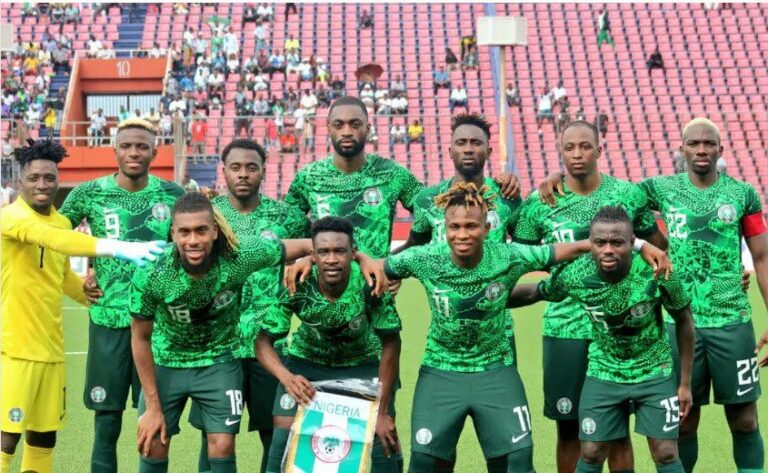
NIGERIA’S senior men’s football team, Super Eagles, on Friday evening, edged 10-man Black Stars of Ghana 2-1 in an international friendly match played in Marrakesh, Morocco.
The match tagged ‘Jollof Derby’ rekindled the long-time rivalry between the two African football giants.
However, the match began slowly as both sides lost possessions and could not complete a string of passes to take the lead.
Ghana came close to taking the lead 20 minutes into the match, but their attempt was denied by Stanley Nwabali in the Nigeria goal.
A few minutes later, Nigeria dominated possessions as Alex Iwobi and Frank Onyeka combined in an attempt to put Nigeria forward, but a low shot by Onyeka could not find its way into the net.
On the half-hour mark, Cyriel Dessers almost buried a goal via Iheanacho’s free-kick; the Ghanaian goalkeeper Ati-Zigi denied the attempt.
Nigeria’s hunger to break the deadlock yielded fruit as the referee, Jayed Jalal, awarded a penalty for a handball inside the Ghanaian box.
The decision aroused protests from the Black Stars players and coaching crew.
But after the dust settled, Dessers stepped up to take the penalty, sending the goalkeeper the wrong way to give Nigeria the lead before the end of the first half.
The first half ended 1-0 in favour of Nigeria.
The second half saw the early attempt by the Black Star to equalise as Lamptey’s cross from the right met Ayew’s, leading to Nwabali pushing wide in the 55 minutes.
Two minutes later, Black Stars player Jerome Opoku was shown a red card, reducing his team to 10.
Undeterred by the deficit, Ghana remained confident, trying to break through Nigeria’s defence.
But Nigeria doubled the lead in the 80th minute through Ademola Lookman.
However, Ghana reduced the deficit through Jordan Ayew during the additional minutes.
Niger Republic opened its land borders with Nigeria in Konni on Friday, March 22.
This comes barely a week after the Nigeria Customs Service opened the Illela land border between both countries, following directives by President Bola Tinubu.
Nigeria also restored power supply to the landlocked West African country, which is currently led by a military junta.
The opening of the Konni border was confirmed by a resident of Konni, who spoke to journalists on Friday and was quoted as describing the action as commendable.
“It was our collective prayer that this border too, should be reopened after the Nigeria side was declared open. I want to believe that this will definitely help a lot in the improvement of the economies of these two countries, as it will facilitate more trading activities between Nigeria and Niger Republic,” he was quoted as saying.
The border between both countries had first been closed in August 2023 as part of sanctions on the Niger Republic by the Economic Community of West African States (ECOWAS), under Tinubu’s leadership, following a military coup that ousted the country’s former President Mohamed Bazoum.
The Community also imposed a no-flight zone on the Niger Republic, cut off electricity supply from member-states, mobilised international support for the implementation of the provisions of the ECOWAS decisions and reactivated the border drilling exercise.
Similar sanctions were placed on Mali and Burkina Faso, as both countries are also being run by military governments who forcefully took over power from incumbent presidents.
However, ECOWAS lifted the sanctions placed on the three countries in February 2024 based on humanitarian considerations.
The ICIR also reports that the sanctions were lifted to placate the three countries which had pulled out of the ECOWAS and had concluded plans to form a regional body.
NASARAWA State Governor Abdullahi Sule has ordered a probe into the death of students of the state university who died during a stampede on Friday, March 22.
In addition to those who died, many others were injured in the stampede, which occurred during the distribution of palliatives by the state government to alleviate the suffering occasioned by the harsh economic situation in the country.
In a statement signed by the governor’s chief press secretary, Ibrahim Addra, Sule expressed sadness over the incident.
“The governor has since directed the authorities of the Nasarawa State University, Keffi and security agencies to commence an immediate investigation into the unfortunate occurrence to unveil those behind it,” the statement read.
The ICIRreported that two female students died after some students overpowered the security operatives at the entrance of the convocation square, where the distribution was scheduled to take place.
The palliative was said to be two bags of 7.5kg rice per student.
Deputy Governor of the state Emmanuel Akabe said the distribution of palliatives had been successful in other universities within the state.
A source, a student of the institution, shared details of the incident with The ICIR.
“Actually, they were about to distribute the palliative this morning and to do flag off when the governor comes, but the students came and overpowered the security because they were many. They broke the door and forced themselves in. Some were stepped on, so they kept falling on one another. And that’s what caused the death,” the source said.
Some injured students were taken to the school clinic for medical attention, while others in more critical conditions were taken to the state’s Federal Medical Centre.
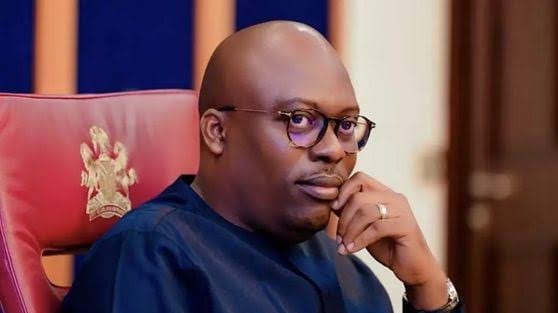
THE House of Assembly in Rivers overrode the state governor Siminalayi Fubara on Friday, March 22 and enacted the Rivers State House of Assembly (RSHA) Service Commission Law.
The legislators reached the decision following an impromptu sitting, during which the Speaker of the State Assembly, Martin Amaewhule, read four letters addressed to him by the governor, declining to grant assent to the bills transmitted to him.
The lawmakers’ action could arise from the feud between Fubara and some of the lawmakers.
Besides, there has been lingering rift between the governor and his predecessor, Nyesom Wike, the current Minister of the Federal Capital Territory (FCT).
It was also not the first time the legislators had overridden Fubara’s refusal to assent to bills.
In January, the State Assembly overrode Fubara when he withheld assent to four bills which had been passed by the Assembly.
Amaewhule had said the reason given by the governor for declining assent would create a situation that would make elections in the state impossible.
The rift between Wike and Fubara had been followed by the defection of 27 of 32 members of the Assembly from the Peoples Democratic Party (PDP) to the All Progressives Congress (APC).
There was also a wave of resignation from Rivers State’s executive council in December 2023 due to the political impasse between both leaders.
Earlier, legislators believed to be loyal to Wike had initiated impeachment proceedings against Fubara, which failed.
In turn, the governor presented the state’s N800 billion 2024 budget to only five House of Assembly members who appeared loyal to him. The members signed the bill, which the governor signed into law.
However, the Federal High Court nullified the process in January 2024.
President Bola Tinubu waded into the crisis twice, but the feud between Wike and his successor appears to linger.
A report by the European Central Bank and some scientists has predicted that food prices and inflation rates would skyrocket globally due to global warming and heatwaves, with Africa and South America likely to be the worst-hit continents.
The researchers warned that changing climate conditions could drive up food prices by 3.2 per cent in a year and put “persistent upward” pressure on inflation in the coming decades.
“We find this strong evidence that higher temperatures, particularly in the summer or in places that are hot, cause price increases mainly in food inflation but also in overall inflation.
“In those places in the northern hemisphere – mainly in the summer – that’s where those things will mainly happen. Whereas in the rest of the world, it will be more spread out across the year,” one of the researchers, Maximilian Kotz, was reported to have told AFP.
The ICIRreported that heat stress is already affecting farming in Nigeria, pushing farmers, especially those in the poultry sector, out of business and leading to a hike in the cost of poultry products.
Some farmers who recounted their experiences to The ICIR said that beyond the harm caused directly to the birds by the unfavourable weather conditions, heat stress forced farmers to explore other means of protecting their crops and animals, which, in most cases, increases production costs by a wide margin.
“We are spending a lot of money to save our birds through these mechanisms, like diesel. Every day, we consume N20,000 worth of diesel to save our birds from dying.
“We have to turn on the generators to power the fans, foggers and sprinklers. The profits that we are supposed to gain, we put back into the poultry. So we are not getting that much profit because of the extra expenses. If you don’t have any way to protect your birds from the heat, you can lose all of your birds in one day,” a poultry farmer Zayyanu Abubakar, said.
THE Federal Government has arraigned the leader of the Miyetti Allah Kautal Hore group, Bello Bodejo, before a Federal High Court in Abuja for terrorism-related offences.
Bodejo was arraigned on Friday, March 22, where he was accused of establishing and supporting an ethnic militia group – Kungiya Zaman Lafiya.
The Attorney General of the Federation (AGF) office filed a three-count charge against him.
According to the AGF’s Office, Bodejo had breached the Terrorism (Prevention and Prohibition) Act of 2022.
The accused entered a not-guilty plea to the charges.
The presiding judge, Inyang Ekwo, ordered him detained in the Defence Intelligence Agency (DIA) custody.
Ekwo had, on March 13, fixed March 22 for ruling on the motion following the failure of the Federal Government to file a charge and arraign Bodejo in court for an alleged terrorism offence.
Upon resumed hearing on Friday, Ekwo, in his ruling, held that events had overtaken the motion.
The judge ordered the defendant to enter his plea.
He pleaded not guilty to the charge, following which the prosecution lawyer, M. B. Abubakar, pleaded with the court to order his remand in the custody of the Defence Intelligence Agency, DIA.
Ekwo granted the request and adjourned till May 27 for the commencement of trial.
On Wednesday, March 13, members of “Miyetti Allah Kautal Hore” embarked on a peaceful protest at the Federal High Court, Abuja, to demand the release of Bodejo.
The group’s spokesperson, Kabir Matazu, described Bodejo’s arrest and detention as illegal.
He emphasised that it was crucial to uphold the rule of law in democracy. He pleaded with the security services in Nigeria to free Bodejo immediately and without restrictions.
The protest occurred the same day a Federal High Court planned to hear Bodejo’s motion to be released from the Defence Intelligence Agency’s (DIA) custody.
The judge, Ekwo, had earlier issued an order directing the Federal Government to charge Bodejo within seven days after remanding him in DIA custody for 15 days while investigations were being completed.
The Federal Government had filed a motion ex parte to detain Bodejo in the National Intelligence Agency’s (NIA) custody until the end of the investigations and his arraignment in court.
According to the Terrorism (Prevention and Prohibition) Act, 2022, Bodejo was arrested on suspicion of organising an armed militia and posing a threat to national security.
The allegation against him was filed in a motion dated February 5 and submitted by the Director of Public Prosecution of the Federation. MB Abubakar.
Bodejo was detained after being taken into custody on January 23 in Malia, Nasarawa State.
NO fewer than two students of Nasarawa State University, Keffi, died in a vicious struggle for a palliative at the university’s convocation square on Friday, March 22.
The ICIR learnt that the incident, which also caused injuries of varying degrees to about ten students, was initially intended to be flagged off by the state governor, Abdullahi Sule.
However, the situation took another turn when some students overpowered the security operatives at the entrance of the convocation square, where the distribution was meant to take place.
The palliative was said to be two bags of 7.5kg rice per student.
Sule had recently announced the distribution of two 7.5 kg bags of rice and N5,000 to students in state tertiary institutions
While acknowledging the programme’s success in the state, the governor said the palliative distribution would continue, especially with students of tertiary institutions as target beneficiaries.
He said there was an urgent need to extend the gesture to the students as the prevailing hardship affected every segment of society.
He added that the gesture would reduce the burden on the parents battling to pay their children’s school fees in the face of the prevailing economic downturns facing the nation and homes.
However, during the flag-off of the palliative programme at the state university, sources disclosed that two students had been confirmed dead as a result of the stampede.
The source also shared a picture of the two deceased female students with The ICIR.
“Two students have died, but we don’t have the exact number of students that are injured yet, but they are about ten or thereabouts…Some of the injured are in the school clinic, but those in critical condition were taken to FMC,” the source said.
Giving more details into the circumstance, the source, who is also a student at the institution, said: “Actually, they were about to distribute the palliative this morning and to do flag off when the governor comes, but the students came and overpowered the security because they were many. They broke the door and forced themselves in. Some were stepped on, so they kept falling on one another. And that’s what caused the death.
The ICIR tried to confirm the details of the incident with the students’ union, but calls and messages sent to the union’s president, Yunusa Baduku, were not picked up or replied to.
Meanwhile, confirming the incident with Punch newspaper, Baduku said that most of the students involved in the stampede had been rushed to hospitals in the area for medical attention.
He said, “Seriously, what happened this morning at the Nasarawa State University, Keffi, is uncalled for and very pathetic.
“After our arrangement for the distribution of palliatives to the students, which was to be held at the University’s convocation square, they (students) suddenly arrived at the venue in their numbers and overpowered the security. “They broke through the gate into the convocation square where the bags of rice were to be shared.
“Unfortunately, most of our female students sustained several degrees of injuries, while others got suffocated because of the population at the venue for the distribution of the palliative,” the students leader said.
TWENTY governors have yet to submit reports of their decision on state creation to the National Economic Council (NEC).
According to the Special Adviser to the Vice President on Media and Communications, Stanley Nkwocha, on Thursday, March 21, only 16 states have submitted presentations on state police.
Nkwocha said the states also recommended changes to the Constitution to allow for the creation of state police.
Nkwocha said the NEC was still expecting reports from 20 states.
The presentations were among the documents presented at the 140th NEC meeting, which Vice President Kashim Shettima chaired on Thursday at the Aso Rock Villa in Abuja.
He stated that the Secretary to NEC, Nebeolisa Anako, made a presentation on submissions by states on the state police creation.
“States recommended changes in the Constitution and the current policing structure to enable the operationalisation of the initiative.”
However, no details were provided on the states that have yet to submit their reports.
The Vice President’s office said the compilation was ongoing and confirmed that the entire number would be disclosed at a subsequent NEC meeting.
Section 153(1) and Paragraphs 18 and 19 of Part I of the Third Schedule of the 1999 Constitution (as amended) provided the framework for creating the NEC.
The Vice President chairs the NEC, consisting of the Central Bank Governor, the 36 state governors, and other appropriation-based government officials.
It is tasked with advising the President on matters pertaining to the economy, particularly on actions required to coordinate the various Federal Government’s economic planning initiatives.
On Thursday, February 15, the Federal Government and 36 state governors agreed to create state police.
This was part of the outcome of a meeting between President Bola Tinubu and state governors at the Presidential Villa.
Minister of Information and National Orientation Mohammed Idris disclosed this to reporters after the meeting.
He said the process was still in its early stages and would take shape after further discussions.
The ICIR reported that a bill for creating state police has scaled a second reading at the House of Representatives.
The bill, sponsored by the Deputy Speaker of the House, Benjamin Kalu and 14 others, seeks to alter the relevant sections of the 1999 Constitution to pave the way for states to establish their police forces across the country.
During the plenary session on Tuesday, February 21, lawmakers took turns contributing to the debate on the House floor.
Kalu, who stood in for the Speaker, Tajudeenm Abbas, encouraged members to put Nigerians’ safety above political aspirations.
The ICIR reports that there have been calls for state police in response to the country’s growing security concerns.
Kidnapping and banditry are two security issues Nigeria has struggled with in recent years after over a decade of fighting terrorism.
Supporters of the creation of state police believe it would improve policing efficacy, enable more localised control over security issues, and bring law enforcement closer to the communities they serve.