Home Blog Page 67

Appeal Court dismisses PDP’s case, affirms judgment barring Ibadan convention

0

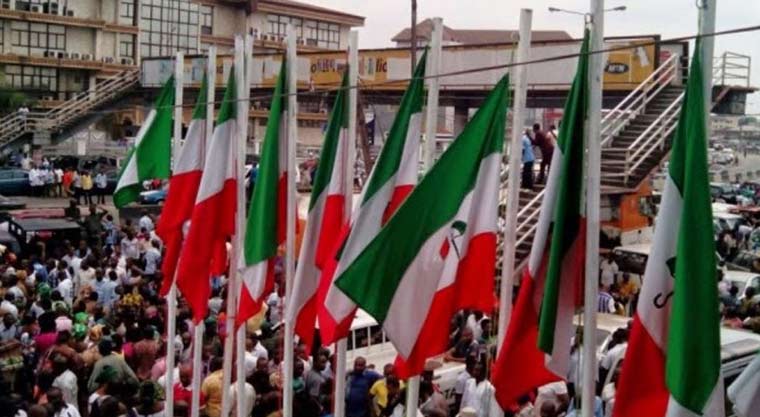
THE Court of Appeal in Abuja has dismissed an appeal filed by the Peoples Democratic Party (PDP) challenging a judgment that barred the Independent National Electoral Commission (INEC) from recognising the outcome of the party’s national convention in Ibadan, Oyo State.

Delivering judgment on Monday, March 9, a three-member panel of the appellate court unanimously upheld the earlier ruling of the Federal High Court delivered on October 31 by James Omotosho. 

The trial court had restrained INEC from giving effect to the outcome of the convention held on November 15 and 16, 2025, in Ibadan, Oyo State.

The appellate court resolved all four issues raised by the appellants against them, ruling that the appeal lacked merit.

It also dismissed the PDP’s argument that the lower court lacked jurisdiction to entertain the case on the basis that it concerned the internal affairs of the party. 

According to the appellate court, the plaintiffs had the legal standing to institute the suit as part of efforts to protect their democratic rights.

The court further rejected the PDP’s claim that it was denied fair hearing during the proceedings at the trial court.

As part of its ruling, the appellate court ordered the PDP faction led by Kabiru Tanimu Turaki to pay N2 million as costs, describing the appeal as frivolous.

Background

The ruling is the latest development in the prolonged leadership crisis rocking the PDP following its controversial national convention in Ibadan.

The convention produced a leadership team led by Turaki. However, some members loyal to the Minister of the Federal Capital Territory (FCT), Nyesom Wike, were suspended during the convention. The suspended members challenged their sack in the court.

On December 22, 2025, the Independent National Electoral Commission (INEC) rejected requests by the Turaki-led team that the commission recognise the party’s new National Working Committee (NWC), citing existing court judgments and unresolved legal processes.

The INEC referenced two Federal High Court rulings in Abuja in October and November 2025, which restrained it from giving effect to the outcome of the Ibadan convention.

The electoral commission noted that pending appeals did not automatically stay the execution of these judgments and emphasised that it remained bound by the law. A letter signed by INEC Secretary, Rose Oriaran-Anthony, explained that, in light of the suits, the commission could not update or recognise the list of national officers elected at the Ibadan convention.

Meanwhile, in a similar development, the Federal High Court sitting in Abuja, in January 2026, nullified the convention and barred Turaki and other officials who emerged from the exercise from acting as national officers of the party. 

The Turaki’s PDP caucus aslo insisted there was no cause for alarm and maintained that its leadership structure remained intact.

Following the decision, the party announced that it had instructed its lawyers to file an appeal and pursue all available legal options to defend its position.

PDP deepening crisis

The crisis in the party traces back to the build-up to the 2023 general elections when a rift emerged between supporters of former Vice President Atiku Abubakar and a group of governors led by Wike.

During the party’s presidential primary, a powerful bloc of governors led by Wike, demanded that the party’s presidential ticket be zoned to the South following the eight-year administration of former President Muhammadu Buhari, who was from the North.

However, Abubakar secured the PDP presidential ticket after defeating other aspirants, including Wike, at the party’s primary election.

The outcome deepened divisions within the party. Wike and some of his allies withheld their support for Abubakar during the 2023 presidential election.

The election was eventually won by Bola Tinubu of the All Progressives Congress (APC), after defeating Atiku and Peter Obi of the Labour Party.

After the election, Tinubu appointed Wike as Minister of the Federal Capital Territory, a move that further intensified internal disagreements within the PDP. Although Wike accepted the ministerial position in an APC-led administration, he retained his membership in the PDP.

Some party leaders, including Oyo State governor Seyi Makinde, Bauchi State governor Bala Mohammed, and PDP chieftain Bode George, have publicly criticised Wike’s role in the party and accused him of engaging in anti-party activities.

The crisis has contributed to a series of defections by prominent members of the PDP to other political parties.

Among them was Abubakar, who left the PDP in 2025 and joined the African Democratic Congress (ADC), where he is widely believed to be preparing for another presidential bid ahead of the 2027 elections.
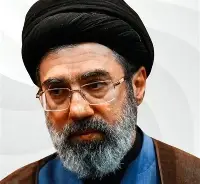
World awaits Trump’s response as Iran appoints Khamenei’s son Mojtaba as supreme leader

THE world is awaiting a formal response from United State President Donald Trump after Iran appointed Mojtaba Khamenei as its new supreme leader, replacing his father Ali Khamenei, who was killed in a US–Israeli strike earlier in the escalating Middle East war.

The appointment, announced on Monday by Iran’s powerful clerical body known as the Assembly of Experts, signals that hardline factions remain firmly in control of the Islamic Republic even as the conflict between Iran, Israel and the United States intensifies.

Before the appointment was confirmed, Trump had opposed the emergence of 56-year-old Mojtaba, a Shi’ite cleric with a power base among the security forces and their vast business empire.

Israel had warned that it would kill whoever replaces the late Khamenei unless Iran changes what it describes as hostile policies, as Trump repeated on Sunday in an interview with ABC News that Washington should have a say in Iran’s leadership.

“If he doesn’t get approval from us, he’s not going to last long,” Trump said, adding that ​ending the war would be a ‘mutual’ decision with Israeli Prime Minister Benjamin Netanyahu.

Following the announcement, Fox host Brian Kilmeade said he spoke with the president and quoted him as saying “I’m not pleased,” but Trump has not yet issued a formal public statement on the new leadership.

Meanwhile, Iranian institutions quickly moved to pledge allegiance to the younger Khamenei after the announcement, as officials from the government, parliament and security forces issued statements backing the new leader as the war entered its second week.

Reuters quoted the Defence Council as saying “We will obey the commander-in-chief until the last drop of our blood.”

A Senior cleric, Sadeq Amoli-Larijani, was quoted as saying Mojtaba Khamenei’s appointment was “a balm for the spiritual suffering of our people and an emphasis on the need to continue the luminous path of the late Imam (the elder Khamenei).”

The appointment makes Mojtaba Khamenei the third supreme leader of the Islamic Republic, a position that holds ultimate authority over the military, judiciary and government.

The succession marks a historic moment in Iranian politics. It is the first time since the 1979 Islamic Revolution that leadership has passed directly from father to son, raising debate among analysts about whether the Islamic Republic is moving toward a dynastic model of power.

The ICIR reported that Mojtaba Khamenei, a mid-ranking cleric who studied in the religious city of Qom, has long wielded influence behind the scenes, particularly within the powerful Islamic Revolutionary Guard Corps.

The leadership change comes as military strikes continue across the Middle East. Israel has launched new attacks in central Iran and targeted infrastructure linked to the Lebanese militant group Hezbollah in Beirut.

Iran and its allies have also responded with drone and rocket attacks targeting US and allied positions in Iraq and elsewhere in the region.

Meanwhile, Pope Leo XIV warned that the escalating violence could become “a tragedy of enormous proportions,” calling for dialogue and an end to the “climate of hatred and fear” spreading across the region.

Hunger crisis is set to get worse in west and central Africa – why and what to do about it

0

By Oliver Kiptoo Kirui, International Food Policy Research Institute (IFPRI) and Chibuzo Henrietta Nwagboso, CGIAR

COUNTRIES in west and central Africa are facing a food crisis with multiple causes. Estimates in late December 2025 suggested that 41.8 million people were already in crisis or worse in October-December 2025. The number was expected to rise to 52.8 million in June-August 2026. Researchers Kirui Oliver Kiptoo and Chibuzo Nwagbosu explain how serious the situation is.

How severe is food insecurity in the region, and where are the hotspots?

Food insecurity has three aspects:

  • chronic hunger
  • constraints to food access
  • acute crises.

West Africa, the Sahel and Cameroon are in crisis, according to the World Food Programme. It is increasingly concentrated in conflict-affected corridors where markets fragment, farms are abandoned, and humanitarian access is constrained. Key areas include the Central Sahel/Liptako-Gourma region and the Lake Chad Basin.

The problem is strongly shaped by the global humanitarian financing squeeze. The World Food Programme has warned that funding shortfalls are forcing ration reductions in countries like Mali.

Between October and December 2025, it was estimated that 41.78 million people faced food insecurity. For the June-August 2026 lean season, it is projected 52.78 million are at risk. The Food and Agriculture Organisation’s January 2026 regional update aligns with this projection.

The World Food Programme, covering a broader “west and central Africa” framing, has warned that June-August 2026 could see 55 million people endure “crisis hunger or worse”.

What is driving the crisis?

The crisis is best understood as layered risk:

  • conflict and governance shocks create vulnerability
  • climate events and price spikes trigger acute deterioration
  • weak safety nets make recovery fragile.

Conflict, insecurity and governance fragmentation:

Conflict and insecurity are repeatedly identified in analysis as determinants. They shut down markets, restrict movement, displace households, and limit humanitarian reach.

The Democratic Republic of Congo and Central African Republic Integrated Food Security Phase Classification analysis clearly describes persistent crisis-level food insecurity. This is linked to conflict dynamics and associated economic stressors.

Governance shocks can amplify market disruption. Observations noted the role of border closures and disrupted financial flows linked to Ecowas sanctions on Niger. Political events can transmit into food access constraints.

Climate shocks and environmental stress:

Cadre Harmonisé (a regional framework used for the analysis and identification of areas at risk and populations affected by food and nutrition insecurity) flagged floods as determinants as early as the 2023 cycle. It noted heavy rains damaging crops in parts of Ghana, Niger and Chad. In a region where livelihoods remain heavily dependent on rainfed agriculture and pastoral systems, even “good production years” can coexist with acute food insecurity when insecurity blocks access to fields and markets.

Economic shocks, food price inflation and market disruptions:

The State of Food Security and Nutrition in the World (2025) highlights how elevated inflation undermines purchasing power and access to healthy diets. It emphasises that food price inflation is not just a macroeconomic variable but shapes nutrition and food security outcomes.

Displacement and disrupted livelihoods:

Displacement is both a symptom and a driver. It reduces household production and income, increases dependency, and strains host-community services and markets. The current displacement burden is massive across the region’s key hotspots. United Nations High Commissioner for Refugees operational data shows that the DRC has about 6.47 million internally displaced persons, Nigeria has 3.54 million, Cameroon 1.0 million and Niger 0.59 million.

What is the impact of a reduction in food aid?

In late 2024 and early 2025, several major humanitarian donors – including the United States and a number of European governments – announced reductions or delays in aid disbursements amid domestic fiscal pressures and competing global crises. The effects were immediate in the Sahel. By early 2025, only about 50 per cent of the funding required for humanitarian operations in the region had been mobilised.

Funding shortages are no longer just a logistical problem for aid agencies. They are now directly contributing to rising hunger and malnutrition. When funding falls, fewer people are reached, food rations are reduced, and nutrition programs are interrupted, especially during predictable seasonal peaks when needs are highest peaks.

The World Food Programme’s evidence from the central Sahel is unusually explicit. It reports that in Mali, where rations have been reduced due to funding shortages, the population facing crisis-level hunger has surged by 64 per cent since 2023. In areas where full rations were maintained, the population facing crisis-level or worse hunger declined by 34 per cent.

This suggests aid makes a big difference.

Funding constraints also reduce the region’s ability to prevent malnutrition deaths. The World Food Programme warned in January 2026 that the region could see 13 million children suffering malnutrition and described how assistance and nutrition programming would have to be scaled down without urgent funding.

Unicef’s Burkina Faso situation reporting is similar. It notes that food is being delivered “despite funding constraints”, even as insecurity and displacement rise.

At the system level, UN Office for the Coordination of Humanitarian Affairs reporting illustrates that Sahel humanitarian operations have repeatedly run with major gaps. It notes that only about half of the required funding has been mobilised for targeted assistance. A Sahel regional needs overview for 2025 warned early in the year that only 8 per cent of required funding had been received. This very low funding at the beginning of the year makes it more likely that food and nutrition supplies will run out before the lean season begins.

What should be done?

The evidence points to an approach that combines short-term emergency response, medium-term recovery measures, and long-term structural reform.

Short-term actions:

Governments and regional bodies should treat the lean season as a predictable hazard. They must allow markets to work and aid to reach people who need it.

Cadre Harmonisé repeatedly shows that crisis outcomes concentrate where markets are disrupted and movement is unsafe.

The World Food Programme has warned that without urgent funding, millions may lose assistance. Donors can make sure nutrition-specific support is delivered in addition to general food aid and cash transfers – not replaced by them. Wasting levels are already high in several hotspot countries.

NGOs should scale up cash transfers where markets still function, and shift to in-kind where conflict isolates areas.

Medium-term actions:

Governments should expand social protection that can increase quickly when prices spike or floods hit. This is key especially where most households have to buy (not grow) their food.

Regional bodies should ease trade across borders and issue early warnings. This can reduce policy uncertainty that unsettles prices.

Humanitarian and development actors should focus on livelihood recovery where people have been displaced. For example, land restoration investments can deliver large returns and reduce repeat emergency caseloads.

Long-term actions:

The long-term objective is to address three constraints that keep arising: insecurity; weak services; and limited resilience in climate-sensitive food.

First, national governments and regional security mechanisms must pursue durable stabilisation strategies. Agricultural recovery and market integration can’t happen where there is conflict.

Second, invest in human capital and basic services that directly reduce nutrition mortality. These include primary healthcare, safe water, and child feeding programmes. Unicef’s Burkina Faso reporting shows large caseloads of severe acute malnutrition treatment even when there isn’t talk of a “famine”.

Finally, build climate resilience. This can be done through water control, soil fertility and rangeland management, and diversified income strategies. Financing should reward prevention, not only response.The Conversation

Oliver Kiptoo Kirui, Research Fellow, International Food Policy Research Institute (IFPRI) and Chibuzo Henrietta Nwagboso, Research Analyst, CGIAR

This article is republished from The Conversation under a Creative Commons license. Read the original article.

IWD: Leaders push for greater opportunities, representation for women

0

AS THE world commemorates International Women’s Day in 2026, some Nigerian public figures have urged stronger support for women through policies, resources, and leadership opportunities.

The Deputy Speaker of the House of Representatives, Benjamin Kalu, said putting more resources into women’s development is important for building a society where growth benefits everyone.

The global event, observed every March 8, is being marked this year with themes including “Give To Gain” and “Rights, Justice, Action for All Women and Girls,” drawing attention to the need for women to have better access to education, funding, and leadership spaces.

In his message for the occasion, Kalu said the focus of this year’s celebration reflects a widely recognised fact that when women are given opportunities, entire communities benefit.

He explained that countries tend to see improvements in their economies, governance, and social systems when women are equipped with the support needed to succeed.

Kalu also pointed to his efforts in the legislature aimed at promoting gender balance in governance. He mentioned the Special Seats for Women Bill, which he co-sponsored with other lawmakers to help increase the number of women involved in political leadership and decision-making in Nigeria.

He also praised President Bola Ahmed Tinubu for appointing women to strategic roles in government and introducing measures designed to advance women’s welfare.

According to him, these steps reflect movement toward a governing system that values the abilities and contributions of women.

Kalu said lawmakers would continue to back initiatives and reforms that advance equal opportunities, expand women’s participation in public life, and tackle obstacles that prevent them from fully taking part in political and economic activities.

He also encouraged collaboration among government bodies, businesses, and civil society groups to ensure that efforts aimed at supporting women lead to visible improvements in society.

A former senator who represented Ogun Central, Iyabo Obasanjo, appealed to women in Ogun State to stand behind her ahead of the 2027 governorship election.

Obasanjo, the daughter of former Nigerian president Olusegun Obasanjo, made the call in a message marking International Women’s Day. She described the theme, “Rights, Justice, Action for All Women and Girls” as a reminder that meaningful change must go beyond statements.

She encouraged women across the state to unite in pushing for stronger female presence in leadership and governance.

“Fellow Ogun women, today we join millions around the world to celebrate International Women’s Day. This year’s theme is a powerful call to move beyond promises and toward results,” she said.

The former commissioner for health noted that although many countries have adopted policies meant to safeguard women, such as equal pay frameworks and anti-discrimination rules, the outcomes often fall short of expectations.

She said fairness should be evident in women’s everyday experiences.

“Justice is what happens when a woman can walk into a courtroom, a boardroom, or a doctor’s office and be seen as a whole and equal human being,” she said, stressing that meaningful change requires deliberate action.

Obasanjo added that taking action involves confronting social biases and investing in the health, safety, and well-being of women and girls.

She dismissed the belief that women are often unsupportive of one another, expressing confidence that women would rally behind her political ambition.

“I do not share the belief that women are women’s greatest enemies. I believe women are my greatest supporters,” she said.

The Governor of Gombe State, Muhammadu Inuwa Yahaya, said his administration would continue programmes that support women and help them play active roles in development.

In his message to mark the day, the governor described women as essential contributors to national growth and emphasised the importance of expanding their access to opportunities and support systems.

He said the annual celebration provides a moment not only to acknowledge women’s achievements but also to consider the difficulties many of them still face.

Yahaya also pointed out that his administration has prioritised inclusiveness by appointing women to important roles within the executive, legislative, and judicial branches of government.

“These efforts demonstrate our firm belief in gender mainstreaming and our resolve to empower women as critical stakeholders in governance and development,” the governor said.

He urged women in the state to remain determined and continue applying their skills and abilities toward the advancement of society.

Anthony Placid replaces Hundeyin as Force PRO

0

THE Inspector-General of Police, Olatunji Rilwan Disu, has appointed Anthony Okon Placid as the new Force Public Relations Officer, replacing Benjamin Hundeyin.

This was disclosed in a statement issued on Sunday by the police headquarters in Abuja.

Placid, a deputy commissioner of police, is described as a seasoned officer with experience in administration, operations, intelligence, training and international peacekeeping.

Born on December 2, 1970, in Uyo, Akwa Ibom State, he hails from Mbiokporo Nsit in Nsit Ibom Local Government Area of the state.

He holds a Bachelor of Science degree in Geography and Regional Planning from the University of Uyo and a Master of Arts in Law and Diplomacy from the University of Jos. He also obtained a Bachelor of Law degree from the National Open University of Nigeria.

According to the statement, Placid joined the police as a cadet assistant superintendent at the Nigeria Police Academy in 1996 and was commissioned in August 1998.

He has attended several professional and international courses, including the United Nations Peace Operations Specialised Training, with certifications in police studies, military studies, gender awareness, international humanitarian law, human rights and civilian protection. He also completed the UNITAR senior leadership and peacebuilding course in Kenya.

The statement noted that he had served in several roles within and outside Nigeria, including police public relations officer in Adamawa State and at the Police Staff College, Jos; chief of training with the African Union Mission in Sudan; and head of training and development with the United Nations Mission in Darfur.

He also served as divisional police officer in Federal Housing Calabar, Bakassi, Uruan and Gembu; officer-in-charge of the anti-robbery unit in Kaduna State; African Union election security adviser; assistant commissioner of police (operations) in Akwa Ibom and Kogi states; assistant commissioner of police in the intelligence department in Abia State; and deputy in charge of administration and finance at zone 3 headquarters in Yola.

Placid is a member of the International Association of Chiefs of Police and a Commonwealth human rights trainer, as well as a trainer on international humanitarian law for the International Committee of the Red Cross.

He is also a graduate of the Senior Executive Course (SEC 47) of the National Institute for Policy and Strategic Studies, where he was inducted as a Member of the National Institute (mni) on December 13, 2025.

Earlier, The ICIR reported that Hundeyin had been removed as Force Public Relations Officer before the appointment of his replacement.

40kg of cannabis recovered from arrested ex-Lagos councillor

0

OPERATIVES of the National Drug Law Enforcement Agency (NDLEA) have arrested a former councillor in Ibeju-Lekki Local Government Area of Lagos State, Sheleru Olalekan, over his alleged involvement in illicit drug trafficking.


Sacked Railway staff cry out over victimisation for exposing theft, ‘criminal syndicate’

TWO dismissed staff of the Nigerian Railway Corporation (NRC) have attributed their suspension and subsequent sack to the exposure of top management of the corporation for orchestrating a criminal syndicate and looting national assets.

One of the staff, Olarewaju Michael Onakan claimed he, alongside Rufa’i Magaji, were suspended and subsequently dismissed in order to cover up the theft of railway property, including traction motors, armoured cables, and railway sleepers.

In his petition to the Nigeria Police Force, dated February 27, 2026, the aggrieved staff highlighted a pattern of systemic theft allegedly orchestrated by the former Regional District Manager for the Northern District, Adewale Adedeji Rasheed, and a network of department heads. 

According to the petition, between 2024 and 2025, Rasheed allegedly diverted railway property to fund personal projects, including his daughter’s N25 million tuitions abroad.

Other allegations include the sale of eight to ten traction motors from the Zaria Diesel Workshop, removal and replacement of 90 per cent of armoured cables at Zaria station with substandard aluminium wires, and the stripping of Kaduna’s Bridge Yard of rails, sleepers, and wagon frames days before a scheduled inspection by the Managing Director. 

The petition named a buyer identified as “PRINCE” as the recipient of the stolen property, alleging that internal collaborators and compromised security officers facilitated the illegal transactions.

According to the petition, seen by The ICIR, the syndicate includes Shina Abiodun, accused of facilitating the sale of traction motors, and Joel Olurungbon, who was accused of supervising the vandalism of armoured cables and served on the panel that later dismissed the petitioner and other aggrieved staff. 

It also listed members of the Railway Police, including Inspector Hallen Moses, and a local security commandant, known as “Gayu,” who are allegedly facing separate charges for the theft of sleepers and transformers.

Onakan claimed that despite the evidence provided to the corporation and the police, he and his colleague, Magaji, were suspended for twelve months and subsequently dismissed in February 2026, over ‘fabricated theft allegations’.

The whistleblower asserted that the panel that dismissed them was composed of the very officials involved in the alleged thefts, noting that it was designed to shield perpetrators while punishing innocent staff. 

Onakan was demanding a thorough investigation into the bank statements, call records, and other financial activities of the officials named in the petition.

He also called for their immediate reinstatement, payment of all withheld salaries and benefits since May 2025, and compensation for damages resulting from what he described as an unjust dismissal. 

Backstory

According to Onakan, the events that led to their suspension began on December 22, 2024. 

On that fateful day, he and Magaji had gone to purchase a goat for the Christmas period when they noticed an isolated pile of iron. He claimed that they contacted a man named Nuhu, who was with Sani, the station’s security chairman, to identify the iron. Onakan and Rufai guided them to the location, intending only to report the finding.

Despite this, the police and management later accused them of attempting to steal over 90 poles kept within the Kaduna Junction Police premises. 

Onakan noted that the poles were large and heavy, requiring at least four people to move, and a truck would have been required to transport them. 

Following the accusation, Onakan claimed that he and Magaji cooperated with authorities as informants to identify the real culprits.

According to him, Magaji secretly recorded conversations with suspected perpetrators, which allegedly led to arrests with the assistance of the Kaduna State Vigilante.

A video seen by The ICIR also showed a man identified as Nuhu confessing to involvement in the theft.

Before the operation, a letter was addressed to the management of the NRC from the office of the Area Commander, Nigeria Police Railway Area Command, Zaria, informing them of the use of Magaji as an informant to arrest a syndicate following a complaint of vandalism.

Despite this, Onakan said the management ignored all the evidence provided, including the letter from the police, kept them on suspension for 12 months and eventually dismissed them in February 2026 over ‘fabricated charges.’

He further claimed that the panel included officials he had accused of involvement in the theft, adding that they were not afforded the opportunity to defend themselves or even invited before any disciplinary panel.

The ICIR gathered that both dismissal letters were dated September 30, 2025, yet purportedly took effect retroactively from July 1, 2025.

Alleged manipulated evidence

Onakan also accused NRC management of relying on private call records and manipulated audio recordings to justify their dismissal. He alleged that they were pressured to pose for staged photographs with tools and iron materials they had never handled.

According to him, citing call records without consent violated their privacy rights and formed part of a broader conspiracy to remove them from the system.

Before his suspension, Onakan said he had been transferred to Zaria under what he described as strict monitoring, a move he believes was not unconnected with his knowledge of internal irregularities.

Demands and pre-action notice

The petitioners had demanded a comprehensive investigation into the bank statements, call logs and financial transactions of officials named in the complaint.

They also sought immediate reinstatement, payment of all withheld salaries and benefits since May 2025, including compensation for damages arising from what they described as wrongful dismissal.

Pre-legal action notice

The dismissed staff have issued a three-month pre-action notice against the NRC, warning that they will pursue legal action if authorities fail to address the allegations.

In a pre-action notice obtained by The ICIR and dated February 27, 2026, the solicitors to the whistleblowers said that if the demands were not met within three months, they would initiate legal proceedings at the National Industrial Court to compel the NRC to reinstate them and pay damages.

‘Bring evidence of my involvement’ Rasheed says

When The ICIR reached out to the former Northern District Regional Manager, Adewale Adedeji Rasheed, he confirmed that he is aware of the two dismissed staff, Onakan and Magaji. 

He stated that during his brief tenure at Zaria, the two were caught committing crimes, with reports filed to the Kaduna Police. “They were caught on two or three occasions. On both occasions, a committee of about five people was set up to look into their cases,” Rasheed said.

He added that there were reports from both security personnel and police, which the committees reviewed before recommending their dismissal. 

According to him, he was informed of the cases, set up the necessary committees, and forwarded reports to his Managing Director and NRC management. 

“The committee reviewed everything and recommended dismissal for them. Normally, in such cases, I am informed, and I set up a committee to look into it. I ordered the report to be sent to my MD and management. I even asked them to temper justice with mercy but ultimately, it was the headquarters that handled their cases,” Rasheed said.

On the broader claims made in the petition about his involvement in selling of the railway assets, Rasheed stated, “I don’t know anything about them. Let them provide evidence, and they can take it to court. I am ready. I don’t have anything further to say about that.”

When pushed further, he declined further comment, insisting that communication be put in writing.

We never recommended their dismissal – panel chairman

The chairman of the committee created to investigate the alleged theft involving Onakan and Magaji, Kehinde Doche, insisted that the panel never recommended the dismissal of the two staffers.

“The committee never recommended anything like dismissal,” he said, adding that such decisions fall under the discretion of the Human Resources department.

“The discretion is with HR, and that is why I gave you the contact of the people representing the HR agency,” he said.

When asked whether the committee found the staff guilty, Doche said the two were culpable in their findings and the report was forwarded to the management.

He, however, refused to comment on whether the committee recommended their suspension or any other form of punishment.

When The ICIR reached out to the District Human Resource officer, Zaria Bashir Bako, he declined to comment on the suspension and the subsequent dismissal of the staff and asked this reporter to speak with ‘appropriate’ office at the Lagos headquarters.

Further attempts to reach the Managing Director, Kayode Opeifa, via phone calls and WhatsApp messages were not responded to as of the time of filing this report.

Afenifere condemns rising terror attacks in South-West

0

THE pan-Yoruba socio-political group, Afenifere, has condemned the escalating wave of terrorist attacks in South-West Nigeria and called on both federal and state authorities to intensify efforts to rescue the region from banditry.

The group expressed concern in a press statement issued on Saturday by its National Publicity Secretary, Jare Ajayi, warning that the persistent attacks are causing widespread fear across several states in the region.

Ajayi said the Yoruba people are increasingly alarmed by the near-daily loss of lives, stressing that the activities of bandits and kidnappers have continued to erode the safety of communities.

He also drew attention to the brutal treatment often inflicted on kidnapped victims, noting the merciless beatings and humiliation suffered by abductees while in captivity.

Ajayi cited several incidents across the region, including attacks on churches, police stations, homes, and highways in Ondo State; sacked communities in Kwara State; the killing of farmers and assaults on travellers along the Igbeti–Kisi road in Oke-Ogun area of Oyo State; as well as gruesome kidnappings in Ekiti State, where some victims were reportedly killed and their corpses held for ransom.

Speaking on the nature of ransom demands made by kidnappers, Ajayi said:

“The greatest demonstration of the heartlessness of these evil-doers was their demands of N1.5 million, Indian hemp, cocaine, a synthetic drug known as ICE, and cartons of canned beer for the release of a corpse in their captivity.

“The kidnappers even hilariously asked for virgins to be brought in exchange for four men that they had previously abducted.”

Ajayi stressed that homes are increasingly becoming unsafe for residents.

“Until recently, the home environment was considered a ‘safe haven’. Unfortunately, that is no longer the case. A couple was attacked in front of their home in Akure, Ondo State, with the husband shot while trying to prevent his wife from being abducted,” he stated.

He also highlighted other attacks reported in different parts of the country.

“Elder Igwe, father of a former Deputy Governor of Ebonyi State, was abducted on his way to church on Sunday, 1 March. In Erinmope-Ekiti, a family of five was taken at 7 p.m., while people were at mosque for evening prayers.

“Bandits reportedly went from house to house in Kubwa, Abuja, this week, robbing and abducting residents,” he further noted.

Ajayi added that similar prolonged attacks have been reported in several states across the country, including Plateau State, Benue State, Borno State, Kebbi State, Nasarawa State, Niger State, Katsina State, and Kaduna State, while returning refugees from Cameroon have also reportedly fallen victim to attacks in Bauchi State.

He also cited a case in Edo State involving a kidnapped medical doctor.

The release disclosed, “When the daughter of one kidnapper fell ill, the doctor, on duty at the hospital, recognised the perpetrators and alerted the police, leading to their arrest.

“The point here is that the bandit values the life of his daughter by seeking medical care for her, yet saw nothing wrong in killing other people.”

Speaking on the broader fight against banditry and kidnapping, Ajayi stressed that criminal groups can be defeated.

“Bandits are neither spirits nor invincible.”

He urged authorities to cut off the sources of funding sustaining criminal groups, which he said include wealthy individuals, local and international organisations, some state actors, communities paying protection money or “harvest fees,” ransom payments from captives, and outright theft.

Highlighting the role of sponsors, he said:

“Confessions from apprehended and tried bandits revealed they had sponsors.

“Therefore, it is essential to pursue the sponsors and their intermediaries, block the sources of their funding and weapons, raid the bushes in which they hide, tackle corruption and sabotage within security forces, motivate personnel, and ensure the immediate establishment of state police.”

The group also commended President Bola Ahmed Tinubu for his push toward the establishment of state police, noting his call on the National Assembly of Nigeria to expedite constitutional amendments required for their implementation.

It further praised the Inspector-General of Police, Kayode Egbetokun, for inaugurating a committee to develop modalities for the deployment of state police.

Finally, the organisation urged governors in the South-West to take stronger security measures.

“Implement measures to raid bandit hideouts, maintain constant surveillance of vulnerable areas, and cooperate fully with the Federal Government to ensure the prompt establishment of state police in their states.”

The latest concerns raised by Afenifere come amid a growing pattern of violent attacks and kidnappings across South-West Nigeria in recent years, raising fears about the spread of banditry into a region historically considered relatively safer than other parts of the country.

In Ondo State, gunmen in June 2022 attacked worshippers at the St. Francis Xavier Catholic Church, Owo, killing dozens of people and injuring many others in one of the deadliest assaults on a place of worship in the region.

Similarly, communities in the Oke-Ogun axis of Oyo State, particularly along the Igbeti–Kisi corridor, have repeatedly reported kidnappings of farmers and travellers, with armed groups reportedly operating from forest reserves that straddle state boundaries.

Residents say the attacks have forced many farmers to abandon their farmlands for fear of abduction. The ICIR also reported how armed men killed five forest guards at Old Oyo Park earlier this year.

Kidnapping incidents have also been recorded in Ekiti State and Osun State in recent years, including the abduction of schoolchildren, travellers, and traditional rulers along major highways.

Amid poor power supply, minister Adelabu eyes Oyo governorship seat

THE erratic power supply currently being experienced by Nigerians, especially amid the current heat season, has called into question the leadership of the Minister of Power, Adebayo Adelabu, as he reportedly eyes the governorship of Oyo State ahead of 2027 polls.

Since his appointment by President Bola Ahmed Tinubu in August 2023, the minister has overseen the Ministry of Power, a sector that continues to struggle to deliver reliable electricity for Nigerians.

In a trending video in October 2025, Adelabu formally declared his intention to run for governor in Oyo, recalling how he lost to the incumbent Governor Seyi Makinde in 2019 and 2023.

“I have now paid my dues. I contested against Seyi (Makinde) in 2019. In 2023, I also contested against Seyi, then as the sitting governor. But in 2027, God has shown that it’s our turn. It’s Adelabu’s turn. Anything that belongs to Adelabu belongs to us all,” he said.

But as he prepares for another political contest, the state of Nigeria’s power sector under his watch is drawing increasing attention, with many Nigerians lamenting persistent blackouts and unstable electricity supply. Here are some of the issues with power sector under Adelabu’s leadership.

Generation far below capacity

Nigeria’s electricity generation has remained significantly below its installed capacity. The country has about 13,625 megawatts (MW) of installed generation capacity, yet only a fraction of that power typically reaches consumers. Data from the Nigerian Electricity Regulatory Commission (NERC) shows that in October 2025, only 5,506MW was actually wheeled through the grid at any given time—less than half of installed capacity.

In early 2026, NERC reported that the national grid was operating with an average of 4,901MW available for dispatch, representing a plant availability factor of just 36 per cent.

Energy analysts say this gap between installed capacity and actual generation reflects longstanding structural problems in the power sector, including gas supply shortages, ageing infrastructure, and financial instability across the electricity value chain.

In fact, a report on the sector found that over 60 per cent of installed generation capacity was unavailable for dispatch to the grid during the third quarter of 2025, highlighting the limited operational readiness of many power plants.

Recurring grid collapse

Apart from generation challenges, Nigeria’s national grid has also experienced persistent instability. Data compiled from regulatory reports shows that the grid has suffered 26 system collapses in the last five years, with 2024 alone accounting for nine of those incidents.

Several of these collapses plunged large parts of the country into darkness for hours, sometimes days, disrupting businesses and public services. Analysts say the collapses reflect deep weaknesses in transmission infrastructure and coordination across the electricity supply chain.

In September 2025, for example, the national grid suffered a major outage triggered by a generator failure, causing a widespread drop in electricity load across the country before gradual restoration began.

The Transmission Company of Nigeria has attributed some of these disruptions to vandalism, technical failures, and insufficient investment in grid infrastructure. But industry experts say the frequency of outages underscores the fragility of the country’s electricity system.

Tariff reforms and rising costs

During Adelabu’s tenure, the government has also pursued tariff reforms aimed at reducing electricity subsidies and improving sector revenue.

In 2025, the federal government introduced targeted tariff increases for higher-consumption customers, particularly those classified under the so-called Band A category, who are expected to receive at least 20 hours of electricity supply daily.

According to government figures, the policy helped generate an additional ₦700 billion in revenue and contributed to a 35 per cent reduction in electricity subsidy payments.

However, the tariff increases have also drawn criticism from consumer groups who argue that higher electricity bills have not translated into significantly improved service.

Many households and small businesses say they continue to experience prolonged outages despite paying higher tariffs.

Structural debt, gas shortages

Nigeria’s power sector also faces severe financial constraints that affect electricity supply.

Industry estimates reported by Reuters suggest the sector is burdened with over ₦6 trillion in accumulated debts, largely driven by unpaid government subsidies and liquidity problems within the electricity market.

These financial difficulties have contributed to reduced gas supply to power plants—the main source of electricity generation in Nigeria. Gas-fired stations require around 1.63 billion standard cubic feet of gas per day, but in early 2026, they were receiving only about 692 million cubic feet, or roughly 43 per cent of the required supply.

The shortage has forced system operators to implement load shedding to keep the grid stable, further reducing the amount of electricity available to consumers.

Persistent reliance on generators

Nigeria’s electricity supply remains far below the demand of its more than 200 million people.

Experts estimate that the country would require at least 20,000MW of reliable electricity to meet current demand, yet actual supply often falls below 5,000MW.

This persistent gap has forced businesses, hospitals, and households to rely heavily on petrol and diesel generators, significantly raising operating costs.

According to industry observers, the economic impact of unreliable electricity runs into billions of dollars annually through lost productivity, damaged equipment, and higher energy costs.

Workers’ welfare concerns

Meanwhile, tensions are also rising within the power sector workforce.

Earlier this month, the National Union of Electricity Employees (NUEE) said it had intensified mobilisation of its members nationwide for a possible strike following the expiration of its 21-day ultimatum to the federal government.

In a letter dated January 26, 2026 and addressed to the Minister of Power, the union accused power sector employers—particularly distribution companies (DISCOs) and generation companies (GENCOs)—of widespread anti-labour practices, wage violations, and failure to remit deducted Pay As You Earn (PAYE) taxes and pension contributions.

With the ultimatum now expired and no resolution reached, union sources say mobilisation is ongoing across the Nigerian Electricity Supply Industry (NESI), raising the possibility of industrial action that could disrupt electricity generation and distribution nationwide.

As Adelabu’s potential governorship bid in Oyo State gains attention, his record at the Ministry of Power casts a shadow on his competence and capacity.

Women rights group petitions IGP over female corporal’s 28 years’ unpaid salaries

0

Women’s Aid Collective (WACOL), has raised concerns over what it described as “institutional cruelty” against a police officer, Grace Ohiaeri, who has allegedly gone nearly three decades without receiving her salary.

The issue was made public by WACOL’s Executive Director, Joy Ngozi Ezeilo, during a press conference held in Enugu on Friday to commemorate the International Women’s Day 2026, which has the theme, “Rights. Justice. Action. For all Women and Girls.”

Ezeilo, a former United Nations Special Rapporteur, said the officer’s troubles began in 1998 after she disarmed a well-known criminal believed to have connections with a senior officer in the Nigeria Police Force. The act, according to the group, was done in the line of duty to protect civilians.

Rather than being rewarded for the action, WACOL said the officer’s salary was suddenly stopped the same year without any disciplinary proceedings, even though she remained on the police records as a serving officer.

“In 1998, officer Grace Ohiaeri performed a heroic act. Her reward was not a commendation, but malice and institutional cruelty. Now, elderly and frail, the police porce is evicting her from her official quarters because of proposed ‘renovations,’ leaving a national hero with absolutely nowhere to go,” Ezello stated.

The organisation also alleged that financial assistance meant for the officer was diverted.

According to Ezeilo, philanthropist Arthur Eze had donated ₦20 million to support Ohiaeri, but the funds did not get to her.

“When a Good Samaritan, Chief Arthur Eze, donated ₦20,000,000 for her relief, those funds allegedly vanished into the pockets of her superiors,” she added.

WACOL said it has now formally petitioned the Inspector-General of Police, Olatunji Disu, as well as the Enugu State Commissioner of Police, Bitrus Giwa. The group is asking the police authorities to pay all the officer’s salary arrears covering 28 years and grant her a promotion that would allow her to retire with dignity.

Meanwhile, the organisation also introduced a humanitarian fundraising effort known as the ‘Give to Gain’ campaign aimed at helping vulnerable individuals.

As part of the initiative, WACOL highlighted the situation of a woman identified as Faith Odoh and her four children, who are reportedly facing severe hardship.

According to the group, the family has endured repeated abuse, including the alleged assault of Odoh’s 12-year-old daughter by several men.

“The suspect is currently awaiting trial, but the family is now being evicted. These traumatised children are out of school and in desperate need of a safe sanctuary,” Ezello noted.

WACOL explained that the ‘Give to Gain’ campaign is intended to secure permanent housing for both Officer Ohiaeri and the Odoh family, while also helping the latter establish a stable source of income.

Ezeilo called on the Federal Government and private organisations to move beyond symbolic statements during International Women’s Day and take concrete steps to assist vulnerable people.

She concluded, “We cannot, and will not, let a lifetime of service end on the streets.”