Home Blog Page 674

Nikkei Asia hosts webinar for journalists to address misinformation

NIKKEI ASIA is hosting the latest session of its Asia Undercurrent Webinar series, “Tackling Global Misinformation: The International Community’s Fight to Protect Information Integrity.”

This webinar, set for Tuesday, February 13, is free and open to all journalists, particularly those interested in disinformation and possible solutions.

The panel will debate the global problem of disinformation, regulations and viable remedies to defend information integrity.


Read also:


Fellows and professors from the Brookings Institution’s Centre for Technology Innovation will moderate the panel, featuring speakers from Hitotsubashi University’s Graduate School of Law, the University of Massachusetts at Amherst’s Department of Communication, and Lund University’s Department of Strategic Communication.

This 75-minute live webinar will feature discussion, debate, and live audience Q&A sessions. Interested individuals should register here.

More nations back calls to make tobacco industry accountable for hazards

0

CIVIL Society Organisations (CSOs) in several countries have asked the delegates to the ongoing World Health Organisation’s (WHO) biennial tobacco control summit in Panama to consider imposing heavy sanctions on ‘Big Tobacco’ as part of measures to address public health issues. 

The CSOs, in a statement released on Wednesday, February 7, by the media and communications officer of Corporate Accountability and Public Participation Africa (CAPPA), Robert Egbe, urged the 10th Conference of the Parties (COP10) to the WHO Framework Convention on Tobacco Control, (the WHO FCTC) to accept a draft decision strengthening nations’ ability to hold the industry liable.

The proposal is being championed by Oman, Pakistan, and the Islamic Republic of Iran and co-sponsored by Brazil, Djibouti, Ghana, Iraq, Kuwait, Panama, Qatar, Saudi Arabia, the Syrian Arab Republic, and Yemen.

The call adds to advocacy by the WHO, Brazil, Ireland, Canada and others that more sanctions should be placed on the industry because of the dangers tobacco poses to human health and the environment.

“Abusive corporations from Big Tobacco to Big Oil are selling a deadly product and saddling society with all the costs that come with it. It’s not right, and it is past time for us to end this corporate stranglehold on society,” said CAPPA’s Executive Director Akinbode Oluwafemi in the statement.

The tobacco industry costs the world more than eight million human lives, 600 million trees, 200,000 hectares of land, 22 billion tonnes of water and 84 million tonnes of CO2 every year, according to a report by WHO.

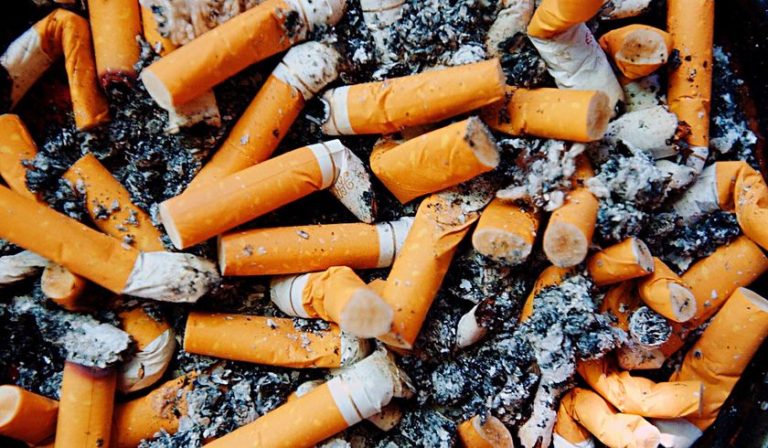
The global health body also highlighted that tobacco products, containing over 7,000 toxic chemicals, are the most littered items on the planet.

Roughly five trillion cigarette filters pollute the oceans, rivers, city sidewalks, parks, soil and beaches yearly.

Led by the Network for Accountability of Tobacco Transnationals (NATT) and government champions, the CSOs listed the harmful effects of the tobacco industry on the world for decades.

They noted that while it had caused millions of deaths and cases of preventable disease, it had also violated human rights.

According to the statement, cigarette smoking was estimated to cost Nigeria ₦526.45 billion annually in direct treatment, while annual tobacco-related global healthcare costs were estimated at $422 billion and economic costs more broadly at $1.85 trillion.

The CAPPA added that holding the industry liable could help governments recoup billions in such costs.

“When an individual violates someone’s health or safety, we as a society are supposed to hold them accountable. The same is true of tobacco corporations, which have inflicted enormous harm around the world. We must hold them responsible for their actions – not only to redress past harms but also to prevent them from continuing their abusive behaviour unchecked,” the Tobacco Campaign Director of Corporate Accountability, Daniel Dorado also said.

The statement added that NATT and its allies submitted a petition to COP10 delegates urging Big Tobacco to be held accountable for its damages.

The petition was said to have received endorsement from over 85 legal experts and garnered over 30,000 signatures, representing individuals from 95 countries and territories across all six WHO regions.

“Five member states are proposing a measure that would further strengthen Article 19 of the FCTC, a groundbreaking but underutilised provision that enables parties to pursue liability. Several nations, including Brazil, Ireland, and Canada, have already filed health-related lawsuits against the industry, while the U.S. city of Baltimore launched a first-of-its-kind lawsuit to make tobacco corporations pay for cigarette butt pollution,” the statement added.

MultiChoice to pay $37.3m tax settlement to FIRS

0

MULTICHOICE Nigeria and MultiChoice Africa Holdings have agreed to pay the Federal Inland Revenue Service (FIRS) a $37.3 million tax settlement after a legal dispute that has lasted for over two years.

The parent company, MultiChoice Group, disclosed this, according to a report by Reuters on Thursday, February 8.

It said the total tax amount of N35.4 billion to be paid by its subsidiaries would be offset against the security deposits and good faith payments made to date.


Read Also:

Africa’s biggest pay-TV company has been in a running legal dispute with the FIRS after the latter accused it of involvement in under-remittance of taxes and non-tax remittance, The ICIR reported.

In 2022, FIRS requested the commercial banks to freeze MultiChoice Nigeria’s accounts and served the parent company, MultiChoice Group, with a N1.8 trillion tax claim, being $1.27 billion for Nigeria’s operation and a $342 million claim for value-added taxes.

In its 2023 financial statements, MultiChoice noted that it had two ongoing tax matters with the FIRS and would bring every tax audit process with the Nigerian authority to a fair conclusion.

It stated, “On February 16 2022, an agreement was reached with the Federal Inland Revenue Service (FIRS) that legal proceedings would be stayed and that an integrated tax audit would commence for both entities.

“The audit process, which covers corporate income tax, value-added tax and transfer pricing, is ongoing but has been taking longer than anticipated. As part of the process, the group has made a further ZAR0.6bn in tax security deposits during FY23 on a without-prejudice and good-faith basis. The total deposit balance now amounts to ZAR1.3bn. These have been recorded as current receivables pending the outcome of the audit process.”

The current administration of President Bola Tinubu has commenced a reform to review the nation’s tax regime and close about N26 trillion that the country loses to tax avoidance, evasion, and incentives annually.

Nigeria, Cote d’Ivoire to play AFCON finals

0

NIGERIA’S Super Eagles will face the host nation Cote d’ Ivoire at the final of the ongoing African Cup of Nations (AFCON) on Sunday, February 11, 2024  at the Stade Olympique Alassane Ouattara.

The teams which were grouped in  the tournament’s Group A had met at the group stage match which Nigeria won 1-0.

The host nation won only one of its three matches at the group stage, defeating Guinea-Bissau,1-0 and lost 4-0 to Equatorial- Guinea to garner three points, falling into the brink of not qualifying for the next round.

But it luckily swarmed through the murky water of elimination, emerging as one of the four best losers at the group stage to qualify for the next round. 

The next round of 16 pitted the team against the defending champion – Senegal. 

Despite hurriedly appointing a new coach, Emerse Fae, Côte d’Ivoire defeated Senegal 5-4 via penalties shootout after 1-1 draw in the regular time while the team edged Mali, 2-1 in the quarter-final to advance to the semi-finals.

In the semi-finals, the host country piped Democratic Republic of Congo 1-0, thanks to Sebastien Haller’s goal which fired them to the final.

Earlier before the clash between Cote d’Ivoire and DR Congo, Nigeria had secured a spot in the final after defeating South Africa, 4-2 via penalty shootout.

The match ended 1-1 after regular time.

Nigeria’s road to the final saw them scale through the group stage matches by winning Cote d’Ivoire and Guinea-Bissau, 1-0 respectively with a 1-1 against Equatorial Guinea in the opening match to finish second in the  group with seven points.

At the round of/16, Nigeria defeated Cameroon, 2-0, thanks to Ademola Lookman’s brace, to zoom to the quarter-finals.

The quarter-final match pitched the country against Angola, winning 1-0 with a lone goal by Lookman.

In the semi-finals, it was a breathtaking encounter between the Super Eagles and Bafana Bafana as they both displayed high-class contest in a bid to book a spot in final.

But after the regular time ended 1-1, Nigeria secured the ticket to the final, seeking to end 11 year wait of not winning the AFCON title.

Both Nigeria and Cote d’Ivoire will gun for the continental football showpiece glory on Sunday , February 11 as South Africa and DR Congo play the third-placed match on Saturday, February 10.

AFCON: Super Eagles land in final

0

KELECHI Ihenancho’s last penalty kick secured victory for Nigeria against South Africa in a penalty shootout that ended 4-2 and made the country qualify for the final of the ongoing African Cup of Nations (AFCON) in Cote d’Ivoire.

The nail-biting match ended 1-1 after the regular time, leading to 30 minutes of added extra time where the winner could not be decided at the Stade de la Paix in Bouke.

But after the much more intense 30 minutes of extra time, the match went straight into penalties, won by Nigeria.

The victory extended Nigeria’s dominance against South Africa in AFCON matches to four wins after winning the Bafana Bafana 2-0 in the 2000 edition.

Also, Nigeria pummeled South Africa 4-0 and 2-0 in the 2004 and 2019 editions, respectively.

But in the semi-final match played on Wednesday, Feb 7, it was not a stroll in the park for the Super Eagles to continue their winning streak at the tournament as the Bafana Bafana dominated possessions with a string of coordinated passes.

South Africa displayed confidence with the striker Percy Pau becoming a thorn in the flesh of Nigeria’s defence led by Captain William Troost-Ekong, but his advances met the firm resilience of the defence.

In the 15th minute, Super Eagles’ player Ola Aina made a cross from the left, but South Africa’s hero in the quarter-finals, the team’s goalkeeper Ronwen Williams, was fast to stop the ball in a crowded penalty area.

Also, South Africa’s Sphephelo Sithole called Nigeria goalkeeper Stanley Nwabali to action in the 17 minutes, but he calmly saved it.

The match ended goalless in the first half.

But the resumption of the second half saw the substitution of Samuel Chukwueze and Alhassan Yusuf to replace Moses Simon and Alex Iwobi, which increased the pressure of the Super Eagles to take the lead.

The pressure paved off as substitute Chukwueze teed up Victor Osimhen, who got the ball and ran at three South African defenders, only for Mothobi Mvala to step across the striker and bring him down, leading to a penalty kick.

William Troost-Ekong stepped up to take the penalty to give Nigeria the lead in the 67th minute.

The lead spurred Nigeria to increase the tempo in search of a double as the Super Eagles capitalised on a counter which saw Bright Osayi-Samuel square the ball to Victor Osimhen, who tapped the ball into the back of the net.

But the goal was disallowed by the Video Assistant Referee (VAR).

At the death of the regular time, substitute Yusuf kicked a South African player adjudged for a penalty. South Africa’s Teboho Mokoena stepped up to smash the ball into the net.

The match ended 1-1, leading to a penalty shootout.

Nigeria will face the winner between Cote d’Ivoire and the Democratic Republic of Congo in the final on Sunday, February 11.

Peseiro eyes AFCON final as Super Eagles battle South Africa in semi-finals berth

1

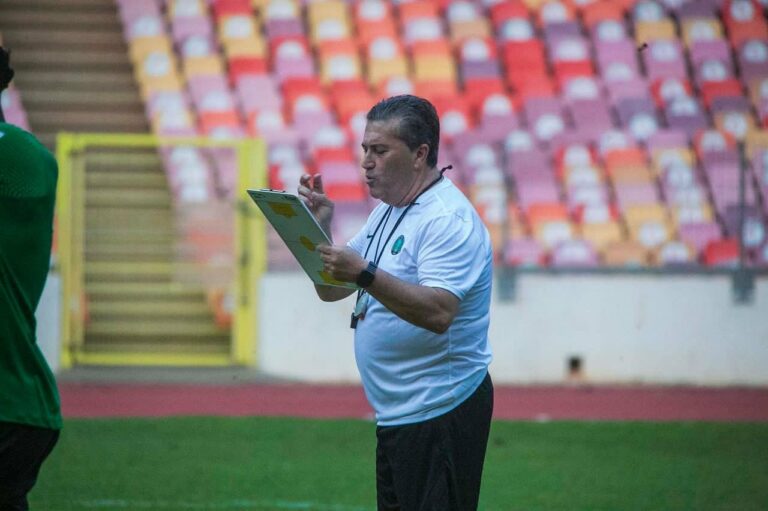
SUPER Eagles coach Jose Peseiro has remained optimistic that Nigeria could win the ongoing African Cup of Nations (AFCON) in Cote d’Ivoire.

Peseiro stated this ahead of today’s semi-final clash between the Nigerian Super Eagles and South Africa’s Bafana Bafana, which will kick off at the Stade de la Paix in Bouaké at 6 pm.

“We want to beat South Africa to reach the final. For that, we have to play a high-level match against a South African team that eliminated Morocco, who had a fantastic World Cup.

“We must play hundred per cent or more to beat a very good team. I believe that we can win this competition,” he said.

However, he admitted that the clash would not be a stroll in the park, describing his opponent as a good team.

“It will be a tough match against a good national team,” he added.

Today’s match between both countries in their quest to claim continental football glory will be the fourth time they will play each other in AFCON competitions, with Nigeria winning three.

In all football competitive matches, they have met 15 times.

Both teams met at the semi-final of AFCON 2000, played in Lagos, which Nigeria won by 2-0.

Also, in the AFCON 2004 edition, Nigeria continued in their dominance as they defeated South Africa 4-0, and in the continental football showpiece edition held in 2019, the Super Eagles won 2-0.

Peseiro had faced criticisms over his handling of the Super Eagles, as the team’s performances before the AFCON had been poor.

Road to the Semi-finals

Both teams’ road to the semi-finals saw them cross the hurdles from the three matches in the group stage to the round of 16 and quarter-final knockout stages.

Nigeria’s Super Eagles boast of four wins and a draw, conceding a goal out of the five matches played so far in Group A, while South Africa recorded three wins, a draw plus a loss in their opening match against Mali in Group E to get to the Semi-finals.

The ICIR reported that the losing semi-finalists will receive $2.5m.


EFCC raises task force against dollarisation of economy

THE Economic and Financial Crimes Commission (EFCC) has launched a special task force in all its zonal commands to enforce laws against dollarization of the economy and currency mutilation.

The task force, inaugurated by the commission’s chairman, Ola Olukoyede, was created to protect the economy from abuses, leakages, and distortions.

This was disclosed in a statement issued on Wednesday, February 7, by the EFCC’s head of media and publicity, Dele Oyewale.


Read also:


Oyewale said the commission had already arrested some people issuing invoices in dollars and mutilating the naira in Lagos and River states.

He added that the commission invited proprietors of private universities and other institutions of higher learning who charge fees in dollars.

He noted that the EFCC was committed to enforcing all laws for the reflation and stimulation of the economy.

Last week, a Federal High Court in Lagos sentenced a Nigerian actress, Oluwadarasimi Omoseyin, to six months imprisonment for spraying and stepping on naira notes at a social event in the state.

In a statement issued by the EFCC on Thursday, February 1, the actress was first arraigned on February 13, 2023, by its Lagos zonal command on a two-count charge to which she pleaded not guilty.

The actress was first taken into custody after a video of her spraying and stepping on the newly redesigned naira notes at a party circulated online.

She was also seen flaunting wads of the new naira notes in the video. She had claimed that she received the naira notes from her fans at the party and did not know the people who gave her the money.

A Range Rover and iPhone mobile devices were recovered from her during her arrest.

The ICIR also reported that the Central Bank of Nigeria’s (CBN) approach to foreign exchange management had been questioned as the naira continued to fall against the US dollar.

The downward trajectory of the naira has been a recurring incidence since President Bola Tinubu’s administration introduced the single exchange rate window.

Tinubu has made the unification of exchange rates a key policy of his administration in currency management.

However, the unification of exchange rates has failed to solve Nigeria’s currency problems, as economy watchers want the CBN to be clear in its policy directive and address structural defects in the economy.

Ex-VC fails to return 6 official vehicles worth N95m

5

A FORMER vice chancellor of Michael Okpara University of Agriculture, Umudike, Abia state, has failed to return six pool vehicles, amounting to N95 million, the 2020 audit by the Office of the Auditor-General of the Federation (OAuGF) has revealed. 

According to the report, released in December 2023 and made available to the public recently, the university’s former vice-chancellor did not return the vehicles despite the expiration of his designated term of use. 

The vehicles were expected to be returned after the vice chancellor’s term.


Read Also


While the OAuGF did not explicitly mention the name of the vice-chancellor in the report, Francis Otunta, a professor of Mathematics, served as the university vice-chancellor during the period captured by the audit.

Otunta died in a car accident a few weeks after he left office.

According to the audit report, the cars are three black Toyota Prado Jeeps, two black Toyota Corolla Salons, and one Lexus Jeep with different registration numbers.

The OAuGF noted that the action by the former vice chancellor was in contravention of the provisions of extant regulations.

Citing the Paragraph One of the Establishment Circular Ref. No. SGF. 19/S.52/V/720 dated 20th February 2017, which states that “as part of measures to curb this undesirable practice by officers, permanent secretaries and chief executive officers of ministries, departments and agencies (MDAs) are henceforth to ensure painstaking and strict clearance of retiring officers who should be made to submit all government properties in their custody before their final disengagement from service…”

Similarly, paragraph 112 (I) of the Financial Regulations (FR) 2009 gives the accounting officer power to ensure the safety and proper maintenance of all government assets under his care.

Furthermore, paragraph 2001 of the FR 2009 states, “The accounting officer shall be responsible for ensuring that there are effective controls in the use of government vehicles.”

While attributing the risk to the loss of public assets and diversion of government assets for personal use, the Auditor General’s Office recommended that the National Assembly request the vice-chancellor justify the illegal possession of government vehicles.

It also stated that the vice-chancellor should be made to remit N95 million to the treasury and forward evidence of remittance to the National Assembly public accounts committees.

The report emphasised that the failure of the former vice chancellor to carry out the recommendations should warrant sanctions relating to gross misconduct and non-payment for the use of government property in paragraphs 3129 and 3113 of the FR 2009.

In addition to the vice chancellor’s infractions, the OAuGF exposed 21 other scandals and abuse of office within the university between January 2018 and December 2019. 

FCT Water Board fails to provide records for contracts worth N1bn 

0

THE Federal Capital Territory (FCT) Water Board failed to provide records of contracts worth nearly N1 billion for audit, according to the 2020 report from the Office of the Auditor-General of the Federation (OAuGF).

The audit report released in December 2023 and made available to the public recently disclosed that the board paid over N968.7 million naira to 25 contractors for different services in 2019.

However, the contract records and other relevant documents were not presented for audit, violating several Nigerian laws.

One of the laws violated by this act includes the Public Procurement Act of 2007, which requires that records of procurements be made available to the Auditor-General upon request.

Section 38(5) of the Act states that “the records and documents maintained by procuring entities on procurement shall be made available for inspection by the Bureau, an investigator appointed by the Bureau and the Auditor-General upon request, and where donor funds have been used for the procurement, donor officials shall also have access upon request to procurement files for the purpose of audit and review.”

The 2020 audit, which looked into records of ministries, agency and departments (MDAs) of the Nigerian government, stated that the failure to provide these documents suggested that government funds might have been lost or diverted.

Another issue raised by the audit was a lack of supporting documents for payments worth N37 million by the Board.

According to the report, the Board could not defend a separate payment of N37 million, as no documents back up the amount spent.

“The Board made payments totalling N37,110,031.50 for various expenditures, and the payments were made without attaching relevant supporting documents such as invoices, store receipt vouchers, internal audit certificate, etc.

“The above anomalies could be attributed to weaknesses in the internal control system at the FCT Water Board, Abuja,” the report stated.

This has raised suspicions of possible loss or diversion of public funds. It also raises concerns that payments might have been made for services not rendered.

Other anomalies were recorded during the audit, including non-submission of audited financial statements, award of contracts without due processes and inadequate records on training, among others.

Contracts worth N32.7m awarded without due process

Various contracts were awarded by the board in 2019 without adherence to due process.

“Relevant documents such as tenders, certificate of incorporation, tax clearance certificate, quotations from different suppliers, etc., were not attached to the paid vouchers,” the report stated.

The OAuGF’s report noted that the risks associated with the board’s action include the possible engagement of unqualified contractors or the diversion of government funds.

It is also contrary to the Public Procurement Act, which gives detailed guidelines on the contract award process for government organisations.

Section 19 of the Act states that “subject to regulations as may from time to time be made by the Bureau, under the direction of Council, a procuring entity shall, in implementing its procurement plans: (a) advertise and solicit for bids in adherence to this Act and guidelines as may be issued by the Bureau from time to time;

“(b) to invite two credible persons as observers in every procurement process, one person each representing a recognised; (i) private sector professional organisation whose expertise is relevant to the particular goods or service being procured, and ii) non-governmental organisation working in transparency, accountability and anti-corruption areas, and the observers shall not intervene in the procurement process but shall have right to submit their observation report to any relevant agency or body including their own organisations or associations

“(c) receive, evaluate and make a selection of the bids received in adherence to this Act and guidelines as may be issued by the Bureau from time to time; (d) obtain approval of the approving authority before making an award.”

Inadequate records on training worth N6.3m, unretired N5.3m cash advances

The OAuGF found that the FCT Water Board made payments of over N6.3 million, said to be for the training of some officers. However, during the audit, there was no evidence of this payment or certificates of attendance to show that the expenditure was genuine.

The audit report states that there is the possibility that public funds said to have been spent on this project might be lost or payment made for services not rendered.

There were also cases of unretired cash advances of N5.3 granted for certain projects in 2019, suggesting loss or diversion of government funds.

Both actions contradict paragraphs 603 and 1011 of Nigeria’s Public Sector Financial Regulation Act (2009).

Non-submission of audited financial statements, store items not recorded on ledger

In addition to other violations, the Board failed to submit its audited financial statements from 2018 to 2020 to the OAuGF as provided by the Public Sector Financial Regulation Act.

The Board also failed to record store items purchased through cash advances in the ledger, and there were discrepancies in the dates on the documents provided.

“The dates of the internal audit forms that certify the supply of the items in i) above preceded the date of store receipt voucher,” the report stated.

‘Investors seek CBN’s clarification on debt obligations, backlogs’

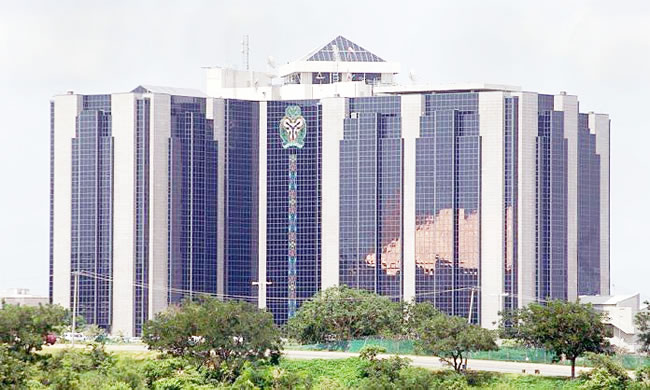
INVESTORS will require the Central Bank of Nigeria (CBN) to come clean on debt obligations and outstanding backlogs of debts owed to grow investor’s confidence in the economy, one of Nigeria’s leading economists, Bismarck Rewane, has said.

The ICIR reports that the Nigerian economy has been bleeding in all its sectors, and the poor state of the economy, occasioned by the government’s policies, has worsened.

The CBN has confirmed clearing the outstanding forex backlog it had verified.

However, investors are seeking clarity on the way forward should such concern arise again from the business and investment community, Rewane, the Chief Executive Officer of the Financial Derivatives financial firm which consults for both local and international organisations, said.

He explained that this would serve as a guide for investors seeking to invest in the country.


READ ALSO:


“I think the first step the governor of the Central Bank Governor took was his briefing on the verified debts and clearance of the foreign exchange backlogs.

“This is a good development. However, investors are looking at whether the apex bank can meet future obligations if you enter them,” he said.

Rewane stressed that Nigeria needed to assure investors of its ability to meet future debt obligations and financial commitments.

“The question remains that in the face of declining oil revenues and commodity prices, will Nigeria be ready to meet its immediate obligations? Second, will it meet up with commitments that will mature in the near term?”

He further harped on transparent institutional reforms to build investors’ confidence and get their assurances.

“There’s a shortfall on production targets in oil because we have backlogs and commitments. We also borrowed some money from the African Development Bank, and 90,000 barrels of oil were pledged.

He further said that given the state of the country, it needed the intervention of the International Monetary Fund (IMF) to encourage investors’ confidence.

“It will attract potential investors, debt holders, bondholders, and rating agencies. Once you do all these things, you discover that new Investments will begin to come in to consolidate the growth part and trajectory of this economy.”