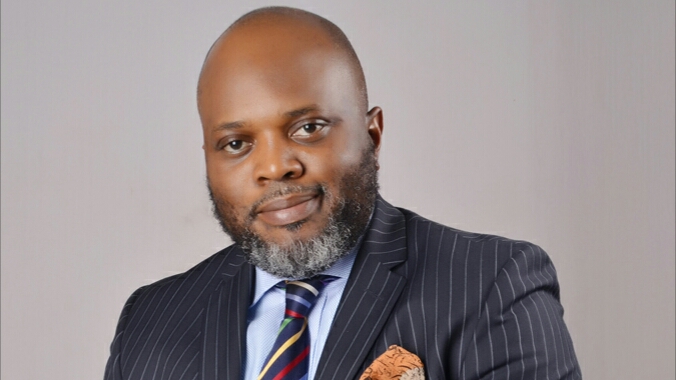
A Federal High Court in Abuja has granted bail to the suspended Dean of Law, University of Calabar (UNICAL) Cyril Ndifon, who was accused of sexually harassing students of his faculty.
Ndifon’s lawyer, Sunny Anyanwu, who was arraigned with him by the Independent Corrupt Practices and Other Related Offences Commission (ICPC), was also granted bail by the court.
Both men are standing trial for sexual harassment and attempts to perverse the course of justice.
The trial judge, James Omotoso, granted Ndifon N250 million bail with two sureties.
His lawyer, Anyanwu, was also granted N50 million bail with two sureties.
“The first defendant and his two sureties must submit their bank statements. The first defendant must submit his international passport to the court. The second defendant is granted bail in the sum of N50m with two sureties who will submit their bank statements.
“The defendants must file an undertaking not to interfere with the case, readiness to attend trial, and not to cause delay,” the judge said.
In October 2023, Ndifon was arrested by the State Security Service (SSS) at the request of the ICPC after he failed to honour invitations following allegations of sexual assault levelled against him.
He was accused of sexual harassment during a protest by female Law students of UNICAL on August 15, 2023.
The students carried placards that read, “Law students are not Bonanza, Prof. Ndifon should stop grabbing us. The Faculty of Law is not a brothel,” “Ndifon must go for our sanity,” among other inscriptions.
He was suspended by the university two days later, and a panel was set up to investigate the allegations.
Although Ndifon denied the allegations and described them as lies, it was the second time he was suspended for similar reasons. The first time was in 2015 when a final-year student accused him of raping her in his office.
He was remanded in prison in January 2024, along with Anyanwu, who called and threatened the star witness in the case.
THE Central Bank of Nigeria (CBN) has explained the reason for the constant depreciation of the value of the naira against the United States dollar.
The CBN Governor, Olayemi Cardoso, who is currently at the Senate – February 9 – with other members of the Nigerian economic team, earlier this week said that Nigeria had spent $40 billion on school and medical tourism in 10 years, putting pressure on the naira which keeps depreciating.
Speaking at a sectoral debate organised by the House of Representatives, Cardoso explained that foreign education expenses amounted to $28.65 billion while medical treatment abroad incurred about $11.01 billion.
He said that given the substantial demand for education, healthcare, professional services, personal travel, and similar needs, the exchange rate was bound to face pressure.
“Given this data, it’s crucial to highlight that between 2010 and 2020, foreign education expenses amounted to a substantial US$28.65 billion, as per the CBN’s publicly available balance of payments statistics.
“Similarly, medical treatment abroad has incurred around US$11.01 billion in costs during the same period. Consequently, over the past decade, foreign exchange demand for education and healthcare has totalled nearly US$40 billion. Notably, this amount surpasses the total current foreign exchange reserves of the CBN. Mitigating a significant portion of this demand could have resulted in a considerably stronger naira today.
According to Cardoso, personal travel allowances have accounted for US$58.7 billion during the same period. Notably, between January and September 2019, the CBN disbursed US$9.01 billion to Nigerians for personal foreign travel.
“Continuing on the topic of the demand for US dollars, Nigeria’s annual imports, which require dollars for payment, amounted to US$16.65 billion in 1980. By 2014, the annual import expenditure had significantly surged to US$67.05 billion, although it gradually decreased to US$54.71 billion as of last year. Similarly, food imports escalated from US$2.63 billion in 1980 to US$14.84 billion in 2019,” Cardoso said.
He said while inflation pressures might persist, albeit temporarily, they would moderate significantly by quarter four of 2024. He also noted that exchange rate pressures were also expected to reduce with the smooth functioning of the foreign exchange market.
“The Nigerian foreign exchange market is currently facing increased demand pressures, causing a continuous decline in the value of the naira. Factors contributing to this situation include speculative forex demand, inadequate forex supply due to non-remittance of crude oil earnings to the CBN, increased capital outflows, and excess liquidity from fiscal activities.”
Market-driven exchange rate
Cardoso explained that “The shift to a market-driven exchange rate was intended to create a stable macroeconomic environment and discourage currency hoarding. However, short-term volatilities are attributed to arbitrage and speculation.
“To address exchange rate volatility, a comprehensive strategy has been initiated to enhance liquidity in the FX markets. This includes unifying FX market segments, clearing outstanding FX obligations, introducing new operational mechanisms for BDCs, enforcing the net open position limit, and adjusting the remuneration standing deposit facility cap.”
The apex bank governor noted that while the CBN has the mandate of stabilising the exchange rate, achieving results would necessitate efforts beyond the bank itself and, indeed, an attitudinal change by all citizens.
He assured that the CBN was committed to implementing policies that would ensure a stable macroeconomic environment and guarantee improved livelihoods for all Nigerians.
Cardoso added that the relocation of some departments of CBN to Lagos was not political but only an implementation of what had been done before now, saying: “We did not change anything. We have always done this to get closer to the banks for best results.”
Finance Minister speaks
Also speaking, the Minister of Finance and Coordinating Minister of the Economy, Wale Edun, said inflation, exchange rate fluctuations, and other factors causing hardship in the country were also being addressed while agriculture was being strengthened for maximum production and non-oil sector economic diversification.
Edun said the country’s situation was due to a series of economic policies over the years, admitting that the cost of living had spiked due to inflation.
The Minister said things would improve, and many sectors would pick up and drive the economy. He called on Nigerians to be calm, confident, and have faith in the ability of the government to turn around the economy for the citizens to prosper.
Speaking on the benefits of fuel subsidy removal, he said: “If you look at the government’s finances today, there have been benefits to the federation accounts. There have been reductions in the consumption of petrol because of smuggling (in the past).
“There have been other benefits as a result of the changes. However, inflation has increased, the cost of living has hiked, and Mr President is committed to taking measures to address major stumbling blocks to the nation’s economic growth.”
In his remarks, the chairman of the Federal Inland Revenue Service (FIRS), Zacch Adedeji, said the federal government had no plans to increase taxes despite the target to collect N19.4 turns from taxes this year.
He said the target represented a significant increase of 56.9 per cent from the previous year’s actual revenue and 67.91 per cent from the previous year’s target.
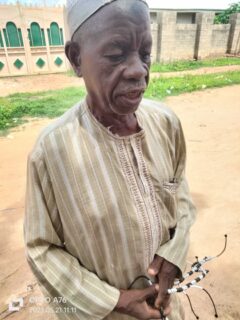
ADAMU Bello Mustapha found it inconceivable that, despite his dedicated years of active duty and commitment to serving the government of Niger State, he would eventually find himself reduced to destitution as a result of the government’s failure to fulfil its obligation of paying his pension since his retirement in 2018.
To compound his misfortunes, Mustapha was diagnosed with a debilitating eye ailment that necessitated a surgical procedure. Although he managed to scrape together enough funds to cover the expenses for the initial operation, he was financially incapacitated when his doctor scheduled a second one.
Unfortunately, his troubles did not end there. In an unexpected turn of events, he experienced a partial loss of vision, which was a devastating blow. However, his ultimate downfall commenced in 2019 when he completely lost his sight.
“As I speak to you, my wife is paralysed. This is even after experiencing a stroke. I didn’t even need to tell you before you’ll know that I’m depressed,” said Mustapha, a retired director from the Niger State Ministry of Education.
“Maybe it’s a test from God,” he added.
In accordance with Section 3 of the Pension Reform Act 2014, civil service workers are entitled to certain legal rights, such as receiving a specific monthly pension amount based on their retirement level.
In June 2023, a report highlighted that approximately 34 outgoing, returning, and sitting governors were leaving a significant burden of unpaid gratuities, while 27 of them were grappling with unpaid multibillion pension arrears.
According to data on poverty from the Nigeria Bureau of Statistics (NBS), the number of Nigerians who are multidimensionally poor is 133 million, representing 63 per cent of the nation’s population.
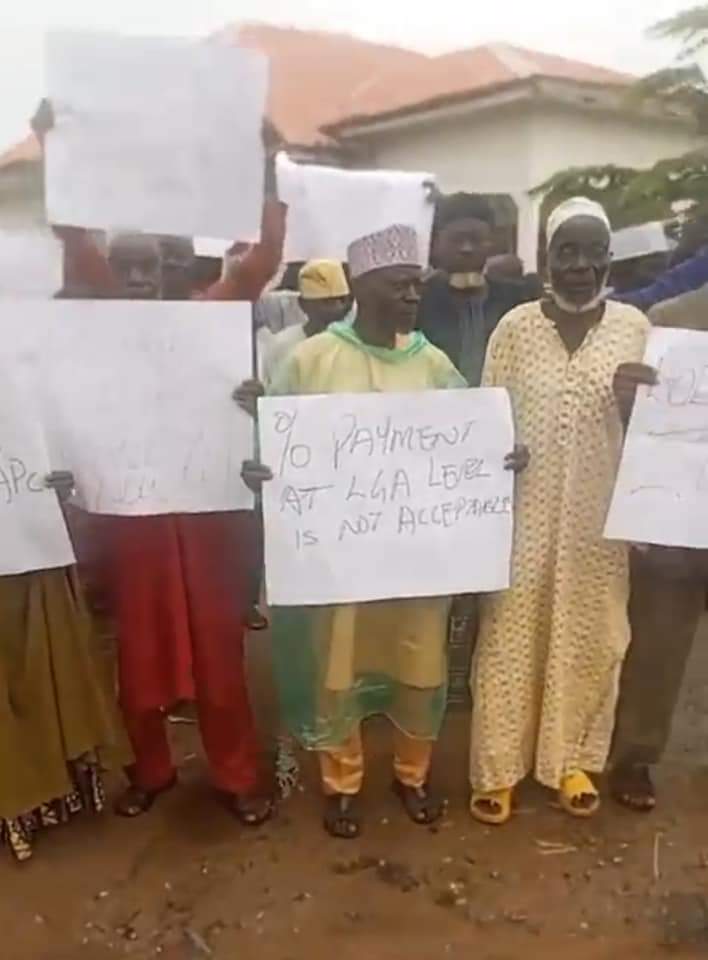
Retired civil servants in Nigeria are entitled to a specific monthly sum based on their retirement level. However, retirees in Niger state have expressed their grievances regarding the non-payment of pensions, which has negatively impacted their livelihoods for several years.
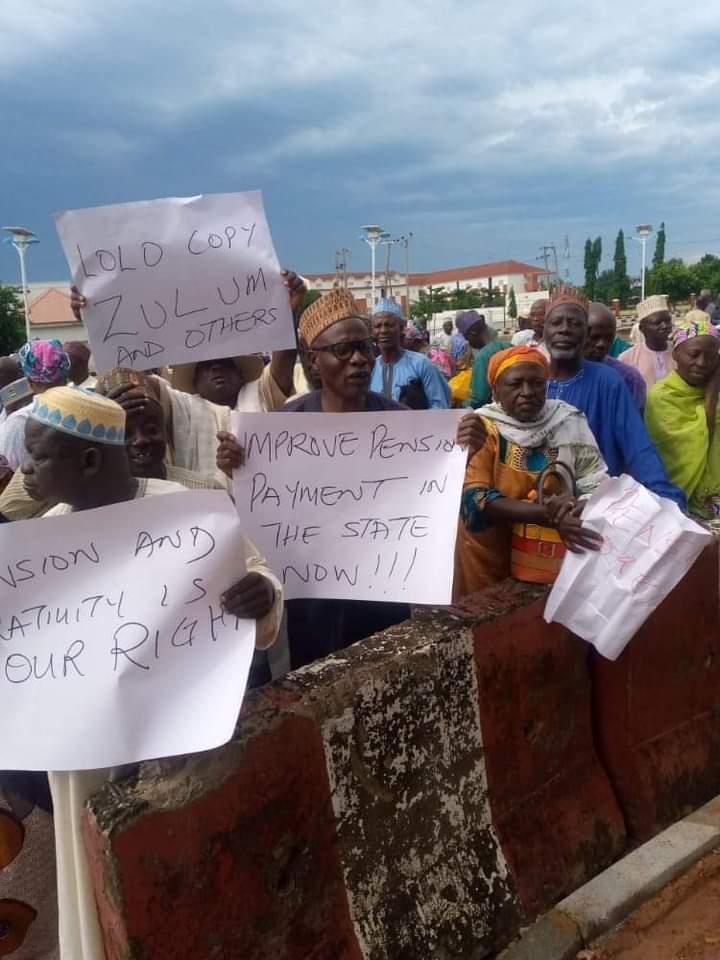
Retirees in Niger State protest non-payment of benefits.
Mustapha, sharing his plight with The ICIR, revealed that when his child secured university admission, he couldn’t afford the registration fees due to poverty and government negligence in disbursing his retirement benefit.
Racheal Adeyanju, a retiree from Chanchaga local government, faced a similar ordeal, waiting twelve years for her gratuity after a five-year struggle to receive her monthly pension. Another retiree, Danladi Gwamna, experienced a six-month delay in receiving his N23,000 monthly pension.
Danladi Gwamna, one of the affected retirees.
Despite retiring in 2012 with an expected gratuity, which he said was N2.5 million, Gwamna only received N85,000 initially, with officials later informing him of an investment scheme entitling him to a monthly amount.
Fourteen years later, the outstanding balance of remuneration and the earmarked funds for his prospective investment remain unpaid to him. Gwamna, speaking to The ICIR, said that his monthly pension initially stood at N23,000, only to be subsequently reduced to N14,500. He expressed bewilderment regarding the rationale behind this reduction.
Owing to the government’s delinquency in disbursing pensions and gratuities, a multitude of individuals find themselves ensnared in a crisis marked by acute suffering, despondency, and the tragic loss of family members to maladies.
In the face of advancing age, compounded by deteriorating physical well-being and the inherent security hazards prevalent in agricultural pursuits, the majority of these retirees have resorted to subsistence farming as a means of sustenance.
The Chairman of the Niger State Retirees Pressure Group, Steven Daniel Zitta, told The ICIR that retired civil servants from the governor’s region receive prompt payment of their retirement benefits compared to those from other parts of the state.
“A very close colleague of mine from Zone C –political zone where the then Governor of the state comes from who retired in 2022 has received his gratuity. I have retired since 2012, but I have not received mine. It is clear that it’s because I am not from the same senatorial district as Mr. Governor and other government cabals.”
Pensioners in Niger State protest non-payment of benefits in 2023.
Despite the proclamations by the Niger State government in 2022, affirming the release of one billion naira for the disbursement of 178 retirees within the state, Zitta and some of his members bemoan the stark reality of non-receipt.
Zitta posited that the registry of retirees slated for the forthcoming phase of disbursement conspicuously comprises a preponderance from the former Governor’s political zone, marking a neglect of the egalitarian tenets espoused by Section 14 of the Nigerian constitution, mandating governmental actions to be predicated upon democratic principles and social justice.
In lamentation, Zitta recounted the recurrent instances of his members taking to the street to protest on seven occasions, demanding their rightful retirement entitlements, all to no fruition.
Zitta, however, said that the then Director-General of the Niger State Pension Board, Nasiru Saidu Namaska, gave them the assurances of finalised arrangements for the remuneration of the retirees. Zitta said, Namaska affirmed that disbursements aligned with individual retirement timelines would expeditiously transpire upon the release of funds. Regrettably, Zitta contends, such affirmations have yet to manifest into tangible recompense.
When this reporter visited Namsaka’s office in April 2023 for comments and further clarification, he was not present on multiple occasions.
On being reached by phone later, Namsaaka said the government did not release any funds for the payment of gratuities in the state. When the reporter pressed for further information regarding the state of the state’s retired civil servants, he declined to comment.
However, in November 2022, Namsaka informed the public during a press conference that the board had received N1 billion for the payment of gratuities for both state and local government retirees.
A national daily, Tribune, reported that “Over N14 billion is being expected to be expended on the total of 14,000 pensioners in the state as gratuities, with no fewer than about N2 billion in death gratuities, while the state grapples with monthly pensions to retirees worth about N3 billion, adding that the board had augmentation of N1.3 billion in respect of those who moved from old pension to new pension.”
Niger State government had stated that it was the pension system. In November 2023, the governor, Bago, stated that the process was being automated. A month later, in December Namaska, the state pension boss said the overhauling which included verification and capturing of the scheme, was ongoing as scheduled. At the same time, emphasising that only those who are verified will be enrolled.
However, in January 2024, several months after the first interview, Zitta later expressed concern over the government’s pension overhaul, stating, “The government needs to expedite the screening process. It’s been two months for Zone B alone, and the progress is slow.”
Zitta acknowledged that the verification exercise will serve to reduce corruption within the system but emphasized the need for efficiency, saying, “If the government wants this exercise to be fast, it should be completed within the shortest period of time.”
Niger state pension office
While acknowledging Governor Mohammed Umar Bago’s promise to prioritise pensioners’ payments, Zitta highlighted the unhappiness among pensioners due to delays.
He said, “We are not blaming Governor Bago, but the process needs to be quicker.”
Zitta pointed out the plight of pensioners who moved to new schemes, stating, “Those moved to new pensions are not receiving anything; their situation is more pathetic.”
Concerned about the prolonged screening, Zitta revealed discussions at the Joint Action Committee (JAC) meeting with the Nigeria Union of Teachers (NUT). “We are aligning with NUT to demand prompt action. Resuming a monthly pension is better than the current uncertainty,” he asserted. The issue of unscreened pensioners moving to new schemes remains unresolved, as Zitta concluded, “They are just hanging, waiting for their files to go through audit for proper capture.”
THE Plateau State House of Assembly, lawmakers under the Peoples Democratic Party (PDP), have asked the Court of Appeal to dismiss the court’s judgement that annulled their elections.
The appellate court had previously sacked all elected PDP members in the state assembly on the grounds that their party lacked the structure to present candidates in an election.
However, after the Supreme Court’s decision upholding Caleb Mutfwang’s election as the state governor, the sacked lawmakers have maintained that they remained members of the House.
They claimed that the Supreme Court’s ruling had reinstated their mandates.
The sacked lawmakers, Bala Fwanje Ndat and Datugun Paul Naankot, among others, in their motions on notice, CA/J/33M/2024, and CA/J/31/M/2024, said according to Order 6 Rule 1 of the Court of Appeal, 2021, they are seeking their reinstatement into the House.
They are seeking, among other things, “An order setting aside the decision of this Honourable court in appeal No. CA/J/EP/PL/SHA/62/2023, Dagogot Karyt Owen & Anor Vs Independent National Electoral Commission (INEC), & Ors on 24th November, 2023, per E.O Williams-Dawodu, Abdul-Azez Waziri and E.O Abang, JCA.”
Their counsel, Garba Pwul (SAN), argued in the motions that the election tribunal and the Court of Appeal lacked jurisdiction over the matter.
They contended that the Supreme Court’s decision, which upheld the nomination and sponsorship of the state governor, Caleb Mutfwang, is sufficient justification for the Court of Appeal to reinstate them after overturning its previous ruling.
The lawmakers had stormed the Old Government House, the Assembly’s plenary meeting location, in late January to demand their reinstatement.
The Speaker of the House, Gabriel Dewan Kudagbena, has not yet administered the oath of office to APC members who are the recipients of the Court of Appeal ruling.
According to the Speaker, his decision was based on subsisting court orders.
Speaking on the development, Ishaku Maren, the spokesman for the 16 PDP lawmakers, said they were happy with the Speaker’s stance and would wait for the Assembly to decide.
The ICIR reported that the Supreme Court reinstated Caleb Mutfwang as Governor of Plateau state on Friday, January 12.
In a ruling on Friday, a five-man panel of justices of the court, led by Emmanuel Agim, reversed the judgment of the Appeal Court that sacked Mutfwang as governor.
The court ruled that the validity of nomination and sponsorship were not grounds to void an election.
IMPORTERS in Nigeria have lamented the sustained rise in duties under President Bola Tinubu’s administration.
They claimed the Nigeria Customs Service (NCS) increased the duties six times since the President took power on May 29, 2023, because of the fluctuating exchange rate.
This development has left several cargoes stuck at the Ports, with businesses going through difficulties.
Former Chairman of the Licenced Agents Association of Nigeria, Lasisi Lanu, who disclosed this development on Tuesday, February 6, said duties were increased six times underTinubu-led government following the deteriorating foreign exchange crisis.
According to Lasisi, the situation will worsen Nigeria’s current economic problems.
Lasisi said the duty rate was being calculated as N1.413.62 per dollar against N1356 per dollar.
He noted that this development was affecting business survival with less attention paid to trade facilitation, a key mandate of the Customs Service.
“I don’t know how the importers can survive in this. It is difficult. We understand that the Federal Government wants to generate funds, but this is not the procedure to follow.
“You cannot expect someone who has made decisions of the duty on his goods in December at $951 with landing costs and other ancillary charges to go ahead” and easily pay the new duty that is much higher than what had been decided, he added.
Lasisi confirmed that several cargoes were stuck at the wharf as they struggled to clear their imported goods over rising duty costs.
“All goods in the market are affected, and we’re an import-dependent nation, and we import virtually all we need in the country.”
Speaking on this development, the chief executive officer of the Centre for Promotion of Private Enterprise, Muda Yusuf, expressed concerns over the frequent changes in the price of duties.
Yusuf noted that international trade and businesses react to frequent policy changes, creating problems, uncertainties, and unpredictability for investments.
He explained that the Central Bank Of Nigeria fixed the rate while Customs did the implementation. “We need to bring it to the attention of the Central Bank of Nigeria,” he stated.
“Six changes in seven months is quite a lot. Secondly, the cost of import is extremely high by virtue of the devaluation of the currency.
He added, “Currency depreciation is already a major headache to businesses, and we expect initiatives and policies geared towards trade facilitation and economic growth. We must be able to enjoin the CBN to review the rate of these import duties to support businesses and facilitate trade.”
THE National Drug Law Enforcement Agency (NDLEA) successfully prosecuted 3,412 drug offenders in 2023, said the agency’s chairman, Buba Marwa, a retired general, on Wednesday, February 7.
Marwa said among those prosecuted were 15 drug kingpins who bagged 168 years jail terms collectively.
Addressing journalists at the agency’s headquarters in Abuja at an event to honour outstanding staff and command of the agency, Marwa vowed to rev the fight against illicit drugs in the country.
“According to our statistics, we recorded 13, 664 arrests leading to the seizure of 1,606, 799.09 kilogrammes of assorted illicit drugs and 3,412 convictions with a total of 5, 570 offenders charged to court in 2023. It’s indeed a year that at least 15 drug kingpins bagged 168 years of imprisonment collectively.
“That is a substantial improvement over our performance in 2022. Notably, in 2023, we also ramped up our enforcement action against cannabis farms and carried out at least seven successful major operations, leading to the discovery and destruction of over 206 hectares of cannabis plantations,” Marwa stated.
The NDLEA boss also explained that the agency intensified its war against drug abuse advocacy initiative nationwide by creating awareness about the dangers of substance abuse and encouraging those indulging in it to change.
According to Marwa, as a result, a total of 2,725 sensitisation lectures and programmes were held in schools, worship centres, workplaces and communities, among others.
“Just as well, our commands and formations have coped with the increased workload of counselling activities leading to the counselling and rehabilitation of 10,904 drug users”, he stated.
He gave assurance that the agency would not relent in its effort to improve the welfare of the NDLEA workforce.
He, however, warned that the agency would be firm on disciplinary issues.
The NDLEA recognised 104 personnel and 13 commands with outstanding performances in the second half of 2023 at the event.
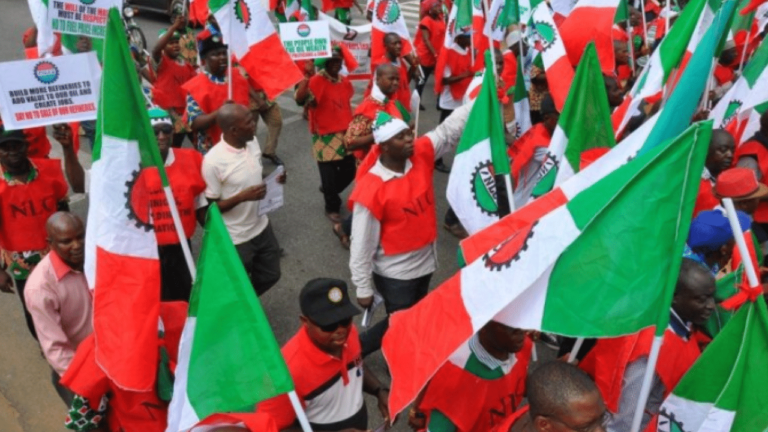
THE Nigeria Labour Congress (NLC) and the Trade Union Congress (TUC) have issued the Federal Government a 14-day ultimatum to implement agreements reached with workers to ease economic hardships confronting them and other citizens.
This was contained in a statement by leaders of both organisations, Joe Ajaero and Festus Usifo, respectively, on Thursday, February 8, 2024.
The statement disclosed that the 14-day ultimatum would begin on Friday, February 9, and described the failure of the Nigerian government under President Bola Tinubu as a show of bad faith.
“These agreements which were reached with the Federal Government were focused on addressing the massive suffering and the general harsh socioeconomic consequences of the ill-conceived and ill-executed IMF/World Bank induced hike in the price of PMS and the devaluation of the naira. These dual policies have had, as we predicted, dire economic consequences for the masses and workers of Nigeria.
“Widespread hunger is now ravishing millions of Nigerians, with the workers’ purchasing power significantly eroded, while insecurity has assumed an increasing dimension. Nigerians are left wondering where their next meals will come from and what tomorrow might bring,” the statement read.
The agreements were reached on issues ranging between wage awards and palliative adjustments, among others, and the union leaders described the government’s failure to uphold its end of the bargain as regrettable.
In December 2023, NLC threatened that Nigerians could be forced to revolt against the Federal Government over the hardship caused by the scarcity of naira notes.
The cash scarcity adversely affected the Nigerian economy, as the high costs of point of sale (POS) charges threatened to push the already soaring inflation rate.
The labour unions also embarked on strike action in November 2023 over economic hardships.
The strike was short-lived as it was called off after a meeting with the Minister of Labour, Simon Lalong, and National Security Adviser (NSA), Nuhu Ribadu.
TOPE Fasua, the Special Adviser on Economic Affairs to President Bola Tinubu, has said high food exports to Nigeria’s neighbouring countries fuelled rising food costs.
Fasua said this while speaking on Channels TV on Thursday, February 8.
The ICIR reports that the immediate neighbouring countries surrounding Nigeria are the Republic of Benin, Chad, Cameroon, and Niger.
“I was in the Kano area a couple of weeks back, and because of the relative weakness of the naira, there is a lot of export of food items going on there.
“For example, our maize is being exported to the Niger Republic and borders and so on because the CFA is suddenly stronger,” Fasua said.
He noted the indiscriminate sale of food items, raising concerns about the need for price control mechanisms and reviving the commodity boards.
The ICIR reports that before 1986, Nigeria had six commodity boards before embarking on a market-oriented economic ideology.
The Commodity Boards Act 1977 dissolved the Nigerian Produce Marketing Company Limited and all the States Marketing Boards and, in their place, set up six new Commodity Boards.
The boards were the Nigerian Cocoa Board (Ibadan), Nigerian Groundnut Board (Kano), Nigerian Cotton Board (Katsina), Nigerian Palm Produce Board (Calabar), Nigerian Rubber Board (Benin), and Nigerian Grains Board (Minna).
Fasua said on Channels TV that state and local governments were closer to the farmers and should work with the Federal Government to save Nigerians from the calamity of surging food prices.
“There is a need to understand what is happening at that level to save ourselves from this calamity.
“The surging price of food items has a trace to happenings at the global stage, Fasua noted, adding that the government must put in place intellectual and regulatory infrastructure other countries like the United States and the United Kingdom had used to control their food inflation.
Nigerians are facing the worst situation of rising food prices because of the government’s reforms.
Fasua said ‘better’ days would come when the economy starts to grow and people begin to get jobs, among others, but in the interim, everyone would earn a bit more (income) than they were earning.
“A better situation will also be that the government can control increases in prices so that people can no longer wake up and do anything they like.
“Regulation is good for everybody and stabilises industries. It is not an exploitation. It is to make everybody do what they are supposed to do as part and parcel of an economy, and people who try to cheat are dealt with so that everybody knows you can’t just take advantage of others.”
He also pointed out that the depreciation of the value of the naira made food items attractive to neighbouring countries and those hedging commodities.
However, whether the export proceeds are coming in is an issue the Central Bank has to look into, Fasua said.
The need to regulate the prices of goods has recently taken a legal interpretation.
A Senior Advocate of Nigeria (SAN), Femi Falana, had dragged the Price Control Board and the Attorney General of the Federation, both of whom are listed as defendants, before the court to determine whether by virtue of Section 4 (1) of the Price Control Act, Laws of the Federation of Nigeria, 2004, the first defendant is carrying out its duty to impose a price on any goods that are of the kind specified in the First Schedule to the Price Control Act.
Presiding over the judgment on Wednesday, February 7, Ambrose Lewis-Allagoa ordered the Nigerian government to fix the price of goods and petroleum products within seven days.
The items include milk, flour, salt, sugar, bicycles and their spare parts, matches, motorcycles and spare parts, motor vehicles and spare parts, and petroleum products, including diesel, petrol motor spirit (PMS) and kerosene.
Commenting on the judgment, a human rights lawyer, Monday Ubani, said he expected the Federal government to obey the order.
He argued that the government must fix the prices of goods as ordered by the court and be interested in ensuring people’s lives are better.
“I think that a government that loves Nigeria would do that. I don’t hope that they will go and appeal this particular judgement,” Ubani said on Channels TV on Thursday.
NIGERIAN music star Ahmed Ololade, professionally known as Asake, and Afro-gospel singer Samuel Onwubiko, also known as Limoblaze, both won the 2024 MOBO awards in different categories.
Asake clinched the award for Best African Act, while Limoblaze bagged the Best Gospel Act award.
The 26th edition of the MOBO awards was held at Utilita Arena Sheffield in Sheffield, United Kingdom, on Wednesday, February 7. This award celebrates black artistes in hip hop, jazz, gospel, R&B, African music, and reggae, among other genres of music.
Asake won the award over other Nigerian artistes nominated in the category, including Adekunle Gold, Davido, Rema, Ayra Starr, Burna Boy, Wizkid, and Rema.
Tyla, the recent South African Grammy winner, and Cameroonian singer Libianca also competed in that category.
Nigerian artistes who have previously won MOBO awards are 2Baba, D’Banj, Wizkid, Davido and Burna Boy. Similarly, British-Nigerian rapper Tunde won the Best New Artiste award.
Below is the full list of winners
Best Male Act: Central Cee
Best Female Act: Raye
Album of the Year: Potter Payper – Real Back In Style
Song of the Year: Central Cee & Dave – Sprinter
Best Newcomer: Tunde
Video of the Year: Stormzy – Mel Made Me Do It
Best RnB/ Soul Act: Sault
Best Hip-Hop Act: Little Simz
Best Grime Act: Bugzy Malone
Best Drill Act: K-Trap
Best International Act: Drake & 21 Savage
Best Performance in a TV Show/ Film: Damson Idris as Franklin Saint – Snowfall
THE Niger State Police Command says it has arrested the leader of the protest that rocked Minna, the state capital, on Monday, February 7.
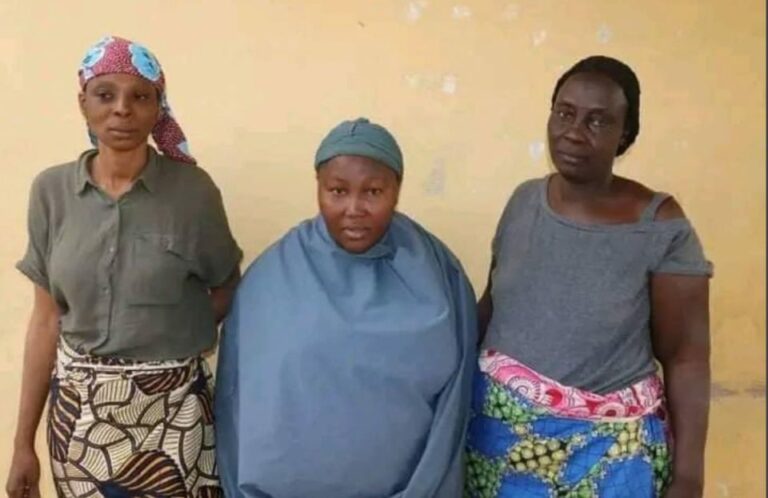
Among those arrested are a 30-year-old woman, Aisha Jibrin, Fatimah Isyaku, and 24 others.
The ICIRreported on Monday that the protesters blocked major roads, including the Kpakungu roundabout at Minna-Bida road, blocking activities of many commercial vehicles in the area.
The protesters, including women and teenagers, chanted protest songs and called on the government’s intervention in the soaring costs of food and other products.
They also complained about the fuel price hike and its continuous economic impacts, emphasising the need for the government to take action.
However, announcing the arrest of Aisha and 24 others in a statement on Wednesday, the state Police Command, while admitting that the police adopted ‘minimum force’ to disperse the protesters, alleged that the protesters were violent.
The command’s public relations officer, Abiodun Wasiu, stated that the Police resorted to using minimum force to disperse the protesters, who turned violent by attacking the Police with weapons such as stones, bottles, sticks, cutlasses and damaged Police patrol vehicles and parts of the Kpakungu Division roof.
The statement read, “It could be recalled that on February 5, 2024, at about 7 a.m., a large number of women and miscreants mobilised and blocked Minna-Bida road and Kpakungu Roundabout claiming to be protesting against increase in foodstuff prices, causing major obstruction on the highway and deprived motorists, travellers and other road users from gaining access to attend to their lawful businesses.
“The command immediately drafted police patrol teams led by the Deputy Commissioner of Police, Operations – DCP Shehu Didango to the scene, and after much persuasion by the Police, the protesters deliberately refused to clear the road for public use, while His Excellency, the Deputy Governor of Niger State, Yakubu Garba, equally availed himself at the scene and addressed the group, yet they turned deaf ears and chose to be violent,” part of the statement read.
The Police image maker also said the command recovered a bench and a stick used as a barricade, three knives, a pair of scissors, a cutlass, a saw blade, an iron pipe, four other sticks, two wraps of Indian hemp, charms, among others from the protest scene.
He noted that during interrogation, the protesters’ leader, Aisha, claimed that she wasn’t aware that mobilising residents to protest was ‘illegal’.
“During interrogation, the said Aisha claimed that she was not aware that her action was illegal by mobilising over 100 women and miscreants to block the highway for a violent protest. She claimed further that she informed one youth leader, Hassan, in the area, who promised to inform the Police of their plan to protest but did not do so.
He said all the suspects had been taken to SCID Minna for investigation and would be charged to court for prosecution, adding that effort was ongoing to arrest other identified members of the protest.
Under Section 40 of the 1999 Constitution of the Federal Republic of Nigeria (as amended), every person is entitled to assemble freely and associate with others.
“Every person shall be entitled to assemble freely and associate with other persons, and he may form or belong to any political party, trade union or any other association for the protection of his interests,” Section 40 reads.
Also, the United States Human Rights Office affirms the right of everyone to a peaceful assembly.
Meanwhile, The ICIR reported how the Police often resorted to shooting, harassing harmless protesters and tear-gassing as their “minimum force” while dispersing protesters.
Only on a few occasions do the Police conform to the best policing practice by forming a wall around protesters as a way of protecting them, according to the report.
It has, however, become almost a norm that the Police harass Nigerians trying to prevent them from protesting against the government.