Home Blog Page 675

Over 5,000 Nigerians killed in Tinubu’s first 7 months in office

AFTER the December 24, 2023 attack, which led to the death of over 90 Nigerians in Plateau State, there was much grief, anger and frustration across Nigeria over continuous attacks on innocent citizens. 

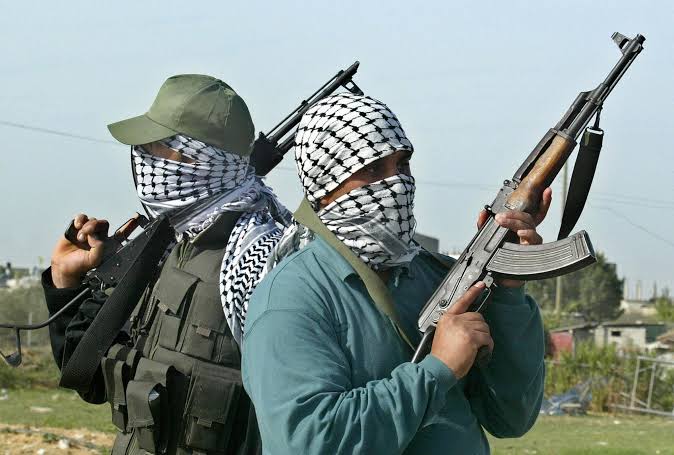
The killings by non-state and state actors, which have persisted since President Bola Tinubu came into power, have seen over 5,000 casualties.

Tinubu, whose thrust of his campaign promise to Nigerians was to tackle insecurity, apart from boosting Nigeria’s economy, has struggled to keep Nigeria safe since he assumed office on May 29, 2023.

Many Nigerians believe not much has been achieved by the President, especially in security.

According to data gathered by The ICIR from the Armed Conflict Location & Event Data Project (ACLED), a data bureau that collects real-time data on the locations, dates, actors, fatalities, and types of all reported political violence and protest events worldwide, about 5,135 people were killed between May 29 and December 31, 2023.

This also means that an average of twenty-two people were killed daily from violent attacks during the periods in review, given that the six months have 227 days (plus the remaining three days in May 2023) divided by 5,135, averaging 22.6.

The number of casualties during the first seven months of Tinubu’s administration shows a 33.79 per cent increase compared to the administration of former President Muhammadu Buhari.

In comparison with the Buhari administration, The ICIR gathered (from the same source) that about 3,838 people were killed by both state and non-state actors between May 29 and December 31, 2015.

Borno, Zamfara, Plateau, Niger and Kaduna were mostly affected, while Ekiti, Jigawa, and Gombe states were the most peaceful place to live in, according to ACLED.

These recent distressing incidents have occurred amidst a surge in violence perpetrated by Boko Haram, particularly in Borno State.

According to the data, Borno experienced the highest number of individuals reported dead within the month under review, recording 1,692 deaths, while Zamfara, which has also been a hotbed of banditry attacks, came second, having recorded 503 deaths.

Terrorists in Zamfara killed more than 100 people in January 2023 when a large number of men invaded at least nine villages and unleashed mayhem in violent attacks that lasted for about three days.

Similarly, no fewer than 401 persons were killed in Plateau State as a result of violent attacks in the first seven months of President Tinubu’s term. The ICIR, in a series of reports, detailed how the state had experienced many attacks, with the most recent brutal one (in 2023) being recorded on December 24.

Also, Niger State, which came fourth in the list of the most affected states, recorded 319 deaths. 

On October 2023, The ICIR reported how an average of three people were killed daily between June 2020 to January 2023 in Niger State. Within the period, about 1,552 individuals were killed in violent attacks, while 1,044 persons were kidnapped in the state. 

The kidnapping incidents were reported to have occurred in at least 16 of the 25 Local Government Areas of the state, with Shiroro, Mariga, Munya, Magama, Gurara, Suleja, Rafi and LGAs being mostly affected.

Worse still, kidnapping has become an increasingly attractive enterprise under Tinubu’s government.

It has become an industry where abductors demand money from families and guardians before releasing abductees. This is most prominent in the northern region of the country, which has recorded a plethora of cases of students and travellers being abducted in the past years.

Lately, it has also become more rampant in urban areas, particularly in places like the Federal Capital Territory.

In November 2023, the director of administration and finance of the Federal Capital Territory Administration’s Security Services Department, Ebele Molokwu, in a media briefing on the activities of the department, listed  Bwari, Kuje and Abaji as councils with the highest kidnapping cases.

Tinubu’s unending directive to Service Chiefs

With continued attacks across the country, The ICIR observed the trend of Tinubu always directing the service chiefs and security operatives to end the malaise, with less positive impact being recorded.

Although the Defence Headquarters said that the military killed about 6,886 terrorists and other suspected criminals and arrested 6,970 suspects during various operations across the country in 2023, many Nigerians and security experts believe much could be done to end insecurity.

They believe the President needs to take proactive measures instead of issuing directives only after attacks have occurred, adding that some of the causes of persistent insecurity are the menace of unemployment and poverty, exploitation of ethnicity and religious differences, bad governance, corruption and weak security institutions.

Security expert urges Tinubu to address crisis

Speaking on the issue of insecurity, a research analyst (security) with SBM Intelligence, Emeka Okoro, noted that Tinubu’s government had not made concerted efforts to solve address insecurity.

“Since the inception of this administration, I have yet to see an intentional approach towards curbing this problem that seems to be spiralling out of control, apart from holding meetings with heads of security agencies,” he said.

Okoro explained that addressing the root causes of insecurity was important to reducing it to the barest minimum.

Okoro also said there was a need for a thorough cleansing of security agencies, adding that some ‘evil elements’ have infiltrated some of the agencies.

“First of all, addressing the root causes of insecurity is very key to bringing this whole thing to its barest minimum. Issues of unemployment, corruption, ethno-religious crisis, marginalization and, very importantly, strengthening our various security agencies need to be addressed immediately. 

“A thorough cleansing of our security system is very important because these evil elements have infiltrated our police, the army and the other agencies. This has further weakened our intelligence-gathering mechanisms, such that our security agents are rendered ineffective in their jobs. The Nigerian citizens are like sitting ducks left without any form of protection from the government whose sole responsibility is the safety of lives and property of its citizens,” he said.

Audit report shows FCT department failed to account for N367m

0

THE Federal Capital Territory (FCT) Social Development Secretariat (SDS) failed to account for N367 million in 2020, the audit for the year 2020 conducted by the Office of the Auditor-General for the Federation (OAuGF) has shown.

The report, made available recently, revealed that over N130.2 million was paid by the Secretariat to different beneficiaries using 112 vouchers during the period under review.

However, the paid vouchers and other relevant documents were not presented for audit.


Read also:


Describing this as an anomaly, the OAuGF stated that the absence of the documents might be attributed to a weakness in the internal control system of the Secretariat and suggested that government funds had been lost or the payment of N130.2 million was made for unapproved expenditure.

Also, another N5 million was paid to an organisation officer, who was not named in the report, for urgent repairs and replacement of stolen items at the FCT National Youth Service Corps (NYSC) secretariat on December 31, 2020.

However, the details of the items repaired and replaced were not provided during the audit. Other relevant documents, such as the paid vouchers or police reports on the stolen items, were also unavailable during the audit.

This contravenes Nigeria’s Public Sector Financial Regulation Act (2009), which provided in Paragraph 601 that “all payment entries in the cash book/accounts shall be vouched for on one of the prescribed treasury forms. Vouchers be made out in favour of the person or persons to whom the money is actually due. Under no circumstances shall a cheque be raised or cash paid for services for which a voucher has not been raised.”

Other parts of the Act violated are Paragraph 708, which states that payment must not be made for goods not yet supplied or services not yet performed and 603 (i), which requires that vouchers shall contain all details of the service, including dates, quantity and rates, among others.

The report disclosed that the absence of these documents suggested possible loss or diversion of public funds.

Unspent funds for National Sports Festival not refunded

Two payments, which sum up to over N165.4 million, were paid into the personal account of the Acting Secretary/Director of Sports, who was also Director of the Finance and Administration of the Secretariat, for the National Sports Festival activities slated for March-April, 2020.

Although the activities could not be held due to the COVID-19 pandemic, the money was never returned to government coffers.

“The Sports Festival was not held due to the COVID-19 pandemic, and there was no evidence that the advances were retired at the time of exit of the Acting Secretary/Director of Sports from the Service,” the report read.

This is a violation of the Public Sector Financial Regulation Act, which states in Paragraph 1405 that “accounting officers are responsible for ensuring the prompt repayment of all advances by instalments or otherwise.”

In February 2020, the former chairperson of the Nigerian Women’s Football League, Dilichukwu Onyedimma, was appointed as Acting Executive Secretary of the FCT Social Development Secretariat.

She was to oversee six departments within the secretariat, including the sports unit.

According to the report, non-repayment of these funds raises suspicions of loss or misappropriation of government funds.

The OAuGF recommended that the secretariat account for the money and remit it to the national treasury.

Store items worth over N67m not recorded

The secretariat procured store items worth over N67.2 million without adequate documentation as required by the Public Sector Financial Regulation Act.

Except in cases of consumable and expendable stores bought in small quantities, all payment vouchers for the purchase of stores must be certified by the storekeeper as received.

These items must also be taken on charge in the stores’ ledger and show the receipt voucher’s number. The original copy of the receipt must also be attached to the original Local Purchase Order (LPO), according to Paragraph 2402 of the Act.

However, the OAuGF’s report disclosed that “store items valued at N67,278,640.00 were purchased through cash advances”, and the items were not taken on ledger charge, contrary to the provisions of extant regulations.

According to the OAuGF, these actions suggest that government funds may have been lost or payments were made for items not supplied.

Nigeria restores flights suspension to Niger Republic 

0

THE Federal Government has restored the suspension of commercial flights from the Niger Republic to Nigeria and vice versa.

Niger borders Nigeria in the northern part of the country.

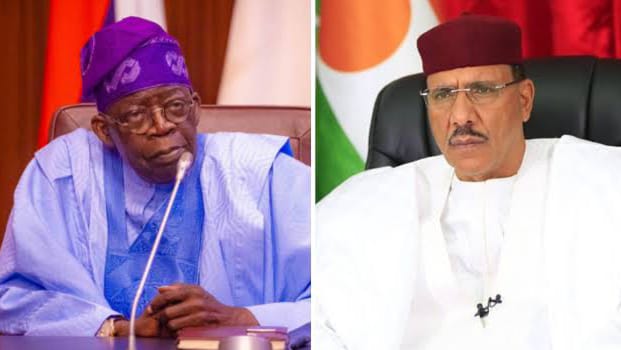
The resolution was proposed by the Economic Community of West African States (ECOWAS) in response to the events in Niger Republic on July 26, 2023, when the democratically elected President, Mohamed Bazoum, was overthrown in a coup and replaced by a military junta headed by a general, Abdourrahamane Tchiani.


Read also:


The new directive was issued in a letter titled “ECOWAS Restriction on the Republic of Niger,” from the Nigerian Airspace Management Agency (NAMA) Aeronautical Information Services, dated February 2, 2024, and signed by Tayo John, Director of Air Traffic Services, on behalf of the managing director and chief executive of the agency.

The directive stated that by ECOWAS resolutions, all commercial flights from Niger to Nigeria, or from Nigeria to Niger, or from Niger overflying Nigeria, or any state overflying Nigeria to Niger had been suspended.

 “These restrictions do not affect overflight aircraft through Niger airspace, aircraft in a state of emergency, and special flights.”

It disclosed further that “special flights are to obtain authorisation from the permanent secretary, Ministry of Aviation and Aerospace.” 

Following the coup in Niger, on July 30, 2023, the Authority of Heads of State and Government of ECOWAS shut land borders against the Niger Republic and declared it a “No Fly Zone”.

This came as a result of the coup carried out by the military in the West African country.

The military in the Niger Republic was given a seven-day ultimatum by ECOWAS to reinstate Bazoum. 

It threatened to close the border between Niger and its member states.

The Commission also decided to designate and send a special representative to convey the authority’s demands during a meeting presided over by President Bola Tinubu in his capacity as the Chairperson of the ECOWAS Authority of Heads of State and Government at the Presidential Villa in Abuja.

Niger was among the three ECOWAS members that left the organisation on Sunday, January 28.

The ICIR reported that Nigeria would likely face more security and economic challenges following the exit of the three countries, namely Burkina Faso, Mali, and Niger, as the country’s fight against insurgency and dwindling economy bite harder.

The ECOWAS sanctioned the three countries for enforcing a military regime and severing diplomatic ties with France, their colonial masters.

Diplomatic analysts suggested that ECOWAS would have applied diplomacy and persuasion more for the countries, stressing that their exit had far-reaching implications on both the economy and security of the Sahel region, with rising concerns of terrorism.

Some of the countries have also raised issues with the regional body’s derailment from the ideals of the ECOWAS founding fathers, accusing it of tilting more to the ideals and political direction of their Western allies.

The ICIR reports that there have been rising concerns over the frequency of coups in African countries recently.

In May 2023, military officials successfully overthrew the sitting government in Mali, citing a relaxed attitude towards the troubled Touareg tribes. Burkina Faso also recorded two successful coups in 2022.


Prospective corps member, driver kidnapped in 2023 freed in Zamfara

0

THE National Youth Service Corps (NYSC) has confirmed the release of one of the prospective corps members kidnapped more than four months ago in Zamfara state.

A statement by the NYSC director of press and public relations, Eddy Megwa, on Monday, February 5, stated that the bus driver held hostage with the intending NYSC member was also released following a joint effort with the military. 

According to him, the release brought the number of prospective corps members already released to five.

He said efforts were on to ensure the safe release of the remaining three corps members, one female and two males, from the kidnappers. 

The ICIR reported that 11 prospective corps members from Akwa Ibom state were kidnapped on August 17 while travelling to the NYSC camp in Zamfara state. 

They were abducted while travelling in an Akwa Ibom Transport Company (AKTC) bus from Uyo and Akwa Ibom states to carry out the mandatory one-year national service.

Megwa said out of the eleven abducted, three escaped shortly after they were held, leaving eight and the driver, who was taken into the bush.

He added that one person was rescued on September 1, another regained freedom on October 20, and two were rescued on Thursday, December 7.

He said four others were still awaiting rescue.

“Yesterday, we were all excited to hear that two of our prospective corps members, who were kidnapped in the Zamfara saga, were rescued by the military.

“It’s a thing to be happy; it’s hope for all of us and the family. Even the remaining four—two girls and two boys—will still be rescued very soon.

“It’s been worrisome for us in the scheme over this number of months that these young ones that are coming up to serve their fatherland were kidnapped,” Megwa stated.

Megwa, while reiterating the NYSC’s commitment to securing the safe release of the remaining three hostages whom the kidnappers still held, expressed the service’ Director-Gneral’s gratitude to the security operatives.

He further emphasized the ongoing collaboration between the NYSC and security agencies in addressing the challenges corps members face nationwide.

Nigeria has faced insecurity challenges in the last decade, from insurgent attacks, banditry, inter-ethnic or communal crises, and separatist agitations.

However, kidnapping in Nigeria has become an industry where abductors demand money from families and guardians before releasing abductees.

This is most prominent in the northern region of the country, which has recorded a plethora of cases of school children and other kidnappings like in Chibok, Jangebe and Dapchi in the last decade.

According to the SBM report, between June 2022 and July 2023, 3,620 people were abducted in 582 kidnap-related incidents in Nigeria. 

RAF invites journalists for 2024 fellowship

THE Reham Al-Ferra (RAF) Memorial Journalists Fellowship Programme has invited applications for the 2024 journalism fellowship.

The United Nations launched the fellowship programme to allow journalists to obtain firsthand experience in the work of the United Nations in New York and meet journalists from other nations.

This programme is open to journalists aged 22 to 35 worldwide, with 15 candidates selected from each country. The fellowship will be held in person from September to October this year.

Candidates must be passionate about addressing UN priority issues such as peace and security, sustainable development, human rights, and climate action.

The deadline for application is March 15. Interested candidates can apply here.

Nigeria, South Africa, others vie for AFCON’s $7m winning prize

0

SEMI-FINALISTS at the ongoing African Cup of Nations (AFCON) in Côte d’Ivoire are battling to win the tournament’s $7 million prize.

The four semi-finalists are Nigeria, South Africa, Côte D’Ivoire and the Democratic Republic of the Congo.

Losing semi-finalists will take home $2.5m, almost 300 per cent lower than the winners’ prize money.


Read also:


The ICIR check reveals that the $2.5m prize money for the losing semi-finalists is a 67 per cent increase from what Nigeria’s Super Eagles took home as the winner of the 2013 edition of the tournament.

As actions resume tomorrow, Wednesday, February 7, for the semi-final stage, the semi-finalists will square against each other for continental glory.

Before the commencement of the competition, the Confederation of African Football (CAF) had announced a 40 per cent increase in the prize monies for the AFCON.

A breakdown of the prize monies showed that the AFCON 2023 winner will take home $7 million.

The runners-up will receive $4 million while losing semi-finalists (two teams) will pocket $2.5 million.

Countries that lost in the quarter-finals (Angola, Cape Verde, Mali, and Guinea) will each receive $1.3 million, while the eight teams (Cameroon, Namibia, Mauritania, Morocco, Burkina Faso, Senegal, Egypt, and Equatorial Guinea) that lost in round 16 will get $800,000 each.

Also, two teams that settled for third place in their group but failed to advance will receive $700,000, while six teams that finished last in their groups will be awarded $500,000 each.

Semi-final matches

Nigeria’s Super Eagles will battle South Africa’s Bafana Bafana in their quest to claim a fourth continental title, while the host nation Cote d’Ivoire will slug it out against Congo DR in the semi-finals.

Nigeria vs South Africa

Venue: Stade de BOUAKÉ Bouake

Time: 6pm

Côte d’Ivoire vs Congo DR

Stade Olymipque Alassane Ouattara

Time: 9pm

Boths matches will be played on Wednesday, February 7.

Auditor-General’s report indicts UNILORIN for over N1bn corruption

0

THE University of Ilorin (UNILORIN) has been enmeshed in different forms of corruption, amounting to over N1 billion, the Auditor-General of the Federation’s report revealed.

According to the report, which covers 2020 but was released in December 2023 and made available to the public in 2024, the university failed to remit 25 per cent of its internally generated revenue of N1 billion (N1,051-163,575.07) to the consolidated revenue fund (CRF) of the Federal Government in 2018.

Citing treasury circular 2016, paragraph 3(b) with reference number TRY/A10&B10/2016, the Auditor General’s Office noted that government agencies or parastatals were expected to limit their annual budgetary expenditure to no more than 75 per cent of their gross revenue and to remit 25 per cent to the CRF, which the Office said they failed to do.


Read also:


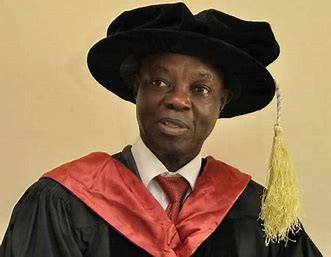
The report stated that UNILORIN, under its vice-chancellor in the audit year, Sulyman Age Abdulkareem, did not remit over a billion naira to the CRF.

Abdulkareem, a professor of Chemical Engineering, was the vice chancellor of the University of Ilorin from 2017 to 2022.

“The University generated a total of N4,204,654,300.29 in 2018, out of which the sum of N1,051,163,575.07, being 25 per cent of the internally generated revenue (IG) was expected to be remitted to the Consolidated Revenue Fund (CRF) of the Federal Government, and evidence of the remittance of N1,051, 163,575.07 to the CRF, being 25 per cent of the IGR in above, was not produced for audit.”

According to the report, the failure poses risks of losing government funds, an inability to fund the government budget, and diverting public funds.

The diversion of public funds is an offence contrary to and punishable under Sections 16, 17(1)(c), and 22(5) of the Corrupt Practices and Other Related Offences Act 2000.

The report also attributed the failure to remit to possible weaknesses in the university’s internal control system.

However, that was not all the institution did. The report also revealed that the university, despite deducting (Pay As You Earn) PAYE amounting to over N200 million from staff salaries, failed to produce an audit for the remittance.

“Paragraph 235 of the Financial Regulations (FR) 2009 states, “Deductions for WHT, VAT and PAYE shall be remitted to the Federal Inland Revenue at the same time the payee who is the subject of the deduction is paid,” the report added.

“The University made PAYE deductions amounting to N227,370,455.26 from staff salary, and evidence of the remittance of N227,370,455.26 to the relevant tax authorities was not produced for audit,” the report stated.

This wasn’t the first time the Auditor-General’s Office would release comprehensive reports, indicting many  MDAs and individuals of corruption.

The ICIR published several reports from the damning documents released by the Auditor-General over the years, emphasizing the need to ensure transparency and accountability in government.

Nigerian veteran actor, Jimi Solanke, passes on at 81

0

NIGERIAN veteran actor, poet and playwright Jimi Solanke passed on on Monday, February 5, aged 81

He passed away while being taken from his country home in Ipara Remo, Remo North Local Government Area, Ogun State, to Babcock University Teaching Hospital, Ilisan.

He was said to have been in and out of the hospital between December 2023 and the time of his death.


Read also:


Mourning his demise, Ogun State Governor Dapo Biodun stated that the late Jimi Solanke was a true ambassador of the state, taking the culture of the Yoruba race to the global stage through his dramas, music and poetry.

“With a heavy heart, we have received the heartbreaking news of Baba Jimi Solanke’s passing. Beloved and revered for his unwavering commitment to the arts, Baba Agba, as he was affectionately known by his countless fans nationwide, was a true ambassador of our beloved state.

“Through his powerful dramas, soulful music, captivating poetry and other artistic endeavours, he brought the rich culture and traditions of the Yoruba race to the global stage”, he said.

The governor added that Solanke’s contributions to the arts would be etched in the annals of history.

“His unwavering dedication, immense talent and influence have left an everlasting impact on the global artistic landscape. We mourn the loss of this extraordinary individual, who will be dearly missed by all whose lives he touched with his extraordinary gifts,” stated.

Also referred to as Uncle Jimi, the deceased was well known for his roles in Kongi’s Harvest, Sango, Shadow Parties, Death and the King’s Horseman, Kurunmi, and The Divorce, among others.

Late Solanke was also a songwriter, performer, visual artist and storyteller.

NAFDAC begins implementation of alcohol in sachets ban

0

THE National Agency for Food and Drug Administration and Control (NAFDAC) has begun the implementation of its 2022 restrictions on manufacturing, distributing, and selling alcoholic beverages in sachets, PET, and glass bottles of 200ml and below.

The Director-General of NAFDAC, Mojisola Adeyeye, stated this at a press conference on Monday, February 5.

She said the agency stopped the registration of alcoholic beverages in sachets and small-volume PET and glass bottles below 200ml in 2022.


Read also:


“This decision was based on the recommendation of a high-powered committee of the Federal Ministry of Health and NAFDAC on one hand, the Federal Competition and Consumer Protection Commission (FCCPC), and the Industry represented by the Association of Food, Beverages and Tobacco Employers (AFBTE), Distillers and Blenders Association of Nigeria (DIBAN), in December 2018.

“As a commitment to the decision reached at the end of this committee meeting, producers of alcohol in sachets and small volume agreed to reduce the production by five per cent with effect from 31st January 2022 while ensuring the product is completely phased out in the country by 31st January 2024,” the statement added.

She noted that the agency was committed to ensuring that the validity of renewal of already registered alcoholic products in the affected category would not exceed 2024.

She also emphasised the adverse effects of alcoholic beverages, noting that under-aged and commercial vehicle drivers and riders were mostly affected.

“The World Health Organization has established that children who drink alcohol are more likely to use drugs, get bad grades, suffer injury or death, engage in risky sexual activity, make bad decisions and have health problems.

“The World Health Organization also stated that harmful consumption of alcohol is linked to more than 200 health conditions, including infectious diseases (tuberculosis and HIV/AIDS) and non-communicable conditions (liver cirrhosis and different types of cancer). It is also associated with social problems such as alcohol addiction and gender-based violence.

To curb the menace of abuse of alcohol, she said the World Health Organization recommended some actions and strategies to policymakers that were effective and cost-effective, which include: regulating the marketing of alcoholic beverages (in particular to younger people) and regulating and restricting the availability of alcohol,” she said.

Adeyeye highlighted that NAFDAC, established under Act Cap N1 Laws of the Federation of Nigeria 2014, had the mandate to regulate and control the entire lifecycle of regulated products, including food, drugs, cosmetics, medical devices, bottled water, detergent, and chemicals.

She urged all holders of alcohol in those categories to immediately report to the Investigation and Enforcement Directorate of NAFDAC for handover and destruction to prevent sterner measures, including prosecution.

EFCC nabs General Overseer for fleecing church members N1.3bn 

0

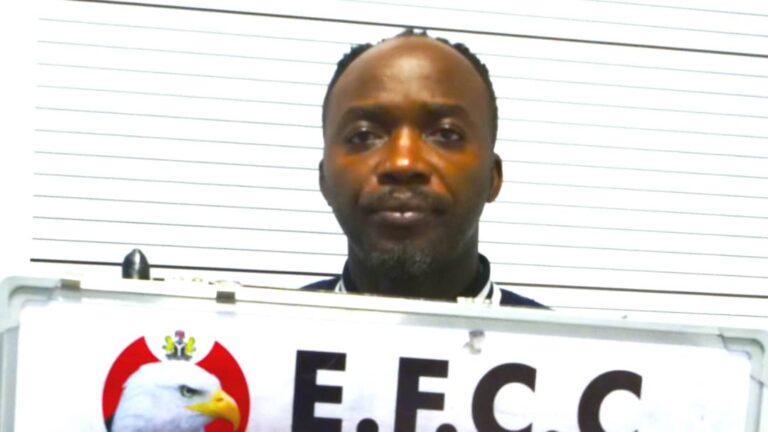
THE Economic and Financial Crimes Commission (EFCC) has arrested the General Overseer of Faith On The Rock Ministry International, Theophilus Oloche Ebonyi, for defrauding his church members of N1. 3 billion.

This was disclosed in a statement by EFCC’s Spokesman, Dele Oyewale, in a post on X on Monday, February 5.

According to Oyewale, Ebonyi was detained for marketing a fictitious $20 billion intervention project through his Theobarth Global Foundation. He falsely stated that the Ford Foundation in the United States provided the fund as a grant to underprivileged individuals. 

His victims included non-governmental organizations and private citizens, said the commission.

According to the statement, the suspect asked his victims to pay for registration forms and documents to trick them into becoming recipients of the fraudulent grant.

He forced every subscriber to pay N1.8 million, and he smiled to his bank, receiving N1.3 billion from gullible Nigerians and non-governmental organizations nationwide.

The EFCC investigations revealed that the Ford Foundation had no agreement, grant, connection, or business with the accused. 

The Foundation clarified that it had no connection with him or his NGO.

According to the commission, it has also located five properties that Ebonyi obtained using the money he received from his illegal activities.

Ebonyi continues to hawk his fictitious “Ford Foundation” grant to his subscribers on various social media sites, even after being arrested by the agency.

The statement indicated that the suspect would be charged after the investigations.

Meanwhile, the EFCC, in a report on Sunday, February 4, detailed how victims of fraud could write a petition to the commission on perceived economic and financial crimes.

Nigerians should have unfettered access to the commission to support its efforts to combat financial and economic crimes. One of the ways to do this is by filing petitions.

 The commission receives petitions on financial crimes, including bank fraud, advance fee fraud, money laundering, and economic sabotage. 

Oyewale, in a chat with The ICIR on Monday, January 29, explained how to write a petition to the commission.

You can read the report here.