Home Blog Page 778

OAU students protest tuition hike, block access to campus

0

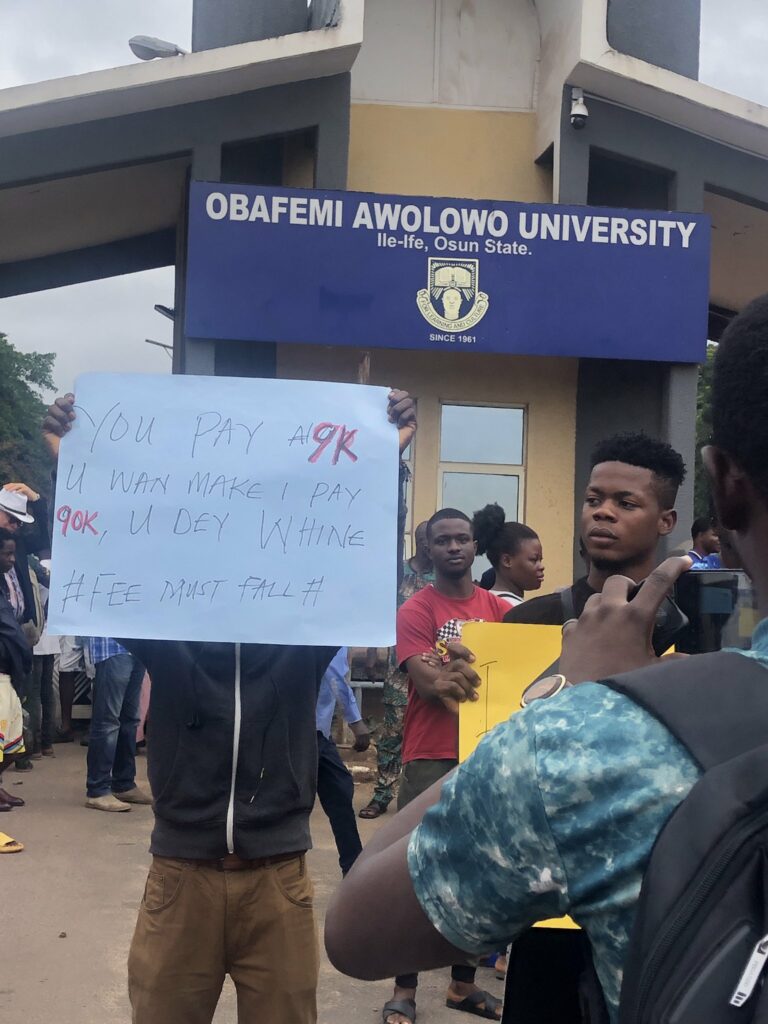
SOME students of the Obafemi Awolowo University (OAU), Osun State, have protested the hike in their school fees by taking to the university gate to protest.

The students, led by the President of the Students’ Union, Abbas Akinremi, in the early hours of Tuesday, October 3, shut the institution’s main gate to restrict vehicular movement.

In different social media posts sighted by The ICIR, the students, with hashtags’FeeMustFall” and “SaveOAUStudents,” also called on the government to investigate the situation.

“I cannot afford to drop out. #FeeMustFall”, “My Mama dey sell Fufu, my papa dey ride Okada. Where you won make I see 90k? #FeeMustFall,” one of the placards read.

Students protesting against tuition fee hike at the OAU on Tuesday, October 3. Photo: OAU SU/X

Similarly, via its X handle, the union stated that it saw no reason for celebrating Independence Day when Nigeria’s education sector ‘is bleeding.’

The body wrote: “Why celebrate Independence Day when the educational sector is bleeding? Mr. Minister of Education, Nigeria Federal Government, we call on you all. Education is a right, not a privilege. #FeeMustFall #SaveOAUStudents.”

Another set of students showed their displeasure over the fee hike. Photo: X

The protest came a few days after the union urged students of the institution to suspend payment of tuition fees following the slash in fee hike by the institution’s management.

On Wednesday, September 13, the institution’s management announced adjustments to the tuition fees. 

This led to an immediate reaction from the students as the union requested that the management reverse the increment, citing the current economic challenges in the country.

A September 18 statement signed by Akinremi demanded the Federal Government reverse the tuition fee hike.

Part of the statement read: “Today, we are here to address the pressing issue of sudden fee hikes and the alarming state of education funding in Nigeria. Education is the cornerstone of development and progress for any nation. So, it’s sad that in a country as great as ours, education is becoming a choice only the rich can make.

“The current situation in Nigeria paints a grim picture, with chronically low funding for education having severe repercussions on our society. Inadequate funding has limited access to quality education, hinders academic resources, and already created many financial burdens for students and their families.” 

In the same vein, the students union, on September 26, directed all students to suspend payment of tuition fees.

A statement jointly signed by Akinremi and the union’s secretary-general, Akinboni Opeyemi, noted that there was no agreement with the school management regarding the fees hike.

WHO recommends new malaria vaccine

0

THE World Health Organization (WHO) has recommended widespread use of the RTS,S/AS01 (RTS,S) malaria vaccine among children in sub-Saharan Africa and other regions of the world.

The recommendation, according to the statement by the Health Organization on Monday, October 2, was based on results from an ongoing pilot programme in Ghana, Kenya and Malawi that has reached more than 900,000 children since 2019.

In the context of comprehensive malaria control, the RTS,S/AS01 malaria vaccine can prevent P. falciparum malaria in children living in regions with moderate to high transmission as defined by WHO.  

WHO added that the RTS,S/AS01 malaria vaccine should be provided in a schedule of four doses in children from five months of age to reduce malaria disease and burden.

This new development was coming just two years after WHO recommended the first vaccine against malaria.

The WHO Director-General Tedros Adhanom Ghebreyesus, highlighting the importance of the drug, noted that the vaccine could save thousands of young children each year.

“This is a historic moment. The long-awaited malaria vaccine for children is a breakthrough for science, child health and malaria control.  

Using this vaccine on top of existing tools to prevent malaria could save tens of thousands of young lives each year,” he said.

Malaria remains a primary cause of childhood illness and death in sub-Saharan Africa as more than 260,000 children under-five die from malaria annually, according to WHO.

Also, the WHO Regional Director for Africa, Matshidiso Moeti, said malaria had stalked sub-Saharan Africa, causing immense personal suffering for centuries.

“We have long hoped for an effective malaria vaccine, and now, for the first time, we have such a vaccine recommended for widespread use. Today’s recommendation offers a glimmer of hope for the continent, which shoulders the heaviest burden of the disease, and we expect many more African children to be protected from malaria and grow into healthy adults,” he added.

The organisation recommended the RTS,S malaria vaccine based on the advice of two WHO global advisory bodies.

Giving details of its findings during the trial, WHO mentioned that “To date, more than 2.3 million doses of the vaccine have been administered in three African countries – the vaccine has a favourable safety profile.  

“No negative impact on the uptake of bednets, other childhood vaccinations, or health-seeking behaviour for febrile illness. In areas where the vaccine has been introduced, there has been no decrease in the use of insecticide-treated nets, uptake of other childhood vaccinations or health-seeking behaviour for febrile illness.”

It also noted that the new vaccine is highly cost-effective in moderate to high malaria transmission areas.

“The RTS,S malaria vaccine results from 30 years of research and development by GSK and through a partnership with PATH, with support from a network of African research centres.

The Bill & Melinda Gates Foundation provided catalytic funding for late-stage development of RTS,S between 2001 and 2015.” WHO added.

Nigerian Army probes troops’ poor feeding claim at battlefront

NIGERIAN Army (NA) has ordered a probe into the allegation of poor feeding of troops at the battlefront.

The probe might not be unconnected to a report by Sahara Reporters on the alleged complaints of insufficient nutrition and other welfare issues by Nigerian soldiers serving on the front lines in the country’s North-East.

The media organisation, in a report published on Tuesday, September 26, stated that several members of the 154 Taskforce Battalion of the Nigerian Army fighting terrorists complained that they were only receiving rice cooked improperly despite an increase in funding for their food allowance.

One of the soldiers, who is injured, claimed that the Battalion in Ngamdu, led by A. A. Buba, only provided them with bread and tea for breakfast on Mondays and Thursdays, rice for dinner on Tuesdays, Fridays, and Sundays, and stew on Tuesdays, Fridays, and Saturdays, “but concoction rice for the remaining weekdays.”

The Nigerian Army, in a statement on Tuesday, October 3, signed by its Director Army Public Relations, Onyema Nwachukwu, said its attention was drawn to the claims.

The Army said it was crucial to inform the public that its present leadership prioritised troops’ welfare.

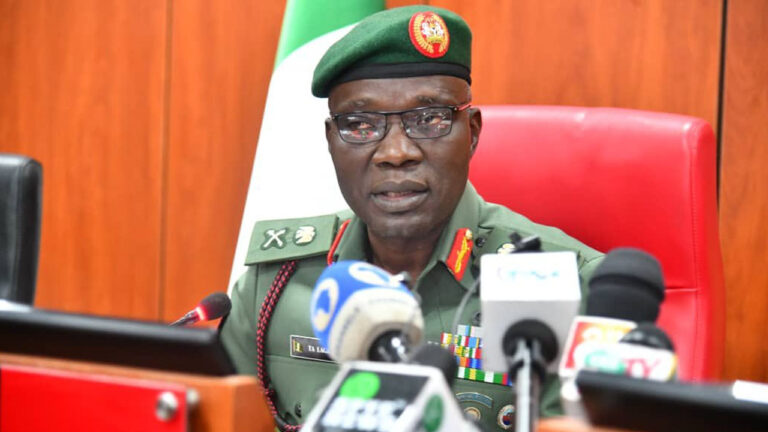
According to the statement, the Chief of Army Staff (COAS), Taoreed Lagbaja’s, priority is to provide “Sound Administration” to ensure a highly motivated force. 

“The NA, therefore, takes these allegations very seriously, and the Chief of Army Staff (COAS) Lieutenant General Taoreed Lagbaja has directed immediate investigation into the complaints to ascertain their veracity and unravel the circumstances.

“The NA wishes to assure the public and all NA personnel that a thorough investigation will be conducted to get to the bottom of these claims,” the statement reads. 

It added that a comprehensive system was in place to ensure that troops received adequate and balanced meals, especially those serving at the frontline, and the meals were prepared under strict quality control measures.

The NA acknowledged that there might be isolated incidents where lapses occur and promised to address them. 

The Force said an internal investigation had already been initiated to ascertain the truth behind these allegations and promised to thoroughly examine the supply chain, food quality provided, and any other factors that might have contributed to the situation.

“The NA is committed to transparency and accountability and will not condone any form of negligence or misconduct. If any culpability is detected, it will attract appropriate disciplinary action. Immediate corrective measures to ensure that such incidents do not recur in the future will be taken.

“We also encourage NA personnel to report any grievances or concerns they may have regarding their feeding arrangements. We have established channels for feedback and will take prompt action to address any legitimate complaints,” the statement added.

The Army said it remained resolute in the fight against insurgency and other security challenges and would ensure that soldiers were provided with the necessary support and care they required to carry out their duties effectively. 

Tarbell Fellowship seeks entries

THE Tarbell Fellowship, hosted by Training for Good, invites applications from early-career journalists covering emerging technology, particularly artificial intelligence.

Fellows will be assigned to a major newspaper for nine months, participate in a study group covering AI governance and technological principles, and attend a two-week media conference in Oxford. 

It is a one-year programme, and the fellowship offers a stipend of up to $50,000 to support these postings, which will run from January to December 2024.

Expert speakers, comments mentoring from seasoned journalists, and networking events with specialists from prominent AI organisations are all part of the programme. 

After graduation, fellows are expected to contribute skills to significant newsrooms and publications worldwide. 

The deadline for the submission of the application is October 15, 2023. Interested fellows can apply here

CSU releases Tinubu’s academic record, deposes to documents in court today

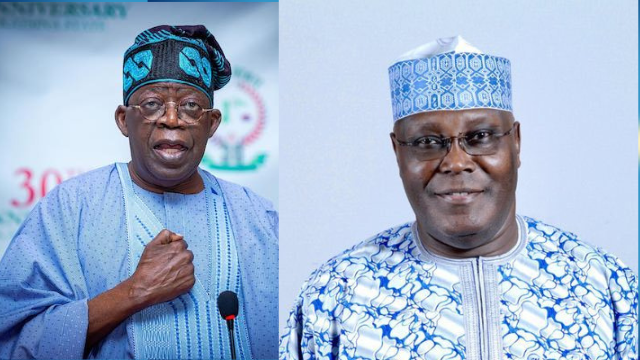
THE Chicago State University (CSU) has released the academic records of President Bola Tinubu as ordered by a judge, Nancy Maldonado of the US District Court of Illinois.

The release followed a request by Atiku Abubakar, candidate of the Peoples Democratic Party (PDP) in the 2023 presidential election.

The ICIR reported on Sunday, October 1, that the US district court for the Northern District of Illinois ordered the CSU to release the record.

Documents released by the CSU stated that Tinubu attended the institution. It also showed that the President graduated from Government College, Lagos, in 1970.

This has, however, generated controversy because investigation shows that the College was founded in 1974.

On request number two, which demands a true and correct copy of any diploma issued by CSU in 1979 to Tinubu, the university states, “CSU does not in the ordinary course keep copies of student diplomas, and after diligent search cannot locate a copy of the original diploma it prepared for Mr Tinubu in 1979, hence has no documents responsive to this request.”

In answer to Abubakar’s third request to produce a copy of the diplomas issued in 1997, CSU stated that the certificates follow the structure of the Tinubu replacement dated June 27, 1997. 

The institution complied with Abubakar’s request and provided several samples of diplomas (certificates) granted to other students in 1979.

For the 2023 presidential election, Tinubu presented the Independent National Electoral Commission (INEC) with a duplicate of the CSU diploma, having earlier claimed to have misplaced his original certificates.

The samples of diplomas from 1997 that CSU released have the same font and logo as those Tinubu submitted to INEC, but the date is different.

In its declaration, CSU had admitted guilt and blamed clerical mistakes for the disparity.

Tinubu was addressed as a “Mr” in what appeared to be an admission letter in the new CSU records.

Additionally, he checked the “male” box on the undergraduate admissions application.

However, some online transcripts contain “F,” which denotes “female.”

The CSU granted Atiku’s four requests and the documents that went viral late Monday night.

Other documents made public besides the copies of CSU certificates included a Southwest College Transcript that Tinubu allegedly used to enrol in CSU in September 1977.

The released records contained 32 documents, and the CSU staff deposition is today in court.

Today’s deposition would bring clearness to all the subjects.

Tinubu’s primary and secondary schools have long been the focus of intense debate, along with his tertiary institution records among his political opponents.

Atiku had asked a US magistrate court for a discovery order requiring the CSU to provide Tinubu’s academic records on August 2.

The US Magistrate Judge Jeffrey Gilbert approved the motion on September 19 and mandated that CSU promptly produce the records.

Similarly, the US District Court rejected Tinubu’s opposition to the Magistrate Court’s ruling and ordered that the documents be released to Atiku.

“For the foregoing reasons, the court overrules President Tinubu’s objections to Magistrate Judge Gilbert’s recommended ruling and, therefore, adopts the ruling in full.

“Mr Atiku’s Application is, therefore, granted. In light of the pending Supreme Court of Nigeria deadline, represented to the court as October 5, 2023, and based on CSU’s representations that it is ready to comply with the discovery requests and produce a witness, the court sets an expedited schedule for completion of discovery,” the judge ruled.

Even though Tinubu had protested the release and asked a district court to reconsider Jeffrey Gilbert’s application approval.

Federal judge Nancy Maldonado overruled Tinubu’s arguments and ordered CSU to publicise the President’s academic records.

Atiku, who finished second in the recent presidential election, petitioned the Presidential Election Petition Court (PEPC) to invalidate Tinubu’s victory based on alleged flagrant violations of electoral law, significant irregularities, and corrupt behaviour.

However, a five-member panel of the presidential election tribunal unanimously dismissed Atiku and the PDP’s petition on September 6 as lacking merit.

Atiku has since filed an appeal against the ruling at the Supreme Court.

Stakeholders weigh implications of BUA’s cement price slash

0

THE reduction in the price of bags of cement to N3,500 by BUA Cement Plc on Sunday, October 1, will have immediate and far-reaching implications, say stakeholders in the real estate industry.

BUA Group’s Chairman, Abdul-Samad Rabiu, disclosed the company’s intention to slash the product’s price when he visited President Bola Tinubu at the state house on September 15.

He had told the President that his company was increasing its production capacity by inaugurating two new cement plants by the end of the year or early 2024 to enable it to flood the nation’s markets with the product.

He says BUA produced cement with about 80 per cent locally sourced materials.

In its October 1 statement, BUA Cement’s management said the price slash took effect from October 2 (today), promising to review the price upon completion of the new plants, expected to increase its production volumes to 17 million metric tons per annum.

“As a result, BUA Cement would now be sold at an ex-factory price of 3,500 naira per bag so that Nigerians can begin to enjoy the benefits of the price reduction before the completion of our plants,” the company stated.

A real estate expert and facility manager, Stephen Jagun, told The ICIR that since the government has long failed to address the surging price of cement, BUA felt that crashing the price was a social obligation to Nigerians.

According to Jagun, principal partner at Jagun Associates, it is not enough for cement companies to declare billions of profits and “become heartless,” taking undue advantage of buyers.

He said, “Since the raw materials used in cement production are primarily sourced locally, there should not be a reason why companies should be thinking more of their profit and less of price reduction.

“The fact is the government is supposed to be courageous enough to dialogue with them (cement companies) to bring the price down,” he stressed.

As an operator in the industry, Rabiu has informed knowledge of the production cost of a bag of cement and the profit the company is making, he pointed out.

“By bringing down the price, he is trying to be patriotic to help the economy.

“If they can make life bearable for the customers and the growing industry, it is a plus and a win-win for everybody,” Jagun said.

He believes other significant players in the building industry would take a cue from BUA and drop their prices.

While it appeared that Nigerians are already apprehensive that the price of cement might shoot up further, following current disclosure by the Minister of Works, David Umahi, that the new administration would prioritise more concrete to asphalt in road construction – a measure expected to put pressure on the demand and supply of cement – “a supplier says I want to drop the price. It is not the market forces helping the market. The price reduction is a positive development that will encourage many people. 

“One significant thing that goes on everywhere, particularly in Nigeria, is that we want a roof over our heads. If you ask the majority of workers in Nigeria today, particularly in Lagos state, more than 50 per cent will have one plot of land somewhere,” Jagun noted.

He also pointed out that the courage to commence construction, considering cost implications and cement being a significant material, hindered peoples’ ambition to build.

“If cement price can be reduced, it will be a positive development, and if the price reduction stays, rents will drop,” Jagun said.

He, however, noted that the amount for renting properties would take a while to adjust downward as real estate is a market that would respond slowly to a slash in cement prices.

“It is a market that takes time to respond. Over time, when it starts responding, the stakeholders will no longer have any choice but to play with the market.

“If you are living in a rented apartment now, and in the next 12 or 18 months, you build yours and move there, your landlord cannot think about increasing rent but will be looking for somebody to quickly take the apartment because his source of income is going,” he explained.

He further explained that if one had not built, and somebody with a higher offer came to compete with the person over a rented apartment, the landlord might be enticed to increase the rent so that the person who could pay has the flat.

He gave an example: during the financial crisis, rents dropped in the highbrow areas of Ikoyi, ParkView Estate, Lekki and Victoria Island in Lagos.

“Those who were paying N20 million before, when demand could not sustain it, and there were so many vacant houses and somebody building a new home enticed people to pay lower rental of about N15 million, the other landlords changed their minds and started asking people to pay N15 million.

“And those who felt, if they go to Surulere, they could get a whole house for N2 million went and displaced those who used to pay maybe N700,000 or N800,000, by offering higher pay, say N1.5 million, he said.

That is why you see the rentals of the low and middle-income earners keep rising because people, the high-income earners, who have the financial muscles, keep coming down to compete with them.”

Jagun added that those in Ikoyi and Victoria Island paying N25 million for accommodation might move to Dolphin Estate, still around Ikoyi, where rent is about N7 million or N8 million.

He added that Those who need help buying a flat in Ikoyi at N250 or N300 million may move to Dolphin Estate, where it is priced at about N180 million.

Also speaking with The ICIR, the executive assistant of the Association of Issuing Houses of Nigeria (AIHN), Wakeel Olawale, said the slash could have two different implications.

According to him, it will drive down prices across the entire industry, checkmate and affect other competitors’ pricing, bearing in mind the rising inflation in the economy. 

It will also increase investment in the sector by encouraging organisations and individuals to start building on acquired lands.

“Ordinarily, one would have expected that prices of cement and other building materials would continue to increase with rising inflation.

“Since it is a price and quantity thing, competitors may want to observe the market to decide. If the quantity for them did not decline, they might not reduce the price,” Olawale said.

He noted, however, that Nigerians are very sensitive to price adjustment, even though the qualities of the competitors could be better.

At a press briefing in preparation for the 32nd Builders Conference, the Nigerian Institute of Building (NIOB), Lagos Chapter, urged the Federal government to intervene and reduce the country’s cement cost.

The intervention is needed to stop the skyrocketing prices of cement, the NIOB vice chairman in Lagos, Adeoye Thomas, said.

Nigeria@63: FCT residents urge Tinubu to fulfil ‘renewed hope’ promises  

0

RESIDENTS of the Federal Capital Territory (FCT) have called on President Bola Tinubu to fulfil his campaign promises as Nigeria commemorated its 63rd independence anniversary on Sunday, October 1.

They shared their delight and disappointment regarding the President’s reforms, including fuel subsidy removal, which has compounded citizens’ hardship.

Residents interviewed by The ICIR acknowledged that the country was making gradual progress and said change takes time. However, others anticipated that the President would begin delivering on his promises immediately.

https://www.youtube.com/watch?v=6tfWicw7jGk&pp=ygUIVGhlIElDSVI%3D

Speaking with The ICIR, a resident, Ali Attahiru, stated that as the nation marked its 63rd independence anniversary, its founding fathers’ goals remained unmet compared to other countries. He highlighted various sectors that required attention for the nation’s development.

“We are battling with insecurity, especially in the country’s North. We also face hardship and unemployment.

“What are we going to celebrate when we have all these issues? Things are getting hard, and they are getting worse than before. My message to Nigerians is that we should look for a way out of our problems because every problem has a solution, and the government should look for a way out of our problems”, he said.

Another resident, Lizzy Oziri, told this organisation that Nigeria could succeed if every citizen agreed to do what was right. She said while they waited for the leaders to initiate change, each individual had a part to contribute to the nation’s growth.

“I know we can get it right in this country if we can all join hands to do the right thing. It means Nigeria can be a better place. Some individuals already feel people in authority are the problem, but to some extent, everyone has a part to play in making Nigeria a better place.

“But mostly, as a nation, I think we have a serious problem with people in power. We have a problem with the process that gets people to power. It is a faulty process”, she stated.

https://www.youtube.com/watch?v=3QmtwUbV1nk&pp=ygUIVGhlIElDSVI%3D

Similarly, a resident, Daniel Kolofo, said there was nothing to celebrate. He knocked the Tinubu government for performing below expectations since assuming office.


READ ALSO:


I’ve not seen any achievement in this government for now, and I’m not against the government, but the truth must be told. You’re removing subsidy and giving money to governors that will embezzle it when the masses are suffering. People are suffering and cannot move from one place to another.

“Youths are hungry, and it’s causing a lot of atrocities in the country. If you say the removal of subsidy is an achievement, the disadvantages are more than the advantages.”

Other residents shared their views, with some expressing hope for a brighter Nigeria in a few years, while others said it could take the nation several decades to prosper if it continues with its current crops of leaders.


Suspended strike: Details of NLC, TUC’s 15-point agreement with FG

0

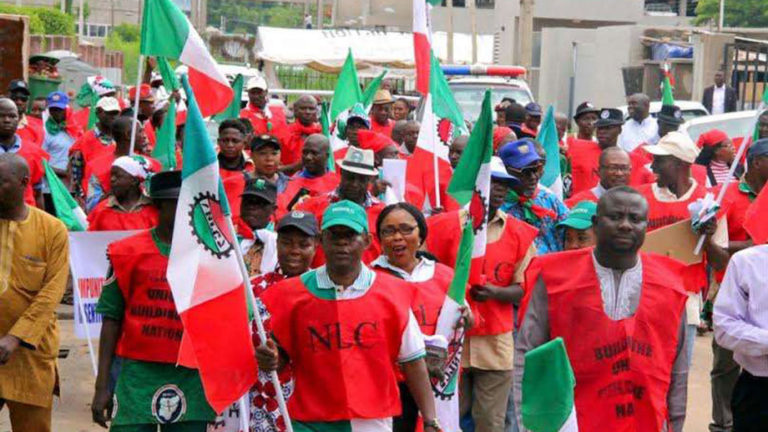
ON Monday night, the Nigeria Labour Congress (NLC) and the Trade Union Congress (TUC) suspended the indefinite strike scheduled for Tuesday, October 3, for 30 days.

The workers announced the suspension after getting major commitments from the President Bola Tinubu-led Federal Government.

The ICIR reported how the labour union leaders declared the strike on September 26, following the hardship caused by the subsidy removal from petrol by the Federal Government.

The NLC and TUC presidents Joe Ajaero and Festus Osifo directed all the unions’ affiliate bodies to comply with the planned strike.

The planned strike followed a warning strike by the NLC on September 5 and 6, pressuring Tinubu’s government to implement policies that lessen the pains borne by workers and other Nigerians.

However, the Federal Government signed a Memorandum of Understanding with the labour leaders on Monday, prompting the workers to suspend the planned action for 30 days.

NLC’s Ajaero and TUC’s Osifo, among others, signed the agreement on behalf of the workers, while Minister of Labour and Employment Simon Lalong, Minister of State for Labour and Employment Nkeiruka Onyejeocha, and Minister of Information and National Orientation, Mohammed Idris, signed for the government. 

Below is the memorandum

1. The Federal Government grants a wage award of N35,000 (thirty-five thousand Naira) only to all Federal Government workers beginning from the month of September, pending when a new national minimum wage is expected to have been signed into law.

2. A minimum wage committee shall be inaugurated within one month from the date of this agreement.

3. The Federal Government suspends the collection of Value Added Tax (VAT) on Diesel for six months beginning from October 2023.

4. The Federal Government accepts to vote N100 billion for the provision of high-capacity CNG buses for mass transit in Nigeria. Provisions are also being made for an initial 55,000 CNG conversion kits to kick start an auto gas conversion programme whilst work is ongoing on state-of-the-art CNG stations nationwide. The rollout aims to commence by November with pilots across 10 campuses nationwide.

5. The Federal Government plans to implement various tax incentive measures for the private sector and the general public.

6. On the leadership crises rocking the NURTW and the purported proscription of RTEAN, the Federal Government commits to handling Labour matters in line with relevant ILO Conventions and Nigerian Labour Acts. A resolution of the ongoing impasse is expected by or before October 13.

7. The issue of outstanding Salaries and Wages of Tertiary Education workers in Federal-owned educational institutions is being referred to Ministry of Labour and Employment for further engagement.

8. The Federal Government commits to pay N25,000 per month for three months starting from October 2023 to 15 million households, including vulnerable pensioners.

9. The Federal Government will increase its initiatives on subsidized distribution of fertilizers to farmers across the country.

10. The Federal Government should urge the State Government through the National Economic Council and Governors Forum to implement wage award for their workers. Similar consideration should also be given to local government and private sector workers.

11. The Federal Government commits to the provision of funds as announced by the President on August 1 broadcast to the Nation for Micro and Small Scale Enterprises. The MSMEs beneficiaries should commit to the principle of decent jobs.

12. A joint visitation will be made to the refineries to ascertain their rehabilitation status.

13. All parties commit to henceforth abide by the dictates of Social dialogue in all our future engagements.

14. The NLC and TUC accept to suspend for 30 days the planned Indefinite Nationwide strike scheduled to begin Tuesday, October 3, 2023.

15. This Memorandum shall be filed with the relevant Court of competent jurisdiction within one (1) week as consent judgment by the Federal Government.

EFCC hails Diezani Allison-Madueke’s arraignment in London Court

1

THE Economic and Financial Crimes Commission (EFCC) has welcomed the arraignment of a former Minister of Petroleum Resources, Diezani Alison-Madueke, at the Westminister’s Court in London, United Kingdom.

The former minister is being tried following alleged bribery allegations.

The EFCC is trying to extradite Allison-Madueke from the United Kingdom to Nigeria to face the 13-count charges bordering on money laundering levelled against her by the anti-graft agency.

This was disclosed on Monday, October 2, in a statement by the newly appointed spokesperson of the EFCC, Dele Oyewale.

Oyewale said although the charges preferred against Diezani at the London court differed from the 13-count charges bordering on money laundering by the EFCC, ‘criminality is criminality’, irrespective of jurisdictional differences.

“No crime can go unpunished. The money laundering charges for which Madueke is answerable to the EFCC cover jurisdictions in Dubai, the United Kingdom, the United States of America and Nigeria.

“To bring the former Minister to trial in Nigeria, an arrest warrant has been obtained, and extradition proceedings have been initiated,” Oyewale stated.

The Commission said efforts to bring her back to Nigeria for her trial were on course.

Reports say the former minister appeared before the Westminster Magistrates Court in London over an alleged £100,000 bribe.

Alison-Madueke was given a £70,000 bond by district judge Michael Snow, along with other conditions like an 11-night to 6 a.m. curfew, an electronic tag that she had to wear constantly, and a £70,000 surety that had to be paid before she could leave the courthouse.

In August, the UK’s National Crime Agency stated that it believed Alison-Madueke had taken bribes in exchange for awarding multi-million dollar oil and gas contracts.

The former minister is accused of acquiring a minimum of £100,000 in cash, chauffeured cars, private jet flights, opulent family vacations, and utilising numerous London properties.

The charges against her also outline financial benefits such as furniture, property renovations, staffing, covering private school fees, and receiving gifts from upscale designer stores like Cartier Jewellery and Louis Vuitton items.

In the statement, the head of the NCA’s International Corruption Unit (ICU), Andy Kelly, said, “We suspect Diezani Alison-Madueke abused her power in Nigeria and accepted financial rewards for awarding multi-million-pound contracts.

“These charges are a milestone in what has been a thorough and complex international investigation.

“Bribery is a pervasive form of corruption, which enables serious criminality and can have devastating consequences for developing countries. We will continue to work with partners here and overseas to tackle the threat.”

NCA also disclosed that assets worth millions of pounds in connection with the crime were already frozen as part of the investigation.

Similarly, in March 2023, the US Department of Justice recovered assets totalling USD 53.1m linked to Alison-Madueke’s alleged corruption through the evidence provided by the NCA.

Diezani served as the Minister of Petroleum Resources from 2010 to 2015 during former President Goodluck Jonathan’s tenure.

She fled the country just before Jonathan ceded power to his successor, former President Muhammadu Buhari in 2015.

The former minister was accused by the EFCC of stealing $2.5 billion from the Nigerian government while she was a minister.

Age, certificate forgers can’t move Nigeria forward – Peter Obi

0

The Labour Party presidential candidate (LP) in the February 25 election, Peter Obi, has said that Nigerian leaders who falsified their certificate and age would not achieve great things for the country.

Obi said this on Monday, October 2, while speaking on Arise TV’s ‘Nigeria @63: The State of Nation programme,’ noting that leaders who manipulated their academic records before their election into office lived a falsified life.

He said presenting a true certificate is an issue of honour, integrity and the foundation on which a society is built.  

The former Anambra state governor also insisted that he and his political party will continue to challenge the electoral process through which President Bola Ahmed Tinubu emerged as the winner.

“We are at the point where we are challenging the process. These are part of what makes a nation. The process through which people come into office or assume anything is far more fundamental than what they do thereafter. It is important that people come in through the right door and not jump in through the window. So, we are challenging the process, and that has to come to a logical end before any other thing. 

“On the issue of qualifications, I never said anything with regard to improving the degrees or doing this… the issue of qualification is the issue of leaders making statements doing things that are honest and truthful. This is an issue of honour and integrity, and it is the foundation on which you build the society.”

He insisted that people parading certificate forgery lived a falsified life and were not fit to take any leadership position in Nigeria.

“There is no way people can do this and be able to do the right things. Because that means they are living a falsified life. And that is not good, morally, and the sign should be given to society.

“There are so many great people in the world who did not go to school. I can say that the greatest president in America is Abraham Lincoln. He did not go to a formal school because, in fact, he came from an extremely poor family. His education is by borrowing books and others.”

The ICIR had, on September 6, reported that the Presidential Election Petition Tribunal (PEPT) tribunal upheld the election of President Bola Tinubu and dismissed Atiku, Obi, and the Allied People’s Movement (APM) petitions against his victory.

The five-man panel of justices said the petitions filed against Tinubu by the parties were without merit.

“Having concluded and decided that all three petitions are all devoid of merit, the petitions are hereby dismissed,” the panel announced.

In his petition before the tribunal, Obi had stated that there was rigging in 11 states, and he promised to prove it based on the uploaded results on INEC’s server.

He further claimed that Tinubu “was not duly elected by a majority of the lawful votes cast at the time of the election”.

Similarly, the Peoples’ Democratic Party and its candidate, Abubakar Atiku, challenged the process that brought Tinubu in, but the PEPC dismissed the suit.

Meanwhile, the two presidential candidates, Atiku and Obi, have filed appeals at the Supreme Court, seeking the nullification of the PEPT’s judgment.

The notice of appeal filed by Atiku’s lead counsel, Chris Uche, urged the apex court to set aside the tribunal’s ruling, predicating his argument on 35 grounds.

The ICIR reports that there have been issues over Tinubu’s academic records, with Atiku securing the court’s judgment in the United States that the President’s school, Chicago State University, release his academic records to the litigant.