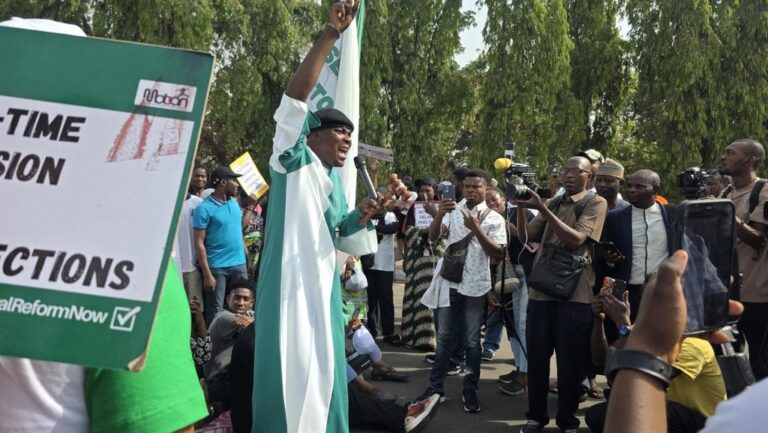
THE Nigeria Police Force on Tuesday, February 17, dispersed demonstrators who gathered at the National Assembly in Abuja with tear gas, as tensions mounted over proposed amendments to Nigeria’s electoral framework.
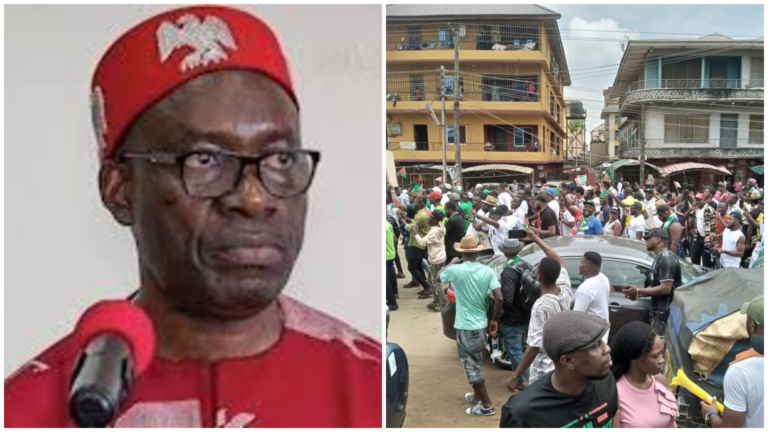
Among those affected by the dispersal were activist and former presidential candidate Omoyele Sowore and former minister Solomon Dalung, who were present at the protest demanding reforms to strengthen electoral transparency ahead of the 2027 general elections.
Sowore alleged that police used force against peaceful demonstrators, describing the action as an assault on democratic expression.
He claimed some protesters collapsed following exposure to tear gas and called on Nigerians to mobilise in defence of electoral integrity and civil liberties.
“This has translated now to a total declaration of war on Nigerians. This is a coup against democracy…for the first time the police is using compressed containers that penetrate through your skin on Nigerians. Over two people have collapsed in this place now. This is not going to be accepted. We are calling on Nigerians to be heading down to the National Assembly,” Sowore said.
The protesters’ key demands included real-time electronic transmission of election results, restoration of a 360-day statutory timeline for issuing election notices, and tougher penalties for vote buying.
Demonstrators insisted the measures were necessary to enhance transparency, improve preparation by electoral stakeholders, and rebuild public confidence in the electoral process.
Despite the dispersal, protest organisers insisted citizens would continue to press their demands, urging lawmakers in the Conference Committee of the National Assembly to act in the public interest and strengthen electoral transparency.
Meanwhile, civil society organisation YIAGA Africa, in a post on its X handle, said reports reaching it indicated that the National Assembly had adopted the Senate’s position on Clause 60(3) regarding electronic transmission of results, contrary to public expectations and the earlier stance of the House of Representatives.
The group added that both legislative chambers had also agreed to shorten the statutory timeline for issuing the election timetable from 360 days to 300 days, warning that the decisions could affect transparency, preparedness, and the credibility of the 2027 electoral process.
“In addition, both chambers have resolved to reduce the statutory timeline for issuing the election timetable from 360 days to 300 days. These decisions carry significant implications for transparency, preparation, and the overall credibility of the 2027 electoral process,” it noted.
Chaos at House of Reps
The confrontation outside the complex unfolded on the heels of rising tensions within the National Assembly over provisions in the Electoral Act Amendment Bill, particularly the clause mandating real-time electronic transmission of polling-unit results to the electoral results portal.
The ICIR reported that lawmakers clashed during a rowdy session on Tuesday, after a motion was introduced to rescind the earlier passage of the bill in line with the Senate’s position.
When the House of Representatives passed the Electoral Act in December 2025, it adopted the compulsory real-time transmission of election results to IReV.
Although dissenting voices were louder during a voice vote to rescind the earlier passage, the presiding officer ruled in favour of rescission, triggering protests and an executive session.
While the House version of the bill required compulsory real-time transmission of results after completion of polling-unit documentation, the Senate initially rejected making the provision mandatory, instead allowing transmission in a manner determined by the electoral commission, with manual collation permitted in cases of technological failure.
The ICIR reports that to resolve the differences, Senate President Godswill Akpabio had on February 10, named a 12-member conference committee to harmonise the Senate and House versions of the amendment bill with their counterparts in the lower chamber.