Home Blog Page 817

FAAN e-hailing services worsen transport challenges for air travellers in Nigeria’s capital

MORE than a year after the Federal Airports Authority of Nigeria (FAAN) introduced its e-hailing service, travellers in and out of the Federal Capital Territory (FCT) have been confronted with terrible transport experiences while commercial drivers battle rougher business conditions.


April 2023 was the first time in two years that Tofunmi Odelade would be visiting Abuja.

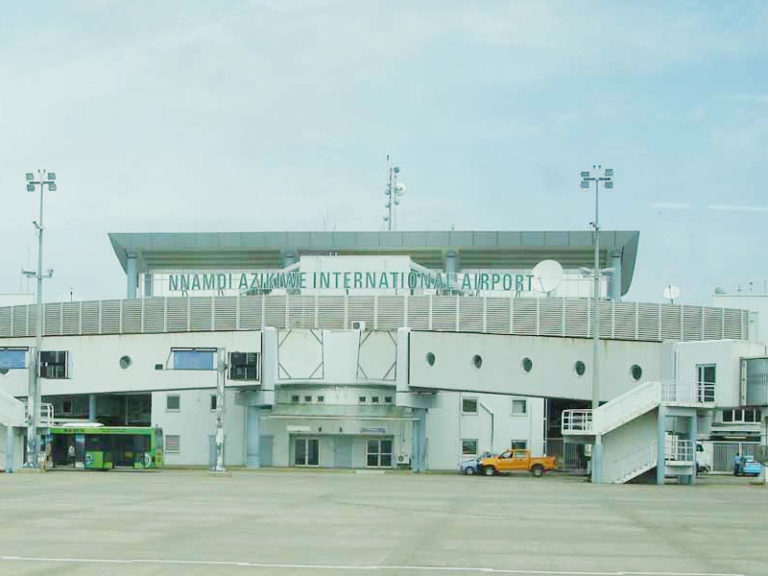
Upon arriving at the Nnamdi Azikiwe International Airport (NAIA) – also referred to as Abuja airport –  in the Federal Capital Territory (FCT), she requested a ride on the popular e-hailing app Bolt, and the trip was estimated to cost N4,600. However, she was surprised when she learnt from the driver that her fee was N8,000.

“He told me that getting to Garki would cost me N8,000. I’d never heard of such a thing before that time. I called my cousin whom I was visiting with, and she said that was the new style and I should partner with any other passenger at the airport going into town so we could share the bill,” she said.

Odelade was not comfortable sharing a ride with a stranger, and although she did not understand why the trip cost more than the Bolt app requested, she paid.

READ ALSO:
Bolt, Uber, others: E-hailing drivers struggle amid fuel subsidy removal

Bolt, Uber drivers, others suspend planned strike

Garba Bello, a businessman, also suffered the same unsavoury experience in January. Returning from a trip abroad, he used his Bolt app to request a ride to Asokoro a highbrow area of Abuja. The Bolt driver directed him to the car park. Upon locating the driver, he had settled in with his bags in the trunk before he was told that he would pay N7,000 instead of the N4,100 the app charged him.

Bello flared up, querying the driver for allowing him to settle down for the ride before telling him about the price, but the driver pleaded that it was not his fault as the airport authorities no longer allow Bolt to operate at the airport. He added that all drivers now had to use a FAAN app, which charges N7,000 for a trip to town.

“So, why would Bolt connect me with you? As long as Bolt connects me to a driver, I don’t have any business with the driver. I go with what Bolt tells me,” he said to the driver.

At the end of the day, in spite of his protest, Bello was forced to pay N7,000 for the trip.

Many travellers at the Abuja airport have found themselves in the same situation as Odelade and Bello.

When FAAN launched its e-hailing application FAANTAXI, in May 2022, the aim was to eliminate touting and outdated cab-hailing methods at international airports.

The app was first introduced at the Abuja airport in the Federal Capital Territory (FCT) with the intention of extending it to other international airports in Nigeria.

The FAAN’s Director of Commercial and Business Development, Sadiku Abdulkadir Rafindadi, said during the launch that the app would improve the safety, security and comfort of travellers.

“The app will enhance seamless passengers’ facilitation, comfort, safety and security of Nigerians using it,” Rafindadi said.

The FAAN Managing Director Rabiu Yadudu also assured drivers that the development was for the better.

“This is a good development. We fear changes naturally. Sometimes, when change occurs, we will be proud of it. I am assuring taxi and commercial drivers that this will actually lead to laudable development,” Yadudu said.

Based on the promises made at the event, Nigerians had high expectations of the app. But one year after the launch, the latest innovation is leaving visitors with sour transport experiences and frustrating commercial drivers who operate at the airport.

Following the launch of the FAANTAXI app, other e-hailing companies were required to register under the platform.

According to FAAN Director, Public Affairs and Consumer Protection Yakubu Funtua, there are at least 13 companies registered under FAANTAXI as of July 2023. By implication, drivers who ply the airport route under various e-hailing platforms had to register under FAANTAXI, as those not registered were denied entry into the airport car park.

While registration is free on Bolt, Uber and many other  e-hailing apps, the sum of N25,000 is demanded from drivers who intend to register with FAANTAXI. However, many drivers confirmed to The ICIR that registration was free under the app in the first few months after it was introduced.

Drivers are also required to remit a service charge of N2,000 daily, in a few cases N1,000, depending on the transport company they work with, before gaining access to the FAAN loading base.

For every trip out of the airport, the sum of N500 is demanded by the airport authorities as a commission, which is usually paid through the driver’s app.

FAAN Taxi app incomplete 

Despite these fees, there are relatively few requests from customers through FAANTAXI, as there is no provision for travellers to book trips online like other e-hailing apps.

A search through Google play store on May 25, 2023, showed that the only FAANTAXI app available online for download allows users the sole option of registering as drivers.

Commercial drivers at the airport confirmed to The ICIR that there is no functioning online application for passengers to connect with drivers.

To book a ride via the platform, therefore, customers have to approach designated FAANTAXI desks at the airport to be manually paired with drivers.

This is contrary to FAAN’s promise of “seamless facilitation” for travellers, who would rather book trips via e-hailing platforms readily available on their phones. Drivers also expressed dissatisfaction with the app.

“If you use that FAANTAXI app, you can be here till night without getting a passenger. We cannot rely on them because they don’t have customers,” a driver, Rahama Abdul, told The ICIR.

The lack of an adequate customer base has also been attributed to other factors, including the difference in prices of Bolt and FAANTAXI rides. 

As of April 2023, Bolt prices for trips out of the airport cost about N4,600, while FAANTAXI charged an average of N8,000 for the same location.

Who bears the brunt?

To make up for these financial investments, commercial drivers who receive requests via Bolt, Uber or other apps bill customers according to FAANTAXI prices, which explains why travellers like Odelade and Bello pay higher prices for trips into town.

This has frustrated many travellers, including a Twitter user, Otoide A., who described the situation as institutionalised extortion in a May 3, 2023 post.

“So I arrived at Abuja airport this morning, and as usual, I ordered a bolt. The driver says I have to meet him at a Bolt car park. Getting there, I see it’s heavily branded FAANTaxi. The driver finds me and says sorry, they won’t allow him to leave using the Bolt app, that he has to book me on their FAANTAXI app.

“Same trip there was about N2,000 more expensive. Lo and behold, at the exit gate of the car park, there are FAANTAXI ‘enforcers’ demanding to see the trip commencing on their app. I thought this institutionalised extortion was only a Lagos thing,” Otoide A. tweeted.

Airport officials are strategically positioned at the exit of the car park to enforce the N500 payment, which is the FAANTAXI commission per trip.

As a result of multiple remittances, most drivers, who get passengers via other apps, proceed to carry out the rides offline to avoid running the same trip on both platforms and paying commission to the two apps.

“If you don’t go offline on Bolt, you’ll be working for nothing. For some of us, the car is not our own. You pay remittance, you pay for fuel, at the end of the day, how much will remain for you? Will you die being a driver? Will you do driving work till your old age?” Abdul asked.

However, frequent offline trips attract sanctions from Bolt and other apps, which sometimes include suspension from the app, a situation that blocks drivers’ access to passengers and can keep them out of work for a while.

“If I cancel three times today, tomorrow I will be blocked. Then there will be no app to work with,” another driver, Eneji Salami, said.

However, with the removal of fuel subsidy in Nigeria, the cost of transportation from the airport surged to about N9,500 per trip on the Bolt app, while FAANTAXI fares were increased to N10,000, leaving a negligible difference between both fares.

During a visit by The ICIR to the airport in July, it was observed that drivers did not charge more than the N9,500 fee demanded by Bolt for the trip.

“It was when the difference was much that drivers chose to go with FAANTAXI price. Now it is almost the same. The N500 is not that much, so there is no need,” Salami told The ICIR.

Ease of doing business

Nigeria is one of the countries ranking poorly on the Ease of Doing Business Index.

Ranking 131st on the Ease of Doing Business (EDB) index out of 190 global economies rated by the World Bank in 2020, several unfavourable factors affect entrepreneurship in Nigeria.

Many business owners and analysts have cited government policies, multiple taxation, among others, as some of the factors increasing the difficulty in conducting business in Nigeria.

For commercial drivers in the Abuja airport, excessive payments associated with driving under the FAANTAXI are frustrating businesses.

“The way they put it now, you must get that FAANTAXI app if you want to pick up a passenger from the airport, even if you are with Bolt or Uber. Meanwhile, it is not necessary, I’m driving with Bolt; I don’t see the reason why I will be paying Bolt a percentage and paying another person a percentage again,” Abdul said.

Another driver, Akinwale Rabiu, described the process as tiring during an interview with The ICIR.

“The pressure is too much. You cannot even enter the loading base without that app. And if they catch you picking passengers outside, they’ll arrest you, and you must pay N25,000. I will be paying N1,000 daily, even after paying N25,000 to register. Meanwhile, under Bolt, I registered for free.

“As you are coming inside before you get any request, you’ll pay the N1000 for the service charge. After that, you give them N500 commission on any request you get. You cannot pick passengers on Bolt price, that is their rule. Even if you decide to use Bolt, the expenses are much; you cannot get anything from it,” Rabiu said.

Who benefits?

The NAIA – Abuja airport – is mostly managed by FAAN.

In 2016, the federal government announced its intention to concession the Abuja and Kano airports for 20 and 30 years, which sparked protests from aviation workers in both states.

The concession was aimed at inviting private practitioners into the sector for investments and partnerships. In November 2022, the government declared Corporacìon America Airports Consortium as the preferred bidder for the NAIA, and the process was approved in May 2023.

The Consortium consists of Corporacìon America Airports (CAAP) and Mota Engil Group, a company with partners in Nigeria.

However, aviation workers kicked against the concession, accusing the federal government of not being transparent enough with the process.

In an interview with The ICIR, Secretary-General of the National Union of Air Transport Employees (NUATE), Ocheme Abah, said the lack of transparency makes it difficult to determine what part of the airport is still under the control of FAAN.

“What we are told is that the concession is supposed to apply only to the terminal. But part of why we are telling you that it is not transparent is that, at this moment, nobody knows exactly what sections of the airport have been concessioned. Nobody can tell you specifically now what has been concessioned,” Abah said.

The Nigerian Senate also ordered a probe into the concession in July 2023, saying the process was shrouded in secrecy, which was not in public interest.

However, payments on the FAANTAXI app are still being made directly into the FAAN account through the app as of the time of filing this report.

“You pay them through the app. If you want to drive out of the airport, you will use the FAANTAXI app to send the money directly to FAAN. If you pay with the app, it goes direct to the airport account. They don’t collect cash,” Rabiu told The ICIR.

However, on July 17, 2023, The ICIR observed as a driver made payment manually, remitting N700 instead of the usual N500.

“The FAANTAXI app is down. They are using the opportunity to make an extra N200 from us,” the driver said.

Customers were unable to book rides via the FAANTAXI desk due to the problem with the app, and a group of drivers gathered at the stand in what appeared to be a rowdy meeting.

Some drivers confirmed to The ICIR that the glitch being experienced was not an isolated case, as there have been similar occurrences in the past.

But passengers suffered the most from the technical problems with the app, as those without other alternatives had to wait for up to 30 minutes before they could be connected to a driver. 

For many passengers who were used to other e – hailing taxis in the past that they had to wait for only a couple of minutes, the FAANTAXI is terribly inconvenient.

Speaking with The ICIR on some of the concerns raised, FAAN Director, Public Affairs and Consumer Protection, Yakubu Funtua, noted that the challenges with the app will be resolved as it is still in its infant stage.

Funtua said the app is meeting FAAN’s expectations as there were 1,826 drivers registered on the platform.

He also noted that higher prices demanded compared to internationally-owned e-hailing platforms were not a cause for worry to the authorities as they are part of measures to make the NAIA one of the best airports globally.

“The aim is to be among the best Airports in the world,” Funtua said. He noted that by airport records, drivers are required to only pay N500 commission per trip and a one-off fee of N25,000 for registration.

Although he promised to provide clarification on the daily service charge of N1,000 or N2,000 demanded of drivers at the airport daily, Funtua had not disclosed this information at the time of filing this report.

However, some drivers who spoke with The ICIR said the service charge was demanded by the various other companies registered under FAAN apart from Bolt, as Bolt’s service fees were already deducted per trip.

“It is not demanded by FAAN or Bolt, but if you drive under other companies registered with FAAN, then you pay the money to them. Bolt is not supposed to pay because if you are using Bolt, they are charging you the percentage you are supposed to pay on trips already.

“We that are under Bolt pay the N1000/N2000 daily because we sometimes register under other companies who do not take 25 per cent off our trips. So since we register with them, we have to pay that money so that any ride we get first, whether from Bolt or other companies, we take it,” a driver Ezekiel Baiye told The ICIR.

Meanwhile, earlier this month FAAN announced a temporary suspension of the service, which it stated was due to unresolved factional dispute among the car hire operators, affecting airport car hire service operations. However the suspension has been lifted.
CBN battles currency speculators with new guidelines for BDCs

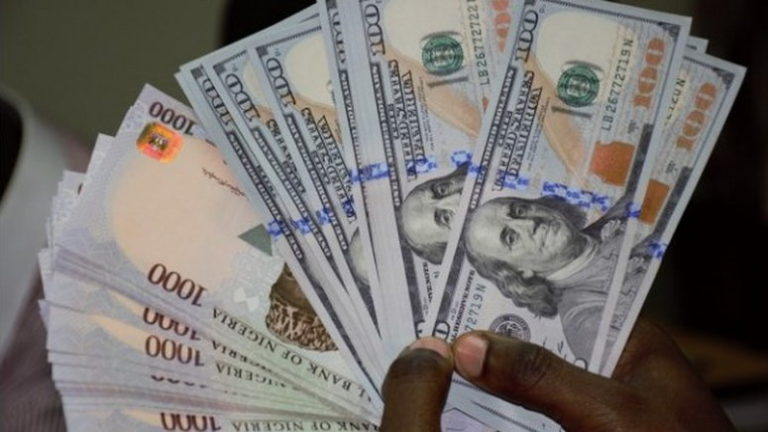
THE Central Bank of Nigeria (CBN) has intensified efforts to battle currency speculators and has brought back Bureau De Change operators (BDCs), with a new guideline to checkmate their operators.

Nigeria is currently facing serious currency problems since floating its currency-Naira against the dollar, causing problems in the economy with a surge on inflation leading to a high cost of living.

Also, there are concerns of floating the Naira against the American dollar, which has led to the dollarisation of the economy and currency speculation. This development, findings have shown, has been creating a wide gap between the official exchange window and the parallel market.

But, the President of the Association of Bureaux De Change Operators of Nigeria (ABCON), Aminu Gwadabe, told The ICIR that Nigeria’s currency problems could be solved if the CBN factor in their colleagues to get involved in the currency business.

“The BDC operators must be involved in the retail business of currency exchange. They should get allocation from the International Oil Companies and others who do dollar business in the country, to solve liquidity problems,” he said.

Recall, the BDCs were, before now, officially halted from foreign exchange business, by former Governor of the CBN, Godwin Emefiele, who cited concerns of ‘terrorism funding’, but the Acting Governor of the apex bank Folasodun Shonubi has brought their activities back with a stiff procedural guideline.

The announcement, made on August 17, 2023, outlines key measures to streamline and improve the BDC operations.

Under the new framework, the spread on buying and selling by BDC operators is set to fall within a permissible range of -2.5 per cent to +2.5 per cent of the Nigerian Foreign Exchange market window’s weighted average rate from the previous day.

This move is expected to provide more stability and transparency to exchange rate fluctuations, ultimately benefiting both BDC operators and the general public.

Another significant alteration is BDC operators’ mandatory submission of periodic financial reports.

These reports, including daily, weekly, monthly, quarterly, and yearly renditions, are to be submitted through the upgraded Financial Institution Forex Rendition System (FIFX), tailored to each operator’s specific requirements. This change aims to enhance oversight and ensure that the BDC sector operates with greater accountability.

The circular further emphasizes that failure to submit accurate returns within the specified timeframe will result in sanctions, potentially leading to the withdrawal of operating licenses.

Even in cases where BDC operators have had no transactions during a given period, they are required to submit nil returns, thereby fostering a culture of compliance and thorough record-keeping.

By implementing these measures, the Central Bank of Nigeria anticipates a more robust and well-regulated BDC segment that aligns with broader efforts to enhance Nigeria’s foreign exchange market efficiency.

Illicit financial flows threatening revenue, economic growth — ICPC boss

0

THE Independent Corrupt Practices and Other Related Offences Commission (ICPC) has described Illicit Financial Flows (IFFs) as one of the main issues threatening Nigeria’s economic growth.

The Chairman of the ICPC, Bolaji Owasanoye, said this in Abuja on Thursday, August 17, during a one-day hybrid sensitisation workshop on the published “Guidelines for Private Sector Response to Illicit Financial Flow (IFF) Vulnerabilities in Nigeria” organised by the Commission.

Owasanoye stated that IFFs are draining Nigeria’s potential revenue and foreign exchange reserves.

According to him, this has resulted in exchange rate depreciation, inflation and an upsurge in the cost of servicing external debts, in addition to negatively impacting the cost of imported goods like petroleum with its attendant extreme effects on the daily livelihood experience of ordinary citizens.

On the way out of the IFFs trap, Owasanoye called for multifarious measures to tackle the threat in all its forms and to improve Nigeria’s quest for domestic revenue increase relative to the size of her economy.

He assured that the Commission would continue focusing on practical measures to enhance Nigeria’s ability to stem IFFs, reduce capital flight and improve the country’s capacity for domestic resource mobilisation.

He added that the ICPC would achieve that by identifying vulnerabilities and other weaknesses in the systems and processes of agencies and institutions within the public and private sectors and advising reforms to mitigate losses.

Owasanoye explained that the sensitisation workshop was necessitated by the need to get the feedback of the private sector constituency on any possible challenges towards implementing the recommendations in the guidelines.

He added that a similar platform would be created for public officers and other stakeholders to ventilate the Guidelines for Negotiation of Contracts and Agreements.

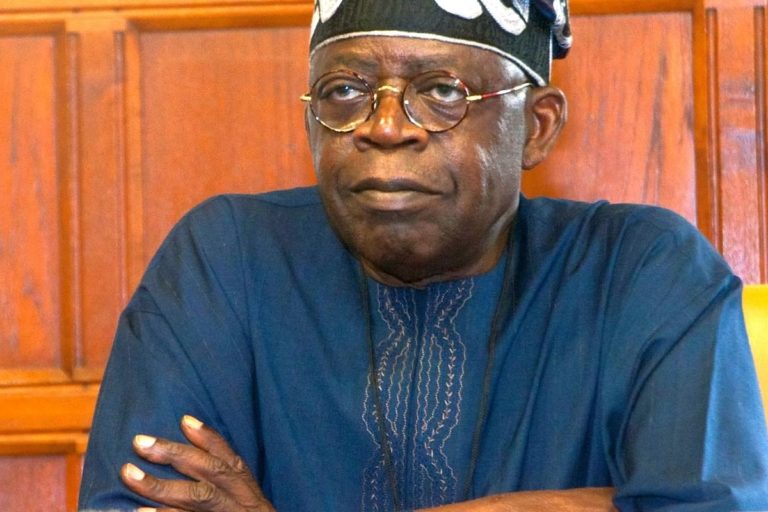
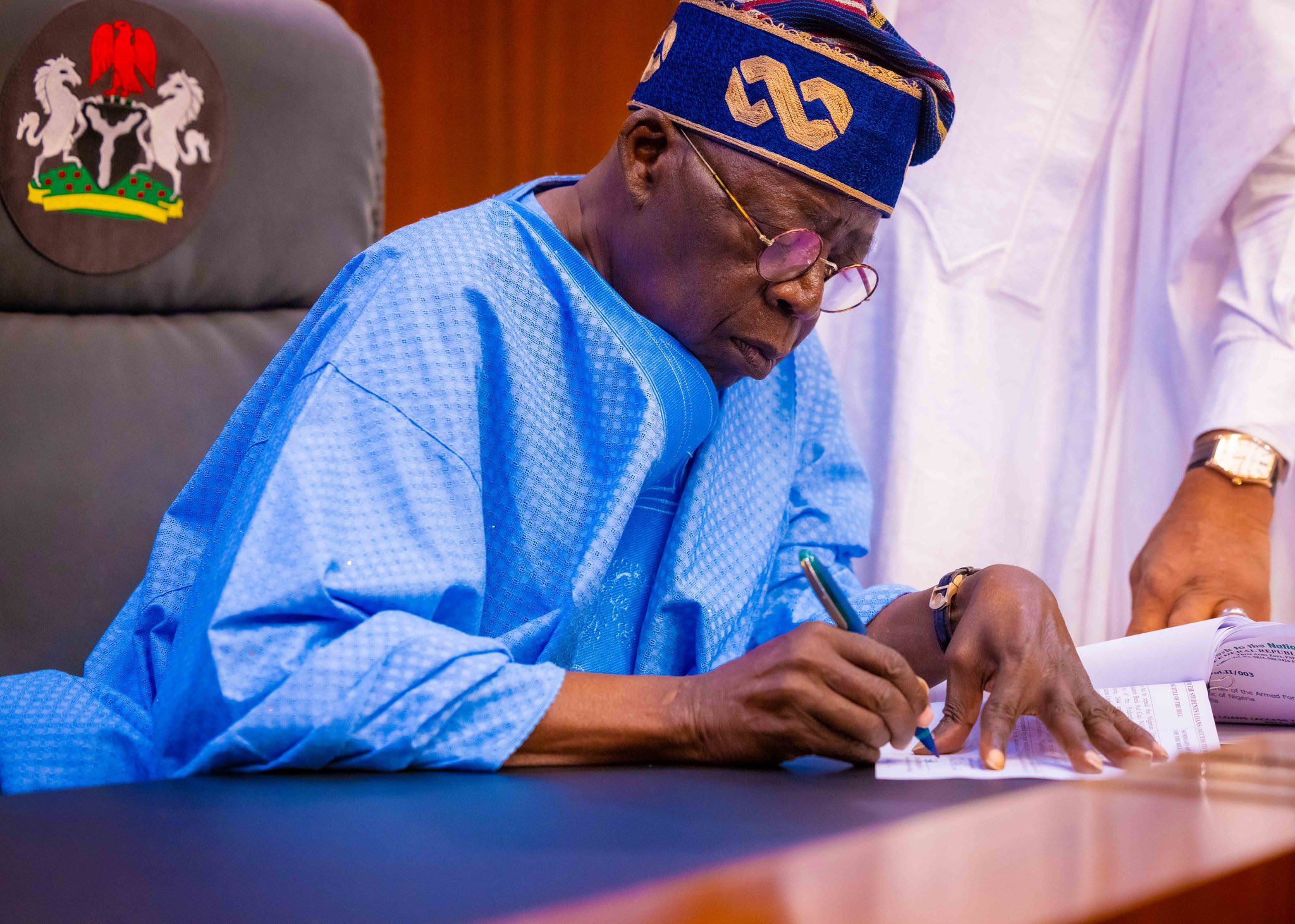
Also speaking at the event, the Special Adviser to the President on Revenue, Zacch Adedeji, who was the keynote Speaker, said President Bola Ahmed Tinubu will ensure that every kobo of the nation’s revenue counts.

Adedeji said President Tinubu believes in fiscal discipline and would ensure judicious utilisation of the country’s revenue and resources.

“The President believes in fiscal discipline, which rests on accurate revenue prediction. If the government can’t count your money, the government can’t allocate it, and if the government can’t allocate it, it can’t manage it. The administration of President Bola Ahmed Tinubu will make every kobo of our revenue count.

“In Nigeria and across the African continent, we continue to suffer various forms of IFFs, including tax evasion and other harmful tax practices, the illegal export of foreign exchange, abusive transfer pricing, trade mispricing, mis-invoicing of services, illegal exploitation and under-invoicing of natural resources, organised crimes, and corruption,” Adedeji said.

He added that checking illicit financial flows would address its negative impact on the global development agenda and governance challenges.

He commended the Chairman of the ICPC, Owasanoye, for the successes recorded by the anti-corruption agency in the fight against IFFs.

Adedeji said ICPC efforts have yielded excellent results and benefits through robust engagements and plugged leakages that enable IFFs by the relevant circulars issued by the Federal Government.

He advised the private sector stakeholders and operators at the sensitisation workshop to key into the government’s efforts to tackle IFFs.

In her welcome remarks, The Programme Director (Africa) of the Centre for International Private Enterprise (CIPE), Lola Adekanye, gave an overview of the published guidelines.

The sensitisation workshop was attended by stakeholders and operators in the private sector across the nation.

The “Guidelines for Private Sector Response to IFF Vulnerabilities in Nigeria” is published by the ICPC. 

The guideline seeks to enable private sector practitioners to better understand the phenomenon of IFFs and guide them on what to look out for and avoid during their business transactions.

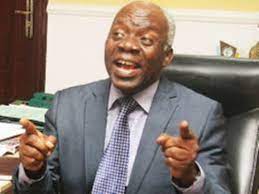
Falana sues CBN over floating of naira

0

HUMAN Rights Lawyer Femi Falana has sued the Central Bank of Nigeria (CBN) over its decision to float the country’s currency, which he described as illegal.

Falana condemned the Apex Bank during an interview with Channels Television on Friday, August 18, saying the CBN Act made it mandatory that exchange rates be fixed.

“There’s no provision for floating the naira. It is illegal. You say, ‘The value of the naira will be determined by market forces.’ That is not there in the law.

“I have had to sue the Central Bank of Nigeria at the Federal High Court because Section 16 of the Central Bank Act has imposed a duty on the Central Bank to fix and determine the rate of the naira vis-à-vis other currency,” Falana said.

He added that some economic challenges in Nigeria resulted from the dollarisation of the economy, as some domestic payments were made in dollars, putting pressure on the naira.

“Section 20(1) of the CBN Act provides that the only legal tender in Nigeria shall be the currency notes issued by the Central Bank: only the naira.

“Section 20 (5) of the Act also provides that anybody who spends any other currency in Nigeria without the approval of the central bank has committed an offence and shall be prosecuted. The penalty is six months’ imprisonment,” he said.

Falana recommended that strengthening the naira and making it the only legal tender in the country would help address the problems with the economy.

Nigeria officially floated the naira after years of having different exchange rates on Wednesday, June 14.

This would allow buyers and sellers of foreign currency in the official FX market to determine rates they find comfortable rather than sticking to a capped price fixed by the CBN.

While the floating has been described as a step in the right direction by economic analysts, there has been no immediate relief for citizens, and the plunge in the value of the naira has led to an increase in cost of imported goods and declining purchasing power.

Nigeria lost $10.7m daily to oil theft from 2009-2020-NEITI

0

THE Nigeria Extractive Industries Transparency Initiative (NEITI) said Nigeria lost over 619.7 million barrels of crude oil valued at $46.16 billion or N16.25 trillion from 2009 to 2020.

This loss is from theft and sabotage, amounting to losing over 140,000 barrels of crude valued at $10.7 million daily.

The Transparency agency, also said that total revenue earnings to the government of $741.48 billion came from the oil and gas sector and N635.3 billion from the solid minerals sector between 1999-2020 and 2006-2020, respectively.

The Executive Secretary of NEITI, Orji Ogbonnaya Orji, said this in Abuja, on August 16 2023, at the end of stakeholders’ roundtable for the final approval of the 2021 Industry Oil, Gas and Solid Minerals Reports before their release to the public.

He said that in the absence of a board, the meeting was to get the nod of other stakeholders after the independent administrators submitted the documents.

The global Extractive Industries Transparency Initiative (EITI) Standard, which provides guidance for NEITI’s operations, requires that the Multi Stakeholders Group (MSG) which oversees the EITI reporting process and implementation in countries, approve the industry reports produced before they are released to the public.

Orji recalled that so far, NEITI has conducted a total of 13 cycles of reconciliatory reports in the oil and gas sector and 11 cycles of reports in the solid minerals sector.

He reiterated that NEITI had reported on subsidy payments from 2005 to 2021 and its huge negative consequences to the nation.

In these reports, he noted that it was revealed that Nigeria had spent $74.39 billion, which translates to N13.7 trillion, with an average of N805.7 billion annually, N67.1 billion monthly or N2.2 billion daily.

“After extensive consultation with the international secretariat, it was agreed that representatives of Companies, Civil Society, Media and Government should be invited to review, deliberate and approve the reports.

“This is not the first time we are adopting this approach, as you will recall that we had a similar experience when approving the 2019 Industry Reports immediately after my assumption of office. We had no Board then.

“The global EITI gave Nigeria waiver and approved that NEITI should convene a multi stakeholders’ roundtable to review and approve the release of the reports,” he stated.

On the reports expected to be officially made public latest by next month, he said the oil, gas and mining industries covered a total of 69 companies and 12 government agencies and one state-owned enterprise, while a total of 1214 companies with three government agencies were covered in the report of the solid minerals sector.

The objectives of the reports, Orji said, were to establish the quantities of minerals produced and utilised in the country.

Besides, he stated that the reports also sought to establish the revenue paid by oil, gas and mining companies and how much of such revenues were actually received into government coffers.

Other areas of focus by NEITI, Orji noted, are to identify investments made by the federation or the federal government in the oil, gas and mining industries, track subsidy payments, company remittances and liabilities.

“The processes followed, especially on the basis for computation and remittances of all revenues payable to the government such as taxes, royalties, and rents are equally of interest to NEITI.

“We hope that after this review and approval process, the independent auditors who are part of this meeting will in collaboration with the NEITI staff, reflect your comments, observations and remarks in the reports before they are finalised and released.

“Our immediate priorities are: to release the 2020-2021 Oil, Gas and Mining Reports and the Fiscal Allocation and Statutory Disbursement reports. This is consequent upon the approval we seek today from you and to conduct the 2022-2023 industry reports in the oil, gas and mining sector,” he stressed.

The stakeholders present were mainly drawn from the government, civil society organisations, extractive industries operators and regulatory agencies.


Questions National Assembly should ask on $3bn NNPCL crude oil loan

0

THE National Assembly will be saving Nigerians from lots of economic distress if it evaluates and properly scrutinises the details of the transactions of the Nigerian National Petroleum Company Limited (NNPCL), $3bn emergency crude repayment loan from Afrexim bank, industry pundits have stated.

On Wednesday, August 16 2023, the NNPCL and Afrexim Bank jointly signed a commitment letter for an emergency $3 billion crude oil repayment loan.

The signing, which took place at the bank’s headquarters in Cairo, Egypt, will provide some immediate disbursement that will enable the NNPCL to support the federal government in its ongoing fiscal and monetary policy reforms aimed at stabilising the exchange rate market.


Read Also:

For many knowledgeable economists, the NNPCL’s poor reforms have pushed the country to a fiscal cliff while pushing Nigeria’s foreign exchange volatility further high.

Available records showed Nigeria’s major foreign exchange earning is from its oil resources, a situation that has made it steadily hinge its budgetary provisions on oil benchmark pricing.

The ICIR has earlier reported how the NNPCL kept shifting the goalpost on getting enlisted in Nigeria’s stock exchange, which could have offered it a platform to source for funds.

“NNPCL is borrowing to give to the federal government. As collateral, It’s is offering her future receipts. In essence, spending tomorrow revenues today,” a financial expert and development economist Kalu Aja said.

“The $3 billion you get today, you won’t get again, but it buys time for reforms,” he said.

Another development economist, Kelvin Emmanuel, believes the evaluation of the term sheet of the transaction by the National Assembly will save Nigeria from many economic problems.

“The National Assembly must review and ask specific questions on the deal. For instance, how many barrels of crude is involved in the swap, what is the duration of the swap, at what price was the swap deal consummated, what happens if crude oil price drops below the forward price, what happens if the crude oil price rises above the strike price, is the stock going out from Nigeria’s export quota?

“Other key questions to be raised by the National Assembly should also include: how will Federation Accounts and Allocation Committee FAAC audit the transaction to ensure NNPCL is transparent?

“If there’s no sovereign guarantee from CBN, what collateral did NNPCL use to secure the swap deal? What happens if there’s a force majeure on daily production volumes and the output is not sufficient to go around after deductions of JV cash calls?

Other key questions also include: Is Afreximbank going to send an irrevocable standing payment order (ISPO)to the NNPCL account with JP Morgan to debit payment from the source, until funds are liquidated?”

Apart from the raised concerns, the deal will cushion the effect of fuel price jump and scarcity of forex, associated with the free float of the naira, in line with President Bola Tinubu’s promise of harmonising various exchange rates.

It would be noted that the naira float had seen the currency plunge from below N500 per dollar on the official exchange windows to a record low of about N900 naira.

Also, Petrol now sells at N617 from the first increment of N540 per litre since May 29, when Tinubu announced that the fuel subsidy was gone.

Giving further insights on the $3 billion loan facility, O’tega Ogra, senior special assistant to the president on Digital/New Media via his social media handle, explained that the deal with Afreximbank would enable NNPC Ltd to defray taxes and loyalties in advance.

Ogra, said it would also provide the government with dollar liquidity to stabilise the naira with limited risk.

He clarified further that the emergency $3 billion crude oil repayment loan was not a crude-for-refined products swap but an upfront cash loan against proceeds from a limited amount of future crude oil production.

He said it would not pose any risk, adding that the exposure for NNPCL is very limited, covering just a fraction of their entitlements.

“Additionally, there are no sovereign guarantees tied to this loan,” he said.

On the benefit of the loan to Nigerians, Ogra said it would assist NNPCL in settling taxes and royalties in advance and also equip the Federal Government with the necessary dollar liquidity to stabilise the Naira, with limited risk.

Ogra said the funds would be released in stages or tranches based on the specific needs and requirements of the Federal Government.

“A strengthened Naira as a result of this initiative will lead to a reduction in fuel costs.

“This means that if the Naira appreciates in value, the cost of fuel will drop and further increases will be halted.

“A stronger Naira will result in lower prices from the current level, making subsidies unnecessary. The deregulation policy remains unchanged,”he said.

NCAA intervenes as aviation workers suspend planned strike

0

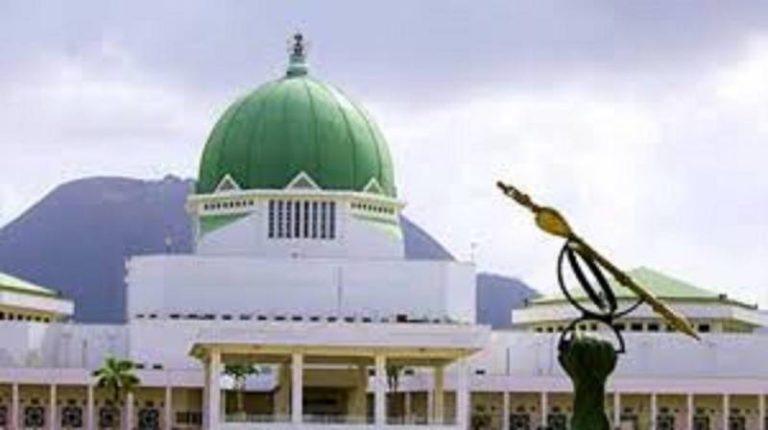
Nigeria Civil Aviation Authority (NCAA) has intervened in a planned strike action by some aviation workers under the National Union of Air Transport Employees (NUATE), leading to its suspension on Wednesday, August 16.

NUATE Secretary-General Ocheme Abah disclosed this in a statement on Wednesday, according to the News Agency of Nigeria (NAN).

Ocheme said the NCAA responded to a letter sent by NUATE informing them of intentions to embark on the strike action, asking for a week to address the demands by the workers.

NUATE had called for indefinite strike action by aviation security workers on Tuesday, August 15, over poor wages.

The call for strike action was contained in the letter to the NCAA, which disclosed that the N30,000 monthly remuneration paid to some workers was insufficient given current economic realities.

“The union asserts that despite attempts to negotiate with management across various aviation logistics companies, no meaningful progress has been made to secure fair compensation for workers. The union asserts that despite attempts to negotiate with management across various aviation logistics companies, no meaningful progress has been made to secure fair compensation for workers.

“The management of all the companies in the business have all failed to secure decent contracts that can avail fair remuneration for their workers. With current salary levels as low as N30,000 a month for graduates, there is no gain saying that AVSEC employment in Nigeria is nothing other than a slave labour camp,” the letter partly read.

In April, the NUATE, along with the Air Transport Services Senior Staff Association of Nigeria (ATSSSAN), National Association of Aircraft Pilots and Engineers (NAAPE) and the Association of Nigerian Aviation Professionals (ANAP) embarked on a 2-day warning strike which left many air travellers stranded.

The strike was also a result of unfavourable working conditions and non-implementation of minimum wage, among others.

The strike occurred after several warnings by the aviation workers to down work tools if conditions of service were not improved.

NSCDC declares battle against manhole cover thieves, vandals in FCT

0

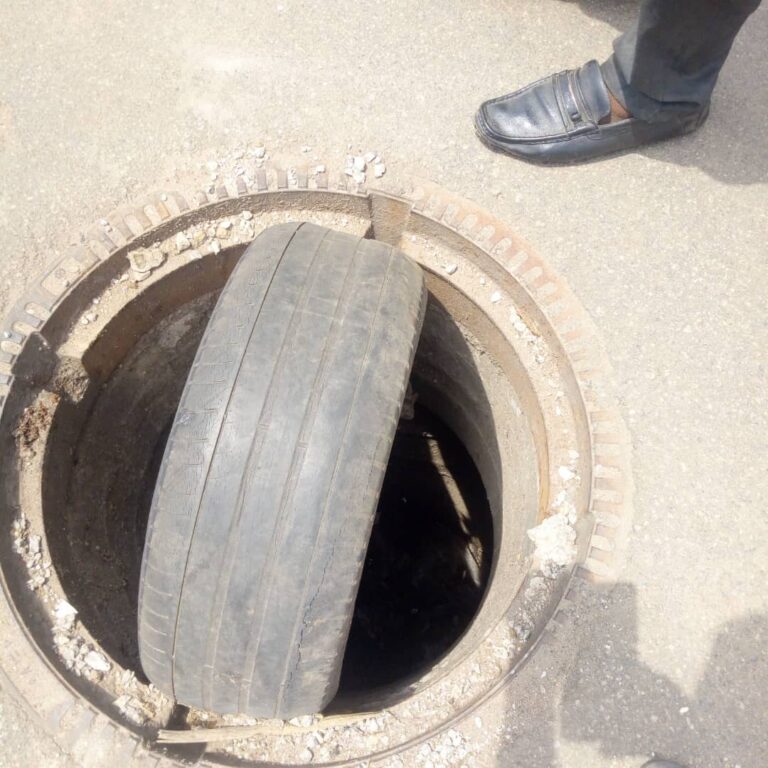
THE Federal Capital Territory (FCT) Command of the Nigeria Security and Civil Defence Corps (NSCDC) on Tuesday, August 15, declared battle against manhole cover thieves and vandals in the city.

Olusola Odumosu, the newly posted Commandant of the FCT Command, made the declaration on Tuesday in Abuja while taking over from Peter Maigari.

Speaking to the command’s staff, Odumosu orders vandals and those stealing manhole covers to leave or face the repercussions of their behaviour.

He also warned staff against arrogant behaviours in their interactions with law-abiding civilians.

“I have declared war on vandals, economic saboteurs, criminals, manhole thieves, the vandals of street and traffic lights, communication and electrical installations. 

“These are all critical assets that contribute to the daily existence of Nigerians, and NSCDC has been at the forefront as the lead agency in this regard; I will ensure that these criminals are put where they belong,” Odumosu stated.

He said he has mapped out strategies, including deploying more men and increasing day and night patrols.

Odumosu additionally pledged to start using visibility policing as a strategy.

“What gave them the room to operate before was the fact that they didn’t see much security presence in a number of places with such facilities. So, we are going to improve on that. 

“It is serious business. These criminals cannot be subjecting government to unnecessary expenditures as a result of their unwholesome activities,” he added.

Odumosu said he will take an audit of all the manholes in Abuja and also focus more on areas like Gwarinpa in a bit to rid the area of vandals.

Odumosu tasked the personnel to remain loyal to the country and the corps.

The ICIR, in a detailed report in May 2022, disclosed that manholes and gully pots are supposed to be an advantage to any urban city. However, in Abuja, they are often a dangerous spot waiting to happen.

The report highlighted how a welder and resident of Abuja, Oluwatosin Adekunle, woke up one Saturday morning anticipating watching his favourite football club play; he never got to watch it as he ended up at the hospital. 

Adekunle, while alighting from a vehicle, fell inside an uncovered manhole around AYA. 

In addition, Juliana Panshak, a visitor to Abuja, narrated her experience on her first visit to Abuja. 

Like Adekunle, her leg fell into an uncovered manhole around Jabi garage when she was alighting from a vehicle, and

she nursed the injury throughout her stay in Abuja. 

In doing the report, The ICIR gathered that some manholes require a ladder to climb into them; this makes them dangerous when left open. 

It was also observed that many manhole covers in the city have been removed or stolen.

The Federal Capital Territory Administration (FCTA) blamed scavengers and vandals for the constant stealing and vandalisation of the manhole covers in the FCT.

The Director of Infrastructure and Facilities in the FCTA, Omoniyi Olaloye, told The ICIR that over 600 manholes were without covers in Abuja.

In her reaction, Josephine Adeh, Police Public Relations Officer (PPRO), FCT Command, told The ICIR that they arrested several perpetrators who stole and vandalised manhole covers.

Federal govt approves N5bn palliative each for state amid severe hardship

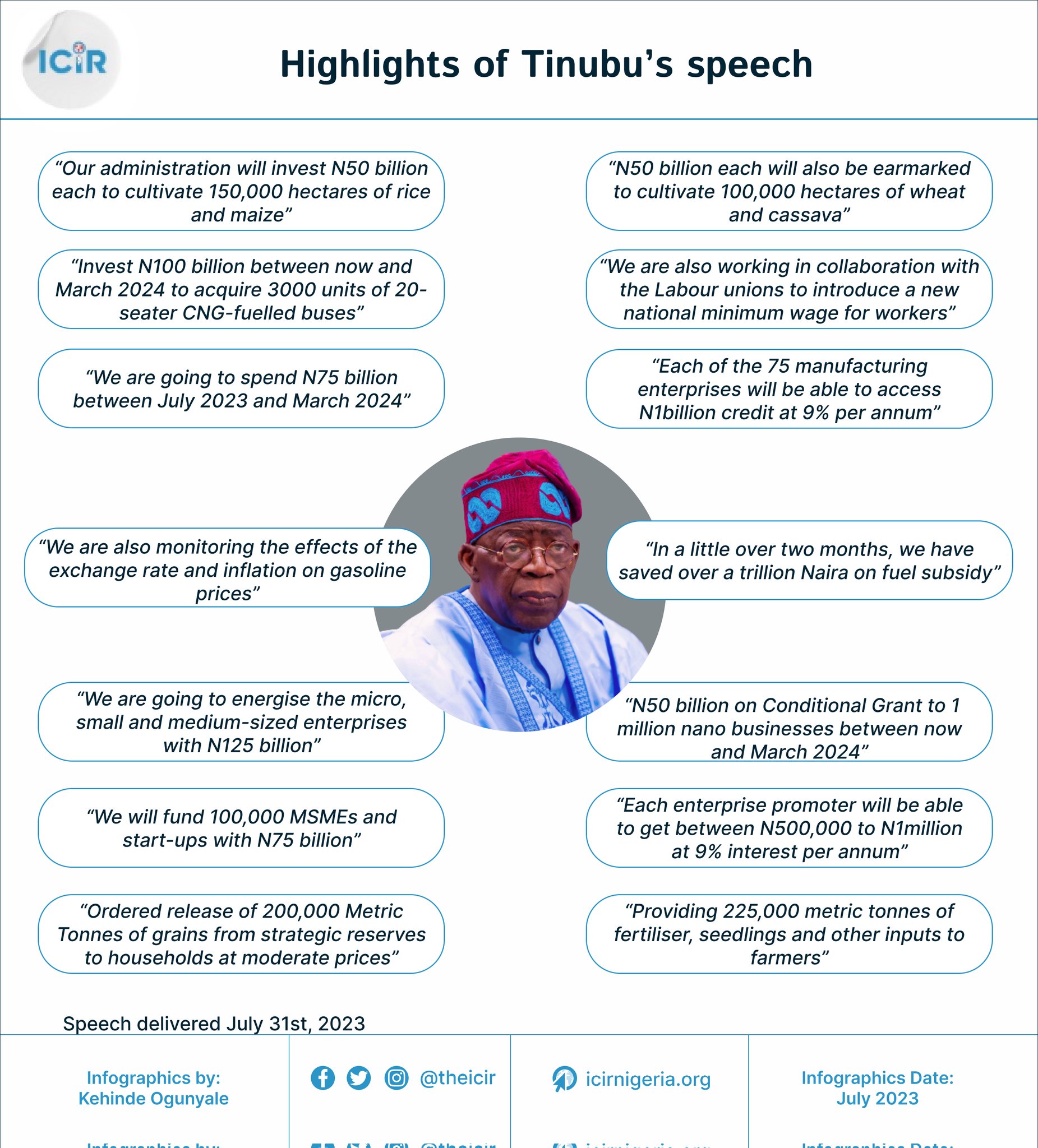
THE Federal government, on Thursday, August 17, approved a sum of N5 billion palliative for each state and the federal capital territory (FCT) to address the impact of the fuel subsidy removal on the masses.

The total figure amounts to N185 billion for the 36 states and the FCT.

The governor of Borno state, Babagana Zulum, announced this to State House correspondents after the National Economic Council (NEC) meeting, presided over by vice president Kashim Shettima.

Zulum said each state, including the federal capital, would get N5 billion for palliatives.

The council comprises governors of the 36 states, the governor of the Central Bank of Nigeria (CBN) and other co-opted government officials.

Arising from the removal of the subsidy, the pump price of fuel has surged to over N600 per litre, causing severe hardship for individual households.

The House of Representatives has on Thursday, July 13, approved President Bola Tinubu’s request to source N500 billion from the N819.5 billion 2022 supplementary budget to fund palliatives to cushion the impact of subsidy removal on Nigerians.

The Senate also had on July 13 approved the President’s request of $800 million World Bank loan as additional funds for the financing of the national social safety net programme (NSIP) set up by the National Assembly.

A concessionary facility, the loan was to expand coverage of shock response and safety net support among the poor and vulnerable Nigerians to meet the cost of their essential needs.

An initial plan by the government to pay N8,000 to 12 million poor households was greeted with criticism, as many people assumed the plan would not be sustainable.

The government then decided that palliatives to cushion the effects of fuel subsidy removal would be implemented using new registers created by states after the council discredited the country’s national social record (NSR) supposedly used by the immediate past administration to implement conditional cash transfer (CCT) programme.

A social intervention programme is expected to jumpstart people from poverty, which makes it a temporary programme, Nigeria’s country director, ActionAid, Ene Obi, told The ICIR.

She, however, said the government needs to come clean on the issue of corruption and be accountable.

“You do not give people fish; you teach them how to fish,” the ActionAid country director said.

Also, there are concerns about the methodology and criteria the governments intend to use to select vulnerable Nigerians to benefit from the fuel subsidy palliatives.

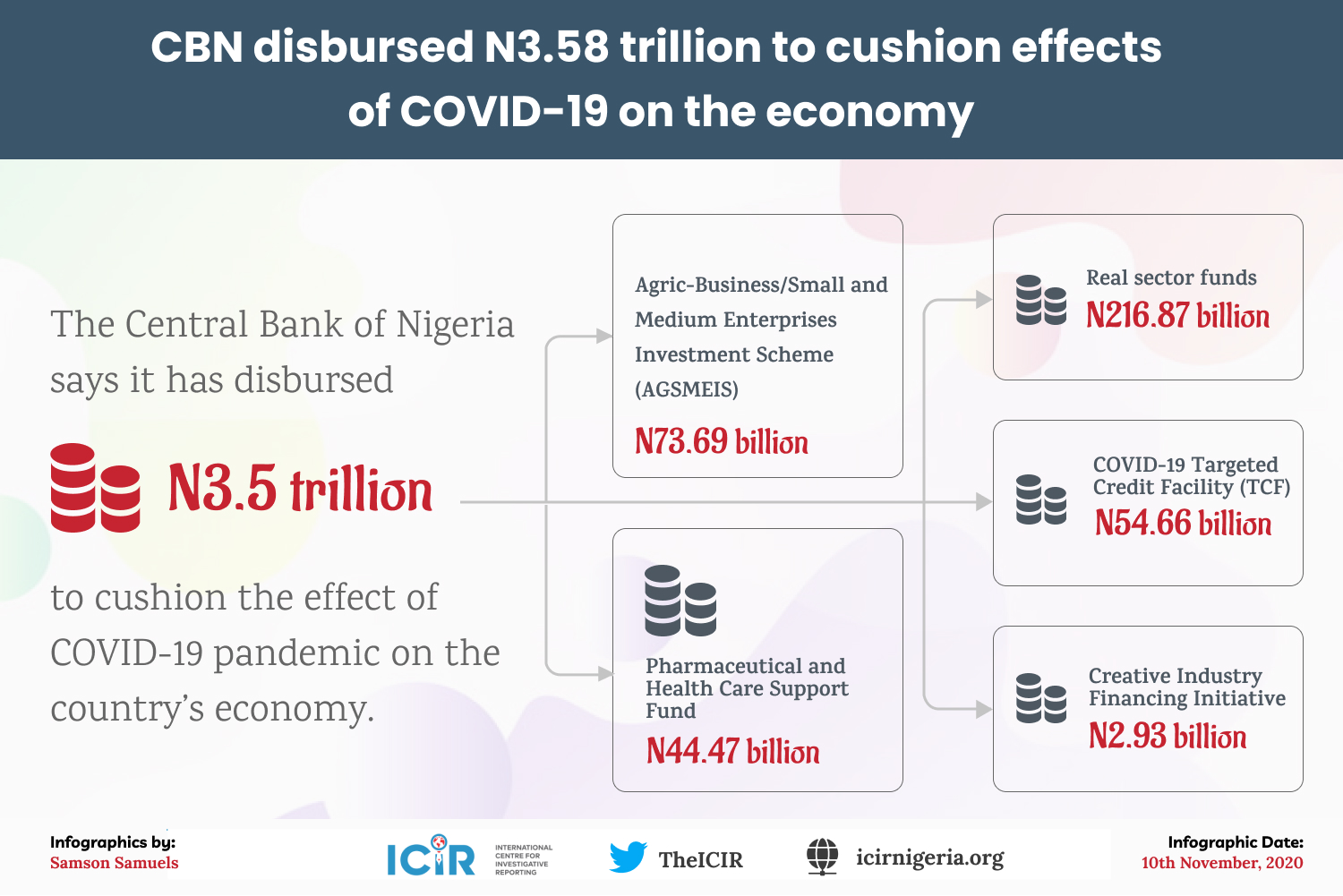
The ICIR reported that the Federal and state governments recorded awful experiences during the Covid-19 pandemic distribution of palliatives to the citizens.

The disgruntled exercise caused a lot of controversies that trailed the entire process of the distribution of the Covid-19 palliatives.

Meanwhile, the National Bureau of Statistics (NBS) report showed that over 133 million Nigerians live in multidimensional poverty.

The figure indicates that 63 per cent of Nigerians are poor due to a lack of access to health, education, and living standards, alongside unemployment and shocks, adding that three out of five Nigerians live in poverty.