Home Blog Page 82

CJID invites applications for investigative journalism workshop, others

THE Centre for Journalism Innovation and Development (CJID), with support from the Norwegian Embassy, invites applications from journalists and newsrooms committed to public-interest journalism to apply for its workshop on investigative journalism, newsroom sustainability, and human rights reporting.

This project aims to bolster the role of the media in fostering a credible democracy in Nigeria.

This call is open to newsrooms operating in South-West, South-East and South-South Nigeria; reporters and editors working with independent local or national media organisations; journalists with demonstrated interest in investigative journalism; governance, elections, or human rights reporting; and applicants committed to public-interest journalism

Applicants are required to submit a 200-word investigative story pitch focused on human rights violations, governance failures, or electoral processes as part of their application.

Organiser says, “While priority will be given to journalists affiliated with established newsrooms, exceptional freelance journalists with strong track records may also be considered”.

The deadline to apply is February 16, 2026. Interested applicants can apply here.

Many Nigerian communities face power outage as NISO announces gas constraints

0

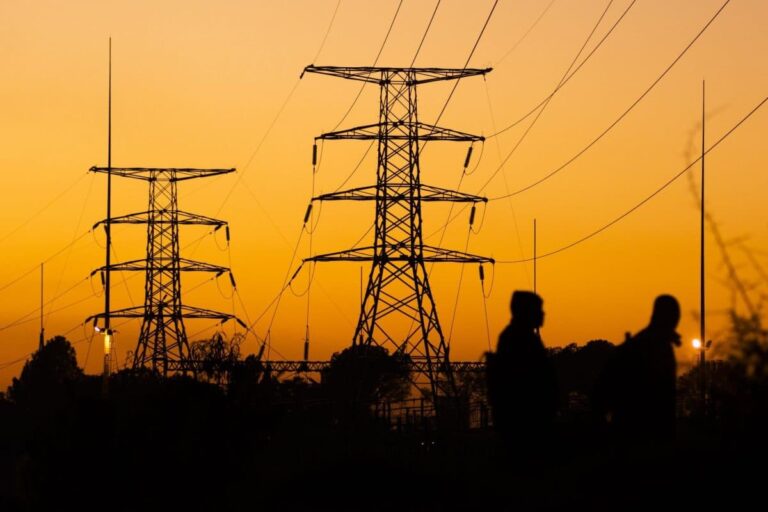
MANY Nigerian communities and homes would witness a drop in grid power supply as the Nigerian Independent System Operator (NISO) announced a drop in gas supply to some major power-generating plants connected to the national grid.

In a statement issued on Thursday, February,12, NISO said the development followed a scheduled maintenance shutdown of a major gas supply facility from 12 to 15 February 2026.

Power stations to be affected include: Egbin, Azura, Sapele, and Transcorp Power Plants, while NDPHC Sapele, Olorunsogo, and Omotosho Power Plants may experience indirect constraints due to network-wide gas balancing effects.

NISO assured all stakeholders and electricity customers that every action taken during the period would be strictly guided by established operational procedures, grid security requirements, and reliability standards.

It disclosed further that the gas supply was expected to be restored on February 16.

The ICIR reports that there has been repeated collapse of the national grid in recent months, with many cities and homes thrown into darkness nationwide.

Earlier today, reports indicate that the Presidential Villa housing the president, his vice and other top officials, would disconnect from the national grid.

The Federal Government has been struggling with liquidity challenges in the power sector, with huge reliance on World Bank and other donor-funded interventions.

The Federal Government has also signaled that it would stop subsidy intervention and has shared the outstanding with states, banking on the Electricity Act,2023.

Last month, the Nigerian government issued a N501 billion bond to offset the first tranche of over N4 trillion owed by power generation companies.

This has raised questions about the government’s reliance on bonds to sort out outstanding debts in the power sector, despite the privatisation of the sector in November 2013.

“Gas pricing is still a challenge in the power sector. We have opportunities in gas, but we must deal with some local issues so that we can maximise our opportunities with our gas resources, “Energy sector analyst, Ayodele Oni, said.


El-Rufai couldn’t honour EFCC invitation since December because he was abroad – Counsel

0

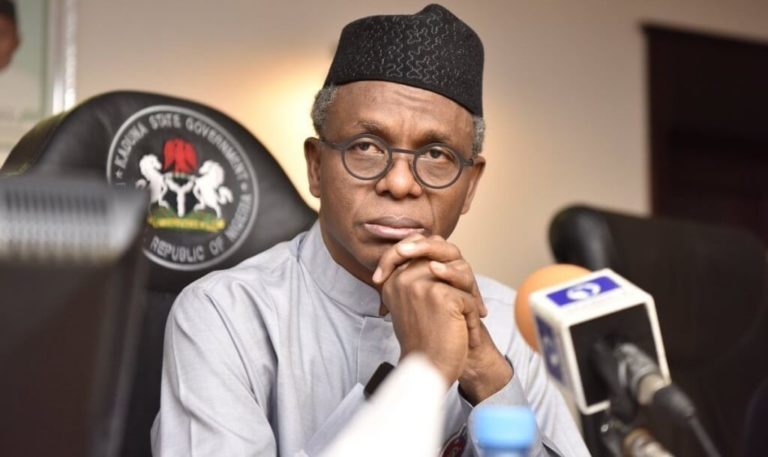
COUNSEL to former Kaduna State governor, Nasir El-Rufai, on Thursday explained why his client did not immediately respond to an invitation issued by the Economic and Financial Crimes Commission (EFCC) in December 2025, stating that the letter was delivered while he was outside Nigeria.

In a statement he issued after failed attempt by security operatives to arrest El-Rufai while arriving in Nigeria from Egypt, at the Nnamdi Azikiwe International Airport, Abuja, the lawyer, Ubong Esop Akpan, said the invitation was served at El-Rufai’s residence when he was already abroad, making instant compliance impossible.

He said the legal team subsequently notified the anti-graft agency of the situation and assured that the former governor would appear voluntarily upon his return.

According to the statement, the EFCC was formally informed that El-Rufai would report to its office by 10 a.m. on Monday, February 16.

The lawyer argued that attempting to arrest his client before that date amounted to disregard for due process and procedural fairness.

Akpan also condemned security operatives for attempting to arrest the former governor at the airport without presenting a warrant or formal invitation, adding that his international passport was seized during the encounter.

He maintained that the action violated constitutional guarantees relating to personal liberty, fair hearing, dignity, freedom of movement and property, and demanded the immediate return of the passport alongside a halt to any unlawful detention attempts.

“This premeditated interception at the airport exemplifies lawlessness and an abuse of state power. This is not merely a travesty but a direct regression into anti-democracy, eroding the hard-won gains of civilian governance and threatening the rule of law.

“We reiterate our demand for the immediate and unconditional cessation of all unlawful efforts to detain Malam El-Rufai, the immediate return of his stolen passport, and a formal apology for this egregious infringement on his dignity and rights. Legal action will be pursued against all persons and agencies responsible for this unconstitutional conduct to uphold accountability and deter future abuses,” the statement added.

The lawyer quoted many sections of the Nigerian constitution, which he said the security operatives violated in their attempt to pick up his client.

Backstory

El-Rufai’s media aide, Muyiwa Adekeye, had said some security agents tried to arrest the former governor shortly after he landed in Nigeria but failed to present any official documentation.

Videos circulating online also showed a brief confrontation with men in green jackets, while El-Rufai insisted that proper legal procedure must be followed. Supporters were later seen escorting him away from the scene.

No Nigerian security agency has publicly claimed responsibility for the attempted arrest.

The ICIR reports that the development followed El-Rufai’s recent claim that the All Progressives Congress (APC)-led Federal Government might move against him.

Speaking in a BBC Hausa interview on Wednesday, the opposition African Democratic Congress (ADC) chieftain said several of his associates had already been arrested, suggesting he could be targeted next.

“Four people we worked with in Kaduna have been arrested; so, it’s only a matter of time before they come for me too,” El-Rufai said.

The ICIR reports that his comments followed the arrest and ongoing prosecution of some bigwigs under the late former President Muhammadu Buhari’s administration, including the former Governor of Central Bank of Nigeria, Godwin Emefiele; former Minister of Labour, Chris Ngige; and former Attorney-General of the Federation, Abubakar Malami, who are facing criminal allegations from the EFCC including abuse of office, money laundering, and terrorism financing.

Malami has denied the accusations, describing them as a political witch-hunt after leaving the APC for the ADC.

As of press time, no Nigerian security agency has issued an official statement confirming an attempt to arrest El-Rufai.

The ICIR reports that Kaduna State Government, led by Uba Sani, had accused its predecessor, under El-Rufai, of gross corruption.

Besides, El-Rufai, one of the northern APC governors who fought to ensure President Bola Tinubu’s emergence as the APC presidential candidate in the 2023 poll, has fallen out with the president, after his nomination as a cabinet member ended in a fiasco.

He has since been a fierce critic of the Tinubu’s government, vowing to ensure his defeat when he seeks re-election in 2027.

Security agents attempt to arrest El-Rufai at Abuja Airport, seize his passport – aide

0

SECURITY operatives on Thursday, February 12, attempted to arrest former Kaduna State governor, Nasir El-Rufai, upon his arrival in Nigeria from Cairo, his media aide, Muyiwa Adekeye, said.

Adekeye stated that El-Rufai refused to accompany the operatives because they did not present any formal invitation or warrant, adding that the officials seized his international passport from an aide during the encounter.

”Security agents today attempted to arrest Malam Nasir @elrufai as he arrived on a flight from Cairo. Malam El- Rufai declined to follow them without a formal invitation. They however snatched his international passport from an aide,” he wrote.

Viral videos circulating online showed a brief scuffle involving men wearing green jackets, while El-Rufai was heard insisting that proper procedure must be followed before he could comply with any request.

Other clips showed supporters surrounding him and escorting him away from the area.

It was unclear whether the operatives were from the state of State Services (SSS), the Economic and Financial Crimes Commission (EFCC), or a related security agency. But The ICIR saw some men in green jackets having an altercation with the former governor.

Rising political tension

The development came a day after El-Rufai alleged that the All Progressives Congress (APC)-led Federal Government might move to arrest him.

Speaking during a BBC Hausa interview on Wednesday, the former governor, now a prominent figure in the opposition African Democratic Congress (ADC), claimed that political pressure was being applied on some politicians to either defect to the ruling APC or remain within it.

He said although he had not been detained, several of his associates had been arrested in recent days.

“Four people we worked with in Kaduna have been arrested; so it’s only a matter of time before they come for me too,” El-Rufai said.

The ICIR reports that his comments followed the arrest and ongoing prosecution of some bigwigs under the late former President Muhammadu Buhari’s administration, including the former Governor of Central Bank of Nigeria, Godwin Emefiele; former Minister of Labour, Chris Ngige; and former Attorney-General of the Federation, Abubakar Malami, who are facing criminal allegations from the EFCC including abuse of office, money laundering, and terrorism financing.

Malami has denied the accusations, describing them as a political witch-hunt after leaving the APC for the ADC.

As of press time, no Nigerian security agency has issued an official statement confirming an attempt to arrest El-Rufai.

The ICIR reports that Kaduna State Government, led by Uba Sani, had accused its predecessor, under El-Rufai, of gross corruption.

Besides, El-Rufai, one of the northern APC governors who fought to ensure President Bola Tinubu’s emergence as the APC presidential candidate in the 2023 poll, has fallen out with the president, after his nomination as a cabinet member ended in a fiasco.

He has since been a fierce critic of the Tinubu’s government, vowing to ensure his defeat when he seeks re-election in 2027.


FRSC sacks 43 officers over misconduct

0

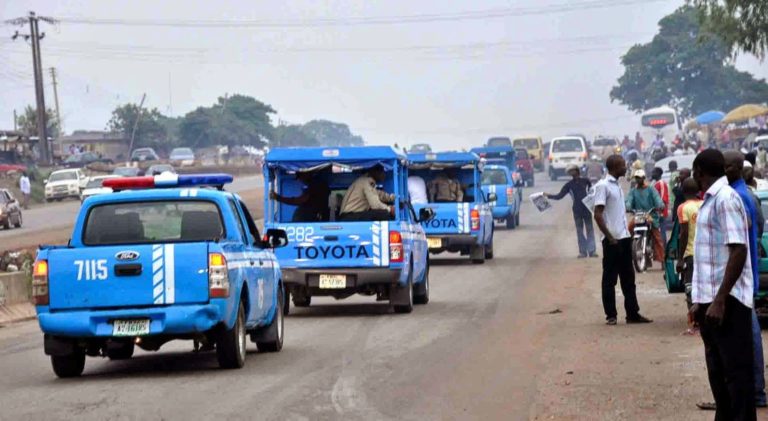
THE FEDERAL Road Safety Corps (FRSC) has dismissed 43 of its personnel over offences linked to desertion, inappropriate conduct and patrol-related violations.

The decision was announced in a statement signed by the Corps Marshal, Shehu Mohammed, and issued on Thursday, February 12, in Abuja by the Corps Public Education Officer, Olusegun Ogungbemide.

According to the statement, 31 officers were dismissed for abandoning their duty posts, five were disengaged for scandalous behaviour, while seven were sacked over misconduct during patrol operations.

Mohammed said the action reflected the Corps’ firm position on discipline, noting that the FRSC uniform represented honour, duty and accountability.

“Any officer who chooses to violate the standards of this noble institution will face the full weight of the Corps’ disciplinary machinery,” he said.

The Corps Marshal described the dismissal as a clear signal of the agency’s zero-tolerance approach to indiscipline and ethical breaches.

He stressed that the FRSC operated as a professional paramilitary body guided by strict rules and would not tolerate actions that could weaken public confidence or damage its mandate.

“The management remains resolute in building a professional workforce driven by integrity, discipline, and operational excellence,” he stated.

He explained that desertion was a serious violation of service rules, especially in an organisation responsible for road safety across the country.

“Scandalous behaviour and patrol misconduct directly erode public confidence and contradict the core values of discipline, transparency, and service excellence which the Corps upholds,” Mohammed added.

The FRSC assured Nigerians that it would strengthen internal checks, improve supervision and continue ethical reorientation across all commands nationwide.

“To this end, the Corps wishes to reassure Nigerians that it will continue to intensify internal monitoring, strengthen supervisory frameworks, and promote ethical reorientation across all commands nationwide.”

The Corps also appealed to road users to maintain confidence in its operations and continue supporting its mission of ensuring safer roads across the country.

The ICIR reports that the action came three months after the State Security Service (SSS) sacked 115 of its staff.

It cautioned the public against having any dealings with the dismissed staff on its behalf.

Our special bond with London

3

By Eric Teniola

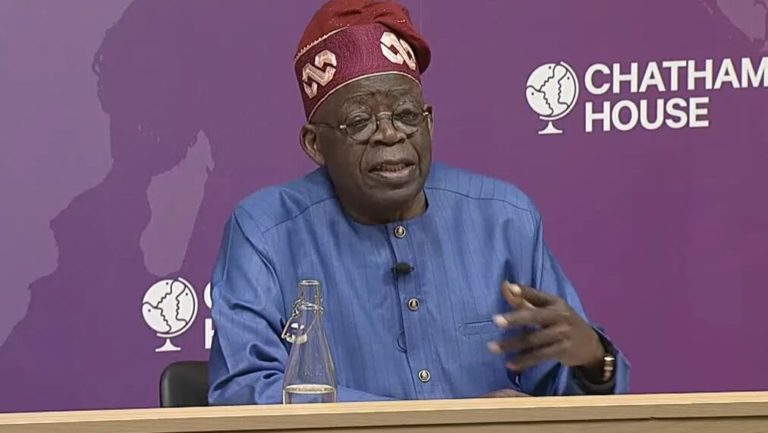
On Wednesday, March 18, 2026, President Bola Tinubu GCFR along with his wife, Remi Tinubu, will be hosted by the British Monarch, King Charles III (77). The state visit will hold at Windsor Castle and not at Buckingham Palace.

Wikipedia informs us that Windsor Castle is a royal residence at Windsor in the English county of Berkshire, about 25 miles (40 km) west of central London. It is strongly associated with the English and the British royal family, and embodies almost a millennium of architectural history.

The original castle was built in the 11th century, after the Norman invasion of England by William the Conqueror. Since the time of Henry I (who reigned 1100–1135), it has been used by the monarch and is the longest-occupied palace in Europe. The castle’s lavish early 19th-century state apartments were described by the art historian Hugh Roberts as “a superb and unrivalled sequence of rooms widely regarded as the finest and most complete expression of later Georgian taste”.

Inside the castle walls is the 15th-century St George’s Chapel, considered by the historian, John Martin Robinson, to be “one of the supreme achievements of English Perpendicular Gothic” design.

Originally designed to project Norman dominance around the outskirts of London and oversee a strategically important part of the River Thames, Windsor Castle was built as a motte-and-bailey, with three wards surrounding a central mound. Gradually replaced with stone fortifications, the castle withstood a prolonged siege during the First Barons’ War at the start of the 13th century.

Henry III commissioned a luxurious royal palace within the castle during the middle of the century, and Edward III went further, rebuilding the palace to make an even grander set of buildings in what would become “the most expensive secular building project of the entire Middle Ages in England”. Edward’s core design lasted through the Tudor period, during which Henry VIII and Elizabeth I made increasing use of the castle as a royal court and centre for diplomatic entertainment.

Whereas Buckingham Palace is the official residence and the administrative headquarters of the monarch of the United Kingdom in London. Located in the City of Westminster, the palace is often at the centre of state occasions and royal hospitality. It has been a focal point for the British people at times of national rejoicing and mourning.

Originally known as Buckingham House, the building at the core of today’s palace was a large townhouse built for the Duke of Buckingham and Normanby in 1703 on a site that had been in private ownership for at least 150 years. It was acquired by George III in 1761 as a private residence for Queen Charlotte and became known as The Queen’s House.

In the early 19th century it was enlarged by the architects John Nash and Edward Blore, who constructed three wings around a central courtyard. Buckingham Palace became the London residence of the British monarch on the accession of Queen Victoria in 1837.

The last major structural additions were made in the late 19th and early 20th centuries, including the East Front, which contains the balcony on which the royal family traditionally appears to greet crowds.

A German bomb destroyed the palace chapel during the Second World War; the King’s Gallery was built on the site and opened to the public in 1962 to exhibit works of art from the Royal Collection.

For reasons best known to the British, the British Monarch could not have invited some past Nigerians leaders for a state visit. For human rights abuse I could not think of the British Monarch inviting General Sani Abacha or General Muhammadu Buhari or General Olusegun Obasanjo for nationalizing the BPE in August 1979, although President Obasanjo hosted the Queen between December 3 to 6, 2003 when she attended the Commonwealth Heads of Government Meeting in Abuja or General Murtala Muhammed for anti-imperialist policies before he was assassinated.

President Tinubu GCFR will become the fifth Nigerian leader to be hosted by the British Monarch.

Interestingly, the previous four leaders were hosted at Buckingham Palace. The first was the then Prime Minister, Sir Abubakar Tafawa Balewa (December 1912 – 15 January 1966), who was hosted by Queen Elizabeth on December 14, 1965. Twenty-nine days later, he was assassinated in Lagos.

On that visit, Balewa was accompanied by Alhaji Nuhu Bamali, Minister of State for Foreign Affairs, while he was both Prime Minister and Foreign Affairs Minister. Alhaji Tafawa Balewa was literally begged then, by the British government to help in solving the Rhodesian crisis.

Alhaji Tafawa Balewa had breakfast with Sir Alec Douglas-Home, was received by the Queen, and had a visit from Arthur Bottomley. He was infuriated by one reporter who wondered whether Nigeria was calling the conference just to spite Ghana in some way: ‘We don’t work like that!’

Before being flown home in an RAF transport command Comet, he said that despite President Julius Nyerere’s final decision to quit, he still did not think Nigeria should break off relations; and in Lagos he told the familiar welcoming crowd that he was almost certain that the Commonwealth conference in Lagos on 10 January, would deal effectively with Rhodesia in a Commonwealth context.

The British Prime Minister, Mr. Harold Wilson, he claimed, had reassured him and heightened his hopes; but he was himself still convinced that economic sanctions alone could not solve the problem. The Daily Times of London called him ‘a knight in shining armour stepping in to confront his dithering counterpart’. As Rhodesia introduced rationing of petrol and diesel fuel, calls were heard for another hasty emergency OAU conference, this time of Heads of State. Alhaji Abubakar demurred that he was considering it, and did later agree to add Nigeria’s name to those willing to meet on January 19; but his hopes rested for the present with Mr. Gooneratne, Arnold Smith’s deputy, who had flown out from London to organize the Commonwealth conference.

On June 12, 1973, Queen Elizabeth (21 April 1926 – 8 September 2022) hosted General Yakubu Gowon and his wife, Victoria at a state visit at the Buckingham Palace. The visit lasted till June 15. The Queen also hosted President Shehu Usman Aliyu Shagari (25 February 1925- 28 December 2018) from March 17 to March 20, 1981.

I covered the visit for THE PUNCH at that time. The hotel I was in Central London at that time housed the National chairman of the NPN, Chief Augustus Meridith Adisa Akinloye (August 19, 1916 – September 18, 2007) and the National Secretary of the party, Alhaji Suleiman Takuma (14 April 1934 – 4 September 2001).

The fear of the two men was that the UPN supporters would organise in London to disrupt the state visit of President Shehu Shagari. In interviews I had with them they were so sure that the UPN supporters would sabotage the visit. Their fears did not come to pass, as most Nigerians in London at that time wore native attires with Nigeria’s flags. The state visit was successful in that cold weather.

On May 9, 1989, Queen Elizabeth hosted General Ibrahim Babangida (85) and his wife, Mariam (November 1, 1948 – December 27, 2009) at the Buckingham Palace. The visit ended on May 12, 1989. Nigeria and South Africa are the only countries so far to be hosted in Buckingham Palace, three times among African nations. Whereas Congo has been hosted once, same with Zimbabwe, Zambia, Tanzania, Sudan, Senegal, Morocco, Malawi, Liberia, Kenya, Ghana, Egypt and Ethiopia.

President Jacob Zuma of South Africa and his wife, Thobeka Mabhija Zuma, were hosted between March 3 to March 5, 2010. President John Kuffour of Ghana and his wife, Theresa Kuffour, were hosted between March 13 to 15, 2007. President Thabo Mbeki and his wife, Zanele Dlamini Mbeki were hosted between June 12 and 15, 2001. President Nelson Mandela of South Africa was hosted between July 9 to 12, 1996. President Robert Mugabe of Zimbabwe was hosted between May 17 to 20, 1994. President Abdou Diouf of Senegal and his wife, Elizabeth were hosted between November 8 to 11, 1988. King Hassan of Morocco was hosted between July 14 to 17, 1987.

President Hastings Kamuzu Banda was hosted between April 16 to 19, 1985 President Kenneth Kaunda of Zambia and his wife, Betty, were hosted March 22 to 25, 1985. President Daniel Arap Moi of Kenya was hosted between June 12 to 15, 1979. President Julius Nyerere of Tanzania was hosted between November 18 to 21, 1975. President Mobutu Sese Seko of Congo and his wife, Antoinnette, were hosted between December 11 to 14, 1973. President Abboud of Sudan was hosted between May 26 to June 4, 1964. President William Taubman of Liberia and his wife, Antoinette were hosted July 10 to 13, 1962 and Emperor Haile Selassie of Ethiopia October 14 to 16, 1964.

The hosting by King Charles of President Tinubu is no doubt a plus for Nigeria. This country is still a great country in spite of what we have gone through and we are going through now. When President Tinubu was sworn-in on May 29, 2023, the expectation was that Nigeria will be closer to London than any other country. Apart from being our colonial master, we speak the English Language. The British along with the Vatican brought the Christian religion to us. Apart from that, the British/Nigeria relationship had always been very strong.

Over three million Nigerians are presently in the United Kingdom. London was the headquarters of NADECO in the days of General Sani Abacha GCFR (20 September 1943 – 8 June 1998). Even the then Senator Bola Tinubu was living in London during his NADECO years in the same house with my late friend, Dapo Durosinmi-Etti.

But, since being sworn-in, courtesy of Gilbert Chagoury, the President has moved closer to the Elysee Palace in Paris and extended a little bit of friendship to the Arab world. He has played less role on the African continent, sometimes sending his Vice, Alhaji Kashim Shettima Mustapha GCON to attend ceremonies on the continent. Maybe the March 18 visit will change the Presidents’ attitude towards London.

On January 11, 1976 in Addis Ababa at extra ordinary meeting of Organisation of Africa Unity (OAU), General Murtala Mohammed GCFR (8 November 1938 – 13 February 1976) spoke on Africa’s struggle. “Africa has come of age. It is no longer under the orbit of any extra continental power. It should longer take orders from any country, however, powerful. The fortunes of Africa are in our hands to make or mar.

For too long have we been kicked around; for too long have we been treated like adolescents who cannot discern their interest and act accordingly. For too long has it been presumed that the African needs outside “experts” to tell him who are his friends and who are his enemies. The time has come when we should make it clear that we can decide for ourselves; that we know our own interests and how to protect those interests; that we are capable of resolving African problems without presumptuous lesson in ideological dangers, which more often than not have no relevance for us, not for the problem at hand”.

The speech was no doubt volcanic. It was a landmark speech.

I have listened to arguments that Nigeria’s golden period in foreign affairs was during the era of General Murtala Muhammed GCFR, whose 50th assassination wasrecently observed. No doubt, it was a golden period.

I still want to believe that Nigeria’s golden era in foreign affairs was during the years of Alhaji Tafawa Balewa especially in 1965 when Nigeria hosted the Commonwealth conference. He was put on the cover of Time magazine, the American weekly, on December 30, 1960. When he travelled to the United States of American between July 25 to 28 1961, for that electrifying trip, the then US Vice President, Lydon Baines Johnson (27 August 1908- 22 January 1973) personally came to welcome him and his entourage at the airport in Washington. He was the voice of Africa at that time. The pride of the continent.
Alhaji Tafawa Balewa gave us our deserved pride.

We won our independence just five years, yet we were asked to host the Commonwealth conference to solve the Rhodesian issue which we did not create and which Britain itself could not solve.

In terms of accommodation in Lagos, the Prime Minister occupyed a four-bedroom house now opposite Island Club, Onikan, Lagos. The only reputable hotel in Lagos at that time was the Federal Palace Hotel, Victoria Island, Lagos, which was constructed and originally owned by AG Leventis.

The hotel was acquired by the Nigerian government in 1964 and went through a series of managers in the following years. When Nigeria gained its independence from Britain in 1960, it was in the main boardroom of the newly constructed Federal Palace Hotel that Nigeria’s independence declaration was signed. The official celebration of Nigeria’s independence took place in the hotel’s Independence Hall.

In terms of accommodation, we were handicapped, and this created problem, according to late Chief Benjamin Akinnusi Osunshade (27 March 1926- 27 October 2025), the Bobagunwa of Idanre in Ondo state, the then Chief Private Secretary to the Prime Minister. He told me before he died in Isolo, Lagos, the accommodation problem the Federal Government went through in providing accommodation for the Commonwealth leaders and officials. Twenty-two Commonwealth leaders accepted to attend the conference.

The January 1966 Commonwealth Prime Ministers’ Conference focused on the Rhodesian crisis and was chaired by Nigerian Prime Minister Sir Abubakar Tafawa Balewa. Key attendees included British Prime Minister Harold Wilson, Archbishop Makarios of Cyprus, Milton Obote (Uganda), Lee Kuan Yew (Singapore), and Sir Albert Margai (Sierra Leone).
Others included Borg Oliver of Malta, Dr. E. E. Williams(Trinidad & Tobago), Zambia’s Vice-President R.C. Kamanga, Jamaica’s Acting Prime Minister, Malaysia’s Deputy Prime Minister and Commonwealth Secretariat’s Secretary-General, Arnold Smith.

This was the first Commonwealth conference held outside London.

The conference opened on 11 January, at that time there was fresh communal crisis in Ilesha, Osun state. Alhaji Sir Abubakar Tafawa Balewa and Mr. Harold Wilson led the delegates into the ballroom, accompanied by Mr. Arthur Bottomley. After two minutes’ silence in memory of Mr Shastri, the Nigerian Prime Minister welcomed his guests, gathered ‘to discuss a major problem which has not only assumed global proportions, but is threatening to create a division within our cherished commonwealth organization…Although a few friends and colleagues are not at the meeting, everybody nonetheless has one objective, the speedy solution of the Rhodesian crisis’.

Thereafter, he controlled the conference with the unforced dignity of a man in a customary role, rather than as the first African ever to preside over such a gathering’, to quote an onlooker. He was followed by Mr. Lester Pearson, Canada being the oldest dominion of the commonwealth, whom many regarded as an obvious mediator, and Mr. Lee Kuan Yew speaking for the newest member state. Sir Abubakar then delivered a keynote speech, pointing out in a review of the present situation that their task was not only to find a way of crushing the illegal regime but also more emphatically to consider the right long-term solution for the future of the territory.

Although the desire of the African people, the Commonwealth and the United Nations was to ensure an African majority rule in Southern Rhodesia, it would be unwise to neglect the fear of the white majority in the country; the earlier the racists were made to know about their future, the sooner would the rebellion end.

After Smith’s defeat, the release of all nationalists and a conference, the 1961 constitution should be abrogated and give way to a period of direct rule under which the police, armed forces, judiciary and civil service should to a large measure reverts to control by the British, with appointed executive and legislative councils, of all races, presided over by the governor. His present skills and his vision of a Rhodesian future had both been acquired in the old council of ministers’ chamber, observing two Scots governors.

Wilson stated Britain’s position in a massive review of his policy to bring down the Smith regime. He insisted that the problem was Britain’s responsibility alone, not a matter for other organisations, that economic sanctions had already cut Rhodesia’s inward and outward trade by half, that the oil embargo was providing more successful than he could have hoped, and that given time sanctions would work. Further than that he would not go, and sat down to hear the same predictable messages of condemnation in the restricted session confined to the leaders (who were supported by three colleagues each from Britain, Nigeria and Zambia, and two each from the others), uttered from Asia, the Carribean and Cyprus. The Africans in particular, he later wrote, sought one after another ‘to prove how much more African each was than his neighbours’.

Zambia thought there would be no resistance. Canada suggested that if sanctions failed, the UN should be invited to step in and impose mandatory world sanctions. Wilson felt that Britain was again, as before the United Nation a month before, ‘in the dock’, with the difference that most of the Lagos prosecution were their countries’ principals, rather than remote plenipotentiaries voicing other persons’ opinions. He was impressed, if not encouraged, by the sophisticated quality of a 40-minute extempore speech by Lee Kuan Yew, equal in substance to any world leader’s that he had heard and displaying an awareness of ‘what the modern world was really about’.

At the end of the conference, the Prime Ministers decided on the following measures of commonwealth action: To appoint two continuing committee, composed of representatives of all commonwealth countries, to meet with the Secretary-General in London. The first would review regularly the effect of sanctions, and also the special needs which might from time to time arise in honouring the Commonwealth’s undertaking to come to the support of Zambia as required; the second would co-ordinate a special commonwealth programme of assistance in training Rhodesians Africans as set out below.

The sanctions committee would recommend the reconvening of the Prime Ministers’ meeting when they judged that this was necessary. In any case, the Prime Ministers agreed to meet again in July 1966 if the rebellion had not been ended before then. The sanctions committee would advise the Prime Ministers if it considered that action by the United Nations was called for.

Some Prime Ministers indicated that they reserved the right, if need arose, to propose mandatory United Nations action under articles 41 or 42 of chapter VII of the charter.
Twenty-four hours after the Conference ended in Lagos, Alhaji Tafawa Balewa was assassinated. Rhodesia, now Zimbabwe became independent on April 18, 1980.
I hate to think that the best that has happened to my country, in foreign affairs, occured only in the past.

Eric Teniola, former Editor of Punch Newspaper and a former director at the Presidency lives in Lagos.

Reactions trail US move to blacklist Kwankwaso, others

0

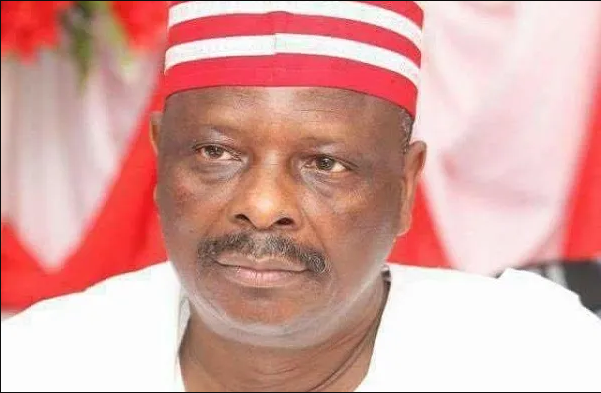
REACTIONS have continued to trail a proposal by United States (US) lawmakers to impose sanctions, including a visa ban and asset freeze, on former Kano State governor and national leader of the New Nigeria Peoples Party (NNPP), Rabiu Musa Kwankwaso, and others, over alleged severe religious freedom violations.

On Tuesday, February 10, some US lawmakers introduced a bill at the country’s House of Representatives seeking to compel the Secretary of State to submit a comprehensive report on efforts to address religious persecution and mass atrocities in Nigeria.

The legislation, titled “Nigeria Religious Freedom and Accountability Act of 2026, HR 7457,” was proposed by congressmen Chris Smith, Riley Moore, Brian Mast, Mario Diaz-Balart, and Bill Huizenga.

The bill urged the US government to deploy possible  diplomatic, and security tools to pressure the government of Nigeria to end impunity for perpetrators of mass atrocities and religious persecution.

It further directed the Department of State and the Department of the Treasury to impose targeted sanctions, including visa bans and asset freezes under the Global Magnitsky Human Rights Accountability Act, on individuals or entities responsible for severe religious freedom violations, listing Fulani-ethnic nomad militias, Kwankwaso, the Miyetti Allah Cattle Breeders Association of Nigeria (MACBAN), and Miyetti Allah Kautal Hore.

NNPP rejects allegations

The NNPP has, however, rejected the allegations against Kwankwaso, describing the move as politically motivated and unfair.

In a statement on Wednesday, February 11, the party’s National Publicity Secretary, Ladipo Johnson, dismissed any suggestion that the former governor was responsible for religious freedom violations.

Johnson also recalled that the former governor had opposed US President Donald Trump’s designation of Nigeria as a Country of Particular Concern, warning against oversimplifying Nigeria’s complex security challenges.

The party questioned why Kwankwaso was singled out over the implementation of Sharia law in Kano when several northern states adopted similar legal frameworks.

It further argued that the former governor maintained cordial relationships with Christian leaders, curtailed Boko Haram activities in Kano during his tenure, supported a Christian presidential candidate in the past and selected a Christian running mate in the 2023 election.

“Months before the latest development, Kwankwaso had openly reacted when President Donald Trump redesignated Nigeria as a Country of Particular Concern over alleged religious persecution. In a statement posted on his X handle at the time, Senator Kwankwaso cautioned against what he described as oversimplified characterisations of Nigeria’s internal challenges. Kwankwaso stated that it was important to emphasise that our country is a sovereign nation whose people face different threats from outlaws across the country.

”However in a post shared on X , Rep Moore of the US Congress stated to Kwankwaso that, “Governor do you care to comment on your own complicity in the death of Christians? You instituted sharia law. You signed the law that makes so-called blasphemy punishable by death.” This was because Kano State, under Kwankwaso’s leadership, brought the Islamic legal code into full effect, joining other northern Nigerian states such as Zamfara, Sokoto, Katsina, Yobe, Jigawa, and Borno,” the statement added.

The NNPP, therefore, called on US lawmakers to conduct a fair and thorough review of Kwankwaso’s record and avoid actions capable of damaging his reputation.

Nigerians reacts

Meanwhile, many Nigerians and commentators have expressed their feelings over the move to blacklist the NNPP leader. Some commentators described the move as unjust and urged fairness regardless of political differences, while others suggested the international attention could inadvertently boost Kwankwaso’s political profile and strengthen his support base, particularly in northern Nigeria.

Public commentator JJ Omojuwa wrote through his X handle, “Irrespective of one’s politics, there won’t be a better time to stand with Senator Rabiu Kwankwaso.

“I wouldn’t consider myself a full human being with all the dignity and agency God has given each one of us, if just on account of certain prospective repercussions, I will watch a man like him be unfairly targeted, just because he took a stand for his county. Especially when such a stand was in no way a threat to another country.

“There is absolutely no reason for his name to appear in that document. I do hope that it will be publicly debated and justice will prevail.”

Former presidential aide Bashir Ahmad also stated: “I am not politically aligned with Senator Rabiu Kwankwaso. He is the leader of the NNPP, while I am a committed member of the APC, but political differences, however, should never make us abandon fairness or justice. It is therefore important to state clearly that unfairly linking him to the killings of Christians in this country is wrong and unjust. In recent history, there has been no terrorist incident specifically targeting Christians in his State, Kano.

“We may disagree politically, but on matters of truth and justice, we must be consistent. So, on this issue, we stand with Sen. Kwankwaso.”

Another X user, Ibrahim Modibbo Sanusi, noted that the controversy could boost Kwankwaso’s political visibility, saying “Kwankwaso is currently enjoying free PR, courtesy of USA and the APC.”

“The more he is attacked, the more his profile rises. Across the North, his support base is quietly expanding and it’s not small at all especially now that the region has lost PMB as a unifying figure.”

Nigerian student’s death in UK triggers renewed fears over silent health crises abroad

THE death of 37-year-old Nigerian student, Douglas Izevbigie, in the United Kingdom has sent shockwaves through the Nigerian diaspora, rekindling concerns about chronic illnesses, late diagnosis, and access to healthcare among Nigerians living overseas.

This was revealed in a GoFundMe message organised by members of the Nigerian community in the UK to help his family shoulder funeral and related expenses.

“In the middle of his studies last year, he was diagnosed with an aggressive form of leukaemia. He underwent treatment and was frequently in and out of the hospital with complications. Even through it all, he continued trying to keep up with his studies, showing remarkable strength and determination,” the organiser of the appeal, identified as Sephora wrote.

Sephora, who described herself as a colleague of the deceased’s sister, Kate, revealed that Izevbigie died on January 21 at a UK hospital after battling an aggressive form of leukaemia, barely months after arriving in the country to pursue a master’s degree at Sheffield Hallam University.

“Tragically, Douglas passed away unexpectedly on January 21. He was found unwell and unresponsive in his room by his sister and was taken to A&E, but despite urgent medical care, he sadly passed away,” she added.

Sephora noted that the loss was particularly heartbreaking for Kate, who only recently buried their mother in Nigeria.

“This has been a devastating loss for Kate, especially as she has recently also lost her mum in Nigeria. Kate supported Douglas throughout his time in the UK, including helping to fund his travel here and being his main support while he battled illness far from home,” she said.

She explained that because of the high cost of repatriating his remains to Nigeria, the family has opted to bury him in the UK.

“We are raising money to cover Douglas’ funeral expenses here in the UK, as well as any other unexpected costs that may come up during this time. “The family’s plan is to lay him to rest here, as repatriation and funeral costs in Nigeria would be far too expensive,” she added, appealing for donations and support.

Douglas’ death comes days after another Nigerian in the UK, Saburi Adeniji, died following complications from a severe brain stem injury.

Adeniji, a left winger for non-league side Kings Park Rangers Football Club of Sudbury, Great Cornard, Suffolk, had been on life support in intensive care before he passed away on Friday morning.

In a statement, the club said he held on long enough for arrangements to be made for his family to travel to the UK, following earlier public appeals for prayers and financial assistance.

These deaths have added to the list of Nigerians who have died in the diaspora.

The ICIR reported that Chiowa Obeigbe, living in the UK, was reportedly found dead in his Gloucester apartment in late November 2025.  

80 passengers escape death as Arik Air plane makes emergency landing in Benin

0

AN ARIK Air Boeing 737-700 flying from Lagos to Port Harcourt was forced to divert to Benin Airport on Wednesday after the crew reported a loud bang from one of the plane’s engines.

The Nigerian Safety Investigation Bureau (NSIB) later confirmed that the incident caused “significant damage” to the affected engine.

Arik Air’s spokesperson, Adebanjo Ola, said in a statement that the aircraft, registered 5N-MJF, was operating from Murtala Muhammed Airport, Lagos, to Port Harcourt International Airport, Omagwa, Rivers State, when the incident occurred.

He added, “The aircraft was on its descent to Port Harcourt when the operating crew heard a loud bang on the left engine. As a precautionary measure, the crew made a safe diversion to Benin.”

All 80 passengers and crew were evacuated safely upon landing in Benin, with no injuries reported. “There were no injuries to passengers and crew as all 80 passengers on board were safely disembarked. Arrangements have been made to transport the affected passengers to their final destination,” the airline stated.

Apologising for the disruption, Arik Air reassured travelers that safety remained its top priority.

The NSIB’s Director of Public Affairs and Family Assistance, Bimbo Oladeji, confirmed the flight experienced an engine anomaly midair. She explained that unusual indications were detected on one engine, leading to a precautionary shutdown and diversion to the nearest suitable airport.

“In accordance with established safety procedures, the flight crew conducted a precautionary engine shutdown and diverted to the nearest suitable airport, Benin. The aircraft landed without incident, and all passengers and crew disembarked normally. No injuries have been reported,” she stated.

The bureau has initiated a full investigation following international standards under ICAO Annex 13. Preliminary checks at Benin Airport revealed major damage to the engine based on visual inspection.

“A preliminary assessment team is en route to Benin to secure the aircraft, document evidence, interview relevant personnel and witnesses, and recover flight data and cockpit voice recorder information,” NSIB said.

According to the bureau, a preliminary report will be available within 30 days, with the final report released after the investigation is completed.

UPDATED: NAFDAC responds to reports on suspension of sachet alcohol ban enforcement

0

THE Federal Government has directed the National Agency for Food and Drug Administration and Control (NAFDAC) to suspend all enforcement actions linked to the proposed ban on sachet alcohol and 200ml PET bottle alcoholic products.

The government also ordered an immediate halt to the sealing of factories and warehouses over the issue, according to the Punch..

The directive was reportedly disclosed in a statement on Wednesday, February 11, in Abuja by the Special Adviser on Public Affairs to the Secretary to the Government of the Federation (SGF), Terrence Kuanum.

Kuanum said the decision followed a joint intervention by the Office of the SGF and the Office of the National Security Adviser (NSA), which raised concerns over the security implications of continued enforcement in the absence of a fully implemented National Alcohol Policy.

According to the statement, all actions, decisions, or enforcement measures relating to the ongoing sachet alcohol ban are to remain suspended pending final consultations, full implementation of the National Alcohol Policy, and the issuance of a definitive directive.

“Accordingly, all actions, decisions, or enforcement measures relating to the ongoing ban on sachet alcohol are to be suspended pending the final consultations and implementation of the National Alcohol Policy and the issuance of a final directive,” the statement read.

While it noted that the Federal Ministry of Health has signed the policy in line with President Bola Tinubu’s directive, it also insisted that NAFDAC must refrain from enforcement until implementation is completed and further instructions are issued.

The government warned that continued warehouse sealing and what it described as a de facto ban without a harmonised policy framework were already causing economic disruption and creating security risks through their impact on jobs, supply chains, and informal distribution networks nationwide.

Kuanum noted that the directive reinforces an earlier instruction issued by the SGF’s office in December 2025, which had suspended actions related to the proposed ban pending consultations and a final decision.

The federal government said it is reviewing legislative resolutions, public health considerations, economic implications, and broader national interest factors surrounding the issue, adding that the involvement of the National Security Adviser showed the matter has extended beyond regulatory concerns.

Premature enforcement without coordinated policy implementation, it warned, could destabilise communities, worsen unemployment, and trigger security challenges.

Background

The latest directive came amid weeks of tension between NAFDAC and alcohol producers following the agency’s renewed enforcement of a ban on alcoholic drinks packaged in sachets and bottles smaller than 200 millilitres.

NAFDAC had announced in late January that enforcement, supported by the Federal Ministry of Health and Social Welfare, targeted only spirit drinks sold in sachets or sub-200ml containers and did not amount to a shutdown of alcohol-producing companies or a prohibition of alcohol consumption..

The regulator argued that the widespread availability, low cost, and ease of concealment of sachet and small-bottle alcohol contributed to underage access, misuse, addiction, road accidents, school dropouts, and other social harms.

However, the enforcement followed months of policy uncertainty.

While the Senate in November 2025 directed strict implementation of the ban from December and opposed further extensions, the Federal Government later ordered a temporary pause on enforcement pending stakeholder consultations and a final policy directive.

NAFDAC subsequently said it resumed enforcement after receiving what it described as a matching order from the Senate, maintaining that the action aligned with its public-health mandate, particularly the protection of children, adolescents, and young adults.

The policy itself dates back to a December 2018 memorandum involving NAFDAC, the Federal Ministry of Health, the Federal Competition and Consumer Protection Commission, and industry groups to phase out sachet and small-volume alcohol packaging.
Manufacturers were initially given until January 2024 to comply, with the deadline later extended to December 2025 after industry appeals citing investment scale and job risks.

Renewed enforcement has since triggered protests, especially in Lagos, where unions in the food, beverage, and tobacco sector warned the ban could threaten up to one million jobs across the value chain and disputed claims linking sachet alcohol directly to youth consumption.

The Manufacturers Association of Nigeria also criticised the enforcement, arguing it contradicted earlier government directives and could harm indigenous producers, restrict consumer choice, and encourage the spread of unregulated alcoholic products.

NAFDAC dismisses report 

Meanwhile, NAFDAC has dismissed the report ordering it to suspend the ban, arguing that it had yet to receive any communication to that effect.

In a statement on Wednesday, February 11, the agency said the report did not reflect any official communication from the Federal Government.

The agency stated that it operated strictly within its statutory mandate and in alignment with duly communicated Federal Government policies, adding that the ban remained in force.

NOTE:

The report was updated to reflect the NAFDAC response to the reports.