Home Blog Page 822

NDLEA nabs drug baroness, 4 kingpins, recovers multi-billion naira worth of drugs

0

THE National Drug Law Enforcement Agency (NDLEA) has arrested a drug baroness, alongside three major illicit drug syndicates with a multi-billion-naira worth of Cocaine, Opioids, and Loud.

The Agency said the arrest resulted from intelligence-led operations across parts of Lagos state.

The drug enforcement agency, made this known in a statement issued on Sunday, August 13 2023, and signed by its  Director of Media and Advocacy NDLEA, Femi Babafemi.

According to the statement, a female head of one of the syndicates, Faith Ebele Nwankwo, was arrested on Wednesday, August 9, at her residence, House 6, C Close, 3rd Avenue, Festac area of Lagos, shortly after she returned from a warehouse at Plot 3432 Sola Akinsola Street, Divine Estate, Amuwo Odofin where she loaded eight cartons of tramadol 225mg into an unmarked white Honda Pilot SUV.

“A search of her residence and the warehouse led to the recovery of Two Million Seven Hundred and Fifty Thousand (2,750,000) pills of tramaking, a brand of tramadol 225mg and 250mg packed in 39 cartons weighing 1,916 kilograms. The drugs and the SUV were recovered while the suspect was taken into custody,” NDLEA said.

In another operation, the NDLEA stated that it targeted a group of transnational syndicates involved in the importation, exportation, distribution, and dealing of Cocaine and Canadian Loud.

“Operatives of the same Special Unit of the Agency on Friday, August 4, tracked the drug syndicate to Atlantic Nominee Estate in Lekki- Ajah area of Lagos where a blue Toyota Highlander SUV was loaded with 8.49kg of cocaine and 10.3kg Canadian Loud for distribution by the duo of Urama Chinemelum Precious, 32, and Adelakun Ilelabayo Oluade, 55,” the Agency stated.

The statement added that a follow-up operation at the residence of Chinemelum at House 7, Road 7, Lagra estate, Eti-Osa, Lagos led to the recovery of additional 18 blocks of Loud weighing 18.5kg.

According to the anti-narcotics Agency, on the following day, Saturday, August 5, operatives of the Special Unit went after another syndicate involved in the importation, distribution, and diversion of ephedrine hydrochloride, a precursor chemical used for the production of methamphetamine.

This followed intelligence that members of the cartel were planning to divert 25 kilograms of the substance.

Two members of the syndicate: Udeh Vincent Ogbonna, 53, and Okonkwo Ifeanyi Uzozie, 50, were arrested at a commercial bus terminal in Jibowu, Yaba, Lagos where they were attempting to send the concealed substance to the South East.

The Agency added that a body search on the two suspects led to the recovery of Three Thousand ($3,000) US Dollars found on Udeh Vincent Ogbonna.

Military coups in Africa: here’s what determines a return to civilian rule

0

By Sebastian Elischer, University of Florida

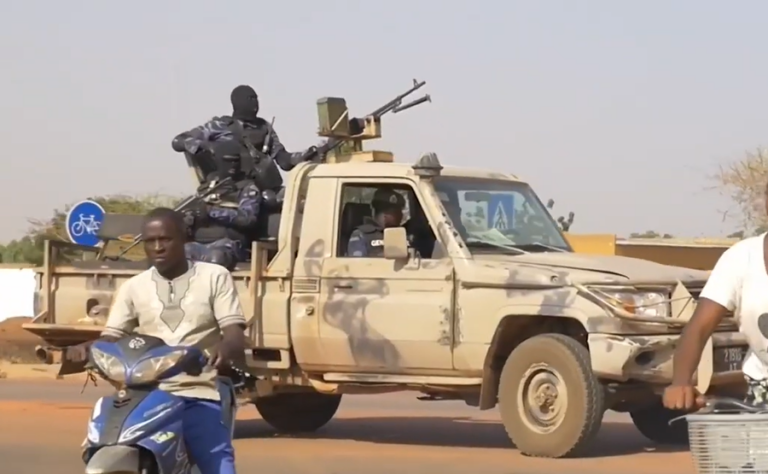
Slightly more than two years after Niger’s first peaceful handover of power from one civilian president to another, the military seized power in July 2023. The coup – the fourth in Nigerien history – follows on the heels of recent military interventions in Africa. Mali (August 2020 and May 2021), Chad (April 2021), Guinea (September 2021), Sudan (October 2021) and Burkina Faso (January and September 2022).

Since the end of the Cold War in 1991, the number of military coups has declined sharply. However, francophone west Africa now accounts for approximately two-thirds of all military coups that have occurred since then.

As a political scientist analysing African politics, I have studied military coups and their outcomes for the last decade and a half. In a recent article, Justin Hoyle, a doctoral candidate in political science at the University of Florida, and I demonstrate that since 1989, military coups across the world have resulted in two outcomes.

First is the withdrawal of the junta from executive power. This means the junta doesn’t participate or interfere in post-coup elections. While it is necessary for the transition to democracy, it isn’t sufficient in itself. This scenario played out in the Nigerien coup of 2010 and the Thailand coup of 2006.

Second is electoral rigging by the junta in favour of its own candidate. This scenario establishes a regime in which coup leaders entrench themselves in executive power.

Examining how military coups unfold is crucial to understanding a country’s path back to democracy. It also provides insights into the effect of coups on the quality of democracy.

The research

We studied five countries and 12 post-coup transitions: Egypt (coups in 2011 and 2013), Mauritania (coups in 2005 and 2008), Niger (1996, 1999 and 2010), Fiji (2000 and 2006) and Thailand (1991, 2006 and 2014).

Overall, we examined slightly more than a third of all military coups between 1989 and 2017.

Out of a total of 32 post-coup environments, we found that in half of all cases, juntas withdrew from executive power in the coup’s aftermath.

However, even with the military’s withdrawal from power, the transition period to civilian rule was highly volatile. Particularly in sub-Saharan Africa, counter-coup attempts by a rival faction within the armed forces intending to remain in power occurred rather frequently. This was the case most recently in Burkina Faso in 2015.

Although many coups result in the withdrawal of juntas from executive power, many of the cases from our study were near-misses – the country could’ve ended up under military authoritarian rule.

We examined four key variables and their influence on coup outcomes. These are:

  • the internal coherence of the armed forces
  • the ability of civil society organisations and political parties to mobilise against the junta
  • the deployment of donor leverage
  • trade dependency on regional and western partners.

Of these, we argue that the two that matter the most are: the internal cohesion of the military and the vibrancy of civil society groups.

The findings

In our analysis, we found that the single most important variable that accounts for different coup outcomes is the internal coherence of the military.

When there’s internal coherence, militaries generally feel inclined to withdraw from executive power. This is because holding on to power challenges their internal cohesion.

Internal cohesion is based on the factors that triggered the coup. If a coup occurs in response to threats to the country’s territorial integrity, to the preservation of public order, or to the military’s material or reputational benefits, the junta will have the backing of the military at large. This is because the benefits of seeking power outweigh the risks of not being in power.

If a coup occurs for reasons outside these, the junta either won’t seek power or will face resistance from within the military and withdraw. We found this confirmed in all the coups that we analysed.

Another relevant yet less significant variable is the positioning of civil society toward the junta.

Where civil society groups manage to rally the population to demand a return to democratic civilian rule, juntas depart from power. The most prominent example of this was in Egypt after the 2011 coup.

Interestingly, we didn’t find that aid dependency or membership in an international organisation with anti-coup rules exerted any discernible influence on juntas. This means that domestic variables – and in particular the drivers of the coup – influence political aftermaths.

What it all means

For the current transitions in parts of Africa, these findings are troubling.

In Sudan, Mali, Burkina Faso and Chad, militaries overthrew their governments because of threats to their countries’ territorial integrity or to the military’s material benefits. The juntas in these countries can rely on the backing of the military at large. This decreases the likelihood of a return to civilian rule.

The implications of our findings for Niger and Guinea are less straightforward, however. Here, coups were staged by a sub-section of the military, even though such a move wasn’t in line with the interests of the armed forces at large. Our research findings suggest a more volatile dynamic for these two post-coup states.

At this stage, no one can predict how the motives of Niger’s presidential guard will shape future action. Much will depend on coup leader Abdourahmane Tchiani’s ability to convince the military that a coup was the right thing to do politically.

Generally, military coups bode ill for democratic processes. In instances where juntas withdraw from power, democracies don’t emerge. When juntas rig post-coup elections, they become entrenched in power in the medium to long-term. This has devastating consequences for the political and civil rights of their populations.The Conversation

Sebastian Elischer, Associate Professor of Political Science, University of Florida

This article is republished from The Conversation under a Creative Commons license. Read the original article.

Nigeria’s crude oil output reduces by 40,000bpd

0

NIGERIA’S crude oil production fell by 40,000 barrels per day (bpd) in July relative to the previous month, reflecting a generally sluggish business activity in Africa’s largest economy.

The Organisation of the Petroleum Exporting Countries (OPEC) stated this in its Monthly Oil Market Report (MOMR) released on Friday, August 10.

The report showed that Nigeria’s crude oil output slid to 1.295 million bpd in July from 1.255 mbpd in June.

It stated that the total crude oil output produced by OPEC’s 13 member countries dropped by 836,000 bpd to an average of 27.31 mbpd in July, due mainly to a decline in production in Nigeria, Saudi Arabia, and Libya.

The OPEC members had in June this year agreed to cut production volumes to ensure global oil market stability.

For a long while, Nigeria hardly fulfilled the 1.8 mbps OPEC quota as it battles operational and security issues. In February, it only reached 1.38 mbpd, The ICIR reported, representing the highest production output since the beginning of the year.

From August to November this year, the country expects production output of 1.826 mbpd, 1.830 mbpd, 1.826 mbpd and 1.747 mbpd, respectively, while from January to December 2024, it is expected to reduce its production quota to 1.380 mbpd

The OPEC report noted that Nigeria’s economy, which grew by 3.3 per cent in 2022, is forecast to decelerate in 2023.

Growth in the first quarter stood at 2.4 per cent, following growth of 3.6 per cent in the fourth quarter of 2022, an indicator of this year’s anticipated slowdown.

High inflation continues to burden the economy.

Inflation data for June showed an ongoing acceleration, with an annual rate of 22.8 per cent, following 22.4 per cent in May and 22.2 per cent in April and 22 per cent in March.

Food inflation has been a critical factor in this rise, reaching 25.1 per cent in June after 24.8 per cent in May.

In the meantime, President Bola Tinubu has declared a state of emergency in response to the pressing issue of food insecurity.

“A combination of factors, including conflict, the impact of climate change, population pressures, and the below-average output of the agricultural sector, has exacerbated the scarcity of food resources over recent years,” OPEC highlighted.

On the fiscal side, the Federal government has unveiled a financial package amounting to N500 billion, while on the monetary side, the Central Bank of Nigeria lifted the key policy rate by 25 basis points to 18.75 per cent in July to lower inflation pressure.

As a consequence of the ongoing challenges, business activity retracted to stand at 51.7 in July after it reached a level of 53.2 in June, according to Stanbic IBTC Purchasing Managers’ Index (PMI) released in August.

It showed that business activity shrunk in July on rising input costs, although still above the contractionary threshold.

A PMI reading above 50 indicates that business activity is expanding, while below 50 indicates contracting.

It measures the performance of the private sector from agriculture, manufacturing, services, construction and retail.

Fuel subsidy removal and exchange rate unification are pressuring business activity, raising input costs, and weakening the naira.

The combination of rising petrol prices and increased electricity costs would exacerbate the difficulties businesses face and limit the manufacturing sector’s profitability, according to the director general of the Manufacturers Association of Nigeria (MAN), Segun Ajayi-Kadir.

Niger’s military Junta: Adeboye tells Nigeria to avoid fresh wars

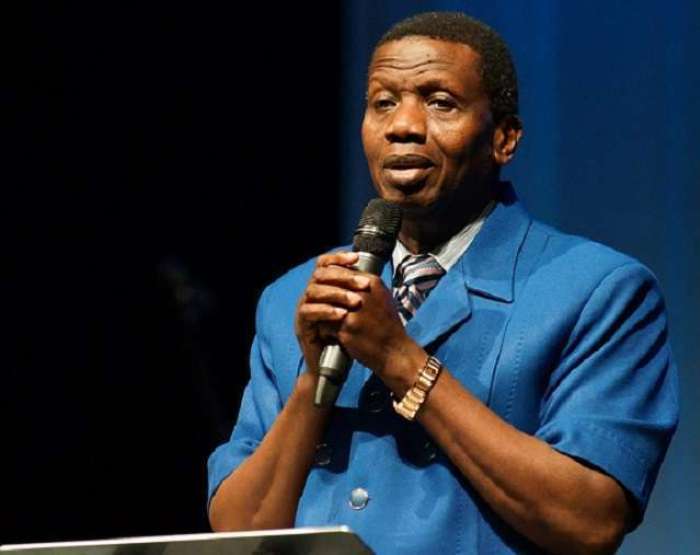
AS concerns grow over the military coup d’etat that took place in Niger Republic, the General Overseer of the Redeemed Christian Church of God (RCCG), Enoch Adeboye, has told Nigerian leadership to avoid possible fresh wars brewing in the West African country.

Already, there are safety concerns for communities along the over 1,500-kilometre-long Nigerian border, which shares proximity with the Niger Republic and covers seven states of Kebbi, Sokoto, Katsina, Jigawa, Zamfara, Yobe and Borno.

But the revered cleric, who reacted to the Economic Community of West African State (ECOWAS) order to reactivate military force against Niger Republic, said,” Nigeria is already fighting some serious wars and that the country does not need more wars.”

He spoke today at the church’s 2023 Convention with the theme, ‘Beyond Expectations’.

He said, “We are still fighting wars against hunger. We are fighting some serious wars and sure, we don’t want more wars. We want to win the ones we are fighting, and we don’t want fresh ones, whether within or without our borders,”

The cleric, who shared his personal experience on the Nigerian-Civil War between the Nigerian and Biafran sides from July 1967 to January 1970, said peace is always preferable to war.

“Nigeria still needs a lot of prayers. I’m a small boy, but I was at the battlefront during the civil war, not as a soldier, but I lived near the battlefront, and what I saw, if anybody asks me to choose between war and peace, I will choose peace.”

Adeboye said Nigeria is already fighting several wars against kidnappers, terrorists, amongst others, while he stressed that “the country does not need more wars but to win the ones it is battling currently,”

“We are already fighting many wars in Nigeria; we are fighting wars against kidnappers. We are fighting wars against terrorists. There are still places in Nigeria today that when people go to bed, they are not sure they would not be killed before tomorrow morning,” Adeboye said.

He said,” We still fighting wars against some people who feel that if you are a farmer and you plant, then what you have planted is food for their cows, and if their cows come to eat your harvest and you complain, they kill you.”

Adeboye’s comment followed the controversy over the proposed deployment of soldiers to the Niger Republic by the Economic Community of West African States (ECOWAS) under the chairmanship of Nigeria’s President Bola Tinubu.

Recall on July 26, 2023, the military in neighbouring Niger Republic snatched power from the constitutionally elected government of President Mohamed Bazoum.

ECOWAS subsequently gave the troops who seized power until last Sunday to reinstate 63-year-old Bazoum or face the potential use of force through the deployment of troops of the ECOWAS Monitoring Group (ECOMOG), a multilateral armed force drawn from the 15-member states, to compel a return to democracy.

Nigeria has also cut off electricity supply to Nigeria amid a flurry of economic sanctions, including border closure, but the coup leaders remained defiant, and the deadline passed without action.

Tinubu urges young police officers to shun corruption

0

PRESIDENT Bola Tinubu has admonished young police officers to shun all forms of corruption and adhere to the ethics of modern policing in discharging their duties.

The President gave the charge at the graduation ceremony of 169 graduands of the Nigerian Police Academy, Wudil, in Kano State on Saturday, August 12.

Tinubu, represented by Vice President Kassim Shettima, urged the fresh officers to be professional in their duties to impact the country’s security architecture positively.

He also urged the officers to stay vigilant to the ideals of the Nigerian Police geared towards ensuring effective service delivery.

“You should have it in mind that Nigerians have high expectations of you; you must brace up to face the challenges ahead,” he said.

Tinubu also told the officers to put the nation at heart and handle their constitutional responsibility with utmost dedication and commitment.

The President also assured the young officers that the federal government would continue to support the Nigerian Police Academy, noting that it remains “one of the best training grounds for police officers in the sub-Saharan region.”

There are concerns that policing, which plays a vital role in maintaining law and order in any society, has lost the public trust and confidence in Nigeria.

Accordingly, public trust in the police seems low, as shown in various studies, The ICIR reported.

In a recent incident on Friday, August 10, the Osun State Police Command confirmed the arrest of some of its personnel for extorting commuters along the Ile-Ogbo-Iwo road in the state.

Also, a report on April 13, 2022, by The ICIR indicated how the United States (US) accused the Nigerian police, among other security agencies, of corruption and other unethical practices.

In a related development, the acting Inspector General of Police (IGP), Kayode Egbetokun, warned officers against corrupt tendencies damaging the image of the profession in the eyes of the public.

Egbetokun reportedly said this while he addressed officers and men of the Kano State Police Command on Friday, August 11.

Extolling the Nigerian police to be one of the finest in the world, the acting IGP, however, said police officers needed to be seen as above bribery and corruption.

Protesters did not burn down Nigerian embassy in Niger -Ambassador

0

THE Nigerian embassy in Niger Republic has refuted reports that its building was razed down by irate protesters in Niamey.

In an official statement by the Nigerian Ambassador to Niger, Mohammed Sani Usman, the embassy clarified the incident on Saturday, August 12.

According to the statement, the protesters attempted to breach the embassy’s premises, but concerted efforts of the Nigerien military and law enforcement effectively kept the situation under control.

“The Embassy wishes to inform the general public that even though protesters tried to gain access to the Embassy on July 30, 2023, the Nigerien Military and Police Authorities promptly curtailed the situation.

“At the moment, the Embassy is well guarded by the Nigerien Military and other Security Authorities. We reiterate that the videos are fake and as such, the general public is enjoined to disregard such videos,” the statement read.

A video of some young men setting a building ablaze was circulated on social media with captions suggesting that the Nigerian Embassy in Niger was being burnt down by an angry mob.

This followed protests by coup supporters in Niger against the Chairman of the Economic Community of West African States (ECOWAS) and Nigerian President Bola Ahmed Tinubu for what they described as interference with their country’s affairs.

The protesters in Niger kicked against plans by ECOWAS to invade the country if putschists, who ousted the elected president Mohamed Bazoum through a military coup, failed to restore him to power.

The military government in Niger, backed by Mali and Burkina Faso, two countries suspended by the ECOWAS over military coups, also threatened the Community with war should there be a case of military intervention, and many Nigerians have warned against it.

Kano residents protest

In a related development in Kano state, protesters took to the streets on Saturday, August 12, to express displeasure over the proposed use of force by ECOWAS following the Niger coup.

They were spotted chanting anti-war phrases and flying both Nigerian and Nigerien flags.

“Nigeriens are our brothers; Nigeriens are also our family. Niger is ours. We don’t want war; war against Niger is injustice, a plot by the Western forces,” they chanted.

CBN’s financial statements exposes poor oversight, bad debts

Audited financial statements released by the Central Bank of Nigeria (CBN) showed unevaluated lending to the Federal Government and other financial institutions, revealing poor oversight by Nigeria’s National Assembly.

The apex bank released the Consolidated Financial Statements for the last seven years, making it the first time since 2015 it will be making its book available for public scrutiny.

The released Consolidated Financial Statements are for 2016, 2017, 2018, 2019, 2020,2021 and 2022.

According to the CBN Act 2007, the apex bank is expected to publish its report within two months after the end of each financial year.

The ICIR has reported persistently reported how the CBN kept violating its extant laws by overlending to the Federal government to the tune of N23.18 trillion, a situation that has seen Nigeria pressured with higher inflation.

The concern was further worsened by the apex bank owing JP Morgan and Goldman Sachs a combined sum of $7.5 billion as of the financial year ended December 2022.

Also included as part of its liabilities is another $6.3 billion owned in foreign currency forwards.

This is contained in the audited financial statements of the apex bank, gazetted and published on its website.

CBN in the report, stated it owes Goldman Sachs $500 million and JP Morgan $ 7 billion in what it classified as securities lending.

“The Group entered into a securities lending agreement with Goldman Sachs and J. P. Morgan, and as part of the agreement, the Group pledged its holdings on foreign securities in return for cash.

The cash received from Goldman Sachs is N0.23 trillion ($500 million), 2021: N0.22 trillion ($500 million), and JP Morgan N3.23 trillion ($7 billion), 2021: N3.05 trillion ($7 billion) is recognised in other foreign securities.”

The securities lending forms part of the CBN’s total external reserves of about N14.3 trillion or $29 billion using the official exchange rate of N494/$1 as of 2022.

However, the apex bank also owes another N3.15 trillion ($6.3 billion) in foreign currency forward which are forex obligations it needs to make to foreign investors.

The Senate President Godswil Akpabio said in an earlier report by The ICIR that the Senate has plans to amend some sections of the CBN Act to whittle down the powers of the CBN governor on some key decisions.

He also admitted that the Senate has not performed its oversight optimally, which prompted the risk exposure of the CBN to the Nigerian economy, as seen by several of its poor decisions.

Economists and Industry analysts are worried that the risk exposure of not publishing the audited financial statement is huge, as they cited further violation of CBN extant laws.

“CBN, according to extant laws is expected to publish its accounts two months after its financial year. Accountability and transparency are key as the new government takes charge, and I suggest they become consistent with the publication. There are several bad loans and issues, “an economist analyst, Chuka Mbonu, said.

“The CBN is a bank to the Federal Government and bank to Nigerians. The apex bank makes money by lending. In the statement, total lending to the Federal Government in ways and means is above N23 trillion. They are making money via interventions, lending, treasury bills and licenses they issued,” Mbonu said.

For development economist Kelvin Emmanuel, the Acting CBN Governor publication of the audited financial statements showed deeper problems on how the apex bank has been managed over time.

“Remember I said about two weeks ago that some senior treasury officials and portfolio managers told me privately that they don’t believe the official foreign numbers of the CBN?

“It is commendable that the Acting Governor has bitten the bullet in line with sections 50(1)(3) of the CBN act, to publish the accounts of the Central Bank to the Senate and Gazette it to the public,” said Emmanuel.

Emmanuel noted that the situation is bad, but admitting that there’s a problem is the first step to solving it.

Experts worried about external reserves and foreign exchange management 

Following the release of the CBN financial statements, Nigerians and the global community are getting to know the state of Nigeria’s financial health as managed by the apex bank.

Analysts who also spoke with The ICIR argued that the CBN debts to foreign companies were worsened by how the apex bank managed the country’s foreign exchange market and external reserves.

The financial statements seem to have exposed the CBN management of the country’s external reserves in past years, the head of financial institutions ratings at Agusto and Co, Ayokunle Olubunmi, told The ICIR.

“Since 2015, the CBN has faced many issues in terms of managing foreign exchange and not disclosing its accounts. It was apparent that something was not right.

“We could have so much at our reserves and have issues with foreign exchange management. On the surface, it looks as if the reserves are enough to meet our foreign exchange needs, but on the other hand, we are saying there are issues in the foreign exchange market, Olubunmi said.

The hallmark of the last CBN administration has been to hoard information and keep many things undisclosed.

According to him, it is clear why foreign exchange market issues persisted as it is evident that the funds that CBN had were encumbered – owing somebody and keeping it as part of reserves.

“Although it is one of the ways of managing the foreign exchange, it requires care that by the time the facility is due, the CBN has the funds to repay it.

“Where we should be concerned is that if we take the debts out from the reserves, what is left of the reserves? Olubunmi asked.

“I have maintained that based on the global market facts and records that Nigeria’s foreign reserves is around $22 billion net account balance,” a development economist, Kazeem Bello, said.

Bello, chief executive officer and principal partner of Afrique Capital and Equity Funds Limited established that when the $13 billion is net out from the about $34 billion external reserves, it could mean that Nigeria would have appropriately $22 billion in its reserves.

He said, “Contrary to CBN posture, global investors dumped and shunned the Nigerian forex investment simply because of consistent evidence of round tripling and illegal arbitrage that does not make genuine investors make real investment accrue benefits or make cognate investment choices.

“We are now learning from the CBN that inflows dropped from $23 billion in 2019 to $6 billion in 2022. The answer is simple and foreign investors will not stake trading bets on a manipulated or fraudulent market.

The development economist said he cannot still comprehend how the CBN could have been authorised to create or get into a debt obligation that ultimately results in cash debt to Goldman Sachs and JP Morgan to the tune of $13 trillion.

“Who authorised that debt obligation, and what did the CBN use it to settle or pay for? These and several questions should be raised and investigated,” Bello said.

Who authorised that debt obligation, and what did the CBN use it to settle or pay for? These and several questions should be raised and investigated

The latest disclosure have made it clear that the Nigerian debt structure has swelled from N77 trillion as left behind by the immediate past administration with the addition of a whopping $13 billion debt incurred by the disposed CBN governor, he pointed out.

Foreign Direct Investment (FDI) dropped from over $23 billion under President Goodluck Jonathan’s administration at a point in time to $6 billion in 2022 under President Muhammadu Buhari.

Bello said contrary to the impact of the Covid 19, Egypt, South Africa, Morocco, Senegal, Kenya, Angola, Cote de Ivoire and other countries all recorded net increases in FDIs within the same time frame that Nigeria was bitterly losing those FDIs.

During the period, Nigeria was also confronted with an unprecedented capital flight, which as of 2021, ending in a relative comparative analysis, was about $25 billion in less than 10 years.

For a country struggling with huge infrastructure deficits, declining economic fortunes and massive unemployment and declining industrial productivity, this was seriously unhealthy and needed to be reversed, Bello said.

Despite being the largest economy in Africa, unfortunately, Nigeria ranked as one of the lowest in FDIs in the continent in recent years.

“We surely will see more until the new government move into place to ascertain the proper financial health of the apex bank and take cognate responsibility to amend this problem.

He, however, urged the new administration to move quickly with the proposed reforms at the apex bank and get the place sanitised appropriately.

“This is the fastest way to reassure the foreign investors and gain their confidence in the market,” Bello asserted.



FactCheckHub at 3: Experts proffer solutions to tackling AI disinformation campaigns

0

EXPERTS working in the disinformation space on Friday identified the need for more advanced methods in addition to the traditional fact-checking process to check the spread of misinformation.

The experts spoke at the webinar FactCheckHub hosted as part of activities to mark the organisation’s third-year anniversary.

The webinar themed: The Impact of Artificial Intelligence and deep fake technologies on information space, had in attendance Christopher Guess, a Lead technologist at Duke Reporter’s Lab, a senior investigations manager at the Code for Africa, Allan Cheboi, David Ajikobi Nigeria editor of the Africa Check.

During the webinar, the editor of the International Centre for Investigative Reporting, Bamas Victoria , sought how fact-checkers could develop better capacity to address sophisticated online misinformation in the future.

Responding to the question, Guess raised the for fact-checkers to start investigating disinformation campaigns rather than individual pieces of disinformation content.

He said fact-checkers should consider investigating the source of disinformation campaigns, the motive behind the campaign, and who is funding it.

Guess pointed out the need to incorporate investigative journalism in fact-checking, urging fact-checkers to combine fact-checking tools and investigative research in unravelling disinformation campaigns.

“Collaboration between fact-checkers and investigative journalists is going to be the next big win,” he added.

Giving tips on how to manually identify AI-generated images, Guess, highlighted that a common feature to note is the way some parts of the body look distorted in the images.

He stated that AI-generated images are difficult to detect because they are generated from complete randomness.

“One way to identify AI images is to look at their hands, ears, shadows and edges. Instead of five fingers, the fingers may look twisted or three or four fingers instead. The ears are often missing. They are all telltale signs for the next few years.”

“One of the kickers as technology moves forward, a lot of these problems would be fixed is”

He added that looking at the text, language, and characters which are often gibberish is also away to tell an AI-generated image.

While sharing tools and techniques that can be used to fact-check AI-generated images, he stated that regular journalism techniques need to be deployed.

“The thing about artificial intelligence and generated AI images and texts is that you have to do regular journalism; you have to treat it just like it’s a politician that is lying to you but is an actual human being talking.

“Assume and act like it’s fake. Regular journalism and fact-checking techniques that is what you want to do. Anything that has been purported has been real… how old is it? Has it appeared on the internet before? Was the person where it says they were? Does it make sense? Treat it like regular reporting and check it out,” Christopher emphasised.

On his part, Cheboi charged fact-checking organisations to devise technology that will promote easy identification of behaviours, narratives around disinformation contents and the actors behind its dissemination.

“When we focus on content alone, we will never beat the bad guys. Now that AI is here, they will keep churning out [false] contents that are very convincing, but you will never know,” he said.

Flyer from the webinar

He urged stakeholders to tackle disinformation holistically by looking at the ABC template – Actors, Behaviour and Content,

He explained how disinformation actors use emojis, wrong spellings and other means to evade detection, adding that the actors need to be fished out using technology and research to unravel the source of a disinformation campaign.

Cheboi highlighted the struggles that social media platforms face in containing toxic content such as disinformation and hate speech across Africa. The reason being the context of the narratives are in the local vernacular.

“In Africa, we have more than 2,000 languages. In Nigeria alone, the number of languages can’t be estimated. In Kenya, we have about 42 languages. For the platforms to detect content that is created in all these languages, it’s really hard. That is why AI is becoming something that a lot of investment is being put in place for us to be able to do that.”

Citing examples of how AI can be used for disinformation campaigns, he shared videos that were created by an extremist group with fictitious people pretending to be American pan-Africanists in support of what was going on in their countries while highlighting the influx of generated AI content in Africa.


READ ALSO:


“We’re talking about AI, and you know, maybe people imagine that in Africa, no one really produces AI to produce content that is divisive, content that at the end of the day would be polarising to citizens, but it is here, it is being used already, and that is the reason we are having this conversation,” Allan said.

Guess further stated that there is a need for disinformation experts to start discussing the policy, advocating and pushing for the criminalisation of misinformation, while Allan emphasised the need for social media platforms to invest more in the African region in order to counter disinformation, hate speech and polarising contents on their platforms.

You can watch the full video of the webinar here


Military better off in a democracy, faults report on welfare – DHQ

THE Defence Headquarters (DHQ) said the military is better off under democracy, while it further condemned calls for it to interfere in the nation’s democracy.

The defence headquarters stance was disclosed in a statement by the Director of Defence Information, Tukur Gusau, on the evening of Friday, August 11, in Abuja.

According to the statement, the call for military intervention in democracy is highly unpatriotic and wicked.

It also warned against attempts by unpatriotic elements to distract the military from performing its constitutional responsibilities.

Gusau added that the DHQ frowned at the report being circulated online about welfare issues in the Armed Forces of Nigeria.

He said the armed forces leadership has prioritised the welfare of its personnel and will continue to do so.

“The military hierarchy detests any attempt by any individual or group to instigate the law-abiding military to embark on any unconstitutional change of government in the country.

“We wish to state unequivocally that the military is happy and better under democracy and will not get involved in any act to sabotage the hard-earned democracy in our country,” Gusau said.

He remarked that the armed forces, under the leadership of a general, Christopher Musa, is determined to ensure its complete subordination to constitutional authority under President Bola Tinubu.

The statement added that it would not be distracted from its roles that are well defined in the 1999 constitution (as amended).

There have been calls on social media recently for the military to intervene in Nigeria.

The call was heightened by the difficulty faced by Nigerians after the fuel subsidy removal and the recent successful coup in the neighbouring Niger Republic.

Meanwhile, the DHQ said troops of the Nigerian army have killed 38 suspected terrorists in one week across the country’s six geo-political zones.

The Director of defence media operations, Edward Buba, disclosed this to journalists yesterday.

Buba said soldiers also apprehended 242 suspects and rescued 89 hostages during different operations nationwide.

He said the suspects include 175 gunmen, 20 kidnappers, 30 collaborators and 17 pipeline vandals.

He continued by saying that the troops had also found stolen crude oil worth N607 million.

Police confirms arrest of officers caught extorting commuters in Osun

0

OSUN State Police Command has confirmed the arrest of some of its personnel for extorting commuters along the Ile-Ogbo-Iwo road, in Osun state. 

Public Relations Officer of the Command Yemisi Opalola disclosed this in a statement on Friday, August 11, adding that disciplinary action will be carried out against the detainees after investigations are concluded.

“The Police officers involved in this unprofessional and unethical behaviour have been identified, arrested and detained. The Command frowned and condemned the act in totality as the erring police officers are currently in detention since Thursday, 10 Aug. 2023.

“They are undergoing investigation and eventual disciplinary procedure of orderly room trial for their unprofessional conduct while the senior officers among them have been queried accordingly,” she noted.

Speaker of the Osun State House of Assembly Adewale Egbedun helped some commuters recover money extorted by police officials stationed along their route.

The speaker was captured in a viral video confronting the officers over the allegations of extortion by commuters.

Egbedun’s Chief Press Secretary, Olamide Tiamiyu, disclosed in a statement that three of the travellers had been extorted of N25,000 each.

Force Public Relations Officer Muyiwa Adejobi also confirmed the arrest of the policemen on Friday.

Adejobi warned other officers to desist from visiting Acting Inspector-General of Police (IGP) Kayode Egbetokun with money or gift items.

“The IGP has made it clear severally. In fact, at the last IGP’s conference with senior officers in Abuja on Tuesday, the IGP warned that no officer should bring money or gifts to him.

“He said, ‘I don’t need your money. Don’t bring any money to me. Use your legitimate money to improve the policing of your area of responsibility. So, no officer should use IGP’s name to extort. We have sent out IGP’S monitoring squad to arrest any erring officer, not only the Police but other law enforcement agents who dwell in corruption and inappropriate behaviours,” Adejobi noted via his official Twitter handle.

Police extortion and harassment and brutalisation have been a long-standing issue in Nigeria.

In October 2020, youths across the country embarked on a nationwide protest against police harassment and brutality, which lasted for weeks.

The protest was brought to a halt when officials of the Nigerian Army opened fire on unarmed protesters at Lekki Toll Gate, Lagos, on October 20, 2020.

Despite government promises to check harassment of citizens following the protest, extortion and other forms of indiscipline still persist within the Nigeria Police Force (NPF).