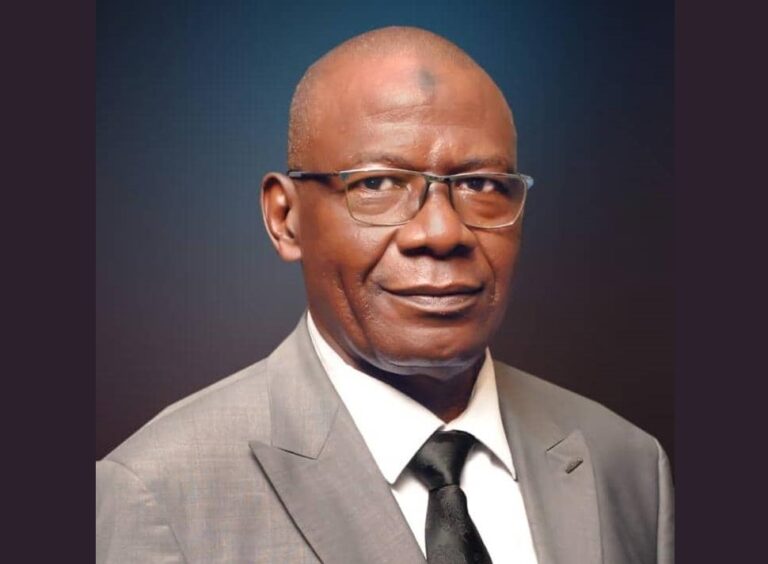
A FEDERAL High Court in Abuja has again restrained the Edo state governor, Godwin Obaseki, from instigating any alleged impeachment process against his deputy, Philip Shaibu.
The court gave the ruling pending the determination of the matter.
Additionally, Shaibu was prevented from being detained, arrested, or subjected to harassment by the Inspector General of Police or Department of State Service (DSS).
The Deputy Governor had submitted an ex parte motion and a move on notice to the court, asking it to halt the alleged impeachment proceedings against him.
The Governor of Edo State, the Speaker of the Edo State House of Assembly, and the Chief Judge of Edo State are the first through fifth defendants in the lawsuit with number FHC/ABJ/ CS/1027/2023.
In his earlier ruling on Friday, August 4, Justice Ahmed Ramat Mohammed had instructed the parties in the lawsuit to maintain the “Status quo ante bellum”.
Additionally, he ordered the defendants to provide justification for rejecting the plaintiff’s request for interim orders.
The plaintiff’s lawyer, George Ibrahim, informed the court at the resumed hearing on Thursday, August 10, that the third, fourth, and fifth defendants had shown cause and had received their counter affidavits from them.
In response, I. Awo, counsel for the second defendant, argued that the DSS shouldn’t have been included in the case.
However, he requested the court’s permission to take the necessary action.
The presiding judge made a decision and instructed the parties to follow it up until the case was resolved.
The second defendant was given two working days to provide justification and postponed the hearing until August 22.
Recently, there has been a decline in the friendship between Obaseki and Shaibu, his deputy.
According to reports, Obaseki and his deputy’s relationship has soured ahead the Edo state governorship contest next year.
Obaseki and Shaibu had different roles in the previous governor, Adams Oshiomhole’s government.
Obaseki led the economic team, and Shaibu previously served as a member of the Edo State House of Assembly.
The Economic Community of West African States (ECOWAS) has ordered its standby force to restore constitutional order in the Niger Republic.
This directive by ECOWAS for the immediate activation and deployment of the standby force to the Niger Republic has sparked mixed feelings among Nigerians.
Nigerians on social media said the directive by ECOWAS could potentially endanger communities along the Nigeria-Niger Republic border.
Some also said it’s unconstitutional, citing some sections of the Nigerian constitution.
ECOWAS, on Thursday, August 10, ordered its standby force to restore constitutional order in the Niger Republic.
The President of ECOWAS, Omar Alieu Touray, made this known while reading the resolution taken at the extraordinary meeting on the Niger coup held in Abuja on Thursday.
It also sought support from the African Union, AU, partner countries, and institutions on the resolution taken by the sub-regional body.
According to ECOWAS, all its efforts to dialogue with the Niger Republic military junta have been rejected by coup leaders.
Part of the resolution read “The Authority having considered the memorandum presented by the President of the ECOWAS commission on the current situation in the Republic of Niger, as well as ECOWAS engagement since the last extraordinary summit; and having considered the reports of the envoys of the chair, to Niger and various other places; carefully considered the report and recommendations of the ECOWAS committee of chiefs of defense staff.
“It extensively discussed the latest development in Niger since the last extraordinary Summit held on 30th July 2023. Noted that all diplomatic efforts made by ECOWAS in resolving the crisis have been defiantly repelled by the military leadership of the Republic of Niger; took note of the expiration of the one-week ultimatum given for the restoration of constitutional order in the Republic of Niger decided as follows.
“It condemned the condition in which President Bazoum is being detained and holds the CNSP fully and solely responsible for the safety, security and physical integrity of President Bazoum, members of his family and the government.
“Uphold all measures and principles agreed upon by the extraordinary Summit held in Niger on 30th July 2023.
“Underscore the determination of the ECOWAS authority to keep all options on the table for the peaceful resolution of the crisis.
“Enforce all measures, in particular, border closures and strict travel bans and assets freeze on all persons or groups of individuals whose actions hinder all peaceful efforts aimed at ensuring the smooth and complete restoration of constitutional order.”
The body also warned member states who, by their action directly or indirectly, hindered the peaceful resolution of the crisis in Niger about the consequences of their action.
It also directs the president of the Commission to monitor the implementation of the sanctions.
“Direct the Committee of the chief of defense staff to activate the ECOWAS standby force with all its elements immediately. Order the deployment of the ECOWAS standby force to restore constitutional order in the Republic of Niger. Underscore its continued commitment for the restoration of constitutional order through peaceful means.”
Reactions
In response to the directive, a number of Nigerians on social media, particularly on Twitter, have expressed their displeasure and also called for peaceful resolution.
While some highlighted the possible impacts of ECOWAS going to war with Niger, others stated that it’s unconstitutional for President Tinubu to order the deployment of Nigerian Armed forces without seeking approval of the National Assembly.
A Twitter user with the name Kayodé Ogúndámisi, said although he was shocked about Niger rejecting dialogue from ECOWAS and other mediators, he opposed any form of military intervention.
“I am personally opposed to any form of military intervention in Niger. Also shocked that the coupist in Niger have rejected every opportunity for dialogue from both ECOWAS and other mediators.
“I hope a peaceful resolution is reached to save lives in Niger and ECOWAS Soldiers.”
A human rights lawyer, Festus Ogun, also pointed out that it would be unconstitutional for Nigeria’s Armed Forces to join the ECOWAS standby force in going to war, citing Section 5 subsection 4 of the Nigeria constitution.
He wrote, “It will be unconstitutional for our Armed Forces to join the ECOWAS “standby force” in going into war with Niger junta. By virtue of Section 5(4)(a) and (b) of the 1999 Constitution, Nigeria cannot go into war with another country except with the prior approval of the Senate.”
Similarly, another lawyer, Inibehe Effiong, said Tinubu “does not have the constitutional authority to deploy a single member of the Nigerian Armed Forces as part of the proposed ECOWAS Standby Force to invade Niger Republic.
“It is not only when a state of war between Nigeria and another country is declared that parliamentary approval is required. Parliamentary approval is also required for all combat duties and missions by our Armed Forces abroad.”
He also highlighted the constitutional provision that mandates that the approval of the National Assembly must be sought.
Another Twitter user with the name, Timmy, tweeted: “Nigerians supporting this war in the form of Ecowas invasion thinks we have a fence or barrier separating us between Niger, by the time this war starts and you start hearing of attacks in Sokoto, [Kebbi]and those states bordering Nigeria, you would pray for the war to end.
“I remember how fear was running down the spines of people whenever Boko haram attacked Abuja and Kano then, and we could all see their videos on YouTube. Most of you supporting this war would be shitting in your pants when the heat gets to you.”
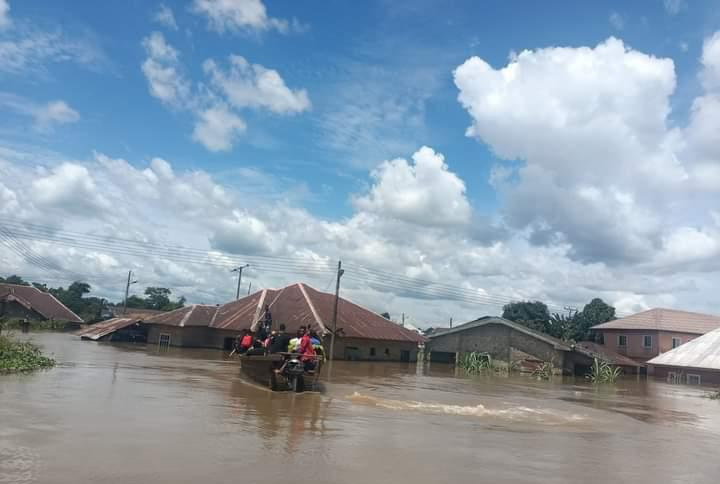
THE National Emergency Management Agency (NEMA) has said at least 33,983 persons have been affected by flooding in 2023.
Director, Planning, Research and Forecasting of the Agency Fatima Kasim disclosed this during NEMA Emergency Coordination Forum held in Abuja on Thursday, August 10.
Kasim noted that those involved were residents of 10 states which have been affect by cases of flooding in 2023.
“As at Aug. 9, the following data has been collated in respect of 2023 flooding: Number of states affected – 10 states; Number of persons affected – 33,983; Number of persons displaced – 7,353; Number of persons injured – 75; Number of deaths – 5; Number of houses totally damaged – 1,679 and Farmlands totally damaged – 866 hectares,” she said.
The Director highlighted certain factors responsible for flooding in the country, including poor drainage systems and waste management, harmful land usage and climate change.
Also present at the event was Director-General of the Nigeria Hydrological Services Agency (NIHSA) Clement Nze, who said at least 20 states and the Federal Capital Territory (FCT) have encountered varying degrees of flooding in 2023.
Nze also identified poor drainage systems as a significant cause of the flood incidents, adding that an overflow of silted rivers was another factor.
NEMA Director-General Mustapha Ahmed urged stakeholders to adopt a unified approach towards disaster and emergency management across the country.
“The emergency coordination forum is an avenue for stakeholders to come together to discuss humanitarian challenges being faced by the citizens as a result of disasters and emergencies.
“This is to foster partnership, collaboration and cooperation among relevant stakeholders in emergency management in the country,” he said.
States unprepared for flood, despite warnings
Many states in Nigeria are unprepared for the 2023 flood, which has been predicted to be worse than that of the previous year.
The Nigeria Meteorological Agency (NIMET) and NIHSA have predicted that at least 32 states are at high risk of flooding in 2023. Based on this, NEMA introduced the 2023 Climate-Related Disaster Preparedness and Mitigation Strategies, an early warning document with recommendations to minimise flooding.
However, The ICIR reported that blocked drainage systems, indiscriminate waste disposals and the absence of preventive measures are placing residents of Jigawa, Niger, Rivers, Kogi and Benue at risk of losing lives and properties in the predicted flood.
THE National and State House of Assembly elections petition tribunal in Kano has nullified the election of Muktar Umar Yerima of the New Nigeria Peoples Party (NNPP) over certificate forgery.
Yerima represents the Tarauni federal constituency of Kano state in the House Of Representatives.
In a judgement delivered on Thursday, August 10, the three-member tribunal led by I.P. Chima held that the primary school certificate provided by Yerima to the Independent National Electoral Commission (INEC) was forged.
The tribunal claims that Hafizu Kawu of the All Progressives Congress (APC), who filed the petition disputing Yerima’s election, successfully established a case of forgery against the NNPP candidate.
Yerima was announced the winner of the Tarauni federal constituency election after receiving 26,273 votes to defeat Hafizu Kawu of the All Progressives Congress (APC), who received 15,931 votes.
However, Kawu, a former House of Representatives member, filed a petition contesting Yarima’s victory on the grounds of certificate fraud.
Additionally, in his appeal, Kawu claimed that violations of the electoral act and overvoting marred the election.
The tribunal found the NNPP candidate guilty of certificate falsification in the judgement.
According to the ruling, the certificate presented by the ousted politician was disowned by the school, Hausawa Primary School.
The court further declared that Yerima did not receive any legal votes because the political party had no candidate in the election.
Thereafter, the tribunal instructed INEC to revoke Yerima’s certificate of return.
IN a bid to address the challenges bedevilling football administration in Nigeria, the National Assembly has summoned the leadership of the Nigeria Football Federation (NFF) to the house.
Before the kick-off ongoing FIFA World Cup in Australia, the country’s apex football administration has been embroiled in the challenge bordering on unpaid bonuses for Nigeria’s senior women’s football team Super Falcons.
After the exit of the Super Falcons from the world cup – losing to England on a penalty shoot-out – the International Federation of Professional Footballers, FIFPRO said they are working to ensure players get their bonuses.
In response, the NFF, in a statement released on Tuesday, described FIFPRO extended hands to support the Super Falcons get their payment “as nothing more than a storm in a team cup.”
The NFF, in the statement, said it would clear the backlog of unpaid bonuses from the friendly, qualifying matches and appearance fees at the world cup.
“The nation’s football-governing body stated that it has no issues with the players; it had assured them before the World Cup that they would be paid a couple of friendly matches and qualifying matches for which they were being owed appearance fees and bonuses respectively. It pledged to pay the money once the World Cup money is paid,” the statement reads partly.
However, in an attempt to resolve the issues facing the NFF administration, the Chairman House Committee on Sports, Ekene Adams Abubakar, invited the leadership of NFF to appear before the House Committee on Sports on Thursday.
Adams described the meeting with the NFF leadership as a peace parley.
“Top officials of the Nigeria Football Federation (NFF) have been invited to appear before the House Committee on Sports on a peace parley.
“Considering the need for mutual co-operation, unity, peace and a sense of belonging. I wish to humbly request your presence at this crucial meeting to align with the Nigerian Football Federation in order to find common ground to achieve a renewed policy direction for the Nigeria Football Federation anchored on peace and unity.
“I implore you to come on bound as we embark on this journey to reposition the Nigeria Football Federation as an epitome of peace and excellence to Nigeria and the African continent. The committee will be profoundly honoured by your esteemed presence at the meeting.” the statement released by the media aide to the Committee To Chairman of the House Committee On Sports read.
The meeting is scheduled to take place on Tuesday, August 15, 2023 by 11:00 am, at Suite 2.31. House of Representatives Wing, National Assembly Complex in Abuja.
In recent years, Nigeria has seen a sharp increase in kidnappings. This has seen Nigerians pay billions of naira in ransom to secure the release of their loved ones at the hands of kidnappers. The ICIR’s Shehu Olayinka examines cases of kidnapping, ransom payment and the cost of being kidnapped in Nigeria.
IT was on a quiet morning after a gloomy night. *Monday Adams had embarked on a journey to deliver ransom to kidnappers deep inside a forest in the central part of Kaduna state. The journey is being made on a commercial motorbike—the best means of transportation to get him to his destination.
He snaked through the forest with the commercial motorbike rider while receiving directions intermittently from phone calls on how to move and which path to take.
The ransom was to be promptly delivered on behalf of the family of Obadiah Ibrahim. The victim was a Kaduna-based worker who, alongside his colleague, was kidnapped in Sabon Gaya, Kaduna state.
Obadiah, alongside his colleague, had spent several days with the criminals. To secure their freedom, the bandits demanded the ransom be brought to a forest in Ridu Village, Ungwan Ayaba, in Chikun Local Government Area (LGA) of the state.
I was terrified, Adams told The ICIR. “I had to change my cloth to dirty ones to avoid being perceived as rich.”
“If they see you wearing expensive clothes and looking good, they may believe you have money and will abduct you to demand a ransom.”
Kidnapping in the country is no longer uncommon. In Chikun LGA alone, more than a thousand (1,010) persons have been kidnapped in 73 separate incidents in the last ten years.
In the forest, Adams said he met Ali Dogo, a bandit leader who, last October, the Nigerian Airforce disclosed, was killed in an airstrike in Niger state. Dogo, also known as Yellow, was reported to have been killed along with 30 of his foot soldiers in an attack performed by the air component of Operation Whirl Punch.
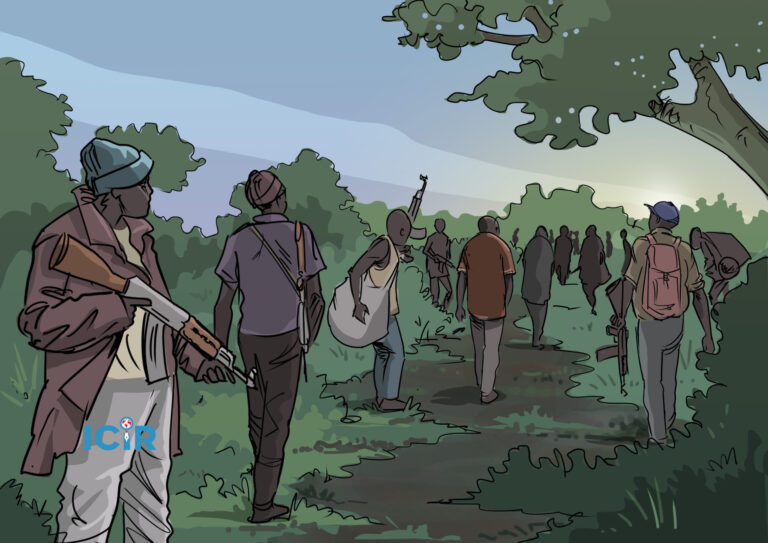
But narrating his ordeal, Adams added that the bandits controlled the entire Ridu community. “They were aware of my movements. When I arrived at the community, they told me they had been tracking my movements since I arrived there.”
He continued, “When I arrived at the site where I was supposed to drop the ransom, I noticed a large crowd. Young and old alike. Some were on trees, while others had bikes and firearms.”
Adams, though fearful, was optimistic about meeting the kidnappers and likened the scene to a market square. “I believe they were expecting to be attacked because, on my way to where I was supposed to drop the ransom, as I was approaching the forest, I met some troops (Nigerian military) with whom I exchanged pleasantries, and they told me about it.”
He eventually handed over the ransom to the bandits. But that was not all. He also provided call recharge cards. “They told me to depart after ensuring everything was in order and exchanging a few words with Dogo. I was instructed to take a different route than I previously used to access the hideout”.
Adam’s experience tells the story of what Nigerians go through to rescue their kidnapped loved ones with no assurance of success.
Obadiah died at the kidnappers’ den.
‘They demanded N10M to release my brother’s corpse’
Kefas Ibrahim, the younger brother of the late Obadiah, said his brother’s death was a huge loss. He left behind a wife and two children.
The kidnappers had initially requested N200 million.
“We went through a traumatic process throughout the process,” he told The ICIR. Kefas said despite collecting N3.2 Million, recharge cards worth N50,000, and a motorbike worth N800,000, his brother still died in the custody of the kidnappers.
According to him, “When we demanded his body, they demanded an extra N10 Million to release his corpse.”
Ibrahim was more pained that the whole effort was futile even after the family engaged a private negotiator immediately after the kidnap incident.
“I was told that he was with a co-worker and his younger brother, who always tag along whenever they go out for work when the kidnapping happened. The co-worker was killed during the kidnapping. We got a negotiator who was communicating with them and advocating on our behalf as soon as he was kidnapped. The kidnappers initially requested N200 million. We informed them that we did not have any money. They came down to N5 million. They asked us how much we had from N5 million. We bargained and informed them we had N3,120,000.”
“We gave them everything they asked for—the money, a Glo and Airtel credit card worth N50,000 and a motorcycle worth N800,000. We got Adams to help with the ransom drop after agreeing on what to bring. We contacted them after he dropped the ransom with them, and they said they would release him the next morning because it was too late that day.”
“The next day in the morning, when we asked when he would be released, they said they collected the money because they were out of food.”
As if that was not enough, Kefas said the kidnappers demanded an additional N15 million.
Kefas’ family was running dry on resources; thus, they pleaded with the abductors that they had no money and could not afford the extra demand.
He further said the price was cut to N5 million, and they insisted they had no money.
At this point, the kidnappers, according to him, then recommended that they bring three motorcycles, which they disclosed were to be used to kidnap other Nigerians using, after which they threatened to kill his brother, except he provided the motorcycles.
“We pleaded that we have no money for three motorcycles, and they eventually lowered the number from three to one”, Kefas said. “That bike alone costs about N800,000 in total.”
On the next day, the victim’s family delivered the bike. Their expectation was to welcome their relative who had been in the kidnappers’ den, but it was a wild goose chase. The kidnappers promised to release him, but unknown to them, the victim was already dead.
Ibrahim and his relatives would be shocked on the sixth day when the kidnappers informed them their brother had died. They helplessly accepted their fate but asked how they would retrieve his body. The kidnappers demanded for another sum of N10 million to release that corpse.
“The bandits told us that if we handed them the money, they would place his body in three sacks and dump it where they kidnapped him in Sabon Gaya,” he said.
The rise of kidnapping
The current state of insecurity is one among several other challenges crippling Nigeria. According to Nigeria Security Tracker (NST), 19,366 Nigerians have been kidnapped in 2,694 kidnapping instances over the last ten years as of the end of June 2023.
Since 2014, there has been an increase in kidnapping-related occurrences across Nigeria due to insecurity.
Available data shows that incidents and cases of kidnapping began to rise in 2014 and peaked in 2021 compared to previous years.
It increased from 31 incidents in 2013 with 351 kidnap victims to 84 in 2014 with 897 victims to 111 in 2015 with 926 victims to 137 in 2016 with 347 victims, 141 in 2017 with 532 victims, 157 in 2018 with 1,014 victims, 331 in 2019 with 1421 victims, 439 in 2020 with 2879 victims, 590 in 2021 with 5,287 victims, 515 in 2022 with 4,680 victims and 199 in the first six months of 2023 with 1,384 victims.
There were also mass abduction incidents involving more than 20 victims. While there were five such abductions in 2015, Nigeria recorded 11 cases in 2018, eight in 2019, 25 in 2020, 69 in 2021 and 40 in 2022.
Large-scale abductions have also targeted schoolchildren. Thousands of students have been kidnapped in Borno State’s Chibok, Niger State’s Kagara, Zamfara State’s Jangebe, Kaduna State’s Afaka, and Kebbi State’s Yauri.
Shift in kidnapping locations
In 2021, Save the Children International, a non-governmental organisation (NGO), disclosed that over 1,000 students were abducted from Nigerian schools. Data from the NST also showed how the wave of kidnapping has shifted from one region to another.
Due to the Boko Haram insurgency and militancy, the North-east and South-South had the highest number of victims in 2014 and 2015. Before then, abduction was mainly isolated to the Niger Delta region, where militants mostly went after oil workers. However, a few years later, particularly in 2020, 2021, and 2022 the North-central and Northwest have become the hardest-hit regions due to the spread of terrorism and banditry.
Like the Ibrahim family incident, kidnapping and ransom payment cases are increasing across Nigeria. The payments continue to rise as Nigerians struggle to secure the release of their loved ones from kidnappers’ dens.
Sadly, *Musa Adamu’s family were affected when kidnappers killed four family members despite paying the demanded ransom. They live in Taraba State.
A family member whose name is being protected because he was not authorised to speak told the ICIR that the family had had four kidnapping incidents before the latest one that led to the death of four family members.
Narrating an account of the unpleasant event, in December 2022, two children from the same father and mother, one of their uncles, were kidnapped in their town of Garin Dogo in the state’s Lau LGA.
“The kidnappers also attempted to kidnap their mother, but she fainted during the kidnapping process and was left alone by the kidnappers.” The source explained that the kidnappers later went with the woman, two children and one of her husband’s brothers.
Shortly after, the kidnappers phoned the family and wanted a ransom to rescue the young boys. A figure was agreed upon after considerable haggling.
“I’m not sure how much it was, but I know it was a huge amount given to the kidnapping bandits. Two persons agreed to take the ransom and give it to the abduction bandits, which they did. They counted the money and verified that everything was in order.”
It was gathered that “When they were about to be released,” he continues, “a commander of the kidnappers called in and ordered the four victims should not be released until he returned.”
When he returned, he allegedly began questioning those who had brought the ransom and inquiring about the persons (vigilantes) they had invited, to which they replied they told or invited no one.
The gang leader disagreed. He ordered them to be beaten, and the boys around them began hitting those who delivered the ransom.
The ICIR gathered four victims—two were kidnapped, and two who brought the payment were killed during this process.
“We later learned that the bandits had a shootout with local vigilantes on that day, and the bandits believed the family had revealed their position to the vigilantes in order for them to attack them”, the source narrated.
Kidnapping in Nigeria has also become lucrative, spawning a vibrant criminal economy that continuously draws new assailants to the thriving illegal business.
The use of force, threats, deception, or enticement to unlawfully detain a person. This clandestine exchange of material or financial gain for freedom has grown increasingly popular in Nigeria in the past ten years.
Chukwudi Dumeme Onuamadike, nicknamed Evans, allegedly told police following his arrest in 2017 that he received $4 million in ransom from four of his high-profile kidnapped victims between 2015 and 2016. He allegedly told investigators that he had lost count of the kidnappings his organisation had done.
Some kidnappers go after the wealthy. Others are becoming less prejudiced. No Nigerian is protected from the risk, whether ordinary Nigerians commuting interstate, farmers caring for their crops, older people resting at home, or children at school.
In July 2022, Daily Trust reported that N800 million was paid to terrorists to secure the release of seven captives seized from the AK9 train service attacked on the Abuja–Kaduna route.
The released victims were among the dozens of passengers abducted on March 28 by gunmen who derailed the moving train.
Similarly, an Enugu-based politician, Tochukwu Okeke, who in 2019 narrated how he was kidnapped by a late notorious kidnapper, Collins Ezenwa, popularly known as ‘E-money, said he paid $2 million, which had a naira value of N700 million at the time, to secure his release.
SBM Intelligence, a research company, identified the problem as the “democratisation of the kidnap industry” in a report published in 2020, stating that between 2011 and 2020, at least $18.34 million (N8.98 billion) was paid as ransom to kidnappers in the country. It also stated in an amended report published in 2022 that between July 2021 and June 2022, Nigeria paid N653.7 million in ransom.
According to the research, over 60 per cent of the total was paid out between January 2016 and March 2020, indicating a recent surge.
The kidnapping economy
The ICIR found a growing trend in the number of abductions and the overall number of persons who are kidnapping victims in the country by studying data obtained from ACLED and NST between 2011 and June 2023, which coincides with Nigeria’s economic crisis.
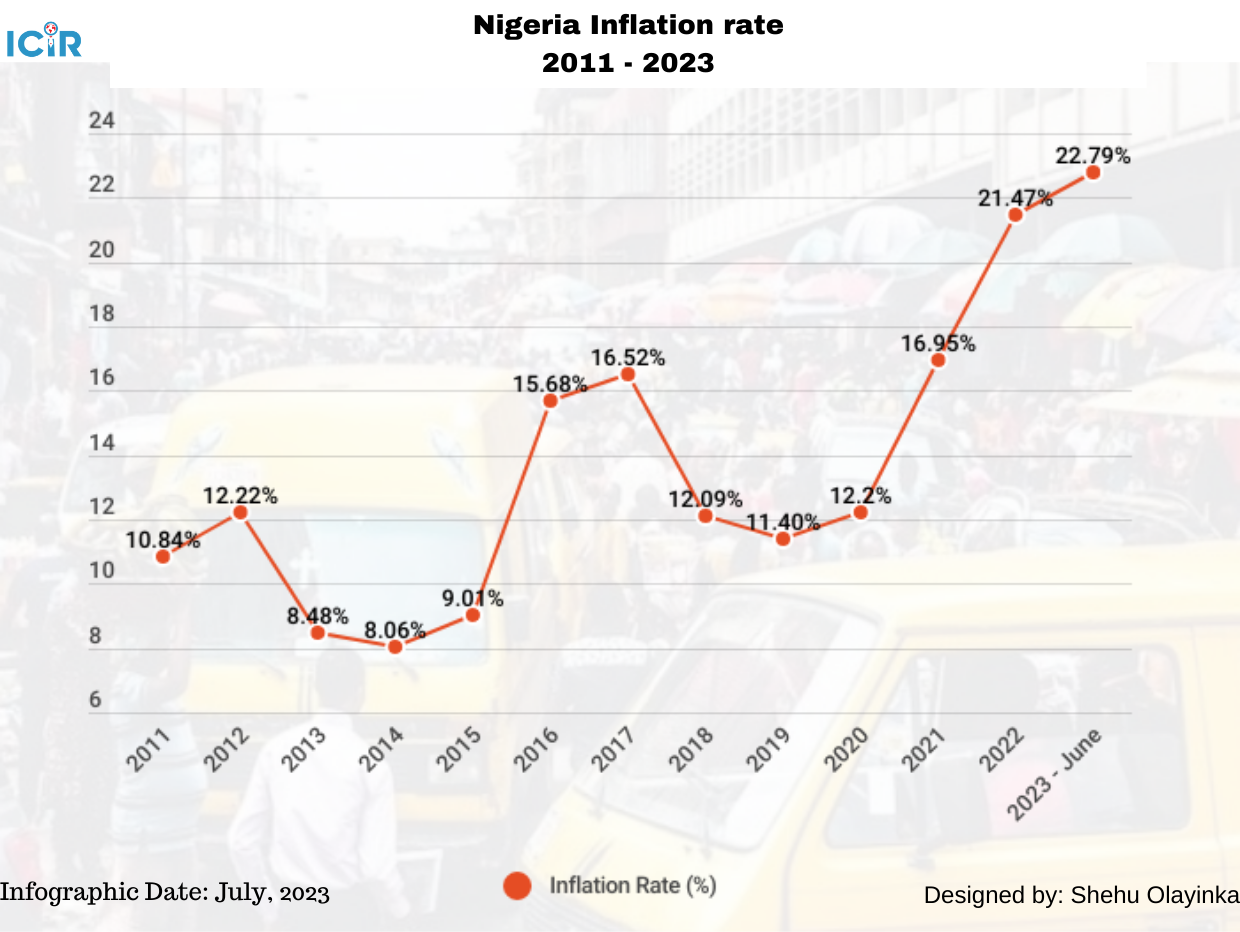
In recent years, Nigeria has been plagued by protracted inflation, significant public debt, the COVID-19 pandemic, and a food crisis that has ravaged its agricultural industry. While unemployment and poverty have fluctuated, data from the NBS shows that inflation rose from 3.16 per cent in 2011 to 11.61 per cent in May 2018 and now 22.79 per cent% in June 2023, the most recent data.
It was also observed that rising inflation has led to declining consumers’ purchasing power.
Data source: NBS
The World Bank stated in its December 2022 Nigeria Development Update that inflation forced five million Nigerians into poverty between January and October 2022.
In June 2023 Nigeria Development Update, the World Bank further stated that increasing inflation drove an additional four million Nigerians into poverty in the first five months of 2023. This indicates that between 2022 and 2023, at least nine million Nigerians have been impoverished due to inflation.
Also, during the World Bank December 2022 presentation of the Nigeria Development Update, the Bank’s Lead Economist for Nigeria, Alex Sienaert, stated that the Nigerian minimum wage, worth N30,000 in 2019, could be valued at N19,355 today.
The NBS, in 2022, stated that 133 million Nigerians are multi-dimensionally poor, representing 63 per cent of the Nigerian population.
The NBS reported 23.13 per cent unemployment in 2018 and 33.28 per cent in 2020. According to a KPMG report released in April 2023, the country stated that in 2024, the unemployment rate would grow to 43 per cent while inflation would accelerate to 20.3 per cent in 2023. By 2024, inflation would jump to 20.0 per cent, the report predicted.
It is worthy of note that, between 2015 and 2022, the Nigerian economy fell into recession twice.
According to SBM Intelligence’s study, while abduction is common in the south, the victims are more targeted, and the kidnappers perceive it as a business transaction, attempting to extract money from their criminal operations.
Also, a Former Member of the Federal House of Representatives of Nigeria, policy and leadership expert, Dakuku Peterside, in an article he published in September 2022 titled, Nigeria’s burgeoning kidnapping industry, said the lack of opportunities for the youth is part reason why kidnapping is becoming a profession in Nigeria.
“Kidnapping has become a profession because it is now an easy way of making money. It is ubiquitous due to the state of the economy and the lack of opportunities for the youth. Dabbling into crime has become an excellent alternative for idle minds’, he said.
A security expert Oladele Fajana told The ICIR that “For the government to end kidnapping across Nigeria, the government should work towards eradicating every opportunity that may lead to kidnapping. Every possible aspect should be looked into”, he said.
On whether the government should ban ransom payment, he said the government could not do anything about it as anyone kidnapped would like to pay for freedom.
The Nigerian Senate passed a bill in April 2022 that made paying a ransom to release an abducted person punishable by at least 15 years in prison and made kidnapping a capital offence in cases where victims die.
He said, “Maybe if the government can put in a mechanism that when someone has been kidnapped, there is a swift rescue by security operatives, then we can talk about placing a ban on ransom payment. For now, there is nothing the government can do about it. Yes, stopping ransom payments can discourage kidnapping, but there is nothing government can do about it. Even if you place a ban, people can pay without the government knowing about it.”
Similarly, a research fellow at Hudson Institute, James Barnett, told The ICIR, a law won’t deter people whose loved ones are held hostage by deadly gunmen.
According to him, “The National Assembly has already amended the Terrorism (Prevention) Act to make payment of ransoms punishable, but this is not going to deter people whose loved ones are held hostage by deadly gunmen. In many instances, the police are incapable of rescuing kidnap victims and will be the first to tell families that they should pay the ransom demanded by the kidnappers. So this law seems more like tough rhetoric than an actual solution to the banditry and kidnapping crises.”
Names with asterisks were changed to protect the people.
FBN Holdings Plc has announced its intention for a capital raise of up to N150 billion through a Rights Issue amid the rift among shareholders of the company.
The bank disclosed this in an amended notice of its 11th annual general meeting (AGM) to the Nigerian Exchange Limited (NGX) on Wednesdays, August 9, signed by the Acting Company’s Secretary, Adewale Arogundade.
“The company hereby wishes to notify the Nigerian Exchange Limited, shareholders and stakeholders that the agenda for the AGM has been amended to rephrase Resolutions 8 (b) and 8 (d) as follows and as detailed thereunder,” the notice read.
8 (b) – That there shall be a capital raise of up to N150,000,000,000.00 (One Hundred and Fifty Billion Naira. The capital raise transaction shall be by way of a Right Issue, on such terms and conditions and on such dates as may be determined by the Directors, subject to obtaining the approvals of the relevant regulatory authorities.
8 (d) – That any shares not taken up by existing shareholders within the period stipulated under the Rights Issue may be offered for sale to interested shareholders of the Company on such terms and conditions as may be determined by the Directors, subject to obtaining the approvals of relevant regulatory authorities.
The ICIR had reported that FBN Holdings had, in an earlier notice to the NGX dated July 19, also signed by Arogundade, revealed intentions to raise its Issued Share Capital from N17.95 billion to N22.43 billion by offering 8.97 billion shares via Rights Issue.
8 (b) – That there shall be a capital raise. The capital raise transaction shall be by way of a Rights Issue, on such terms and conditions and on such dates as may be determined by the Directors, subject to obtaining the approvals of the relevant regulatory authorities.
8 (d) – That the shareholders, pursuant to Resolution (c) above, hereby waive their preemptive rights to any unsubscribed shares under the Rights Issue in the event of an under-subscription.
Sharing his view, a capital market analyst and stock broker, David Adonri, said, “Revision of the Rights Issue from N22 billion to N150 billion is colossal.
“Perhaps they (the bank) feel that the shareholders can cough out that amount now that the secondary market is upbeat,” he added.
According to Adonri, it is also likely that with the depreciation of the Naira, previous assumptions belying earlier capital-raising plans have been thrown overboard.
He said, however, that since most stocks are trading at a premium in the secondary market, this might be the appropriate time for issuers to approach the primary market by offering a little discount.
“The move is a welcome development as it can facilitate a revival of the primary market while soaking away pressure from the apparently overheated secondary market,” he maintained.
Arising from the development, some shareholders have approached the court to stop the AGM and the bank from raising capital and admitting some directors onto the board.
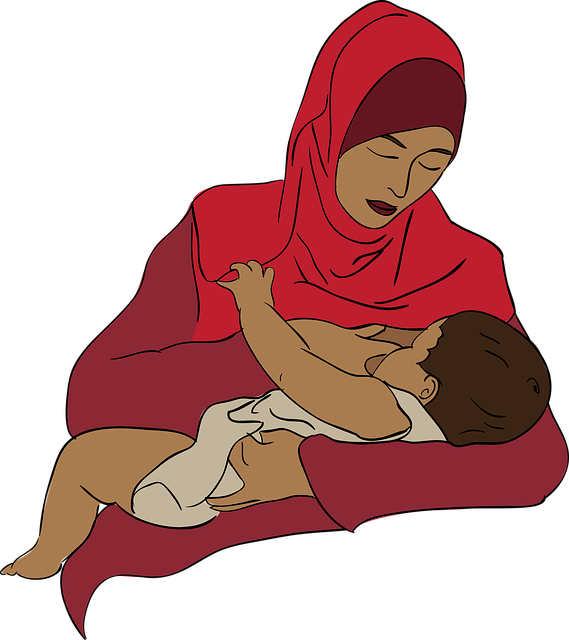
AS part of the commemoration of World Breastfeeding Week, which centres around the theme “Enabling Breastfeeding in the Workplace,” Medical practitioners have highlighted the potential impacts of breastfeeding on both maternal health and child’s development.
The week-long event is held at the beginning of August.
The experts noted that while exclusive breastfeeding may have a significant impact on the mother, it also shapes the proper development of children, as some studies have shown that ‘proper’ breastfeeding increases IQs.
Breastmilk, according to the World Health Organisation (WHO), is the ideal food for infants; safe and contains antibodies which help protect against many common childhood illnesses. It also provides all the energy and nutrients that the infant needs for the first months of life, and it continues to provide up to half or more of a child’s nutritional needs during the second half of the first year and up to one-third during the second year of life.
Despite its importance, fewer than half of infants under six months old are exclusively breastfed as inappropriate marketing of breast milk substitutes continues to undermine efforts to improve breastfeeding rates and duration worldwide, WHO noted.
Speaking on the advantages of breastfeeding to mother and child, a Public health physician and Founder of Quinta Health, Adewumi Babatunde Enoch, explained that breastfeeding offers numerous health benefits, ranging from optimal growth and development, nutritional superiority, digestibility, lower risk of infections among others.
“Breast milk is uniquely tailored to meet the nutritional needs of a growing infant, providing a balanced mix of proteins, fats, vitamins, and minerals. It also contains antibodies and immune factors that help protect the baby from infections and diseases. Breast milk supports the optimal growth and development of the baby’s brain, nervous system, and other organs due to its composition of essential nutrients.”
He also noted that breast milk can easily be digested while also reducing the likelihood of digestive issues like constipation or stomach upset.
Breastfed babies tend to have a lower risk of various infections, including respiratory and gastrointestinal infections like diarrhoea, as well as a reduced risk of certain chronic conditions such as allergies, asthma, and obesity, according to Enoch.
On his part, Resident in Internal Medicine and Health influencer Olusina Ajidahun said nature has made breast milk nutritious and enough for a baby in the first six months.
“Breast milk is very nutritious, and the good thing about breast milk is the way nature has made it…in the first six months of a child’s life. It contains almost everything the child needs. I’m sure you hear the concept of exclusive breastfeeding, which means you are to give the child only breast milk for the first six months. No water, no baby food or nothing.
“Just to give a little about what breast milk contains; Well, it’s rich in carbohydrates, of which lactose is the major one. It’s also rich in fats and has proteins. Proteins like something called lactoferrin and also it also has immune antibodies. Antibodies are like chemicals (let me put it that way since I am trying to use non-medical words) that help to fight against infections. There are also vitamins there. You also have white blood cells in the breast milk that help the baby to fight infection.”
He mentioned that studies have indicated that breastfeeding reduces the likelihood of infants contracting various illnesses, such as diarrhoea, pneumonia, meningitis, and allergic conditions like asthma, eczema, and even childhood obesity.
“Breast milk is usually easy for the baby to digest, except the babies have some conditions in which they cannot digest some components of the breast milk.”
Importance on mothers
The importance of breastfeeding also extends to reducing certain diseases in mothers who exclusively breastfeed their babies.
Breastfeeding reduces the risk of some cancers, such as breast cancer and ovarian cancer, according to Ajidahun.
He added, “Studies have shown that when a mother breastfeeds the baby, it also helps to contract the uterus. After a woman delivers, the uterus, at some point, is still a bit soft, so breastfeeding actually increases the production of oxytocin, which helps to contract the uterus and reduces the chances of what we call postpartum haemorrhage in the mother. It also helps mother and baby to bond on a very, very intimate part.
“And it is cheap. I mean, it is natural. It comes right away from the mother’s breast. You’re not buying baby food. Spending money on baby food. So those are some benefits.”
Similarly, Enoch explained that breastfeeding helps women shed pregnancy weight more effectively, as it burns extra calories while it reduces the risk of postpartum depression while adding that it is cost-saving, convenient, always available, and requires no preparation or sterilisation of equipment.
How long can one breastfeed a child?
While it’s important to note that breastfeeding is important in a child’s development, the recommended duration for breastfeeding can vary based on individual circumstances and cultural practices.
However, WHO recommends that exclusive breastfeeding should continue for at least six months of the child’s growth.
Although the WHO stated that the prevalence of exclusive breastfeeding has increased by 10 to 48 per cent globally in the last decade, the barriers women and families face to achieve their breastfeeding goals must be addressed to reach the global 2030 target of 70 per cent.
Speaking on the duration, Enoch said breastfeeding with complementary goods should continue for at least one year or longer.
He said, “Breastfeeding can be continued for as long as both the mother and child desire. Breast milk remains a valuable source of nutrition and comfort as the child grows. It’s important to note that these recommendations are general guidelines, and the decision to breastfeed and for how long is a personal one that should take into account various factors, including the mother’s health, the baby’s needs, family dynamics, and individual preferences.”
Improved maternity leave, creation & support to fund Breast milk banks, and advocating for baby-friendly hospitals are some of the ways suggested to improve breastfeeding.
THE Association of Bureaux De Change Operators of Nigeria (ABCON) said the operators of Binance are influencing and manipulating Nigeria’s foreign exchange market, riding on poor insufficient dollars to the Nigerian economy.
The Association said, despite the ban on Binance operators by the Securities and Exchange Commission (SEC), the borderless nature of its transactions influences the direction of Nigeria’s Forex market amid dollar liquidity problems.
The Chairman of ABCON, Aminu Gwadabe, told THE ICIR that the situation is further worsened by Nigeria’s liquidity problems, arising from poor supply of the dollar to the economy, amid Nigeria’s weak export market earnings.
“The foreign exchange unification policy wasn’t properly thought out and doesn’t have proper shock absorbers, and that is why the transaction has been hijacked.
“In Binance, there is more liquidity, and it is having a huge influence on Nigeria’s currency market. Binance is the anchor; for instance, it closed at N881 the other day and has been determining the market direction in Nigeria’s currency market,” he said.
Commenting on difficulties in the government’s restriction of Binance operators, Gwadabe noted that its operations are largely borderless.
“For instance, if you’re banning it in Nigeria, whereas it is operational in Ghana, Kenya and other African countries, people would find a way around it because it is a borderless transaction market.”
He suggested that the only way to solve the Binance operator’s influence was to have an alternative supply market through a retail end to the BDCs.
“There should be a competitive open window for the diasporans to enable more inflow of liquidity on the supply side. Banks are mopping the dollars, opening their apps to collect more from diasporans,” he said.
He further said that the retail end of the BDCs should come from diaspora remittances, international logistic firms and International Oil Companies who should sell to BDCs to diversify the market controls.
He suggested that the government inject finance and intervene in the currency market periodically to facilitate currency stability.
As a result of continued downward trend of the naira against the dollar, the Economic Intelligence Unit (EIU) has predicted Federal Government’s intervention in the exchange rate movement over apprehension the naira could plunge uncontrollably.
The EIU believes that the Central Bank of Nigeria (CBN), which manages the country’s exchange rate movement, lacks the experience to handle a floating forex regime.
The President Bola Tinubu administration has made foreign exchange unification a key component of its policies, which has seen the naira struggling to maintain a handsome level against foreign currencies, especially the dollar, the euro, and the pound sterling.
Economic watchers also argue Nigeria’s weak export earnings and external reserves would not be able to serve as enough buffer to hedge Nigeria’s forex problems.
A development economist and Budget expert, Oluseun Onigbinde, said Nigeria needs to urgently get ramp up its export to earn more dollars and strengthen its competitiveness.
“If Nigeria ramped up its oil production to four million barrels per day mbpd, did gas production of 150billion cubic meters annually and had $30 billion in agric exports, it won’t have currency issues,” he said.
He stressed the importance of Nigeria making its exportable products competitive in global markets to enable it to solve its currency problems.
“The question forever remains: what will Nigeria sell to the World,” he asked.
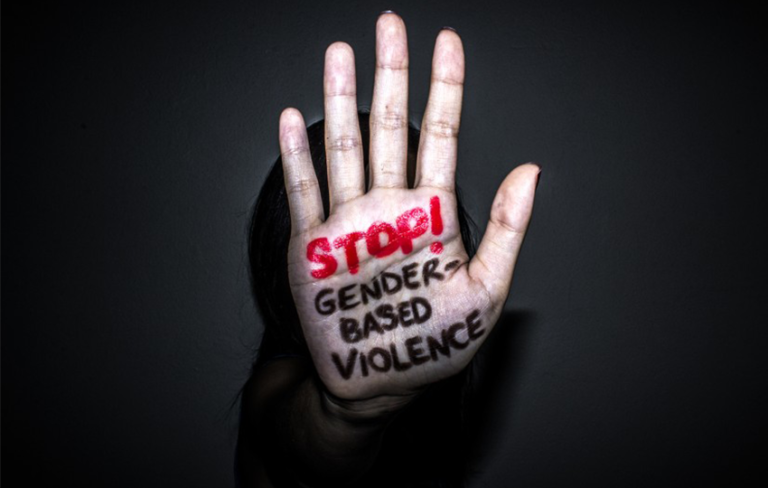
This session on developing capacity intends to provide student journalists with long-term methods for covering gender-based violence and other social concerns.
African student journalists interested in covering gender-based violence can apply for training.
Due to the sensitive nature of gender-based violence, the training will put emphasis on data inclusion, existing legal frameworks that protect women and girls, and reporting ethics. It will also cover how to approach victims and survivors.
The two-day training will be held from August 24 to 25, and participants will be eligible for mini-grants to spotlight instances of gender-based violence.
The deadline is August 15, 2023. Interested applicants can apply here