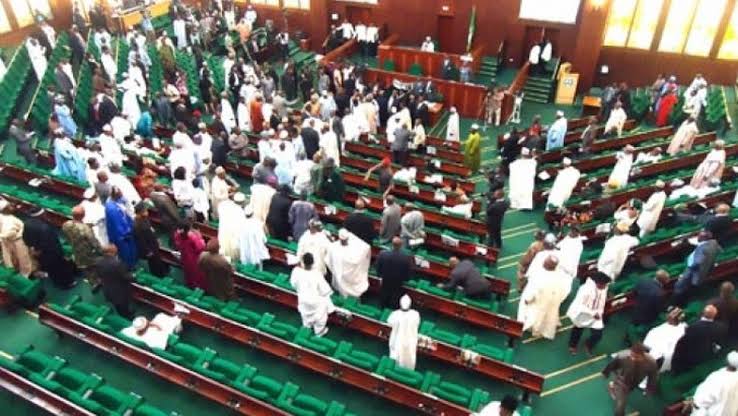
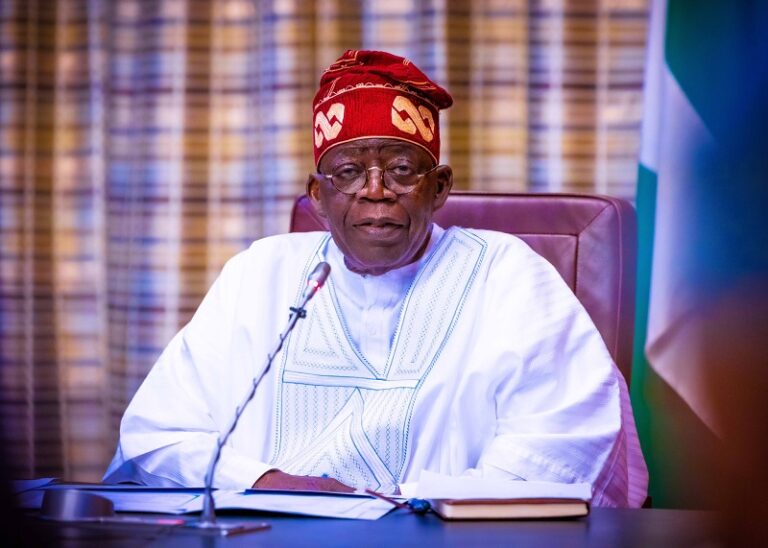
MEMBERS of the House of Representatives have promised to hasten the passage of an upward review of the minimum wage once it is presented to the National Assembly by Nigerian President Bola Ahmed Tinubu.
This was contained in a statement by Chairman House Committee on Media and Public Affairs, Akin Rotimi, on Tuesday, August 1.
“The House also welcomes the planned upward review of the national minimum wage and will consider and approve once transmitted to the National Assembly by the Presidency.
“On our part in the House of Representatives, we will closely monitor every MDA that will be involved in the implementation to ensure speedy delivery, equitable distribution, and transparency,” he noted.
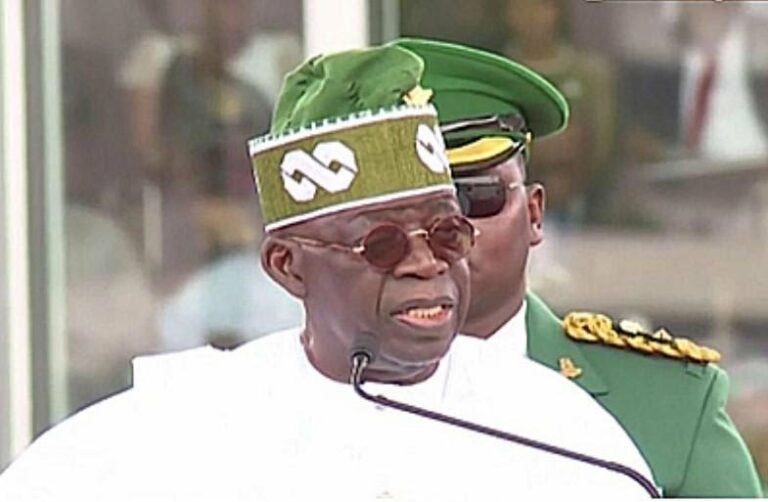
The statement comes a day after Tinubu addressed citizens on Monday, July 31, over socio-economic challenges resulting from changes implemented by the current administration, including the removal of fuel subsidy.
In his address, Tinubu promised an upward review of the national minimum wage, among other measures targeted at cushioning the current hardships confronting Nigerians.
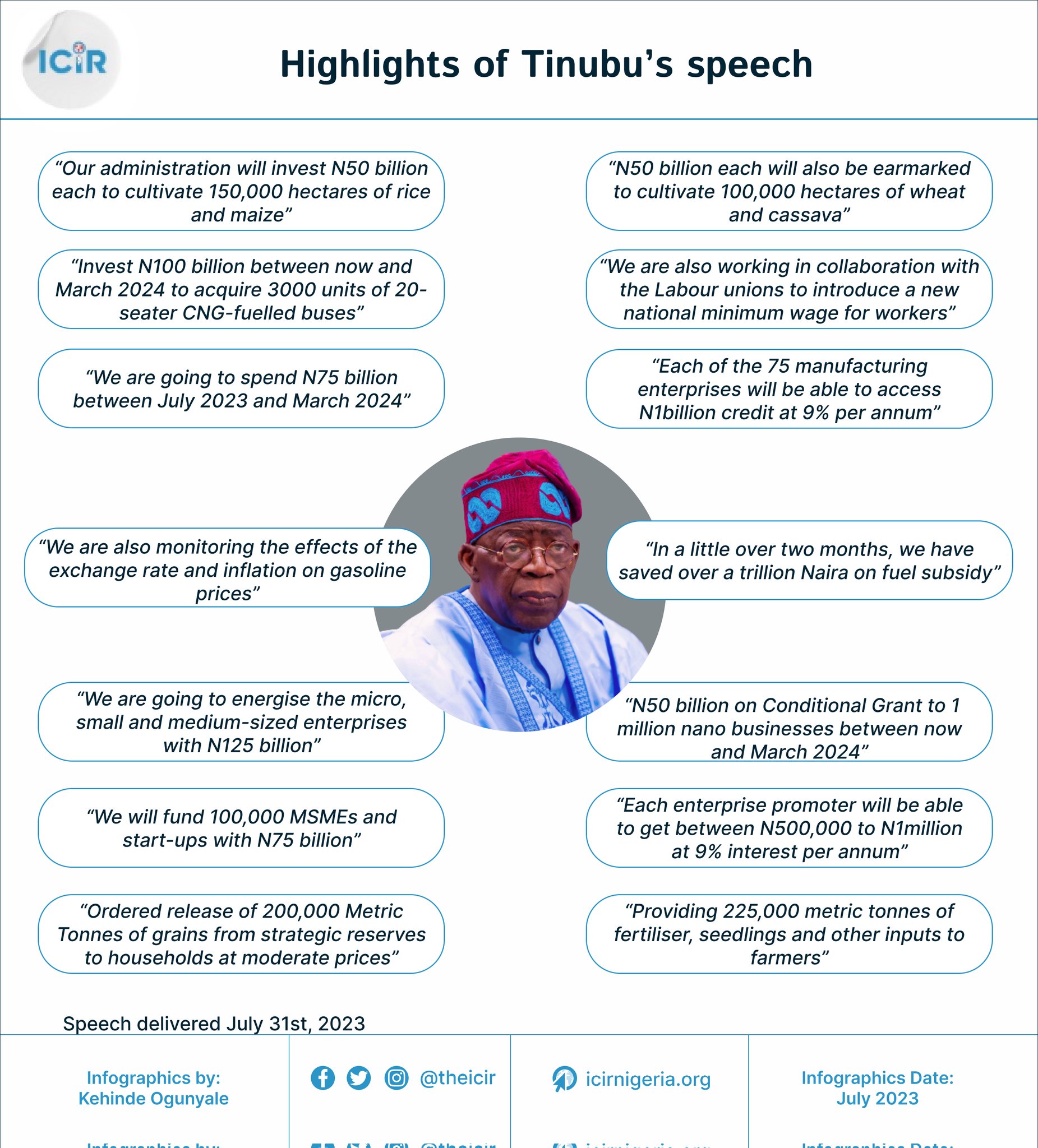
“We are also working in collaboration with the Labour unions to introduce a new national minimum wage for workers. I want to tell our workers this: your salary review is coming. Once we agree on the new minimum wage and general upward review, we will make budget provision for it for immediate implementation,” Tinubu said.
He also promised that buses would be rolled out across states and local governments to provide citizens with affordable transportation.
“We have made provision to invest N100 billion between now and March 2024 to acquire 3000 units of 20-seater CNG-fuelled buses. These buses will be shared to major transportation companies in the states, using the intensity of travel per capita. Participating transport companies will be able to access credit under this facility at 9 per cent per annum with 60 months’ repayment period,” Tinubu said.
In the statement by the House of Representatives on Tuesday, the legislators commended the President’s efforts to mitigate the harsh economic conditions in the country.
“The House commends President Tinubu for his interventions in the manufacturing sector via support for small and medium scale enterprises, as well as the plan to work with the State Governments to invest in critical social and economic infrastructure and to deploy 3,000 commuter buses, amongst other measures.
“The integrated interventions would stimulate economic productivity, boost agriculture production, create jobs, and improve living conditions,” Rotimi further noted.
Nigerians have been faced with the biting effect of fuel subsidy removal, which took effect upon Tinubu’s assumption of office as President.
Tinubu declared fuel subsidy gone during his inaugural speech on May 29, which resulted in the immediate hoarding of petrol by marketers and a hike in the pump price of the product by about 200 per cent.
Transport costs rose as a result and prices of commodities followed suit, leaving many residents in dire straits.
However, oil and gas analysts argue that the subsidy removal is the right step, as it has been an avenue for smuggling the product outside the country’s shores and other forms of corruption, causing a non-profitable decline in Nigeria’s revenue.
FRANCE will begin to evacuate its citizens and other European nationals from Niger Republic on Tuesday, August 1.
According to a statement from the Ministry for Europe and Foreign Affairs, the decision to evacuate citizens was prompted by attacks on the French embassy in Niamey and the closure of Niger’s airspace, which made regular departures impossible.
Niger’s democratically elected President, Mohamed Bazoum, was ousted in a coup last Wednesday, July 26.
The head of Presidential Guards, Omar Tchiani, declared himself the new leader of the uranium-rich country two days after.
This development escalated tensions between the Sahel country and the former colonial power, France, and other members of the international community.
As a result, France says it is preparing an evacuation special flight to repatriate its nationals from Niger.
The French foreign office said: “Given the situation in Niamey, and the violence that took place against our embassy [on Sunday] and the closing of airspace that leaves our citizens without any possibility of leaving the country by their own means, France is preparing to evacuate those of its citizens and European citizens who want to leave the country. The evacuation will begin today.”
The evacuations would last for only a short period.
French citizens and other European nationals have been told to prepare their ID documents, a minimum of small luggage, and water and food as they await departure.
According to media report, there are about 500 to 600 French nationals in Niger. This is fewer than the usual number of about 1,000, but many nationals left earlier this month for school holidays.
Meanwhile, Antonio Tajani, the foreign minister of Italy, has also promised special flights for Italians in the West African country.
“The Italian government has decided to offer our fellow nationals present in Niamey the possibility to leave the city with a special flight for Italy.”
Tajani said the embassy in the capital, Niamey, would “remain open and operative, in particular, to contribute to the mediation efforts underway”.
In recent days, regional leaders, blocs, and supranational organisations have condemned the coup.
These governmental bodies have also sanctioned the country, withdrawing humanitarian and military aid.
On Saturday, July 29, the European Union suspended financial support and cooperation on security with Niger.
Announcing the sanction, Borrell said: “In addition to the immediate cessation of budget support, all cooperation actions in the domain of security are suspended indefinitely with immediate effect.”
France said it is prepared to back sanctions against the perpetrators of a “dangerous” coup in Niger because the power grab did not appear to be definitive.
The African Union issued a 15-day ultimatum to the military officers to return to the barracks and restore the democratic constitution and suspended institutions.
The Economic Community of West African States Authority of Heads of State and Government (ECOWAS), on Sunday, July 30, also issued a seven-day ultimatum to the Niger Republic military to release and reinstate President Mohammed Bazoum as the legitimate Head of State and government.
But the junta that seized power dismissed the threats and warned ECOWAS against military intervention.
The Niger Army said, “We want to once more remind ECOWAS or any other adventurer of our firm determination to defend our homeland.”
Nigeria’s president, Bola Ahmed Tinubu is the current ECOWAS chairman.
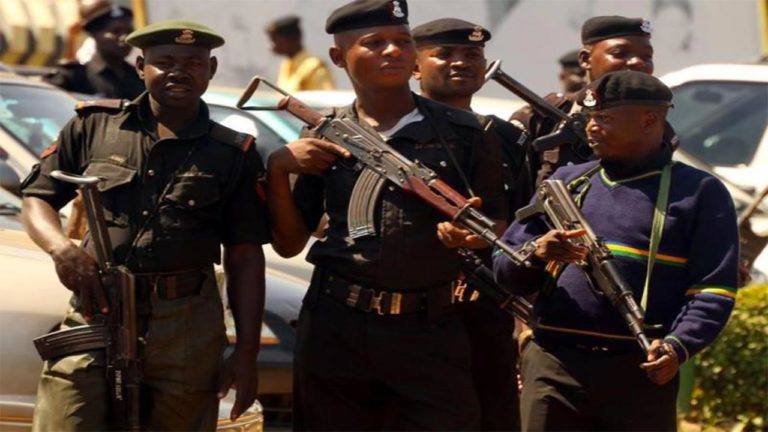
THE Nigeria Police Force (NPF) has warned against any violent protests that may be hijacked by hoodlums.
The Acting Inspector General of Police, Kayode Egbetokun, stated this ahead of the nationwide protest action called by the Nigerian Labour Congress (NLC) and the Trade Union Congress (TUC) over the hardship resulting from the removal of petroleum subsidy.
Egbetokun said the warning was issued as a result of recent unpleasant experiences with such protests in the majority of the country’s main cosmopolitan cities.
This was disclosed in a statement on Tuesday, August 1, by the Force Public Relations Officer (FPRO) Olumuyiwa Adejobi. The statement noted that that the protests could be hijacked by hoodlums.
“The Acting Inspector-General of Police, IGP Kayode Adeolu Egbetokun, is deeply concerned about recent developments regarding planned nationwide protests by the Nigeria Labour Congress (NLC) and Trade Union Congress (TUC).
“While being mindful of the right to peaceful protest, as enshrined in our Constitution, the IGP urges all parties involved to ensure that the planned demonstrations are conducted in a peaceful manner to prevent being hijacked by miscreants.
“The IGP, however, acknowledges the grievances raised by the labour unions and the importance of constructive dialogue, which is sine qua none, in addressing these issues,” the statement said.
According to the statement, the IGP has ordered the Commissioners of Police in charge of various commands and supervisory Assistant Inspectors-General of Police to engage in fruitful discussions with the NLC/TUC leadership to foster understanding and reach common ground on the planned protests.
“A peaceful and coordinated approach is crucial to achieving meaningful solutions and preventing any form of violence or disruptions to public order, should the protests persist,” the Acting IGP added.
The NPF reiterated its commitment to ensuring the safety and security of all citizens during the planned protests, noting that all necessary measures to facilitate the peaceful conduct of these demonstrations have been put in place.
It, however, warned that any attempt by miscreants to exploit the situation for violent purposes, viz-a-viz vandalism, gangsterism, and extortion, will be met with a firm, professional and commensurate lawful approach.
President of the Nigeria Labour Congress (NLC) Joe Ajaero had, while insisting that the protests will go ahead as planned, dismissed fears that it could be hijacked by hoodlums, saying that had never happened in the history of workers’ protests.
He, however, said it was the responsibility of security agencies to provide security to protect the workers.
THE Organised Labour has questioned the sincerity of the interventions proposed by President Bola Tinubu to ease the effects of the removal of fuel subsidy and other economic policies on Nigerians.
Labour vowed to proceed with its scheduled protest and strike against the elimination of the petroleum subsidy, claiming that what Tinubu told Nigerians in his nationwide broadcast was irrelevant given the lack of direct assistance to Nigerians after two months in office.
Tinubu had, in his broadcaston Monday, July 31, highlighted his administration’s plans to ease the hardship faced by Nigerians following the removal of petrol subsidy.
In a nationwide broadcast, the President reiterated his hope agenda, including creating jobs, supporting businesses, alleviating poverty and revamping the economy.
His broadcast came on the heels of the planned protests and strike by the Nigerian Labour Congress (NLC), scheduled to commence on Wednesday, August 2.
The ICIRreported that the President announced that the subsidy must go in his inaugural address on May 29.
Subsidy removal has tripled fuel prices nationwide – from N195 to the current N615, with a resultant astronomical rise in the cost of transportation, food and other basic needs.
However, in his Monday broadcast, Tinubu said his government had saved over one trillion naira within two months it ended the subsidy regime.
He said the former administration of President Muhammadu Buhari made no funds available in the 2023 Appropriation Act for subsidy.
According to the President, some of the policies to cushion the effect of fuel subsidy removal and revamp the economy include strengthening the manufacturing sector and increasing its capacity to expand and create good-paying jobs by injecting N75 billion into the sub-sector between August 2023 and March 2024.
“The objective is to fund 75 enterprises with great potential to kick-start sustainable economic growth, accelerate structural transformation and improve productivity.
“Each of the 75 manufacturing enterprises would access one billion naira credit at nine per cent per annum with a maximum of 60 months of repayment for long-term loans and 12 months for working capital,” Tinubu stated.
The President added that the government will reinvigorate micro, small and medium-sized enterprises and the informal sector with N125 billion. Out of the sum, it will spend N50 billion on conditional grants to one million nano businesses between July and March 2024.
“Our target is to give N50,000 each to 1,300 nano business owners in each of the 774 local governments across the country,” said Tinubu.
In addition, the government will fund 100,000 MSMEs and start-ups with N75 billion. Under this scheme, each enterprise promoter can get between N500,000 to one million naira at nine per cent interest per annum and a repayment period of 36 months.
“We are also providing 225,000 metric tonnes of fertiliser, seedlings and other inputs to farmers committed to our food security agenda.”
He explained that his administration would support the cultivation of 500,000 hectares of farmland and all-year-round farming practice.
Tinubu said part of his agenda was to roll out buses across the states and local governments for mass transit at a much more affordable rate.
He called for calm and understanding from the citizens as he promised that he would continue to work assiduously to put smiles on the citizens’ faces.
Labour says no going back on strike
But President of the Nigeria Labour Congress (NLC) Joe Ajaero has insisted that the plan for workers to continue with a peaceful protest starting tomorrow had not changed.
He expressed doubts about Tinubu’s ability to control inflation and gasoline prices due to the unification of the exchange rate.
Reacting to Tinubu’s plan to intervene on exchange and high cost of gasoline prices, Ajaero said: “By the time you have a single market and you are not having anything that has a comparative advantage, your energy is import driven, then how are you going to control it? How are you going to control somebody that exchanged dollars at about 900 (naira)? Are you going to tell him to sell below the price?”
“How are you going to tell even NEPA (DisCos) today, with the cost of production, not to increase tariff? Even corn in the villages that was sold at N18, 000 by February now it’s about 56,000. How are you going to control it?” he added.
Ajaero dismissed fears that the peaceful protest could be hijacked by hoodlums, saying that had never happened in the history of workers’ protests.
He, however, said it was the responsibility of security agencies to provide security for the protest to protect the workers.
The Chief of Staff to the President, Femi Gbajabiamila and the National Security Adviser, Nuhu Ribadu, were among the government representatives at the meeting.
A video clip showing a man shedding tears while delivering a speech has surfaced online with a claim that it shows the ex-finance Minister of Niger Republic crying over failure to account for government’s spending.
The claim is contained in a social media post shared on X (formerly Twitter) by an online user.
According to the claim, the Nigerien military has given the former minister a 48-hour ultimatum to give his stewardship account as head of the nation’s finance ministry or face execution.
The video is circulating following the recent coup in Niger Republic.
A popular activist, Mahdi Shehu with the username: @shehu_mahdi tweeted the video with a caption that read:
“EVERY DAY FOR THE THIEF…Below is the Finance minister of Niger Republic, having been told by the new military Junta to account for all the stolen money of the country in the next 48 hrs or face execution by firing squad. In other countries, he will retain his seat and enjoy.”
The tweet has generated over 700,000 views, over 3,600 retweets, and more than 5,000 likes as of July 30, 2023.
Another X user, Olaudah Equiano, with the username: @RealOlaudah tweeted the video with a caption thus:
“Minister of finance in Niger Republic given 48hrs by the coup plotters to account for the stolen money of Niger people or face execution by firing squad. We’re back to square one!”
The tweet has generated over 1.7 million views, more than 3,000 retweets and over 5,000 likes as of July 30, 2023.
Gidi, a popular X page, tweeted the same video with a caption that read:
“Niger Republic’s Finance Minister, Ahmat Jidoud cried after the Military told him to account for all the money in the next 48 hours or face execution by firing squad. Thoughts?”
The tweet has also garnered over 180,000 views as of July 30, 2023.
CLAIM
Video shows Nigerien minister of Finance crying over failure to account for public spending.
Screenshot of the viral posts
THE FINDINGS
Findings by The FactCheckHub show that the claim is FALSE.
A Google reverse image search using the video’s thumbnail shows that the footage has been online since at least December 2021. An earlier version of the video can be viewed here and here.
Ahmat Jidoud, ex-minister of Finance, Niger Republic.
Analysis of the video content shows that the man in the video is Niger’s ex-minister of Justice, Marou Amadou and not the nation’s former minister of Finance, Ahmat Jidoud.
Further checks revealed that the video clip is unrelated to the July 2023 military coup in the West African country.
THE VERDICT
The claim that the viral video shows Nigerien minister of Finance crying after being forced to account for public spending is FALSE; findings indicate that the video has been online since 2021 and is unrelated to the recent coup d’état in the country.
AMINA Idris kept her phone inside her underwear for over a week to maintain contact with her lawyer and other people assisting her in her plan to quit a forced marriage.
As earlier reported by The ICIR, Amina is one of the underage girls forced into marriage in Niger State. The ICIR report revealed frantic efforts being made by the girls to come out of the forced marriages.
The ICIR interviewed four victims who narrated their ordeals, including how they were chained while resisting marriage, hypnotized by a herbalist, scolded by relations, forced to marry in court, and fled to the bush and allegedly lived in the mountains for days in order to escape being compelled to wed.
The girls’ parents also shared their views in the report. While some regretted the actions, others condemned their girls for rejecting their decision and going against tradition and the prevalent Islamic religion in the state.
The girls interviewed are Amina Idris, from Edogi, Lavun Local Government Area (LGA); Balkisu Abubakar, Ebugi, Gbako LGA; Hajara Mohammed, Lenfa-Boro, Edati LGA; and Amina Abubakar, from Saganuwan-Kulla Village, near Etsu Audu, Gbako LGA.
Stakeholders, including community and religious leaders, lawyers, and health officials, said child marriage was rife in the state and condemned the practice.
The sources – all Muslims – said forced marriage was against Islam. They also spoke on the need for children to receive education, at least until they complete secondary school, before marriage.
Three of the four girls never attended a formal school. Only one got to primary four before her parents pulled her out to wed.
None of the girls knew her age, and their parents could not categorically state how old their daughters were.
Sharing her experience with our reporters, Amina (Idris) said she was underage, and her parents forced her into marriage.
Amina’s father is late, but her mother is alive. The mother divorced her father when the girl was very young. The mother now has five other children for the husband she later married at Zhigichi community in Lavun LGA.
The girl lived with her husband, Usman Haruna, with whom she was married in May, for 13 days before fleeing the husband’s home.
She said she slept in the bush for two nights before finding her way to the Child Rights Protection Agency’s office in Bida town. The office treats at least 100 cases of girl-child forced marriage yearly.
While seeking an end to the marriage, she told our reporters, “I am not interested in getting married to the boy. I can’t even stand close to him because I don’t love him.”
After escaping to the Child Rights Protection Agency in Bida, the Agency’s Desk Officer in the town, Mariam Abdulmalik, took charge of her care.
But a Sharia court in the Dokko community, Lavun LGA, ruled that the girl should move to the House of Chief Imam of Bida, Adamu Liman-Yakatun.
Rather than remain in the Liman-Yakatun’s custody till Wednesday, August 2, the next court hearing date for her matter, her family, allegedly backed by Mohammed Mohammed, a Sharia court judge, took her away, said Abdulmalik (the Desk Officer).
The ICIR could not confirm the allegation against Mohammed, though he supported Amina’s marriage when The ICIR crew met him.
“If Islam says 15 years, and the marriage is conducted when she is 19 or 20, there is nothing wrong with that. Even in the constitution of Nigeria, it’s not wrong,” he had said.
He refused to give his phone number and denied he was a judge after mentioning three times in a recorded interview with our crew that he was a judge.
The reporters also confirmed from many sources, including Mohammed’s friends and family members, that he is a Sharia court judge in Gbara, Lavun LGA.
Speaking on the girl’s travails, Abdulmalik told The ICIR on Tuesday, August 1: “She has been in the family house for nine days with just the only cloth she took out of my house. You know her father is already late. She is there with her uncle.
“She has a small phone that she keeps inside her pant whenever she moves out of the compound to call anybody. If they see her with the phone, they will seize it, believing she will use it to call her lawyer and other people helping her since she ran away from her husband’s house.”
Amina is not the only child bride facing the confiscation of her phone by her family. Hajara, one of the four girls interviewed, had her phone forcefully snatched from her by her family.
The girl is currently in Abuja, where she fled to after escaping from forced marriage on Friday, July 28.
Meanwhile, a director at the Federal Ministry of Health in Abuja, who pleaded anonymity, saw The ICIR’s report on the forced marriages on Monday, June 31 and promised the government’s prompt intervention into the incidents.
NESTLE Nigeria, Dangote Sugar Refinery and three other fast-moving consumer goods (FMCGs) companies have reported a total of N224.299 billion pre-tax loss.
According to the companies’ financial statements for the six months ended June 30, 2023, Nestle posted a N69.12 billion loss, while Dangote Sugar recorded N31.37 billion.
The other three companies, International Breweries, Nigerian Breweries, and Cadbury Nigeria, reported N41.43 billion, N67.84 billion and N14.54 billion losses.
A pre-tax loss is the total loss made by a company before an income tax obligation is deducted.
Relative to the half-year ended June 30, 2022, Nestle reported a N43.74 billion pre-tax profit; Dangote Sugar, N29.73 billion; International Breweries, N1.82 billion; Nigerian Breweries, N18.74 billion; and Cadbury, N3.35 billion.
The ICIR analysis of the financial statements showed that losses arose from huge finance costs (borrowing costs) incurred by the companies.
Pre-tax loss. Chart by The ICIR
These include interest expense on leases, interest expense on borrowings, and exchange difference (realised and unrealised).
Following from the above, a total of N339.29 billion net finance costs were incurred by the five consumer goods companies in their half-year business operations that ended June 2023.
A net finance cost is the difference between finance income and finance cost (expense).
Nestle reported N129.91 billion finance costs in June 2023 from N2.44 billion; Dangote Sugar, N85.81 billion, compared to N5.36 billion; International Breweries, N6.74 billion relative to N3.58 billion; Nigerian Breweries, N96.22 billion from N10.14 billion; and Cadbury, N20.61 billion from N497.05 million.
Net finance cost. Chart by The ICIR
According to analysts, the negative performances stemmed from the companies’ inability to hedge against “revaluation losses,” which arose from foreign exchange unification as most FMCGs companies have foreign currency-denominated obligations.
“What we are seeing is revaluation loss; it is like market-to-market loss,” an analyst, Ayokunle Olubunmi, pointed out.
“What we are seeing is revaluation loss; it is like market-to-market loss
He explained, “Assuming a subsidiary company took a loan of $100 from the parent company when the exchange rate was about N450, that amounts to N450,000 the company is owing the parent.
“Let’s assume that as of today, the exchange rate is N750, that means the amount the subsidiary is owing the parent will no longer be N450,000 but N750,000. So the difference (N300,000) is what is called revaluation loss.”
Another analyst, David Adonri, said it was anticipated that the floating of the naira and removal of fuel subsidy would make currency risks to crystallise and the cost of operations to increase for enterprises that have hard currency-denominated obligations.
But unfortunately, most of the companies did not hedge to mitigate the risk, Adonri, the executive vice chairman of Highcap Securities Limited, pointed out.
“Now that it has crystallised, they are left with no option but damage control,” he added.
According to him, the implication is that the losses would impair the companies’ balance sheets and cause their values to diminish.
“This may adversely affect their prices as the market corrects them to reflect current realities,” he asserted.
Adonri believed that the short-term impact of the public policies would fizzle out as the economy readjusts to change, giving rise to long-term benefits for the economy.
“The long-term prospects of the affected companies remain bright,” the Highcap Securities chief stressed.
Hedging against revaluation risk
According to Olubunmi, head of financial institutions ratings at Agusto and Co, with the liberalisation of the foreign exchange market, many companies would be resorting to a lot of forwards and derivatives transactions to meet their forex needs.
“What we are anticipating is that before the end of the year, volatility in the forex market should have at least settled to a large extent. By then, we won’t see that volume of revaluation loss again.
“I suspect that many of the companies will find a way to establish the liabilities owned to the parent companies. For some of them that actually took the loan from their parent companies, they may be forced to convert it into equities,” he said.
He was optimistic that the revaluation loss might still be in the companies’ books by the full year results, but added, “I don’t think we will see it in their 2024 accounts.”
Breakdown of the companies’ performances
Nestle Nigeria Plc
The company reported in the half-year ended 2023 a slight revenue growth of N261.77 billion from N222.450 in June 2022.
In June 2023, gross profit stood at N107.33 billion, operating profit fell to N60.79 billion, while a net finance loss of N129.91 billion dragged the company’s pre-tax loss to N69.12 billion.
“Included in interest expense on financial liabilities measured at amortised cost is interest expense on inter-company loan amounting to approximately N13.9 billion (2022: N4.8 billion) excluding the impact of foreign exchange differences,” the company stated in its financial report.
International Breweries Plc
The beverages – brewers/distillers – consumer goods company slightly grew its revenue to N116.13 billion in June 2023 from N111.40 billion in June 2022. An increase in cost of sales, brought the gross profit to N24.02 billion.
However, deductions, including administrative, marketing, impairment and other expenses, pulled the company’s operating loss down to N34.69 billion, while net borrowing loss to N6.75 billion dragged its pre-tax loss to N41.43 billion.
According to International Breweries, the balance of a loan amounting to $278 million obtained in 2018 with a maturity date of May 2021 was rolled over for an additional three years period.
It said, “The Company has entered into non-deliverable forward contracts to mitigate the forex risk on the contractual interest and principal repayments. There is also a loan (revolving credit facility) of N57 billion that has not been drawn down by the company as at end of the reporting period.”
Nigerian Breweries Plc
Also, a beverages – brewers/distillers – consumer goods company, NB Plc’s revenue rose minimally to N277.42 billion from N274.08 billion as gross profit settled at N112.324 billion after deduction from the cost of sales.
Deductions from the company’s marketing and administrative, and other expenses left the operating profit at N28.38 billion.
Net borrowing cost, which rose to N96.22 billion, pulled down the pre-tax loss to N67.84 billion.
“The 2nd Quarter of 2023 was significantly impacted by various factors, including the effects of fuel subsidy removal on consumers, naira devaluation and its effect on input cost, and mostly the revaluation of foreign exchange obligations.
“Together with the cash crunch, which materially impacted the 1st quarter, the Company’s net loss was escalated in H1,” the company said in its financial statement signed by its secretary, Uaboi Agbebaku.
Cadbury Nigeria Plc
A food products and diversified company, Cadbury reported a slight increase in revenue at N35.61 billion from N27.88 billion. Gross profit stood at N10.25 billion and operating profit to N6.07 billion. However, a N20.61 billion net finance cost brought the company’s pre-tax loss for the period to N14.54 billion.
Dangote Sugar Refinery Plc
Also, a food product consumer goods company, it grew its revenue to N202.78 billion from N185.46 billion. Cost of sales impacted gross profit to settle at N58.19 billion. Operating profit rose to N52.198 billion from N34.12 billion. It reported a net finance cost at N85.81 billion, and pre-tax loss at N31.37 billion.
IN what could be a huge relief for businesses in Nigeria, squeezed by the inclement operating environment, the Federal government has offered a loan facility to small and medium enterprises (SMEs) at a nine per cent interest rate.
President Bola Ahmed Tinubu, who announced the policy direction in a nationwide broadcast on July 31 2023, said his administration recognised the importance of micro, small and medium-sized enterprises (MSMEs) and the informal sector as growth drivers.
Tinubu said in the 20-minute broadcast, “We are going to energise this very important sector with N125 billion. Out of the sum, we will spend N50 billion on conditional grants to one million nano businesses between now and March 2024.
He pointed out that the administration intended to give N50,000 each to 1,300 nano business owners in each of the 774 local governments across the country.
The President, unveiling opportunities for the manufacturing sector, said, “We would strengthen the manufacturing sector and increase its capacity to expand and create good paying jobs. We are going to spend N75 billion between July 2023 and March 2024.”
The objective, he explained, was to fund 75 enterprises with great potential to kick-start sustainable economic growth, accelerate structural transformation and improve productivity.
Each of the 75 manufacturing enterprises, the President said, “will be able to access N1 billion credit at 9 per cent per annum with a maximum of 60 months repayment for long-term loans, and 12 months for working capital.”
A former minister of Agriculture, Audu Ogbeh, saw Tinubu’s speech as offering hope to Nigeria’s economic problems.
Ogbeh, however, advised that the President must assemble a reliable team to deliver his plan to Nigerians.
“We have too many of our grandchildren living in distress. Too little production in a country gifted by God. This is a huge relief for the people. I’m excited by this speech and I believe that it would solve majority of our economic problems.
Ogbeh: Tinubu’s speech offers hope
“We are only utilising 3.5 per cent of our land to produce food. People must feed well. The pruning down of interest rate is key and would help farmers,” he said.
Also, a professor of Political Science at the Nasarawa State University, Jideofor Adibe, said President Tinubu’s focus should go beyond the economy and touch on national healing and reconciliation.
Adibe said, “Some of his statements are emotionally appealing, but he must go beyond economic address. Also, if he said he saved N1 trillion in two months, does he know how many businesses closed shop within the specified time? These are the issues.”
PRESIDENT Bola Tinubu on Monday, July 31 highlighted his administration’s plans to ease hardship faced by Nigerians following the removal of petrol subsidy.
In a nationwide broadcast, the President reiterated his hope agenda, including creating jobs, supporting businesses, alleviating poverty and revamping the economy.
His broadcast came on the heels of the planned protests and strike by the Nigerian Labour Congress (NLC), scheduled to commence on Wednesday, August 2.
The ICIR reported that the President announced that the subsidy must go in his inaugural address on May 29.
Subsidy removal has tripled fuel prices nationwide – from N195 to the current N615, with a resultant astronomical rise in transport, food and other basic needs costs.
However, Tinubu said his government had saved over one trillion naira within two months it ended the subsidy regime in his Monday broadcast.
“This once beneficial measure had outlived its usefulness. The subsidy costs us trillions of naira yearly. Such a vast sum of money would have been better spent on public transportation, healthcare, schools, housing and national security. Instead, it was being funnelled into the deep pockets and lavish bank accounts of a select group of individuals.
“This group had amassed so much wealth and power that they became a serious threat to the fairness of our economy and the integrity of our democratic governance. To be blunt, Nigeria could never become the society it was intended to be as long as such small, powerful yet unelected groups hold enormous influence over our political economy and the institutions that govern it.”
He said the former administration of President Muhammadu Buhari made no funds available in the 2023 Appropriation Act for subsidy.
His plans to cushion subsidy removal pains
The President said early in July, he signed four Executive Orders in keeping with his electoral promise to address unfriendly fiscal policies and multiple taxes that stifle the business environment.
According to him, the suspension and deferred commencement of some taxes would provide the necessary buffers and headroom for businesses in the manufacturing sector to continue to thrive and expand.
Some of the policies to cushion the effect of fuel subsidy removal and revamp the economy are strengthening the manufacturing sector by increasing its capacity to expand and create good-paying jobs by injecting N75 billion into the sub-sector between this month, 2023 and March 2024.
The objective is to fund 75 enterprises with great potential to kick-start sustainable economic growth, accelerate structural transformation and improve productivity.
Each of the 75 manufacturing enterprises would access one billion naira credit at nine per cent per annum with a maximum of 60 months of repayment for long-term loans and 12 months for working capital, noted Tinubu.
The government will reinvigorate micro, small and medium-sized enterprises and the informal sector with N125 billion. Out of the sum, it will spend N50 billion on conditional grants to one million nano businesses between July and March 2024.
“Our target is to give N50,000 each to 1,300 nano business owners in each of the 774 local governments across the country,” said Tinubu.
It will drive further financial inclusion by onboarding beneficiaries into the formal banking system.
In addition, the government will fund 100,000 MSMEs and start-ups with N75 billion. Under this scheme, each enterprise promoter can get between N500,000 to one million naira at nine per cent interest per annum and a repayment period of 36 months.
Agriculture and food sustainability
Tinubu said that to ensure that food item prices remain affordable, he ordered the release of 200,000 metric tonnes of grains from strategic reserves to households across the 36 states and FCT to moderate prices.
“We are also providing 225,000 metric tonnes of fertiliser, seedlings and other inputs to farmers committed to our food security agenda.”
He explained that his administration would support the cultivation of 500,000 hectares of farmland and all-year-round farming practice.
“To be specific, N200 billion out of the N500 billion approved by the National Assembly will be disbursed as follows: our administration will invest N50 billion each to cultivate 150,000 hectares of rice and maise. N50 billion each will also be earmarked to cultivate 100,000 hectares of wheat and cassava.”
He recalled his government’s launch of the Infrastructure Support Fund shortly after the subsidy removal to enable states to have more funds to invest in critical areas, including health and education.
Tinubu said part of his agenda was to roll out buses across the states and local governments for mass transit at a much more affordable rate.
To achieve this aim, his government would invest N100 billion between July and March 2024 to acquire 3,000 units of 20-seater CNG-fuelled buses.
He stated that the buses will be shared with major transportation companies in the states, using the intensity of travel per capita.
He stressed that participating transport companies would access credit under the facility at nine per cent interest per annum with 60 months repayment period.
Besides, the President said the government was working to review workers’ salaries and would make funds available for its implementation immediately after it is done.
He commended private organisations which had increased employees’ salaries.
While restating his zeal to give Nigerians a better life, he said the nation would exit the darkness and enter a new and glorious dawn under his watch.
Tinubu called for calm and understanding from the citizens as he promised that he would continue to work assiduously to put smiles on the citizens’ faces.
The ICIR reports that it is unclear at press time if Tinubu’s reassurance would convince the NLC to change its planned protests and strike.
“In a little over two months, we have saved over a trillion Naira that would have been squandered on the unproductive fuel subsidy, which only benefitted smugglers and fraudsters.
“That money will now be used more directly and more beneficially for you and your families.
“For example, we shall fulfil our promise to make education more affordable to all and provide loans to higher education students who may need them. No Nigerian student will have to abandon his or her education because of lack of money,” Tinubu said.
The President also said he is collaborating with the labour unions to introduce a new national minimum wage for workers.
“I want to tell our workers this: your salary review is coming. Once we agree on the new minimum wage and general upward review, we will make budget provision for it for immediate implementation,” he stated.
On measures to reduce the cost of transportation as a result of subsidy removal, Tinubu said, “Part of our programme is to roll out buses across the states and local governments for mass transit at a much more affordable rate. We have made provision to invest N100 billion between now and March 2024 to acquire 3000 units of 20-seater CNG-fuelled buses.”
He added that the buses will be shared with major transportation companies in the states, using the intensity of travel per capita.
Tinubu says participating transport companies will be able to access credit under this facility at 9 per cent per annum with a 60-month repayment period.
The ICIRreported that the removal of subsidy led to a spike in the pump price of petrol, which also resulted in an increment in the cost of goods and services.
The development has led to a surge in transport fares across the country, leaving commuters in great agony.