Home Blog Page 84

80 passengers escape death as Arik Air plane makes emergency landing in Benin

0

AN ARIK Air Boeing 737-700 flying from Lagos to Port Harcourt was forced to divert to Benin Airport on Wednesday after the crew reported a loud bang from one of the plane’s engines.

The Nigerian Safety Investigation Bureau (NSIB) later confirmed that the incident caused “significant damage” to the affected engine.

Arik Air’s spokesperson, Adebanjo Ola, said in a statement that the aircraft, registered 5N-MJF, was operating from Murtala Muhammed Airport, Lagos, to Port Harcourt International Airport, Omagwa, Rivers State, when the incident occurred.

He added, “The aircraft was on its descent to Port Harcourt when the operating crew heard a loud bang on the left engine. As a precautionary measure, the crew made a safe diversion to Benin.”

All 80 passengers and crew were evacuated safely upon landing in Benin, with no injuries reported. “There were no injuries to passengers and crew as all 80 passengers on board were safely disembarked. Arrangements have been made to transport the affected passengers to their final destination,” the airline stated.

Apologising for the disruption, Arik Air reassured travelers that safety remained its top priority.

The NSIB’s Director of Public Affairs and Family Assistance, Bimbo Oladeji, confirmed the flight experienced an engine anomaly midair. She explained that unusual indications were detected on one engine, leading to a precautionary shutdown and diversion to the nearest suitable airport.

“In accordance with established safety procedures, the flight crew conducted a precautionary engine shutdown and diverted to the nearest suitable airport, Benin. The aircraft landed without incident, and all passengers and crew disembarked normally. No injuries have been reported,” she stated.

The bureau has initiated a full investigation following international standards under ICAO Annex 13. Preliminary checks at Benin Airport revealed major damage to the engine based on visual inspection.

“A preliminary assessment team is en route to Benin to secure the aircraft, document evidence, interview relevant personnel and witnesses, and recover flight data and cockpit voice recorder information,” NSIB said.

According to the bureau, a preliminary report will be available within 30 days, with the final report released after the investigation is completed.

UPDATED: NAFDAC responds to reports on suspension of sachet alcohol ban enforcement

0

THE Federal Government has directed the National Agency for Food and Drug Administration and Control (NAFDAC) to suspend all enforcement actions linked to the proposed ban on sachet alcohol and 200ml PET bottle alcoholic products.

The government also ordered an immediate halt to the sealing of factories and warehouses over the issue, according to the Punch..

The directive was reportedly disclosed in a statement on Wednesday, February 11, in Abuja by the Special Adviser on Public Affairs to the Secretary to the Government of the Federation (SGF), Terrence Kuanum.

Kuanum said the decision followed a joint intervention by the Office of the SGF and the Office of the National Security Adviser (NSA), which raised concerns over the security implications of continued enforcement in the absence of a fully implemented National Alcohol Policy.

According to the statement, all actions, decisions, or enforcement measures relating to the ongoing sachet alcohol ban are to remain suspended pending final consultations, full implementation of the National Alcohol Policy, and the issuance of a definitive directive.

“Accordingly, all actions, decisions, or enforcement measures relating to the ongoing ban on sachet alcohol are to be suspended pending the final consultations and implementation of the National Alcohol Policy and the issuance of a final directive,” the statement read.

While it noted that the Federal Ministry of Health has signed the policy in line with President Bola Tinubu’s directive, it also insisted that NAFDAC must refrain from enforcement until implementation is completed and further instructions are issued.

The government warned that continued warehouse sealing and what it described as a de facto ban without a harmonised policy framework were already causing economic disruption and creating security risks through their impact on jobs, supply chains, and informal distribution networks nationwide.

Kuanum noted that the directive reinforces an earlier instruction issued by the SGF’s office in December 2025, which had suspended actions related to the proposed ban pending consultations and a final decision.

The federal government said it is reviewing legislative resolutions, public health considerations, economic implications, and broader national interest factors surrounding the issue, adding that the involvement of the National Security Adviser showed the matter has extended beyond regulatory concerns.

Premature enforcement without coordinated policy implementation, it warned, could destabilise communities, worsen unemployment, and trigger security challenges.

Background

The latest directive came amid weeks of tension between NAFDAC and alcohol producers following the agency’s renewed enforcement of a ban on alcoholic drinks packaged in sachets and bottles smaller than 200 millilitres.

NAFDAC had announced in late January that enforcement, supported by the Federal Ministry of Health and Social Welfare, targeted only spirit drinks sold in sachets or sub-200ml containers and did not amount to a shutdown of alcohol-producing companies or a prohibition of alcohol consumption..

The regulator argued that the widespread availability, low cost, and ease of concealment of sachet and small-bottle alcohol contributed to underage access, misuse, addiction, road accidents, school dropouts, and other social harms.

However, the enforcement followed months of policy uncertainty.

While the Senate in November 2025 directed strict implementation of the ban from December and opposed further extensions, the Federal Government later ordered a temporary pause on enforcement pending stakeholder consultations and a final policy directive.

NAFDAC subsequently said it resumed enforcement after receiving what it described as a matching order from the Senate, maintaining that the action aligned with its public-health mandate, particularly the protection of children, adolescents, and young adults.

The policy itself dates back to a December 2018 memorandum involving NAFDAC, the Federal Ministry of Health, the Federal Competition and Consumer Protection Commission, and industry groups to phase out sachet and small-volume alcohol packaging.
Manufacturers were initially given until January 2024 to comply, with the deadline later extended to December 2025 after industry appeals citing investment scale and job risks.

Renewed enforcement has since triggered protests, especially in Lagos, where unions in the food, beverage, and tobacco sector warned the ban could threaten up to one million jobs across the value chain and disputed claims linking sachet alcohol directly to youth consumption.

The Manufacturers Association of Nigeria also criticised the enforcement, arguing it contradicted earlier government directives and could harm indigenous producers, restrict consumer choice, and encourage the spread of unregulated alcoholic products.

NAFDAC dismisses report 

Meanwhile, NAFDAC has dismissed the report ordering it to suspend the ban, arguing that it had yet to receive any communication to that effect.

In a statement on Wednesday, February 11, the agency said the report did not reflect any official communication from the Federal Government.

The agency stated that it operated strictly within its statutory mandate and in alignment with duly communicated Federal Government policies, adding that the ban remained in force.

NOTE:

The report was updated to reflect the NAFDAC response to the reports.

NIAS seeks entries for Safe Haven Fellowship

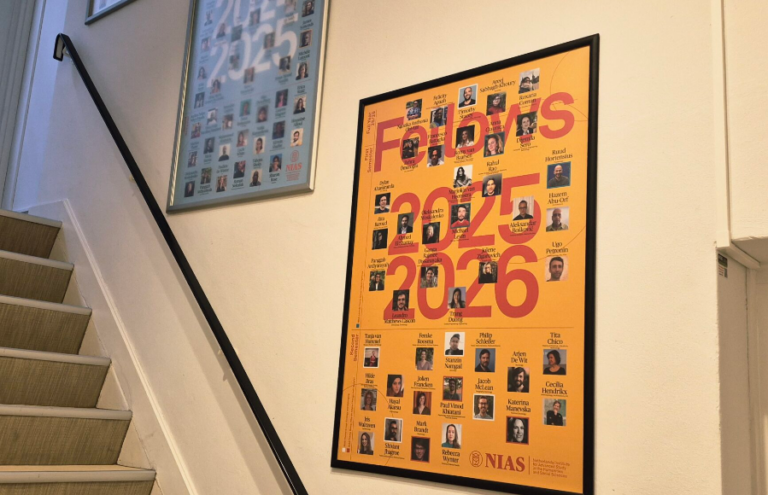
THE Netherlands Institute for Advanced Study in the humanities and social sciences (NIAS) is seeking entries for its Safe Haven Fellowship.

The fellowship supports scholars at risk. It is designed for established scholars, artists, writers, and journalists who are unable to carry out their work in their current location or circumstances due to conflict or war.

The aim of the Safe Haven Fellowship Programme is to protect scholars, journalists, writers and artists whose work is restricted or obstructed by state or non-state actors, by offering them temporary relocation and the opportunity to continue their work.

Individuals facing severe infringements on their academic freedom as a result of conflict or war are also encouraged to apply.

NIAS does not accept applicants affiliated with institutions boycotted by the Dutch state. The University of Amsterdam (UvA), Maastricht University (UM) and the Royal Netherlands Academy of Arts and Sciences (KNAW) are official partners of this programme.

The fellowship is granted for a period of five months. Fellows are provided with an office, research facilities, communal lunch, participation in the NIAS community and commuting travel expenses or subsidised accommodation in Amsterdam.

Fellows receive a stipend of €3,500 per month. Applicants are required to have full proficiency in English.

The deadline for applications is March 31, 2026. Interested applicants can apply here.

We run writing workshops: what we’ve learnt about how students are using AI, and how to help them

0

By Dr Peet van Aardt, University of the Free State

MUCH is being said about the wonders of artificial intelligence (AI) and how it is the new frontier. And while it provides amazing possibilities in fields like medicine, academics are debating its advantages for university students.

Peet van Aardt researches student writing and presents academic writing workshops at the University of the Free State Writing Centre, helping students to build clear arguments, summarise essay structure and express their opinions in their own voice. He also spearheads the Initiative for Creative African Narratives (iCAN), a project that assists students in getting their original stories published. Here he shares his experiences and thoughts on the use of generative AI at university.

What are your biggest concerns about the growth of AI-generated material from students?

The use of generative AI to compose assignments and write essays is widely reported, and its potentially detrimental effects on critical thinking and research are clear.

My biggest concern is that it takes away academic agency from students. By that I mean it takes the proverbial pen out of our students’ hands. If they over-rely on it (which we see they tend to do), they no longer think critically and no longer express their own voices.

Young man with a microphone
Student voice might be lost when AI does the writing.
Clout, Unsplash, CC BY

This is particularly important in African universities, where student voice and the intellectual contribution of students to society are drivers of social change and decolonisation.

How can you tell if a text is written by a student or is AI generated?

Flawless grammar and clichés are the first two signs. Generic, shallow reasoning is another. Finally, the generative AI answer does not tend to relate well to topics set in a local context.

If I take student short stories that have been submitted to our iCAN project as an example, I see more and more tales set in some unnamed place (previously, students’ stories often took place in their own towns) or adventures experienced by characters named Stacey, Rick, Damian or other American-sounding people.

Another example: third year students studying Geography were asked to write a ten page essay on the history and future of sustainability and how it applied to Africa. To guide them, the students were referred to a report that addresses challenges in sustainability. What we saw during our consultations in the writing centre were texts that discussed this report, as well as relevant topics such as “global inequality and environmental justice” and “linking human rights, sustainability and peace” – but nowhere was South Africa even mentioned. The students clearly prompted their generative AI tool to produce an essay on the first part of the assignment instructions.

Also, it’s quite easy to determine whether somebody did their own research and created their own arguments when they have to reflect on it.

When students don’t understand the text of their essay, it’s a sign that they didn’t produce it. As academics and writing coaches we increasingly encounter students who, instead of requiring help with their own essay or assignment, need assistance with their AI-produced text. Students ask questions about the meaning and relevance of the text.

Writing centre consultations have always relied on asking the students questions about their writing in an attempt to guide them on their academic exploration. But recently more time needs to be spent on reading what the students present as their writing, and then asking them what it means. Therefore, instead of specifics, we now need to take a step back and look at the bigger picture.

Not all students use generative AI poorly. That is why I still believe in using AI detection tools as a first “flag” in the process: it provides a place to start.

What interventions do you propose?

Students should be asked questions about text, like:

  • Does what it is saying make sense?
  • Does this statement sound true?
  • Does it answer the lecturer’s question?

In some instances teaching and learning is moving back to paper-based assignments, which I support. If possible, we should let students write with pens in controlled environments.

It’s also becoming more important to reignite the skill of academic reading so that students can understand what their AI assistant is producing. This points to the importance of reading for understanding, being able to question what was read, and being able to remember what one has read.

Generative AI is quite western and northern-centric. I believe we in academia have an opportunity to focus, where possible, on indigenous knowledge. Students should be encouraged to reflect on indigenous knowledge more often.

Lastly, academics should not over-rely on generative AI themselves if they don’t want their students to do so. As student enrolment numbers rise, time is becoming a rare luxury for academics, but we cannot expect students to take responsibility for their learning when we want to take shortcuts in our facilitation.

Have you changed your approach given these insights?

We have been revisiting our workshop materials to include more theory and practice on reading. Well-known strategies like the SQ3R method (to survey, question, read, recite and review a text) and the PIE approach (understanding that paragraphs Point to a main idea, support this by Illustration and Explain how and why the writer supports the main idea) are infused, along with various activities to ensure students apply some of these.

Our one-on-one consultations between students and trained, qualified academic writing experts continue to be integral.

If we as academics want to continue facilitating the learning process in students – and truly put them at the centre of education – we have to empower them to think critically and express themselves in their own voices.The Conversation

Dr Peet van Aardt, Coordinator: Initiative for Creative African Narratives (iCAN) & Lecturer: Academic Literacy, University of the Free State

This article is republished from The Conversation under a Creative Commons license. Read the original article.

Again, Dangote Refinery cuts petrol price to N774 per litre

0

DANGOTE Petroleum Refinery & Petrochemical has again reduced its Premium Motor Spirit (PMS) gantry price by N25 per litre, lowering its ex-depot rate from N799 to N774 per litre.

Industry analysts describe this development as influenced by global energy market dynamics and price adjustments influenced by the Petroleum Industry Act (PIA).

The refinery communicated the price adjustment to marketers on Tuesday, February 10, noting that the new rate takes immediate effect.

In a notice issued by its Group Commercial Operations Department, Dangote Petroleum Refinery and Petrochemicals stated, “This is to notify you of a change in our PMS gantry price from N799 per litre to N774 per litre.”

The $20 billion refinery also informed marketers that the PMS lifting incentive had ended.

“Additionally, please note that the PMS lifting bonus ended at 12:00 a.m. on 10th February 2026. The corresponding credit for volumes loaded from 2nd to 10th February 2026, within the stipulated volume thresholds earlier communicated, will be posted to your account statement,” the notice read.

The closure of the bonus window, alongside the price cut, signals a transition from volume-driven incentives to a more stable pricing regime as the refinery consolidates its domestic market presence

The latest reduction comes against the backdrop of volatile PMS pricing in 2025, following the full deregulation of the downstream sector and the removal of petrol subsidies.

Throughout much of 2025, PMS ex-depot prices fluctuated sharply, driven by exchange rate pressures, global crude oil movements and reliance on imported fuel.

Ex-depot prices at various points ranged between N700 and over N800 per litre, while pump prices climbed even higher in several parts of the country.

The commencement of large-scale domestic supply from the Dangote Refinery late in the year helped moderate prices, particularly along coastal and southern supply corridors, easing pressure on import parity pricing.

In early 2026, Dangote’s PMS gantry price increased to N799 per litre after selling to Nigerians at N699 during the festive period.

The latest N25 cut to N774 per litre suggests easing cost pressures and improving operational efficiency, as well as growing competition from alternative supply channels, including imported cargoes and expected output from modular refineries.

Dangote Petroleum Refinery, with a capacity of 650,000 barrels per day, is Africa’s largest single-train refinery and a cornerstone of Nigeria’s drive to reduce fuel imports and conserve foreign exchange.

Since commencing PMS supply to the domestic market, the refinery has increasingly shaped downstream pricing dynamics, often acting as a reference point for ex-depot rates.

NERC seeks judiciary support for electricity market reforms

0

THE Nigerian Electricity Regulatory Commission (NERC) is seeking vital regulatory and legal support from the judiciary to grow the country’s electricity market as states gradually take more responsibility in the ongoing power sector reforms.  

The partnership is on the heels of the growing electricity market supported by the Electricity Act 2023, which has gradually handed over regulatory responsibilities and sectoral investments to states across the federation.

The regulator requested the collaboration on Tuesday, February 10, in Abuja at the ongoing sixth Seminar on the Nigerian Electricity Supply Industry (NESI) for judicial officers.

Speaking on the theme titled: “Nigeria’s Electricity Market in Transition: Law, Regulation and the Courts,” the NERC Chairman Musiliu Oseni said the event provided a strong platform for meaningful engagement with the judiciary on the progress and challenges within the Nigerian power sector.

“The seminar aims to stimulate discourse on emerging legal issues relevant to the Nigerian Electricity Supply Industry (NESI),” he said.

Commenting on key sector reforms in 2025, Oseni listed the creation of the Nigerian Independent System Operator (NISO) Limited from the Transmission Company of Nigeria (TCN) to ensure transparency in grid management and operations. With this, he said Nigeria achieved a successful test synchronisation of the national grid with other West African countries through the West African Power Pool (WAPP).

“I am glad to report that the free distribution of prepaid meters to unmetered customers has fully commenced, in fulfilment of the promise made by Mr. President,” Oseni added.

Providing an update on the ongoing transition to a multi-tier electricity market, the NERC boss noted that his commission had issued transfer orders to 16 states, noting that, “we are moving from a regime where my lords only deal with matters involving utilities and NERC as the sole regulator, to matters involving multiple regulators.

“Without doubt, effective adjudication on such matters will require the familiarisation of my lords with not only the federal laws and NERC regulations but also different states’ laws and regulatory instruments.”

Oseni thanked the Chief Justice of Nigeria (CJN), President of the Court of Appeal, Chief Judge of the Federal High Court, and the Attorney General of the Federation for the recently approved practice direction for the NESI, adding that “it will provide essential legal clarity for resolving industry matters.”

The Minister of Justice and Attorney General of the Federation, Lateef Fagbemi, at the event, disclosed that the judiciary was strategic in the electricity reforms journey, as a guardian of the law.

According to the Attorney-General, the decentralisation of electricity regulation has introduced new areas of adjudication in electricity sector jurisprudence.

The Chairman, Senate Committee on Power, Enyinnaya Abaribe, delivered a goodwill message, disclosing that lawmakers had a mandate to foster reforms through legislative interventions, such as the recent constitutional amendments, the enactment of the Electricity Act, 2023, and the proposed amendments to the Act.

“These specific sector reforms will boost our electricity supply, integrate renewable energy, promote competition, increase access to affordable electricity, and mitigate disputes between state, federal, and private entities in the electricity sector,” he said.

The Minister of Power, Adebayo Adelabu, represented by the Director, Distribution Services at the Federal Ministry of Power, Baba Umara Mustapha, said, “This seminar is a potent platform for constructive engagement between the judiciary and power-sector officials to discuss the legal, commercial, and regulatory dynamics of the power sector.”

He further noted that with a clear understanding of the judiciary’s role, reforms in the electricity sector would be more successful.

In her keynote address, the Chief Justice of Nigeria, Kudirat Kekere-Ekun, commended the NERC-NJI collaboration, noting that through programmes such as this seminar, the NJI continued to reaffirm its commitment to strengthening judicial capacity, promoting professional excellence, and enhancing public confidence in the courts.

“I am confident that the deliberations and insights generated during this seminar will have a lasting and positive impact on judicial practice and the development of sound electricity-sector jurisprudence,” said the CJN.


Nigeria’s oil production drops, exposes budget funding risks

0

NIGERIA’s budget funding is exposed to higher risks as the Organisation of Petroleum Exporting Countries (OPEC) oil output fell in January due to the lower supply from Nigeria and Libya.

The Nigerian government has been struggling to fund the 2025 national budget as the Appropriation Act rely highly on proceeds from oil sales but could resort to borrowing if production falls short.

On Monday, February 9, a Reuters survey found that this offset increases among OPEC members, including Venezuela, after the United States (US) capture of Nicolas Maduro and the end of an oil blockade.

OPEC pumped 28.34 million barrels per day (bpd) in January, down 60,000 bpd from December’s total, the survey showed, with Nigeria posting the largest decline.

Nigeria’s crude oil production fell 8.3 per cent year‑on‑year to 1.544 million bpd in December 2025, missing its OPEC quota and budget benchmark. The decline, attributed to insecurity, investment gaps, and policy uncertainty, underscores persistent challenges in the oil sector.

OPEC+, comprising OPEC and allies including Russia, in January began a first-quarter pause of its monthly output increases amid concerns of a supply glut.

Many members are running close to capacity limits, and some are tasked with extra cuts to compensate for earlier overproduction, which has limited the impact of the increases.

Under an agreement by eight OPEC+ members covering January output, the five of them that are OPEC members – Algeria, Iraq, Kuwait, Saudi Arabia and the UAE – were to keep output unchanged before the effect of compensation cuts totaling 130,000 bpd for Iraq and the UAE.

The survey shows that they increased output by 60,000 bpd month on month, but total output remained below their targets.

Nigeria had OPEC’s largest output decline, and Libyan supply also fell as bad weather impacted loadings, the survey found.

Iranian crude supply fell further. Iran is subject to US sanctions that seek to curb its oil exports over its nuclear work, and new measures were announced in January over Tehran’s crackdown on protesters.

Among countries with higher output, Iraq exported more from its southern terminals. Venezuelan crude output increased slightly, and exports jumped.

Venezuelan production has risen close to 1 million bpd, Reuters reported on Monday, having earlier reported that Venezuelan exports of crude and refined products rose to some 800,000 bpd in January.

The Reuters survey is based on flow data from financial group LSEG, information from other companies that track flows, such as Kpler, and information provided by sources at oil companies, OPEC and consultants.


Senate appoints 12 members to reconcile Electoral Amendment Bill with Reps after stormy session

1

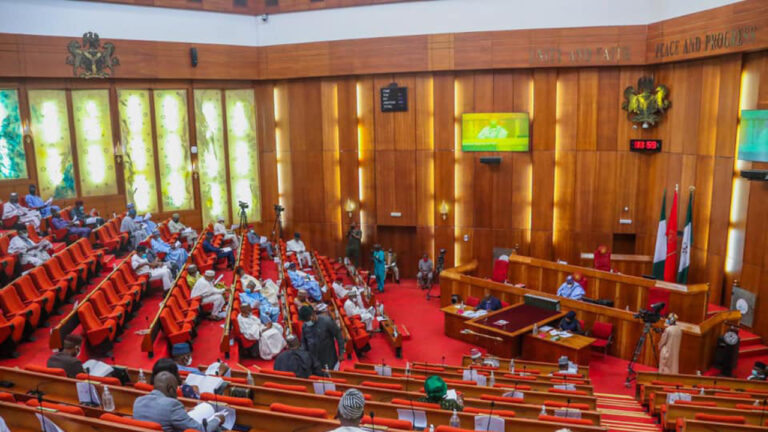
THE Senate has appointed 12 members to serve on a conference committee with the House of Representatives to harmonise differences on the Electoral Act Amendment Bill 2026, following heated plenary debates over provisions on electronic transmission of election results.

The Senate President, Godswill Akpabio, reached the decision after senators adopted the Votes and Proceedings of Wednesday, February 4, paving the way for the expansion of the Senate’s earlier nine-member conference committee to match the 12-member delegation already constituted by the House.

“The information we have is that our counterparts in the House of Representatives are 12 in number. While we have nine here, so we just have to move our number to 12, so that we can have 12-12,” Akpabio said.

He subsequently named Simon Lalong as chairman of the Senate conference committee, alongside other members

Tense plenary over voting procedure

A central flashpoint in the debate was a provision on the electronic transmission of election results.

The House of Representatives had passed a version of the bill mandating real-time electronic transmission of polling unit results to the Independent National Electoral Commission’s (INEC) Results Viewing Portal (IREV), a reform backed by civil society and opposition figures who say it would strengthen transparency.

However, during Senate consideration, lawmakers rejected a proposal to make real-time transmission mandatory. They instead adopting the existing legal provision that result transmission be done “in a manner as prescribed by the Commission.” Critics immediately condemned the move as weakening electoral transparency.

The debate on Tuesday began when the Senate Chief Whip, Mohammed Tahir Monguno, moved an amended proposal, effectively introducing a different motion.

He claimed to have seconded the motion, but when asked to clarify its content, he was unable to explain, worsening the uproar in the chamber.

Monguno insisted that he had seconded the earlier motion, which had already been passed but later rescinded, specifically regarding Section 60, Subsection 3 of the bill, part of which stipulates that the presiding officer should uphold results on the IREV portal after Form ECHA has been signed, in cases where electronic transmission fails and it becomes impossible to transmit results. The provision essentially designates Form ECHA as the primary source for election results in such circumstances.

A subsequent vote was conducted, and members voted unanimously.

However, Abia South senator, Enyinnaya Abaribe invoked Order 72, which allows any lawmaker to challenge the opinion of the Senate President or presiding chairman by requesting a division, effectively calling for a motion to be voted on individually. The move sparked some confusion and debate on the floor, with colleagues questioning why he had taken that action. 

After a brief pause while senators reviewed the relevant pages of the bill, Abaribe withdrew the order he had invoked.

The ICIR reported that this emergency plenary followed growing criticisms and protests that trailed the Senate’s position.

Ahead of the emergency sitting, some lawmakers acknowledged flaws in how the Senate handled the debate. The lawmaker representing Bauchi Central, Abdul Ningi, said on Channels TV on Monday that the Senate could make the voting process and individual stances on the electronic transmission provision transparent.

Meanwhile, Nigerians have continued to stage a peaceful demonstration at the gate of the National Assembly since last week Friday, demanding that the Senate include a compulsory provision for real-time electronic transmission of election results in the Electoral Act (Amendment) Bill, warning that Nigeria’s democracy would not survive without credible polls and real-time electronic result transmission.

They said failure to include the clause amounted to “setting the country on fire” over a minimum transparency requirement.

The ICIR reports that Nigeria’s elections have been flawed, with many election outcomes addressed by courts. Many citizens have accused the court of miscarrying justice, with judgement allegedly bought by moneybags.

In 2007, after winning litigation against his victory at the Supreme Court, the late former President Yar’Adua admitted that the election that brought him into office was flawed. He promised electoral reforms, but the nation has yet to get it right almost two decades later, as successive leaders failed to deliver legal document for achieving it.


Nigeria is 37th most corrupt nation – Report

0

NIGERIA has been ranked as the 37th most corrupt country in the world in 2025, slipping slightly in the Corruption Perceptions Index (CPI)

It moved from 140th in 2024 to 142nd in 2025, out of 182 countries, according to the latest report by Transparency International.

The number one nation on the list represents the country with the least corruption and 182 is the most corrupt.

Nigeria scored 26 points, sharing the position with Cameroon, Guatemala, Guinea, Kyrgyzstan, and Papua New Guinea.

The CPI measures perceived corruption in the public sector across 182 countries and territories.

Denmark topped the list as the least corrupt nation with 89 points, followed by Finland (88), Singapore (84), and New Zealand (81).

No African country made the top 10 least corrupt nations, though Seychelles, Cabo Verde, and Botswana were the continent’s least corrupt, scoring 68, 62, and 58.

At the bottom of the list are South Sudan, Somalia, and Venezuela, emerging as the world’s most corrupt countries.

Commenting on the CPI, TI CEO Maíra Martini said: “The 2025 Corruption Perceptions Index ranks 182 countries and territories worldwide by their perceived levels of public-sector corruption. The results are given on a scale of 0 (highly corrupt) to 100 (very clean).

“While 31 countries have significantly reduced their corruption levels since 2012, the rest are failing to tackle the problem — they have stayed stagnant or got worse during the same period. The global average has fallen to a new low of 42, while more than two-thirds of countries score below 50. And people are paying the price, as corruption leads to under-funded hospitals, unbuilt flood defences, and blights the hopes and dreams of young people.”

She added: “We’re seeing a concerning picture of long-term decline in leadership to tackle corruption. Even established democracies, like the US, UK and New Zealand, are experiencing a drop in performance. The absence of bold leadership is leading to weaker standards and enforcement, lowering ambition on anti-corruption efforts around the world.”

Marini said many states were increasing restrictions on civic space, stressing that by making it hard or dangerous for citizens, non-governmental organisations and journalists to challenge abuses of power, they are reducing transparency and accountability. This, she said, allowed corruption to flourish.

The official urged leaders to act fast and tackle abuses of power and the wider factors driving corruption, including the roll-back of democratic checks and balances, and attacks on independent civil society.

He further explained that anti-government protests in many parts of the world showed that people were fed up with unaccountable leadership and were demanding reform.

THE ICIR reported that Nigeria had crawled to 140 spot in TI global corruption ranking in 2024, with 26 scores from its 25th position in 2023.

Full list of rankings and scores (2025 CPI)

89 — Denmark — 1
88 — Finland — 2
84 — Singapore — 3
81 — New Zealand — 4
81 — Norway — 4
80 — Sweden — 6
80 — Switzerland — 6
78 — Luxembourg — 8
78 — Netherlands — 8
77 — Germany — 10
77 — Iceland — 10
76 — Australia — 12
76 — Estonia — 12
76 — Hong Kong — 12
76 — Ireland — 12
75 — Canada — 16
73 — Uruguay — 17
71 — Bhutan — 18
71 — Japan — 18
70 — United Kingdom — 20
69 — Austria — 21
69 — Belgium — 21
69 — United Arab Emirates — 21
68 — Barbados — 24
68 — Seychelles — 24
68 — Taiwan — 24
66 — France — 27
65 — Lithuania — 28
64 — Bahamas — 29
64 — United States of America — 29
63 — Brunei Darussalam — 31
63 — Chile — 31
63 — Saint Vincent and the Grenadines — 31
63 — South Korea — 31
62 — Cabo Verde — 35
62 — Israel — 35
60 — Dominica — 37
60 — Latvia — 37
59 — Czechia — 39
59 — Saint Lucia — 39
58 — Botswana — 41
58 — Qatar — 41
58 — Rwanda — 41
58 — Slovenia — 41
57 — Saudi Arabia — 45
56 — Costa Rica — 46
56 — Grenada — 46
56 — Portugal — 46
55 — Cyprus — 49
55 — Fiji — 49
55 — Spain — 49
53 — Italy — 52
53 — Poland — 52
52 — Malaysia — 54
52 — Oman — 54
50 — Bahrain — 56
50 — Georgia — 56
50 — Greece — 56
50 — Jordan — 56
49 — Malta — 60
48 — Mauritius — 61
48 — Slovakia — 61
47 — Croatia — 63
47 — Vanuatu — 63
46 — Armenia — 65
46 — Kuwait — 65
46 — Montenegro — 65
46 — Namibia — 65
46 — Senegal — 65
45 — Benin — 70
45 — Romania — 70
45 — Sao Tome and Principe — 70
44 — Jamaica — 73
44 — Solomon Islands — 73
44 — Timor-Leste — 73
43 — China — 76
43 — Côte d’Ivoire — 76
43 — Ghana — 76
43 — Kosovo — 76
42 — Moldova — 80
41 — South Africa — 81
41 — Trinidad and Tobago — 81
41 — Vietnam — 81
40 — Bulgaria — 84
40 — Burkina Faso — 84
40 — Cuba — 84
40 — Guyana — 84
40 — Hungary — 84
40 — North Macedonia — 84
40 — Tanzania — 84
39 — Albania — 91
39 — India — 91
39 — Maldives — 91
39 — Morocco — 91
39 — Tunisia — 91
38 — Ethiopia — 96
38 — Kazakhstan — 96
38 — Suriname — 96
37 — Colombia — 99
37 — Dominican Republic — 99
37 — Gambia — 99
37 — Lesotho — 99
37 — Zambia — 99
36 — Argentina — 104
36 — Belize — 104
36 — Ukraine — 104
35 — Brazil — 107
35 — Sri Lanka — 107
34 — Algeria — 109
34 — Bosnia and Herzegovina — 109
34 — Indonesia — 109
34 — Laos — 109
34 — Malawi — 109
34 — Nepal — 109
34 — Sierra Leone — 109
33 — Ecuador — 116
33 — Panama — 116
33 — Serbia — 116
33 — Thailand — 116
32 — Angola — 120
32 — El Salvador — 120
32 — Philippines — 120
32 — Togo — 120
31 — Belarus — 124
31 — Djibouti — 124
31 — Mongolia — 124
31 — Niger — 124
31 — Turkey — 124
31 — Uzbekistan — 124
30 — Azerbaijan — 130
30 — Egypt — 130
30 — Kenya — 130
30 — Mauritania — 130
30 — Peru — 130
29 — Gabon — 135
28 — Bolivia — 136
28 — Iraq — 136
28 — Liberia — 136
28 — Mali — 136
28 — Pakistan — 136
27 — Mexico — 141
26 — Cameroon — 142
26 — Guatemala — 142
26 — Guinea — 142
26 — Kyrgyzstan — 142
26 — Nigeria — 142
26 — Papua New Guinea — 142
25 — Madagascar — 148
25 — Uganda — 148
24 — Bangladesh — 150
24 — Central African Republic — 150
24 — Paraguay — 150
23 — Congo — 153
23 — Eswatini — 153
23 — Iran — 153
23 — Lebanon — 153
22 — Chad — 157
22 — Honduras — 157
22 — Russia — 157
22 — Zimbabwe — 157
21 — Guinea-Bissau — 161
21 — Mozambique — 161
20 — Cambodia — 163
20 — Comoros — 163
20 — Democratic Republic of the Congo — 163
19 — Tajikistan — 166
17 — Burundi — 167
17 — Turkmenistan — 167
16 — Afghanistan — 169
16 — Haiti — 169
16 — Myanmar — 169
15 — Equatorial Guinea — 172
15 — North Korea — 172
15 — Syria — 172
14 — Nicaragua — 175
14 — Sudan — 175
13 — Eritrea — 177
13 — Libya — 177
13 — Yemen — 177
10 — Venezuela — 180
9 — Somalia — 181
9 — South Sudan — 181

US to deport additional 18 Nigerian ‘criminals’, list jumps to 97

THE United States (US) Department of Homeland Security (DHS) has announced plans to deport another batch of 18 Nigerians listed on its “worst-of-the-worst” criminal register, raising the total number of the West Africa nation’s citizens scheduled for expulsion from the US to 97.

This comes barely one week after the ICIR reported that 79 Nigerians convicted of various offences had been marked for deportation by US authorities.

An update by the DHS on Monday revealed that 18 more names had been added to the list, signaling an expansion of the ongoing enforcement exercise.

“The US Department of Homeland Security is highlighting the worst of the worst criminal aliens arrested by the US Immigration and Customs Enforcement. Under Secretary Noem’s leadership, the hardworking men and women of DHS and ICE are fulfilling President Trump’s promise and carrying out mass deportations, starting with the worst of the worst, including the illegal aliens you see here,” the statement on the website read.

The DHS website shows that the Nigerians newly listed for deportation include Oluwaseyanu Akinola Afolabi, Olugbeminiyi Aderibigbe, Benjamin Ifebajo, Obinwanne Okeke, Kolawole Aminu, Oluwadamilola Olufunsho Ojo and Franklin Ibeabuchi.

Others are Alex Afolabi Ogunshakin, Joshua Ineh, Stephen Oseghale, Eghosa Obaretin, Adesina Surajudeen Lasisi, Ibrahim Ijaoba, Azeez Yinusa, Charles Akabuogu, Kelechi Umeh, Lotenna Chisom Umeadi, Donald Ehie, and Chukwudi Kingsley Kalu.

The security outfit noted that the arrests were part of a nationwide crackdown on criminal immigrants, whose most common offences included wire fraud, mail fraud and identity theft.

The latest figures highlight the Trump administration’s sustained hardline approach to illegal and criminal immigration, with several foreign nationals affected, including Nigerians.

The ICIR reported last week that the US listed 79 Nigerian nationals among worst of the worst criminal non-citizens arrested by the US Immigration and Customs Enforcement (ICE).

According to DHS Secretary Kristi Noem, the arrests form part of recent enforcement operations across several American states, noting that they were focused on removing undocumented immigrants with serious criminal convictions from the US.

While DHS has not provided a specific timeline for deportation, individuals listed are expected to face removal proceedings following their arrests, in line with US immigration laws.

The development adds to growing concerns among Nigerians in the US, particularly over the reputational impact of high-profile crime-related immigration enforcement actions.

Nigerians have been among those affected by the US deportation policy since Trump assumed power in January 2024.

Many Nigerians have either voluntarily returned home or were deported over offences ranging from immigration violations to criminal convictions.