Home Blog Page 846

Troops arrest traffickers moving drugs from Ghana to Nigeria

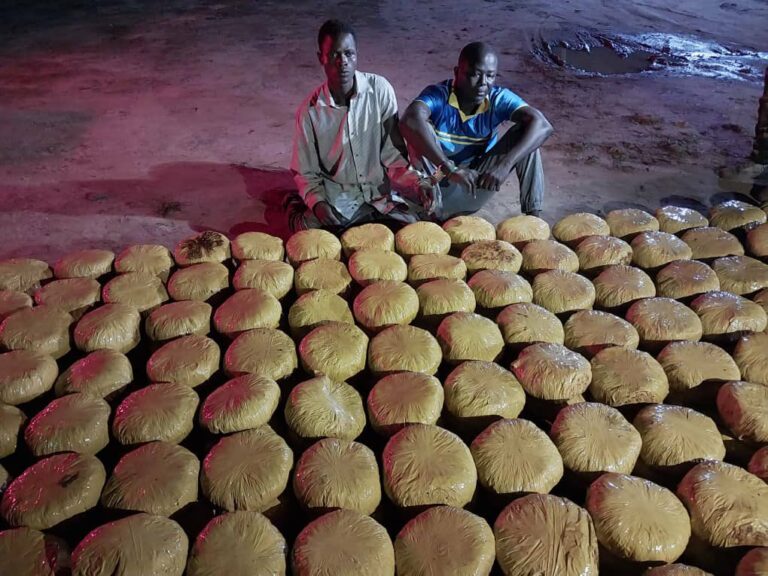
TROOPS of 192 Battalion of the Nigerian Army have intercepted an international drug syndicate smuggling a truckload of substance suspected to be cannabis sativa (marijuana) to Sango Otta in Ogun State.

A statement by the Director of Army Public Relations, Onyema Nwachukwu on Wednesday, July 19, disclosed that the troops, who operate in 81 Division Area of Responsibility, made the arrest on Tuesday, July 18, following credible intelligence.

“Responding to actionable intelligence, troops conducted stop and search operations along Ajilete Road in Yewa South Local Government Area of Ogun State, during which they intercepted and impounded the suspected truck without Registration number, loaded with 397 wraps of substance suspected to be marijuana.”

Preliminary investigations by the troops revealed that the illicit substance concealed in the truck were being transported from Ghana through Benin Republic via Igholo-Idiroko to Sango Otta.

“The suspects conveying the illegal drugs have been identified as Mr Matthew Edegbe, a Benin Republic national and Mr Joshua Dansu of Idiroko, who are currently assisting in ongoing investigations.

“Items recovered from the suspects include the truck’s Registration Number identified as (T 1826 LA Lagos), which was detached and concealed in the vehicle to prevent identification, an Infinix and Itel phone, one iphone, a Benin Republic National Identification card and a driver’s license belonging to one George Benyagbe, as well as the sum of N7000,” the Army spokesman added.

According to the statement, the two suspects, vehicle and exhibits will soon be transferred to the National Drug Law Enforcement Agency (NDLEA), Lagos State Command, for prosecution.

The Chief of Army Staff Major General Taoreed Lagbaja commended the troops for their commitment and vigilance, urging them to sustain the momentum to rid the country of criminality.

On Saturday, July 15, troops of the Battalion also intercepted a truck with of over 20,000 cartridges of ammunition heading to Anambra State.

The troops, who acted on actionable intelligence conducted a meticulous and rigorous Stop-and-Search operation along Ajilete-Owode Road in Yewa North LGA of Ogun State.

The soldiers uncovered the illegal ammunition in a truck with Registration Number ENU 697 XY, loaded with 720 packets of Red Star Cartridges of 12 Calibre, containing 25 cartridges per packet, totalling 18, 000 cartridges and an additional 250 packets of live (black) cartridges containing 10 packets each, totalling 2500 cartridges of same calibre.

According to the Nigerian Army spokesman Onyema Nwachukwu, “The suspects, identified as Mr. Eric Seworvor, a Ghanaian national, and the driver, Mr Lukman Sani, have been taken into custody and are helping with ongoing investigations.”

“Information gathered during preliminary investigation revealed that the ammunition, which were surreptitiously concealed in a supposed empty truck were imported from Mali, via Idiroko International Border, where the criminals had successfully beaten several other checkpoints en-route their final destination in Onitsha, Anambra State, where they intended to deliver the illegal ammunition.

“Timely intervention by the vigilant troops however thwarted the chaos that such volume of ammunition would have unleashed on innocent members of the public, if the criminals had succeeded.”

The Nigerian Army therefore appealed to all law-abiding citizens to continue to support the troops and other security agencies with credible and actionable information, as they combat security challenges across the country.

Buhari’s lopsided appointments come under scrutiny as Reps commence probe

LOPSIDED appointments made by former President Muhammadu Buhari has come under scrutiny following a resolution passed by the House of Representatives on Tuesday, July 18.

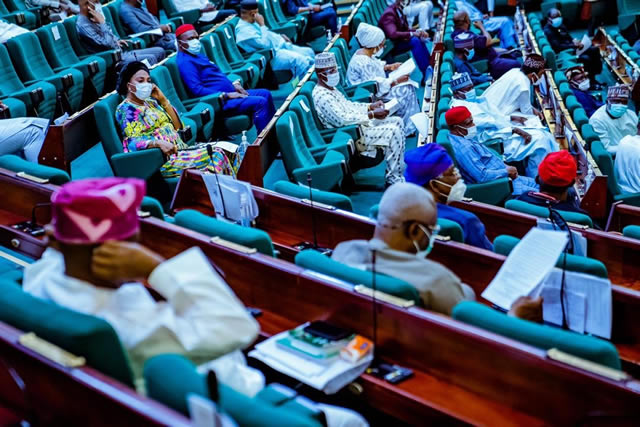
The Reps, during plenary on Tuesday, resolved to probe the appointments made during Buhari’s eight years as Nigeria’s President.

A motion to probe Buhari’s appointments was moved by Labour Party (LP) member representing Enugu East/Isi Uzo Federal Constituency, Paul Nnamchi.


READ ALSO:
Buhari’s lopsided appointments in six years continue to generate controversy

From Worst to Worst: Buhari’s six years and the fight against insecurity

Analysis: Nigeria health sector after Buhari’s six years in office

Judiciary: Stark inequalities plague yet another set of Buhari appointments


The lawmaker, while moving the motion, also said the Federal Character Commission (FCC):should be proved for allegedly abdicating its constitutional responsibilities.

Noting that the federal character principle was included in Nigeria’s constitution to promote national cohesion and equal opportunities, he argued that there “exists a brazen domination” of bureaucratic, economic, media, and political positions by a section of the country.

“Twenty-four years after its constitutional entrenchment, the perception is that there exists brazen domination of the bureaucratic, economic, media, and political posts at all levels by a section of the country at the expense of the others,” Nnamchi said,

The lawmaker also claimed that there is a “clash of interests” among the commissioners at the commission.

“Federal Character Commission has virtually abdicated its constitutional and statutory responsibilities and degenerated into personality clash of interest among its commissioners as was the case about a year ago.”

The House of Representatives adopted the motion and subsequently set up an ad hoc committee to investigate “the returns on appointments undertaken by Ministries, Departments and Agencies (MDAs) under its (FCC) jurisdiction between 2015–2023″.

The lawmakers also requested the Commission to submit a report of appointments in the MDAs between 2015 and 2023.

Buhari’s lopsided appointments 

During his tenure as President, Buhari was accused of favouritism and nepotism in federal appointments, but the former military head of state defended his actions.

In June 2020, a group of Southern leaders filed a lawsuit against Buhari in the Abuja Division of the Federal High Court. They alleged that Buhari’s administration had marginalised the Southern region of Nigeria in its appointments since 2015.

The leaders argued that the composition of the government of the federation under Buhari, and most of its agencies, did not reflect the principle of federal character. They claimed that there was a predominance of persons from a few states and sectional groups dominating the opportunities in the government, a situation which they said threatened national unity and integration.

The lawsuit was filed by 16 Southern leaders, including Edwin Clark, Reuben Fasoranti, John Nnia Nwodo, and Pogu Bittus.

But in an interview with BBC Hausa in 2015, Buhari explained the reason behind his appointments, saying he nominated people he could trust, and who had worked with him for years.

He also said the constitution allows him complete control over his choice of close officials. Buhari also made it clear that the appointments also served as a reward for those who remained loyal to him for years.

A 2017 BusinessDay report titled “81 of Buhari’s 100 appointees are Northerners” showed that 81 of those appointed into key positions by Buhari either from the North-East, North-west or North-Central since he became President.

Buhari’s Special Adviser on Media and Publicity, Femi Adesina, in a response to the report, published a list, which suggested that 82 of the 157 appointments made by the President were from the South, and 75 from the North.

The presidential spokesman said the government’s list “put the lie” to the “mischievous” claims about Buhari’s appointments, adding: “It is, indeed, false for anyone to say that President Buhari’s appointments are lopsided.”

However, a Fact Check by Premium Times on the list released by Adesina, said it contained several omissions and errors.

Despite public outcries, Buhari’s top appointment into the country’s security service between 2015 and 2020, favoured officers from the northern part of the country.

Checks on Buhari’s appointments into the leadership cadre of Nigerian’s security agencies during that period show that only two of the eight security chiefs were from the South: the Chief of Defence staff (South West) and the Chief of Naval Staff (South-South).

The remaining six, including the heads of the Army, Air Force, Police, Nigeru Intelligence Agency and Department of State Service were all Northerners.

Also, as of April 6, 2021, a regional analysis of the heads of security agencies conducted by The ICIR, including paramilitary organisations, based on their state of origin shows that 12 out of 16 of them (75 per cent) are from the Northern part of the country, while just four (25 per cent) are from the Southern part of the country.

Also, Buhari”s approval of the list of Justices of the Court of Appeal released in 2021 is considered as lopsided, with 61 per cent of jurists coming from the North versus 39 per cent from the South.

Buhari’s appointments into the top management of the Nigerian National Petroleum Corporation (NNPC) and its subsidiaries showed an uneven geographical spread of senior appointments.

An analysis carried out by The ICIR revealed a geographical imbalance within the ranks of the Corporation.

Apart from violating the Constitution in appointing his personal aides into sensitive positions in agencies like the Independent Electoral Commission (INEC), Buhari also in several cases appointed dead people into his government.

The former President also breached the Acts establishing several agencies, including the National Pension Commission (PenCom). He also engaged in illegal extension of tenures.

Unqualified persons were also appointed in agencies and ministries like the National Agency for the Prohibition of Trafficking in Persons (NAPTIP).

Buhari in 2021, approved approved Imaan Sulaiman-Ibrahim’s appointment as the new Director-General of NAPTIP. However, Sulaiman-Ibrahim did not possess the required qualification to hold the position.

According to the NAPTIP Act, the agency’s DG shall be someone of the director cadre in the Nigerian public service or its equivalent in any law enforcement agency.

“There shall be for the Agency a Director-General who shall be from the Directorate cadre in the public service of the Federation or its equivalent in any law enforcement service and shall be appointed by the President on the recommendation of the Minister,” Section 8 (1) of the NAPTIP Act 2015, reads.

Suleiman-Ibrahim did not have any record of attaining the director cadre in Nigeria public service as she had never held a major office in the country’s civil service. She was, however, appointed against the stipulation of the law.

Exchange rate: TETFund moves to suspend foreign scholarships

0

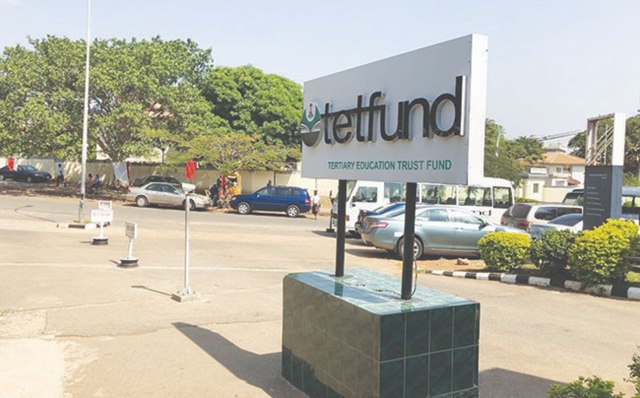
THE Tertiary Education Trust Fund (TETFund) has commenced moves to suspend foreign scholarship offers to Nigerian students over exchange rate challenges.

TETFund Executive Secretary Sonny Echono disclosed this on Tuesday, July 18, when he appeared before the House of Representatives ad-hoc committee investigating the alleged mismanagement of N2.3 trillion tertiary education tax by TETFund.

Echono explained that some of the taxes are paid to TETFund in foreign currencies through an account held at the Central Bank of Nigeria (CBN) but when fees are to be paid for scholars abroad, the Central bank insists on TETFund sourcing the required foreign exchange.


READ ALSO:
Reps to probe TETFund over N2.3trn tertiary education tax fund

Why there is apathy to TETFund conference support funding in Academia

TETFund urges FG to increase research, development funding to $1bn for tertiary institutions

Buhari increases TETFund research grants to N7.5b


“We operate a system where our forex is being sold on our behalf at an official rate and we apply like anybody else to get it, sometimes it leads to additional cost.

“Currently as I speak, we are in consultations with all our stakeholders to suspend foreign training for a year or two.

“This is because of the recent exchange rate adjustments. We are unable to continue based on our disbursement guidelines,” he said.

The Executive Secretary stressed that the money allocated in naira by TETfund cannot cover the dollar requirement for training students abroad. According to him, TETFund now needs more naira to pay for the dollar that is required for the annual fees of students currently studying abroad.

Echono added that, henceforth, TETfund training will be done locally through “our experienced, first-generation universities and other specialised universities” in the country.

“This way we can retain our resources in-house and cope with the change of foreign exchange variation,” he added.

While denying the allegations that TETFund mismanaged the N2.3 trillion fund, Echono noted that the Federal Government was owing the organisation N371.3 billion, out of which N46 billion has been repaid.

Over 137 Nigerian students studying abroad absconded 

The Executive Secretary of the Tertiary Education Trust Fund also disclosed to the House of Representatives ad-hoc committee that over 137 Nigerian students from 40 institutions, sponsored abroad, absconded.

According to him, the scholars who were sponsored by TETFund for higher education abroad refused to return to the country after completing their programmes.

Echono warned that stringent and effective measures will be taken against those who refuse to return to the country for Nigerians to benefit from their expertise.

He stressed that such individuals would be considered fugitives of the law in their own country.

“Some of the scholars that have been sponsored, unpatriotically when they go, they enjoy our scholarship, acquire a higher degree, then refuse to come back. It has become a major crisis.

“The scholarship requires that you will come back. It is required that you have a guarantor and in many cases, the guarantor has suffered undue hardship because when you disappear, we hold the guarantor to pay all the money expended on your behalf but that has not been effective.”

Echono added that TETFund “can enforce the repayment for those who insist they will not come back.”

“We will write to the embassies and they will make it available to those countries and they will not be able to get jobs. They will be seen as fugitives of law from their countries.

“We may have to take that hard stand because the numbers are alarming. We just checked about 40 institutions and over 137 absconders and the review is ongoing.

“It is a huge number that we cannot afford and so we will be seeking your support to strengthen some of the existing regulations to ensure that those who benefit from this programme must come back.

Explaining that TETFund is not against people looking for greener pastures, Echono noted that such individuals must do so on their own.

Economists fault NBS inflation figures amid astronomical rise in cost of living

ECONOMISTS have faulted the National Bureau of Statistics (NBS) June inflation report which put the figure at 22.79 per cent, citing concerns of measurement methodologies. 

The economists faulted baskets of measurements by the national statistics office, insisting that the official quoted figure did not represent the current economic realities.

“The officially qouted number is below most of the forecast of both the local and international numbers. Many experts had projected a higher inflationary number because of the two key policies of the current administration on foreign exchange unification and fuel subsidy removal. These are natural triggers to inflation,” an economist, Paul Alaje, said in reaction to the NBS June inflation numbers.

“It is possible that some of the items that NBS has in the inflation baskets are still dealing with old stocks. Food inflation increased but core inflation increased marginally,” Alaje said.

Agreeing, a professor of Finance and Capital Market, Uche Uwaleke, said those two key policies would, indeed, automatically spike inflation figures.

“Inflation came in lower than expected, although the capital market has been doing well. I think it is time the National Bureau of Statistics changed its methodology. There is a problem with the methodology, I dare say,” Uwaleke said.

According to the professor, “If you say inflation has increased by 22.79 per cent year-on-year, all you are saying is that the average commodity prices have gone up by that percentage. That is grossly understated.

“The NBS polls data covered 10,000 informants across the country, focusing on 740 commodities. However, what is important is that the methodology they are using is the national living survey of 2009, which is obsolete. It is time the methodology was updated to reflect present realities.”

Meanwhile, survey checks on few commodities frequently consumed showed more than a 50 per cent rise.

For instance, in most markets in Abuja, the price of a frequently consumed mudu of gari has risen from N300 to N600 within a space of one year. A six-piece bunch of plantain that sold for N600 at this time last year now sells for N1,400. A 75-litre bottle of palm oil, which sold N800 at this time last year also now sells for N1,300.

However, the NBS, clarifying its latest inflation figures, explained that numbers may not fully capture the impact of the fuel subsidy removal and the unification of the exchange rate.

The statistics office explained that the data collection for computing the rate for the reference month typically stopped around the middle of the month, meaning that the June numbers only reflected approximately two weeks of the policy impact on consumer prices.

“The full effect of the policy, as relates to prices, can, therefore, not be reflected in June only, but also in subsequent months, based on actual prices collected in market outlets across the country.

“As such, the effect of fuel subsidy removal and the unification of the exchange rate is yet to fully impact the inflation rate,” the NBS stated.

The ICIR had reported how the International Monetary Fund (IMF) pointed out that the NBS had not been using the right methodology in measuring the CPI.

In a report titled, ‘Nigeria: 2022 Article IV Consultation’, the IMF said the NBS was using the 2003/2004 National Consumer Expenditure Survey (NCES) to measure the CPI or the inflation rate, instead of the 2018 National Household Livings Standards, which would have measured the rate appropriately.

Tobi Amusan risks 2 years ban over anti-doping violation

0

NIGERIAN sprinter, Tobi Amusan, the 100m women’s hurdles world record-holder, is facing a two years ban over alleged violation of anti-doping rules.

Amusan, on Wednesday, July 19, revealed she has been charged with an anti-doping rule violation by the Athletics Integrity Unit (AIU) for missing three tests in 12 months.

“Today the Athletics Integrity Unit (AIU) has charged me with an alleged rule violation for having 3 missed tests in 12 months,” she said in a post on Instagram.

However, she denied taking performance enhancements.

“I am a clean athlete, and I am regularly; (maybe more than the usual) tested by the AIU – I was tested within days of my third ‘missed test.”

The charge has cast doubts over her participation in next month’s world championships in Budapest, Romania. But Amusan said she will fight the charge.

“I intend to fight this charge and will have my case decided by a tribunal of 3 arbitrators before the start of next month’s World Championships.

“I have faith that this will be resolved in my favour and that I will be competing at the World Championships in August.”

The penalty for having 3 missed tests in 12 months

According to the World Athletics Anti-Doping Rules, athletes have to submit their whereabouts by the required deadline.

Also, under the World Athletics Anti-Doping Rules, the applicable sanction for three ‘whereabouts’ failures is two years ineligibility, subject to a reduction to a minimum of one year depending on an athlete’s degree of fault.

The world athletics regulatory body has a three-strikes rule that states that if an athlete does not provide accurate whereabouts information for a doping test they may incur a declaration of a missed test, or a filing failure. Three strikes in a 12-month period is an anti-doping violation.

What is Whereabouts in athletics?

According to Global Sports Advocates, athletes must file quarterly whereabouts updates that provide information about their training locations, competitions, regularly scheduled activities, overnight locations, and a daily 60-minute window where they will be available for testing. This information must be updated on a timely basis when an athlete’s schedule changes.

Deadlines for whereabouts submissions are as follows:

Quarter 1 deadline is December 15.

Quarter 2 deadline is March 15.

Quarter 3 deadline is June 15.

Quarter 4 deadline is September 15.

EXPLAINER: What you need to know about anthrax disease

0

FOLLOWING the confirmation of the first case of anthrax disease in the country, many Nigerians have become apprehensive.

Anthrax is a severe disease that can affect both humans and animals.

On Monday, July 17, the Federal Ministry of Agriculture and Rural Development (FMARD) said the Office of the Chief Veterinary officer of Nigeria was notified of animals manifesting symptoms of a suspected case of an infectious disease in a farm in Suleja, Niger State.

The farm was described as a ‘multi-specie animal farm comprising cattle, sheep and goats’.

Anthrax has been associated with hides (Ponmo) and bush meats – delicacies which are popular among Nigerians.


READ ALSO:
FG confirms first case of anthrax disease in Nigeria

FG warns on consumption of ‘ponmo’, bush meat over anthrax disease outbreak

Benin, Mali eliminate trachoma, but Nigeria remains burdened with disease

Over 165 million Nigerians need treatment for Neglected Tropical Diseases – Study


However, the Nigeria Centre for Disease Control and Prevention (NCDC) has assured that the Federal Government has put specific preventive measures in place to ensure the safety of Nigerians. But the Centre also urged Nigerians to stay away from likely causes of the disease.

What is Anthrax?

The NCDC defined anthrax as a severe disease caused by the bacteria – bacillus anthracis. It can affect both humans and animals, including wild animals and livestock such as cows, pigs, camels, sheep, goats, etc. The bacteria, which exist as spores, can be found in the soil, wool, or hair of infected animals. 

According to the NCDC, anthrax spores are resistant to extreme conditions and can survive in the soil or environment for decades, making controlling or eradicating the disease very difficult. 

Also, the Centres for Disease Control and Prevention (CDC) explained that anthrax is a serious infectious disease caused by gram-positive, rod-shaped bacteria known as Bacillus anthracis and occurs naturally in soil and commonly affects domestic and wild animals around the world. 

The Centre noted that although people can get sick with anthrax if they come in contact with infected animals or contaminated animal products, it is not contagious.

This means that a person cannot contract it from another person except in the case of cutaneous anthrax, where there is a small risk of direct infection from the lesions on another person’s body. 

Inhalation anthrax cannot be transmitted from person to person and can only be contracted by directly inhaling anthrax spores, according to The World Health Organization (WHO).

How humans get infected 

The majority of anthrax cases occur among individuals who have direct contact with infected animals or animal-related materials, such as wool, hides, or hair, in their occupational settings. Anthrax infection can be contracted through various means of exposure.

The following are likely ways by which people can get Anthrax:

Breathing in spores.

Eating food or drinking water that is contaminated with spores.

Eating raw or undercooked meat from infected animals.

Getting spores in a cut or scrape in the skin.

The NCDC categories the means of anthrax infection in humans as follows:

  • Skin infection, i.e., direct contact with infected animals through wounds or cuts
  • Gastrointestinal, i.e., through eating raw or undercooked meat of infected animals or their products, including milk.
  • Inhalation, i.e., breathing in the spores (the deadliest form of the disease).

Possible symptoms

The symptoms of anthrax vary depending on the type and route of exposure. It is also important to note that the disease is rare, and the symptoms can be mistaken for another disease or illness. However, it is crucial to seek medical attention if one experiences any concerning symptoms.

According to NCDC, anthrax, in humans, can cause fever, painless skin sores with a black centre that appears after the blisters, general body weakness, and difficulty in breathing. It can also cause severe digestive illness that resembles food poisoning.

The symptoms in animals include high fever, weakness, loss of appetite, bleeding from all body openings (nose, mouth, ears, anus etc.), swelling and difficulty in breathing and bloody diarrhoea. It can lead to sudden death in most cases. 

The blood of an animal with anthrax does not clot on slaughter. Also, at slaughter, marked bloating and quick decay are observed.

Persons at risk of contracting anthrax

The Federal Ministry of Agriculture and Rural Development and the Nigeria Centre for Disease Control and Prevention have identified the group of persons at risk of contracting the disease:

  • People who handle animals, i.e., veterinarians, veterinary laboratory workers, farmers, abattoir workers, butchers, cattle rearers, livestock producers and traders, wildlife handlers, hunters, park rangers, processors, importers, and exporters of hide and skin, animal health workers etc.
  • People who consume animals (cattle, sheep, and goats) that were found dead
  • Healthcare workers, diagnostic laboratory workers and caregivers who are exposed to patients or their biological specimens.
  • Law enforcement officers (Police, Military, Immigration, Customs, Point of Entry Personnel etc.).
  • Anyone travelling to a location with a confirmed anthrax case within and outside Nigeria.

Prevention

For individuals at high risk of exposure, such as veterinarians, livestock workers, and laboratory personnel, vaccination against anthrax is one of the most effective ways to prevent infection. It is, however, uncertain whether the anthrax vaccine is available in Nigeria.

The Federal Government has said it will start nationwide vaccination of livestock soon to mitigate the possible spread of the disease.

Meanwhile, to prevent the spread of the disease, NCDC says Nigerians must carefully examine the livestock they consume and take caution when buying animals such as cows, camels, sheep and goats from Nigerian states bordering Benin, Chad, Niger Republic, Ghana and Togo via waterways.

As earlier reported, Nigerians should stay away from consuming hides (Ponmo), smoked meat and other by-products of bush meats while also cautioning themselves from eating sick or dead animals. The NCDC also advised hunters to desist from picking sick or dead animals from the bush for human consumption purposes.

Livestock owners should also make sure to vaccinate their livestock as it is the most effective preventive measure against anthrax, and always be on their personal protective equipment when handling sick animals.

Good hygiene practices on the farm through regular cleaning and disinfection of animal housing, feeding equipment, and water troughs are also believed to reduce the risk.

The Centre also advised animal health professionals/handlers and healthcare workers to maintain infection prevention and control precautions, a high index of suspicion/vigilance and also notify the health authorities (both human and animal) when they see any human or animal with the symptoms.

Can Anthrax be treated?

Yes. The disease, according to WHO and CDC, can be treated with antibiotics.

“Hospitalisation is required for all human cases of anthrax. Individuals potentially exposed to anthrax spores may be provided with prophylactic treatment. Anthrax responds well to antibiotics, which need to be prescribed by a medical professional. Always follow medical advice on how to take the antibiotics. Precisely follow the instructions and do not shorten the course of treatment. Should any side effects of the treatment be noted, please consult a physician at once. Nobody should attempt to use antibiotics or any other drugs to treat or protect themselves without first getting medical advice,” WHO said.

Another possible treatment for anthrax is through the use of antitoxins as prescribed by physicians. “Antitoxins target anthrax toxins in the body. Doctors must use antitoxin together with other treatment options. Currently, there are a few types of antitoxins that can be used for treating anthrax,” CDC explained.

Labour issues warning to FG over fuel price hike

0

THE Nigerian Labour Congress (NLC) has issued a warning to the Federal Government over the hike in the pump price of petrol to N617.

NLC, in a statement by its President, Joe Ajaero, rejected the new pump price, describing it as provocative.

Ajaero said the hike was designed to worsen the poverty level in the country and further escalate the hardship Nigerians are passing through.

“We woke up this morning (Tuesday) to the news that NNPCL has increased the pump price of Premium Motor Spirit (PMS) from the hitherto draconian N500/liter to N617/litre.

“This is despite the suffering and hardship that Nigerians have had to go through as a result of the original hike on May 29, as part of President Tinubu’s inaugural gift to Nigerians.

“An 18 per cent increase in the price of fuel at this time of great difficulties for our people is sadistic and totally unacceptable.

“The NLC considers this most insensitive and horrendous and smirks of triumphalism by this government against the masses of this country.

“It looks like a feeling by those in government that the people have become a conquered people that they can treat anyhow they like without repercussions and this demonstrates why it has taken pleasure in inflicting more and more pains and sorrow on the people,” Ajaero stated.

Ajaero added that what the government has done is capable of pushing Nigerians to the edge of the precipice, a situation which he said can overwhelm whatsoever mechanisms the government thinks it has put in place as safeguards.

The NLC’s head of information and public affairs, Bensoah, also told journalists on Tuesday that the adjustment is unacceptable to Nigerians. 

According to Upah, the increase seriously jeopardises the socio-economic security of the populace, as well as their businesses, earnings, and way of life.

Ths labour movement alleged that the Federal Government is planning to push fuel prices as high as N1,000 per litre.

The union questioned how the projected rise in fuel prices can benefit the populace or the economy, particularly in light of the much-discussed prospect of recovery.

Bring back Buhari trends on Twitter 

Meanwhile, many Nigerians on Twitter have reacted to the hike in fuel pump price.

While some said the development will bring a lot of hardship, others joked that former President Buhari should be brought back as his administration appears to be more favourable than that of his successor.

A Twitter user Pooja complained of hunger in the land and asked President Bola Tinubu to address Nigerians

Below are some of the reactions that have trailed the fuel price hike:

In his tweet, a user @Waspapping posted the picture of Buhari and captioned it: “’Bring this man back!”


Nigerians across the country woke up to an increase in the price of PMS on Tuesday morning.

The Nigerian National Petroleum Corporation Limited (NNPCL) has defended the hike, which it claimed was due to market forces.

In a report by The ICIR, industry analysts gave reasons why petrol prices will keep rising.

According to them, the pump price will continue to rise till the naira attains measurable stability against the dollar.

Market forces responsible for rising petrol price – Kyari

THE Group Chief Executive Officer of the Nigerian National Petroleum Company Limited (NNPCL), Mele Kyari, says market forces are responsible for the rising pump price of premium motor spirit (PMS), otherwise known as petrol.

Kyari spoke on Tuesday, July 18, after a meeting with Vice President Kashim Shettima at Aso Rock, Abuja.

Nigerians woke up today shocked by the NNPCL with an upward price adjustment of petrol across the country.

But Kyari had said the same market realities that forced the price up could also force it down any time.

Conoil filling Station near General Hospital in Ikeja Lagos with long queues of motorists

The NNPCL boss maintained the price hike was not a supply issue, while assuring Nigerians that the country had a robust supply of the vital commodity for, at least, a month.

He explained that the marketing team of the NNPCL had the responsibility of price adjustment, and the team “adjusts prices depending on market realities.”

Kyari said, “This is really what is happening. This is making sure that the market regulates itself so that prices will go up and sometimes, it will come down also.

“There is no supply issue. When you go to the market, you buy the product. You come to the market and sell it at the prevailing market prices. It’s nothing to do with supply issues.”

He told Nigerians lamenting the skyrocketing price that allowing market realities to determine the price of petrol was the only way to go.

Also, the Chief Executive Officer of the Nigerian Midstream and Downstream Petroleum Regulatory Authority (NMDPRA), Farouk Ahmed, who addressed reporters after Kyari, corroborated the NNPCL boss’ position on market forces.

Ahmed disclosed that out of the 56 marketers that applied for licensing, 10 had demonstrated commitment, and three had commenced importation, while seven others would be ready to commence importation next  month.


‘Why petrol price will still rise above N600 per litre’

INDUSTRY analysts have given reasons why petrol prices will keep rising, as the Nigerian National Petroleum Company Limited (NNPCL) Tuesday jacked up pump price from the least price of N492 per litre to N617

Analysts believe the price will continue to rise till the naira attains measurable stability against the dollar.

President Bola Ahmed Tinubu’s foreign exchange unification policy has put the local currency under intense volatility.


READ ALSO:
Market forces responsible for rising petrol price – Kyari

NNPCLtd lacks power to fix petrol price, says Falana

Competition, market forces to moderate petrol prices downward over time – NNPCLtd GCEO

Labour berates NNPCLtd for publicising new petrol price template despite ongoing negotiations

Petrol price increased by 54.52% in one year – NBS


“The removal of fuel subsidy was the right decision; the alternative was the Federal government defaulting on its debts. Hopefully, Dangote can undercut the marketers and force them to stop importing when he starts production and supply later in the year. This would affect the price. But for now, exchange rate volatility will still affect price of importation,” an economist, Kelvin Emmanuel, told The ICIR.

The price hike comes barely 48 days after President Tinubu declared an end to subsidy on petroleum import, and barely a month after Nigeria’s inflation increased for the sixth consecutive time to 22.79 per cent, as announced yesterday, July 17, by the National Bureau of Statistics (NBS).

Analysts are certain the fuel price hike and increase in the inflation rate will further squeeze households harder and compound poverty levels.

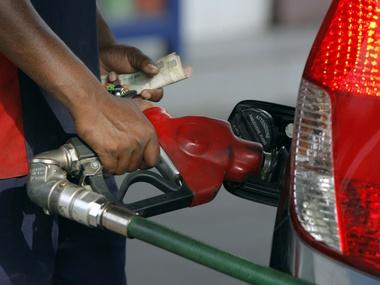
Following the new price announcement, queues immediately sprang up at NNPCL filling stations in Abuja as attendants moved to adjust fuel pumps to reflect the new price.

The NNPCL at Murtala Muhammed expressway, Kado, was shut against consumers for a couple of hours.

There has been no official communication by the official spokesperson of the NNPCL, Garba Deen Mohammed, on the reasons for the price hike.

He did not respond to The ICIR calls on the matter when contacted.

President of the Petroleum Retail Owners Association of Nigeria (PETROAN), Billy-Gilly Harry, told The ICIR that the NNPCLtd did not consult other petroleum marketers before increasing the price.

“NNPL still has an edge over other marketers but shouldn’t have adjusted the price without reaching out to other stakeholders,” Harry said.

The PETROAN chief, noting that the national oil company had only 300 filling stations while PETROAN members had 18,930 filling stations across the country, added, “They changed price to N617 without consulting us. This is completely wrong. We are all competitors, but NNPCL is a super partner. They have the assets, and they still wield the powers they had when they were fully in government. This is not fair competition, but we will get to compete with them.”

Harry disclosed that the association had been reaching out to its members to invest in their own modular refinery.

“We have already got partners,” he said.

The National Operations Controller of the Independent Marketers Association of Nigeria (IPMAN), Mike Osatuyi, said he had projected sometime ago that an upward review in fuel pump price should be expected from the third week of July 2023 when new imports of the product arrive.

Osatuyi attributed the rise to an increase in crude oil prices at the international market, foreign exchange unification and higher logistics – including transportation – costs.

DSS under fire for describing Emefiele’s lawyers as ‘IPOB members’

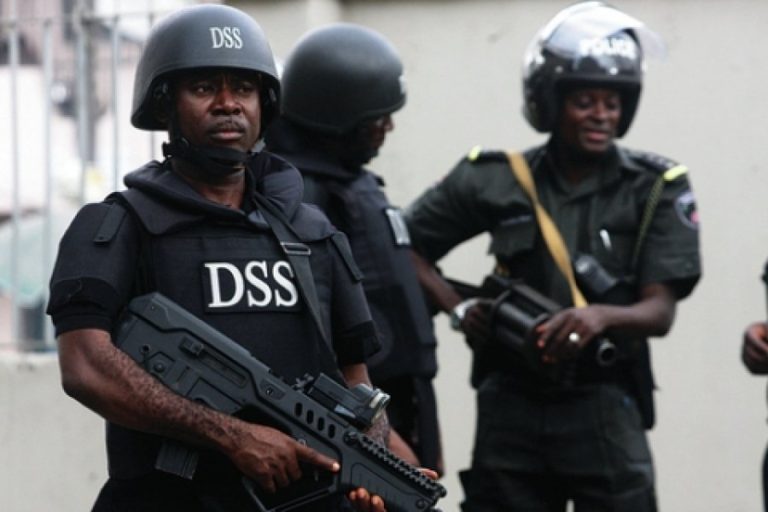
THE Department of State Service (DSS) has come under fire after referring to lawyers defending the suspended governor of the Central Bank of Nigeria (CBN), Godwin Emefiele, as members of the proscribed Indigenous People of Biafra (IPOB).

The DSS, in a tweet seen by The ICIR on Tuesday, June 18, also described Emefiele’s legal team, led by Maxwell Okpara, as ‘charge and bail lawyers’.

‘Charge and bail lawyer’ is a derogatory term used to describe some lawyers who hang around court premises, soliciting and lobbying to represent individuals who may need help in securing the bail of persons who have been charged to court.

“Charge and bail, overzealous uninformed IPOB/ESN lawyer Maxwell Okpara mobilises other like minded lawyers against DGSS. Futile Efforts. Well, Nigerians, beware! This is in bad faith. Transferred aggression,” the DSS said in a post on its Twitter handle.

“A Biafran Republic agitator and Outlawed IPOB counsel defending the suspended CBN Governor. Is IPOB defending one of theirs???? What a contradiction…..hmmm…what’s the connection? Is someone telling us something? May Maxwell be properly educated on points of law, please.”

The tweet, which have since been viewed by more than 80,000 people on the micro-blogging site, has generated a lot of angry reactions from Nigerians.

Many Nigerians, who condemned the tweet, wondered why a government agency like the DSS would choose to use some of the words it used in the post.

A human rights lawyer, Inibehe Effiong, who expressed surprise at the statement, described it as disgusting.

Another lawyer, Abdul Mahmud, who called on Nigerians to beware of the DSS’ activities, slammed the statement as disgraceful.

A user, Tony Atambi, who is also a lawyer, noted that the tweet was evidence that the Nigerian security institutions have been compromised.

Reacting to the tweet, Gbenro Adegbola, another Twitter user, described the entire statement as bizarre. He said the tone and language in the post were very odd.

Below are more reactions:

The ICIR reached out to DSS spokesperson, Peter Afunanya, for comments. But he did not respond. He did not respond to a message sent to him on WhatsApp though the app showed he read it.

Emefiele was arrested on June 10 over allegations bordering on economic sabotage and threat to national security, amongst others, and has since remained in the custody of the DSS.

He was arrested and detained shortly after his suspension by President Bola Tinubu on June 9 to pave the way for an investigation into criminal offences he was alleged to have committed as CBN governor.

A judge of the Federal High Court in Abuja gave the DSS one-week ultimatum to either charge him in court or release him. Another judge ordered for his release last week.

Shortly after the court issued the one-week ultimatum, the DSS announced that charges have been filed against Emefiele.

Emefiele was charged with two counts of unlawful possession of a single-barrel shotgun and ammunition without a license under the Firearms Laws of the Federation 2004. The DSS claimed to have found the items during a search of Emefiele’s Ikoyi residence.

Nigerians, including Civil Society Organizations (CSOs) and the Nigerian Bar Association (NBA), have described the charges against Emefiele as politically motivated.