Home Blog Page 85

FG earmarks N300bn for Maitama maintenance, as Kuje school water projects get N140m

0

THE Federal Government earmarked N300 billion for the maintenance of Maitama 2 District infrastructure in its 2026 budget for the Federal Capital Territory (FCT)

It also has another N140 million allocation for solar-powered motorised boreholes in selected primary schools in Kuje Area Council.

The total proposed capital budget for the FCT is estimated at N460,737 billion with major focus on urban infrastructure, particularly in districts like Maitama and Maitama II, which together account for a disproportionately large share of the total budget.

It proposed the extension of inner southern expressway within the FCC at N35 billion; provision of infrastructure to Maitama II district N35 billion ;provision of pedestrian access control at interchanges in the FCC, an ongoing project, at N6.3 billion; full scope development of FCT highway 105 (Kuje road) from Airport Expressway to OSEX, with spur at Kyami District at N7 billion; construction of 30 kilometre road across six area councils at N10.5 billion; and Abuja metrolight rail – 5.7 kilometre extension, currently ongoing, at N31,3 billion.

Others include the settlement of residential and office accommodation rent for international organisations in the nation’s capital at N437 million; and provision of satellite towns water projects at N35 billion.

The magnitude of funds going into projects in elite districts in the nation’s capital has drawn criticism from residents, civil society groups and development watchers who argue that it underscores deep inequalities in how public funds are distributed in Nigeria’s capital.

While Maitama’s infrastructure receives hundreds of billions of naira, basic facilities in rural and peri-urban centres remain underfunded, like the solar-powered motorised boreholes in Kuje primary schools, a vital project for providing clean water to children and surrounding communities receive N140 million.

The ICIR further reports that while a chunk of the budget is allocated to projects in the city centre, there have been concerns over infrastructure deficits in FCT’s satellite towns and rural communities, where access to clean water, well-maintained roads and reliable electricity are unavailable. 

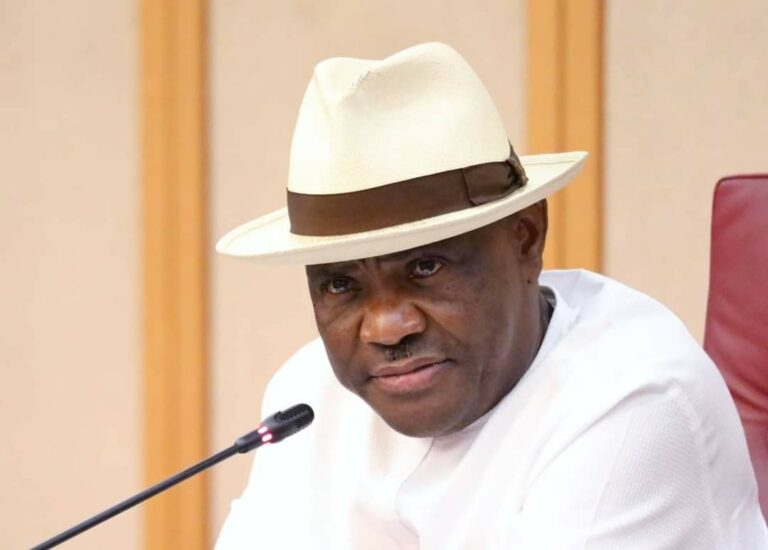
Residents of communities like Gaube and Kaido-Tsoho have raised concerns about poor road conditions in their areas and lack of basic amenities that impact lives, health outcomes and economic activity outside the city centre. Even though many of these facilities are what the FCT Administration, through the Minister, Nyesom Wike, should provide, several communities remain in dearth of them.

Critics say the FG’s budget for the FCT reveals a political choice to prioritise the comfort and appeal of the city centre over essential services for the broader population, where urban elites benefit from massive road upgrades and extensive maintenance projects, while rural districts that need basic infrastructure like school water systems receive little support.

The ICIR reported how the city has been overwhelmed with filth, and how criminals have continued to unleash mayhem on residents.

US reacts to killing of over 100 Kwara residents by terrorists

0

THE UNITED States has condemned the deadly attack on Woro and Nuku communities in Kaiama Local Government Area of Kwara State, where more than 160 people were reportedly killed.

Reacting to the incident in a social media post on Friday, February 6, the US Mission in Nigeria expressed concern over the horrific attack and condoled with the affected families.

“The United States condemns the horrific attack in Kwara state in Nigeria, which claimed the lives of more than 160 people, with the death toll still unconfirmed and many still unaccounted for.

“We express our deepest condolences to the families of those affected by this senseless violence. We welcome President Tinubu’s order to deploy security forces to protect villages in the area and his directive to federal and state officials to provide aid to the community and bring the perpetrators of this atrocity to justice,” the mission noted.

THE ICIR reports that the attack came nearly two months after President Bola Tinubu declared a state of emergency on security in Nigeria.

The massacre is also one of the deadliest attacks recorded in the country this year.

Reports indicate that death toll from the carnage could have gone up to about 170.

Villagers fled into surrounding bushland as gunmen rounded up residents, bound their hands, and executed many, according to a state lawmaker Sa’idu Baba Ahmed.

Homes, shops, and the palace of the local king identified as Salihu Umar were set ablaze, and several people have since been missing.

THE ICIR also reported that the killers operated for 10 hours before security operatives eventually arrived.

Speaking on ARISE Television on Thursday, February 5, the village head, Umar Bio Salihu said the attackers stormed the community at about 5 p.m. and continued unchallenged until roughly 3 a.m. the following day, when soldiers finally reached the area.

“I called after 5pm, but they did not come until about 3am. That was from 5pm to about 3am. That is about 10 hours. The military did not attack them. The bandits had gone when the military came,” he added.

He further noted that the community had remained largely unprotected for months following the earlier withdrawal of troops previously stationed there after their base was attacked.

According to him, the absence of a sustained security presence gave room for repeated incursions by armed groups.

“Initially, we had a military base there. We had about 15 soldiers there. About three to five months ago, they attacked the soldiers. Since then, they evacuated them. We have no security presence in that area.

“That gave them the opportunity to come anytime, enter anytime and do whatever they like,” he stated.

The village head linked the latest violence to tensions between residents and a militant faction he identified as the Mamuda group, claiming the attackers struck after locals resisted pressure to accept the group’s ideology.

“Our people are not ready to take that ideology. I think that is what made them angry to come and attack the communities.”

He also dismissed suggestions that the killings reflected religious divisions, stating that most of those killed were Muslims.

“When they brought the letter, they brought it directly to me. That night, I sent the letter to the DSS in Kiama.

“The following day, I took the letter myself to the Emirate Council. They photocopied it. In that process, I think they lost the appropriate contact.

“When the security agents went on patrol after the letter, the terrorists became angry.”

He disclosed that at least 75 people killed during the attack had been buried, warning that the toll could rise as search efforts continued in surrounding bushes.

He said several houses, including parts of his own residence, were razed during the onslaught.

The casualty figure he provided differs from earlier reports that estimated the casualties from the coordinated attacks on Woro and neighbouring Nuku communities at between 160 and 170 people, according to multiple accounts cited by officials and residents.

50 years after Murtala Muhammed, African leaders warn against dependency

0

AFRICAN leaders, scholars, and policy experts have issued a warning that the continent risks sliding into a new form of dependency unless it deliberately asserts its strategic autonomy and resists external domination.

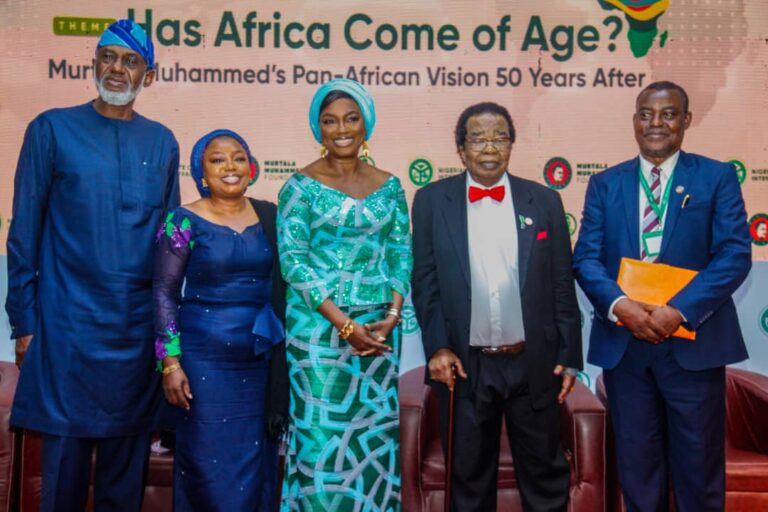
They issued the warning at a strategic policy workshop in Lagos themed, “Has Africa Come of Age? Murtala Muhammed’s Pan-African Vision 50 Years After,” jointly organised by the Murtala Muhammed Foundation (MMF) and the NIIA, to commemorate the 50th anniversary of the assassination of the former Head of State.

Speakers argued that despite Africa’s vast natural resources, youthful population, and expanding diplomatic footprint, the continent remains trapped in cycles of economic vulnerability, political fragility, and external influence,noting that conditions that contradict the bold vision articulated by Muhammed in his historic January 11, 1976 speech at the Organisation of African Unity (OAU) extraordinary summit in Addis Ababa.

“When General Muritala said Africa had come of age, he was saying to the world, don’t think Africa is an appendage anymore. Don’t think Africa is what you like to put today as copycat. To say Africa has come of age is actually to put on the stamp the meaning of strategic autonomy,” the Director-General of Nigerian Institute of International Affairs, Eghosa Osaghae, said.

Osaghae stressed that continued dependence on foreign aid and externally driven development models has failed to deliver sustainable progress.

“African solutions to African problems must be more than a slogan. It must become a governing principle,” he added.

Delivering the keynote address, former Minister of External Affairs and Professor of Political Science, Bolaji Akinyemi, cautioned against interpreting “coming of age” as a declaration of success.

“To say that Africa has come of age is not a declaration of perfection, but a recognition of responsibility,” Akinyemi said. “It demands that we examine our political maturity, economic resilience, institutional strength, and cultural confidence.”

He described Murtala Muhammed as “a man of several parts” who restored national pride and pursued governance with uncommon boldness.

Akinyemi argued that Africa must confront unfinished business from independence, including weak institutions, elite capture of resources, and fragmented regional cooperation.

“Without clarity and confidence in global affairs, Africa will continue to be acted upon rather than acting,” he warned.

The Chief Executive Officer of the MMF, Aisha Muhammed-Oyebode, explained that the workshop was designed not only to reflect on history, but to challenge a new generation to take ownership of Africa’s destiny.

“My father stood at the forefront of Africa’s liberation struggle,” she said. “This event is also about inspiring young Africans to see themselves as future diplomats, policymakers, and leaders

During a panel session, the Deputy Director of Research at NIIA, Joshua Bolarinwa, said Africa has not yet realised the self-reliance and courageous leadership envisioned by Murtala Muhammed nearly five decades ago.

Similarly, President of the Nigerian Political Science Association (NPSA), Hassan Saliu, said both Nigeria and Africa have fallen short on key pillars of Muhammed’s vision which is sovereignty, unity, liberation, and freedom.

He pointed out that persistent conflicts, external military footprints, and economic dependency expose the fragility of Africa’s independence.

Why we seek independence, enforcement powers for the Auditor-General – CSJ

0

THE Centre for Social Justice (CSJ) has argued that granting independence and enforcement powers to the Auditor-General’s Office would ensure it functions optimally and enable it to muster enough power to sanction defaulting government agencies without interference.

The Centre expressed worry that over time, exposing graft by the Auditor-General’s Office was not followed with commensurate sanctions because of limitations of its powers in the current audit law.

The Lead Director for CSJ, Eze Onyekpere, who disclosed this at the official launch of the Audit Opportunities Assessment Study on Thursday, February 5, in Abuja, said Nigeria was borrowing more because there were no adequate sanctions for misappropriations revealed in audit reports.

“Our fellow African countries like Gambia, Sierra Leone and South Africa have embraced the independence of the Auditor-General’s Office. In our country, it’s a different scenario as the National Assembly that should push for the Federal Audit Service Bill are still singing “on your mandate we shall stand,” (a slogan indicating absolute loyalty to President Bola Tinubu”, “he said

In a strategic recommendation for strengthening Nigeria’s audit system, Onyekpere stressed the importance of the enactment of the Federal Audit Service Bill, which would grant statutory independence and enforcement powers, establishing the Auditor-General of the Federation Office as an autonomous constitutional authority.

He also suggested the need to amend sections 85-87 of the Constitution to compel executive and legislative responses within fixed timeliness, ensuring that audit findings trigger mandatory corrective actions.

Onyekpere urged the Budget Office to withhold funds from ministries, departments and agencies of government that are non-compliant with audit rules.

He further suggested multi-stakeholder oversight forums involving civil society organisations, media and development partners to strengthen external accountability and sustained public engagement.

Also in his submission, a senior official of the Fiscal Responsibility Commission (FRC), Charles Abana, suggested that the legislature, specifically internal and external auditors, should utilise the submissions in the study to support audit work in the country.

Earlier reports by The ICIR revealed auditor-general’s reports indictments on several agencies of the government, which have come with a tap on the wrist warning in most cases because of a lack of enforcement and prosecutorial powers.

Notably, the office of the Auditor-General of Nigeria has indicted the Nigerian National Petroleum Company Limited (NNPCL) of N514 billion in fraud.

The allegation was contained in the 2021 Auditor-General’s annual report, published in November 2024 and released recently.

It disclosed that the NNPCL misappropriated funds and diverted revenue meant for the Federation in 2021.

A breakdown of the allegations revealed that the auditor-general indicted the NNPCL for unauthorised deductions of N82.9 billion from federation revenue for refinery rehabilitation.

It also knocked the state-owned oil company for its irregular deductions of funds from domestic crude sales at the source.

Former NEXIM Bank MD Robert Orya jailed 490 years over N2.4bn fraud

0

A FEDERAL Capital Territory (FCT) High Court has convicted and sentenced a former managing director of the Nigerian Export-Import Bank, NEXIM, Robert Orya, to a cumulative 490 years in prison over a ₦2.4 billion fraud.

The Economic and Financial Crimes Commission (EFCC) secured the conviction on Thursday, February 5, after a prolonged trial bothering on financial crimes he allegedly committed while in office between 2011 and 2016.

Delivering judgment, the judge, F. E. Messiri, found Orya guilty on all 49 counts filed against him, bordering on fraud, abuse of office and related offences.

The court sentenced him to 10 years’ imprisonment on each count, resulting in a total sentence of 490 years.

In a statement issued on its social media handles after the judgment, the anti-graft agency said the conviction marked the conclusion of a case that exposed large-scale financial abuse at the development finance institution.

“The EFCC, today, February 5, 2026, secured the conviction of Robert Orya, a former managing director of the Nigerian Export-Import Bank, NEXIM, for fraud amounting to about ₦2.4 billion.

“Orya, who was prosecuted by EFCC counsel Samuel Ugwuegbulam, was convicted by Justice F. E. Messiri of the FCT High Court, Abuja, and sentenced to ten years’ imprisonment on each of the 49-count charges,” the statement read.

Orya was first arraigned before the court on November 25, 2021, on charges including criminal breach of trust, impersonation, misappropriation of public funds, official corruption, fraud and abuse of office.

According to the prosecution, he abused his position as managing director to unlawfully obtain more than ₦1.368 billion from NEXIM Bank, alongside other fraudulent transactions that formed the basis of the 49 counts.

Bandits overran Kwara community for 10 hours before troops arrived – Village head

0

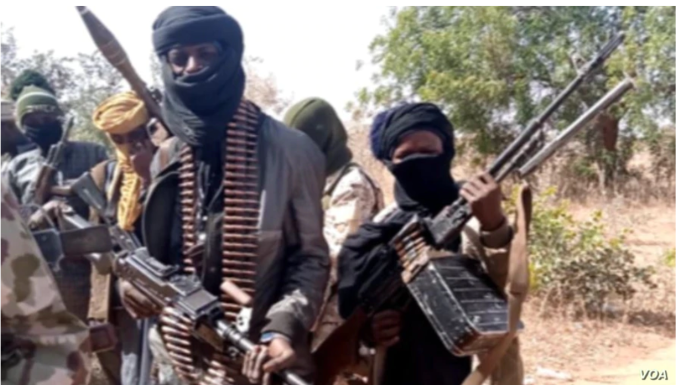
ARMED bandits operated for nearly 10 hours in Woro community, Kaiama Local Government Area of Kwara State, before security operatives eventually arrived, the village head, Umar Bio Salihu, has claimed.

Speaking on ARISE Television on Thursday, February 5, Salihu said the attackers stormed the community at about 5 p.m. and continued unchallenged until roughly 3 a.m. the following day, when soldiers finally reached the area.

“I called after 5pm, but they did not come until about 3am. That was from 5pm to about 3am. That is about 10 hours. The military did not attack them. The bandits had gone when the military came,” he added.

He further noted that the community had remained largely unprotected for months following the earlier withdrawal of troops previously stationed there after their base was attacked.

 According to him, the absence of a sustained security presence gave room for repeated incursions by armed groups.

“Initially, we had a military base there. We had about 15 soldiers there. About three to five months ago, they attacked the soldiers. Since then, they evacuated them. We have no security presence in that area.

“That gave them the opportunity to come anytime, enter anytime and do whatever they like,” he stated.

The village head linked the latest violence to tensions between residents and a militant faction he identified as the Mamuda group, claiming the attackers struck after locals resisted pressure to accept the group’s ideology. 

“Our people are not ready to take that ideology. I think that is what made them angry to come and attack the communities.”

He also dismissed suggestions that the killings reflected religious divisions, stating that most of those killed were Muslims.

The village head said he had earlier forwarded a threat letter allegedly sent by the attackers to security agencies.

“When they brought the letter, they brought it directly to me. That night, I sent the letter to the DSS in Kiama.

“The following day, I took the letter myself to the Emirate Council. They photocopied it. In that process, I think they lost the appropriate contact.

“When the security agents went on patrol after the letter, the terrorists became angry.”

He disclosed that at least 75 people killed during the attack had been buried, warning that the toll could rise as search efforts continued in surrounding bushes.

He said several houses, including parts of his own residence, were razed during the onslaught.

The casualty figure he provided differs from earlier reports that estimated the casualties from the coordinated attacks on Woro and neighbouring Nuku communities at between 160 and 170 people, according to multiple accounts cited by officials and residents. 

The ICIR reports that the mass killing occurred barely weeks after President Bola Tinubu declared a national emergency on insecurity and announced fresh security officers’ deployments and recruitment to curb escalating violence.

Despite those measures and recent military claims of neutralising bandits and dismantling their camps across parts of Kwara, communities in Kaiama axis have continued to experience killings, abductions and repeated raids, underscoring persistent gaps in protection for rural settlements.

Governor AbdulRahman AbdulRazaq, who visited the affected communities after the latest assault, described the incident as a cowardly act by terrorist elements and offered condolences to bereaved families.

He also stated that 75 persons were killed during the attack.

Scores killed in Kwara weeks after Tinubu declared emergency on security

NEARLY two months after President Bola Tinubu declared a state of emergency on security in Nigeria, armed men stormed Woro and Nuku communities in Kaiama Local Government Area of Kwara state, on Tuesday, February 3, killing dozens of people in one of the deadliest attacks recorded this year. 

Nearly 24 hours later, both the state government and police have only provided sketchy details on the attack.

Reports indicate that death toll from the massacre has gone up to about 170. 

Villagers fled into surrounding bushland as gunmen rounded up residents, bound their hands, and executed many, according to a state lawmaker Sa’idu Baba Ahmed who spoke with Reuters on the incident. 

Homes, shops, and the palace of the local king identified as Salihu Umar were set ablaze, and several people remain missing.

The ICIR also gathered that the Nigeria Security and Civil Defence Corps, NSCDC’s office in the community was set ablaze. However, there are no clues whether its officers were killed.

Although the authorities have yet to clarify how the attack occurred, the state police spokesperson, Adetoun Ejire-Adeyemi, explained that the ‌police and military had been mobilised to the ⁠area for a search-and-rescue operation. 

She declined to provide casualty figures, leaving many Nigerians without verified information. She did not respond to repeated requests by The ICIR on the casualties.

On his part, the state Governor AbdulRahman AbdulRazaq described the attack as “a cowardly expression of frustration by terrorist cells following the ongoing counterterrorism campaigns in parts of the state” and offered condolences to affected families. 

Beyond this, no further details have been provided on security measures, relief efforts, or steps to bring calm to the people in the area.

“Governor AbdulRazaq says the attack was apparently to distract the security forces who have successfully hunted down several terrorist and kidnapping gangs across many parts of the state. 

“The governor expresses heartfelt condolences to Woro and Nuku communities on the sad incident, especially the families affected in the Tuesday attack,” the statement read.

The ICIR reached out to Rafiu Ajakaye, the Chief Press Secretary to the Governor, and Ibraheem Abdullateef, his Senior Special Assistant on Communication on the attack. They did not respond to enquiries.

The attack came on the heels of a troubling pattern of insecurity in Kwara. Data from the Armed Conflict Location & Event Data (ACLED) shows that between January and November 2025, 207 people were killed and 177 abducted across the state, with Ifelodun, Pategi, Kaiama, and Baruten LGAs accounting for nearly 80 per cent of fatalities. 

Despite frequent reports of neutralising bandits and overtaking their camps, communities continue to experience attacks, abductions, and killings, with residents repeatedly displaced.

Recall that the Nigerian military claimed that its operations in the state neutralised over 150 bandits in recent weeks. 

In a statement issued on February 1, troops of the 22 Armoured Brigade said they had destroyed bandit camps, rescued kidnap victims, and dismantled terrorist logistics networks across forested areas in the state.

According to Maureen Ogbuka, a captain and Acting Deputy Director of 2 Division Army Public Relations, the operations were conducted under the leadership of Chinedu Nnebife, a major general and General Officer Commanding 2 Division, and Nicholas Rume, a brigadier general and Commander of 22 Brigade. 

The military said its troops had stormed remote and previously inaccessible camps, neutralised terrorists, destroyed hideouts, and intercepted fleeing elements, significantly degrading the bandits’ operational capacity.

However, many have said that the latest attack exposed glaring gaps in the government’s security measures despite the emergency declared by Tinubu, which included the recruitment of new police officers, deployment of additional army personnel, and the use of NYSC camps for crash training. 

Over 600 projects stall despite ₦30bn disbursed, Tracka report reveals

0

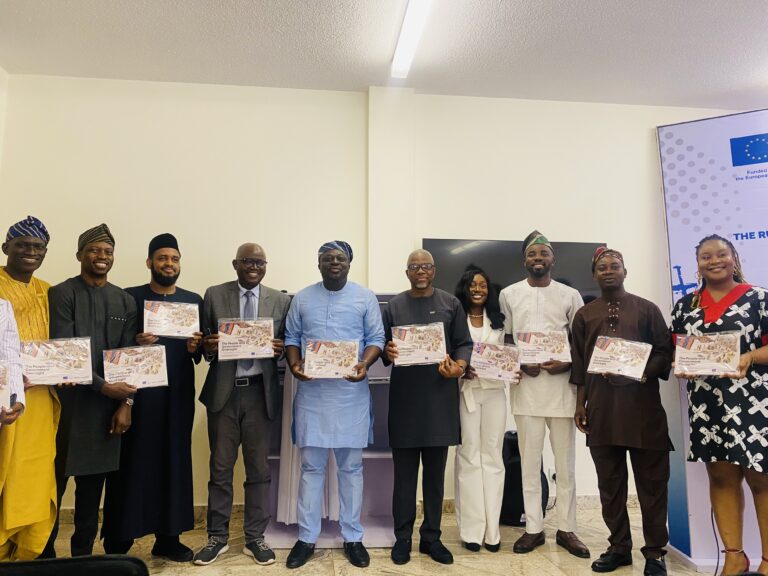
AT LEAST 662 federally funded capital projects across Nigeria have stalled, been abandoned, or left unexecuted despite over ₦30 billion in public funds allocated to them, according to a new report by Tracka, the civic accountability platform of BudgIT.

The disclosure is contained in Tracka’s 2024/2025 report, titled “The People and Government Oversight: Connecting the Dots in Service Delivery,” unveiled on Wednesday, February 4. The findings were presented by Osiyemi Joshua, Head of Tracka, at the report launch in Abuja.

The report tracked 2,760 capital projects across 30 states over a 13-month period, with a total allocation of ₦2.26 trillion.

However, Tracka’s verification showed that only about half of these projects were completed, while 1,322 projects were found to be ongoing—mostly at a slow pace—abandoned, unexecuted or delivered in ways that failed to meet basic standards.

Tracka noted that multibillions naira remain tied to projects that never materialised or have been left in limbo.

For instance, N15.07 billion was reported to have been disbursed for 92 fraudulent projects out of the allocated N15.36 billion.

Also, 471 projects were confirmed to be unexecuted despite payment of N7.60 billion. For 99 abandoned projects, N8bn was disbursed.

This, according to the Osiyemi, has continued to deprive communities of essential infrastructure such as schools, health facilities, roads and water systems.

According to the organisation, the problem is not merely slow execution but a deeper breakdown in transparency, planning and accountability.

Speaking at the event, BudgIT’s Executive Director, Oluseun Onigbinde, said public budgets should not be viewed as abstract figures detached from people’s daily realities.

“Why do we do this? When I was speaking to my team members yesterday, I said budgets are not about numbers, they are about lives, they are about roads, they are about schools, they are about people,” Onigbinde said.

He warned that the inclusion of projects in the budget does not guarantee delivery, particularly in the absence of active citizen oversight.

“It’s very, very important for people to understand this element of things—that because it’s in the budget does not mean it will happen,” he said.

Onigbinde explained that Tracka’s work over the years has focused on turning the budget into what he described as a “living object” that citizens can monitor and engage with, rather than a document filled with figures that fail to translate into outcomes.

He also pointed to what he described as a paradox in state finances, noting that many state governments currently have more funds at their disposal but continue to struggle with project delivery.

According to him, one of the persistent challenges identified in Tracka’s findings is the growing dependence on constituency, or zonal intervention, projects, which often weaken accountability and allow core responsibilities to be neglected.

“The real problem, as we see in most of our reports, are the constituency projects. You realize that this constituency project is becoming a problem because somehow it allows state governments to abandon their own respective work,” Onigbinde said.

He cited primary healthcare as a key example, noting that even critical social services have suffered as a result.

“If I was supposed to be the role model, the primary healthcare, we see that most of our hospitals are abandoning that. Our interest is to make sure that we pay attention to all of this,” he said.

Tracka’s verification of the federal government’s PHC revitalisation programme revealed that while some facilities showed visible improvements, many remained under construction or continued to operate in degraded conditions despite being listed for funding.

It noted that in several communities, residents reported little or no evidence of intervention.

Beyond health, the report also flagged widespread solar-powered constituency projects, many of which were vague, lacking detailed information.

He added that poor planning and weak evaluation continue to undermine service delivery nationwide.

“What exactly is missing in service delivery for this country is that we’re so big on spending. We do too little on planning and we do too little on evaluation,” he said.

Tracka warned that unless project locations, disbursement data and implementation timelines are made fully transparent, Nigeria risks repeating a cycle where budgets expand but public benefit remains elusive.

The organisation called for stronger oversight mechanisms, including real-time monitoring of projects, clearer disclosure of contractor information and stricter consequences for abandoned or fraudulently executed projects.

Katsina-bandits truce falters as 20 die in fresh attack

AT LEAST 20 people have been killed following an attack by suspected bandits on Doma community in Tafoki Ward, Faskari Local Government Area of Katsina State, on Monday, February 3.

Residents said armed men invaded the community and operated for hours without resistance or support from security officers. They moved through the village, shooting sporadically and setting houses and vehicles ablaze.

Some villagers reportedly ran into the bush to hide, while others were caught and killed. Several homes were completely razed, leaving those who escaped the carnage homeless.

The chairman of Faskari Local Government Area, Surajo Aliyu, described the onslaught as a reprisal and one of the deadliest in recent months. “This attack is a reprisal one, and it is a deadly one indeed because we had never had such an attack in the last five months in this area,” he said.

He explained that security forces were informed about the attack but could not reach the village on time to stop it. “Today, they killed at least 20 people. They burnt cars and houses during the dastardly attack. We reported the incident to security personnel, but unfortunately, they could not arrive before the bandits carried out their heinous act,” Aliyu said.

According to him, the bodies of the victims were collected, and they would be buried today (Wednesday). “We sympathise with the people of Doma, Tafoki Ward, Faskari, and indeed the entire people of Katsina State, especially the bereaved families. May God bring an end to these senseless killings,” he added.

The ICIR reports that the attack signals the collapse of recent peace deal between the state, its LGAs and the bandits. There were several negotiations among the parties in the past; they failed to restore peace.

Residents said the agreement had brought a relative calm, but the latest incident has revived fear and uncertainty. The villagers are now worried about their safety and the possibility of more attacks.

On January 2, a letter from the Katsina State Ministry of Justice indicated that the state government had approved the release of 70 suspected bandits who were in custody and standing trial for banditry-related offences.

The letter, classified as secret and addressed to the state’s Chief Judge, Musa Abubakar, requested the intervention of the Administration of Criminal Justice Monitoring Committee (ACJMC) to facilitate the release of the suspects.

It stated that the move was a condition for the continuation of an existing peace accord between affected communities in many local government areas of the state and armed groups operating in those areas.

The letter drew public attention and backlash, with concerns raised over the implications of releasing suspects facing criminal trials.

Despite public ire that trailed the decision, the government defended the decision. On January 12, the state Commissioner for Internal Security and Home Affairs, Nasiru Danmusa, said the planned release was aimed at consolidating peace and securing the freedom of abducted persons.

According to him, the peace pact had already led to the release of more than 1,000 people previously held captive by armed groups across the state.

The government argued that similar peace deal had been adopted in conflict situations globally, adding that the process fell within the statutory powers of the ACJMC under Section 371(2) of the Administration of Criminal Justice Law of Katsina State, 2021.

Data obtained from the Armed Conflict Location & Event Data Project (ACLED) indicated that at least 1,591 civilians were killed in the state between 2021 and 2025, with fatalities rising sharply in the last two years.

According to the data, 246 civilians were killed in 2021, followed by 179 deaths in 2022 and 138 in 2023.

The figures rose sharply thereafter, with 495 civilian deaths recorded in 2024 and 533 in 2025, the highest annual toll within the five-year period.

The rise in fatalities occurred despite negotiations and peace deals between state authorities and armed groups operating in Katsina and the wider North-West region.


Solutions Journalism Network Awards open for nominations

SOLUTIONS Journalism Network is seeking entries to its awards, which honour and celebrate outstanding solutions journalism from around the world.

By spotlighting these stories, the organisation aims to elevate what excellence in this craft means and inspire more rigorous, impactful reporting.

Nominations should meet the four pillars of solutions journalism, as defined by the Solutions Journalism Network.

The organiser says, “The awards are open to journalists worldwide — whether working in newsrooms of any size or independently.

“All entrants must submit their own original published work. Entries are accepted across all platforms, including digital, video, print, podcast and radio. For a series, please submit one representative story. If you are submitting on someone else’s behalf, you must have their confirmed permission to do so”.

Eligible entries must have been published or aired between January 1, 2024 and December 31, 2025.

The award categories include the General Excellence in Solutions Journalism, where one winner will receive a cash award of $1,000.

Specialist categories include: The Best of Solutions Journalism in News Articles; in Video; in Audio; in Visual Image; in Multimedia, and the Best of Student Solutions Journalism.
Each specialist category can have up to one first-place winner ($500 award), one second-place winner ($250 award), and one third-place winner ($150 award).

The deadline for nominations is February 27, 2026. Interested applicants can apply here.