When he presented his budget proposals for 2024 to Nigeria’s National Assembly, the first full year of appropriations under his presidency, President Bola Ahmed Tinubu identified as his priorities, human asset development, poverty reduction and fighting insecurity. Last week, his official spokesperson, Bayo Onanuga, appeared to forget or renounce that policy direction, when he acknowledged that 133 million Nigerians were multi-dimensionally poor but claimed that had nothing to do with the Federal Government. According to Onanuga, the states and local governments were responsible for that.
On the same day, 450 kilometres away, Vice-President, Kashim Shettima, provided a full rebuttal of Onanuga’s escape into sovereign abdication. The occasion was the launch of the stakeholder consultation of the Southeast Development Commission, SEDC for its regional development plan called Southeast Vision 2050 (SEV2050). At the event, the Vice-President went beyond merely reaffirming the leadership and responsibility of the Federal Government in eliminating poverty. He also underscored that this had to be “inclusive, sustainable, and anchored on peace and productivity.”
This was not an unveiling of the SEV2050. Rather it kicked off the process to evolve one. It was also the coming out promenade of the SEDC.
The Commission is one of the four regional development bodies established by President Tinubu under the Ministry of Regional Development. The others are in the north-central, north-west, south-west. Preceding these, the Niger Delta Development Commission, NDDC, has been in existence since 2000; and the North-East Development Commission, NEDC, since 2017.
The Stakeholder consultation in Enugu was a credit to the Board of the SEDC chaired by Emega Wogu and the management led by the Managing Director, Mark Okoye. It was clearly a pitch for political support and constituency building for the Commission. The SEDC achieved the significant feat of lining up the public support of the governors of all five states of the south-east. By contrast, when its counterpart for the north-west organised similar event last month, none of the seven governors of the zone attended.
Imo State Governor, Hope Uzodinma, coincidentally the chair of the South-East Governors Forum, was the only one of the five who did not attend in person. He sent the Speaker of the State House of Assembly in his stead. It appears the Commission will not be short of goodwill as it sets out on its mission. Quite clearly also, it will not be short of human obstacles in its path.
As its primary mission, the SEDC Act of 2024 charges the Commission with responsibility to “receive and manage funds from allocations of the Federation Account for the reconstruction and rehabilitation of roads, houses and other infrastructural damages suffered by the region as a result of the effect of the Civil War….” The SEDC is the only regional development commission with an explicit mission of post-war reconstruction. One question that the consultation put before the Commission was: reconstruction from which war?
Anambra State Governor, Chukwuma Soludo, addressed this question in his remarks arguing that the region was in recovery from not one war but “two major wars”. One was the Nigeria-Biafra war, which was supposed to have officially ended on 15 January 1970. The second was what he called “an internal war of self-destruction that has been on since 2021.” Some people may argue that his dating of this second conflict to 2021 is either artificial or unrealistically recent.
It was notable that Governor Soludo failed to say who the parties were to this second war. Pointedly, however, he noted that “after the (first) civil war, there was a promise of rehabilitation and reconstruction; and…. this is yet to happen.” What he left unsaid was that the failure to fulfill that promise made what he described as the second war all but inevitable. Whether that was deliberate or inadvertent is immaterial.
Even as it sought to project an ambition over the next quarter century, the SEV2050 consultation could not escape the enduring backdrop of reconstruction that frames its search for a mission. The mistake will be to focus on brick and mortar and forget to prioritise a reconstruction of minds, memories, and mentalities.
Vice-President Shettima acknowledged as much with some deftness in his opening remarks when he paid tribute to “a region defined not only by memory, but by motion.” Like Governor Soludo, what he left unsaid was even more eloquent. It was impossible to miss that he felt unable to say that this motion led to movement or progress.
How to transform motion into movement and ultimately to regional progress more than half a century after the end of the conflict that continues to define independent Nigeria is what the SEDC seeks.
On show were early signs of constructive competition among the states of the south-east. It begs to be harnessed.
These reassure. But the event equally advertised the daunting challenges that confront the Commission along its path. Three were evident.
One is a crisis of mismatched expectation. This was best illustrated by Governor Soludo. Having advised the Commission to be realistic in its ambitions, he nevertheless asked it to lead the delivery of a “Marshall Plan” for the south-east, a reference to the US-led plan for Europe’s reconstruction after World War II. According to Governor Soludo, this regional Marshall Plan should include a regional security framework, and “super inter-state infrastructure” such as regional railways and regional highways. The problem, however, is that an SEDC that purports to lead on the former is likely to antagonise the state governors and a Commission that claims to lead on the latter will be on a fool’s errand.
Two is the problem of evolving a viable business model for the SEDC. For long, the NDDC has defined the business model of the regional development commissions. Under this model, these commissions operate largely as front offices for extortion which holds the fate of citizens of the concerned region(s) hostage in carve ups by political insiders sharing development funds as private loot. By 2022, according to one report on the NDDC, “12,000 out of 13,377 projects were abandoned after paying trillions of naira for them.” As development agents, they have been largely ineffectual. The SEDC can’t afford this.
Therefore, SEDC will face pushback from the usual species of greedy political grubbiness. The event in Enugu had in attendance the Vice-President, the Governors of all the south-east States, and the Speaker of the House of Representatives who was represented by Majority Leader, Professor Julius Ihonvbere.
But it was impossible not to notice the absence of the Chairman of the SEDC Committee in the Senate and former Governor of Abia State, Orji Uzor Kalu; his counterpart in the House of Representatives, Chris Nkwonta; and the man who refers to himself as “Number Six Citizen”, Deputy Speaker, Benjamin Kalu. Senator Orji Kalu reportedly sent one of his daughters to represent him. She holds no relevant public office. Anyone who thinks the near collective absence of the National Assembly caucus of the region was a coincidence misunderstands how the place works.
As a convening, the SEV2050 event in Enugu has been arguably as successful as its planners could have hoped. In terms of its symbolisms and optics, it may indeed have exceeded expectations. The Commission will not be short of ideas as it goes forward; nor will it be short of determined antagonists.
Post-war reconstruction is an existential undertaking. The SEDC has neither the budgets nor the latitude for the errors that have become the habits of the NDDC. If the Commission can confine its mission and secure protection against baleful political extortion from predictable sources, it may lay durable foundations under its current leadership for a business model suited to its unique and historic mission.
LESS than two weeks to the February 21 Federal Capital Territory (FCT) Area Council elections, political parties across the six councils namely Abaji, Abuja Municipal Area Council (AMAC), Bwari, Gwagwalada, Kuje and Kwali are revving their campaigns.
The contest is expected to shape grassroots governance in the nation’s capital, where the Peoples’ Democratic Party (PDP) and the All Progressives Congress (APC) shared the councils in previous election.
The Independent National Electoral Commission (INEC) fixed February 21, 2026, for the poll, with campaigns running until February 19 after publication of the final candidates list in September 2025.
The INEC had cleared more than 1.6 million registered voters to participate in electing six chairmen and 62 councillors across the councils.
According to the figure released by the Resident Electoral Commissioner (REC) for the FCT, Aminu Idris, the number of voters for the poll stands at 1,680,315.
Idris also said INEC had approved the decongestion of large Registration Area Centres to enhance efficiency and ease the movement of personnel and election materials on polling day. This, he explained, led to the establishment of sub-RACs in Dutse Alhaji and Kubwa wards in Bwari Area Council, as well as in Gwarinpa and Kabusa wards within the Abuja Municipal Area Council.
The REC further disclosed that elections would not be conducted in four polling units across the FCT because no voters registered there during the last voter registration and revalidation exercise.
Three of the affected polling units are located in Garki Ward, while the remaining one is in Jiwa Ward.
The election will hold in 2,822 polling units of the 62 wards in the FCT.
However, the build-up to the exercise has been shaped by court rulings and intra-party conflicts.
A Federal High Court in Abuja on January 20, ordered INEC to recognise candidate lists from some parties, including the African Democratic Congress (ADC), while disputes over nomination processes and candidate eligibility have also trailed the Labour Party (LP) and the PDP.
Meanwhile, below are the major contenders across the six area councils as listed on INEC portal as of September 2025.
Abaji Area Council
Sokodabo MusaBilyaminu emerged as the PDP’s consensus chairmanship candidate during the party’s primaries in June 2025, securing all delegate votes. He was the only contestant according to the Electoral CommitteeChairman.
His emergence positions him as the party’s frontline challenger in what is expected to be a fierce competition among the three leading parties – the PDP, APC, and ADC. The APC won the seat in 2022.
Umar Abdullahi is the APC flagbearer as the party seeks to retain the seat. Mohammed Ibrahim picked the ADC ticket and will be seeking to cause a major upset for his rivals. It is, however, unclear if INEC has delisted him to entertain the court-ordered names from the David Mark-led national executives of the party.
Abuja Municipal Area Council (AMAC)
AMAC, being the home to Nigeria’s seat of power and major national institutions, is widely regarded as the most developed council in the FCT. It will see 16 political parties vying for its chairmanship seat.
Danlani Zadna clinched the PDP ticket after Michael Jigu withdrew from the race. This left Danlami as the lone contestant and winner with all 30 delegates votes at the primary.
Zakka Christopher flies the APC flag in AMAC, seeking to retain the seat for his party. The PDP won the poll in previous election (in 2022), but the chairman, Christopher Maikalangu, defected to the APC in 2025, citing loss of federal jobs by his constituents.
Similarly, Paul Moses Ogidi is the ADC flagbearer in the election.
Bwari Area Council
Adamu Julius secured the PDP ticket after winning the party’s primary with 19 votes against Elimelech Jebida, who garnered six votes. Others namely Abdullahi Abuja Zakanbonton, Haruna Muhammed, and Ephraim Dauda got one vote each.
Julius candidacy followed the PDP’s electoral success in Bwari, where the party previously won the chairmanship seat.
Haruna Shekwoloaudi leads the APC’s bid to win the area council’s chairmanship, while Musa Josiah Abinto picked the ADC ticket, according to INEC list of registered candidates.
Gwagwalada Area Council
For Gwagwalada Area Council, Mohammed Kasim emerged the winner of the PDP primary, securing 19 votes to defeat Rabiu Adamu, who polled 11 votes. His candidacy aims to reclaim a council previously won by the APC. He will be contesting against Yahaya Usman Shehu of the APC and Danjuma Iko Afanyibada of ADC.
Kuje Area Council
Zakwoyi Danlami, the PDP candidate in the forthcoming exercise is contesting against Danjuma Samuel Shekwolo of the APC, and ADC’s Knabayi Stephen Adalo.
The area council is currently led by the PDP.
The party will seek to hold its grip on an area council that has recorded landmark transformation from both its current chairman’s efforts and President Bola Tinubu-led government.
Both the PDP and APC-led governments have been widely commended for executing internal road projects across the town, with the two Federal Government-funded dual highways planned to connect Kuje to Gwagwalada and the main city.
Kwali Area Council
Haruna Pai Muhammed secured the PDP ticket in a three-way primary contest, emerging with the highest delegate votes. Daniel Nuhu Kwali (APC) leads his party’s campaign to regain the council it previously controlled.
Meanwhile, Bandoj Jeremiah won ADC ticket in the area council, defeating other major contender.
The ICIR reports that beyond the PDP, APC and ADC, other parties are fielding candidates in the election, with up to 16 parties in AMAC and between nine and 11 in others.
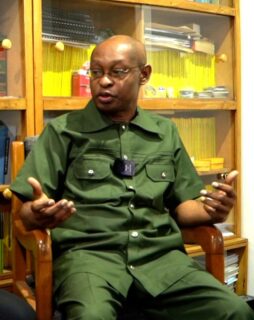
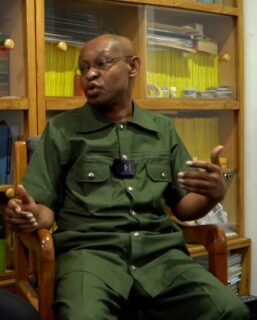
NIGERIA’s annual budgets, running into trillions of naira, has, over the years, failed to impact the lives of the people, with 130 million of the population still in multi-dimensional poverty. For the Lead Director of the Centre for Social Justice, Eze Onyekpere, the Legislature should rise to the occasion as an independent body empowered by the constitution to scrutinise budgets and relevant agencies of government in its oversight. Featuring on The ICIR’s budget and transparency series Onyekpere insists that legislative functions should be done independently and not trivialised by singing ‘on your mandate we shall stand’ in key functions of the National Assembly.
Onyekpere:
The ICIR: Can you give your assessment of President Tinubu’s government in the last two years? From the floating of the exchange rate and also from the removal of the subsidy?
Onyekpere: Well, let me start by saying that there have been critical challenges in the economy since the Tinubu administration came on board. Even before then, there were challenges. So not everything we see in the economy is attributable to either its proper management or mismanagement. But we are going to try an assessment based on the key critical reform issues which the administration introduced.
You know, when we use the word reform, it’s a fairly nebulous word because it doesn’t indicate the content. Everybody can call anything a reform, since you’re changing the system from what it used to be to a new one.
Now, if you look at the critical reforms — the removal of the fuel subsidy and the floating of the naira, you discover that the reforms were not well nuanced, well planned, well sequenced, and well understood by the author of the reforms.
First of all, I would like to see reforms from the construction of a categorical syllogism. In logic, you have the first premise, the second premise, which is the middle premise, and then the conclusion.
For instance, let’s try to construct a syllogism out of the removal of fuel subsidy. The idea is that paying for subsidies by the federal government and states is taking away fiscal space and resources that should have been used for infrastructure, electricity, education, health, water, namely all the infrastructure that we need. So, there was a need to remove that subsidy so that the resources — the six or seven trillion that would have been used — would now be re-channelled to improve health services, education, and access to water.
But when you say reform, the first step of removing subsidies is not the end of the reform. There needs to be a second stage showing what has been saved, and a final stage showing where the money is invested, leading to improvements in quality of life, security, and welfare.
The first step has been taken, but the second and third are not being discussed. Nobody is talking about where the money was invested or improvements in welfare, services rendered by the government, or security.
This is not the first time subsidy removal has been discussed. The only difference is that this time it was a total removal. If you recall, the much-maligned General Abacha did remove a few pennies from the subsidy. Consequently, what he did was to set up a Petroleum Trust Fund (PTDF), which was managed by the former Head of State, General Muhammadu Buhari. We may not agree with all the PTDF did, but at least we saw some road infrastructure, we saw some drugs, and some buses branded with PTF, and so there were some services delivered to the people.
When the much-maligned Goodluck Jonathan also removed a few pennies out of subsidy, you could see that there was a huge uproar, there were demonstrations. Beyond that, he now said, okay, I will set up Sure-P, focused on transportation, on maternal and child health, and a few other things in education. Even if you say the money was not managed with the wholeness and utmost transparency demanded, at least we could see a few things.
Now the difference is that this man removed the subsidy and refused to target the money and left the money in that bottomless pit. Okay, where the money simply goes to other things that are not targeted. So that is a critical challenge.
Yes, he removed fuel subsidy, and every major contestant in the 2023 elections, Peter Obi and Atiku Abubakar, said they were going to remove the subsidy. Even at some point in time, in this office, we had written papers demanding the removal because it was being pointed out that six, seven, or sometimes eight trillion dollars in a year was going to this. So the hope was that we would use our money better.
Now, the second one is about the floating of the Naira. We also have that critical challenge because we were supporting the Naira with a lot of resources. The CBN was doing that. And doing that, economists will say that the rate was artificial.
Therefore, the rate being artificial didn’t demonstrate its true value to both Nigerians, the investing community, and outsiders interested in Nigeria.
So there ought to have been a policy articulation that, after you’ve taken that first step to say I have floated the Naira, then you use that new policy framework to make local production easier, to incentivise local production, and remove those obstacles that are challenging exports.
When they improved the minimum wage, they did not improve it in such a way as to take cognisance of how much the currency has depreciated. Because it’s not just about the articulation of figures. When it came in newly, after the first couple of months, we were buying rice for about 80,000 to 100,000.
Now, even if you say you have done something new, rice has reduced to about 60,000 to 70,000. So that’s a bag of rice for the minimum wage. Forgetting that when we are doing 30,000 minimum wage, at some point, a bag of rice was under 10,000.
So you could buy a bag of rice from there, transport yourself, pay your children’s school fees, and even pay rent of 30,000. But from 70,000, you can no longer do that. If, for any reason, you buy a bag of rice, that means all your income for the month goes into a bag.
The Lead Director,Centre for Social Justice,Eze Onyekpere
The ICIR: The governors seem to be the biggest beneficiaries, smiling to the bank with bigger FAAC allocations, yet citizens see little impact. What can be done differently now to reduce the burden?
Onyekpere: When you say governors are smiling to the bank, it appears you may have been drawn into propaganda. The revenue allocation formula did not change.
The federal government picks up about 52 per cent of all the money. It didn’t change after the removal of the subsidy or the floating of the Naira. So while Tinubu’s administration keeps insisting, oh, ask your governors what they’re doing with the more money. He has not accounted for what he’s doing with his own money.
But then, if the money that has increased looks like paper money and nominal money, now let’s look at it this way. The last budget before Buhari left, we had the budget premised on about less than, I think it wasn’t up to 400 Naira to the dollar. Then I could get a fairly used Toyota Corolla for 2.53 million Naira.
The ICIR: Are you satisfied with the budget office clarification on fiscal transparency concerns raised by some stakeholders, which you were part of? Onyekpere: With utmost respect to them, it appears either the officials are ignorant of the law or deliberately mischievous. Whichever one you interpret it, it’s not good enough for people who are occupying that high office, either ignorance or mischief, because these facts are clear. You don’t need to be an accountant, a lawyer, or you don’t need to go to school to understand the basics.
So, look at the scenario; the 2024 budget was presented. The president drafted the 2024 budget in the executive and sent it to the National Assembly. The National Assembly approved his draft. He signed. So what next? Implement and report back to the people through the National Assembly.
If you have a problem in implementation during the year, you review it around June or July, and you go back to the National Assembly to say, either give me a supplementary budget or amend this. The money I’m expecting is no longer available. That’s the normal thing.
So he did not come within 2024 for the amendment of the act. And the law said, you implement this budget from January 1 to December 31.
He now begged that they should extend the implementation for up to 2025. They did that for him, although I hold that what they did was illegal. But let’s say what they did was legal. He took another 24 months and finished implementation in December 2025 of something you shall finish on December 2024. And all through that time, he did not come back to the National Assembly to say, I want to increase or to reduce.
When he finished implementing, he now brought a bill to amend the 2024 act, to reflect the actual thing he had done, which does not align with the approval of the National Assembly. He has spent more than the National Assembly approved for 2024. He was saying that at the end of 2024, I had not finished implementing.
Give me more time. The whole of 2025, he never got back to them to say, I will spend more. In 2025, he now says, I’m finished.
He now brought a bill to say, I have finished. But now, amend this law, which I should have finished, to reflect what I actually did.
Last year, too, they were only able to; they did a call circle and told MDAs to take 70 per cent of their capital budget over, roll it over to 2026, because they could not implement. They admitted they did only 30 per cent, but many MDAs said they did not even get up to 30 per cent releases.
That’s why they postponed it to March to say, let’s see if they will finish that 30 per cent by March. That cannot be a best practice. So you ask yourself, what was it doing all along?
The National Assembly is just about to have the budget, talking about it for the first time. And knowing what they do, that budget will not be ready until March or April. Then, when do you start implementation? And you know this is the year they are going for primaries.
The ICIR: Since Tinubu assumed office, we have seen fiscal transparency violations in the Medium-Term Expenditure Framework (MTEF) and other areas. What’s the general implication of this? Also, how do we wake up the National Assembly on this?
Onyekpere: You can wake up a man who is already asleep, I’m sure you know that. But a man pretending to be asleep, when he’s awake, it is not possible to wake him up now. First of all, he’s already awake. So you are wasting your time.
The infractions, as I see them, are not only on the part of the executive. It is like a conspiracy between the executive and the legislature. Because if you see what happens, this is the first time in history that the president comes to the National Assembly and instead of playing the national anthem, there is a special song ‘on your mandate.’
So they conspire. And each time the people draw attention to the infractions, they double down. So you are not going to wake up a National Assembly that sees itself as an extension of the presidency rather than as a respected arm of government.
If you look at the Constitution, the first arm, Section 4, is the legislature. Section 5 is the executive. Section 6 is the judiciary. The difference between a military dictatorship and a democracy is the legislature. Because in a military dictatorship, the executive is always there. The judiciary is always there, but it is forced to blow the military trumpet to obey military decisions.
So the first arm of government is actually the representative of the people in the legislature. So they should be supreme. For them now to become outrunners and appendages of a powerful chief executive is a throwback to dictatorship.
The Lead Director, Centre for Social Justice, Eze Onyekpere and Business Editor, Harrison EDEH.
The ICIR: We have been going through these line items in the budget, highlighting lots of frivolous items inserted in the budget across various MDAs. And we have also seen that these monies are, of course, borrowed. How do we come out of this mess?
Onyekpere: That is why I say there is a coven-like conspiracy. Most of those projects, in fact, virtually all of them, are constituency projects inserted by legislators. Ideally, they are supposed to interact with the executive in the choice of constituency projects.
Because initially, people asked why legislators should even be the ones to select constituency projects. Let us even grant that they understand the problems of their constituency. The ideal procedure should have been that if you think the problem in your constituency is a health centre, you take it to the Minister of Health and sit down with the ministry officials to plan it.
They will tell you whether that is actually a problem for that community, because they may point out that there is already a health centre. Instead of building a new block, bring the money and furnish that centre. Ensure there is a nurse, a midwife, or a doctor. It is better than having two brick-and-mortar structures and none functioning.
So you plan along with them, do feasibility studies, environmental assessments, and everything, so it fits in. You may choose electricity and go to the Minister of Power or the Rural Electrification Agency; education, you go to the Minister of Education or UBEC. But they do not do this. They just select any MDA where the leadership is a party man and apply pressure.
That is why you see electrification and rural roads in oceanography institutes whose mandate relates to ocean waves, tides, fisheries, and development. Because the man there is a party man.
In my constituency in Imo State, I once saw constituency projects placed in a planning institute in Zaria. That is where they put water and electrification projects meant for my constituency.
The ICIR: Away from the budget briefly, we have seen the government and the CBN tell us that inflation is easing again, but when we go to banks, the cost of funds for businesses is still very high. This appears to be a huge disconnect. How do you react to this?
Onyekpere: That is part of why I was talking about Tinubu reforms. The floating of the naira also impacts inflation rates. Even before Tinubu came on board, the rate was already up. With these interventions he did, it skyrocketed further.
Now they claim inflation is about fifteen-point-something per cent; it does not hold water. If the central bank believes that, why is the monetary policy rate above twenty-seven per cent? Banks will add their margin to survive, so something is not adding up in that story that the inflation rate is coming down.
The rates as announced by the NBS do not reflect the actual inflation rate inthe country.
Inflation reporting should give the government a proper understanding of economic difficulties so that policies can reduce the cost of living and production. But the current reportage does not give that direction. It is like saying we are succeeding while nothing has changed.
The ICIR: We have also seen the newly passed tax laws and concerns about forgery raised by a lawmaker, which appeared to be overlooked. Some advocacy NGOs are developing cold feet because the government does not seem to listen. How do you react to this?
Onyekpere: People develop cold feet because they cannot have a conversation with a stone. If someone is not listening, it’s either you kick himout of there or you shut up. And since you’re not in a position to kick him out of there, you eithershut up or go back and devise another means of engaging him.
Even the report of the minority caucus from the House of Reps, you can see how they disowned it. And they said they’ve gazetted,done a new gazetting, but where is it? It’s not available to any Nigerian.
So by saying that they’verejected it or they’ve redone it, is an admission that it was altered.
Under theconstitution, the powers of the legislature are solely reserved for the legislature.The president or any of his men has no right to change a comma, a full stop, an apostrophe,a semicolon, or a colon, either by adding or removal or changing his position in any law passedby the National Assembly.
The ICIR: You have worked on budgets for years. These issues keep recurring, and budgets often appear disconnected from the people. Is there a template for a truly people-focused budget we can adopt?
Onyekpere: Yes. That is why you have three key words: accountability, transparency, and popular participation.
These three words are so crucial to fiscal management, whether it’srevenue or expenditure. Accountability is that if you are elected president, governor, or Senator,you have to carry the people along through popular participation and transparency.
You have to tell everybody the truth that this is the money available for health.
And when you saythe Ministry of Health is supposed to do a consultation with stakeholders. Stakeholders don’t need to be NGOs. You have doctors, you have nurses, you have pharmacists,you have laboratory technicians, those who are working in the health sector.
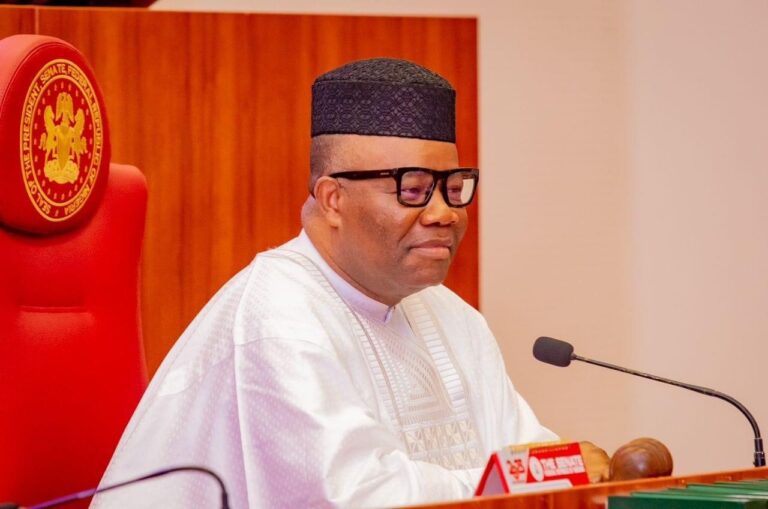
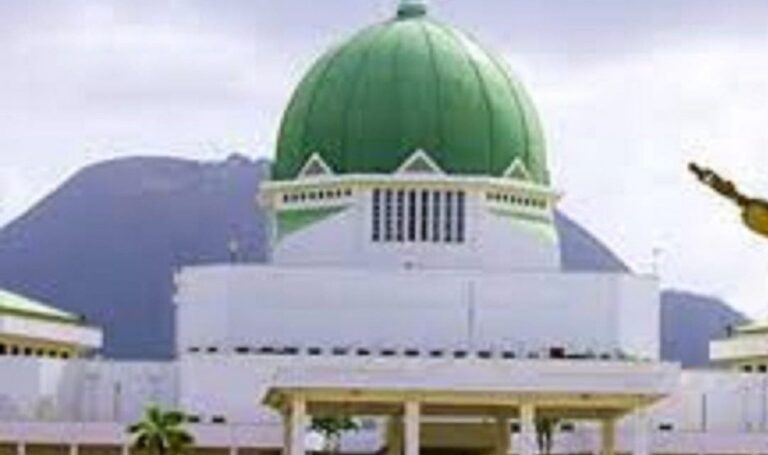
Senate President Godswill Akpabio has directed the Senate to reconvene for an emergency plenary session on Tuesday,February 10, following mounting public pressure on lawmakers to include mandatory electronic transmission of results in the ongoing amendment of the Electoral Act.
Akpabio issued the directive in a memo signed by the Clerk of the Senate, Emmanuel Odo, dated February 8, and circulated to senators, announcing the emergency sitting without stating the reason for the emergency plenary.
“I am directed by His Excellency, the President of the Senate, Distinguished Senator Godswill Obot Akpabio, GCON, to inform all Distinguished Senators of the Federal Republic of Nigeria that an Emergency Sitting of the Senate has been scheduled to hold as follows: Date: Tuesday, 10th February, 2026. Time:12:00 Noon. Venue: Senate Chamber.
“Distinguished Senators are kindly requested to note this Emergency Sitting date and attend. All inconveniences this will cause to Distinguished Senators are highly regretted, please,” Akpabio wrote.
There are strong indications that the decision to reconvene is linked to widespread public outrage over the Electoral Act (Amendment) Bill passed by the Senate last Wednesday. The upper chamber had adjourned for a two-week recess after approving the bill on Wednesday, to enable senators to engage heads of Ministries, Departments and Agencies (MDAs) on the defence of their 2026 budget proposals.
Although the amendment introduced several changes to the law, public debate has centred largely on one contentious provision: the rejection of mandatory electronic transmission of election results from polling units to INEC’s Result Viewing Portal (IREV).
However, many political parties, politicians and civil society actors have criticised the clause and called on lawmakers to reverse it, as some advocacy groups have also threatened mass action. A coalition operating under the banner Enough is Enough has begun mobilising supporters for a protest at the National Assembly, using the hashtag #OccupyNASS.
Amid the criticism, some senators in the minority caucus told journalists on Thursday that the Electoral Act amendment bill does, in fact, accommodate electronic transmission of election results.
However, Akpabio, speaking at a book launch on Saturday, acknowledged that the Senate removed the provision for mandatory real-time electronic transmission of results during the clause-by-clause consideration of the amendment.
The Senate president said the decision was informed by concerns that enforcing real-time transmission could lead to legal disputes in the event of network failures during elections.
UnderClause 60 of the bill, the Senate retained the provision in the 2022 Electoral Act which permits the transmission of results to collation centres.
On voter identification, Clause 47 was amended as lawmakers rejected a proposal to allow alternative forms of identification other than the Permanent Voter Card (PVC). While “smart card readers” were replaced with the Bimodal Voter Accreditation System (BVAS) for accreditation and voting, the Senate retained the PVC as the sole mandatory means of voter identification at polling units.
Earlier, the bill had proposed that because BVAS does not read the microchip embedded in PVCs, the card should no longer be compulsory, allowing voters to use the National Identification Number (NIN), international passport or birth certificate. However, the Senate disagreed and upheld the PVC as the primary mode of identification.
On Clause 22, which deals with PVC-related offences, lawmakers rejected a proposed 10-year jail term for buying and selling PVCs. They instead retained a two-year imprisonment term and increased the fine from N2 million to N5 million.
Regarding proof of non-compliance, the Senate deleted Clause 142, which would have allowed political parties to establish non-compliance solely through original or certified documentary evidence without oral testimony. Lawmakers argued during clause-by-clause consideration that the provision would amount to a “waste of time in court.”
On ballot paper inspection, Clause 44 was retained, maintaining the existing procedure that gives political parties two days to submit written approval or disapproval of their representations on sample ballot papers. INEC is also required to invite parties to inspect sample electoral materials at least 20 days before an election.
Under Clause 29, the deadline for political parties to submit candidate lists was reduced from 120 days to 90 days before an election.
To curb vote buying, lawmakers also amended Clause 22 to impose stiffer penalties, increasing the fine for offenders from N500,000 to N5 million.
On post-election disputes, the Senate amended Clause 136 by removing the power of election tribunals to declare winners outright in certain situations. The amendment provides that where a candidate is found not to have been validly elected for failing to score the majority of lawful votes, a rerun election shall be conducted, and the disqualified candidate and sponsoring party will be barred from participating.
This provision departs from the 2022 Electoral Act, which allows a tribunal to declare the candidate with the second-highest number of valid votes the winner where the candidate with the highest votes is found to be unqualified.
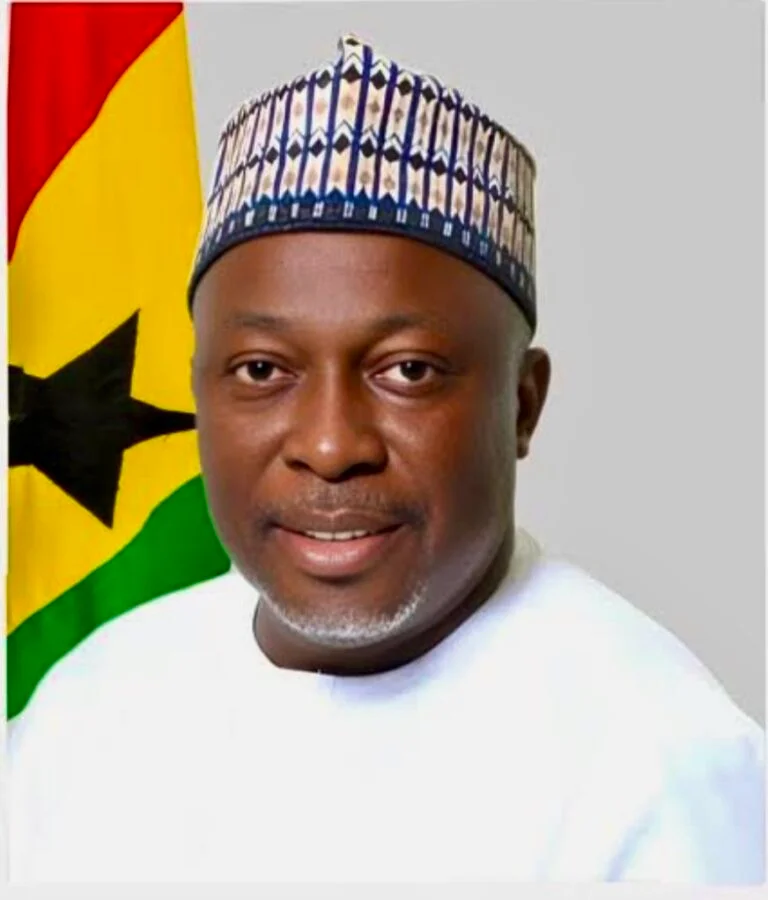
GHANA’s President John Mahama has recalled Ghana’s High Commissioner to Nigeria, Baba Ahmed, known as Baba Jamal, following allegations of electoral malpractice tied to the National Democratic Congress (NDC) parliamentary primaries in the Ayawaso East Constituency.
In a statement released on Saturday in Accra, the Presidency said the decision was taken in line with the Government’s Code of Conduct for Political Appointees, noting that Ahmed’s continued diplomatic role had become “untenable” amid questions about his conduct.
“The President has also noted the public statement by the General Secretary of the NDC indicating that the party has commenced investigations into the allegations arising from the primaries,” the statement read.
The Presidency clarified further that the move to recall Ahmed was “without prejudice to the ongoing internal party processes,”adding that upholding the integrity of public office and maintaining public confidence in governance standards required decisive action.
“Without prejudice to the ongoing internal party processes, and strictly in view of the standards of conduct expected of public officers, the President considers it necessary to act decisively to preserve the integrity of public office,” it read.
President Mahama’s directive comes against the backdrop of an announcement by the NDC’s General Secretary that the party has launched investigations into the alleged malpractice during the party’s primary election held on 7 February to select the NDC’s candidate for a by-election in Ayawaso East, triggered by the death of the sitting MP.
Recall widespread reports of vote inducement and alleged vote-buying during the party’s primary,and Ahmed, who is also reported to have contested, was accused of involvement in alleged voter inducement, accusations that have dogged several aspirants in the contest.
Multiple aspirants in the primary were accused of offering gifts to delegates, but particular attention focused on Ahmend’s campaign, which reportedly distributed 32-inch television sets and boiled eggs to delegates during the voting process, actions that local party officials and media described as potential inducements.
While Ahmed defended the distributions as gifts rather than coercive inducements, the NDC’s General Secretary, Fiifi Fiavi Kwetey, publicly condemned such behaviour as a breach of party values and announced that the party had launched internal investigations into the matter.
President Mahama’s directive did not wait for the outcome of the party’s internal probe, as his spokesperson said he acted to avoid any “perception of impropriety”given that Ahmed, unlike other aspirants, was a serving public officer at the time of the primaries.
The Minister for Foreign Affairs, Samuel Okudzeto Ablakwa, has been instructed to take all administrative and diplomatic steps to formalise the recall, which takes effect immediately.
THE Corporate Affairs Commission (CAC) has deregistered more than 400,000 companies in 2025 as part of an aggressive drive to sanitise Nigeria’s corporate registry and strengthen trust in the country’s business environment.
The Registrar-General of the commission, Hussaini Magaji, disclosed this in Abuja on Saturday, February 7, during activities marking the CAC’s 35th anniversary.
“In 2025 alone, the commission de-registered over 400,000 companies in a bid to clean up its database from inactive and non-compliant entities,” he said.
Magaji said the sweeping action targeted companies that had remained inactive for years or failed to meet statutory obligations under the Companies and Allied Matters Act (CAMA), describing the exercise as necessary to protect the integrity of the national companies register.
According to him, removing dormant and defaulting companies will enhance transparency, reduce regulatory abuse, and improve confidence among local and foreign investors.
Beyond enforcement, Magaji said the commission is also deepening support for Micro, Small and Medium Enterprises (MSMEs). He disclosed that CAC, in partnership with the Small and Medium Enterprises Development Agency of Nigeria (SMEDAN), facilitated free business registration for 250,000 entrepreneurs nationwide.
The initiative, he explained, was aimed at lowering the cost of formalisation, easing entry barriers, and encouraging small businesses to operate within the regulated economy.
The mass deregistration follows earlier notices by the commission indicating plans to strike off at least 100,000 companies that had stopped carrying on business, remained inactive for a minimum of 10 years, or failed to file annual returns and disclose Persons with Significant Control.
Affected companies were given a 90-day window to regularise their status by submitting outstanding filings and, where applicable, sending activation requests to activation@cac.gov.ng
Magaji also revealed that the commission has fully operationalised a Beneficial Ownership Register, allowing members of the public to identify the true owners of companies operating in Nigeria.
He said the register has become a global reference point in promoting corporate transparency and supporting efforts to combat money laundering, terrorism financing, and other financial crimes.
CAC has been accelerating the digitisation of its operations to improve service delivery and boost Nigeria’s ease-of-doing-business ranking.
The ICIR reported in July 2025, that the commission unveiled an AI-powered registration portal designed to speed up approvals, enable instant name reservations, and drastically cut processing time for business certificates.
The platform is expected to deliver registration certificates in under 30 minutes once a user’s National Identification Number (NIN) is verified-marking a decisive shift from physical, office-based procedures to fully digital registration.
The commission also upgraded and optimised its portal to improve user experience and simplify compliance and announced the removal of 247 companies from its database for operating with false Registered Certificate (RC) numbers.
UNITED States Congressman Riley Moore has dismissed claims that his recent visit to Nigeria involved discussions about dividing the country.
He reaffirms his commitment to strengthening United States–Nigeria security cooperation and addressing the ongoing insecurity that has devastated communities across the country.
In a statement posted on his official social media on Saturday, February 7, Moore said he had travelled throughout Nigeria to meet with government officials, church leaders, aid groups and internally displaced persons (IDPs) to better understand the complex security crisis unfolding in the country.
He stressed that “the idea of dividing the country has not come up in any serious way” during his engagements.
“I have travelled to Nigeria and engaged in multiple high-level meetings with Nigerian officials, the Church, aid groups across the country, and IDPs, to get a better understanding of the rampant persecution of Christians in Nigeria.
“In my discussions, the idea of dividing the country has not come up in any serious way. Efforts to embolden separatists hurt Christians in Nigeria – especially in the North and Middle Belt. A destabilised Nigeria would embolden terrorists and make Christians less safe in Nigeria and across the continent,” Moore wrote.
The congressman also highlighted the recent security cooperation agreement between the US and Nigeria as an important step toward tackling the violence and deepening bilateral relations.
“I remain committed to working to save the lives of our brothers and sisters in Christ – and for that matter, all Nigerians – suffering from the instability wrought by terrorists throughout Nigeria.
“The US and Nigeria have just entered into a security cooperation agreement, and that is an important step in tackling the violence in Nigeria and deepening and strengthening the bilateral relationship between our great nations,” he added.
Moore’s visit comes against a backdrop of improving cooperation between Washington and Abuja on security issues.
The ICIRreported in December 2025 that the US forces conducted airstrikes on Islamic State-linked targets in northwest Nigeria with Nigerian cooperation, marking deepening military collaboration aimed at degrading extremist capabilities
High-level security talks, including meetings between Moore and Nigeria’s National Security Adviser Nuhu Ribadu, have focused on counter-terrorism cooperation and tangible actions to enhance protection for all citizens.
Moore has also praised Nigerian efforts such as the rescue of abducted schoolchildren from kidnappers, which he said showed a growing commitment to tackling insecurity.
The ICIRreported on Tuesday that the US confirmed that a small team of its military personnel had been sent to Nigeria to support counterterrorism efforts.
US Africa Command (AFRICOM), Dagvin Anderson, disclosed that the US team was sent after Nigeria and Ghana agreed that more work needed to be done to combat the terrorist threat in West Africa, confirming reports that the US had been conducting surveillance flights over Nigeria.
FOLLOWING the implementation of the new tax law in January 2026, many Nigerian business owners have mandated their customers to use misleading narrations in bank transfers in an attempt to avoid possible tax deductions. In this report, The FactCheckHub examines what Nigerian tax laws actually say about transfer narrations and whether they have any bearing on tax obligations.
Since January 1, when the Federal Government announced that the new tax law would take effect, Hamza Arabbi Kuraye, a provisions seller in Kubwa, Abuja, has instructed his customers to always write “gift” as the narration when making bank transfers for purchases.
He said he took the step after hearing rumours that the Federal Government would begin deducting taxes from payments for goods and services based on the narration attached to bank transfers.
“I tell people to write ‘gift’ as narration if the transfer or amount of goods bought is ₦10,000 or less than ₦10,000,” Hamza said.
He is not alone. A Point-of-Sale (POS) agent in Lugbe, Abuja, Ruth Ozobu shared a similar belief. “It was explained to us that if someone is buying something from you, it is better to write a narration like ‘gift’ so that when the government wants to remove tax from your money, they will not touch it,” Ruth said.
“Just like when your parents send you ₦50,000 for foodstuff or allowance, it’s better to add ‘foodstuff’ or ‘gift’ as narration so the government will understand that it isn’t income.
As a POS attendant, I get more than ₦500,000 a month—now imagine how much I would make in six months. Will they remove tax from that money? And on days I receive gifts, will they also remove tax from that money, thinking it was income?” she asked.
The experiences of Hamza and Ruth reflect a growing practice among Nigerian business owners and informal sector workers who believe that bank transfer narrations determine whether a transaction is taxable, a perception that has spread largely through rumours and informal explanations rather than official guidance from tax authorities.
Deluge of misinformation around Nigeria tax law
The misconceptions about transfer narration join a stream of misinformation that has clouded the New Tax Act, 2025 (NTA), since its announcement in 2025.
The Tax Act is a comprehensive legislation that consolidates and replaces several existing tax laws, including the Companies Income Tax Act, Personal Income Tax Act, Capital Gains Tax Act, Value Added Tax Act, Petroleum Profits Tax Act, and Stamp Duties Act.
The Act which has been followed by criticism and controversy was signed by President Bola Ahmed Tinubu into law on June 26, 2025 and took effect on January 1, 2026.
The process began in July 2023 with the creation of the Presidential Committee on Fiscal Policy and Tax Reforms, led by Taiwo Oyedele.
The ICIRreported that the Act was said to have been introduced to simplify Nigeria’s tax system, harmonise tax administration, expand the tax base, and modernise tax practices in line with global standards. The report also outlined what business owners need to do and the things to put in place.
The FactCheckHubreported that there has been a deluge of misinformation surrounding the law. For instance, a claim that under the new tax law, Nigerians would pay N500 as tax on every 10,000 spent on fuel circulated online in September 2025.
The claim was circulated on the internet since the announcement of the 5 per cent tax on petrol and diesel.
The regulation requires that the surcharge be applied to every supply or sale of refined fossil fuel products in Nigeria, whether locally produced or imported, with the money collected at the point of purchase. Cleaner fuels, such as renewable energy sources, household kerosene, cooking gas (LPG), and compressed natural gas (CNG), are exempt.
According to the purveyors, the regulation was recently introduced in the new tax law. However, findings by The FactCheckHub show that the Tinubu administration has not introduced a new tax, but rather reactivated an existing provision that had long remained unenforced.
The claims that starting in January 2026, Nigerians earning ₦800,000 and above annually will be required to pay 20 per cent personal income tax, under President Bola Tinubu’s new tax reforms, also spread like wildfire last year.
But checks by The FactCheckHubshow that under the new Nigeria Tax Act 2025, individuals earning ₦800,000 or less per year are fully exempt from personal income tax. The progressive rates start at 15 per cent for incomes above that threshold, with the highest 25 per cent rate applying only to incomes above ₦50 million.
What is transaction narration and what the tax law actually said
A transaction narration refers to the short description attached to a bank transfer or payment. It is commonly used to indicate the purpose of a transaction, such as payment for goods, services rendered, loan repayment, or gifts. While narrations may help the sender and recipient understand a transaction, they do not determine the tax treatment of the funds involved. Under Nigerian tax administration, transactions are assessed based on their economic substance rather than the wording used in bank transfer descriptions.
Claims suggesting that Nigeria’s new tax regime allows authorities to deduct taxes automatically based on bank transfer descriptions are unfounded. A review of the country’s tax laws shows that transaction narrations play no role in determining whether a transfer is taxable.
Officials involved in shaping the reforms have consistently rejected the notion that tax agencies are tracking or analysing transfer descriptions to impose deductions.
They say no mechanism permits tax authorities to monitor individual bank transactions or debit accounts simply because a transfer is labelled as a payment for goods or services.
Taiwo Oyedele, who chairs the Presidential Committee on Fiscal Policy and Tax Reforms, has addressed the concern publicly, describing it as a misconception.
He explained that Nigeria does not operate a system where taxes are automatically pulled from personal bank accounts based on transfer activity or wording.
“There is no tax man in the world that has the capacity to go after everyone,” he said while speaking on Channels TV in December.
Oyedele explained that ordinary bank users should not worry about how they describe transfers.
“Any amount of money you transfer, whether it’s $1 billion, whether it’s $1,000, it doesn’t matter how you describe it.”
“Nobody will debit your bank account. At the end of the year, you tell the government yourself,” he said.
He added that the reformed tax system relies on self-declaration.
“You know the amount that is your income. You know the one that is not your income.
“So you tell the government, this is my income, and here is the tax. If you’re exempted, you don’t need to pay any tax. Just say this is my income, and I’m exempted from tax,” Oyedele said.
Oyedele further noted that the ongoing tax reforms do not assign banks the role of policing everyday financial transactions on behalf of the government. Instead, the tax system relies on established assessment processes.
An examination of the Nigeria Tax Act 2025 shows that taxation is built around voluntary disclosure and formal assessment. Individuals and businesses are taxed on identifiable income streams such as wages, business earnings, rent, dividends, and similar sources not on the mere movement of money in and out of bank accounts.
As such, routine transfers, gifts, and internal movements of funds do not, by themselves, trigger tax liabilities under Nigeria’s current tax framework.
The FactCheckHub reached out to a financial expert, Adeniyi Aside, Associate Chartered Accountant, Association of Chartered Certified Accountants. He explained that there is no existing mechanism that enables tax authorities to automatically debit individuals’ bank accounts based on the narration attached to it.
On how misinformation concerning tax emerged, he said, “Tax avoidance sentiments are a major driver of the rapid spread of misinformation. Many individuals are naturally resistant to paying taxes, so any narrative that appears to offer a way to “beat the system’ tends to gain quick traction.
On the implications of using misleading narrations, he noted that an entire year’s worth of transactions consistently described as gifts or donations is unlikely to be accepted at face value and may be reclassified for tax purposes based on economic reality.
“Incorrect or misleading narrations could expose taxpayers to additional tax assessments, penalties, and compliance issues,” he added.
He stressed that while transaction narration remains a helpful record-keeping tool, it should be used accurately and honestly, adding that compliance under the Nigeria Tax Act, 2025, is ultimately determined by the true nature of transactions, not merely how they are described.
“Tax assessments are therefore based on actual financial activity and statutory provisions rather than informal descriptions attached to transactions.”
Meanwhile, at the sub-national level some state governments has said they would recover unpaid tax through bank, tenants and other such means, this still has nothing to do with narrations on transactions.
THE House of Representatives has issued a February 11 ultimatum to chairmen of the six area councils in the Federal Capital Territory (FCT) to appear before its Committee on Public Accounts over alleged financial irregularities exceeding N100 billion.
In a statement on Friday, the chairman of the House Committee on Public Accounts, Bamidele Salam, said the committee had invited the leadership of the area councils to respond to the audit queries, but they failed to honour the summons.
Salam said the council chairmen have now been given a final opportunity to appear before the committee on February 11, warning that failure to comply would force the House to invoke its constitutional powers to order their arrest.
He revealed that an audit report by the Auditor-General of the Federation for the year ended December 31, 2021, indicted Abaji, Abuja Municipal, Bwari, Gwagwalada, Kuje and Kwali area councils for widespread financial mismanagement.
According to the report, the councils recorded outstanding liabilities of N7.65 billion as of December 2021. These include unremitted pension deductions, Pay-As-You-Earn (PAYE), Value Added Tax (VAT), withholding taxes, unpaid capital project obligations and other statutory payments owed to the Nigeria Revenue Service, FCT Inland Revenue Service, pension fund administrators and contractors.
A breakdown of the liabilities shows that Abuja Municipal Area Council (AMAC) owed N2.19 billion, Bwari N1.49 billion, Kwali N1.46 billion, Gwagwalada N1.01 billion, Kuje N892.2 million and Abaji N593.8 million.
The audit also faulted the councils for poor asset management, noting that fixed asset registers were either not maintained or not updated. In the Gwagwalada Area Council alone, non-current assets valued at N336 million were not properly documented, raising concerns about possible losses. Similar weaknesses were observed across the other councils.
In addition, the report raised concerns over the total expenditure of N24.87 billion incurred by the councils in 2021 on personnel costs, overheads and capital projects. Although total spending rose by 89 per cent, an increase of N11.7 billion compared with 2020, about 37 per cent of funds reportedly allocated to capital projects could not be properly accounted for.
Spending figures show that AMAC spent N5.03 billion, Gwagwalada N4.66 billion, Kuje N3.85 billion, Kwali N3.84 billion, Bwari N3.74 billion and Abaji N3.71 billion.
Further audit findings for 2022 and parts of 2023 revealed continued violations of financial regulations, including understatement of internally generated revenue, unauthorised disposal of assets, non-disclosure of statutory revenue and failure to remit withholding taxes.
The ICIRreported last year that primary school teachers in the FCT were on strike for over three months after walking out on March 24, 2025, in protest over the failure of area council chairmen to implement the new N70,000 national minimum wage and pay owed arrears.
In July, the FCT minister, Nyesom Wike, approved the use of 10 per cent of the FCT council Internally Generated Revenue (IGR) to help offset some teacher dues in a bid to resolve the strike.
The strike was eventually suspended after more than three months when some demands were partially met and agreements reached.
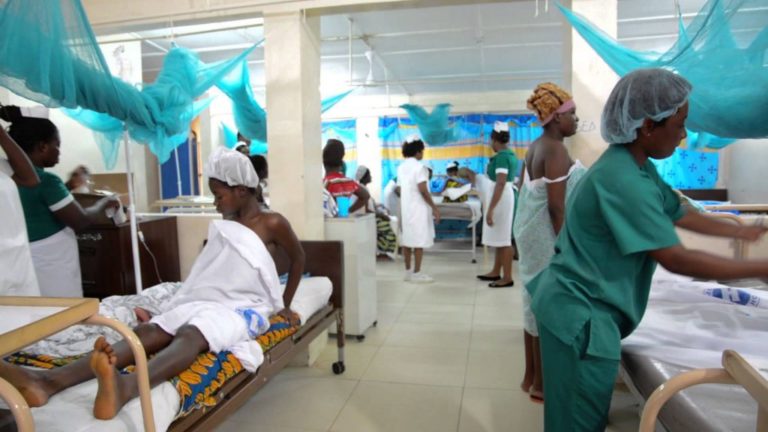
THE JOINT Health Sector Unions (JOHESU) has called off its nationwide strike after 84 days, following fresh commitments by the Federal Government to address lingering salary and welfare concerns affecting health workers.
The resolution was reached during an expanded emergency meeting of the union’s National Executive Council (NEC), held in Abuja on Friday.
The meeting was convened to assess the outcome of a conciliation meeting between JOHESU and representatives of the Federal Government, which took place on Thursday at the Federal Ministry of Labour and Employment.
JOHESU had shut down services across public health institutions nationwide from November 15, 2025, protesting the government’s continued delay in implementing the reviewed Consolidated Health Salary Structure (CONHESS), alongside other long-standing structural and welfare-related grievances within the health sector.
Announcing the suspension in a communiqué released after the meeting, the union explained that the decision was taken to allow the agreements reached with the government to take effect.
“After exhaustive deliberations and review of the terms of settlement of the conciliation meeting, the expanded NEC session voted unanimously to suspend the ongoing indefinite nationwide strike action to allow for the implementation of the FG–JOHESU terms of settlement,” the communiqué stated.
The union also acknowledged the patience shown by Nigerians during the prolonged shutdown of health services, while maintaining that the action became necessary due to persistent failures by authorities.
“While appreciating the masses for their understanding throughout the period of the industrial action, we appeal to consumers of health that a recurring infliction of injustice and a huge trust deficit necessitated this unfortunate and avoidable JOHESU nationwide strike,” the communiqué said.
JOHESU further urged the federal and state governments to take proactive steps to prevent similar disruptions in the future.
“We hope that the Federal Government as well as other state governments show both sensitivity and responsibility in ensuring Nigerians avoid this depth of suffering in the foreseeable future.”
According to the union, several attempts were made to resolve the dispute before the strike was suspended. It disclosed that meetings were held with the Federal Ministry of Health on January 15 and January 22, during which both sides presented proposals aimed at ending the impasse.
Providing further details, JOHESU said the breakthrough came during a final conciliation meeting held on February 5, 2026.
“The third meeting was the emergency conciliation meeting convened on February 5, 2026, arising from the 14-day ultimatum issued by the Trade Union Congress of Nigeria and the Nigeria Labour Congress to the Federal Government on the implementation of the adjustment of CONHESS,” the communiqué stated.
The union revealed that the agreements reached include provisions for the adjusted CONHESS to be reflected in the 2026 national budget. It also confirmed that the Federal Government agreed to reverse the “no work, no pay” policy and immediately settle outstanding January 2026 salaries owed to its members.
JOHESU added that assurances were given that no worker would face disciplinary action or victimisation for participating in the strike.