Home Blog Page 860

FG uncovers N6 trillion owed 11 MDAs by individuals, corporate bodies

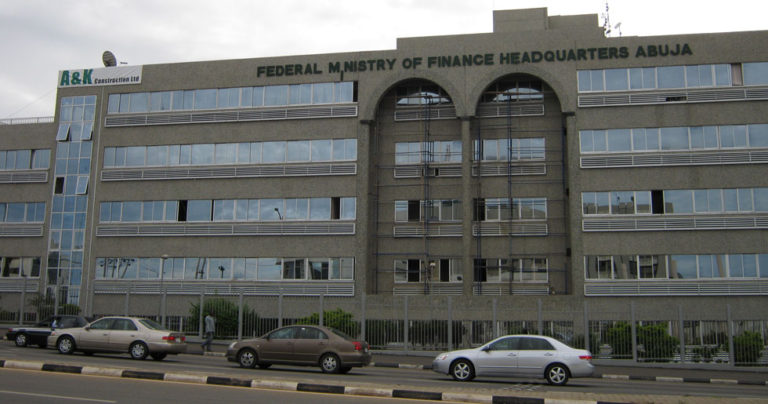
THE Federal Government says it has uncovered monumental debts approximating N6 trillion naira owed 11 ministries, departments and agencies (MDAs) by individuals and corporate bodies.

The discovery was made through the consolidation efforts of the Debt Analytics & Reporting Application of the Ministry of Finance, Budget and National Planning.

Speaking at a one-day sensitisation programme for South-South geo-political zone on the Federal Government’s debt recovery drive in Asaba, Delta State, the Director of Special Projects, Federal Ministry of Finance, Budget and National Planning, Victor Omata, said the debts were in the form of liabilities to the Federal Inland Revenue Service (FIRS).

The debt recovery drive named ‘Project Lighthouse Programme’ is aimed at recovering Federal Government debts.

Project Lighthouse Programme is one of the portfolio projects under the Strategic Revenue Growth Initiative (SRGI) of the Federal Government?

Omata noted that the debts include companies that failed to deliver on projects for which payment had been effected, and unpaid credit facilities granted to corporate entities and individuals by the Bank of Industry (BOI) and Bank of Agriculture (BOA).

Others include unpaid judgment debt in favour of the government, and debts owed to Pension Transition Arrangement Directorate (PTAD) by insurance companies, among others.

Represented by the Deputy Director in the Special Projects Department of the Ministry, Bridget Molokwu, Omata said despite the huge outstanding debts, data gathered by the government’s Project Lighthouse Programme revealed individuals and corporate bodies owing the MDAs who refused to honour their obligations are still being paid.

Stressing that the ministry, through its Debt Analytics & Reporting Application discovered N6 trillion debt from 11 MDAs, Omata, further disclosed that the concerned individuals and corporate bodies are still being paid through platforms such as Government Integrated Financial Management Information System (GIFMIS) and Treasury Single Account (TSA) due to lack of visibility over such transaction.

He reiterated that the Project Lighthouse (Phase 2) is aimed at the recovery of debt owed to the Federal Government by individuals and companies through the instrumentality.

Omata said that the debts was revealed through a data aggregated from over 5,000 + debtors across ten (10) MDAs.

According to Omata, a statement by Stephen Kilebi, the Director of Press of the Ministry, disclosed that the “debt aggregation effort is still ongoing”.

While soliciting participants’ support and commitment to change the revenue narrative, Omata stressed the need to adopt the power Big Data Analytics, Data Science and related technologies.

The Director of Special Projects stressed the need for participants’ cooperation to provide quality and relevant information (debt-related data).

Emphasising that Project Lighthouse Programme comes with its recovery process, Omata expressed hopes that the debt recovery drive will drastically minimise Nigeria’s indebtedness.

He, as well, stated that the data will track the day-to-day revenue generation, block revenue leakages and get the true profile of debt recovery portfolio.

Noting that many organisations will benefit from the intelligence generated from the programme, he explained that Project Lighthouse Programme is designed to demystify the problem of debt recovery through the adoption of the potencies of big data analytics technology.

The system is said to have the ability to collect, integrate and analyse data from revenue generating agencies to create insightful information for improved decision making on debt recovery.

Explaining that revenue loopholes is aided by poor information sharing and enforcement, he said important economic and financial information of agencies which did not share data had been aggregated.

According to Omata, the importance of the project was to leverage on big data technology to help in blocking revenue loopholes, identifying new revenue opportunities, optimising existing revenue streams especially the non-oil revenue as well as improving fiscal transparency.

With a view to address significant revenue loopholes and debts across the public finance space, Omata added that the ministry had issued a directive on September 26, 2019, to all MDAs and a single window on the credit profile of the Federal Government and the Federal Executive Council (FEC) for regulatory approval on March 31, 2021.

NCDC confirms 789 diphtheria cases, 80 deaths in 8 states

THE Nigerian Centre for Disease Control (NCDC) says it recorded 798 diphtheria cases across eight states between December 2022 and June 30, 2023.

According to the statement released by the Centre’s Director General Ifedayo Adetifa on Thursday, June 6, 782 of the cases were recorded in Kano State.

Other states with cases of diphetria are Lagos, Yobe, Katsina, Cross River, Kaduna, Osun state and the Federal Capital Territory (FCT).

Adetifa noted that of the 798 cases recorded in the eight states, 71.7 per cent occurred among children aged 2-14 years.

He further disclosed that a total of 80 deaths have been recorded from all the confirmed cases.

“As of June 30th, 2023, there have been 798 confirmed diphtheria cases from 33 Local Government Areas (LGAs) in eight (8) States including the FCT. Most of the cases (782) were recorded in Kano. Other States with cases are Lagos, Yobe, Katsina, Cross River, Kaduna, and Osun. The majority (71.7%) of the 798 confirmed cases occurred among children aged 2 – 14 years. So far, a total of 80 deaths have been recorded among all confirmed cases (case fatality rate of 10.0%).”

Caused by a toxin produced by the bacteria corynebacterium diphtheriae, diphetria, is a vaccine-preventable disease covered by one of the vaccines provided routinely through Nigeria’s childhood immunisation schedule.

However, despite the availability of a safe and cost-effective vaccine in the country, the majority, 654 (82 per cent) of 798 confirmed diphtheria cases in this ongoing outbreak were unvaccinated.

“Unfortunately, this also includes this recently announced FCT case. Historical sub-optimal vaccination coverage is the main driver of the outbreak given the most affected age group (2-14-year-olds) observed, and a national survey of diphtheria immunity that found less than half (41.7%) of children under 15 years old are fully protected from diphtheria,” he added.

Aditifa assured that the Centre is working to avert further spread of the disease, urging the public to remain vigilant and ensure persons with symptoms of diphtheria present early to health facilities for prompt diagnosis and treatment. 

According to him, early diagnosis and institution of effective treatment are key predictors of a favourable outcome.

He called on healthcare workers to immediately notify LGA disease surveillance officers once they see a suspected case.

On the response of the Centre to the outbreak since December 2022, he noted that NCDC activated a multi-sectoral national Diphtheria Technical Working Group as a mechanism for coordinating surveillance and response activities across the country. 

The response activities include coordination, surveillance, laboratory investigation, risk communication, case management and immunisation activities.

Diphtheria outbreak in FCT

On June 4, the Federal Capital Territory (FCT) Primary Healthcare Board confirmed the outbreak of diphtheria disease in the city following the death of a patient.

The Director Public Health, Dr Saddiq Abdulrahman said the FCT health authorities recorded eight suspected cases and after tests, only one of the cases came positive. He added that community awareness is currently ongoing to mitigate the spread.

Reacting to the outbreak, The NCDC boss, revealed that the FCT Health and Human Services Secretariat has activated the diphtheria Incident Management System (IMS) to coordinate outbreak response activities.

“The key activities include but are not limited to active case finding in health facilities and communities, and risk communication and community engagement (RCCE) activities to raise awareness of diphtheria. Sample collection is also ongoing among suspected cases of diphtheria. As of 3rd of July 2023, only 1 confirmed case has been detected, with 7 suspected cases testing negative while others are awaiting laboratory results. No other death was recorded apart from the laboratory-confirmed case,” he said.

Threads: How to get started with Meta’s new app

THE launch date for Threads, a new app developed by Meta to rival Twitter, has arrived.

The app is now available in more than 100 countries and can be downloaded and started up relatively easily.

Here’s how to get started with the app, from downloading to customising it to be exactly how you want it.

Download 

Threads is now out for both iOS and Android and downloading the app should be straightforward. Its full name is ‘Threads, an Instagram app’ and it is readily available on both platform’s app stores.

There is some chance that the search might show that the app is not available. If so, that’s probably because it’s not available in your country; the app has not yet been launched in the European Union (EU), apparently because of data protection concerns related to the way that data will be passed between apps.

There hasn’t been any confirmation when people in those countries will be able to get the app.

Sign in and set up

Meta has built Threads to integrate with Instagram, and users can sign in with their existing accounts from that service. Opening up the app should show a user’s existing Instagram account, alongside the option to choose a new one, and clicking that begins the process of getting started.

Moving on, users can modify their profile for Threads, choose a name and add a bio, or transfer their completed profile from Instagram. The app will then ask about privacy settings and ask whether you want to follow accounts from Instagram, before opening up and getting started.

Users may head into the settings to add any extra modification, such as blocking certain words or contacts. The design is pretty basic and should be recognisable to people who have used Instagram and Twitter already since it is more or less a combination of the two.

Finally, users can create posts by clicking on the bar at the bottom, or relate with existing ones by using the buttons beneath a post.

Dollar bribery video: Kano anti-corruption agency summons Ganduje

THE Kano State Public Complaints and Anti-Corruption Commission (PCACC) has summoned former governor Abdullahi Ganduje for interrogation over the controversial dollar bribery video.

Chairman of the Commission, Muhuyi Magaji Rimingado, had on Wednesday, June 5, declared that, contrary to Ganduje’s claims, the video was not doctored.

Rimingado spoke at a ‘One Day Public Dialogue on Anti-Corruption Crusade’ in Kano.

In a video that went viral in 2017, Ganduje was seen receiving bundles of dollar notes offered as bribe from a contractor and stuffing them in his dress.

Rimingado claimed that since the video’s release, he has come under pressure from all sides to establish the governor’s guilt or innocence.

He explained that because Ganduje was immune from prosecution during his time in office, it had been hard to establish his guilt or innocence since the committee started looking into the issue in 2018.

Speaking on Channels TV’s Lunchtime Politics on Thursday, July 6, Rimingado disclosed that the panel had sent a letter of invitation to the former governor, inviting him to come before it and provide any information necessary for the current investigation.

According to him, the agency adheres to the legal maxim of “innocent until proven guilty” and believes the probe will finally allow the former governor to clear his name in the scandal, and it will apply to the ex-governor as it does to everyone.

“I have signed a letter to invite him for questioning at the Commission next week because this is what the law says, and we will provide ample opportunity for him to defend himself,” he said.

In the meantime, a group known as the Coalition for Northern Civil Society Group has denounced the recent efforts to look into the dollar videos, alleging that they were planned in conjunction with the Kano State government to bring the former governor into disrepute and destroy any chance the ex-governor had of obtaining a position in the Federal Government led by President Bola Tinubu.

Mohammad Shuaibu, the secretary of the Northern group who also made an appearance on the Channels TV programme on Thursday, noted that since the video’s release in 2018, the focus has been solely on the alleged “receiver” and that the “giver” of the alleged bribery has not been made public.

The Daily Nigerian online newspaper Publisher who leaked the video Jafar Jafar insisted that the footage published by the paper was authentic and not manipulated in any way.

He said this during an investigative hearing into the allegations by the Kano State House of Assembly in 2018.

After the video was released, the Kano State government said Ganduje never collected bribes from contractors.

The government also described the video as “cloned”, adding that the governor would explore every legal means in seeking redress.

A few days after the publication of the video clip, Ganduje told reporters that he was not worried about the impact the video may have on him and that he was innocent of the accusations.

Jafar explained that the video was captured by a friend of his who is a contractor with the Kano State government and who had complained that Ganduje receives kickbacks, ranging from 15 to 25 per cent for every project executed in the state.

Despite the viral video showing Ganduje allegedly receiving a bribe from a contractor, a court in December 2019 dismissed a suit by the Economic Financial Crimes Commission (EFCC) seeking to investigate the governor.

The Federal High Court sitting in Kano dismissed the suit filed by a lawyer, Bulama Bukarti, who sought an order from the court to instruct the EFCC to investigate Ganduje.

The court ruled that the EFCC does not have a record of the forensic analysis of the bribery allegations.

Again, recently, Ganduje asked the Kano State High Court to stop the Economic and Financial Crimes Commission (EFCC) from investigating him in connection with the incident.

The court was asked to stop the EFCC from scrutinising Ganduje until the outcome of a dispute between the former governor and Jafaar, Publisher of the Daily Nigerian, was known.

In a related development, the Kano Anti-Corruption Commission on Monday, July 4, arrested and detained Ganduje’s commissioner for works and Infrastructure, Idris Wada Saleh and five others over alleged N1 billion fraud.

The commissioner was arrested alongside the Permanent Secretary of Public Procurement Bureau, Mustapha Madaki Huguma, and the director of finance, research and planning.

They were accused of withdrawing about N1 billion for 30 road and drainage rehabilitation projects that were never completed.

The ICIR reported on June 21 that the Kano State governor, Abba Kabir Yusuf, reinstated the state chairman of the Public Complaints and Anti-corruption Commission (PCACC), Muhuyi Magaji Rimingado, whom his predecessor Ganduje sacked. 

Following his reinstatement, Rimingado promised to revive the dollar bribery investigation against Ganduje.


Nigeria’s mobile subscriptions declined by 2.4 million in May

ACTIVE online subscriptions for mobile telecommunications services in Nigeria has declined to its lowest level in three months, according to latest data from the Nigerian Communications Commission (NCC).

According to figures on NCC website, the number of mobile subscribers available in May 2023 reduced by about 2.4 million when compared to the number recorded in April 2023.

The NCC data reveals that the country has now lost 5.9 million mobile subscriptions since February 2023, when it recorded the highest ever number – 226.8 million.

This figure fell to 225.8 million active mobile subscribers in March 2023, and then 223.3 million in April 2023.

In May 2023, NCC recorded 220.93 million subscribers, meaning that the country witnessed the third consecutive fall in total mobile subscriptions since February 2023.

The decline in the subscriptions cannot be disconnected from the discontinuation of SIM cards that have not been linked with the National Identification Number (NIN), as mandated by the government in December 2020.

In the same vein, MTN Nigeria’s active users dropped by around a million in March, 2023, according to a report by Technext.

In the first quarter of 2023 report, the CEO of MTN Nigeria Karl Toriola noted that the telecommunications company experienced the negative impact of the Central Bank of Nigeria’s (CBN) naira redesign policy.

Toriola explained that the scarcity of naira notes resulting from the policy made it challenging for MTN customers who lacked digital access to purchase physical airtime vouchers.

“The limited availability of the new notes resulted in cash shortages, which impacted our customers’ ability to recharge through physical airtime vouchers (affecting mostly customers who did not have access to digital recharge channels) and over-the-counter (OTC) transactions within our MoMo agent network.

“The cash shortages affected the broader macro-economy, with a consequent significant impact on the private sector,” Toriola said.

Meanwhile, with the decline in actively connected lines recorded by the operators, the country’s teledensity also moved to 115.91 per cent in May from 117.17 per cent recorded in April.

The NCC recorded 199.01 per cent in February during the highest recorded rate and 118.48 per cent in March.

Teledensity, according to NCC, is the number of active telephone connections per one hundred (100) inhabitants living within an area and is expressed as a percentage figure.

Also, the Commission put the number of annual active online subscriptions at  222,225,300 and 195,138,265 for the year 2022 and 2021 respectively. 


READ ALSO:


Speaking on the recent decline in the number of active mobile subscribers, a telecommunications expert, Stanley Olaleke said market inflation and the Japa syndrome contributed to the development.

He added that the cash crunch and the compulsory linking of National Identity Number (NIN) to SIM cards also had an impact in the decline recorded since February.

“Most people use data for calls now because it’s cheaper and would not bother recharging their second SIM cards. For instance, it has been a long time since I personally recharged my other SIM card,” he noted.

Fake UTME result: Reps direct JAMB to lift 3-year ban

0

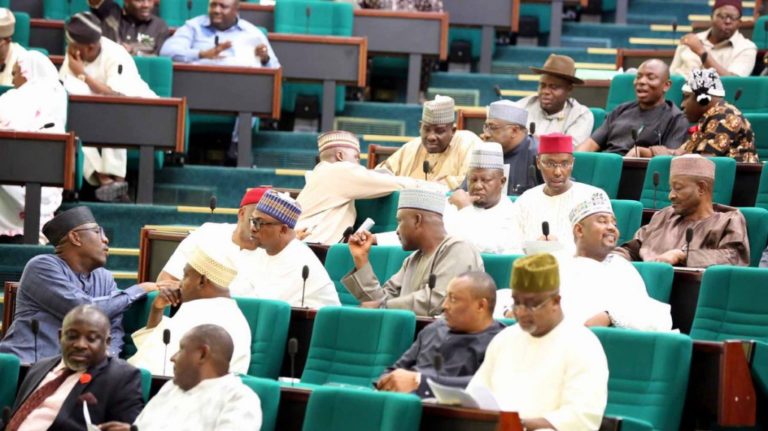
THE House of Representatives has asked the Joint Admissions and Matriculation Board (JAMB) to reverse its decision to barr a candidate, Mmesoma Ejikeme, suspected of result forgery, from taking the Unified Tertiary Matriculation Examination (UTME) for the next three years.

The lawmakers issued the directive during plenary on Wednesday, July 5.

The legislators also set up an ad hoc committee to investigate the allegation of result falsification. The ad hoc committee will also investigate JAMB facilities.


Read Also:

The House of Representatives called for independent examiners to inspect Ejikeme’s scripts and determine her actual score.

The decision to investigate the allegations came after the lawmaker representing Andoni/Opobo/Nkoro constituency Awaji-Inombek Abiante presented a motion titled ‘Call to investigate alleged manipulation of Unified Tertiary Matriculation Examination (UTME) by the Joint Admission and Matriculation Board, (JAMB), by Miss Ejikeme.

“Miss Ejikeme Mmesoma of Anglican Girls Secondary School, Nnewi, Anambra State, sat for the 2023 Unified Tertiary Matriculation Examinations and scored 362. On 2 July 2023, JAMB, Head of Public Affairs and Protocol, Dr Fabian Benjamin, made a public pronouncement accusing Miss Ejikeme Mmesoma of manipulating her UTME results that she actually scored 249 instead of the 362 as claimed.

“Miss. Ejikeme Mmesoma came out to defend herself, that she actually printed the result from the JAMB portal and had been a brilliant child all through her nursery and tertiary education, coming first in all the examinations she had been taken before the UTME, hence she posited that she is not capable of manipulating her UTME result,” Abiante said on Wednesday.

Ejikeme had been celebrated for emerging as the overall best candidate for the 2023 UTME.

JAMB disputed Ejikeme’s result a few days later, describing it as falsified, and barred her from taking the examination for three years.

In an earlier statement released on Sunday, July 2, the examination body announced that Ejikeme originally scored 249 and manipulated the result to secure scholarships fraudulently.

Nigeria left out of African countries to get malaria vaccine

NIGERIA was left out as 12 African countries were selected to receive 18 million doses of the first-ever RTS, S/AS01 malaria vaccine, 2023–2025.

The vaccine has been released by Gavi, the Vaccine Alliance and the United Nations Children’s Fund (UNICEF) and World Health Organisation (WHO).

The vaccine is the first recommended to prevent malaria in children below five years of age by the World Health Organization (WHO).


Read Also:

The three organisations, Gavi, WHO and UNICEF, disclosed this in a joint statement on Thursday, July 6.

The statement noted that the beneficiaries will begin the rollout by 2024.

The selected African countries are Benin, Burkina Faso, Burundi, Cameroon, the Democratic Republic of Congo, Liberia, Niger, Sierra Leone and Uganda.

Nigeria was exempted from the benefitting countries, even though malaria is endemic in the country. The disease, transmitted from insect bites, is a life-threatening condition in Nigeria.

Malaria is one of the highest disease burdens, with high fatality rates in the country.

According to the WHO, Nigeria accounts for an estimated 38.4 per cent of global malaria deaths in children under five years.

However, the statement noted that the allocations were determined through the application of the principles outlined in a framework that prioritises areas of highest need, risk and death of children.

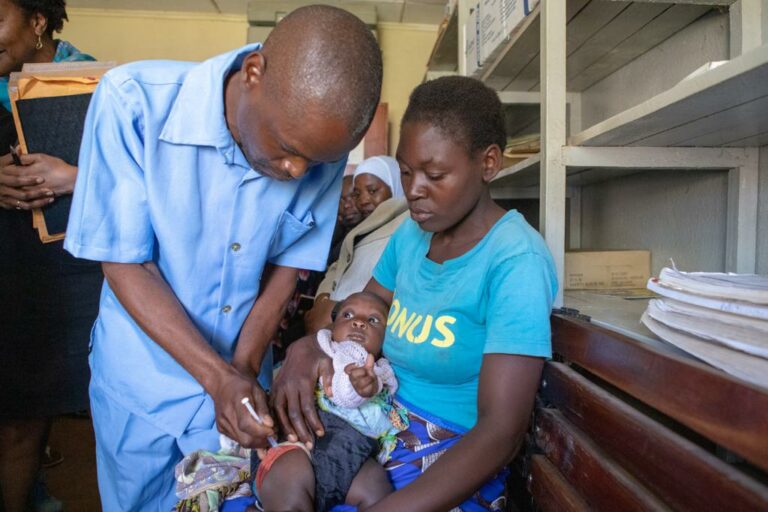
The vaccine has also been administered to more than 1.7 million children in three African countries — Ghana, Kenya and Malawi — as part of a pilot program.

“The RTS -S/AS01 vaccine has been administered to more than 1.7 million children in Ghana, Kenya, and Malawi since 2019 and is safe and effective, resulting in a substantial reduction in severe malaria and a fall in child deaths. At least 28 African countries have expressed interest in receiving the malaria vaccine.

“In addition to Ghana, Kenya, and Malawi, the initial 18 million dose allocation will enable nine more countries, including Benin, Burkina Faso, Burundi, Cameroon, the Democratic Republic of the Congo, Liberia, Niger, Sierra Leone, and Uganda, to introduce the vaccine into their routine immunisation programmes for the first time,” the statement released by Gavi, WHO and UNICEF said.

Reps oppose moves to cede Cross River communities to Cameroon

THE House of Representatives has opposed alleged moves to cede some communities in Cross River State to the neighbouring Republic of Cameroon.

The communities — Danare and Biajua, are located in the Boki Local Government Area of the state.

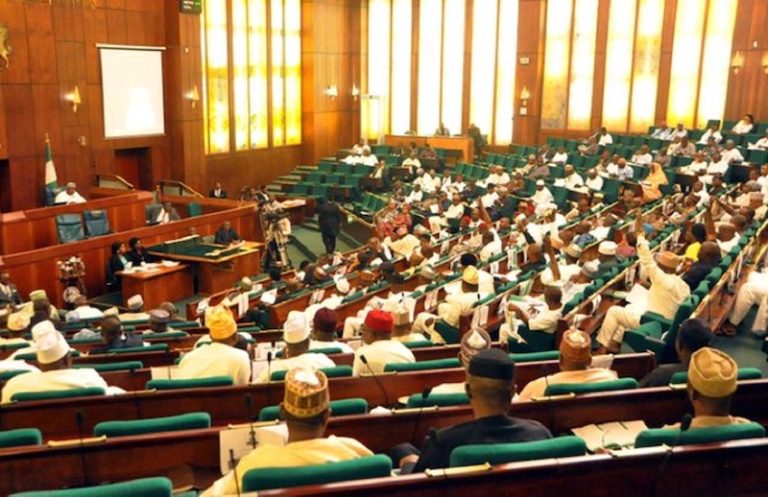
A motion against the ceding of the communities, jointly sponsored by members of the House of Representatives from Cross River, was unanimously adopted during plenary on Wednesday, July 5.


Read Also:

Speaking on behalf of his colleagues, the member representing Ikom/Boki Federal Constituency, Victor Bisong Abang, noted that on October 10, 2002, the International Court of Justice (ICJ) ruled that the Bakassi peninsula belonged to Cameroon, based on an agreement between the Nigerian and Cameroonian governments during the civil war.

He further noted that in July 2012, the Supreme Court ruled that Cross River State lost ownership rights to over 76 oil wells due to the loss of the peninsula to Cameroon.

Abang pointed out that the ICJ ruling mandated retracing the Cameroon-Nigeria International Boundary Line from the Lake Chad region to the Atlantic Ocean.

He added that the United Nations consequently established two committees to implement the judgment, namely the Cameroon-Nigeria Mixed Commission (CNMC) comprising representatives from Nigeria, Cameroon, and UN officials, and the Joint Technical Team (JTT), a sub-body of the CNMC responsible for the fieldwork and demarcation.

According to Abang, the JTT, consisting of representatives from both countries, with technical expertise provided by a foreign contractor paid by the CNMC, was mandated to conduct a valid and conclusive demarcation for the two countries.

However, he observed that the Anglo-German agreement of April 12, 1913, stipulated the placement of 114 boundary pillars from the Lake Chad region to Agbokim in the Etung Local Government Area of Cross River State, noting that six of these pillars, numbered 109 to 113A, fall within the Danare community in Boki Local Government Area.

The lawmaker expressed concern that the JTT has not located Pillar 113A and intends to adopt a “straight-line method,” potentially resulting in the loss of Danare and Biajua communities and approximately 7,000-10,000 hectares of land in the Boki Area of Cross River to Cameroon.

Abang argued that under the principles of federalism, the Federal Government of Nigeria has the responsibility to protect the territorial integrity of all federating units and should not unilaterally cede or allocate any part of a federating unit without the House’s consent.

The lawmaker further raised suspicions regarding the missing Pillar 113A, suggesting the Cameroonian government may have deliberately removed it as part of a plot to annex the land and displace the people of the Danare and Biajua communities.

“The missing Pillar 113A may have been deliberately removed by the Cameroonian government in their plot to take over the land and the people of Danare and Biajua communities,” he said.

“If a country like Nigeria keeps losing her people, lands, and natural and mineral resources to her neighbouring countries, one day we may not have a place called Nigeria.

“If urgent actions are not taken by the Federal Government, the entire country will lose the good people of Danare, Biajua in Boki LGA, and some parts of Obanliku LGA of Cross River State to the Republic of Cameroon.

“Cross River State may lose the good people of Danare and Biajua communities in Boki LGA, and their ancestral heritage of the land that they have protected all their lives to the Republic of Cameroon against their wishes and desires.”

Adopting the motion, the House summoned the Director General of the National Boundary Commission and the Surveyor General of the Federation to explain why Pillar 113A has not been located.

The House also resolved to investigate and assess potential land encroachment by Cameroon, consulting with legal experts, land surveyors, and other relevant professionals to comprehensively understand the technical aspects involved in resolving the encroachment.

Deputy Speaker, Benjamin Kalu, who presided over the plenary, acknowledged the motion’s significance and referred it to an ad hoc committee composed of technocrats well-versed in the matter.

Ganduje dollar bribery video not doctored – Kano anti-corruption agency

THE Kano State Public Complaints and Anti-Corruption Commission says it has confirmed the authenticity of the bribery video involving the state’s former governor, Umar Ganduje.

Chairman of the the agency, Muhuyi Rimingado, declared that, contrary to Ganduje’s claims, the video was not doctored.

Rimingado spoke on Wednesday, July 5, at a ‘One Day Public Dialogue on Anti-Corruption Crusade’ in Kano.

In a video that went viral in 2017, Ganduje was seen receiving bundles of dollar notes offered as bribe from a contractor and stuffing them in his dress.

Rimingado claimed that since the video’s release, he has come under pressure from all sides to establish the governor’s guilt or innocence.

He explained that because Ganduje was immune from prosecution during his time in office, it had been hard to establish his guilt or innocence since the committee started looking into the issue in 2018.

When the video appeared in public, Ganduje discredited the contents of the video.

A committee was formed by the Kano State House of Assembly to look into the claims, but it has yet to turn in its findings before the new assembly was inaugurated on July 4.

Jafar Jafar, the Publisher of the Daily Nigerian online newspaper who leaked the video, insisted that the footage published by the paper was authentic and not manipulated in any way.

He said this during an investigative hearing into the allegations by the Kano State House of Assembly in 2018.

After the video was released, the Kano State government said Ganduje never collected bribes from contractors. 

The government also described the video as “cloned”, adding that the governor would explore every legal means in seeking redress.

A few days after the publication of the video clip, Ganduje told reporters that he was not worried about the impact the video may have on him and that he was innocent of the accusations.

Jafar explained that the video was captured by a friend of his who is a contractor with the Kano State government and who had complained that Ganduje receives kickbacks, ranging from 15 to 25 per cent for every project executed in the state.

Despite the viral video showing Ganduje allegedly receiving a bribe from a contractor, a court in December 2019 dismissed a suit by the Economic Financial Crimes Commission (EFCC) seeking to investigate the governor.

The Federal High Court sitting in Kano dismissed the suit filed by a lawyer, Bulama Bukarti, who sought an order from the court to instruct the EFCC to investigate Ganduje.

The court ruled that the EFCC does not have a record of the forensic analysis of the bribery allegations.

Again, recently, Ganduje asked the Kano State High Court to stop the Economic and Financial Crimes Commission (EFCC) from investigating him in connection with the incident.

The court was asked stop the EFCC from scrutinising Ganduje until the outcome of a dispute between the former governor and Jafaar, Publisher of the Daily Nigerian, was known.

In a related development, the Kano Anti-Corruption Commission on Monday, July 4, arrested and detained Ganduje’s commissioner for works and Infrastructure, Idris Wada Saleh and five others over alleged N1 billion fraud.

The commissioner was arrested alongside the Permanent Secretary of Public Procurement Bureau, Mustapha Madaki Huguma, and the director of finance, research and planning.

They were accused of withdrawing about N1 billion for 30 road and drainage rehabilitation projects that were never completed.

According to Daily Post, the money, which was withdrawn in three instalments, was reportedly transferred into the accounts of three companies in April 2023.

The ICIR reported on June 21 that the Kano State governor, Abba Kabir Yusuf, reinstated the state chairman of the Public Complaints and Anti-corruption Commission (PCACC), Muhuyi Magaji Rimingado, whom his predecessor Ganduje sacked. 

Following his reinstatement, Rimingado promised to revive the dollar bribery investigation against Ganduje.

Rimingado insisted that the matter be thoroughly probed even though the former governor disputed the accusation, claiming the video was doctored, and went to court to seek damages.

Also, during his swearing-in on May 29, Yusuf expressed sadness over the N241 billion debt left by Ganduje’s administration.

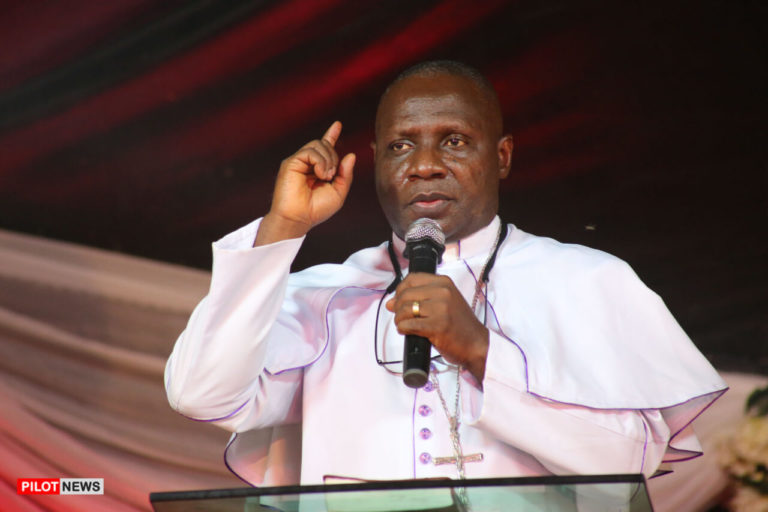
Attack on Ogun RCCG church, assault on religious freedom in Nigeria — CAN

THE Christian Association of Nigeria (CAN) has condemned the recent attack on a Redeemed Christian Church of God (RCCG) church in Abule-Ori, Obafemi Owode Local Government Area of Ogun State.

The Christian association described the attack, during which a pastor was killed, as an assault on religious freedom in Nigeria.

Seven worshippers were also abducted in the incident.

CAN also mourned the death of 12 Salvation Army pastors, a baby, and a driver in a fatal accident, near Benin City, Edo State.

The President of CAN, Archbishop Daniel Okoh, in a statement issued in Abuja on Wednesday, June 5, urged the government to conduct an investigation into the road accident that led to the unfortunate deaths of the pastors.

Okoh also tasked the security agencies to increase their vigilance in places of worship during religious gatherings and provide adequate security for worshippers.

Parts of the statement read: “The loss of twelve pastors (Officers), a baby, and a driver in a fatal accident on the same day, near Benin City, Edo State, is a devastating blow to the congregation, the body of Christ in Nigeria, and the nation at large. We stand with the Salvation Army during this very difficult time in prayer, asking that God will comfort them and ease their pain.

“We also urge the government authorities to thoroughly investigate the accident in order to prevent a repeat of this episode.”

He further described the attack on the RCCG worshippers as “an assault on religious freedom in Nigeria”.

“Furthermore, the attack on worshippers at the Redeemed Christian Church of God in Abule-Ori, Obafemi Owode Local Government Area of Ogun State, is an assault on religious freedom in Nigeria. We mourn the loss of the Pastor and condemn the kidnapping of worshippers who were simply exercising their religious freedom to worship.

“We urge the various security agencies to increase vigilance on places of worship during religious gatherings and provide adequate security measures for worshippers. CAN urges citizens not to be discouraged by recent losses but to continue to look up to God for help. Our thoughts and prayers are with the affected families and churches. May the souls of the departed rest in eternal peace.”

Yet to be identified gunmen, on Saturday, July 1, killed a pastor and kidnapped seven worshippers during an attack on the RCCG parish in Ogun State.

Ogun State Commander of the So-Safe Corps, Soji Ganzallo, who confirmed the incident, said his men rescued the seven church members and killed one of the kidnappers during a rescue operation.

On January 18, The ICIR reported that Nigeria accounts for 89 per cent of Christians martyred worldwide, according to the latest report on global Christian persecution.

The Open Doors World Watch List 2023, released on January 17, said out of the total of 5,621 Christians killed for their faith during the reporting period, Nigeria recorded 5,014, marking the country as one of the most dangerous places “to follow Jesus”.

The report tracked the period from October 1, 2021 to September 30, 2022.