Home Blog Page 862

Ganduje’s commissioner, five others arrested over alleged N1bn fraud

THE Kano State Public Complaints and Anti Corruption Commission has arrested and detained former governor Abdullahi Ganduje’s commissioner for works and Infrastructure, Idris Wada Saleh and five others over alleged N1 billion fraud.

According to Daily Post, the commissioner was arrested alongside the Permanent Secretary of Public Procurement Bureau, Mustapha Madaki Huguma, as well as the director of finance and director of research and planning, on Monday evening.

They were accused of withdrawing about N1 billion for 30 road and drainage rehabilitation projects that were never completed.

According to Daily Post, the money, which was withdrawn in three instalments, was reportedly transferred into the accounts of three companies in April 2023.

The companies are North Stone Construction Company Nig. Ltd, Arfat Multiresources Ltd and 1st Step Construction Ltd.

“Surprisingly, the Public Procurement Bureau even issued a certificate of no objection for the contract after the payment was made ten days earlier, contrary to the Kano State Procurement Act 2021.

“The companies are bogus having almost the same letterhead without tentative office.

“The Due Process Office said the Certificate of No Objection was issued because Kano Road Maintenance Agency said the rehabilitation of the roads would be carried out through direct labour, but the papers submitted read otherwise,” an unnamed source told the newspaper.

The Daily Post added that the Commission’s spokesperson Abba Kabir confirmed that those arrested are undergoing interrogation and would be arraigned before the court immediately investigation is completed.

The ICIR reported on June 21 that the Kano State governor, Abba Kabir Yusuf, reinstated the state chairman of the Public Complaints and Anti-corruption Commission (PCACC), Muhuyi Magaji, whom his predecessor, Abdullahi Ganduje sacked.

The state House of Assembly had suspended Magaji, a lawyer, and Ganduje then sacked him in January.

But he challenged his sack in court, and the court ordered his reinstatement.

In a statement that his chief press secretary Sanusi Tofa issued on Wednesday, June 21, Yusuf agreed with the court that Magaji was wrongly sacked.

The reinstated Magaji promised to revive the alleged dollar bribery investigation against Ganduje.

Videos of Ganduje allegedly receiving $5 million in kickbacks from contractors were made public by a newspaper, Daily Nigerian.

Magaji has insisted that the matter will be thoroughly probed even though the former governor had disputed the accusation, claiming the video was doctored, and went to court to seek damages.

Also, during his swearing-in on May 29, Yusuf expressed sadness over the N241 billion debt left by Ganduje’s administration.

“We will carefully study the reports and come out with our position on the debt and other matters,” Yusuf said.

In a chat with The ICIR on Tuesday, July 4, the newly sworn-in commissioner for information Baba Halilu Dantiye said he cannot confirm the arrests yet because he is not in the state presently.

“I cannot confirm the news now; I only saw it in newspapers. I am not in Kano. now,” he said.

Fake UTME score: Confusion as student says result printed from JAMB portal

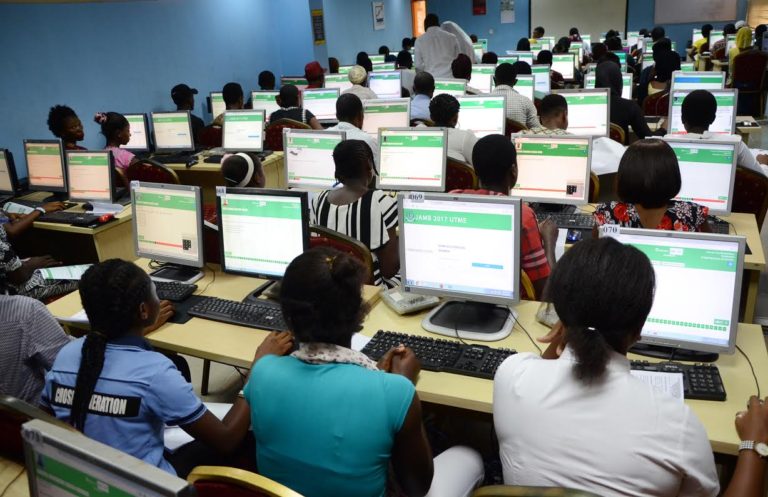
A CANDIDATE of the Unified Tertiary Matriculation Examinations (UTME) Mmesoma Joy Ejikeme, accused by the Joint Admissions Matriculation Board (JAMB) of faking her score, has denied the accusation, saying the result was obtained from the examination body.

In a video released on Monday, July 3, Ejikeme said she printed the result, now being described as manipulated, directly from the JAMB portal.

“I went to JAMB portal to print this result, and is what they gave me. This is my aggregate, 362, this is exactly how I printed it out and downloaded from that site. So they now saying that I forged my result, is what I don’t know, and I’m traumatised that they accused me of forging my own result. I am not capable of this,” she said, holding up a copy of the printed result sheet.

“They scanned this QR code there and it showed another name. A Yoruba name Omotola Afolabi, 138. And that same person that got 138, they checked again, the person got 338. Meaning that there is problem somewhere,” Ejikeme said.

She also stated that she had paid a visit to the State’s Commissioner of Education Ngozi Chuma-Udeh with the result, along with her principal, on Friday, June 30.

According to her, the commissioner snapped and sent a copy of the printed result to JAMB officials, who claimed that the scores were forged, as they had no record of it.

Ejikeme said officials of the State Security Service (SSS) were invited to resolve the issue by JAMB and disclosed that they would investigate the source of the result.

“Instead of them to wait for the investigation to be over, they posted that I forged my result without confirming,” she said.

Overall best candidate 

On Saturday, June 25, the Anambra State Ministry of Education celebrated Ejikeme, a student of Anglican Girls Secondary School, Nnewi, said to be the daughter of a commercial bike rider, for emerging as the overall best candidate of the 2023 UTME.

Chuma-Udeh described the feat as a source of joy and celebration to every Anambra indigene, adding that the state would subsequently monitor her academic progress.

Nigerian automobile manufacturer Innoson Motors commended Ejikeme’s efforts in the examinations and awarded her a N3 million scholarship.

JAMB disputes result

In an unlikely twist of events, JAMB disputed Ejikeme’s result a few days later, describing it as inflated.

In a statement by the Head of Public Affairs and Press, Fabian Benjamin, on Sunday, July 2, the examination body announced that Ejikeme originally scored 249 and manipulated the results to secure scholarships fraudulently.

“With this her ignoble act, Miss Mmesoma would be prosecuted and her original result withdrawn. This is not all, as the Board would, in due course, investigate all candidates laying claims to higher scores than they actually obtained.

“Once discovered, such candidates’ original results would be withdrawn forthwith, and they would be handed over to relevant security agencies for prosecution,” Benjamin noted.

Innoson threatens to withdraw scholarship

Following the allegations by JAMB, Innoson said that Ejikeme’s scholarship would be withdrawn if she was found guilty of forging the results.

Head of Corporate Communications at Innoson Group Cornel Osigwe disclosed this via his Twitter account. He, however, noted that the scholarship would stand if the mix-up originated from JAMB.

“We’re doing our independent investigation on the issue of manipulation; if we found that the girl willfully manipulated her result, we shall withdraw the scholarship, but if we observe she is innocent of the accusation, then the scholarship stands, whether she is the best or not.

“That girl was one of the most brilliant in her school, according to the principal, her parents couldn’t even afford to pay for her WEAC and NECO Exams. Of what advantage will it offer her to manipulate her JAMB score?” Osigwe asked.

Anambra govt sets up panel of inquiry

Chuma-Udeh announced on Monday, July 3, that the state government had initiated a panel of inquiry into the controversy.

The panel would work with security operatives to investigate the allegations of falsification against Ejikeme. Chuma-Udeh described the situation as embarrassing.

Ezekwesili calls for probe

After Ejikeme’s video began circulating across social media, Nigeria’s former Minister for Education Oby Ezekwesili called for a forensic investigation into the issue.

In a post via her official Twitter handle on Monday, July 3, Ezekwesili said she had reached out to the JAMB Registrar Is-haq Oloyede over the controversy.

“This saga between Mmesoma Ejikeme and @JAMBHQ requires an Independent Tech investigation to unearth all facts. Listening to her in this video, it is reasonable to request a forensic-investigation to help reveal what really happened. I have reached out to the Registrar of JAMB.

“An Independent investigation would turn this curious episode into a Learning Opportunity for @JAMBHQ and everyone, especially students,” Ezekwesili noted.

Nigerians question DSS involvement

Meanwhile, Nigerians have questioned the involvement of the Department of State Services (DSS) in the controversy.

According to information on the organisation’s website, the functions of the DSS include prevention and detection of any crime against the internal security of Nigeria; and protection and preservation of all non-military classified matters concerning the internal security of Nigeria.

Others are “prevention, detection and investigation of threats of espionage, subversion, sabotage, terrorism, separatist agitations, inter-group conflicts, economic crimes of national security dimension and threats to law and order; provision of protective security for designated principal government functionaries, sensitive installations and visiting dignitaries; provision of timely advice to Government on all matters of National security interest and such other functions as may, from time to time, be assigned to it”.

Based on these, Nigerians, who generally view the DSS as an organisation responsible for ensuring national security, have described its involvement in the controversy as extreme.

“When a snake was alleged to have swallowed N36 million from JAMB office, did they invite the DSS!???” a Twitter user FS Yusuf asked.

“They called the DSS on a little child. Not police o… Like DSS,” Esteembehemoth tweeted.

Another user Micheal Owolabi expressed confusion over the role of the DSS following the organisation’s involvement in the controversy.

World’s oldest newspaper prints last edition, ends 300-year legacy

THE world’s oldest national newspaper Wiener Zeitung, printed its last daily edition on Friday, June 30, marking the end of its long-standing tradition as a hard-copy publication.

Founded in 1703, the Vienna, Austria-based newspaper made a transition to online due to financial challenges caused by a decline in advertising revenue and a change in legislation.

As the world’s oldest national newspaper, Wiener Zeitung had a rich legacy of delivering news to its readers through the traditional medium of print.

However, a law passed in April by Austria’s coalition government abolished the requirement for companies to pay for publishing public announcements in the print edition of Wiener Zeitung, effectively stripping the newspaper of its official gazette status.

This legal alteration had far-reaching consequences for Wiener Zeitung, resulting in a substantial loss of revenue estimated at around €18 million (£15 million), according to Der Spiegel.

Consequently, Wiener Zeitung had to undertake restructuring measures, eliminating sixty-three jobs, including a substantial reduction in the editorial staff from 55 to 20 members.

Despite these challenges, the newspaper remains committed to its readership and will continue to operate as an online publication.

Additionally, the organisation is exploring the possibility of releasing a monthly print edition, although the specifics of this plan are still being developed.

Wiener Zeitung has witnessed and adapted to numerous changes throughout the centuries.

This latest transformation underscores the evolving landscape of the media industry, where digital platforms are increasingly becoming the primary medium for news consumption.

The decision to cease the hard copy publication was primarily driven by a significant decline in advertising revenue, making it financially unsustainable to continue printing the newspaper.

Nine rescued as building under construction collapses in Abuja

0

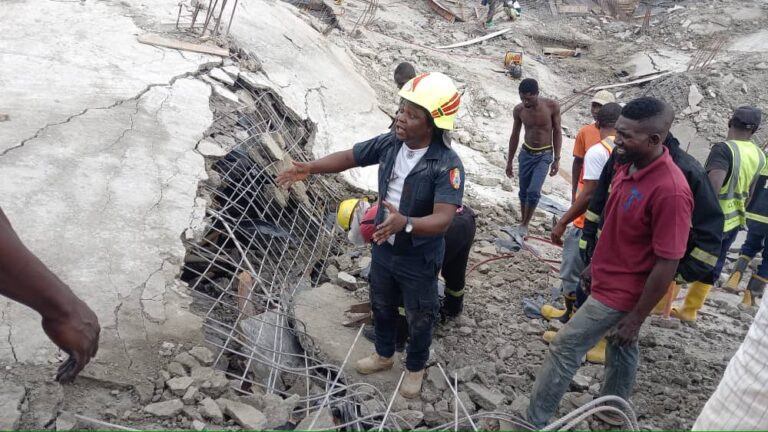
NINE persons have been rescued from a four-storey building that collapsed in the Life Camp Area of Abuja on Monday, July 3.

The building, under construction at the time of the collapse, had many workers trapped in it.

According to a report, there were about 20 people in the building, which was said to have an underground facility.

Officials of the Federal Capital Territory (FCT) Fire Service, National Emergency Management Authority (NEMA), among other response teams, were at the scene to conduct rescue operations.

Building collapse has become a recurring incident in the FCT.

On Wednesday, April 19, two persons died in a building collapse in the Wuse 2 area of the FCT.

On Thursday, February 2, a three-storey building, still under construction, collapsed in the Gwarimpa area of the FCT, killing three persons.

The Federal Capital Territory Administration (FCTA) subsequently revoked the allocation for the plot on which the building was being constructed.

Also, in 2022, at least two people died when a building housing a shopping mall collapsed in the Kubwa area of the FCT.

On Saturday, July 2, President of the Nigerian Institute of Building Yohana Izam said during an interview that under-regulation of the sector was a significant reason for the frequent cases of building collapse.

“The absence of baseline regulations such as the National Building Code is indeed a monumental scandal. The world over, the building industry is regulated by a set of consistent minimum standards for the siting, design, construction, and post-construction phases of a building.

“There must always be in existence virile physical planning laws to control development while building regulations, as in the UK or Codes as in the US, deal with key issues of standards,” Izam said.

He also identified the dearth of competent artisans in the industry as another contributory factor to the issue.

Nigeria needs 3.9 million toilets annually to end open defecation – UNICEF

The United Nations Children’s Fund (UNICEF) has said the Federal Government has to build at least 39 million toilets annually to end open defecation practices in Nigeria by 2025.

According to the Chief of Water, Sanitation and Hygiene (WASH) at UNICEF, Jane Bevan, Nigeria’s current construction rate is 180,000 – 200,000 toilets annually, which she said is not enough to address the challenge.

Bevan spoke on Monday, July 3, at the opening of a two-day Maiden Toilet Business Owners Conference in Abuja.

Describing the yearly construction rate as inadequate, she noted that business owners were vital to ending open defecation challenges in Nigeria.

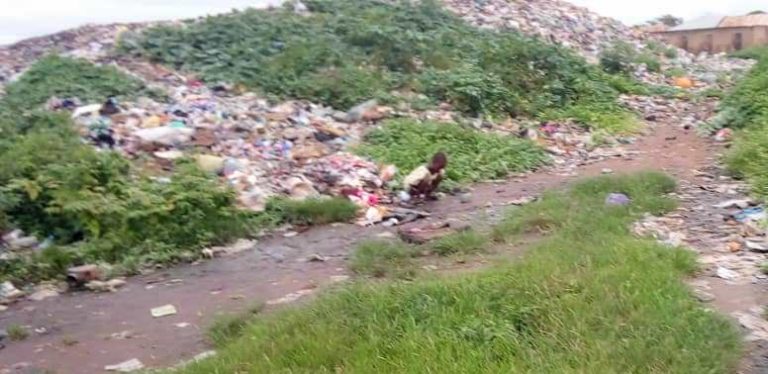
Open defecation is the act of passing excreta in open-air locations.

The practice is an environmental issue in Nigeria. It is also a serious health concern that has led to the spread of diseases, particularly diarrhoea.

According to a UNICEF report, over 100,000 children under five die yearly from diarrhoea. The report noted that 90 per cent of these death cases are directly attributable to unsafe water and sanitation.

While speaking on the issue, Bevan called for the construction of more toilets.

Bevan also said 48 million people practice open defecation in Nigeria, while 95 million lack access to basic sanitation services.

She said the private sector could play a massive role in sustainability and strengthening sanitation markets in the country.

“About 1.3 per cent of GDP or N455 billion is lost annually due to poor access to sanitation – health, health care savings and productivity.

“Every dollar invested in water and sanitation results in economic benefits ranging from 3 dollars to 34 dollars.

“Nigeria cannot continue business as usual or will miss the target of 2025 and 2030. There is a need to strengthen and scale up proven strategies to reach the country’s goals.

“The private sector must work closely with all tiers of government and communities to actively create sustainable solutions to address the sanitation needs of unserved and underserved communities and help grow capital investment and human capital,” she said.

The ICIR reported that residents of Kogi and Niger states practice open defecation more than other people in Nigeria, according to the Multiple Indication Cluster Surveys (MICS) report released in 2022.

According to the report, more than half of residents in the two states (53 per cent for Kogi and 52 per cent for Niger) defecate in open places.

Kogi has been leading the chart since 2019.

The 2022 MICS report showed a cumulative increase in open defecation in Nigeria within the period under study. One in five persons (22 per cent) practiced open defecation, an increase of two per cent from 2017, when the last MICS was conducted.

Forex unification: Experts worried as naira loses 15.84% to dollar in two weeks

Experts are worried as the naira lost 15.84 per cent to the dollar in two weeks to close at N769.25 as of June 30, following the unification of the exchange rate.

The Central Bank of Nigeria (CBN) floated the naira on June 14, which ended the multiple exchange rate regime, which many analysts believed would check illegal economic activities like arbitrage, round-tripping, and rent-seeking.

A look at the trading activity at the Investors’ and Exporters’ (I&E) foreign exchange window showed that the naira, which closed at N664.04/$1 on June 14, plunged to N769.25/$1 on June 30, and at the parallel market, it slightly depreciated by 1.98 per cent to N773, from N758.

Two financial experts who shared their view with The ICIR agreed that the naira would further depreciate against the dollar, but were, however, divided over how to mitigate the negative consequences against the continuous fall of the naira in the short run.

A development economist, Kazeem Bello, argued that except the Federal government assists, in the short run, in bailing out the CBN by finding foreign exchange inflows into the market, the naira would inevitably continue to take a plunge.

“It (naira) is struggling to find its comfort level in what we referred to as the death valley zone (DVZ) in risk management terms,” Bello said.

The economist, regarding the bail-out as one of the saving grace options available to the Federal government, explained that if the situation was not carefully managed, it could turn the capital market bullish as demand rises, which may keep the exchange rate high for a more extended period.

He said, “The trouble I have with the way the market was fiatly deregulated is the downside effect it is creating for the naira value.

“We have this economic quagmire in Nigeria that when prices go up, they hardly find their way back down due to misconjugated policy implementation.”

He added that any policy that would keep the rate high for too long may be damaging.

Before the deregulation, the CBN’s management of the exchange rate had given rise to multiple regimes that led to illegal economic activities and created deficiencies in supply or inflows in the I&E window.

Bello argued that while unifying the exchange rates was an easy fix, addressing the deficiency in forex supply is practically a market-based problem.

He explained that solving the first issue would assist in injecting inflows into the market, thereby helping to solve the problem of inadequate inflows.

He said, “It is at that point in time that the Federal government can do two things again in combination together: inject substantial sums into the market to dampen the spike in rate, and then simultaneously announce a floating rate forex market regime to deregulate the market operations.

“When that strategy is conducted in this manner, the rate will be forced to remain bearish and weakened. Hence, we will not see any significant rise. It may rise slightly, but obviously not more than a digit percentage increase. This will equally assist in stabilising the market against any possible shock. For now, we will continue to monitor the market, but it is looking like a tough one down the line already.”

Opposing any intervention, the executive vice chairman of Highcap Securities Limited, David Adonri, said such a move would distort the market mechanism that the floating of the naira is expected to engender.

“The forex market is now deregulated. Any seller, whether government or CBN, or any person, can sell. There is no scarcity of forex anymore because, at the market rate, forex is available.

“There is no need for any intervention because the market is now flexible or self-adjusting to the forces of supply and demand,” Adonri, a financial analyst, said.

IPOB urges South-East residents to ignore one-week sit-at-home order

THE Indigenous People of Biafra (IPOB) have urged residents of the South-East to ignore a one-week sit-at-home order issued by Finland based pro-Biafra agitator, Simon Ekpa, describing it as irresponsible.

In a statement on Monday, July 3, IPOB spokesperson Emma Powerful also dissociated the organisation from the order and described it as an agenda to ridicule the Biafran struggle.

“Biafrans should ignore the rabble-rousers. There is no sit-at-home scheduled. The purported one-week sit-at-home jingle on social media is not from IPOB.

“We are not in the business of issuing irresponsible and non-existent sit-at-home orders. IPOB is a responsible movement and family. Our aims and objectives are to give peace and freedom to our people, not to inflict more pain on the pains Nigeria has already inflicted on us,” he said.

The group alleged that agents of the Nigerian government are behind the sit-at-home order.

“How can we be keeping our people indoors for one week at these harsh economic times in Nigeria? Our people should start reasoning. Some Federal Government agents are trying to make the South-East unattractive for our people to return to. They have failed,” the IPOB spokesman added.

Ekpa, who declared that the sit-at-home on Friday, June 30, said it would run from July 3 to July 10.

He stated that the exercise was necessary to secure the release of IPOB leader Nnamdi Kanu and to prepare for the Biafra referendum.

In the same vein, the Ohanaeze Youth Council also discouraged residents from adhering to the sit-at-home order.

“We have always made it clear that Simon Ekpa is not fighting for Biafra; he is only using the name of Biafra to enrich himself. He is also not interested in having Mazi Nnamdi Kanu released because he knows any day Kanu is released, his business will end,” a leader of the Ohanaeze Youth Council, Okwu Nnabuike was quoted as saying.

He described the order as deceitful, noting that Ekpa is not being restrained from going about his daily business in Finland where he resides.

The weekly Monday sit-at-home was ordered by IPOB as a means of demanding the release of it’s leader, Kanu, after he was abducted and repatriated to Nigeria from Kenya by Nigerian security agents.

The pro-Biafra group reversed the order after the sit-at-home exercise was hijacked by hoodlums, leading to killings and destruction of property.

However, the sit-at-home has continued to be enforced on Ekpa’s orders, despite IPOB’s insistence that the exercise had been cancelled.


13 Nigerians died during Hajj in Saudi Arabia -NAHCON

THE National Hajj Commission of Nigeria (NAHCON) has disclosed that 13 Nigerian pilgrims died while participating in the recently concluded Hajj in Saudi Arabia.

The head of NAHCON’s medical team Usman Galadima, gave this information to the media on Monday, July 3, during the post-Arafat conference with Hajj stakeholders in Makkah, Saudi Arabia.

“Seven of the victims died before Arafat; six died post-Arafat (four in Arafat, two in Mina).

“Three of the dead victims were from the private tour operators, while two each were from Kaduna and Osun states,” he said.

He added that Yobe, Plateau, Borno, FCT, Benue and Lagos states recorded one death each.

Galadima stated that the figure for this year is higher than the combined figures for 2022 (two) and 2018 (two).

“The figure is the same as that of 2019, while it is higher than the post Arafat figures of 2016 and 2017 when three deaths were recorded each.”

According to him, a total of 25,722 pilgrims were treated by the medical team throughout the post-Arafat period, of which the men were 10,454, and the women 15,268.

“There were 93 emergency cases, out of which there were seven heat strokes, 22 severe malaria, seven DM emergencies and five psychiatric cases.

“There were also three reported cases of chicken pox, which the doctor said were all taken out of Mina to the hospital in Makkah to avoid contagion,” he added.

Galadima also reported two cases of deliveries by pregnant women, one on the roadside and another in one of the NAHCON medical facilities.

To reduce the mortality rates, Galadima recommended that elderly pilgrims and those that are very sick should be discouraged from going to Jamarat, the site of the stoning of the devil.

He noted that pilgrims should be encouraged to use the Jamaraat train services and that there should be thorough pre-Hajj medical screening with the issuance of a certificate of medical fitness.

Galadima also disclosed that the team detected three cases of chickenpox among Nigerian pilgrims during Misha’ir. He said the patients have been referred to Saudi hospitals for treatment.

He added that state-level medical screening should be scaled up to stop medically unfit pilgrims from coming for Hajj.


READ ALSO:


In another development, the Saudi Arabian government has come under fire for blaming what it described as “invasion of illegal pilgrims at the religious site of Mina” for the Nigerian pilgrims’ lack of tents and sleeping accommodations during the exercise.

The Vice President of the Saudi company of Mutawwifs for African Non-Arab Pilgrims, Badr Bafqih, gave the explanation when the Chairman of NAHCON, Zilkrullah Kunle Hassan, led his management team and representatives of the private tour operators to the head office of the company in Makkah to demand reasons for the development.

According to Bafqih, at least 30 to 40 per cent of unregistered pilgrims entered Nigeria’s tents, upsetting arrangements made for the 95,000 registered Nigerian pilgrims.

Fans react as Wizkid, Tems perform at 2023 Essence Festival

NIGERIAN superstars Wizkid and Tems delivered a sizzling performance of their award winning song, ‘Essence’ at the 2023 edition of the Essence Festival on Sunday, July 2.

Ever since it made its debut in 2020 as a featured track on Wizkid’s fourth studio album ‘Made In Lagos,’ the song has achieved remarkable global triumphs, including a spot in the top 10 of the Billboard Hot 100 chart.

As fans witnessed the long-awaited reunion of Wizkid and Tems on stage after an absence of nearly two years, their excitement resonated across social media platforms, with fans expressing their elation for this special performance.

“I enjoyed Wizkid and Tems, I wanna attend an Afro beats concert. #essencefest,” @Fleurdeslim tweeted. 

Another fan, @softman73135194, tweeted, “Wiz and Tems trending at number 7 in the US after they stole the festival to themselves, lol i won’t be surprised if this song keep on banging awards until 2030 cos it keeps hitting harder everyday.”

“Greatest afrobeat song ever,” @Homiebishop declared.

“What’s Essencefest Without Performing ESSENCE(Song) @Omoalhaji observed.

The event which started on Thursday, June 29 and lasted till Monday, July 3, was held at New Orleans, Louisiana, and is seen as one of the United States’ biggest and most acclaimed annual festivals.

Each year, the Essence Festival takes place to commemorate and honor African-American culture and music. The event showcases an impressive roster of renowned artists from the realms of hip-hop, R&B, soul, funk and gospel.

In addition to the extraordinary musical performances, attendees can partake in enlightening panels, workshops, and engage with vendors specialising in beauty, health, wellness, entrepreneurship, and various other areas of interest.

The audience at the event was treated to captivating performances by a lineup of esteemed international artists. The likes of Megan Thee Stallion, Lil Wayne, Remy Ma, Lauryn Hill, Janelle Monàe, Missy Elliott and many others graced the stage, delivering electrifying performances that left the crowd in awe.

INEC fails to open defence against Obi’s petition

THE Independent National Electoral Commission (INEC) on Monday, July 3, failed to open its defence against the petition filed by Labour Party (LP) candidate, Peter Obi, at the Presidential Election Petition Court.

The petition is challenging the outcome of the February 25 presidential election.

The Tribunal presided over by Haruna Tsammani, had previously ordered INEC to open its defense on July 3, subsequent to the conclusion of cases presented by the Allied Peoples Movement (APM), the LP, and the Peoples Democratic Party (PDP).

However, at resumption of hearing on Monday, INEC’s counsel, Abubakar Mahmoud, a Senior Advocate of Nigeria (SAN), informed the court that the the Commission’s first witness could not attend due to family issues.

He requested an adjournment until the following day to allow the witness to be present.

Following the development, the Tribunal adjourned the petition to Tuesday, July 4, for further hearing.

Speaking to journalists shortly after the adjournment, LP lawyer Levi Uzoukwu, a Senior Advocate of Nigeria (SAN), claimed that INEC was unprepared to defend its case before the tribunal.

He asserted that his camp had a strong case and was fully prepared to proceed, unlike INEC, which he said had displayed a consistent lack of preparedness.

“Given the contradictions and inconsistencies and what INEC has done; I’m sure they are not ready to defend this case,” he said.

“I stand to be proven wrong, but I would wish that they defend this matter so that the public will see more of what happened to this election.”

Uzoukwu emphasised that the decision to call witnesses rested with INEC, and he and his client, the LP, were ready to proceed at any time.

Obi had closed his case at the Tribunal after calling 13 witnesses to prove his allegation that the election was rigged.

He had proposed to call 50 witnesses but could only call 13 within the court allotted time. He also tendered tons of electoral documents.

INEC had declared Tinubu as the winner of the February 25 presidential election.

According to INEC, Tinubu secured 8,794,726 votes to come first, Atiku Abubakar of the Peoples Democratic Party (PDP) finished second with 6,984,520, while Obi polled 6,101,533 to come third.

Displeased with the results, Obi, and his party filed a petition at the court to challenge Tinubu’s victory.

In their petition, Obi and the LP argued that when Tinubu’s running mate, Kashim Shettima, became the vice presidential candidate, he was still nominated as the APC candidate for the Borno Central Senatorial election.

They also challenged Tinubu’s eligibility, alleging that he was previously indicted and fined $460,000.00 by a United States District Court for an offence involving dishonesty and drug trafficking.

Obi claimed that the election was invalid due to corrupt practices and non-compliance with the provisions of the Electoral Act, 2022.

He argued that INEC breached its regulations and guidelines by not prescribing and deploying technological devices for voter accreditation, verification, continuation, and authentication as required.

The petitioner sought a declaration from the court that Tinubu was not qualified to contest the election and that all votes recorded for him were wasted.

He also requested the court to determine that he received a majority of lawful votes and satisfied constitutional requirements to be declared the winner.

In the alternative, he called for the cancellation of the election and the conduct of a fresh election in which Tinubu, Shettima, and the APC would not participate.