SNAKEBITE envenoming is a serious, potentially life-threatening condition that affects millions of people worldwide each year.
According to the World Health Organization (WHO), an estimated 5.4 million people are bitten by snakes annually worldwide, with up to 138,000 deaths and many more cases of permanent disability.
Venomous snake bites can trigger paralysis that interferes with breathing, bleeding disorders that may result in fatal haemorrhage, irreversible kidney failure, and severe tissue damage that can lead to permanent disability or limb amputation.
In Nigeria, snake bites are common, especially among farmers, children, herders, and rural residents due to proximity to snake habitats and limited access to quick medical care, including lifesaving antivenom.
For instance, on January 31, a 26-year-old Nigerian singer Ifunanya Nwangene, known as Nanya, died after a snake bit her in her home in Abuja.
Efforts to get her timely treatment were reportedly hampered by unavailability of antivenom at nearby facilities.
The deceased could not get antivenom at the first facility she visited in her estate. She then proceeded to the Federal Medical Centre, Jabi, Abuja.
Many Nigerians on social media blamed her death on alleged unavailability of the antivenom at the FMC. However, the hospital promptly debunked the claim.
The FMC said it acted promptly and provided immediate and appropriate treatment, including resuscitation efforts, intravenous fluids, intranasal oxygen, and the administration of polyvalent snake antivenom.
What you look for after a snake bite
Two puncture wounds close together: usually from fangs (but sometimes only one puncture).
Local signs: Pain, redness, swelling, heat, or bleeding around the wound.
Other medical symptoms: Nausea, headache, dizziness, difficulty breathing, sweating, numbness, or blurred vision.
Immediate steps to take after a snake bite:
According to the World Health Organization, prompt treatment at a properly equipped health facility with trained personnel is critical, including access to antivenom and emergency supportive care.
In the case of any snake bite, the global health body and other medical professionals highlighted several steps to take, including being transported to a health facility without delay and access to first aid. Below are what professionals highlighted:
Stay calm and still: Movement increases blood circulation, which can spread venom faster. Encourage the victim to lie down and stay quiet.
Move away from the snake: Distance reduces the risk of additional bites. Do not attempt to catch, kill, or provoke the snake, this often leads to more bites.
Remove tight objects: Unlike common belief of tying clothes or tight ropes, remove rings, bracelets, watches, or tight clothing near the bite site because swelling may occur.
Reassuring the victims: The WHO says many snake bites come from non-venomous snakes, and even in cases involving venomous species, death is often not immediate, especially when timely medical care is received. So, reassuring the victims and keeping them calm to avoid panic helps preventing critical situations.
Immobilising the victim: The person should be kept as still as possible. When seeking help, use a makeshift stretcher to move them. Avoid unnecessary movement that could spread the venom.
Seek medical help immediately: Transport the victim quickly to the nearest hospital with antivenom availability.
What not to do
Avoid the following harmful practices known to increase risk and worsen outcomes:
Do not try to suck the venom out.
Do not apply a tight tourniquet. A tourniquet is a tight band, often made from cloth, rope, or rubber, tied around an arm or leg to stop or restrict blood flow.
Do not cut or burn the woundDo not apply ice, chemicals, herbs, or engine oil.
Do not use electric shocks or any folk remedy.
These actions can cause further tissue damage, increase infection risk, and delay critical medical care, according to the global health body.
Antivenom is the only effective treatment for venomous bites, and its timely administration can be lifesaving. It can potentially prevent or reverse most of the effects of snakebite envenoming when administered early in an adequate therapeutic dose.
According to WHO, beyond antivenom, effective treatment of snakebite patients often requires a range of supportive medical interventions. These may include other medications, assisted breathing, kidney dialysis, proper wound care, reconstructive surgery, prosthetic support, and long-term rehabilitation.
Certain drugs, particularly anticholinesterases, can help restore muscle and nerve function after bites from some neurotoxic snakes.
Challenges in Nigeria include:
Limited antivenom supplies in many hospitals.
No or less functioning ambulance.
Government and hospital failure.
High costs of antivenoms.
Delayed presentation to medical facilities.
Over-reliance on traditional healers in some communities.
Lack of widespread public awareness about appropriate first aid.
The Presidency has urged Nigerians to take extra measures to prevent snakes from invading their environments.
The Special Adviser to President Bola Tinubu on Economic Affairs, Tope Fasua, stated this on Monday, February 2, while reacting to the death of popular Abuja singer, Ifunanya Nwangene, fondly called Nanya.
Fasua also spoke on anti-venom shortages which many attributed to the singer’s death.
While sympathising with the deceased’s family for the loss, he wrote, “We are in snake season. When there is heat, they come out. They sunbathe. Then they like hiding inside houses. They live in ecosystems. They also never work together. So, seeing two inside one room is really odd. They snack on each other,” Fasua said.
Ifunanya, also fondly called the “Soprano Queen”, died on Saturday after she was reportedly bitten by a cobra at her residence in Lugbe, a suburb of the Federal Capital Territory.
The incident, which occurred in the early hours of the day, has since sparked intense public debate, with many Nigerians questioning how a preventable death could happen in the nation’s capital if life-saving anti-venom medications are available.
The singer reportedly booked her rider to Divine Health Hospital, located at the Trade Fair Mall in Lugbe but she was allegedly told that the facility did not have anti-venom and could not treat her. She proceeded to the Federal Medical Centre (FMC), Jabi, afterwards at about 10 a.m.
Speaking further on the incident, Fasua said, “Not everything is politics. Your whining candidate will not provide anti venom for all hospitals, private and public. Presidents are not for petty work but big policies. A president is not a medicine hawker. If he’s going around weeping with every mourner and checking every hospital for anti-venom, he won’t have time to think. And what about other lifesaving drug? How many will we pursue?” he said.
He urged Nigerians to keep their environment safe from snake.
“If you have rats or toads around or thick carpet bushes, you are creating an ecosystem. Block under your door. And invest in fumigation at times like this especially. Jack your landlord to do the needful or cooperate with other tenants. Dogs can also help. They kill snakes. Cats don’t. Keep learning. Open your eyes always to notice creepy crawlers. Stay clean. Keep places lighted too,” he added.
The remarks come amid growing public anger over alleged shortages of anti-snake venom in hospitals the deceased visited.
A relative of the singer, Kingsley Nwangene in an emotional video shared on Instagram, narrated how he received a distress call from Nanyah at about 8:30 a.m. on Sunday, explaining how she had been beaten by a snake.
Nwangene explained that Nanyah told him that she had been asleep when she felt a sharp pain. On opening her eyes, she saw a snake in the room, adding that he stayed on the phone with her throughout the ordeal.
The deceased’s brother narrated how the singer arrived at Federal Medical Centre (FMC), Jabi, and staff at the Emergency Unit began asking routine questions while the singer’s condition deteriorated.
He said doctors removed what was tied around Nanyah’s arm to slow the spread of the venom and asked her to remain calm.
“She told me, ‘Emy, they have removed the thing I used to tie my hand,” noting that he felt relieved because she was finally at the hospital and believed the doctors knew better, but she later succumbed to the effects of the venom.
The leader of the Abuja Metropolitan Music Society (AMEMUSO) Choir, Sam Ezugwu, told the BBC that the deceased’s father ordered the repatriation of his daughter’s body after receiving confirmation of her death.
The singer’s body has consequently been moved to Enugu State.
FMC Abuja reacts
FCM released a statement on Sunday February 1, to explain its side of the story.
“We wish to address the circulating discussion on social media concerning the unfortunate case of Ms. Ifunanya Lucy Nwagene, who tragically passed away due to neurotoxic complications following a snake bite on January 31, 2026..
“We want to clarify that the management team at Federal Medical Centre, Abuja acted promptly and with the utmost care upon Ms. Nwagene’s arrival. Our medical staff provided immediate and appropriate treatment, including resuscitation efforts, intravenous fluids, intranasal oxygen, and the administration of polyvalent snake antivenom.
“After a thorough but quick evaluation, it was clear that Ms. Nwagene suffered severe neurotoxic complications from the snake bite. Despite all efforts to stabilise her condition and transfer her to the Intensive Care Unit for further treatment, she experienced a sudden deterioration just before the transfer. Our team of professionals worked diligently to provide CPR and other life-saving measures; however, despite these efforts, we were unable to revive her.”
Public primary and secondary schools in Abuja remained shut on Monday, February 2, two weeks after the workers with the Federal Capital Territory Administration (FCTA) and the Federal Capital Development Authority (FCDA) embarked on strike to compel the FCTA to meet their demands.
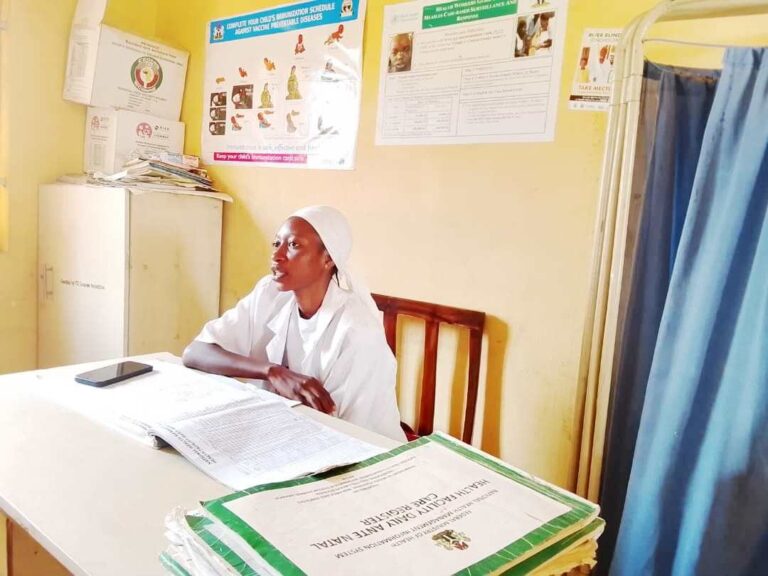
In addition to the schools, primary health centres (PHCs) and Area Council secretariats in the nation’s capital are not providing services because of the strike.
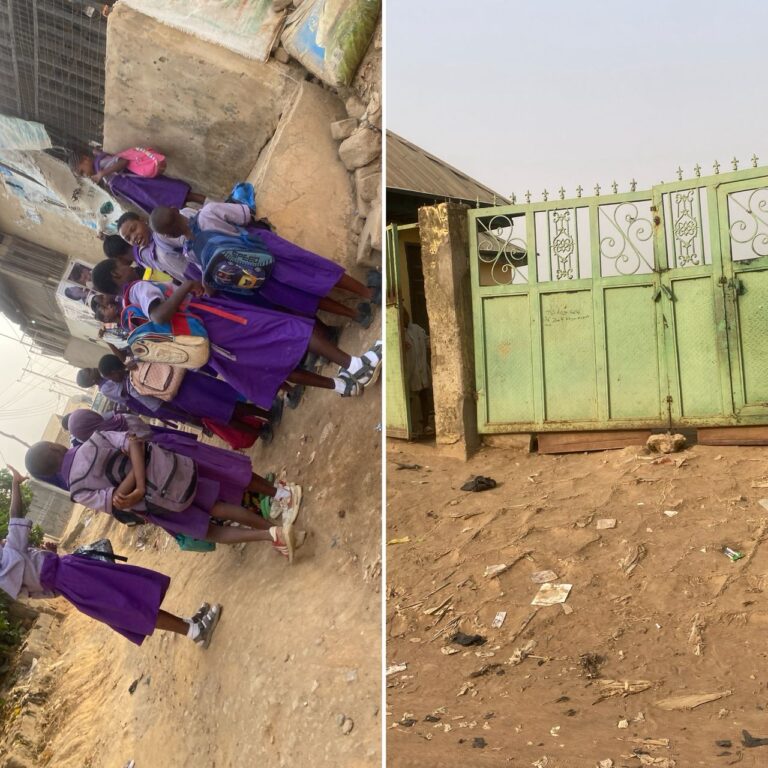
Checks by The ICIR showed that schools in several area councils were locked, with pupils turned back at the gates and no teachers or administrators on duty.
In two public schools within Lugbe, Abuja Municipal Area Council, The ICIR confirmed that students who arrived early for classes were stranded outside the school premises, uncertain whether academic activities would resume.
Some pupils waited for several minutes before eventually leaving, expressing frustration over the continued disruption.
The strike continued despite an interlocutory injunction issued last week by the National Industrial Court of Nigeria (NICN) directing workers under the Joint Union Action Committee (JUAC) in the FCT to suspend their strike.
The court, presided over by E.D. Subilim, restrained JUAC and its leadership from continuing the industrial action pending the determination of the substantive suit filed by the FCT Minister, Nyesom Wike and the FCTA.
The judge ruled that although the matter constituted a trade dispute and satisfied the necessary legal requirements, workers’ right to strike was not absolute. He held that once a trade dispute is referred to the National Industrial Court, workers are barred from embarking on any strike action, and where a strike is already underway, it must be suspended pending the court’s determination.
However, workers have openly dismissed the ruling, insisting they are no longer “on strike” but are instead observing a “stay-at-home” action until their demands are met.
“We are no more on strike, but we are in our house. Let them open the gate wide; we are in our house. Tell them Wike has won. Let them open all the gates,” one of the protesters, said.
The worker, who was addressing journalists alongside her colleagues, added that employees would only resume duties after their demands were met.
The ICIRreported that primary and secondary schools were shut after the Nigeria Union of Teachers (NUT), FCT chapter, directed its members to comply with the JUAC strike following a call by the Nigeria Labour Congress (NLC) for all affiliates in the territory to withdraw services.
A communiqué announcing the shutdown was signed by the FCT NUT Chairman, Abdullahi Shafas; Secretary, Margaret Jethro; and Publicity Secretary, Ibukun Adekeye.
JUAC had embarked on the strike following what it described as the government’s failure to address long-standing grievances, including the non-payment of promotion arrears, delays in promotion exercises, unpaid wage awards, and the alleged non-remittance of statutory deductions such as pensions and housing funds.
The ongoing shutdown adds to the prolonged disruption of public education in the FCT. The ICIR reported that public primary schools in the FCT lost at least 165 school days to strikes since 2023, following repeated industrial actions by teachers over unpaid salaries and allowances.
The current strike has expanded the crisis, affecting both primary and secondary schools, and raising concerns among many Nigerians.
Meanwhile, Wike has warned that any worker who failed to comply with the court’s order would be punished.
Shortly after the ruling, the Acting Head of the Civil Service of the FCT, Nancy Nathan, directed all permanent secretaries and heads of departments to immediately implement and maintain staff attendance registers.
Gbaiko PHC in Bosso LGA before the WDC’s intervention. Once closed midday, it now operates daily thanks to community oversight. (Credit: Anibe Idajili)
STANDING under a tree in Gbaiko, a community in Bosso Local Government Area (LGA) of Niger State, Christy recalls walking to her local Primary Healthcare Centre (PHC) last year, only to find its doors shut by noon. But she did not stay silent. She knocked on the door of Amos Matthew Nakura, her community head and chairman of the Bosso Central 1 Ward Development Committee (WDC). Within an hour, the clinic reopened. By the next week, nurses were assigned to daily, evening, and night shifts.
“That small action changed everything,” she says. “Now, someone is always there when we need healthcare services.”
The WDCs, part of Nigeria’s Basic Health Care Provision Fund (BHCPF), are the closest thing rural communities have to a healthcare watchdog. Comprising women, youth, elders, and traditional leaders, these volunteer committees hold monthly meetings to track staff attendance, monitor the use of funds, and respond to community needs.
In many LGAs across Niger State, WDCs have revitalised under-resourced primary healthcare centres (PHCs), though the scale of impact varies. For instance, in Bosso LGA, the Gbaiko PHC transitioned from a half-day operation to 24/7 services after the local WDC pushed for staff rotations, a change corroborated by PHC’s nurse, Charity Amos.
“The committee’s monthly inspections led to the PHC prioritising all shifts. Patients now get care even at night,” she stated.
Nurse Charity Amos crediting the WDC for restoring her team’s morale. (Credit: Anibe Idajili)
Designed for Empowerment: A Structural Analysis
In assessing the performance of WDCs across Niger State, data gathered from 14 interviews and four on-site field visits in four LGAs, Bosso, Chanchaga, Kontagora, and Mokwa, were analysed. Findings reveal both similarities and disparities in how effectively these committees operate and influence primary healthcare delivery.
In Bosso LGA, community pressure led to the implementation of 24-hour shifts at Gbaiko PHC, resulting in an increase in staff presence within six months. This improvement highlights the potential impact of responsive, community-driven governance.
“Mothers couldn’t reach the PHC at night. So, we organized a meeting with the Bosso LGA and called Hauwa Kolo of the National Primary Health Care Development Agency (NPHCDA),” says Nakura, the Bosso Central 1 WDC Chairman.
“We presented our findings from regular facility checks, and Dr. Kolo liaised with the LGA to rotate staff shifts.”
Similarly, the Senator Idris Ibrahim Kuta Memorial PHC in Chanchaga LGA consistently maintained drug supplies through WDC monitoring, demonstrating how active oversight can prevent service gaps.
“Before the WDC’s involvement, we used to spend months waiting for supplies,” says Assistant Nurse-in-Charge, Dauda Mande. “Now, the committee tracks drug shortages and pushes for LGA and community members’ intervention. Patients’ trust in the clinic has grown.”
However, the situation in Mokwa presents a gap where the lack of funding has stalled capacity-building plans by the LGA for WDC members. According to Usman Usman, a Data Officer at Mokwa LGA Office, planned WDC capacity-building sessions were put on hold because of paucity of funds.
“We know there is a capacity gap within the committees, but the office cannot fund any training at the moment.”
In Magajiya Ward (Kontagora) and Gbaiko Ward (Bosso), WDCs led repairs of boreholes, improved sanitation, and secured local government support for clinic upgrades. Health workers in both PHCs reported faster resolution of facility issues.
“Our WDC in Magajiya is active, and so problems are solved faster,” notes a health worker in Ubandoma PHC.
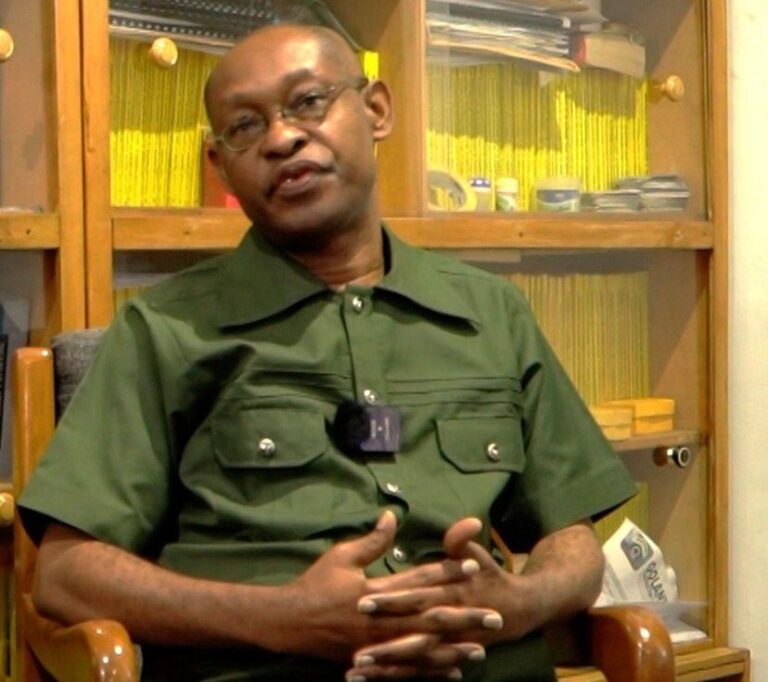
“I believe these differences in performance are a reflection of a system where success depends more on individual initiative and local goodwill than institutional support. There is an urgent need for tailored training, funding, and accountability to ensure WDCs fulfill their promise as pillars of community health,” says Kenneth Nnaji, a Program Officer at Physicians for Social Justice.
Dauda Mande, Assistant Nurse-in-Charge Senator Idris Ibrahim Kuta Memorial PHC. (Credit: Anibe Idajili)
The human face of transformation
WDCs are designed to be the link between residents and their PHCs, and where they succeed, their work is often visible.
Mairo Abdullahi, the Nurse-in-Charge and Focal Person at Central PHC, Kontagora, shared her experience.
“The WDC members visited our facility last month to monitor our work and ensure that community members receive the best healthcare. When there is a problem, we usually sit together to decide the best solution. It is about partnership.”
This collaborative spirit is seen in Gbaiko, Bosso Central 1 Ward. Amos Matthew Nakura, the WDC Chairman, recalls how his team overcame the initial friction between the committee and the health facility.
“We had a meeting to decide the standard we wanted our PHCs to attain,” he stated. The committee now works with the PHC to enforce shift schedules and resolve drug shortages.
Charity Amos, a nurse at the Gbaiko PHC, credits the WDC with improving staff morale.
“Before, we were exhausted. But the WDC fought for us. Now, nurses work different shifts, and we feel valued.”
This chain reaction of active community engagement is seen in Chanchaga’s Senator Idris Ibrahim Kuta Memorial PHC. Assistant-in-Charge Dauda Mande recounts how a routine WDC visit uncovered a broken borehole, and a potential water shortage crisis was averted within days.
“The committee filed a complaint with the Niger State Community Social Development Agency (NG-CSDA),” he says, “and they responded swiftly to fix it.” The NG-CSDA is a state body focused on empowering communities through education, health, and water projects, using the World Bank-supported Community-Driven Development (CDD) approach.
In Ubandoma PHC in Magajiya Ward, Hajiya Laratu Yusuf, Nurse-in-Charge, said that WDC monthly visits are consistent, “the last time was December 2025.” She also acknowledges that “When parents refuse polio immunization for their children, the committee intervenes. They are very helpful.”
The committees sometimes step up to fill the gaps left by bureaucracy. Alh. Nuhu Gwari, the Magajiya WDC chairman, speaks proudly of community-driven PHC renovations. “Local elites have also been helpful,” noting contributions from wealthy community members.
This model of grassroots efficacy even extends to staff welfare. Mallam Ayuba Santale, Ward Chairman of Liimawa A, shared a recent success. “We had healthcare workers complaining about working overtime without proper compensation or recognition,” he explained. “We took it up with NSPHCDA, and it was quickly rectified.”
However, this model of grassroots efficacy is not replicated everywhere. The momentum in one ward can be completely slow in the next.
In Mokwa LGA, Usman Usman, a data officer representing the Director of the PHC, admitted that “there is a capacity gap within the committees.”
The promise of training also remains an unrealised hope in Kontagora LGA. Comrade Umar Madaki, the newly appointed Director of PHC at the LGA, acknowledges this fundamental weakness.
“We have not really had any training for the WDC members. It is something we are very interested in, but it all depends on whether there are no financial limitations.”
In many communities, the WDCs that are meant to voice local health concerns remain invisible to the very people they serve. In Minna, resident Monsurah Olayemi is baffled when asked about her local WDC.
“This is my first time hearing about this committee,” she admits. Her unfamiliarity is shared by others who bypass their local PHC, completely unaware of the body designed to advocate for them. In Kontagora, a semi-urban town, Usman Idris prefers the general hospital. “I have not really heard of the WDC. What do they do?”
This lack of awareness strikes at the very heart of the WDC model.
“The committee’s power is in representing the community’s voice. If community members do not know the WDC exists, who do they turn to when a PHC is not meeting their healthcare needs?” Comrade Umar Madaki asks.
Ward Development Committee Booklet. (Credit: Anibe Idajili)
Rising above constraints
Ward Development Committees bring together PHC focal persons, traditional rulers, religious leaders, and elected community representatives. Guided by Nigeria’s Minimum Standards for Primary Health Care and the BHCPF Implementation Guideline, these committees are tasked with supervising drug distribution, spotting community health priorities, mobilising resources, and safeguarding transparency.
Their role also includes “collaboration with the PHC facility leadership in identification of and planning for health and social needs of the ward” in line with the BHCPF Implementation guideline.
In practice, however, tensions sometimes arise, highlighting gaps between policy and practice. Omolabi Adekunle, a program officer with the Community Advocacy Team of ACOMIN, recalls a dispute in Ndayako Ward of Mokwa LGA.
“A PHC needed electricity, but the committee refused to intervene because the Nurse‑in‑Charge was perceived as hostile,” he says. After a mediated resolution by the team, the power issue was finally resolved.
Similar friction in Bosso Central 1 Ward disrupted healthcare delivery, with WDC Chairman Amos Matthew Nakura noting that poor relations with former Gbaiko PHC leadership weakened service quality.
“When we tried to help, we were pushed aside,” he recalls. “It made people lose trust in the system.”
The NPHCDA’s guidelines grant real authority to Ward Development Committees to monitor PHC activities. The problem, therefore, lies not in the committees themselves but in how the rules are applied on the ground.
Inuwa Junaidu, Executive Director of the Niger State Primary Healthcare Development Agency (Credit: Anibe Idajili)
Inuwa Junaidu, Executive Director of the Niger State Primary Health Care Development Agency, explains that his office ensures accountability in fund flows.
“WDCs have the chairman and nurses-in-charge of the PHC as signatories before funds are disbursed. We provide funding to PHCs through the quarterly BHCPF, but civil society organizations like Federation of Muslim Women’s Associations in Nigeria (FOMWAN) complement our efforts. The FOMWAN helps us build the capacity of WDCs through financial training and a monitoring framework. We also make routine visits to ensure focal facilities function properly,” he says.
When WDCs falter, the agency intervenes, he sas.
“For WDCs that are not doing well, we check if members have exited due to death or relocation. For instance, Manta PHC in Shiroro LGA no longer exists because the community was displaced due to insecurity,” Junaidu notes.
“If a chairman or member passes away, we collaborate with PHCs to find someone respected, literate, and with integrity to replace them. We also have a monitoring mechanism where WDCs share monthly work reports.”
“Initially, WDC members could be anyone, even traditional rulers who sometimes imposed their will,” Dr. Junaidu admits.
“We now work with them to suggest someone who can sign and understand basic concepts. Business plans are simplified for low-literacy members. But due to paucity of funds, we train only the chairman and secretary, who then cascade the training to others.”
Conflict resolution is equally important. “If a PHC refuses to cooperate with a WDC, we activate a grievances redress committee at the LGA and state levels. I chair the state-level committee. We’ve successfully mediated disputes in Wushishi, Chanchaga, and Agaie LGAs,” Dr. Junaidu says. “A PHC cannot unilaterally decide not to work with a WDC. They must convince us why they are resisting.”
FOMWAN’s National Media Officer, Hauwa Kulu Abdullahi, also highlighted the organisation’s role in supporting WDCs.
“We provide training on budgeting, business plans, and fund disbursement. We invite WDCs to Minna for training and travel to communities for monitoring. Currently, we are developing a questionnaire for community members to evaluate PHC services,” she says.
“In February, we will invite LGA auditors to review BHCPF disbursements, as complaints exist about their limited access to audit records. We have also advocated for more women in WDCs. Now, we are seeing more meaningful female participation.”
Despite the odds, leaders like Alhaji Nuhu Gwari, WDC Chairman of Magajiya Ward, are also taking initiative to rally local support for primary healthcare (PHC) facility renovations.
“We don’t wait for government,” he says. But even then, appeals for help from wealthy community members are sometimes met with, “Go to the government.”
BHCPF Booklet. (Credit: Anibe Idajili)
The road ahead for WDCs
The stories from Kontagora, Gbaiko, Mokwa, and Chanchaga LGAs reveal how WDCs can transform healthcare through collaboration, accountability, and community solidarity. By resolving staffing challenges and addressing infrastructural gaps, WDCs have proven their potential as important links between communities and PHCs.
To sustain progress, efforts must focus on enhancing grassroots effectiveness and eliminating bureaucratic barriers.
“When WDCs operate with trust, transparency, and inclusion, they support and transform health systems,” says Kenneth Nnaji, Program Officer at Physicians for Social Justice.
As WDCs grow in capacity, access to care improves. “When a person goes to a PHC, they should not have to knock on one door for medical care and another across the street to buy medications,” Nnaji emphasizes. “They should find both waiting and ready, because the community and government already made sure of it.”
This report was made possible with support from the International Centre for Investigative Reporting (ICIR) under the Strengthening Public Accountability for Results and Knowledge (SPARK 2.2) project.
SOUTH African singer Tyla has won the Best African Music Performance award at the 68th Grammy Awards, defeating Nigeria’s Davido and other top African artistes.
The award was announced on Sunday night in Los Angeles during the 2026 Grammy ceremony.
Tyla won with her song “Push 2 Start,” marking her second Grammy win in the category. She first won the award in 2024 with her global hit ‘Water’, becoming the first artiste to win the category twice since it was introduced.
Davido was nominated for the award with “With You,” a collaboration with Omah Lay. Other nominees in the category included Burna Boy, Ayra Starr and Wizkid, as well as Eddy Kenzo.
The Best African Music Performance category was created by the Recording Academy in 2024 to recognise outstanding African songs and promote African music on the global stage.
Despite multiple nominations over the years, Davido is yet to win a Grammy. However, his nomination this year adds to his growing international recognition and influence.
Tyla’s latest win has further strengthened her position as one of Africa’s fastest-rising global stars, highlighting the increasing presence of African music at major international award ceremonies.
THE Lead Director of the Centre for Social Justice (CSJ), Eze Onyekpere, has raised concerns over what he described as significant procedural breaches in the Federal Government’s handling of the 2024 budget.
Speaking during an exclusive interview with The ICIR, Onyekpere said although President Bola Tinubu followed due process by presenting the 2024 Appropriation Bill to the National Assembly and securing legislative approval, the administration failed to comply with legal requirements during implementation.
According to him, once an appropriation bill is signed into law, the executive is required to implement it strictly within the fiscal year, from January 1 to December 31, unless a formal amendment or supplementary budget is presented to and approved by the National Assembly.
Onyekpere noted that despite implementation challenges in 2024, the executive did not return to lawmakers to seek adjustments to the budget.
“When 2024 passed, he begged that they should extend the implementation for up to 2025. They did that for him, although I hold that what they did was illegal.
“But let’s say what they did was legal. He took another 24 months and finished implementation in December 2025; something you should finish in December 2024. And all through that time, he did not come back to the National Assembly to say, I want to increase or to reduce,” he said.
He further alleged that after completing implementation beyond the original fiscal year, the executive returned to the National Assembly with a bill seeking to amend the 2024 Appropriation Act to reflect actual spending.
“When he finished implementing, he brought a bill to amend the 2024 Act to reflect the actual thing he had done, which is not in consonance with the approval of the National Assembly. He has spent more than the National Assembly approved for 2024. He was saying at the end of 2024, I did not finish implementing,” he added.
Onyekpere described this as retroactive budgeting, arguing that it undermined legislative oversight and violated principles of fiscal transparency.
Reacting to clarifications issued by the Budget Office of the Federation, the CSJ director said the explanations failed to address the core issue of legality, stressing that amendments to an appropriation law must precede spending, not follow it.
On budget execution, Onyekpere recalled that the Federal Government admitted implementing only about 30 per cent of the 2025 capital budget, prompting instructions for ministries, departments and agencies (MDAs) to roll over unspent allocations into subsequent years.
He added that several MDAs have disputed the reported level of releases.
He also expressed concern over persistent delays in Nigeria’s budget cycle, noting that discussions on subsequent budgets dragged deep into the fiscal year, raising questions about effective implementation and oversight.
“So, you ask yourself, what was he doing all along? As we speak today being almost the last day in January, tomorrow will be the last day. The National Assembly is just about having the budget, talking about it for the first time. And knowing what they do, that budget will not be ready until March or April. Then when do you start implementation? And you know this is the year they are going for primaries,” he added.
Onyekpere added that weak adherence to budget laws by both the executive and legislature would erode accountability and limit public scrutiny of how national resources are managed.
SUSPECTED terrorists have attacked Agwara community in Niger State, setting a police station ablaze and abducting at least five persons in the early hours of Sunday.
The Niger State Police Command said the attack occurred at about 3:40 a.m. on February 1, when the assailants invaded the community and stormed the local police station.
The command’s spokesperson, Wasiu Abiodun, in a statement, noted that the attackers engaged a tactical police team stationed at the facility before overpowering them.
Abiodun said the assailants used a suspected dynamite device to set the police station on fire after subduing the officers on duty.
After the attack on the police facility, the gunmen moved to the United Missionary Church (UMC) in the community, where they set part of the church ablaze.
The attackers then proceeded to other parts of Agwara community and abducted about five residents. The identities of the victims are yet to be ascertained.
“The terrorists later moved to UMC church in the community, burnt part of the church, proceeded to other areas and abducted about five persons whose identity is yet to be ascertained. Monitoring continues. Further development will be communicated,” he added.
The latest attack came amid continued deadly attacks in Niger State. Nearly a month ago, at least 30 people were killed when armed men stormed Kasuwan-Daji, a remote village in the state, looting shops, burning the local market and abducting several residents.
The assailants reportedly emerged from nearby forest areas on motorcycles, rounding up villagers before killing them.
State emergency officials later confirmed that many residents fled their homes in fear, while survivors said the community was left without any security presence during the assault.
THE Oyo State Police Command has arrested seven suspected members of an armed bandit gang linked to the January 6 attack on forest rangers at the Old Oyo National Park – an incident that claimed five lives.
The command’s spokesperson, Ayanlade Olayinka, announced the arrests in a statement on Saturday, January 31; describing the operation as a major breakthrough in the investigation into the deadly assault in the Oloka area of Orire Local Government Area.
According to the police, the suspects are part of a 10-man gang allegedly led by one of those now in custody, identified as the mastermind behind the attack.
“As earlier reported, the incident occurred on 6th January, 2026, at about 2100 hours, when the armed bandits, who reportedly arrived in large numbers on motorcycles and were armed with sophisticated firearms, invaded the Old Oyo National Park office and launched a violent attack on forest rangers and other personnel. The attack tragically resulted in the death of five (5) persons,” part of the statement read.
It added that in the aftermath of the attack, the Commissioner of Police in the state, Femi Haruna, ordered the immediate deployment of operational assets to the area and directed the Command Monitoring Unit to take over the investigation.
Police said the directive triggered an intelligence-led operation that led to the arrest of three initial suspects—Mohammed Dangi; Abubakar Abdullahi; and Sheu Usman, before four more suspects were picked up days later.
During interrogation, the suspects allegedly confessed to participating in the attack and disclosed that the gang consisted of 10 members operating on five motorcycles.
“This directive marked the commencement of an intensive, intelligence-driven operation, which led to the initial arrest of three (3) suspects, followed by the subsequent arrest of four (4) additional suspects,” the statement noted.
Investigations further revealed that the primary motive behind the assault was to forcefully free members of the gang who had earlier been arrested and held by forest guards.
On January 25, police arrested four additional suspects identified as Toro Malami, 43; Usman Alhaji Ummaru; Laolo Muhammadu, 22; and Usman Alhaji Isah, 32.
The police said the suspects had continued to provide actionable intelligence aiding efforts to track down other fleeing members of the gang.
Olayinka said operatives of the Command Monitoring Unit, working alongside other security agencies, had intensified efforts to ensure all remaining suspects are arrested.
He reassured residents of the state of the police command’s commitment to protecting lives and property, warning against the spread of unverified information capable of causing panic.
According to him, the command remains resolute that Oyo State will not be allowed to become a safe haven for criminal elements.
The ICIRreported how the attack threw the area into panic.
Although the identities of the attackers were initially unknown, the assault heightened fears of the spread of insecurity from neighbouring Kwara State into the South-West.
Kwara has in recent months recorded a rise in bandit attacks and kidnappings, particularly around forested border communities linking it with Niger and Kogi states.
NOLLYWOOD actress and filmmaker Funke Akindele has defended her marketing strategy, saying she hinders nobody’s progress in the industry.
Akindele’s reaction followed Kunle Afolayan’s recent remarks at the Lagos Business of Film Summit on January 30, where the filmmaker dismissed box office rivalry and criticised what he described as exhausting promotional gimmicks associated with cinema releases.
”I’ll make a film, if you guarantee me, I’ll not dance to sell that film…I don’t know how Funke and the likes are doing it.”
Afolayan also suggested that streaming platforms such as Netflix offered better returns with less promotional pressure, citing Aníkúlápó: Rise of the Spectre as an example of how minimal promotion could generate global interest.
In another video that began trending on Saturday, he added that he was not interested in box office records or competing for cinema revenue.
“I will continue to say it: there is no competition. I don’t want ₦2 billion in the cinema. I don’t even want ₦1 billon in the cinema; if I can’t take ₦10 million,” Afolayan said.
In what appeared to be a response to the criticism around her marketing styles and box office success, Akindele took to her Instagram story on Saturday, January 31, to defend her approach and called for mutual respect within the industry.
“I’m not the one hindering your progress. Ka rin ka po, yiye nin ye ni, (meaning the more, the merrier)” she wrote.
The actress, widely known for her energetic and dance-driven promotional campaigns, stressed that success in Nollywood should not be uniform, adding that the industry was big enough for everyone to thrive.
“If you can’t beat them or join them, create your own path. No allow jealousy burn you. The sky is so big for everybody to fly,” she added.
Akindele further stressed that her critics should embrace innovation rather than criticise marketing styles that work for others.
“Go ahead and create alternative promotion or marketing strategies for promoting your business or hire a company to handle it.
“You can do it! The opportunities are endless, and everyone has their own path. I’m focused on mine, and I have faith in God’s plan for me,” she stressed.
Akindele’s remarks came amid her recent Nollywood milestones, including her Behind The Scenes, which crossed the ₦2 billion mark, becoming the highest-grossing Nollywood film to date.
NIGERIA’s quest for Universal Health Coverage (UHC) by 2030 rests heavily on one ambitious policy instrument: the Basic Health Care Provision Fund (BHCPF). Enshrined in the National Health Act of 2014 and operationalised nationally in 2019, the BHCPF earmarks at least one per cent of the country’s Consolidated Revenue Fund to strengthen primary healthcare, protect vulnerable populations from catastrophic health spending, and close long-standing inequities in access to care.
This report consolidates findings from investigations by The ICIR’sSPARK 2 project across Oyo, Kano, Ogun, Niger and Anambra States, tracing how the BHCPF is improving or failing access to primary healthcare. The findings reveal a stark national pattern, where infrastructure, staffing, leadership, community oversight and accountability align, the BHCPF delivers measurable gains; where even one pillar collapses, access collapses.
Oyo State: when the system begins to work
Shortly after midday at Ojoo Primary Healthcare Centre (PHC) in Akinyele Local Government Area, Oyo State, the cry of a woman in labour cut through the murmur of patients waiting to be seen. Minutes later, the cry of a newborn followed.
“We have a baby boy. Mother and child are doing fine,” said Catherine Adebola, the officer-in-charge (OIC), after returning from the delivery room.
For Adebola, the moment symbolised a quiet turnaround. When she was posted to the facility in 2023, power outages forced staff to rely on rechargeable lamps during night deliveries. “It was terrible,” she recalled.
Adebayo Alata PHC, Ogbomosho
Today, Ojoo PHC runs on a solar-powered system funded through the BHCPF. The facility treats an average of 3,000 patients monthly and receives N300,750 quarterly in Direct Facility Funding (DFF) money used to purchase delivery instruments, laboratory reagents, water repairs, and infection-control equipment.
“The fund has really helped us because in times past, you would not even want to come to this PHC, not because of the staff, but because of the tools to work with,” Adebola said.
Just 23 kilometres away at Ayegun PHC, renovated under Oyo State’s IMPACT Project, 21-year-old Sakinah Ariyayo remembers delivering her first child by candlelight in 2023.
“There were only two nurses on duty that night. Even though they had a small solar, it was dim, so we had to light up candles for the delivery,” she said.
When she returned for her second pregnancy, the experience had changed. “But now, there is light everywhere. I felt encouraged to return for my second pregnancy. I feel very happy. It is a good development. See, now everywhere is well ventilated, we have a lab, good restrooms and drugs.”
State officials say these improvements reflect growing momentum. Out of Oyo’s over 760 PHCs, 351 receive BHCPF support. Since 2023, at least 264 facilities have been renovated, health insurance enrollment has more than tripled, and staffing levels in select centres have improved.
At Adifase PHC in Ibadan South-West LGA, a 2024 investigation documented severe understaffing, with one heavily pregnant worker running the facility alone. By October 2025, four nurses were on duty.
“We used to run two shifts — 7 am to 7 pm — instead of the standard three. Staff would break down, but now that challenge is gone,” said Adeyemo.
Yet even in Oyo, progress is uneven. Some PHCs still lack cleaners, delivery instruments, functional power supply, or basic diagnostic equipment. At Adifase, staff improvise a faulty delivery bed. “We’re just managing it,” Adeyemo said.
Across facilities, delayed approvals, absence of ultrasound machines, and limited awareness among enrollees continue to slow gains, a reminder that reform remains fragile even where it shows promise. Read the full report on Oyo HERE
A reform designed to reach the most vulnerable
The BHCPF channels funding through three gateways: the National Primary Health Care Development Agency (NPHCDA) for facility strengthening and Direct Facility Funding (DFF); the National Health Insurance Authority (NHIA) to expand coverage for vulnerable populations; and the National Emergency Medical Treatment Committee (NEMTC) to support emergency care. The fund targets pregnant women, children under five, the elderly, persons with disabilities, and the poorest households, groups meant to be shielded from financial hardship as Nigeria advances toward UHC.
In policy design, the architecture is sound. In practice, the reality of patients and frontline health workers reveals a system struggling with uneven execution, weak governance, staffing shortages, delayed disbursements, exclusionary identification requirements, and fragile referral networks.
Kano State: despite fat budgets, empty shelves mar healthcare services
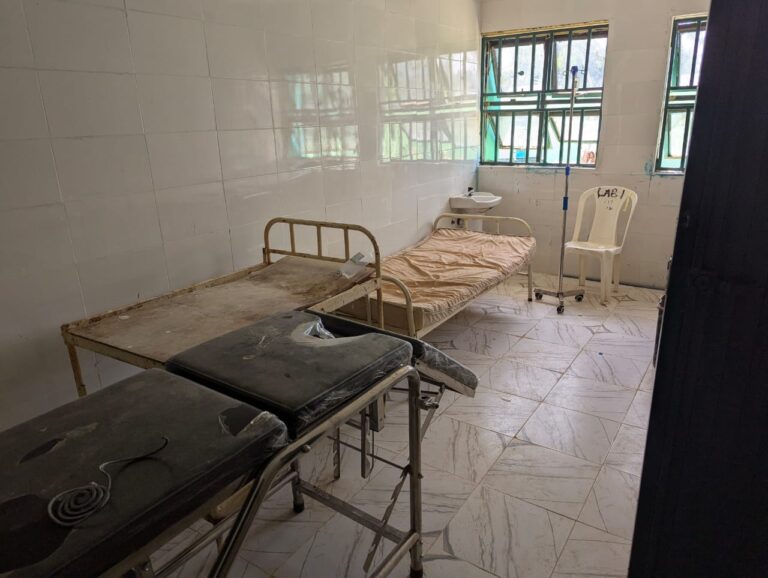
If Oyo represents tentative progress, Kano State illustrates the consequences of weak governance and accountability. At Tshohuwar Rogo PHC in Rogo LGA, wooden shelves hold little more than dusty boxes of paracetamol and syringes. For Khadija Auwal, a mother of three, visits to the PHC often end with mere prescriptions instead of medicines.
“It pains us whenever we have to buy drugs outside. They are expensive here, but what other option do we have?” she said.
Sparse hospital ward with outdated beds and broken equipment exposes dangerous lack of proper inpatient care facilities and medical resource
For pregnant women like Maryam Musa, the cost has been devastating. When malaria drugs were unavailable, her family sold a goat to buy medicine.
“Women die here because of small things like medicines and equipment. These things can be avoided if our PHC worked like it should,” she said.
This persists despite Kano State receiving about N2.67 billion from the BHCPF in 2024 alone. At Yandadi PHC in Kunchi LGA, records show that ₦425,790 was released for drug procurement in October 2025, yet only a few cartons of basic supplies were visible weeks later.
“There is no proper tracking. Once the funds hit the accounts, there’s no effective monitoring of what is bought or delivered,” said a health worker who spoke off record.
Ward Development Committee (WDC) leaders echo the concern. “Every month, we hear that money has been sent, but when you come to the PHC, you don’t see the impact,” said Abubakar Haruna, WDC chairman at Yandadi PHC.
Patients say shortages deepen poverty. “We shouldn’t have to buy what the government has already paid for,” said Yusuf Ibrahim, a maize farmer who now rations leftover malaria drugs at home.
Budget data reinforce the disconnect. Between 2021 and early 2024, Kano executed less than 20 per cent of its approved health budget on average. In 2025, only 0.7 per cent of N10.75 billion allocated to the state’s primary healthcare board had been spent by the first quarter.
Health policy expert Kabiru Sabo of Bayero University Kano said, “The problem is not funding; it is what happens after the money is released.”
Officials offer conflicting explanations. Gali Sule, director-general of the Kano State Drugs & Medical Consumables Supply Agency, blamed diversion by staff, saying, “Some workers get drugs cheaply but direct them outside for personal gain.”
The Kano State Primary Healthcare Management Board acknowledged delays, noting that BHCPF releases for the first two quarters of 2025 did not arrive until August.
A Freedom of Information Act(FOIA request seeking detailed expenditure records was ignored by the Ministry of Health, deepening transparency concerns. Read the full report for Kano here
Ogun State: funded, yet functionally broken
In Ogun State, a tour across Ogun West and Ogun East senatorial districts reveals a troubling paradox: PHCs funded under the BHCPF often look indistinguishable from unfunded ones.
Despite receiving N458 million in 2023, N580 million in 2024, and N377 million in early 2025, many of Ogun’s 227 BHCPF facilities remain understaffed, poorly equipped, inaccessible to persons with disabilities, and in some communities, abandoned.
At Ogbere PHC, a BHCPF beneficiary, Ogunnowo Abiodun, the only worker on duty, said, “The only issue we have here is the bad borehole. It got damaged recently, so we don’t have water. We always have to fetch water outside. That is the reason I have not had my bath by this time.”
Patients wait patiently at the Ajaodan Primary Healthcare Centre in Ogun
Across six funded PHCs visited, none met NPHCDA staffing standards; only three had functional ambulances.
The staffing crisis reflects a national shortfall. With 1.83 skilled health workers per 1,000 people, Nigeria falls well below WHO benchmarks. A doctor and a public health specialist, Joyce Foluke Olaniyi-George warned:
“You can imagine a PHC with maybe one senior person and a fresh graduate. Nothing is going to get done there because the person is about to retire and is tidying things up to get out. We will find out that there will be a lot of frustration on the part of the staff, which could be transferred to the patients, and poor treatment meted out to patients when they come in, as a result of the poor motivation.”
She added that “This creates a vicious cycle that would give rise to poorly trained health workers, nurses, or community health extension workers who would also be poorly motivated. Ultimately, the system suffers as a result. If they have the opportunity, they will likely consider exiting the system.”
The PHCs in Ogbere, Alaga, Atan, and Oja Odan have ramps for people with physical disabilities, but the target beneficoaries insist that disability inclusion remains largely symbolic.
“Ramps are like motorways; they do not stipulate full access,” said Femi Adeosun, the lead for Ogun State Joint National Association of Persons with Disabilities (JONAPWD) Deaf Cluster. “After the wheelchair-bound patient enters the building, what transpires thereafter will determine the accessibility.”
From conversations with healthcare workers during visits to six PHCs – Ogbere, Oja Odan, Alaga, Atan, Aiyepe, and Okun-owa PHCs – they all lack sign-language interpreters or braille for visually impaired people. The PHCs in Aiyepe and OkunOwa do not even have ramps.
Hearing-impaired patient Funmilayo Obasa said, “I have noticed that when I am calm and polite, my concerns seem to get overlooked, but when I get frustrated and speak up, things start to happen. It is concerning that I have to escalate my tone to get proper care”.
When the situation was raised with Ogun State Commissioner for Health, Oluwatomi Coker, she said, “You have to define a need. If I were you, the first thing I would find out is the number of people who visited that PHC with hearing impairment. So, you have to prove that there is a need for it.”
For border communities like Ipokia and Yewa North, abandoned PHCs mean dangerous journeys.
“The roads are terrible. It is the worst I have seen. It needs urgent repair. The poor road conditions make going outside the community very inconvenient. Whenever I get on a bike to go out of the community, I feel so much pain,” said Olorunwa Tapa, a pregnant resident. Read the report from Ogun HERE
Niger State: free care, fragile outcomes when policy meets distance, delay and power
Beyond individual stories, Niger State exposes the structural fragility of free healthcare when geography, delayed financing, and weak referral systems collide. Spanning vast rural terrain with scattered settlements, Niger has some of the longest travel times to health facilities in the country, a factor that repeatedly undermines emergency obstetric care.
While the BHCPF formally guarantees free antenatal care, delivery, and postnatal services, it does not cover the costs of emergency surgery, blood transfusions, or long-distance referrals. For rural families living on subsistence farming, these gaps quickly erase the promise of “free” care.
At Mokwa Central PHC, the Officer-in-Charge, Jubril Isah, described how cost barriers resurface the moment complications arise.
“Pregnant mothers who are not enrolled pay N1,000 for the first antenatal visit and N500 for subsequent visits. For delivery, non-enrollees pay ₦2,000 for medications and consumables such as gloves, sanitary pads, and detergents”. Even enrolled women, he noted, must find funds for transport, feeding, and surgery once referred.
While these fees may seem small, in communities where disposable income is measured in daily subsistence, N2,000 can be the difference between choosing a supervised facility birth and resorting to a traditional home delivery, with its attendant risks.
Referral journeys are often long, expensive, and dangerous. Several women interviewed across Mokwa and Kontagora LGAs reported travelling between 80 and 150 kilometres to access comprehensive emergency obstetric care. For families without cash on hand, referrals are delayed sometimes fatally.
The reliance on the National Identity Number (NIN) as a prerequisite for enrollment to access the free healthcare further deepens exclusion. Women without IDs, often those in the poorest or most restrictive households are systematically locked out of BHCPF benefits. Although state officials insist facilities can enroll such patients on the spot, multiple women reported being turned away or asked to pay or not getting the permissions of their husbands to go to the enrollment centres.
Delayed disbursements worsen the situation. PHCs interviewed across Niger State said BHCPF funds arrive unpredictably, making it impossible to plan drug procurement or sustain free services.
“We are supposed to get ₦300,000 four times in a year. But it’s usually just once or twice in the first quarter or last quarter of a year. This year, we received just twice” said Bernice Egboch, the ward focal person at Tundun Wada MCH Clinic.
The WDC chairman, Mohammed A. Aliyu, confirmed, this.
“Funding for the BHCPF is usually delayed. It can take two to three months. So, providing free medications for the women who visit these PHCs can be difficult.”
When funds dry up, PHCs quietly charge patients, a practice that erodes trust and reinforces perceptions that free healthcare is unreliable.
The staffing crisis compounds these failures. Many PHCs operate without doctors, pharmacists, or laboratory scientists. A nurse at Kawo PHC in Kontongora LGA, said, “A permanent doctor? We haven’t had one here asince I joined the fcacility five years ago.”
In emergencies, midwives and community health workers must decide whether to stabilise patients with limited supplies or refer them immediately, a choice that often determines survival.
Civil society organisations working in Niger State warn that uneven deployment of midwives under the MSS has created pockets of progress surrounded by vast areas of neglect. Rigolo’s transformation shows what sustained human presence can achieve, but Kwangwara demonstrates how absence can be fatal.
In Rigolo, a quiet village in Niger State’s Magama LGA, a young mother once died from postpartum haemorrhage (PPH), her body laid under a mango tree because the community’s primary healthcare centre (PHC) had no electricity, no drugs, and no capacity to save her. PPH, Nigeria’s leading cause of maternal death, went untreated. Her death mirrored a reality long familiar to rural communities: empty PHCs, reliance on traditional birth attendants, and preventable loss of life.
Yet, just a few kilometres and a few policy decisions away, another reality exists, one shaped by the Midwives Service Scheme (MSS) and BHCPF. Read the full report here
When the system works: Rigolo and the MSS effect
Rigolo’s turning point came in 2017, when the MSS finally reached the village. Among the deployed midwives was Janet Adonai Muazu, a retired nurse-midwife with decades of experience. She arrived to find a PHC without water, electricity, or trust.
“We had women arriving in labour with their lives at risk. One health worker tampered with a placenta instead of referring a patient. The woman nearly died,” Janet recalls of her earlier rural postings.
A group of female patients waiting for medical attention at a PHC
In Rigolo, she rebuilt care from the ground up, securing water deliveries, linking the PHC with Physicians for Social Justice (PSJ) for free prenatal vitamins, and training the only community health worker, Aisha Mansur, to recognise and manage PPH. Attendance surged as women abandoned unsafe deliveries, telling each other, “Mama is there.”
Janet also established a referral pathway to Yauri General Hospital in Kebbi State for caesarean sections and severe complications. “Even if a woman needed a caesarean, families knew they could always go to Yauri,” she said.
The impact was measurable.
“Mama clamped the bleeding, gave IV fluids, and saved her. Now I proudly tell anyone: ‘The MSS is a good government plan,’” said Hassan Ibrahim, whose wife survived PPH.
When the system is absent: Kwangwara and unequal deployment
Rigolo’s gains throw into sharp relief the situation in Kwangwara, a community in Kontagora LGA that has never received an MSS midwife. Its PHC offers no antenatal care, no emergency services, and no essential supplies. Deliveries are handled by community health workers and TBAs, often without sterile equipment.
“I lost my sister during childbirth. No one could stop the bleeding,” said Shamsiya, a resident.
The Ward Focal Person Shehu Tijjani warned that “the government needs partners to sponsor midwives to PHCs,” underscoring how uneven deployment determines who lives and who dies.
In Niger State, the difference between survival and loss often hinges on kilometres, cash, and whether a midwife is present when labour begins. Read the full report here.
Anambra State: Telemedicne frustrated by infrastructure as innovation outpaces access
Anambra State’s telemedicine programme was conceived as a bold answer to rural staffing shortages, offering PHC workers instant access to doctors through digital platforms. On paper, the model is elegant. On the ground, it exposes how technological fixes falter without foundational infrastructure.
Telemedicine gadget being used in Anambra
Across multiple PHCs, unstable electricity and mobile networks repeatedly interrupt consultations. Health workers described pausing emergency care to search for stronger signals, move devices outdoors, or switch SIM cards, a process that consumes precious minutes in critical situations.
At Umudora PHC, OIC Stella Ogolor said the telemedicine device is rarely reliable during emergencies. “In critical cases, we use our phones to call the doctor.” Similar improvisation occurs across Awka North, Ogbaru, and Anambra West LGAs, where OICs routinely hotspot personal data to compensate for poor connectivity.
Despite these limitations, N20,000 is deducted monthly from BHCPF allocations for telemedicine data, funds that PHCs say could otherwise support drugs, consumables, or basic facility maintenance.
“That N20,000 they are collecting is reducing the value of basic money. The quarterly disbursement is not even enough,” said Ogoamaka Atuenyi, a Ward Development Committee chairperson.
Beyond infrastructure, time has emerged as a silent barrier. Telemedicine doctors serve multiple facilities, and delayed responses can turn manageable conditions into emergencies. “They are human, they have other responsibilities,” said Lauretta Nwoye, an OIC. “But it makes things difficult in emergencies.”
For patients, these delays erode trust. Some interpret phone consultations as incompetence rather than collaboration. “If they know you, they wonder why you have to call someone before treating them,” said Eunice Obi, OIC of Amansea PHC.
Disability inclusion further exposes systemic blind spots. While the BHCPF formally recognises persons with disabilities as a priority group, most PHCs lack sign-language interpreters, braille materials, or trained staff. The result is silent exclusion.
“They never understood what I was trying to say,” said Elizabeth Ibeabuchi, who lost a long-awaited pregnancy after repeated miscommunication.
For others, the cost of “free” care is indirect but prohibitive. Vincent Onwubuya, who is visually impaired, explained that transport for guides, poor labelling of drugs, and unsafe infrastructure make routine care risky.
Governance gaps persist. Persons with disabilities are largely absent from Ward Development Committees, despite being affected by every decision about facility design, service delivery, and spending. Advocates insist participation is essential. “Nothing about us without us,” they argue.
State officials maintain that progress is being made. Commissioner for Health Afam Obidike said, “There is nowhere in Anambra where you cannot browse though you may have to switch between networks.” Yet for frontline workers swapping SIM cards and patients navigating exclusion, connectivity remains inconsistent and care uncertain.
Despite its limitations, frontline workers and doctors say Anambra’s telemedicine initiative has expanded clinical decision-making at the primary healthcare level, particularly in facilities without resident doctors. Health workers report that access to real-time medical guidance has helped them manage cases that would previously have been referred late or mishandled.
Oluebube Agba, a telemedicine doctor supporting PHCs in Anaocha LGA, said, “I have helped PHC workers to manage many complex cases without casualty. I remotely guided the OICs or their staff.” For overstretched facilities serving remote communities, such guidance has reduced uncertainty for nurses and community health workers, enabling earlier interventions and more informed referrals.
In Anambra, technology has expanded possibilities, but without electricity, inclusion, reliable networks, and accountability, innovation alone cannot deliver universal access. Read the full report here