INCOMPLETE and poorly sequenced reforms introduced by President Bola Tinubu’s administration deepened hardship for Nigerians, said the Lead Director of the Centre for Social Justice (CSJ), Eze Onyekpere.
Speaking in an exclusive interview with The ICIR, Onyekpere said while the removal of petrol subsidy and the floating of the naira were long-debated and, in some cases, necessary, the government failed to follow through with measures that would cushion the effects on citizens and translate the reforms into improved welfare.
“If you look at the critical reforms, I mean the removal of the fuel subsidy, the floating of the naira, and what else has he done, two key of them, you discover that the reforms were not well nuanced, well planned, well sequenced, and well understood by the author of the reforms.
“First of all, I would like to see reforms from the construction of a categorical syllogism. You know, in a categorical syllogism, in logic, you have the first premise, you have the second premise, which is the middle premise, and then you have the conclusion,” he said.
According to him, the Tinubu administration removed petrol subsidy but failed to transparently re-channel the trillions of naira saved into healthcare, education, electricity, water supply or social protection, leaving Nigerians to bear the full brunt of rising costs.
“When you say a reform, the first step you take to remove that subsidy, to say subsidy is gone, is not the end of the reform. So there needs to be the second stage of saying this is what has been saved, and then finally this is where we put the money, and of course that where you put the money leads to improvements in the quality of life, in the security and welfare of the people.
“So what has happened is that the first steps have been taken, but the second and third steps, nobody is talking about them,” he added.
Onyekpere noted that successive governments had justified fuel subsidy removal on the basis that trillions of naira spent annually could be redirected to healthcare, education, electricity and other public services.
However, he said Tinubu’s administration removed the subsidy without clearly identifying or targeting how the savings would be used.
“Nobody is talking about where the money was invested. Nobody is talking about the improvement in the welfare of the people, in the improvement in the services rendered by government, and improvement in the security of the nation,” he said.
He compared the current approach with previous administrations, saying despite public criticism, earlier governments attempted to link subsidy adjustments to visible interventions.
He explained that when Abacha adjusted the subsidy, there was the Petroleum Trust Fund. Under Jonathan, there was SURE-P, adding that one could see roads, drugs, buses and social programmes.
Lack of cushioning measures deepened hardship
Onyekpere said the failure to invest subsidy savings in alternative energy sources such as compressed natural gas (CNG), solar power and renewables worsened the impact of rising fuel prices on households and small businesses.
“If government had invested heavily in alternative energy, reduced tariffs on solar equipment or supported local technology development, people would have had options,” he said, adding that “Instead, Nigerians were left to absorb the full shock.”
He argued that such investments could have reduced energy costs while also supporting climate change mitigation and job creation.
The CSJ director also criticised the floating of the naira, saying the policy was introduced without complementary measures to boost local production and exports.
He noted that currency devaluation was meant to make Nigerian goods more competitive internationally and generate foreign exchange, but this required deliberate policies to support producers.
He opined that many Nigerian exports continued to be rejected abroad due to quality and regulatory issues, limiting the expected gains from the exchange rate reform.
Onyekpere emphasised that the administration’s economic approach was poorly sequenced, warning that introducing multiple painful reforms simultaneously without stabilisation measures worsened inflation and reduced purchasing power.
He said the combined effect of subsidy removal and naira devaluation led to sharp increases in the prices of food and basic goods, while wages remained largely unchanged.
Onyekpere posited that recent adjustments to the minimum wage failed to reflect the scale of currency depreciation and inflation.
While insisting that reforms were unavoidable, he said Nigeria’s challenge laid in execution, sequencing and accountability, not in the idea of reform.
THE Economic and Financial Crimes Commission (EFCC) is planning to spend N1.2 billion on generator fuel alone in its 2026 budget.
The proposed Federal Government’s budget documents revealed that the anti-graft agency set aside ₦1,200,749,186 specifically to power generators across its operations nationwide, in addition to ₦1,151,240,641 earmarked for electricity charges.
The figures showed the scale of public funds being committed to energy consumption at a time when ordinary Nigerians are being forced to ration power and fuel.
Recall that The ICIRreported that the State House housing President Bola Tinubu planned to spend over N16 billion on energy-related projects and maintenance, including N7 billion for a solar mini-grid and nearly N2 billion for diesel fuel in its 2026 proposed budget.
At the current NNPC petrol price of ₦839 per litre, the EFCC’s budget for generator fuel will purchase 1.43 million litres of petrol in one year.
Spread across the EFCC’s 14 zonal offices and its headquarters in Abuja, the budget implies that each location would consume roughly 95,000 litres annually just to power generators.
That translates to nearly 8,000 litres per month per office, or about 265 litres daily, a level that’s mathematically outrageous for the offices.
The scale of consumption is in contrast with the experience of many Nigerians who can no longer afford to run their small generators for more than a few hours.
While this budget allocation raises questions about accountability, the EFCC allocated another ₦1.15 billion for grid electricity. The combined electricity and generator fuel costs mean the commission plans to spend more than ₦2.35 billion in 2026 simply to keep its offices powered.
Another N1bn budgeted to fuel vehicle
In addition to this, the commission budgeted over a billion (N1,018,747,695) to fuel its motor vehicles.
This again was also on the heels of other controversial budget allocations, including over N1.5 billion for “welfare package,” and N722,000,069 for “refreshments and meals.”
The EFCC, tasked with investigating corruption and ensuring accountability in public finances, has its operations funded under the Presidency.
AN analysis of select staple food prices between January 2016 and October 2025 by The ICIR shows that the cost of basic food items, namely rice, beans, garri, bread, eggs, and yams grew by over 413 per cent.
These increases span two administrations – the late former President Muhammadu Buhari and the incumbent Bola Tinubu.
At the start of the Buhari administration in January 2016, a kilogramme of imported rice sold for about ₦239 and by the end of his government in May 2023, the price climbed to ₦793, a 231 per cent rise.
Since Tinubu took office in May 2023, the same item surged to over ₦2,255 by October 2025, representing an additional 184 per cent rise in just over two years. Overall, the price of imported rice is now 844 per cent higher than it was nine years ago.
Other staples followed similar trajectories as the price of brown beans rose from ₦237 per kilogramme in January 2016 to ₦1,761 by October 2025, a 644 per cent surge. Garri, often considered as most affordable food for low-income households, rose from ₦132 per kilogramme in January 2016 to ₦847 by October 2025, recording a 542 per cent increase over the same period.
Equally, bread prices jumped from ₦209 per loaf in January 2016 to ₦1,584 by October 2025, an increase of 658 per cent, while the cost of a tin of evaporated peak milk snowballed from ₦138 in January 2016 to ₦1,058 by October 2025, a 667 per cent leap.
Protein sources recorded some of the sharpest jumps. Boneless beef rose from ₦977 per kilogramme to ₦6,851, a 601 per cent increase, while the price of a crate of eggs rose from ₦892 in January 2016 to ₦5,993 by October 2025, a surge of 571 per cent. Yam recorded the steepest rise, with prices increasing by 1,268 per cent, from ₦148 per tuber in 2016 to ₦2,024 in 2025.
Although food prices were already rising before 2023, the data show that post-2023 increases account for a significant share of the total surge, coinciding with major policy shifts that altered energy and foreign exchange pricing. The data suggests that while food inflation was already worsening under Buhari, the pace of increase has intensified since 2023.
While this analysis focuses on the change between January 2016 and October 2025, The ICIR’s review of NBS data shows that a significant share of the price surge occurred after May 2023, following major policy shifts.
When minimum Economists weigh in
Economists said a combination of factors driving the latest wave of price increases is fueled beyond percentages, because the erosion of purchasing power becomes clearer when viewed through what the minimum wage can actually buy.
“The devaluation of the naira and the exchange rate spike have all reduced the purchasing power of Nigerians, and a minimum wage of N70,000 can only buy rice now. But the last minimum wage under Jonathan of N18,000 could buy a bag of rice and more,” a development economist, Kingsley Obiakor, said.
In January 2016, Nigeria’s minimum wage stood at ₦18,000, meaning that given prevailing market prices, a worker earning that amount could afford a modest but realistic food basket consisting of 10 kilogramme of rice, 5 kilogramme of beans, garri and tomatoes, two frozen chickens, a crate of eggs, beef, bread, yam, and evaporated milk, and still have money left.
The ICIR analysis of National Bureau of Statistics (NBS) select food price data shows that this basket cost approximately ₦13,000 at the time, leaving a balance of roughly ₦5,000 after food purchases.
By October 2025, the cost of the same basket had risen to almost ₦97,000, far exceeding the current ₦70,000 minimum wage. Even after the wage was nearly quadrupled, it now falls about ₦27,000 short of covering basic food needs.
While the minimum wage increased by 289 per cent over nine years, the cost of this food basket rose by more than 645 per cent, leaving minimum-wage earners significantly worse off in real terms.
This growing gap between earnings and living costs has increasingly spilt into public discourse. On March 16, 2025, a National Youth Service Corps (NYSC) member, Raye, went viral after publicly lamenting that the ₦33,000 monthly allowance paid to corps members was no longer enough to meet basic needs.
The reactions to Raye’s complaint reflected a broader reality facing minimum-wage earners across the country. Like many low-income workers, corps members, who are often posted far from their home states, must cover food, transportation, and housing costs on allowances that have failed to keep pace with rapidly rising food prices, underscoring how official wage benchmarks are increasingly disconnected from the cost of living.
Why falling Inflation failed to relieve Nigerians
This widening gap between official inflation figures and lived experience has become a source of public frustration. Official data show that food inflation rose from 10.64 per cent in 2016 to 24.82 per cent by May 2023, before easing to about 16 per cent by October 2025 following the rebasing of inflation figures, with the current inflation figure sitting at 10.8 per cent as of December 2025.
Headline inflation followed a similar pattern from 9.62 per cent in 2016 to 22.41 per cent by May 2023, before easing to about 19 per cent by October 2025 and currently sitting at 15.15 per cent as of December 2025.
However, inflation measures the rate at which prices are increasing, not how high prices already are. Once food prices rise by 500 to 1,000 per cent, a lower inflation rate does not restore affordability and only slows further increases. This distinction helps explain why Nigerians continue to feel squeezed despite reports of easing inflation.
Another key driver of rising food prices has been the naira’s sharp depreciation. In January 2016, the exchange rate stood at about ₦197 to the dollar. By May 2023, it had weakened to ₦462, before plunging to over ₦1,455 per dollar by October 2025, a cumulative depreciation of more than 638 per cent.
For an economy heavily dependent on imports, this collapse increased the cost of food inputs, fertilisers, machinery, packaging, and transportation.
Fuel prices compounded the pressure. Petrol rose from ₦109 per litre in 2016 to ₦238 in 2023, before surging to over ₦1,050 per litre following the removal of the subsidy, which is an 860 per cent increase. Cooking gas prices also rose sharply from ₦368 per kilogramme in 2016 to ₦872 in 2023, before jumping to over ₦1,616 per kilogramme, increasing by 339 per cent over the same period.
Markets versus macro numbers
That disconnect between official figures and daily experience spilt into public debate on January 17, of Jan 2026, after a viral post on X captured widespread frustration. In the post, a Nigerian shared a receipt from 2020 and decided to buy the same items again in 2026. The items, which cost ₦25,225 in 2020, amounted to ₦147,050 in 2026, a 582 per cent increase.
Although the post was not based on official inflation calculations, its conclusion aligned closely with NBS data. Food prices have not just risen gradually; they have multiplied, reshaping household budgets and deepening economic hardship.
For many Nigerians, inflation is no longer a monthly statistic; it is the shock of discovering that familiar food items now cost five to six times more than they did only a few years ago.
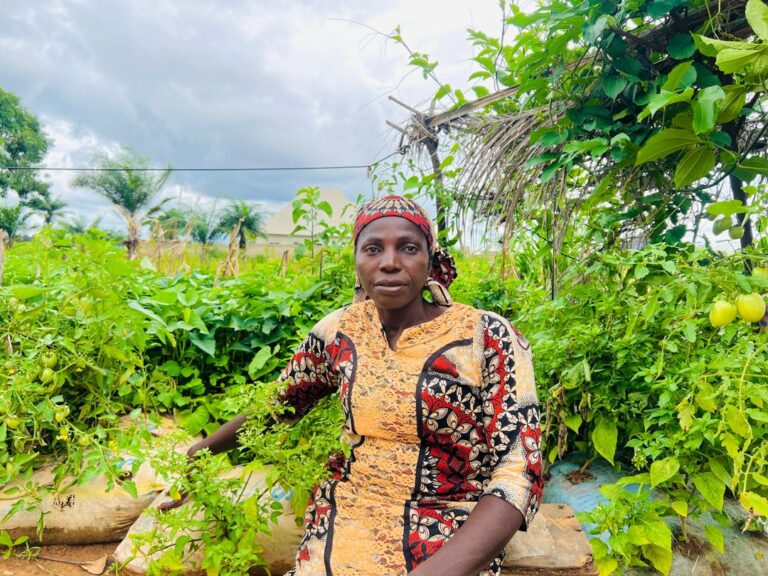
AGNES Aynadanyi has farmed maize in Gurara Local Government Area (LGA) of Niger State for years, navigating the familiar anxieties of a smallholder farmer. Last season, she spent nearly everything she had on inputs. Fertiliser alone cost ₦97,000 per bag. Pesticides and herbicides took another ₦65,000. When harvest came, she expected some relief. But she would get none. Selling her produce came with new challenges as prices of food was crashing in the market. A year earlier, a measure of maize sold for between ₦1,000 and ₦2,000. In 2025, the price crashed.
“One mudu sold for N300, and I had to sell mine like that because I needed money,” she said.
Agnes Aynadanyi in her farm
A chain of events conspired against her, and at the end of that chain sits gender inequality. Other women farmers interviewed in Niger, Oyo, Nasarawa, Jigawa and Anambra under ICIR’s “Strengthening Public Accountability for Results and Knowledge (Phase 2) Project”, – Agriculture Entry Point, found themselves similarly trapped, not because of what they did, but because of who they are.
For some, the burden was even heavier. Asaba Aversion in Nasarawa and Ajuirah Chidinma in Anambra faced compounded challenges, with disability intersecting with gender to deepen the inequities they endured as farmers.
Even women without disabilities confront persistent challenges, from limited financial literacy and restricted access to land, inputs and infrastructure, to weak price regulation and poor implementation of government agricultural policies.
The losses go beyond figures in a ledger. For Agnes and many others, they include eroding motivation and declining trust in government interventions. Experts warn that these failures threaten Nigeria’s food security.
In theory, Nigeria has so much on display when it comes to gender parity in agriculture. There is the National Gender Policy in Agriculture which the federal government initiated in 2019. Women farmer organisations like the Smallholder Women Farmers Organisation of Nigeria (SWOFON) latched onto this to strengthen their advocacy and organise women farmers nationwide.
Nigeria also boasts of a legal framework intended to guarantee inclusion. The Discrimination Against Persons with Disabilities (Prohibition) Act, 2018 prohibits discrimination against persons with disabilities and mandates accessibility, equality, and participation across public life.
The law also established the National Commission for Persons with Disabilities (NCPWD), charged with ensuring diversity, equality, and inclusion in all government policies. About 22 states have adopted the law in different shapes and forms. So, organisations of persons with disabilities (OPDs) abound in more than 700 LGAs in Nigeria. Yet, for many persons with disabilities, that law has not translated into equal access in practice.
Neither SOFOWON nor the OPDs have been able to save Agnes, Chidinma, and others from the uncertainties that go with farming, which gender bias complicates in Nigeria.
Oyo paternalistic land tenure and Niger’s battle with illegal miners, herders
Every planting season, Oluremi Oyetunji, a smallholder farmer in Apaadi, Oluyole Local Government Area, prays for two things: the rains and leniency from her landlord. She has to lease land yearly to farm.
“I leased the land I am using for about ₦20,000 to ₦30,000; when I tried to buy land, it was about ₦90,000 back then in 2006. Now, it is around ₦1.2 million near Ayegun, and I just cannot afford that,” she said.
Oyetunji’s dependence on short-term land leases left her unable to plan for the future or expand production. The same thing happened to Motunrayo Olusola, a mother of five, who began farming maize five years ago. She leased land from a landowner whose sons forced her to leave prematurely, making her sell her produce cheaply at a loss rather than waiting for it to dry and fetch a higher price.
“If you want to lease land for two to three years, most landowners will not agree; they only want yearly leasing,” she said.
The problem is nationwide. Data from the World Bank shows that only eight per cent of Nigerian women own land in their own names—one of the lowest ownership rates in Sub-Saharan Africa.
Most women access farmland through husbands, family networks or short-term lease agreements. A 2022 study in the African Journal of Land Policy estimated that Nigerian women operate on an average of just 0.43 hectares, usually leased for a single season. A related study also confirmed that women’s access to land in Nigeria often depends on their relationships with husbands or male relatives.
To circumvent these barriers, many women now register farms under company names or bring male relatives for authentication.
Even when women are willing to buy, soaring land prices put land ownership out of reach. An acre in Akinyele LGA now sells for between N2 million and N2.5 million. Many women farmers cannot afford this.
A Dataphyte analysis reveals peri-urban land values around Ibadan have increased fivefold in the last decade due to housing estates, road expansion, and government acquisitions.
The state’s farm settlements are also overcrowded. The Oyo State Ministry of Agriculture confirmed that seven of them were occupied nearly five decades ago, with men still making up 60–70 per cent of beneficiaries.
But Agriculture Commissioner Olasunkanmi, Olaleye insisted land is available for all. “It has never been one of the major challenges of smallholder women farmers,” she said, emphasising government support through tractor subsidies, input distribution and access to improved seeds.
But Atinuke Akinbade, SWOFON Oyo state coordinator, said only a few had accesses to farmland. “When our women apply, they are told settlements are full or unavailable.”
Experts say women’s weak land rights threaten food security and agricultural resilience. Jaye Yekini, Project Manager at White-green Development Services, said land insecurity affects smallholder farmers, especially in the Southwest.
Like Oyo, like Niger
Land insecurity in Oyo is mirrored and magnified in Niger State, where the struggle for farmland is no longer just about patriarchal tenure systems or rising prices. It has become a battle for survival against invasive gold miners and cattle herders who destroy crops, drive women off their ancestral lands, and turn fertile fields into pits and wastelands.
Comfort Joseph, a farmer in Gurara LGA, abandoned her farm after gold miners destroyed it, forcing her to relocate kilometers away for viable land.
Women farmers, like Comfprt Joseph, from Gurarara LGA are chased away from their farms by herders and miners
“They made me to vacate the land on which I had farmed for years. I had to get another farm in another village, which is some kilometres away. The way they have affected the land, in 10 to 15 years, no one can farm there, and the crops will yield results.”
For others like Alice Amako in Agaie LGA, the threat comes from herders who graze cattle through their fields. She recounted her losses with frustration.
“I planted cassava and I spent a lot of money on it. The cows entered and ate up everything. On the money I spent before it was wasted, I would say it was up to ₦200,000. When I went to complain, the police said they would look into it, but they have done nothing about it till today.”
Access to Inputs, Infrastructure denied
Also in Niger State, women farmers like Agnes Aynadanyi have long found ways to work around land tenure bias. In Paikoro LGA, Jummai Makama and Aishatu Bawa relied on informal arrangements. In Gurara LGA, Priscilla Sado did the same. In Agaie LGA, Halima Mohammed cultivated borrowed land. None of it was secure, but for years, it worked.
With access to subsidised fertiliser and other inputs, they often ended the season with modest profits. The economics was simple. Lower production costs combined with stable market prices meant farming was worth the effort.
Priscilla Sado a woman famer-in Agaie
In 2024, Mohammed sold a bag of beans for between ₦130,000 and ₦180,000. A measure sold for as much as ₦3,000. Maize also traded at favourable prices, selling for about ₦1,000 per measure.
That balance collapsed in 2025.
Women farmers across Niger State lost access to the subsidised inputs they had relied on. At the same time, government import policies flooded markets with cheaper alternatives, pushing prices sharply downward.
Maize prices crashed from about ₦1,000 per measure to between ₦250 and ₦400. Beans fell from as high as ₦150,000 per bag to about ₦70,000. A measure that once sold for ₦2,800 to ₦3,000 dropped to between ₦1,500 and ₦1,700.
Farmers who waited for better prices were stuck with unsold produce, while those who sold early barely broke even. Either way, their profit virtually disappeared.
“This year, the highest we can sell our beans is N80,000, which is not encouraging,” Mohammed said. adding: “Not after buying fertiliser and chemicals very costly and not getting anything for your effort in the farm.”
Market leaders also play a role in price regulation across Niger State. They determine transportation and grain prices, and then decide how much a farmer should make, according to Ndatu Ibrahim, a market leader in Paikoro.
Market women leader
Another market women leader, Zainab Mohammed, said that they try to ensure uniform pricing. Anyone who violates the agreement risks having her produce banned from the market.
In 2024, Niger State Governor Umaru Mohammed Bago inaugurated the Niger State Price Control and Monitoring Board. The eight-member committee has yet to make any visible impact. With no effective oversight, market leaders have taken control, often to the disadvantage of farmers.
“What the government should have done is to encourage the farmer by not opening the door for import,” Alhaji Usman Liman, a statistician and farmer in the state noted.
Halima Mohammed said she has resigned herself to fate.
In Anambra, smallholder women count losses too
The crisis is not confined to Oyo and Niger States. In Anambra, Southeast Nigeria, consumers briefly benefited from cheaper food while smallholder farmers were left counting their losses as they were forced to sell at giveaway prices.
“We sold our maize for ₦300 per mudu even though inputs cost us more than double last year,” Fabian Nweke, a farmer who resides in Igbariam community, Anambra East LGA said.
The National Bureau of Statistics (NBS) data confirms what farmers have been experiencing. Food prices remained elevated in early 2025, but the rally reversed by September, when Nigeria recorded its first month‑on‑month drop in food prices in over a decade.
According to the NBS Consumer Price Index (CPI), year‑on‑year food inflation began 2025 at 26.08% in January, compared to the same month in 2024. By September 2025, food inflation had moderated to 16.87%, a sharp decline from 37.77% in September 2024. Even more striking, the month‑on‑month food inflation rate printed at –1.57%, signalling an actual fall in food prices during that month.
Meanwhile, farm inputs keep costing more. Farmers say that fertilizer which once sold for between N18,000 and N30,000 is now ₦60,000, when available.
The Niger State government had promised the Smallholder Women Farmers Organisation of Nigeria (SWOFON) 300 bags of fertiliser. The group received only 60.
Niger women farmers finger politicians
Some women farmers also accused politicians of hijacking tractor distribution and subsidised fertiliser meant for them.
Pricilla Sado, who farms groundnut, melon, rice, beans and cassava in Agaie, lamented the high cost of renting farm machinery every year.
“This year, I hired a tractor for ₦70,000 because my cousin knew the owner,” she said. “Last year, someone else charged me ₦110,000 just to clear and till the land.”
“We do not have access to government owned tractors. We hear that they bring it, but it is the politicians that hijack it. It is the same thing with fertilizer.”
Some women alleged that tractors were being hoarded by the Niger State Agricultural and Mechanisation Development Agency (NAMDA), which maintains that it has none, despite tractors being sighted at its offices in Minna.
Poor access to farming infrastructure extends beyond machinery. Across the country, storage and processing facilities are largely absent.
In Niger State, many women rely on traditional storage methods such as ash, insecticides or rat poison, locally called bomb, which they tie in rags to repel pests. Beans and maize are among the crops preserved this way. Farmers say they do it to avoid losses and secure better prices.
“When I want to sell, I take the produce and spread it on the floor for a day or two so that the sun can heat it and remove any smell or residue from the chemical we use,” one of the farmers said.
A nutritionist, Hajiya Asmau Mohammed, said the practice is common in many parts of the world, especially in areas with high humidity or long storage periods. She suggested that combining safer chemical and non-chemical methods could reduce risks.
But a health consultant, Mathew Oladele, disagreed. “Rat bomb has a tendency to cause multiple organs failures in human beings, just as it does to the rats,” he warned.
Facilities matter in Anambra
In Anambra, the women farmers’ concern for infrastructure is different. How to store their produce before they get them to the market for sale is a major challenge.
Nkechi Obah, a smallholder farmer in Atani, Ogbaru LGA, could not wait for her cassava to fully mature during the 2024 farming season. The floods were approaching, and the only way out was early harvest. Unfortunately, she had nowhere to even store her produce after harvest.
Other farmers who had more time relied on traditional preservation methods, including pits for short-term storage of fresh cassava roots, or jute sacks, woven polypropylene bags, and perforated sacks. But these methods are far from reliable. Loose bags invite insects and rodents, which chew through and infest the tubers before they can be processed.
How Maize is dried before storing them
But Obah had no time to contemplate all these storage options.
“I was willing to process everything at once,” she recalled.
“Before long, many of my cassava tubers got spoilt. I also sold them at giveaway price at the market.”
Every harvest season, thousands of cassava farmers like her watch their hard work go to waste.
The irony, however, is stark. Anambra remains one of the key cassava-producing states in Nigeria. And women dominate the entire value chain, with yearly production increasing from about 276,000 metric tons in 2014 to over 2.1 million metric tons by 2021, according to the state government. But nearly a third of the cassava produced, about 32%, goes to waste after harvest, a 2024 study published in the Global Journal of Agricultural Research (GJAR) confirmed. The culprits are well known: inadequate storage facilities, poor road networks, and unreliable electricity and transportation systems.
Governor Chukwuma Soludo has repeatedly pledged to leverage agricultural programs, including cassava production, to boost food security and stimulate economic growth. At the launch of the “Farm to Feed Campaign” in August 2024, he claimed his administration had improved rural infrastructure to minimize post-harvest losses.
But interviews with farmers tell a different story. Despite government assurances, arable farmers across Anambra say they continue to suffer huge losses, with little evidence of the promised improvements reaching their communities.
“We are often forced to remove our crops whether or not they are mature for harvest. But we don’t have anywhere to store them so we can make some profit after investment. At this time, you have plenty cassava in the market everybody wants to sell to avoid losing completely,” said Calista Ewuzie, a cassava farmer in Ubahu Ihembosi, Ekwusigo LGA.
She added that there is no single processing facility in her community, forcing farmers to travel to Ozubulu or Ukpor, about 20 to 30 minutes away, at a cost of over N4,000 on motorcycle
A national concern
Nigeria is the world’s largest cassava producer, contributing about 18% of global output (roughly 61 million metric tons annually). However, the country loses an estimated $9–$10 billion each year to post‑harvest losses, with cassava alone accounting for around 35% of losses in roots and tubers.
Between 2019 and 2023, Nigeria’s cassava production climbed from 56.96 to 62.69 million tons, a 10 percent increase that keeps the country ahead of Brazil, Thailand, and Indonesia. Yet, the country only captures 2% of the massive $183 billion global cassava processing market.
At this year’s World Cassava Day World Cassava Day, Vice-President Kashim Shettima repeated the regular promise—that the federal government remains committed to turning cassava into a driver of industrialization.
The Anambra government made a similar promise at Igbariarim, Anambra East LGA, last April.
But for farmers like Rosemary Uchechukwu at Oye Igbariarim, these assurances ring hollow.
Ngozi Okagbue and her daughter often fry garri in Aguleri
“Beyond moving bulldozers up and down, we have not seen much commitment,” she said.
She explained how farmers who escaped premature harvest cope with moving their cassava for processing along an arterial road that has been under construction in the community. Farmers pay N5,000 for a tricycle cart to convey cassava to the community market, a journey that should take about 15 minutes on a good road and 25–30 minutes on a bad one.
“A government that shows such apathy to transportation cannot show any excitement at providing processing facilities,” Rosemary added.
It becomes more disappointing when the intervention of non-governmental organisations also fails to ease the women’s pain. That is the experience of SWOFON members.
In 2023, the Women’s Rights Advancement and Protection Alternative, with support from the Malala Fund, supplied manual cassava processing machines to women farmers in Anambra West, Anambra East, Ogbaru and Awka North, working through SWOFON.
To use the machines, members of the cooperative rented a space at ₦122,000 a year and hired an operator, paying ₦35,000 monthly, according to Onwuegbuka Rose, SWOFON coordinator in Anambra East.
Even then, the support fell short. Findings show that the machines installed at the centre are insufficient for the volume of cassava brought in by farmers for processing.
Okonyia Elizabeth, a farmer who oversees the processing centre, said the women were never consulted on what equipment was needed, where the facility should be located, or how it should operate.
A similar pattern emerged in March 2024, when the International Fund for Agricultural Development (IFAD) funded Value Chain Development Programme (VCDP) put up a structure that was supposed to serve as a Cassava Processing Center in Umunankwo, Aguata LGA. The programme, designed to support rice and cassava farmers through improved value chains, received land donated by the community in anticipation of the facility easing the burden of processing.
“We were all happy because it was in our community and was going to help us address the stress of carrying cassava to far distances”, a woman farmer said. “They told us that they will bring the machines as soon as possible”.
More than a year after the structure was completed, not a single machine has been installed.
With efficient technology largely absent, many farmers still rely on frying pans, knives for peeling, sieves and manual presses. The methods slow production and take a toll on their health.
The Global Alliance for Clean Cookstoves has warned that reliance on fuel wood is among the world’s most serious health and environmental challenges. About half of the global population is affected, contributing to an estimated four million premature deaths each year. Between 2.1 and 2.3 billion people depend on polluting fuels such as wood, charcoal and coal, often burned in open fires or inefficient stoves.
In Nigeria, studies among rural cassava processors show that the use of biomass fuels exposes users to high levels of fine particulate matter, black carbon and sulphur dioxide. Such exposure has been linked to upper and lower respiratory infections, chronic obstructive pulmonary disease, asthma, cancer, low birth weight, cataracts and blindness.
Ngozi Okagbue, a garri producer, has experienced some of these effects. She earned ₦9,600 frying 12 cement bags of garri, work that has taken a toll on her respiratory health.
“I always buy drugs, malt and milk for body pain when we return home because our bodies hurt after work,” she said.
She returns to the same work despite her condition. “It is where I make my living,” she added.
Strikes against women with disabilities
Ajuirah Chidinma, another SWOFON member in Awka North, Anambra State, does not suffer from a major health condition. She has a disability which has become a barrier to her participation and that of others like her in the Soludo Farm to Feed campaign.
But in November 2022, local government officials asked her to come for her share of cassava stems, rice, and corn seedlings.
As the leader of the organization of persons with disabilities (OPD) in her community, she was hopeful until distribution started.
Ajuirah Chidinma
“The inputs were handed over to individuals who were called women leaders instead of to us directly,” she recalled.
“They (the so – called women leaders) loaded the supplies into their vehicles and left without telling us where to meet them.”
She had to buy cassava seedlings and other inputs on her own. The experience was not new.
Chidinma said no one was held accountable for diverting farm inputs meant for persons with disabilities.
Globally, an estimated 1.3 billion people, one in every six, live with a disability, according to the World Health Organisation. About 80 per cent of them live in low- and middle-income countries that depend heavily on agriculture. Over 700 million are women.
In Nigeria, there are approximately 35.5 million persons with disabilities, according to the National Commission for Persons with Disabilities (NCPWD). Although there is no reliable gender breakdown, many are smallholder farmers who contribute significantly to agricultural output.
Anambra adopted the 2018 Disability Rights Law that prohibits exclusion of PWDs. In practice, however, many remain shut out of agricultural interventions. More than 5,000 persons with disabilities live in the state, according to Ugochukwu Okeke, Chairman, Joint National Association of Persons with Disabilities in Anambra.
Bridget Anichebe, a rice and cassava farmer in Ayemelum LGA, said official attitudes during input distribution are often dismissive.
“We usually wait until everything has been shared, then they tell us to go home because we do not need the inputs,” said the polio survivor, describing what she called beggarly treatment.
Bridget Anichebe
There are agencies mandated to cater to the needs of women farmers with disabilities. Anambra has a disability commission, but farmers interviewed said they could not point to any concrete intervention.
The same was true in other states covered by this report.
Insurance that excludes
In Niger State, women farmers raised similar concerns about agricultural insurance.
The state has the Agriculture Mechanisation Development Agency, while the National Agricultural Insurance Corporation also operates a state office. Yet smallholder farmers like Jummai Makama, a SWOFON member in Paikoro, say the schemes remain out of reach.
Makama said she paid her insurance premium last year. When termites invaded her farm, she contacted her extension officer to report the loss.
“You didn’t report within 24 hours,” the officer told her.
“How could I know my farm had failed within 24 hours?” she asked.
For many rural farmers, insurance feels like another promise that ends in the city. Some said they were asked to fill forms in English or submit photographs as evidence, requirements many could not meet. Others said they did not own phones capable of taking pictures.
Even extension officers meant to provide guidance focus mainly on registration, farmers said.
“No sensitisation or training at all. All they want is the registration fee and premium,” Makama said.
Others complained about the distance to insurance offices and the time involved. “You cannot leave your village, travel to town and be given conditions you cannot meet,” another farmer said.
Halima Mohammed, SWOFON coordinator in the area, said insurance had been a recurring topic at meetings.
“If the insurance wants us to join, they should come to us, not wait for us to come to them,” she said.
She added that many women lacked the financial literacy needed to navigate insurance and loan schemes, especially when they were asked to repay high-interest rates even after suffering losses.
Blame games
As weak policy implementation and limited financial literacy raise costs, drive down profits, and restrict access to land, inputs, storage, processing facilities, loans and insurance, women farmers say they are losing motivation.
With that erosion comes a larger risk. Nigeria’s food security.
Governments have struggled to provide answers. In Niger State, officials insist agricultural policies are gender sensitive and reject claims that input diversion is state sanctioned.
“Everybody knows input costs are very high. Even male farmers can hardly afford them,” said Mohammed Alibaba, head of the Niger State Agricultural Mechanisation Development Agency.
In Anambra, the government acknowledged that women with disabilities have specific needs but said engagement must be mutual.
”But they don’t expect us to know about their challenges if they don’t inform us. If they are left out during distributions, they should speak out,” said Ifeyinwa Uzoka, permanent secretary, Ministry of Agriculture.
“While we might not be completely right in our approach, they cannot also be absolved of blame too”.
On post-harvest losses, Uzoka said at least eight of Anambra’s 21 local government areas were already benefiting from government interventions, adding that the ministry was seeking donor funded programmes to expand coverage.
In Oyo State, SWOFON coordinator Kemi Akinbade proposed that government allocate farmland directly to women farmers struggling under patriarchal land tenure systems.
“Our members can farm in clusters and benefit more effectively from interventions,” she said.
Yet across states, responsibility continues to bounce between governments and farmer organisations. In Niger, many women say they have lost faith.
“When we face any problem, we pray,” Mohammed and her colleagues in Agaie LGA said. “We are used to depending on God because government people always disappoint us.”
In Anambra, some farmers go further, alleging scams. Given the repeated failures and unmet promises, suspicion is not particularly difficult to understand.
Sack farming more sustainable
One innovation, however, has shown that inclusion is possible.
Asaba Aversion has lived both sides of the struggle as a woman with a disability and a farmer. She and her husband, also a person with disability, once struggled to feed themselves in Lafia, Nasarawa State. Access to food was so difficult that she sometimes crawled to the market when no one could help her run errands.
‘Sack farming allows me to grow food at home and feed my family without depending on anyone’
That hardship has eased.
After learning sack farming, Asaba began growing yams, tomatoes and vegetables within her compound. Today, she and her husband produce much of what they eat.
For her, sack farming solves a fundamental problem. Even when government distributes farm inputs, many women with disabilities cannot benefit because they lack access to land.
With sack farming, however, “you can plant right in your home,” she explained. “You can place the sack near your doorstep, water it in the morning and go about your day. Anytime you need vegetables, you simply pluck them.”
Asaba is among hundreds of women trained by Global Initiative for Food Security and Ecosystem Preservation (GIFSEP), a non-profit organisation under the urban farming initiative launched in 2024 The initiative equips persons with disabilities, especially those with mobility challenges, with skills and resources to grow food at home.
SWOFON has realised the sack farming benefits go beyond access to PWDs. It called on the state government to learn from the ongoing initiative and extend similar support to women farmers in Nasarawa.
Agnes in Niger, Chidinma in Anambra, Mohammed and many others across the country could benefit from such an approach.
This report was made possible with support from the International Centre for Investigative Reporting (ICIR) under the Strengthening Public Accountability for Results and Knowledge (SPARK 2.2) project.
THE late Nigerian music legend, Fela Anikulapo Kuti, is set to become the first African to receive the Grammy Lifetime Achievement Award, almost 30 years after his death.
The award will be presented to his family at the 2026 Grammy Awards.
The award honours artists whose work has had a lasting impact on music. Fela is widely known as the creator of Afrobeat, a style that blends African rhythms with jazz, funk, and messages about politics. His music has influenced generations of musicians across Africa and beyond.
Fela’s son, Seun Kuti, also an Afrobeat musician, said the Grammy recognition was long overdue.
“Fela has been in the hearts of the people for such a long time. Now the Grammys have acknowledged it, and it’s a double victory. It’s bringing balance to a Fela story,” Seun Kuti said.
Rikki Stein, a longtime friend and former manager of the awardee, said the award was also overdue because African music had not always been recognised in global awards.
“Africa hasn’t in the past rated very highly in their interests. I think that’s changing quite a bit of late,” Stein said.
The award comes at a time when African music is getting more attention worldwide. The Grammys added a Best African Performance category in 2024, and African artists are now often nominated in other major categories.
Fela’s influence went beyond music. He was famous for speaking out against corruption and military rule in Nigeria. His music often criticised the government, and this sometimes led to violent clashes with authorities.
In 1977, his Lagos home, the Kalakuta Republic, was raided after his album ‘Zombie’ criticised government soldiers.
Fela’s family, friends, and associates are expected to attend the awards ceremony in Los Angeles to receive the honour on his behalf.
THE Peoples’ Democratic Party (PDP) has reacted to the Federal High Court’s (FHC) nullification of its November 2025 National Convention in Ibadan, Oyo State, saying there is “no cause for alarm.”
The FHC had on Friday, January 30, nullified the convention and barred Kabiru Turaki and other party leaders from acting as its national officers.
Reacting to the ruling, the PDP insisted its leadership remained legally intact.
In a statement released shortly after the ruling, the party’s National Publicity Secretary, Ini Ememobong, said the PDP had instructed its lawyers to immediately file an appeal and pursue all necessary legal actions.
“We are aware of the judgment of the Federal High Court, Ibadan, delivered this morning, which essentially declined to grant the order of mandamus sought on the ground that doing so would, in the court’s view, amount to sitting on appeal over judgments of courts of coordinate jurisdiction.
“We have accordingly briefed our lawyers to immediately file an appeal and to take all further legal steps necessary to advance our arguments and firmly protect our position on this matter,” the statement read.
The party urged its members to remain steadfast, assuring that “the rebirth movement” remains firmly on course.
“Notwithstanding this judgment, the Kabiru Turaki–led Peoples Democratic Party, which emerged from the Ibadan Convention, remains legally intact and unshaken, as we await the authoritative pronouncement of the appellate courts,” the PDP added.
The ruling casts doubts over the legitimacy of the PDP’s national leadership ahead of the 2027 elections, but the party remains optimistic about its legal options.
The ruling came amid earlier legal hurdles for the Turaki-led PDP leadership.
On December 22, 2025, the Independent National Electoral Commission (INEC) rejected requests to recognise the party’s new National Working Committee (NWC), citing existing court judgments and unresolved legal processes.
The INEC referenced two Federal High Court rulings in Abuja in October and November 2025, which restrained the commission from giving effect to the outcome of the Ibadan convention.
The electoral commission noted that pending appeals did not automatically stay the execution of these judgments and emphasised that it remained bound by the law. A letter signed by INEC Secretary, Rose Oriaran-Anthony, explained that, in light of ongoing suits, the commission could not update or recognise the list of national officers elected at the Ibadan convention.
Crises rocking the party dates back to the pre-2023 general elections. The current Minister of the Federal Capital Territory and immediate past governor of Rivers State, Nyesom Wike, had led a group of five governors against some of the party’s stalwarts, especially the former Vice President Atiku Ababakar, who was bent on getting the party’s presidential ticket.
Wike had argued that the presidency should return to the South, since the then president, Muhammadu Buhari (now deceased), who ruled for eight years was from the North.
Abubakar refused to yield to arguments by Wike and his allies. The former vice president went on clinch the PDP ticket, with Wike trailing as runner up.
Former Lagos State governor and one of the leading chieftains of the ruling All Progressives Congress (APC), Bola Tinubu, picked his party’s presidential ticket and defeated Abubakar, and Peter Obi of the Labour Party at the poll.
Wike refused to support his party’s candidate – Abubakar – but the APC during the election, making Rivers State the only state in the South-South region of the country won by the ruling party.
Tinubu consequently rewarded him with a ministerial position, giving him a plum role of FCT minister. Wike has since remained the PDP member.
While he is very influential in the APC government, he has refused to leave his party. Some PDP governors and chieftains have since been at war with the minister, who they claim should quit their party since he has been canvassing for re-election of his principal – Tinubu – and urging Nigerians to vote for the APC.
They also ascribe a chunk of the party’s misfortunes to his alleged anti-party activities.
Among those voicing their concerns and locking horns with the minister are Oyo and Bauchi state governors, Seyi Makinde and Bala Muhammed, respectively, and the party’s former Deputy National Chairman, Bode George.
Wike, Makinde and Mohammed have publicly exchanged tantrums over the party’s continuous loss of its members and growing unpopularity.
Several members of the PDP including governors have left for the ruling APC and other opposition parties since the crises escalated.
Atiku Abubakar was among the prominent members to dump the PDP in 2025. He left for the African Democratic Congress (ADC) where he hopes to vie for the Presidency for the record seventh time. He has contested for the exalted seat six times and failed.
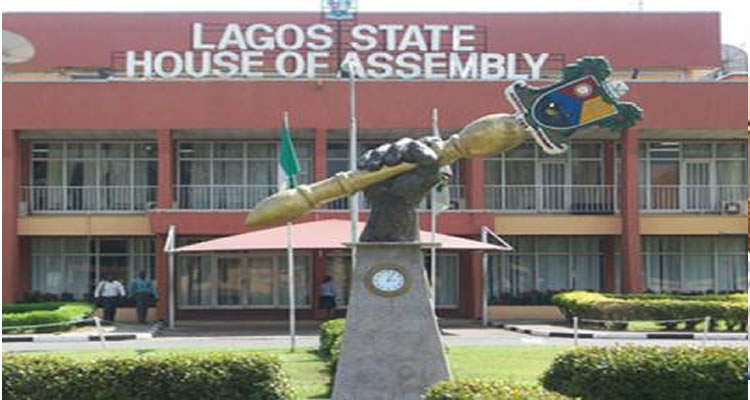
THE LAGOS State House of Assembly has called for urgent action after a prospective National Youth Service Corps (NYSC) member, Binuyo Lateefah, was abducted while travelling for her service.
The issue was raised on the floor of the House on Thursday, January 29, by Omolara Olumegbon, representing Lagos Island Constituency I. The lawmaker described the situation as a matter of urgent public concern, noting that Lateefah was kidnapped on January 22, in Kogi State on her way to Taraba State for her NYSC posting.
According to the lawmaker, the kidnappers later contacted Lateefah’s family and demanded a ransom of ₦30 million for her release.
The Kogi State Police Command confirmed it was aware of the abduction and said efforts had been made to secure her freedom. The state Police Public Relations Officer, Saliu Afusat, a superintendent of police, told reporters, “Yes, I am aware. I can’t disclose details… Efforts are being made to secure her release.”
Following the report, the Lagos State House of Assembly resolved to write to the Federal Government and relevant security agencies on the need to secure the abductee’s release and prevent such incidents in the future.
The Assembly’s position reflects growing concerns about the safety of Nigerians plying Nigerian highways, where cases of abduction have been rife.
YOUTHHUBAFRICA Media is seeking applications to its internship programme (MIP) that offers young Nigerians a unique opportunity to build in-demand 21st-century digital media and employability skills.
The programme will combine hands-on digital media training with internship placements, equipping participants with practical experience and industry-relevant competencies.
Participants will be trained in photography, videography, development communication, social media management, and content curation.
The training is in-person for people living in Abuja. Applicants must have a laptop and must commit to attending the one-week training from March 11 – 16, 2026.
Deadline for applications is February 18, 2026. Interested applicants can apply here.
THE Federal Government’s bond issuance to offset the first tranche of over N5 trillion in debts owed to power generation companies (GENCOs) has raised questions about power sector financing and solving legacy debt problems in Nigeria’s power sector.
The Nigerian power sector was privatised in 2013 but has been enjoying subsidy interventions from the Federal Government to avoid collapse.
The interventions consist of occasional tariff suspension, the Federal Government’s metering intervention programme, and payment assurances to generation companies supplying gas to the power grid by the Nigerian Bulk Electricity Trading Company (NBET).
Despite these subsidies, the sector beckons for help with the recurring collapse of the electricity grid, raising many questions about the sector’s stability, post-privatisation.
The subsidies have also exposed the fragility of the sector’s financing and liquidity issues, prompting investment apathy in the sector.
“What we have done with the GENCO’s N501 billion debt offset is a balance sheet reset. We cleared legacy obligations and re-established conditions which operators can plan, operate, and invest in commercial terms,” the Special Adviser to the President on Energy, Olu Veheijen, said in reaction to the bond issuance.
Veheijen explained that the bond issuance was part of the Presidential Power Sector Debt Reduction Programme (PPSDRP) and had achieved full subscription, reflecting strong investor confidence in the reform agenda.
She noted that the funds would be used to settle verified receivables for electricity supplied between February 2015 and March 2025, with 14 GenCos signing Full and Final Settlement Agreements.
The government aims to address these issues through broader financial and structural reforms, including tariff adjustments and improved collection efficiency, Veheijen said.
The Senior Vice President of Investment Banking at Cardinal Stone, Onyebuchim Obiyemi, who had an insider knowledge of GENCO’s bond, also said, “The Federal Government seeks to ring-fence the debts of GENCOs, with an assurance that investors can recoup their money and build confidence in power sector investment.
“The debt instruments are structured as an amortisation bond such that investors get a portion of their interest and principal sum every six months of the payment cycle. This is absolutely different from the normal government bond. The government is willing to win back investors in the power sector,” she said.
She stressed that the structural payment of interest in the bond issuance and the ring-fencing of the debt is an assurance that the power sector could attract investors.
The ICIR reports that there has been apathy by investors in the power sector as a result of political interventions in tariff matters, which upsets distribution and generation companies.
Despite this progress, legacy problems in the electricity sector persist, including chronic liquidity shortfalls and unresolved liabilities.
A report by The ICIR shows that the World Bank and the African Development Bank intervene in Nigeria’s power sector and have pumped in over $1.5 billion. This has failed to translate into a constant power supply, as the electricity supply to Nigerian homes still hovers around 4,500 megawatts.
Federal Government had raised N501 billion from the bond market to settle outstanding debts owed to power generation companies (GenCos), aiming to reduce about N5.6 trillion liabilities in the sector.
This move is expected to improve liquidity for GenCos, strengthen their ability to meet operating and debt obligations, and unlock new investments.
MEDIA Rights Agenda (MRA) has raised concern over the growing culture of impunity in Nigeria, describing the menace as one of the biggest threats to media freedom.
The organisation said the failure to punish attacks on journalists and citizens emboldened perpetrators and pushed many journalists into fear and self-censorship.
MRA stated this in its 2025 Annual Report on Freedom of Expression in Nigeria, in which it documented a total of 86 incidents of attacks against journalists, media houses, and citizens during the year and painted a disturbing picture of a deteriorating environment for freedom of expression in the country, characterised by a lack of accountability for violators of the right and perpetrators of attacks against journalists.
According to the group, journalists and citizens across the country faced arrests, harassment, intimidation and physical attacks in 2025 for doing their work or expressing their views, with little effort by authorities to properly investigate such cases.
The organisation urged the Federal Government and relevant authorities to ensure that security agencies promptly and transparently investigate all attacks against journalists and citizens and make the outcomes public.
It also called on the government to issue clear directives to security agencies, warn them against harassment, intimidation, arbitrary arrests and other attacks against journalists carrying out their professional duties, as well as against citizens peacefully expressing themselves, especially online.
The MRA further demanded that the Federal Government establish a national policy or framework focused on the safety and protection of journalists, in line with the United Nations Plan of Action on the Safety of Journalists, adding that this should include early warning systems and rapid response measures.
“A key finding contained in the report is the fact that arrests and detentions were the primary tools for the suppression of media freedom and freedom of expression, being the most common form of attack, with 38 documented cases, accounting for over 44 percent of all incidents reported.
“The report also documented widespread physical violence with 21 recorded cases of assault and battery, accounting for over 24 per cent of all incidents. Assault and battery ranked as the second highest form of attack documented in the report.
“The report documented two killings, one of a journalist who was killed in the line of duty and the other of a woman who was murdered for alleged blasphemy. Alongside these deadly forms of assault on freedom of expression were one case of kidnapping and one instance of a media outlet that was shut down,” part of the 147-page report said.
The report revealed that police and officers of the State Security Service (SSS), otherwise known as the Department of State Services (SSS) are most notorious for tormenting journalists.
Lagos and the Federal Capital Territory, Abuja, recorded the highest number of attacks, with 16 and 14 incidents respectively.
The report highlighted emerging trends and patterns, including the continued ‘weaponisation’ of the Cybercrimes (Prohibition, Prevention, Etc.) Act of 2015, as amended, to target journalists and critics of government or government officials, as well as the frequent deployment of digital surveillance tools and spyware to monitor and track down journalists.
The report said in addition to failing to investigate incidents of crimes against journalists, law enforcement and security agencies frequently turned a blind eye to attacks by non-state actors even while they were present. They also actively participated in the brutal suppression of peaceful protests and demonstrations, with journalists frequented targeted while covering such incidents.
Over the past decades, several journalists in Nigeria have been killed in violent incidents linked to their work or unsafe reporting conditions. The ICIR report covering the period between 2019 and 2025 shows that at least 21 journalists were killed, while 94 others were attacked, including cases of kidnapping, assault, mob violence and other threats to their safety.
In 2020, Pelumi Onifade, a reporter with Gboah TV, was killed while covering the #EndSARS protests in Lagos. He was last seen in police custody, and the circumstances surrounding his death remain unclear.
In 2019, Channels Television reporter Precious Owolabi was shot and killed by a stray bullet while covering a protest in Abuja.
Earlier, in January 2012, Enenche Akogwu, a Channels TV cameraman, was shot and killed while reporting on a Boko Haram-linked bombing in Kano.