Home Blog Page 910

Buhari swears in new revenue commissioners in administration’s final FEC

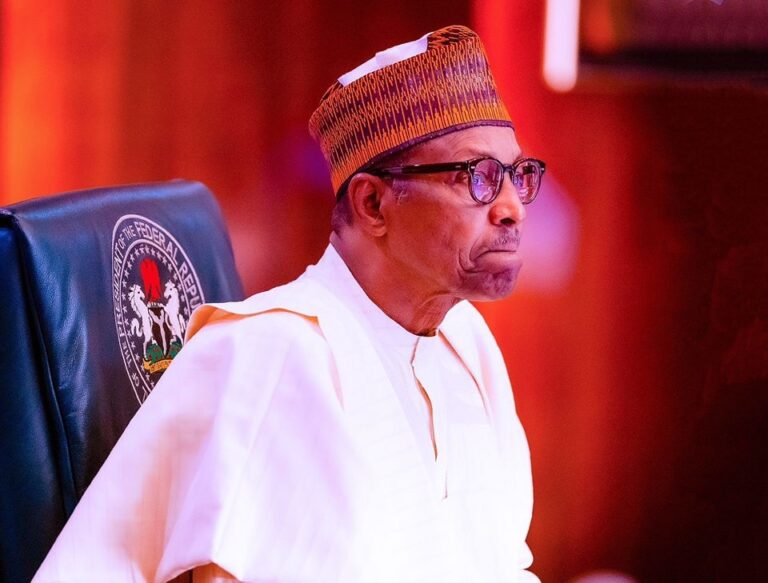
THE PRESIDENT,  Muhammadu Buhari, on Wednesday, May 24, swore in seven federal commissioners of the Revenue, Mobilisation, Allocation and Fiscal Commission (RMAFC).

The brief ceremony took place before the valedictory Federal Executive Council (FEC) meeting at the Council chamber of the Presidential Villa, Abuja, kicked off.


READ ALSO:
Buhari inaugurates RMAFC Chairman, Commissioners, urges them to be fair.

Buhari Re-Appoints New RMAFC Chairman

RMAFC To Review Remuneration Packages Of Public Office Holders

Most government agencies violating rules on spending of generated revenue – RMFAC DG


The new commissioners are Ayogu Eze (Enugu state), Peter Opara (Imo state), Hawa Aliyu (Jigawa state), Rekiya Haruna (Kebbi state), Ismaila Agaka (Kwara state), Kolawole Abimbola (Oyo state), and Ayuba Ngako (Federal Capital Territory.)

The RMAFC oversees the revenues accruing to the Federation Account, and disbursement of such funds.

The body also ensures that there is conformity and equity in the nation’s revenue allocation formulae.

The activities of the Commission are encapsulated within the following mandate: monitoring of revenue accruals into and disbursement from the Federation account, and review of the revenue allocation formula.

They also advise Federal and state governments on fiscal efficiency and methods by which their revenue can be increased.

Cost of funds for businesses to rise as CBN raises interest rate to 18.5%

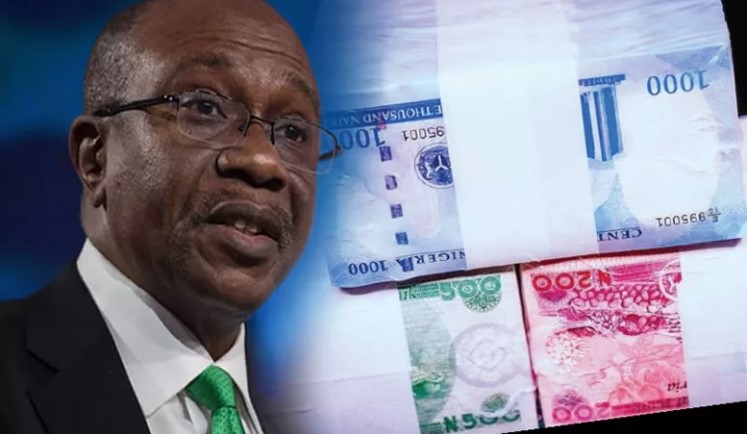
BUSINESSES in Nigeria will have to cope with a higher cost of sourcing funds as the Central Bank of Nigeria (CBN) has raised the monetary policy rate (MPR) from 18 per cent to 18.5 per cent.

The CBN governor, Godwin Emefiele, announced the decision on Wednesday after the policy-setting committee meeting at the CBN headquarters in Abuja.

The development is the third consecutive time the apex bank would be raising the MPR, which determines the interest on lending by financial institutions to borrowers.


READ ALSO:

List of microfinance banks, others whose licences CBN revoked

Why we give SMEs loans below CBN’s lending rate of 18% – BoI


Commercial banks as a result of this development, would have to hike lending rates to customers, which may eventually end up higher than 30 per cent.

Also, commercial banks are not unlikely to review upward interest rates on debts that borrowers had collected from them due to this development.

“This is not healthy for businesses to thrive. This has shown that the economy is in dire need of overhaul since it has failed to support funds for businesses. How can businesses survive with this kind of rate hike? CBN has been doing this without results,” a development consultant, Celestine Okeke, told The ICIR.

Okeke stressed that it was becoming more expensive to do business in Nigeria, saying, “Those who borrowed money would pay higher. Nigeria’s stocks are expected to experience low yield as a result of the rate hike.”

While data has shown that constant rate hikes have not curbed inflation, experts urged the monetary authorities to change their strategy to tackle the country’s inflation.

“Both the monetary and fiscal authorities have to find a lasting solution to the rate hike. It is negatively affecting small and medium-scale enterprises, and it is not a good development for the economy,” a business analyst with Arise Television said while reacting to the MPR hike.

Meanwhile, in a flash note published on April 16, 2023, professional services company, KPMG Nigeria, argued that inflation is cost-pushed and need not be tackled by the monetary authorities through rate hikes.

“The reversal of inflation in March after a seeming slowdown in February reinforces our view that the determinants of inflation in Nigeria are largely cost-push factors which are out of control of monetary authorities,” the note said.

Also, in a report titled, ‘Report Card: CBN’s New Naira Policy and Interest Rate Hikes’, a research consultant with Kwakol, Basil Abia, highlighted reasons why the rate hikes by the MPC have not affected inflation.

“The CBN’s aggressive push to contain Nigeria’s high inflation by deploying monetary tightening as part of its monetary policy through repeated interest rate hikes has not yielded the intended result. Inflation continues to rise unabated, mostly because the monetary tightening approach is not the right way to contain Nigeria’s supply-side or cost-push inflation.

“It is important to note that Nigeria’s inflation is driven by supply-side concerns that raise the cost of production and, inadvertently, consumer prices.”

As explained by analysts, the interest rate has a ripple effect throughout the economy, affecting the Nigeria stock market, bond market, lending rate, consumer and business spending, and asset prices, among others.

If the benchmark interest rate is lower, they said, the lending rate will be lower, making borrowing attractive to people. In turn, there’s more money to spend. Conversely, if the interest rate is high, lending becomes expensive, and there’s less to spend.

This affects manufacturers as borrowing costs for production become more expensive.

According to experts, banks respond to interest rate changes. At the moment, commercial banks charge rates between 20 per cent and 35 per cent on funds they lend out, according to findings.

“The increase in the MPR portends worrisome negative consequences for the manufacturing sector,” Ajayi Kadir of the Manufacturing Association of Nigeria (MAN), said in a note.

Kadir said the rate hike would increase borrowing costs for businesses beyond the extant double-digit rate, which he said discourages new investments.

He explained that it would lead to increased factor costs, which feed into high product prices, thus making the country’s manufacturing industry unproductive.

How census postponement may stall accuracy in demographic data

NIGERIA might experience another delay in providing data across its demography due to the recent postponement of its 2023 Population and Housing Census.

The census was scheduled to hold between May 3 to May 7, but it was rescheduled to a new date to be determined by the incoming administration, which the President-elect, Bola Tinubu, would lead. 

The census, according to the National Population Commission, NPC, is expected to capture data across population classification, residence, relationships/household, migration, birth registration, literacy, nationality, persons living with disability, economic characteristics, fertility and mortality, housing and amenities as well as a section on information communication technology.


READ ALSO:
Technological innovations will prevent manipulation of 2023 population census — NPC

Why 2023 national population census may be postponed — NPC

Preparations for 2023 census gulps over N200 billion


Until a new date is announced and the census is conducted, Nigeria may be unable to provide accurate data for these key socioeconomic characteristics. The ICIR reported how the commission said data from the exercise would address problems in Nigeria.

Experts also told The ICIR that the census, although long overdue, would help the government in proper planning regarding budget allocations.

Over time, the country works with estimated figures and projections released by international institutions, non-governmental organisations and data-research organisations that provide data based on independent research they have conducted. However, in some cases, these estimations contradict themselves. 

For instance, the last census in 2006 showed that Nigeria’s population was 140 million. By the United Nations recommendation, the country was supposed to hold another census in 2016 but failed to do it. In 2017, the National Bureau of Statistics published an estimated figure of  193 million after collating its data from secondary sources.

By 2021 the United Nations said that the population has risen to 211 million, but the World Bank website says Nigeria’s population was 213 million in the same year.

Now, Worldmeters, a reference website that provides countdown information on population and other demographic variables, say Nigeria’s population is around 221.6 million while the UN says the population is around 216 million, projected to rise to 223.8 million by mid-2023.

Other conflicting, stale data with estimated figures

The total fertility rate, which shows the number of children a woman bears over her entire childbearing years, is another unclear data in Nigeria. NBS report also shows that in 2015 Nigeria was 5.5 births per woman, but it increased in 2016 to 5.8, according to Nigeria Demography and Health Survey. 

Macro Trends, a data research platform, puts the figure at 5.076 as of 2023, but a report said this figure completely contradicts the country’s population estimation. 

On Nigeria’s literacy rate, the Ministry of Education revealed, in 2022, that the number of illiterate Nigerians was at an estimated 31 per cent. It was 38 per cent in 2021. However, another research organisation, Global Data, said that as of 2021 literacy rate of the country has reached 77.62 per cent, while World Bank and Macro Trends put the figure at 62 per cent in 2018. 

Also, Nigerian Living Standards Survey in 2019 said 72.3 per cent of females and 77.3 per cent of males in Nigeria aged 15-24 were literate in English but another data from Statista, a data research organisation, shows that around 72% of young women and 78% of young men in Nigeria were literate in English in the same year. 

While some data are conflicting, some Nigerian agencies have failed to update their data for years, thus, forcing research organisations to publish estimated figures based on their study.

For instance, the country is still unclear as to how many Nigerians are unemployed since the last data released by NBS in 2020, which placed the unemployment rate at 33.3 per cent. 

A multinational consulting firm, KPMG, said it might increase to 40.6 per cent in 2023 from 37.7 per cent in the previous year, but the Nigerian Economic Summit Group said the figures would likely hit 37 per cent in 2023.

Also, according to the NPC, seven million births were registered in 2016, out of which 33.09 per cent of the births were registered before age one, 31.19 per cent were registered between age one and four; and 35.72 per cent were registered above age five years. But, a recent Multiple Indicator Cluster Survey in 2021 said that over 40 per cent of children are still unregistered in the country.

In 2018, an NDHS survey put the maternal mortality rate was 512 per 100,000 live births, but the UNICEF estimation shows that it had increased to 576 per 100,000 live births in 2022.

Getting accurate data 

Civic technologist and data protection expert Daniel Irabor said that having a census would help the country to produce accurate baseline data that can be synchronised to generate other important information.

He said, “With the deployment of technology that the commission plans for us, it can help to increase accuracy and integrity. The census is fixing some problems an estimated figure would not fix.”

According to Irabor, the census is the largest data collected in Nigeria and would require the participation of relevant data agencies to prioritise and protect information generated in the process.

Meanwhile, Damilola Ojetunde, another data analyst, said the Vital Registration System applied in developed countries would be a better alternative as having an accurate figure is a yardstick for the country’s development.

However, he noted that accurate data can only be gotten if the commission’s preparation is devoid of political interference.

APM, APP withdraw petitions against Sanwo-Olu’s re-election

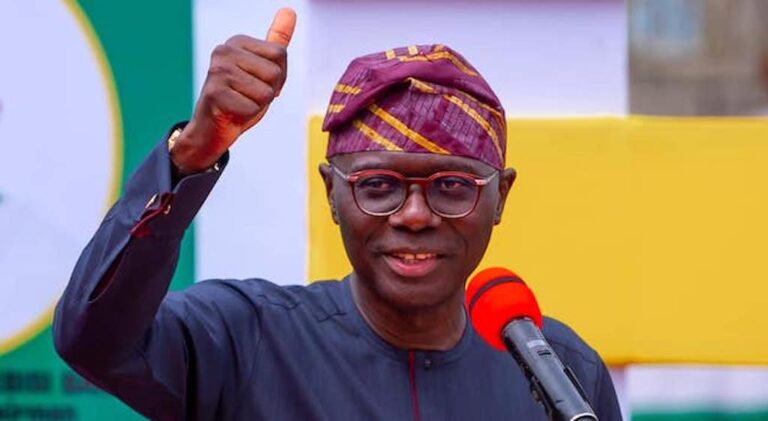
THE Lagos Governorship Election Petition Tribunal has struck out two petitions against the re-election of the state governor and All Progressives Congress (APC) candidate, Babajide Sanwo-Olu.

The development followed the withdrawal of the petitions by the concerned parties – Allied Peoples Movement (APM) and All Peoples Party (APP) – on Wednesday, May 24.

Both parties filed petitions in April, asking for the nullification of San­wo-Olu’s victory.


READ ALSO:
Respect APC position on NASS leadership, Sanwo-olu urges Reps

Sanwo-Olu orders payment of N5m to driver assaulted during #EndSARS memorial

‘Lagos has chosen competence and experience’, Sanwo-Olu says after victory

Sanwo-Olu retains Lagos gov seat, promises to unite Lagosians


In their separate petitions, they argued that Sanwo-Olu and his deputy were not qualified to contest the election and that INEC failed to comply with the provisions of the Electoral Act and the 1999 Constitution.

However, the tribunal led by Arum Ashok, struck out the petitions after both parties moved a motion for withdrawal.

According to the APM counsel, Henry Bello, the party’s candidate, Funmilayo Kupokiyi, has lost interest in the petition.

He also noted that the motion for withdrawal was predicated on four grounds and supported by the two affidavits deposed by Yusuf Dantalle, the party’s chairman.

“Our candidate has lost interest in the petition and has congratulated the second respondent (Sanwo-Olu),” he said.

Similarly, APP’s lawyer, Francis Eze, said the motion to withdraw the petition was based on the instruction of the party’s chairman, Okey Nwosu.

On March 20, the Independent Electoral Commission (INEC) declared Sanwo-Olu the winner of the 2023 governorship election in Lagos State.

The governor polled 762,134 votes to win the election for a second term of four years.

The Labour Party (LP) candidate, Gbadebo Rhodes-Vivour, came second with 312,329 votes, while the Peoples Democratic Party (PDP), Abdul-Azeez Adediran, trailed in third place with 62,449 votes.

Court rejects Police’s request to arraign Seun Kuti

0

A MAGISTRATE’S Court sitting in the Yaba area of Lagos has rejected moves by the Nigeria Police Force (NPF) to arraign Seun Kuti for assaulting a police officer.

According to Channels News, the Afrobeat musician was in court on Wednesday, May 24, for the hearing of the case.

Kuti was released on bail on Tuesday, May 23, following his detention at the State Criminal Investigative Department, Panti, since May 15.

Police lawyer Cyril Ejiofor requested permission from the court to arraign the musician when the case resumed for hearing on Wednesday after filing a charge against him.

Kuti’s lawyer, Femi Falana, a Senior Advocate of Nigeria (SAN), asked the court to deny the application and accused the police of ignoring the court’s current orders.

“We have a serious objection to the proposed arraignment on two solid legal grounds; that he is entitled to at least 48 hours notice within which to answer to the charge by virtue of Section 82 of the Administration of Criminal Justice Law of Lagos,” he stated.

“We came here this morning only for the police to say a charge has been filed, and most importantly, this charge is contemptuous of the valid and subsisting court order of May 16 that upon the completion of the investigation, the prosecution of the case is to be transferred to the state government, as police can’t investigate and prosecute the case. But the police, in total defiance, ignored the order of the court.”

Falana noted that on May 18, the court adjourned the case to May 23 for the DPP’s advice, arguing that until the court orders are complied with, the court can’t entertain the charge from the police.

“There is no appeal against the court’s order. We urge the court to disregard the application of the police, as it is an attempt to treat the court with provocative contempt,” he added.

In his response, Ejiofor urged the court to reject the objection, arguing that Section 23 of the Police Act 2020 gives the security agency the authority to pursue cases and that the Nigeria Police cannot wait for the state government because they have already received the case file.

“We also rely on last week’s rulings of this court. We have compiled and duplicated this file to the office of the DPP. It is left for them to do their job; we cannot wait for them,” the police lawyer stated.

In her ruling, after issuing the earlier orders, the magistrate, Adeola Olatunbosun, maintained in her judgment that the case should wait to be resolved until she heard from the DPP.

In order to wait for legal counsel from the Office of the DPP on the subject, the magistrate postponed the hearing to July 3.

Reports say the court issued Seun Kuti another warning after he was seen celebrating the development while he was in the dock.

The ICIR reported on Tuesday, May 23, that Seun Kuti was released after spending eight days in police custody.

The African Action Congress (AAC) presidential candidate, Omoyele Sowore, announced his release in a tweet.

Sowore declared, “Just to announce that @RealSeunKuti has been released from @PoliceNG detention in Lagos. Hasta la victoria siempre!”

Kuti’s release came after his trial was adjourned as the Chief Magistrate’s Court where his case is being heard did not sit on Tuesday.

At Tuesday’s resumed hearing in the case, Adeola Olatubosun, who had been presiding over the matter, was absent, and no explanation was provided for her absence.

Kuti was brought to the court as scheduled. However, upon learning of the magistrate’s absence, a team of policemen swiftly moved him to a nearby police station at Panti.

Trouble started for the son of Afrobeat legend Fela Anikulapo Kuti after he was seen in a viral video slapping a policeman in Lagos State.

The Inspector General of Police, IGP Alkali Baba Usman, according to a statement from police spokesman CSP Muyiwa Adejobi, thereafter ordered his arrest.

On May 15, Kuti turned himself in at the Lagos State Police Command Headquarters, Ikeja, accompanied by his lawyers and family members.

The 40-year-old musician was subsequently arrested and moved to the State Criminal Investigation Department (CID) in Panti.

On May 16, he was arraigned before Adeola Olatunbosun of a Magistrate’s Court in the Yaba area of Lagos State.

The Afrobeat singer was, however, granted bail. However, according to his lawyer, the judge ordered that he be released 48 hours after meeting his bail conditions.

The judge also ordered that Kuti’s file be duplicated, sent to the director of public prosecution (DPP), and adjourned to May 23, 2023.

But on May 18, his lawyers said the magistrate extended the remand order for additional four days to enable the police to continue with its investigations.

In a statement on Saturday, May 20, the musician’s lawyers accused the Lagos State Police Command of failing to comply with a court order by withholding his case file.

Kuti’s lawyers also accused the police of intentionally sensationalising the case.

‘Nigeria spent $8 billion to end Liberian Civil War’

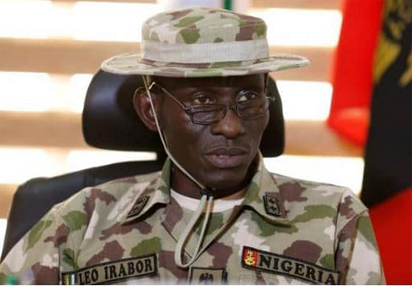
CHIEF of Defence Staff Leo Irabor has revealed that the Nigerian government spent about $8 billion to end the Liberian Civil War and restore peace in the country.

Liberia was engulfed in two separate civil wars with the first between 1989 to 1997 and second between 1999 to 2003.

The initial outbreak of the First Liberian Civil War started as an internal conflict, extending its impact until 1997. The war resulted in a devastating loss of more than 200,000 lives and displacement over a million people. 

To address the escalating crisis, the Economic Community of West African States (ECOWAS) bloc, consisting of 16 member countries, took action in August 1990. They deployed a collaborative military intervention force known as the Economic Community Monitoring Group (ECOMOG), which was primarily led by a contingent from Nigeria.

Unfortunately, the peace was short-lived, as the Second Liberian Civil War erupted in 1999, leading to extensive casualties and widespread destruction.

Meanwhile, ECOWAS took decisive action that led to a restoration of relative peace in the region. Charles Taylor, a significant figure in the war and a Liberian strongman, was exiled to Nigeria as a result. 

Over 250,000 individuals were reported to have tragically lost their lives, while thousands more were forced to flee their homes, becoming displaced as a result of the war.

Irabor, in a keynote address at an event held to mark the 75th anniversary of United Nations Peacekeeping Operations on Wednesday, May 24, disclosed that apart from loss of lives and injuries to personnel, Nigeria spent $8 billion to restore in Liberia.

The Chief of Defence Staff noted that Nigeria has significantly contributed to 41 peacekeeping operations across the world, adding that over 200,000 Nigerian troops have served in UN peacekeeping missions worldwide.

“Since the first engagement of troops of our Armed Forces in the Congo in 1960, Nigeria has been unequivocally committed to the principles and objectives of the United Nations. It has significantly contributed to 41 peacekeeping operations worldwide.

“Ever since, over 200,000 Nigerian troops have served in UN peacekeeping missions worldwide and Nigerian senior military officers have commanded some of these missions.

“Similarly, under regional and sub-regional cooperation, Nigeria has been involved in peacekeeping operations in field missions in Cote d’Ivoire, Guinea-Bissau, Gambia, Liberia, Mali, Darfur and Sierra Leone and has contributed a lot in terms of finance, logistics, troops and civilian experts, making her one of the most significant African troops and civilian police contributors to UN missions.

“It is noteworthy that in addition to the loss of lives and injuries to personnel, the ECOMOG, a regional interventionist mediation force advocated to end the protracted Liberian civil war, was operated at an estimated cost of USD 8 billion to the Nigerian government,” he said.

According to Irabor, Nigeria’s active participation in peacekeeping missions had helped restore peace and stability to many countries over the decades, at the same time saving countless lives.

He stated that despite the security challenges resulting from the actions of non-state actors and other criminal elements that have plagued the nation, the Armed Forces of Nigeria and the Police have persistently deployed personnel to uphold the country’s commitment to the United Nations.

Also, speaking at the occasion, a former Chief of Army Staff, Martin Luther Agwai, a General, who was the special guest of honour, noted that UN Peacekeeping had been a unique and dynamic instrument to help countries in conflict transition to lasting peace.

According to him, over two million uniformed and civilian personnel have contributed to the global effort to secure peace and progress across the world since 1948.

“As we celebrate this milestone, let us reflect on the past and look to the future. We must work together to enhance our collective efforts towards global peace and security,” he said.

The Secretary General of the UN, António Guterres, also paid tribute to the over 4,000 soldiers who lost their lives while securing peace across the globe under the UN flag. 

Guterres said: “In carrying out this essential work, many peacemakers have paid the ultimate price. More than 4,200 peacemakers have lost their lives serving under the UN flag.

“We stand in sympathy and solidarity with their families, friends and colleagues, and will forever be inspired by their selfless devotion to the cause of peace.”

In July 2021, the Cable reported that Solomon Gembeh, the high commissioner of Sierra Leone to Nigeria, said Nigeria spent $13 billion in Sierra Leone and Liberia during the civil wars that engulfed the two countries.

He said: “So, when you are talking about the help that the African Development Bank and all these institutions have done for Sierra Leone, you look at what Nigeria has done for us. You look at what the West claimed to have done for Sierra Leone over the years, I think Nigeria is a true big brother to us.”

Sierra Leone was in a civil war that led to the death of many people between March 1991 to January 2002.

#EndSARS: Bill for compensation of victims passed for second reading

0

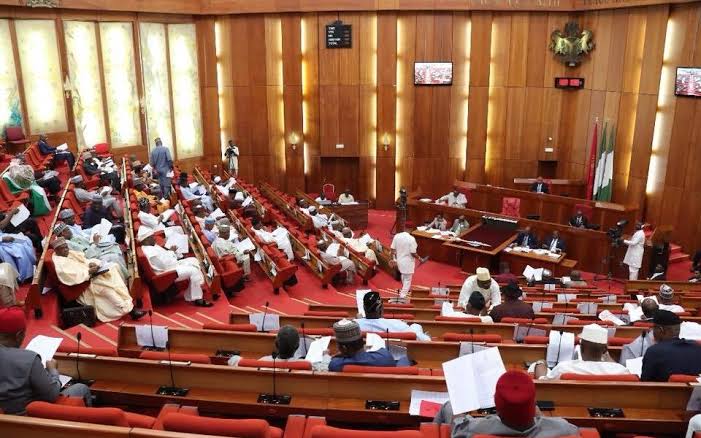
THE Senate on Wednesday, May 24, passed for second reading a bill seeking to compensate victims of the #EndSARS protests.

‘A Bill for an Act to Amend the National Emergency Management  Agency Act’ is sponsored by Gershom Bassey, a senator of the Peoples Democratic Party (PDP) from Cross River State.

The proposed legislation seeks to provide for the establishment of the EndSARS Victims Compensation Fund.


Read Also:

Presenting the bill, Bassey noted that findings of the judicial panels of inquiry and the Senate Joint Committee on #EndSARS revealed the killing of protesters, and destruction of private and public properties by rampaging hoodlums.

He said: “Distinguished colleagues, you may recall that as a result of the #EndSARS nationwide protests in October 2020. 

“Judicial panels of inquiry were constituted to address the demands of protesters and compensation for verified victims of the #EndSARS protest.

“The findings of the judicial panels of inquiry and the Senate Joint Committee on Endsars revealed the killing of protesters, and destruction of private and public properties by rampaging hoodlums, who seized and took over the protest vandalizing and looting valuable assets.

“However, the implementation of the recommendation of all the panels and committees regarding compensation has been very discouraging.”

Bassey stressed that the victims have been left to continually groan under the pains of injury inflicted by hoodlums during the protest.

According to him, the eventual establishment of the Fund and implementation of the recommendation of the judicial panel of inquiry and Senate Joint Committee on #EndSARS would certainly bring succour to the victims of the protests.

“Mr. President, distinguished colleagues, it is my prayer that you support this amendment bill that seeks to bring hope to the victims of the 2020 EndSARS protest,” he said.

Senate President Ahmad Lawan subsequently referred the bill to the Committee on Special Duties for further legislative input.

The committee is to report back to plenary in one week.

The ICIR reported that findings by the Lagos State Judicial Panel on #EndSARS have indicted the Nigerian Army of massacre at Lekki Toll Gate on October 20, 2020.

These findings were contained in a report submitted by the panel to the Lagos State Government.

According to the report, which The ICIR saw, the panel noted that nine protesters were confirmed dead while four others were presumed dead.

The report listed 48 names as casualties of the Lekki incident of October 20, 2020.

Among the 48 casualties listed, 24 sustained gunshot injuries, while soldiers and police assaulted 15 others.

The panel also noted that 96 other corpses were presented by a Forensic Pathologist of the Lagos State University Teaching Hospital, John Obafunwa.

It noted that testimonies of victims, eyewitnesses and independent experts employed to examine the footage taken during the unfortunate incident lend credence that the Army shot live bullets at protesters at Lekki Toll Gate on October 20, 2020, resulting in deaths and severe gunshot injuries.

The panel also found that the shooting of the protesters by the Nigerian Army at the Lekki Toll Gate on October 20, 2020, was unwarranted, excessive, provocative and unjustifiable in the circumstances of the state of the protests, which was peaceful and orderly.

IRE offers freelance fellowship

Investigative Reporters and Editors (IRE) is accepting applications for its Freelance Fellowship.

The program aims to assist journalists who make their living primarily as freelancers and need assistance in conducting investigative projects.

Proposals dealing with whistleblowers, business ethics, and/or privacy issues will receive priority; projects involving other topics will be given serious consideration as well.

The first, second, and third-place winners will receive US$2,500, US$1,500, and US$1,000, respectively.

Journalists who make their living primarily as independent journalists can apply for a grant.

The deadline for the submission of applications is August 28, 2023. Interested applicants can apply here.

Fund for Investigative Journalism offers grants

THE Fund for Investigative Journalism (FIJ) is inviting applications for its grants.

The grants are intended to support investigative projects that break new grounds and expose wrongdoing – such as corruption, malfeasance, or misuse of power – in the public and private sectors.

FIJ has also launched two new grantmaking initiatives: expedited grants for urgent stories and follow-up grants for timely stories after initial investigations.

The maximum award is US$10,000, which should cover out-of-pocket expenses such as travel costs, document collection, and equipment rental. The first half of the grant is given once an application is approved and the second half is paid when the project is complete.

Proposals must come from United States-based reporters or journalists whose stories have a US angle, involving American citizens, government, or businesses. Stories must be published in English.

Proposals must be submitted in English and include a detailed budget.
Investigative journalists can apply for a reporting grant.

The deadline for the submission of the application is September 5, 2023. Interested applicants can apply here.

UK ban: Nigerian Youtuber responds to backlash over BBC interview

A Nigerian Youtuber Emdee Tiamiyu, known for providing advice on studying in the United Kingdom (UK), has reacted to criticisms that trailed his controversial interview with the British Broadcasting Corporation (BBC).

Tiamiyu’s comments suggesting that many Nigerian students were not seeking qualifications but rather using education as a means to start a new life abroad have drawn backlash.

This is especially so as the interview took place within the context of new immigration rules that will prohibit Nigerian students, among others, from bringing their families as dependents to the UK, except under specific circumstances.

“The student route is more like an answered prayer…We’re beginning to see that a lot of people just hide behind the studentship. So, the student thing is not real, it’s not like they need the degrees,” he said in the interview.

Social media platforms, particularly Twitter, were flooded with criticisms directed at Tiamiyu, claiming that his statements was harmful and detrimental to Nigeria’s image. Many also accused him of seeking popularity and labelled him a clout chaser.

Responding to the mounting criticism, Tiamiyu said, “I do know I would have to find the balance between being real and being diplomatic. If you want to be real, you will offend people”.

The UK government’s ban on Tuesday raises questions on the implications for international students, and the broader discourse surrounding education opportunities and migration.

The ICIR reported came up with new restrictions to prevent Nigerian students and those from other nationalities studying in the country from bringing their families over.

Under the restrictions, all Master’s students and many other postgraduates are banned from bringing their families.

However, the ban will not apply to PhD students, who are considered highly skilled, and whose courses typically last between three and five years.

The ban was in response to alarming reports of net migration into the UK reaching one million, with members of the Tory party urging Prime Minister Rishi Sunak to address the escalating numbers.

The number of people entering Britain under the guise of their relatives’ student visas has seen a significant increase. In the past year, students brought over 135,788 family members to Britain, which is nine times higher than the figure reported in 2019, according to reports by The Sun UK.

Notably, Nigerian students accounted for over 60,000 out of the total, bringing over relatives. The UK has been considering imposing restrictions on Nigerian migrants since October 2022.