Home Blog Page 912

Rivers guber: Cole vows to pursue petition, despite APC’s withdrawal

ALL Progressives Congress (APC) candidate in Rivers State, Tonye Cole, has vowed to pursue his petition against the declaration of Peoples Democratic Party’s (PDP) Sim Fubara as winner of the governorship poll, despite his party’s withdrawal from the suit.

Cole, in a Twitter post on Tuesday, May 23, also dismissed reports that he has withdrawn the petition he filed to challenge the outcome of the March 18 governorship election.

The Independent National Electoral Commission (INEC) had announced Fubara of the PDP as the winner of the governorship poll in Rivers State with 302,614 votes.

Opposition parties expressed dissatisfaction with the outcome of the election, and in April, Cole and the APC filed petitions at the tribunal, challenging the result declared by INEC.

However, on Monday, May 22, the Rivers State Election Petition Tribunal dismissed the petition lodged by the APC after its legal representative withdrew from the case.

The tribunal witnessed a dramatic turn of events when the APC sought to change its counsel in the petition against the PDP and its candidate, Fubara.

At the commencement of the proceedings, Solomon Umoh, the counsel for the APC, informed the tribunal of his intention to take over as the party’s legal representative, citing a motion for a change of counsel that had been submitted to the tribunal.

Umoh further requested that the party’s name be removed from the petition as applicant.

Jibrin Okutepa, a Senior Advocate of Nigeria (SAN) who previously served as counsel for Cole and the APC, expressed surprise at the new development, claiming that he had not been informed by the party.

Despite Okutepa’s objection, the three-member tribunal led by Cletus Emifoniye granted the application for a change of counsel.

The panel also acceded to the motion, striking out the name of the APC as a petitioner.

But, Cole, in a brief video posted on his Twitter account on Tuesday, debunked reports that he has withdrawn the petition.

In the one minute video, Cole described the reports as unfounded, affirming that his petition against the ruling party in the state remains strong and unwavering.


READ ALSO:


He said despite the PDP’s several attempts to undermine his cause by disseminating false information, he will not be dissuaded from pursuing justice.

He vowed to remain undeterred and resolute in his fight for justice.
World leaders sign pact to eliminate cervical cancer

0

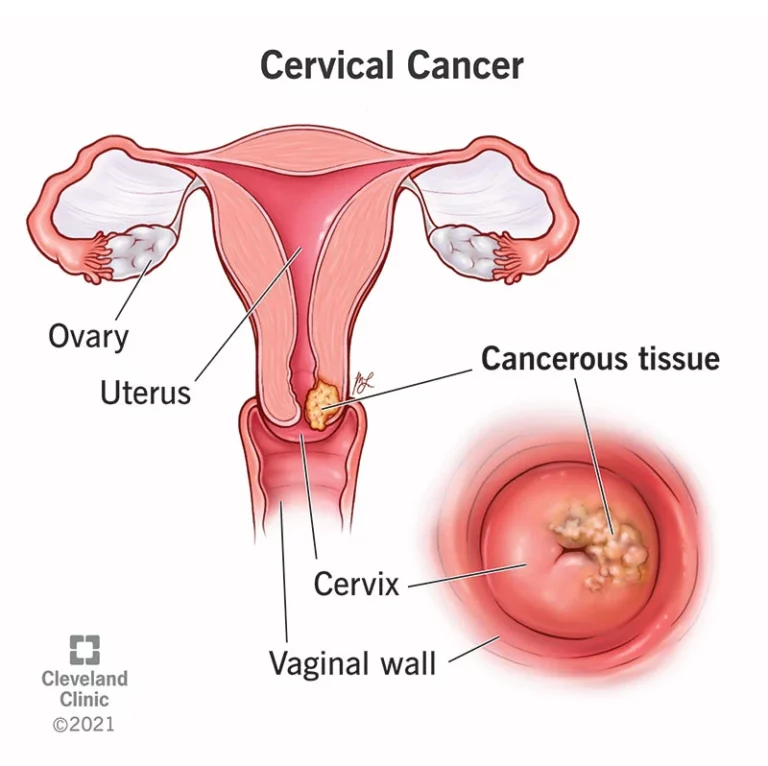
WORLD leaders and leading public health experts have signed a declaration seeking an end to cervical cancer.

The declaration was formally launched in Geneva on Monday, May 22, at the World Health Assembly.

As of the time of the meeting, 1200 global health leaders and advocates representing over 100 countries, including former Prime Minister of New Zealand Jacinda Ardern, Chief Executive Officer of Amref Health Africa Githinji Gitahi, President of the International Federation of Obstetrics and Gynecology (FIGO) Jeanne Conry, and President-elect of the International Pediatric Association Naveen Thacker, have signed the pact.

Twelve leading public health experts, including Nigeria’s former Minister of Health, Isaac Adewole, co-lead the team that initiated the pact, said a statement mailed to The ICIR on Tuesday, May 23.

Human papillomavirus (HPV) causes the vast majority of cervical cancer cases.

At least, 342,000 women die each year from the disease.

More than 90 per cent of the victims live in low- and middle-income countries.

Nigeria records 12,000 cases of cervical cancer annually, out of which 7,900 die, according to the WHO.

Cervical cancer is preventable and treatable but is still the second most common cancer among women and most common among women ages 15-44. 

WHO said a dose of the HPV can now be effective as two doses earlier recommended for administration.

“But new research on the efficacy of a one-dose HPV vaccine regimen and progress toward elimination in several countries are several of the factors that are bringing the world closer to eliminating cervical cancer,” the agency said.

It blamed the worsening cases of the disease on inequity in HPV vaccines across countries and the recent COVID-19 pandemic.

WHO’s Director-General, Tedros Ghebreyesus, a doctor, highlighted the organisation’s commitment to eliminating cervical cancer and urged member states to scale up services.

Meanwhile, the agency lauded Australia and Rwanda for their commitment to eliminating the disease.

The ICIR reports the new declaration to eliminate cervical cancer as stating that, “As physicians, nurses, health professionals, community health workers, patient advocates, scientists, and public health experts, we believe that eliminating cervical cancer is both achievable and an essential step in advancing the health and well-being of girls, women, families, and communities around the world.

“We call for urgent action to make cervical cancer elimination a global priority, with high-level commitment and resources to make it a reality. No woman should lose her life to cervical cancer when we have the tools to prevent it, and, especially when diagnosed early, to treat it.”

How British special forces secretly operated in Nigeria, 18 other countries – Report

A REPORT by a United Kingdom (UK)-based research organisation, Action on Armed Violence (AOAV), has revealed how Britain’s Special Forces secretly participated in hostage rescue efforts in Nigeria, including an incident in which a Briton and Italian died.

The report, released on Tuesday, May 23, revealed that the British Special Forces secretly operated in Nigeria and 18 other countries in the past 12 years.

Titled ‘Britain’s Special Forces on service in at least 19 countries since 2011’, the report covers the exfiltration activities of the Britain’s Special Forces between 2011 to 2023.


READ ALSO:
‘I come not to be served, but to serve’, says new British monarch, King Charles III

Airport detention: No apology from British govt – Obi

British govt trains 35 NDLEA officers in Nigeria, UK

Group partners EU, British Council to end open defecation in Abuja


The report questioned the degree of transparency and democratic consent involved in the activities of the British Special Air Service (SAS) and other European countries’ special forces activities across the 19 countries.

It noted that the British SAS had operated secretly in Nigeria, Algeria, Estonia, France, Oman, Iraq, Kenya, Libya, Mali, Cyprus, Pakistan, Somalia, the Philippines, Russia, Syria, Ukraine, Yemen and Sudan.

The UK research think-tank, AOAV, further identified Burkina Faso, Oman, Jordan, Saudi Arabia, Turkey, and Djibouti as countries where the British Special Forces had either trained foreign forces or based their forces before launching into another country.

According to the report, relevant British ministers did not publicly certify the covert operations of the military units, which include hostage rescues as well as exfiltrations.

The operations in Nigeria include a failed attempt by the Special Boat Service (SBS) to rescue a British engineer, Chris McManus and Italian Franco Lamolinara, in northern Nigeria in March 2012.

McManus – from north-west England – and Lamolinara were “murdered by their captors before they could be rescued” according to a BBC report.

The BBC’s Gordon Corera said UK troops “were first in” and shot a kidnapper but it was too late to save the two engineers, who were seized by gunmen in Birnin Kebbi, Kebbi State on 12 May 2011.

Also, according to the report, British special forces in 2014 joined a growing international effort to locate and rescue hundreds of schoolgirls kidnapped by Islamist militants in Nigeria.

“Special Air Service (SAS) liaison officers, based in the capital Abuja, have switched their focus to evaluating Britain’s capacity to help the rescue, which has been dogged by claims of delays and incompetence.

“The SAS liaison officers were in the country before the kidnappings but are understood to have switched their priority to assessing options open to Britain to help,” the report stated.

According to the report, the UK prime minister and defence secretary deployed members of SAS, Special Boat Service and Special Reconnaissance Regiment to conduct high-risk missions where the UK is not at war.

AOAV further revealed that the special forces actively supported rebel groups in Syria against President Bashar Al-Assad.

“European and Jordanian sources in 2013, training of rebels had been going on for a year and was focused on senior Syrian army officers.

“Unconfirmed reports in French and American media suggested that UKSF had been assisting Syrian rebels in Turkey and Lebanon as early as 2011. The former British ambassador Peter Ford would later tell a parliamentary enquiry that “moderate” groups among the armed opposition was “largely a figment of the imagination,” the report added.

Fifty members of UK special forces were listed as being present in Ukraine earlier this year in leaked Pentagon papers, despite their concealed involvement in the conflict.

AOAV stressed that the lengthy list of deployments occurred despite a lack of control.

“Even though special forces can be deployed without the Commons’ consent and are not subject to parliamentary committee investigations, etiquette requires that MPs vote to authorise a war.”

The report also stated that David Cameron granted the SAS “carte blanche” to arrest and murder Middle Eastern Islamic leaders after terrorists massacred 38 people including 30 British citizens at beach hotel in Tunisia in June 2015.

“The extensive deployment of Britain’s Special Forces in numerous countries over the past decade raises serious concerns about transparency and democratic oversight,” said Iain Overton, the executive director of AOAV. “The lack of parliamentary approval and retrospective reviews for these missions is deeply troubling.”

Also, according to the report, a public investigation into the activities of SAS in Afghanistan between 2010 and 2011 disclosed that 54 summary executions were conducted.

“Guys were taken away from their families and shot dead several times after being accused of producing a weapon.”

Following the start of violence in Sudan in April, special forces helped evacuate two dozen British diplomats and their families to an airfield north of the capital when they were in danger of being attacked.

Pulitzer Center’s Ocean Reporting Network seeks fellows

THE Pulitzer Center is accepting applications for its Ocean Reporting Network (ORN) Fellowship.

The network will establish a collaborative ecosystem of journalists around the world that will uncover the harmful and illegal practices of the fishing and extractive industries and systemic threats to marine biodiversity and coastal communities.

At least eight full-time fellows will be selected for the program.

The ORN fellows will work on individual and collaborative reporting projects to probe the drivers of the degradation of the marine environment, as well as the socio-economic impacts.

The year-long fellowship will cover a reporter’s salary.

Journalists with a proven track record of environmental investigations can apply for a remote fellowship.

The Pulitzer Center says, “A healthy ocean is vital to addressing the triple planetary crisis of global warming, pollution, and biodiversity loss.

“Oceans play an essential role in climate regulation: Covering 70% of the planet, they absorb carbon dioxide and heat, and the life within it produces half the oxygen we breathe”.

The deadline for the submission of applications is June 18, 2023. Interested applicants can apply here.

Seun Kuti’s case adjourned as court fails to sit

THE trial of Afrobeat singer Seun Kuti has been adjourned as the Chief Magistrate’s Court where his case is being heard did not sit on Tuesday, May 23.

At the resumed hearing in the case on Tuesday, Adeola Olatubosun, who had been presiding over the matter, was absent, and no explanation was provided for her absence.

Kuti was brought to the court as scheduled, but upon learning of the magistrate’s absence, a team of policemen swiftly moved him to a nearby police station at Panti.

There were reports that the case has been adjourned until Wednesday, May 24. But no official statement was issued to that effect.

After the court session, one of the musician’s lawyers told Channels Television that the legal team had accompanied the police to Panti in order to explore avenues for their client’s release.

Outside the court premises, a group identifying themselves as members of the ‘Free Seun Kuti campaign’ took to the streets in protest.

They demanded the immediate release of the artist, whose case has garnered significant attention across the country.

Trouble started for the son of Afrobeat legend, Fela Anikulapo Kuti, after he was seen in a viral video slapping a policeman in Lagos State.

The Inspector General of Police, IGP Alkali Baba Usman, according to a statement from police spokesman, CSP Muyiwa Adejobi, thereafter ordered his arrest.

Kuti, on May 15, turned himself in at the Lagos State Police Command Headquarters, Ikeja, accompanied by his lawyers and family members.

The 40-year-old musician was subsequently arrested and moved to the State Criminal Investigation Department (CID) in Panti.

On May 16, he was arraigned before Adeola Olatunbosun of a Magistrate’s Court in the Yaba area of Lagos State.

The Afrobeat singer was, however, granted bail but according to his lawyer, the judge ordered that he is to be released in 48 hours after meeting his bail conditions.

The judge also ordered that Kuti’s file be duplicated and sent to the director of public prosecution (DPP) and subsequently adjourned to May 23, 2023.

But on May 18, his lawyers said the magistrate has extended the remand order for additional four days to enable the police continue with its investigations.

In a statement on Saturday, May 20, the musician’s lawyers accused the Lagos State Police Command of failing to comply with a court order by withholding his case file.

Kuti’s lawyers also accused the police of intentionally sensationalising the case.

Tribunal merges Obi, Atiku, APM’s petitions against Tinubu

0

THE Presidential Election Petition Court (PEPC) has merged the three petitions challenging the result of the February 25 presidential election.

The petitions are those filed the Peoples Democratic Party (PDP) and its presidential candidate Atiku Abubakar, the Labour Party (LP) and its candidate Peter Obi, and the Allied Peoples Movement (APM).

The five-man tribunal led by Haruna Tsammani on Tuesday, May 23, dismissed objections raised by the President-elect, Bola Tinubu and the ruling All Progressives Congress (APC) against the merger of the petitions.

The court determined that since all of the claims involved the same election, it was in the interest of justice that they be merged and handled as a single petition.

As a result, the tribunal set May 30 as the date for commencement of hearing of the consolidated petition.

Additionally, the tribunal gave Obi and Atiku three weeks, each, to call witnesses.

The court also gave the Independent National Electoral Commission (INEC), Tinubu and the Vice President-elect, Kashim Shettima, five days each to make their defence against the petition.

In the same vein, the court ordered that the parties will adopt their last briefs of argument on August 5, before it sets a date for ruling.

The ICIR reported that APC and the President-elect, Tinubu, rejected plans by the tribunal to merge the petitions seeking to nullify the outcome of the February 25 presidential election.

Citing paragraph 50 of the 1st Schedule of the Electoral Act, the tribunal led by Tsammani announced on Saturday, May 20, that all the petitions against Tinubu’s election will be merged for easy adjudication.

The tribunal subsequently directed all the counsels to consult with their clients and report the outcome on Monday, May 22.

During the resumed sitting on Monday, May 22, counsel for the APC, Charles Edosomwam, a Senior Advocate of Nigeria (SAN), argued that consolidating the petitions would go against the interest of justice.

Edosomwan noted that the grounds and issues raised by the parties were different, adding that consolidating them would result in significant issues being lost.

He also noted that it would be practically impossible for the respondent to effectively defend the case, adding that justice should not be sacrificed for convenience.

“Major issues before this court will be lost like a pin in a haystack if the consolidation is considered,” he said.

Likewise, Tinubu’s legal team, led by Akin Olujinmi (SAN), argued that consolidating all the petitions would hinder their ability to defend the issues raised against the President-elect.

Olujinmi further argued that the provision of the Electoral Act referred to by the court was not absolute, and the exercise of power should be subject to limitations.

He pointed out that each petition had varying issues and evidential matters, making it difficult to consent to consolidation.

“The issue of justice should be a restraint on the power of this court to exercise its discretion in granting the order for consolidation,” he said.

In contrast, INEC stated that it would defer to the court’s discretion regarding the consolidation issue.

INEC had declared Tinubu as the winner of the February 25 presidential election.

According to INEC, Tinubu secured 8,794,726 votes, the PDP candidate, Abubakar, had 6,984,520, while the LP presidential candidate, Obi, polled 6,101,533.

The PDP and LP candidates rejected the result and approached the tribunal with separate petitions to challenge Tinubu’s victory.

They alleged that Tinubu was not qualified to contest the election and that he failed to secure the majority of lawful votes cast at the poll.

They are also contesting that Tinubu’s running mate, Kashim Shettima, had a double nomination contrary to the Electoral Act.

In addition to Atiku and Obi’s petitions, the Allied Peoples Movement (APM) also asked the court to nullify Tinubu’s election.

Aside from Atiku Abubakar of the Peoples Democratic Party, PDP, who came second in the election, and Obi of the LP, who came third in the election, the Allied Peoples Movement, APM, equally lodged a petition to challenge the outcome of the presidential election.

Although five petitions were initially filed to challenge Tinubu’s victory, The ICIR reported that two of the petitioners, the Action Alliance (AA) and the Action Peoples Party (APP), withdrew their cases during the ongoing pre-hearing sitting of the tribunal.

Meanwhile, the Justice Tsammani-led panel hinted that it might ban both lawyers and members of the public from entering the courtroom with mobile phones on the next adjourned date.


Africa Foundation for Young Media Professionals offers fellowship

THE Africa Foundation for Young Media Professionals (AFYMP) is accepting applications for its funded media fellowships.

The program seeks to strengthen, empower and position next-generation, early-career journalists in Nigeria.

Selected fellows will participate in one of the fellowship’s categories: Media Entrepreneurship and Niche Building, Campus Journalism, Ethics, Safety, Fact Checking, Women in Journalism and Disability and Inclusion Reporting.

The six-month program begins with a two-day in-person workshop. The workshop will be held in Ibadan, Lagos, Owerri, and Port Harcourt.
Early-career journalists across Nigeria can apply for a virtual and in-person fellowship.

The deadline for the submission of applications is June 5, 2023. Interested applicants can apply here.

Fact-checked: A look at some of Buhari’s claims during his 8 years as president

AS Muhammadu Buhari’s tenure ends on May 29, it is worth noting that during his eight years tenure as Nigeria’s president, he frequently made claims about his administration’s achievements and performance, particularly in areas like education, security, the economy, and other national issues. 

The ICIR conducted fact-checks on these claims he made during his eight years in office and found some to be false and others true. In this analysis, we delve into some of the claims that we fact-checked and found to be false.

2018: Buhari’s repeated claim on oil price average

Buhari often claimed that the oil price average was $100 from 1999 to 2014. The president made the claims several times, including in his 2017 Independence speech.


READ ALSO:


However, contrary to Buhari’s claim, The ICIR fact check showed that the average price of crude oil per barrel from 1999 to 2015 was $61.7, and not $100, which he had repeatedly claimed since he became president. 

According to data from the Organization of Petroleum Exporting Countries (OPEC) as cited by Statista, the average yearly cost of crude oil exhibited fluctuations over the years, in 1999, it stood at approximately $17.4 per barrel, followed by $27.6 in 2000, $23.1 in 2001, $24.3 in 2002, $28.1 in 2003, and $36.5 in 2004. Subsequently, the price increased to $50.5 per barrel in 2005, $61 in 2006, $69 in 2007, $94.1 in 2008, $60.8 in 2009, and $77.3 in 2010.

In 2011 and 2012, there was a significant surge in the average annual oil price, reaching a record high of $107 and 109 per barrel, respectively. The price decreased slightly, to $105.8 in 2013 and then $96.2 in 2014.

When considering the period from 1999 to 2014, the average oil price amounted to $61.7 per barrel. This figure is considerably lower than the average of $100 per barrel that the President claimed. Consequently, it can be concluded that his claim is FALSE.

2020: Buhari once claimed that all local councils captured by Boko Haram in Borno, Yobe, and Adamawa had been recovered

In his speech delivered on Friday, June 12, 2020, to commemorate National Democracy Day, Buhari claimed that “all the local governments that were taken over by the Boko Haram insurgents in Borno, Yobe, and Adamawa had long been recovered and are now occupied by indigenes of these areas.” 

Our fact-check from 2020 indicated that  Buhari’s claim was false, as the evidence available in the public domain invalidates it. Numerous media reports showed that certain regions in the three northeastern states were still experiencing repeated Boko Haram attacks, causing many locals to flee to, and continue to live in Internally Displaced Persons (IDPs) camps hosted by their state governments.

2022: Buhari claimed that Nigeria is better than how he met it

Another interesting false claim made by Buhari is that his administration is leaving Nigeria better than he met it.

The President, in his response to Bloomberg’s questions published on June 21, 2022, said that his administration would be leaving Nigeria “in a far better place” than he found it.

The President claimed that he had performed better than his predecessors, particularly in the areas of security, economy, and anti-corruption. However, our fact-check revealed that the claim is not true. Nigeria has actually experienced more insecurity-related attacks and deaths under Buhari’s administration. The economy of the country has also worsened under his administration.

2022: Buhari claimed that primary elections conducted by political parties were peaceful 

In his nationwide broadcast on Sunday, June 12, 2022, in commemoration of the 2022 Democracy Day, Buhari said primary elections conducted by political parties in the country for the 2023 general elections were peaceful and orderly.

But our fact-check showed that the President’s claim that primary elections of political parties at all levels were peaceful and orderly was mostly false.

Even though the primary elections were peacefully conducted in some parts of the country, our findings showed that the processes were marred by political thuggery, killings, stealing of ballots, and other forms of violence in many instances.


Keep Reading

Findings from credible media reports showed that cases of violence were reported in no fewer than nine states, and at least five cases of fatality were recorded during the exercises, invalidating the president’s claim that they were peaceful.

2023: Claim on retrieved banknotes

On Thursday, February 16, 2023, Buhari addressed the nation on the redesigned naira notes amidst their scarcity. He claimed that since the commencement of this programme, about N2.1 trillion out of the bank notes previously held outside the banking system had been successfully retrieved.

Findings by The FactCheckHub as of the time show that the claim was FALSE.

The CBN Governor, Godwin Emefiele, said that as of October 2022, currency in circulation was ₦3.23 trillion out of which only ₦500 billion was within the banking industry and ₦2.7 trillion was held in people’s homes. According to him, since the commencement of the naira redesign policy, ₦1.9 trillion had been collected, which translated to about 75 per cent of the ₦2.7 trillion held outside the banking system.

Note: Paragraph six was edited to reflect that the record high price was for 2011 and 2012, respectively and not just 2011. 

Economic challenges jack up Dangote refinery’s construction cost 100%

0

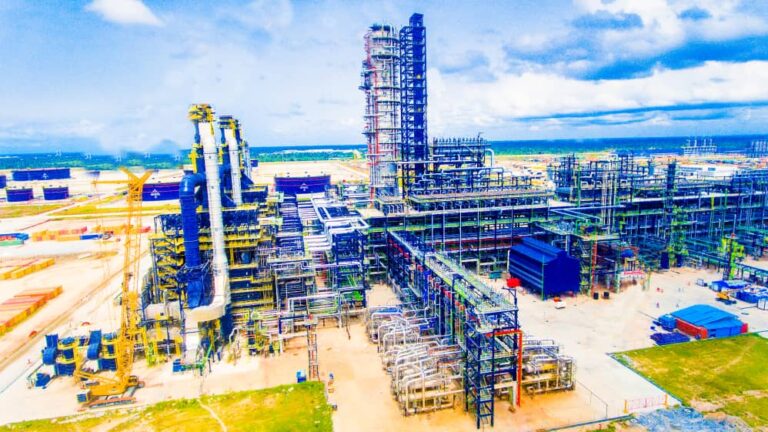
FROM its initial estimated cost of $9 billion, the total cost of constructing the Dangote refinery and petrochemical plant more than doubled to $18.5 billion, which arose from the Nigerian microeconomic environment vis-à-vis its relations with the global economy.

The president and chief executive officer of the Dangote Group, Aliko Dangote, had, in 2013, when he announced his intention to construct it, estimated the refinery to cost about $9 billion.

But, as disclosed by the Central Bank of Nigeria’s (CBN) governor, Godwin Emefiele, at the commissioning of the refinery on Monday, May 22, the cost had escalated astronomically by 2017 due to multiple factors.

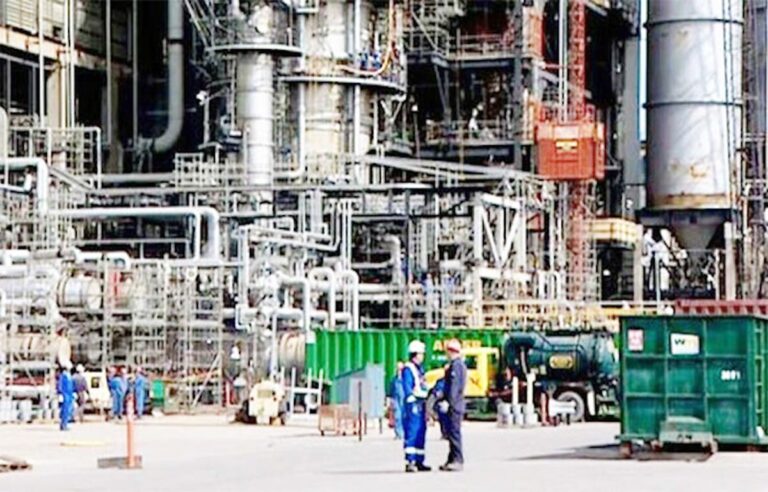
The 650,000 barrels per day (bpd) refinery, the biggest single train refinery in the world, was commissioned by President Muhammadu Buhari and graced by other African presidents, including Nana Akufo-Addo of Ghana and Mohamed Bazoum of Niger Republic.

“Everything that was used for the construction of that refinery was imported; it is, therefore, not surprising that the hard currency needed overshot Dangote’s initial estimated cost of the project,” the executive vice chairman of Highcap Securities Limited, David Adonri, shared his thoughts on the facility with The ICIR.

Adonri expressed that many economic challenges had happened within the construction period, specifically the economic disruption of the Covid-19 and Russia-Ukraine war that caused global inflation.

With the hard currency foreign creditors had pumped into the project, the construction cost was expected to rise, Adonri said, adding that the domestic currency window, witnessed by the sharp depreciation of the naira to dollar over time, also primarily impacted on the project’s final cost.

As of September 2013, Nigeria’s exchange rate was N155.26 per dollar, compared to the about N461/$1 current exchange rate, a check by The ICIR has shown.

Comprising refinery, petrochemical, urea and fertiliser sections, and a subsea pipeline project, the refinery is expected to meet Nigeria’s oil demands and help with its available foreign exchange buffer.

“The commissioning of the Dangote Refinery is a significant milestone and game changer for Nigeria,” a policy analyst and former chairman of the Society of Petroleum Engineers (Nigeria Council), Joe Nwakwue, told The ICIR.

“It signals a change in strategic positioning for Nigeria, moving from a crude exporting country to an oil refining one once again.

“One hopes we sustain the momentum until Nigeria no longer exports crude oil but also exports refined oil and gas products. This will have a massive positive impact on our balance of payments, exchange rate, employment and revenue profile,” he added.

According to Nwakwue, the only challenge, however, would be to ensure the availability and reliability of the plant for efficient and cost-effective operations.

“I believe they are set up to ensure operational excellence,” he added.

Meanwhile, the Nigerian National Petroleum Company Limited (NNPCL) has said Nigeria needs a refining capacity of about 1.52 million barrels per day (mbps) to meet its petrol requirement by 2025.

With NNPCL’s nameplate capacity of 445,000 mbps and Dangote refinery’s 650,000 bps, Nigeria will still have a shortfall of 427,000 bps, equivalent to 20 million litres of petrol daily.

Nigeria, despite being Africa’s biggest crude oil producer, has faced recurring fuel shortages as the country’s dilapidated oil refineries are comatose to refine crude products that could serve to optimal capacity.

The country has relied for many years on importing petrol, diesel and other processed petroleum products.

Nigerian banks, Afrexim, others provided 50% debt finance for $18.5bn Dangote refinery project – Emefiele

GOVERNOR of the Central Bank of Nigeria (CBN), Godwin Emefiele, has disclosed that Nigerian banks and multilateral lending agencies provided 50 per cent debt finance contributions to the success of the $18.5 billion Dangote refinery.

Emefiele, who made the disclosure on Monday, May 22 at the official commissioning of the Dangote Refinery and Petrochemical Company in Ibeju-Lekki,  Lagos, said the Dangote Group had made an official 50 per cent equity contribution to the refinery before getting debt finance support from lenders.

He further said that the chief executive officer of the Dangote Group, Aliko Dangote, had even been offsetting the debts before today’s commissioning of the facility, and had reduced it to $2.7 billion, from $9 billion.


Read Also:

“Dangote is credit-worthy. Nigerian banks like First Bank and Access Bank played key roles in providing debt finance for the project. The CBN also supported the refinery with a N120 billion loan facility.

Apart from the commercial banks, other multilateral lending agencies that supported the refinery with debt financing included the African Development Bank (AfDB), and the African Export-Import Bank (Afrexim)

Emefiele was positive that the refinery investment, the single largest in the world, would save Nigeria the billions of dollars it had been spending on petrol importation.

“The refinery will save us $26 billion worth of foreign exchange and enable Nigeria meet sufficiency on its local petrol consumptions,” he said.

The Dangote refinery has the capacity to produce 650,000 barrels of crude a day, and meet Nigeria’s local consumption needs.

It is powered by a 435-megawatt power plant.

At full capacity, it can meet 100 per cent of home requirements of all refined products, as well as meet export targets. The refinery was designed to process 100 per cent Nigerian crude, with flexibility to process other varieties of crude, including many of the African crudes, some of the middle eastern crudes, and the United States light tight oil.

Emefiele said that Nigeria would gain $10 billion from foreign exchange in exporting refined products to neighbouring west African countries alone.