SENEGAL has emerged Africa Cup of Nations 2025 winner by taking down Morocco to the second position in the final at the Prince Moulay Abdellah Stadium, in Rabat, marking one of the most significant era in African football history.
Papa Gueye secured the first position of the tournament for the West African nation in a most dramatic of circumstances at 94th minute of extra time with a goal, after Brahim Diaz missed the controversial penalty awarded to Morocco, which delayed the match by about 20 minutes.
The last AFCON final decided by more than a single goal was in 1998, and the last final won by more than one goal was Egypt’s 2-0 victory against South Africa in 1998.
The ICIR reports that Nigeria beat Egypt 4-2 in a penalty shootout for third place of the tournament, with Goalkeeper Stanley Nwabali saving two penalties including the first from Mohamed Salah, while Ademola Lookman scored the winning penalty on Saturday.
Nwabali saved the penalty kicks by Salah and Omar Marmoush at the start of the shootout following the teams 0-0 draw in normal time, as no extra time was played for the consolation of a bronze medal.
Victory for Senegal marks a remarkable title defence, further cementing their status as one of Africa’s most consistent football powers, though a win for Morocco would have finally ended a 49-year wait for continental glory, buoyed by passionate home support.
While both nations played for their second continental AFCON title, as Senegal claimed their first in 2021, and Morocco’s only triumph came nearly 50 years ago in 1976. This is the first time Morocco and Senegal meet in an AFCON final, though they’ve played 31 times overall across all competitions.
The Atlas Lions of Morocco being the host of the tournament topped Group A with three strong results and steamrolled through the knockout stages without conceding from open play, after group stage wins over Comoros (2-0) and Zambia (3-0), and a 1-1 draw with Mali.
They recorded narrow but convincing victories over Tanzania and Cameroon before edging Nigeria in penalties in the semifinal.
The north African nation conceded just two goal in seven matches and kept five clean sheets.
Meanwhile, the Teranga Lions of Senegal entered this final as the defending champions and one of Africa’s most consistent sides. They finished top of Group D and progressed through the knockout rounds with strong performances, including a 1-0 semifinal win against Egypt, courtesy of Sadio Mané’s decisive goal, by showcasing both attacking and defensive quality, scoring 12 goals and conceding just two goals.
Only Nigeria have scored more goals at this year’s tournament than Senegal, as the west African country beat Botswana and Benin 3-0 in the groups in between a 1-1 draw with DR Congo, in the knockouts it dispatched Sudan 3-1, beat Mali 1-0, and then edged past Egypt 1-0 in a very tense semi-final.
This is Senegal’s fourth AFCON final appearance and their third in the last four editions, establishing them firmly among Africa’s elite teams, while tonight represents Morocco’s first AFCON final since 2004, and their biggest opportunity to bring the trophy home for their first AFCON title for 50 years.
Both teams have qualified for the World Cup this year, though Senegal supporters are unsure whether they can attend the team’s first two games in the United States because of a travel ban imposed by the administration of US President Donald Trump but Moroccan fans will not be affected by the travel ban, the Atlas Lions are in Group C with Brazil, Haiti and Scotland.
The Teranga Lions are expected to play their first match against France in New Jersey on June 16, four days before facing Norway in the same stadium. Senegal will face a playoff winner between Bolivia, Suriname and Iraq in Toronto for their final group game on June 26.
The hosts of the tournament traditionally have strong finals records, as 11 of the 14 previous hosts who reached an AFCON final went on to win the title but the only hosts to lose an AFCON final in normal time were Tunisia in 1965.
History has repeated itself tonight as the last time Morocco hosted the AFCON was in 1988 and it lost by a single goal in the semi-finals to eventual winners, Cameroon, who advanced to the final where they overcame Nigeria to emerge as champions.
Eight years earlier, a Nigeria defeated Morocco by the same margin on its way to winning the tournament at the expense of Algeria.
In November 2009, Morocco lost against Cameroon, where Pierre Webo and Samuel Eto’o got the goals, though they been unbeaten in their past 39 matches.
After delivering a moment of brilliance to push his side into the lead, Senegal’s Gueye is the Player of the Final.
Senegal’s only Africa Cup of Nations title came in 2022, with Sadio Mané the driving force behind the Lions of Teranga as they defeated Egypt on penalties in the final in Yaoundé.
After missing a spot-kick in normal time, Mané redeemed himself in the shootout by converting the decisive penalty, sealing Senegal’s first-ever AFCON crown. The victory crowned a historic moment for the 2002 World Cup quarter-finalists.
Ahead of the final, Senegal’s coach Pape Thiaw said he hoped the Africa Cup of Nations showdown against Morocco would not be Sadio Mané’s last appearance for the national team, adding that the former Liverpool forward could still reconsider his decision to step away.
Thiaw’s comments came in response to Mané’s remarks after Wednesday’s semi-final victory over Egypt in which he scored the winning goal, when he suggested he would not feature at another AFCON, after the 2026 World Cup in North America in June and July, by which time he will turn 34.
The next Cup of Nations is due to take place in 2027 in Kenya, Tanzania and Uganda.
The last time Morocco hosted the African Cup of Nations (AFCON) in 1988.It lost by a single goal in the semi-finals to eventual winners, Cameroon, who advanced to the final where they overcame Nigeria to emerge as champions.
Eight years earlier, at the same stage, Nigeria defeated Morocco by the same margin on its way to winning the tournament at the expense of Algeria.
On Sunday, 18 January 2025, Morocco confronts Senegal in the finals of the AFCON 2025 tournament having avenged historic semi-final losses to both Cameroon and Nigeria in the quarter and semi-finals of the competition. The final match will be staged at the stadium in the capital city, Rabat, named in memory of the brother of Morocco’s penultimate King Hassan II and uncle of current King Mohammed VI, Moulay Abdallah ben Ali Alaoui, who died of cancer in December 1983 at the untimely age of 48.
David Goldblatt begins his magisterial book, The Age of Football: The Global Game in the Twenty-First Century, with the observation that despite its colonial origins, football in Africa has “served widely as an instrument of the independence movement and, later, in the shape of the Confederation of African Football (CAF) and the continental tournaments it created, a practical example of pan-African co-operation and identity.” Reflecting this history, African football has been called “the rebellious game.”
Amidst the football spectacle that will unfold in the match, the AFCON finals in Rabat on 18 January 2025 will symbolise an underlying narrative in African football that it hitched closely with the narratives of Africa’s histry and its politics. It will pit two countries with some of the oldest traditions of organised football in Africa under the watch of a man from the first country to play the game on the continent.
164 years after the first official game of football on the African continent, a black billionaire from the country where the game made its African landfall, Patrice Motsepe, will orchestrate the ceremonies of the AFCON finals as the president of the CAF. His elder sister, Dr. Tshepo, happens also to be the spouse of South Africa’s current president, Cyril Ramaphosa. Few, if any, among the Cape colonists who brought the beautiful game to the continent could have divined the trajectory or symbolism of this moment.
Africa’s earliest documented football match reportedly occurred in 1862 between “white colonial bureaucrats and soldiers in Port Elizabeth and Cape Town, South Africa.” It did not involve any natives. In a symbolism of the journey to the right of Africa’s populations to participate in a kickabout, the two teams that will line up in the finals will represent two of the countries with the more established traditions of organised football on the continent.
Association Sportive et Culturelle (ASC) Jeanne d’Arc, Senegal’s oldest football club, was founded 102 years ago in 1923 in capital city, Dakar. It has existed continually since then and beside cross-city rivals, ASC Diaraf, remains one of the two most successful football clubs in the country. The club was originally founded by French Catholic missionaries in pursuit of the legend of colonial civilising mission of creating fit young men of character. Interestingly for an institution dedicated to promoting a colonial vision of masculinity, they named it after France’s patroness saint, Joan of Arc, in a symbolism of faith, strength and colonial domination. In doing so, they also created the first seeds of indigenous resistance.
Those seeds were sown earlier in Africa’s Maghrebine coast. In 1906, the first Earl of Cromer and long-serving British Consul-General in Egypt, Evelyn Baring, oversaw in what has become known as the Denshawai Incident the unfair trial and brutal execution of four Egyptians accused of causing the death by heatstroke of a British official, whom they prevented from feasting on their pigeons. The backlash from Egypt’s population ultimately led to the resignation of Lord Cromer in 1907 and inspired a fierce nationalist movement.
While the elite politicians bickered as to how to organise, Egypt’s student movement founded Al Ahly (National Club) in Cairo, a football club rooted in the idea of national pride and unity and with a mission to resist British colonial oppression. Five years later, cross-city rivals, Zamalek Sporting Club was founded as the team of the elite or middle class.
According to World Football, the contest between Al-Ahly and Zamalek is one of the greatest rivalries in world football. Football journal, FourFourTwo, warns that it is “more than a game.” Having begun as a contest between nationalism and colonial collaboration, it has evolved be defined by status and ideology. In reference to this rivalry, French journalist, Laurent Campistron reports a supporter of one of these clubs as having told him: “In this country, you can eventually change your religion or your wife, but never your club.”
Nine years before the formation of Al-Ahly, in June 1898, Club Sportif (CS) Constantinois was founded in Egypt’s neighbour, Algeria. If Egypt was an early model of the nationalist possibilities in football, Algeria was the place that crystallised the insurgent character of football in Africa. David Goldblatt recalls that Algeria’s “football clubs served as clandestine cells for growing nationalism”.
In the middle of the murderous War of Independence, Algeria’s National Liberation Front (FLN) founded its own national football team in 1958, persuading 30 established stars of French football of Algerian origin to abscond to Tunis where they founded Le Onze de l’Indépendance (the Independence Eleven). That team helped to establish the diplomatic credentials of the FLN long before independence in 1962 and the admission of the country into the ranks of FIFA two years later in 1964.
A leading member of the eleven was Rachid Mekhloufi, St-Etienne’s star striker who was to be in France’s team to the 1958 World Cup. At his death in 2024, it was said of Mekhloufi that “he was more than a footballer who mesmerised fans on the pitch. He was a symbol of resistance to many Algerians.”.
The Beautiful Game took nearly two decades to travel from Algeria to its neighbour, Morocco. When it landed in 1917 at the waning of the First World War, it was through French colonial enthusiasts in the form of Racing Athletic Club (RAC) of Casablanca. The game was later to find an insurgent home in Morocco’s most populous city, leading to the foundation in May 1937 of Wydad Club by an elite group of Moroccan resistance to French occupation led by Mohamed Benjelloun Touimi, who would later become a leading member of the International Olympic Committee. 11 years later, in March 1949, a group of working-class youth equally resisting French colonial rule founded cross-city rivals, Raja Club Athletic. Raja’s proletarian origins would later earn it the sobriquet, “The People’s Club“.
These long traditions of community formation and nation building are what give the AFCON its unique place in the hearts of Africans everywhere and in the firmament of world football. These are not traditions that engage the blinkers of the denizens of the world game in the FIFA.
Committed to extracting every penny of profit from the game, they have decided to kill the competition in its current biennial format. Morocco will be the penultimate in this format. The joint hosting by the countries of East Africa in 2028 will be the last. When it resurrects in 2032, it will be held every four years. AFCON-winning manager, Claude Leroy, has described the decision as ‘stupid’.
Many see “colonial overtones” in FIFA’s underlying reason for the change in the calendar of the AFCON which is mostly to suit the convenience of the European game. The irony should ring quite potent that the African game – rooted as it is in anti-colonial history – will be forced to play vassal to the interests whom it had to fight for the oxygen of its own existence.
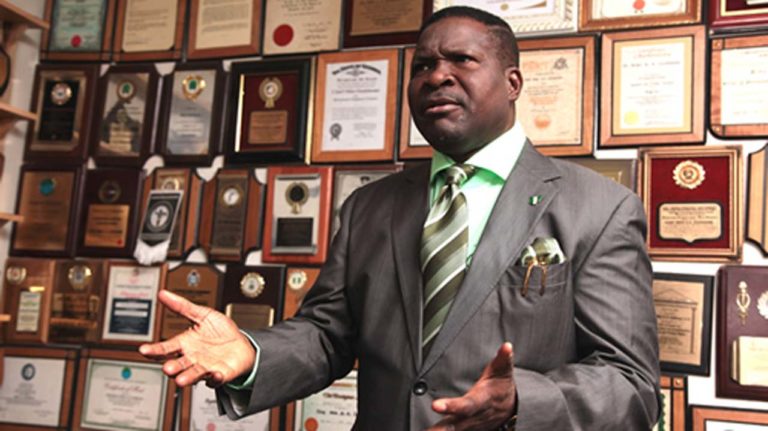
THE Nigerian government has filed a criminal case against Mike Ozekhome, a senior advocate, for allegedly forging and using false documents in a disputed UK property.
According to TheCable, The Independent Corrupt Practices and Other Related Offences Commission (ICPC) filed a three-count charge, marked FCT/HC/CR/010/2026 against the lawyer, on behalf of the Attorney-General of the Federation before a Federal Capital Territory High Court in Abuja on Friday, accusing him of forgery, use of false documents and giving false information in connection with a disputed property in the United Kingdom.
“That you Chief Mike Ozekhome, SAN (M) ’68yrs’ of No. 53, Nile Street, Maitama, Abuja, sometime in August, 2021 or thereabout at a place outside Nigeria i.e. London, within the jurisdiction of this honourable court, directly received house 79 Randall Avenue, London NW2 7SX purportedly given to you by one Mr. Shani Tali, an act you knew constitutes a felony and you thereby committed an offence contrary to section 13 and punishable under Section 24 of the Corrupt Practices and Other Related Offences, Act, 2000,” part of the suit read.
According to the charge sheet, Ozekhome allegedly presented forged documents, including a Nigerian international passport, to support a claim of ownership of a property located at 79 Randall Avenue, London NW2 7SX, during proceedings before the UK First-Tier Tribunal (Property Chamber).
“That you Chief Mike Ozekhome, SAN (M) ’68yrs’ of No. 53, Nile Street, Maitama, Abuja, sometime in August 2021 or thereabout at Abuja within the jurisdiction of this honourable court, while being a legal practitioner and senior advocate of Nigeria did make a false document, to wit: Nigeria passport A07535463 bearing the name of Mr Shani Tali with intent to use same to support claim of ownership of property known and described as 79 Randall Avenue, London NW2 7SX with intent to commit fraud, and you thereby committed an offence contrary to Section 363 and punishable under Section 364 of the Penal Code CAP 532 laws of the Federal Capital Territory Abuja, 2006.
“That you Chief Mike Ozekhome, SAN (M) ’68yrs’ of No. 53, Nile Street, Maitama, Abuja, sometime in August 2021 or thereabout at Abuja within the jurisdiction of this honourable court, while being a legal practitioner and senior advocate of Nigeria dishonestly used as genuine a false Nigeria passport A07535463 bearing the name of Mr Shani Tali to support claim of ownership of property known and described a s 79 Randall Avenue, London NW2 7SX when you had reason to believe that the said document was false and you thereby committed an offence contrary to Section 366 and punishable under Section 364 of the Penal Code CAP 532 laws of the Federal Capital Territory Abuja, 2006,” the charge added.
The Federal Government alleged that the offences were committed around August 2021 in Abuja, but that the documents were later used in the UK proceedings.
The case has not yet been assigned a trial date.
The criminal charge follows growing scrutiny around Ozekhome’s conduct after a UK tribunal judgment reportedly dismissed his testimony as “an invention and contrivance.”
Background
The London case, filed as REF/2023/0155, arose from competing ownership claims over a property located at 79 Randall Avenue, London NW2 7SX between Ozekhome and a woman identified as Tali Shani. While the names in the property dispute are Ozekhome and Jeremiah Useni, a late retired lieutenant-general, Shani told the tribunal that she was the lawful owner.
Ozekhome maintained that he received the house as a gift from ‘Mr Tali Shani’ in 2021, and a witness known as ‘Tali Shani” testified in favour of Ozekhome, claiming that he had “Powers of Attorney” over the property and had transferred the property to Ozekhome.
The witness claimed ownership of the property from 1993, noting that he later appointed Useni as his property manager, describing Useni as an “elder friend and business partner”.
It was this testimony and the documents accompanying it that allegedly drew the attention of Nigerian authorities.
In the criminal charge now before the Abuja court, the Federal Government accuses Ozekhome of knowingly making and using a false Nigerian passport bearing the name Shani Tali to strengthen ownership claims over the London property.
The prosecution listed investigators and a representative of the Nigerian Immigration Service among its witnesses, indicating that official passport records and identity data will be central to the case.
Documents to be tendered include the judgment of the UK tribunal, extra-judicial statements, official correspondence and passport records relating to Shani Tali.
A publication by a legal scholar and former National Human Rights Commission chairman, Chidi Odinkalu, in October 2025 disclosed that Ozekhome was prevailed upon to withdraw from the September 2025 Call to Bar ceremony in Abuja because of the case.
Odinkalu wrote that members of the Body of Benchers (BoB) objected to Ozekhome’s participation following the UK tribunal decision, arguing that his continued role in formally admitting new lawyers into the profession raised serious ethical concerns.
Body of Benchers is not only responsible for the Call to Bar but also houses the Legal Practitioners Disciplinary Committee (LPDC), the statutory body charged with disciplining erring lawyers.
Odinkalu argued that the episode reflected what he described as a deepening crisis of accountability in Nigeria’s legal profession, where senior lawyers often face little or no professional consequence despite damaging judicial findings.
UGANDAN President Yoweri Museveni has been declared the winner of last Thursday president poll, paving the way for his seventh term in office.
The Electoral Commission declared the 81-year-old winner with 71.65 per cent of the vote on Saturday, allowing him to extend his 40-year rule of the East African country.
The ICIRreported that the election was disrupted by violence and an internet shutdown.
There was a heavy police presence around the capital, Kampala as security forces sought to prevent the sort of protests that have hit neighbouring Kenya and Tanzania in recent months.
Former Nigerian president Goodluck Jonathan, representing election observers, told reporters in Kampala that the incidents “instilled fear and eroded public trust in the electoral process.”
Jonathan said the shutdown of the internet “disrupted effective observation” and “increased suspicion” but that the overall conduct of the polls on election day was “peaceful”.
Provisional results showed that Museveni’s ruling party, the National Resistance Movement, had secured a commanding lead in parliamentary seats, even as vote counting was still underway.
Museveni, a former rebel leader who seized power in 1986, has entrenched his grip on the state and security forces, ruthlessly suppressing political opposition over nearly four decades in office.
Kizza Besigye, another leading opposition figure who ran unsuccessfully against Museveni four times, was abducted in Kenya in 2024 and taken back to Uganda, where he is now facing an ongoing treason trial in a military court.
The election period was also marked by reports of violence against opposition groups.
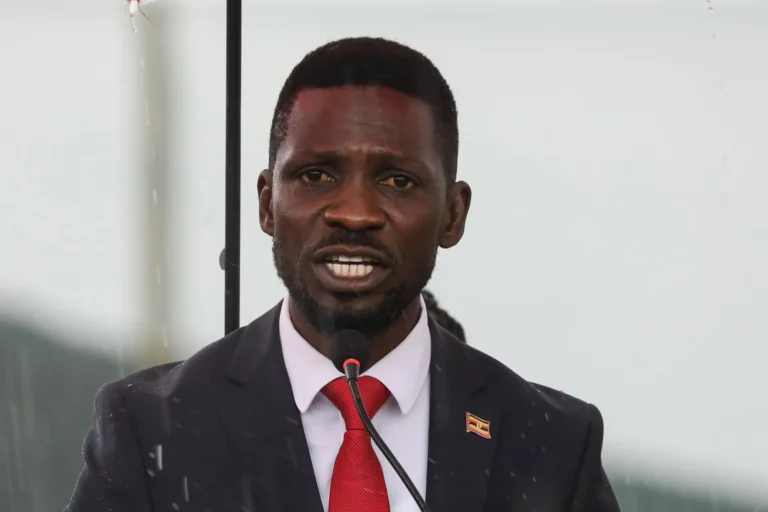
Museveni defeated 43-year-old former singer-turned-politician, Bobi Wine, with 24.72 per cent.
Since entering politics, Wine has come under relentless pressure, with multiple arrests preceding his first presidential run in 2021.
On Friday, Wine, whose real name is Robert Kyagulanyi Ssentamu, said he was under house arrest, and his party later wrote on X that he had been “forcibly taken” by an army helicopter from his compound.
The ICIRreported that the Ugandan police and army denied the allegations.
National police spokesperson, Kituuma Rusoke, said “He is not under arrest,” noting that Wine was at his home and free to move.
Similarly, the Army spokesperson, Chris Magezi, denied the claim, noting that “the rumours of his so-called arrest are baseless and unfounded.”
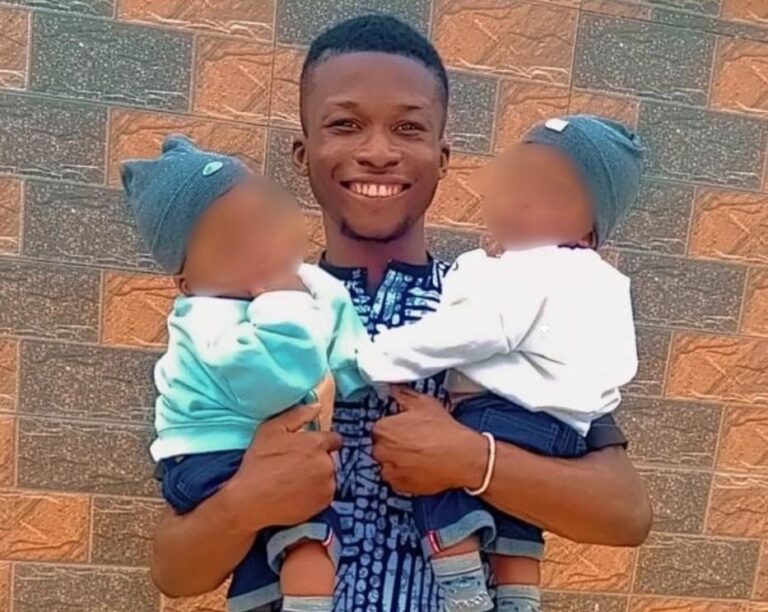
THE Lagos State Government has ordered a postmortem on nine-month-old identical twins, Testimony and Timothy Alozie, following allegation that they died about 24 hours after receiving routine immunisation at a primary health care centre.
According to Punch, the Permanent Secretary of the Lagos State Primary Health Care Board, Ibrahim Mustafa, revealed this on Saturday, noting that investigations had begun and a postmortem had been ordered to determine the cause of death.
“We sympathise with them and we understand the grief these parents will be going through, but we would like for the right things to be done and the right decisions to be taken. It is being investigated by the police, and we are also doing our investigation as a state. We are expecting the postmortem findings. This particular vaccine has been given to many children before and after these kids, and nothing like this has been recorded,” he said.
He said the bodies of the twins were taken to the Lagos State University Teaching Hospital morgue, stressing that the government would make the outcome of its investigation public.
“Once the postmortem findings are out, we will communicate appropriately,” he said.
The ICIR reports that the father of the twins, Samuel Alozie, known on TikTok as Promise Samuel, said he was concerned that the investigation might be compromised to shield the government-owned health facility. He described the process as “government to government.”
“Please, if you are a lawyer, a human rights lawyer, help me. I don’t have money to fight this alone. I need justice for these children,” he pleaded.
The ICIR reported that Alozie’s case gained widespread attention after he posted videos showing his sons’ bodies in separate body bags, alleging the children fell ill and died shortly after vaccination.
In a video shared on Thursday, Alozie said he took the twins for routine immunisation on December 24, 2025, and claimed they became critically weak almost immediately after the injections.
“They could not eat, they could not play, they could not even disturb as they used to. They were just weak,” he said.
According to him, a nurse at the health centre advised that the children be given paracetamol if their temperature rose. He said he and his wife administered the drug and also bathed them in cold water, but their condition did not improve.
“It happened that the immunisation was conducted on the 24th of December in the morning, and on the morning of 25th December, they died. On the 24th, after the injection, they were very weak, and I gave them paracetamol because the nurse said that if the temperature continued, I should give them paracetamol.
My wife bathed them in cold water. They died on the 25th. The two of them died at the same time. The drug weakened them to the extent that they couldn’t talk, they couldn’t eat, they couldn’t play as usual,” he said.
The distraught father said the twins were healthy before the immunisation and that he had always ensured they received their routine vaccines from birth.
“I’m just confused. How can I lose two children, identical twins that I have suffered so much for? Just nine months, they were not sick. Just because I decided to fulfil the righteousness of taking them for immunisation,” he said.
The bereaved father also noted that the nurse who administered the last injections was not the regular official who usually attended to his children. He rejected preliminary explanations from the health centre that the deaths might have been caused by “food bacteria.”
“The nurse is talking about bacteria, food bacteria. She said that it is food bacteria that killed my children. How can food bacteria kill a child? Food that I’ve been giving them from one month to nine months did not kill them,” he said.
UGANDA’S security officials have denied allegations by opposition leader Bobi Wine’s party that he had been arrested by soldiers as counting continued in an election disrupted by reports of at least 10 deaths and internet blackouts.
On Friday, Wine, whose real name is Robert Kyagulanyi Ssentamu, said he was under house arrest, and his party later wrote on X that he had been “forcibly taken” by an army helicopter from his compound.
Reuters quoted the National police spokesperson, Kituuma Rusoke, as saying “He is not under arrest,” noting that Wine was at his home and free to move.
Similarly, the Army spokesperson, Chris Magezi, denied the claim, noting that “the rumours of his so-called arrest are baseless and unfounded.”
Reports show that on Friday, the election day was disrupted by significant technical problems after biometric machines, used to confirm voters’ identities, malfunctioned, and ballot papers were undelivered for several hours in many areas, and violence was unleashed on opposition members in other parts of the country.
The electoral commission said Saturday morning that the 81-year-old President Yoweri Museveni, who has been in power since 1986, held a commanding lead with nearly 72 per cent of the votes. Wine trailed with 24 per cent, with more than 90 per cent of polling stations counted, as final results would be announced at 13:00 GMT on Saturday.
43-year-old Wine has in recent years emerged as President Yoweri Museveni’s main challenger. He brands himself the “ghetto president,” a reference to the slum communities where he grew up in Uganda’s capital, Kampala.
Wine has accused the government of “massive ballot stuffing” and of attacking several of his party officials under the cover of an internet blackout imposed ahead of Thursday’s polls and still in effect on Saturday.
The United Nations Human Rights Office said last week that the elections were being conducted in an environment of “widespread repression and intimidation” targeting the opposition.
Bobi Wine has alleged large-scale fraud in the poll and has urged his supporters to protest.
The election was also plagued by serious technical difficulties, as biometric machines used to verify voters malfunctioned and ballot papers failed to arrive for several hours in many polling stations.
A LAGOS-based father, identified as Promise Samuel on TikTok, has demanded justice after the deaths of his nine-month-old identical twin sons, Timothy and Testimony, whom he said passed away roughly 24 hours after receiving routine immunisation at the Ajangbadi Primary Health Centre in Ojo Local Government Area of Lagos State.
The case first gained widespread attention on Wednesday, January 15, after Alozie shared a series of videos on TikTok account ‘promise.samuel099’, explaining how his twins died.
According to Alozie, the twins were taken to the health facility in the morning of December 24, 2025, for what he described as a routine immunisation appointment. He said their condition deteriorated almost immediately after the injections were administered.
He explained that the children became unusually weak, stopped eating, and were unable to play. Despite following the nurse’s advice to administer paracetamol to reduce their body temperature, both children reportedly died in the early hours of Christmas Day, December 25.
“It happened that the immunisation was conducted on the 24th of December, in the morning. And in the morning of 25th December, they died. On that 24th, after the injection, they were very weak, and I gave them paracetamol because the nurse said that if the temperature continued, I should give them paracetamol.
“My wife and I, after we left the health centre, went home and gave the two of them paracetamol, which didn’t solve anything. We even bathed them. My wife bathed them in cold water. They died on the 25th. The two of them died at the same time. And the worst part of it is that the drug weakened two of them to the extent they couldn’t talk, they couldn’t eat, they couldn’t play as usual, like they couldn’t disturb as they used to do,” he said.
Alozie accused staff of the primary healthcare centre of administering either expired vaccines, fake drugs, or an excessive dosage, alleging negligence and wrongdoing.
He insisted that the twins had been healthy since birth and had never suffered from any serious illness, adding that he only given them paracetamol.
“I’m just confused. How can I lose two children, identical twins that I have suffered so much for? Just nine months, they were not sick. Just because I decided to fulfil the righteousness of taking them for immunisation. So, it will not be that, ah, your children, you didn’t immunise them? You didn’t give them proper health.
“On my own, I decided that I would take them to that place, not because they were sick. From the first day I gave birth to them, I’ve been taking them for immunisation.”
Alozie also alleged irregularities in the administration of the vaccines, noting that the nurse who handled the final immunisation was different from the one who had previously attended to his children.
He further claimed that the infants were given deworming medication without his knowledge or consent.
“You gave them two worm medicines, and you didn’t ask me, and you didn’t even tell me that you were giving them worm medicine to deworm them. Did I tell you that my children are having a worm problem? Or did I tell you that I wanted you to give them worm medicine? No. Then you explained to the government that you wanted to give them because you are helping me. Helping me to give my two nine-month-old children worm medicine?,” he added.
The bereaved father dismissed explanations reportedly offered by the health facility, which attributed the deaths to food contamination.
“The nurse is talking about bacteria, food bacteria. She said that it is food bacteria that killed my children. How can food bacteria kill a child? Food that I’ve been giving them from one month to nine months, the food didn’t kill them. How is it possible?”
As of the time of filing this report, neither the Lagos State Ministry of Health nor the Lagos State Primary Health Care Board has released an official statement on the incident.
The bereaved father further called on lawyers and human rights advocates to assist him, saying he lacked the financial resources to pursue justice alone.
The incident adds to a growing list of allegations of medical negligence in Nigerian health facilities, which have in recent weeks triggered public outrage and official probes in several states.
On January 13, 2026, the Kano State Hospitals Management Board ordered a full investigation into the death of Aishatu Umar, a housewife and mother of five who reportedly died following complications from a surgical procedure at the Abubakar Imam Urology Centre in Kano.
The board said the probe would be transparent and professional, assuring the public that appropriate action would be taken if negligence was established.
A family member, Abubakar Muhammed, had alleged in a Facebook post that a pair of scissors was left inside Umar’s body during surgery carried out in September, causing her severe abdominal pain for months. According to him, repeated hospital visits yielded only pain relief medication until scans conducted days before her death revealed the foreign object. She reportedly died while preparations were underway for corrective surgery.
The ICIR reports that the Kano case came days after award-winning Nigerian author Chimamanda Ngozi Adichie publicly accused Euracare Multispecialist Hospital in Lagos State of medical negligence in the death of her 21-month-old son, Nkanu Nnamdi Adichie-Esege.
Adichie alleged that her son was administered an overdose of propofol during a medical procedure, leading to seizures and cardiac arrest. The hospital denied the allegations, while Adichie issued a formal legal notice accusing the facility and its staff of professional misconduct.
DAYS after publicly calling for an amicable resolution to the political crisis in Rivers state, the four members of the State House of Assembly who distanced themselves from the impeachment move against Governor Siminalayi Fubara have made a U-turn, declaring renewed support for the process.
The lawmakers, including the Minority Leader, Sylvanus Nwankwo; Peter Abbey, representing Degema Constituency; Barile Nwakoh of Khana Constituency I; and Emilia Amadi of Obio/Akpor Constituency II, announced their decision on Friday, January 16, during a live broadcast from the frontage of the Rivers State House of Assembly complex.
“You will recall that on the 12th day of January 2026, myself and my colleague, Honourable Peter Abbey, addressed the press, wherein we made a plea to our colleagues to seek a political solution to this impasse that is going on between the Assembly and the Governor of Rivers State.
“During the pendency of this appeal, we found out that the governor and the deputy governor have all employed their media boys and aides to continuously attack the Rivers State House of Assembly instead of seeking the political solution which we offer. It is on this basis that I, Honourable Sylvanus Nwankwo, and my fellow colleague here, Honorable Peter Abbey, say that the impeachment proceedings should continue,” Nwankwo said.
Nwakoh and Amadi also added that they decided to back the impeachment after concluding that the governor and his deputy had shown no willingness to resolve the crisis through dialogue.
The ICIR reported that Nwankwo, and Abbey on January 12, cited interventions by leaders, residents, and constituents, and appealed that the impeachment process be stalled.
Earlier, a faction of the All Progressives Congress (APC) in the State, led by Emeka Beke, rejected the impeachment proceedings, warning that the move could further harm the state’s fragile political environment.
The development followed the Assembly’s failure to reconvene for plenary on Thursday, one week after adjourning its last sitting, amid speculation of internal disagreements among lawmakers.
The lawmakers’ latest position comes amid growing tensions within the Assembly, led by Speaker Martin Amaewhule, who had last week commenced impeachment proceedings against the governor and his deputy over alleged gross misconduct.
The allegations include the demolition of the Assembly complex and the alleged spending of public funds without legislative approval.
The Majority Leader, Major Jack, presented a notice signed by 26 lawmakers, outlining multiple allegations of gross misconduct against the governor.
The allegations include extra-budgetary spending of over N800 billion without legislative approval, withholding funds allocated to the Assembly Service Commission, demolition of the Assembly complex, and defiance of Supreme Court rulings on legislative autonomy.
A separate notice was also read against the deputy governor for allegedly conniving in unconstitutional expenditures.
Amaewhule announced that the notices would be served on the governor and his deputy within seven days, in line with the Constitution. Last Thursday, Fubara and Odu were said to have been served the impeachment notice over alleged gross misconduct.
However, Fubara said he had yet to receive the notice from the lawmakers.
The development marks a renewed escalation of the protracted political crisis in the state, stemming from the fallout between Fubara and his predecessor, Nyesom Wike, now the Minister of the Federal Capital Territory.
Previous impeachment attempts in 2025 was halted by presidential interventions, before a state of emergency was declared by President Bola Tinubu.
The ICIR reports that following the decision of the lawmakers who have now backed the governor’s impeachment, the Assembly has reportedly written the state Chief Judge to constitute a panel to probe the alleged offences against the governor and his deputy.
THE bustling Lagos International Trade Fair Complex, spanning 300 hectares along the Lagos-Badagry expressway and home to numerous traders, remains a wrecked site after a demolition by the Lagos State Government in September 2025. The sections of the market, including the New Mandela and ASPAMDA, are left with ruinous foundations, beams, walls, and roofs. A visit by The ICIR reveals that amid significant financial losses, traders are still living in fear, and uncertainty.
“It was a surprise visit to our compound,” Sunday Ipadeola, an over 70-year-old man, recalled. He watched as five blocks of buildings owned by Magnum Group were sternly torn down.
The demolition began on Thursday, September 25, and was carried out without prior warning to the property owners, according to traders. At the New Mandela Plaza, not less than 19 buildings’ foundations, beams, walls and roofs were severely damaged. Three buildings were completely pulled down, leaving behind debris. Traders say they are still dumbfounded over the incident.
At the Auto Spare Parts and Machinery Dealers Association (ASPAMDA) section of the market, about 18 plazas under construction had their foundations, beams, walls and roofs damaged and dangling in the air.
Aerial view of the section of the New Mandela where 19 buildings were affected
A leading trade and industry hub
The International Trade Fair Complex is situated along the Lagos-Badagry Expressway in the Ijo LGA of the State. Covering over 300 hectares, the complex attracts about two million visitors daily and hosts more than 30,000 businesses, according to official records, making it a vibrant centre of economic activity.
It has consistently contributed to Nigeria’s economic development by enabling business interactions, drawing investments, and providing opportunities for both local and international companies. Its extensive infrastructure and prime location make it the top choice for businesses wanting a strong presence in the West African region.
As a leading trade and industry hub, it continues to play a crucial role in shaping Nigeria’s commercial landscape. Historically, the first Lagos International Trade Fair took place from Sunday, November 27 to Sunday, December 11, 1977, under the then Head of State and former President, Olusegun Obasanjo.
Some blocks of plazas demolished at the ASPAMDA section
Demolition leaves traders devastated and fearful
“As early as 8:00 am, on that fateful day, officials from Lagos State entered our compound after removing the perimeter fence with their caterpillar, and started breaking the building’s walls,” Ipadeola says, explaining how he hurriedly informed his boss.
His complexion still wears a shocking look as he expresses how he felt that day. “I felt bad, even from my tone, on that day, it was not easy for me to take it.”
The demolition has left me devastated, says Magnus Ike, the chief executive officer (CEO) of Magnum Group.“When something happens to you, you get flabbergasted, you lose it,” he utters indistinctly.
“It is devastating,” Ike puts it succinctly, adding that there is no way he can fully explain how he has been coping with the damage done to his buildings.
“That day, I was with three of my foreign partners. We were discussing business when the demolition started,” he recollects, wondering whether the partners would ever come back, having witnessed the manner in which his buildings were destroyed.
“The man you met downstairs is over 70 years old; he witnessed the incident. In fact, I had to send a team to carry him out of the place that day, hence he would have lost his life,” he recalled.
Site where 3 buildings were completely pulled down at the New Mandela section
Millions of naira drenched
For Ike, the worth of the damage to his buildings is massive. He explains, “As you can see, it’s a very big complex; inside and outside were knocked down. The glasses we used here are 15 millimetres, and each one is about N85,000.”
He stated that the compound floor marbles were destroyed, the perimeter fence was pulled down, the imported security doors were damaged, and all the industrial lights were destroyed.
The Magnum Group boss, whose company deals in anything battery-generated and clean energy, including solar, lithium, and EV motorcycles, also disclosed the cost of industrial lighting unit at N1.3 million.
Benjamin Michael, who deals in kitchen equipment, witnessed how three of the plazas beside the building housing his shop were completely pulled down, describing it as a great loss.
“Not less than three plazas were flattened beside my shop,” he said, adding: “Many other structures were badly damaged, including our building, as you can see.”
When the caterpillar was punching the buildings, goods were falling off, adding that the goods destroyed ran into millions of naira.
“Many of the products were lubricants. The destruction was massive,” he said, adding that the three plazas that were levelled to the ground were warehouses with goods inside them.
Recalling a similar incident in September 2023, Michael said: “They (Lagos state government) came, broke some walls, cut off some protectors, but the demolition wasn’t as bad and inhuman as this one .”
Magnus Ike, CEO of Magnum Group
Trade Fair Board comes under fire
Traders who spoke with The ICIR believe that the Lagos International Trade Fair Complex Management Board (LITFCMB) share in the blame for the demolition.
After the incident, Ike says, he went to the Lagos authorities to enquire why his properties built about five years ago, and having all the necessary building approvals granted by the Federal Ministry of Works and Housing and the Trade and Industry Ministry, were bulldozed.
According to him, all he got was “we’re sorry,” as the state authorities claimed they issued notice to the Trade Fair management.
“Having demolished my buildings, now they are asking me to come for approval, Ike says, lamenting, “That’s what I got out of it. I came back and started borrowing money again to rebuild”.
“We have actually rebuilt to like 90 per cent. What is left now are those areas that need to wait for about 28 days before we can continue reconstruction,” said Ike.
He presumes that even if one wants to press charges, the person will further be frustrated, decrying that Nigeria’s judicial system has failed the masses.
“All we’re focused on now is putting our buildings back in order, even though there is annoyance when we look at the destruction,” Ike added.
Where 3 buildings were demolition to the ground at the New Mandela section
LITFCMB fails to respond to inquiries
On December 10, the reporter sent an enquiry via email to the Lagos International Trade Fair Complex Management Board (LITFCMB) but received no acknowledgement. Several calls on the phone numbers provided on its official website were not connecting to networks.
On December 12, the reporter visited the office of the trade fair management board and met with the general secretary, Ayinde, who acknowledged receipt of his enquiry addressed to the LITFCMB Executive Director/CEO, Vera Safiya Ndanusa.
In a follow-up with her on Tuesday, December 16, Ayinde replied, “Once your feedback is ready, we will get back to your organisation.”
A subsequent follow-up with her on Thursday, December 18, was not responded to, and the trade fair management has yet to reach out as of the time of filing the report.
Plazas demolished at the ASPAMDA section
ASPAMDA executives declined to comment
Frantic efforts were also made to have the ASPAMDA executives comment on the issue, but to no avail.
On December 2, the reporter visited its secretariat and met with its public relations officer, Emeka Anoruka, who promised to inform his president and respond accordingly.
Three days later, the reporter shared his enquiry via a WhatsApp message to confirm the number of plazas and shops that were affected, and other related enquiries, including what the association was doing to resolve the issue at hand.
“My brother, please wait till next week. The president is very busy now; his first son is getting married tomorrow, so everything will be after that,” he responds.
On December 9, when a follow-up was made to him; he retorted: “Oga, we don’t have time for all these things now, the president is too busy. He can’t find time for that. You people came late.
“We are rounding off for the year. We’re compiling yearly expenditure for general meetings. We’re rounding many things now.”
When the reporter persisted, Anoruka unwittingly confirmed the association had started repairs of the plazas affected by the demolition and said nothing further.
Where 3 buildings were demolition to the ground at the New Mandela section
Losses go beyond money as traders recount emotional damage
Besides the financial losses, traders say they have been left with emotional damage. Michael, the kitchen equipment seller, shared his worries. “Since this period, I have been apprehensive. The day of the demolition, my BP (blood pressure) shut up because I was terrified when I saw the damage they did to the one nearby.
“Weeks have passed, but things have not been normal again because every day I keep entertaining that fear – what could be, when next.”
To him, the emotional torture is not something that can be easily forgotten. His fear has been heightened by the threat that the Lagos State government is not backing down on its enforcement of physical planning regulations at the Trade Fair.
Patched walls at the Magnum Group compound
Calls for state powers to be clearly defined
Following the September 2025 incident, traders now want the powers of the state government to be clearly spelt out.
Michael recalls his line of business officially moved into the trade fair in 2000, and that the spare parts traders moved in since 1995, approximately.
“If the Trade Fair Management are conceding that it’s now within the powers of the Lagos state government to regularise the construction of buildings here, then let then inform the stakeholders that henceforth it’s the Lagos state government that is in charge of regularising the structures so that after having done with what you need to do with the management board, you now go to the government to finalise whatever that is therein for them to approve,” he urged.
Plazas demolished at the ASPAMDA section of the market
Uncertainty still grips traders three months after
Uncertainties now pervade the minds of the traders as they say the shocking demolition has struck a blow on them and left them to trade daily in fear.
“It’s uncertain as we’re still confused to this moment. We don’t know where we are,” Paschal Okechukwu Udeh, the chief executive officer of Trade Fair City Parks Nigeria Limited, expressed concern, saying: “We’re just looking at the President to come to our aid to help us.”
He recalls that on the day of the incident, one of his staff members alarmed him about the state government being at the complex with their caterpillars and bulldozers, smashing the buildings.
“I hurriedly came out of my home, and saw them,” he said, stressing that he’s still in shock, like other traders, over the incident. “No one has been able to define it up to the moment.”
His understanding is that since the complex is under the Federal Ministry of Trade and Commerce, traders have nothing to do with the Lagos state or its agencies.
“It’s the federal government that gave us this place,” he notes, wondering why the state physical planning agency woke up that morning to demolish buildings without prior notice whatsoever.
“But I don’t think that is the argument. This is a kind of intimidation,” Udeh thinks otherwise. His reason is that the Lagos state officials have the Trade Fair management to whom they’re supposed to communicate, or the Federal Ministry of Trade and Commerce.
“They’re supposed to parley with them so that they can discuss and find out a way forward because we pay ground rent here every year to the federal government,” he said.
His viewpoint is also anchored on the fact that since the traders pay enormous ground rent to the federal government, any demand by the state is tantamount to a double taxation on the traders.
The reporter observed that traders have started to repair broken walls and refix the dangling pillars, besides other reconstruction works. He further gathered that what was being done was for the traders to find a place to secure their goods, not necessarily because a concrete understanding had been reached with the state government over the matter.
Udeh explained that the traders were agitated and afraid, and had to approach the Lagos physical planning authority to ask questions because most of the buildings were warehouses with goods inside.
“When they came wrecking the buildings, we spoke with them, and they said they were actually sorry that we should go and safeguard our goods.
“So, safeguarding them doesn’t mean that we have to leave them outside for rain or sun to beat, he said, adding; “ We’re still patching those places they broke to amend them so that we can contain our goods till they come out with the whitepaper that will serve everybody. We’re still waiting!”
According to Udeh, the complex has not less than 15 workers in a warehouse and over 30,000 employees, and up to 500,000 workers serve in the about 50,000 to 150,000 plazas and shops at the trade fair, which the reporter couldn’t confirm.
“So, if these people move out on the streets because there is no place for them to trade, there will be another catastrophe in Nigeria,” he worried.
He urged the federal government to look into the matter critically, as the traders are helping the nation in promoting business activities.
Dangling pillars after the demolition at the ASPAMDA section of the market
Lagos government vows to enforce compliance
In an 8-point resolution sent to the reporter by Mukaila Sanusi, director of public affairs at the Lagos State Ministry of Physical Planning and Urban Development, the state government vowed zero tolerance for illegal and unapproved developments within the Trade Fair Complex.
It states that, although the complex is on federal land, it doesn’t exempt developers from obtaining necessary planning permits in line with the state’s physical planning laws.
According to the state authorities, the Supreme Court Judgment of 2003 (Attorney-General of Lagos State v. Attorney-General of the Federation), and the Lagos State Urban and Regional Planning and Development Law 2019, as amended, empowers Lagos State to regulate and enforce physical planning laws.
It maintains that these legal instruments empower the state to regulate physical development within its territories, including federal lands, except for areas under exclusive federal use, such as military formations.
The commissioner for physical planning, Oluyinka Olumide, reiterates that the enforcement focuses solely on the approval status of physical developments.
‘It is not negotiable for all structures within the confines of Lagos State as stipulated by the Lagos State Urban and Regional Planning and Development Law 2019 as amended,” Olumide insists.
Reconstruction works began at the ASPAMDA section of the market
‘Law vesting trade fair in the federal government remains in force’
Martin Okpaleke, a Lagos-based legal practitioner, conversant with the origin and development of the complex, explained that the law vesting the Trade Fair Complex in the federal government is still in force.
He specifically noted that the Lagos International Trade Fair Complex Management Act vested the complex in the LITFCMB, recognising it as a body corporate. He submits, “So, the land remains under the federal government.”
According to him, the fact that the land is still vested under the federal government doesn’t mean that the Lagos state government can’t enforce physical planning compliance.”There’s a distinction between the vesting of title in the federal government in the complex through acquisition and the exercise of planning powers,” he clarified.
“Urban planning authority is vested in a state. That is the essence of the Supreme Court judgment of 2003,” Okpaleke clarified, meaning that technically, the state government can exercise planning powers.
He believes the proper approach should have been intergovernmental which both powers need to strengthen for all necessary approvals and for the betterment of the nation.
Apart from the vesting of title, Okpaleke notes that the Trade Fair is also an enterprise under the Public Property Privatisation and Commercialisation Act.
“It’s an enterprise, a business, being run by the federal government,” he emphasises. “So, it doesn’t make sense for Lagos state to jump up unilaterally.
The barrister noted that while similar laws exist in other jurisdictions, one hardly hears of demolitions because they tend to be very proactive in handling issues that arise.
“Have you noticed that you really hear reports of demolitions in those jurisdictions. They tend to be proactive. Then, there are opportunities for correction, but if the developers want to have their way, there are penalties.
“Only in Nigeria that the government will wait for people to exhaust their resources, put up something, and the next thing is to go on a demolition spree,” Okpaleke said.
NIGERIA’s year-on-year inflation rate stood at 15.15 per cent in December, relative to the November 2025 headline inflation rate of 17.33 per cent, the National Bureau of Statistics (NBS) report has shown.
The report, released by the statistics office on Thursday, January 15, showed that the December headline inflation rate was 19.65 per cent lower year on year than the rate recorded in December 2024 (34.80 per cent).
The Statistician-General of the Federation, Adeyemi Adeniran, said that following the completion of the recent rebasing exercise, the CPI report was centred on a new CPI base year of 2024 and a weight reference period of 2023.
It further revealed that the headline inflation rate (year-on-year basis) decreased in December 2025 compared to the same month in the preceding year.
On a month-on-month basis, the headline inflation rate in December 2025 was 0.54 per cent, which is 0.69 per cent less than the rate recorded in November 2025 (1.22 per cent).
Accordingly, this means that in December 2025, the rate of increase in the average price level was lower than in November 2025.
“At the divisional level, the three major contributors to the headline inflation were food and non-alcoholic beverages: 6.06 per cent, restaurants & accommodation services: 1.96 per cent, and transport: 1.62 per cent; while the least contributors were recreation, sport, and culture: 0.05 per cent, alcoholic beverages, tobacco, and narcotics: 0.05 per cent, and insurance and financial services: 0.07,” the statistics office said.
The report also showed that the food inflation rate in December 2025 was 10.84 per cent on a year-on-year basis, while on a month-on-month basis, the food inflation rate in December 2025 was -0.36 per cent, down by 1.49 per cent compared to November 2025 (1.13 per cent).
The decrease, the statistics office said, could be attributed to the rate of decrease in the average prices of tomatoes, garri, eggs, potatoes, carrots, millet, vegetables, plantain, beans, wheat grain, grounded pepper, onions, among others.
Additionally, core inflation, which excludes the prices of volatile agricultural produce and energy, stood at 18.63 per cent in December 2025 on a year-on-year basis. On a month-on-month basis, the core inflation rate was 0.58 per cent in December 2025.
The inflation rate of the sub-indices for December 2025 shows that only energy increased significantly (2.74 per cent), while other indices decreased, for example, farm produce (-0.41 per cent), services (0.15 per cent) and goods (0.64 per cent).
Adeniran also explained that the December 2025 year-on-year headline inflation rate, including all other sub-indexes were obtained through the maximisation of the index reference period, that is, using a 12-month index reference period where the average CPI for the 12 months of 2024 is equated to 100.
” This is not the same as the single-month index reference period, in which December 2024 was set to 100,” he said.