The Federal College of Horticulture, Dadin-Kowa (FCHDK), is slated to receive N133 billion for capital projects in the proposed 2026 budget, an amount that would exceed the allocations for many of Nigeria’s leading federal universities if approved.
Analysis of the 2026 Appropriation Bill showed that the total allocation for the college stands at N135 billion (N135,782,890,354) with N2.7billion for total recurrent and N133bn dedicated to capital expenditure.
The capital allocation covers projects unrelated to horticulture, including the construction of religious centres, urban roads, and the procurement of e-hailing vehicles in Lagos.
Comparison with major federal universities
By comparison, several of Nigeria’s top federal universities received significantly lower allocations for 2026:
University of Nigeria, Nsukka (UNN): N49.74 billion
Ahmadu Bello University, Zaria (ABU): N48.76 billion
University of Calabar (UNICAL): N43.83 billion
University of Ibadan (UI): N39.57 billion
University of Maiduguri (UNIMAID): N37.75 billion.
In each case, the FCHDK allocation is more than double the funding of these top institutions.
In total, the combined allocations for all federal universities in 2026 amount to N1.044 trillion, meaning the FCHDK budget alone represents roughly 12.7 per cent of the total federal university allocations.
Projects outside its mandate
The Federal College of Horticultural Technology, located in Dadin-Kowa, Yamaltu Deba Local Government Area of Gombe State, is a government-owned tertiary institution established in 2002 by President Olusegun Obasanjo’s administration, with a mandate to train and improve manpower in horticultural and landscaping technology.
Despite its mandate as a specialised institution for horticultural research and training, FCHDK’s 2026 budget includes projects that span multiple sectors.
For instance, the college proposed to spend N140 million for worship sites in ‘various locations’ in Yamaltu-Deba federal constituency Gombe and N70 million for prayer centres in Kaduna.
It has also budgeted to spend over N1 billion for “fairly used e-hailing cars” and road construction in Lagos, N350 million for community policing vehicles in Kano, N470 million for hospital equipment in Sokoto and Kaduna.
Similarly, the budget allocates N1.05 billion for the supply of Keke Napep (tri-cycle) to beneficiaries in Kaduna State, N1.05 billion for the rehabilitation of selected roads in the state, N280 million for the construction of VIP guest palaces for traditional rulers in selected locations in Gombe State, and N70 million for a comprehensive free medical outreach in Sabon Gari Federal Constituency, Kaduna State.
It further earmarked multi-million naira for solar streetlights and transformers across several states inb the country.
The ICIR analysis also showed that N133 billion allocation is nearly 50 times the college’s recurrent expenditure of N2.7 billion.
The ICIR reported that while there are no laws in Nigeria that explicitly fault MDAs for carrying out projects against their mandate, former president, Muhammadu Buhari and the Independent Corrupt Practices and Other Related Offences Commission (ICPC) had condemned the insertion of several constituency projects by federal lawmakers.
The pattern mirrors broader trends in Nigeria’s budgeting process, where agencies are routinely saddled with projects outside their statutory responsibilities. In the 2025 budget alone, the National Assembly inserted over 11,000 projects valued at N6.93 trillion, many of which were unrelated to the core mandates of the institutions tasked with executing them, according to Budgit.
The civic organisation noted that public funds were redirected to religious centres, boreholes, ICT initiatives, and “empowerment of traditional rulers,” highlighting a systemic culture of patronage and waste.
The ICIR, in its Open Contract Reporting project, reported many constituency projects poorly implemented or abandoned in local communities.
A recurring pattern with Federal College of Horticulture, Dadin-Kowa
This is not the first time FCHDK, has received disproportionately large allocations. In 2024, the National Assembly approved N42.7 billion for the college, a figure that represented an 11,500% increase from the institution’s initial proposal of N368 million, according to a BudgIT Foundation (Tracka) report.
The funds were earmarked for projects such as the installation of solar streetlights and the purchase of Keke NAPEP tricyclee, initiatives largely unrelated to the college’s core mandate of horticultural training and research.
Martha Oyanta Daniel, the state officer for BudgIT Foundation, described the budget inflation as “not appropriate for a country struggling with loans and a high debt servicing ratio.”
She further emphasised that “projects should be allocated to agencies according to their mandates,” adding that the public must engage actively in tracking government expenditures rather than leaving oversight solely to civic organisations.
THE Nigerian government said its decision to enhance value addition for various non-oil exports, including cocoa, sesame, cotton, and hibiscus leaves (commonly known as zobo), contributed to the increase in non-oil revenue figures in 2025.
The Director-General of the Nigerian Export Promotion Council (NEPC), Nonye Ayeni, who disclosed this on Tuesday, January 20, said exporters were prioritising value addition over raw material exports with refresher trainings for exporters coordinated by the Council.
She said Nigeria’s non-oil exports climbed to a historic high of $6.1 billion in 2025, representing an 11.5 per cent increase from the $5.4 billion recorded in 2024.
She also said Nigeria targeted improvement of its raw materials to avert pressures from Trump’s tariff trade war and improve revenue generation.
“Specifically, in Africa, we exported to 11 ECOWAS countries and 25 other African countries…We also exported cosmetics, cocoa, foodstuffs, and spices to Ghana. A good number of our goods have a good showing in several African countries and Europe,” she said.
On non-oil exports to the US, she noted, “Incidentally, there was an increase in our exports to the United States because of value-addition. From cocoa, we added value and exported cocoa butter, cocoa paste and cocoa liquor.
“We also exported hibiscus, textiles and sesame to the United States,” she added.
Ayeni said data obtained from pre-shipment inspection agencies showed that Nigeria had surpassed its previous performance, describing the 2025 outcome as a milestone for formal, documented trade, citing value-addition impact.
She stressed that Nigeria was also exploring opportunities in the Intra-African trade through the African Continental Free Trade Agreement (AfCTA), adding that “75 exporters were sent to Algeria in 2025 for the African Intra-African trade for matchmaking of businesses for export purposes and exchange of trade ideas and business facilitation.
“This 2025 figure marks the highest non-oil export value achieved in the country for formally documented trade in the country and also from the inception of the council almost 50 years ago. So we have indeed beaten our own records of last year. So, Nigeria has 6.1 billion US dollars in terms of value for non-oil export,” she said.
According to her, the $6.1 billon export value reflects improved activity across several value chains, supported by expanding market access and increasing product diversification.
Beyond value, Ayeni noted that export volumes also rose significantly, with total non-oil exports hitting 8.02 million metric tonnes in 2025, compared with 7.29 million metric tonnes in 2024, representing a 10 per cent increase.
She explained that the strong performance cut across agricultural commodities, processed and semi-processed goods, industrial inputs, and solid minerals, indicating gradual progress in value addition and broader product representation.
“In 2025 alone, Nigeria exported a total of 281 non-oil products. This reflects our steady transition towards value-added exports and deeper integration into global value chains,” Ayeni stated.
The NEPC boss also cautioned that the “impressive figures” did not fully capture the country’s export potential, noting that a significant volume of trade still occurred informally across Nigeria’s land borders.
She said the council was working with the National Bureau of Statistics, the Central Bank of Nigeria (CBN), and other stakeholders to mainstream informal trade into official export records, improve data accuracy, and strengthen policy support for exporters.
Ayeni added that ongoing reforms, export incentives, and capacity-building initiatives would be intensified in 2026 to sustain growth and expand Nigeria’s non-oil export footprint.
ECONOMISTS have warned that Nigerians should cautiously embrace the International Monetary Fund (IMF) projection of 4.4 per cent economic growth outlook for their country, warning that longstanding economic issues are significant barriers to its realisation.
In its latest projections, the IMF raised its growth forecasts for Nigeria to 4.4 per cent from 3.9 per cent, citing improved macroeconomic conditions and economic reforms by the President Bola Tinubu-led administration.
The new projection is contained in the IMF’s latest report for January 2026 World Economic Outlook (WEO) Update, titled “Global Economy: Steady amid Divergent Forces,” and released on Monday, January 19.
According to the IMF, Nigeria’s economy is expected to maintain a steady expansion path, rising from 4.1 per cent in 2024 to 4.2 per cent in 2025, before accelerating to 4.4 per cent in 2026. The new estimate represents a 0.2 percentage point upward revision from the iMF’s October 2025 projection.
It disclosed that Nigeria’s improved outlook mirrored a broader pickup across sub-Saharan Africa, where growth is projected to reach 4.6 per cent in 2026 and 2027.
The Fund attributed the regional performance to “macroeconomic stabilisation and continued reform efforts” across key economies.
Despite the optimism that greeted the forecasts, economists stressed the need for cautious optimism, noting that the government needed to address core legacy issues, including insecurity in the food-belt states, the high cost of credit lending to small-scale businesses, and high import duties.
While inflation has eased since last year December to 15.5 per cent, the structural drivers of costs, especially energy, transportation, logistics and insecurity, remain firmly in place.
Economist Musa Yusuf, who heads the Centre for the Promotion of Private Enterprise (CPPE), told The ICIR that core legacy issues should be properly addressed for the realisation of the projected growth.
“Persistent structural challenges continue to drive inflationary pressures that need to be addressed, such as energy and fuel costs, rising transportation and logistics expenses, insecurity affecting agricultural output, and high cost of credit and import duties,” he said.
Yusuf, a former Director-General of Lagos Chamber of Commerce, stressed that major drivers of inflation, namely goods, beverages, housing, restaurants, transportation and fuel, accounted for 72 per cent of inflation pressures and remained key challenges.
Economist and Senior Analyst at the Financial Derivative Company (FDC), Dumebi Oluwole, made similar submissions and urged the government to build on an improved macroeconomic outlook and formalisation of the economy through the new tax laws.
“We have seen appreciable progress in manufacturing, Telcom and financial services, insurance, banking recapitalisation. We are also expecting more formalisation of the informal economy through the new tax laws, which could help improve productivity levels,” she said.
She stressed that “In a pre -election year, policy pronouncements could bring in more cash and nudge inflation. At the output level, more construction work is expected, which could spur the manufacturing sector.
She added, “The political economy doesn’t live in isolation. There could be a move from the government this year, but they should be cautious not to cause any disruption from the policies.”
In its global forecasts, the IMF projected 3.3 per cent growth for Nigeria in 2026, noting that the world economy remained resilient despite persistent uncertainties. The outlook, the Fund said, reflects a “balancing of divergent forces,” as the negative effects of changing trade policies are being offset by rising investment in technology and artificial intelligence (AI).
For Nigeria, the IMF identified energy prices as a critical factor shaping the 2026 outlook. It projected that “energy commodity prices are expected to decline by about seven per cent in 2026,” largely due to weak global demand.
However, the report noted that oil prices were being supported by what it described as a “soft price floor,” driven by coordinated production management by OPEC+ and crude stockpiling by China, helping to limit downside pressures.
Despite the improved forecast, the IMF warned that risks to the outlook remain tilted to the downside. These risks include escalating geopolitical tensions in the Middle East and Ukraine, with potential spillovers to supply chains; renewed trade tensions and protectionist measures, which could heighten global uncertainty; and high public debt and fiscal deficits, capable of exerting upward pressure on long-term interest rates.
To sustain growth, the IMF urged Nigerian authorities to focus on “rebuilding fiscal buffers” and pressing ahead with “structural reforms without delay.”
The Fund stressed that “Central Bank independence remained critical for macroeconomic stability, especially in an environment of heightened global volatility. It also cautioned that any discretionary fiscal support should be well-targeted and must include clear sunset provisions to ensure such measures remain temporary.
Just like the Nigeria Economic Summit Group’s (NESG) 5.5 per cent economic projection in 2026, the IMF said Nigeria’s ability to meet its 2026 growth target would depend on the “consistent implementation of reforms” and the country’s capacity to withstand domestic and external shocks as the global economy continues to adjust.
OPERATIVES of the State Security Service (SSS) on Monday re-arrested former Attorney-General of the Federation (AGF) and Minister of Justice, Abubakar Malami, moments after his release from the Kuje Correctional Centre in Abuja, in what some have described as a continuation of President Bola Tinubu’s hardline posture against influential figures of the immediate past administration of late former President Muhammadu Buhari.
Malami, a senior advocate, was re-arrested at a facility where he had been remanded over an N8.7 billion money laundering case filed by the Economic and Financial Crimes Commission (EFCC).
The SSS picked him up as he exited the prison facility, acting on a fresh investigation linked to arms allegedly discovered at his residence in Birnin Kebbi, Kebbi State, during EFCC raids carried out in December 2025.
A video that circulated widely on social media showed the former justice minister being escorted by security operatives towards a black pickup truck. In the footage, Malami appeared to question the operatives’ authority, asking to see their identification before entering the vehicle.
The ICIR reports that the development came after days of reported surveillance around the prison by SSS operatives, who were said to have waited out Malami’s detention to re-arrest him immediately after meeting his bail conditions.
Malami’s media aide, Mohammed Doka, had on January 7, alleged there were plans by security agencies to re-arrest his principal. He described the move as an abuse of due process.
In a statement posted via Malami’s official handle, Doka wrote “The Office of Abubakar Malami, SAN, has been reliably informed of plans by government security agencies to rearrest him immediately upon his release, despite being granted bail by a court of competent jurisdiction.
“This development is deeply troubling and raises grave concerns about due process, the rule of law, and personal safety.”
Meanwhile, Malami’s re-arrest marked his continued legal hurdle with the SSS since December 8, 2025, when he was initially detained by the EFCC from December 8, 2025, to December 29, 2025.
Malami, his son, Abubakar Abdulaziz, and one of his wives, Asabe, were consequently remanded at the Kuje Correctional Centre following their arraignment by the EFCC on December 29, 2025, after pleading not guilty to a 16-count charge bordering on money laundering amounting to N8.7 billion.
The EFCC alleged that the defendants conspired to conceal and disguise proceeds of unlawful activities through the use of multiple corporate entities, bank accounts, and high-value real estate transactions across Abuja and other parts of the country.
Bail
Meanwhile, the Abuja Federal High Court, on January 7, granted N500 million bail each to the accused. The presiding judge, Emeka Nwite, in his ruling, ordered that the defendants produce two sureties with verifiable landed property located within Asokoro, Maitama, or Gwarimpa districts of Abuja.
The judge also directed that the documents of the properties be submitted to the court and verified by the Deputy Chief Registrar, while the sureties must depose to affidavits of means.
As part of the bail conditions, the court ordered Malami and the other defendants to deposit their international passports and other travel documents with the court. Each of the defendants was granted N500 million by the court.
They were also barred from travelling outside Nigeria without prior permission of the court.
Court orders forfeiture of Malami’s 57 properties
Following the bail granted to him, the Abuja Federal High Court, on January 7, ordered the interim forfeiture of 57 properties allegedly linked to Malami. The properties, which investigators said were reasonably suspected to be proceeds of crime, were valued at over N213 billion.
They include luxury hotels in Maitama and Jabi, duplexes in Asokoro and Gwarimpa, plazas, filling stations, factories, warehouses, schools, shopping complexes, and more than 100 hectares of land in Kebbi State, among others.
The EFCC alleged that many of the assets were acquired during and shortly after Malami’s eight-year tenure as justice minister.
Malami in trouble, like former CBN Governor Emefiele
The ICIR reports that Tinubu’s government hardening posture against Malami mirrors the sustained legal fireworks on former Governor of the Central Bank, Godwin Emefiele, another powerful figure from the Buhari administration who has remained entangled in multiple criminal cases since his sack as CBN governor in June 2023 by Tinubu.
Several courts also ordered the final forfeiture of millions of dollars, shares, and several prime properties linked to Emefiele, including a 753-unit housing estate in Abuja, high-value properties in Ikoyi and Lekki, Lagos, and cash sums exceeding $2 million.
The former CBN is currently facing various charges ranging from abuse of office to procurement fraud and money laundering.
While Tinubu revved plans to succeed Buhari at the peak of activities preceding the 2023 polls, multiple reports claimed the former apex bank governor indicated interest in the Presidency.
Though he did not eventually participate in the ruling All Progressives Congress (APC) presidential primary, Emefiele presided over the controversial naira redesign and cash swap policy, which shaped Nigeria’s political and economic climate in the months leading to the 2023 elections.
The ICIR reports that Nigerians are viewing the continued trial of the two former public officers from different lens. While a section of the population believes that the trials are key to tackling pervasive corruption in the country, and sleaze which allegedly characterised the Buhari government, others feel the Tinubu administration is selective and vindictive in its approach to probing the past administration.
THE International Centre for Investigative Reporting (ICIR) has recognised and rewarded staff members who demonstrated exceptional dedication to their duties in 2025.
The awards presentation came during the two-day annual retreat of the organisation held in Abuja between Friday, January 16, and Saturday, January 17, 2026.
The recognitions, according to the management, were a result of the awardees contributions to the organisation, including leadership and innovation, professionalism and teamwork.
In recognition of their remarkable achievements in the preceding year, the awardees were honoured with cash prizes and plaques during the ceremony.
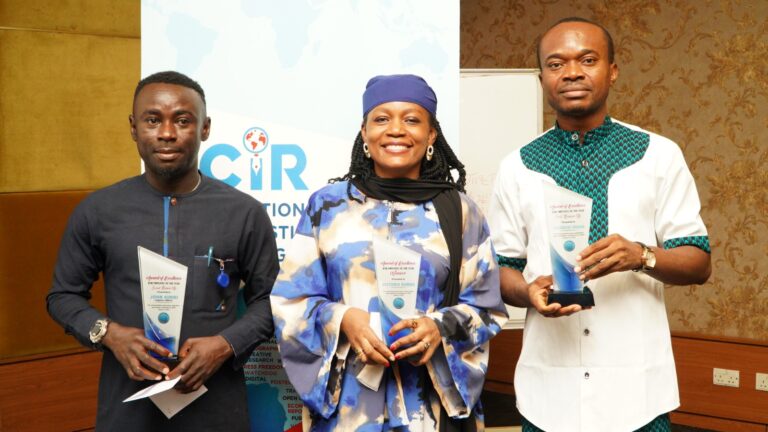
The ICIR Editor, Victoria Bamas, was named Employee of the Year, while Chukwudi Iwuoha and John Kimbi were recognised as first and second runners-up, respectively.
The awards were presented by The ICIR’s Executive Director, Dayo Aiyetan, who commended the recipients for their hard work and their efforts in promoting the organisation’s values.
He stressed that the awardees were fully deserving of the accolades.
Reacting, Bamas admitted the recognition came as a surprise. “I’m surprised because I didn’t expect to get it. At this point in my life, getting awards is not really my priority, but to ensure people I work with get them. I’m happy I was considered for the award,” she said.
Similarly, Iwuoha, The ICIR’s senior programmes officer, said he was honoured and grateful to have received the award for the second time in a row.
“I sincerely thank ICIR and its Executive Director for this recognition. It means more to me than I can express. This award is not just a personal achievement, it is a reflection of the guidance, trust and opportunities provided by The ICIR, which have helped me grow both professionally and personally.
“I also thank the entire staff of ICIR for their teamwork, support, and collaboration. Working alongside my team makes every challenge rewarding. This recognition motivates me to continue striving for excellence and contributing positively to the goals of the Centre. 2026 is here, I’m hopeful that it will be a rewarding year for The ICIR as an organisation.”
On his part, Kimbi, The ICIR’s logistics officer, expressed his gratitude through a letter of appreciation addressed to the management and staff.
“I wish to express my heartfelt appreciation to the Executive Director, Human Resources and Accounts Departments, the management, and the entire staff of The ICIR for honouring me with this award.
“I am deeply grateful for this recognition; it means so much to me and serves as a powerful encouragement to continue giving my best in every responsibility entrusted to me,” part of his letter read.
He added that the award was a reflection of the supportive, inspiring, and collaborative environment that The ICIR provides for the staff members.
Kimbi stressed that the recognition strengthened his commitment to upholding the values of the organisation and to contributing continuously to the The ICIR’s goals.
The ICIR reports that the annual retreat provided staff with a platform to reflect on the past year, celebrate successes, and strengthen collaboration ahead of 2026, reaffirming the organisation’s commitment to investigative journalism in the public interest.
“PLEASE do not fight among yourselves. Make sure that you and your siblings live in peace and remember that I have taught you to respect people. Do this for me and make me proud.”
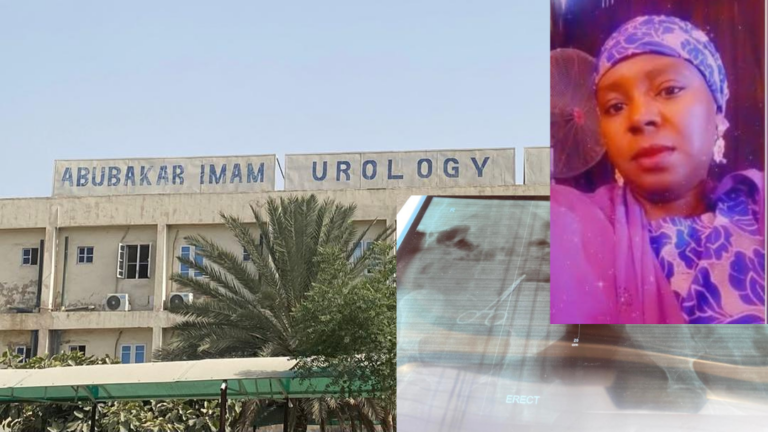
Those were the last words Aishatu Umar said to her daughter before she died. The words turned out to become her final counsel to the children she would soon leave behind. Within hours, Aishatu passed on, not from a sudden illness, but from what her family describes as a chain of medical negligence that began inside the Abubakar Imam Urology Centre in Kano.
The news about Aishatu’s death broke on January 12 through a Facebook post. The post sparked outrage, prompting the Kano State Government to suspend officials linked to the case. As public pressure grew, TheICIRdug further on what really went wrong.
Abubakar Mohammed, her husband said his late wife’s ordeal began after doctors diagnosed her with a kidney cyst that caused persistent abdominal pain, after which a surgery was recommended. A date was fixed, and on September 16, 2025, Aishatu was taken in for the operation, hopeful that it would bring relief.
The surgery was carried out. But unknown to her and her family, something went terribly wrong in the operating theatre.
After the operation, the pain did not go away. Instead, it lingered sharp, recurring, and increasingly unbearable. Each time she returned for follow-up visits, she complained of severe lower abdominal pain. The response from the hospital, her husband said, was always the same.
The theater where Aishatu was operated . Photo: Stephen Enoch/ The ICIR
“They told her it was normal post-operation pain and that would gradually fade. Trusting the doctors, Aishatu endured the pain for months, bearing it quietly until Friday, January 9. “Around 4 p.m. that day, I received a call from my wife. She was screaming and crying, saying she was in excruciating pain.
“I was far from home, but family members rushed her to Mohammed Abdullahi Wase Teaching Hospital, after which I joined them. We remained there until about 2 a.m., when she was treated and given medications. Still, the pain persisted. The next morning, Saturday, January 10, we returned to the hospital. Doctors reviewed her condition again, ordered more tests, and kept her under observation. When the results came out, the situation took a more serious turn.
“The doctors told us my wife needed to be admitted but because of renovation in the hospital, she couldn’t be admitted and referred us to Aminu Kano Teaching Hospital, (AKTH),” he revealed.
At AKTH Aishatu was received at the emergency unit and later moved to the female medical ward. A team of gynaecologists was invited to examine her. She was admitted, and doctors ordered a scan and an X-ray to determine the cause of her critical condition.
“Unfortunately for us, we couldn’t get the scan done because it was too late around 2 a.m. So, we did it the next day,” Mohammed said.
By the time the tests were conducted on Sunday, January 11, the truth emerged, and it was devastating. The X-ray revealed that surgical scissors had been left inside her abdomen during the earlier operation at Abubakar Imam Urology Centre.
The X-ray revealed that surgical scissors had been left inside Aishatu Umar abdomen during the earlier operation at Abubakar Imam Urology Centre. Photo Stephen Enoch/The ICIR
“Immediately the result was released, she was prepared for an emergency surgery. Everything was set. Logistics were arranged. Around 11 p.m. on Sunday night, January 12, Aishatu was taken into the theatre.
“She never came out alive. Before they even started operating her, we lost her,” Mohammed said.
After the discovery, Mohammed said he contacted the doctor in charge at the urology centre to inform him of the development. The doctor promised to come but did not show up until Tuesday, January 13, after news of Aishatu’s death had gone viral on social media.
“No one from the hospital came to condole us even after the funeral, until the news had gone viral. When the hospital management visited, they described the incident as “an act of God”, asking the family not to escalate the matter,” Mohammed said with rage.
Abubakar Mohammed, Aishatu’s husband. Photo: Stephen Enoch
For Mohammed, silence was not an option.
“They are the only people who have ever operated on my wife in her entire life. How can I lose her because of their negligence and just keep quiet? I want justice. I am going to court. The compensation I want is justice,” he revealed.
Aishatu had so much trust in the hospital that caused her demise – Sister
“Aishatu trusted the hospital. She trusted the doctor. She believed that the pain she felt every day after her surgery was normal, because that was what she was repeatedly told. That trust ended her life”, said Adama Ahmed, the deceased’s sister.
She told The ICIR that since her sister underwent the surgery four months earlier, there was never a day she didn’t complain to her of abdominal pain. She encouraged her to keep attending follow-up appointments and to be firm with the doctor.
Aishatu’s sister found the doctor’s explanations troubling. To her, something was clearly wrong. “I kept asking her, why didn’t the doctor prescribe anything? Why didn’t he ask you to do an X-ray or a scan? That is not normal. Aishatu endured the pain till she died. Confirmation that my sister’s death resulted from medical negligence only deepened the family’s grief.
“Aishatu had so much confidence in the Urology centre that when I had some medical issues and was to be operated on, she suggested the facility. But I did not because I already made arrangement with another medical facility.
Sister insists on justice
Ahmed wants those responsible for the negligence to be held accountable, not out of vengeance, but to prevent others from suffering the same fate.
They should be punished so this doesn’t happen again. The system needs to be sanitised,” she said.
Ahmed added that even in death, Aishatu’s kindness speaks for her. She said a woman from Kaduna, who had done business with her online for years without ever meeting her, arrived in tears after hearing the news.
It wasn’t a scissors that was forgotten in Aishatu’s system – Urology centre claims
Balarabe Muhammad, the Chief Medical Director (CMD) of Abubakar Imam Urology Centre while speaking with The ICR denied claims that a scissors was forgotten in Umar’s system. In his words, “It was an artery forceps that was forgotten in the patient and not a scissors. An artery forceps is not as sharp as a scissors, it is blunt and is used to hold an artery or vein that is bleeding.
“I am not denying that a medical equipment was forgotten in her system, but I can say that Aishatu didn’t die as a result of the forceps that was in her system, rather she died as a result of anaesthesia that was administered to her at AKTH. She died in that hospital. Incidents like this occur sometimes but this cannot be the cause of her death.
Adama, late Aishatu’s sister. Photo: Stephen Enoch / The ICIR
“The doctors who carried out the operation on Aishatu have been suspended and investigation is ongoing. However, the doctors that attended to her at AKTH also need to be investigated so that the actual cause of her demise can be ascertained,” Muhammad said.
AKTH refutes urology centre’s claim
In response to Muhammad’s claim, Suwaid Abba, the Chairman, Medical Advisory Committee at AKTH vehemently opposed the claim that an anaesthesia was the cause of her death. “It is very unfair to push the blame on AKTH. If a medical equipment wasn’t forgotten in her system, she would not have been here in the first place,” he stated.
Abba told The ICIR that it was when Aishatu was referred to AKTH that the medical equipment was discovered in her system. According to him, due to the severity of the situation, she had a cardiac arrest while preparing for the emergency operation and was resuscitated.
“She died before our doctors operated on her. It is unfair that anyone will blame us for the death. We are open to investigation. The government can send officials to investigate us, our doors are open,’ he stated.
Expert weighs in
Umma Abubakar Isah, a medical officer who conducts surgical procedures in Kano State explained that no surgical procedure is the responsibility of a single individual, stressing that surgery is a collective, team-based process. Isah pointed out that the presence of a medial equipment left inside a patient’s body suggests a breakdown in standard operating procedures.
She explained that during surgeries there is a perioperative Nurse who works alongside the team conducting the operation. “It is the responsibility of the perioperative nurse to count all instruments that will be used for the surgery. After the surgery, the Nurse must retrieve the exact number of surgical equipment given to the surgeon and recount them after the surgery to confirm that nothing is missing,” she explained.
For this reason, she said she finds it difficult to rationalise how such an error could occur, noting that the incident points to a serious systemic failure rather than an isolated lapse.
Speaking on response time and post-operative care, Isah said the medical team should have acted promptly when Aishatu continued to complain of abdominal pain after the surgery. “Pain is expected after surgery, but it should not be persistent or worsen. From what I understand, her pain was even worse than before the operation, which is a major red flag,” Isah told this reporter.
She stressed that such complaints should have triggered immediate and thorough investigations, including imaging tests, to determine the cause of the pain.
While clarifying that she was not excusing the medical team, Isah acknowledged the challenges facing public health facilities in Kano State. She described the Abubakar Imam Urology Centre as a high-volume facility that handles an overwhelming number of patients daily.
“This facility is understaffed. The number of health workers are not close to enough to cater for the volume of patients coming in day in, day out. The workload is overwhelming,” she pointed out.
Despite these challenges, Isah was unequivocal in her conclusion. “Aishatu’s death was preventable. From the first time she returned after surgery complaining of abdominal pain, something should have been done. She should have been thoroughly investigated to find out the cause.
She called on the government to address the imbalance between Kano State’s population and the number of available medical professionals by employing more health workers and strengthening public health facilities.
Isah also urged medical professionals to take greater responsibility. She added: “We must continuously update our skills and knowledge. Patients entrust their lives to us, and we must remain conscious of that responsibility and do what we are supposed to do.”
We acted promptly – Kano State government
Mustapha Mohammed, the Chief Press Secretary to the Kano State Governor, in an interview with The ICIR said the government acted immediately after the incident became public. According to him, health officials quickly reviewed the situation and identified those who were on duty at the Abubakar Imam Urology Centre at the time of the surgery.
He explained that the first step taken by the government was the suspension of the medical personnel involved, pending the outcome of an investigation. Mohammed confirmed that an investigative panel has been set up to determine what actually happened and to establish whether there was negligence. He stressed that further actions would depend on the findings of the panel.
Mustapha Mohammed, Chief Press Secretary to Kano State Governor. Photo Stephen Enoch/ The ICIR
“You cannot just jump into sacking someone from their job. There are procedures to follow. The suspension means they should stop operating while investigations are ongoing, to prevent a recurrence of such an incident. The investigation will show whether there was negligence or not, and based on that, the next line of action will be taken,” he said.
While noting that he is not part of the health authorities, Mohammed acknowledged that negligence, especially in the health sector, is a serious matter, especially when it has to do with the lives of people.
“I want to assure the public that the state government would not shield anyone found culpable. Governor Abba Kabir Yusuf would act decisively if the investigation confirms negligence. The governor is a no-nonsense leader. If the report suggests that someone should be sacked due to negligence, I do not think the governor will hesitate to do the right thing,” he assured.
‘Our mother’s death should not go unpunished’
Fifteen year old Abubakar Khadija who was with Aishatu at the hospital before she died was full of sadness when she spoke to TheICIR. She couldn’t believe that her mother had gone and the beautiful future that she pictured with her is not realistic.
The last thing the deceased told her daughter on the sickbed before she died was, “Please do not fight among yourselves, make sure that you and your siblings live in peace and remember that I have thought you to respect people. Do this for me and make me proud.”
Late Aishatu’s family. Photo: Stephen Enoch/ The ICIR
According to Khadija, her mother was her friend and only source of encouragement. “She always encouraged me to be the best in my studies, in my extracurricular activities and anytime I was passing through tough situation especially in school. My mother was always there for me.
“Now that she is gone how will I survive this heartbreak? My mother wass my best friend, now she is no more. I want those that were responsible for her death to be punished because they have taken my happiness away,” Khadija said.
Like Khadija, 13 year old Umar Abubakar told The ICIR that he wants justice for his mother. “I was at home when she was helplessly crying of pains after which she was taken to the hospital and when I got the information that she had died, I cried bitterly. I want those who were responsible for her death to be punished,” he said.
Medical negligence and what the law says
The Kano State Hospitals Management Board confirmed the death of Aishatu, to be a result of medical negligence at the Urology Centre, of which suspensions followed immediately.
The allegations of medical negligence such as those surrounding Aishatu’s death fall under the authority of the Medical and Dental Council of Nigeria(MDCN), the body empowered by law to regulate doctors and investigate professional misconduct. Where negligence is suspected, the MDCN can activate its Investigating Panel and Disciplinary Tribunal to examine the conduct of the medical personnel involved.
If a doctor is found guilty of negligence, the MDCN’s Disciplinary Tribunal may impose sanctions ranging from formal reprimand to suspension or complete withdrawal of the practitioner’s licence. Such disciplinary action is independent of government panels and is aimed at enforcing professional accountability and protecting patient safety.
Beyond professional discipline, Nigerian law allows victims or families to seek civil compensationfor medical negligence, while cases involving preventable death may attract criminal liability, including prosecution for gross negligence. This means the Aishatu Umar case can proceed simultaneously through regulatory, civil, and criminal channels.
The Abuja Electricity Distribution Plc (AEDC) has transitioned to a holding company (HoldCo) to enhance its effectiveness in Nigeria’s evolving power market and decentralised regulatory environment.
The DisCo, in a statement on Sunday, January 18, said the move followed the enactment of the Electricity Act (2023), empowering state governments to establish independent electricity markets and regulatory commission.
The company explained that it had restructured its corporate operations to improve agility, strengthen governance, and enhance service delivery across its franchise areas in response to the decentralised electricity ecosystem.
The AEDC also informed that it incorporated two new subsidiary companies — Niger Electricity Distribution Company and the Kogi Electricity Distribution Company — as part of the transformation.
“These entities will operate under the Niger State Electricity Regulatory Commission (NSERC) and the Kogi State Electricity Regulatory Commission (KSERC), respectively, while remaining integral members of the AEDC Group,” the statement read.
“Key executive appointments have been made, including Sam Odekina as Chief Business Officer and Acting Managing Director of Niger Electricity Distribution Company, and Desmond Eboh as Chief Business Officer and LP Acting Managing Director of Kogi Electricity Distribution Company.
“Plans are underway to commence operations in Nasarawa State, with the transition process expected to begin soon,” it added.
The DisCo reaffirmed its dedication to supporting sustainable, state-regulated electricity markets and setting benchmarks for efficiency, reliability, and customer experience.
The company revealed that it operates in the Federal Capital Territory (FCT) as well as in parts of Niger, Kogi, and Nasarawa states, demonstrating its commitment to driving economic growth and enhancing the quality of life.
Commenting on the decentralisation process, AEDC’s Managing Director and Chief Executive Officer (CEO), Chijioke Okwuokenye, said the HoldCo structure positioned the company to respond to state-specific regulatory requirements while maintaining a unified corporate identity, shared values, and a strong commitment to operational excellence and customer service.
“All subsidiaries will operate as one integrated AEDC family, with uniform conditions of service for employees, ensuring workforce stability and fairness,” he said.
“The Holdco structure aligns perfectly with our goal to enhance operational efficiency and adapt to Nigeria’s evolving energy landscape while exploring new opportunities, driving growth and contributing to Nigeria’s energy sector development.”
Okwuokenye added that the AEDC was committed to maintaining high standards of service, innovation and customer focus, even as it evolved into a new structure.
Apart from AEDC, earlier report by The ICIR revealed that states had been taking responsibility for regulatory oversight in their respective territories, guided by the provisions of the Electricity Act,2023.
Under the new regulatory order, the AEDC is mandated to establish a subsidiary and a holding company under the Companies and Allied Matters Act.
WORKERS of the Federal Capital Territory Administration (FCTA) and the Federal Capital Development Authority (FCDA) have embarked on strike.
The workers blamed the action on alleged government’s failure to meet their demands.
Reports indicate that the FCTA Secretariat was locked down, with heavy security deployed at the entrance at about 9:00 a.m. on Monday.
Operatives of the Nigeria Security and Civil Defence Corps (NSCDC) and the Nigeria Police Force were positioned at the gate, while workers were turned back and denied access to the premises.
The action followed a directive issued earlier by the Joint Union Action Congress (JUAC) President, Rifkatu Iortyer, and Secretary, Abdullahi Saleh, dated January 8, ordering workers across all cadres to withdraw their services from Monday, January 19, in protest against what they called the government’s continued neglect of their demands.
The union said an earlier ultimatum issued on January 7 had elapsed without meaningful engagement from the authorities.
According to the JUAC, key grievances include the non-payment of outstanding promotion arrears, delays in the conduct and release of promotion exercises, and what they described as the continued extension of service for retired directors and permanent secretaries, a practice they said was blocking career progression for serving officers.
The workers also accused the administration of failing to remit statutory deductions, including pension contributions and National Housing Fund payments, warning that the situation could jeopardise the future welfare of affected staff.
JUAC further expressed dissatisfaction with the outcome of the 2024 promotion examinations, describing the exercise as largely unsuccessful and alleging that a significant number of its members were adversely affected.
It condemned the handling of the 2024 promotion examinations, describing the exercise as deeply flawed and largely unsuccessful.
The strike comes at a time when the Minister of the Federal Capital Territory, Nyesom Wike, is widely perceived to be preoccupied with a protracted political turbulence in Rivers State, rather than focusing fully on the administration of the nation’s capital.
Wike’s ongoing conflict with Governor Siminalayi Fubara, rooted in bitter struggles for political control and influence in Rivers State, has dominated headlines and drawn national attention.
Efforts by stakeholders, including President Bola Tinubu, to resolve the standoff have failed.
WIKKITIMES, Northern Nigeria’s leading investigative and accountability journalism platform, through its media development arm, the WikkiTimes Media Foundation, is seeking entries for its Anas Aremeyaw Anas AI Accountability Fellowship (A3AIA).
The specialised journalism fellowship is designed to strengthen investigative reporting on extractive industries, environmental degradation, and resource injustice in under-reported communities across Northern Nigeria.
The fellowship responds to the rapid expansion of mining and extractive activities in Nigeria, particularly in Northern states, which has increasingly exposed communities to illegal mining, environmental destruction, resource theft, displacement, and weak regulatory oversight. Despite the scale of these challenges, reporting on extractive-sector abuses remains limited, largely due to capacity gaps and restricted access to advanced investigative tools among local newsrooms.
The A3AIA Fellowship, inspired by the fearless investigative legacy of renowned Ghanaian journalist Anas Aremeyaw Anas, was conceived to bridge this gap by equipping journalists with cutting-edge digital, data, and artificial intelligence tools to strengthen public-interest reporting and accountability.
The programme will support journalists from local and regional newsrooms, with priority given to reporters working in extractive-affected states.
Targeting journalists across the 19 states of Northern Nigeria, the fellowship will train participants to deploy artificial intelligence, open-source intelligence (OSINT), geospatial analysis, satellite imagery and evidence-based storytelling to uncover and document extractive-sector abuses and governance failures.
The fellowship will run for six months in two phases. The first phase will consist of three months of intensive training covering AI-assisted journalism, satellite imagery analysis, digital verification, safety and extractive-sector reporting. The second phase will focus on a three-month practicum during which fellows will receive close editorial mentorship to produce in-depth investigative reports.
Speaking about the fellowship, Publisher of WikkiTimes, Haruna Mohammed Salisu, said, “We chose to name this fellowship after Anas for a reason that goes beyond admiration. We need a symbol of courage and resilience that can genuinely inspire young reporters in the region. Apart from Anas’s history of fearless journalism, he gave us an additional symbol of courage and resilience last year in Gombe.
We invited him to a conference co-hosted by WikkiTimes and Northeastern University, Gombe. He missed his flight from Abuja to Gombe a day before our conference, yet he refused to back out. Instead, he set out by road at 10 p.m., travelled through one of Nigeria’s most dangerous routes, and arrived in Gombe at 3 a.m. – all to speak to our participants at 10 a.m. that same morning. He took that risk because he believed the young people we brought together deserved to be encouraged.
“His presence motivated dozens of emerging journalists, including students from the Federal University, Kashere, and Northeastern University, Gombe, who were part of the participants at the event,” Haruna said.
He explained that the programme’s spirit was built on the examples, courage, creativity, and fearlessness Anas represents. “We need to help our society by instilling in people, especially our journalists, these kinds of values. That spark that former UN Secretary General Kofi Annan talked about in Anas is the same spark we want to light in young reporters who are working in these forgotten places across northern Nigeria,” the publisher added.
He said WikkiTimes was committed to training journalists prepared to interrogate systems of extractive abuse and environmental injustice, stressing that Anas had demonstrated courageous, evidence-based journalism.
Through this fellowship, WikkiTimes aims to support reporters to expose wrongdoing and amplify the voices of vulnerable communities in line with core values that define the medium. Selected fellows will receive editorial mentorship, a monthly stipend, and access to digital investigative technologies, and will work with WikkiTimes to complete at least one investigation. They will also receive a certificate of completion, signed by Anas.
Interested applicants can apply here. For inquiries, contact Hafsah Ibrahim at hafseemuhammad@wikkitimes.com
THE National Agricultural Land Development Authority (NALDA) has listed projects worth over N2.6 billion for execution across several states, including the construction of a mini stadium, religious centres, classrooms, health facilities, and the installation of an MRI machine in the 2026 proposed budget.
This has raised questions and concerns about compliance with its statutory mandate.
Established under the National Agricultural Land Development Authority Act (1992 No. 92) and revived in 2016, NALDA’s primary objectives include providing strategic public support for land development; promoting optimal utilisation of rural land resources for food and fibre production; supporting economic-size farm holdings and consolidating fragmented lands.
Others are encouraging mechanisation, sustainable agriculture, and national food security; instituting strategic land-use planning, including forest and grazing reserves; addressing population pressure, and providing technical and extension support to farmers.
The Act explicitly empowers NALDA to acquire, develop, parcel, and redistribute land for agricultural production, and to assist in on-farm training, market access, and technology provision.
The law does not expressly empower the agency to construct sports facilities, religious buildings, formal education infrastructure, or specialised medical diagnostic centres. Social infrastructure provision is permitted only if it supports emergent growth centres around agricultural project sites.
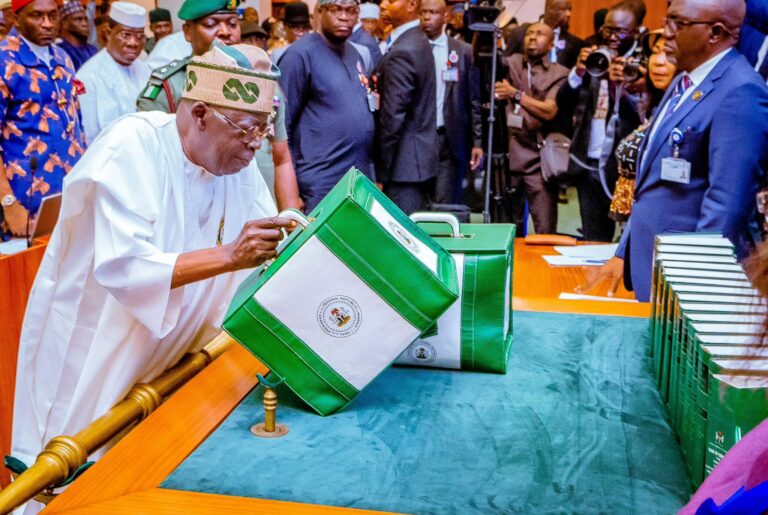
The ICIRreported that President Bola Tinubu presented N58.18 trillion 2026 budget proposal to the National Assembly on Friday, December 19.
In the proposal, defence and security will receive N5.41trillion, ahead of N3.56 trillion for infrastructure, N3.52 trillion for education, and N2.48trillion for health.
Despite aforementioned statutory limitations, procurement documents show that NALDA plans to spend N420 million on the construction of a mini stadium in Kindiyo, Cham Balanga/Billiri Federal Constituency of Gombe State.
The agency also intends to allocate N350 million for the construction of churches, mosques, and other support for religious groups in selected farming communities in Gombe State, alongside N350 million for the construction of classroom blocks for farmers’ communities across the North-East and other parts of the country.
Other education-related projects to be executed by the agency in the financial year include renovation of two classroom blocks in Omala Local Government Area of Kogi State, projected to gulp N21 million, and the supply of school furniture in Jigawa South Senatorial District, for which N70 million was allocated.
Health and diagnostic projects raise questions on mandates
NALDA’s project list further includes N35 million for the construction of a Level 1 primary healthcare centre in Ugbawka community, Enugu East Senatorial District, as well as N175 million each for the construction and furnishing of primary healthcare centres in Gabukka and Mallam Inna areas of Gombe North Senatorial District.
The most capital-intensive item is N1.05 billion budgeted for the provision and installation of a Magnetic Resonance Imaging (MRI) machine at a medical diagnostics centre in Minna.
Although there are no laws in Nigeria that explicitly fault MDAs for carrying out projects against their mandate, former president, Muhammadu Buhari and the Independent Corrupt Practices and Other Related Offences Commission (ICPC) had condemned the insertion of several constituency projects by federal lawmakers.
The ICIR, in its Open Contract Reporting project, reported many constituency projects poorly implemented or abandoned in local communities.
In 2023, a civic organisation BudgIT, pointed out how a total of N4.8 billion was allocated to projects that are outside the scope of their mandates.
The senior research & policy analyst for BudgIT, Vahyala Kwaga, at the time told The ICIR that most of the projects may not be executed because the wrong institutions were allocated the funds to carry them out.
“We need to understand that corruption is not a ‘technical’ matter but one that is fundamental to our governance and government. Not only are monies almost never used for these projects, they are often diverted to other uses or not even released by the Accountant General’s office.
“This would even lead to poor budget performance because the releases intended by the budget were not even made (though they were ‘saved’) by not disbursing them to these so-called projects outside the mandate of MDAs,” he said.