Home Blog Page 92

Daily Trust Dialogue: arrests, detention without evidence must end – El-Rufai

FORMER Kaduna State governor, Nasir El-Rufai, has condemned what he described as the growing use of arrests, prolonged detention, and selective prosecution in Nigeria, warning that the trend is quietly eroding the country’s democracy and deepening public distrust in governance.   

El-Rufai made the remarks on Thursday while speaking virtually at the 23rd Daily Trust Dialogue from Brussels, where he addressed the theme “Nigeria’s Fourth Republic: What Is Working and What Is Not.”

He said the increasing detention of individuals without due process reflected a dangerous drift away from the rule of law.

“Arrests without evidence must end. Detention before investigation must end. Governing by intimidation rather than institutions must end,” he said, insisting that law enforcement agencies are increasingly being deployed for regime protection rather than democratic preservation.

The former governor argued that the justice system, which should serve as a shield for citizens, has instead become a source of fear for many Nigerians.

“The law should protect citizens, not terrify them,” El-Rufai said, adding that prolonged detention, selective prosecution, and what he described as “investigative fishing expeditions” had weakened confidence in the courts.

He warned that when arrests and detentions are perceived as politically motivated, democracy suffers lasting damage.

He noted that although the courts remain the last refuge for many Nigerians, doubts about judicial independence threaten the stability of the nation.

“We have seen in Nigeria prolonged detention, selective prosecution, and investigative fishing expeditions that have weakened confidence in the justice system. When law enforcement is weaponised against political competitors, democracy erodes quietly but steadily, and this is what we’ve seen happening in our country today.

“The courts remain the last refuge of anyone that feels persecuted, but when justice is doubted, when judges are compromised, the republic itself is weakened.”

El-Rufai linked the pattern of detentions to broader governance failures, arguing that selective enforcement of laws has created a climate of impunity for those aligned with power while exposing others to persecution.

He said this uneven application of justice has contributed to widespread cynicism and declining trust in public institutions.

Situating his comments within Nigeria’s ongoing insecurity and governance crisis, El-Rufai said the erosion of civil liberties compounded public anger already fueled by economic hardship and social exclusion.

According to him, a democracy cannot endure where fear replaces accountability and institutions are subordinated to political interests.

He cautioned that unless the trend is reversed, public faith especially among young Nigerians will continue to erode, with serious consequences for the survival of the Fourth Republic.

The former governor called for an end to selective law enforcement and urged political leaders to embrace reform rather than repression.

“The choice before us as politicians is not stability, but reform. It is reform now or instability sooner or later,” he said.

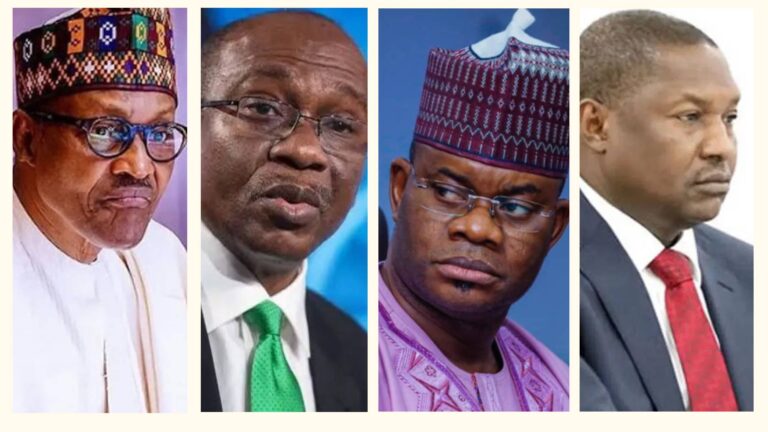
El-Rufai’s comments came amid long-running corruption investigations by the Economic and Financial Crimes Commission (EFCC) involving several former governors and ministers who served during President Muhammadu Buhari’s administration.

The ICIR reports that several former ministers and top officials from the Buhari era remain entangled in legal battles.

Former Attorney-General of the Federation Abubakar Malami has faced repeated arrests since December 2025 over alleged money laundering and asset recovery controversies, including a re-arrest by the State Security Service (SSS) shortly after his release from custody in January 2026.

Also, former Labour Minister Chris Ngige is standing trial over alleged ₦2.2 billion contract fraud linked to his oversight of the Nigeria Social Insurance Trust Fund (NSITF), while ex-Central Bank governor Godwin Emefiele continues to face multiple cases involving procurement fraud and money laundering, with courts ordering forfeiture of high-value properties and assets linked to him.

Daily Trust Dialogue: Insecurity, poor governance denying Nigerians democracy dividends – Olubadan

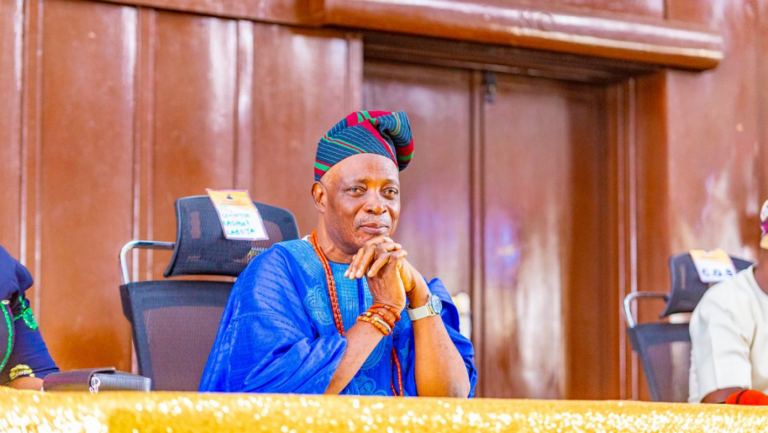
THE Olubadan of Ibadanland, Oba Rashidi Ladoja, has warned that Nigeria’s persistent insecurity and weak governance structures continued to deny citizens the full benefits of democracy, despite 26 years of uninterrupted civilian rule.

The traditional ruler spoke on Thursday as special guest at the 23rd Daily Trust Dialogue held in Abuja, where he said that while the framework for democratic governance existed, its dividends remained largely unrealised for many Nigerians.

“We must also confront what is not working – starting with insecurity,” the Olubadan said, stressing that the Foreign Affairs Minister Yusuf Tuggar described Nigeria’s security challenges as “scattered insecurity.”

The monarch said insecurity in the country had lingered for too long.

“A Foreign Minister in Davos was pleading with the investors that what we have in Nigeria is not generalised insecurity but scattered insecurities.  Well, I agree with him.

“As long as we have not yet had an insurrection, it’s still scattered. But it is lasting too long. It’s lasting too long,” he argued.

The Olubadan added that no “one feels truly safe,” noting that banditry, kidnapping and other violent crimes had become unacceptable in a country seeking growth and stability.

He rejected claims that insecurity in Nigeria is religiously motivated, describing such narratives as misleading and driven by the interests of perpetrators. According to him, the prolonged nature of insecurity has created fear and uncertainty across the nation.

The Olubadan said Nigeria’s 26 years of uninterrupted democracy remains a historic achievement, particularly when compared with the instability of past republics and the era of military rule.

“One of the most significant achievements of the Fourth Republic is this milestone of over 26 years of continuous civilian government, something none of the previous republics attained. This has fostered greater democratic political stability compared to the era of military coups,” he said.

He also cited peaceful transitions of power, including instances where presidents accepted electoral defeat and attended handover ceremonies, as evidence of democratic maturity.

However, the monarch warned that democratic stability had not translated into effective governance or improved living conditions for citizens, questioning whether Nigeria’s status as Africa’s largest economy had made life better for ordinary people.

“Can everyone access quality healthcare? Can people afford food? Do they have water in their homes?” he asked, describing these as the real indicators of economic progress.

The former governor of Oyo State also expressed concern over Nigeria’s electoral process, noting that the frequent resort to courts to resolve election outcomes undermined public confidence in democracy.

According to him, 80 to 90 per cent of election results are challenged in court, adding that democracy functions best when the people’s choice, not the courts, determines who governs.

He further identified corruption and weak institutions as key obstacles to national progress, warning against selective justice and politicised anti-corruption efforts.

“If you change from this party to that party, does that suddenly make you become a saint from devil?” he asked, urging institutions such as the police, EFCC, ICPC and DSS to uphold integrity and their oath of office.

On education, the Olubadan lamented the growing number of out-of-school children, recalling that earlier generations from poor backgrounds benefited from strong public education systems prioritised by government.

He also said Nigeria’s democratic experiment had yet to deliver fully on its promise.

“The framework for a beneficial democratic system exists in the Fourth Republic,” he said, adding that “the full potential of democratic rule remains largely unrealised for many citizens due to persistent governance, economic, and security issues.”

The ICIR reports that Nigeria has grappled with persistent insecurity for more than a decade, with violent threats evolving in different forms across the nation despite successive government interventions.

Beyond insecurity, governance challenges have compounded the crisis, with growing concerns about electoral credibility and judicial overreach in election outcome.

Harrison Gwamnishu: Institutional failure gives raise to crowd funding activism

NIGERIA’s rising insecurity, weak public institutions, and corruption have created fertile ground for a new class of online-driven figures who position themselves as defenders of justice, human rights, or security, often without formal mandate or accountability. The recent controversy involving activist Harrison Gwamnishu illustrates the complexity and pitfalls of this phenomenon.


In December 2025, Harrison Gwamnishu, a Nigerian activist known for posting about kidnappings and claiming to assist families with rescue efforts, became the centre of a heated public dispute. He was accused by the victim’s family of diverting more than N5 million from funds raised to pay ransom for a kidnapped couple in Edo State before delivering the ransom, and conflicting narratives about how the operation was handled.

Gwamnishu was arrested but released on bail by an Edo State High Court. In a social media video posted on January 3, 2026, he acknowledged mishandling resources given to him to assist in certain cases, and apologised to those affected, including a woman who sent him money.

“I have made mistakes. I own up to my mistakes. In the course of my duty and job, mistakes have been made. I have not been well accountable in managing resources maybe given to me to handle for some cases, I’m sincerely sorry. The woman who sent me N600,000 to carry out her job which I did on my own discretion without proper communication with her. I’m sorry for someone to have sent that money to me, I believe she trusted me. I’m sorry madam Tudja.

” To Franklin who contacted me to assist him in handling the case, then I gave the case out to someone. You know we discussed it and the payment plan. I’ve started paying you monthly. I started in November, I paid for December and I’m supposed to pay in January. I’m going to clear all this money no matter how hard it is for me, I’m going to clear it.

“To everyone who may feel offended by me coming out to apologise, I’m the one who’s wearing the shoe. I made mistakes and I’m the one coming out right now to say I’m sorry. To see people who stood by me when I was locked up coming out to say they are no longer with me, it shows that it’s time for me to say I’m sorry.

“I’m here to apologise to Verydarkman. I hold you in high esteem. From day one, I have never seen you as a bad person. You have done a lot for Nigerians and I too. There are some times you reach out to me in the past and said somebody made a complaint , see how to resolve it. Although, I tried to resolve it but maybe I did not manage it very well. I want to also thank you for speaking for Nigerians,” he stated.

Insecurity, crowdfunding, unregulated roles

Nigeria has been grappling with deepening insecurity from mass kidnappings to communal violence that the government and security agencies have struggled to contain. In 2025 alone, scores of Nigerians were abducted in a series of attacks that highlighted systemic weaknesses in law enforcement and protection services.

As public trust in formal institutions erodes, many families and activists like Gwamnishu use crowdfunding on social media to raise ransom money or logistical support for crisis situations. This trend, while a spontaneous response to insecurity, has elevated individuals like Gwamnishu who step into the information gap offering assistance, often monetised and without regulatory oversight. 

The vacuum created by systemic failures has also helped cultivate a class of online activists and influencers who command large digital audiences and position themselves as arbiters of justice or defenders of the public. One prominent example is Martins Vincent Otse, popularly known as VeryDarkMan (VDM), a social media influencer and activist with millions of followers on platforms like Instagram and TikTok.

He built a large following by speaking out against injustice, corruption, and insecurity, often challenging government actions and public figures.

VDM has also been accused in various public forums of controversial conduct related to his Non-Governmental Organisation funding and other disputes, blurring the lines between genuine advocacy and celebrity-style online controversy.

In December 2024, VDM faced social media scrutiny after claiming that N180 million was stolen from his self-titled NGO that was not two months old. He later admitted that that the N180 million was a deliberate prank, explaining that the fabricated story was not just a prank but a meticulously planned social experiment highlighting how quickly unverified information spreads online. 

The influencer claimed that N180 million had been transferred to an unknown account, leaving just N20 million remaining. However, his explanation raised doubts, with many questioning its credibility.

He revealed that the stunt was intended to expose what he perceives as “the gullibility of social media users,” noting that the shock value of the prank was evident in the reactions it garnered.

Reports show that the social media critic raised over N33 million within 24 hours in October 2024 to tackle Nigeria’s educational challenges, claiming that the initiative addressed issues such as outdated teaching methods, inadequate resources, and the lack of motivated educators, especially in rural and underserved areas, which attracted more donations with music mogul, Don Jazzy contributing N100 million days later, bringing the total money raised to over N200 million.

VDM criticised some NGOs for misusing funds and enriching themselves rather than serving the public when he was launching the NGO, promising to be transparent with his initiative. He also outlined plans to address issues such as outdated teaching methods, inadequate resources, and the lack of motivated educators, especially in rural and underserved areas.

In the Gwamnishu case, VDM was among those publicly calling for accountability, even alleging that he resisted offers to be paid to stay silent.

These cases show how easily goodwill can be questioned in a context where formal systems have failed to protect citizens. It also highlighted the challenges for digital activism in distinguishing between citizen advocacy for justice and unregulated public figures handling sensitive matters without adequate checks and balances.

Buhari-era governors, ministers facing probe under Tinubu’s watch

0

NEARLY three years after the late President Muhammadu Buhari left office, a growing number of senior officials who wielded power during his era, including governors, ministers, and top economic managers, have been entangled in corruption probe under the current President Bola Tinubu-led administration.

While skepticism persists over the nature and outcome of these probes, the individuals under investigation are accused of a range of financial crimes, including money laundering, criminal breach of trust, abuse of office, and misappropriation of public funds.

Yahaya Bello

Among the most prominent cases is that of former Kogi State governor, Yahaya Bello. The Economic and Financial Crimes Commission (EFCC) investigations into Bello began in 2024, when the commission declared him wanted.

Bello, who governed the state from 2016 to 2023 under the All Progressives Congress (APC), is facing multiple charges over the alleged laundering of more than N80 billion in state funds.

Investigators alleged that the funds were diverted to acquire high-value properties in Abuja and other locations. Bello’s arraignment in 2024 followed months of tension between him and the EFCC, including failed attempts to secure his arrest.

The commission publicly declared Bello wanted after he failed to appear for arraignment at the Federal High Court in Abuja on N80.2 billion money-laundering charges. According to the EFCC, Bello conspired with his nephew, Ali Bello, and others to convert state funds for personal use shortly after assuming office in February 2016.

He has since been charged on 19 counts and has pleaded not guilty; his trial is ongoing.

Despite the trial, Bello has declared interest to contest the Kogi State Senatorial District election in 2027.

Darius Ishaku

In Taraba State, former governor Darius Ishaku faces similar legal hurdle as he’s currently on trial over alleged diversion of public funds.

The EFCC is prosecuting Ishaku alongside Bello Yero, a former permanent secretary in the Taraba State Bureau for Local Government and Chieftaincy Affairs, on charges of criminal breach of trust, conspiracy, and fraudulent conversion of about N27 billion, alleged to have occurred during Ishaku’s tenure between 2015 and 2023.

During the trial on November 4, 2025, witness Ismail Lawal testified that funds received from Taraba State officials were disbursed to various beneficiaries on Ishaku’s instructions.

Lawal, who said he kept a private notebook documenting the transactions, noted that some diverted funds serviced personal liabilities while others went to security and government agencies.

Ishaku and Yero pleaded not guilty to the charges.

Ifeanyi Okowa

Before joining the APC in 2025, former Delta State governor Ifeanyi Okowa was implicated in the alleged mismanagement of N1.3 trillion oil derivation funds received by the state during his eight-year tenure.

On November 4, 2024, EFCC investigators took him into custody at its Port Harcourt office, following an invitation linked to the commission’s probe. These funds represented 13 per cent of Delta State’s total allocation between 2015 and 2023.

Investigators alleged Okowa failed to account properly for the funds and engaged in questionable investments, including the purchase of N40 billion worth of shares in UTM Floating Liquefied Natural Gas. Additional allegations include the diversion of state funds to acquire properties in Abuja and Asaba.

No formal case has been filed against him amid claims that the Tinubu government is shielding him.

Willie Obiano

Similarly, former Anambra State governor Willie Obiano is under trial for alleged N4 billion money laundering. His trial, which began on January 24, 2024, was suspended indefinitely in November 2025 by the Federal High Court in Abuja.

The adjournment followed a request from the EFCC to allow Inyang Ekwo, the judge handling the case, to continue proceedings once available, rather than have the matter reassigned to another judge.

Obiano faces allegations of diverting public funds, including over N1.2 billion from the state’s security vote to private accounts, in breach of the Money Laundering (Prohibition) Act.

His legal team has denied wrongdoing, describing the case as an abuse of judicial process. The trial remains on hold pending the return of Justice Ekwo.

Malami, Ngige, Emefiele other Buhari appointees on trial

The ICIR reports that these prosecutions form part of a broader investigation into former Buhari-era officials. Beyond ex-governors like Ishaku and Okowa, several ministers in the late president’s government are caught in the web of corruption trials.

Since December 2025, former Attorney-General of the Federal and Minister of Justice, Abubakar Malami, has faced repeated arrests by the EFCC and the State Security Service (SSS). In January 2026, Malami was re-arrested by the SSS immediately after his release from Kuje Correctional Centre, following his arraignment over an N8.7 billion money laundering case. Several properties linked to him has been confiscated by the court.

A fresh investigation links him to arms allegedly discovered at his residence during EFCC raids in December 2025. Malami is also accused of questionable asset recovery deals, controversial settlements, and mismanagement of recovered public funds.

Similarly, former Minister of Labour and Employment and ex-governor of Anambra State, Chris Ngige, is under trial for alleged N2.2 billion contract fraud while overseeing the Nigeria Social Insurance Trust Fund (NSITF).

Charges against him include abuse of office and receipt of gratification through companies linked to his associates, with contracts worth hundreds of millions of naira. Ngige was granted bail under strict conditions, including surrendering his international passport and providing sureties with verified properties in Abuja.

Meanwhile, former Central Bank of Nigeria Governor, Godwin Emefiele, faces multiple cases involving procurement fraud, money laundering, and alleged abuse of office. Since the charges have been brought up, courts have ordered the final forfeiture of millions of dollars, shares, and high-value properties, including a 753-unit housing estate in Abuja and prime properties in Lagos linked to him.

Timipre Sylva

Recall that former Minister of State for Petroleum Resources, Timipre Sylva, was declared wanted in November 2025, by the EFCC over an alleged $14.86 million fraud.

According to EFCC spokesperson, Dele Oyewale, Sylva is accused of conspiring to dishonestly convert funds belonging to the Nigerian Content Development and Monitoring Board (NCDMB).

He noted that the funds were part of an investment in Atlantic International Refinery and Petrochemical Limited for a modular refinery intended to boost Nigeria’s local refining capacity.

Sylva served as minister between 2019 and 2023 and was APC’s governorship candidate in the 2023 Bayelsa election.

Police backtrack after backlash, deny making conflicting statements on Kaduna abduction

0

THE Nigeria Police Force has dismissed claims that it issued conflicting statements over the reported mass abduction of worshippers in Kaduna State.

The Force said its responses on the abduction were guided by available evidence.

The incident reportedly occurred on Sunday in Kurmin Wali community, Kajuru Local Government Area, where 177 worshippers were allegedly kidnapped during an attack.

Initial reports on the incident were dismissed by the Kaduna State Police Command and the state government, which drew criticisms and caused confusion among the public.

Authorities later confirmed the incident.

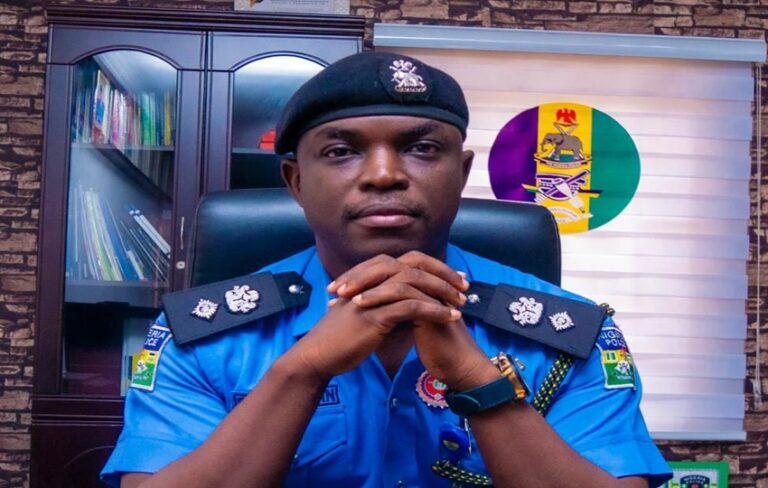
Speaking on Channels Television’s Politics Today on Wednesday, January 21, the Force Public Relations Officer, Benjamin Hundeyin, a chief superintendent of police (CSP), said the Force did not contradict itself, explaining that early statements reflected the absence of verified information.

“There is no inconsistency from the statement coming from the police. The Kaduna State Commissioner of Police said when we received the information, we immediately mobilised to the scene. We are yet to get any evidence as this happened.

“The moment we obtained evidence, we came out to say that we have gotten evidence. So, there is no inconsistency,” Hundeyin explained.

He said the Inspector-General of Police, Kayode Egbetokun, had since ordered the deployment of helicopters for aerial surveillance, alongside additional operational and intelligence resources.

Hundeyin added that tactical units had been dispatched to the area, patrols intensified, and search-and-rescue operations launched to locate the abductees.

Initial denial and subsequent confirmation

In a statement issued earlier on Tuesday, January 20, Hundeyin confirmed that the abduction was initially disputed during a meeting of the Kaduna State Security Council convened by Governor Uba Sani.

“Subsequent verification from operational units and intelligence sources has confirmed that the incident did occur,” he said, noting that conflicting accounts from individuals within the affected community contributed to the initial uncertainty.

The police also clarified that remarks made by the Kaduna State Commissioner of Police, Rabiu Muhammad, were intended to prevent panic while investigations were ongoing.

At the time, Rabiu had challenged those claiming that an abduction occurred to present evidence, including a list of kidnapped persons and their details.

“Anyone who has evidence should come forward with the list of kidnapped persons and their particulars,” Rabiu said during a press briefing.

Similarly, the Kaduna State Commissioner for Internal Security and Home Affairs, Sule Shuaibu, said engagements with community leaders and the Christian Association of Nigeria (CAN) at the state level suggested the reports were false.

This, however, contradicted the account of the CAN chairman in the 19 northern states and the FCT, John Hayab, who said scores of worshippers were taken during the attack.

Reacting to the commissioner’s statement, the NPF said the uncertainty arose after the Kaduna State Security Council, convened by the government following the reports, received conflicting accounts from individuals from the affected local government area, some of whom he said disputed the incident and described it as false.

Full list of the abductees as culled from TheCable

1. Samson Naallah
2. Ezekiel Naallah
3. Christopher Naallah
4. Martin Samson
5. Moses Samson
6. Clever Godwin
7. Jerusalem Chindo
8. Markus Markus
9. Benjamin Markus
10. Albert Markus
11. Ofelana Markus
12. Linus Markus
13. Hassana Linus
14. Ojo Bamboya
15. Esther Ojo
16. Mary Jonathan
17. George Jonathan
18. Careful Jonathan
19. EF James
20. Morin Boniface
21. Junior James
22. Happiness Jonathan
23. Honest Jonathan
24. Honesty Jonathan
25. Faith Luka
26. Beauty Luka
27. Junior Luka
28. Rosemary Luka
29. Dorothy Luka
30. Selina Luka
31. Alice Bamboya
32. Magdalena Godwin
33. Hassan Ishaya
34. Lazarus Ishaya
35. Marta Ishaya
36. Zummunta Ishaya
37. Salvation Ishaya
38. Susana Linus
39. Jummal Linus
40. Peace Joshua
41. Zahaya Joshua
42. Nabilah Makudi
43.Hajara Makudi
44. Rebecca Hosea
45. Ahmad Ahmad
46. Liyu Ezekiel
47. Vivian Ezekiel
48. Goodluck Ezekiel
49. Beauty Ezekiel
50. Matina Maiyashi
51. Bridget Maiyashi
52. Vivian Linus
53. Mary Amos
54. Hamid Amos
55. Patricia Amos
56. Hamisu Amos
57. Luka Amos
58. Tacy Amos
59. Cynthia Amos
60. Mercy Isaac
61. Augustine Makudi
62. Matthew Samaila
63. Adam Musa
64. Malika Sule
65. Abu Ahmad
66. Hussein Lucky
67. Akinyi Sadiu
68. Dangata Amos
69. Helen Jonathan
70. Asinwa Jonathan
71. Faith Joseph
72. Gloria Kennet
73. Happiness Danisa
74. Fidelis Jacob
75. Tobias Markus
76. Istu Paul
77. Hassana Paul
78. Charity Chindo
79. Christiana Danisa
80. Everest Danima
81. Thomas Philip
82. Catrina Danbosi
83. Halima Hassan
84. Hassan Lukumi
85. Mary Sadiu
86. Franca John
87. Henry Danbiyi
89. Ayuba Lawal
90. Solomon Ayuba
91. Theophilus Danlami
92. Charles Sambo
93. Rahila Charles
94. Gambo Danisa
95. Talent Danisa
96. Nehemiah Danjuma
97. Maijima Shekarau
98. Matina Maijima
99. Laraba Maijima
100. Musa Danjuma
101. Ishaya Danima
102. Lulu Danisa
103. Clement Ahmad
104. Destiny Ahmad
105. Nehemiah Ishaya
106. Simon Ishaya
107. Nasty Muku
108. Helena Joseph
109. Joseph Bawa
110. Sarah Joseph
111. Bulus Mariya
112. Musa Samaila
113. Bulus Bawa
114. Halima Bawa
115. Beture Hosea
116. Sati Hosea
117. Titus John
118. Dogara Bawa
119. Lories Bawa
120. Adamu Aminu
121. Ezekiel Adamu
122. Tenah Markus
123. Tina Danbosi
124. Patricio Bawa
125. Janet Tsuda
126. Amina Danjuma
127. Sandra Danbosi
128. Bridget Sunday
129. Saphat Innocent
130. Alex Sunday
131. Beauty Peter
132. Samisa Paul
133. Joy Joseph
134. Methole Johanna
135. Genesis Johanna
136. Maria Johanna
137. Merozdu Adonu
138. Karimi Jangbe
139. Sunday Martela
140. Santina Hershinga
141. Keuna Michael
142. Hassan Bulus
143. Marzeta Maisoni
144. Mainwa Dominic
145. Godwin Karimi
146. Amos Akijo
147. Nathan Amos
148. Joseph Chindo
149. Lydia Godwin
150. Hamna Maiyangi
151. Toletu Maiyangi
152. Esther Godday
153. Godswill Godday
154. Godlive Samson
155. Goodluck Aliga
156. Madaki Tabawa
157. Tabawa Abba
58. Tabawa Iyamye
159. Samuel Amos
160. Daniel Amos
161. Deborah Amos
162. Ruth Amos
163. Emmanuel Danjuma
164. Joshua Danjuma
165. Rejoice Danisa
166. Blessing Danisa
167. Ibrahim Lawal
168. Zainab Lawal
169. Sadiq Ahmad
170. Aisha Ahmad
171. Yakubu Musa
172. Suleiman Musa
173. Rahama Musa
174. Daniel Jonathan
175. Samuel Jonathan
176. Peter Jonathan
177. Grace Jonathan

Whistleblowing: of law, justice, and the guardians in between

0

By Chido ONUMAH

IF a single idea has guided the work of the African Centre for Media and Information Literacy (AFRICMIL) over the past years, it is this simple truth: a nation cannot win the war against corruption by sacrificing its most courageous citizens along the way.

The whistleblower is not an inconvenience to governance. He or she is its essential early warning system. And yet, nearly a decade after Nigeria introduced a whistleblower policy, the country still operates without the one safeguard that makes integrity sustainable: a clear, enforceable law that protects those who speak up.

In 2025, AFRICMIL made a deliberate pivot. We moved from managing the consequences of this gap to strengthening the architecture that must eventually close it. Individual case interventions remained central to our work, but the focus widened. This became a year of institutional engagement, judicial preparation, and evidence building. A year spent laying the intellectual and legal groundwork for a system that can outlive goodwill and survive political seasons.

At the heart of this shift was a recognition that laws do not operate in isolation. They are interpreted, enforced, and animated by institutions and people. Chief among them is the judiciary.

That understanding informed last September’s National Interactive Forum for Judges on Whistleblowing and Whistleblower Protection held in Abuja. It was convened in partnership with the National Human Rights Commission (NHRC), TAP iNitiative, Progressive Impact Organisation for Community Development (PRIMORG), and Centre for Fiscal Transparency and Public Integrity (CeFTPI), and supported by the Platform to Protect Whistleblowers in Africa (PPLAAF), Whistleblowing International Network (WIN), MacArthur Foundation and the Independent Corrupt Practices and Other Related Offences Commission (ICPC).

Federal High Court judges gathered not for ceremony, but for a candid exchange on the dilemmas that whistleblowing presents to modern jurisprudence. Questions of anonymity, retaliation, national security, and the balance between transparency and due process were confronted head on.

It was evident, at the forum, that the effectiveness of whistleblower protection will ultimately be determined by the courts. Preparing the judiciary is therefore not an auxiliary task. It is foundational. When a comprehensive law eventually emerges, it must meet a bench that is already conversant with its logic and committed to its spirit. The forum was an exercise in institutional readiness, the kind of quiet work that rarely makes headlines but determines long-term outcomes.

This institutional engagement was reinforced by rigorous research. Our nationwide survey in 2021 examining five years of Nigeria’s whistleblowing policy offered a sobering diagnosis. Awareness of the policy is widespread. Confidence in it is not. Nearly three quarters of respondents reported that they had stopped reporting corruption altogether. Fear of retaliation and scepticism about state protection dominated their responses.

The data did not tell a new story. It confirmed, with empirical clarity, what years of casework have shown. A policy without legal backing creates exposure rather than protection. It asks citizens to be brave while leaving them legally exposed. In that sense, the survey was not merely a research exercise. It became an advocacy instrument, anchoring public conversation in evidence and shifting debate from anecdotes to systemic failure.

Behind these numbers lie real people. The human cost of Nigeria’s legal vacuum remains the moral centre of AFRICMIL’s work. The experiences of courageous Nigerians like Aaron Kaase, Murtala Ibrahim, Ntia Thompson, Joseph Akeju, Sambo Abdullahi, Joseph Ameh, Yisa Usman, Abiodun Thomas, Abraham Taiwo and others illustrate the price of integrity in a system that lacks protective muscle. Each exposed large-scale wrongdoing. Each paid with suspension, seizure of salary, dismissal, or professional exile. Their partial victories in court speak more to personal resilience than to institutional justice.

These are not isolated tragedies. They are symptoms of a framework that deters honesty while emboldening misconduct. Their courage explains why AFRICMIL insists that whistleblower protection is not a favour to individuals. It is a structural necessity for governance.

Our work in the past years also recognised that corruption does not respect borders, and neither should reform. Through the Whistleblowing Advocacy Coalition of West Africa (WACOWA), launched in 2024, AFRICMIL continued to nurture a subregional platform for learning, coordination, and standard setting. Countries such as Ghana and Senegal, which have enacted whistleblower protection laws, offer lessons that can inform Nigeria’s journey, just as Nigeria’s struggles offer cautionary insights to its neighbours.

This regional outlook was complemented by our engagement with broader governance questions. Our First Sub-Regional Conference on Whistleblowing and Whistleblower Protection in West Africa in November 2024 with the theme, Reducing Corruption in West Africa: The Importance of Whistleblowing and Whistleblower Protection Legislations” touched on issues around economic policymaking for equitable growth and social inclusion, interrogating the links between anti-corruption, citizen welfare, and economic justice. Corruption is not an abstract moral failing. It is a daily tax on opportunity, health, and social trust. Policies that ignore citizen wellbeing cannot be sustainable, no matter how technically sound they appear.

Taken together, AFRICMIL’s past interventions were not isolated activities. They formed a coherent strategy centred on institutional capacity, evidence-based advocacy, regional solidarity, and citizen protection. The logic is straightforward. Strong institutions protect individuals. Protected individuals strengthen accountability. Accountability improves governance. Governance improves lives.

In 2026 and beyond, this logic continues to guide our priorities. Legislative advocacy for a dedicated whistleblower protection law remains paramount. Judicial engagement will deepen through follow-up trainings, resource development, and sustained dialogue. Legal defence and support for whistleblowers will continue through initiatives such as our flagship project, Corruption Anonymous, and most critically, collaboration with development partners. Regionally, we shall work towards building WACOWA into a stronger platform for shared standards and collective action. Domestically, we believe that secure reporting systems, institutional partnerships, and civic dialogues will expand citizen participation in accountability processes.

As everyone engaged in this field of endeavour understands, this is not work that yields instant gratification. It is patient, structural, and often unglamorous. But it is precisely the kind of work that turns courage into consequence and ideals into institutions.

AFRICMIL’s journey in 2025 and the previous years was about fortifying the space between law and justice, between policy and protection. In that space stand judges, institutions, citizens, and the quiet systems that decide whether truth is punished or preserved. Strengthening that space is how nations mature.

By December 2026, it would have been 10 years since the whistleblowing policy in Nigeria was introduced. Five years after AFRICMIL’s nationwide survey on whistleblower protection in 2021, the sentiments haven’t changed; if anything, they have been reinforced and have given room for despair and despondency.

Now is the time to make the much-needed transition from policy to law; from intent to action!

In Nigeria, courage should not be an act of self-destruction. It should be met with justice. Having an enabling law to protect whistleblowers is the first step in achieving this. That is the future this work insists on building.

Chido Onumah, PhD, is Coordinator at the African Centre for Media and Information Literacy (AFRICMIL).

Wike appoints another retiring FCTA director as aide

1

THE Minister of the Federal Capital Territory (FCT), Nyesom Wike, has appointed a retiring FCTA official, Musa Daura, as his Senior Special Assistant on Protocol Matters, just as offices managed by the FCT Administration remain shut due to an ongoing workers strike.

 In a statement on Wednesday January 21, the Minister’s Senior Special Assistant on Public Communications and Social Media, Lere Olayinka, announced that Daura, who serves as the Director of the FCT Protocol Department, will take up the new role immediately after his retirement from the civil service on January 24.

Daura has spent more than three decades working in protocol and administrative roles in the FCTA, Olayinka said.

His appointment followed a similar role given by Wike to retired Director of Department of Development Control, Mukhtar Galadima, as Senior Special Assistant on Development Control and Planning in December 2025.

Galadima served as director of the Development Control Department from 2016 to 2025. He got his new role a month after his retirement.

The latest appointment by Wike comes while workers under the Joint Union Action Congress (JUAC) have been on an indefinite strike, demanding payment of long overdue entitlements, improved welfare, and better working conditions.

The strike has paralysed several FCTA offices and the Federal Capital Development Authority (FCDA), causing delays in routine services and administrative functions.

Again, North-East Commission to spend 98.9% of 2026 budget on salaries, leaves little for development

0

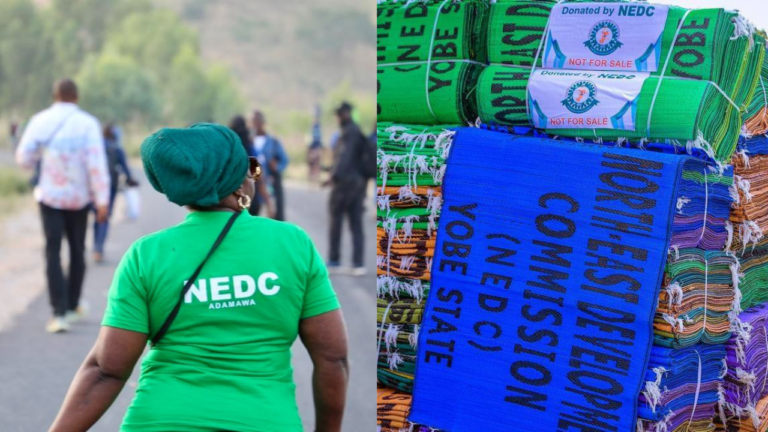
THE North-East Development Commission will spend N244.06 billion of its N246.76 billion 2026 proposed budget on personnel costs. 

This represents 98.9 per cent of the total budget for the commission in the financial year.

Consequently, the commission will spend the remaining N2.7 billion on capital projects, representing 1.1 per cent of the total budget.

The ICIR reports that with almost virtually all it funding going into salaries and other welfare packages, the commission will be unable to achieve the goals for which it was set up.

“The commission is charged with the responsibility of, among other things, receiving and managing funds allocated by the Federal Government and international donors for the resettlement, rehabilitation, integration and reconstruction of roads, houses and business premises of victims of insurgency and terrorism, as well as tackling the menace of poverty, illiteracy, ecological problems and any other related environmental or developmental challenges in the North-East States, and for related matters,” the commission’s mandate reads on its website.

In Nigeria’s context, personnel costs often represent a significant portion of recurrent expenditures.

Personnel costs budget typically refers to the expenses related to employee compensation, benefits, and allowances. This includes salaries, wages, allowances, insurance benefits, pension contributions, training, and other benefits for employees.

The North-East region of Nigeria has been plagued by over a decade-long insurgency, led by Boko Haram, resulting in devastating humanitarian and economic consequences.

This has affected the economic development in the region, with hundreds of Internally Displaced Persons (IDP) camps spread across the region.

Though the attacks are abating, general insecurity has persisted inter-communal feuds, cropper-herder conflicts kidnappings, banditry, cattle rustling, among others have displaced thousands, disrupted livelihoods, and hindered access to essential services.

Notably, over two million people are internally displaced in Nigeria, with many facing food insecurity, malnutrition, and limited access to healthcare and education.

Accordingly, the region’s economy has been severely impacted, with widespread destruction of infrastructure, agriculture, and trade, leading to rising food inflation.

The North East region also posted some of Nigeria’s highest poverty rates, with limited access to education, healthcare, and economic opportunities.

The region is confronted with ecological challenges, such as desertification and climate change, worsening the vulnerabilities of residents.

Analysts believe that poor budget allocation to capital funding in the commission raises lots of questions about government’s determination to address key challenges in the North-East.

“This is not good enough. Was the commission created to pay salaries?” a development economist, Kalu Aja, queried.

It would be noted that Nigeria is struggling to fund the capital component of its budget, with its carryover of 70 per cent of its 2025 budget to 2026.

A large chunk of the nation’s budget is to be sourced from borrowing

Nigeria’s proposed 2026 budget includes a deficit of N20.1 trillion, which is approximately 36.9 per cent of the total spending plan of N54.43 trillion. To finance this deficit, the government plans to borrow around N17.89 trillion, with 80 per cent (N14.31 trillion) coming from domestic sources and 20 per cent (N3.58 trillion) from external creditors.

The country’s debt service burden is a significant concern, with N15.91 trillion allocated for debt servicing in 2026, accounting for 29.2 per cent of the total budget. This has raised concerns about debt sustainability and fiscal discipline.

A recurring trend 

2025 budget: Regional commissions to spend 99.7 on salaries, leave little for development
FILE: An infographic illustrating the 2025 proposed budget allocations for Nigeria’s regional development commissions, showing that over 99% of their budgets were earmarked for personnel costs.

The heavy personnel-cost structure in the North-East Development Commission’s (NEDC) proposed 2026 budget mirrors a broader trend observed in the previous fiscal year.

An analysis of the Federal Government’s 2025 budget proposal by The ICIR showed that the five regional development commissions under the Ministry of Regional Development were collectively allocated about N2.5 trillion, with 99.7 per cent of the funds earmarked for personnel costs, leaving just 0.3 per cent for capital and development projects.

According to the 2025 breakdown, four of the five commissions proposed spending their entire allocations on salaries and overheads, while only the NEDC retained a marginal 2.2 per cent for non-personnel expenditure.

The Niger Delta Development Commission (NDDC) topped the list with N776.5 billion allocated fully to salaries, followed by the North-West Development Commission (NWDC) with N585.9 billion and the South-West Development Commission (SWDC) with N498.4 billion. The South-East Development Commission (SEDC) also earmarked N341.3 billion entirely for personnel expenses.

Read also: Why is Federal Horticultural College, Dadin-Kowa, set to get N133 billion in 2026 budget, more than double Nigeria’s top universities?

IWMF seeks nomination for 2026 Courage in Journalism Awards

THE International Women Media Fund (IWMF) seeks nominations for its 2026 Courage in Journalism Awards.

The annual Courage in Journalism Awards honour women and nonbinary journalists who set themselves apart by exhibiting extraordinary bravery, persistence and resilience. Doing whatever it takes to uncover the truth. They raise the bar for reporting under duress or in the face of censorship.

The awards programme honours brave journalists – including photojournalists – working in any country across the world. They report on taboo topics, immerse themselves in hostile environments and share difficult truths. In addition, the honorees demonstrate a commitment to press freedom and often overcome unjust conditions online and offline to become leaders in their industry.

Organiser says “Candidates for the Courage in Journalism Awards must be full-time staff or freelance women or nonbinary reporters, writers, editors, photographers or producers working in any country and of any nationality”.

Deadline to nominate is February 1, 2026, at 11:59 pm ET. Interested applicants can nominate here.

Why is Federal Horticultural College, Dadin-Kowa, set to get N133 billion in 2026 budget, more than double Nigeria’s top universities?

The Federal College of Horticulture, Dadin-Kowa (FCHDK), is slated to receive N133 billion for capital projects in the proposed 2026 budget, an amount that would exceed the allocations for many of Nigeria’s leading federal universities if approved.

Analysis of the 2026 Appropriation Bill showed that the total allocation for the college stands at N135 billion (N135,782,890,354) with N2.7billion for total recurrent and N133bn dedicated to capital expenditure. 

The capital allocation covers projects unrelated to horticulture, including the construction of religious centres, urban roads, and the procurement of e-hailing vehicles in Lagos. 

Comparison with major federal universities

By comparison, several of Nigeria’s top federal universities received significantly lower allocations for 2026:

  • University of Nigeria, Nsukka (UNN): N49.74 billion
  • Ahmadu Bello University, Zaria (ABU): N48.76 billion
  • University of Calabar (UNICAL): N43.83 billion
  • University of Ibadan (UI): N39.57 billion
  • University of Maiduguri (UNIMAID): N37.75 billion.

In each case, the FCHDK allocation is more than double the funding of these top institutions.

In total, the combined allocations for all federal universities in 2026 amount to N1.044 trillion, meaning the FCHDK budget alone represents roughly 12.7 per cent of the total federal university allocations.

Projects outside its mandate

The Federal College of Horticultural Technology, located in Dadin-Kowa, Yamaltu Deba Local Government Area of Gombe State, is a government-owned tertiary institution established in 2002 by President Olusegun Obasanjo’s administration, with a mandate to train and improve manpower in horticultural and landscaping technology. 

Despite its mandate as a specialised institution for horticultural research and training, FCHDK’s 2026 budget includes projects that span multiple sectors. 

For instance, the college proposed to spend N140 million for worship sites in ‘various locations’ in Yamaltu-Deba federal constituency Gombe and N70 million for prayer centres in Kaduna.

It has also budgeted to spend over N1 billion for “fairly used e-hailing cars” and road construction in Lagos, N350 million for community policing vehicles in Kano, N470 million for hospital equipment in Sokoto and Kaduna.

Similarly, the budget allocates N1.05 billion for the supply of Keke Napep (tri-cycle) to beneficiaries in Kaduna State, N1.05 billion for the rehabilitation of selected roads in the state, N280 million for the construction of VIP guest palaces for traditional rulers in selected locations in Gombe State, and N70 million for a comprehensive free medical outreach in Sabon Gari Federal Constituency, Kaduna State.

It further earmarked multi-million naira for solar streetlights and transformers across several states inb the country.

The ICIR analysis also showed that N133 billion allocation is nearly 50 times the college’s recurrent expenditure of N2.7 billion. 

The ICIR reported that while there are no laws in Nigeria that explicitly fault MDAs for carrying out projects against their mandate, former president, Muhammadu Buhari and the Independent Corrupt Practices and Other Related Offences Commission (ICPC) had condemned the insertion of several constituency projects by federal lawmakers.

The pattern mirrors broader trends in Nigeria’s budgeting process, where agencies are routinely saddled with projects outside their statutory responsibilities. In the 2025 budget alone, the National Assembly inserted over 11,000 projects valued at N6.93 trillion, many of which were unrelated to the core mandates of the institutions tasked with executing them, according to Budgit. 

The civic organisation noted that public funds were redirected to religious centres, boreholes, ICT initiatives, and “empowerment of traditional rulers,” highlighting a systemic culture of patronage and waste. 

The ICIR, in its Open Contract Reporting project, reported many constituency projects poorly implemented or abandoned in local communities.

A recurring pattern with Federal College of Horticulture, Dadin-Kowa

This is not the first time FCHDK, has received disproportionately large allocations. In 2024, the National Assembly approved N42.7 billion for the college, a figure that represented an 11,500% increase from the institution’s initial proposal of N368 million, according to a BudgIT Foundation (Tracka) report.

The funds were earmarked for projects such as the installation of solar streetlights and the purchase of Keke NAPEP tricyclee, initiatives largely unrelated to the college’s core mandate of horticultural training and research.

Martha Oyanta Daniel, the state officer for BudgIT Foundation, described the budget inflation as “not appropriate for a country struggling with loans and a high debt servicing ratio.”

She further emphasised that “projects should be allocated to agencies according to their mandates,” adding that the public must engage actively in tracking government expenditures rather than leaving oversight solely to civic organisations.