THE Federal Government has asked the Court of Appeal in Abuja for permission to appeal a February 2024 judgment that ordered it to investigate, prosecute, and punish perpetrators of attacks against journalists and other media practitioners.
In a motion on notice filed on December 23, 2025, the Attorney-General of the Federation (AGF), through counsel A.B. Mohammed of the Federal Ministry of Justice, requested an extension of time to appeal the judgment delivered by Justice Inyang Ekwo of the Federal High Court, Abuja.
The application comes nearly two years after the ruling and after the statutory three-month period for filing an appeal had elapsed.
Under Section 24(2)(a) of the Court of Appeal Act, 2004, appeals against final decisions in civil matters must be filed within three months. The Federal Government did not lodge any appeal within that period following the February 16, 2024 judgment.
Justice Ekwo’s ruling arose from a suit filed on October 26, 2021, by Media Rights Agenda (MRA), represented by human rights lawyer Mojirayo Ogunlana-Nkanga.
In the suit, MRA accused the Federal Government of failing to protect journalists, investigate killings of media practitioners, and bring perpetrators to justice, thereby violating journalists’ rights to life and freedom of expression.
The organisation cited several murdered journalists, including Dele Giwa, former Editor-in-Chief of Newswatch magazine, killed by a parcel bomb in 1986; Bolade Fasasi, a former NUJ treasurer, shot dead in Ibadan in 1998; Edward Olalekan Ayo-Ojo, found dead in Lagos in 1999; Omololu Falobi of The Punch, killed in 2006; Godwin Agbroko and Abayomi Ogundeji of ThisDay newspaper, murdered in 2006 and 2008 respectively; and Edo Sule-Ugbagwu of The Nation, killed in 2010.
In his judgment, Justice Ekwo held that journalism is a constitutionally protected profession anchored on Section 39 of the 1999 Constitution and ruled that MRA had established its case with credible evidence.
He granted all eight declaratory reliefs sought by the organisation and ordered the Federal Government to take concrete steps to prevent attacks on journalists, investigate and prosecute offenders, ensure remedies for victims, and build the capacity of security and law enforcement agencies to protect media practitioners.
In seeking leave to appeal, the Federal Government said it was “desirous to appeal” the judgment but did not provide reasons for the 22-month delay, apart from stating that it required more time.
An affidavit in support of the application, sworn to by Kelechi Ohaeri, a litigation officer in the Ministry of Justice, stated that the request was made in the interest of justice and to exercise the government’s constitutional right of appeal.
The affidavit added that a proposed notice of appeal had already been prepared and that the grounds of appeal were “recondite.”
In his written address, Mohammed argued that the government had identified errors in the judgment after reviewing it and was entitled to appeal under Section 243 of the Constitution.
No date has been fixed for the hearing of the application.
Over the past decades, journalists in Nigeria have been killed in several violent incidents linked to their professional duties or unsafe conditions during reporting.
According to a report covering 2019–2025, at least 21 journalists were killed in Nigeria over that period, alongside 94 attacks including kidnapping, assault, mob violence and other threats to physical safety.
In 2020, Pelumi Onifade, a young reporter with Gboah TV, was killed during the #EndSARS protests in Lagos while covering events. His body was later found after being in police custody, and the circumstances of his death have not been fully clarified.
In 2019, Precious Owolabi, a Channels Television reporter, was shot and killed by a stray bullet while covering a protest in Abuja, one among several protest‑related fatalities.
Earlier in the decade, Enenche Akogwu, a Channels TV cameraman, was shot and killed while reporting on a Boko Haram‑linked bombing in Kano in January 2012.
THE Chairman of Tudun Wada Local Government Council and Chairperson of the Association of Local Governments of Nigeria (ALGON) in Kano State, Sa’adatu Salisu Soja, has resigned from the New Nigerian People’s Party (NNPP).
Her resignation was communicated in a letter dated Friday, January 23, 2026, and addressed to the NNPP leadership in Tudun Wada Local Government.
In the letter, Soja explained that her decision was influenced by her intention to align with the political direction of Kano State Governor, Abba Kabir Yusuf.
“My decision to resign from the New Nigerian People’s Party was motivated by the need to align with the political direction of Abba Kabir Yusuf.”
Soja, who is the only elected female local government chairman in the state, stated that the decision was taken after careful consideration and in line with her loyalty to the governor.
“My decision to resign was necessitated in order to follow the footsteps of my leader, Abba Kabir Yusuf, Governor of Kano State.”
She noted that the move was aimed at supporting the development agenda of Kano State and its people through impactful projects and initiatives.
“In view of the above, I hereby resign my membership of the party.”
Soja also expressed appreciation to the party leadership and members for the support she received during her time in the NNPP.
“I wish to thank the party leadership and members for the support they have given me during my stay as a member of this great party.”
Her resignation comes amid a wave of defections from the NNPP following the exit of Kano State Governor, Abba Kabir Yusuf, who announced his resignation from the party on Friday, citing an escalating internal crisis and the need to protect the broader interests of the people of the state.
Yusuf was reported to have resigned alongside 21 members of the Kano State House of Assembly, eight members of the House of Representatives, and all 44 local government council chairmen in the state.
The development is expected to further weaken the NNPP’s political influence in Kano as more party members continue to realign with the governor’s political direction.
Meanwhile, the Kano State Commissioner for Environment and Climate Change, Dahiru Muhammad Hashim, has also formally resigned his membership of the NNPP, effective Friday, January 23, 2026.
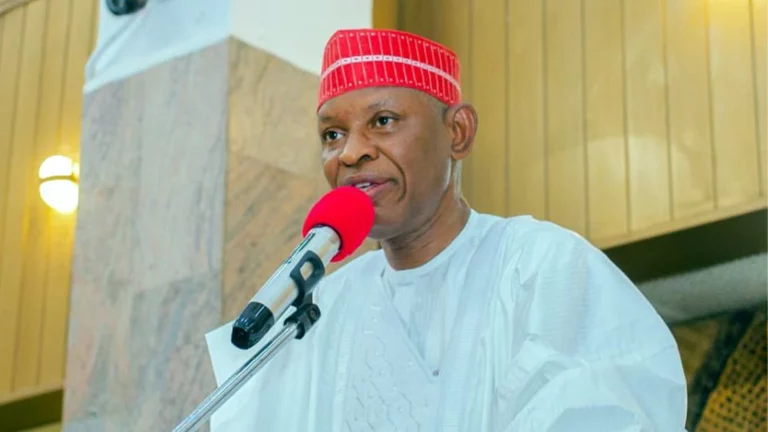
KANO State Governor, Abba Kabir Yusuf, has resigned his membership of the New Nigeria People’s Party (NNPP), citing deepening internal crises, leadership disputes, and protracted legal battles within the party.
The governor’s decision was made public on Friday, January 23, through a statement by his spokesperson, Sunusi Bature Dawakin Tofa.
The statement noted that Yusuf formally communicated his resignation in a letter addressed to the NNPP Chairman of Diso-Chiranchi Ward in Gwale Local Government Area, with effect from January 25, 2026.
“i write with a deep sense of gratitude to formally notify the leadership of the New Nigeria People’s Party (NNPP) of my decision to resign my membership of the party,” Yusuf wrote.
Yusuf thanked the party for providing him with a political platform and for the support he received from its leadership and members across Kano State since joining the NNPP in 2022.
“I remain sincerely appreciative of the opportunity given to me by the party, its leadership, and members across Kano State to be part of its political journey since 2022, as well as the support, goodwill, and cooperation extended to me during my time in the party,” he said.
He further attributed his decision to unresolved leadership disagreements and ongoing legal disputes that have continued to destabilise the party at both state and national levels.
“In recent times, the party has been confronted with persistent internal challenges arising from leadership disagreements and ongoing legal processes, many of which are presently before the courts for judicial determination,” Yusuf noted.
According to him, the disputes has resulted in widespread disenfranchisement among party members, deepening divisions and weakening internal cohesion.
Yusuf said his resignation followed careful reflection, saying that “without prejudice to the party’s capacity to resolve its internal challenges, I have come to the conclusion that my resignation is in the best interest of the people of Kano State,” he added.
Following Yusuf’s exit, at least 21 members of the Kano State House of Assembly, eight federal lawmakers, and 44 local government chairmen were reported to have also left the NNPP, signalling a major collapse of the party’s structure in the state.
The development positions the APC to gain its 29th serving governor, further consolidating its dominance ahead of future electoral contests.
The ICIRreported a pattern of defections from the People’s Democratic Party (PDP) to the ruling APC, particularly among governors and lawmakers seeking to align with the APC ahead of the 2027 polls.
MANY major cities in Nigeria are currently experiencing blackouts due to a complete failure of the national electricity grid.
The grid collapsed on Friday, January 23, marking the first such incident was recorded in 2026.
The Independent System Operator (NISO) said the power generation fell to zero megawatts, while electricity supply to all 11 distribution companies dropped completely by about 1 p.m.
The affected distribution firms include Benin, Eko, Enugu, Ikeja, Jos, Kaduna, Kano, Port Harcourt, Ibadan, Abuja and Yola, all of which recorded zero load allocation at the time of the collapse.
The latest incident comes months after multiple grid failures recorded in 2025, the most recent of which occurred on December 29, underscoring persistent challenges in the country’s power sector despite efforts to stabilise the system.
These breakdowns have persisted despite ongoing efforts to strengthen and expand the country’s power infrastructure.
Earlier, the Niger Delta Power Holding Company (NDPHC) announced the restoration of an additional 450 megawatts to the national grid following the completion of maintenance work at the Geregu National Integrated Power Project plant.
In another move aimed at improving system stability, NISO disclosed that on November 9, 2025, it collaborated with the West African Power Pool Information and Coordination Centre to carry out a synchronisation test linking Nigeria’s grid with the broader West African electricity network.
An earlier report by The ICIR shows that there is no end in sight to Nigeria’s grid collapse, as a report from the Nigerian Electricity Regulatory Commission (NERC) showed unresolved grid weaknesses.
The regulator, in the report, explained that the grid frequency performance also remained unstable, oscillating between 49.46Hz and 50.69Hz—well outside the prescribed 49.75–50.25Hz range.
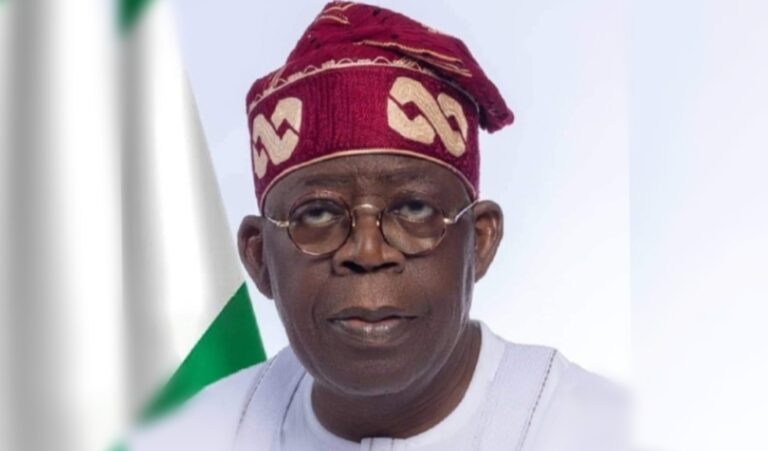
On Thursday, January 22, 2026, President Bola Ahmed Tinubu approved the posting of four ambassador-designates to key nations, including the United States, France, the United Kingdom, and Turkey in a move that signals an effort to enhance Nigeria’s global diplomatic footprint after more than two years of running an administration without consular heads.
However, the president soon made a volte-face by pausing his decision to post an ambassador to Turkey.
After assuming office in September 2023, the Tinubu administration recalled all Nigerian ambassadors, a move that attracted criticism following prolonged gaps in diplomatic representation that weakened Nigeria’s international influence, complicated consular services, and hampered bilateral cooperation. Opposition political parties warned that an absence of ambassadors could damage Nigeria’s global image and relations.
The ICIRreported in December 2025 that the Senate confirmed the ambassadorial nominees after the nominations had generated debates, given the credibility and past public records of some of them.
Currently, former presidential aide, Reno Omokri, former Minister of Aviation, Femi Fani-Kayode and immediate past Chairman of the Independent National Electoral Commission (INEC) Mahmood Yakubu, are among 65 other nominees awaiting their postings.
Ambassador-designates and their new posts
Tinubu directed the Ministry of Foreign Affairs to formally notify host governments under diplomatic protocols. The three ambassadors are:
Ayodele Oke, who was posted to France. Oke brings experience from previous diplomatic work and national intelligence networks. He is an alumnus of Emory University in Atlanta, United States, where he undertook advanced academic training. He previously served as Director-General of Nigeria’s National Intelligence Agency (NIA), Nigeria’s external intelligence arm, after rising through its ranks, as Regions Director at NIA headquarters. Before leading the NIA, he was Nigeria’s ambassador to the Secretariat of the Commonwealth of Nations in London. His tenure as NIA boss ended controversially in 2017 when he was suspended amid an investigation, but the case was later discontinued and struck out by a Nigerian court in 2023.
Lateef Kayode Are: A former security service head and national security adviser, he was posted to the United States of America. Are graduated with First Class Honours in Psychology from the University of Ibadan in 1980 and later earned a master’s degree in International Law and Diplomacy from the University of Lagos. He served as Director-General of the State Security Service (SSS), Nigeria’s domestic intelligence agency from 1999 to 2007, playing a key role in national security operations. Are also held the position of National Security Adviser (NSA) in 2010, coordinating Nigeria’s security policy at the highest level. Earlier in his career, he was an officer with the Directorate of Military Intelligence.
Amin Mohammed Dalhatu: Who previously served as Nigeria’s Ambassador to South Korea was posted to the United Kingdom as High Commissioner. His tenure in South Korea involved promoting political, economic and cultural ties between Abuja and Seoul. His diplomatic career included leading embassy operations, overseeing consular services, and advancing Nigerian foreign policy objectives in Asia before his recent nomination.
The new envoys face a series of political, economic, and bilateral tasks which include rebuilding Nigeria’s bilateral engagement with the US, as it remains one of Nigeria’s most important diplomatic partners, with ties spanning trade, security cooperation and educational exchange. As ambassador-designate, Are’s immediate task will include stabilising relations after heightened tensions reported in recent diplomatic interactions and discussions around security cooperation.
Oke and Dalhatu are expected to strengthen ties with France and the UK because they are key partners for Nigeria in areas including investment, security, and regional diplomacy, especially in the Sahel and West Africa. They will help negotiate economic agreements and provide regular channels for political dialogue with host governments and investors.
Consular and diaspora engagement: Nigeria’s large diaspora communities in the US, UK and France are key stakeholders in economic and social remittances. Strengthening consular services, streamlining processes for Nigerians abroad, and protecting citizen rights will be important functions for the new envoys.
Multilateral and security cooperation: Given global security concerns, the envoys must navigate complex geopolitics to ensure Nigeria continues to seek stronger cooperation on counterterrorism, climate change, and cross-border crime. These areas are central to Nigeria’s foreign policy and will define the diplomatic engagements of Oke, Are, and Dalhatu.
The posting of ambassadors by Tinubu marks a turning point in Nigeria’s external relations. However, the success of these appointments will hinge on how effectively the ambassadors can strengthen bilateral ties, advance economic diplomacy, and address both domestic expectations and international challenges.
THE Club of Rome is accepting applications for its Communications Fellowship 2026. The fellowship is a seven-month mentoring programme aimed at increasing the diversity of voices covering sustainability issues and supporting early-career communications professionals from most of the world: Africa, Latin America and the Caribbean, the Middle East and Asia-Pacific.
The fellowship will be a remote placement with the successful fellow working from their home environment and with one trip to meet members of the Club of Rome team. The fellowship offers a modest stipend towards living costs and includes work-related travel costs.
The communications fellow will gain experience in communicating complex systems thinking for non-specialist audiences through a variety of platforms, including the website, multimedia and social media.
Successful candidate will work directly with the communications team, assisting with a variety of tasks including web publishing, preparing media outreach materials, event coverage, multimedia, social media and other communication activities.
Organiser says, “There are two positions available, and we welcome applications from candidates with a diverse range of experience. We are particularly looking for individuals who enjoy working across all communication channels, and those who are skilled in producing multimedia content.
“There is a modest stipend dependent on location for the seven-month fellowship, working Monday to Friday, 36 hours per week and includes 10 days paid leave. The fellowship will run from July 1, 2026, to January 31, 2027”.
The application deadline is February 20, 202,6 23:59 CET. Due to the high number of applications received, incomplete applications, applications not in English and applications received after the deadline will not be considered. Interested applicants can apply here.
ACROSS Oyo State, smallholder women farmers long recognised as the backbone of rural food production are waging a quiet but debilitating battle to access and retain farmland.
Findings by the News Agency of Nigeria (NAN) indicate that yearly, land leasing, prohibitive land prices, cultural barriers, and rising insecurity are undermining women-led agriculture, threatening food production in a state considered one of Nigeria’s major food baskets.
Every planting season, Oluremi Oyetunji, a smallholder farmer in Apaadi, Oluyole Local Government Area, prays for two things: the rains and leniency from her landlord.
Her fear is simple, losing the land before harvest.
“I leased the land I am using for about ₦20,000 to ₦30,000. When I tried to buy land, it was about ₦90,000 back then in 2006. Now, it is around ₦1.2 million near Ayegun, and I can not afford that,” she said.
Like other women farmers interviewed across rural Oyo communities, Oyetunji’s dependence on short-term land leases leaves her unable to plan for the future or expand production.
For Motunrayo Olusola, a young mother of five, who began farming five years ago, the uncertainty has cost her dearly.
“I lost a huge amount of money because the sons of the landowner where I leased asked me to leave the land untimely. I had wanted to sell the maize after it dried to increase the income, but I sold the maize plantation cheaply due to the threat.
“ If you want to lease land for two to three years, most landowners will not agree; they only want yearly leasing,” she said.
This restrictive practice, common across Oyo State, limits farming productivity and reinforces poverty among smallholder women who already shoulder the bulk of subsistence food cultivation.
Data from the World Bank shows that only eight per cent of Nigerian women own land in their own names—one of the lowest ownership rates in Sub-Saharan Africa.
Most women access farmland through husbands, family networks or short-term lease agreements. These fragile arrangements offer neither legal protection nor room for investment in irrigation, mechanisation or soil improvement.
A 2022 study in the African Journal of Land Policy estimated that Nigerian women operate on an average of just 0.43 hectares, usually leased for a single season.
Such insecurity not only stifles productivity but makes them vulnerable to sudden eviction.
Rashidat Abass, a member of the Smallholder Women Farmers Organisation of Nigeria (SWOFON), Oluyole LGA, recalls mediating a dispute where women were forced out mid-season.
“We appealed to the landowners to allow the women harvest before leaving. The family decided to reallocate the land among themselves even though the women had already cultivated it. We begged for an extension so the crops could mature,” she said.
These stories are common—stretching from Ibadan’s peri-urban villages to Oyo, Iseyin, and Ibarapa.
Beyond cost and insecurity, cultural norms remain a major barrier for women.
“The Baales will not answer you if you go alone; they say they do not sell to women. If you insist, they inflate the price or sell you land belonging to someone else,” Zainab Irekeola, a farmer from Idi-Iroko, Akinyele LGA, said.
Irekeola recalled how she once lost a plot because the landowner’s son secretly resold it.
To circumvent these barriers, many women now register farms under company names or bring male relatives for authentication. Temilade Olabiyi, SWOFON women leader in Oluyole LGA, said: “Oftentimes, community leaders or families will only sell to men or companies.
“A woman can easily be defrauded; all the land I use for farming is acquired with my company’s name, with my husband and a lawyer present,” she said.
Her remark reflects findings from a 2024 study in the Journal of Environmental Law & Policy, which noted that women’s access to land in Nigeria often depends on their relationships with husbands or male relatives.
Even when women are willing to buy, soaring land prices put land ownership out of reach.
“An acre in Akinyele now sells for between N2 million and N2.5 million. The state farm settlements I asked about were already full,” Irekeola said.
Similarly, Olabiyi said farmland at Latunde village jumped from N300,000 per acre in 2020 to between N800,000 and N1 million in 2025.
A Dataphyte analysis corroborates these reports, showing that peri-urban land values around Ibadan have increased fivefold in the last decade due to housing estates, road expansion, and government acquisitions.
The state’s historic farm settlements—established decades ago—are also overcrowded.
The land request form from the online portal of the Oyo State Ministry of Agriculture.
The Oyo State Ministry of Agriculture confirmed that seven of them were occupied nearly five decades ago, with men still making up 60–70 per cent of beneficiaries.
Agriculture Commissioner, Olasunkanmi Olaleye, maintained that land is available for all.
“You apply through the department of Crop and Farm Settlements. If land is available, you get it within two weeks to a month,” he said.
He added that land acquisition has never been one of the major challenges of smallholder women farmers, emphasising government support through subsidies, input distribution and access to improved seeds.
Atinuke Akinbade, SWOFON State Coordinator, said only a few had access to farmland.
“When our women apply, they are told settlements are full or unavailable. Their farms are scattered, making it difficult for them to benefit from interventions,” she said.
Lekan Shobowale, a landowner in Ibadan’s suburb, believes insecurity has made landowners reluctant to lease rural farmland to women.
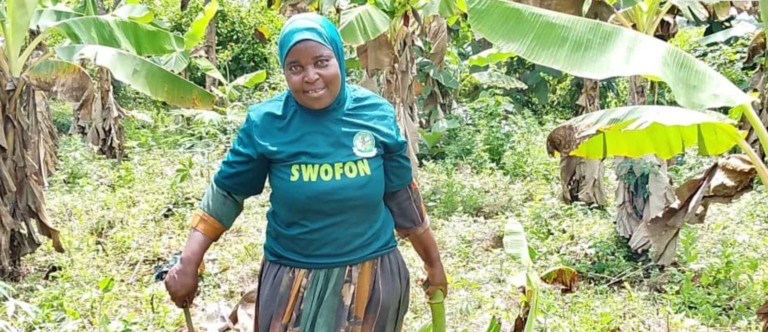
A woman farmer in her plantain farm. Photo: Ibikun Emiola
“Most farmlands left are far and dangerous; herders often invade, destroy crops or kidnap farmers. Male farmers are killed; how much more women who are raped or kidnapped.
“Women who venture into farming do not have the resources; land is the most basic necessity, yet most lands have been turned into estates. The remaining land are too far and unsafe,” she said.
Surveyor and land agent, Remi Akanji, also warned that family land disputes, fraud and encroachment heighten women’s vulnerability.
Experts say women’s weak land rights threaten food security and agricultural resilience.
Jaye Yekini, Project Manager at Whitegreen Development Services, said: “Land insecurity affects smallholder farmers, especially in the Southwest. Most women cannot access land unless they introduce a husband or male relative.
“They farm on leased land for short periods, limiting expansion and investment.”
He added that the land tenure system was stacked against women who lack financial power to buy land outright.
“The way forward is for government to lease out land directly to women, group them into cooperatives, and support them with inputs. At harvest, government can deduct its service charges,” Yekini said.
A 2021 study in Agriculture and Food Security supports this approach, concluding that strengthening women’s land rights significantly improves agricultural output and household resilience.
Agricultural enthusiast, Aina Olaosebikan, also said that farmlands continued to disappear to private and public projects.
“I saw bulldozers clearing farmlands while villagers watched helplessly; that is how food insecurity begins,” he said.
For many women, the solution lies in collective ownership and government-backed allocations.
“We want the government to allocate farmland directly to SWOFON; our members can farm in clusters and benefit from interventions,” Akinbade said.
Farmers interviewed by urged the government to expand farm settlements, increase women’s quota in land allocations, provide irrigation, enhance security, and establish mechanisms to prevent arbitrary eviction.
Unless decisive action is taken, experts warn that Oyo risks losing a major segment of its farming population—particularly women—to land insecurity, rising costs, and deepening gender barriers.
For women like Oyetunji, Irekeola and Abass, farming is not just a source of livelihood; it is a lifelong identity.
This report was made possible with support from the International Centre for Investigative Reporting (ICIR) under the Strengthening Public Accountability for Results and Knowledge (SPARK 2.2) project.
PRESIDENT Bola Tinubu has approved the posting of four ambassador-designates.
This was contained in a statement by the Special Adviser to the President on Information and Strategy, Bayo Onanuga, Thursday night.
Tinubu posted Ayodele Oke as the ambassador-designate to France. He also deployed Lateef Are, a retired colonel, as the ambassador-designate to the United States of America.
“Also confirmed by the President is the posting of Ambassador Amin Dalhatu, former ambassador to South Korea, as the high commissioner-designate to the United Kingdom.
“Usman Isa Dakingari Suleiman, former governor of Kebbi, is the ambassador-designate to Turkey, where the president is scheduled to begin a state visit next week.
“In a memo to the Ministry of Foreign Affairs, President Tinubu urged the ministry to notify the governments of the four countries about the ambassador-designates, in accordance with diplomatic procedures,” ” the statement stated.
The ICIR reports that four ambassadors are among the 68 confirmed by the Senate in December 2025.
Others cleared by the Senate, including former Minister of Aviation, Femi Fani-Kayode, and Reno Omokri, an aide to former President Goodluck Jonathan are waiting for their posting by the president.
The ICIR reports that this is the first time Tinubu will nominate and post ambassadors since he assumed office on May 29, 2023.
He recalled those appointed by his predecessor, the late President Muhammadu Buhari, shortly after he assumed office and has failed to replace them, except for the four postings he made today.
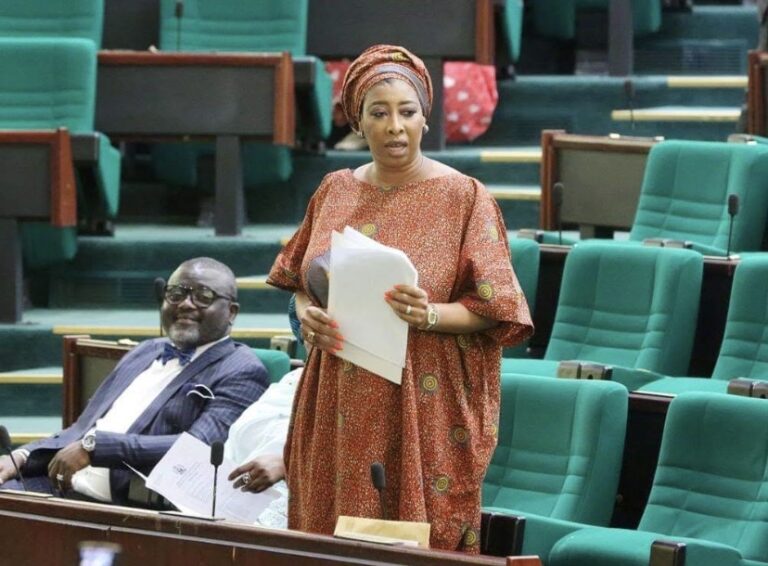
A FORMER member of the House of Representatives, Nnenna Ukeje, has called on the National Assembly to pass the Special Seats Bill to give room for more female participation in governance.
Ukeje made the appeal while speaking at the 23rd Daily Trust Dialogue held on Thursday, January 22, in Abuja. The dialogue was themed “Nigeria’s Fourth Republic: What is working and what is not.”
The former lawmaker highlighted Nigeria’s poor record on women’s political representation, saying the imbalance continued to affect democratic governance and development outcomes.
“Nigeria has a historically low representation of women in political office, generally under six per cent, and was ranked 139th out of 156 countries in the gender equality matrix,” she said.
She noted that women remained marginally represented across elective offices nationwide.
According to her, Nigeria currently has four women in the 109 member Senate and 17 women in the 360 member House of Representatives, adding that at the state level, several Houses of Assembly operate without a single female lawmaker.
She said Nigeria’s figures fall below the African regional average of about 23.4 per cent and the global average of 26.1 percent for women in parliament, despite women accounting for nearly half of the population.
She recalled the early years of Nigeria’s return to democracy, when she said women held strategic appointive positions between 1999 and 2003 and delivered notable outcomes.
“When the population is underrepresented in decision-making, development, and governance, outcomes inevitably suffer. This is not merely a gender issue, it is governance failure. Evidence consistently shows that societies that include women in leadership experience better social, stronger community trust, more sustainable development,” she said.
She linked the continued low representation of women in governance to the failure of reforms such as the special seat bill for women, noting that exclusion from decision making affects policy outcomes, institutional trust and democratic performance.
“Legislative interventions, such as the Special Seats Bill, which has been presented in the last three assemblies, the 8th, the 9th, and the 10th assemblies, have failed to get the desired legislative votes to achieve the affirmative action required to close the embarrassing gender gaps. The National Assembly will do well to seize this opportunity to etch its name glowingly in the annals of Nigeria’s history by passing the Special Seats Bill to allow for more female participation in governance.”
Special Seats Bill
The ICIR reports that the Special Seats Bill proposes the reservation of additional legislative seats exclusively for women in Nigeria’s National Assembly and State Houses of Assembly.
The objective is to guarantee a minimum threshold of female representation and ensure that women’s perspectives are consistently reflected in the country’s lawmaking process.
To achieve this, the bill seeks to amend the 1999 Constitution to create new, women-only seats at both federal and state legislative levels.
Under the proposed legislation, one special seat each is proposed for women in the Senate and the House of Representatives for every state and the Federal Capital Territory (FCT), amounting to 74 additional seats nationwide.
At the state level, the bill proposes three special seats for women in each State House of Assembly, bringing the total to 108 additional seats across the country.
While there have been claims of delayed passage, the bill has successfully passed Second Reading in the House of Representatives and has been referred to the House Committee on Constitution Review for further consideration.
LOCAL contractors have vowed to continue their protest despite the Federal Government’s claim that it had paid N152 billion for verified projects after several months of protest by the contractors at the Federal Ministry of Finance headquarters in Abuja.
In a statement on Thursday, January 22, the Ministry of Finance said the payments were made after contracts passed multiple verification stages required under existing laws and regulations, a process it said was designed to protect taxpayers’ funds and ensure accountability and transparency.
The ministry acknowledged that delays had imposed financial difficulties on contractors but called for continued dialogue and engagement to resolve outstanding disputes.
Some of the contractors, however, said they were owed more than what the government released.
On Monday, January 19, protesters blocked the entrance of the Finance Ministry, preventing the Minister of State for Finance, Doris Uzoka-Anite, from entering the complex.
The standoff further escalated when security personnel fired a shot into the air to disperse the crowd, causing panic. There were no reported injuries.
The protesters, under the aegis of All Indigenous Contractors Association of Nigeria, said the Federal Government owed more than N4 trillion for completed projects. They accused authorities of reneging on commitments to settle verified claims.
They vowed that the protest would continue until all verified claims are fully paid, arguing that local firms should not be treated differently from foreign contractors.
According to them, repeated assurances since last year have failed to translate into payments for many firms, despite documentation being submitted and approved.
“The government has failed to honour the agreement to pay contractors whose project details have been submitted and verified. Payments finalised before the closure of the payment portal at the end of December were never reflected in our accounts,” Jackson Nwosu, president of the association, said.
Government officials insisted that significant progress had been made in clearing arrears, though contractors disputed that account.
The protest leaders said only 30 per cent to 40 per cent of outstanding obligations had been settled, with payment warrants stopping in May 2025.
Many indigenous firms, they argued, borrowed heavily to execute government contracts and were facing loan defaults, asset seizures and mounting interest costs as delays persist.
The ministry said it remained open to constructive engagement and called on contractors to respect established procedures and ministry personnel, noting that officials had faced intimidation and harassment during the protests. It also pledged to continue processing payment requests in a timely and consistent manner in line with due process.
Contractors, however, argued that security responses to their demonstrations were heavy-handed. “This is a peaceful protest. We are harmless. We are just sitting down peacefully, demanding our money, our payment,” Fredrick Agada, the association’s vice president, said.
The dispute has drawn attention at the highest levels of government. In December 2025, President Bola Tinubu set up a multi-ministerial committee to address contractor arrears, which were then estimated at about N1.5 trillion. The panel includes the Ministers of Finance, Budget and Economic Planning, Works and Housing, alongside senior budget and revenue officials.
Federal lawmakers have also stepped in, with a Senate committee summoning Minister of Finance and Coordinating Minister of the Economy, Wale Edun, to explain the delays.
In its 2026 budget proposal currently before the National Assembly, the Federal Government earmarked N1.7 trillion to settle debts it owed contractors.