Home Blog Page 95

Nigeria inflation eases to 15% in December, says NBS

NIGERIA’s year-on-year inflation rate stood at 15.15 per cent in December, relative to the November 2025 headline inflation rate of 17.33 per cent, the National Bureau of Statistics (NBS) report has shown. 

The report, released by the statistics office on Thursday, January 15, showed that the December headline inflation rate was 19.65 per cent lower year on year than the rate recorded in December 2024 (34.80 per cent).

The Statistician-General of the Federation, Adeyemi Adeniran, said that following the completion of the recent rebasing exercise, the CPI report was centred on a new CPI base year of 2024 and a weight reference period of 2023.

It further revealed that the headline inflation rate (year-on-year basis) decreased in December 2025 compared to the same month in the preceding year.

On a month-on-month basis, the headline inflation rate in December 2025 was 0.54 per cent, which is 0.69 per cent less than the rate recorded in November 2025 (1.22 per cent).

Accordingly, this means that in December 2025, the rate of increase in the average price level was lower than in November 2025.

“At the divisional level, the three major contributors to the headline inflation were food and non-alcoholic beverages: 6.06 per cent, restaurants & accommodation services: 1.96 per cent, and transport: 1.62 per cent; while the least contributors were recreation, sport, and culture: 0.05 per cent, alcoholic beverages, tobacco, and narcotics: 0.05 per cent, and insurance and financial services: 0.07,” the statistics office said.

The report also showed that the food inflation rate in December 2025 was 10.84 per cent on a year-on-year basis, while on a month-on-month basis, the food inflation rate in December 2025 was -0.36 per cent, down by 1.49 per cent compared to November 2025 (1.13 per cent).

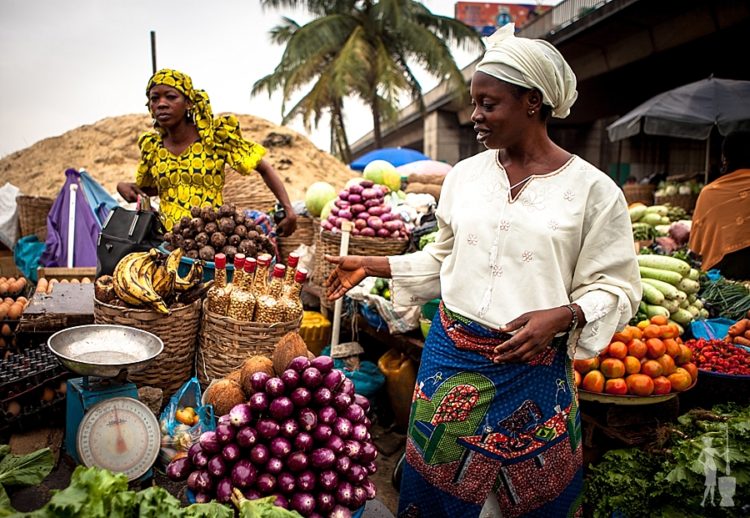
The decrease, the statistics office said, could be attributed to the rate of decrease in the average prices of tomatoes, garri, eggs, potatoes, carrots, millet, vegetables, plantain, beans, wheat grain, grounded pepper, onions, among others.

Additionally, core inflation, which excludes the prices of volatile agricultural produce and energy, stood at 18.63 per cent in December 2025 on a year-on-year basis. On a month-on-month basis, the core inflation rate was 0.58 per cent in December 2025.

The inflation rate of the sub-indices for December 2025 shows that only energy increased significantly (2.74 per cent), while other indices decreased, for example, farm produce (-0.41 per cent), services (0.15 per cent) and goods (0.64 per cent).

Adeniran also explained that the December 2025 year-on-year headline inflation rate, including all other sub-indexes were obtained through the maximisation of the index reference period, that is, using a 12-month index reference period where the average CPI for the 12 months of 2024 is equated to 100.

” This is not the same as the single-month index reference period, in which December 2024 was set to 100,” he said.


Shettima, Obi, others fete Nigerian armed forces

0

NIGERIA’S Vice President Kashim Shettima, on Thursday, paid glowing tributes to the nation’s armed forces for their sacrifices and commitment to guaranteeing security across the country. 

Shettima gave the commendations while leading other government functionaries at the wreath-laying ceremony to commemorate this year’s Armed Forces Remembrance Day in Abuja.

He represented President Bola Tinubu who is reportedly in the United Arab Emirates, participating in the 2026 Abu Dhabi Sustainability Week (ADSW)

The wreath-laying ceremony involves the placing of flowers at memorial tombs of fallen soldiers, where prayers are observed and guns are fired.

Senate President Godswill Akpabio, Deputy Senate President Benjamin Kalu, Minister of Defence Christopher Musa, and other dignitaries attended the event.

Similarly, former Labour Party presidential candidate, Peter Obi, has called on Nigerians and leaders at all levels to recommit themselves to building a nation worthy of the sacrifices of fallen members of the Armed Forces.

Obi made the appeal in a post on his verified X account on Thursday in honour of military personnel who lost their lives in the line of duty.

The former Anambra State governor said the day stands as a solemn reminder of the courage and selflessness of soldiers who stood on the frontlines to defend the nation, often at the cost of their own lives.

On this solemn day of Armed Forces Remembrance, we honour those who have laid down their lives in service to our nation. This special annual event serves as a reminder for us to recommit ourselves to being a nation worthy of their sacrifice,he said.

He explained that the true legacy of fallen soldiers lives on in the hearts of the people they protected, describing them as heroes who endured harsh conditions to safeguard the peace and security of the nation.

We are told that a soldiers true grave is not in the earth, but in the hearts and minds of those they protected—those who slept peacefully while their heroes stood guard. In the heat of the sun and the chill of the night, they stood at the frontlines for us.

Perhaps the most fitting honour we can bestow upon these heroes is to live lives that promote peace and progress. We must provide leadership that gives hope to the hopeless. For the families of these fallen heroes, today is not just a date on the calendar; it is a reminder of an empty chair and a voice that is no longer heard. While we cannot fill that void, we want to assure you that their immense sacrifice was never in vain. God bless our fallen heroes, and may their souls continue to rest in eternal honour,he added.

The ICIR reports that the Armed Forces Remembrance Day Parade is an annual event organised by the Ministry of Defence to honour Nigerian military personnel who paid the supreme price in service to the nation.

It recognises soldiers who died in the First and Second World Wars, the Nigerian Civil War, various peacekeeping missions, and internal security operations, including the ongoing fight against terrorism that threatens Nigerias unity.

Beyond rememberingthe fallen, the parade also celebrates living veterans and serves as a platform to mobilise moral and financial support for their welfare and for the families of deceased service members.

Although Remembrance Day is observed globally, Nigerias commemoration reflects its unique historical experience.

As a Commonwealth nation, Nigeria originally marked Remembrance Day on November 11, in line with other member countries, to honour the end of the First World War in 1918 — at the 11th hour of the 11th day of the 11th month.

However, the country later adopted January 15 to commemorate the end of the Nigerian Civil War, making the observance more reflective of Nigerias own national history.

NESG projects 5.5% economic growth in 2026, warns against policy reversal

THE Nigerian Economic Summit Group (NESG) has estimated economic growth of 5.5 per cent for the 2026 fiscal year, while emphasising that a productive economy would guarantee the realisation of the projected figure.

The economic advisory group also warned the Federal Government against reversing its core policies of fuel subsidy removal and floating the exchange rate.

This was disclosed during the launch of the 2026 Macroeconomic Outlook, titled ‘Consolidating Economic Stabilisation Gains: Pathway to Sustainable Growth in Nigeria’, of the group on Thursday, January 15.

In addition to the projected figures, the NESG projected a surge in foreign reserves to $52 billion, while warning that the next 18 months represented a critical window to prevent a policy reversal.

In his opening remarks, the NESG Chairman, Niyi Yusuf, pointed out that while recent structural reforms had been necessarily painful, they were merely the beginning of a longer journey.

“Nigeria has just emerged from one of the most disruptive adjustment periods in its recent economic history,” Yusuf stated.

Yusuf clarified that economic stabilisation did not equate to prosperity, stressing that “Growth remains modest and uneven, driven by a narrow set of sectors with weak transmission to employment and household incomes.”

He also warned that the nation must now focus on the “hard work” of the next phase, which focuses on consolidating the gains of the reforms for sustainable and inclusive growth.

“Skipping steps in reforms may come at a cost, and confusing one phase for another may lead to policy inconsistency and reform fatigue,” he cautioned.

In providing the technical roadmap for the year ahead, NESG Chief Economist, Olusegun Omisakin, presented a framework designed to move the ‘patient’ from stabilisation to acceleration.

“The challenge now is that we are no longer in a state of crisis, as referenced by the chairman. The present situation allows us to look critically at how we optimise the gains we’ve seen so far,” Omisakin said.

While setting clear benchmarks for 2026, he announced: “This year, we are projecting 5.5 per cent [GDP growth], inflation around 16 per cent for the whole year, and our reserves to jump to 52 billion US dollars.” He added that for long-term stability, “Our inflation targeting should be looking at single digits by 2029.”

Omisakin noted that the current reliance on the services sector, which accounts for 60 per cent of GDP, is insufficient.

He stressed the need to focus more on strengthening structural transformation by identifying the role of agriculture and manufacturing in the economy.

“If we manage the consolidation process very well, evidence suggests that we can grow the manufacturing sector by six per cent to eight per cent, especially if it is well linked with agriculture,” he said.

Despite optimism by the NESG on 5.5 per cent projected economic figures, economic watchers say Nigeria’s inability to fund its budget optimally would create problems and could hinder the achievement of the estimated figure.

Nigeria has carried over 70 per cent of its 2025 budget into 2026, raising unanswered questions about the government’s inability to meet its projected revenue of N40 trillion, of which it could realise only at N10 trillion. A large portion of this amount would still go into debt servicing.

“The budget implementation is still a big problem, and the budget office needs to do better. We also have to focus on an export-led growth strategy which has the power to pull people away from poverty through targeted exports as we are now consolidating on the gains of the reforms,” a development economist, Ken Ife, a professor, told The ICIR.

He cautioned that the services sector, driving the growth at 60 per cent, was not enough unless the manufacturing sector, through value-addition, offered more opportunities for wealth creation.

Despite peace deals, Katsina death toll hits 1,500 in five years as government releases 70 bandits

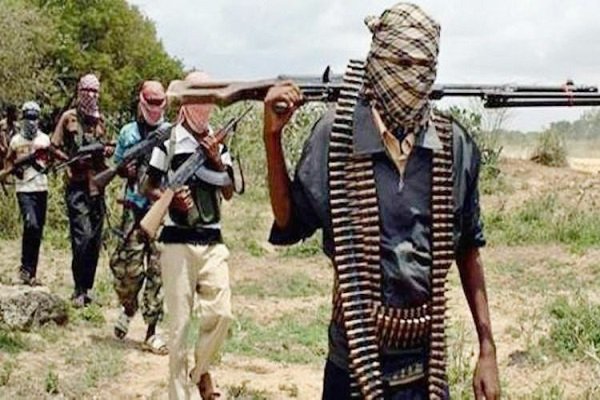
ON January 2, 2026, a letter from the Katsina State Ministry of Justice indicated that the state government had approved the release of 70 suspected bandits who were in custody and standing trial for banditry-related offences.

The letter, classified as secret and addressed to the state’s Chief Judge, Musa Abubakar, requested the intervention of the Administration of Criminal Justice Monitoring Committee (ACJMC) to facilitate the release of the suspects.

It stated that the move was a condition for the continuation of an existing peace accord between affected communities in many local government areas of the state and armed groups operating in those areas.

The letter drew public attention and backlash, with concerns raised over the implications of releasing suspects facing criminal trials.

Despite public ire that trailed the decision, the government defended the decision. On January 12, the state Commissioner for Internal Security and Home Affairs, Nasiru Danmusa, said the planned release was aimed at consolidating peace and securing the freedom of abducted persons.

According to him, the peace pact had already led to the release of more than 1,000 people previously held captive by armed groups across the state.

The government argued that similar peace deal had been adopted in conflict situations globally, adding that the process fell within the statutory powers of the ACJMC under Section 371(2) of the Administration of Criminal Justice Law of Katsina State, 2021.

Over 1,500 civilians killed by bandits in five years in Katsina

However, data shows that deadly attacks on civilians have continued in Katsina despite years of negotiations and peace arrangements.

Number of civillians killed by bandits in Katsina State between 2021 and 2025

Data obtained from the Armed Conflict Location & Event Data Project (ACLED) indicated that at least 1,591 civilians were killed in the state between 2021 and 2025, with fatalities rising sharply in the last two years.

According to the data, 246 civilians were killed in 2021, followed by 179 deaths in 2022 and 138 in 2023. 

The figures rose sharply thereafter, with 495 civilian deaths recorded in 2024 and 533 in 2025, the highest annual toll within the five-year period.

The rise in fatalities occurred despite ongoing negotiations and peace deals between state authorities and armed groups operating in Katsina and the wider North-West region.

Past negotiations with bandits

Negotiations and amnesty-style agreements with armed groups in Katsina and across Nigeria’s North-West have a long record, but multiple investigations suggest they have failed to deliver sustained security.

A June 2025 investigation by The ICIR found that hundreds of ‘repentant’ Boko Haram and ISWAP fighters who surrendered under government amnesty programmes in the North-East later returned to active combat. In exclusive interviews with ex-commanders, The ICIR reported that many surrendered fighters rejoined insurgent groups after government authorities failed to fulfil promises, including housing and livelihood support.

According to the investigation, some surrendered fighters received only a one-off payment of ₦100,000 before being left without sustainable means of survival, prompting many to return to the forests where armed groups retained access to resources, protection and income. Former commanders told The ICIR that the lack of “structured reintegration”, monitoring and accountability enabled insurgents to regroup, rearm and resume coordinated attacks on communities and military formations.

The report documented a resurgence of attacks across Borno, Yobe and Adamawa states in early 2025, including assaults on military bases and civilian communities, despite years of disarmament, reintegration programmes and dialogue-based counterinsurgency approaches. 

In a September 2025 analysis, The New Humanitarian reported that peace talks and amnesty deals in states including Katsina, Zamfara, Sokoto and Kebbi was always a leverage for armed groups rather than pathways to disarmament. According to the report, bandit leaders frequently use negotiations to secure safe passage, regain freedom of detained members, collect taxes from communities, or create space to rearm, while retaining their weapons and operational capacity.

The outlet documented repeated cases where armed group leaders publicly declared repentance, released captives during staged ceremonies and surrendered a small number of weapons, only for attacks to resume within months. In Katsina, it recalled that a 2019 amnesty arrangement saw armed groups turn in just two rifles during a public ceremony, after which residents later reported renewed attacks.

Morocco dash Nigeria’s hope of lifting 2025 AFCON

0

NIHERIA’s hope of lifting the 2025 Africa Cup of Nations (AFCON) has been truncated following a penalty shootout defeat after a goalless semi-final encounter with Morocco.

The highly anticipated clash ended 0–0 after regulation time and extra times Nigeria maintained defensive solidity throughout the 120 minutes as Morocco failed to convert their chances in attack, forcing the match into penalties.

In the shootout, Nigeria’s Chukwueze and Bruno Onyemaechi missed their penalties, bringing an end to their AFCON campaign and dashing hopes of reaching the final.

The defeat marked a disappointing end to what had been an impressive tournament run for the Super Eagles. Nigeria had entered the semi-final full of confidence after defeating Algeria 2–0 in the quarterfinals at the Marrakesh Stadium on January 10.

Against Algeria, Victor Osimhen opened the scoring early in the second half with a powerful aerial header from a precise cross by Bruno.

Akor Adams doubled Nigeria’s lead ten minutes later after being set up by Osimhen, with Alex Iwobi playing a key role in the build-up.

The quarterfinal victory followed a dominant 4–0 win over Mozambique in the round of 16 at the Stade de Fès, where Nigeria displayed attacking fluidity and tactical cohesion.

Osimhen and Adams both found the net in that encounter, with Iwobi and Ademola Lookman providing crucial assists.

Nigeria face Egypt on Saturday for a third place in the campaign, while Morocco meet Senegal in the final on Sunday.

US Embassy reopens redesigned American Center in Abuja

0

THE United States Embassy in Abuja has reopened its newly redesigned American Center.

The embassy, in a statement issued on Tuesday, January 13, described the facility as a platform to showcase American excellence while deepening US–Nigeria relations.

The statement said the upgraded American Center, located within the Embassy Chancery, featured modernised spaces and enhanced technology aimed at expanding educational, cultural, and professional opportunities for Nigerians of all ages. 

It noted that the Center would support English language learning, educational counselling for studies in the United States, American cultural programmes, professional skills development, and networking with US exchange programme alumni.

US Ambassador to Nigeria, Richard M. Mills Jr., said in the statement that American Spaces had become trusted venues for young people seeking opportunities to learn about the United States, improve their English, and build professional skills. 

He added that the Centers played a key role in equipping Nigerians with tools needed to succeed in a rapidly evolving global economy.

The embassy noted that the redesigned Center also featured murals celebrating American history, culture, and shared values such as freedom, innovation, and community. 

Mills was quoted as saying that the values represented in the artwork reflected qualities commonly seen among Nigerian youth, including hard work, determination, and perseverance.

“Through educational advising, entrepreneurship training, and digital literacy programmes, American Spaces equip Nigerians with the tools they need to succeed in a rapidly changing global economy,” he said.

“The individuals depicted on this mural embody the values of hard work, determination, and perseverance. These are hallmarks of American achievement, but they are also qualities we see every day in Nigerian youth,” he added.

Country Public Diplomacy Counselor, Lee McManis, said the American Center in Abuja joined 29 other American Spaces across Nigeria, which he described as hubs for cultural exchange, learning, and collaboration. 

“These Spaces offer a welcoming environment where people can access reliable information, develop new skills, and engage in open dialogue. By fostering connections and supporting lifelong learning, American Spaces empower individuals and strengthen the bonds between our nations,” McManis said.

The reopening comes against the backdrop of a recent US announcement imposing a partial suspension of visa issuance to Nigerians. The policy, introduced under a presidential proclamation on border and national security, affects several visa categories, including visitor, student, and exchange visas, with limited exemptions.

The visa restrictions, which commenced on January 1, 2026, have sparked concern among Nigerians planning to travel, study, or migrate to the US, following a series of tightened immigration measures in recent months. 

According to a report, the restrictions have forced many prospective students to suspend admissions, defer programmes, or abandon plans entirely. The report noted that several American universities had been reaching out to Nigerian applicants, advising them to pause their enrolment due to visa uncertainties.

FG signs new agreement with ASUU

0

THE Federal Government has signed and unveiled a fresh agreement with the Academic Staff Union of Universities (ASUU), formally replacing the long-disputed 2009 pact that fuelled years of industrial action in Nigeria’s public universities.

The agreement was signed on Wednesday, January 14, at the Tertiary Education Trust Fund (TETFund) Conference Hall in Maitama, Abuja, with top government officials and ASUU leaders in attendance.

Present at the event were the Minister of Education, Tunji Alausa; the Minister of State for Education, Suwaiba Ahmad; the Minister of Labour and Employment, Mohammed Dingyadi; and the leadership of ASUU, led by its president, Chris Piwuna.

Speaking at the unveiling, Piwuna said the union was cautiously optimistic that the Federal Government would faithfully implement the terms of the agreement without pushing ASUU to threaten industrial action.

“We are optimistic that the government will implement this agreement in totality, but pessimism still exists because of our history,”  he said.

“It is our belief that Dr. Tunji Alausa will be different, and that our union will not need to issue a strike threat before any part of this agreement is implemented. As you always say, you are open and accessible; ASUU is also open and accessible,” he added.

Describing the agreement as a major shift, Alausa said it marked a turning point for Nigeria’s tertiary education system and signalled an end to frequent strikes in public universities.

“History will remember today not merely as an unveiling ceremony, but as the day Nigeria chose dialogue, transparency, fiscal realism, and strong presidential commitment as the pathway to resolving long-standing governance challenges weand achieving sustained progress,” the minister stated.

Alausa explained that the agreement restored predictability to academic calendars, boosts staff morale, and offers renewed hope to students and parents across the country.

He added that “This administration did not shy away from complexity; we confronted it squarely. Through sustained engagement, fiscal realism, and mutual respect, we have laid a durable foundation for industrial harmony in our federal tertiary educational institutions,” he said.

On implementation, the Minister of Labour and Employment urged both parties to act in good faith, stressing that “agreements only gain value when their provisions are sincerely executed.”

“Faithful and timely execution will not only build trust between the government and university staff but will also foster lasting industrial peace and restore confidence among students, parents, and the wider Nigerian public.

“Agreements gain true meaning not at the point of signing but through consistent and honest implementation,” Dingyadi said.

Key components of the agreement

According to the Education minister, key provisions of the new agreement include a 40 per cent upward review of the emoluments of university academic staff, which he said was aimed at improving welfare, enhancing service delivery, and addressing brain drain.

Under the new structure, academics will be paid through a combination of existing salary frameworks and a consolidated academic tools allowance, which accounts for the 40 per cent review.

He explained that academic staff would be remunerated under two components: the Consolidated University Academic Staff Salary (CONUASS) and the Consolidated Academic Tools Allowance (CATA).

According to him, the CATA is meant to cover essential academic needs such as journal publications, conference attendance, internet access, membership of professional bodies, and book allowances.

The minister added that the agreement also introduced, for the first time, a “professorial cadre allowance” for full-time professors and senior academic leaders.

Under the newly introduced professorial cadre allowance, full professors will earn N1.7 million per year, while academics at the rank of Reader will receive N840,000 annually.

Alausa stressed that the allowance recognised the heavy administrative, scholarly, and research responsibilities borne by academics at that level and did not apply to part-time staff.

“For the first time, the FG has approved a new professorial cadre allowance that apply to senior academics at the level of full time professors and leaders in our tertiary institutions

“Let me emphasise clearly that these allowances apply strictly to full time and not part time professors and leaders.

“This approval recognises the significant workload, administrative, scholarly and research responsibilities borne by academics at this level by the virtue of their profession and positions as professors or leaders in our universities,” he said.


One World Media seeks entries for 2026 awards

ONE World Media is inviting journalists to apply for its 2026 awards, which celebrate underreported stories from around the world.

The awards will recognise the best media coverage from and about the Global South.

Journalists can submit entries to these categories: Environmental Reporting, Journalist of the Year, Current Affairs Award, Feature Documentary Award, Innovative Storytelling Award, News Content Creators Award, Podcast & Radio Award, Print Award, Refugee Reporting Award, Short Documentary Award, Student Award, Press Freedom Award and Women’s Solutions Reporting Award.

The organiser says, “We also welcome stories related to indigenous peoples and communities from anywhere in the world.”

All entries should focus on stories, topics or issues in, about or related to low-and middle-income countries and peoples across the Global South.

Entries must have had their first screening, broadcast, theatrical release, launch or publication between 7 February 2025 to 6 February 2026.

The deadline for submission of the application is February 9, 2026. Interested applicants can apply here.

Ekpoma protest: Okpebholo orders release of arrested students after backlash

0

Report by Esther Tomo

EDO State Governor Monday Okpebholo has approved the release of students and other persons arrested in connection with the protests that erupted in Ekpoma, Esan West Local Government Area, over rising insecurity and alleged kidnappings in the community.  

 The governor’s decision followed days of public criticism, pressure from student bodies, rights groups and political leaders over the arrest and continued detention of dozens of persons, many of whom were identified as students of Ambrose Alli University (AAU), Ekpoma.

The first batch of seven detainees was released on Tuesday. The Edo State Commissioner for Education, Paddy Iyamu, who supervised the process, said only verified students would be freed, while those found not to be students would continue to face investigation and prosecution.

Iyamu said the state government was working with the Students’ Union Government (SUG) of AAU and relevant security agencies to properly identify genuine students arrested during the security operations that followed the unrest.

The release came after a closed-door meeting between Okpebholo and the AAU SUG President, Osadebamwen Ehizojie Michael, during which the governor maintained that the violence that engulfed Ekpoma was not organised by students of the institution.

According to the governor, the disturbance was carried out by hoodlums and non-students allegedly hiding around the university environment and exploiting the insecurity situation to foment chaos, loot shops and extort law-abiding residents and students.

“This was not a students’ protest,” Okpebholo said, adding, “These are people who are no longer students but are hanging around the school, causing trouble and extorting students. We will put an end to that.”

He assured student leaders that any genuine student arrested during the operation to restore order would be released without delay.

“For students who were probably arrested, we will look into it and get them released to the SUG President. That is a promise I made, and I will do it as quickly as possible,” the governor added.

The protests began on Saturday, January 10, after residents and students took to the streets to express anger over rising kidnappings and insecurity in Ekpoma and its surrounding communities. What started as a demonstration quickly escalated into violence, with reports of burning of markets, looting of shops, destruction of public and private property, and attacks on security facilities.

Following the unrest, the Edo State Police Command carried out arrests during and after the protests, including early-morning raids on hostels and private residences. At least 52 persons were arrested and later arraigned before a court, which ordered their remand at the Ubiaja Correctional Centre.

The arrests triggered widespread condemnation, with the National Association of Nigerian Students (NANS), civil society organisations and rights groups describing the detentions as excessive and a violation of the right to peaceful protest.

Political figures, including former Vice-President Atiku Abubakar and Senator Natasha Akpoti-Uduaghan, also called for the immediate release of the detained students, urging the Edo State Government to adopt dialogue rather than repression.

Okpebholo, however, dismissed claims that the protest was triggered by genuine kidnapping incidents, describing such reports as false, stage-managed and intended to mislead the public and incite ethnic tension.

“The kidnapping they are talking about is fake. It was stage-managed. They were arranging to kidnap and release themselves,” the governor said, adding that a death recorded during the unrest was the most painful aspect of the incident.

He condemned the destruction of property in Ekpoma and warned that anyone, regardless of political affiliation, found sponsoring or using hoodlums to destabilise Edo communities would be prosecuted.

“I don’t care whether you are a politician or not. If you are using people to destroy our land and economy, we will go after you,” the governor said.

As of Tuesday evening, state officials said more releases were expected as verification of detained students continued. Meanwhile, rights groups have insisted that the government must ensure transparency, respect due process and address the underlying insecurity that sparked the protests.

Residents of Ekpoma remain tense but hopeful that the release of students would de-escalate the situation and open the door to dialogue between authorities, students and the wider community.


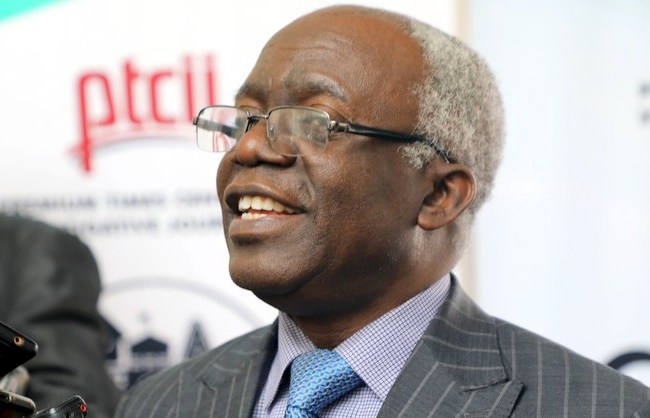
Wikkitimes-sponsored Femi Falana Legal Defenders’ Fellowship debuts

WIKKITIMES, a Nigerian digital media, has announced the launch of Femi Falana Legal Defenders Fellowship, a year-long pilot programme designed to strengthen legal defence for journalists and civic actors facing growing legal intimidation in Nigeria.

This was contained in a statement signed by the organisation’s Operational Manager, Nana Mohammed, and mailed to The ICIR.

It said the fellowship was named after Falana, a senior advocate, in recognition of his decades-long commitment to public-interest litigation, human rights, and the defence of press freedom in Nigeria.

According to the organisation, Nigeria is consistently ranked as one of the most dangerous and difficult in West Africa for media professionals due to regular monitoring, arbitrary arrests, physical attacks, and a prevailing culture of impunity for crimes committed against them.  

It quoted the Committee for the Protection of Journalists as saying that at least 25 journalists were killed with confirmed motives in Nigeria in 2025, adding that 34 were imprisoned, and about 20 journalists were held hostage, with many more detained globally.

“Center for Journalism Innovation and Development, CJID reported through it Press Attack that 72 journalists were attacked in 2025. Reports from RSF and CPJ indicate 2025 was a deadly year for journalists worldwide, with Nigeria facing persistent dangers, including violence, harassment, and impunity for attacks, even as new legal protections were discussed. These reports show a continued dangerous environment for Nigerian journalists,” part of the statement read.  

Wikkitimes noted that Nigeria produced thousands of young lawyers yearly, many of whom it said were eager to serve the public interest but lacked practical training and mentorship in media law, digital rights, and Strategic Lawsuits Against Public Participation (SLAPPs). This gap leaves journalists vulnerable and deprives young lawyers of meaningful pathways into public-interest legal practice, it stated.

The platform explained that Femi Falana WikkiTimes Legal Defenders Fellowship was designed to close the gap, stressing that the fellowship would train, mentor, and place 25 early-career Nigerian lawyers in law firms, chambers, and legal aid organisations, where they would support journalists and civic actors facing legal threats.  

Through intensive training, supervised practice, and the development of shared legal defence tools, the programme aims to strengthen Nigeria’s media defence ecosystem from within the legal profession, Wikkitimes noted further.

Haruna Mohammed Salisu, founder of the fellowship initiative, said the decision to name the programme after Falana reflected his consistent courage in challenging the misuse of the law to silence dissent and his role in mentoring generations of rights-focused lawyers.  

“The fellowship draws inspiration from this legacy while operating independently and in line with professional and ethical standards. To work with journalists and media organisations in the country where journalists and public-interest actors are increasingly targeted with defamation suits, cybercrime charges, and other legal actions intended not to secure justice but to exhaust resources, delay investigations, and discourage accountability reporting. These practices–often described as ‘the process as punishment’ – pose serious threats to press freedom and civic accountability, particularly for independent and regional newsrooms with limited access to specialised legal support.

“The programme will run for an initial 12-month pilot phase, during which fellows will receive specialised training in media law, constitutional rights, digital rights, and the application of the Cybercrimes Act to journalism.

” Fellows will also contribute to building a shared legal defence repository and a practical SLAPP Defence Cheat Sheet for Nigerian lawyers, resources that will remain publicly accessible beyond the fellowship year. In the coming days, WikkiTimes will officially issue a call for applications, inviting qualified early-career lawyers committed to defending media freedom and civic accountability to apply for the fellowship.”