Home Blog Page 956

WMD: WHO highlights innovations for fighting malaria

0

The World Health Organization (WHO) has predicted rapid success in the global fight against malaria if countries step up efforts to support innovations for combating the disease.

In key messages to commemorate the 2023 World Malaria Day (WMD), the agency recounted available innovations and those in the offing for fighting the ailment.

The commemoration has the theme, “Time to deliver zero malaria: invest, innovate, implement”.

WHO said research and development (R&D) had played a crucial role in reducing the global burden of malaria over the last two decades. 

Among the R&D outputs are antimalarial medicines. According to the WHO, developing non-ACT treatment options is a priority for researchers in the face of the emergence and spread of partial resistance to artemisinin. 

It said next-generation medicines were in the pipeline – such as ‘triple ACTs’ that rely on a combination of artemisinin and two partner drugs to mitigate the risk of drug resistance. 

Other medicines under evaluation use different chemical entities as an alternative to artemisinin and its derivates; four are currently in clinical trials.

Added to R&D on malaria over the past two decades is the massive roll-out of rapid diagnostic tests (RDTs), insecticide-treated nets (ITNs) and artemisinin-based combination therapies (ACTs). 

Besides, there are 28 new products in the R&D pipeline. Tools under evaluation include new insecticide-treated nets, targeted baits that attract mosquitoes, spatial repellents, lethal house lures (eaves tubes) and genetic engineering of mosquitoes. 

The agency noted that should the tools demonstrate efficacy in controlling the disease, it would develop new policy recommendations or amend existing ones to support their deployment in malaria-affected countries like Nigeria.

Malaria vaccines, seen by many experts as the biggest breakthrough in the fight against the condition, are also making inroads into checkmating the disease. 

“Like the RTS,S vaccines, many of them target the malaria parasite before it enters the human liver, where it can quickly multiply. The most advanced of these candidates is R21, which recently completed Phase 3 clinical trials. Other vaccine candidates seek to stop transmission of the malaria parasite, and still others to protect women during pregnancy.

“New diagnostics are also on the way. To address problems around HRP2/3 gene deletions, which compromise the performance of RDTs that detect P. falciparum malaria, researchers are pursuing the development of diagnostics that use alternative biomarkers. Non-invasive diagnosis using saliva and urine is another growing area of investigation, with potential for rapid screening outside of conventional medical settings.”

For more rapid success, WHO urged malaria-affected countries and partners to deliver its recommended tools and strategies for everyone at risk of malaria – and particularly those most vulnerable.

It also said there was a need for countries to address the barriers people face in accessing quality health services. “Investments in well-functioning health systems, built on a foundation of primary health care, can address people’s health needs close to where they live and work while, at the same time, reducing the cost of care and enhancing equity.”

In 2021, The ICIR reported how Nigeria was not among three African countries where the malaria trial vaccine RTS’S was administered in three African countries.

In March, this organisation reported how WHO declared Azerbaijan and Tajikistan malaria-free while Nigeria remained burdened.

However, in March 2023, the Nigerian government approved the use of a second vaccine – R21/Matrix – trialled and recommended for use by WHO.

The ICIR reported that Nigeria has the highest malaria burden globally

In its 2023 malaria commemoration message, the WHO said there were 619,000 malaria deaths and 247 million new malaria cases in 2021 in the WHO African Region.

The agency added that 95 per cent of all global malaria cases were logged in the region.

Besides, it said the 2022 World Malaria Report showed a funding gap of US$ 3.8 billion in 2021 between the amount invested in the global malaria response (US$ 3.5 billion) and the resources needed (US$ 7.3 billion).

The gap widened from US$ 2.6 billion in 2019 to US$ 3.5 billion in 2020 and US$ 3.8 billion in 2021.

“Despite the significant contributions of countries and partners, the Seventh Global Fund replenishment raised US$ 15.7 billion against an expected target of at least US$ 18 billion. With the changing economic environment, the funding space for the malaria response has become increasingly challenging.

 

Black civil rights activist Harry Belafonte dies aged 96

AMERICAN singer, actor and civil rights activist, Harry Belafonte, who broke down racial barriers in the 1960s, has died of congestive heart failure at the age of 96 years.

Often dubbed the King of Calypso, Belafonte scored hits with Island In The Sun, Mary’s Boy Child and the UK number one Day-O (The Banana Boat Song).

But his greatest achievements were as a campaigner for black civil rights in the United States.

His spokesperson Ken Sunshine disclosed his cause of death to the New York Times and many figures including the rapper Ice Cube and Mia Farrow have paid tribute to Belafonte.

The US news anchor Christiane Amanpour tweeted that he “inspired generations around the whole world in the struggle for non-violent resistance justice and change. We need his example now more than ever”.

The Beninise-French musician Angélique Kidjo called Belafonte “the brightest star in every sense of that word. Your passion, love, knowledge and respect for Africa was unlimited”.

Bernice King, daughter of Dr Martin Luther King, shared a picture of Belafonte at her father’s funeral and said that he “showed up for my family in very compassionate ways. In fact, he paid for the babysitter for me and my siblings”.

Born in 1927, Belafonte lived his early life in abject poverty and spent his later life fighting for a variety of causes and sponsored numerous 1960s initiatives to bring civil rights to Black Americans.

He also campaigned against poverty, apartheid and AIDS in Africa and supported leftwing political figures such as Cuba’s Fidel Castro and Venezuela’s Hugo Chavez.

Belafonte maintained an acting career alongside music, winning a Tony award in 1954 for his appearance in the musical revue show, John Murray Anderson’s Almanac, and appearing in several films, most notably as one of the leads in Island in the Sun, along with James Mason, Joan Fontaine and Joan Collins, with whom he had an affair.

He was twice paired with Dorothy Dandridge, in Carmen Jones and Bright Road, but he turned down a third film, an adaptation of Porgy and Bess, which he found “racially demeaning”.

Belafonte was later mentored by Martin Luther King Jr and Paul Robeson, and bailed King out of a Birmingham, Alabama, jail in 1963 as well as co-organising the march on Washington that culminated in King’s “I have a dream” speech.

He also funded the Freedom Riders and SNCC, activists fighting unlawful segregation in the American South, and worked on voter registration drives.

He was a fierce proponent of leftwing politics, criticising hawkish US foreign policy, campaigning against nuclear armament, and meeting with both Castro and Chavez.

At the meeting with Chavez, in 2006, he described US president George W Bush as “the greatest terrorist in the world”.

In Africa, he focused on a series of initiatives, organising the all-star charity record We Are the World, raising more than $63 million for famine relief, and his 1988 album, Paradise in Gazankulu, protested against apartheid in South Africa.

He was appointed a UNICEF Goodwill Ambassador in 1987, and later campaigned to eradicate AIDS from Africa.

Belafonte advocated for prostate cancer awareness after recovering from the disease in 1996.

IPAC tasks political parties on inclusion of more women in governance

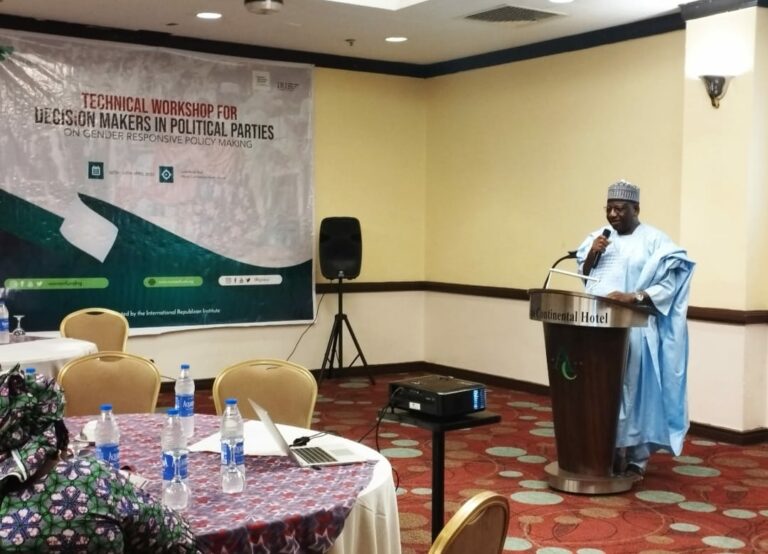
THE Inter-Party Advisory Council (IPAC) has called for inclusion of more women in governance and political development.

Speaking in Abuja, on Tuesday, April 25, at a workshop organised for political parties by the Nigeria Women Trust Fund (NWTF), Women Democracy Network (WDN), and International Republican Institutes (IRI), IPAC Chairman Yabagi Sani emphasised the importance of women participation in governance.


READ ALSO:

Group urges Oyebanji to implement 35% affirmative action for women in Ekiti

Women in Africa offers 2023 young leaders program

Circumcision: Two Nigerian women charged with aggravated manslaughter in Italy

Poll: Women group condemns violence in Lagos, Kano, Rivers


“If we must applaud political development, then women must be involved. By design, we are supposed to be if not equal partners, at least equity should be introduced in how the presentation is made in our politics, in the governance, even in the rally of political parties,” he said.

Sani decried the low level of female representation at the National Assembly and urged political parties to do better in future elections, adding that women were already occupying sensitive leadership positions globally.

Also speaking during the training, Executive Director, Women Empowerment and Reproductive Health Centre Ejiro Otive-Igbuzor noted that laws and policies were the most effective ways of changing gender norms and restrictions on women’s participation in governance.

She said legislators had to make specific recommendations during lawmaking on female representation in government to yield results.

“We need to push for the implementation of those laws. If our electoral laws had recommendations that political parties must represent a certain per cent of females, women not being represented in politics would have been bygones.

“Nigeria has many qualified women, just like qualified youths. The onus is on us to go and look for those qualified women and I can tell you, in every state, every local government, there are qualified women,” she said.

Head of Public Affairs, National Institute for Policy Strategic Studies (NIPSS) Sola Adenyanju, who also spoke at the event, urged political parties to carry relevant stakeholders along while making gender-responsive policies for greater chances at success.

“Everybody should be on the same page, as much as you want a policy to be successful,” he said.

Several reasons have been given for low female candidacy during elections, including cultural and religious factors.

National Women Leader of the Labour Party (LP) Dudu Manuga identified lack of adequate mentorship by successful female politicians as one of the factors adversely affecting gender inclusion in politics while speaking to journalists at the event.

“How many godmothers do we have in politics that will stand with women when they come out? Even women that have arrived, how many of them are actually mentoring others and holding their hands?” she asked.


READ ALSO:


“Our aim is to see that by 2027, and not even just 2027, but when we have our congresses for the party, that we have more women within the party structure and not just women leaders,” she said.

“We are pushing towards that starting from the local government level. We have started encouraging the women to make sure that they come out. It is not a men’s world. Politics is for both men and women and if we don’t have women on the table, the issues of women cannot be captured properly in governance,” she said.

IPYS offers Latin American award for investigative journalism

THE  Press and Society Institute (IPYS)  is inviting entries for its 2023 edition of the Latin American Award for Investigative Journalism.

The award aims to encourage greater transparency in government, business and media as well as to promote investigative reporting on matters of public interest.

Investigative stories published or broadcast between July 1, 2022 and June 30, 2023 in Spanish, Portuguese or English are eligible. Reporters can submit work done independently or in teams.

The winner will receive US$5,000.

Print, online and broadcast journalists who have published their work in Latin American or Caribbean news outlets can compete for this award.

The deadline for the submission of entries is June 30, 2023. Interested applicants can apply here.


Rivers: Gunmen kidnap NPC commissioner 6 days after abduction of ex-NBA President

0

UNKNOWN gunmen have kidnapped the Federal Commissioner for Bayelsa State in the National Population Commission (NPC), Gloria Izonfuo, in Rivers State.

Spokesperson of the Rivers State Police Command Grace Iringe-Koko, who made this known in a statement on Tuesday, April 25, said the commissioner was kidnapped on Sunday evening alongside her maid and driver at Ogbakiri junction on the East-West road.

She added that the incident occurred while the commissioner was on her way back to Port Harcourt from Brass, Bayelsa State, where she serves as the Federal Commissioner.

According to the police spokesperson, the kidnappers are demanding a ransom of N500 million, and the police have deployed tactical teams to ensure the commissioner’s safe rescue.

This comes six days after the former President of the Nigerian Bar Association (NBA), Okey Wali, was kidnapped at the Obiri-Kwere axis of the East-West Road, near Port Harcourt.

Wali’s whereabouts is still unknown as his kidnappers are yet to contact his family.

The gunmen killed his driver and another aide before abducting him.

The incident has raised concerns about insecurity in Rivers State, with the NBA Port Harcourt branch calling for his unconditional and early release.

Ex-NBA President, Okey Wali. Credit: The Nigerian Lawyer

The immediate past NBA Chairman of Port Harcourt branch, Prince Nyekwere, had expressed the association’s distress that Wali was having such an experience for the second time, and noted that the kidnappers were ‘daredevils’ on a mission.

The NBA, Port Harcourt branch, has also urged security agencies to ensure Wali’s safe release.

The Rivers State Police Command said efforts were being intensified to ensure Wali’s release, noting that operatives are working round the clock to apprehend the perpetrators and make them face justice.

Meanwhile, the Movement for Survival of Izon Ethnic Nationality in the Niger Delta (MOSIEND) has described has condemned Wali’s abduction, describing it as provocative.

OSIEND National President, Kennedy West, in a statement on Sunday, April 23, demanded the unconditional release of the senior lawyer.

He described the abducted former NBA President as a respected citizen who goes about his business peacefully and should be given the desired respect.

“We recognise Barrister Okey Wali as a very respected citizen of the state, Niger Delta and Nigeria and a gentleman who goes about his business without hurting anyone. He is a role model and mentor to many. The abductors should regret their action as he does not deserve the trauma he is subjected to,” he said.

West, who expressed disappointment at the high rate of crime in Rivers State, said such incidents would not be tolerated.

Trending video of ‘NDLEA officers in minibus’ is an old skit — Agency

0

THE National Drug Law Enforcement Agency (NDLEA) has again dismissed a trending video showing its officers engaging in misconduct while on official duty.

In the 28 seconds video, which is currently trending across social media platforms, some men wearing NDLEA jackets were seen taking drugs inside a minibus.

In a statement on Tuesday, April 25, the spokesperson of the Agency, Femi Babafemi, said the video is an old skit and not real.


READ ALSO:

NDLEA intercepts drug consignments in body lotion at Lagos airport

NDLEA nabs 352 suspects, confiscates 2.1 tonnes of hard drugs in Kano

NDLEA, Customs sign MoU to combat drug trafficking

NDLEA declares prophetess, couple wanted over seized illicit drugs


“The National Drug Law Enforcement Agency, NDLEA, wishes to reiterate that a trending video of some persons wearing red jackets similar to the ones used by officers and men of the Agency for operational purposes, operating in a minibus, is an old skit, which the Agency had disclaimed a year old.

“The Agency had in a well-publicised statement released on Saturday, 21st May 2022, stated that it had established, following a series of Public enquiries, that the video with screenshot pictures attached to the statement is a skit produced by one Mathew C Eze, who lives in the Lekki area of Lagos.

“A year after, the video has returned to the social media space, a development that has led to several enquiries from concerned members of the Public on the authenticity of the content of the video,” the NDLEA stated.

The anti-drug agency emphasised that social media content creators must exercise restraint, responsibility, and decorum in using law enforcement officers’ equipment to avoid misunderstandings and insinuations.

The NDLEA noted that the video has confused the minds of members of the public.

The agency also reminded those who engage in such ‘mischief’, particularly while wearing one of its official coats, that doing so has repercussions.

In May 2022, the NDLEA disclaimed the same trending video of some persons wearing jackets similar to the ones used by its operatives as a skit.

NDLEA spokesperson Babafemi said the video was not real in a statement released at that time.

Otedola sparks interest in Transcorp, shakes Elumelu’s controlling power

FEMI Otedola has aroused shareholders’ interest in the shares of Transnational Corporation Plc (Transcorp) with his recent acquisition of shares in the company, to initiate what could be quite some competition with Tony Elumelu for controlling power in the conglomerate.

Otedola had acquired 5.52 per cent or 2.245 billion shares of the overall total market volume of Transcorp, a transaction the company confirmed on April 20.

The Ibadan-born businessman had in addition upped his interest in Transcorp to 6.3 per cent in two separate notifications.

With the acquisition, Otedola is now a substantial shareholder of the company, becoming the second largest shareholder of the company behind UBA Nominees, which own about 9.25 per cent.

Before now, Transcorp was controlled by Tony Elumelu who took over control of the company in 2012.

While there are no offers in the market for Transcorp shares, The ICIR gathered that UBA Nominee (Tony Elumelu) had bought over two billion units of Transcorp shares last week.

The ICIR further gathered that a total of 1,055,408,604 units of Transcorp shares were done as off-market trade at N1.85k in five deals.

The deals were said to have been negotiated with United Capital Securities Limited as buyer and Regency Assets Management Limited and Renaissance Capital as sellers.

Prior to the recent development, Elumelu owned about 273.1 million shares directly in Transcorp, 274 million indirectly through Heirs Holdings Limited, and 294 million through HH Capital Limited.

As at December 2022, about 1,695 investors owned about 89 per cent of the company’s shares.

The latest tussle to control the ownership interest in Transcorp, analysts said, have not only caused a significant stir in the Nigerian financial market but has also spurred a flurry of market activity.

The share price of Transcorp has risen by about 75 per cent to N2.45 as at April 20 to emerge as the most traded stock on the floor of the Nigerian Exchange Limited (NGX) in the previous week, from N1.4 as at April 12.

Worthy of mention is that before Otedola’s recent investment, investors had shown little to no interest in Transcorp’s shares.

Otedola has caused an explosion in Transcorp that could be giving Elumelu some concern, the Executive Vice Chairman of Highcap Securities Limited, David Adonri, asserted.

“Transcorp is pure gold, a hidden jewel that people have not seen,” Adonri asserted.

Why Transcorp is a goldmine

The Transnational Corporation Plc is a diversified conglomerate with investments in the power, hospitality and energy sectors.

Founded in 2004, the company was listed on the Nigerian Stock Exchange (NSE) in December 2006, and trades under the name, Transcorp.

At present, its total market capitalisation stands at N99.59 billion with outstanding shares of 40.65 billion.

According to Adonri, former President Olusegun Obasanjo had set up the company to make it take the shape of the Japanese zaibatsu conglomerates, like Mitsubishi and Nissan, and to make it trade in vital sectors of the country with the mandate to develop assets like oil, agriculture, entertainment, and telecommunications.

Obasanjo had gathered young and sound entrepreneurs like Elumelu and Otedola to  invest in the company.

But while some others divested, Elumelu stayed put, driving the business, while Otedola did not leave completely.

“Transcorp, which sits on an upstream oil business, was making losses, and was not doing well until about a year ago when it started making profits.

“The profits have started escalating. Elumelu was looming large, until Otedola decided to come in to intensify his participation in the Transcorp shares,” the Highcap boss said.

He argued that Otedola might be out to play a strategy where he could leverage Transcorp for synergy in the power business.

“Apparently, Otedola is also trying to diversify its portfolios in the power sector, and in the energy sector along the upstream, midstream and downstream value-chain,” Adonri explained.

With his control of Geregu Power Plc and his stake in Dangote Refinery, Otedola already has a footing in the downstream and midstream markets, and strategically taking position upstream with his acquisition in Transcorp.

“The way he is moving now becomes a threat to Elumelu’ ownership of Transcorp that Elumelu has to start running from pillar to post for survival to defend his position.

“Since Tuesday (April 18), Elumelu has started buying Transcorp shares to increase his ownership of the business.

“Transcorp shares are pure gold, that is what Elumelu is keeping close to his chest, and is right now moving in to mop up from everywhere the stock is hidden.

“With the way they are mopping up and buying Transcorp shares now, there is a struggle for ownership of the business. It has dovetailed into a merciless struggle for the business,” Adonri added.

An investment and portfolio analyst, Abel Ezekiel, told The ICIR that what is playing out now was expected, saying Transcorp was undervalued.

Ezekiel recalled that the Transcorp stock sold at about N7, moved towards an all-time high of about N15 before it plunged to below N1 after the capital market crash in 2008.

As a conglomerate, the Transcorp share ordinarily is supposed to be one of the highly capitalised stocks at the Exchange. However, the reverse is the case considering it is below the initial public offer of N7 traded over the last 10 years.

He pointed out that though Transcorp owns Ughelli and Afam power plants, the company’s share still trades at a miserable price of N2, compared to Geregu Power Plc listed within the last three years and currently trading at almost N400.

“As an astute observation/investor, he (Otedola) must have seen untapped gold mines in Transcorp, thereby throwing his weight into the acquisition of majority shares of the company.

“So, as you may have noticed, the existing majority shareholder of the company, Tony Elumelu, cannot fold his hand and watch his compatriot, Femi Otedola, take over (through majority shareholder), Ezekiel said.

He added that Elumelu has to step up his own buying appetite, which would trigger the massive mop-up, and which would naturally be followed by price appreciation witnessed at the market in the past couple of weeks, “because we are talking of people who have deep pockets involved in this exercise.”

The investment analyst also expressed the view that the recent development was a good omen for the market ecosystem and minority investors, and could boost local investors’ interest in the market over their foreign counterparts.

“These are some benefits currently unfolding. So, we expect more of such opportunities to continue in the local burse,” Ezekiel added.

Who are these billionaires?

Otedola is a Nigerian with businesses in oil and gas, hotels, real estates and investments with a net worth of $1.8 billion, according to Forbes’ report of 2016 – the last time the publication profiled him.

The 61-year old businessman is the current executive chairman of Geregu Power Plc. In January 2006, he was appointed as a non-executive director of Transcorp, where he served till February 2011.

Also a Nigerian, Elumelu has a net worth of $700 million, according to Forbes’ report of 2015 when the publication last profiled him. The 60-year old entrepreneur is an economist and philanthropist. He chairs Heirs Holdings, United Bank for Africa, Transcorp, and is the founder of the Tony Elumelu Foundation.

Delta State establishes team to enforce anti-open grazing law

THE Delta State Government has established a team of 45 Livestock Management Operatives to enforce the law against open grazing.

The inauguration of the team took place at a ceremony held at the Nigeria Security and Civil Defence Corps (NSCDC) headquarters in Asaba, the state capital, on Monday, April 24.

The operatives are expected to be directly supervised by their respective local government area special task forces and will be responsible for ensuring compliance with the anti-open grazing law.


READ ALSO:

Three herders arraigned for violating anti-open grazing law in Bayelsa

Our members will not obey anti-open grazing laws -Miyetti Allah

Stop governors from enacting anti-open grazing laws, Miyetti Allah tells NASS

Nigerian government directing Police to ignore anti-open grazing laws – Delta govt

Delta State Governor, Okowa, wife test positive for COVID-19


The Delta State Commissioner for Agriculture and Natural Resources and Chairman of the Delta State Livestock Management Committee, Godfrey Enita, who inaugurated the team, said the the operatives had undergone basic courses and were well-equipped to perform their duties.

Enita revealed that the committee had previously sensitized all critical stakeholders, including the Arewa community, Myetti Allah Cattle Breeders Association of Nigeria (MACBAN), cattle dealers and the resident Fulani herders, about the law.

“The law was basically enacted, to among others, stop open grazing of livestock, encourage sustainable humane breeding, production and husbandry and marketing of livestock,” he said.

“It was to prevent herders and farmers crisis with its attendant loss of lives and investments, which is a threat to the state’s drive for food security and to enhance safety and harmonious living among herders and farmers in the state.”

The NSCDC Head of Critical National Assets Infrastructure, John Ozowara, who represented the NSCDC state commandant, Suleiman Jimoh, at the inauguration ceremony, expressed confidence in the operatives.

He noted that they had been well-trained and were ready to carry out their duties as stipulated by the law.

The state anti-open grazing law, which was enacted in 2021, aims to prevent herders and farmers crisis, which has resulted in loss of lives, investments and threatens the state’s drive for food security.

It also encourages sustainable humane breeding, production and husbandry, and marketing of livestock to ensure the harmonious living of herders and farmers in the state.

The law is part of the state’s commitment towards an earlier agreement by the Southern Governors Forum in July 2021, to ban open grazing in the region.

Thirteen states, including Lagos Ondo, Ekiti, Oyo, Osun, Ogun, Rivers, Cross River, Bayelsa, Akwa Ibom, Ebonyi, Edo and Abia, have implemented the agreement.

Benue State became the first state in Nigeria to pass a law banning open grazing in 2017. The law has not, however, stopped the incessant killings and clashes among herders and farmers in the state since 2015.

The state government has put the total number of people killed by herdsmen in the state since 2015 at 5,138.

In September 2021, Delta State government accused the Muhammadu Buhari administration, which various social political groups have accused of pampering the murderous acts of herdsmen, of directing the Police not to implement the anti-open grazing laws in different states in the country.

Instead of embracing and encouraging herders to seek alternatives to open grazing as suggested by experts, the Federal Government in August 2021, moved to revive about 368 grazing routes in 25 states of the country.

The decision was vehemently rejected by the Middle Belt Forum, Benue state government and various groups in the Southern part of the country, including state governors from the region.

Nigeria has Africa’s highest malaria death rate – progress is being made, but it’s not enough

0

By Segun Isaac Oyedeji, Federal University, Oye Ekiti

Malaria is a major public health problem and can be life-threatening. The disease, mostly found in tropical countries, is transmitted to humans by the female Anopheles mosquito. Nearly half of the world’s population is at risk of the disease. In 2021, for instance, around 247 million cases of malaria were reported and about 619,000 people died. Four African countries accounted for just over half of all malaria deaths worldwide: Nigeria (31.3%), the Democratic Republic of the Congo (12.6%), Tanzania (4.1%) and Niger (3.9%).

Professor Olugbenga A. Mokuolu currently oversees all malaria work in Nigeria for Management Sciences for Health, a global health advisory organisation. He’s also the former technical director to the National Malaria Elimination Programme in Nigeria. Molecular parasitology Professor, Segun Isaac Oyedeji, spoke to him about Nigeria’s malaria burden.


Segun Oyedeji: Nigeria has a high malaria burden. How did it get here?

Olugbenga Mokuolu: It’s a combination of many things.

The existence of malaria anywhere is an interaction between the environment and the organism responsible for the disease, the mosquito. When you look at an environment, you’re looking at a variety of natural factors – such as temperature, humidity and rainfall – and man-made factors, such as drainage systems. This is because certain conditions allow mosquitoes to thrive – specifically moisture-rich environments. Mosquitoes breed by laying their eggs in stagnant water.

Nigeria’s environment is a favourable one in which mosquitoes – the malaria vector – can thrive.

In terms of environmental management, Nigeria leaves a lot to be desired. The country has open refuse sites, blocked drainage systems, and – because people lack piped water – they store water at home in containers. These all provide ideal sites for mosquitoes to breed.

In terms of humidity, Nigeria has vegetation that favours the reproductive stages of the parasite in the mosquito. Altitude also plays a role. And, in most of Nigeria, the altitude allows the mosquito to fly around without much difficulty. Only the Mambilla Plateau is considered relatively malaria free in Nigeria. It has an altitude that is above 5000 feet which makes it difficult for mosquitoes to inhabit.

In addition to this, Nigeria has a large population which makes malaria transmission much easier. Large populations mean more people tend to live closer together, which makes it easier for the mosquito vector to quickly find a contact for transmission of the malaria parasite. In addition, a large population puts more pressure on sanitation services, leading to more mosquito breeding sites.

That’s not to say no progress has been made. The country’s interventions have not been a failure altogether. My organisation is supporting Nigeria to provide preventive chemotherapy for malaria. We have reached over 25 million children under five in our intervention cycles. This is shown to have significant contribution to reduction in mortality. But we are not yet where we are supposed to be.

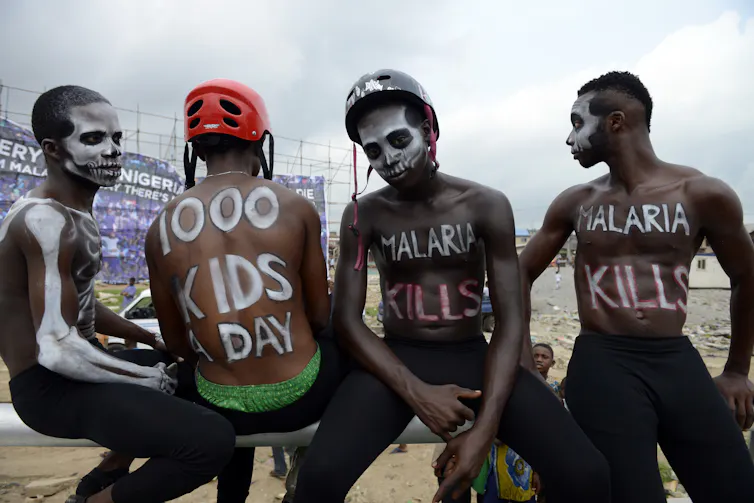
Lagos residents use art to draw attention to the gaps in the prevention and treatment of malaria. Pius Utomi Ekpei/AFP via Getty Images

Segun Oyedeji: Children are disproportionately affected. What can be done?

Olugbenga Mokuolu: The Nigerian government and its partners have singled out children as the focus of most interventions. In addition, we need health system strengthening to address the gaps in access particularly at communities.

The Nigerian National Agency for Food and Drug Administration And Control recently approved the R21 malaria vaccine for use.

Hopefully when the R21 vaccine becomes available it will reduce new cases or the impact of cases. It is unclear when the vaccine may be rolled out in Nigeria.

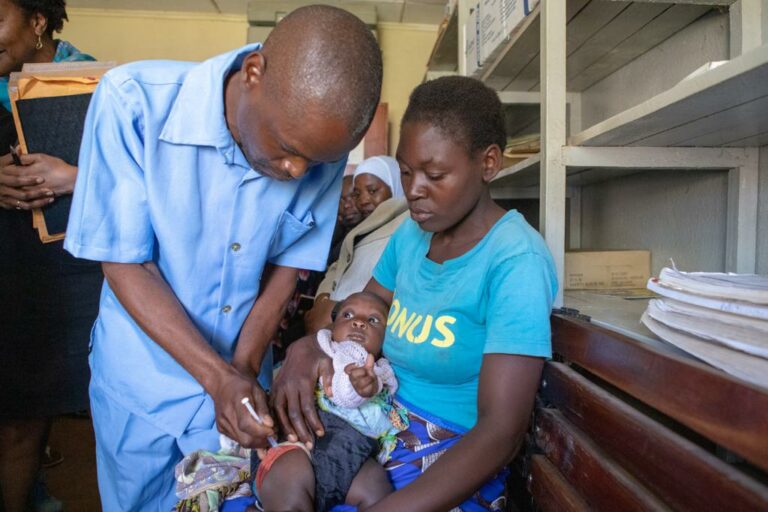
A recent study shows that the R21 vaccine has some efficacy. This vaccines has shown most effective when administered to children from five months to 36 months old. It is 77% effective in preventing infection and reduces the occurrence of severe malaria. Reducing the frequency of severe malaria reduces the burden of malaria mortality by extension.

The vaccines won’t be used on their own. They will be used as adjuncts to existing tools for fighting malaria such as preventative treatment and the distribution of bed nets.

Segun Oyedeji: How can Nigeria reduce its malaria burden?

Olugbenga Mokuolu: New cases of malaria can only be curbed by environmental measures, including the use of insecticide nets and personal protection. I know the vaccines aren’t 100% effective, but surely they will offer additional prevention.

But Nigeria needs to step up its game. The current National Malaria Strategic Plan 2021 to 2025 is based on a well researched model. It is no longer business as usual. The plan clearly shows that if we don’t do more, malaria will keep rising.

But we are actually doing a lot.

Take the bed nets. These are being distributed on an almost regular basis to eligible states. Even COVID-19 didn’t stop the distribution. Now because of the size of Nigeria’s population, bed nets are distributed in what we call mass roll out campaigns with each state doing its own campaign. The improvement in malaria control that we have seen the last five to seven years is based on the intensity of interventions in two thirds of our states.

But Nigeria has gone further to almost be a global example, in how to implement preventive chemotherapy. We have 21 states out of 36 states where we reached over 25 million under five children in each cycle of intervention. We have four cycles in the year and this has contributed to reduction in mortality.

But we could do more.

Malaria isn’t going to be reduced significantly unless Nigeria intensifies development. Development plays a major role in reducing the burden.

Also, infusion of funds and not just from the government. There is also public-private partnership for drug manufacturers. The government should give them a protected market and negotiate good prices. Let the manufacturers take over distribution using their own market principles in a manner that will be affordable to many people.

We need to look at new initiatives and also position ourselves in the vaccine game with respect to malaria.

Segun Oyedeji: How can the international community – donors and aid agencies – best support Nigeria?

Olugbenga Mokuolu: International partners are supporting the country in many ways. Largely the support is in funding and technical areas. Going forward, countries like Nigeria will need stronger support for consolidating current gains, new tools, health system strengthening, scaling up access to vaccine and local manufacturing or production of malaria intervention commodities.The Conversation

Segun Isaac Oyedeji, Professor in Molecular Parasitology and Genetics, Federal University, Oye Ekiti

This article is republished from The Conversation under a Creative Commons license. Read the original article.

Electoral violence: Kano’s Tudun Wada residents demand justice

0

SOME survivors of the electoral violence that rocked the Doguwa/Tudun Wada area of Kano State during the general elections have appealed to the government to investigate the attacks which claimed several lives and left many injured.

The residents of the Tudun Wada area made the appeal while speaking to The ICIR in a special report published on April 21. The report revealed how some members of the New Nigerian Peoples Party (NNPP) were caught in a fire attack by political thugs while the collation of results was ongoing on Sunday, February 26.

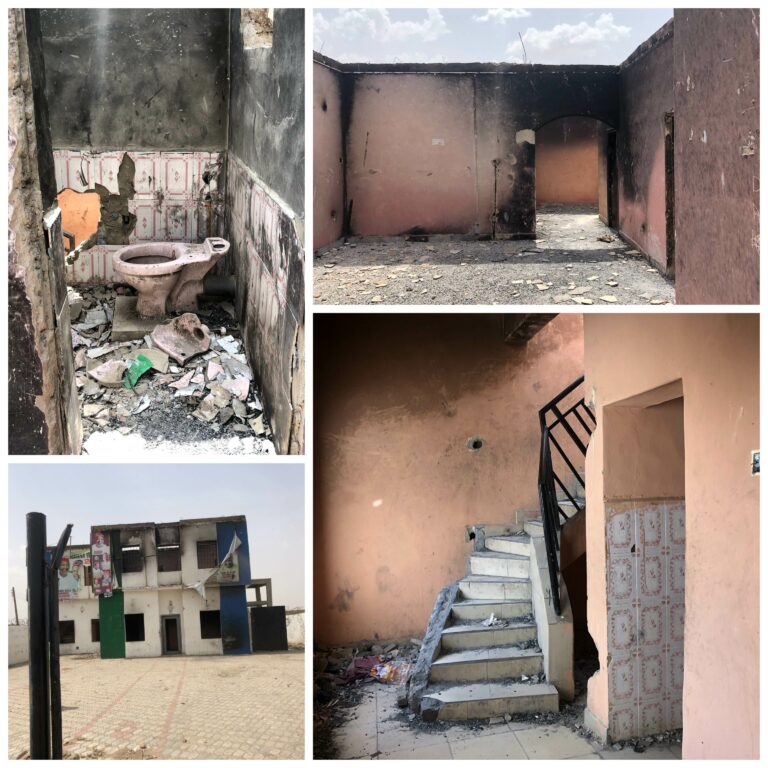
The NNPP office located in Sabon Gari Ward was set ablaze, resulting in multiple fatalities and burns. Some residents were also shot dead, while some luckily escaped.


READ ALSO:


Speaking in the report published by The ICIR, eyewitnesses and survivors of the attack accused Alhassan Doguwa, Majority Leader of the House of Representatives and candidate of the All Progressives Congress (APC) of sponsoring the attack and called on the National Human Rights Commission and relevant authorities to investigate the incident.

Doguwa is the incumbent member representing the Doguwa/Tudun Wada Federal constituency of Kano State.

An eighteen-year-old survivor, Labaran Sule, told The ICIR that he is still angry at the incident and cannot forgive Alhassan Doguwa and the thugs who he accused of attacking him.

Sule escaped death by the whiskers. Aside from being shot in the shoulder, he was also macheted close to his neck. He was in a pool of blood by the roadside when help came his way, and was taken to the hospital.

“It was about 3 p.m. in the afternoon when I came out of the mosque and saw the office of NNPP on fire, and Doguwa had two guns in his hands. The distance between myself and him wasn’t much, and before I knew what happened, he shot me in the shoulder for no reason. I was crawling and trying to escape when he ordered a thug with a machete to cut me or give him the machete to do it.”

Also speaking to The ICIR, Abdul Sarkin-Power (as he is fondly called) said his 25-year-old son Muhammed was in the office of the NNPP, where he got burnt to death.

Sarkin power appealed to human rights organisations, the government and relevant authorities to get justice for his murdered son, who had just obtained his National Certificate in Education (NCE) certificate.

The Kano State Police Command had arrested Doguwa following allegations of murder levelled against him. The police spokesperson Haruna Kiyawa disclosed that the lawmaker was arrested in connection to a suspected case of criminal conspiracy, culpable homicide, causing grievous hurt, mischief by fire and inciting disturbance.

Doguwa was subsequently charged to court, after which a federal high court in Kano granted him bail of N500 million with two sureties. The case was, however, adjourned to April 10 for the continuation of trial but on that date, the matter did not come up as the court didn’t sit.

According to the report, the registrar of Court Two, where Doguwa is being tried, disclosed that the case was subsequently adjourned to May 10.

Speaking in The ICIR report, a coalition of over 140 Civil Society Organisations (CSOs) under the aegis of the Kano Civil Society Forum (KCS) led by Ibrahim Waiya, who is also the chairman of the Kano Peace Committee, raised concerns over the seeming slow pace in Doguwa’s trial.

Waiya, in a public petition signed by 500 members, urged the Kano State Government to accelerate the legal process to establish Doguwa’s role in the murder cases.

The report also disclosed that INEC staff and party agents were attacked during the attack.

The REC, Ambassador Abdul, while speaking at a stakeholders meeting for the conduct of the supplementary polls, described the violence that took place in Tudun Wada as abysmal.

In the same vein, the Deputy Commissioner of Police in the Department of Operations Mu’azu Muhammed, hinted that the police will secure the now-concluded election with armed and unarmed police officers.

Meanwhile, the Independent National Electoral Commission on April 16, announced Doguwa as the winner of the Tudun Wada/Doguwa Constituency election after defeating his closest rival, the candidate of the New Nigeria Peoples Party (NNPP) Yushau Salisu, who polled 34,831 votes.