Home Blog Page 969

INEC, EFCC hire 18 lawyers to prosecute electoral offenders

THE Independent National Electoral Commission (INEC) and the Economic and Financial Crimes Commission (EFCC) have jointly employed 18 lawyers  to prosecute suspected electoral offenders.

The commissions also employed the services of two senior advocates.

In a letter seen on Saturday, April 15, the commissions said the 18 lawyers are members of their legal team.

They stressed that the lawyers would prosecute electoral violators and vote-buyers whose offences are related to financial crimes arising from the 2023 general elections.

The two senior advocates are Rotimi Oyedepo, representing the anti-graft agency, while the other is Abdulaziz Sani, representing the electoral commission.

The other lawyers from the commissions are Nasara Auta, Odinaka Ikoroha, Adeyemi Olufemi, Mahmud Tafarki, Ahmed Mohammed, Amaka Okwuaka, Enoch Akafa, and Temple Ukaegbu.

Other members of the legal team are Samuel Daji, Adaka Ekwu, Soare Adebayo, Arumemi Moses, Abubakar Aliyu, Ikhamaede Ramai, Andrew Akojn, and Khalid Sanusi Sabo.

EFCC, Police apprehend electoral offenders, vote-buyers 

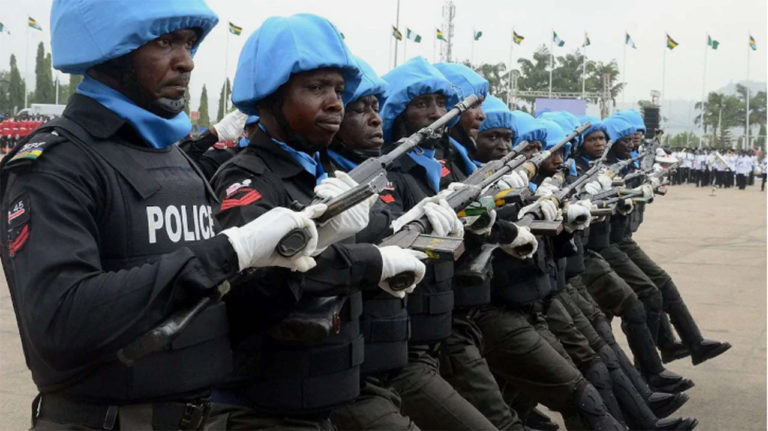
The ICIR reported that the police arrested a total of 781 persons for various forms of electoral offences across the country during the general elections.

The police noted that 203 persons were arrested during the presidential and National Assembly elections, while 578 others were apprehended during the governorship and state assembly polls.

According to the police, about 66 firearms of various descriptions were also recovered from political thugs during the period.

The police stated, “A summary indicates that a total of 185 major electoral offences were reported during the Presidential and National Assembly Elections, with 203 arrests made and 18 firearms recovered. Similarly, a total of 304 electoral offences were recorded during the gubernatorial and state Houses of Assembly polls, with a total number of 578 arrest and 48 firearms.”

The security agency stressed that it would be collaborating with the INEC to ensure that all electoral offenders are prosecuted.

The ICIR reported that the EFCC apprehended over 65 persons for vote-buying and inducement across 28 states during the governorship and state assembly elections.

The commission’s team monitoring the polls in the Port Harcourt zone arrested a total of 12 people for various offences bordering on inducing voters with money to vote for their preferred candidates.

Also 13 suspects, consisting of 10 males and three females, were arrested in Kaduna State.

The statement added, “They were apprehended by operatives working on intelligence or chanced upon them during the monitoring exercise. A suspect allegedly involved in vote buying was nabbed at School Road, Unguwan Rimi Kaduna. The suspect, who initially resisted arrest, is, however, in custody, pending the conclusion of the investigation.”

US, UK promise to sanction electoral offenders

In November 2022, The ICIR  reported that the United Kingdom vowed to sanction Nigerians seeking to undermine the 2023 general elections in Nigeria.

It said that some of the sanctions, which include visa ban, had worked in the past and deterred election offenders in the country.

It stated, “And if we understand that an individual has been involved in violence, either directly or through inciting violence, we can use our visa programme to ensure that that person is not allowed to travel to the UK.


READ ALSO:


“They (visa sanctions) absolutely do work. Obviously, I cannot talk about individual names, but I can assure you we have used it and the whole point of it is to deter people.”

Similarly, The ICIR reported that the United States said it would impose visa ban on electoral offenders.

The US said visa ban is a long standing practice for electoral offenders.

It further noted that it would be applicable to offenders in the 2023 general elections.

Ex-senator Achonu emerges Imo LP gov candidate

THE Labour Party (LP) has declared Senator Achonu as its governorship candidate for the Imo State gubernatorial election.

This came after the party’s governorship primary, which was held in Owerri on Saturday, April 15.

Achonu, with 134 votes, was declared the candidate, while his closest rival in the primary, Major General Jack Ogunewe, scored 121.

Achonu represented Imo North in 2015 on the platform of the Peoples Democratic Party (PDP).

But in December 2015, the Appeal Court in Owerri, Imo State capital, upturned his election and declared the candidate of the All Progressives Congress (APC), Benjamin Uwajumogu, the winner.

So far, all three major parties have elected their candidates for the governorship election.

Senator Hope Uzodimma is the candidate of the APC, while Samuel Anyanwu is that of the PDP.

The Imo State election is slated for November 11, along with some other states holding off-cycle elections.

On March 18, the Independent National Electoral Commission (INEC) conducted the government election with 28 states on March 18.

The election did not hold in Anambra, Bayelsa, Edo, Ekiti, Imo, Kogi, Osun and Ondo states, as elections to the office of governors of the states are held off-cycle and not part of the general elections.

FG frustrating effort to fight insecurity — Benue govt

THE Benue state commissioner for Information, Mike Inelagwu, has said attacks by herders in Benue state have continued unabated due to the “sluggishness” of the federal government.

According to Inelagwu, the Federal government had frustrated the state government’s effort to fight insecurity.

The commissioner, in an interview the Punch published on Saturday, April 15, claimed that lack of response from the Federal government made the state governor, Samuel Ortom, unable to protect Benue residents.

Inelagwu said the governor proposed to the Federal government measures that could be adopted to stop the killings, but the proposals were either rejected or ignored.

Describing the killings as “senseless and unprovoked”, he said the security officials in the state were overwhelmed and also under-equipped, and that Ortom’s requests for the deployment of more security personnel were ignored.

“The governor has the antidote, but for the political differences. We came up with the formation of community volunteer guards to reduce the killings and augment the activities of conventional security agencies. Still, the Buhari administration refused to arm them (volunteer guards).

“If Buhari had yielded, the governor would not have been helpless. How do we try an alternative when the President refused to grant Ortom an audience to intimate him about what is happening in the state? The same federal government that vowed not to discriminate is discriminating against the government of Samuel Ortom,” he said.

Benue is one of the states in Nigeria that is rife with insecurity. There have been incessant attacks and killings by armed herders and a significant number of its residents have been displaced.

According to the Benue State Emergency and Management Agency, about 5,138 people had been killed, and 18 local government areas attacked within the last seven years.

In 2015, 1,177 people were killed, allegedly by armed herders; in 2016, 809 people died.

The alleged attacks by armed herders caused the death of 43 and 440 people in 2017 and 2018 respectively; 174 persons died due also to herders attacks in 2019; 88 people in 2020, 2,131 in 2021, 172 deaths in 2022, and 104 since January 2023.

Supplementary Poll: NNPP defeats APC’s three-term Rep in Kano

The NEW Nigerian Peoples Party (NNPP) has unseated a three-term House of Representatives member, Aminu Sulaiman Goro, of the All Progressives Congress in Kano State.

The NNPP’s candidate, M. B. Shehu, a lawyer, was declared the winner by the Independent National Electoral Commission (INEC) after the supplementary election conducted today in the state for the Fagge Federal House of Representatives seat.

Goro, who lost his election, was seeking a fourth term.

The Returning Officer for the election, Ibrahim Tajo Suraj, a professor, said Shehu got 19,024 votes to defeat Goro, who got 8,669 votes and came third in the election.

Shuaibu Abubakar of the Labour Party came second with 12,789 votes.

Similarly, INEC has declared Murtala Muhammad Kadage of the NNPP winner of the election in the Garko Local Government Area (LGA) of the state.

Kadage defeated Abba Ibrahim of the APC after the supplementary poll conducted in the LGA on Saturday, April 15.

He will represent the LGA at the State House of Assembly in the coming dispensation.

The returning officer for the election, Suleiman Mudi, a professor at the Bayero University Kano, said the NNPP candidate secured the majority of votes.

The party’s victories on Saturday followed similar successes in the governorship and House of Assembly election conducted in the state on March 18.

On March 20, The ICIR reported how the party won the state governorship election.

The party’s candidate, Kabir Abba Yusuf, trounced the current deputy governor of the state, Nasir Gawuna, who sought the office on the APC’s platform, and 16 other contestants.

According to the returning officer, Ahmad Dokko, Yusuf won the election with 1,019,602 votes, while Gawuna got 890,705 votes.

The 2023 election in the state reflected the supremacy battle between two former governors and an incumbent, Abdullahi Ganduje.

Leader of the NNPP, Rabiu Kwankwaso, enjoys large support in the state, like his predecessor, Ibrahim Shekarau of the PDP, and successor, Ganduje of the APC.

But all levels of the 2023 elections, including Presidential, National Assembly, Governorship and House of Assembly, in which the NPPP had a majority of victories in the state, attest to Kwankwaso and his NNPP’s wide popularity in the state.

However, the APC has declared it would challenge some of the NNPP’s victories, including the governorship poll, in court.


Lagos CP dismisses DPO over extortion

THE Lagos State Police has dismissed the Divisional Police Officer of the Okokomaiko Division, Emmanuel Edebagha, over his failure to monitor the officials in his unit efficiently.

Edebagha’s men had been indicted for extortion and misconduct.

The police spokesperson, Benjamin Hundeyin, disclosed this in a tweet on Saturday, April 15.

According to Hundeyin, the state commissioner of police, Idowu Owohunwa, ordered the immediate dismissal of the DPO for failing in his supervisory responsibility.

Owohunwa also ordered disciplinary action against the DPO and the indicted officers.

“CP Idowu Owohunwa has ordered the immediate removal of the DPO Okokomaiko for his lack of supervision of his men. CP Owohunwa has also ordered commencement of disciplinary action against him and all his indicted officers (who are already in the state headquarters),” Hundeyin wrote.


The disciplinary action against the police officials followed a report that some officials attached to the Okokomaiko division extorted the sum of N100,000 from their victim.

The report alleged that the police forcefully obtained money from him despite not finding anything incriminating on him.

 Sylva wins Bayelsa APC governorship ticket

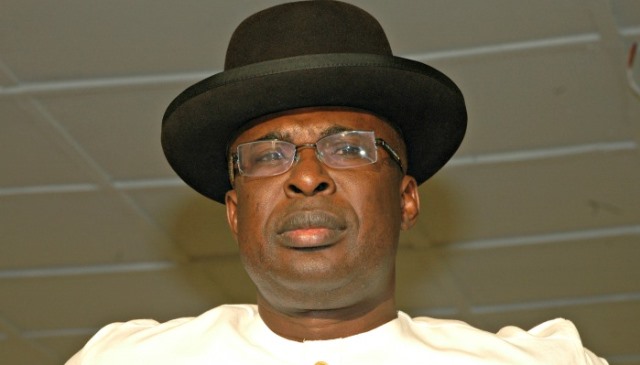
FORMER Minister of State for Petroleum, Timipre Sylva, has won the All Progressives Congress governorship ticket (APC) for Bayelsa state.

Sylva defeated five other contestants, including David Lyon, who was elected governor on the APC platform in the state in 2019, but had his victory overturned by the Supreme Court over discrepancies in the credentials of his running mate, Biobarakuma Degi-Eremieoyo, barely 24 hours before his inauguration.

The former Bayelsa state governor polled 52,061 votes in the direct primary conducted across 105 wards and eight local government areas in the state between Friday, April 14 and Saturday, April 15.

Many party stalwarts had thought Lyon would enjoy an automatic ticket, but the calculation changed with the entrance of Sylva, who wanted an open contest among the aspirants.

Sylva defeated Joshua Machiver, who got 2,078 votes. Lyon came third with 1,584 votes.

Another aspirant, Festus Danumiebi, got 557 votes, and Maureen Etebu, a professor, won 1,277 votes, while Isikima Johnson garnered 584.

The ICIR reports that Sylva, who led Bayelsa State between 2007 and 2012, could not win a second term in 2015 when he vied for the office against Seriake Dickson of the Peoples’ Democratic Party (PDP), now a senator.

Sylva ran for the office on the APC platform that year. He had before then been a member of the PDP, on which he won his election as a governor.

President Muhammadu Buhari thereafter appointed him as a Minister of State for Petroleum during his first term.

He held the position until he resigned in March 2023 to contest the APC governorship primary.

Sylva will face the incumbent Governor Douye Diri who secured the PDP ticket for the poll unchallenged.

The ICIR reports that the PDP has won all governorship elections in the state since Nigeria returned to democracy in 1999. The late General Sani Abacha created the state in 1996.

The governorship election comes up in the state on November 11.


How Chinese are financing terrorists to illegally access mineral resources in Nigeria – Report

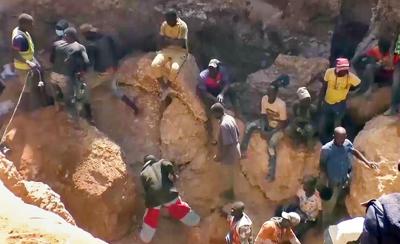
A BRITISH national newspaper, The Times, has reported that Chinese nationals in the mining sector are financing terrorist groups in some parts of Nigeria to gain access to the country’s mineral resources. 

The national daily revealed this in an investigation it published on Saturday, April 15.

The Times said that the Chinese nationals are fuelling insecurity and terrorism through illegal transactions, lobbying and bribes.

The newspaper reported, “Beijing could be indirectly funding terror in Africa’s largest economy.”

According to the report, some Chinese who work informally as miners in Zamfara are serving as smugglers for some militant groups in the state and other states in the north-western part of Nigeria.

It noted that Chinese firms constantly negotiate with terrorists and bandits.

“Chinese companies working in parts of Nigeria where attacks are frequent have been striking security deals with insurgents.

“Attacks on Chinese citizens, of whom there are said to be between 100,000 and 200,000 in Nigeria, have become regular occurrences in recent years amid the country’s many conflicts.”

Research shared with The Times from SBM Intelligence, a Nigeria-based analytics company, revealed videos on social media, including WhatsApp, of militant leaders boasting that they are so powerful that Chinese workers wishing to operate in their areas must pay them ‘rent’. They have taken over swathes of northwest Nigeria, turning the region into the country’s bloodiest conflict zone.

“In one pocket of Zamfara, researchers found, interaction with militants runs so deep that some serve as runners for Chinese miners who have spread throughout Nigeria, controlling digs for gold. The country has some of the largest gold reserves in the world.

“Often operating informally in small groups as contractors registered to clearing-house companies, they speak local languages and can stay for years at a time living in remote areas that western companies consider off-limits.”

The report stressed that Chinese mining contractors underpay locals working on their fields.

“Chinese mining contractors, who local communities have accused of abuses and paying pitiful wages, often smuggle minerals out of the country illegally and are sometimes arrested.”

It said that the Chinese who smuggle mineral resources out of the country through illegal routes were sometimes apprehended.

“In 2020, 27 miners, including 17 said to be Chinese, were arrested in Osun state. Last October, a Chinese citizen, Gang Deng, 29, was jailed for five years after being found with 25 tonnes of a mineral thought to be lepidolite, containing lithium, which is used in batteries.”

SBM also found Chinese workers involved in the Boko Haram conflict in Nigeria’s northeast, with a case of a Chinese smuggler being paid to help a jihadist group move metal ore out of the country.

The ICIR had published a two-part investigation on the activities of illegal gold mining in Osun and Ondo states.

The ICIR’s investigations highlighted the implications of illegal mining on the environment and the health of the natives.

The reports revealed that the traditional rulers and native authorities were in connivance with illegal miners.

The ICIR had also reported that Kogi and Osun states banned illegal mining operations in their territories.

The governors of the two states reiterated their commitment to clamping down on all forms of illegal mining in the state within the ambit of the law, while stating the adverse effects of illegal mining on the well-being of residents of the states.

The government of the two states urged legitimate miners whose activities have contributed to environmental degradation and water pollution in the states to retract immediate steps towards remedying the situation.

Inflation hits 22% as food prices soar

NIGERIA’S inflation rate rose to a record 22.04 per cent in March 2023, against 21.91 per cent in February.

This is contained in the latest inflation report by the National Bureau of Statistics (NBS) released on Saturday April 15.

“Looking at the trend, the March 2023 inflation rate showed an increase of 0.13% points when compared to February 2023 headline inflation rate. On a year-on-year basis, the headline inflation rate was 6.13% points higher compared to the rate recorded in March 2022 which was 15.92%.


Read Also:

“This shows that the headline inflation rate (year-on-year basis) increased in March 2023 when compared to the same month in the preceding year (i.e., March 2022),” the NBS reported.

According to the NBS, increased cost of food and beverages, housing, water, electric, gas, transport, among several other factors, contributed to the increase in the headline index.

Food inflation also increased to 24.46 per cent in March from 24.35 in February.

Nigeria’s inflation has continued on an upward trend since 2015. In October 2015, it was at 9.3 per cent and rose steadily till it hit double digit in 2016.

Rising inflation has remained a significant challenge in the country. Prices of food items have also continued to rise, placing several nutritious food items out of the reach of Nigerians, a large percentage of who live below poverty line.

The ICIR reported in 2022 that rise in food prices in the country is resulting in malnutrition in the country and could push six million more Nigerians into poverty.

Police reportedly bar journalists from Adamawa collation centre

POLICE officers attached to the Independent National Electoral Commission (INEC) collation centre in Adamawa State have reportedly barred journalists from accessing the centre.

The police were reported to have claimed that they had accredited journalists they would invite to cover the collation and announcement of the supplementary election results.

Daily Trust reported how journalists, who were already accredited for presidential and gubernatorial elections, were shocked when police officers turned them away from the centre.

The newspaper said there were protests by the Peoples’ Democratic Party (PDP) members over an alleged plan to move the INEC collation centre from Bank Road to another location in the state.

However, the sorting of votes was in progress at the INEC main office.

When contacted on the telephone by The ICIR reporter, the spokesperson for the Adamawa State Police Command, Yahaya Suleiman, a superintendent of police, said the Daily Trust report did not say policemen, but INEC, stopped the journalists.

Suleiman said the police could not stop journalists from performing their constitutional role.

“They said INEC, not our men. After all, we will not, and we will never bar journalists from doing their constitutional job. Never!” he said.

INEC had rescheduled all inconclusive polls from the February 25 presidential and National Assembly election and March 18 Governorship and House of Assembly poll to today, April 15.

The ICIR reported how residents of the state eagerly await who would lead them for the next four years between the incumbent governor Ahmadu Fintiri, who runs on the platform of the Peoples Democratic Party (PDP), and Senator Aishatu Dahiru (Binani) of the All Progressives Congress (APC).

While Fintiri polled 421,524 votes in the March 18 election, Binani had 390,275.

Nigerians are very interested in the election because the country has never witnessed a fierce contest between a male and a female politician for a governorship seat as in the Adamawa election.

That the contest is happening in the North, where few women have been elected into public offices, makes the election more interesting.

Another factor that makes the election interests many Nigerians is that the PDP presidential candidate, Atiku Abubakar, is from Adamawa State.


INEC declares Plang, Bomai winners of Plateau Central, Yobe South senatorial seats

THE Independent National Electoral Commission (INEC) has declared the All Progressives Congress (APC) candidate Diket Plang as winner of today’s election in the Plateau Central senatorial district.

Plang defeated the People’s Democratic Party (PDP) candidate Yohanna Gotom with 4,107 votes. 

While Plang polled 131,129 votes, Gotom got 127,022.

The Returning Officer, Jimam Lar, an academic doctor, also announced Garba Pwul (a senior advocate) of the Labour Party as securing 36,510 votes and coming third in the election.

A former Plateau State House of Assembly member who represented Pankshin North, Plang’s election completed the election of the three senators representing the state in the 10th National Assembly.

He joins Simon Mwadkwon and Napoleon Bali of the PDP, who had been cleared by INEC as winners for Plateau North and Plateau South, respectively.

In Yobe state, the INEC Returning Officer, Abatcha Melemi, holder of an academic doctorate at the Federal University, Gashua, declared Ibrahim Bomai of the APC winner of the Yobe South senatorial district.

Bomai defeated PDP’s Mr Halilu Mazagane with 711 votes.

While Bomai secured 69,596 votes, Mazagane garnered 68,885.

The ICIR reports that the announcement followed supplementary elections scheduled by INEC for today after the election umpire could not complete the February 25 and March 18 presidential/National Assembly elections and Governorship/House of Assembly elections, respectively.