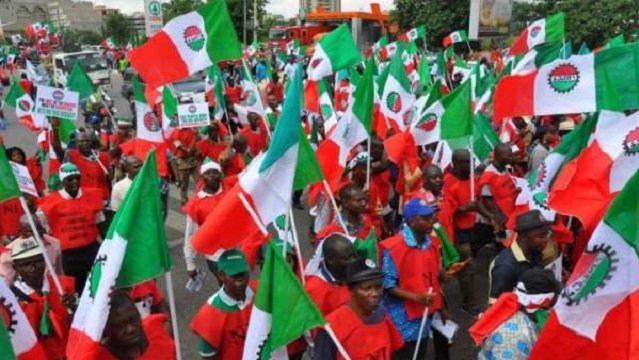
THE Nigeria Labour Congress (NLC) and Trade Union Congress (TUC), on Tuesday gave the Federal Government and the Central Bank of Nigeria (CBN) a grace period of two weeks to further monitor the level of compliance of cash disbursement through commercial banks.
The development, the body said, was as a result of consultations with affiliate members of both unions over the cash crunch policy and the response from members.
The NLC president, Joe Ajaero, disclosed that the new resolution was arrive at after a meeting with their National Executive Council members.
Ajaero recalled that the NLC had issued an ultimatum to go on strike nationwide beginning from today, part of which included a plan to picket the various branches of the CBN.
The president of the TUC, Festus Osifo, corroborated Ajaero’s position, stressing the importance of constantly evaluating government’s policies on availability of fuel products, electricity tarrif and other related policies.
THE Petroleum and Natural Gas Senior Staff Association of Nigeria (PENGASSAN) says a litre of petrol should sell for between N360 and N400 after the subsidy regime.
PENGASSAN president, Festus Osifo, made this known to newsmen yesterday on the sideline of the association’s National Executive Council meeting in Abuja.
Osifo said, “Today, the sole importer of PMS (petrol) into Nigeria is the NNPC. The NNPC is using an exchange rate of the CBN, which gives about N400 to N450 depending on the day and depending on the window that you are looking at. So, if you compute that into the model today, PMS should be selling for a region of about N360 to N400.”
A litre of petrol is currently sold at N184 in some parts of the country, but slightly higher than that in other regions, even as fuel scarcity and long queues gradually subside in most cities.
The PENGASSAN chief, however, said the association had compelled all its organs nationwide to make fuel available for Nigerians, as he threatened to withdraw the licences of any member found hoarding petrol.
He said functional local refineries would not only make fuel affordable but provide jobs for Nigerians. He advised that the money removed from fuel subsidy be used to end the perennial strike by the Academic Staff Union of Universities (ASUU).
He said, “While maintaining our support for the full deregulation of the sector and the significant milestone achieved in this regard, we counsel that efforts be made to increase the pace of the current rehabilitation exercise of refineries and get them back on track in due time.”
Osifo said the currency swap, as well as sporadic fuel scarcity across the country must be addressed by the incoming administration, while palliatives must be made available to Nigerians to cushion the impact of the removal of fuel subsidy.
The Minister of Finance, Zainab Ahmed, had already informed of government’s plan to remove fuel subsidy before the end of the current administration.
Accordingly, the Central Bank of Nigeria (CBN) governor, Godwin Emefiele, at the last Monetary Policy Committee meeting held on March 21, 2023, disclosed that the government was already preparing grounds for subsidy removal.
“Upward risks and price adjustments in a build-up to petroleum subsidy removal, rising food prices are key considerations for raising monetary rate to 18 per cent,” Emefiele said.
Also, the Minister of Labour and Employment said yesterday in Abuja that the incoming administration would bear the burden of providing palliatives for Nigerians when subsidy is eventually removed.
THE Nigeria Police Force (NPF) has assured train passengers of safety and reiterated its commitment to secure rail lines nationwide.
The Police gave the assurance as Nigerians marked the first anniversary of the Abuja-Kaduna train attack. The attack occurred on March 28, 2022, resulting in the death of about 14 passengers, with 63 others abducted and later released after several months.
The terrorists used an improvised explosive device to derail the train.
Also, on Saturday, January 8, gunmen attacked the Igueben train station in Edo State and abducted scores of passengers waiting to board a train to Warri, Delta State.
In a chat with The ICIR on Wednesday, March 29, spokesperson of the NPF, Olumuyiwa Adejobi, said the Police is working with other security agencies to keep the rail lines safe.
“We are working with the NRC and other security agencies to fortify the rail lines across the country.
“A directive has been sent to the CP Police Railway Command to step up the strategies to curtail attacks on trains. We are also working with our intelligence, FIB and intelligence community to be more proactive.”
Adejobi urged communities along the rail lines to work with the security agencies to protect the facilities.
“We can collectively decimate the criminals who attack the trains and kidnap innocent passengers. So, we will harness all available means to protect our national assets,” Adejobi said.
Meanwhile, the Minister of Transportation, Mu’azu Jaji Sambo, said the Federal Government will put in place comprehensive, all-encompassing security strategies to guarantee the safety of travellers, employees and assets along the Abuja-Kaduna rail corridor and other rail corridors in the nation.
The minister added that one of the tactics to be used is 24/7 online real-time monitoring of the Abuja-Kaduna rail corridor.
He spoke at a meeting with members of the Nigerian Union of Railway Employees in Abuja on February 10, 2023.
PRESIDENT Muhammadu Buhari has sworn in former Inspector General of Police (IGP) Solomon Arase as the new Chairman of the Police Service Commission (PSC).
The event took place on Wednesday, March 29, at the Council Chamber of the Presidential Villa, in Abuja.
Arase was inaugurated two months after the Senate confirmed him as the Chairman of the Police Service Commission following the approval of the President.
Arase, who was born in 1956, served as the 18th Inspector General of the Nigerian Police Force between April 2015 and 21 June 2016.
He has served in different capacities as head of the Criminal Intelligence and Investigation Bureau.
Present during Wednesday’s inauguration are President Muhammadu Buhari, Vice President Yemi Osinbajo, Secretary to the Government of the Federation, Boss Mustapha, Chief of Staff to the President, Prof. Ibrahim Gambari and other members of the Federal Executive Council.
Also on Wednesday, the President inaugurated five board members of the Code of Conduct Bureau (CCB).
The members of the Bureau inaugurated are selected across five geopolitical zones.
The newly inaugurated members include Juwaria Badamasi and Zephaniah Bulus representing North-Central from Kogi and Nasarawa states; Murtala Kankia, from Katsina, representing North-West; Farouk Umar from Yobe representing North-East; and Taofeek Abdulsalam fromOndo, representing South-West.
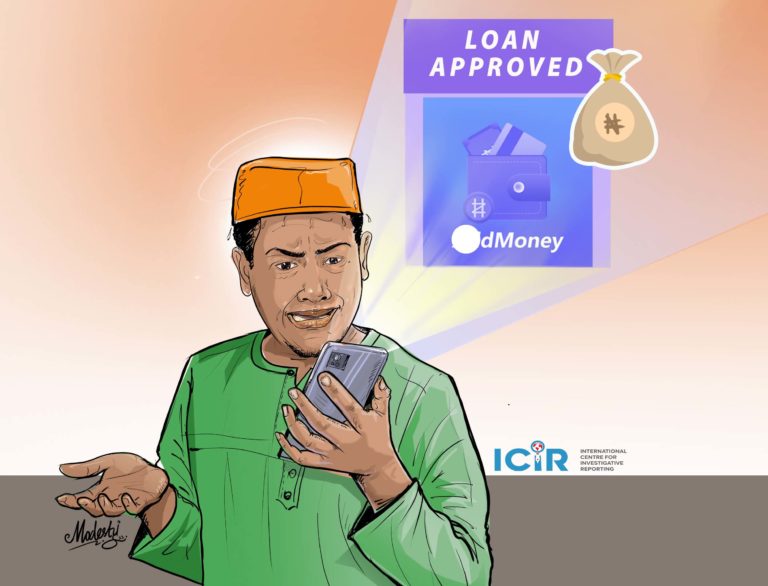
NIGERIANS from all walks of life have continued to patronise loan apps despite their unconventional ways of recovering their money.
These loan apps act as platforms where you can get quick loans with no collateral other than providing a bank verification number (BVN) and a request to allow pictures and contacts on a potential customer’s phone.
*Yemisi (not her real name), a resident of Ojo, Lagos, told The ICIR in a chat that despite being warned by friends and relatives about the risk of borrowing money from the Loan Apps, she still went ahead.
“I was warned by several people to avoid the Loan Apps, but I still went in. They almost killed me; I nearly died; they sent horrible messages to all my contacts. At one point, they told my contacts I was a fraudster. Please, I don’t even want to remember,” she said.
Yemisi not only took a loan and regretted it but also introduced one of her friends, Mummy Wura, to the loan facility.
Mummy Wura, in a chat with The ICIR, said she got a loan from CreditAll, and it’s a miracle she is alive to tell the story.
“At a point, I develop high blood pressure. They will call me every day in the morning, afternoon and night, threatening me, even though I promised to pay them in due time.
“They gave me a loan of N60,000; I was expected to pay N80,000 within a month. I defaulted for two days, and I saw hell,” the mother of two said.
According to her, she also borrowed from Carbon Loan App, which claimed they paid money into her account, but she did not see the money.
More victims of the loan app shaming strategy narrate their experiences.
Another victim, Precious, narrates her experience to The ICIR in a chat.
“My name is Precious. I got a phone from Easybuy; I bought the phone on credit. During my payment, I was opportune to apply for a loan.
“So, early this year, January to be precise, I collected another loan.
“The plans I had in paying up the loan were aborted. So, I had to start struggling to pay up.
“I got a series of calls and messages from them that I was a fraud.
“It’s Newedge; Palm credit that gives out loans in Easybuy. So, I got a lot of messages from them, threatening messages.
Precious said she made them understand that she had no intention of defrauding the company. However, they kept sending her threatening messages and reported her to her guarantor.
“I was able to make a payment of N10,000; part payment. After 4-5 days, one of the workers sent another threatening message. I couldn’t bear it,” she said.
Israel, a teacher and resident of Mowe in Ogun State, while speaking on his experience, said he is already frustrated by their actions.
“I requested to borrow N109,000 loan from LCredit, but they gave me N150 thousand to pay within 13 days with interest.
“I paid N120,000 after two days overdue and promised to pay the balance by month end, and they added almost N12,000 as interest.
“They keep calling me and threatening me with all manner of messages,” Israel said.
Using loan to pay off loan
In her contribution, Eberechi Mercy from Enugu state complained about the attitude of the digital lenders.
“I applied for the SparkCredit loan. They approved and gave me N63,000; they said that I will pay back N96 thousand. As I was applying, I saw 180 days after I finished applying; I now saw that it’s seven days, but they have already approved the loan.
“My friend told me she will help me remove the names of my contacts, but I will pay her N15,000. I told her I didn’t have such money, that the money I needed in school was N165,000. She said I should pay from the money I borrowed and borrow another one and that she would help me clear both of them, so I borrowed that from Diamond Credit.
“I paid her the N15,000, and she helped me to remove my contacts; at this point, she said I should pay an extra N5000 to remove my emergency number. I paid N5000; at this point, I was already frustrated. I almost went into prostitution.
“I intend to pay back, but the time duration is what I can’t meet. The last time I checked, the N63k has become N110,000, and the last one is already N120,00 due to their interest rate,” she said.
Tales like these and more abound in Public spaces.
The process of getting a loan
In Nigeria, potential borrowers who use internet applications to apply for loans download the app, enter their financial information, and wait for the algorithm to produce a credit score.
A Bank Verification Number (BVN) and a phone number linked to the BVN are typically required by apps.
Sometimes, a simple SMS, dialling a short code or a phone call can get a customer registered on these Apps.
Tactics employed by loan apps to recover a loan
According to a loan app customer Efe Kingsley who claimed he has never been harassed, some people actually borrow without a plan to pay back. “That is one of the reasons why some loan apps employ harsh and crude strategies to recover their money,” he said.
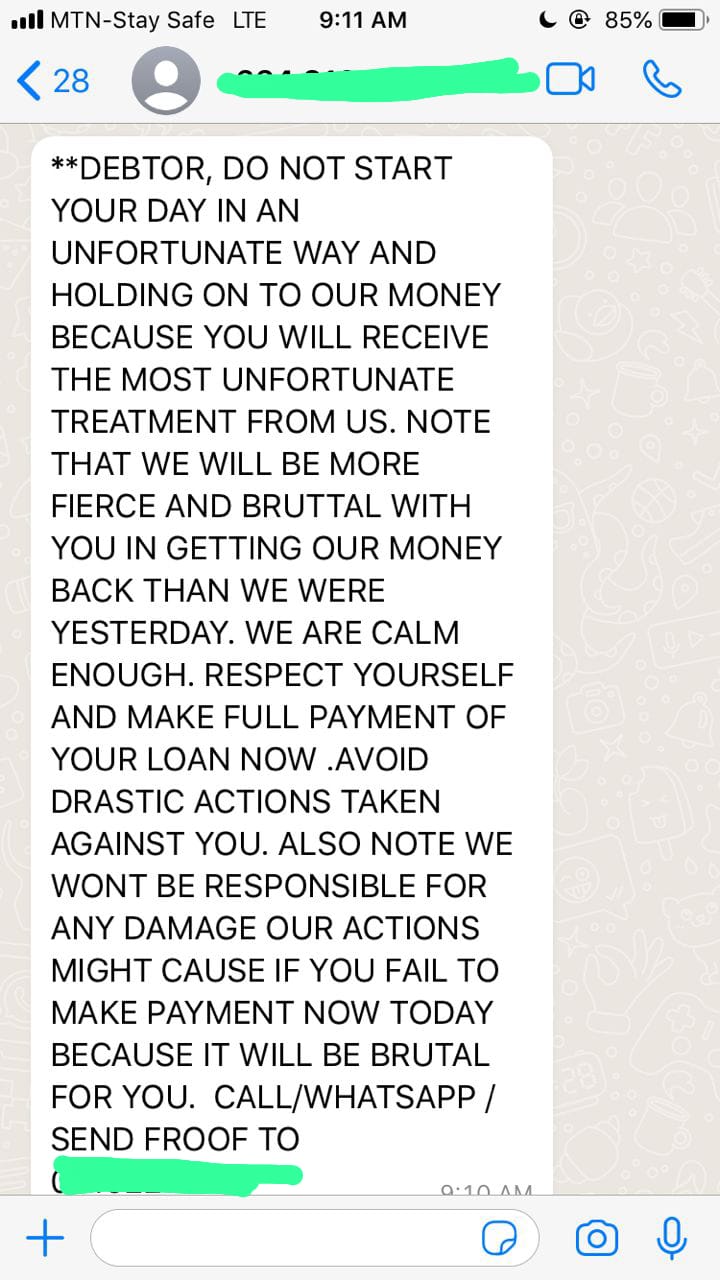
Screenshot of a message sent to a customer by a loan app
In an attempt to recover loans, users may be prohibited from borrowing from one loan provider due to past-due loans.
Online loan fintech companies sometimes send WhatsApp and text messages to every contact on their customer’s phones, claiming they are debtors and fraudsters.
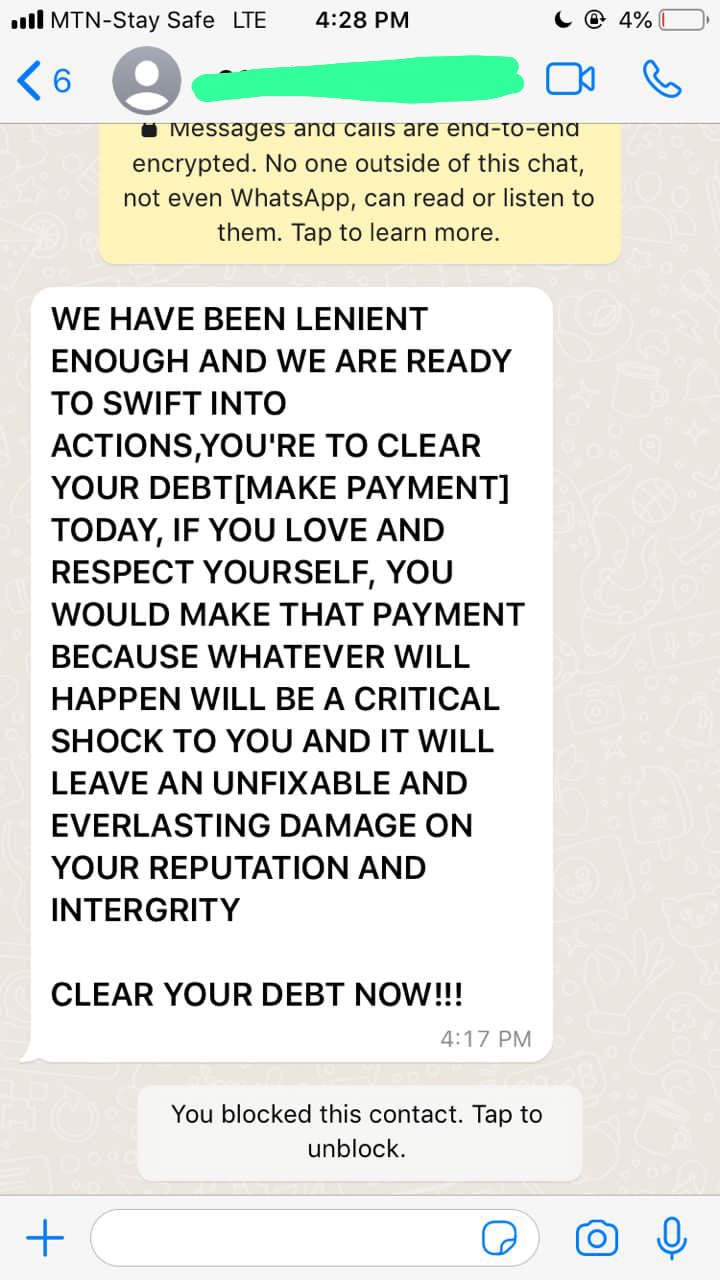
Sometimes they use threatening messages like, “Pay our money, or we shall report you to all your contacts”, ” Last warning: Pay up, or we lock you up,” ‘You have nowhere to run to; we are monitoring you,” Etc.
Intermittent threatening phone calls are also part of their strategies.
The loan apps also send messages to the contacts on the phone of their defaulters, describing them in degrading manners, like claiming they are dead, fraudulent or have HIV.
“They sent a message to my employer that I have HIV, that I might infect my colleagues,” a customer said.
Threat message sent to a customer by a loan app company
Another method they (Loan Apps) use is by placing “obituary” posters of a defaulting customer at strategic places.
“They printed an obituary flier with my name, claiming I was dead and pasted it on my street. I was shocked and almost died,” another customer said.
The ICIR has done a detailed report on how illegal loan apps ignore Nigeria’s cyber laws, and continue to shame customers; read it HERE.
Loan applicants vow not to repay
Loan apps are mostly unregulated in Nigeria, and debt collectors use creative methods to punish defaulting borrowers into repaying their debts.
Online advocacy groups and loan firm victims have devised ways to stop calls, alleged intimidation, and harassment by loan app debt collection agents because, according to them, regulatory agencies have not yet taken any action.
Defamation victims of illegal loan apps have formed groups on Facebook under the names “Loan Apps Victims Initiatives,” “Mobile Loan Apps Debt Victims in Nigeria,” and “Say No To Illegal Loan Apps.”
Sample of a message sent to contacts and loved ones of defaulting customers
Victims joined the Mobile Loan Apps Debts Victims in Nigeria, a private Facebook group to help one another and bully debt collectors who pester them with calls and messages.
“I made up my mind after their constant threat that I was not going to pay back the loan, after so much trouble and embarrassment they caused me.
“I destroyed my two Sims I have been using for years and severed all contact with them,” Yemisi said.
The ICIR has earlier done a detailed report, “Illegal loan apps ‘victims’ form groups to seek retribution, vow not to repay’ read it HERE
Operating loan apps
Any individual intending to operate a financial company in Nigeria other than insurance and stockbroking must apply in writing for a licence to the Central Bank of Nigeria (CBN) in accordance with Section 58 of the Banks and Other Financial Institutions Act (BOFIA).
The Central Bank of Nigeria’s (CBN) Consumer Protection Regulation forbids financial institutions from contacting a loan defaulter’s friends, employers, or family members without that person’s permission. Yet, the operators of the loan apps have repeatedly flouted this rule.
For a money-lending firm or financial company to legally operate in Nigeria, it must obtain a CBN license from the Central Bank of Nigeria. However, The ICIR investigation discovered that several loan firms in the country violate the rules and regulations of the apex bank.
Google has also established a policy to remove illegal loan apps from the Play Store in Nigeria, effective January 31, 2023.
The updated Google policy guidelines outline the requirements for lending apps in Nigeria, Kenya, India, the Philippines, and Indonesia.
According to Google, all lending apps must obtain a licence from Google in order to function in the Play Store. Google announced it in an official post.
In addition, loan apps in Nigeria must possess approval documents from the Federal Competition and Consumer Protection Commission (FCCPC) or risk withdrawal from the platform.
Penalised for compromise of data
As a result of numerous complaints, on August 17, the Nigerian online lending platform Soko Lending Company was fined $10 million by the National Information and Technology Development Agency (NITDA) for violating users’ privacy.
The actions of several loan apps violate Article 2.2 of the Nigerian Data Privacy Regulation (NDPR), which prohibits the illicit sharing of data with third parties without a legal justification.
The FCCPC has taken several steps to control the activities and excesses of illegal loan apps.
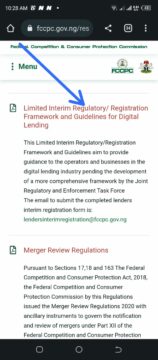
Screenshot of the regulatory framework
The ICIR, in a report in 2022, looked at the ways the Independent Corrupt Practices Commission (ICPC), the National Information Technology Development Agency (NITDA), and the FCCPC joined forces to bring criminal charges against illicit loan applications, sometimes known as “loan sharks,”
In a chat with The ICIR on Thursday, March 23, 2023, the spokesperson for FCCPC, Ondaje Ijagwu, said the Commission is doing a lot in that industry.
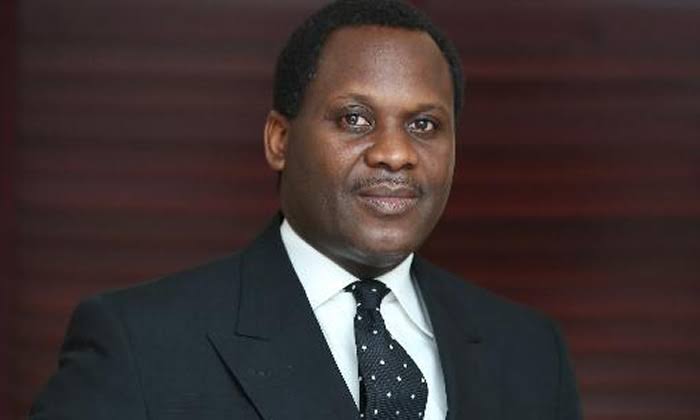
The Director General of the FCCPC, Babatunde Irukera.
Ijagwu said the FCCPC have carried out intermittent raids on the premises of Digital lenders to control and restrict their activities.
“We visited different outlets within Lagos; we got to know their whereabouts and made arrests.
“What we did was in conjunction with other agencies like the ICPC, NITDA and CBN.
“We came up with an Interim Regulations/Registration framework for Digital Lending. It is a body of guidelines. This is pending the introduction of a substantial regulation,” he said.
He said this interim regulation framework has helped to register loan apps to monitor their activities properly.
“As we speak this morning, 99 of those Digital Lenders are registered on our website. Those who have been registered have a code of conduct. I am not sure they can involve in any shady deal.
“One of the major advantage of this registration is that unlike before, we know theirbase,we know people behind these operations, we know the principalactors, we have their contacts and locations. Those ones cannot involve in anything shady.”
Ijagwu urged Nigerians to familiarise themselves with the list of Digital lenders that are registered with the Commission.
On the area of debtors that have refused to pay back money borrowed, Ijagwu said, “We have a joint task force with ICPC, NITDA and CBN. We review cases from time to time. Issues like these are for the joint team to review.”
He asked Nigerians who have complaints against any Loan App operator to send a mail to lenderstaskforce@fccpc.gov.ng
Despite the attitude of some loan apps, why do people still patronise them?
Previous investigations by The ICIR show how illicit lending applications disobey Nigeria’s internet laws and humiliate borrowers for not repaying loans on time and trap customers in debt.
They threaten borrowers and use derogatory language while employing aggressive debt-collection practices. However, despite all these, Nigerians still rush to loan app platforms to borrow money.
In her contribution, the Lead Psychologist at The Sunshine Series, Aisha Bubah, said the primary reason people patronise Loan Money Apps could be due to economic bases.
“A major reason could be that times are hard and people are struggling to make ends meet.
“If you check Maslow’s hierarchy of needs, the first includes basic needs like food, shelter, and security. People can barely get by, and basic needs are a part of human survival. Dignity and all comes later, when basic needs have been met,” Aisha stated.
She added that people see the loan apps as the only alternative accessible to them.
She advised those currently traumatised due to the activities of digital money lenders to seek better alternative ways to pay off and stay off these loan apps no matter how juicy their offers seem.
“Seek, counselling if you have the means to. In the FCT, you can call 112 to speak to a counsellor for free, with no credit charges,” she added.
THE Federal Road Safety Corps (FRSC) says it has begun preparations to prosecute drivers involved in accidents that resulted in loss of lives.
In line with the plan, the FRSC will prosecute drivers involved in the Liba and Bunza fatal crashes in Kebbi State earlier in the year.
Acting Corps Marshal of the FRSC Dauda Ali Biu disclosed this in a statement on Tuesday, March 28.
According to the Corps Marshal, the prosecution of the drivers is to protect passengers’ rights and serve as a deterrent to other traffic violators.
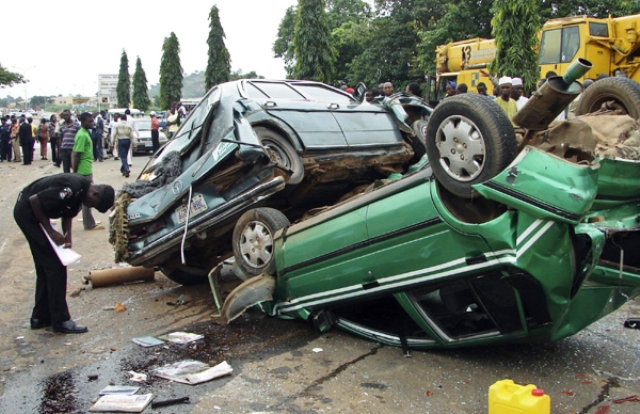
The Liba motor crash happened on March 26 in Liba around Gonan Rogo, in Kebbi. It was followed by another fatal crash in the Bunza area of the state on March 27.
Each incident involved over 20 people, including women and children. Many passengers died while some sustained fatal injuries and bruises.
Speaking on the crashes, Biu decried the continuous violation of traffic rules by some drivers.
He said their recklessness on highways has destroyed lives and properties.
The FRSC boss ordered a nationwide clampdown on traffic violators.
He said the corps has set in motion “processes for the immediate prosecution of reckless drivers who were involved in the Liba and Bunza fatal crashes to protect the rights of passengers and also serve as a deterrent to others”.
He decried the continued and indiscriminate violation of legal speed limits and other established traffic regulations by some drivers, which has led to the wanton destruction of lives and properties on the highways.
Speaking further on the road crashes, the statement said, “The fatal crashes occurred on Sunday 26 and Monday 27 March 2023 in Liba around Gonan Rogo, and Bunza area, all in Kebbi State.
“The Monday 27 March unfortunate lone crash, which occurred at exactly 1730HRS, involved a DAF Trailer with registration number SKF 131XA, conveying 61 people plying through the Jega-Yauri route in Kebbi State
“The crash report reveals that a total of 61 people were involved, out of which 36 victims comprising of 1 female adult and one female child sustained different injuries including fractures, bruises and head injuries.
“More so, 23 victims comprising 21 male adults, one male child and one female adult were killed. It occurred due to overloading and tyre burst, leading to loss of control that resulted in avoidable fatalities.
“The injured victims were rescued at Maiyama General Hospital while the dead bodies have been deposited at the morgue of the same hospital.
“On the other hand, the Sunday 26 March crash, which happened at Kwanar Tunga Junction in Kamba Local Government Council of Kebbi State, involved a Toyota Carina saloon car registered as BDG129CZ and a Mercedes Benz Tipper with the following registration details NSR 495 NS.
“The crash involved a total of 14 people comprising of 3 Male adults and 11 female adults. Out of this, two male adults sustained injuries while 12 victims, including one male and 11 female adults, were killed. The investigation report also revealed that the crash was primarily caused by speed violation and wrongful overtaking.”
Last year, 2022, holds terrifying memories for farmers in Rimba, a remote community in Abaji Area Council of the FCT, due to the incessant destruction of crops by cattle. In addition, Police efforts to charge a herder to court for the attempted murder of a farmer were frustrated by backdoor settlement, Sinafi Omanga of The ICIR reports.
On the afternoon of October 23 last year, 23 years old farmer Kefas Luka visited his farm about three kilometres away from his home. With their herder in sight, he found a herd of cattle grazing on his budding millet farm.
Luka did not anticipate the brutal episode that followed.
“I wanted to record the Fulani herdsman with my phone to use as evidence. Only for him to bring out a long cutlass and cut the hand I was using to hold the phone,” Kefas said, teary-eyed.
“It was not the first time they were destroying our crops, and whenever we report, their people and the police don’t take any action”, he added.
Kefas Luka at the Emergency Unit, the University of Abuja Teaching Hospital, Gwagwalada
Several months after the incident, Kefas is still receiving treatment at the University of Abuja Teaching Hospital, Gwagwalada; his full recovery is not in sight yet.
Wrapped with a bandage, his wound still oozed pus, “The doctor said I still have four surgeries to undergo. Every day, I go to the hospital for checkups, but sometimes I feel like I have lost my hand”, he groaned.
At least 30 farmers in Rimba who are mainly Gbagyi told The ICIR that their farms were either looted or grazed by herders. Some of them said the herders put their cattle to pasture in the farmland with impunity.
The consistent destruction of crops by the cattle whose herders the community described as mainly Fulani is festering resentment and leading to hunger.
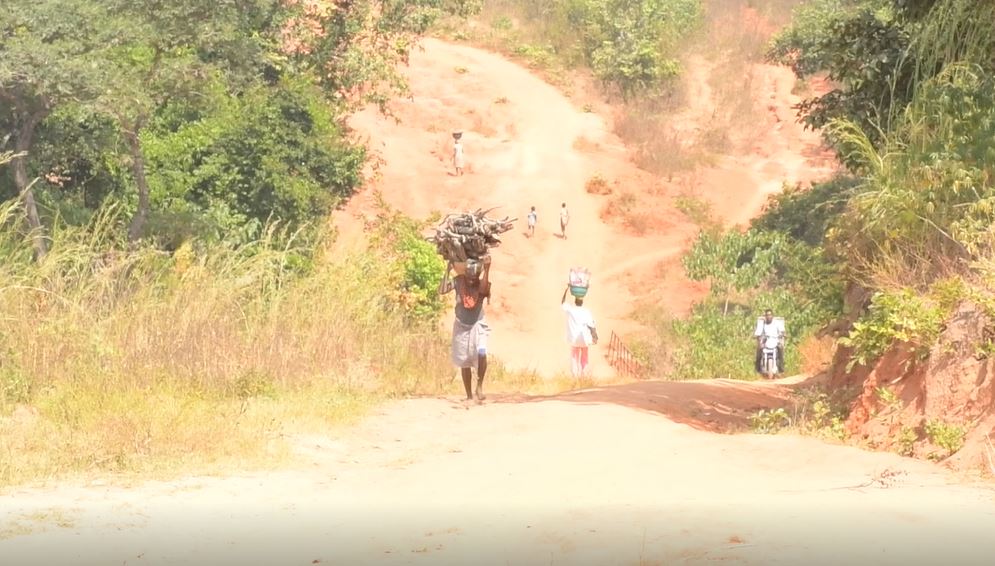
Though located in the FCT, Rimba has struggled with infrastructural deprivations such as clean water, mobile network, hospital, electricity and access roads.
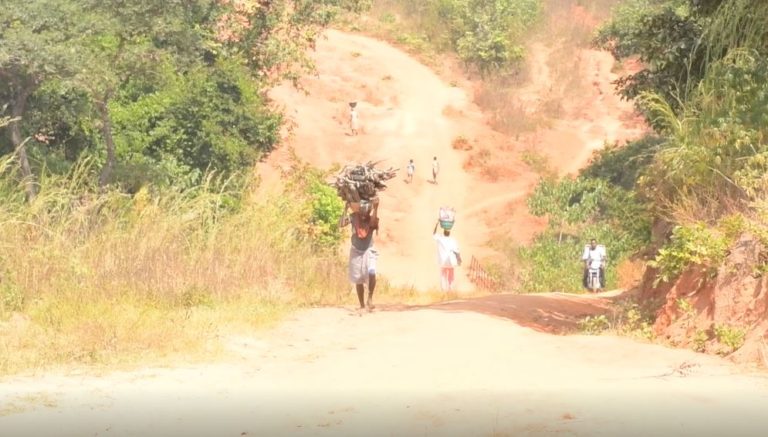
Road to Rimba Community. Photo credit: The ICIR Sadiq Aliyu.
The persistent face-offs between herdsmen and Rimba farmers over the destruction of crops are hardly reported to the police but rather handled informally through village chiefs, findings by The ICIR revealed.
However, the October incident with Luka was reported to the police, Bagudu Usman was identified as the primary suspect.
“We reported the matter because it was very serious” according to Pius, Luka’s elder brother, who had reported the matter at the Abaji Police Area Command, Abuja.
After investigation, Police declared Usman’s offence as “an attempted murder” which would be transferred from the Abaji Area Command to Force Headquarters, Abuja.
But, in what appeared to be a big surprise, Usman, the accused, was released from police custody after spending three weeks at the command’s detention, Pius explained.
Shedding light on why Usman was released, the Area Commander of Abaji Police Area Command, who was mandated by the FCT Police spokesperson, Josephine Adeh to speak on the matter, referred to the Administration of the Criminal Justice Act (ACJA), 2015.
“By law, the police cannot detain a suspect for more than 48 hours, but because it was a case that bordered on life, we obtained an affidavit from the court to retain him in detention for almost a month.
“But the victim’s family members and village chiefs came here and bailed the suspect. I was surprised”, said Abiodun Makanjoula, the Abaji Police Area Commander.
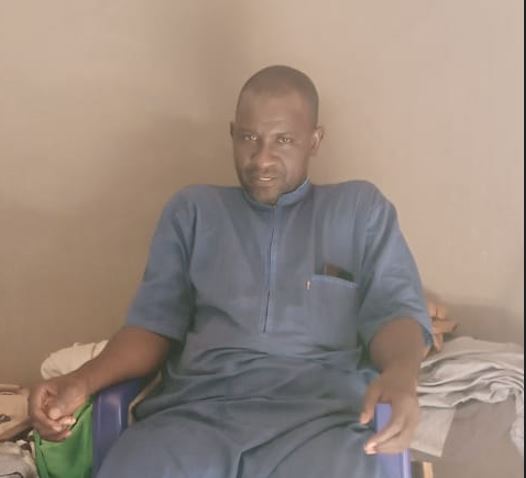
When The ICIR visited Miyetti Allah Cattle Breeders Association of Nigeria (MACBAN), Abaji Branch, to speak with Usman, the branch chairman, Abdullahi Musa, said the suspect is not from around there, he was hired by a cattle owner, Isa Alih to herd over four hundred cows.
MACBAN, an advocacy group centred on advancing the interest of Fulani pastoralists in Nigeria, said since Usman was released from Police custody, he has “disappeared” from the community.
Chairman of MACBAN, Abaji Branch, Abdullahi Musa Photo credit: The ICIR /Sadiq Aliyu.
“He is not from here, and we don’t know his whereabouts since the police released him from custody”, the group told The ICIR.
However, a resident in Rimba, Godwin, disagreed with MACBAN’s position on the whereabouts and identity of Usman.
“That is what they usually do. If anything happens between Fulani and Gbagyi farmers, they will say the suspect is a foreigner.
“It is not the first time. When we report cases to any chief within the palace or police, the case will die a natural death”, he said.
Efforts by The ICIR to speak with Usman were not successful; the police declined to disclose information about his whereabouts.
“We don’t disclose such information, but I can assure you that we know how to get him if the need arises”, the Abaji Area Police Commander said.
Between footing hospital bill and getting justice
After police arrested Usman, sources in the community said Luka’s family and kinsmen became very concerned about raising money for his treatment.
The search for money took them back to Ali Isah, the cattle owner who hired Usman and MACBAN for money to pay Luka’s hospital bill.
However, once MACBAN offered money to assist in paying the hospital bill, the Police said “Rimba people who had sought intervention from the Police chickened out”.
“We needed them to come so that we would transfer the case to the headquarters where the suspect would be charged to court, but instead, they wanted to bail him. I was surprised,” Makanjoula told The ICIR in an interview at his office.
He argued further that Luka and his kinsmen “repeatedly” declined police invitations since the suspect secured bail.
“It is a case of a father bailing a suspect who tried to kill his son”, the police official stated.
Yunana, another of Luka’s brothers, said, “He (Luka) needed medical treatment more than anything else”. He confirmed that the family collected a sum of N300,000 from MACBAN to pay the hospital bill.
“We just want them (MACBAN) to support us with the treatment. My brother’s hand needs to heal, and the doctor said we would spend a lot of money to get the hand back”, he stated.
A source at the Abaji Police Area Command who pleaded anonymity said, “from what I know about these people in Abaji, I am not sure they will come back again for this case. The money they collected from the Fulani people has buried this matter”.
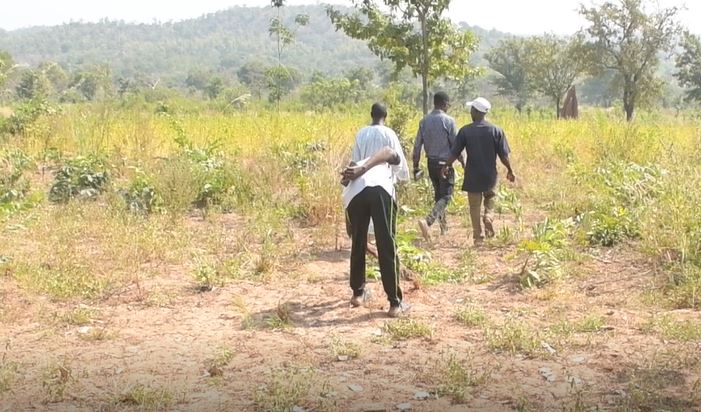
Touring some farms in Rimba community. Photo credit: The ICIR / Sadiq Aliyu
Police is handicapped – Lawyer
An Abuja-based lawyer, Paul Eshimomoh, during an interview at his chamber, said “a case of an attempted homicide like the one between the herdsman and farmer is a crime against the state and should be prosecuted by the police”.
He noted that the criminal trespass by the herdsman on the farm was an offence that could be settled out of court or compounded by the victim’s family. Still, the attempt by the herdsman to kill the farmer was “non-compoundable or a capital offence”.
“Non-compoundable is a legal term that means an offence that cannot be compromised by mere settlement because the nature of the offence is grave and criminal. Such offence carries a maximum penalty like life imprisonment”, Eshimomoh explained.
“The police is right to conclude that the action by the herdsman was an attempted murder or attempted homicide because cutting off somebody’s hand with a cutlass cannot be described as mere assault. It goes beyond that”, he said.
However, he explained that without the cooperation of the victim or witnesses, there is little the police can do to ensure justice is served.
He said, “Notwithstanding the settlement, the police can prosecute the case and allow justice to take its course, but there are limitations on the part of the police.
“If the victim or the family fails to cooperate with the police then you cannot blame them. For the police to successfully prosecute a case, they need witnesses in court. So I think the police are handicapped in this case”.
Barr. Paul Eshimomoh
Oshimomoh blamed poverty for the inability of the victim to get the justice that could have served as a deterrent to other bellicose herdsmen.
“It is poverty, these people are poor and ignorant of the law.”, he said.
While Rimba faces severe hunger and fear of a bloody escalation, Nigeria has lost no fewer than 8,343 persons to farmers-herders conflict since 2005, according to findings published by the Armed Conflict Location and Event Data Project, ACLED in August 2021 and reported by Premium Times.
Widespread hunger…
Pointing to an empty barn, a 59-year-old farmer Yakubu Dogara said, “there is no single grain in that barn and no money to buy food”.
Dogara said fortune was smiling on him until 2020, when his millet and cassava crops were destroyed by herdsmen and have continued unabated since then.
“We don’t have food to eat this year, but we won’t take revenge for what they did to us.”
“Actually, no one knows what the future holds for us in this community if this destruction does not stop”, he said, resigned to fate.
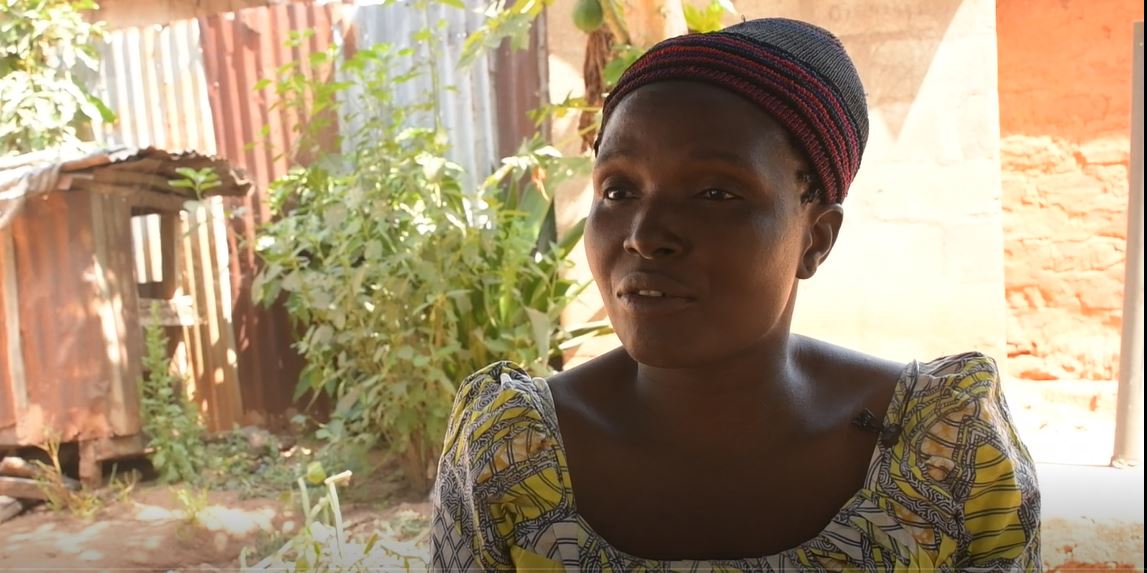
A mother of four, Comfort Gabriel cuts in“throughout this town, every family has one or two things to say about herders’ destruction.”
“I am not sure if any household is spared of this problem”, she interjected.
Comfort Gabriel
She recalled a time when her husband tried to stop a herdsman from destroying crops on their farmland but got injured in the process.
“… they cut his hand with their cutlass. In fact, the scar is still very visible in his hands,” she narrated.
“They destroyed crops right before our eyes, and in the night when we were sleeping, they descended from the mountains and destroyed our crops.”
“I always tell them, God is watching”.
The ICIR could not independently verify the injury as claimed because her husband was not present during the time of the visit.
Gabriel said she once contemplated leaving the village for the city to do menial jobs due to the danger posed by herdsmen. But the high cost of living in the city has held her back.
“How much will they pay that will be enough to take care of me and my children”, she asked rhetorically.
In March 2022, the United Nations Food and Agricultural Organisation unveiled a report which announced that about 14.4 million people, including 385,000 Internally Displaced Persons (IDPs) in 21 states, including the FCT, were already in a food crisis.
Nigeria’s hunger has been attributed majorly to insecurity ravaging different parts of the country, especially herder-farmer clashes and banditry.
Out-of-school children…
Meanwhile, beyond hunger caused by the crisis over land resources, children in Rimba are rapidly dropping out of school due to the inability of their parents to pay school fees.
The ICIR spotted school-age children playing in the village square on a Tuesday morning when schools in Abuja were taking their first-term examinations.
Almost all parents who granted The ICIR interview said they could no longer afford to give their children a decent meal, let alone pay school fees.
Out-of-school children with their parents on a Tuesday morning Photo credit: The ICIR / Sadiq Aliyu
UNESCO in 2022 places out-of-school children in Nigeria at 20 million. Insecurity is a contributor to this burden.
Climate change, grazing routes and alleged poisoning of cows
The Gbagyi Rimba farmers lay traditional claim to the farms they cultivate, but the Fulani pastoralists view the farms differently.
One of the farmers, Godwin said the herdsmen have repeatedly described their farms as “our roads” implying grazing routes.
“I don’t know if the government carved out our farms as roads (grazing routes) for herdsmen and their cattle. We are begging the government to look into this matter”, he pleaded.
Meanwhile, Musa, The MACBAN chairman in Abaji told The ICIR that herding cattle has become difficult because “the grazing routes” have been cultivated by farmers”, leaving no space for cows to graze.
He explained that to mitigate the crisis, they “settle” by compensating farmers whose farms were destroyed by cattle if reported and proven.
He, however, said there were rumours that the farmers intend to use a chemical “monkey food” said to be deadly to cattle on their crops. This, he said, will only escalate the issue.
A cattle breeder Isa Alih told The ICIR he lost ten cows to such poison last year. The farmers, however, denied the claim.
Alih, the employer of Usman, who macheted the farmer Luka, commended the community chiefs for intervening whenever there was a crisis between herdsmen and farmers.
Isah Alih, the cattle breeder who hired Usman Bagudu. Photo credit: The ICIR /Sadiq Aliyu
“I won’t report cases to the police but to the traditional chiefs,” he said.
Interestingly, Rimba farmers are disillusioned with going to traditional chiefs aside their own to settle rifts with herders. Surrounded by other tribes such as Egbira, Bassa Ganagana and Fulani/Hausa, the feeling of marginalisation is rife.
Dogara, the farmer who spoke earlier on the lack of food, said the community’s problem was aggravated by the absence of a government-recognised Rimba chief who could speak for them.
He noted that the community has been without a tribal chief and representation at the council since 2019, when Daniel Tukura, the then-chief, died.
Dogara explained that the community needed the approval of Ona of Abaji and the Chairman of the FCT council of chiefs, Adamu Baba Yunusa, to crown a new chief.
“We have submitted a name to the Palace, and we are waiting for them to call so that we will crown our king”, Dogara stated.
Another elder in the village, Micah Kure added that “at least, if we have our chief, we will gather before him with our problems which he will report to the government for necessary actions.”
Meanwhile, the Chairman of Abaji Area Council, Umaru Abdullahi Abubakar, said apart from Rimba village, there had been a series of mutual aggression between herders (Fulani) and farmers (Gbagyi) in other parts of Abaji.
Speaking on behalf of the Chairman in an interview at the council’s security committee office, his Senior Special Assistant on Security Matters, Alhassan Lima said the “council has dealt with more dangerous issues than the one happening in Rimba”.
Alhassan Lima, P.A to Abaji Area Council Chairman on Security Matters. Photo credit: The ICIR / Sinafi Omanga
He alleged that Gbagyi farmers had killed four Fulani herdsmen in a village called Gasakpa in Gawu ward of Abaji. It took concerted efforts by the Council and Police to restore peace and avoid reprisal attacks.
However, the police did not confirm the killing nor say if the suspects were arrested and prosecuted.
“The case of herder-farmers clashes in Abaji is 50/50”, the Abaji police boss Makanjuola said.
“Most times, the herders and farmers simply take these cases to traditional chiefs instead of reporting to the police”, he added.
The police also noted that due to the absence of telecommunications networks and police stations in remote communities, most incidents are buried without the attention of law enforcement agencies.
Moreso, independent findings by The ICIR revealed an increasing distrust between the herders and farmers, with each community convinced that there is a plan to dispose the other source of livelihood.
Paul Eshimomoh, legal practitioner based in Abuja Photo credit: The ICIR / Sadiq Aliyu
‘Lack of political will responsible’
In his observation, Abuja-based legal practitioner, Paul Eshimomoh, said poverty and lack of education make justice inaccesible for many rural dwellers.
“But beyond that, the government needs to have the political will to sort out these herder-farmer clashes across the country. It is so painful that it is even happening in the FCT.”
Giving an instance, Eshimomoh said “the FCT traffic law prohibits grazing of cows, sheep or goats on the express roads but today herdsmen have taken over. Sometimes, vehicles have to queue up and allow the cows to pass even on airport road.
“I believe it is the duty of the government to make sure the laws of this country are complied with irrespective of tribe and class”, he said.
While the debate on grazing routes and reserves continues to rage in Nigeria, many reports suggest climate change is contributing factor to the farmers-herders crisis.
The JournalismAI Fellowship Programme is a free online initiative that brings together journalists and technologists from media organisations worldwide to explore innovative solutions to improve journalism via the use of AI technologies.
Up to 30 journalists and technologists will be selected to join the 2023 Fellowship cohort and work together over the course of six months (June to December) towards building AI-powered solutions that enhance reporting.
To take part in the program, you need to have some experience working on products and/or stories that involve the use of AI technologies.
The organisers say they’ve designed the program so that fellows keep their jobs while they dedicate 8 hours a week to the Fellowship. Teams will be given financial support for project expenses, as well as mentorship and coaching from experts in the JournalismAI community.
The deadline for the submission of applications is April 21, 2023. Interested applicants can apply here.
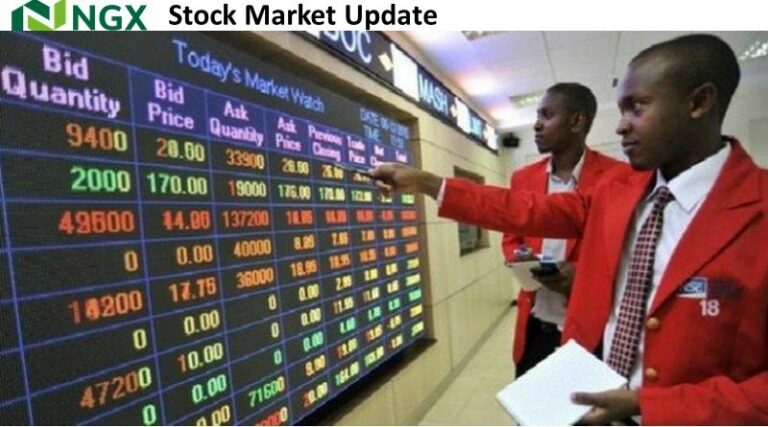
DESPITE the gain recorded in shares of 16 companies, the Nigerian stock market sloped further as investors lost N137.55 billion in today’s trading session.
This brought the total market value (market capitalisation) of companies’ shares listed on the Nigerian Exchange Limited (NGX) to further decline to N29.14 trillion.
The All-Share Index (ASI) followed suit, dropping by 0.47 per cent to close at 53,498.27 basis points (bps) to dash the midday gain seen to have been inching by 20 bps in the earlier hours of the trading session.
Tuesday’s trading session saw the year-to-date gain of the ASI down to 4.39 per cent.
Dangote Cement led eight other companies to bring the market to a negative close as investors sold part of their holdings in mid- and large-capitalised stocks to book profit. It lost N12 on each share sold to close at N276.
While the UAC of Nigeria share price fell by 0.55k to close at N9.00, Fidson Healthcare declined by 0.29k to N9.55, as six other stocks fell.
Of the five sub-sector indices tracked, only the industrial index fell by 2.18 per cent to 2,480.60bps as all other indices closed in the green, except for the oil and gas index which closed flat.
At the close of the day’s trading, 202.85 million units of shares were traded at the Exchange, valued at N2.05 billion in 3,071 deals.
Transcorp Nigeria topped as the most active stock, with 61.49 million units of shares worth N85.31 million in 151 deals.