Home Blog Page 1026

Tension as Sanwo-Olu, Rhodes-Vivour, Adediran battle for Lagos governorship seat

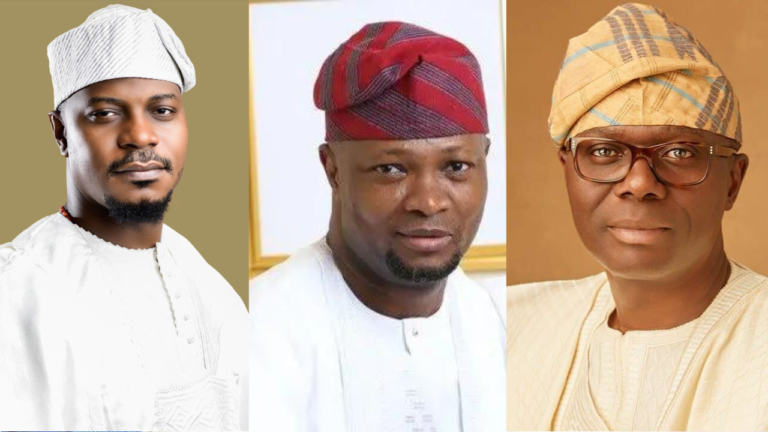
The Lagos State governorship election holds on Saturday, March 18, with the incumbent Babajide Sanwo-Olu of the All Progressives Congress (APC), AbdulAzeez Adediran of the Peoples Democratic Party (PDP) and Gbadebo Rhodes-Vivour of the Labour Party (LP) the leading contenders for the seat. The ICIR’s Temitayo Odunlami examines the tension-soaked build-up to the election and the chances of the three front-seat candidates.


THE stakes have gone higher in the electoral race to the Lagos State governor’s office at Alausa, Ikeja. The governorship election holds on Saturday, March 18, and it is a no-brainer that it will be contested among Babajide Sanwo-Olu of the All Progressives Congress (APC), Abdul-Azeez Olajide Adediran of the Peoples Democratic Party (PDP) and Gbadebo Rhodes-Vivour of the Labour Party (LP). Other candidates do not stand even a scintilla of a fighting chance.

The APC is a bigger version of the ‘progressives’ camp that has held the state in its grip since 1999. Since the president-elect, Bola Ahmed Tinubu, governed the state from 1999 to 2007, he has not only ensured that the party he leads controls the state, he has been directly involved in picking who would be governor.

Until now, Tinubu had had it relatively easy to control the governorship election, even when former president Olusegun Obasanjo vowed his “do-or-die” politicking in the 2003 and 2007 elections. The Alliance for Democracy (AD), and later the Action Congress (AC) and Action Congress of Nigeria (ACN), with Tinubu as a leader, had always conveniently dumped the PDP in the governorship elections in what were purely two-way races. Other parties were inconspicuous. But the sudden emergence of the LP seems to be altering the configuration for Saturday’s election.

How the AD (AC, ACN, APC) dominated PDP in previous elections in Lagos

In the 1999 governorship election, Tinubu, contesting on the AD platform, defeated Dapo Sarumi of the PDP, polling 841,732 votes to Sarumi’s 184,900.

The PDP, with Obasanjo pushing for the party to completely take over the South-West, put up a stronger showing in the 2003 governorship election in Lagos State. The party’s Funso Williams garnered 740,506 votes, but could not do enough to unseat Tinubu, who polled 911,613 votes to return. Lagos State was the only one the PDP was unable to snatch from the AD in the South-West, a development that would begin to unravel Tinubu as an emerging political strategist to watch.

Lagos Election Trend (1999 - 2019)
Lagos Election Trend (1999 – 2019)

Before the 2007 governorship election in the state, Tinubu had departed the AD to form the AC. It was on this new platform that he picked his Chief of Staff, Babatunde Fashola, to run for governorship to succeed him. Fashola won the election with 599,300, edging PDP’s Musiliu Obanikoro, who got 383,956 votes.

By 2011, the AC had metamorphosed into the ACN, on which platform Fashola ran for a return to office. He won convincingly, polling 1,509,113 votes against PDP’s Ade Dosunmu’s 300,450 votes.

Again, the ACN would assume another political identity after merging with the Congress for Political Change (CPC), All Nigeria Peoples Party (ANPP) and a faction of the All Progressives Grand Alliance (APGA) to form the APC.

It was on the APC ticket that Akinwunmi Ambode, another Tinubu nominee, contested the 2015 governorship election. Ambode won the election with 811,994 votes to succeed Fashola, beating Jimi Agbaje of the PDP, who had 659,788 votes.

APC leaders in Lagos state would not give Ambode a second term opportunity for the 2019 governorship election, and in his stead, they picked Babajide Sanwo-Olu, who emerged winner with 739,445 votes, defeating Agbaje, who contested for the second consecutive time on the PDP name and got 206,141 votes.

2023 Lagos governorship election and the LP factor

The tables may have turned. The governorship election in Lagos state on March 18 is expected to be fundamentally different from the two-horse race it had been since 1999. From the blues, Rhodes-Vivour has jumped into the mix, thanks to the frontline showing of the LP in Lagos state in the presidential election of February 25.

Before that election, PDP’s Adediran, popularly called Jandor, was naturally expected to be the one to give Sanwo-Olu a run for his money in the governorship election on Saturday. But the result that the LP flaunted in the presidential election would seem to have rewritten that expectation, as the influence of the presidential candidate of the LP, Peter Obi, among the huge Igbo population in  state loomed large.

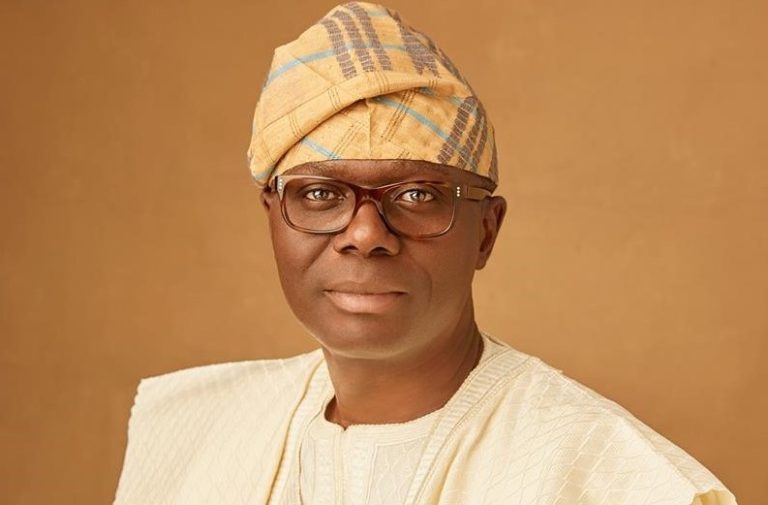
Babajide Sanwo-Olu
Sanwo-Olu: can he shrug off the Rhodes-Vivour, Adediran threats on Saturday?

In the election, Obi scored 582,454 to lead in the state, while APC’s Tinubu polled 572,606 to follow closely. Atiku gathered 75,750 votes to trail a distant third.

Factors that will determine voting pattern    

For Sanwo-Olu and Rhodes-Vivour, the voting pattern is well cut out for them. As it happened for Obi in the presidential election, the ethnicity question will subsist in Saturday’s governorship election for the LP candidate in Lagos state. The Igbo’s have gained in confidence arising from the presidential election result and cannot but be thinking it is not impossible to position the LP, which they have now widely adopted as their choice political party, in Alausa.

Many Igbo engaged in businesses worth millions and billions of naira in the state cannot but be imagining now what advantages a Rhodes-Vivour as governor can confer on them.

A major complaint of business people, small and big, in the state is the multiple taxes that both local and state governments in Lagos impose on them, as well as the numerous illegal dues touts force them to pay. Many dealers and traders are hoping that a change of the old political order in the state would bring some relief.

“Yes, I am an Igbo man. But besides that is the suffering I go through in the hands of touts and government tax agents in the market. I pray for a change of government.

“The LP governorship candidate is a young man. I am sure he will change many wrong things in Lagos State,” a spare parts trader at the Ladipo market, Mushin, Uche Sunday, told The ICIR.

Rhodes-Vivour may, however, not receive the kind of blanket Igbo support that Obi got in the state. Apart from the fact that some Igbo elements are disinclined to invest the level of energy they put into the Obi campaign into the governorship version for Rhodes-Vivour, some Igbo groups have pledged their support for Sanwo-Olu in the election on Saturday.

On Thursday, March 2, the leadership of the Ohanaeze Ndigbo in Lagos state addressed journalists to express their support for the APC candidate.

At the briefing, the President-General of Ohanaeze Ndigbo in the state, Sunday Ossai, said the organisation would be working to ensure Sanwo-Olu’s victory “because the governor represents everything Ndigbo needs to prosper and execute their businesses and professional calling”.

Also, the Women Leader of the body, Jane Okoro, told Sanwo-Olu at the event that it would be mobilising its entire women structure across the state to support his re-election.

Another group of Igbo citizens in the state, which called itself Concerned Ndigbo, also addressed the press on Monday, March 6, to declare its members’ support for Sanwo-Olu in the election. The co-ordinator of the organization, Chibunna Ubawuike, together with its patron, Ikechukwu Ijede, and secretary, Ozoemena Nliam, said the group would be supporting Sanwo-Olu because his administration “has not been discriminatory” in his performance in Lagos State.

“Sanwo-Olu has made tremendous and integrated development, as well as performance in various sectors, while turning Lagos into a construction site with massive infrastructural gains, which had brought about investments, while building a cordial relationship with the Igbos, hence the need to vote for him,” Ubawuike said.

Much earlier, in December 2022, a coalition of Igbo groups in Lagos state under the umbrella of G50 had pledged their support for Sanwo-Olu.

The group said it had already inaugurated a campaign council it tagged the ‘Ndigbo Integrated Campaign Council for Babajide Sanwo-Olu Committee (NICCBS)’ for the purpose.

The coalition’s coordinator, Festus Uchenna, told newsmen at a briefing on December 26, “G50 comprises all Igbo in Lagos, men and women, market people and artisans. We have the two factions of the Ohaneze Ndigbo in Lagos here. What is happening here is a consolidation of all the Igbo living in Lagos to consolidate and give Sanwo-Olu our bloc vote.”

Sunday, the Ladipo spare parts merchant, however, pooh-poohed this flurry of support for Sanwo-Olu, saying it was mere “drama.”

To him, “Don’t mind them. On Saturday, many of them will vote for Obi’s candidate in the Lagos governorship election.”

Rhodes-Vivour is not unlikely to be negatively affected by a strong split in Christian votes in the state, which worked extensively for Obi in the presidential election. With Sanwo-Olu and his wife also Christians, the votes from that religion would be split along individual preferences, rather than on any religious sentiment for a particular candidate. This, it is believed, would substantially slash into the votes that Obi garnered on February 25.

The Pentecostal Fellowship of Nigeria (PFN) in Lagos state, which boasts a large followership in the state, and whose members mostly voted for Obi in the presidential election, has anyway publicly declared its support for Sanwo-Olu.

Leaders of the PFN met in Ikeja, the state capital, on Friday, March 3, to endorse the incumbent for a second term.

The PFN chairman in the state,  Enyinnaya Okwuonu, told journalists after the meeting that “though the Fellowship would not want to be partisan, and without prejudice to other contestants, Sanwo-Olu deserves a second term to complete the good works he has started in Lagos.”

Also, the Lagos PFN’s secretary, Mahmood Akindejoye, urged all Christians to be united in supporting Sanwo-Olu for a second-term bid.

The LP candidate may be getting a large number of his votes from young voters, who are still angry about what they condemned as Sanwo-Olu’s role in the October 2020 #EndSARS protest in Lagos.

During the protest at the Lekki tollgate, where youths had massed to demonstrate their anger at police brutality, soldiers had been called in. The soldiers resorted to shooting the helpless protesters, and there were casualties.

Although the Federal and Lagos state governments maintain there was no fatality or few, the youths and human rights organisations have insisted the soldiers did kill some protesters.

The irate youths continue to hold Sanwo-Olu responsible as inviting soldiers to mow the protesters. They are also angry with Tinubu, who is unarguably the godfather of Lagos politics, and who they allege pulls the state’s financial strings. Moreover, the youths charge that Tinubu, it is, who encourages the exploitation of commercial vehicle drivers by a notorious motor park unionist, Musiliu Akinsanya, widely known as MC Oluomo. Commercial vehicle drivers are compelled to pass the burden of tolls that Oluomo’s enforcers impose on them to commuters, resulting in high transport fares.

Consequent upon that tragedy, youths in the state mobilised massively to obtain their voter cards focused on one goal: oust the APC. They expressed their unalloyed support for Obi, and gave it practical vent in the presidential election. It is widely held that votes by the youths assisted Obi in collecting huge votes even in local governments like Somolu, Alimoso and Ikeja, where there are not so many Igbo residents and were hitherto known to be Tinubu’s political strongholds.

If the youths come out to vote on Saturday, March 11 at the governorship election in large numbers as they did on February 25, Rhodes-Vivour should be expecting a significant number of votes from that quarter. But whether that number, plus the support he would be getting from other sympathisers, would be massive enough to offset whatever votes Sanwo-Olu would be throwing at him, can only be known after voting.

What chances has PDP governorship candidate with the Igbo votes LP swing?

The normally Number 2 constant in the governorship election calculus in Lagos State appears to be losing that grip. Going by recent developments, the PDP could just be battling for inconsequential relevance in the governorship election on Saturday.

The reason is obvious. From 1999, the Lagos PDP has been relying mostly on Igbo bloc votes to ruffle the ruling party. However, with the Igbo shifting their support to the LP in the 2023 elections, the PDP fish has suddenly found itself abandoned by the water.

The PDP’s degeneration in the state was evident in the measly number of votes Atiku Abubakar scooped in the presidential election, with Obi and Tinubu condemning him to an also-ran.

The cause of the PDP’s governorship candidate, Adediran, is not helped by his rejection by the party’s leading lights in the state, Olabode George and Kofoworola Akerele-Bucknor, who was Tinubu’s deputy for a while when he was the state governor. The two PDP chiefs had expressed their support for Rhodes-Vivour, as they pursue their frenetic desire to upend Tinubu in the battle to control the state.

Bode George
Bode George: shifts support from PDP candidate to Rhodes-Vivour

Adediran, in an interview on Wednesday, March 15 on Arise TV, monitored by Ripples Nigeria, lampooned George for supporting the LP candidate for the election.

He said George had become angry with him because he decided to pick his own preference, actress Funke Akindele as his running mate, rather than Rhodes-Vivour, who George had picked for him. Rhodes-Vivour had defected to the LP after Adediran overlooked him for the deputy governorship candidature.

“I was able to clinch the ticket without the support of godfatherism. And after, Bode George sold Gbadebo Rhodes-Vivour to me, but I refused as I left APC because of godfatherism. I cannot condone that in PDP,” he said.

Gbadebo Rhodes-Vivour
Rhodes-Vivour: hopeful of unseating Sanwo-Olu

Admitting his lonesome plight towards the election, the PDP governorship candidate said, “What is happening is that I am fighting without any godfathers. Chief Bode George is always sabotaging the efforts of PDP candidates in every election cycle.”

Compounding Adediran’s situation is the defection, this week, of a key member of the PDP in the state, Ade Dosunmu, to the APC to support Sanwo-Olu’s reelection bid.

Dosunmu, the PDP governorship candidate in the 2011 election, crossed to the APC along with the chairman of the Elders Committee of the LP in Lagos State, Sunbo Onitiri, as well as with the chairmen of 12 other political parties in the state, who also said they would be supporting Sanwo-Olu.

Can an alliance nick it for Rhodes-Vivour?

As disclosed by Adediran, there have been talks between him and Obi on a possible alliance between the PDP and the LP, with the suggestion from the latter that he steps down for Rhodes-Vivour.

The PDP candidate, however, promptly dismissed such a thought, fearing that a pending court case against Rhodes-Vivour could eventually turn out against him and ultimately render the whole alliance unworthy.

Adediran said during the interview, “I told Obi that I don’t have a problem with an alliance. But I told them we need to put our best foot forward. Analyse us. Rhodes-Vivour has a Supreme Court case, which might work against us, and we cannot go into this election because of these cases.”

Abdul-Azeez Olajide Adediran
Adediran: rules out accord possibility with Labour Party to confront Sanwo-Olu

If Adediran was referring to himself as the “best foot forward”, it would be hard for Obi to accede to his suggestion, given the height the LP believes it has climbed in Lagos politics.

“The LP is now the beautiful bride in Lagos politics, not the PDP. If any of the two will be stepping down for the other, it has to be the PDP. The LP would be politically naive to give in to the PDP,” a political scientist and researcher, Kelvin Adewale, said.

But then, the election is still more than 24 hours away, and within even an hour, anything can happen in politics. Can the two opposition parties agree to put aside their ego as they dream to unseat Sanwo-Olu? Time is ticking.
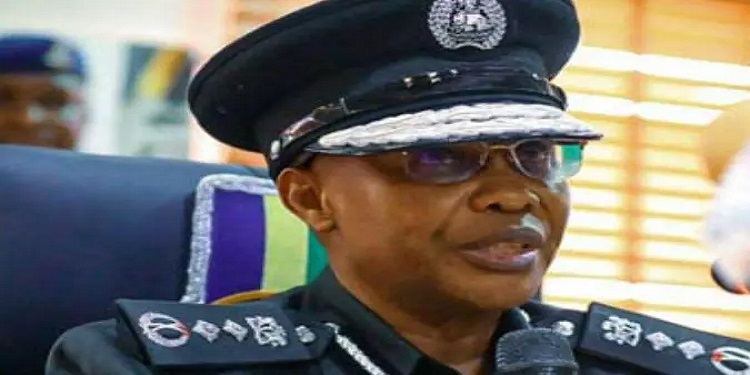
Police promise violence-free elections

0

AHEAD of the Governorship and House of Assembly elections scheduled for Saturday, March 18, the Nigeria Police Force (NPF) has assured Nigerians of enhanced security and violence-free polls.

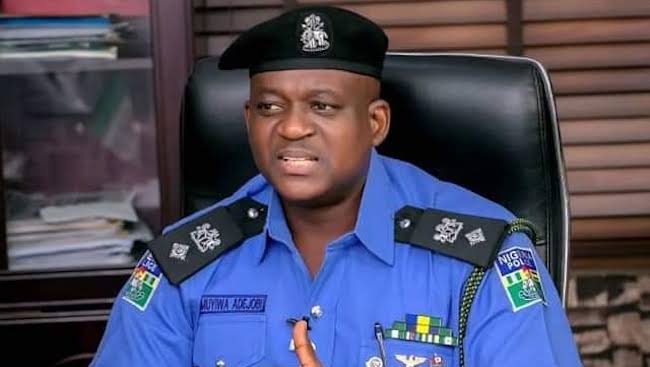
Spokesperson of the NPF, Olumuyiwa Adejobi, gave the assurance in an interview with The ICIR on Thursday, March 16.

Adejobi assured that the force had analysed all known threats and is ready to curb electoral violence.

READ ALSO:
Police promise violence-free elections

Court orders Lagos, Police to pay N5m to driver assaulted during #EndSARS anniversary

CSOs protest arrest of NYSC member suspected of exposing police brutality

Police confirm attack on Abuja estate, nine kidnapped


“We have done our deployment based on our threat analysis and improved in some areas of strategy, logistics and operations. We are fully prepared and good to go.

“We will be out to curb electoral violence, and arrest whoever violates electoral act and other criminal laws of our land,” Adejobi said.

This is coming on the heels of various incidents of electoral violence that characterised the just concluded Presidential and National Assembly election held on February 25.

In Kano, the House of Reps majority, Alhassan Doguwa, was arrested for murder and electoral violence.

He was accused of alleged involvement in the murder of three persons during the elections.

According to reports, Doguwa, a member of the All Progressives Congress (APC), is suspected of having led an attack on the Independent National Electoral Commission (INEC) office in his constituency, which resulted in the death of three people.

It was alleged that the INEC official declared Doguwa winner of the election at gunpoint.

Also, in Dekna, Kogi State, thugs attacked Polling Unit 25 and injured some INEC officials and a voter.

Some people also got injured when youths disrupted the election process in the Nyong Nyong area in Plateau State’s Kanam Local Government Area.

In Akwa Ibom, arguments between two people led to the scattering and burning of electoral materials at Lutheran Primary School, Atai Nto Obo, Etim Ekpo, LGA.

Armed men disrupted voting in Akinyele, Aguda Surulere areas of Lagos and took away the ballot boxes and papers.

Party supporters also clashed at Angwa- Jama in Lokoja, Kogi State.

Governorship election: IGP orders restriction on movement

THE INSPECTOR-General of Police, Usman Baba has ordered the restriction of vehicular movement on roads, waterways and other channels of transportation across all states where governorship and House of Assembly elections will be conducted on Saturday, March 18.

The police chief made this known through a statement signed by the Force Public Relations Officer, Olumuyiwa Adejobi, on Thursday, March 16.


READ ALSO:

Police promise violence-free elections

Presidential election petition: I have confidence in judiciary — Peter Obi

INEC commences distribution of election materials in Lagos, Oyo

INEC cautions politicians ahead guber polls, says election not war


The statement explained that the restriction of vehicular movement will be between 12:00 am to 6:00 pm on Saturday.

The directive was not applicable to the Federal Capital Territory (FCT).

“Sequel to the forthcoming Gubernatorial and State Houses of Assembly elections scheduled to hold on the 18th of March, 2023, the Inspector-General of Police, IGP Usman Alkali Baba, CFR, has ordered the restriction of all forms of vehicular movement on roads, waterways, and other forms of transportation, from 12 am to 6 pm on election day in all states where elections will be conducted with the exception of those on essential services such as INEC Officials, Electoral Observers, Accredited Media and Observers, Ambulances responding to medical emergencies, firefighters, etc,” the statement reads.

The IGP also barred all state-established security outfits and privately-owned outfits like the Benue State Community Volunteer Guards, the Amotekun Corps, Ebubeagu, and others from participating in security management during the election.

“Similarly, the IGP reiterates the ban on all security aides to VIPs and escorts from accompanying their principals and politicians to polling booths and collation centres during the election.

“State-established and owned security outfits/organizations, quasi-security units, and privately-owned guard and security outfits are also barred from participating in election security management.”

The IGP, however, urged all citizens to be law-abiding and ensure they exercise their franchise unhindered.

Guber poll: Kano NNPP accuses DSS of intimidation

0

THE New Nigeria Peoples Party (NNPP) in Kano State has accused the Department of State Security (DSS) of intimidation ahead of the Saturday, March 18 governorship election.

The party said the DSS was intimidating and arresting its members in a bid to undermine its chances in the governorship poll.


READ ALSO:
Court grants Bauchi PDP, NNPP leave to inspect election materials

NNPP calls for cancellation of presidential, NASS elections

2023: NNPP says Kwankwaso won’t step down for ailing presidential candidates

Timing of shutdown of NNPP Borno office wrong – Zulum


The NNPP flagbearer for the Kano North Senatorial seat in the just concluded election, Abdullahi Baffa Bichi, made the allegation while addressing journalists in Kano on Thursday, March 16.

Bichi said the DSS Director in Kano State Alhasan Muhammad was due for retirement 15 years ago but was kept in Kano at the behest of Governor Abdullahi Ganduje to assist the All Progressives Congress (APC) in winning the governorship election.

He said the NNPP had shelved its earlier decision to stage a protest against the director.

Bichi accused the Kano state governor of using the DSS director in 2019 to subvert the will of the people.

“But as law-abiding, patriotic and peaceful people and responsible citizens, and having received a letter from the police notifying us of that all rallies and processions and protests should be put on hold, we have agreed to do so.

“We are putting the protest on hold because higher authorities from Abuja have reached out to our party and assured us that all necessary steps have been taken to address our grievances,” he added.

He added that the party had information that the DSS had made plans to use some youths to penetrate the Party and cause a breach of peace during the protest.

“So to change it, they need to bring in tactical teams. They are been given assignments to go and cause trouble there. Those teams are in Kano and been kept in the hotel and what they called safe houses.

“They (tactical team) are going to do nothing but to subvert the will of the people. We have raised alarm about this, and we have written to the Commander in Chief over this. But we know that they can not change the will of God, and we know that a people united can never be defeated.

“Kano people are United, and our unity is our strength; they cannot defeat a united Kano people, united NNPP,” Bichi said.

He insisted that Muhammad was due for retirement and called on all authorities concerned to save the state from what he termed machinations and mischief of the DSS director.

Attempts to speak to Muhammad were unsuccessful as he did not pick up his call nor respond to messages sent to his phone.

AfDB, partners invest $618m to grow Nigeria’s creative enterprises

THE African Development Bank (AfDB) and some partners have officially launched a new Investment in  Digital and Creative Enterprises (iDICE) programme, with investments worth a total of $618 million.

The initiative, launched on March 14, is expected to attract direct investments in more than 200 technology and creative start-ups, and provide non-financial services to about 450 digital technology, small and medium enterprises.


READ ALSO:
AfDB’s Adesina seeks bold reforms, projects 4% GDP growth for Africa

AfDB’s Adesina seeks bonds commitment from Africans in diaspora

AfDB confirms $1bn support to Nigeria’s 20,500 MSMEs

AfDB approves $134m loan to boost local food production in Nigeria


With a  potential to generate $6.4 billion into Nigeria’s economy, iDICE is expected to create six million new jobs for young Nigerians.

Speaking at the launch event in Abuja, Nigeria’s Vice President Yemi Osinbajo emphasised the importance of a coordinated approach to innovation across Africa.

“Government must provide more support for start-ups and small businesses, and investors must provide more funding,” Osinbajo said.

The African Development Bank Group is the largest funder of iDICE, providing $170 million.

The French government, through the Agence Française de Développement, is a key partner in the project and will contribute €100 million ($116 million), while the Islamic Development Bank, pending approval from its board, is expected to  provide $70 million.

Accordingly, the Nigerian government, through its executing agency, the Bank of Industry (BoI), will provide $45 million in counterpart funding. Other institutional and private sector investors are also expected to provide additional funding for the implementation of the strategic initiative.

At the official launch of the project, AfDB’s President Akinwumi Adesina stressed the  need to leverage the huge potential of iDICE for sustainable job creation and economic transformation.

“We are retooling Nigeria to be more competitive in an increasingly digital world. We are creating hope for a new Nigeria, driven by the power of the youth,” Adesina said.

He remarked that the AfDB expected the iDICE model to be rolled out in other regional member countries through its Youth Entrepreneurship Investment Bank initiative, which he said would be designed to create a financial and non-financial services ecosystem to support start-ups run by young Africans, and to create jobs.

The French Ambassador to Nigeria, Emmanuelle Blatmann, said at the event that the digital technology and creative industries had enormous potential to create jobs and spur economic growth in Nigeria.

“The iDICE programme is designed to support young entrepreneurs and innovators who are driving these industries forward,” Blatmann said.

Through iDICE, around 175,000 young people, including university students, will gain direct access to technology to build creative skills, stimulate innovation, and help new businesses to flourish.

iDICE will help consolidate Nigeria’s leadership position  as Africa’s pre-eminent hub for young entrepreneurs and start-up investments. In 2022, African start-ups raised $5.4 billion, with Nigerian companies receiving the largest share of $1.2 billion.

It will also enhance regulatory policy frameworks such as the 2022 Start-up Act, provide access to financing through the creation of a DICE Fund, an independently managed venture capital fund; and mobilise over $217 million in investment capital.

The fund will also provide technical resources to de-risk digital and creative companies at a scale and sustainable manner.

Nigeria’s 1.3M bpd in February yet to meet OPEC quota

NIGERIA produced 1.3 million barrels of crude per day in February, according to the Organisation of Petroleum Exporting Countries (OPEC) monthly oil market report (MOMR).

Though the figure was still .5 million bpd shy of the 1.8 million OPEC quota for the country, it has further cemented Nigeria’s position as Africa’s topmost producer, outperforming Angola.


READ ALSO:
How inability to meet OPEC quota, subsidy payments, oil theft increases Nigeria’s economic risks

Amid subsidy controversy, Nigeria fails to meet OPEC quota

Again, Nigeria fails to meet OPEC oil production quota, with 927,000 bpd August output

Nigerian government struggles to meet quota amid N4trn subsidy, oil theft – OPEC


It would be noted that oil weakened after the report was released, extending an earlier decline. Brent crude, Nigeria’s benchmark, was down by $1 to below $80 a barrel.

Overall, OPEC’s oil production rose in February despite output cuts by the wider OPEC+ group. OPEC stated that its crude oil output in February rose by 117,000 bpd to 28.92 million bpd, helped by a further recovery in Nigeria.

But despite the rise, OPEC is still pumping much less than called for by the OPEC+ agreement, as Nigeria, Angola and other members struggle to reach their targets.

While there was marked improvement in output from Nigeria, Saudi Arabia and Congo, Angola and Iraq mostly underperformed in February, creating a drag on the cartel’s supply for the month.

More so, on OPEC’s forecast for the Nigerian economy, the oil producers’ group expected rising trend in inflation, ongoing external and fiscal pressures, and deteriorating global macroeconomic conditions to lead towards decelerating economic activity in 2023.

DSS files terrorism charges against four suspects in Abeokuta

0

FOUR suspects have been arraigned by the Department of State Services (DSS) on terrorism and kidnapping charges in Ogun State.

The suspects, identified as Aliu Abubakar, Abubakar Usman, Abubakar Amadu, and Adamu Aliu, were brought before a Chief Magistrate Court in Isabo, Abeokuta, the state capital on Wednesday, March 15.

They were arrested on December 9, 2022.


READ ALSO:
Terrorism: IPOB, ISWAP attacks surge as Boko Haram declines

300 days after, Buhari govt silent on 96 financiers of terrorism

Coup: Fani Kayode invited by DSS, boasts ‘I’m used to incarceration’

DSS counters reported invasion of Emefiele’s office, as he resumes duty


During the hearing, the prosecution counsel, Emmanuel Zamba, informed the court that the DSS had filed a motion ex parte to remand the suspects in the prison custody of Ogun State.

Zamba stated that the alleged offences were in violation of sections 2 and 3 of the Terrorism (Prevention and Prohibition) Act, 2022.

The prosecution counsel prayed for the suspects to be detained in the custody of the Nigeria Correctional Service for 30 days, pending the determination of the suit.

The Chief Magistrate, M O Osinbajo, granted the DSS’s request as pleaded by the prosecution counsel and adjourned until April 17, 2023, for further hearings on the matter.

Under Sanwo-Olu’s watch, ‘Agberos’ collect multi-million naira illegal taxes on Lagos ports corridor

EACH extortion point at Apapa and Tin Can ports corridor in Lagos State generates about N2.16bn annually, a recent investigation by The International Centre for Investigative Reporting (ICIR) has shown.

The investigation, published in two parts on March 15 and March 16, respectively, reveals the public operation of multiple extortionist stations along the Apapa and Tin Can ports corridor, as well as the involvement of security operatives, notably the Lagos State Traffic Management Authority (LASTMA), a transportation agency owned by the Lagos State government.

It shows how the uncontrolled criminal activities have claimed the lives of innocent citizens and impedes the efficiency of the Electronic Call-Up system meant to solve the problem of port congestion.


READ ALSO:


According to the report, there are about 15 channels of extortion along the Tin Can terminal axis and about 21 along the Apapa Port axis in Lagos. Touts and arm-bearing agents enforce the collection of illegal tolls and taxes from truck drivers doing their legitimate business.

The report stated that each truck driver said he pays at least N30,000 daily in settling thugs, popularly called Area Boys, before reaching their destinations.

The investigation reveals that the hoodlums rake in an estimated N6 million daily, N180 million monthly and about N2.16 billion annually from the illegal business per extortion toll point. 

Similarly, it costs an average of N21,500 to access the port using Eto Application, but with multiple illegal checkpoints, truckers now spend between N50,000-N60,000.

Several truck drivers who spoke with The ICIR narrated how the failure of the government to find a lasting solution to multiple extortion points on the Apapa port access roads threatens their lives and import and export business operations.

The Ports Standing Task Team (PSTT), a body responsible for enforcement activities in the port blamed the state government for the illegal activities of the hoodlums and appealed to the state government to support their mission.

In an interview with The ICIR, Sola Giwa, the Special Assistant to Lagos State Governor Babajide Sanwo-Olu, stated that the joint efforts of state governments and the Nigerian Port Authority have resulted in a decrease in traffic congestion and unlawful fees along port routes.


However, he acknowledged that there are still some issues that the government is striving to improve.

The first part of the full Investigation can be read here and the second part can be read here.

Thomson Reuters Foundation offers Kurt Schork awards

THE Kurt Schork Memorial Fund, in partnership with the Thomson Reuters Foundation, is inviting applications for its  Kurt Schork Awards in International Journalism.

The awards honour excellence in courageous reporting of conflict, corruption, human rights transgressions, and injustice.

The awards feature three categories: freelance journalists covering international news, local reporters covering events in their home country or region, and news fixers. Each winner receives a US$5,000 prize.

The stories can be about conflict, human rights, cross-border issues, or any controversial matter in a particular country or region.

Each submission must demonstrate professionalism, meet international journalistic standards, and provide evidence that courage and determination were required to cover the story.

The award aims to honor the work of freelance journalists and of local reporters and fixers in developing countries or nations in transition who often otherwise receive little recognition.

All articles must be translated into English and must have been published between June 1, 2022, and May 31, 2023.

Print and online journalists worldwide can apply for an award.

The deadline for the submission of applications is May 31, 2023. Interested applicants can apply here.

Nigerians agonise over slow supply of naira notes despite CBN’s approval

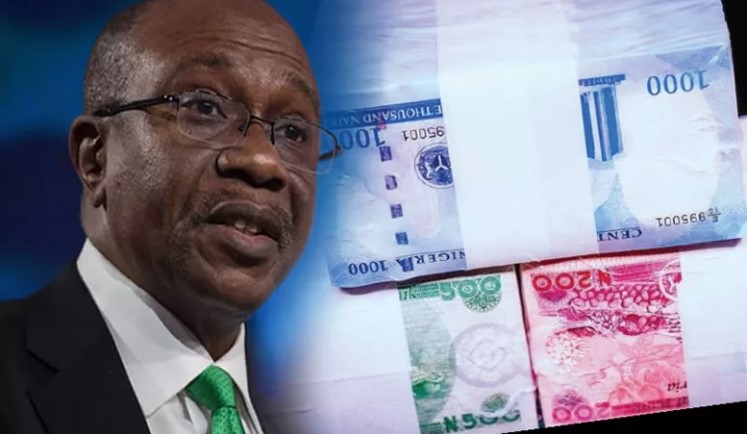
FOUR days after the Central Bank of Nigeria (CBN) gave the nod that old and new N200, N500 and N1,000 notes can circulate simultaneously till December 31, scarcity of the currencies has persisted across the country.

Checks by The ICIR today showed that acceptance of the old notes as legal tender was slowly picking up, just as was supply of the notes through commercial banks.

It would be recalled that on March 3, 2023, the Supreme Court ruled that the  CBN should extend the validity of the old notes till December 31, 2023.

It, however, took the CBN 10 days to issue a statement directing the banks to comply with the judgment, as individuals and businesses waited in anxiety for that official directive and people refused to accept the old notes.

Even official statements by some state governors like Nasr el-Rufai of Kaduna and Babajide Sanwo-Olu of Lagos to residents of their states to start accepting the old notes as legal tender following the Supreme Court judgment failed to sway the people.

Observations are that commercial banks have resumed dispensing the old notes, but in agonisingly low amounts where available.

At the United Bank of Africa, Wuse Zone 2 branch, Abuja, each customers received payment across the counters for N5,000 only.

Bank customers queue to receive rationed N5,000 each from the counter at UBA Bank Wuse Zone 2

In Lagos, The ICIR saw hordes of customers at many bank branches struggling to gain entrance into the hall to withdraw funds. There were also long queues at automated teller machine (ATM) points.

Along Ogunnusi Road, Ojodu Berger, Lagos State, where different banks have branches, many customers were seen waiting for hours, and could withdraw barely N10,000 each.

One of the security men at a UBA branch on the stretch told our reporter that the branch had closed as early as 2pm because of cash scarcity, and that it was unlikely the branch would have cash to pay to customers on Thursday, March 16.

Another security man at Zenith Bank, on the same road, said the branch could pay cash to customers tomorrow if it received cash inflow from its head office.

A food vendor at the Ojodu-Berger complex, Ojodu, Lagos, Madam Jennifer, told The ICIR that the situation had not improved.

“We are not getting customers now like before the naira problem started, even though we have started to collect the old N500 and N1,000 notes. Our customers are still complaining they don’t have naira,” she said.

A softdrink seller at Ipodo market, Ikeja, Lagos, told The ICIR she has started collecting the old notes

A commercial bus driver in Lagos, who gave his name as Godwin Shaapera, also told our reporter that passengers’ patronage had not improved because there was not enough money in the banks to withdraw.

“Some people do come to me requesting they transfer money to my account so I can give them cash. But I don’t have any. We have been on loading queue at this bus stop for many minutes. Business will not pick up until next week,” Shapeera added.

An economist and Executive Director of the Centre for the Promotion of Private Enterprise (CPPE), Muda Yusuf, told The ICIR that the CBN needed to supply more money to the system to stop the current crisis.

Muda Yusuf: wants CBN to improve circulation of maira notes.

Yusuf said, “We need to continue to prevail on the CBN to release the old notes, as directed by the Supreme Court. It took the CBN and the Presidency 10 days to respond to the judgement.They may need to do an audit to know how much they have in their banking vaults as banks are complaining of lack of money for circulation.”

Bank customers struggle to get funds at the counter at Diamond Bank in Kubwa FCT.

The economy is gradually grinding to a halt because of cash crunch, and the collapse of payment systems across all platforms, which has been affecting funds transfer.

At the Ikeja Computer Village, Lagos, point-of-sale (PoS) operators are still sharply marking up their profit margins beyond the normal charges, citing scarcity of both old and new naira notes.

“The PoS operators here collect N200 on every N1,000 withdrawal as they maintain that naira is still scarce,” a dealer in phone accessories at the Computer Village told The ICIR.

Available data showed that since the onset of the cash crisis, the Nigerian economy has lost an estimated N20 trillion. These losses arose from the deceleration of economic activities, the crippling of trading activities, the stifling of the informal economy, contraction in the agricultural sector and the paralysis of the rural economy.

There are also corresponding job losses in hundreds of thousands.

Harrison EDEH and Alex EHIME