Home Blog Page 114

Forests, bad roads turn Kwara communities into danger zones

0


By Dare AKOGUN

BEYOND the terrorists’ attack on the Christ Apostolic Church (CAC) Eruku in Kwara State on November 18, The ICIR uncovers the factors that are fast turning the once peaceful State into a corridor of abductions. 

For years, Kwara enjoyed a reputation as a “buffer state” a relatively calm axis between the violence of Niger, Kogi, and other North-Central hotspots. But that image has collapsed.

Figures compiled by The ICIR show that over 207 persons were killed and at least 177 abducted in Kwara between January and early November 2025 alone.

The worst-hit areas include Ifelodun, Patigi, Edu, Ekiti, Isin, Kaiama and Irepodun LGAs, rural belts bordering Niger and Kogi, where state presence is minimal and forest density is high.

Local NGOs say the real numbers may even be significantly higher because many victims do not report kidnappings out of fear of reprisals.

This latest surge, data shows, began around 2021, when the number of violent incidents spiked due to rising cross-border infiltration and the proliferation of criminal gangs operating along forest corridors. In that year alone, Kwara recorded 84 violent attacks and 45 deaths.

Eruku youths looking distraught  

Attacks dipped briefly in 2024 but rose sharply again in 2025 climaxing with the CAC Eruku raid.

Security analysts warn that the patterns now emerging in Kwara mirror those earlier seen in Kaduna, Niger and Zamfara before those states descended into widespread rural banditry.

Kwara’s forests

To understand the insecurity in Kwara, one must understand its forests.

The belt stretching from Patigi through Ifelodun, Ekiti, Isin and Oke-Ero, down to the Yagba axis of Kogi State, is a labyrinth of dense forests, narrow farm roads and unmonitored bush paths perfect cover for criminal movement.

Academic studies, including those published in the Peace Studies Journal, consistently classify such forested rural spaces as “zones of criminal refuge,” especially where policing is limited and the population is sparse.

But it is not just the forests, it also has to do with the roads or the lack of them.

The Kabba–Egbe–Ilorin Highway abandoned to bandits

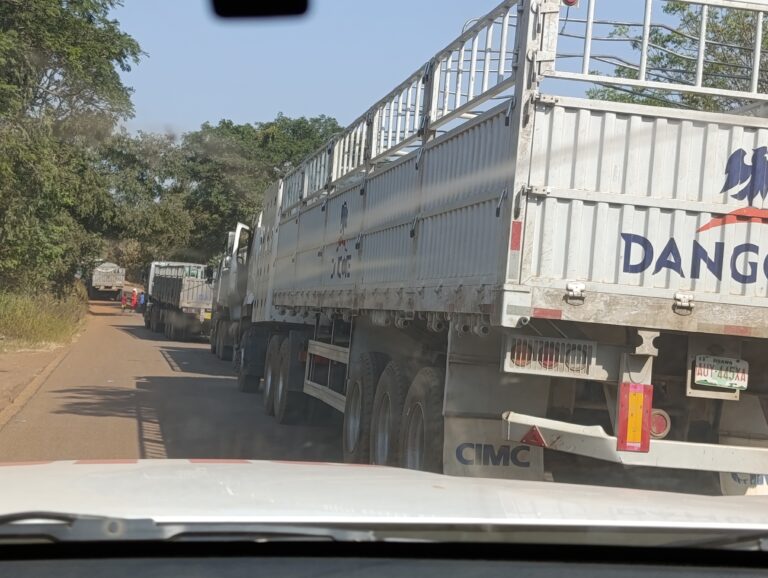
Once a bustling federal highway connecting Ilorin to Kogi and further south, the Kabba–Egbe–Ilorin Road has now become a metaphor for state neglect.

Riddled with potholes deep enough to swallow small vehicles, and lined with thick bushes, the road has collapsed into a perfect kidnapping haven.

Motorists avoid the road. Police patrol it with caution and bandits have taken ownership of it. The road can be described as one of Nigeria’s worst examples of infrastructural abandonment.

A community elder in Eruku put it more bluntly: “Our road is bad and contributes to insecurity. If there is an attack, before help can come, the bandits would have escaped because the road is not motorable.”


The geography is not just enabling crime; it is accelerating it.

The revenge theory: Why Eruku was targeted

While authorities initially labelled the November 18 Church attack as “just another bandit raid,” community sources point to a deeper motive revenge.

A few days before the attack, two people were kidnapped near the same Church. During ransom delivery, the deceased head of Eruku local vigilante identified widely as “Alaja” reportedly engaged one kidnapper, overpowered him and recovered both the ransom money and the kidnapped victim.

Bullet ridden windows aftermath of the attack 

The bandits, community leaders now believe, returned to make a statement.

Residents said the attackers hid in trees for hours before striking, an account confirmed by multiple eyewitness reports.

Segun Olori Eta, a Chief in Eruku who was in the Church at the time of the attack said, “I think the bandits studied movements, waited for the Church to fill, and then launched a coordinated raid meant to inflict maximum fear.

“I was in the Church with my wife and 5 children, when the shooting started and in the ensuing chaos I ran out of the Church. I saw one of the bandits on the three shooting directly into the Church.

“I scaled the fence, and two others pursued me on foot shooting, i don’t even understand how no bullets touched me, it’s only God, they later went away with my wife and four children, only me and one of my sons who hid in between woods inside the Church escaped,” he revealed.

Another resident, Ige Josiah, whose son and wife were among the kidnapped worshippers said he believed the Church attack was not random.

He said: “My son was among those 18 kidnapped residents; three earlier and we were in the Church that day to give praise to God for their safe return.

“I think the bandits were angry that some escaped. Although I paid 2 million before my son was released, they came into the Church like wounded lions looking for lost food.

“At the end my son who returned just a week earlier from the kidnappers’ den and my wife was among those kidnapped that day, ” he revealed.

Segun who lost his brother during the attack, and his mother was kidnapped lamented the attack which he tagged planned and senseless.

Segun who lost a family member to the attack 

“Look at where they killed my brother on Tuesday, is this place bush (pointing to the spot his brother’s corpse was retrieved a day after the attack).”Do we really have a government in this country?

“Please we need something to be done; let the government stop these people wasting our lives. In Nigeria we have enough capability to do it,” he said.

A senior police officer who is familiar with the terrain and has been investigating a series of kidnapping incidents in the area, spoke with The ICIR on the matter.


” Well, the residents might not be entirely wrong to assume the bandit came for revenge, because the manner with which the deceased vigilante head operates is very daring and non-conforming.

“This is someone who has had a series of encounters with the bandits, shot at several times with bullets not penetrating him and has contributed immensely to the safety of the community in conjunction with security operatives.

“We are looking at all angles, including prior hostilities, but we cannot jump to conclusions until investigations are completed.”

But the community is convinced, it was a retribution message to vigilantes, a message to villagers, that resistance comes with consequences.

“I believe the bandits are angry that we have been able to contain them for long, although they have been kidnapping our people for long but most of the time, it’s either they escape or our vigilante rescue them,” says Shola Peters, a youth leader in Eruku town.

“Our vigilante and hunters are very brave people. Despite not having ammunition that matches the bandits they have always confronted them any time they make inroads into the community.

“This recent attack was planned and intended to inflict devastating damage, Eruku is the first town in Kwara where they will attack a Church, and I am very sure it was ‘Alaja’ and those that escaped from them that they traced to the Church.

“However we thank God they have been released, but the death of Alaja is very hard to bear,” he said.

When Feranmi Joshua (name changed for safety) one of the abducted worshippers regained consciousness in the forest, his arms were bound, and the night sky was his only witness. Around him were dozens of other women, elderly men, young people dragged from the Church into the forest.

He told The ICIR, “We slept on cold ground. They moved us constantly. Some people fainted. What we went through is not something anyone should experience.

“We trekked barefoot across sharp rocks, thorns and even crossed streams. The bandits know the route and we were told we can’t escape. Truly it was nearly impossible to do so, he said.

How a kidnapping economy emerged in Kwara

In a 2022 report  ICIR reported that Kwara, touted as the ‘state of harmony’ had lesser reports of insecurity ravaging the rest of the country, until  when incidents of abduction and banditry became rife in the north-central state raised the alarm about abductions.

In the last six months of 2021 alone, cases of kidnapping for ransom in Kwara were rife, especially in the southern part of the state.

The government ignored the alarm then. Even the Kwara state police command through its then spokesperson, Ajayi Okasanmi, described the report as untrue, declaring that Kwara was safe.

A few months earlier the Aare Onakakanfo of Yorubaland, Iba Gani Adams, raised the alarm that bandits and kidnappers had relocated to Kwara and Kogi States, noting that the spate of insecurity in the two states was becoming alarming.

Speaking at the 2021 edition of the Oya Festival in Ira, Oyun LGA of Kwara State, on November 27, Adams decried the increasing rate of kidnapping in the state, adding that reports at his disposal indicated that some criminal elements have relocated to the state.

He urged Governor AbdulRasak to create a state security outfit that could help combat the growing influx of bandits and kidnappers.

He said: “Governor AbdulRasak needs to provide adequate security for the people of the state as well as the visitors. The report that some of the harmful elements, including bandits and kidnappers, have relocated to Kwara and Kogi states is alarming. The Kwara state government needs to improve the security situation by using the Amotekun structure to combat the growing spate of insecurity in the state.”

The then Commissioner of Police Kwara State, Tuesday Assayomo, in reaction to the claim of Gani Adams and the concern raised by the people of the state, took a tour of Kwara South senatorial zone on November 30, 2021, to see first-hand, the security situation of the zone.

Speaking during a meeting with community leaders, the CP reiterated his determination to deal with criminals irrespective of names or groups they belong to, while also accepting to work with any individual or group of people who are interested in collaborating with the police to fight crime.

Kwara State Commissioner of Police CP Adekimi Ojo addressing residents of Eruku

The people were advised to join hands with the police and other security agencies to ensure that the state’s existing peace and harmony is sustained.

Interviews with security experts, vigilante members and local residents reveal that the border corridor between Kwara and Kogi has become a fast-growing ransom market, fuelled by, ungoverned forests, broken highways, high youth unemployment, weak law enforcement presence, cross-border movements from Niger and Kogi and local informants exploiting economic desperation

A security strategist in Ilorin, Segun Omoyefa, said: “Once a corridor becomes known as a ransom marketplace, it attracts more criminals.

“A huge amount has exchanged hands on the last 11 months almost billions in naira , Kwara is unfortunately heading in that direction,” he said.

In this new economy, kidnappers earn millions weekly. Communities sell land, livestock, property everything to pay ransom. Bandits reinvest in weapons, transport, informants and logistics, and the cycle repeats.

Ghost villages, empty farms, lost schools

In multiple communities across Ifelodun, Patigi, Ekiti and Edu LGAs, residents told The ICIR that entire villages have emptied out, and farmlands abandoned.

In Eruku and neighbouring settlements, traders have stopped attending weekly markets and those who attend do so with caution closing early and avoiding late night movement.

Farmers now work in groups of 30–50 for safety for those who haven’t abandoned their farms entirely.

Funmi Anifowose, a farmer lamented the spate of insecurity in the town, saying previously the local government always gives support to the vigilante which makes the town peaceful.

” It was not like this before, our vigilantes are fearless and up and doing, previously with support from the council, they have provided security in the town and whenever they are called into action they always save the day, but it’s not like that again, they don’t have ammunition.

Houses deserted after the attacks in the community

” I am a farmer but I don’t have rich family members. I can’t go to the farm again for fear of being kidnapped; I can’t go to ilorin because of fear of being kidnapped on the road which is very bad.”

She said some families have relocated entirely to Ilorin and Several schools’ record attendance dropped about over 40 per cent.

For a state whose rural economy depends on smallholder farming, this is a looming food security disaster.

State closes schools in 4 LGs, demands military base

The State government, on Wednesday, November 20, 2025 directed the closure of schools across four LGAs amid escalating insecurity in the affected communities.

The government’s decision was disclosed by the Nigeria Union of Teachers, Kwara State Wing.

In a circular obtained by The ICIR, the NUT Chairman, Yusuf Agboola, announced the shutdown of schools in Isin, Irepodun, Ifelodun, and Ekiti LGAs.

Agboola explained that the union was acting strictly on instructions from the Ministry of Education and Human Capital Development after the government raised concerns over fresh security threats in Kwara South.

“Comrade chairmen, this is to inform you and through you, all schools in the above local governments of the instruction to close down all schools with immediate effect until further notice,” the circular read.

The NUT chair assured school heads and teachers that further directives would be communicated as the situation evolves.

Strong words, weak structures

In the wake of the Eruku attack and other recent kidnappings, the Kwara State Government launched what it called a “multi-agency joint operation” involving the Nigeria Police tactical units, DSS operatives, Army detachments from Ilorin and local vigilante groups.

Governor Abdulrazaq also announced plans to seek the establishment of a Forward Operating Base of the Nigerian Army and a Mobile Police Squadron in Eruku, Ekiti LGA.

The governor, who visited Eruku for an on-the-spot assessment, a day after the incident disclosed that he had spoken with the General Officer Commanding, 2 Division, and the Inspector General of Police, Kayode Egbetokun, on the urgent security upgrade needed in the crisis-hit area.

Houses deserted after the terror attacks in the community

The state also announced plans to, deploy an Armoured Personnel Carrier (APC) permanently in Eruku, seek approval for a mobile police squadron and establishment of a permanent military base in the border area

Analysts not impressed

Some analysts argue that these interventions, while commendable, are reactionary, episodic and unsustainable.

A senior security analyst Lawal Arikewuyo who has studied North-Central conflict patterns told ICIR: “You cannot secure a forest corridor with reactionary deployments. You need permanent presence, not photo opportunities.”

Community vigilantes across Kwara state echo this sentiment. They complain of, limited ammunition, poor logistic, lack of protective gear, no hazard allowances and minimal state support

“Sometimes,” a vigilante leader said, “we confront men with AK-47s using Dane guns.”

Experts warn that without urgent structural reforms, Kwara could mirror the insecurity trajectory of Kaduna or Niger states where rural banditry evolved into rampant terrorism within a few short years.

Taoheed Rahman a public affairs analyst, said: “Kwara is unfortunately tagged as one of the states ravaged by insecurity in the North.

“The government needs to come out with workable solutions that can be seen, if not that tag of insecurity will be with the state for a long time , and it will affect many things, he warned.

To reverse this crisis, chairman of Ifeldoun LGA, Abdulrasheed Femi Yusuf, said a permanent combined security outpost is required in the area.

“The Federal Government should establish a permanent military base in Baba Sango Forest to curb the activities of bandits operating across four states.

“The vast Baba Sango forest has become a safe haven for kidnappers and armed bandits terrorising Kwara, Ekiti, Kogi and Niger states,” he said.

Also, an Ilorin based political analyst, Imam Abubakar, said the security needs to deploy new tactics in the fight against banditry in Kwara, Niger and Kogi state.

” There is a need to rethink the fighting strategy of these bandits, we all know the bandits understand this terrain very well and we know technology can cover areas human patrols cannot.

“Forest monitoring using drone surveillance, including, well trained funded, accountable local vigilantes can supply actionable intelligence,” he said.

Ex-minister Ngige remanded in Kuje Prison

0

FORMER Minister of Labour and Employment, Chris Ngige, appeared before an Abuja High Court in Gwarinpa on Friday, December 12, following charges filed by the Economic and Financial Crimes Commission (EFCC) accusing him of involvement in a N2.2bn contract fraud.

The presiding judge, Maryam Hassan, directed that Ngige be kept at the Kuje Correctional Centre until his bail application is determined on Monday, December 14.

The former Anambra State governor entered a plea of not guilty to the eight-count charge, which centres on alleged abuse of office and receiving gifts from contractors working with the Nigeria Social Insurance Trust Fund during his tenure from September 2015 to May 2023.

After the plea was taken, EFCC counsel, Sylvanus Tahir, a senior advocate, urged the court to fix a date for trial and to commit the former minister to custody pending the commencement of proceedings.

However, the application was objected by the lead defence counsel, Patrick Ikwueto, also a senior advocate. He argued that his client deserved bail, particularly due to health concerns. 

He explained that Ngige had already spent three days in EFCC detention before being brought to court.

“I urge your lordship to grant the defendant bail, and we are ready to grant any requirement your lordship will put to grant him bail. Even this morning, he mentioned how he needs to go to the hospital. The prosecution is asking for his remand, knowing fully well they don’t have the facility to cater to his health issues at Kuje,” Punch newspaper quoted Ikwueto to have said.

Although the defence counsel argued that the allegations against Ngige were not comparable to capital offences that warrant denial of bail, the judge ordered Ngige remand till the next trial.

“It’s not like he ate the ministry’s money or that of NSTIF. The trial will start, and we will see how those contracts were awarded. It’s not a terrorism charge or treason offence,” Ikwueto stated.”

He also faulted the EFCC for allegedly denying the defence time to file a counter-affidavit.

The ICIR had on Wednesday, reported that Ngige’s media aide, Fred Chukwuelobe, dismissed claims that the former minister had been abducted, clarifying on Facebook that he was with the EFCC.

Ngige’s invitation by the EFCC made him the second minister in the late President Muhammadu Buhari administration to face interrogation by the anti-graft agency in recent weeks.

Last month, former Attorney-General of the Federation and Minister of Justice, Abubakar Malami, was questioned for days by the EFCC over alleged irregularities in the recovery of the $310 million looted by former Head of State, Sani Abacha, which accrued to about $322.5 million with interest.

The commission reportedly seized Malami’s passport and placed him under a one-month reporting restriction. Malami, however, dismissed the allegations, describing them as “baseless, illogical and lacking in substance.”

He insisted, through a statement by his media aide, Mohammed Doka, that no funds had been recovered before he assumed office in 2015, arguing further that the EFCC’s claims “collapse when subjected to facts and elementary logic.”

EFCC arraigns Peace Corps commandant, finance director over alleged N60m fraud

0

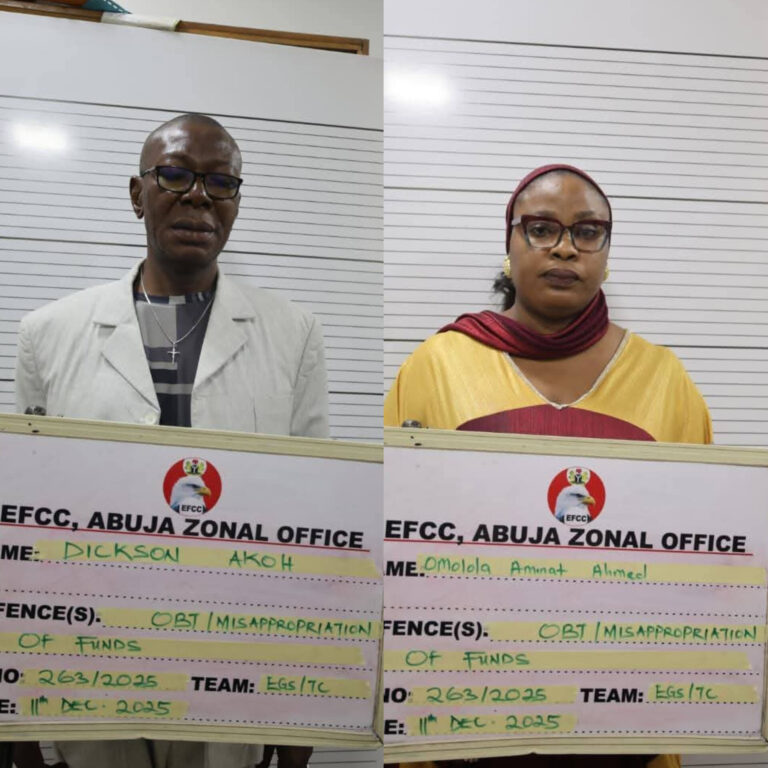
THE Economic and Financial Crimes Commission (EFCC), Abuja Zonal Directorate, has arraigned the Commandant of the Nigeria Peace Corps, Dickson Akon, and the Corps’ Director of Finance, Omolola Aminat Ahmed, over alleged criminal misappropriation of N60 million belonging to the organisation.

The commission revealed this in a statement on Friday, December 12. It said Akon and Ahmed appeared before Justice H.B. Yusuf of the Federal Capital Territory (FCT) High Court, Abuja, on Thursday, December 11, where they faced a two-count charge bordering on conspiracy and dishonestly converting public funds for personal use.

“Charge one reads: “That you, Dickson Akon and Omolola Aminat Ahmed in the year 2024 at Abuja, FCT, within the jurisdiction of this honorable court did agree among yourselves to do an illegal act, to wit criminal misappropriation and thereby committed an offence punishable under Section 96 of the penal code laws of the FCT.” 

“Count two read: “That you, Dickson Akon and Omolola Aminat Ahmed in the year 2024 at Abuja, FCT, within the jurisdiction of this honorable court did agree among yourselves and dishonestly converted to your personal use the sum of N46,000,000,00, (forty six million naira only) out of the sum of N60.000.000.00, (sixty million naira, only) meant for the execution of contract for the supply of badges,” the statement read.

The EFCC said the defendants allegedly conspired in 2024 to misappropriate funds allocated for the execution of a contract for the supply of official badges and accused the Peace Corps officials of dishonestly converting N46 million out of the N60 million approved for the procurement project.

According to the agency, both defendants pleaded not guilty to the charges, and following their pleas, prosecuting counsel Khalid Sanusi requested a date for the commencement of trial.

“Justice Yusuf adjourned the matter till February 25, 2026, and granted the defendants bail in the sum of ₦5 million (five million naira only) with one surety each in like sum. The sureties must be of a reputable character and must be resident in Abuja,” it added.

The ICIR reports that this case marks yet another high-profile inquiry into alleged financial misconduct among leaders in Nigeria. The EFCC had reportedly seized the international passport of former Minister of Justice and Attorney-General of the Federation (AGF), Abubakar Malami, following his ongoing investigation.

Malami, a senior advocate, who was released around 1am on November 28, after hours of interrogation, was placed under a one-month restriction that compels him to report at the EFCC headquarters in Abuja every day, to prevent any interruption in his probe.

The agency noted that Malami had significant questions to answer over how alleged $490 million loot of the late Head of State Sani Abacha was managed under his watch.

Similarly, Fred Chukwuelobe, the media aide to former Minister of Labour and Employment, Chris Ngige, confirmed that the former Anambra State Governor was detained by the EFCC, making him the second minister in the late President Muhammadu Buhari administration to face interrogation by the anti-graft agency in recent weeks.

US seizes Nigerian supertanker, cites crude oil theft, piracy, others

0

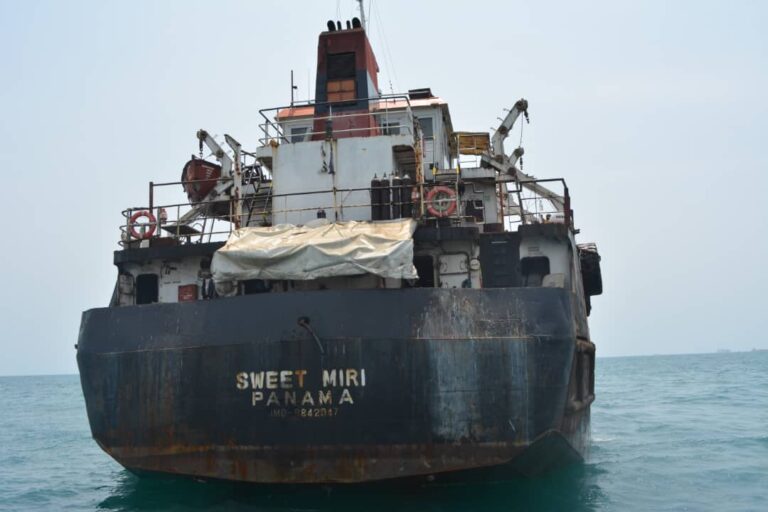
THE United States (US) Coast Guard, in collaboration with the US Navy, has intercepted a Nigerian-owned supertanker, Skipper, over allegations of crude oil theft, piracy, and other transnational crimes.

The vessel, a 20-year-old Very Large Crude Carrier, VLCC, with IMO Number 9304667, is reportedly owned and managed by Nigeria-based Thomarose Global Ventures Ltd., though its registered owner is listed as Triton Navigation Corp., headquartered in the Marshall Islands.

Authorities said the tanker was illegally flying the Guyanese flag at the time of its arrest.

The ICIR reports that the concern about the alleged crude oil theft followed the worries that the Nigerian government had paid N17.5 trillion for pipeline protection and energy security operations, outsourced to private security guards in the financial year ended 2024

Former Vice President Atiku Abubakar and other stakeholders had demanded a forensic audit of the N17.5 trillion allegedly spent and expressed concern over the pipeline protection and energy-security costs, citing persistent leakages, oil theft, low crude production, and systemic opacity in the national oil company.

The crude oil theft occurred despite the fact that the Federal Government has outsourced oil pipeline protection to Tantita Security Services Nigeria Limited (TSSNL), a prominent indigenous security firm known for protecting Nigeria’s crucial oil and gas infrastructure, especially in the Niger Delta region.

In a swift rebuttal, Guyana’s Maritime Administration Department, MARAD, confirmed that Skipper seized by the US was not on its national ship registry and was using the country’s flag without authorisation.

According to US security sources, the seizure was carried out under American law enforcement authority, with President Donald Trump announcing the operation.

Beyond suspicions of stolen crude, the vessel is also being investigated for allegedly transporting a large consignment of hard drugs and operating within a network backed by suspected Iranian and other Islamist-linked money-laundering financiers.

A check with the Corporate Affairs Commission, CAC, Abuja, showed that Thomarose is inactive.

Further checks showed that Thomarose’s corporate address is listed as 111 Jakpa Road, Effurun, Warri, Delta State, with CAC registration number 1007876.

There are no phone numbers linked to the company.

Commenting on the seizure with Vanguard Newspaper, the President of the Centre for Marine Surveyors, Nigeria, Akin Olaniyan, said that if the vessel indeed departed from Nigeria before being intercepted, it would indicate weaknesses in Nigeria’s Port management.

He said, “If the vessel emanated from Nigeria, it suggests our Port State Control is practically non-existent. It also means any vessel leaving Nigerian waters may come under stricter scrutiny by Port State Control authorities in other countries. This issue has nothing to do with Nigeria as a country, but with regulatory enforcement.”

The National President of Oil and Gas Service Providers Association of Nigeria, OGSPAN, Colman Obasi, who reacted to the development, said: “I have never heard that Nigeria has a supertanker and that it is not active in CAC. I don’t even know if stakeholders are aware. Anyway, the government and other agencies can do more.”

President of the Ship Owners Association of Nigeria, SOAN, Otunba Sola Adewumi, noted that he could not comment on the seizure of the vessel as he had yet to receive sufficient details about the circumstances surrounding its arrest.

He appealed for more time to ascertain the vessel’s ownership and registration status.

Bayelsa Deputy Governor Lawrence Ewhrudjakpo is dead

0

THE Peoples’ Democratic Party (PDP) has confirmed the death of Bayelsa State Deputy Governor, Lawrence Oborawharievwo Ewhrudjakpo, describing his passing as an “inexplicable loss and indescribable pain.”

In a statement by the party’s National Publicity Secretary, Ini Ememobong, on Thursday, December 11, the PDP said it received the news with “deep shock.”

The statement noted that the news had thrown the PDP’s National Working Committee, led by Kabiru Tanimu Turaki, SAN, as well as party members across the country, particularly in Bayelsa State, into “profound grief.”

“While alive, Senator Ewhrudjakpo was an honest and consistent politician who believed in and practiced politics with principle. He was a person of conviction, not convenience; a leader whose life was anchored on belief, integrity, and strength of character,” the PDP wrote, adding that he held firmly to these values until his final moments.

The ICIR reported that the deputy governor collapsed on Thursday afternoon while carrying out official duties at the Government House in Yenagoa.

According to media reports, Ewhrudjakpo’s security team and aides rushed him out of his office for immediate medical attention after he suddenly slumped.

He was subsequently transferred to the Intensive Care Unit (ICU) of the Federal Medical Centre (FMC), Yenagoa, for closer monitoring after medical professionals had received him at the emergency unit.

Reacting further to his death, PDP described him as a trusted and faithful party man whose contributions to governance and party affairs were significant and enduring.

The party extended its condolences to the government and people of Bayelsa State, calling his death “painful and irreparable,” while praying for the repose of his soul.

Born on 5 September 1965 in Ofoni, Sagbama Local Government Area, Ewhrudjakpo’s political trajectory gained momentum in 2018 when he won the PDP Bayelsa West senatorial primary.

He was elected senator in 2019, defeating APC’s Mathew Karimo.

Later that year, he was selected as running mate to Douye Diri in the Bayelsa governorship election.

Although the APC’s David Lyon was initially declared winner, the Supreme Court overturned the result in February 2020 due to certificate irregularities involving Lyon’s running mate.

The ruling cleared the path for Diri and Ewhrudjakpo to assume office as governor and deputy governor.

Ewhrudjakpo also faced a legal challenge in 2020, when a court ordered the Department of State Security Services (SSS) to investigate allegations of NYSC certificate forgery against him.

Until his sudden death on 11 December 2025, he served as Bayelsa’s deputy governor, completing nearly six years in office. He was 60 years.

Bayelsa Deputy Governor collapses, rushed to ICU

0

THE Deputy Governor of Bayelsa State, Lawrence Ewhrudjakpo, collapsed on Thursday, December 11, while carrying out official duties at the Government House in Yenagoa, the state capital.

Although details of the incident are still sketchy, it has triggered panic among government officials and residents.

According to media reports, Ewhrudjakpo’s security team and aides rushed him out of his office for immediate medical attention after he suddenly slumped.

He was subsequently transferred to the Intensive Care Unit (ICU) of the Federal Medical Centre (FMC), Yenagoa, for closer monitoring after medical professionals had received him at the emergency unit.

Punch reported that the deputy governor’s media aide, Doubara Atasi, confirmed the incident but refused to provide further details.

However, the Bayelsa State Government had not issued an official statement as of press time.

The ICIR will provide more information on the development as they unfold.

Fani-Kayode, Dambazau, Omokri, others scale first phase of Senate screening

0

THE Senate Committee on Foreign Affairs has screened non-career ambassadorial nominees forwarded by President Bola Tinubu.

Among those who appeared before the committee on the second day of the screening on Thursday were former ministers, Femi Fani-Kayode and Abdulrahman Dambazau, former presidential aide Reno Omokri, former Enugu State Governor Ifeanyi Ugwuanyi, former presidential aide Senator Ita Enang, and former Independent National Electoral Commission Chairman, Yakubu Mahmood.

After the brief introductions, the nominees were invited to “take a bow and leave,” consistent with Senate tradition, on the grounds that they had previously been screened by the chamber and had demonstrated long records of public service. Their confirmation now awaits ratification by the full Senate.

Senate Leader Opeyemi Bamidele justified the continued application of the “take a bow and go” privilege for select nominees, noting that it is reserved for individuals with proven and verifiable public service records.

He added that anyone who had served in the National Assembly automatically qualifies for the exemption.

The nominees faced questions on their grasp of Nigeria’s foreign policy, bilateral engagements, and plans for promoting the nation’s diplomatic and economic interests.

However, Senators Adams Oshiomhole (APC, Edo North) and Ali Ndume (APC, Borno South) engaged in a heated exchange over the ambassadorial nomination of former presidential aide Reno Omokri. 

The tension reportedly escalated moments after Oshiomhole began commenting on Omokri’s nomination.

“Look, I cannot be intimidated by people who go here and there. After all, we see people on television questioning this list,” Oshiomhole said.

Ndume immediately insisted that Senate procedure must be followed.

“The procedure is that if there is a motion on the ground, it should be seconded. If it is not seconded, it’s dead,” he said.

The committee Chairman, Abubakar Bello (APC, Niger North) struggled to regain order as the session turned rowdy. “Senator Adams, your time is going. Please conclude,” he said.

“All right! Mr. Chairman, I think I need to speak on this in the public interest, with particular reference to the nomination of Reno. We cannot pretend we have not heard stories,” Oshiomhole responded. 

Ndume insisted that there was no petition before the Senate on the matter, saying “The Senate is not a joke!”

“When I talk, those who have not been governors should listen. You have to have that large heart for forgiveness. For me, President Bola Tinubu has shown real quality – that the fact that you criticised me during the election and abused me doesn’t mean I should not appoint you,” Oshiomhole replied.

Ndume, responded “You have never dreamed of being a senator when I became one.”

The Committee Chairman intervened and restored order.

Throughout the confrontation, Omokri sat rigidly in his seat, unsure how the clash might influence the Senate’s view of his nomination.

Five Nigerian government workers feted for honesty, integrity

0

FIVE Nigerian government workers have been publicly commended and feted for exhibiting high-level honesty and integrity in service – attributes that are rare in corruption-laden public service in the country.

The workers were rewarded at the 9th edition of the Integrity Icon Summit & Awards, held on Thursday, December 11, at the Shehu Musa Yar’Adua Centre in Abuja.

Hosted by Accountability Lab Nigeria in partnership with the Shehu Musa Yar’Adua Foundation and the Independent Corrupt Practices and Other Related Offences Commission (ICPC), the ceremony formed part of broader national efforts to strengthen transparency and rebuild public trust by spotlighting public servants whose conduct reflects ethical standards.

Speakers from partner organisations emphasised the need for integrity-driven leadership to strengthen public institutions, shift social norms, and inspire behavioural change across the service.

In his welcome address, Country Director of Accountability Lab Nigeria, Friday Odeh, said the 2025 Integrity Icon programme was part of the organisation’s commitment to promoting ethical leadership. He noted that what society chooses to celebrate ultimately shapes behaviour within institutions.

According to him, an Accountability Lab survey shows that honest public servants often feel isolated when integrity is ignored.

“We believe the real problem isn’t the absence of laws, it’s the absence of recognition and support for ethical leadership,” Odeh said.

He explained that the Integrity Icon initiative deliberately shifted the focus from corruption and punishment to positive reinforcement. Through citizen-led nominations, the campaign identifies public servants who demonstrate exemplary conduct even under pressure.

“Integrity Icon is a deliberate name-and-fame campaign. We highlight public servants whose choices under pressure produce real results for citizens.  We treat integrity as performance, not personality, and definitely not politics,” he added.

The Director of Programmes and Administration at the Shehu Musa Yar’Adua Foundation, Vivian Emehelu, described the ceremony as a celebration of public servants who consistently choose to act ethically even in the absence of scrutiny.

She noted that this year’s edition was particularly significant as it reflected the resilience of the honourees and the growing community committed to transparency despite the ongoing funding crisis in the civil society space.

“Some things should be non-negotiable. The more we do this, the more our society becomes accountable, and corruption reduces,” she said.

Delivering the keynote address, Hilda Ibifuro-Harrison, retired Assistant Inspector General of Police, reflected on her 35 years in public service and emphasised that “recognition is a strong driver of professional excellence.”

She pointed out that the civil service had long grappled with structural challenges – from colonial-era legacies to modern-day inefficiencies – compounded by weak institutions, political interference and repeated economic disruptions.

These long-standing issues, she said, continued to fuel public distrust in government institutions.

“You cannot demand performance when you do not value performance. Recognition is not ceremonial; it is an instrument of reform,” Ibifuro-Harrison stated.

She argued that recognition could catalyse a more accountable and high-performing public service because people tend to repeat behaviour that is rewarded.

“Integrity Icon has made integrity visible and shown that inside the system are people worth celebrating. These icons are the blueprints of what public service should be,” she stated.

A past award recipient, Tina Odinakachi, reflected on the ripple effect of ethical conduct, noting that good behaviour is contagious and could influence others. She said “people often observe and learn even when one is unaware,’ adding that this principle is embodied by the honourees.

“Integrity is contagious, and it has the power to make a difference in our little spaces. People keep asking how much the award is worth, but we all know this award is priceless,” she said.

This year’s awardees include Chief Superintendent of Police (CSP) Mathias Nuhu; Oluwashola Shobayo of the Lagos State Office of Internal Audit, Chief Executive Officer, Benue State Bureau of Statistics, Kumafan Dzaan;  government schoolteacher Ann Itodo; and Army officer, Ishaya Manga, a colonel.

Speaking with The ICIR, Ann Itodo, a teacher at Government Senior Secondary School (GSS) Apo, Abuja, appreciated Accountability Lab and said the award served as a beacon of hope, encouraging her to remain committed to her duties despite the lack of support she received from some parents.

Tinubu requests legislative approval for 2026-2028 MTEF

0

PRESIDENT Bola Tinubu has requested that the National Assembly approve the 2026-2028 Medium-Term Expenditure Framework (MTEF) and Fiscal Strategy Paper (FSP).

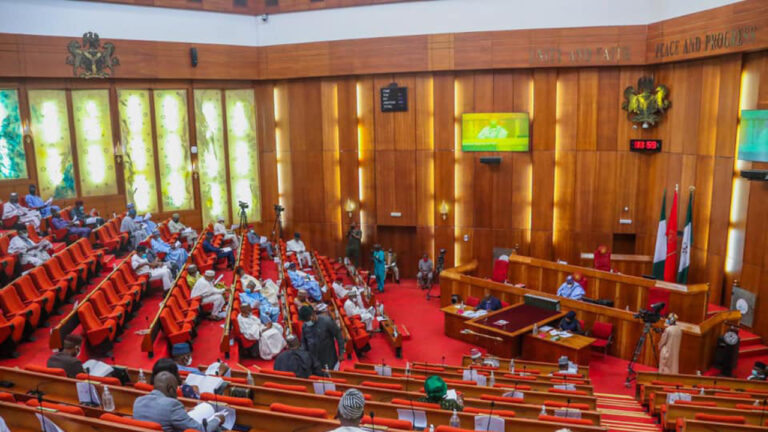
The Deputy Senate President, Barau Jibrin, read Tinubu’s letter during plenary in the Senate on Thursday, December 11.

The president said he transmitted the documents “for the kind consideration and approval of the distinguished senators”.

He said the 2026-2028 MTEF and FSP were approved at the Federal Executive Council (FEC) meeting of December 3, 2025.

The president said the 2026 budget would be prepared based on the fiscal assumptions and parameters contained in the approved MTEF and FSP.

He asked lawmakers for “expeditious legislative action” on the submission.

The Deputy Senate President referred the documents to the committee on finance and asked the committee to report back to the Senate on December 17.

Tinubu had on Wednesday, December 10, transmitted the 2026-2028 MTEF and FSP to the House of Representatives for consideration and approval.

The Deputy Speaker of the House, Benjamin Kalu, read the president’s letter at the plenary.

Tinubu said the framework would guide the preparation of the 2026 national budget.

“It is with pleasure that I forward the 2026–2028 Medium-Term Expenditure Framework and Fiscal Strategy Paper (MTEF and FSP) for the kind consideration and approval of the House of Representatives,” the President wrote.

“The 2026 budget of the Federal Government will be prepared based on the parameters and fiscal assumptions of the approved 2026–2028 MTEF and FSP,” he added.

The ICIR reports that the MTEF submission to the National Assembly plays a crucial role in Nigeria’s budget process.

It serves as a fiscal roadmap that outlines the government’s macroeconomic projections, strategic priorities and expenditure plan for the next three years.

It further provides a template guide for the annual budget preparation, ensuring alignment with the government’s medium-term goals and objectives.

MTEF further provides a macroeconomic framework, a fiscal strategy paper, an expenditure and revenue framework, and a consolidated statement on the Federal Government’s borrowings and debts.

Eight UNIJOS students die in early-morning crash

0

THE Federal Road Safety Corps (FRSC) has confirmed that eight students of the University of Jos (UNIJOS) were killed in a road accident on Zaria Road, Jos, Plateau State, in the early hours of Thursday, December 11.

According to the FRSC Public Education Officer in Plateau State, Peter Longsan, the Sector Command received a distress call at about 2:30 a.m. reporting a crash involving a bus and a trailer opposite Unity Bank.

He stated that eleven students were on board the bus, noting that seven were pronounced dead at the scene, while one more later died at the hospital, bringing the total fatalities to eight.

He added that three others sustained injuries and were receiving treatment.

“The crash involved two vehicles, a trailer and a bus. Eleven people were on board the bus and were said to be students of the University of Jos. On arrival, seven people were suspected to be dead on the spot, and they were eventually certified dead by a doctor.

“Another victim later died in the hospital, bringing the total number of deceased to eight. Three others are currently receiving treatment at the hospital. All victims were males,” the statement read.

Media reports indicated that the bus was speeding and engaged in wrongful overtaking, which caused the driver to lose control and crash.

Reacting to the incident, FRSC Plateau Sector Commander, Olajide Mogaji, urged motorists to exercise caution, and particularly avoid night trips, over speeding, dangerous overtaking, driving under fatigue or illness, and driving under the influence of alcohol.

“The government needs you alive and wants you to enjoy life to the fullest this festive season and beyond,” he said.