Home Blog Page 127

Terrorists attribute Kebbi school girls release to ‘elder’ intervention, dialogue

1

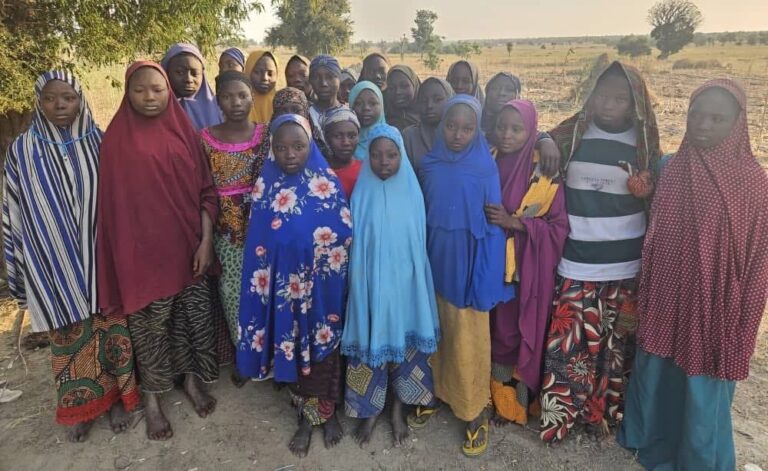
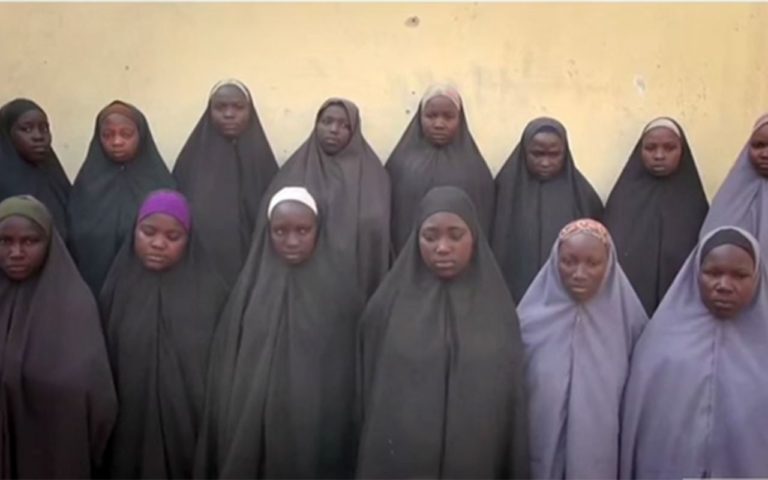
A VIDEO released by the armed group that abducted the 24 schoolgirls from Government Girls’ Comprehensive Secondary School, Maga, has shown the students shortly before they were freed.

The video surfaced hours after the Presidency announced the girls’ freedom, with the terrorists taunting the students and claiming the government was unable to rescue them before their release on Monday, November 25.

The terrorists were armed and masked up their faces in the footage.

The armed group lined up the girls and questioned them about their welfare in captivity. The girls state the date as “25/11/25” when asked by one of the gunmen. They also respond ”no’ when asked if they were left hungry and ‘yes’ when asked if they were cared for.

The bandits then told them, “In shaa Allah, you will be given back to your parents in good condition.”

They further asked whether they were maltreated or harmed. The girls reply, “no.”

The gunman claimed the girls were being released because ‘manya’—meaning elders—had intervened in negotiations.

The terrorists who were armed in the viral video also emphasised that their release came through negotiation, saying: “You will be handed over through dialogue and negotiation. It was not force that was used.”

At one point, one of the terrorists asked the girls how many military aircraft they saw searching for them; the students answered, “We can’t even count,” they say.

A visual review of the footage shows men in the background farming, suggesting the recording took place in an open rural settlement, where the terrorists had struck a peace deal with the community.

The girls were abducted on November 17 after terrorists stormed their school in the early hours of the morning, shortly after a military detachment reportedly left the premises. Their release follows similar developments in Kwara and Niger States, where victims of abductions were also freed on Sunday.

The Presidency had confirmed that direct engagement with armed groups has been used in other recent kidnappings, including the abduction of 38 worshippers in Eruku, Kwara State.

Special Adviser to the President on Information and Strategy, Bayo Onanuga, said the  State Security Services (SSS) and military operatives contacted the abductors of Kwara worshippers for their release.

“I think after the incident happened, the DSS (legally known as SSS) and the military were involved in the rescue effort. They got in contact with the bandits to release those people unharmed, and finally on Sunday, they were able to get them out unharmed,” he said.

Read the terror series here

Wike suspends FCTA Education Secretary over ‘false’ directive on early closure of schools

0

THE Federal Capital Territory Administration (FCTA) has dismissed reports claiming that all government schools in the FCT would close on November 28.

It described the claim as false, misleading, and not supported by any official directive.


In a statement issued on Tuesday, Lere Olayinka, Senior Special Assistant on Public Communications and Social Media to the FCT Minister, Nyesom Wike, said no decision was taken by the administration to order an early closure of schools.


“The Federal Capital Territory Administration (FCTA) has debunked the report that all Government Schools in the Federal Capital Territory (FCT) were mandated to close by November 28, 2025, saying that “no such decision was taken at any level of the administration,” Olayinka said.

In a memo issued by the Director of School Services, FCT secondary education board, Aishatu Sani Alhassan, principals and heads of schools  the FCT senior secondary schools were instructed to end all academic activities immediately and ensure students are dismissed “in an orderly and safe manner,” on or before Friday, November 28, citing urgent security concerns.

Olayinka said the Minister directed the immediate suspension of the Mandate Secretary for Education, Danlami Hayyo over the directive on school closure.


“The Acting Head of Service,  Mrs Nancy Sabanti Nathan, has also been mandated to discipline the Director, School Services, Mrs Aishatu Sani Alhassan, in accordance with the civil service rules,” he added.


The FCT Administration urged parents, students, and school authorities to dismiss the directive, stressing that the approved academic calendar remained unchanged. 


The FCTA also assured  residents of the FCT,  especially students of adequate security,  adding that the Minister had directed the resumption of Operation Sweep and other security initiatives in the nation’s capital.


The clarification comes at a time when security concerns in some states have led to schools closure.

Plateau, Katsina, Niger,, Taraba and Bauchi have directed the immediate closure of all basic schools in the state, citing urgent need for preventive action against abduction of schoolchildren.. 


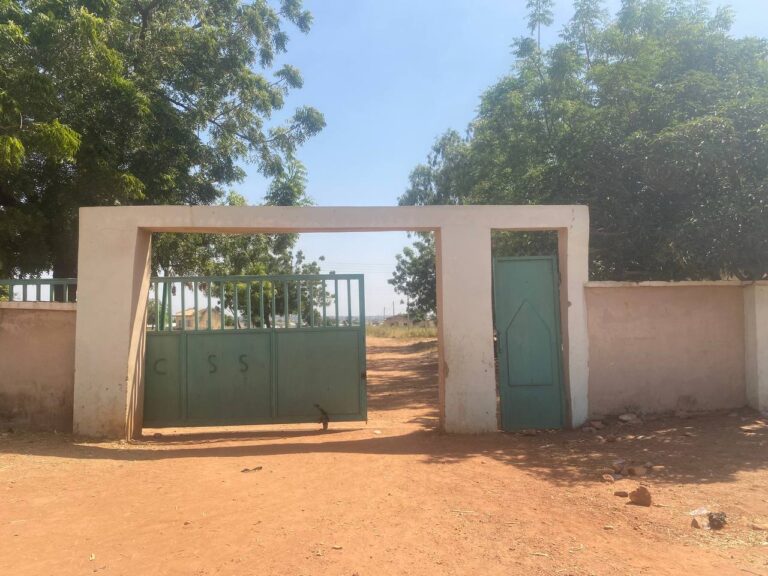
The ICIR reported that on November 17, 2025, armed men breached the fence of Government Girls Comprehensive Secondary School in Maga, Kebbi State, killed the vice principal, and abducted 25 schoolgirls, a chilling re-enactment of the Chibok, Dapchi, and other mass abduction of young girls in Nigeria.


A teacher was killed while trying to protect the girls during the attack, and a security guard later died in the hospital from gunshot wounds.


Gunmen stormed St. Mary’s Papiri Private Catholic Secondary School in the Papiri community of Agwara Local Government Area, Niger State and abducted scores of students and teachers, in the early hours of Friday, November 21.


Local sources said the gunmen arrived at the school between 3 and 4 a.m. in large numbers, riding on over 60 motorcycles and accompanied by a van, and shot the school’s gatekeeper, leaving him with serious injuries.

(BREAKING) 24 abducted Kebbi schoolgirls regain freedom after one week in captivity

0

TWENTY-FOUR students abducted from Government Girls Comprehensive Secondary School, Maga, in Kebbi State, have regained their freedom after spending a week in captivity.

The schoolgirls were taken at dawn on November 17 when terrorists stormed the school shortly after a military detachment withdrew from the premises.

Their abduction triggered public outrage and fears of a resurgence in school kidnappings across the North-West.

In a statement released on Tuesday, President Bola Tinubu welcomed the development and commended security agencies for what he described as “relentless efforts” to secure the release of the students.

“ I am relieved that all the 24 girls have been accounted for. Now, we must put as a matter of urgency more boots on the ground in the vulnerable areas to avert further incidents of kidnapping. My government will offer all the assistance needed to achieve this,”  Tinubu said.

The mass kidnapping of schoolchildren has surged in Nigeria since the 2014 Chibok abduction, forcing states like Kaduna, Zamfara, Katsina, and Niger to shut thousands of schools over insecurity.

Following their abduction, The ICIR reported how  terrorists in the early hours of Friday, November 21, also stormed St. Mary’s Papiri Private Catholic Secondary School in the Papiri community of Agwara Local Government Area, Niger State, and abducted scores of students and teachers.

Several community members who visited the school after the incident confirmed the attack and described it as a coordinated operation carried out between 2:00 a.m. and 3:00 a.m.

According to a 2023 report by Save the Children, over 1,680 students and teachers have been kidnapped from schools—mostly in the North—since 2014.

The release of the 24 students was also coming two days after all the 38 worshippers abducted during last Tuesday’s attack on Christ Apostolic Church (CAC) Oke Isegun in Eruku, Kwara State, regained their freedom after days in captivity.

The victims were freed on Sunday following a combined security operation involving federal and state agencies.

The rescue brings to an end a tense five-day manhunt triggered by the attack, which left three worshippers dead and deepened anxieties over rising insecurity in Kwara’s border communities.

Read the terror series here

Lending costs for businesses unchanged as CBN retains interest rate at 27%

THE cost of funds for businesses remains unchanged as the Monetary Policy Committee (MPC) of the Central Bank of Nigeria (CBN) has retained the country’s monetary policy rate at 27 per cent.

The CBN Governor, Olayemi Cardoso, announced this on Tuesday, November 25, at a press conference during the Committee’s 303rd meeting in Abuja.

The Monetary Policy Rate (MPR) serves as the baseline interest rate in an economy; other interest rates used within the economy are built on it.

The Committee also said it was committed to maintaining a tight monetary stance.

The MPC pegged the Cash Reserve Ratio (CRR) at 45 per cent for commercial banks, 16 per cent for merchant banks, and 75 per cent on non-TSA public sector deposits.

It also maintained the Liquidity Ratio (LR) at 30 per cent, adjusting the Standing Facilities Corridor to +50 / -450 basis points around the MPR.

According to the Committee, the decisions reflect its focus on achieving low and stable inflation, as it welcomed the continued deceleration in headline inflation, driven by sustained monetary tightening, a stable exchange rate, and stable Premium Motor Spirit prices.

The MPC also noted that inflation remained high, requiring continued and coordinated policy efforts to bring it down further

It acknowledged progress in bank recapitalisation, confirming that 16 banks had met regulatory requirements.

On the global outlook, the CBN governor emphasised a recovery in the medium term, although trade tensions between the United States and key trading partners might constrain growth.

The MPC also projected that global inflation would remain above pre-pandemic levels in the near term.

It also reaffirmed commitment to evidence-based monetary policy to safeguard price stability and strengthen financial system resilience.


VIPs lose police escorts as Egbetokun executes Tinubu’s order

0

SEQUEL to President Bola Tinubu’s directive, the Inspector-General of Police, Kayode Egbetokun, has withdrawn all police escorts from Very Important Personalities (VIPs) in Nigeria.
The Nigeria Police Force, through its Protect 16, Lagos State, issued a circular ordering affected officers to return to base on Monday, November 24.
The circular, shared by one of the president’s spokespersons, Sunday Dare on X, was signed by the Admin Officer, Neji Veronica, an assistant superintendent of police, and referenced AB:4087/DOPS/SPU/816/LAS/VOL.3/147.
Tiled, “Daily Order/Instruction”, the circular reads, “Sequel to the directive of Mr. President and C-in-C of the armed forces on the withdrawal of police personnel attached to VIPs, the Commanding Officer directs with immediate effect the withdrawal of all personnel of SPU Base 16 attached to VIPs/Beats across the federation back to Base. You are all warned to report back before the end of today, Monday, 24/11/2025, and all to attend the Lecture Parade tomorrow. Attendance shall be taken from the nominal roll.
“This is for your information and strict compliance.”
The ICIR reported on Sunday, November 23, that Tinubu directed the police authorities to withdraw all their officers serving as escorts to VIPs nationwide to core duties.
He advised anyone seeking police protection to request well-armed personnel from the Nigeria Security and Civil Defence Corps (NSCDC)
The president gave the directive during a security meeting he held with the Police, Air Force, and Army chiefs, as well as the Director-General of the Department of State Services, DSS, in Abuja.
A statement signed by the Special Adviser to the President, Information and Strategy, Bayo Onanuga, on the directive reads, “According to the presidential directive, VIPs who want police protection will now request well-armed personnel from the Nigeria Security and Civil Defence Corps. Many parts of Nigeria, especially remote areas, have few policemen at the stations, thus making the task of protecting and defending the people difficult.
“In view of the current security challenges facing the country, President Tinubu is desirous of boosting police presence in all communities. Already, President Tinubu has approved the recruitment of 30,000 additional police officers. The federal government is also collaborating with the states to upgrade police training facilities nationwide.
“Sunday’s meeting was attended by the Chief of Army Staff, Lt General Waidi Shaibu; the Chief of Air Staff, Air Marshal Sunday Kelvin Aneke; the Inspector General of Police, Kayode Egbetokun; and the Director-General of the Department of State Services, Tosin Adeola Ajayi.”
The ICIR reports that Nigeria has been overwhelmed by insecurity under Tinubu, though he inherited the crisis from his predecessors.

SSS, military contacted terrorists for Eruku worshippers’ release – Presidency

THE Special Adviser to the President on Information and Strategy, Bayo Onanuga, has said operatives of the State Security Services (SSS) and the military established direct contact with the terrorists who abducted 38 worshippers from the Christ Apostolic Church (CAC) Oke Isegun, Eruku, in Kwara State.

He disclosed this on Monday, November 25, while speaking on Prime Time, an Arise Television programme, where he said the security operatives knew the identities and locations of the bandit groups.

The ICIR reported that all 38 worshippers abducted during last Tuesday’s attack regained freedom on Sunday, November 24, after days in captivity. The release followed a combined operation involving federal and state security agencies, with Governor AbdulRahman AbdulRazaq confirming that President Bola Tinubu personally oversaw the efforts.

Onanuga said operatives moved in immediately after the incident and engaged the abductors directly. According to him, the bandits backed down because they understood the consequences of refusing security directives.

“I think after the incident happened, the DSS (legally known as SSS) and the military were involved in the rescue effort. They got in contact with the bandits to release those people unharmed, and finally on Sunday, they were able to get them out unharmed,” he said.

He explained that although security agencies track the movements of armed groups, they sometimes avoid direct confrontation due to the risk of killing hostages.

“The security people, they do have a way of tracking these people. They know what is going on at any point in time. What sometimes restrains them from going after them is the risk of collateral damages. They (bandits) go about abducting our people and use them as shields so that they would not be attacked,” he added.

Onanuga said the abductors were aware that failing to release the captives could trigger a military strike.

“They (bandits) know the risk. If they keep those people in there and we are saying release them, they know that the next thing will be for the government to embark on the kinetic action and attack their base. But they can’t risk it; if you attack their base, you can also kill those captives.”

Pressed further on how the negotiation unfolded, he declined to give details, saying that “That is left for the security people to discuss, but what I know is that they contacted them to release those abducted.” 

Responding to questions on why the government did not immediately arrest the bandits, he said securing the safety of the victims was the first priority.

Onanuga also stated that the “security people, they know all the bandits that are operating in that axis. They know them. They know where they operate.”

The Eruku attack is the latest in a string of violent incidents in Kwara’s border corridor with Kogi and Niger. Data gathered by The ICIR shows a surge in kidnappings, highway ambushes, and attacks on farming settlements in Ekiti, Kaiama and Baruten LGAs.

The assailants invaded the Eruku Church during a programme on Tuesday night, shooting sporadically and taking worshippers into the forest. Three people were confirmed dead, while one person remains hospitalised.

The abduction immediately drew national condemnation and renewed scrutiny of Nigeria’s security architecture, especially after the United States designated Nigeria a “Country of Particular Concern” over escalating violence.

Besides, the Kwara attack, the country witnessed three more abductions within the week, forcing President Bola Tinubu to call off his planned trips to Angola and South Africa.

The attacks also forced the Federal Government to shut down its 41 Unity Colleges nationwide, while states, namely Plateau, Bauchi, Niger and Katsina, shut down schools.

The ICIR reported that on November 17, 2025, armed men breached the fence of Government Girls Comprehensive Secondary School in Maga, Kebbi State, killed the vice principal, and abducted 25 schoolgirls, a chilling echo of the Chibok, Dapchi, and other mass kidnappings of young girls in Nigeria.

A teacher was killed while trying to protect the girls during the attack, and a security guard later died in the hospital from gunshot wounds.

Boko Haram fighters kidnapped 12 women and girls in Mussa district, Askira-Uba Local Government Area of Borno State on Saturday, November 22.
The Police Public Relations Officer in the state, Nahum Daso, confirmed the incident on Sunday.
He said the women were kidnapped while returning from their farms, adding that the Command had launched an investigation into the matter.

Similarly, gunmen stormed St. Mary’s Papiri Private Catholic Secondary School in the Papiri community of Agwara Local Government Area, Niger State, in a fresh attack and abducted scores of students and teachers, in the early hours of Friday, November 21.

Local sources said the gunmen arrived at the school between 3 and 4 a.m. in large numbers, riding on over 60 motorcycles and accompanied by a van, and shot the school’s gatekeeper, leaving him with serious injuries.

The ICIR reported earlier today that bandits also struck at Isapa community, near Ekuru, in the Ekiti LGA of Kwara State.

Read the terror series here


After freeing 38 worshppers, bandits raid another Kwara community, whisk away pregnant woman, nursing mothers

0

By Dare Akogun

ELEVEN residents of Isapa, a community neighbouring Eruku in Ekiti Local Government Area of Kwara State, have been abducted following a violent attack by armed bandits on Monday, November 24.

The ICIR gathered that the gunmen, reportedly numbering between 20 and 30, invaded the community around 6:00 p.m., shooting indiscriminately as they moved through several parts of the town with a large herd of cattle.

According to a list circulated online by the community residents, 11 victims were whisked away with seven coming from the same family.

The kidnapped persons include: Talatu Kabiru (20), Magaji (6), Kande (5), Hadiza (10),
Mariam (6), Saima (5), Habibat (housewife), Fatima Yusufu, Sarah Sunday (22, pregnant),
Lami Fidelis, (23, nursing mother), and Haja Na Allah (nursing mother)

“The situation is heartbreaking,” a resident of the community said, adding “Eleven people, including a pregnant woman and children, were taken. We are traumatised. No one feels safe anymore.”

When contacted, the Kwara State Police Public Relations Officer, SP Adetoun Ejire-Adeyemi, neither confirmed nor denied the attack.

In a short response, she said, “Please be on yellow, while i gather necessary information.”

As of the time of filing this report, the Police Command had yet to issue a public statement on the incident.

Residents told The ICIR that fear pervaded the area, with many families worried that the attacks might continue.

Local vigilantes have intensified night patrols, while some residents have begun to relocate temporarily to safer parts of the state.

Security analysts who spoke with The ICIR on similar incident in the LGA recently identified Kwara’s border with Kogi and Niger States as a vulnerable corridor with a long history of bandit movement.

The ICIR reported that gunmen attacked the Christ Apostolic Church (CAC), Oke-Isegun in Eruku, Kwara State, last Tuesday, killing three people and abducting 38 worshippers.
The 38 worshippers, however, regained freedom, according to a statement by the Kwara State Government on Sunday.

The recent attacks in Eruku and Isapa mirror patterns seen in other North Central states, where armed groups exploit forested paths, poor surveillance, and limited policing infrastructure.

The ICIR reported that on November 17, 2025, armed men breached the fence of Government Girls Comprehensive Secondary School in Maga, Kebbi State, killed the vice principal, and abducted 25 schoolgirls, a chilling echo of the Chibok, Dapchi, and other mass kidnappings of young girls in Nigeria.

A teacher was killed while trying to protect the girls during the attack, and a security guard later died in the hospital from gunshot wounds.

Similarly, gunmen stormed St. Mary’s Papiri Private Catholic Secondary School in the Papiri community of Agwara Local Government Area, Niger State, in a fresh attack and abducted scores of students and teachers, in the early hours of Friday, November 21.

Local sources said the gunmen arrived at the school between 3 and 4 a.m. in large numbers, riding on over 60 motorcycles and accompanied by a van, and shot the school’s gatekeeper, leaving him with serious injuries.

Read the terror series here

UNiTE to End Digital Violence – Kebbi, Niger abductions show girls still vulnerable

0

AS the world marks the 2025 16 Days of Activism Against Gender-Based Violence with the theme “UNiTE to End Digital Violence Against All Women and Girls,” The ICIR reports that the recent abduction of schoolgirls concurrently in one week in Nigeria is a painful reminder that the threats girls face in Nigeria is not only online but also physical. 

The ICIR reported that Before dawn on November 17, 2025, armed men breached the fence of Government Girls Comprehensive Secondary School in Maga, Kebbi State, killed a teacher, and abducted 25 schoolgirls a chilling echo of the Chibok, Dapchi, and other mass kidnappings of young girls in Nigeria.

The teacher was killed while trying to protect girls during the attack and a security guard later died in hospital from gunshot wounds.

An official of Danko Wasagu council, Hussaini Aliyu, told the BBC on November 19 that two girls among the 25 students managed to escape, explaining that the girls ran away across farmland as their armed captors were leading them into the bushes.

Aliyu added that though one of the girls needed medical treatment because she hurt her leg while running in the bushes, the girls were “back and are safe.”

Since Monday, a team of soldiers, police and volunteers have been combing forested areas in an attempt to rescue the students, but gunmen stormed St. Mary’s Papiri Private Catholic Secondary School in the Papiri community of Agwara Local Government Area, Niger State, in a fresh attack and abducted scores of students and teachers, in the early hours of Friday November 21, making it the second mass abduction within a week.

Local sources said the gunmen arrived at the school between 2:00 a.m. and 3:00 a.m in large numbers, riding on over 60 motorcycles and accompanied by a van, and shot the school’s gatekeeper, leaving him with serious injuries.

The state government has said it is yet to confirm the number of students abducted, though some residents said dozens of children were abducted.

Gender advocates weigh in

Gender advocates and experts have described the incident as a reminder of painful memories and a repetition of a decade-long pattern of gendered violence that has defined insecurity in the country since the 2014 Chibok abduction, noting that the Kebbi and Niger tragedies underscores clearly that Nigeria is failing to protect its girls.

Tracing the pattern

One of the most notorious abductions occurred on April 14, 2014, when 276 schoolgirls aged between the 16 to 18, were abducted from Government Secondary School in Chibok, Borno State. An attack that sparked an outrage and brought about the famous bring back our girls campaign. By 2016, nearly 180 Chibok girls have either escaped or been rescued, though about 100 remain missing, especially Leah Shuaibu who refused to denounce her faith.Many of the freed women returned home with children, having endured forced marriage and sexual slavery.

In 2018, 110 girls were kidnapped after Boko Haram invaded the Government Girls Science Technical College (GGSTC) in Dapchi. While being held hostage, some of the girls died, and others were later rescued, leaving Leah Sharibu, a Christian child who had not been rescued to this day.

Gunmen raided the Government Science College Kagara, Shiroro Local Government Area of Niger State, on February 17, capturing 27 students including females and teachers in the school. On February 26, 2021, about 317 schoolgirls from the Government Girls Science Secondary School, Jangebe in Jangebe, Zamfara state. The following month, on March 11, 39 students including females were kidnapped by gunmen in the Federal College of Forestry Mechanisation, Afaka, Igabi LGA, Kaduna state.

In June, over 96 students including females and eight teachers were abducted by bandits at Federal Government College, Birnin Yauri, Kebbi State.

Then in July, bandits kidnapped over 153 students including females of Bethel Baptist High School in Damishi town of Chikun local government area in Kaduna. 

In September, 2023, 24 students were reportedly kidnapped from their hostel in Sabon Gida, Zamfara state. And in March 24, gunmen abducted about 287 children in Kaduna state from the Local Education Authority (LEA) Primary and Junior Secondary School, Kuriga, in Chikun Local Government Area of Kaduna State.

And multiple other incidents that armed groups in Nigeria use girls for purposes of forced marriage, sexual slavery, domestic labor, ransom leverage, forced childbirth, ideological indoctrination.

Failure of safe school initiative 

A coalition of Nigerian business leaders, working with the UN Special Envoy for Global Education Gordon Brown, the Global Business Coalition for Education and A World at School launched the Safe Schools Initiative in 2014 in response to the growing number of attacks on the right to education, including the kidnapping of more than 200 girls in northern Nigeria. 

However, civil society groups and experts have insisted that the initiative has not yielded results decades later.

The Northern Christian Youth Professionals (NCYP) released a statement on Friday criticising the Safe Schools Initiative (SSI) describing it as “weak visibility and poor impact” despite more than $20 million reportedly raised to secure schools.

NCYP highlighted concerns over the management of funds donated to the SSI since its creation after the 2014 Chibok abduction.

The group responsible recalled the contributions that were publicly reported, quoting private sector/business leaders to have pledged $10m as seed funding, Federal Government of Nigeria pledged  $10m, FEC-approved support pledged $4.2m, United States Government (USAID/Embassy) pledged $2m, Qatar Government pledged $2m, noting that these contributions exceeded $20 million yet had “not translated into visible protection for schools.”

NCYP demanded that the SSI publish a comprehensive report detailing its activities, spending, implementing partners, emergency response plans, and impact assessments.

Similarly, the Senate on November 19 demanded President Bola Tinubu to probe into misuse and poor implementation of the N144.7 billion SSI following the Kebbi abduction, insisting that schools in high-risk zones still have no perimeter fence, CCTV, early warning systems, armed patrols, or emergency evacuation plans.

The Nigerian Senate’s demands reflect widespread concern that political promises have not translated into concrete protection for children, especially girls.

Advocates have insisted that the government cannot claim to invest in preventing violence against women and girls while schools remain undefended in areas plagued by armed groups, classrooms are battlegrounds, and girls’ bodies remain targets of bargaining, ransom, and terror.

Indeed, this year’s 16 Days of Activism is a stark reminder that the recent abduction of schoolgirls in Kebbi and Niger States is a stark reminder that ending violence against women and girls must begin with protecting their right to learn without fear.

Read the terror series here

GENCOs reject FG’s proposal to forfeit 50% of N5trn debt

0

NIGERIA’s electricity sector liquidity problems are worsening as the power generation companies (GENCOs) have rejected  the Federal Government’s proposal requiring them to accept 50 per cent of the total debt owed them for electricity supplied to the national grid.

The Executive Secretary of the Association of Power Generating Companies of Nigeria (APGC), Joy Ogaji, confirmed to The ICIR that proposed contracts from the Federal Government were sent out to each power generation company, except Azura Power West Africa.

In the proposal, tagged 50 per cent haircut, the government offered to pay the companies about N2.4 trillion or 49.9 per cent of the total debt.

Ogaji said the underpayment proposal, if enforced, would create huge damage to Nigeria’s power sector, discourage investors and possibly force most generating plants out of business.

“If the proposal sells through, this will kill the GENCOS completely,” she said.

She stressed that thw debt was not entirely GENCO’s money but included thermal plants and other players in the power generation value chain.

Notably, the government debt to the GenCos rose to over N5 trillion at the end of June, with President Bola Tinubu agreeing to pay off the debt through bond issuance during a meeting with the companies in July.

Ogaji expressed worry that rising debt had posed a serious liquidity problem to the power sector, which she said had deprived it of optimum service delivery.

The ICIR reports that GenCos operate thermal power plants that use natural gas to produce electricity.

They connect their power plants to the national grid, allowing them to transmit generated electricity to the Transmission Company of Nigeria (TCN) for distribution.

GENCos sell electricity to the Nigerian Bulk Electricity Trading (NBET) Plc, which acts as a creditworthy off-taker, ensuring payment to generators.

Following the approval of the proposal by the Federal Executive Council, FEC, in August, top government officials met with the owners of the GenCos in early October, with the Special Adviser on Energy, Olu Verheijen, announcing that an agreement had been reached with the companies on the debt repayment model.

In furtherance of this, the government, on October 16, 2025, sent out two contract documents to the GenCo, which, among other clauses, requested them to forfeit 50 per cent of the debt owed them as final payment.

Copies of the documents, sighted by The ICIR, was titled “NBET deed of settlement” and “Deed of novation”, among others, sought to transfer government debt from the Nigerian Bulk Electricity Trading Plc, NBET, to a new special purpose vehicle, named NBET Bond Finance Company Plc.

The contracts read: “GenCo, hereby, accepts the sum of (“Settlement Amount”) as the full and final settlement of the outstanding legacy debt, including any interest thereon and any other claim for losses, whether present or future and whether known or unknown, in respect of the legacy debt.

“For the avoidance of doubt, GenCo agrees that the settlement amount, as a compromise of its rights to the legacy debt, hereby (i.e., from the date of this Agreement), extinguishes its right to any claims to the legacy debt, including any contractual claims for losses whatsoever and howsoever, arising whether from deemed capacity, true ups and interest on delayed payment of substantive invoice amounts, true-up compensations or deemed capacity payments referenced in Appendix A or elsewhere.

“The parties agree that subject to prompt payment of the settlement amount as contemplated in the payment structure under Clause 3 below and Appendix B, the settlement amount shall not bear any interest or give rise to any further claims for any losses whatsoever.

“NBET’s obligation to pay the settlement amount to GenCo shall be novated to Bond SPV, via the Novation Agreement and upon its execution, Bond SPV shall be solely responsible for payment of the settlement amount.

“The parties acknowledge and are aligned on the PPSFRP’s plan for the settlement amount to be paid by Bond SPV solely from the outcome of an FGN-backed public bond issuance programme that will be conducted by the Bond SPV (“Bond Programme”).

“These bond proceeds are expected in successive issuance phases and tranches that will have an impact on the exact timeline for payment of the settlement amount in instalments (where applicable).

The ICIR reported that the Federal Government promised to sort out the outstanding N4 trillion debt payment in two ways: part of it in cash, and the rest through promissory notes, which are legal documents that act as a promise to pay money at a later date.

Without a proper financial strategy in the sector, findings have also shown that Nigeria’s power sector has relied on interventionist funds from the World Bank and the African Development Bank (AfDB) to pull itself out of various liquidity crises, since the sector’s privatisation in 2013.

There are several instances of World Bank support for the sector, including a $500 million loan in 2021 for the Nigeria Distribution Sector Recovery Program (DISREP), a $750 million facility approved in 2023 for the Power Sector Recovery Operation (PSRO) and Distributed Access through a Renewable Energy Scale-Up (DARES), and pledged support with 1.2 million meters in 2023 to address the metering gap.

Tinubu’s diplomatic push falters as UK declines Ekweremadu deportation request

0

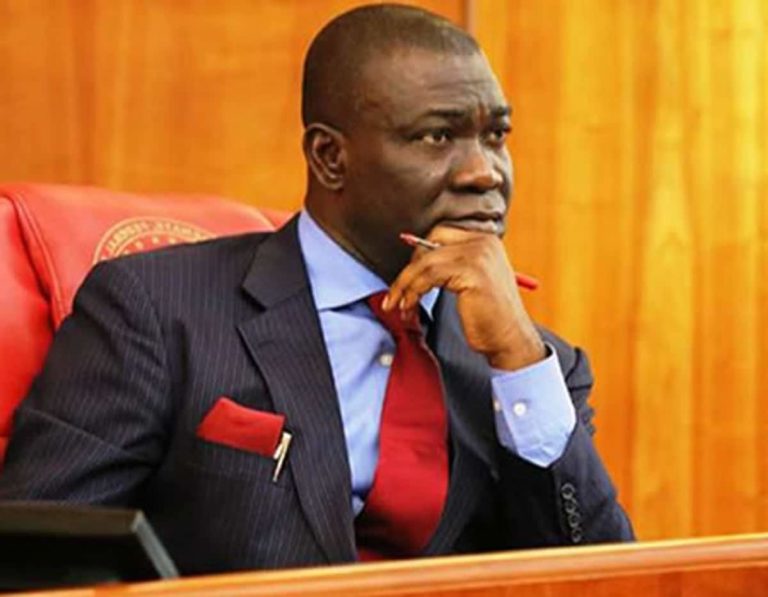
THE United Kingdom government has rejected Nigeria’s request to deport former Deputy Senate President Ike Ekweremadu following president Bola Tinubu’s recent diplomatic push to have him transferred home to complete his prison sentence.

The ICIR reported that Tinubu had dispatched a high-level delegation to London on November 10, led by Foreign Affairs Minister Yusuf Tuggar and Attorney General Lateef Fagbemi, to negotiate Ekweremadu’s transfer from a UK prison to Nigeria.

The visit was confirmed to The ICIR by the Foreign Affairs Ministry spokesperson, Alkasim Abdulkadir, who said consultations with UK authorities were ongoing.

“The presidential delegation met with UK authorities to explore possibilities of Senator Ike Ekeweremadu to serve the remainder of his sentence in Nigeria. Consultations are ongoing,” Abdulkadir had said.

Discussions reportedly examined prisoner-transfer arrangements, compassionate parole or other reliefs allowed under UK law.

But according to The Guardian, the UK Ministry of Justice has now turned down Nigeria’s formal request for Ekweremadu’s deportation.

A source told the newspaper that the request was rejected because the British government could not obtain assurances that Nigeria would enforce the remaining prison term.

A UK government spokesperson declined to comment on Ekweremadu’s case specifically but said prisoner transfers remained entirely at the government’s discretion.

“Any prisoner transfer is at our discretion following a careful assessment of whether it would be in the interests of justice,” the official was quoted to have said.

In May 2023, a UK court sentenced  Ekweremadu to nine years and eight months in prison after finding him guilty of organ trafficking under the United Kingdom’s Modern Slavery Act, the first conviction of its kind. His wife, Beatrice, was sentenced to four years and six months, while their family doctor, Obinna Obeta, received a 10-year prison term.

The trio were convicted for conspiring to exploit a young Nigerian man, David Nwamini, by arranging for the removal of his kidney to treat the couple’s ailing daughter, Sonia. The judge ruled that the defendants intended harm to the victim, who was misled into believing he would be rewarded for the organ donation.

During the trial, it was alleged that the 21-year-old street trader was to be rewarded for donating the organ to Sonia Ekweremadu in an £80,000 private procedure at London’s Royal Free Hospital.

The prosecution claimed the donor was offered up to £7,000 along with the promise of a better life in the UK, but the donor did not understand until his first appointment with a consultant at the hospital who he was there for a kidney transplant.

It was also claimed that the man was falsely presented as Sonia Ekweremadu’s cousin in a failed attempt to persuade medics to carry out the procedure.

However, in January 2025, Ekweremadu’s wife Beatrice was reportedly released from prison and had returned to Nigeria after serving her sentence.