Home Blog Page 145

Turkey suspends 149 referees over betting allegations

0

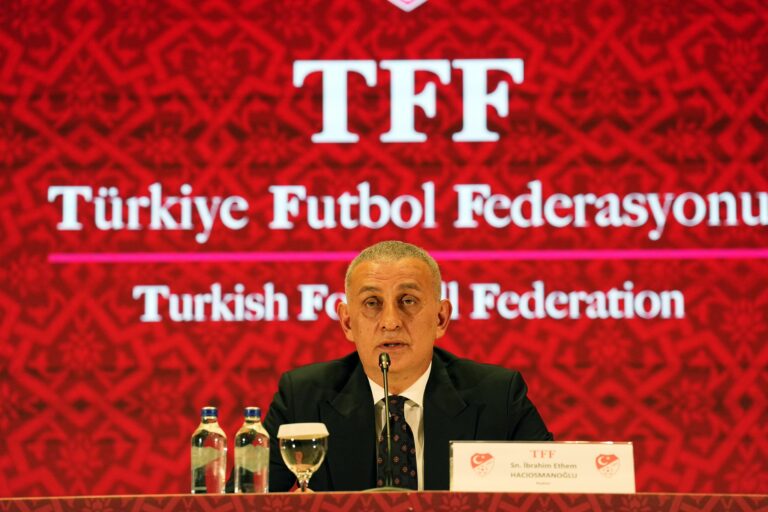
THE Turkish Football Federation (TFF) has suspended 149 referees accused of betting on football matches.

In a statement on Friday, October 31, reported by AFP, the TFF said its disciplinary committee-imposed bans ranging from eight to twelve months after investigations confirmed that the referees had placed or maintained active betting accounts.

The federation added that investigations were ongoing into three other referees.

The suspensions followed a months-long inquiry that examined 571 referees across the country’s professional leagues.

The TFF revealed that 371 officials were found with sports betting accounts, and 152 were actively placing bets.

According to the TFF, 22 of the affected officials, including seven match referees and 15 assistants, were officiating in the country’s top division, the Super Lig.

One referee alone placed more than 18,000 bets, while 42 referees each wagered on over 1,000 football matches.

Background

The betting probe began in April 2025, following reports of widespread gambling among match officials.

A five-year audit report found systemic violations of both TFF and FIFA disciplinary regulations, which strictly prohibit referees, coaches, and players from engaging in betting activities.

According to TFF regulations, referees found guilty risk suspension for up to one year. Under Article 27 of FIFA’s Code of Ethics, they may also face fines of up to 100,000 Swiss francs (£94,000) and bans lasting as long as three years from all football-related activities.

The revelations have shaken confidence in Turkish football, with prominent clubs, including Besiktas, Fenerbahce, and Trabzonspor, calling for investigation.

Court sacks Zamfara lawmaker for defection 

0

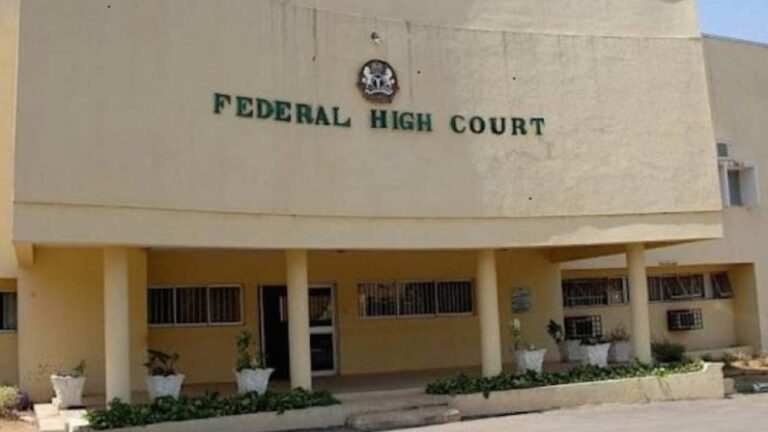
THE Federal High Court in Abuja has sacked Abubakar Suleiman Gummi from the House of Representatives for defecting from the Peoples’ Democratic Party (PDP) to the All Progressives Congress (APC).

Gummi represented the Gummi/Bukkuyum Federal Constituency of Zamfara State before his removal.

In a judgment delivered by a judge, Obiora Egwuatu, the court restrained the Speaker of the House of Representatives, Tajudeen Abbas, from further recognising Gummi as a member of the legislature.  The judge also directed the Independent National Electoral Commission (INEC) to conduct a fresh election to fill the vacant seat within 30 days.

The suit, marked FHC/ABJ/CS/1803/2024, was filed by the PDP and its Zamfara State chairman, Jamilu Jibomagayaki, through their counsel, Ibrahim Bawa, a senior advocate.

The plaintiffs argued that Gummi’s defection to the APC was unconstitutional since there was no division within the PDP at the time he left the party.

They urged the court to declare his seat vacant and compel the Speaker to act in line with Section 68(1)(g) of the 1999 Constitution, which mandates lawmakers to forfeit their seats if they defect from the party under whose platform they were elected, except in cases of internal crisis within the party.

In his defence, Gummi said his decision to join the APC was due to persistent internal and external crises within the PDP both at the national and constituency levels. He claimed that the party’s unresolved conflicts made it difficult for him to effectively represent his constituents.

After reviewing the case, Egwuatu rejected Gummi’s argument and granted all the reliefs sought by the plaintiffs. He declared that Gummi’s seat automatically became vacant upon his defection and ordered him to refund all salaries and allowances he received from October 30, 2024, until the date of judgment.

The court also awarded N500,000 in costs against him.

The judge criticised the growing trend of political defections, describing it as an abuse of the electoral mandate. He said elected officials must respect the choices of voters who cast their ballots based on party manifestos and ideology.

Egwuatu noted that votes belong to political parties, not individuals, and that transferring such votes to another party amounted to political misconduct.

He emphasised that the law was designed to prevent what he described as “political prostitution” and to protect the sanctity of the electoral process.

The judgment comes amid a wave of political defections in Nigeria’s National Assembly.

Just a day earlier, The ICIR reported that six lawmakers from Enugu and Plateau States announced their defection from the PDP and Labour Party (LP) to the APC during plenary.

Those who defected include Nnolim John Nnaji, Anayo Onwuegbu, Martins Oke, Obetta Mark Chidiebere, Dennis Nnamdi Agbo—all from Enugu State—and Daniel Asama from Plateau State.

Speaking on behalf of the group, Nnolim Nnaji said their decision followed the defection of Enugu State Governor Peter Mbah to the APC earlier in October.

Nnaji said the move was aimed at aligning with the state’s new political direction and ensuring that Enugu was no longer isolated from the Federal Government.

Mbah, who left the PDP after months of speculation, said his defection was a deliberate step to connect Enugu and the South-East region to national governance. The governor joined the APC alongside members of his cabinet, the state assembly, and local government officials.

The APC’s national leadership has since welcomed the new entrants, describing their move as a milestone for the party’s expansion in the South-East.


Tanzania opposition alleges 700 killed in post-election protests

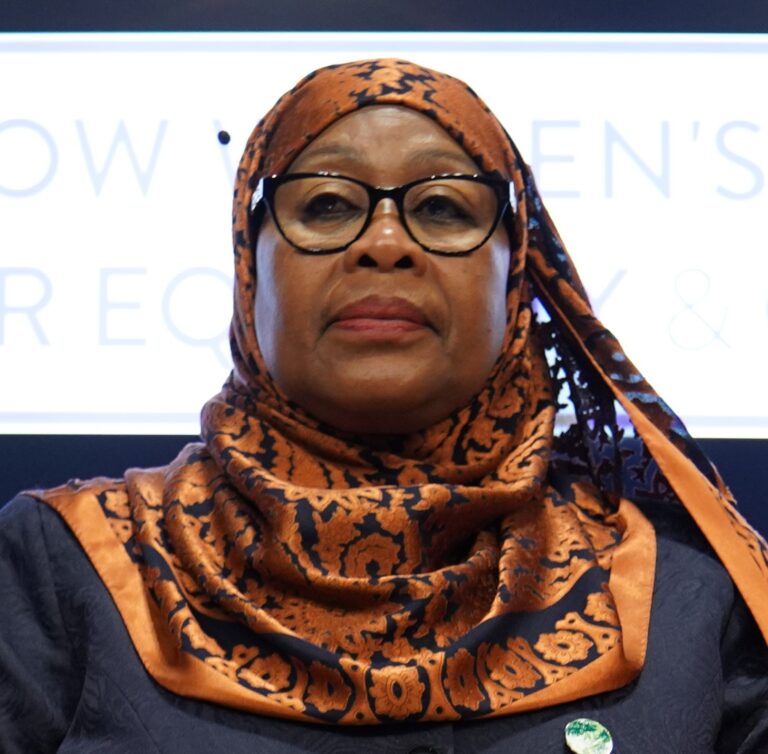
TANZANIA’S main opposition party has claimed that 700 people have been lost to the ongoing nationwide protests that erupted after the presidential poll conducted earlier this week in East Africa country.

The spokesperson for the opposition CHADEMA party, John Kitoka, stated this on Friday, noting that the party had documented about 700 deaths since Wednesday, citing reports from health workers.

CHADEMA party was barred from the election after refusing to sign a code of conduct, following the arrest of its leader on treason charges in April.

Kitoka said that demonstrations were still taking place in several cities on Friday, though their intensity had decreased in some areas because of the heavy security presence.

“We are calling for the protests to continue until our demands for electoral reforms are made,” he told Reuters.

Protests erupted after the exclusion of President Samia Suluhu Hassan’s two main challengers from the ballot and allegations of widespread repression. Sources said police used tear gas and live ammunition to disperse demonstrators.

An overnight curfew has been in place in Dar es Salaam for two consecutive nights after government offices and other buildings were set on fire. Internet connectivity has been severely disrupted since Wednesday.

On Friday, heavily armed police and military officers patrolled the streets of Dar es Salaam, restricting movement and allowing only those with valid reasons to pass. The government has also extended a work-from-home directive for civil servants.

The United Nations said it had received credible reports of at least 10 deaths in three cities, the first public casualty estimates from an international body since the Wednesday vote, but authorities have yet to release any official casualty figures.

The ongoing unrest poses a major test for Hassan, who was initially lauded after assuming office in 2021 for relaxing political restrictions but has recently come under fire from opposition groups and activists over a wave of arrests and alleged abductions of political opponents.

Hassan has rejected accusations of widespread human rights abuses, saying last year that she had ordered an investigation into reports of abductions, though no findings have been made public.

The electoral commission began releasing provisional results on Thursday, indicating that Hassan was securing majority of votes across several constituencies.

The government addressed the ongoing unrest for the first time on Friday through a statement from the Ministry of Foreign Affairs to diplomatic missions, stating that, “Owing to isolated incidents of breaches of law and order, the government has heightened security and implemented several precautionary measures.”

Trump directs military to resume testing US nuclear weapons

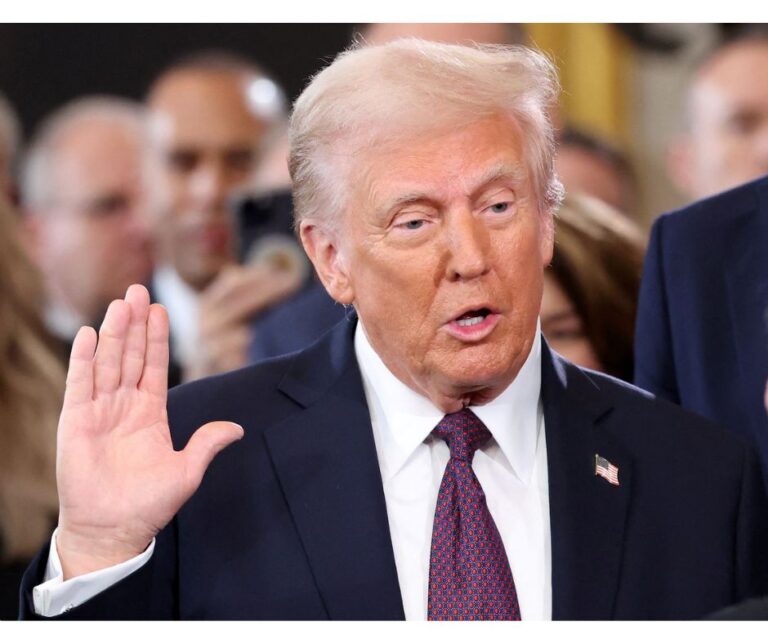
PRESIDENT Donald Trump has ordered the United States military to immediately resume nuclear weapons testing after a 33-year pause, a move seen as a warning to rival nuclear powers, China and Russia.

Trump made the announcement late Thursday on his Truth Social account while aboard Marine One, en route to Busan, South Korea, for a trade negotiation meeting with Chinese President Xi Jinping.

“Because of other countries’ testing programmes, I have instructed the Department of War to start testing our Nuclear Weapons on an equal basis. That process will begin immediately. Russia is second, and China is a distant third, but will be even within five years,” Trump posted.

According to Reuters, no nuclear-armed nation, except North Korea, which last conducted a test in 2017, has carried out an explosive nuclear test in more than 25 years.

It added that post-Soviet Russia has never conducted a nuclear test. The Soviet Union carried out its last test in 1990, while China’s final test took place in 1996. In the United States, President George H.W. Bush, a Republican like Trump, declared a moratorium on nuclear testing in 1992 following the nation’s last test in September of that year.

Russia, which tested a new nuclear-powered cruise missile on October 21, conducted nuclear readiness drills on October 22, and tested a nuclear-powered autonomous torpedo on October 28, stated that it hoped Trump was correctly informed that Moscow had not carried out an actual nuclear weapon test.

“President Trump mentioned in his statement that other countries are engaged in testing nuclear weapons. Until now, we didn’t know that anyone was testing,” Kremlin spokesman Dmitry Peskov told reporters.

Later, while returning to Washington, Trump stated that nuclear testing was necessary to ensure the United States remains on par with rival nuclear powers.

“With others doing testing, I think it’s appropriate that we do also,” Trump told journalist, adding that nuclear test sites would be determined later.

When asked if the world was entering a more dangerous nuclear era, Trump downplayed the concern, saying US arsenals were “well secured,” while adding that he would welcome global denuclearisation.

“I’d like to see a denuclearisation because we have so many and Russia’s second and China’s third and China will catch up within four or five years.”

“We are actually talking to Russia about that, and China would be added to that if we do something,” he stated.

Earlier this week, while en route to Asia, Trump commented on Russia’s actions, telling reporters that Putin should focus on ending the war in Ukraine “instead of testing missiles.”

The ICIR reported that, Trump announced the cancellation of the planned summit with Putin because he no longer believed it would deliver the results he hoped for, lamenting that despite having many “good conversations” with the Russian leader did not “go anywhere”, after slamming Russia’s two biggest oil companies with sanctions in his latest policy shift on Moscow’s war in Ukraine.

According to the Washington-based Arms Control Association, a nonpartisan organisation promoting nuclear nonproliferation, the United States possesses 5,225 nuclear warheads, while Russia holds 5,580.

In August, Trump said he had held talks with Putin on nuclear arms control and expressed a desire for China to participate. However, Beijing dismissed the idea as “unreasonable and unrealistic,” arguing that its nuclear arsenal was far smaller in comparison.

Putin, who oversees the world’s largest stockpile of nuclear warheads, has repeatedly warned that Russia would resume testing if any other country conducted a nuclear test.

Over the past five years, Xi Jinping has more than doubled China’s nuclear arsenal to an estimated 600 warheads, while Russian President Vladimir Putin has recently tested two new nuclear-powered weapons.

In reaction to Trump’s latest announcement, Head of the Vienna-based Comprehensive Nuclear-Test-Ban Treaty Organization, Robert Floyd, expressed concern, warning that any nuclear weapon test by any nation would undermine global non-proliferation efforts and pose a serious threat to international peace and security.

Similarly, United States Secretary-General António Guterres has repeatedly warned that global nuclear risks were dangerously high and urged nations to refrain from any actions that could trigger miscalculation or escalation with ‘catastrophic’ consequences, according to deputy UN spokesperson Farhan Haq.

What to know about Nigeria’s abortion bill suspended by Senate

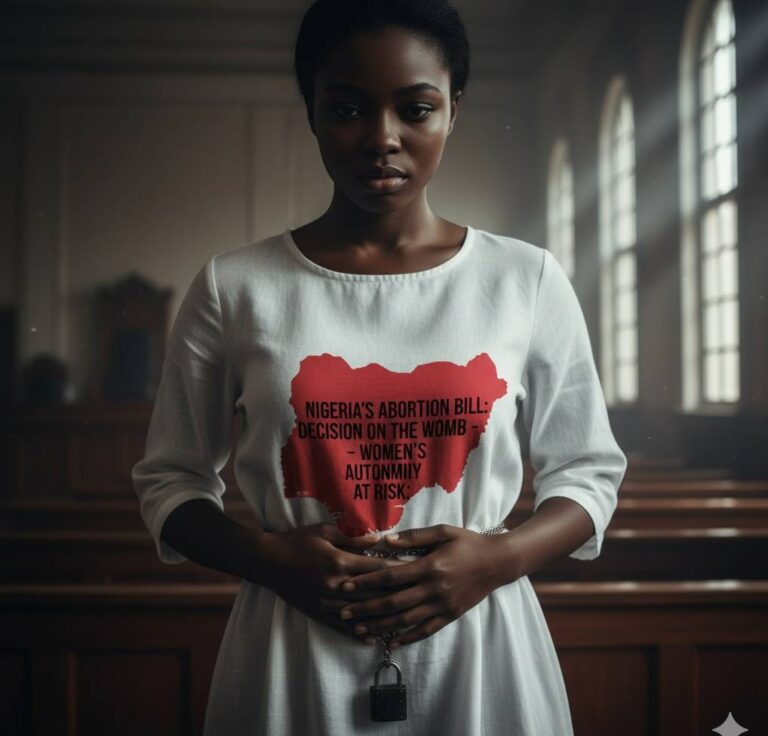
The Nigerian Senate on October 26 suspended consideration of a controversial bill seeking to impose a 10-year jail term for abortion-related offences, following heated debate among lawmakers over what constitutes an “unlawful abortion.”

The bill, titled the Criminal Code Amendment Bill 2025, was introduced by Senate Leader Opeyemi Bamidele and aims to update sections of Nigeria’s Criminal Code Act to reflect modern realities. It also proposes stiffer penalties for sexual offences such as defilement and sexual assault.

The initial recommendation by the Senate Committee had pegged the punishment for sexual assault at five years, but an amendment increased it to 10 years. However, deliberations became heated when the chamber turned to the section of the bill seeking to raise the penalty for supplying drugs or instruments used to procure abortions from three years, as currently stated in law, to 10 years imprisonment without an option of fine.

Divided opinions in the chamber

Lawmakers were divided on how to determine when an abortion should be considered unlawful. Some senators argued that abortion might sometimes be medically necessary to save the life of a pregnant woman, while others noted that economic hardship and other circumstances could compel women to make such decisions.

Kwara Central Senator, Saliu Mustapha, cautioned that certain abortions might be justified on health or religious grounds and should not be automatically criminalised. Bauchi Central Senator, Abdul Ningi, shared similar concerns, warning that the proposed amendment could discourage medical practitioners from providing life-saving care to women with complications.

After a prolonged debate, Senate President, Godswill Akpabio, intervened and proposed that the contentious clause be stepped down for further consultation. The motion was adopted through a voice vote.

The Senate subsequently referred the bill to the Committee on Judiciary, Human Rights, and Legal Matters for additional legislative input and directed the committee to report back within two weeks.

The senator representing Kogi Central, Natasha Akpoti-Uduaghan, confronted Akpabio to allow her to speak on the matter. She said as a woman, abortion is a matter that directly concerns her. However, she was not allowed because of an objection by another senator, Adams Oshiomhole, citing Senate rules that bar reopening concluded debates.

What the bill seeks to change

Abortion in Nigeria remains largely restricted by law and is only permitted when performed to save the life of the pregnant woman. The country’s legal framework on abortion is primarily derived from the Criminal Code Act, applicable in the southern states, and the Penal Code, applicable in the northern states.

Currently, under the Criminal Code Act applicable in southern Nigeria, a woman who unlawfully procures her own miscarriage faces up to seven years imprisonment, while anyone who assists faces up to 14 years. Supplying drugs or instruments for abortion attracts up to three years imprisonment.

The Criminal Code Amendment Bill seeks to increase penalties for abortion-related offences and clarify the legal definitions surrounding them. 

In the northern states, the Penal Code contains similar provisions but allows abortion “in good faith for the purpose of saving the life of the woman.” This is the only broadly accepted exception under Nigerian law.

The proposed amendment seeks to stiffen penalties but does not yet define “unlawful abortion,” raising concerns that even medically justified procedures could be punished.

Current legal and health context

Acoording to Nigeria’s abortion laws, abortion is permitted only when necessary to save a woman’s life, leaving no clear legal pathway for cases involving rape, incest, or severe fetal abnormalities.

Because of these restrictions, many women resort to unsafe abortions, often performed by unqualified individuals or in unsanitary conditions. According to the Guttmacher Institute, hundreds of thousands of unsafe abortions occur annually in Nigeria, contributing significantly to the country’s high maternal mortality rate.

Health experts have warned that increasing criminal penalties without addressing the underlying causes including limited access to contraception, poor healthcare infrastructure, and social stigma could worsen the public health crisis.

What happens next

The Senate’s Committee on Judiciary, Human Rights, and Legal Matters has been tasked with reviewing the bill’s language, especially regarding the definition of “unlawful abortion.” The committee will consult stakeholders and report back within two weeks.

If the committee returns with agreed recommendations, the bill will return to the floor for further debate and possible passage. If consensus remains elusive, the abortion clause may be deleted altogether while other provisions on sexual offences are passed.

While the bill aims to modernise the criminal code, experts warn that unclear or overly punitive abortion laws could drive more women toward unsafe procedures and worsen maternal health outcomes.

Meanwhile, recent judicial developments also point to a potential shift. In June 2025, a Federal High Court in Abuja affirmed that unplanned pregnancies resulting from rape, incest, and other forms of sexual violence constitute a violation of the rights of women and girls to physical and mental health.

As it stands, the fate of the abortion clause remains uncertain, pending the Senate committee’s report. But this debate has once again reignited questions about how far Nigeria’s laws should go in regulating women’s reproductive choices in a country where unsafe abortions are one of the leading causes of maternal mortality, contributing up to 15 per cent of maternal deaths.

From fake news to fake love: Disinformation networks reborn as dating scam hubs

0

AN investigation has revealed that infrastructure once used for Russian disinformation campaigns is now being repurposed to promote large-scale dating and cryptocurrency scams through a network of obscure advertising systems and offshore companies.

The investigation, published by Qurium and titled “Catfish Incorporated: How the Dating Scam Industry Works,” revealed that servers linked to the bulletproof hosting provider Aeza, also known as Evilempire or Lethost, were used to host domains tied to both Russia’s Doppelganger disinformation network and fraudulent dating sites.

The traffic from these sites is distributed using a traffic distribution system (TDS) known as Los Pollos, which redirects users through smart links to pre-landing pages that promote various scams.

According to the findings, Los Pollos was also connected to Vextrio, a large ad-tech network used for distributing malicious traffic, scams, and unwanted applications. The overlap suggests that the same infrastructure supporting disinformation campaigns also fuels global online fraud, revealing how digital advertising systems can be manipulated for exploitation.

The research also identified a complex web of intermediaries, including affiliates, black advertisers, and concealed operators who profit from these scams while hiding behind shell companies registered in jurisdictions such as Cyprus, Malta, Hong Kong, and the Marshall Islands. Victims are typically lured through online ads or spam messages to pages branded as Loveme, OnlyOne, or FlirtUp, before being redirected to fraudulent dating services.

“One we had discovered that Los Pollos was a core player in dating scams – distributing traffic between publishers and advertisers – we decided to explore who the Concealed Advertisers were – hiding their legal names behind obscure off-short companies in Hong Kong, Cyprus, Malta, and the Marshall Islands, ” the report stated in part.

Over the past year, researchers identified at least four major organisations using Los Pollos’s infrastructure for dating scams: Meet Us Media (Nexxie Group), Traffic Partner (Digital Performance), Adsempire (Detailed Graphics Kft/Howlogic Kft), and Mirelia (Alziator Commercial/MediaScythe).

At the centre of the operation is the Nexxie Group, a Cyprus-based conglomerate running companies like Meet Us Media Ltd, Redwalking Ltd, Merchsuite Ltd, and Elevven 11 Ltd. One of its branches, VDesk, recruits freelancers to pose as romantic interests and keep victims engaged through fake profiles.

“A fascinating discovery was to see the recent inclusion in the Terms and Conditions of the websites operated by Meet Us Media (Nexxie Group) stating that the company operates fake profiles (flirt bots) designed to enhance the user experience. This disclaimer seems to contradict how these websites are promoted and advertised. A sample list of over 100 domains leading to sites operated by the Nexxie Group is available here” the investigation noted.

Since the initial exposé by Qurium in November 2024 with its “Doppelganger” investigation, Los Pollos has continued operating, moving its infrastructure and rebranding its hosting network under new names, including the Swiss Innovative Arts and Technologies Institute (SIATI).

Investigators say the changes reflect a pattern among cybercriminals who adapt quickly to evade detection while maintaining the same fraudulent activities

Another company identified as part of this ecosystem was Traffic Partner BV / Digital Performance GmbH, operating from the Netherlands and Germany. Researchers linked hundreds of dating and subscription websites associated with Ultimate Enterprises Ltd, a Hong Kong-registered shell company, to Traffic Partner’s infrastructure.

The investigation revealed that the company’s websites share common technical footprints, including hosting within CQ International BV (AS25418), the use of Cloudflare DNS, and registration through InterNetX GmbH, suggesting a unified backend system.

The investigation also identified Adsempire, operated by Hungary’s Detailed Graphics Kft (formerly Howlogic Kft), as a major player in the scam ecosystem. The company, owned by Ukrainians Anastasiia Bilotserkovets and Liudmyla Kachalovska, promotes “subscription trap” dating sites associated with Together Networks, a Malta-based company accused of misleading users with fake profiles and hidden charges.

The infrastructure behind Together Networks traces its roots to Cupid Plc, a former UK-listed dating company that collapsed in 2013 after journalists exposed its use of fake profiles to trick users into paid subscriptions. Though Cupid Plc sold its assets, investigators found continuity between its old infrastructure (codenamed “Phoenix Platform”) and today’s Antheia Services Ltd in Cyprus, which now hosts hundreds of dating domains.

The investigation uncovered 470 active domains connected to Antheia, all running similar designs and backend systems. Many of the payment processors linked to these sites operate under fake identities or use Cyrillic characters to mask their true corporate names.

The final network identified involves Mirelia, an advertising company linked to MediaScythe Ltd, registered in the Marshall Islands. The company is connected to Alziator Commercial Ltd, a Cyprus-based entity associated with Andreas Soteriou and Roman Khmelnytskyy. Mirelia promotes dating sites through Los Pollos and operates a network of shell “web development” firms, such as Ornelio and Braelynn Holdings Ltd, to conceal its ownership.

Despite multiple exposures, Los Pollos and its affiliates continue to operate under new brand names and hosting providers. The company’s infrastructure has migrated from C41.ch (AS6898) to the Swiss Innovative Arts and Technologies Institute (SIATI), reflecting efforts to stay ahead of detection.

The investigation concludes that these entities rely on proxy legal structures to conceal their operators and maintain plausible deniability while profiting from large-scale digital exploitation.

Natasha invites Akpabio, others to constituency projects inauguration

0

The Senator representing Kogi Central, Natasha Akpoti-Uduaghan has invited the Senate President Godswill Akpabio and other lawmakers to the inauguration of constituency projects in Kogi State.

The invitation was contained in a letter read by Akpabio during Thursday’s plenary, weeks after her return from a six-month suspension.

“In marking my second anniversary as serving Senator of the Federal Republic of Nigeria, I wish to invite fellow distinguished senators to join me for projects commissioning in Kogi State,” the letter read.

According to the invitation, the inauguration is scheduled to be held on Sunday, November 2 in Ihima, Okene Local Government Area, with the meeting point fixed at her residence.

The senator advised lawmakers travelling by air to use the Obajana airstrip before proceeding by road to Ihima.

In response, Akpabio warmly said “Congratulations in advance” after reading the letter.

If honoured, Natasha’s invitation could mark a turning point in the rift between the two senators.

The ICIR reported that Akpoti-Uduaghan was suspended in March 2025 for violating Senate rules after a seat arrangement brawl with Akpabio, whom she later accused of sexual harassment. Akpabio denied the allegation.

She accused Akpabio of running the upper chamber with a “dictatorial hand,” while the Senate President insisted her actions breached parliamentary decorum.

Although her suspension expired in September, she only regained access to her office in October.

Cases on the sexual harassment allegation are currently pending in courts.

Senator Natasha moves to reopen Ochanya Ogbanje’s case, calls for petition

THE Senator representing Kogi Central, Natasha Akpoti-Uduaghan, is set to reopen the case of late Elizabeth Ochanya Ogbanje, who died in 2018 after allegedly enduring years of sexual abuse by her uncle and cousin.

Akpoti-Uduaghan disclosed this in a social media post on Thursday, October 30, urging the family of the late 13-year-old Ochanya to submit a petition to her office.

“Seven years ago, the heart-wrenching story of little Ochanya devastated me. I thought the perpetrators were in jail. Alas, they were discharged and acquitted,” she wrote.

The senator noted that she stood for the protection of children and justice for Ochanya, joining the voices of Nigerians who have condemned the handling of her case.

“The family of late Ochanya Ogbanje should write a petition to me: Senator Natasha Akpoti -Uduaghan, Room 2:05 Senate Wing, National Assembly Complex , Abuja,” the senator urged.

Last week, Ochanya’s case resurfaced across social media platforms, with many Nigerians urging the government to ensure she gets justice.

The ICIR reported that In October 2018, Ochanya died after suffering years of sexual abuse while living with the Ochiga-Ogbuja’s family to get a better education in Ugbokolo, Benue State.

Andrew Ochiga-Ogbuja and his son, Victor Ochiga-Ogbuja, both maternal relations of the deceased, were accused of serially raping her.

Ochanya spent four months in diapers’ before several tests revealed that she was sexually violated through her vagina and anus. Doctors later diagnosed Ochanya with Vesico-Vaginal Fistula (VVF) and she was admitted at the Federal Medical Centre in Makurdi for two months before she died on October 17, 2018.

Although Ochanya’s death sparked national outrage, the pursuit of justice moved at a slow pace.

Ochiga-Ogbuja, a lecturer at the state polytechnic was arrested and remanded in custody while his son, Victor was at large..

Her case was filed before a High Court in Makurdi, the Benue State capital, making it to compete with a backlog of civil, criminal, land disputes, infrequent hearings, and repeated adjournments.

Nearly four years later, on April 28, 2022, a High Court in the state acquitted Ochiga-Ogbuja, ruling that the prosecution failed to meet the burden of proof while his wife, Felicia Ochiga-Ogbuja in a separate Federal High Court was convicted of negligence and received a five-month prison sentence without the option of a fine. 

When Ochiga-Ogbuja and his wife were arraigned in October 2019, the National Agency for the Prohibition of Trafficking In Persons (NAPTIP) presented medical reports, video testimony from the victim, and eight witnesses, including police, medical experts, and family members. 

However, two conflicting autopsies clouded the narrative, one local autopsy attributed Ochanya’s death to natural causes, while another in Lagos State suggested sexual violence. 

The court found a gap in the lack of provision of a  deoxyribonucleic acid (DNA) evidence or other forensic linkage to Ogbuja, leading to his acquittal.

The ICIR reported that experts have insisted that the creation of special courts to handle sexual related offences will complement the fight against sexual abuse.

These sexual offences courts will have trained and experienced prosecutors to interact with survivors, provide support and ensure timely prosecution of the cases.

Six Enugu, Plateau lawmakers dump PDP, LP for APC

SIX members of the House of Representatives on Thursday, October 30, dumped the Peoples Democratic Party (PDP) and Labour Party (LP) for the ruling All Progressives Congress (APC).

The Speaker of the House, Abbas Tajudeen, read their defection letters during plenary, confirming the lawmakers’ switch to the APC.

Those who defected include Nnolim John Nnaji (Nkanu East/Nkanu West), Anayo Onwuegbu (Aninri/Awgu/Oji River), Martins Oke (Igbo Etiti/Uzo Uwani), Obetta Mark Chidiebere (Nsukka/Igboeze South), Dennis Nnamdi Agbo (Igbo-Eze North/Udenu)—all from Enugu State—and Daniel Asama (Jos North/Bassa) from Plateau State.

The lawmakers said they left their parties due to “irreconcilable internal crises” and the need to align with “progressive leadership.”

Speaking on behalf of the Enugu lawmakers, Nnolim Nnaji said their decision followed Governor Peter Mbah’s defection to the APC earlier this month.

“With your blessing and in line with our collective decision to stand firmly with our visionary Governor, Dr, Barrister Peter Ndubisi Mbah, we formally announce our defection to the All Progressives Congress (APC),” Nnaji said.

He added that joining the ruling party would enable Enugu lawmakers to secure federal projects and end years of political isolation.

“For too long, our dear Enugu State has remained in opposition, watching from the sidelines as others shaped the destiny of our nation and accessed opportunities that could have transformed our people’s lives. That era is over,” he added.

Nnaji said their collective focus would now be to attract infrastructure, youth empowerment initiatives, and increased federal presence to their constituencies.

Backstory

Earlier this month, Enugu State Governor, Peter Mbah, defected from the PDP to the APC after months of speculation.

During a statewide broadcast on October 14, 2025, Mbah said his defection was a deliberate step to connect Enugu and the South-East region to the Federal Government in Abuja.

“Today, after a long reflection, we have decided to join the All Progressives Congress,” Mbah said.

He described the decision as a painful but necessary choice to better serve the state’s people. He further argued that the defection aligned with President Bola Tinubu’s vision.

Mbah defected alongside members of his State Executive Council, the Enugu House of Assembly, local government chairmen, councillors, and several political appointees.

The APC National Chairman, Nentawe Yilwatda, hailed the governor’s entry into the party as a defining moment for the ruling party’s expansion in the South-East.

The development followed similar defections by Governors Sheriff Oborevwori of Delta State and Umo Eno of Akwa Ibom, both of whom joined the APC earlier in 2025 with their cabinets.

Police inspector, others die in Lagos-Ibadan Expressway crashes

0

AT least four people, including a police inspector, were feared dead, and several others injured in a multiple-vehicle accident involving five articulated trucks on Kara Bridge, inward Mowe, along the Lagos-Ibadan Expressway on Thursday, October 30.

The Lagos State Commissioner of Police, Moshood Jimoh, confirmed the incident during a visit to the scene, stating that emergency response teams worked through the early hours to rescue victims and clear the wreckage.

“We have a case of multiple accidents at the border between Ogun and Lagos State. Five vehicles were involved, all articulated vehicles. Precisely, three people have been rescued from the scene of the accident.

“As early as 5 a.m., we have been on it, and we have other agencies here assisting us. We have LASTMA, the Road Safety Corps, and other security agencies,” Jimoh said.

The commissioner also confirmed the death of one of his inspectors attached to the Lagos State Police Command who was part of the police advance team deployed to the scene.

“It’s very unfortunate that we lost one of our police inspectors who came with our advance team to salvage the situation,” he said.

He explained that preliminary findings indicated the accident was triggered by a trailer that experienced brake failure, as he cautioned motorists, particularly drivers of articulated vehicles, against reckless driving, which he described as a leading cause of fatal crashes on highways.

“We want road users, especially those driving articulated vehicles, to stop this kind of recklessness. If they are not reckless in their driving habit, we won’t have this kind of accident,” he warned.

Reports indicated that rescue operations involving the police, Federal Road Safety Corps, Lagos State Traffic Management Authority, and other agencies were still ongoing as of press time, with efforts underway to clear the damaged vehicles and restore normal traffic flow.

The ICIR reports that this latest accident adds to the frequent accidents along the Lagos-Ibadan Expressway over the years.

In 2024, a container truck crushed three people to death in Mowe on the Lagos-Ibadan Expressway.

It was gathered that the accident occurred when the container slid off the truck with number plate T-1563 LA, killing the three victims inside a Howo truck without a number plate.

In 2023, at least ten persons died in an auto crash along the busy highway.

The FRSC in Ogun State confirmed that the incident, which occurred in the early hours of January 14, involved a Mack truck and a Toyota Hiace bus.

The ICIR reported in 2022, that FRSC said ten persons died in an accident on the highway.

The accident involved a commercial bus with registration number TRK 135 ZY and a hit-and-run truck carrying a container.

Six persons were injured in the crash, which occurred around the Guru Maharaji area of Ibadan end of the expressway.