PRESIDENT Bola Tinubu has forwarded the name of Bernard Mohammed Doro, a doctor from Plateau State to the Senate for confirmation as a minister.
A statement by the president media aide Bayo Onanuga, on Tuesday, October 21, stated that a letter seeking the Senate’s confirmation of the nominee had been sent to the upper chamber.
The presidency noted that his nomination came on the heels of Nentawe Yilwatda’s appointment as the National Chairman of the All Progressives Congress (APC) in July 2025.
The ICIR reported that Yilwatda, a former governorship candidate in Plateau State, succeeded Abdullahi Ganduje, who resigned from the position in June, citing health concerns. His resignation came amid pressure from party members, pending court cases, and allegations of financial misconduct.
Yilwatda was brought into the Federal Executive Council in October 2024 to replace Betta Edu as Minister of Humanitarian Affairs and Poverty Reduction.
The new nominee, Doro, was born on January 23, 1969, in Kwall, Bassa Local Government Area of Plateau State.
According to the presidency, he has more than two decades of experience spanning clinical practice, pharmaceutical management, strategic leadership, and community engagement in Nigeria and the United Kingdom.
He is said to hold degrees in Pharmacy and Law, an MBA with a focus on IT-driven business strategy, and a Master’s degree in Advanced Clinical Practice. He is also an Independent Prescriber and Advanced Clinical Practitioner with frontline experience in the UK’s National Health Service (NHS), covering urgent care, walk-in centres, GP practices, and hospital settings.
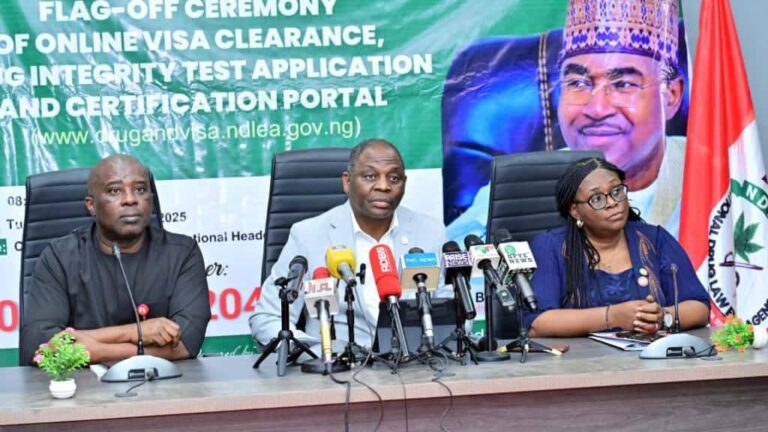
THE National Drug Law Enforcement Agency (NDLEA) has launched a digital platform designed to simplify and automate the processes for obtaining Drug Integrity Test and Visa Clearance Certificates.
The system, known as the Drug Integrity Test and Visa E-Administration System (DITViCAS), aims to eliminate manual bottlenecks, enhance transparency, and support the national fight against substance abuse and illicit drug trafficking.
The platform was unveiled on Tuesday, October 21, 2025, at the NDLEA headquarters in Abuja. Speaking at the event, the Chairman and Chief Executive Officer of the agency, Mohamed Buba Marwa, represented by the agency’s secretary, Shadrach Haruna, described the innovation as “a paradigm shift in the fight against the scourge of substance abuse and illicit drug trafficking.”
Marwa said the digital system was developed in line with the renewed hope agenda of President Bola Ahmed Tinubu, reflecting NDLEA’s determination to combine enforcement with technology-driven efficiency.
He explained that the portal would streamline the process of obtaining drug test certificates and visa clearance documents, which had previously been slowed by paperwork, long waiting times, and manual verification.
“With the flag-off of the Online Visa Clearance Portal today, we are bringing an end to those bottlenecks. The system delivers automation across all processes and operations associated with the administration of the Drug Integrity Test and Visa Clearance,” Marwa stated.
According to him, applicants can log on to www.drugandvisa.ndlea.gov.ng, create an account, and apply for either a drug integrity test or visa clearance.
He said applicants could then select a convenient time and location for the test without the need for long physical visits.
Once the desk officer inputs the test result into the system, the applicant’s certificate is generated immediately. For visa clearance requests, the process is expected to be completed within three to seven days.
The NDLEA boss said private medical facilities would be accredited to serve as test centres, and institutions, organisations, and individuals, including parents and prospective couples, could also use the platform to conduct tests seamlessly.
He added that the online system integrated background check protocols that would help detect false information and prevent certificate forgery.
Marwa stressed that the drug integrity test was designed as a preventive rather than punitive measure.
“It serves as an early-warning system to help individuals who may be experimenting with drugs to seek intervention and rehabilitation before dependence sets in,” he said.
He noted that the initiative complemented NDLEA’s broader strategy for drug demand and supply reduction and aligned with its War Against Drug Abuse (WADA) campaign.
The new system will also help Nigeria maintain its international reputation by ensuring that only individuals who meet drug-free standards are cleared for travel. Marwa said it would also help in curbing the use of illicit substances among students, employees, and travellers, while strengthening NDLEA’s data-driven approach to public service.
ALONG the Nigeria–Benin border at Idiroko, in Ogun State’s Ipokia Local Government Area, Customs and Police officers line the main road, demanding bribes from smugglers. Yet, beyond their checkpoints, more than a dozen illegal routes linking both countries remain unguarded. Through these unmanned paths, vehicles, goods, and people move freely, a practice that has become routine along the border, The ICIR reports.
There are currently more than 40 checkpoints between Owode and Ajegunle along the Idiroko–Benin Republic border. According to the reporter’s observations, these checkpoints are used to monitor the movement of vehicles and goods, but are also sites for extorting bribes and facilitating smuggling.
In scenes similar to brazen extortion by motor park touts, Customs and Police officers along the border compel motorists and passengers to pay bribes, while defaulters are made to park by the roadside for a search that attracts higher charges. These payments are not receipted.
With scores of crumpled naira notes taken as bribes stuffed in their pockets, the officers wield dozens of locally made spiked barriers, used to order motorists to a halt and puncture the tyres of vehicles that attempt to speed past. There are also other barriers, including dozens of used vehicle tyres and woods.
Other officers along the border include those of the Nigeria Immigration Service (NIS), the Federal Road Safety Corps (FRSC), the National Drug Law Enforcement Agency (NDLEA), and the Ogun State Vehicle Inspection, whom motorists also accused of taking bribes, but not as much as their counterparts in the Police and Customs.
Customs and Police officers make up the majority of personnel stationed at the checkpoints. While Police officers often collect bribes directly from smugglers and other motorists, Customs officials tend to operate more subtly; employing so-called “camp boys’” to collect the money on their behalf. Some uniformed officers also openly demand “settlements” from smugglers and motorists.
Camp boys have almost the same population as the Customs officers, making the checkpoints a breeding ground for extortion rackets. The officers and camp boys openly demand ‘settlement’ from motorists and smugglers and force uncooperative targets to a halt. This is despite the warning by the Customs Comptroller-General, Bashir Adeniyi, that it is illegal for officers to engage camp boys for any activity along Nigerian borders.
The officers and camp boys have different ways of demanding bribes. These include “Where is my money?”, “Will you not settle me?”, “Don’t go with my money”, “Settle me or else…” Most drivers along the route already know the rule. They hardly argue if they have some goods in their vehicles. They willingly dole out the N100 or N200 notes to the officers. However, they can pay these amounts in more than 20 checkpoints, depending on how familiar they are with the officers.
Despite their large number on the road, the Customs spokesperson in the state, Chado Zakari, told The ICIR that the Customs Police always arrested the camp boys.
He said, “There are Customs Police on the road who arrest camp boys. Any camp boy they find on this road, they should be arrested.”
Several motorists interviewed by the reporter queried how possible it could be for the Customs to arrest the camp boys it engages on the road.
Vehicles, rice, petrol and palm oil are the most smuggled products along the border. They attract the highest bribes. While petrol is transported in cars and trucks inside jerry cans, smugglers keep bags of rice under vehicle seats and boots. Others share the product into different small bags to ‘deceive’ the officers who already understand the game. No bag escapes Customs’ searchlight along the border. Even if the bag contains a kilogramme of rice, the owners must pay some bribe for it.
The untarred road (where motorcycles are) from Ajegunle to Bebe community in Benin Republic
To enable them to carry more goods than their sizes could take, motorists raise their vehicles with big springs. With this, they can successfully keep bags of rice under the vehicle. The Customs is aware of this trick; and its officers pass the product after taking bribe.
Customs officers and camp boys collect kickback on any rice spotted, even if it’s a kilogramme. The general belief in the area is that every rice is a product of smuggling. The same rule applies to anyone carrying a keg of petrol. The reporter noted that rice retailers in Nigerian communities around the border prefer going to Benin to buy rice in small quantity because despite the bribes they pay, they will still make more gain than when they buy the product in Nigeria and sell.
Because of the delays caused by bribe payments at checkpoints, some commercial drivers don’t allow passengers with any form of goods in their vehicles, especially those plying Owode and Idiroko communities.
The reporter also observed that commercial drivers have a way of reducing the bribes they pay the police officers. They pay a fixed amount in the early hours of every day, with which they obtain a code. The code guarantees them freedom from making any further payment to Police officers along the route for the rest of the day.
Officers and camp boys file along the border from Owode, Oke-Odan, Ihunbo, Oko-Eye, Ilase, Ogosa, and Ajegunle (before Idiroko). While Customs deploy its officers from Idiroko, police officers emerge from various police posts in communities along the border.
The reporter travelled from Idiroko to Owode six times between Sunday, September 7, and Friday, September 12, to get a clear view of activities along the border.
Motorists on the route groan over the money they lose to the officers as bribes. They claim to be helpless and see the practice as a norm. Several drivers interviewed said the border belonged to the Customs, and they must accept whatever demand its officers made of them.
The ICIR noted that three parties make smuggling thrive at the border; The people who own the smuggled goods, the motorists who convey them to their destinations, and border officials who allow the goods to pass after receiving kickbacks.
Products smuggled at Idiroko, Ajegunle
Major products smuggled through the border are petrol, rice, palm oil, vehicles, palm kernel, frozen foods, and beverages. Nigeria’s major exports to Benin are petrol, beverages, and beer. Dozens of trucks move petrol in jerry cans from Nigeria to the border daily, especially at night. The petrol is kept in thousands of yellow 25-litre jerry cans used for selling vegetable oil and palm oil in Nigeria. The petrol, stored at various warehouses in Ajegunle and Idiroko, finds its way to the Benin Republic through illegal routes linking the two countries, including Bebe and Igolo towns. On their return journey to Nigeria, the trucks come with similar kegs of palm oil from Benin.
A truck loaded with goods and parked at Idiroko. (Note: This picture serves illustrative purpose only. The ICIR does not claim the vehicle is used for smuggling)
Rice, vehicles and frozen foods are also transported from Benin to Nigeria. They are cheaper in Benin. The reporter observed scores of vehicles at Idiroko without number plates. Many of them are displayed for sale at car lots. Some are also hidden at mechanic workshops as if they are for repairs.
The ICIR noted that while communities on the Nigerian side of the border are cautious with the sale of rice in bags, the products are openly displayed in large quantities in communities in the Benin part of the border.
The ICIR reports that illegal routes along Idiroko are just a few of unprotected borders in Nigeria. In 2022, the former Chief of Defence Staff (CDS), Lucky Irabor, said northern Nigeria alone had 137 unprotected borders out of the 261 approved by the Federal Government.
“There are about 364 approved international border points in Nigeria, with about 261 in the North-East and North-West regions. Out of this, only 124 are manned, leaving the remaining 137 unmanned by security agencies,” Irabor said.
Price differences in major products smuggled between Nigeria and Benin
The price of petrol in Benin as of September was XOF 695.00 per litre. This amounted to 1.25 US dollars. Since one XOF (or CFA) equalled N2.66, a litre of petrol in the Benin Republic was N1,800 when converted to the Nigerian naira. Therefore, a litre of petrol sold for N1,800 in Benin, while it was just about half of that price in Nigeria N900 – N960. Residents in communities along the border said this accounted for the reason the product is the most smuggled from Nigeria to Benin through the illegal routes.
A report by The ICIR on smuggling activities along the Saki-Okerete-Benin border in June this year compared the prices of commodities smuggled between the two countries.
It showed that a crate of canned malt (24 pieces) was N12,000 in Nigeria, while it was 6,500 CFA in Benin. This amount translated to N17,550 in Nigerian currency. While a can of malt was sold for N700 in Nigeria, it went for 300 CFA (N810) in Benin.
Similarly, a pack of Coca-Cola and Fanta containing twelve 60CL plastic bottles was sold for N5,000 each in Nigeria. Each of the bottles went for N500. In Benin, it sold for 2,500 CFA per pack (N6,750), and a bottle went for 250 CFA (N675). Findings by the reporter while carrying out the latest investigation showed the prices had yet to change.
While Nigerians dealing in petrol smile to their banks because of the huge profits they make, their counterparts in Benin are happier, they sell more products to Nigeria.
The reporter found that while a bag of rice sold for about 15,400 CFA (N40,000) in Bebe in Benin Republic, it was between N45,000 and N48,000 in Idiroko. Meanwhile, the product sold for nearly N60,000 (CFA 23,136) in Lagos State.
A motorcycle with kegs of petrol at Idiroko
Many warehouses in Idiroko
Idiroko hosts several warehouses. Residents interviewed confirmed that many of them are operated by smugglers. There are also big shops selling goods and other products in the town. Buyers come from Lagos, Ogun States, and the Benin Republic. Goods at Idiroko are cheaper than those sold in most parts of Ogun and Lagos states.
“The Customs are aware of the warehouses. You can see that some of them are in hidden places that people cannot easily suspect. Once the Customs are settled by the operators, business will continue.
“The Customs used to bombard some of the warehouses and whisk goods away; they no longer do that,” one of the Idiroko residents who pleaded anonymity for fear of a threat to his life said.
This claim was confirmed by the Customs spokesperson in the state. He told The ICIR that the new Customs Act (2023) barred officers from storming shops, warehouses and markets to confiscate goods.
He also averred that many of the smugglers operate at night when Customs officers could not match their strength.
“One thing we discover on this side is that once you block this place, they will open another place. They are always ahead. They think faster. They also have informants… They are highly connected. They buy phones for people who give them information about our activities.”
Speaking on multiple illegal routes along the border, he said it’s a general problem in the country.
What you should know about Idiroko
Idiroko is a vast town surrounded by Ajegunle in Nigeria and Igolo and Bebe in the Benin Republic. The communities are interlinked – there is no physical boundary between them, except the official border.
A good two-lane road links Ogun State from Owode town to Idiroko. The distance between the two towns is about 32 kilometres. The impacts of economic activities along the border are clearly seen in Owode, where a major market operated every five days attracts large traders.
The neighbouring towns to Idiroko on the Nigerian side are Owode, Ilase, Ogosa, Ajegunle, Idiroko, Ibatefin, Abule Teacher, Aferiku, and Idologun. Those in Benin are Bebe, Igolo, Akaja, and Ido-Oke. Idiroko is the biggest town on the Nigerian side, while Igolo is the biggest on the Benin side.
Majority of people in Idiroko speak Yoruba language. Residents are mostly traders, dealing in different types of goods sold between Nigeria and Benin.
A striking feature of the town is that it shares buildings (not borders) with communities in Benin Republic.
The Nigeria Customs Service has its command and training college in the town.
A vehicle displayed for sale at Idiroko. (Note: This picture serves illustrative purpose only. The ICIR does not claim it is a product of smuggling)
Idiroko’s economy has collapsed – Residents
Temilade Grace, a businesswoman in the town, said Idiroko’s economy had collapsed. She said that about a decade ago, people came from different parts of Nigeria and Benin to build houses and do business because of the huge prospects for prosperity which commerce bestowed on the town.
Biyi Ademola, a commercial driver, said the town’s economy ‘collapsed’ when the late President Muhammadu Buhari’s government shut the border in 2019. He said things no longer remained the same since then.
“We used to have a big market at the official border post. People from Benin and Nigeria brought their goods. The market was very large, and things were very cheap. People came all the way from the heart of Lagos and Cotonou to trade here. Idiroko was a beehive of activity at the time, and it was a world of its own.
“But the market was closed immediately after Buhari’s government announced the border closure. You can go to the border today, even though the government said it was reopened, you can’t see much happening there. Many of the people you will see there are groundnut sellers and other hawkers from neighbouring communities crossing and paying the border officials. Nothing much is happening there. The real activities now take place along the illegal routes scattered across the communities.”
Idiroko border open with little patronage
The spokesperson for the Customs in Ogun State confirmed that only a few activities take place at the official Idiroko border. He blamed the development on several illegal routes in the area. He said the smugglers usually try to evade paying duty, adding that they were often ahead of the Customs, using guns among other weapons and tactics to have their way.
He said the command generated N189,549,118.00 from January to September 2025. This means that it generated N21.061 million per month. The Idiroko border is the only border opened by the Federal Government in Ogun State. There are at least six other international borders in the state, which are shut by the government.
The ICIR reports that Seme border – a similar border linking Nigeria with the Benin Republic in Lagos State, generated N1.3 billion revenue between January and March 2025.
The revenue grew to N3.5 billion two months later. This translates to N433.3 million and N700 million monthly respectively.
A building with beverages for buyers in Nigeria and Benin Republic (Note: This picture serves illustrative purpose only. The ICIR does not claim they are products of smuggling)
Zakari also said that from January 2025 to September 2025, the Idiroko Command seized 5,664 cannabis sativa (marijuana), 7,052 bags of rice, 50 bales of second-hand clothing, 4,406 litres of petrol, 11 vehicles, 134 pieces of used tyres, and 88 pieces of live cartridges.
ICIR reporter’s travails with Customs officers
A car boarded by this reporter suddenly developed brake failure between Owode and Idiroko on Wednesday, September 10, at a major spot with Customs checkpoints.
Within minutes, several scrunched naira notes had found their ways to the officers’ hands through drivers plying the road. The officers, numbering about 10, forced every motorist to ‘settle’ them. Many of the drivers simply squeezed the notes into the officers’ hands and were allowed to drive on.
Displeased by the development, the reporter hid in the bush to capture the scenes as the owner of the car he boarded battled to fix the brake. Unknown to the reporter, an officer spotted him in the bush and came from behind to grab the phone from him and took it to his colleagues.
All pleas by the reporter to the officers fell on deaf ears, despite identifying himself as a journalist. They told the reporter he was lucky that he was not caught by police officers, whom they said would have killed him.
“You people (journalists) are the ones making us and police officers to lose our jobs when you post us on social media while collecting bribes,” one of them said.
They vowed that they already had the reporter’s picture and would track him anywhere if he did a report against them. Thereafter, they called their head office, which sent gun-wielding officers to arrest the reporter.
He was taken to the Customs Command in Idiroko.
He was first brought to an office, where he was made to face officers who deleted all the pictures taken for this report on his phone. The officers searched every application on the phone, including his Google Photos, trash, and ensured nothing remained on the phone.
He was thereafter taken to another office, where he met a senior legal officer, Okom Ogar, who addressed him and allowed him to go.
Major illegal routes between Nigeria and Benin along Idiroko border
The notable illegal routes are Ogosa-Bebe Road, Ilashe-Itasungba, Ajegunle-Bebe, Bebe Road beside Iko Gateway Grammar School, Second Side Waterside, Igbatefin-Akaja water side, Aseko waterside, Ijofin-Igiri River, Igbao creek, Idosemo creek, Bode Ase creek, and Idosa creek.
While dozens of checkpoints flood the border from Owode to Idiroko, there is no single Customs or any other officer on any of these illegal routes. Rather, the smugglers and communities have their local border officers who monitor every unknown face passing through the routes. For any foreigner to pass through unchecked, they must be in the company of a well-known indigene of the area.
A section of the central part of Idiroko, near Owode Park
What this implies is that every smuggled good that finds its ways into Ajegunle or Idiroko will get to Benin Republic unhindered. The process is the same for smuggled goods from Benin Republic, which make their ways into Ogun and Lagos States after getting ‘clearance’ from the officers on the Idiroko road.
While the Nigerian government makes no significant effort to block the illegal routes, the Beninese Government blocks the routes with heavy stones on its side.
One of the smugglers interviewed said, “We always find our way through despite the blockade.
“What is important is to go through the Nigerian Customs. Once we arrive at Ajegunle or Idiroko, I can bet anyone that we are safe. The Benin Republic needs our petrol. Even though their government does all it can to stop smuggling, we still manage to land our goods in the country.”
After taking the goods through the illegal routes on water and land from Benin, via Igolo and Bebe towns, smugglers bring them to Idiroko and Ajegunle, where they are transported to their final destinations in Nigeria. Goods from Nigeria are also moved into Benin through this process.
What remains baffling is that apart from some routes in Ajegunle linking Nigeria to Bebe town in the Benin Republic, many of the illegal routes are located along the Nigerian Customs offices in Idiroko. The reporter saw many trucks offloading goods, including beverages, at warehouses along the road leading to the Customs offices.
Nigerian government’s failed effort to stop petrol smuggling
The Nigerian government took some decisions to stop petrol smuggling along the border, but they failed to work. One of the decisions was to stop fuel sales 20 kilometres from the border. That is, fuel stations are not allowed to sell petrol 20 kilometres from the border.
From Ilase town to Idiroko, there are up to 20 fuel stations. Only three of them worked as of September. Some smugglers were seen buying the product at Ajilete community, and many of their drums were at Oko-Eye community.
Some trucks with goods parked at Idiroko (Note: This picture serves illustrative purpose only. The ICIR does not claim they are used for smuggling)
Movements across Idiroko border
As claimed by many Idiroko and Ajegunle residents, nothing much happens at the official border. A few vehicles and people go through the border. Many of the people are hawkers and other traders from neighbouring communities in Benin. They pay border officials, including Immigration, Customs and Quarantine officers N200 to cross to Nigeria. They also pay similar charge while returning to their country. The payments are bribes that are never receipted.
The reporter noted that the hawkers don’t return to Benin with the money they make in Nigeria. They use it to buy products they could sell in their country. “If we return to Benin with this money, its value is much lower than our currency. We have to buy something here in Nigeria that we can return home and sell. That’s the only way we can make profit,” one of the hawkers, Julienne Amadou, said. The ICIR reports that as of the first quarter of 2023, the naira was stronger than CFA, trading for N1/1.5 CFA.
The Nigeria Immigration Service said Nigerian and Benin citizens living along border communities are allowed to cross the border of either country to nearby communities because of the cultural ties they have and age-long relationships that have promoted inter-marriage and trading activities among them.
Nigeria’s ties with Benin Republic
Benin Republic is one of Nigeria’s trade partners. According to the Observatory of Economic Complexity (OEC), Benin’s exports to Nigeria have shrunk over the years. “In 2023, the worth of Benin’s export to Nigeria was $21 million. The main products that Benin exported to Nigeria were seed oils ($5.22 million), palm oil ($3.04 million), and large construction vehicles ($2.38 million). Over the past five years, exports from Benin to Nigeria have decreased at an annualised rate of 25 per cent, decreasing from $88.7 million in 2018 to $21 million in 2023.
“In 2023, Nigeria exported $236 million to Benin. The main products that Nigeria exported to Benin were electricity ($91 million), refined petroleum ($62.2 million), and nitrogenous fertilizers ($31.5 million). Over the past five years, exports from Nigeria to Benin have increased at an annualised rate of 5.45 per cent, growing from $181 million in 2018 to $236 million in 2023,” said the OEC.
Police vow to investigate officers engaged in bribery along border
When contacted by over Police officers taking bribes along the Idiroko border, the Police spokesperson in Ogun State, Odutola Omolola, said the Force would use its ‘mechanisms’ to investigate officers involved in the act.
Benin Customs fails to respond to enquiries
The ICIR contacted the Beninese Customs through a mail on September 20. The mail sought its opinion on how the Nigerian government manages the border, and how smuggled goods, especially flammable product like petrol, could be stopped on the illegal borders. It did not respond to the enquiries.
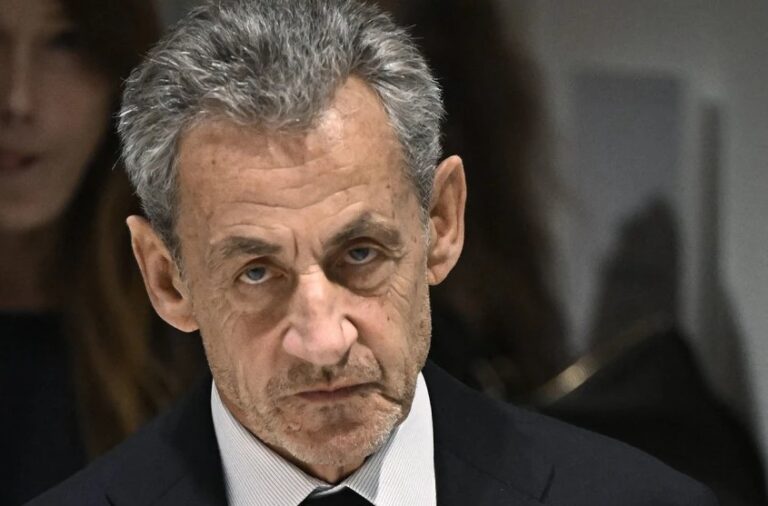
FORMER French President Nicolas Sarkozy has begun serving a five-year prison sentence at La Santé Prison in Paris after being convicted of criminal conspiracy over an alleged plan for late Libyan dictator Muammar Gaddafi to finance his 2007 presidential campaign.
The development marks the first time a post-war French leader and a former head of a European Union state has been sent to prison.
Sarkozy, who served as France’s president from 2007 to 2012, was convicted last month by a Paris court. He was found guilty of conspiring to illegally obtain campaign funds from Gaddafi’s regime to secure his 2007 election victory. The 70-year-old politician maintains his innocence and has filed an appeal against the judgment.
AFP reporters observed Sarkozy leave his Paris home early Tuesday morning, accompanied by his wife, singer Carla Bruni, as supporters gathered outside holding his portraits and chanting “Free Nicolas.” He was later driven under police escort to the La Santé Prison. From inside the facility, inmates were heard shouting “Welcome, Sarkozy!” as he was processed into custody.
In a statement postedon his social media before entering the prison, Sarkozy said, “It is not a former president of the republic being jailed this morning, but an innocent man. I have no doubt the truth will prevail.”
Sarkozy’s lawyer, Christophe Ingrain, confirmed that a motion for his client’s release had been filed immediately after his incarceration. The Paris appeals court is expected to decide within two months whether to grant temporary freedom pending his appeal trial. However, Ingrain noted that the former president was likely to remain behind bars for at least three weeks.
According to prison officials, Sarkozy will be held in solitary confinement for his safety in a nine-square-metre cell with a private shower and toilet. He will have limited communication, restricted to a security-controlled phone line and family visits twice a week.
He told Le Figaro that he had packed family photos, a biography of Jesus, and Alexandre Dumas’ The Count of Monte Cristo, noting that he planned to write a book while in detention.
During his trial, prosecutors accused Sarkozy of entering into what they described as a “Faustian pact” with one of the world’s most notorious dictators. They alleged that in exchange for millions of euros in illegal campaign funds, Sarkozy’s team had promised to help Gaddafi rehabilitate Libya’s image internationally after years of pariah status linked to terrorist bombings in the 1980s.
The court ruled that while prosecutors could not prove Sarkozy directly received or used the Libyan funds, there was sufficient evidence to convict him of criminal conspiracy. He was, however, acquitted of charges of passive corruption, embezzlement of Libyan public funds, and illegal campaign financing.
The verdict followed a series of legal troubles for the former president. In 2021, a French court found him guilty of corruption and influence peddling for attempting to bribe a senior magistrate, Gilbert Azibert, in exchange for confidential information about another investigation into illegal campaign financing from L’Oréal heiress Liliane Bettencourt.
Sarkozy was then handed a one-year prison sentence and a two-year suspended term, which he served under house arrest with an electronic ankle tag.
The 2025 conviction stems from years of investigation into allegations that Gaddafi’s regime secretly funnelled millions into Sarkozy’s 2007 campaign. French investigators believe the agreement was struck in 2005 and that intermediaries facilitated illegal transfers to his associates.
Judge Nathalie Gavarino, who presided over the case, described the evidence as of “exceptional gravity” and warned that Sarkozy’s actions undermined public trust in democratic institutions.
Sarkozy’s imprisonment has sparked mixed reactions across France. A recent Elabe poll shows that six out of ten citizens believe the sentence is fair. However, the former leader still commands loyalty among right-wing supporters, with many describing his conviction as politically motivated.
President Emmanuel Macron defended hosting Sarkozy at the Élysée Palace shortly before his imprisonment, saying it was “normal, on a human level,” to receive one of his predecessors. But opposition figures, including Socialist Party leader Olivier Faure, criticised the visit, saying it could be perceived as undue influence on the judiciary.
Sarkozy is the first French leader to be jailed since Philippe Pétain, the head of France’s collaborationist regime during World War II.
As Sarkozy begins his sentence, his appeal remains pending, and his legal team insists he will “fight to clear his name.”
A MAGISTRATE Court in Kano has ordered two popular TikTok creators, Idris Mai Wushirya and Basira Yar Guda, to get married within 60 days following allegations of producing and sharing ‘indecent’ videos online.
The ruling, delivered by Magistrate Halima Wali on Monday, came after the Kano State Films and Video Censorship Board accused the duo of posting indecent clips that violated the state’s moral and religious codes.
Magistrate Wali instructed the Kano State Hisbah Board to facilitate the marriage process between the two social media personalities, warning that failure to conduct the marriage within the stipulated period would amount to contempt of court.
She also instructed the chairman of the Kano State Films and Video Censorship Board to oversee the execution of the directive.
Idris Mai Wushirya and Basira Yar Guda. Photo credit: Hussaini Ibrahim
The ruling came weeks after the two influencers were arraigned over allegations of producing and sharing obscene content online.
The videos, which trended widely on TikTok and other social media platforms, reportedly featured affectionate scenes between Mai Wushirya and Yar Guda, content the Censorship Board said violated the moral and religious codes guiding public conduct in the state.
Officials of the board maintained that the clips breached provisions of Kano State’s censorship laws, which prohibit the creation and dissemination of sexually suggestive or explicit material.
“Such behaviour undermines the values we stand for and sets a dangerous example for the youth,” an official of the board told the PUNCH.
Mai Wushirya was earlier remanded in a correctional facility after investigators alleged that his skits promoted immoral behaviour and his co-creator, Yar Guda, was likewise interrogated by the board’s enforcement unit before the case was brought to court.
The ICIRreported that Aminu Yahaya Sharif, a 32-year-old musician was handed a death sentence in August, 2020, by an Upper Shari’a Court after was found guilty of blasphemy for making a song that purportedly insulted Prophet Mohammed.
The Supreme Council for Shari’a in Nigeria urged the Kano State Government to ensure the execution of the verdict and the state government immediately accepted the death penalty and said it was not going to waste time to sign the verdict in 30 days.
But the appeal division of the Kano State High Court ordered a retrial of Sharif and also freed 13-year-old Umar Farouq jailed for 10 years for allegedly committing the same offence.
The appeal court noted that the judgement of an upper Sharia court contravened sections 2, 6 and 9 of the administration of Criminal Justice Act
ELECTIONS in Nigeria have often been accompanied by allegations of irregularities, including issues such as ballot snatching and result sheet manipulation, which have posed challenges to the nation’s democratic process. However, in 2015, the Independent National Electoral Commission (INEC) introduced the Smart Card Reader, which sought to verify voters electronically for the first time. It was far from perfect. Machines failed, networks crashed, and officials reverted to manual accreditation in many places. In fact, BusinessDay reported how over 5.8 million people had to without digital accreditation.
Learning from those mistakes, INEC launched the Bimodal Voter Accreditation System (BVAS) in 2021 to replace the card reader. Alongside it came the INEC Result Viewing (IReV) portal, where Nigerians could log on to see polling unit results in real time.
Both systems played significant roles during the 2023 general elections. While some hailed them as milestones in electoral transparency, others criticised them as flawed, particularly after the prolonged delay in uploading the presidential results
With the Anambra governorship election approaching, these two acronyms, BVAS and IReV, are beginning to brew controversies and confusion. To help clear the air, here are six misconceptions about BVAS and IReV.
“BVAS means we now vote electronically”
This is perhaps the most common misunderstanding. This misconception spread during the 2021 Anambra governorship election, where BVAS was first tested. Many voters arrived at polling stations expecting electronic voting, where you press a button and your vote goes directly to a server. But that was not the case.
What then is BVAS meant for? BVAS simply ensures you are who you claim to be before you can vote. The machine verifies your identity by scanning your fingerprints or face to ensure you are not impersonating anybody. Apart from that, it is also used to transmit results to IReV after everyone has voted.
Therefore, for the 2025 Anambra election, you should be prepared for manual voting supported by digital checks.
“If my fingerprint fails, I won’t be able to vote”
This fear is valid but rooted in Nigeria’s long history of faulty machines on election day, especially with their repeated experiences with the Smart Card Reader failures pre-2023. Nigerians still carry that trauma.
However, BVAS has two verification methods: fingerprint and facial recognition. If one fails, INEC says the other steps in. Unfortunately, when both fail, you may be unable to vote.
However, the multi-accreditation mode of BVAS represents a significant improvement over the smart card reader.
“Results are counted and declared on IReV”
Because we have established that BVAS accredits you and IReV lets you see results, many voters may still assume that IReV is a digital collation centre where winners are announced. This is false.
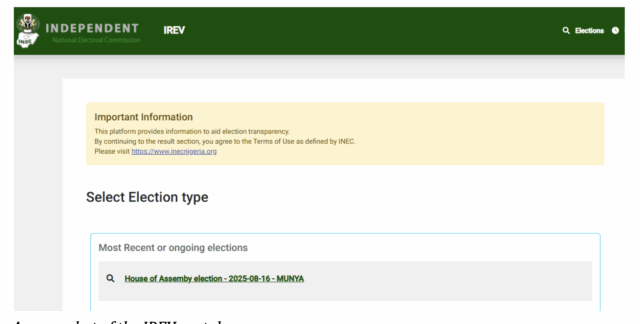
The INEC result viewing portal is more like a public notice board, but in digital form. After polling unit officials count votes and record them on paper, they scan the result sheet and upload it to IReV for everyone to see.
Therefore, it is important for you to understand that IReV does not declare winners. Results are still counted and declared manually at the ward, LGA, and state collation centres, and that has not been replaced.
“Once results are uploaded to IReV, rigging is impossible”
While many expected IReV to eliminate election fraud, the 2023 general elections revealed otherwise. Watchdogs observed discrepancies between some results uploaded on IReV and the figures later announced at collation centres
Some Civil Society Organisations (CSOs) argued that the promise of real-time transparency was undermined. INEC later admitted technical glitches delayed uploads, which further fuelled suspicion.
A screenshot of the IREV portal.
Although uploading results to IReV has made it more difficult to tamper with polling unit outcomes, manipulation remains possible during collation, where figures from hundreds of units are aggregated.
“IReV is for politicians”
IReV was created for everyone in Nigeria, not just politicians, party agents or INEC. As long as you can access a smartphone and the internet, you can monitor uploaded results from different polling units by logging onto the IReV portal.
That means you can view results uploaded on the portal and compare what was uploaded from your unit with what was later announced at collation. By doing this, you are also taking ownership of the election and demanding accountability from people who may want to manipulate results.
“BVAS always works perfectly”
Nigerians who witnessed the 2023 general elections know this is untrue. On the contrary, BVAS was reported to have malfunctioned in several states due to poor connectivity and unskilled officials. In some polling units, accreditation stretched for hours and left voters frustrated.
While INEC insists it has learned lessons and improved its systems, it may not be out of place to expect some form of glitches on election day.
Written & edited by Nigeria Fact-Checkers Coalition (NFC) ahead of the Anambra 2025 election.
VICE President Kashim Shettima has said that the Economic and Financial Crimes Commission (EFCC) recovered assets worth over ₦500 billion and secured about 7,000 convictions in the past two years under the administration of President Bola Tinubu.
Shettima, who represented the President at the opening of the 7th Capacity Building Workshop for Judges and Justices jointly organised by the EFCC and the National Judicial Institute (NJI) in Abuja on Monday, October 20, said the results were achieved due to the administration’s policy of non-interference in the work of anti-graft agencies.
According to Channels TV, Shettima said the EFCC’s progress demonstrated the government’s commitment to strengthening accountability and transparency within public institutions.
“As an administration, we have prioritised public accountability by empowering the anti-corruption agencies and giving them the independence required to perform their statutory roles.
“This enabling environment has yielded impact in the last two years, as the EFCC has recorded over 7,000 convictions and recovered assets worth over ₦500 billion,” Shettima said.
He explained that recovered proceeds from corruption cases were being channelled into development projects and social investment programmes such as the student loan and consumer credit schemes.
“The proceeds of crime are being reinvested into the economy to fund critical social interventions.
“We are also working within the separation of powers to improve the welfare of judicial officers. Judges’ remuneration has been increased, and we remain committed to enhancing their working conditions,” he said.
The vice president reaffirmed that the Tinubu administration would not shield any political ally or official from investigation or prosecution. “There is no person or group who can accuse this administration of protecting political actors. Both the judiciary and anti-corruption agencies have been given freedom to dispense justice without interference,” he added.
Shettima also called on members of the judiciary to demonstrate patriotism and integrity in the discharge of their duties, stressing that corruption affects every part of society.
“Corruption is no respecter of persons,” he said, adding that “Judges are not insulated from its consequences. There are no special hospitals, roads or communities for judges; we all face the same risks from the effects of corruption. It is in the enlightened interest of all Nigerians to join hands to defeat this menace.”
He further urged collaboration among the executive, legislative and judicial arms to consolidate recent gains and deliver an effective anti-corruption framework that supports national development.
While the government celebrates recent achievements, data obtained by The ICIR show that the EFCC’s long-term performance raises concerns about the quality and sustainability of its anti-corruption outcomes.
Between 2019 and 2023, the EFCC investigated 58,165 cases but secured only 10,935 convictions, which is about 19 per cent of all cases investigated. This means that 81 per cent of its probes did not result in convictions, according to EFCC operational statistics obtained by The ICIR.
However, when compared to the 16,115 cases filed in court, the agency achieved a 68 per cent conviction rate, suggesting stronger results only after cases reach judicial determination.
Lagos led as the most active EFCC zone, recording 2,180 convictions between 2019 and 2023, followed by Abuja, Port Harcourt and Kano zones. Sokoto recorded the lowest figures, with only 164 convictions.
The EFCC has faced criticisms for employing aggressive tactics, including arbitrary arrests, raids and intimidation of suspects. The ICIR reported in March 2025 that these methods often violate the fundamental rights of citizens and undermine due process, leading to avoidable case dismissals in court.
Experts interviewed by The ICIR emphasised that the quality of investigations, rather than the quantity of arrests, determined success in anti-corruption efforts.
Senior Policy Analyst at BudgIT, Vahyala Kwaga, noted that the EFCC’s conviction rate would improve if it adhered to global best practices that prioritise intelligence gathering and evidence-based prosecution over publicised arrests.
He urged the agency to increase transparency by documenting and publishing arrest records, reasons for detention, and details of interrogations to ensure accountability.
A public feud between a senator, Ned Nwoko and his wife, actress Regina Daniels, has sparked outrage on social media following mutual allegations of violence and drug abuse.
After a viral video showed Daniels in a confrontation at their home on Saturday, October 18, Nwoko accused her of violence and long-term drug abuse, claiming it had affected her health.
“In Ned Nwoko’s house, I am nothing but, in my house, I am a queen, … what again! I cannot stand the violence. It’s too much! Ned sent his thugs,” the actress could be heard saying in the video.
In response, Nwoko took to his X handle on Sunday, October 19, to release a statement along with a video showing showing damage to his home, alleging that Daniels’ recent actions caused significant destruction and that she was being supplied drugs by two individuals, Sammy and Ann.
“Regina was not always like this. Her current battle with drugs and alcohol abuse is the root of our problem. She must continue her rehabilitation programme, or I fear for her life and safety. Now she has moved to a place where she will have unrestricted access to drugs.
“I have other wives, and none will ever accuse me of violence. Regina is the violent one here, slapping and hitting three staff in the past 48 hours and destroying property, including cars and windows, for no just cause. The truth is, I have set a clear condition for her to accept rehab in Asokoro or outside Nigeria especially Jordan where she will not have access to drugs,” he stated.
He said while he took their child – Moon – to the hospital, a scene of chaos unfolded at home, orchestrated by Sammy, whom he described as her main drug supplier.
Nigerians react
Nigerians have since flooded social media with divided opinions. Some accused Nwoko of using drug allegations to divert attention from domestic-violence claims. Others urged both parties to seek professional help and protect their children from public scandal, while others are calling for both parties to be investigated for domestic violence and drug-related offences.
Ed Jacobs advised the lawmaker to show restraint and dignity in handling his marital issues, stressing that true leadership both at home and in public required responsibility and compassion.
“As a senator of the Federal Republic of Nigeria and as a husband, sir, leadership whether in public office or within the home demands restraint, responsibility, and a commitment to dignity, especially in moments of crisis.
“The situation you described is deeply troubling. If your wife Regina is indeed battling substance abuse, then your first duty is to prioritise her safety and recovery, not to publicly vilify or shame her. Addiction is a medical condition, not a moral failure, and it requires structured intervention, compassion, and confidentiality not public condemnation.
“Let me remind you that domestic crises should be handled privately, with legal and medical professionals involved. Public airing of such matters risks reputational harm to all parties, including innocent children,” he said.
Collins cautioned that the senator’s submission raised possible legal concerns. He noted that if he knew about individuals supplying his wife with illegal drugs, failing to report them could amount to aiding and abetting such crime.
Another user, Maazi Chukwudi, called for the arrest of the senator, Regina and the drug suppliers. He accused the senator of concealing the drugs until his wife’s outburst.
“Sammy, supplier of hard drugs, Ann, supplier of hard drugs” Regina, consumer of hard drugs. What are NDLEA and other law enforcement agencies waiting for to arrest them? Meanwhile, you, as a lawmaker, covered them till it got to social media? You have questions to answer!,” he wrote.
Lord of Charlse wrote, “One salient takeaway is that NDLEA should be investigating and prosecuting some people from this post. But we all know that won’t happen.”
Similarly, Nonso opined that “A senator openly agreeing to his wife doing drugs and as well knows the dealer of the drugs. This one won’t lead anywhere because he’s a senator.”
Meanwhile other commenters referenced the age gap in the marriage, power dynamics, and questioned why these issues were made public with such explicit allegations.
The ICIRreported that Nwoko and Daniels have been married since 2019. Their marriage was a constant subject of discussion by Nigerians due to the age difference between them.
TWO popular digital platforms, Canva and Signal, are among services currently facing major disruptions globally, preventing users from accessing key features and sparking concerns about the increasing frequency of such outages.
Other affected platforms include Roblox, Snapchat, Fortnite, Amazon, Coinbase, Ring, Duolingo, Zoom, and Slack.
The disruption started with Signal, which experienced downtime on October 20, 2025, about an hour before the platform officially acknowledged the outage.
Signal’s president, Meredith Whittaker, later confirmed the incident in a post on social media.
“We’re aware that Signal is down for some people. This appears to be related to a major AWS outage. Stand by,” she wrote.
Canva also issued multiple updates acknowledging widespread errors across its platform. The outage disrupted users’ access to key features, including opening projects, using tools, and performing essential design functions.
Screenshot of Canva’s updates to its users PC: Fatimah Quadri/The ICIR
“We are currently experiencing increased error rates, which are impacting functionality on Canva. Our team is actively investigating the issue and working to restore full access as quickly as possible,” Canva said.
Meanwhile, Amazon Web Services (AWS) announced it had identified a possible root cause behind the high error rates affecting DynamoDB APIs in the US-EAST-1 region. The company said its teams were working on several recovery measures simultaneously to restore normal service.
For context, AWS is Amazon’s cloud computing arm, powering millions of major websites and online platforms worldwide.
COMMUTERS across Nigeria’s capital city were trapped in hours-long gridlock on Monday morning following the massive deployment of security operatives across key entry points into Abuja ahead of the planned #FreeNnamdiKanuNow protest.
Security checkpoints and road barricades mounted by the police, military, and other security agencies caused traffic paralysis along major routes, including Nyanya, Karu, Mararaba, Mpappe, Dei-Dei, Dutse, Bwari, and Kubwa, leaving thousands of residents stranded on their way to work.
From as early as 7a.m., commuters approaching the city centre through Nyanya-Karu axis encountered long queues of vehicles stretching for several kilometres, as officers restricted movement toward Berger, Wuse, Aso Rock, the Federal Secretariat, and the Central Business District, among other areas.
The ICIR gathered that many motorists heading toward the city were forced to turn back, while others parked their vehicles by the roadside as security personnel diverted traffic and tightened patrols around strategic locations such as Eagle Square, Shehu Shagari Way, and the National Assembly complex.
The #FreeNnamdiKanuNow protest, spearheaded by activist Omoyele Sowore, kicked off earlier in the morning to demand the release of the detained leader of the Indigenous People of Biafra (IPOB), Nnamdi Kanu.
Last week, the Inspector General of Police, Kayode Egbetokun, directed officers to enforce existing court orders restricting protests around key government sites. The Nigeria Police Force warned that protests must not take place near Aso Rock Villa and other restricted government zones in the nation’s capital.
Force Public Relations Officer CSP Benjamin Hundeyin said the directive followed a Federal High Court order restraining gatherings around sensitive areas such as the National Assembly Complex, Force Headquarters, Eagle Square, and Shehu Shagari Way.
Hundeyin advised protesters and counter-protest groups to avoid restricted zones and to channel their grievances through lawful and peaceful means.
Meanwhile, as of mid-morning, movement into the Central Area and Three Arms Zone remained partially restricted, with heavy police patrols and armoured vehicles stationed at multiple junctions.
Many residents heading to work have returned home, while others trekked long distances into the city centre.