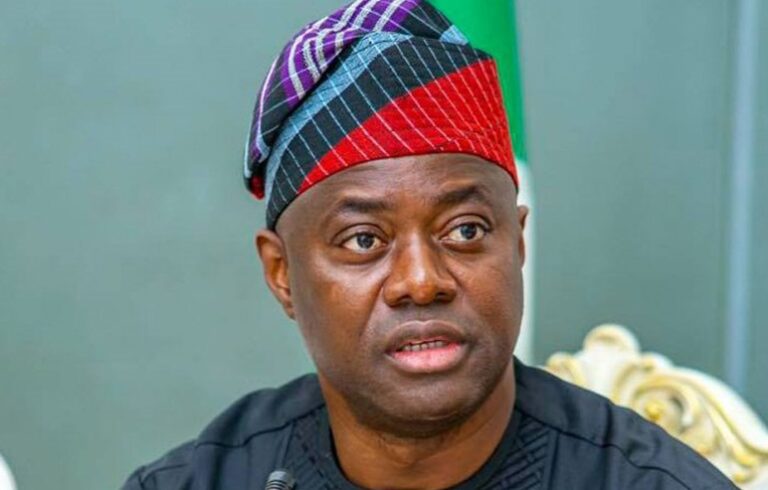
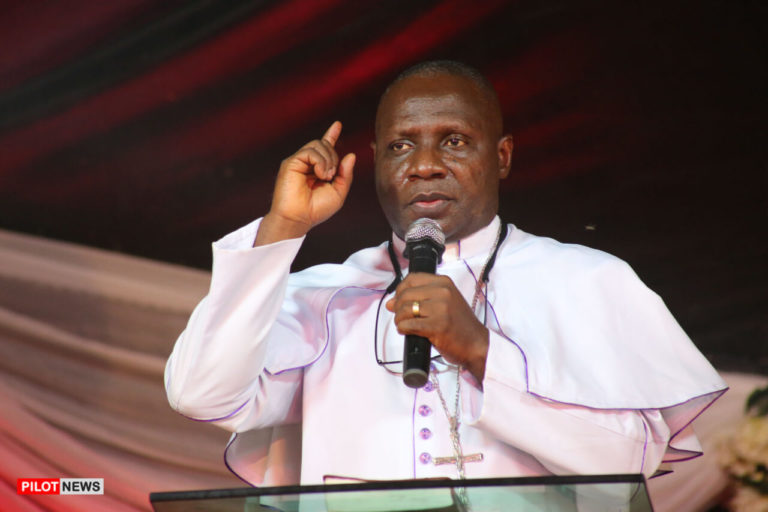
THE Oyo State Governor, Seyi Makinde, has criticised the Federal Government over its failure to provide clear details on the cost of the Lagos-Calabar Coastal Highway, a multi-trillion-naira project approved by President Bola Tinubu.
Speaking at a stakeholders’ engagement on the 2026 budget in Ibadan, on Friday, October 10, Makinde faulted the Minister of Works, David Umahi, for evading questions about the project’s kilometre-by-kilometre cost when asked during a live television interview with Arise TV, Rufai Oseni, earlier in the week.
Makinde said the refusal to disclose details of the project cost raised public concern over transparency and accountability.
“They asked the minister how much the coastal road costs, and he began to dance around the question.
“When we constructed the Oyo-Iseyin road, it was about ten billion naira for thirty-five kilometres — roughly two hundred and thirty-eight million per kilometre. The Iseyin-Ogbomoso road cost forty-three billion naira for seventy-six kilometres, about five hundred million per kilometre. It is simple arithmetic,” Makinde said.
Umahi had clashed with an Arise TV presenter, Oseni, on Tuesday, October 7, after refusing to provide a detailed cost analysis of the project. Umahi maintained that comparing costs per kilometre was misleading since terrain, materials, and engineering designs differ along sections of the route.
“This project has not been fully designed, and the soil report is not yet complete.Each kilometre varies in cost because of the terrain and structures involved, ” Umahi said during the interview.
He said construction was ongoing across five states — Lagos, Ogun, Ondo, Akwa Ibom, and Cross River — and insisted that the government was following proper procedures to ensure value for money.
Coastal Highway remains controversial
The 700-kilometre Lagos-Calabar Coastal Highway has generated intense public debate since its commencement. The ICIR had reported that the project began amid criticisms over the demolition of the Landmark Beach Resort and other businesses worth an estimated two hundred million dollars along the Lagos coastline.
Public pressure forced the government to suspend work along parts of the Lagos corridor after concerns about environmental impact, property rights, and compensation for affected communities. The Works Ministry later announced a redesign of the route to protect telecommunications infrastructure and historical settlements along the Okun-Ajah axis.
The government said the project approval passed through the Bureau of Public Procurement and the Federal Executive Council, but critics, including former vice president Atiku Abubakar and Labour Party presidential candidate Peter Obi, questioned the process and priority of the massive infrastructure project at a time of economic hardship.
Federal Government secures $747 million loan
Despite the controversies surrounding its procurement and bidding processes, the Federal Government on July 2025 announced that it had secured a seven hundred and forty-seven million-dollar syndicated loan to finance the first phase of the highway from Victoria Island to Eleko Village in Lagos.
According to the Ministry of Finance, Deutsche Bank led the financing, with participation from the African Export-Import Bank, ECOWAS Bank for Investment and Development, and other international lenders. The loan, structured under an Engineering, Procurement, Construction, and Financing contract, is being implemented by Hitech Construction Company Limited.
Minister of Finance Wale Edun described the funding as a sign of investor confidence in Nigeria’s economic reforms, while Umahi said it underscored the government’s commitment to completing the coastal highway as a strategic national asset.
The Lagos-Calabar Coastal Highway, estimated at N15 trillion, is expected to link the South-West with the Niger Delta through nine states. The project, being constructed in concrete, is part of the administration’s Renewed Hope Infrastructure Agenda.
However, The ICIR had reported that the project’s procurement process violated open competitive bidding requirements and lacked full disclosure on bidders at the Infrastructure Concession Regulatory Commission portal.
Several stakeholders, including business owners, environmental experts, and economists, have urged the government to balance its infrastructure ambitions with transparency, accountability, and due process to prevent waste and ensure the project’s long-term sustainability.
AS Nigerians join the rest of the world to mark this year’s Mental Health Day, the 2025 theme — “Access to Services: Mental Health in Catastrophes and Emergencies” — resonates deeply with the nation’s realities.
In a country battling conflict, displacement, natural disasters, and long-standing deficits in mental health infrastructure, the day offers a timely opportunity to reflect, reexamine, and recommit to scaling up mental health services for the most vulnerable.
“Mental health awareness in Nigeria is growing, but gaps remain wide,” Saadatu Adamu, founder of Secure the Future Initiative (SDF), told The ICIR.
She said Nigeria is still at that awareness space, hence the need to continue to create awareness is very important stressing that cultural misconception is key.
Adamu argues that stigma, misunderstanding, and lack of literacy around mental health keep many silent.
“When you talk about mental health, people still misinterpret it, forgetting that mental health is our daily drive,” she said.
She called on media, education systems, and community networks to help normalise conversations and remove barriers to seeking care.
In official circles, there is recognition of the need for greater commitment. Grace Ogunleye, Assistant Director, Ministry of Health, described World Mental Health Day as a “vital reminder of the urgent need to make mental health a national priority.”
She emphasised that Nigeria has made strides — including the passage of the National Mental Health Act (2021) and establishment of a national suicide prevention framework — but much work remains to translate law into accessible services.
Ogunleye added that the World Mental Health Day serves as a vital reminder of the urgent need to make mental health a national priority in Nigeria.
“It provides an opportunity to raise awareness, challenge stigma, and advocate for stronger policies and investment in mental,” she stated.
A look at what data says
A stark illustration of Nigeria’s mental health burden comes from the Federal Ministry of Health’s National Mental Health Programme. In May 2025, its coordinator revealed that nearly 30 per cent of Nigerians experience a mental health condition in their lifetime.
He noted that the treatment gap exceeds 80 per cent, meaning the vast majority of those affected do not receive professional support.
Similarly, in June, the United Nations Office on Drugs and Crime (UNODC) said over 3 million Nigerians suffered from drug use disorders.
This was disclosed by the UNODC’s Country Representative, Cheikh Ousman Toure,at the National Drug Law Enforcement Agency (NDLEA) headquarters in Abuja on Wednesday, June 18,2025, while declaring weeklong activities to commemorate this year’s World Drug Day.
He was represented by the Deputy Head of UNODC in Nigeria, Danilo Campisi.
He put the national drug use prevalence at 14.4 per cent, nearly three times the global average. The organisation added that the abuse of opioids, especially tramadol, had reached alarming levels.
According to the UNODC, the situation isnot just a health crisis; it is a development, security, and peace-building concern.
The organisation highlighted the link between drug trafficking and other crimes, including human trafficking, illegal mining, and environmental destruction, noting that the illicit drug trade often finances violent extremist groups
Need for action
Rural areas and marginalised communities are particularly underserved, with few psychiatrists and mental health facilities located in these zones.
This year’s theme draws attention not just to these preexisting gaps but to how they are exacerbated in times of crises.
In Nigeria’s northeast, prolonged conflict has displaced thousands, many of whom carry psychological scars from trauma, grief, loss, and insecurity.
Beyond conflict, Nigeria also faces climate-related disasters like flooding, erosion and seasonal storms that has displaced communities and leave mental health consequences in their wake.
In those moments, experts say, the need for psychological first aid, crisis counselling, and access to ongoing care becomes acute.
But in many affected areas, health facilities are damaged or inaccessible, and trained mental health professionals have been displaced as well
To tackle mental health issues in emergencies, access must include crisis training, mental health literacy programs, and bridging referral systems so that people in distress do not fall through the cracks.
Children, older persons, people with pre-existing mental conditions, women and girls, persons with disabilities, and frontline workers require special attention.
Nigeria’s displacement settings, in particular, call for tailored interventions: for instance, trauma counselling in camps, safe spaces for survivors, child-friendly psychosocial activities, and referral pathways for severe cases.
In urban centres too, crises such as sudden job loss, public health emergencies, or community violence trigger mental stressors. The mental health system must be prepared not only for large-scale disasters but for everyday emergencies.
Hope not enough
There are glimmers of hope. Some nongovernmental actors and private initiatives like the International Red Cross, Secure the Future Foundation and others are piloting community mental health services, peer support models, and digital counselling platforms.
Yet, sustainable progress depends on stronger public sector investment. Nigeria’s mental health allocations remain low. To close the treatment gap, government must do more and infrastructure, training, medicines, supervision, referral networks, and consistent supply chains must improve experts say.
World Mental Health Day 2025 also provides an advocacy entry point. Observers say Media houses, civic groups, religious institutions, and schools can help to promote messages that challenges stigma and misinformation.
Some say the voices of people with experience must be included to show that recovery is possible and help is not shameful.
“On this day, Nigeria must remember that mental health is not a luxury but an integral part to human dignity, social stability, and national development,” an analyst said.
In crisis settings and everyday life alike, dignified mental health care should be viewed as essential infrastructure.
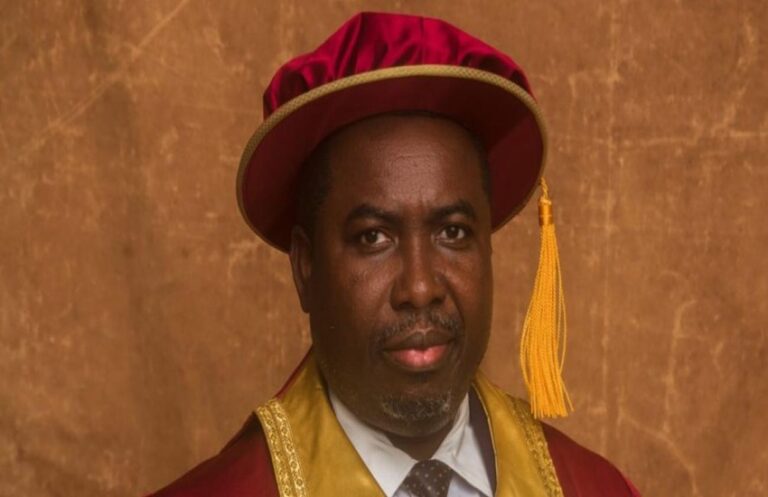
PRESIDENT Bola Tinubu has paid tribute to the late statesman Christopher Kolade, describing him as one of Nigeria’s finest minds who dedicated his life to national service.
In a statement by the State House on Thursday, October 9, Tinubu said he received the news of Kolade’s death with sadness, calling him ‘an inimitable’ broadcaster and ‘boardroom guru’ who was one of ‘Nigeria’s intellectual treasures.’
Kolade, who passed away peacefully on Wednesday, October 8, 2025, at the age of 92, was a distinguished diplomat, academic, and corporate leader.
His family confirmed his passing in a statement on Thursday, October 9, expressing gratitude for his incredible life of faith and service.
“We are thankful for his incredible life of faith and service, and are grateful for God’s abundant blessings,” part of the statement read.
Born on December 28, 1932, in Erin-Oke, Osun State, Kolade reportedly began his career in broadcasting and rose to become Director-General of the Nigerian Broadcasting Corporation. He later served as Chief Executive and Chairman of Cadbury Nigeria Plc, after first joining the company in 1978 as Administration Director and subsequently becoming the Managing Director.
He also represented Nigeria as High Commissioner to the United Kingdom and later contributed to academia as a key figure at the Lagos Business School, where he taught courses in corporate governance, leadership, and conflict management.
He later became the Pro-Chancellor and Chairman of the Governing Council of Pan-Atlantic University and also served as the Chancellor of McPherson University in Ogun State.
Tinubu praised Kolade’s lifelong commitment to transparency and accountability, while also describing him as “a patriot and an uncompromising advocate of good governance.”
The president also commended Kolade’s philanthropic work through the Christopher Kolade Foundation, particularly his support for sickle cell patients and youth education initiatives.
“He served Nigeria dutifully, with honesty and great dedication. From working as a colonial-era education officer to serving as Nigeria’s high commissioner to the United Kingdom and director-general of the Nigerian Broadcasting Corporation, Dr Kolade left ineffaceable stamps of distinction in every endeavour, whether in the boardroom, on panels, or public office.
“I recall his many humanitarian interventions through the Christopher Kolade Foundation, especially his support for sickle cell patients, a cause to which he donated a chunk of his earnings.
“Dr Kolade’s passing is agonising, yet we must celebrate his life and legacy. He lived an exemplary life and immortalised himself in his uncommon service to our nation and humanity,” Tinubu said in a statement.
THE National Council of State has approved the appointment of Joash Ojo Amupitan, a Professor and a senior advocate, as the new Chairman of the Independent National Electoral Commission (INEC), following the completion of Professor Mahmood Yakubu’s ten-year tenure.
The approval came after President Bola Tinubu presented Amupitan’s name during the Council’s meeting held on Thursday, October 9, at the Presidential Villa, Abuja. The announcement was made in a statement by the Special Adviser to the President on Information and Strategy, Bayo Onanuga.
According to the statement, the Council unanimously endorsed Amupitan’s nomination, describing him as a man of integrity and experience. Governor Ahmed Usman Ododo of Kogi State, who attended the meeting, said the nomination was well-deserved and historic, as Amupitan is the first person from Kogi State to be nominated for the position.
Tinubu is expected to forward the nominee’s name to the Senate for confirmation, in line with constitutional provisions.
Amupitan, 58, is a Professor of Law at the University of Jos, Plateau State, where he currently serves as the Deputy Vice-Chancellor (Administration). He hails from Ayetoro Gbede in Ijumu Local Government Area of Kogi State.
A Senior Advocate of Nigeria since 2014, Amupitan has spent over three decades in academia, specialising in Company Law, Law of Evidence, Corporate Governance, and Privatisation Law. He has held several key positions at the University of Jos, including Dean of the Faculty of Law (2008–2014), Chairman of the Committee of Deans and Directors (2012–2014), and Head of the Department of Public Law (2006–2008).
Beyond the university, he serves as the Pro-Chancellor and Chairman of the Governing Council of Joseph Ayo Babalola University in Osun State. He sits on several corporate and educational boards. He has authored several widely used legal texts, including Corporate Governance: Models and Principles and Evidence Law: Theory and Practice in Nigeria.
Born on April 25, 1967, Amupitan studied at Kwara State Polytechnic and the University of Jos, where he obtained his Bachelor’s Law, Master’s and PhD degrees. He was called to the Nigerian Bar in 1988.
His appointment follows the exit of Mahmood Yakubu, who handed over to National Commissioner May Agbamuche-Mbu on October 7 after completing his second term. Yakubu, appointed in 2015 and reappointed in 2020, oversaw two general elections and several off-cycle polls.
Under Yakubu, INEC introduced key technological reforms, including the Bimodal Voter Accreditation System (BVAS) and the INEC Result Viewing (IReV) portal, aimed at enhancing election transparency. However, the 2023 general elections drew widespread criticism from civil society groups and election observers over challenges in result transmission and logistical lapses.
In a previous report, The ICIR reported that despite the commission’s reforms, many Nigerians expressed concerns about electoral accountability, voter suppression, and the lack of effective prosecution of electoral offenders. The report highlighted how institutional weaknesses and political interference continue to undermine confidence in the electoral process.
THE Senior Staff Association of Nigerian Universities (SSANU) and the Non-Academic Staff Union of Educational and Associated Institutions (NASU), under the Joint Action Committee (JAC), on Thursday, held a nationwide protest to demand the immediate implementation of long-standing agreements reached with the Federal Government.
The demonstration, which took place at the Yakubu Gowon University (formerly the University of Abuja), was simultaneously held across various university campuses nationwide.
According to reports, the unions held protests in Abuja, Lagos and Kwara state.
The protest followed Wednesday’s emergency branch congresses across campuses after both unions directed their members to mobilise for what they described as a “massive one-day protest” against the government’s inaction.
In a circular dated October 6, titled “Commencement of Protest Actions” and jointly signed by NASU General Secretary, Peters Adeyemi, and SSANU National President, Mohammed Ibrahim, the unions had directed all branches in federal and state-owned universities to fully participate in the action.
According to the circular, the decision followed a series of unproductive meetings with the Joint Consultative Committee set up by the Minister of Education to address their demands. The committee, which met twice, on September 19 and October 6, 2025, failed to achieve any significant progress despite extensions of previous ultimatums.
The unions said they had initially issued a seven-day strike notice on September 15, which was later extended by two weeks, but no resolution was reached by the October 6 deadline.
At the Abuja protest venue, SSANU Chairman of Yakubu Gowon University, Comrade Nurudeen Yusuf, and NASU Chairperson, Sadiya Ibrahim Hassan, accused the government of neglect, insincerity, and breaching collective agreements since 2022.
Yusuf, while addressing journalists, said the protest became necessary after “several appeals, warnings, and ultimatums” to the government were ignored.
“This gathering aims to shed light on the escalating crisis in the university sector impacting our members. Regrettably, the government’s unfulfilled promises have necessitated this public statement to caution all stakeholders in our universities and inter-university centres, as the status quo is unsustainable for our educational system due to the government’s insincerity about the plight of members of NASU and SSANU,” Yusuf was quoted to have said.
NASU Chairperson, Sadiya Hassan, criticised the government’s approach of setting up new committees instead of implementing existing recommendations, saying it had deepened mistrust between both sides.
“The last meeting we had with the government was on October 6, following an earlier one on September 22, instead of addressing the issues, another committee was set up called the Expanded Yayale Ahmed Committee.
“These issues do not require new committees. The government already has all the facts and figures. The first step should be to release the withheld salaries and arrears as a show of good faith,” she explained.
Demands
The unions’ demands include what they described as the unfair sharing of the ₦50 billion earned allowances, prolonged delays in renegotiating the 2009 FGN/NASU/SSANU agreements, and the non-payment of two months’ outstanding salaries.
They also pointed to unpaid arrears from the 25 and 35 per cent salary increments, along with the government’s failure to remit third-party deductions for May and June 2022.
Others are non-payment of the two months’ withheld salaries from 2022, failure to remit third-party deductions, and the alleged government’s neglect of the welfare of non-teaching university staff.
Nigerian universities face shutdown
The development came amid growing discontent within the academic community. Earlier in the week, on October 6, Academic Staff Union of Universities (ASUU) president Chris Piwuna, in a letter to all branches, mobilised branches for strike as its ultimatum to the government enters its final week.
He noted that despite earlier engagements with the Ministers of Labour and Education, there had been no meaningful progress on issues such as the implementation of the renegotiated 2009 FGN-ASUU agreement, revitalisation funding for public universities, and the payment of earned academic allowances and withheld salaries.
ASUU warned that failure by the government to act could trigger the first industrial action under President Bola Tinubu’s administration.
THE Federal Capital Territory (FCT) Police Command has arrested 12 suspects in connection with the killing of Arise News anchor and producer, Somtochukwu Christelle Maduagwu, and a security guard, Barnabas Danlami, during a robbery attack in Abuja.
According to Arise TV, in a post on its website on Thursday, October 9, the suspects were apprehended following a coordinated operation by the Scorpion Squad, led by Assistant Commissioner of Police (ACP) Victor Godfrey. The arrests were based on digital and reconstructive intelligence provided by Giga Forensics, a subsidiary of EIB Stratoc.
Maduagwu, 29, was killed in the early hours of September 29, 2025, during a robbery at her residence in the Gishiri area of Katampe District. She was found unconscious after reportedly jumping from the third floor of her apartment in an attempt to escape the armed men. Police officers responding to a distress call rushed her to the Maitama General Hospital, where she was confirmed dead.
Arise TV, in the post, said four suspects — Shamsudeen Hassan, Abubakar Alkamu, Sani Sirajo, and one other — were first apprehended through the tracking of phones stolen from the apartment. Eight other suspects were later arrested while allegedly planning another robbery in Maitama.
Those arrested include Hassan Isah, Abubakar Alkamu (alias Abba), Sani Sirajo (alias Dan Borume), Mashkur Jamilu, Suleiman Badamasi (alias Dan-Sule), Abdul Salam Saleh, Zaharadeen Muhammad, Musa Adamu, Sumayya Mohammed, Isah Abdulrahman, and Musa Umar.
During interrogation, Hassan confessed to shooting the security guard while trying to gain access to the building. Sirajo claimed he attempted to hold Maduagwu as she fell but could not. The suspects also confessed to sharing ₦200,000 each from the proceeds of the robbery.
Items recovered from them included a fabricated AK-47 rifle, 36 rounds of live ammunition, a pump-action gun, a locally made pistol, two cartridges, four mobile phones belonging to the victims, knives, a cutlass, and nine torchlights.
The report said investigations are ongoing to apprehend other fleeing members of the gang. Commissioner Adewale commended the operatives for their swift action and assured residents that the command would sustain its operations against violent crime in the territory.
An effort to get confirmation of the details from the FCT Police Command was unsuccessful as WhatsApp messages sent to its spokesperson, Josephine Adeh, were not responded to.
Arise News, in an earlier statement, described Maduagwu as “a vibrant voice that engaged and connected with our viewers,” adding that her death was “a devastating loss to the media community.”
Her killing sparked outrage and renewed fears about worsening insecurity in the nation’s capital.
Security analysts who spoke with The ICIR said Maduagwu’s death underscores the need for stronger intelligence-led policing and community collaboration to tackle the growing wave of violent crimes in the Federal Capital Territory.
In a report published by The ICIR, residents of Abuja’s suburbs such as Katampe and Mpape complained of recurring armed robberies, kidnappings, and “one-chance” attacks despite official claims of improved security.
The report documented multiple incidents, including the murders of Freda Arnong and Greatness Olorunfemi in similar attacks on commuters.
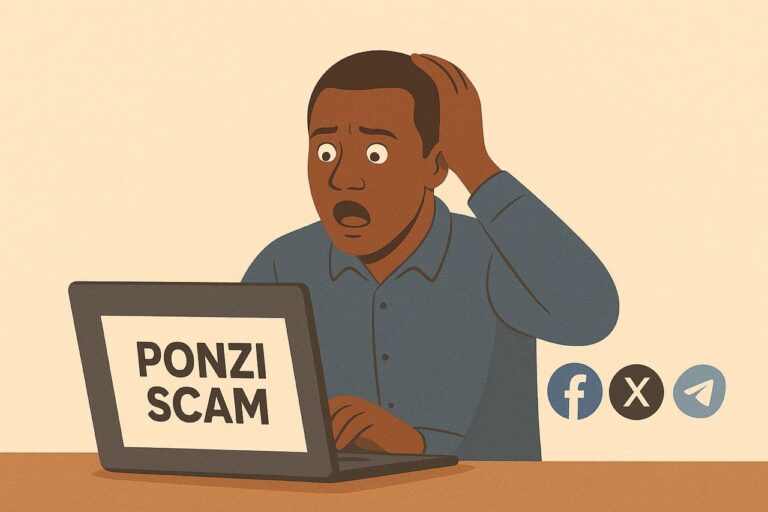
ARTIFICIAL intelligence has become the latest bait in a growing wave of Ponzi schemes targeting Nigerians. In this investigation, The ICIR’s Nurudeen Akewushola uncovers how fraudsters are exploiting the illusion of AI to lure unsuspecting citizens and breathe new life into old Ponzi schemes.
For a long time, Chibuzor David, 28, lived modestly on the proceeds of his small Point of Sale (POS) shop in Ikorodu, a suburb of Nigeria’s commercial city, Lagos. Then his girlfriend introduced him to an investment platform where all he needed to do was deposit money and watch ‘his money work for him’.
The Crypto Bridge Exchange (CBEX), she told him, was an Artificial Intelligence (AI)-powered trading system that promised a 100 per cent return on investment in just thirty days. Tempted, David started with ₦150,000 in February, and as his earnings grew, he kept adding the same amount every week, hoping for bigger profits.
One morning in April, the platform shut down, taking with it 1.3 trillion naira($1.2 billion) in investor funds, including David’s expected 10 million naira profit.
At first, he heard it was only a temporary glitch that would be fixed in no time. However, fixing it was taking longer, and despondency spread from one CBEX WhatsApp group to another. He and other impatient CBEX investors began asking questions, but there were no satisfying answers. Finally, it dawned that they had fallen for a classic Ponzi scheme.
“I was so sad,” he said, but quickly moved on. His girlfriend couldn’t. She had invested way more money in the scheme and was devastated by the loss.
“It was money she really worked hard for,” David explained, adding: “When you’re investing, you think of the time, the energy, and the work you put in to make that money. Losing it like that is painful.”
The despair didn’t stop at David and his girlfriend’s doorstep. For days in April, thousands of CBEX investors took to social media to lament. Others wailed on the streets and on social media. In Ibadan, angry investors stormed the CBEX office, destroyed the premises and looted properties.
Drawn into the investment scheme for the daily earnings and impressive 10 per cent referral bonus, they had all invested their life savings, and it has now vanished.
David said he didn’t immediately believe in the scheme, but his girlfriend’s explanation was convincing.
Unlike previous schemes, CBEX had a sophisticated plan, riding on the AI wave and touting itself as using AI for smart trading that guarantees high returns for investors.
The interface of the CBEX app was easy to navigate, he explained. Twice a day – in the afternoon and at night – the platform released notifications on its app and WhatsApp groups for users to log in and participate in simple tasks that looked like games. Once David accepted the instructions, his wallet reflected the profits within 15 to 20 minutes.
“It felt easy, you just click, wait, and see the money appear,” he said.
When the scheme collapsed, the organisers resorted to an AI-generated video (archived here) to reassure investors that their money was safe. But it was too late — their modus operandi had already been exposed, authorities had declared it a Ponzi scheme, and a manhunt was underway.
Nigeria’s evergreen Ponzi industry
Following the collapse, a familiar conversation began across Nigerian social media forums, newspaper platforms, and breakfast shows about why Ponzi schemes continue to sweep away people’s money.
In the last few years, Nigerians have lost trillions of naira to several fraudulent investment schemes. As one collapses, another one sprouts almost in no time.
Since 2016, when the most notorious Mavrodi Mundial Movement Ponzi scheme (MMM Nigeria) collapsed with N18 billion($12 million), many more like Inksnation, Loom, Racksterli, and Twinkas have emerged and drained millions from the Nigerian masses under the guise of investment schemes.
Although they became popular in the mid-2010s, Ponzi schemes have a long history of scamming Nigerians of their money, and they have strikingly similar tactics: invest and watch your money grow. They also offer mouth-watering referral bonuses, which the schemes always depended on.
For instance, MMM and CBEX offered 10 per cent referral bonuses. To maximise these bonuses, participants often register multiple accounts for themselves using their referral links.
Photo collage of Nigerians in tears after losing millions to CBEX. Photo Source: Punch
Ponzi schemes are illegal under Nigerian laws. The Investment and Securities Act (ISA) 2025, which repealed the ISA 2007, grants the Securities and Exchange Commission (SEC) oversight powers over digital assets and imposes stiffer penalties on promoters of fraudulent schemes, which include a minimum fine of ₦20 million, a 10-year prison term, or both.
Despite this, enforcement remains reactive. Regulatory agencies such as the SEC and the Economic and Financial Crimes Commission (EFCC) typically intervene only after platforms have collapsed and victims are stranded. But Ponzi operators adapt easily, each time exploiting lax regulations and loopholes in laws. Previous SEC guidelines and arrests over the years have had little deterring effect.
To combat unregistered investment operators and clamp down on Ponzi scheme activities, the Director-General of SEC, Emomotimi Agama, said there were plans to launch an Unstructured Supplementary Service Data (USSD) code that will enable Nigerians to verify the authenticity of capital market operators.
“The SEC is leaving no stone unturned in ensuring that Nigerians have the right information to make wise investment decisions,” he said.
Experts said the widespread financial illiteracy, lax regulation, peer pressure, economic hardship, and greed fuel Nigerians’ susceptibility to Ponzi organisations.
With more than 100 million Nigerians living in poverty, according to the National Bureau of Statistics (NBS), conventional routes of economic mobility such as stable jobs, affordable loans, or social safety nets remain out of reach for many.
Ponzi schemes combine aggressive advertising, social media hype, referral incentives, and short-term payouts to build trust before collapsing.
“Any investment in Nigeria that promises to double your money in 30 days, or offers interest rates far above inflation, is a scam,” said Mayowa Tijani, the Director of Projects at TheCable.
Tijani, who also researches artificial intelligence, noted that this desperation makes Nigerians, especially vulnerable, to the lure of Ponzi schemes, which promise fast and outsized returns but inevitably end in ruin.
AI enters Ponzi game
In February, popular Nigerian social media influencer, Ola of Lagos, introduced his over 7 million followers across Facebook, Instagram and TikTok to Squared Options, a new investment platform that promised multiple returns.
“Join @squaredoptions and get VIP signals 100% FREE—but only for a limited time!,” he posted, asking interested users to follow a Telegram group. “No experience? No wahala! There’s a full guide to help you use the signals like a pro.”
Ola of Lagos’ post
The post quickly garnered over 194,000 likes and more than 3,000 comments on Instagram alone.
“My babe don cash out with Ai, stop playing,” Ola claimed.
Unknown to his followers, what Ola of Lagos just introduced them to was another ‘AI-powered’ Ponzi Scheme.
Since AI became a buzzword for smart systems in Nigeria, Ponzi operators have co-opted it into their operations.
In Nigeria, the attraction of AI itself is a psychological lever. Many view it as cutting-edge technology associated with innovation and financial opportunity. As a result, orchestrators of Ponzi schemes and their promoters exploit this buzzword, rebranding age-old Ponzi structures as “AI-driven trading,” “AI-powered crypto arbitrage,” or “machine learning wealth platforms.” This language resonates with the aspirations of a digitally curious yet economically vulnerable population.
While many have heard of AI, most do not know how it works or its capabilities. Using this naivety, Ponzi scheme operators have used the illusion to create faux credibility for themselves.
The scammers are not necessarily developing ground-breaking AI models; instead, they are repurposing existing generative AI tools to polish their deception, like AI-generated videos of non-existent beneficiaries and the simulation of endorsements by public figures like politicians, journalists and celebrities to lend an illusion of credibility.
In CBEX, for instance, AI-powered dashboards show faux trading simulations and live trading activities using algorithmic precision that convinces subscribers.
Inside Squared Options
Following Ola of Lagos’s Telegram link, this reporter signed up on the platform to test how the scheme operates.
The group welcomes new users with a bold promise splashed across the page: “Get Access to Our VIP AI – Follow These Steps!”
Squared Options Telegram Channel
The first requirement was to open a trading account through a referral link on another platform called IQ Option, after which users were instructed to fund it with a minimum of $20. The deposit, the scheme claimed, would unlock access to another Telegram group where “AI-forwarded trades” would be shared daily.
With $100, investors were told they would gain entry into another site called SquaredOptions.com, complete with live streaming and what the administrators described as the “full AI signal experience.”
At $500 and above, the offers became even more ambitious: SMS alerts, VIP web and Telegram access, and what they marketed as Sync AI — a supposedly automated system that traded on behalf of users. The entire sales pitch revolved around the illusion of artificial intelligence doing the work while investors simply watched their money grow.
Going by Nigerian laws, any company into trading is mandated to register with the SEC. However, SquaredOptions is not listed on the SEC’s Company Verification Portal, created to help members of the public check whether an investment company, fund manager, broker, or capital market operator is registered and licensed to operate legally in Nigeria.
Squared Options Advert
Records obtained from WHOIS, a public database of domain registration information, show that the domain name squaredoptions.com is registered with Namecheap, Inc., a U.S.-based domain registrar headquartered in Los Angeles, California. However, the details of the actual registrant have been hidden through a privacy service provided by Withheld for Privacy ehf, a company based in Reykjavik, Iceland. This layer of anonymity is usually deployed by webmasters to mask the actual individuals or organisations behind a website, in this case, Squared Options.
The records reveal that the domain was only registered on January 24, 2025, and is set to expire in January 2026. The short registration window and the deliberate concealment of ownership details are typical red flags associated with fraudulent online investment platforms.
Meanwhile, platforms like Quotex, Pocket Option and IQ Option, which have been flagged in many countries, including Nigeria, are also involved as brokers in this scheme.
Quoted, Pocket Options, IQ options being flaunted on the Squared Options website
When ‘AI-generated humans’ run a company
In June, a YouTube advertisement launched, targeting Nigerians.
“Good day, Crypto Enthusiasts,” said an AI-generated presenter.
Screenshot of QuantumAI advert on YouTube
Dressed in a shirt and an over-used false ‘African accent’, he encouraged people to join Quantum AI, another AI-powered auto trading tool that helps refine strategies and gain insights.
“This AI trading assistant is an absolute game-changer,” the video said, encouraging viewers to get started with a ₦420,000 deposit.
Quantum AI promises lightning-fast data processing, pattern recognition, and smart trading decisions across assets like cryptocurrencies, stocks, and forex.
According to its creators, Quantum AI is designed for beginners who want an easy-to-use automated trading tool, experienced traders looking for AI-driven insights to refine their strategies and investors who want exposure to multiple markets with minimal effort. Many advisors also posted a video like this one on YouTube advising Nigerians to invest.
Quantum AI website
The platform claims it can manage real-time market fluctuations with precision, allowing traders to make smarter decisions.
Despite these assurances, it has been linked to several high-profile scams. The Financial Conduct Authority has also flagged the platform. Videos and images falsely portraying figures such as Elon Musk have been used to promote it.
However, the biggest scandal that would turn out is that all members of the team listed on its websites are not real humans. The names, profiles and headshots plastered on the website were AI-generated. This includes the Chief Executive Officer (CEO), Liam Robertson; Chief Technical Officer (CTO), Connor Stewart; and Vice President of Engineering, Declan Murphy.
Quantum AI team members
Many investors had already expressed regret about putting money into the platform before it even reached Nigeria. For instance, a user from Switzerland posted on Reddit under the thread “Quantum AI Trading – Beware!” saying, “This is something I regret doing. Please save your money.”
There are several videos on YouTube which speak well of the platform, but some of them are AI-generated. Comments and the reviews posted by real people on some of the videos confirm the suspicious nature of the platform.
On YouTube, one user wondered why the platform has failed to remove the fraudulent ads.
“Why are these scams allowed to post these fraudulent ads? They should be taken down. Shame on anyone allowing them to play these fake ads and robbing vulnerable people. Thank you for sharing this. It is a horrible thing to be scammed for everything.”
Analysis results of both CEO and CTO of Quantum AI investment on “Is It AI” detection tool.
The Quantum AI-Modmount tango
When this reporter followed the link on the Quantum AI advertisement, it led to another AI-driven platform, Modmount Limited.
Shortly after signing up, a man who introduced himself as Shahid Mishwani called and introduced himself as an account officer who would guide this reporter through the registration process. He said the platform works hand in hand with Quantum AI and can turn this reporter into a millionaire. With as little as $250, he said, this reporter could make over $500.
He smooth-talked the reporter, who posed as a student, that there’s no guarantee he would secure a job after graduation, offering instead Quantum AI as a way to financial freedom.
“Your dedicated account manager handles all trading on your behalf, making use of Premium Semi-AI Tools to help manage risk and optimise trades,” Mishwani said in an email sent to this reporter.
Email from modmount
However, both Quantum AI and Modmount are fraudulent initiatives. Authorities in Malaysia and the States of Guernsey have warned citizens against investing in the platform.
On Reddit, one victim of their fraudulent activity posted that he lost all he invested despite assurances by an account manager who guided him.
Users have also rated the platform low on Trustpilot, a review website that hosts reviews of thousands of businesses worldwide.
“This platform is proposing unrealistic plans with fake returns to lure investors into investing their hard-earned funds, write to s𝙤𝙩𝙚𝙧𝙞 g𝙪𝙖𝙧𝙙 for recuperation of stolen funds from this scam organisation,” one user, Alex Tang, posted.
On X, one Nigerian, Salaudeen Adio, raised concerns about the platform, asking people to be wary of it.
“It’s camouflaged as a trading platform but their MOD is something else,” he posted. “Don’t let anyone take your money in the name of trading. CBEX uses the same strategy.”
AI-generated adverts, false endorsements
To target Nigerians, Quantum AI fabricated a post, claiming the charismatic Labour Party’s Presidential Candidate in Nigeria’s last election, Peter Obi has endorsed the platform.
“…Give me 250 dollars, and with the Quantum AI platform I’ll make a million in 12 to 15 weeks,” the platform falsely quoted Obi as saying.
In another false endorsement, Quantum AI falsely claimed that popular podcast host Chude Jideonwo endorsed the platform.
“What’s made me successful is jumping into new opportunities quickly – without any hesitation. And right now, my number one money-maker is a new cryptocurrency auto-trading program called Quantum AI,” they claimed Chude said.
The success of Ponzi schemes in Nigeria has usually been linked to their endorsement by high-profile individuals and influencers. Racksterli scammed Nigerians of billions of naira after popular Afrobeats singer, David Adeleke, also known as Davido, endorsed them. Previously, the Ponzi operators deceived such individuals, paid them or had them on board to get these endorsements.
With AI, these endorsements have become easier to obtain. Orchestrators create convincing videos, audio clips and infographics of public figures seemingly endorsing their platforms. These endorsements circulate widely on WhatsApp groups, Facebook, and TikTok, giving an aura of legitimacy.
For instance, a video surfaced on Facebook in June alleging that a lawmaker, Saliu Mustapha, a Senator representing Kwara Central, endorsed a government-backed financial investment platform during a live television interview.
In the AI-generated video, the voice of Mustapha, a popular philanthropist in Nigeria, was cloned to appear as if he had said the scheme has an AI-powered analytical function, which allows it to predict trends, and subscribers could invest N395,000 to earn N1,580,000 per week.
Saliu Mustapha’s doctored advert
Despite the video showing Senator Mustapha in what appears to be an interview on Arise TV, analysis of the video shows that it was AI-generated. There were clear signs of digital manipulation, including unnatural facial expressions and a lack of lip movement synchronisation, indicating the use of deepfake technology.
In September, a video showing Peter Obi, presidential candidate of the Labour Party (LP) in the 2023 elections, purportedly advertising an investment platform called “AfriQuantumX”, trended online.
In thevideo posted by a Facebook page, News24, Obi was seen purportedly telling people to invest in the platform and earn a sum of “N7 million” every month. The former LP presidential candidate reportedly stated that the investment platform was created with his backing and the support of the federal government.
Using the InVID-WeVerify tool, The ICIR extracted keyframes from the video and conducted reverse image searches and the result showed that it was actually Peter Obi’s speech at the May 2017 edition of The Platform Nigeria, a programme organised by The Covenant Nation to debate political, economic, and social issues. This confirmed that the video was doctored, while the supposed investor testimonials, including those of other public figures featured on the AfriQuantumX website, were also AI-generated.
Peter Obi’s doctored advert
A quick Google search of “AfriQuantumX” revealed that GCB Bank in Ghana had already distanced itself from the platform after its logo was misused in promotional material. In a statement, the bank described the posts as fraudulent, warning the public that the adverts were not linked to GCB, and urging people not to share personal information or transfer funds.
Some weeks after the collapse of CBEX, a Facebook video ad spotted by The ICIR in May (archived here) showed a TVC News anchor endorsing a trading platform, Kai Traders, while using the CBEX platform that had already collapsed months earlier, as an example of why people should trust Kai Traders.
Kai traders advert
The presenter’s face and voice seemed real, but a closer look revealed signs of an AI generation with unnatural eye movement, misaligned lip-syncing, and distorted transitions between frames. The audio from the video was also extracted and checked on Loccus.ai, an audio tool that looks for specific forensic traces left by voice generators.
The result showed a 99% probability the audio was generated with an AI tool.
The ICIR identified the presenter to be made to look like TVC news anchor, Olamide Odekunle.
The video, posted on May 22, garnered over 18,000 views. Comments beneath it quickly identified the video as fake and flagged it as a financial scam. Yet, as of September, the post and others mentioned above remained online, unflagged by Meta’s moderation systems.
Meta, YouTube fail in curtailing scams on its platforms
Adverts promoting suspicious investment platforms like Squared Options, Quantum AI investment, Modmount and others are numerous on YouTube despite its Spam, deceptive practices & scams policy, which forbids content that “promises viewers they’ll make money fast” or leads people off-platform to fraudulent or harmful sites. This includes videos that use misleading financial claims.
The platform did not respond when contacted for comment.
Similarly, the deceptive contents mentioned above also violate Meta’s policies, which clearly prohibit the use of manipulated media, especially when such content could mislead users into believing that a person has said or done something they never did.
The company says it removes videos generated by artificial intelligence or other digital tools if they materially deceive users in a way that could cause harm.
Its advertising rules are even stricter, banning “unacceptable business practices” such as scams, deceptive financial promotions, and false claims of guaranteed returns. In theory, this framework should protect users from AI-driven Ponzi schemes and fraudulent endorsements that have become increasingly common across its platforms.
But in practice, enforcement has proven inconsistent. While Meta introduced a global policy in May 2024 to label AI-generated content, many scam videos in Nigeria, such as deepfakes of politicians, fabricated endorsements by TV anchors, have remained live and unflagged.
Even when users identify the content as fake in the comments, moderation systems often fail to act swiftly, allowing thousands of views and engagements to accumulate.
Meta reacts, removes AI-generated fraudulent ads
When The ICIR drew Meta’s attention to the fraudulent ads, the platform said it remains committed to combating scams and misleading advertisements.
“Scammers are relentless and continuously evolve their tactics to try to evade detection, which is why we’re constantly developing new ways to make it harder for scammers to deceive others—including using facial recognition technology,” Meta stated in an email.
After ICIR’s report, Meta confirmed that it removed and disabled all the doctored ads, accounts, and pages flagged during this investigation.
“It’s against our policies to impersonate public figures. We have removed and disabled the ads, accounts, and pages that were shared with us,” the company said.
Experts, however, warn that artificial intelligence continues to tilt the balance in favour of scammers. “AI makes scams harder for ordinary people to spot Ponzi schemes,” said Gondwe Gregory, an Assistant Professor of new media technologies at California State University-San Bernardino.
AI-generated advert promoting schemes deleted after ICIR’s report
In Nigeria, where digital literacy is already limited, Gregory noted that the ability to distinguish synthetic media from authentic content is slim. “When you add economic desperation—high unemployment and inflation—people become more likely to believe in ‘miracle’ AI investments. Fraudsters also use AI-powered WhatsApp bots to chat with victims, making their platforms look legitimate and professional,” he added.
To curb the problem, Gregory recommended tighter regulation and stronger public education. He suggested that agencies like the EFCC and SEC should vet any platform advertising AI-driven investments before approval, while public awareness campaigns through radio, schools, churches, and WhatsApp could help citizens recognise red flags such as “guaranteed profits.”
On his part, Tijani observed that scammers are increasingly drawn to AI tools because they make deception look real. “With as little as ₦20,000, fraudsters can now buy cloning apps that mimic people’s voices or appearances, even showing up on live calls as someone else. This makes scams look credible, especially to the untrained eye,” he said.
According to Tijani, the bigger challenge is that society still largely believes what it sees or hears. While early deepfakes were easy to spot, he warned that AI has now made them hyper-realistic. “Even trained eyes may miss the facts now,” he said, stressing the urgency of broad digital literacy programmes.
He urged government agencies to lead awareness efforts, particularly in schools, places of worship, and communities where older and less tech-savvy Nigerians gather.
What are Nigeria authorities doing?
The Nigerian Government said it would intensify efforts to curb the rise of Ponzi schemes following the monumental losses suffered by many Nigerians to CBEX.
“We are introducing the code system that will allow mobile phone users to verify a capital market operator using USSD codes. They do not require an internet connection to be able to do this, which means any Nigerian with a mobile phone will be able to perform this function,” Director-General of the SEC, Emomotimi Agama, said.
“If anyone comes to you claiming what they are not, all you need to do is check with the code to know the status of their registration,” he added.
Agama emphasised that the recently signed Investment and Securities Act 2025 has introduced stiffer penalties for Ponzi schemes, now referred to as “prohibited schemes.”
He added that the Commission now has the power to take legal action against social media influencers and celebrities who promote such schemes.
Scammers’ field day continues
David is now back to his POS business after losing his hard-earned money, but scammers like the ones who defrauded him are at large, already hunting for new victims.
With Meta and YouTube’s regulations failing to spot and remove false investment advertisements and the Nigerian government’s failure to act proactively, thousands of Nigerians like David are susceptible to several fraudulent investment platforms springing up almost daily.
THE Christian Association of Nigeria (CAN) has backed the claims by United States lawmakers alleging a genocide against Christians in Nigeria.
CAN made this known in a statement issued by CAN president, Daniel Okoh, late Wednesday, in reaction to the renewed claims of Christian persecution in Nigeria by prominent figures in the United States, stating that Christian communities, especially in northern Nigeria, have suffered severe assaults, loss of lives, and destruction of places of worship.
“CAN affirms, without hesitation, that many Christian communities in parts of Nigeria, especially in the North, have suffered severe attacks, loss of life, and the destruction of places of worship.
“These realities are painful reminders of the urgent need for government and security agencies to act decisively to protect every citizen, regardless of region,” Okoh said.
Recall that US Senator Ted Cruz recently introduced a bill aimed at protecting “persecuted” Christians in Nigeria.
A member of the US House of Representatives, Riley Moore, urged Secretary of State Marco Rubio to take immediate and decisive diplomatic action against the Nigerian government over what he described as the “systematic persecution and killing of Christians” in the country.
Similarly, US comedian and talk show host Bill Maher alleged that Christians in Nigeria are being systematically targeted and killed by terrorist groups.
Reacting, President Bola Tinubu, on September 30, dismissed allegations of religious genocide in Nigeria as unfounded, stressing that the nation is built on the faith and resilience of its people.
Tinubu affirmed that no religion is under threat in the country, adding that after 65 years of independence, Nigerians have learned to value and embrace their cultural and religious diversity.
Similarly, the lawmaker representing Borno South, Senator Ali Ndume, appealed to the Senate at plenary on Tuesday to open diplomatic discussions with members of the United States Congress to challenge what it describes as “dangerous misrepresentations” portraying Nigeria’s security crisis as a campaign of Christian genocide.
On October 8, Minister of Information Mohammed Idris dismissed the claims of a Christian genocide in Nigeria, describing them as “ignorant, false, and baseless.”
In its latest statement, CAN debunked Tinubu’s claims by saying it has for years carried out sustained advocacy to highlight the persecution of Christians in Nigeria, including writing to the International Criminal Court (ICC) and hosting global Christian bodies like the World Evangelical Alliance and the Lausanne Movement.
“The pain of Christian families torn apart by violence must never be treated as mere statistics,” Okoh said.
The CAN president expressed concern that “these cries for justice and protection are too often met with delay or denial,” while urging the government and security agencies to act promptly and transparently to stop the killings and bring the perpetrators to justice.
“Nigeria’s healing will not come from denial or blame, but from courage: the courage to face our collective failures, to grieve together, and to rebuild trust within our communities. Only then can our nation rise from its wounds and embrace a future of genuine peace,” he stressed.
While acknowledging the efforts of the government and security agencies, he also urged the government to take swift and fair action to safeguard Christian communities under attack.
“We also appeal to all Christian leaders to continue to speak and act with wisdom, unity, and faith, knowing that peace is too fragile to be taken for granted,” he added.
A LAGOS State District Coroner, Temitope Oladele, has ordered contempt proceedings against the Medical Director of Ikorodu General Hospital for disobeying a court order to produce records relating to the late journalist, Pelumi Onifade, who died in police custody during the #EndSARS protests in October 2020.
According to a statement released on Wednesday, October 8, by the Communications Officer of the Media Rights Agenda (MRA), Idowu Adewale, the directive was issued on Tuesday, October 7, during resumed proceedings of the coroner’s inquest into Onifade’s death.
The coroner ordered that Form 48, a notice of the consequences of disobeying a court order, be issued and served on the Medical Director or an authorised representative of the hospital, alongside a certified true copy of the court’s order.
According to court procedure, Form 48 is a preliminary step toward initiating contempt or committal proceedings against any person who fails to comply with a lawful court order.
The coroner’s latest order follows the hospital’s failure to comply with an earlier directive issued on August 8, 2025, instructing the Medical Director to release hospital records showing when Onifade’s remains were deposited, released, or their current status.
That earlier order was granted after lawyers representing MRA, Monday Arunsi and Jennifer Wala, reported that the hospital had refused to release the records because medical information was confidential.
At Tuesday’s proceedings, MRA’s counsel, Samuel Adebola of Charles Musa & Co., who led Arunsi, informed the coroner that despite being served with the court order on August 26, the hospital had failed to comply.
Adebola told the court that he and his colleagues visited the hospital on October 2 to meet with the Medical Director, but were kept waiting for over five hours and were not attended to. He urged the court to cite the Medical Director for contempt.
The judge, Oladele, granted the application, ordering that Form 48 be issued and served immediately, and adjourned further hearing to October 22, 2025.
The coroner’s inquest was convened on the orders of the Federal High Court in Lagos, following a wrongful death suit filed by MRA against the Nigeria Police Force and the Lagos State Government, demanding an independent investigation into Onifade’s death.
The ICIR had earlier reportedin August 2025 that the coroner ordered the Ikorodu General Hospital to release documents concerning the deposit and release of Onifade’s remains after the MRA complained of persistent refusal by the hospital to comply.
Onifade, a reporter with Gboah TV, was reportedly arrested by policemen attached to a Lagos State task force while covering the #EndSARS protests in 2020. His body was later found at the Ikorodu General Hospital mortuary.
In July 2024, Federal High Court Judge Ayokunle Faji directed the Lagos State Attorney-General to initiate a coroner’s inquest to ascertain the cause of death and ensure that those responsible are prosecuted.
Five years after his death, Onifade’s family and civil society organisations continue to demand transparency and accountability over the circumstances surrounding his death in police custody.
UNITED States President Donald Trump has announced a ceasefire and hostage agreement between Israel and Palestine as part of the first phase of his plan to end the war in Gaza, which has claimed over 67,000 lives and transformed the Middle East.
The deal was announced by Trump late Wednesday, on Truth Social.
“I am very proud to announce that Israel and Hamas have both signed off on the first Phase of our Peace Plan,” Trump said on Truth Social.
“This means that ALL of the Hostages will be released very soon, and Israel will withdraw their Troops to an agreed-upon line as the first steps toward a Strong, Durable, and Everlasting Peace,” Trump added.
Israeli Prime Minister Benjamin Netanyahu said in a statement that, “With the approval of the first phase of the plan, ALL our hostages will be brought home. This is a diplomatic success and a national and moral victory for the State of Israel.”
Hamas also confirmed it had reached a deal to end the war, stating that the agreement provides for an Israeli withdrawal from the enclave and a hostage-for-prisoner exchange.
Meanwhile, a source familiar with the agreement revealed to Reuters on Thursday that Israeli hostages could be freed on Saturday, and the Israeli military would launch the initial phase of a partial withdrawal from the enclave within 24 hours of the deal’s conclusion.
The source explained thag the agreement is scheduled to be signed at noon on Thursday, Israel time (0900 GMT), while Israel’s security cabinet and government are due to hold meetings on the agreement at 5 p.m. Israel time (1400 GMT).
A Hamas source said the surviving hostages would be released within 72 hours after the Israeli government approves the deal noting that retrieving the bodies of deceased hostages, estimated at around 28 would take more time due to the extensive destruction in Gaza.
The conflict shifted the balance of power in the Middle East in Israel’s favor, following its assassinations of leaders from Iran-backed Hamas and Lebanon’s Hezbollah, the killing of senior Iranian commanders, and heavy strikes on Yemen’s Houthis.
But global outrage intensified over Israel’s offensive, with numerous human rights experts, scholars, and a United Nations inquiry describing it as genocide, while Israel, insists its actions are an act of self-defense following the 2023 Hamas attack.
According to Gaza authorities, more than 67,000 people have been killed and large parts of the enclave have been destroyed since Israel launched its military campaign in response to the Hamas cross-border attack on October 7, 2023.
Israeli officials report that about 1,200 people were killed and 251 others were taken hostage to Gaza, with 20 of the 48 remaining captives believed to be alive.