Home Blog Page 164

Outgoing French PM set for ‘last-ditch’ talks to end political crisis

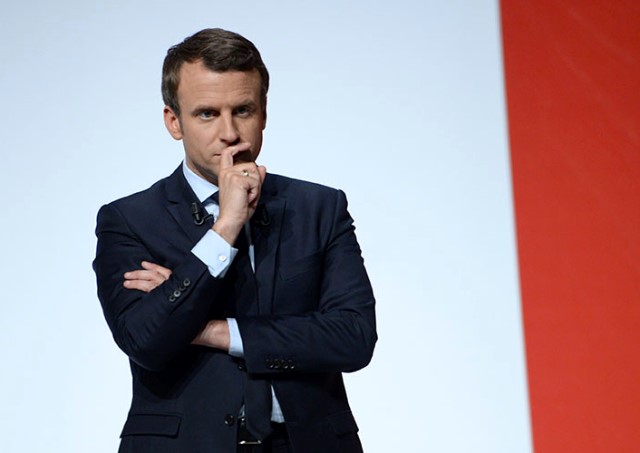
FRANCE outgoing Prime Minister, Sebastien Lecornu, is set to begin two days of urgent talks on Tuesday with members of different political parties, a day after his unexpected resignation, as he tries to resolve the country’s ongoing political crisis.

Lecornu, in a surprising turn after tendering his resignation on Monday morning, later agreed to President Macron’s request to spend two days attempting to rescue his administration.

President Macron instructed Lecornu to “hold final talks by Wednesday evening to establish a plan for the country’s stability and direction,” a presidential official, who spoke on condition of anonymity, said.

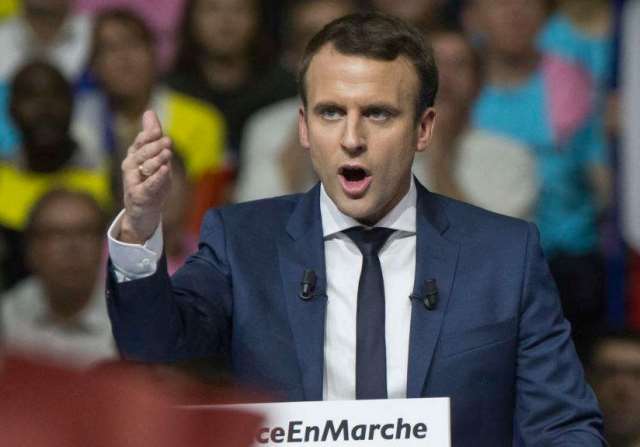
Recall that in early September, President Emmanuel Macron appointed 39-year-old Lecornu to form a new government after parliament ousted his predecessor over a widely opposed austerity budget.

Lecornu announced his new cabinet on Sunday evening, but it quickly faced backlash for including many figures from the previous government. By Monday morning, he had resigned

Lecornu submitted his government’s resignation on Monday morning after the cabinet he announced on Sunday evening was rejected by both allies and opponents, making his administration the shortest in modern French history.

Reuters reported that politicians across different parties voiced confusion over the president’s actions, with some suggesting that Lecornu’s new assignment was simply a tactic to buy more time, nearly a month after he was nominated prime minister.

It remains unclear what Lecornu’s exact role or responsibilities will be during these talks.

Lecornu was scheduled to meet early Tuesday with several members of the conservative Les Républicains (LR) and the centrist Renaissance parties, including Senate President Gérard Larcher and National Assembly Speaker Yaël Braun-Pivet.

France’s current political crisis, the most serious since the establishment of the Fifth Republic in the country’s modern political system in 1958, began in June last year.

The ICIR reported that Macron called snap elections in mid-2024 for the lower house of parliament after the far-right made major gains in the European Parliament elections, which produced a deeply divided parliament with no clear majority, an unusual situation in a country whose system is built around a strong presidency supported by a solid parliamentary majority, and where coalition-building is uncommon.

Lecornu became Macron’s third prime minister since those elections, and the president now faces limited options moving forward, analysts say.

The constitution does not prevent Macron from reappointing Lecornu; meanwhile, opposition parties have urged the president to either dissolve parliament or resign. 

Recall that The ICIR reported that the former Prime Minister François Bayrou’s government collapsed in September following a failed confidence vote, raising uncertainty over President Emmanuel Macron’s future and the stability of the eurozone’s second-largest economy.

The 74-year-old political veteran, who had been in office for just nine months, triggered the vote himself in an attempt to pressure lawmakers into supporting his proposal.

Protesters have taken to the streets across France for weeks, blocking roads, setting fire to rubbish bins, and clashing with police in a campaign to “Block Everything” in anger against President Emmanuel Macron and proposed budget cuts.

Many protesters directed their frustration at President Macron, who is already grappling with political upheaval.

Teachers, train drivers, pharmacists, hospital staff and other workers embarked on strike in France on September 18, while teenagers blocked access to their high schools, joining nationwide demonstrations against planned budget cuts.

Workers and other protesters have continued demanding the suspension of the former government’s fiscal policies, increased investment in public services, higher taxes on the wealthy, and the reversal of a widely opposed reform that raised the retirement age.
Insecurity: Police tighten measures, reiterate ban on scavenging activities in FCT

0

THE Federal Capital Territory (FCT) Police Command has intensified security operations across Abuja, ordering immediate raids on uncompleted buildings and suspected criminal hideouts in response to growing security concerns within the city.

The command has also reiterated its earlier ban on scavenging activities known as ‘Baban bola’ in the nation’s capital.

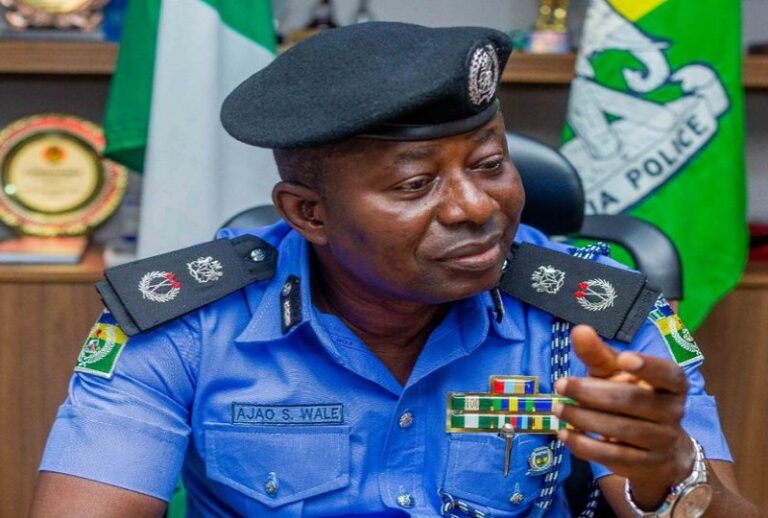
The Commissioner of Police, Ajao Saka Adewale, issued the directive to all Divisional Police Officers (DPOs) in a statement released on Tuesday, October 7, by the Command’s spokesperson, Josephine Adeh.

According to the statement, the measure forms part of ongoing efforts to ensure the safety of lives and property in the territory.

“The Commissioner of Police has directed all DPOs to immediately intensify patrols and carry out thorough raids on all uncompleted buildings and suspected criminal hideouts within their jurisdictions,” the statement read.

Adewale said the directive takes immediate effect and is aimed at preventing criminals from using abandoned or ongoing construction sites as hideouts. Property developers were also advised to ensure that artisans and labourers sleeping at construction sites are “properly documented and profiled before the end of October 2025.”

He further ordered that DPOs should conduct regular patrols of such areas and arrest any unidentified persons found on-site after 6:00 p.m. The police commissioner also restated that scavenging activities, commonly known as ‘Baban Bola’, remain banned across the FCT.

“Residents are advised to report any scavengers or suspicious persons sighted around their neighbourhoods immediately to the police,” the statement added.

Adewale reminded residents that security is a collective responsibility and urged estate associations and community leaders to cooperate with law enforcement agencies by reporting suspicious movements and ensuring that all security guards and domestic staff are profiled by the police.

The latest directive comes amid sustained efforts by authorities to address rising insecurity in the nation’s capital. Reports by The ICIR have documented frequent attacks by “one-chance” syndicates, kidnappers, and scavenger-linked criminal gangs across several districts of Abuja.

In July 2025, the FCT Minister, Nyesom Wike, launched Operation Sweep Abuja, a citywide initiative targeting beggars, scavengers, and illegal street traders. The minister said the operation was necessary to rid the city of elements “posing security and environmental risks” and restore order to the capital.

Despite a long-standing ban on scavenging activities, The ICIR reported in multiple investigations between 2021 and 2024 that scavengers continued to operate freely in several neighbourhoods, including Kubwa, Lugbe, Kado-Kuchi, and Jahi.

In May 2024, police confirmed the arrest of several scavengers following violent attacks in Byazhin, Kubwa, which led to the death of three persons, including two women and a boy. Residents told The ICIR that some scavengers often return at night to attack those who resist them.

Earlier investigations also revealed that scavengers had been linked to the theft of manhole covers, vandalisation of public utilities, and home burglaries in the city’s suburbs. Officials of the Abuja Environmental Protection Board (AEPB) said the ban on scavenging remains in force but admitted that enforcement has been weak due to limited manpower and funding.

FG reconstitutes negotiation committee to avert  ASUU strike

0

THE Federal Government has reconstituted and inaugurated an expanded negotiation committee chaired by former Head of Service, Mahmud Yayale Ahmed, to accelerate discussions with academic and non-academic unions across Nigeria’s tertiary institutions.

A statement issued on Tuesday, October 7, by the Director of Press and Public Relations in the Ministry of Education, Boriowo Folasade, noted that the new committee, named the Mahmud Yayale Ahmed Federal Government Tertiary Institutions Expanded Negotiation Committee, is aimed at harmonising all ongoing talks with unions in universities, polytechnics, and colleges of education under a unified and inclusive framework.

The statement stated that the Minister of Education, Maruf Tunji Alausa, while speaking during the inauguration on Monday, October 6, said the committee’s establishment was part of efforts to end years of fragmented and inconclusive negotiations that have repeatedly disrupted academic activities.

He added that President Bola Ahmed Tinubu had given full political backing to the committee’s work, with a directive that “all negotiations be concluded swiftly, fairly, and in the spirit of mutual respect.”

The ICIR reports that the announcement of the inauguration of the negotiation committee came barely a day after the Academic Staff Union of Universities (ASUU) began mobilising members for a possible strike, following the expiration of the first week of its 14-day ultimatum to the Federal Government.

In a letter dated October 5, 2025, and sent to all ASUU branches, the union’s president, Chris Piwuna, said the government’s continued silence had left the union with no choice but to prepare for strike action.

The circular noted that the National Executive Council (NEC), at an emergency meeting held on September 29, 2025, reviewed the results of a nationwide referendum and resolved to give the government two weeks to act on the renegotiated agreement transmitted since February 2025.

He stated in the letter that despite earlier communication with the Minister of Labour, the Minister of Education, and the Nigeria Labour Congress (NLC), there has been no meaningful development.

“It was further resolved that the union will proceed on a two-week warning strike at the expiration of the ultimatum if the government fails to take acceptable and satisfactory steps to address the lingering issues.

“The resolutions were immediately communicated to the Honourable Minister of Labour, the Honourable Minister of Education and the Nigeria Labour Congress,” the letter stated.

However, Alausa, on Monday, reportedly disclosed that the new committee had been provided with a fully equipped secretariat to aid its function, with its inaugural meeting scheduled for Tuesday, October 7. 

He also appealed to all academic and non-academic unions to cooperate with the team in the interest of students and national stability.

On his part, the Minister of Labour and Employment, Mohammed Maigari Dingyadi, urged members of the committee to act as impartial mediators and uphold justice, fairness, and stability in their engagements, while emphasising President Bola Tinubu’s commitment to dialogue as a means to prevent future industrial actions.

CBN caps PoS agents’ daily transactions at ₦1.2m, insists on geo-tagging of operators

THE Central Bank of Nigeria (CBN) has capped daily cash-out transactions for Point of Sale (POS) agents at N1.2 million and N100,000 for individual customers under a new set of guidelines released to regulate agent banking operations across the country.

The apex bank said the new framework will take immediate effect, while provisions relating to agent location and exclusivity will become effective from April 1, 2026.

The circular, signed by the Director of the Payments System Policy Department, Musa Jimoh, was addressed to all deposit money banks, other financial institutions, and payment service providers.

“POS agents are restricted to a maximum of N1.2 million per day. Individual customers are limited to N100,000 in daily transactions.

“These limits are intended to curb misuse, enhance financial integrity, and protect consumers within the agent banking framework,” it stated.

The guidelines also noted that the “CBN may vary or amend the transaction limits specified from time to time for each service in line with the extant CBN Guide to Charges for Banks and Other Financial Institutions in Nigeria.”

The new framework mandated that all agent banking transactions must be conducted through a dedicated account or wallet maintained by the principal financial institution, adding that use of non-designated accounts for agent operations is now prohibited, and violations will attract sanctions. 

It noted that agents found guilty of fraud, misconduct, or other offences will be personally liable and may face termination or placement on an industry watchlist.

Under the new framework, the financial institutions, referred to as “principals,” are expected to publish and regularly update the list of their agents on their official websites and display the same in their branches.

The guidelines require that super agents, who are only authorised to manage other agents, operate with at least 50 agents spread across Nigeria’s six geopolitical zones, to ensure wider access to financial services in rural and underserved areas.

The guideline also prohibited agents from relocating, transferring, or closing their business premises without written approval from their principals or super agents, adding that any relocation notice must be posted visibly at the business premises for at least 30 days to notify customers.

The CBN directed that all agent banking devices must be geo-fenced, restricting their operations strictly to registered locations.

This comes after the bank issued a directive on August 25 requiring all PoS terminals to be geo-tagged within 60 days, effective August 26, 2025, with a compliance deadline of October 20, 2025.

The move, according to the CBN, was prompted by rising cases of fraudulent PoS transactions across the country.

Geo-tagging is the process of adding geographic identification metadata, such as latitude and longitude, to digital content like photos, videos, websites, and SMS messages. This embedded location data allows content to be displayed on a map and correlated with other location-based information, enabling users to find items by location, track assets, or simply share their whereabouts.

However, as earlier reported by The ICIR, the directive triggered concerns among PoS operators, who warned that rigid location tagging could disrupt business operations, particularly in rural and semi-urban communities where power supply and internet connectivity are unreliable.

Some operators also warned that rigid location tagging would restrict mobile transactions, a critical service for traders and commuters in underserved areas.

Part of the new guideline was the real-time transactions and transparency, which the apex bank ordered that all agent transactions be conducted on a real-time basis using secure and interoperable payment systems.

It stressed that financial institutions must submit monthly returns to the CBN by the 10th of every month, detailing transaction volumes, fraud incidents, active agent counts, customer complaints, and agent training activities.

It added that defaulting banks or agents risk sanctions, including suspension from onboarding new agents, blacklisting, removal of management officials, or licence revocation.

Tinubu approves ₦4 trillion bond to offset GenCos debts – Adelabu

0

PRESIDENT Bola Ahmed Tinubu has approved a ₦4 trillion bond to settle verified debts owed to power generation companies (GenCos) and gas suppliers, a move the Federal Government said will stabilise the country’s troubled electricity market and restore investor confidence.

The Minister of Power, Adebayo Adelabu, disclosed the approval at the Expert Forum on “Uninterrupted Power: The Industrial Imperative” organised by the Nigeria Economic Summit Group (NESG) in Abuja on Monday, October 6.

Adelabu said the debt clearance is part of a broader financial reform plan under the Renewed Hope Agenda, aimed at strengthening liquidity and sustainability across the power value chain.

“To stabilise the market, Mr President has approved a ₦4 trillion bond to clear verified debts owed to GenCos and gas suppliers,” he said, adding that a targeted subsidy framework is also being developed to cushion the impact of energy cost adjustments on low-income households while sustaining commercial viability for operators.

According to the minister, the government is adopting a multi-dimensional approach to revive the sector, including tariff reforms, infrastructure expansion, local content promotion, and an energy transition plan designed to boost generation and transmission capacity.

He noted that tariff adjustments for certain consumer categories have already improved supply reliability and revenue collection. “Industry revenue has grown by 70 per cent, reaching ₦1.7 trillion in 2024, and is projected to exceed ₦2 trillion in 2025,” Adelabu said.

The approval of the ₦4 trillion bond comes amid an escalating liquidity crisis in Nigeria’s power sector. In September 2025, The ICIR reported that GenCos were owed ₦5.6 trillion by the Federal Government as of August, according to the Association of Power Generating Companies (APGC).

The association’s managing director, Joy Ogaji, told The ICIR that monthly unpaid invoices from the government average ₦200 billion, adding that the sector’s financial strain had become “an existential threat” to electricity generation and gas supply.

She noted that although President Tinubu had promised to intervene through a ₦4 trillion bond issuance after meeting with GenCos in July 2025, operators had expressed concern about the lack of clarity and timelines for implementation.

Ogaji explained that the debt affects both GenCos and gas suppliers, and that inadequate remittance from Distribution Companies (DisCos) remains a major source of the recurring liquidity shortfall.

Learning from Ghana’s payment model

Energy experts have consistently warned that without a sustainable payment structure, the Nigerian Electricity Supply Industry (NESI) will continue to face revenue leakages.

In an earlier interview with The ICIR, Ogaji urged Nigeria to emulate Ghana’s “cash waterfall mechanism”, a structured model that prioritises payment to gas transporters and independent power producers before other expenditures.

“In Ghana, the system ensures that funds from electricity sales are distributed transparently and promptly to operators. That model has helped them maintain stability,” Ogaji said.

Analysts believe adopting a similar payment hierarchy in Nigeria could improve liquidity flow, reduce gas supply disruptions, and prevent recurring shutdowns by GenCos.

Government’s reform drive

While speaking on Monday at the Expert Forum on “Uninterrupted Power: Adelabu reiterated that the government is committed to overhauling the power sector through legislative and policy interventions, enhanced regulation, and infrastructure investment.

He stated that the Presidential Power Initiative (PPI), jointly implemented with Siemens Energy and other international partners, has already added 700 megawatts (MW) of transmission capacity through its Phase Zero rollout. Phase One, he said, is designed to inject an additional 7,000 MW into the national grid, supported by financing from Power China, Elswedy Electric, and China Machinery Engineering Corporation (CMEC).

The minister also revealed that rehabilitation works are ongoing at several National Integrated Power Projects (NIPPs) to recover about 345 MW. At the same time, the 700 MW Zungeru Hydropower Plant has been successfully integrated into the grid.

“These interventions are expected to improve energy access, reduce technical losses, and strengthen the financial health of the electricity market,” he said.

Why you should not trust every screenshot

0

SCREENSHOTS have become a staple of online communication, circulating from viral tweets to breaking news headlines, and are often treated as instant proof.

But screenshots can be misleading or completely fake. A doctored tweet attributed to a politician, an edited bank alert, or a fabricated news headline can spread online in seconds, convincing thousands before fact-checkers even weigh in.

The FactCheckHub has debunked some of these instances listed above, which can be seen here, here, and here.

Because screenshots look authentic and are easy to share, they have become one of the simplest tools for fuelling misinformation, especially in fast-moving news cycles where people are less likely to question their accuracy.

False proof in a click

Creating a fake screenshot is a fast and easy process. Free editing apps let anyone alter names, wording, or even the number of likes and comments on a post in seconds; some fabricators go further and invent entire tweets or headlines that were never published.

Another common tactic is to change a news headline in a screen grab so it appears to come from a reputable outlet, also known as manipulated headlines, and because screenshots are static images, they carry no clickable links or metadata to prove authenticity. Those features make screenshots a perfect vehicle for misinformation: they look plausible, spread quickly, and are hard for casual users to verify at a glance.

Even unedited screenshots can distort the truth. A simple crop might remove the date, making an old post appear recent, or hide key replies that shift the meaning of a conversation.

In some cases, satirical comments have been screen – shotted and re-shared as if they were accurate statements, misleading audiences who never see the full thread. Beyond this, screenshots strip away important digital cues such as timestamps, source links, and engagement history that would normally help verify authenticity. Once those details are gone, it becomes harder for readers to judge credibility, and easier for misinformation to spread unchecked.

How to verify screenshots

Check the source

Go straight to the account or website shown in the screenshot — don’t rely on the image itself. Confirm the handle or URL exactly (look for impostor accounts with extra characters), check for verification marks where relevant, and scan the profile for history and tone: does the account regularly post that kind of content? Look for the original post on the platform (not just reposts) and note the publish date and time. If the screenshot claims to be from an organisation, check the organisation’s official site or other verified social accounts for the same story.

Search the wording

Copy the exact text (or type a short, unique phrase) and run it in quotes through a search engine and the social-platform search bar. This reveals exact matches, earlier posts, or reputable coverage that confirms or contradicts the claim. Search variations and translations that are too misquoted or paraphrase the text can hide the original context.

Do a reverse image search

Upload the screenshot to Google Lens, Google Images, TinEye, or Yandex. Look for the earliest appearance of the image, alternative captions, or higher-resolution originals. If the same image appears with different dates, captions, or locations, that’s a clue it’s being reused or misrepresented. Also, watch out for older timestamps, different captions, source credited to a stock photo site or a different event/location.

Look at the details

Inspect the screenshot closely and observe User Interface (UI) elements such as platform logos, buttons, fonts, alignment, spacing, and image quality. Poor cropping, inconsistent fonts, odd punctuation, mismatched icons, or blurred/warped areas usually indicate editing. On news screenshots, check if the headline style matches that outlet’s usual layout (font, byline placement, dateline).

Check metadata and original files 

Screenshots strip metadata, but if you can access the original image or video file check the Exchangeable Image File Format. EXIF/metadata for creation date, device info, and geolocation. Use an EXIF viewer or forensic tool. If metadata is missing or clearly altered, treat the image with caution.

Many platforms and messaging apps remove EXIF data. Absence alone isn’t proof of fakery, but the presence of conflicting metadata is useful.

Corroborate with other sources

Look for independent reporting, eyewitness posts, official statements, or on-the-ground photos from multiple users. For location-based claims, try geolocation: match visible landmarks, road signs, or building features with satellite imagery or Street View. If only one account is pushing the claim and nobody else, especially local media, is reporting it, treat it as unverified.

Mind timeline and context

Screenshots can be decontextualised, an old tweet made to look recent, or a satirical post reused seriously. Verify timestamps, check the thread/replies for clarification, and see whether the screenshot omits surrounding conversation that changes meaning.

Use verification tools and experts

When available, consult reverse-search tools, archived pages such as Wayback Machine, or the archive.is and social monitoring platforms. Try reaching out to the original poster and requesting the live link or source. If you can’t verify quickly, flag the content as unverified rather than share it. Encourage readers to wait for corroboration, and report the post to the platform if it violates policies.

Republished from the FactCheckHub.

Court asked to stop Jonathan from contesting 2027 election

0

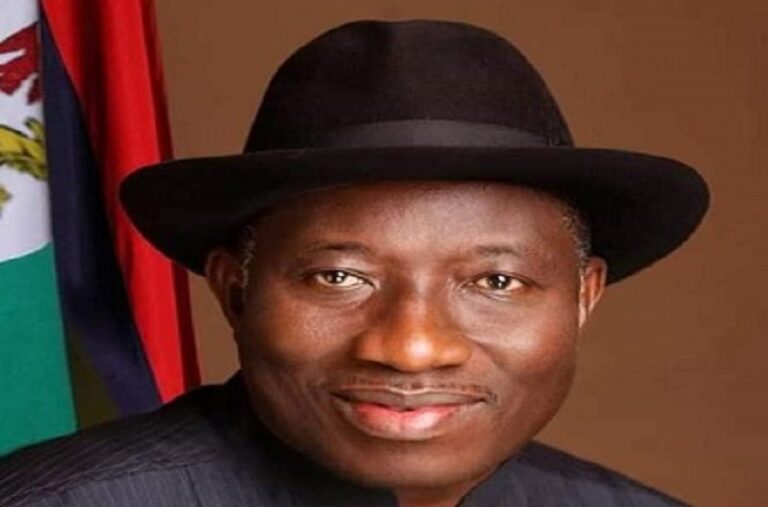
A SUIT has been filed before the Federal High Court (FHC) in Abuja seeking to stop former President Goodluck Jonathan from contesting the 2027 presidential election.

The suit, marked FHC/ABJ/CS/2102/2025, was filed by an Abuja-based lawyer, Johnmary Chukwukasi Jideobi, who asked the court to declare that Jonathan is constitutionally ineligible to contest for the office of the President of Nigeria.

In the originating summons, Jideobi prayed the court to issue a perpetual injunction restraining the former president from presenting himself to any political party for nomination in the 2027 presidential election or any subsequent poll.

He also sought an order directing the Independent National Electoral Commission (INEC) not to accept or publish Jonathan’s name as a candidate of any political party, and another directing the Attorney General of the Federation (AGF) to ensure compliance with any order of the court.

According to the court papers, INEC and the AGF were listed as the second and third defendants, respectively.

The plaintiff raised a single legal question for determination—whether, in view of the provisions of Sections 1(1), (2), (3) and 137(3) of the 1999 Constitution (as amended), Jonathan remains eligible under any circumstance to contest for the presidency again.

Jideobi argued that Jonathan, having completed the unexpired tenure of the late President Umaru Musa Yar’Adua in 2010 and subsequently served a full four-year term after winning the 2011 election, has already reached the constitutional limit of two terms in office.

In a supporting affidavit deposed to by Emmanuel Agida, the plaintiff described himself as an advocate of constitutionalism and the rule of law. He said his suit was in the public interest to prevent what he termed a “breach of the Constitution” if the former president were to contest again.

The lawyer told the court that Jonathan was first sworn in on May 6, 2010, following Yar’Adua’s death, and again on May 29, 2011, after winning the 2011 presidential election. He maintained that a third swearing-in, if Jonathan wins in 2027, would violate Section 137(3) of the Constitution.

That section states that “a person who was sworn in to complete the term for which another person was elected as President shall not be elected to such office for more than a single term.”

Legal experts have often noted that this provision was introduced in the Fourth Alteration to the 1999 Constitution (2018), following debates over term limits and succession after the Yar’Adua–Jonathan transition.

Jideobi, however, maintained that “if the former president is allowed to contest and wins, he would be taking the oath of office as president for the third time, contrary to constitutional intent.”

He said the suit was necessary to “preserve the integrity of Nigeria’s constitutional order” and prevent what he described as an “unconstitutional extension of tenure.”

No date has been fixed for the hearing of the matter.

Under Nigeria’s 1999 Constitution (as amended), Section 137(3) provides a clear restriction on how many times a person can occupy the office of the President through election. A person who completes the tenure of another president and then serves one full elected term cannot seek re-election again.

Jonathan handed over power to President Muhammadu Buhari in May 2015 after losing his re-election bid.

If the Federal High Court agrees with the plaintiff’s interpretation, the ruling could set a major precedent for how the constitutional two-term limit applies to former presidents who assumed office mid-term.

Recall that the Minister of Aviation and Aerospace Development, Festus Keyamo, argued that the People’s Democratic Party (PDP) risks having no candidate in the 2027 general elections if it gives its presidential ticket to Jonathan.

Keyamo, a senior advocate, argued this in a post on his X handle on Sunday, August 31, citing Section 137 (3) of the 1999 Constitution (Fourth Amendment).

He said the PDP has tipped Jonathan as one of its targets for presidential candidate because of the ex-president’s purported eligibility to run for only one term.

“But, if he is fielded, the party runs the risk of not having a candidate at all by virtue of Section 137 (3) of the 1999 Constitution (Fourth Amendment).

“The constitutional amendment was made AFTER the court judgment which cleared him to run in 2015, so nothing is decided yet on that new amendment, hence I use the word ‘RISK’ advisedly,” Keyamo argued.


Court adjourns Tinubu minister’s certificate forgery case

0

THE controversy surrounding allegations of certificate forgery against the Minister of Innovation, Science and Technology, Uche Nnaji, deepened on Monday, October 6, after the Federal High Court (FHC) in Abuja stalled the hearing in the minister’s suit against the University of Nigeria, Nsukka (UNN), and other respondents.

The case, marked FHC/ABJ/CS/1909/2025, could not proceed before Hauwa Yilwa due to the failure of the university’s lawyers to file their responses within time. The judge Yilwa consequently adjourned the matter until November 10 for hearing.

Nnaji had approached the court to challenge what he described as the university’s interference with his academic records following media reports that his Bachelor of Science degree was forged.

He joined the Minister of Education, the National Universities Commission (NUC), the University of Nigeria, Nsukka (UNN) and several of its senior officials as respondents in the suit.

Through his counsel, Sebastine Hon, a senior advocate, Nnaji sought several reliefs, including an order of mandamus compelling the release of his academic transcript and prohibiting the university from “tampering” with his academic records.

The Minister also asked the court to direct the Minister of Education and the NUC to exercise supervisory powers over UNN to ensure compliance.

Although the judge earlier granted some preliminary reliefs, she refused to issue an injunction restraining the respondents from making public statements about the issue.

When the matter was called on Monday, he informed the court that, despite being served with court papers, UNN’s Vice Chancellor, Simon Ortuanya, a professor, wrote a letter to an online newspaper,  PREMIUM TIMES, disowning Nnaji’s certificate.

Hon alleged that the respondents violated court procedure by making public statements on a matter already before the court. Counsel to the university, E.M. Asogwa, however, said his clients would maintain the status quo pending the substantive hearing.

The controversy stems from a PREMIUM TIMES investigation, which found that Nnaji’s Bachelor’s degree and National Youth Service Corps (NYSC) discharge certificate were forged.

In a letter dated October 2, 2025, signed by the Vice Chancellor, Ortuanya, UNN stated that, based on all available records, it could not confirm that Nnaji graduated from the institution in July 1985, as there were no documents showing he completed his studies. The university added that it therefore did not, and could not, have issued the certificate being paraded by the minister.

The report also reported that forensic analysis of the National Youth Service Corps (NYSC) discharge certificate showed irregularities, including a forged signature of a corps official who only assumed office 18 months after the date on the document. The certificate also carried an invalid numbering system and indicated that Nnaji served for 13 months, contrary to the statutory 12-month service year.

Meanwhile, reacting to the development, the 2023 Labour Party presidential candidate, Peter Obi, condemned the prevalence of certificate fraud among public officials, warning that it undermines national integrity and encourages criminality.

Obi said, those who are supposed to be exemplary have become the very source of the nation’s decay. According to him, when  dishonest behaviour is modelled by public officials, it corrodes the moral standards available to young Nigerians.”

Citing global best practices, Obi noted that countries such as Indonesia disqualify and prosecute any political aspirant found guilty of falsifying academic records. He urged the electoral body to begin mandatory verification of certificates submitted by political aspirants and appointed officials at least six months before elections, saying that “true leadership must begin with truth.”

The ICIR has reported that the Nnaji case adds to a long list of credential scandals involving public officials that escaped detection by Nigeria’s Senate and the State Security Service (SSS) during the screening of political appointees.

Under Section 147(2) of the 1999 Constitution, ministerial nominees must be screened and confirmed by the Senate before appointment, while the State Security Service (SSS) is mandated by the National Security Agencies Act of 1986 to conduct background checks, including verifying educational qualifications.

However, investigations show these processes are often compromised by political considerations and the informal “bow and go” practice, where nominees—especially former lawmakers—are cleared without rigorous scrutiny.

Strike: ASUU mobilises members as ultimatum to government enters final week

0

THE Academic Staff Union of Universities (ASUU) has commenced mobilising its members nationwide for possible industrial action as the federal government fails to address the issues raised in its 14-day ultimatum, which expires next week.

In a letter dated October 5, 2025, and sent to all ASUU branches, the union’s president, Chris Piwuna, said the government’s continued silence had left the union with no choice but to prepare for strike action.

The circular, which was reported by Daily Trust, noted that the National Executive Council (NEC), at an emergency meeting held on September 29, 2025, reviewed the results of a nationwide referendum and resolved to give the government two weeks to act on the renegotiated agreement transmitted since February 2025.

He stated in the letter that despite earlier communication with the Minister of Labour, the Minister of Education, and the Nigeria Labour Congress (NLC), there has been no meaningful development.

“It was further resolved that the union will proceed on a two-week warning strike at the expiration of the ultimatum if the government fails to take acceptable and satisfactory steps to address the lingering issues.

“The resolutions were immediately communicated to the Honourable Minister of Labour, the Honourable Minister of Education and the Nigeria Labour Congress,” the letter stated.

Piwuna urged all branches to commence full mobilisation of members for the proposed action, stressing that the union remained united in its demand for improved welfare, better funding of universities, and the implementation of the renegotiated agreement.

“The days ahead call for the mobilisation of every member of our union to ensure unity of purpose. No one should be left out of the struggle for our welfare, stem the Jupa syndrome and reposition the Nigerian University System (NUS) for global competitiveness,” the letter was quoted to have read.

He also encouraged members to take directives only from their branch chairpersons and zonal coordinators, adding that the strength of the union lies in collective action.

Background

ASUU had earlier issued a 14-day ultimatum to the Federal Government after its NEC meeting at the University of Abuja on September 29, 2025, where it decried the neglect of the nation’s universities and the government’s failure to implement agreements reached in previous negotiations.

The ICIR reported ASUU’s demands to include renegotiating the 2009 federal government and ASUU agreement, providing revitalisation funds for public universities, paying all earned academic allowances and withheld salaries, and addressing promotion arrears.

The union is also demanding the payment of outstanding third-party deductions, such as check-off dues and cooperative contributions.

Other issues raised by ASUU include the proliferation of public universities, the non-payment of arrears of earned academic allowances and non-release of owed salaries, “creeping fascism” in some Nigerian universities and the core curriculum minimum academic standard.

Meanwhile, should the strike hold, it will be ASUU’s first industrial action under the Tinubu administration since he assumed power on May 29, 2023.

The union went on strike five times in five years under Buhari.

The group was on strike in 2016, 2017, 2018, 2020, and 2022. However, a hitch-free academic year was recorded in 2023.

France Prime Minister resigns hours after appointment

FRANCE new Prime Minister, Sébastien Lecornu, and his cabinet resigned on Monday, October 6, just hours after he unveiled his ministerial lineup, a dramatic escalation of the country’s political crisis that sent stocks and the euro tumbling.

According to Reuters, Lecornu, Macron’s fifth prime minister in just two years, held the position for only 27 days, and his government lasted 14 hours, making it the shortest-lived in modern French history at a time when parliament is deeply divided and the euro zone’s second-largest economy is struggling to put its finances in order.

Recall that the ICIR reported that the former Prime Minister François Bayrou’s government collapsed in September following a failed confidence vote, raising uncertainty over President Emmanuel Macron’s future and the stability of the eurozone’s second-largest economy.

The 74-year-old political veteran, who had been in office for just nine months, triggered the vote himself in an attempt to pressure lawmakers into supporting his proposal.

Protesters have taken to the streets across France for weeks, blocking roads, setting fire to rubbish bins, and clashing with police in a campaign to “Block Everything” in anger against President Emmanuel Macron and proposed budget cuts.

Many protesters directed their frustration at President Macron, who is already grappling with political upheaval.

Teachers, train drivers, pharmacists, hospital staff and other workers embarked on strike in France on September 18, while teenagers blocked access to their high schools, joining nationwide demonstrations against planned budget cuts.

Workers and other protesters have continued demanding the suspension of the former government’s fiscal policies, increased investment in public services, higher taxes on the wealthy, and the reversal of a widely opposed reform that raised the retirement age.

Reuters reports that the swift and unexpected resignation followed mounting threats from both allies and opponents to bring down the new government, prompting Lecornu to say the situation made it impossible for him to carry out his duties.

Opposition parties swiftly called on President Emmanuel Macron to step down or dissolve parliament and hold snap elections, insisting those were the only viable solutions to end the crisis.

Reports indicate that French politics has grown increasingly unstable since Macron’s 2022 re-election, as no single party or coalition holds a parliamentary majority. His decision to call a snap election last year further worsened the turmoil, resulting in an even more fragmented legislature.