Home Blog Page 1736

Okowa joins other Nigerians to congratulate first black female U.S. Navy commander

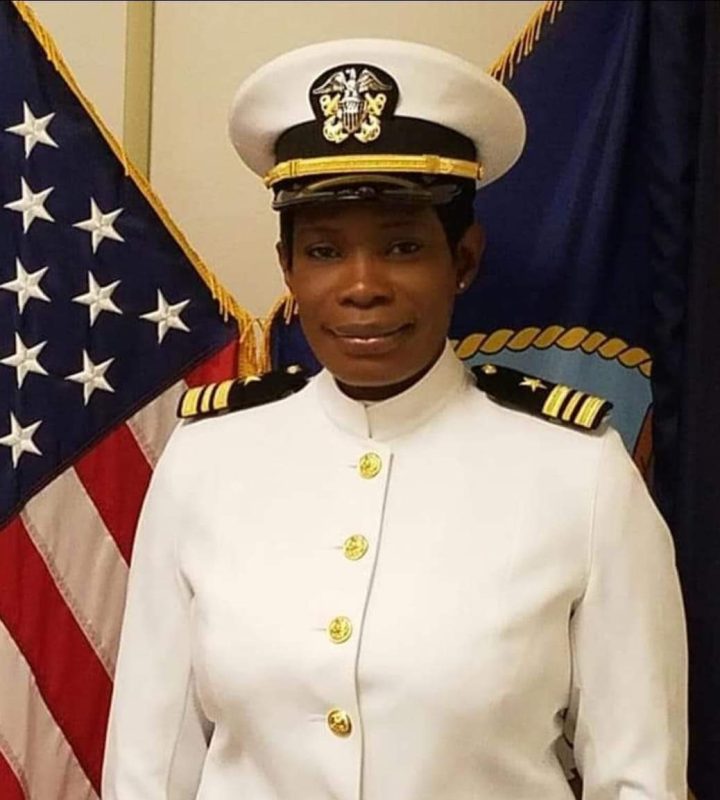
GOVERNOR of Delta State Ifeanyi Okowa has congratulated a native Hetty Oraka-Onojeje on her promotion to the rank of commander in the United States Navy.

Oraka-Onojeje, who hails from Uvwie Local Government Area of Delta State, became the first Black woman to attain such rank in the US Navy on July 1.

In a statement issued by his Chief Press Secretary Olisa Ifeajika, on Sunday in Asaba, Okowa described her as an energetic, result-driven and highly motivated officer who possessed the requisite experience for her new role and had done the state proud.


Read also:

PDP: Atiku’s message congratulating Okowa on national honour unfortunate – Wike

In Delta, Okowa’s non-payment of primary school retirees is leading teachers to early graves (part 1)

Edwin Clark accuses Okowa of mismanaging 13% derivation funds


“Over the years, Oraka-Onojeje has, by dint of hard work and discipline, established herself as a team player, which has endeared her to various ship mates in the US Navy,” the statement said.

The governor also expressed appreciation to the US Naval authorities for finding Oraka-Onojeje worthy of promotion to the rank of commander.

Friends and other Nigerians have also congratulated her for achieving this feat. Among them is a former schoolmate as an undergraduate Njideka Anyanwu, who described her as a very brilliant officer.

“Very proud of her. She was my schoolmate in University of Port Harcourt where she also excelled in her undergraduate studies,” Anyanwu wrote on her Linkedin wall.

Ife Sinachi Ugwuonye wrote: “Congratulations to commander Hetty. A true friend and schoolmate (Uniport). We are so very proud of her. Most of all, she is a very kind human being. Congratulations my dear friend and sister. More successes.”

A U.S. Navy Veteran Carol Ransom, who served with Oraka-Onojeje in Washington DC, also expressed delight at her promotion.

“Congratulations ma’am! I am very happy about your promotion,” she said.

Prior to her latest appointment, Oraka-Onojeje had served as lead recruiter at the U.S. Navy Recruiting Command where she provided expert technical advice, guidance and recommendations on critical human resource programmes.

In April, another Nigerian Kelechi Ndukwe became the first black to be appointed commander of a U.S. Navy ship, USS Halsey (DDG-97), an Arleigh Burke-class guided missile destroyer.

Buhari blames ‘middlemen’ for high cost of rice in Nigeria

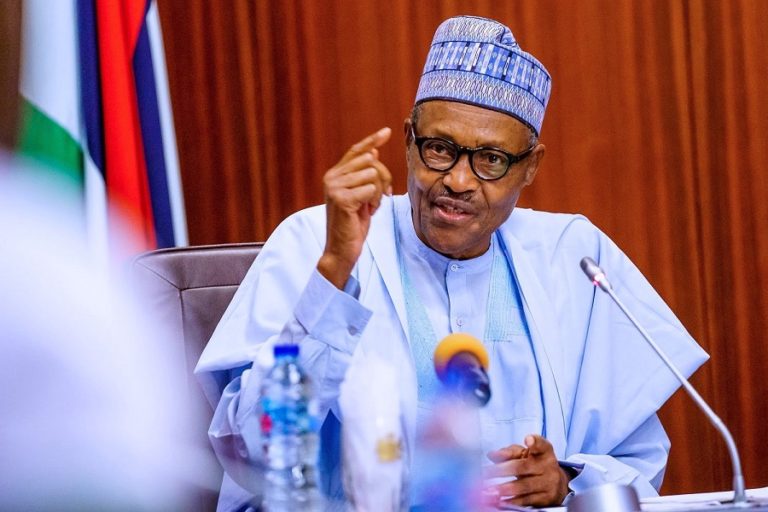
PRESIDENT Muhammadu Buhari has blamed the activities of middlemen for  high cost of rice in Nigeria.

Buhari, who stated this in his message to Muslim faithful celebrating the Eid-el-Adha across the country, also blamed the high cost of food on farmlands destruction by flood and insecurity.

He assured Nigerians that his administration was determined to create a just, harmonious and prosperous country where safety of life and property was paramount, noting that he was taking adequate measures towards addressing the nation’s insecurity.


READ ALSO:

Soaring food prices deepen Nigeria’s rising poverty

Inflation rate drops further to 17.75% in June, but Nigerians can’t buy food

How herder-farmer crisis in Benue threatens food production in Nigeria


“Apart from the destruction caused to rice farms by floods, middlemen have also taken advantage of the local rice production to exploit fellow Nigerians, thereby undermining our goal of supporting local food production at affordable price,” he said.

“As an elected president, who enjoys the goodwill of the ordinary people that gave us their mandate, let me assure you that we are continuing with measures to bring relief to Nigerians, including making fertilizer available at affordable prices to our farmers.

“The current insecurity in the country has produced severe and adverse effects on agriculture because farmers are prevented from accessing their farms by bandits and terrorists.

“Let me also use this opportunity to reassure Nigerians that we are taking measures to address our security challenges. We have started taking delivery of fighter aircraft and other necessary military equipment and hardware to improve the capacity of our security forces to confront terrorism and banditry,” he said.

Buhari, who extolled sacrifices of Nigerians, however, said that taking advantage of the celebration to exploit fellow citizens through outrageous prices of food and rams was inconsistent with the virtues of Islam.

Although there is a slight decline in the country’s inflation statistics from the figures published by the National Bureau of Statistics (NBS) on Friday, Nigerians, most especially those residing in cities, have continued to fall under the weight of high and unaffordable food prices.

Experts have also agreed with the president in part that insecurity, most especially in the Northern parts of the country, has contributed greatly to high prices of food.

They have also identified zero infrastructure and climate change as other reasons.

An old 1984 Sunday Herald,  often circulated online, had carried a story of Buhari, then a military head of state, blaming middlemen for poor economy.

Nigerian govt blocking Kanu from getting diplomatic assistance from UK -Lawyer

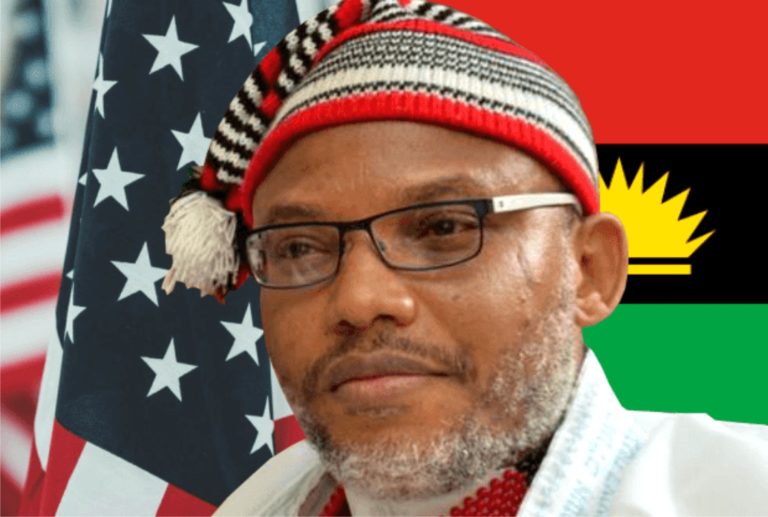
Nnamdi Kanu’s Special Counsel Aloy Ejimakor said the Nigerian government, through the States Security Service (SSS),  was preventing his client from getting diplomatic assistance from the United Kingdom.

Ejimakor, who disclosed this in a statement on Monday, said the SSS had not allowed Kanu to sign the two documents that could have afforded him diplomatic assistance from the British High Commission in Nigeria.

He said he had delivered the forms to the IPOB leader during his last visit to him in custody.


READ ALSO:

Civil society condemns NBC directive on terrorism reporting

I have no hand in Nnamdi Kanu’s re-arrest – Ngige

Trending video showing a boy being tortured with electric current, not from Nigeria but Mali


He stressed that the agency, however, requested that its legal department be allowed to vet them before Kanu could append his signature on them, but was surprised on Monday when the agency returned the documents without his client’s signature on them.

“Last Saturday, when I visited Mazi Kanu, I expressed strong concerns about the inordinate delay in having Kanu sign the two forms I had taken to the DSS for Kanu’s signature some days before,” he said.

“Both forms relate to affirming his consent to consular and diplomatic interventions by the United Kingdom and her High Commission in Nigeria. Surprisingly, the forms were returned to me unsigned.

“Let me make it clear that the day I took the forms to the DSS, the officers on location were amenable to Kanu signing them until somewhere along the line, they tarried and decided to send it to the legal unit for vetting.


READ ALSO:


“So, my sense is that it’s the legal unit of the DSS that disapproved of Kanu signing the forms for reasons that were not given to me.”

The lawyer noted that the Nigerian government was not gaining anything by denying his client access to resources that would assist him in his defence, stating that the government’s refusal would help fuel the notion that the government of Nigeria was deliberately isolating Kanu from having consular and diplomatic access to the United Kingdom.

Ejimakor called on the British High Commission in Nigeria to banish every red tape and exert the full weight of its diplomatic clout to gain immediate access to Kanu, and also ensure that he received proper medical care while in custody.

Kanu, who is a Nigerian-British citizen, is currently facing an 11-count charge of treason, treasonable felony, terrorism, and illegal possession of firearms brought against by the Nigerian government.

He jumped bail and fled Nigeria after soldiers raided his residence in Umuahia, Abia State, in 2017.

But in June, the Nigerian government, through the Attorney-General and Minister of Justice Abubakar Malami, announced his extradition. He has been detained in the custody of the SSS by an Abuja Federal High Court since.

Pilot rescued as bandits gun down fighter jet in Zamfara

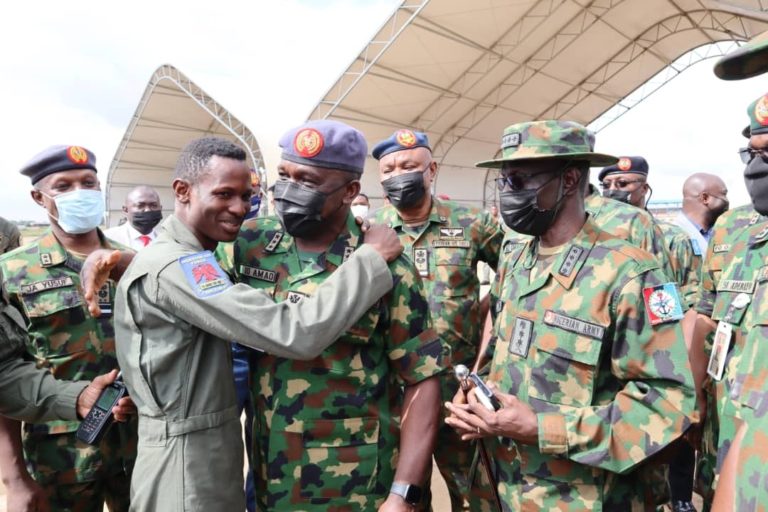
THE Nigerian Air Force said one of their pilots had been rescued after bandits gunned down an Alpha Jet aircraft in Zamfara State on Sunday.

Air Force Director of Public Relations and Information Edward Gabkwet confirmed this in a statement on Monday.

He said the aircraft was gunned down while returning from a successful air interdiction mission between the boundaries of Zamfara and Kaduna states when it came under intense enemy fire, leading to its crash in Zamfara State.


READ ALSO:

Police confirm killing of Zamfara lawmaker

Buhari blames ‘middlemen’ for high cost of rice in Nigeria

Court restrains Zamfara House of Assembly from impeaching deputy governor


He added that Abayomi Dairo, the pilot, was able to escape the crash using his survival instincts.

“Luckily, the gallant pilot of the aircraft, Flight Lieutenant Abayomi Dairo, successfully ejected from the aircraft. Using his survival instincts. The pilot, who came under intense ground fire from the bandits, was able to evade them and sought refuge in nearby settlements awaiting sunset,” he said.

“Using the cover of darkness and his phone set for navigation, Flight Lieutenant Dairo was able to elude several bandits’ strongholds and maneuvered his way to a Nigerian Army Unit, where he was finally rescued.

“It is instructive to note that upon receipt of the news of the crash, the Chief of Air Staff, Air Marshal Oladayo Amao, had directed that all efforts must be emplaced to rescue the pilot.”

Gabkwet stated that the NAF Intelligence Surveillance Reconnaissance platforms and helicopter gunships provided close air support to NAF Special Forces and Nigerian Army troops who were able to locate the crash site and the pilot’s parachute, while also combing nearby locations for any sign of the pilot.

The NAF assured that despite the setback of the crash, they remained committed to fulfilling President Muhammadu Buhari’s mandate as well as other constitutional roles assigned to them.

“The willingness, readiness, and tested ability of the NAF remain unshaken and unwavering as it continues to carry out its assigned roles,” he said.

Court restrains Zamfara House of Assembly from impeaching deputy governor

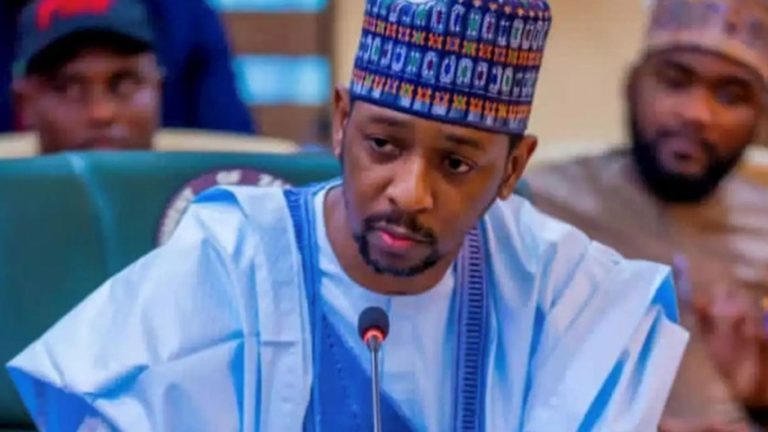
AN Abuja Federal High Court has restrained the Zamfara State House Assembly from impeaching the state’s Deputy Governor Mahdi Gusau.

The presiding judge Obiora Egwuatu gave the order while delivering a ruling in an ex-parte motion with suit number: FHC/ABJ/CS/650/2021, brought by the People’s Democratic Party (PDP) through its lawyer, Ogwu Onoja.

Egwuatu, who ordered the defendants to maintain the status quo pending the hearing and determination of the motion on notice, also stopped the House of Assembly from impeaching other members still in the PDP.


READ ALSO:

Zamfara Senator resigns from PDP, keeps mum on new party

Pilot rescued as bandits gun down fighter jet in Zamfara

COVID-19 third wave: FG places six states, FCT on red alert


He directed the plaintiff to serve all the defendants in the suit before Friday and adjourned the matter until July 23 to hear the motion on notice.

According to the News Agency of Nigeria (NAN), the Independent National Electoral Commission (INEC), All Progressives Congress (APC), Nigerian Senate President Ahmad Lawan, Speaker of House of Representatives Femi Gbajabiamila, Speaker of Zamfara House of Assembly, Governor Matawalle and Chief Judge of Zamfara are 1st to 7th defendants respectively.

Though Goveenor Bello Matawalle of Zamfara recently defected from the PDP to the APC, his deputy, Gusau, did not.

The lawmakers in the state had threatened to impeach Gusau over activities they considered a threat to the security in the state in which they claimed he was involved.

The PDP, through its lawyer, had urged the court to grant its prayer in the interest of justice.

The party said the court had the inherent powers to grant the order.

“This is the only place we can run to, especially in a situation of chaos the state has found itself.

Trending video showing a boy being tortured with electric current, not from Nigeria but Mali

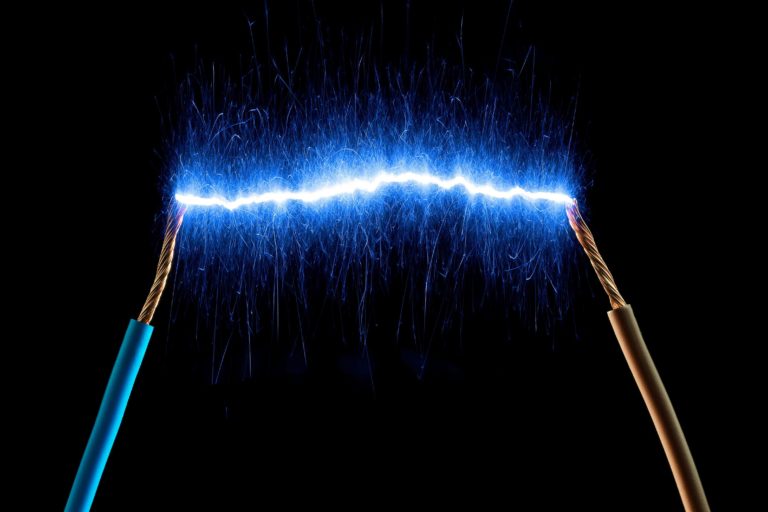
THE scene in a video shared multiple times online, showing a boy being tortured with an electric current, was alleged to have taken place in Nigeria.

The video circulated on social media in June 2021, showing a boy tied to a makeshift metal cross by a man who held an exposed electric wire.

The man in the video used the electric wire on the metal the boy was tied to, leading to convulsion as electricity passed through the metal.

The viral video has been shared multiple times on Facebook, Instagram, Twitter and reported on Linda Ikeji Blog.

The video was shared by a Nigerian Twitter user, Tosin Opeoluwa @CoachTosin, on June 17, 2021, and has had more than 27000 views, with 667 retweets, 167 quoted tweets and 301 likes.

Multiple comments under the post alleged the torture incident might have happened in Nigeria.

Findings

The claim that the location in the video is Nigeria is false.

The ICIR found out that the incident happened in Mali.

Before the video began to trend in Nigeria, The ICIR had also found that a Kenyan, Nelson Mimi Mung’asia, based in Doha, the capital of Qatar, shared the 1t on June 10, 2021, on his Facebook account.

The ICIR subjected the video to verification by using the Invid video verifier, which directed its reporter to Facebook pages, Mali Focus and Mali-Sadio TV, which published a post in French on the incident on June 8, 2021, using a screengrab of the tortured video from a TikTok account, benskshy.

Mali
Post translated by Facebook from French to English. Screengrab from Mali – Sadio TV Facebook account

The Post on Mali-Saido TV has been shared 42 times, with 66 comments. It has attracted more than 305 likes and on Mali Focus shared 10 times, with 27 comments and 124 likes.

The ICIR used Google Translate to interpret the post in English (It was originally in French).

The incident, according to the Facebook post, happened in Mali.

The post had said that Attorney Idrissa Toure ordered the perpetrator’s arrest after a complaint was lodged.

According to the post, Toure was the Attorney of the Court of the Municipality IV.

The post also disclosed that the arrest took place on June 7, 2021.

It also said three witnesses to the torture had been identified, arrested and taken to custody.

The post further disclosed that the boy was tortured after it was discovered that he had stolen a mobile phone belonging to a client that came to the metal workshop.

A Malian Twitter user Bakary Coulibaly, based in Washington, confirmed to The ICIR that the language from the video was Bambara/Dioula, the national language of Mali and also spoken in some parts of Burkina Faso and Cote d’Ivoire.

Efforts by The ICIR to get a reaction from government officials in Mali proved abortive as an email sent to the Malian government requesting a response on the incident since on June 23, 2021, was not responded to.

Also, an inquiry mail sent to an official email linked to the National Police of Mali, obtained from a Facebook page that was last used in 2017 and linked to the National Police of Mali, has also not been answered.

The ICIR also contacted Fatima Maiga, a Media – Mediator, Policy Analyst and former Chief of Staff at the Ministry of Reconciliation and the Ministry of Women in Mali, according to her profile on Peace and Pluralism, a non-profit network that builds the capacities of women.

In response to The ICIR email inquiry sent in French on June 22, 2021, Maiga confirmed in French that the video came from Mali and further said the perpetrator of the torture had been arrested.

Her mail read (Google Translate):

Good evening Shehu,

I received your message and inquired about it from a journalist friend. After checking it gave me the following return:”

I inquired about the young man’s torture. It turned out that the authors of the act were placed under arrest warrant by the prosecutor of commune IV of Bamako. “

I hope this will help you. Yours truly. Fatima.

Fatima Maiga email
Fatima Maiga email response

VERDICT

The claim that a trending video that captured a boy’s torture by his master with an electric wire happened in Nigeria is false. The ICIR found out that the incident happened in Bamako, Mali.

Has Amotekun reduced crime rate in South-West 18 months after?

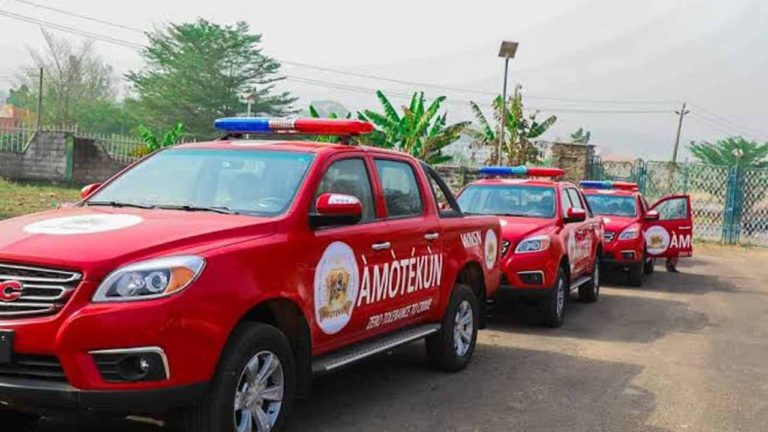
A series of violence in the southwestern part of Nigeria led to the establishment of a regional security outfit codenamed ‘Operation Amotekun’  to protect lives and properties in the six states of the region.

Eighteen months after its establishment, the crime rate is yet to decrease in the region. The ICIR examines the pros and cons, challenges and solutions facing the outfit.

On January 20, 2020, governors of Lagos, Ondo, Ogun, Osun, Oyo and Ekiti states launched the Western Nigeria Security Network also known as ‘Amotekun.’  So far, except for Lagos, other states in the South-West region have set up the outfit in their domains.


READ ALSO:

SERAP issues 24-hour ultimatum to Buhari over NBC directive on terrorism reporting

Electronic results transmission: APC senators, Reps miss opportunity to win over Nigerians

Soaring food prices deepen Nigeria’s rising poverty


However, 18 months down the lane, the state of insecurity in the state has not subsided. Killings and violent attacks, armed robbery, kidnapping and other communal clashes are still rampant in the region.

Data obtained from the National Security Tracker (NST), show that between January 2020 when Amotekun was established to July 13, 2021, there have been at least 239 violent attacks across the six states in the region. The attacks have led to the death of at least 341 residents in the state.

For instance, in Oyo State where the Amotekun operation is most prevalent, there have been 67 violent attacks since January 20, 2020, leading to the death of 115 residents of the states.

On many occasions, the outfit collaborated and also aided the operations of the Nigerian Police Force to stop criminal activities in some parts of the region.

Over time, the Operation Ametokun Corps have been accused of perpetrating criminal activities in some parts of the South-West region.

In some cases, some of the Amotekun corps have been arrested for alleged attempts to perpetrate crime.

Earlier in January, an operative of the outfit was apprehended in Oyo State for shooting a police officer in the leg at close range.

Speaking on the assessment of the Amotekun Corps, a retired Colonel and Security Expert Ademola Lawal told The ICIR that Operation Amotekun had recorded some successes since its establishment.

Lawal said the outfit could not quench banditry and other violent vices overnight and argued that it should be given more time to perform.

He also said that the Amotekun Corps had sensitised Nigerians on the need for state police and a community approach to security.

However, a Security Risk Management and Intelligence Specialist Kabiru Adamu, who spoke with The ICIR in a telephone conversation, said the South-West governors did not conduct a proper assessment of the security challenges of the region before establishing Amotekun.

He said Amotekun was set up in response to a perception that the Federal Government was encouraging the activities of the Fulani herdsmen.

Adamu said there was no ‘unbiased and professional security assessment’ of the region to determine who the actors were in terms of the criminal activities ongoing in the region before creating Amotekun.

He said the Fulani/herders crisis was only one aspect of the South-West region’s security challenges.

“There are several actors involved in crime in the (South-West) region, so if you create an agency with a singular mandate to address a perception, that is not realistic, in the sense that, if today you remove all the herdsmen in South-West, criminality will continue because, again, several other actors are involved in criminality in the region,” Adamu said.

He also said that other non-state actors in the South-West region included: the Oodua People’s Congress (OPC), criminal ad cult gangs, armed robbery and the institutionally established thuggery, National Union of Road Transport Workers (NURTW).

Adamu noted that it appeared that the Amotekun was protecting a regional and ethnic agenda with consequences for other ethnic groups who were residents in the region because one of the founders of OPC was named a chieftain of the outfit.

“Not too long ago, I was in Ibadan, the NURTW had an issue in the park, the OPC took the law into their hands, went to the park and there was an exchange of gunfire. Where did they get access to the guns? Nobody is saying that,” he said.

Another Security Expert, Senator Iroegbu, told The ICIR that some of the hindrances to the optimal performance of Amotekun was the prevailing differences between the outfit and federal law enforcement agencies. Iroegbu said it could be difficult to share intelligence between them due to conflicting interests.

He also noted that lack of proper training and weapon was also responsible for the level of performance of the Amotekun corps.

“Also, there is the issue of lack of proper training as there have been cases of human rights violations, but I believe if they continue to fine-tune it, they may get it right, but I don’t see it as a permanent solution,” Iroegbu noted.

Is Amotekun an ethnic police targeting Fulani herders?

The operatives of the Operation Amotekun are largely dominated by persons of Yoruba origin and most of their successes have centred around accosting illegal Fulani herders.

According to the shortlisted candidates of Amotekun in Ekiti State, more than 99 per cent of the persons are of Yoruba origin.

This has led to arguments that the outfit seems like a regional outfit that is targeting Fulani herders in the South-West.

Lawal said Amotekun had not been targeting Fulani herders in the South-West region because they had been able to accost kidnappers and apprehend ritualists in the six states.

“The issue is that they are addressing insecurity and if Fulani herdsmen become heightened and the urgent one, then it would seem as if that is what they are looking for,” Lawal said.

He also argued that if checked, the Hisbah Police in the Northern region mostly consisted of people of Hausa/Fulani origin because the region was largely dominated by them.

Way forward?

Adamu advised that although there was politics in security, it should be handled in a manner that would not affect national unity or cohesion.

He explained that a professional assessment must be conducted to identify and rectify the state actors and the non-state actors of insecurity in the region.

“Based on that assessment, we can now come out with measures to address each and everyone. There is no side speed or solution.  It must be based on a professional assessment and identification of threat and in a nutshell, each and every one of those threats can be addressed starting from the issue of unemployment, addressing social economy hindrance, creating a platform for inclusion in governance and climate change. Most of the forests where these criminal operate belong to the state governments,” Adamu said.

Lawal suggested that community or state policing should not be federalised or regionalised because every community had its own particular challenges.

He noted that the success of such an operation (Amotekun) would be felt when it was in a pluralistic setting.

“In a community-based approach to security, all residents of a communities, irrespective of the tribe or ethnic groups, can be a part of it. That would help solve the challenges better than the way it is,” Lawal noted.

COVID-19 third wave: FG places six states, FCT on red alert

THE Nigerian government has placed six states and the Federal Capital Territory (FCT) on red alert as fear of COVID-19 third wave spreads across the country.

The six states are Lagos, Oyo, Rivers, Kaduna, Kano, and Plateau.

This development is coming after the government confirmed that the Delta variant of the COVID-19 virus had entered Nigeria.


READ ALSO:

UNILAG to close down tomorrow over resurgence of COVID-19 on campus

Rivers State: Mixed feelings, vaccine hesitancy as odds against curbing COVID-19 spread

Beyond the share button: Fighting COVID-19 vaccine misinformation in Nigeria


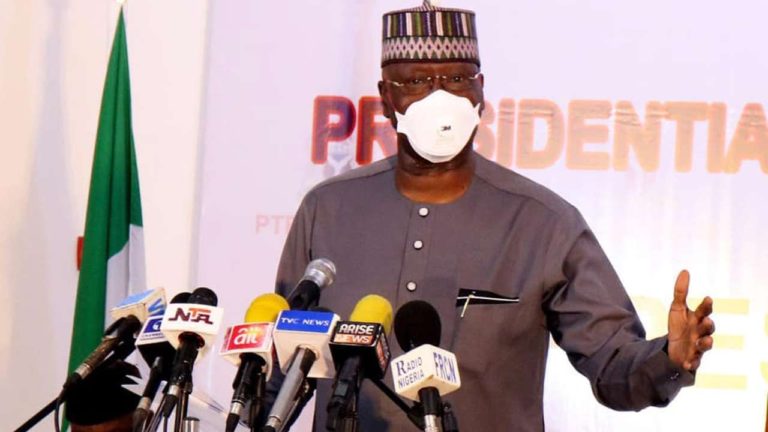
A statement signed by the Secretary to the Government of the Federation, who doubles as Chairman of the Presidential Steering Committee on COVID-19 Boss Mustapha, warned other states in the country to be vigilant and continue to enforce all protocol to guard against the spread of the coronavirus.

“Following the confirmation of the Delta variant of COVID-19 and the rising number of infections and hospitalisations in the country, the Presidential Steering Committee on COVID-19 (PSC) has put six states and the Federal Capital Territory on red alert as part of the preventive measures against a third wave of the pandemic. The states are Lagos, Oyo, Rivers, Kaduna, Kano, Plateau, and the FCT.”

Mustapha reiterated the committee’s resolution to continue to minimise the risk of importation of the deadly Delta variant of the COVID-19 into the country, adding that the current restrictive measures against travellers arriving from India, Brazil, Turkey and South Africa were still so much in place.

He, however, appealed to Nigerians to be careful of the spread of coronavirus as they celebrated Eid-el-Kabir on Tuesday and Wednesday.

“The PSC felicitates with the Muslim Ummah on the occasion of the Eid-el-Kabir celebration. It, however, urges all state governments and religious leaders to be mindful of the potential for wider spread of the virus during large gatherings.”

For Muslims celebrating the Eid-el-Kabir, the PSC recommended the decentralisation of Eid prayer to neighbourhood Friday prayer (outdoor), suspension of Durbar activities, and limitation on all indoor gatherings.”

SERAP issues 24-hour ultimatum to Buhari over NBC directive on terrorism reporting

THE Socio-Economic Rights and Accountability Project (SERAP) has urged Nigeria’s President Muhammadu Buhari to withdraw a directive by the National Broadcasting Commission (NBC) warning journalists and broadcast stations against ‘glamourising’ details on terrorism activities.

This was contained in a series of tweets made by SERAP on its official Twitter handle on Sunday, in reaction to the NBC directive.

In a letter sent to the president, SERAP described reports on terrorist attacks as a matter of public interest, stating that the directive, coupled with the likelihood of punishment, would hinder the government’s accountability to the public.

“The broad definitions of what may constitute ‘too many details,’ ‘glamourising’ and ‘divisive rhetoric’ heighten concerns of overreach, confer far-reaching discretion, and suggest that the directive is more intrusive than necessary,” it read.

A letter had been issued by the NBC on July 7, warning broadcasters against amplifying the nefarious activities of terrorists and kidnappers within the country.

The letter signed by the Director of Broadcast Monitoring Francisca Aiyetan urged broadcasters to avoid giving details on security issues or victims of insecurity so as not to jeopardise efforts being made by security operatives within the country.

“The National Broadcasting Commission wishes to draw attention to critical issues arising from Review of Newspapers by Broadcast Stations daily,” she said.

Aiyetan also noted that some of the reports had ethnological coating which could have divisive effects on the country, leaving Nigerians in a state of hysteria.

The letter reminded broadcast stations to abide by the provisions of sections 5.4.1(f) and 5.4.3 of the NB Code, which stated that “The broadcaster shall not transmit divisive materials that might threaten or compromise the indivisibility and indissolubility of Nigeria as a sovereign state.

“In reporting conflict situations, the broadcaster shall perform the role of a peace agent by adhering to the principle of responsibility, accuracy, and neutrality.”

INEC contradicts APC, says has capacity to transmit results electronically


THE Independent National Electoral Commission (INEC) has countered the  All Progressives Congress (APC) members of the National Assembly on electronic transmission of election results in 2023, saying that it has the capacity to deliver.

INEC, in a statement by its National Commissioner and Chairman on Information and Voter Education Committee Festus Okoye, said INEC’s joint committee made up of telecommunications stakeholders had revised the system and concluded that electronic transmission of results was practicable.

The APC members of the House of Representatives had maintained that electronic transmission of results would only be allowed ‘where practicable.’

The APC Senate members had earlier placed electronic transmission of results at the behest of the National Assembly or the Nigerian Communications Commission (NCC).

The People’s Democratic Party(PDP) members had voted in favour of e-transmission of election results without interference by any institution.

Okoye, while reacting to the poaition of the APC National Assembly, said the commission had uploaded results even from the remote areas where it had to use human carriers to access.

“So, we have made our own position very clear, that we have the capacity and we have the will to deepen the use of technology in the electoral process.”

Okoye noted that INEC would be guided by the power granted it by the constitution and the law.

“Our powers are given by the constitution and the law, and we will continue to remain within the ambit and confines of the power granted to the commission by the constitution and the law,” he reiterated.

He also stressed that the commission had the assurance of the network service providers regarding the possibility of deploying technology to cover a few blind spots.

“The commission will continue to pilot different solutions bearing in mind that technology is dynamic and can limit human interference in the electoral process. The commission wants broad powers to deploy technology and is not in favour of a particular solution being written into the law.

“The commission is a creation of the constitution and the law and its powers are derived from the constitution. The constitution has also given the National Assembly the power to make laws but such powers must not be in conflict with and or at variance with the provisions of the constitution.”

Okoye, however, submitted that political parties would henceforth be mandated to submit the names and photographs of their polling agents electronically, just as domestic election observers and the media who applied for accreditation to observe and cover elections had been doing.