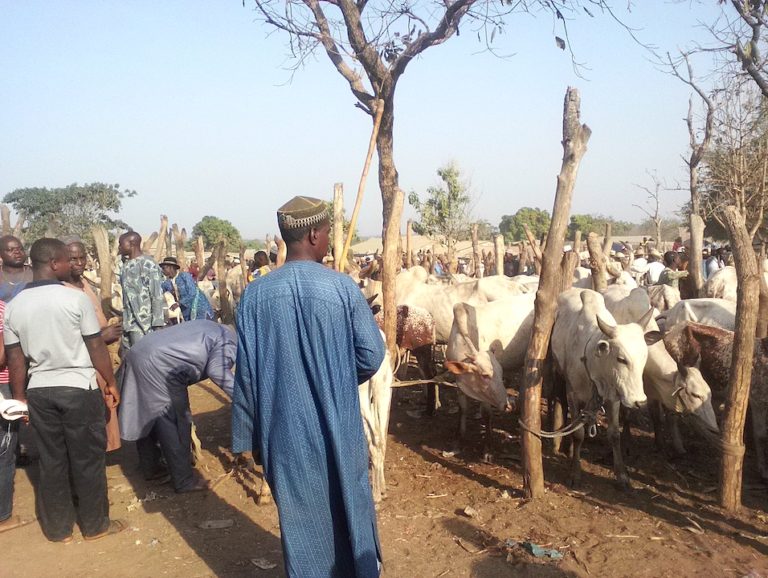
HERDERS have been asked to vacate forests in Taraba State in the next 30 days or be forced to do so.
The eviction order was given by the Emir of Muri Empire Abbas Tafida on Tuesday.
Tafida accused the herders of kidnapping residents for ransoms despite the hospitality shown them by the state.
He charged the leadership of Fulani herdsmen to fish out the bad eggs among them.
“Our Fulani herdsmen in the forests, you came into this state and we accepted you, why then will you be coming to towns and villages to kidnap residents, even up to the extent of raping our women?
“Because of this unending menace, every Fulani herdsman in this state have been given 30 days ultimatum to vacate the forests.
“We are tired of having sleepless nights and the hunger alone in the land is enormous and we will not allow it to continue,” he said.
Taraba State is one of the states bedevilled by the activities of banditry in the North-West part of the country.
In May, the state chapter of the Miyetti Allah Cattle Breeders Association of Nigeria (MACBAN) blamed Governor Darius Ishaku-led state government for the spike in insecurity in the state.
The group lamented Ishaku’s performance, especially in the areas of security, expressing sadness that the government had failed to put in place drastic measures to halt the incessant attacks on herders in the state.
In a statement by its Chairman Sahabi Mahmood Tukur, MACBAN expressed sadness that despite the several attacks on herders and their cattle, the government had not come to their aid.
According to Tukur, herders “are not being carried along by this state government,” adding that “we have never for once gotten any support from the governor since the inception of his administration. ”
He said as natives, the government should stop discriminating against herders across the state.
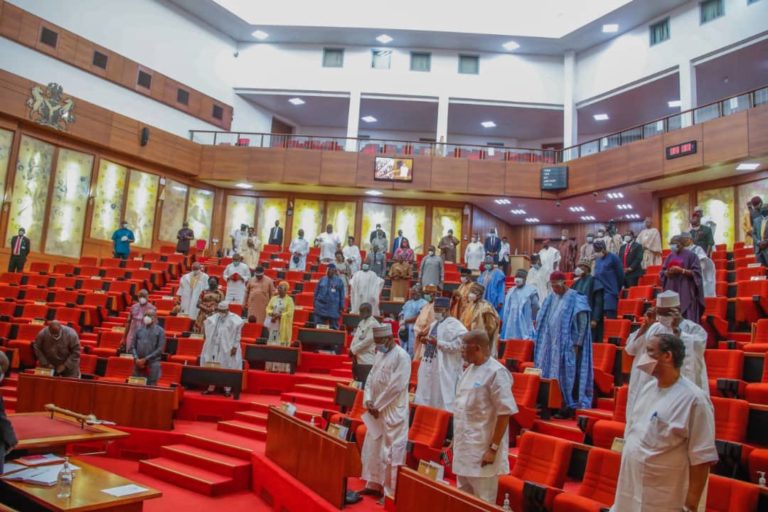
A group, Democracy Vanguard of Nigeria in Diaspora (DVND), has asked the United States to place a visa ban on members of the upper chamber of the National Assembly who voted against electronic transmission of electoral votes.
The DVND President Timothy Sule, in a letter written to the US Ambassador in Nigeria Mary Beth, described the action as shameful, disdainful, and completely reprehensible, saying it smacked of a clear contempt for the Nigerian people.
It urged all Nigeria’s partners and allies to take urgent action to prevent the situation from degenerating into the breakdown of law and order in the country.
“We call on the United States, the United Kingdom, the European Union, Canada, African Union and all ally countries to take urgent actions to nip this brewing conflagration in the bud before it consumes the nation and create a massive refugee crisis in the world,” the letter stated in part.
“In the meantime, we have attached names of all those legislators who played one role or the other in the suppression and undermining of democracy in Nigeria for a visa ban. Their family members shall not be spared of the impending visa ban as well.
“This noble intention was vehemently and vigorously challenged by some legislators from a particular zone and political party. These unpatriotic elements eventually succeeded in throwing out such a noble intention into the abyss.”
The statement equally condemned lawmakers that were absent during the passage of the bill.
While commending those who stood in favour of electronic transmission of results, the group called on President Muhammadu Buhari to withhold assent to the bill.
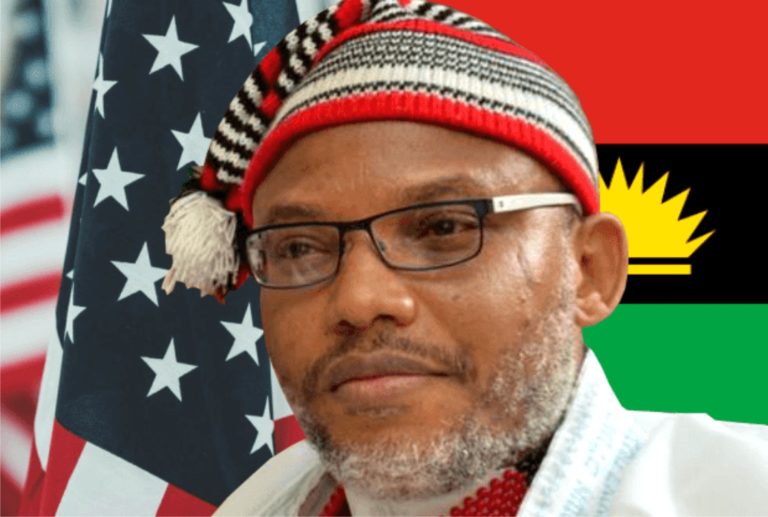
THE United Kingdom has demanded Nigeria’s explanation on how the leader of Indigenous People of Biafra (IPOB) Nnamdi Kanu was arrested and repatriated to the country.
“We are seeking clarification from the Nigerian government about the circumstances of the arrest and detention of Nnamdi Kanu,” Britain Foreign Office Junior Minister Tariq Ahmad was quoted by Reuters to have said.
The Nigerian government, through the Attorney-General and Minister of Justice Abubakar Malami, claimed Kanu was extradited two days before he was brought before an Abuja Federal High Court on Tuesday, June 29.
Although the Nigerian authorities have refused to disclose how and where the IPOB leader was arrested, Kanu’s personal testimonies to his lawyers and his allies have fingered Kenyan security operatives in his arrest, an allegation Kenya has since refuted.
Kanu faces an 11-count charge of treason, treasonable felony, terrorism, and illegal possession of firearms.
THE board of directors of THISDAY Group has announced new executive and senior appointments for the newspaper and Arise News Channel.
In the new appointments, Shaka Momodu was named editor of THISDAY. He was formerly editor of Sunday and Saturday titles.
Former Deputy Editor of THISDAY Davidson Iriekpen was named editor of the Sunday title, while Editor of the Saturday title Yemi Adebowale retained his position.
The board also approved the appointment of Summer Sambo as the director of news (Abuja) and Yemi Ajayi as director of news (Lagos) for Arise News Channel.
Similarly, the director of engagement & guest liaison for Arise News Channel is Joseph Ushigiale while Tobi Soniyi is the deputy director of News (Abuja). Also, Ohi Odiai is the deputy director of news (Lagos) for Arise News Channel.
Bolaji Adebiyi, former daily editor, was promoted to managing editor (print and digital) while Israel Iwegbu was announced deputy managing director, THISDAY.
THE Nigerian government has been dragged to court over the country’s continued membership of the Organisation of Islamic Countries (OIC).
In the suit filed before an Abuja Federal High Court by human rights lawyer Malcom Omirhobo, the plaintiff is asking the court to terminate Nigeria’s membership of OIC, delist it from being a member, and restrain the Federal Government from using public funds to fund its membership of the organisation.
He is also asking the court to determine whether it is constitutional for the government to use public funds to fund its membership of the OIC by the combination of Sections 1(1), 10, and 42 (1) (a) (b) of the amended 1999 Nigerian Constitution.
Omirhobo is also stating before the court that the OIC is not a secular global organisation like the United Nations (UN), Economic Community of West African States (ECOWAS) and the African Union (AU), but an Islamic body established to promote, protect and preserve Islamic interests and values for the benefit of Muslims worldwide.
Therefore, he prays the court to declare that Nigeria’s membership of the OIC, which is funded, sustained, managed and run with public funds and the commonwealth of Nigerians by the first defendant, illegal and an adoption of Islam as the official religion of Nigeria.
The plaintiff says it is imroper, illegal, unlawful and unconstitutional.
He is also seeking a declaration by the court that Nigeria’s membership of the OIC with public funds is to the advantage, pride, prestige, and privilege of Nigerian Muslims to the disadvantage, restriction, and disabilities of other religions and, therefore, discriminatory, improper, illegal, unlawful and unconstitutional.
Omirhobo states that Nigeria is a multi-ethnic and religious state inhabited by over 200 million with diverse ethnic groups, languages, and cultures.
He further argues that apart from Islam and Christianity, there are other religions practised in Nigeria such as Buddhism, Hinduism, Judaism, Daoism, Atheism, Baha’i, Confucianism, Druze, Gnosticism, Jainism, Rastafarianism, Shintoism, Sikhism, Zoroastrianism, and Traditional African religion, among others.
Thus, Nigeria’s membership of the OIC presents the country as an Islamic State in the international community, when in the real sense, it is a secular state, he argues.
Omirhobo equally prays the court to grant his application as the defendants’ acts amount to violations of the constitution.
In his affidavit, he deposed that he had filed several public interest suits, and it was within his civic responsibility to bring the application before the court.
“That I have filed several public interest suits in defence of the Constitution of Nigeria and the interest of the poor, the weak, the needy, the illiterate, the uninformed, the invulnerable, the incarcerated and the unrepresented.
“That I am a member of the Human Rights Law Committee and the Pro bono Committee of the International Bar Association (IBA). That by the oath I took during my call to the Nigerian Bar ceremony as a minister in the temple of justice and Solicitor and Barrister of the Supreme Court of Nigeria. I am commissioned to defend the Nigerian constitution at all times.
“That as a Nigerian citizen, it is my civic obligation and responsibility to defend the constitution at all times. I owe my allegiance to my country and her constitution; that I am a stakeholder in the Nigerian project and a co-owner of the Nigerian commonwealth.
“That as a result of the above, I am familiar with the facts of this case. I am bringing this public interest case for the interest of the Nigerian Public, especially for the interest of the poor, weak, illiterates, uninformed and vulnerable ones therein,” he swore.
He prays the court to declare that the Federal Government, 36 states, and the Federal Capital Territory shall not adopt any religion as state religion.
Joined in the suit are the Federal Government, Attorney General of the Federation, and Minister of Internal Affairs as first to third defendants.
No date has been fixed for the matter yet.
Nigeria joined the OIC under the regime of the military dictator, Ibrahim Babangida, in 1986.
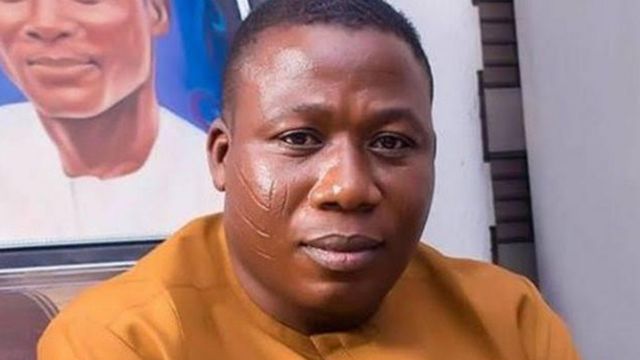
LEADER of the umbrella body of Yoruba self-determination groups known as Ilana Omo Oodua (IOO), Banji Akintoye, says efforts are being made to stop the extradition of Sunday Adeyemo, popularly known as Sunday Igboho, following his arrest in the Republic of Benin.
Akintoye, who confirmed the arrest of Igboho in a statement issued by his Communications Manager Maxwell Adeleye, said that he was working with other ‘Yoruba patriots’ to ensure that no harm was done the self-acclaimed Yoruba activist.
While expressing hope that Benin would respect the rights of Igboho, Akintoye noted that Igboho had not committed any crime that warranted his arrest.
“I and other Yoruba Patriots who are immediately available are now working to provide the assistance necessary to ensure that nobody will be able to do to him anything unlawful or primitive and to prevent him from being extradited into Nigeria which is strongly possible,” he said.
“Fortunately, Benin Republic is reliably a land of law where the authorities responsibly obey the law. We have secured the services of a leading and highly respected lawyer whom we can confidently rely on.”
He called on ‘Yoruba Nation’ at home and abroad to stand strong by resolving that neither Sunday Igboho nor any other Yoruba person would henceforth be subjected to any inhuman or dehumanising treatment of any kind.
Akintoye added that Igboho’s travail in the hands of the Nigerian authorities were because he stood to defend his people that were being unjustly killed and whose livelihoods were being destroyed by violent herders.
“For a start, we must all see to it now that Sunday Ighoho will get his freedom back so as to be able to move and operate as a free person. We all know he has committed no crime.
“We know that some people are trying to suppress or even eliminate him only because he stood up to defend his kinsmen, women and children who are being massively killed and raped in their ancestral homeland; who are having their assets and means of livelihood destroyed, and who are facing ethnic cleansing and even genocide without having the benefit of protection by the rulers of their country.
“We know, furthermore, that for the protection of his people who are being brutalized, he has joined hands with many of his brethren to take the legally appropriate step, namely to seek the intervention of the International Criminal Court,” Akintoye said.
THE family of Jumoke Oyeleke, a 25-year-old girl killed during the Yoruba Nation rally in Lagos State, has demanded justice as an autopsy carried out on the deceased contradicts an earlier claim by the Lagos State Police Command.
According to Premium Times, the autopsy result, which was carried out by S.S Soyemi, a doctor in the Department of Pathology and Forensic of the Lagos State Teaching Hospital (LASUTH), revealed that Jumoke died of ‘hemopericardium, disruption to the heart and lungs and missile injury to the chest.’
The result also disclosed that the deceased died at 11:30 am, a period the protest was taking place.
Reacting to the autopsy result, the deceased’s uncle Afolabi Wasiu said the family was required by the police to pay the sum of N25,000 for transportation of the corpse for autopsy.
He lamented that the family was yet to receive feedback from the police despite giving assurances that they would get back to the family after the conclusion of their investigation.
“What they said was that they couldn’t find the bullet in her body. That the bullet went out, that is what the autopsy is saying,” he said.
He noted that when they went to request her body on the same day of the incident, the police commander at Ojota asked them to “calm down for them to be able to detect the kind of bullet that penetrated through her, that they were not the only security agencies in that vicinity at the time, that they cannot detect that this was what happened.”
“They said when they start the investigation, they will check the bullet and the number.”
Wasiu said that they had planned to bury Oyeleke on Monday but their lawyer, Ernest Olaoluwa, advised against it.
“Our lawyer said we should not bury her yet. Because they need to get more information about the death, they said it is not just a death that will come and go like that,” he said.
Despite, the testimonies of multiple witnesses that Jumoke was hit by a stray bullet of security operatives who were forcefully dispersing the protesters, the state police command has refused to accept responsibility for the incident.
It rather claimed in a statement that operatives deployed to forcefully stop the protest did not fire any live ammunition at protesters.
“The said corpse was found wrapped and abandoned at a distance, far from Ojota venue of the rally, behind MRS Filling Station, inward Maryland, on the other side of the venue, with dried bloodstains suggesting that the corpse is not fresh.
“After a close look at the corpse, a wound suspected to have been sustained from a sharp object was seen on it.”
A self-acclaimed Yoruba activist Sunday Adeyemo, popularly known as Sunday Igboho, has been arrested in the Republic of Benin, according to reports.
Igboho was arrested in Cotonou by Benin Republic’s security forces while trying to flee to Germany.
“He was arrested in Cotonou while he tried to travel out on Monday night. His destination was Germany. The security forces in the Benin Republic should repatriate him to Nigeria on Tuesday,” a source was quoted by the Punch to have said.
Igboho had been declared wanted by the State Security Service (SSS), who raided his Oyo home earlier this month.
Before, the deadly midnight raid that led to the brutal death of two of his aides, Igboho had been planning a Yoruba Nation rally in Lagos to advance his separatist agenda for the ethnic group.
Thirteen of his ‘armed men,’ including 12 males and one female, were arrested.
The SSS alleged that intelligence reports showed that Igboho was stockpiling arms to cause chaos within the country’s South-West region, which he had denied.
The Federal Government had said the agitator was working at getting a new passport to flee the country for Germany.
The Nigerian Immigration Service (NIS) had placed a notice for his arrest across Nigerian borders.
Last week, the Federal Government said that Igboho was planning to flee the country to Germany and directed all its security operatives to arrest him anywhere he was found.
On Tuesday, the International Criminal Court acknowledged a 27-page petition filed by Yoruba Nation agitators signed by the Leader of Ilana Omo Oodua Banji Akintoye, Igboho, and 49 Yoruba self-determination groups.
The petition was filed against President Muhammadu Buhari; the Attorney General of the Federation and Minister of Justice Abubakar Malami; former Chief of Army Staff Tukur Buratai; and former Inspectors General of Police Ibrahim Idris and Muhammed Adamu.
They accused the Nigerian leaders and security chiefs of genocide and crimes against humanity against the Yoruba people of Ekiti, Oyo, Osun, Ondo, Ogun, Okun Land in Kogi, and Kwara states.
THE Director-General of the National Institute of Pharmaceutical Research and Development (NIPRD) Obi Adigwe, on Monday, sought funding interventions, especially from local philanthropists and corporate bodies, to advance the institute’s research and development (R&D) on Niprimune.
The DG made the call during an exclusive interview with The ICIR at the NIPRD’s headquarters in Abuja.
“People who have funding should come forward and support the work we do at NIPRD.”
He said scientists in Thailand had started using the tea from the same plant from which Niprimune was developed.
The drug, according to Adigwe, was an immune-modulatory phytomedicine, developed from a local plant in the country known as Andrographis paniculata.
The National Agency for Food and Drug Administration (NAFDAC) had, in January, approved Niprimune for safe consumption after NIPRD developed the drug for boosting the human immune system against coronavirus (COVID-19).
“We have identified some other plants which grow here in Nigeria like Andrographis paniculata. We were the first to put forward the hypothesis that this particular product could have some activities against COVID-19. And based on our profiling of the product in pre-clinical tests, we have put forward that hypothesis and actually gone forward to get that product listed by NAFDAC.”
“…Nigerians can legally buy our product (Niprimune) and use it as either preventive or adjunct to whatever treatment you are tasking because it has empirical evidence that it boosts the immune system but we cannot legally say this product (Niprumune) cures COVID-19. That, we cannot legally do until we finish the clinical tests.”
Andrographis Photo Credit: The Guardian
The DG said about eight professors, over 70 master’s degree holders and some Ph.D. holders aggregated around the pharmaceutical value-chain to develop the drug.
The studies around the drug, he said, had been peer-reviewed by other scientists to understand the processes through which the research was conducted.
According to him, the plant could have “some activities against COVID-19.” Hence, the institute already commenced processes for the clinical trial against the pandemic.
He emphasised that until the clinical trials were completed, it would be too early to make a categorical statement of the drug’s ability to cure COVID-19.
“It is the clinical trials that would determine exactly what that particular substance would do to a human body that has COVID-19 in it, and that is the step we are in,” he noted.
The DG explained further that activities in the context of their discovery implied that, “when we say it could have activities, it means we have done invitro tests – tests inside test tubes, and we have also done pre-clinical tests – tests with animals.
“And some of the profiles you are seeing in the test tubes or animals indicate that it may have activity against COVID-19 but you cannot categorically say that a product can cure COVID-19 until you finish the clinical trial. That’s the stage we are about to enter.”
Since the COVID-19 outbreak, a total of over 4 million deaths have been recorded globally, as of 19 June. This is a figure from almost 191 million confirmed cases, according to the World Health Organisation (WHO).
As at June 29, about 3.9 million Nigerians had received the Oxford AstraZeneca jabs in both first and second rounds.
Though some Nigerians have developed hesitancy against the vaccines, others are more interested in local solutions against the pandemic.
The Federal Government, in a BBC report, had released N10 billion to support domestic production of vaccines.
Adigwe also told The ICIR that the pharmaceutical group, under the Manufacturers Association of Nigeria (MAN), had offered NIPRD N50 million as an endowment fund to develop local solutions for the disease.
However, he criticised poor funding from international development agencies and called for local supports from Nigerians.
He added that no other local herbs from traditional medicine practitioners had been subjected to laboratory analysis, hence, he could not establish if any of the herbs was a potential cure.
Nevertheless, he encouraged the traditional health practitioners to submit their discoveries to NIPRD for evaluation. About 100 of the herbal practitioners, he noted, were trained by the institute.
“If you come up with a product and you feel it can cure COVID-19, you don’t need to see the DG. Download the form from the website, fill it and bring the samples, pay the price and that particular product will be analysed according to the indications you have said it has,” he stated.
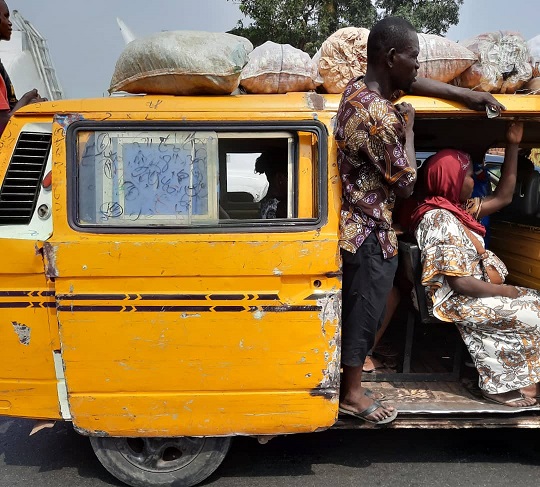
IN Lagos, Nigeria’s commercial capital, agberos fleece the state of billions of naira in transport taxes collected from drivers of commercial buses, tricycles and motorcycles.
There are 75,000 commercial buses (danfos) in Lagos, according to the Lagos Metropolitan Area Transport Authority (LAMATA) estimates.
Each commercial vehicle driver pays at least N3,000 to agberos, also known as ticket touts, every day, according to oral testimonies and estimates obtained by this reporter from more than 50 commercial bus drivers in 21 out of 37 local council development authorities (LCDAs) in Lagos.
This means that these drivers pay an average of N225 million each day, N6.75 billion each month, and N82.125 billion each year to agberos in Lagos, according to The ICIR’s estimates.
That is not all. There are at least 50,000 tricycles (Keke Marwas) in Lagos, according to a 2020 report by Techcabal – Never mind the Lagos State government’s recent ban, which is just a mere pronouncement.
More than 60 tricycle drivers in 21 LCDAs in the commercial city told this reporter that they paid at least N1,800 to agberos each day.
This, therefore, means that each day, agberos walk off with N90 million from transport taxes collected from tricycle drivers. Every month, their pay reaches N2.7 billion, rising further to N32.85 billion every year.
The average collection, however, is higher in Mushin (N2,500 – N3300), Isolo (N1,900-N2,200), Oshodi (N1800-N2,300), Coker/Aguda (N2200-N3,000) Itire/ Ikate (N2,200 -N3,200), Iru-Victoria(N2,300-N3,200), Ikeja (N2200- N2500), and Onigbongbo (N2200-N3,000) LCDAs, among others, the investigation showed.
“They often collect the money by force. Sometimes you pay in their make-shift offices, at other times you hand them the cash,” a tricyclist operating in Mushin Local Government Area told The ICIR.
Another tricyclist, who did not want her name and location mentioned, said she was tired of plying the trade because the touts often eroded her profits after the day’s hard work.
“Here, I pay up to N2500 every day, buy fuel, pay N200 to the police, N200 to traffic officials of the Lagos State Traffic Management Authority (LASTMA) and what do I have left?” she asked, rhetorically.
Transport Statistics and Annual Revenue Received by Agberos in Lagos
But Danfos and Keke Marwas are not the only means of land transportation in Lagos. Never mind the Lagos State government’s pretense on motorcycle (Okada) ban, members of the Motorcycle Operators’ Association of Lagos State (MOALS) told this reporter that there were no fewer than 1000 motorcycles in each LCDA in the state.
During interviews with motorcycle riders in Lagos that spanned two months, the reporter was told that each motorcyclist must hand out N400 and N800 each day to agberos. Based on interviews with tricycle riders in 21 LCDAs in Lagos, this reporter arrived at an average spend of N600 per day.
One member of MOALS, who gave his name as Haruna, agreed that the N600 estimate was correct, saying that it was a fair representation of what motorcycle riders paid to agberos each day.
Commercial motorcyclists or Okadas ply all the roads in the state except areas where there are some restrictions such as some parts of Eti Osa East LCDA and Ikoyi area of Ikoyi/Obalende LCDA. To avoid duplication, the reporter only considered 37 LCDAs in Lagos.
For clarity, there are 37 LCDAs and 20 local government areas in Lagos. The LCDAs are part of the larger local government areas. For instance, Isolo is an LCDA under Oshodi Local Government Area.
Going by estimates provided by MOALS members to the reporter, there are 37,000 commercial motorcycles in Nigeria’s commercial hub. By implication, motorcycle riders pay N22.2 million to agberos each day, N666 million every month, and N8.103 billion each year.
In total, commercial buses, tricyles and motorcycles pay N123.078 billion ($300.19 million) to agberos in Lagos each year. This excludes taxis, tankers and trailers as there are no relevant data on these categories.
“I don’t know exactly how much all of us make in Lagos, but I go home with N6000 to N8000 every day,” a ticket tout, also called agbero, operating in Ikorodu, north-east of Lagos, told The ICIR.
The agbero, who did not want his name in print, said he had been in the business for over 10 years and would like to remain in it for much longer.
Another agbero operating in Ojodu LCDA said he often went home with around N4500 to N6000 each day.
“But our chairmen ( leaders) go home with up to N10,000 to N15,000 every day,” the agbero, who gave his name as Tayo, said.
Lagos IGR and Agbero‘s revenue
The N123.078 billion generated by agberos each year amounts to 29.4 per cent of Lagos State’s Internally Generated Revenue (IGR) of N418.99 billion in 2020.
The amount is bigger than the IGR of any other state in Nigeria last year.
In 2020, oil-rich Rivers State was the second highest IGR generator after Lagos, but its IGR was N117.19 billion, according to the National Bureau of Statistics (NBS). The amount realised by Lagos agberos is N5.89 billion higher than Rivers State’s IGR last year.
It was followed by the Federal Capital Territory (FCT), which generated N92.06 billion in IGR – N31.018 billion lower than Lagos’ transport revenue.
Next was oil-rich Delta State, which generated N59.73 billion in IGR last year. Kaduna State generated N50.77 billion. Both were lower than transport tax realised by Lagos agberos by N63.35 billion and N72.31 billion respectively.
However, Lagos is the most indebted state in Nigeria, with a humongous N507.377 billion liability, according to the Debt Management Office (DMO)’s March 2021 report. The money generated by agberos can pay 24 per cent of the state’s debt, according to The ICIR‘s calculations, but the Lagos State government lacks the political will to take over the parks or re-organise them.
Who is an agbero?
‘Agbero’ is an informal word used in describing a person, usually a thug, who collects rates, fees, tolls and others forms of tax around motor parks.
In his ‘The Birth of the Agbero: A Toll Collector, A Menace of Lagos,’ Ayodeji Rotinwa wrote that agberos “are typically at bus stops and motor parks, the lots where buses begin their routes, and sometimes in front of shops and construction sites.
“They are often demanding money. Those at bus stops and in lots are often employees of the National Union of Road Transport Workers (NURTW), a private association that collects tolls by any means necessary from all public transporters—and which is maligned by all.”
In Lagos, agberos are non-state actors, but they are recognised by the state government. They belong to the powerful National Union of Road Transport Workers (NURTW) and the Road Transport Employers’ Association of Nigeria (RTEAN).
Revenue ends up in private pockets: There are pointers
Anyone looking at the N123.078 billion ($300.19 million) realised each year by agberos may think that the money goes into Lagos State account to be used for the welfare of over 20 million residents of Lagos.
But several pointers show that the money goes mostly into private pockets.
First, the amount is not recorded in Lagos State’s annual financial statements.
Normally in any audited financial statement, there is a section for the Statement of Financial Performance, which summarises the revenue and the expenditure of every organisation within a period. Revenue in this section is a sum total of all the income received in a financial period, usually a year.
Second, in the State Auditor-General’s Comments for Audited Account of Lagos State, revenue is defined as “only the gross inflow of economic benefits or service potential received or is receivable by the entity on its own account.”
The auditor-general’s report further says that “those amounts collected as an agent of government or on behalf of third parties are not considered as revenue.”
The implication is that transport taxes collected by agberos, who act as agents, are not considered as revenue.
The reporter reached out to two Lagos-based chartered accountants to ascertain whether this was a conventional accounting practice, but they answered in the negative.
Both accountants did not want their names in the paper for security reasons.
“If someone collects revenue on your behalf, the person is your agent and is entitled only to a commission agreed,” one of the accountants said.
The other accountant said it was an anomaly.
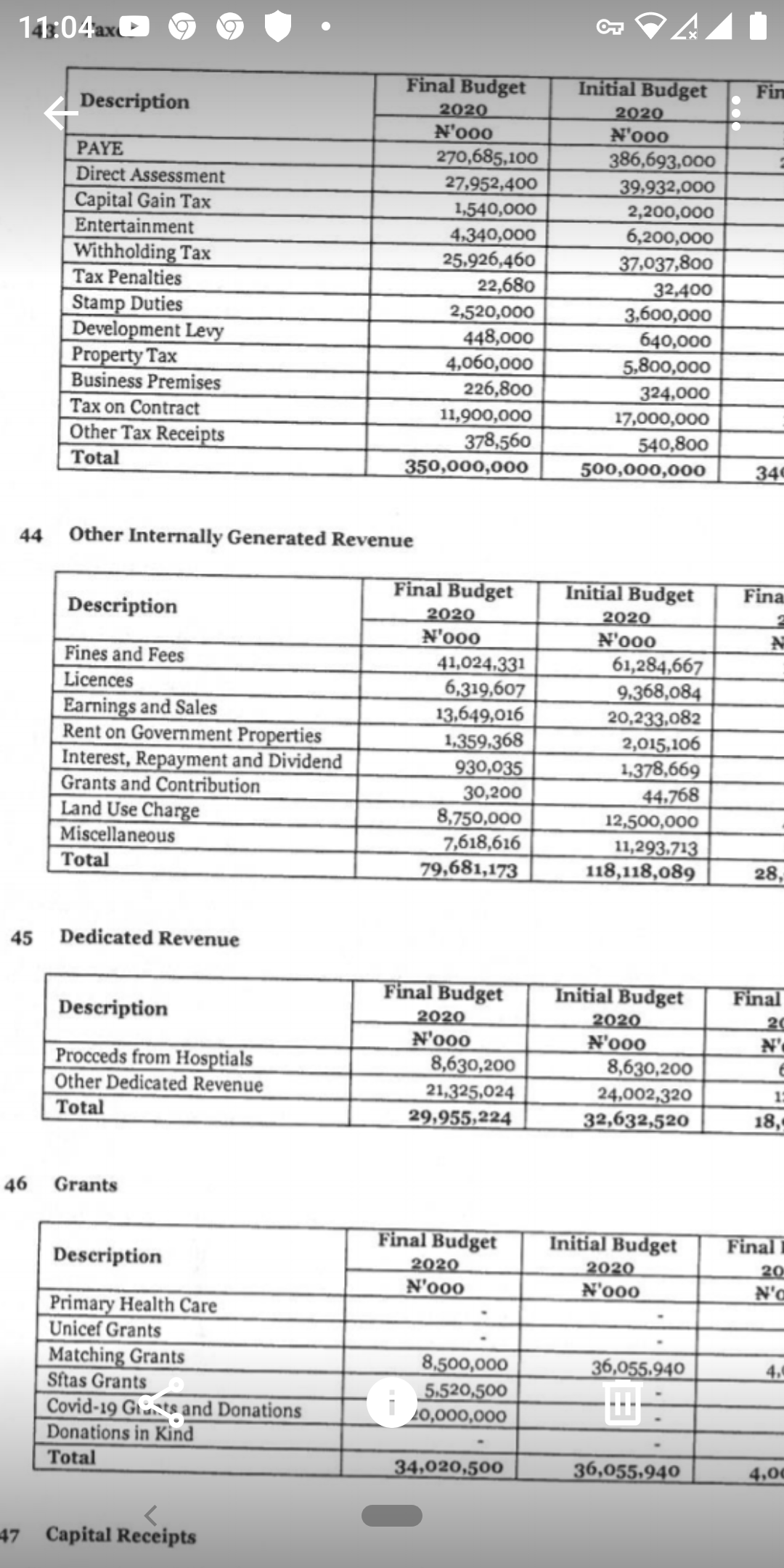
In Lagos State financial statements, tax revenues include: pay-as-you-earn, direct assessment, capital gains tax, entertainment tax, withholding tax, stamp duties, and development levy. Others are: business premises, tax on contract and other tax receipts.
Similarly, the financial statement has a chart for ‘Other Internally Generated Revenue,’ which includes: fines and fees; licences; earnings and sales; rent on government properties; as well as interest, repayment and dividend. Other IGRs are: grants and contribution; land use charge and miscellaneous. Transport tax or revenue has no place there.
There are no sections in the financial statements where details of the state’s transport revenue are recorded or explained.
Lagos State 2020 Financial Statement Statement (Taxes and Other IGR)
The reporter contacted Service Delivery Director at Lagos State Accountant General’s Office Femi Ogunlana to get more information on transport taxes from the accountant general’s perspective. He said the accountant-general’s report or comment ‘was a compendium.’
When asked whether the accountant-general’s report often covered transport revenue in Lagos, he replied that “the accountant general does not report that way.” He, however, did not provide clarity to the question.
Web of secrecy -LIRS, Finance Ministry
The Lagos State Internal Revenue Service (LIRS) says on its website that ‘road taxes’ are among the 25 taxes that are collected by the state government.
But the government agency provides no evidence on the website that road taxes are being collected by the state government.
The reporter sent a text message to Head of Corporate Communications of the Lagos State Internal Revenue Service (LIRS) Monsurat Amasa to provide details of transport revenue in Lagos, but Amasa did not reply.
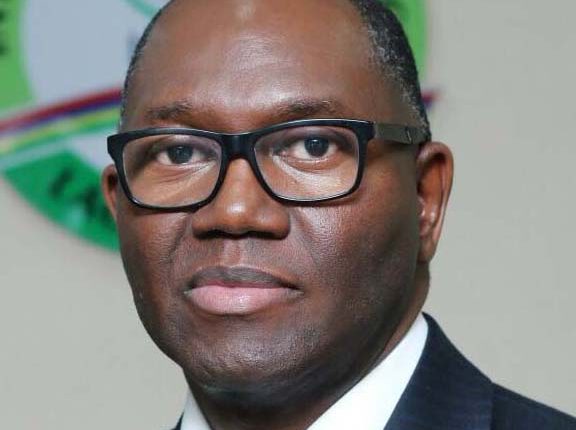
On June 21, The ICIR sent a Freedom of Information (FOI) request to the Executive Chairman of the LIRS Hamzat Ayodele Subair, requesting details of transport revenue of agberos in Lagos between 2015 and 2019, but he did not reply, though his office acknowledged receipt of the request letter by putting a stamp on it on June 23.
Hamzat Ayodele Subair, Executive Chairman of LIRS
The Freedom of Information Act 2011 was passed by the National Assembly on May 24, 2011, and assented to by former President Goodluck Jonathan on May 28, 2011.
The FOI Act supersedes the Official Secrets Act (OSA) and it proposes that “public servants are custodians of a public trust on behalf of a population who have a right to know what they do.”
However, many public officials still refuse to disclose details of their activities or offices as stipulated by the FOI Act. The Act mandates public officials or even private entities of public interest to reply to pubic- interest requests in seven days.
The LIRS did not reply to the FOI request after seven days. A reminder was sent to the government agency, yet it did not respond after another seven days.
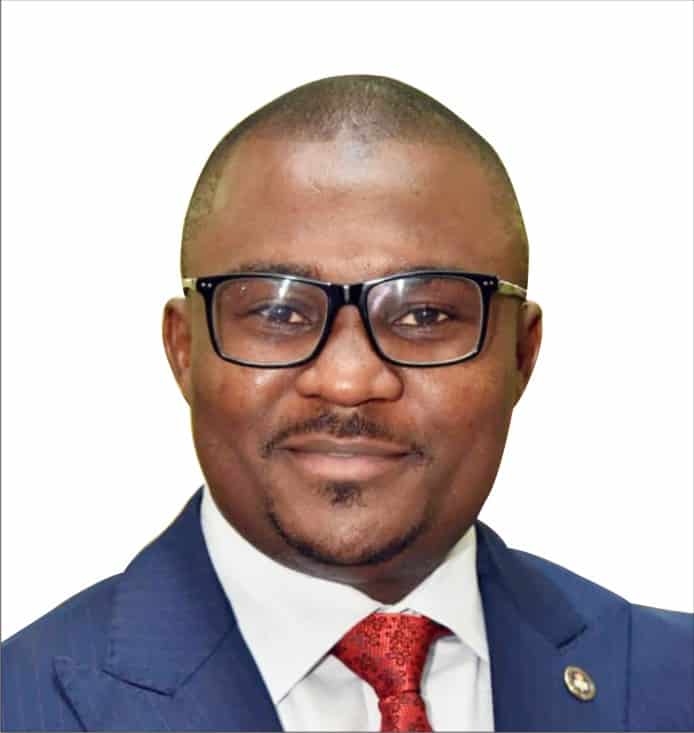
Similarly, text messages were sent to the Lagos State Commissioner of Finance Rabiu Olowo on July 1, requesting information on transport revenue in Lagos, but he did not reply.
Rabiu Olowo, Lagos State Finance Commissioner
He also did not respond to the FOI request sent to his office. One Abdulraziz, who claimed to work in the Lagos State Ministry of Finance, requested to see the reporter after acknowledging to have received the letter.
But the reporter declined, requesting him or his office to reply to the FOI request sent by The ICIR.
Abdulraziz later asked the reporter to speak with the Lagos State Ministry of Transport, but the reporter insisted that financial details of transactions in the state should be provided by the finance ministry, not the transport ministry.
Abdulraziz promised to ensure that the request was answered, but that did not happen before the story went to the press.
The NBS did not have the details
The National Bureau of Statistics (NBS) receives quarterly, six-monthly and annual IGRs of states in Nigeria.
The reporter contacted Head of Public Affairs & International Relations Unit of the NBS Sunday Ichedi, asking whether Lagos State government provided a breakdown of its IGR in 2020 or pre-2020, but he answered in the negative.
“States do not provide a breakdown, which is not so good for statistical purposes,” Ichedi said.
In other words, no agency in Lagos or outside of it provided details of transport revenue generated by ticket touts.
How agberos operate
Lagos agberos have what they call ‘pits,’ which is another name for ‘motor parks.’
Each ‘pit’ is manned by a chairman who oversees all the money collected in the park or parks in an area.
The chairman takes the huge chunk of the money, shares the rest to his subordinates and leaves little in an account operated by his union, the reporter found.
MC Oluomo, Chairman of NURTW Credit: BBC
The National Union of Road Transport Workers (NURTW) in Lagos, which is the most powerful transport union in the state, is headed by Musiliu Akinsanya, popularly known as MC Oluomo.
MC Oluomo’s new house at Oke-Afa in Lagos Credit: naijacarnews.com
He is a rich man with strong political connections. In December 2020, his daughter Nofisat Akinsanya obtained a degree in Nursing from Georgia Southern University in the United States, a feat that can only be achieved by the daughter of privileged parents.
He recently completed a gigantic building at Oke-Afa/Ejigbo in Lagos.
In September 2019, while a caretaker chairman of the NURTW, Akinsanya hailed the National Leader of the All Progressives Congress (APC) Asiwaju Bola Tinubu and Governor Babajide Sanwo-Olu for supporting him to achieve the feat.
“I cannot but also thank my father, my leader, my mentor His Excellency, Asiwaju Bola Ahmed Tinubu, for his love and support towards my emergence as the NURTW chairman. He is truly a father and a father indeed,” he said, on his official Instagram handle, as reported by The Punch.
On the other hand, Chairman of the rival body RTEAN is a less-known Mohammed Musa, who has now been confirmed as the national president of the union.
Musa Mohammed, Chairman of RTEAN in Lagos
The Tricycle Owners Association of Nigeria (TOAN) and the Motorcycle Operators Association of Lagos State (MOALS) are both under the NURTW. The two unions are not independent and all the money collected from them goes into the purse of the NURTW.
As illustrated earlier, agberos collect an average of N3,000 from commercial buses, N1,800 from tricycles and N600 from motorcycles each day.
However, outside this amount, they collect and submit only N100 or N200 to local government area councils or LCDAs, taking the larger chunk of what many consider as ‘spoils of violence.’
This was confirmed by some agberos who spoke with this reporter. Chairman of Ikeja Local Government Area Mojeed Alabi Balogun also confirmed this to the reporter, saying that his council receives N200 per day from each park.
An opaque process
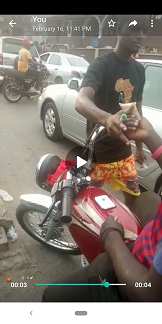
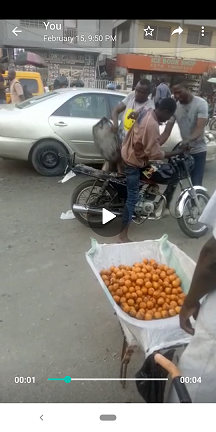
As shown by the videos uploaded in this story and the pictures below, most agberos in Lagos do not issue tickets, making accountability to whoever they report to, impossible.
Some of them appear in yellow uniforms with green caps to match, while others wear green and white attire. Many others appear in mufti, making it difficult to know which is which.
“In Lagos, due to lack of regulation of the sector, it is possible for anyone to start collecting money from commercial buses, tricycles or motorcycles and do that for three months without anyone asking questions,” a commercial bus driver, who gave his name as Okebukola Oyedeji, said.
A bus driver known by his first name, David, said there could be as many ticket touts in Lagos as commercial bus drivers.
“You can wake up one day as a commercial bus driver and meet 10 ticket touts. Sometimes, you meet more. They will fight you, hit your bus, break your side mirror and even injure commuters while trying to extort money from you,” David, who operates from Ikeja to Ojota, told The ICIR.
Another bus driver, Olufemi, explained that ticket touts could ruin a commercial bus driver’s day.
“If they want to ruin your day, they simply park your vehicle. It will take a lot of money from you to ‘bail yourself,” the driver who was not keen at giving out his name, said.
Findings show that only very few agberos issue tickets. Even when they do, they issue tickets with face values of N300-N400 but collect N2000 or more.
Another receipt issued by NURTW ticket in Lagos East LCDA
In Lagos Island East LCDA, agberos issue two tickets of N300 face value to tricyclists but collect N1800-N2200 each day.
In Coker/ Aguda LCDA, the NURTW issues tickets of face value of N120 to motorcyclists but collects N600 to N700 each day from them. The reporter found this anomaly in all the 21 LCDAs visited in Lagos.
Chairmen of the two LCDAs Kamil O. Salau and Akinyemi-Obe Omobolanle did not respond to calls and text messages sent to them on issues regarding transport taxes in their areas of jurisdiction.
Most of the NURTW members spoke with the reporter in camera. Efforts to reach Chairman of the NURTW Musiliu Akinsanya proved abortive as two phone numbers given to this reporter as belonging to him did not go through.
In all the LCDAs visited by the reporter, it was found that agberos in mufti often had markers of different colours with which they identified paying vehicle drivers or motorcyclists.
Sometimes, the markers can be up to three, as in Isolo, Ikorodu, Oshodi, Iru/Victoria, Mushin, Bariga, and Itire/Ikate, among others. The agberos with the markers often do not issue tickets and they collect mostly N100-N200, investigation found.
The most bizarre part of the agbero show in Lagos is that failure to comply with payment of these multiple taxes often lead to fights or removal of essential parts of the vehicles. For motorcyclists, their seats are removed.
Impact on transport cost
The activities of touts have raised transport costs across Lagos. A tricyclist at Isolo LCDA, who did not want his name mentioned, said passengers would have been charged N50 for most places in the LCDA but for the activities of touts.
“From 7 & 8 to Canoe could have been N50, but we charge N100 or N150 (in the evening) because agberos also want their own share,” he said.
Commercial buses in Idumota, Lagos
A commercial bus driver, Sam, plying Oshodi area, said that moving from Oshodi to Ilasamaja used to cost N50 but most drivers now charged double or triple of that due to demands by agberos.
“From Oshodi to Mile 2 is N200. It used to be N100 and later N150, but agberos‘ charges have raised the transport cost,” Sam said.
Another commercial bus driver plying Amuwo-Odofin area said passengers were paying double due to the many charges by touts.
And it is rubbing off on commuters.
A commuter from Ayobo/Ipaja LCDA to Bolade in Oshodi said she spent N450 each day, noting that the cost would not have been above N300 if not for touts harassing commercial vehicle drivers.
“Before drivers move from Ayobo to Oshodi, they pay different amounts to up to six sets of touts. We are the ones suffering it and bearing the burden,” the commuter, who gave her name as Ngozi, said.
Another commercial bus passenger, Oluwabunmi, who said she plied Ikotun to Cele, two separate LCDAs in Lagos, said transport cost was eroding her income, no thanks to agberos.
“I earn a salary of N35,000 monthly but I spend more than N15,000 on transportation because of agberos dictating fares to drivers and exploiting them.”
Nigeria is the poverty capital of the world, with 105 million people, which is 50 per cent of the population, in extreme penury, according to the World Poverty Clock. Unemployment in Nigeria reached a record 33.3 per cent in the fourth quarter of 2020 as against 27 per cent in the second quarter of the year.
Inflation was 17.75 per cent in June 2021 but food inflation was 21.83 per cent, meaning that many Nigerians spend a lot of their income on food.
With rising transport costs, fuelled by non-state ticket touts, lives of people in Africa’s most populous nation have become hellish.
“They are just adding insult to injury. The fact that the state government does not understand how these touts impoverish Nigerians is a source of worry,” A British-born Nigerian Ese Dimitiri told The ICIR.
“Those responsible should cover their faces in shame for failing the society,” she said.
One of the two tickets issued by agberos in Lagos East LCDA ticket
Agberos rip off Lagos while infrastructure decays
If Lagos were a country, it would be among the seven largest economies in Africa.
Official estimates in 2017 put the size of the economy at $136 billion -32 per cent of Nigeria’s Gross Domestic Product (GDP) at that time.
However, it is, perhaps, one of the few mega cities in the world without light rail systems. In Africa, Johannesburg (Johannesburg -Pretoria Railway) , Addis Ababa (Addis Ababa Light Rail) and Nairobi (Mombasa-Nairobi Standard Gauge), among others, have railway systems that enhance the movement of the people within the cities, but not so in Nigeria’s richest state.
Light has come at the end of the tunnel with Lagos-Ibadan Railway, but it does not cover intrastate movement in Lagos.
While agberos fleece the state of over N123 billion yearly, infrastructures in the state rot.
Roads in several communities, ranging from Ikotun to Ejigbo local council areas, are in dilapidated state, with over 20 million residents spending hours in traffic.
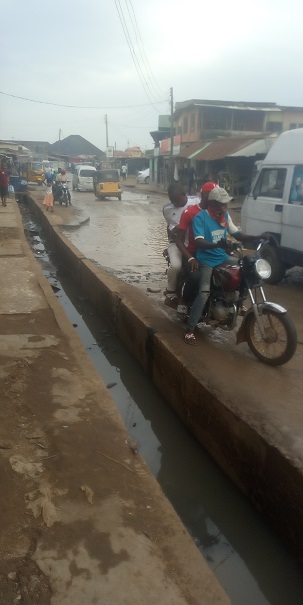
Nurudeen Obe Street in Ejigbo LCDA is a typical example of the failure of the state government to provide good road infrastructure for residents.
Areas like Ijagemo and Ijede are also other examples.
In mid-July 2021, Minister of Works and Housing Babatunde Fashola announced that the Federal Government had awarded five road contracts to Dangote Group.
One of the road contracts (49.15 km) connects Bama to Banki in Borno State (at N51.02 billion). Another (49.58km) road connects Dikwa to Gamboru-Ngala, also in Borno State (for N55.5 billion). Total amount budgeted for the two (98.73km) roads was N106.52 billion.
Experts say that the N123.078 billion collected by agberos can build more than 100km of roads in Lagos.
In a research entitled ‘Economic Valuation of Poor Road Infrastructure Lagos: A Focus on Urban Households,’ Austin Otegbulu of the University of Lagos said, “The interface between transportation investment and economic development has broad ramification that goes beyond the basic purpose of moving goods and people.”
Coker Aguda Motorcycle ticket of N20
Agberos holding Lagos to ransom
On many occasions, Lagos agberos, who often work as thugs for politicians, hold Nigeria’s richest state to ransom.
Many people argue that they are so wealthy that they can shut down Lagos any day they so wish. And this has happened many times.
In February this year, there was a fight between rival agbero factions at Obalende in Lagos. The area was shut down for hours as violence went on. Police and other security agencies stayed away.
On July 14 this year, soldiers and agberos fought at the popular Ladipo auto spare parts market, leading to the death of five people.
There have been several clashes among ticket touts or agberos in Lagos, leading to deaths or shutdown of critical parts of the state, which is Nigeria’s biggest investment destination.
“The Lagos state government has more directly empowered crime bosses in the NURTW to create an alternate economy for themselves and determine the outcome of elections in the state,” Lead Partner at SBM Intelligence Cheta Nwanze said in a February 2021 article.
Nwanze’s article from which the quote above was taken was challenged by Lagos State government, but the Lagos State officials have taken a position in favour of the NURTW, which was banned by Oyo State government in 2019.
Agbero collects N100 from a motorcyclist, leaving marker print on the motorcycle
“The National Union of Road Transport Workers (NURTW) is actually a union recognised by law. I know some people say ban them, but the government must also be carefu,” Deputy Governor of Lagos State Obafemi Hamzat said in September 2020.
“When you just say arbitrarily ban them, what stops you from saying I want to ban Nigerian Medical Association (NMA)? Do you understand? There are times government and NMA have issues; does that mean they should be banned? They are expressing their opinion. They might be wrong or right but they have the right to express those opinions. And then remember these people (NURTW) are Nigerians; they are our brothers and cousins.”
How transport tax is handled in South Africa
The South African National Roads Agency (Sanral), managed by the government, is responsible for road and traffic administration in the country. It has offices in all the cities, including Cape Town and Pretoria.
Like the NURTW, it collects road taxes, but unlike the NURTW, it declares money collected. In 2019 and 2020, Sanral reported R687 million (equivalent of N19.5 billion) and R660 million (N18.75bn) respectively from collection of e-tolls.
Tolls and fees collected from the cities go to the central purse, from where projects are executed.
The agency is currently spending R1.65-billion on the construction of 1.1-km-long Mtentu Bridge near the Wild Coast in the Eastern Cape.
Tax leakages in Nigeria
There are tax leakages Nigeria. A few individuals steal government taxes while some corporate organisations evade or avoid taxes.
Tax evasion occurs when a person or firm deliberately avoids paying tax illegally. On the other hand, avoidance is “the use of legal methods to minimize the amount of income tax owed by an individual or a business,” Investopedia explains.
In 2020,Nigeria’s chief tax collector, the Federal Inland Revenue Service (FIRS), said that there were $10 billion in tax leakages arising from multinational corporations’ illicit profit shifting (to low-tax jurisdictions).
Executive Chairman of the Federal Inland Revenue Service (FIRS) Muhammad Nami had also said in January 2021 that Nigeria lost $178 billion to tax evasion by multi-nationals in 10 years.
A 2018 report by the Partnership for Social and Governance Research cited a research work by the High-Level Panel on Illicit Financial Flows from Africa, which showed that Nigeria accounted for 30.5 per cent of illicit financial outflows ( including taxes) from the continent.
The research by the Partnership for Social and Governance Research said that Africa’s most populous nation lost $217.7 billion to illicit financial flows (including tax outflows) between 1970 and 2008.
Lagos State has always complained of tax evasions or avoidance. On July 19, 2021, the state sealed 16 firms over tax evasion.
“Now, the service has resumed sealing of firms particularly the hospitality firms. It is committed to continuing the exercise until full compliance to tax payment and remittance are achieved,” LIRS Director of Legal Services Seyi Alade was quoted to have said.
However, the state is reluctant to plug, perhaps, the biggest tax/revenue leakage in the country, which is transport revenue going into personal pockets of non-state actors.
The reporter had earlier done a story on how local government officials steal government taxes/levies with impunity.
Which way Lagos?
Some Lagosians say that the agbero phenomenon is a way of creating jobs for the teeming unemployed persons in Lagos.
The unemployment rate in Nigeria was 33.3 per cent in the fourth quarter of 2020, according to the NBS. However, Lagos has a high unemployment of 37.14 per cent –higher than the national average.
An agbero removes a motorcyclist’s seat for refusing to pay N100 at Yaba Local Government Area
A Lagos-based businessman Olugbenga Adeniyi said every cloud had a silver lining, pointing out that agbero business was a way of taking many out of the streets.
However, Deputy Director of the Socio-Economic Rights and Accountability Project (SERAP), which focuses on economic, social rights and transparency, Kola Oluwadare, told the reporter that the issue lied in financial transparency and accountability.
“It is not only in the transport sector, but it extends to other sectors in the state,” he said.
He said he would be surprised if there were no report of Lagos State auditor-general on transport revenue in Lagos.
“Auditor-general should be the one to look into all the accounts. I will be surprised if the auditor-general has not looked into it and made recommendations on that.”
A finance expert Bala Augie expressed the need for the state government to digitise the process and enable transporters to pay the rates/ taxes into designated accounts or through fintech platforms.
“They can begin to gradually embrace digital payments to reduce the level of leakages not just in transport sector, but also in other areas where there are other leakages,” he recommended.
Nurudeen Obe Street, Ejigbo in Lagos
A market analyst, manufacturer and managing director of a servicing company Ike Ibeabuchi said, “Solution to Lagos State lack of transparency is the solution to Nigeria’ s lack of transparency.”
He suggested disbandment of agberos in Lagos and re-organising them for efficiency and accountability.
Oyo State Governor Seyi Makinde banned the NURTW in 2019 due to impunity and absence of transparency.
“But I know that the willingness to do this is lost because the so-called touts have their relevance during politics,” Ibeabuchi said.
Former Director-General of the Lagos Chamber of Commerce and Industry (LCCI) Muda Yusuf toed Augue’s line, stressing the need to move all transactions online or via the banks.