Home Blog Page 1773

Buhari says fighting corruption is difficult under democracy


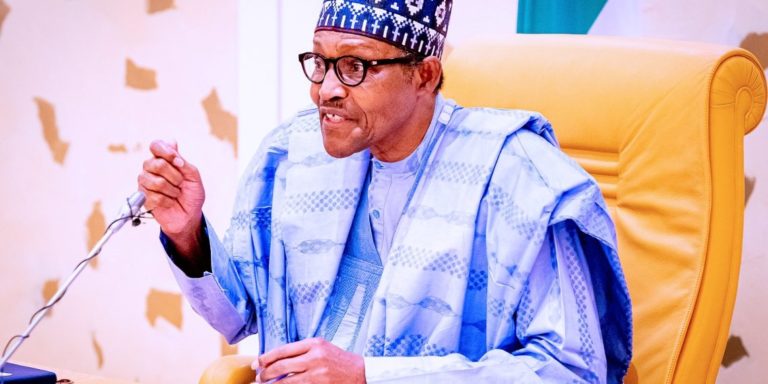
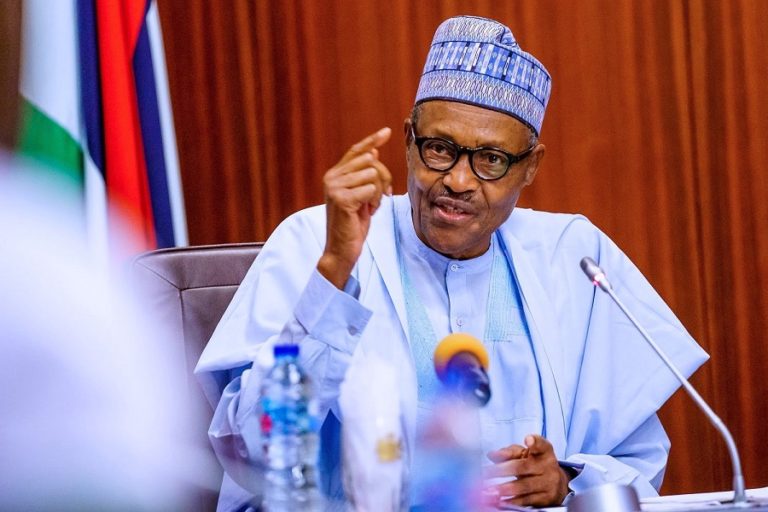
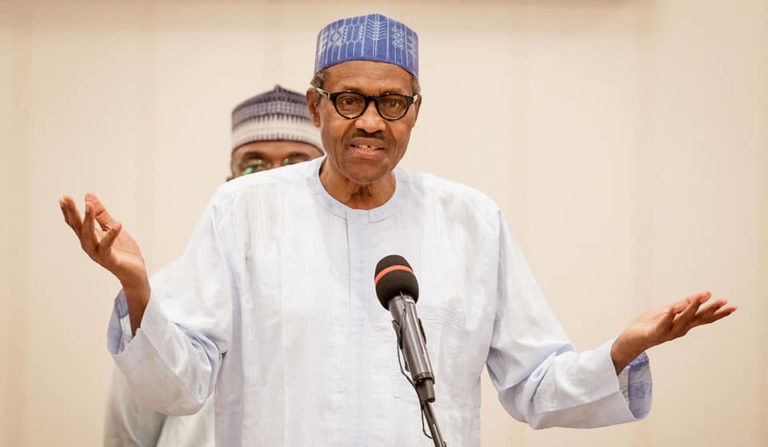
FACED with widespread criticisms over concerns that his administration’s anti-corruption campaign is not effective, Nigerian President Muhammadu Buhari has explained that it is not easy to fight corruption under a democratic government.

Buhari made the observation in an interview with the Nigerian Television Authority (NTA) on June 11.

Responding to a question concerning his administration’s faltering campaign against corruption, Buhari observed that during his time as a military head of state, he was able to arrest and jail public officials that were suspected of corruption.

He noted that it was not possible to do the same thing in a democracy.

Seemingly giving an excuse for his inability to live up to expectations on his promise to fight corruption, Buhari said, “I would like to repeat what I used to say. When I was younger in the uniform, when I came, I arrested the President, Vice President, ministers, governors and commissioners and put them under detention and told them that they were guilty until they could prove themselves innocent.

“Now, this is opposite the democratic system as people would like to believe.”

Campaigning ahead of the 2015 presidential election, Buhari had vowed that “anyone who steals Nigeria’s money will end up in Kirikiri Maximum Prisons” and the fight against corruption was among the major agenda of his administration when he assumed office as president on May 29, 2015.

However, about six years after, his anti-corruption efforts have not recorded much success – rather it appears that the level of corruption has increased.

In Transparency International’s 2020 Corruption Perception Index (TI-CPI), released in January, Nigeria slumped to 149 (out of 180), scoring 25 points out of 100.

It was Nigeria’s worst ranking since 2015, placing the country as West Africa’s most corrupt nation after Guinea-Bissau.

In 2019, Nigeria was ranked 146th, with a total score of 26 (out of 100). In 2018 and 2017, the country maintained a CPI score of 27, ranking 144 and 148 respectively.

Nigeria had ranked 136 out of 176 with a score of 27 in 2014 one year before Buhari was elected.

Although the Nigerian government had faulted the Nigeria’s low rating in the 2020 Transparency International Corruption Perception Index claiming that it did not truly reflect the efforts being made to fight against corruption, the latest ranking indicated that corruption had continued to thrive in Nigeria despite the pledge by Buhari and his party, the All Progressives Congress (APC), to fight corruption.

Buhari, in the interview with the NTA, also suggested that some elected political office holders at the state and federal levels are corrupt.

He said, “Nigerians, I think, are very forgetful. I am very pleased that the majority of Nigerians think that this administration, under the circumstance, are (sic) doing their (sic) best but people who misappropriated funds are elected members either at state or federal level.

“You can accuse them or try to prove that when they were elected members of the House of Representatives and they are given ministries and so on, they had only one house and maybe a wife but now they have several houses maybe in Abuja, maybe in Lagos.

“So, rarely, if you try to work out their legitimacy limit, viz-a-viz their expenditure, they will be exposed.”

Although Buhari made a case for the establishment of a special court to prosecute corruption cases, which he said would boost his administration’s anti-graft war, the country’s main anti-corruption agencies, the Economic and Financial Crimes Commission (EFCC), and the Independent Corrupt Practices and Related Offences Commission (ICPC) have been losing corruption cases in court.

Many high profile corruption cases, such as the N1.6 billion fraud allegation involving an ex-presidential aide, Warimapo-Owei Dudafa, were dismissed by courts on the grounds of insufficient evidence.

In an earlier report, The ICIR had noted that, after about five years in office, the Buhari government was yet to deliver on the anti-corruption fight.

The report observed that it was still business as usual, with public officials and politicians continuing to misappropriate public funds with little or no consequence.

Many cases of corruption that have taken place under the Buhari administration are well documented in the media and civil society and international organisations have also reported about unbridled corruption under Buhari’s watch.

The current state of affairs in the country led to Nigeria’s poor ranking on Transparency International’s Corruption Perception Index.
 

Naira responding to market forces, not devalued -Finance minister

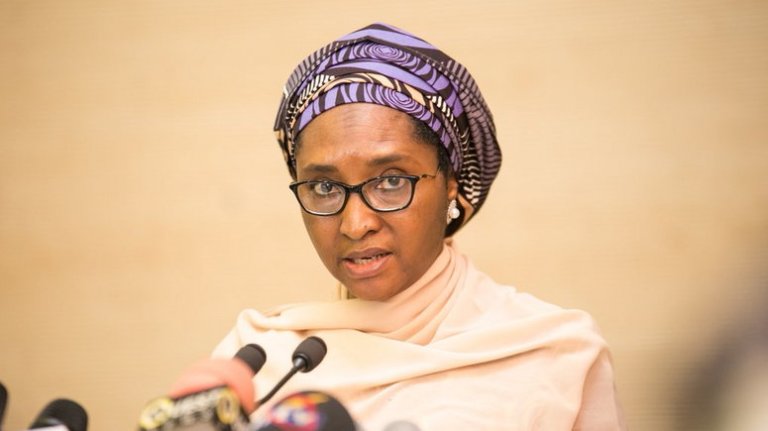
NIGERIA’S Finance Minister Zainab Ahmed has said that naira is responding to market forces against the popular perception that it has been devalued.

The minister, who spoke on President Buhari’s six years in office in a monitored television broadcast, noted that weak response of Nigeria’s naira to the United State’s dollar was largely attributed to volatility in the oil price which contributed largely to Nigeria’s reserves

“Let me not use the word ‘devaluation.’ Naira is responding to market forces of demand and supply. We have oil and gas, unfortunately, still the major source of foreign exchange,” she said, noting however that efforts were being made to expand other sources of revenue to strengthen the naira.

 “Right now, we are working at developing alternatives to earning foreign exchange from the mineral sector and supporting businesses that are exporting finished products which means more foreign exchange coming into the country.”

Oil contributes less than 15 per cent to the Gross Domestic Product (GDP), but is responsible for at least 70-85 per cent of revenue and 80-90 per cent of foreign exchange in Africa’s biggest oil producer.

Naira has officially weakened from N306 in 2020 to over N400 in 2021 after oil price volatilities in the COVID-19 market. Dollar exchanged at N592 at the parallel market on June 11.

As a monocultural market, the Nigerian economy has largely been a price taker in the global foreign exchange market due to its inability to earn big from export of finished products.

Zainab stressed that the volatility characterising the oil price at the international market affected Nigeria’s foreign exchange, and  the value of the currency.


READ ALSO:


“This development affects the level of our reserves and affects other key aspects of the economy.”

She further said that the Federal Ministry of Finance and the Central Bank of Nigeria had made a commitment to converge towards a single exchange rate.

“The governor of the central bank and I have made a commitment while we processed the IMF loan of $3.4 billion that we are going to converge towards a single exchange rate. If you remember in the year 2020, we did the initial exchange 2020 budget at 305naira to the US dollar.


“When Covid-19 happened and we are processing all these finances, an adjustment was made for the official exchange rate to be N360. The further requirement was that the monetisation for the foreign exchange, even for the government, is done at the market rate, not the black market rate – NAFEX rate. That is what is happening now. So, when the government earns its money whether from FAAC or from any other sources, it is monetised at the NAFEX rate.”


She explained that the country had now converged to a single exchange rate which would help put the economy on a growth path, gaining investor confidence.


“In a way, we could say we have converged because we are now doing everything at the NAFEX rate. The other rate is the unofficial rate and unorthodox market. That market will improve when the inflow in foreign exchange improves.”

The government is eyeing to converge at the NAFEX rate – the poll rate based on the contributions of 10 banks- to create stability in the market. But this has been difficult due to factors ranging from demand to supply inefficiencies.

Analysts do not agree with the minister as even the CBN Governor Godwin Emefiele, in May 2021, replaced an earlier N379/$ rate with N410/$, admitting that it was no longer feasible and  the bank was running a managed-float system.

Investopedia defines devaluation as a “deliberate downward adjustment of the value of a country’s money relative to another currency, group of currencies, or currency standard.”  The  CBN has deliberately moved official FX rates from N305/$ to N315/$, and to N379/$ to 410/$ in less than two years. This means devaluation.

The minister attributed rising inflation to the exchange rate, with other factors such as transport costs linked to increasing PMS price and an inadequate number of mass transit vehicles and trucks for food and other forms of transportation, noting the government was working on a lasting solution to the concerns.


One of my major economic successes is making Nigerian rice competitive – Buhari

PRESIDENT Muhammadu Buhari, on Friday, said one of his major economic successes since he came to power in May 2015 was making locally-produced rice ‘competitive in the market.’

Buhari said this during an interview aired on the National Television Authority (NTA), stating that the land border closure between Niger and the Benin Republic encouraged Nigerians to go back to farms.

“We closed the borders and stopped the importation of food and gave a stern warning that, ‘let us eat what we produce’ and made sure that imported food can only come through the ports so that imported rice could not compete with local rice.

“So that encouraged a lot of people to go back to the farms. There are people who left air-conditioned offices to go back to the farms and that was positive for Nigeria,” he said.

Nigeria had launched a land border closure in August 2019 to tackle smuggling of rice and other goods, after banning the importation of rice from Benin and all its neighbours in 2016.

The move was intended not only to raise revenue but also to encourage local production of rice.

Buhari also said the decision he took was a major economic success for his administration because it made locally- produced rice available and competitive.

“Now, our own rice is fresh and is available and it is competitive in the market. I think this is one of our major successes,” he said.

Rice is considered a staple food in the country. However, according to a 2021 report by the Institute for Security Studies (ISS), the border closure resulted in new smuggling routes for illegal rice dealers.

Also, the market price for imported rice increased by 60 per cent while locally produced rice has increased by almost 100 per cent.

On the state of infrastructure in the country, Buhari said he was committed to fulfilling his cardinal campaign by providing roads, rail and power.

“That is why I made up my mind that one of my priorities is to make sure that the roads and the rails are rehabilitated. And tell me which country develops without infrastructure, roads, rail and power.

“We have to get this correct, and those who are going about this country know that this administration has tried in terms of rehabilitating roads, in terms of rehabilitating the railway, in terms of increasing power relatively to resources at the time. We have not done badly, for those who want to criticise us should criticise us objectively,’ he said.

When asked if he was satisfied with the state of the economy, Buhari said he was not satisfied but was trying hard to persuade foreign investors to have confidence in the country and create jobs for Nigerians.

“No, I am not, that’s why I am trying even harder to make the people become accountable and to make sure we persuade foreign countries to allow their multinationals to develop more confidence in Nigeria to come and invest.

“That will give us employment, goods and services and the chains rights from the farms will be great and that means lots of employment. And this is our problem-a large population, young population and unemployed population,” he said.

Border closure: Nigerian rice now fresh, available – Buhari

NIGERIA’S President Muhammadu Buhari has said that closure of the borders between Benin Republic and Niger has led to food security in Nigeria.  

Buhari spoke on Friday, June 11, during an exclusive interview with the Nigerian Television Authority (NTA) in Abuja.

It would be recalled that in August 2019, barely three months after signing the African Continental Free Trade Area (AfCFTA), Nigeria closed its borders with neighboring countries such as Benin Republic, Cameroon, Chad and Niger in a bid to stem influx of goods into the country.

President Buhari also directed the Central Bank of Nigeria (CBN) to halt the provision of foreign exchange to businessmen for the importation of food, in a move to encourage the production and consumption of homegrown food.

The border closure was heavily criticised by many, and experts said it violated commercial and freedom of movement treaties signed under the Economic Community of West African States (ECOWAS).

However, the Nigerian president said the temporary closure led to a boost in the country’s revenue through customs levies, created opportunities for job creation and had brought about food security.

“There are people who left air-conditioned office and went back to the farm and that was positive for Nigeria. Now our own rice is fresh and available in the market,” Buhari said.

Although the borders have been reopened, Nigerians have, in recent times, expressed concern about soaring prices of commodities in the market.

Farmers say high cost of inputs, insecurity, farmer-herder crisis and poor logistics are responsible for rising  food inflation in the country.


Those alleging that I pamper bandits, insurgents are unfair to me – Buhari

PRESIDENT Muhammadu Buhari has rebuffed claims that he treats insurgents, bandits and other criminals in northern Nigeria with kid gloves while ruthlessly dealing with secessionists and other persons constituting threats to continued existence of the country in the South.

Citing Katsina, Zamfara and Sokoto states as instances, he said he had given the same treatment to all criminals across the country,.

He said this in an interview with the Nigeria Television Authority (NTA) on Friday.

Buhari had told rampaging members of the Indigenous People of Biafra (IPOB) recently that he would treat them “in the language they understand.”

The statement was considered reckless by many citizens and was seen as reminiscent of 30-month-old civil war in the country, in which people of the South-East extraction lost millions of their kinsmen.

The statement triggered war between the Nigerian government and Twitter, a micro-blogging site, as the government suspended the platform’s operations in Nigeria indefinitely, after it had pulled down the president’s tweet containing the statement.

However, the president was quick to balance his threat, vowing to give same measure of treatment to bandits, kidnappers and other criminals tormenting the North, in an exclusive interview with Arise TV on Thursday.

Buhari is from Katsina, a state in Nigeria’s North-West that has witnessed a wave of banditry, kidnapping and other crimes in recent years.

Buhari said those criticising him were unfair.

He listed Sokoto, Zamfara, Katsina as places where he had directed security agencies to deal decisively with criminals and trouble makers.

He said his expectation was to see a better Nigeria before he left office.

“Number one this is security. If you don’t secure the country, firstly, people will not want to invest. That was why those who organized #EndSARS, I sent the ministers back to their constituencies.

“Constitutionally, the ministers represent their states. I said they should go to their states. Let them speak to their governors. Let them speak to the political leaders. Let them speak to traditional leaders.

“And, very importantly, let them speak to the youth; because the Federal Government has no vacancy; every department is full; the same thing in the state, the same thing in the local governments.”

He said if youths promoted insecurity by burning institutions of government, nobody would invest in the country, noting that security in the country was in the interest of young people. “So, it is in their own interest to make sure Nigeria is secure.”

According to him, he wanted to leave a secure, prosperous Nigeria to whoever succeeded him. “This is very important because there are people, not even in Nigeria but outside, that are watching developing countries, the systems we are going through.”

He also recommitted to conducting free and fair election by allowing Nigerians to choose who led them.


How corrupt public officers regained loots after my arrest – Buhari

PRESIDENT Muhammadu Buhari, on Friday, narrated how corrupt public office holders in Nigeria regained what they corruptly acquired in office after his arrest by Ibrahim Babangida regime in 1985.

Buhari stated this while speaking in an exclusive interview on the Nigerian Television Authority (NTA).

He said the journey on corruption under the present administration was difficult. He said despite efforts he made as military head of state (between 1983 and 1985) to make corrupt public office holders pay for their sins, the soldiers that overthrew his government thwarted his efforts.

“I like to repeat what I used to say. When I was a bit younger in the uniform when I came, I arrested the vice president, governors, ministers, commissioners.

“I put them under restriction or detention. I told them they were guilty until they could prove their innocence…Eventually, I myself was arrested and they were given back their loots. So, this is Nigeria.”

He said in democracy, prosecution could be done with consideration for geo-political zones of alleged offenders, while people arrested for prosecution would maneuver the law and get back their loots.

Speaking on the imperative of special courts for corruption, he said cases could remain in court for five and 10 years, and people could forget them.

The president gave the assurance that with special courts for corruption cases, the government would better fight corruption in the country.

He said people should not wait till persons standing trial for corruption died before justice would be given.

Buhari also said that as a democratically-elected president, he pledged to fight corruption, improve the economy and provide security during his campaigns.

The fight against corruption has been hampered by legal maneuverings which frustrate prosecutions and eventually make accused go with their loots.

But he said he was not deterred.

Buhari had also spoken exclusively with the Arise TV in an interview aired on Thursday morning.

The president restated his administration’s commitment to securing and uniting the nation.

He described the aggrieved members of the proscribed Independent People of Biafra (IPOB) as ‘a dot in a circle,’ a statement denoting the agitation for secession by the group would be impossible.

Buhari decried banditry in the North-West where he said people of the same culture were attacking one another.

The president issued stern warning to the bandits, vowing he would “treat them in the language they understand.”

He had issued same threat to IPOB days earlier, resulting in criticisms and counter-actions that culminated in the president suspension of Twitter, a microblogging platform, in the country.

Buhari gave the assurance that there would be difference in the dimension of insecurity in the nation in few weeks as, according to him, he had given directive to security agents to be ruthless on criminals.

He defended his appointments, saying positions should be earned on merit.

Besides, he blamed increasing insecurity in the country on unemployment and said his administration would continue to offer leadership that would be adjudged to be better than what he met after he had left office.


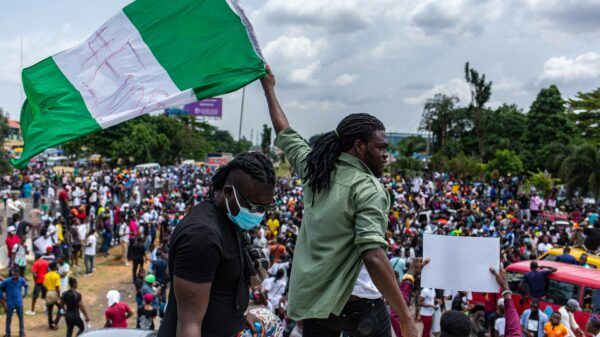
#June12Protest: CSOs ask FG, security operatives to respect rights of protesters

A coalition of civil society organisations (CSOs) has urged President Muhammadu Buhari-led Federal Government to respect the constitutional rights of Nigerians to a peaceful protest.

The group, in a statement sent to The ICIR by its Coordinator Mbasekei Martin Obono on Friday, noted that Nigerians who had chosen to protest peacefully on June 12 must be allowed to do so without harassment from security agencies.

“The government and its Security Services must play by the rules and conduct themselves in ways that guarantee the safety and well-being of peaceful protesters,” part of their statement said.

“We align ourselves with the Federal High Court judgement in the case of Charles Oputa alias Charley Boy Vs. Nigerian Police Force & 2Ors delivered on the 22nd day of October 2018, where the learned Honourable Justice John Tsoho held that using teargas or water cannons on peaceful protesters was inhuman and degrading treatment.

“We wish to remind the Federal Government and its security services to abide by this judgment, the constitution they swore to protect and other international instruments and desist from carrying out arbitrary arrests and use of disproportionate or unjustified force on peaceful protesters.”

The statement reminded Buhari’s administration that the murder of innocent citizens during the #ENDSARS protest at Lekki Toll Gate and other parts of the country was still fresh in the minds of citizens and the international community, warning that any violation or inhumane treatment of protesters would be redressed before national courts, if possible, and international courts, where necessary.

While recalling that Section 17(2)(c) of the Nigerian Constitution required that governmental actions should be humane, the group called on the international community to pay close attention to the #June12Protest and help to avert any dangers.

Some of the CSOs which signed the statement included: The Tap Nitaitive For Citizens Development; African Centre For Information and Literacy (AFRICML); Global Rights Nigeria; Dataphyte; Pentecostal Fellowship of Nigeria; Al-habibiyyah Islamic Society; Inibehe Effiong Chambers; Cross River Watch; Nigerian Bar Association, Unity Bar; Agba Jalingo; Basic Rights Council; Etim Okon, Chairman Cross River Traditional Rulers Council; HRH Eze Ositadinma Nwokocha, Imo Traditional Rulers Council; HRH Chief Michael Akpabio, Akpabio Traditional Rulers Council; DASS Emirate, Bauchi State; and Advocacy Centre For Development.

Others were: Network of Yobe Civil Society Organizations (Yobo); Association of NGOs;  Gombe Emirate Council; Rule of Law and Accountability Advocacy; Premium Times Centre For Investigative Journalism; International Centre For Investigative Journalism; Citizens Gavel; Connected Development; Dorothy Njemanze Foundation; Dinidari Foundation; Lawyers Alert; CDD West Africa; Medley Project; YIAVHA Nigeria; Education as Vaccine; Centre for Liberty; Adopt a goal; Bauchi State Network of CSOs; TIERS; Destiny Youth Foundation; Before 40 Youth Foundation; KIMPACT Development; AC4D; Jennon Pius & Co Legal practise; Accountability Lab Nigeria; and Centre for Impact Advocacy (CiA).

We will arrest, try, jail those killing police officers -Buhari

PRESIDENT Muhammadu Buhari has promised to arrest, try and jail those who are causing trouble, killing officers and burning down police stations across Nigeria.

Buhari said this at an interview with NTA on Friday, noting that no government would sit idly and watch such illegalities being perpetrated.

“How can you go to the police station, kill policemen, loot the armoury and burn the police station? How can government sit aside and allow this confusion to be perpetrated?” he asked, rhetorically.

Government facilities have been burnt in southern parts of Nigeria, especially in the South-East and the South-South. Six offices of the Independent National Electoral Commission (INEC) were  burnt in three weeks, according to a report.

Buhari urged those perpetrating the crime to desist from doing so.

He said Nigerians should be fair to his administration as he came in when Niger Delta militancy reduced oil production from 2.2 million barrels per day to 500,000 barrels, and when oil price fell from over $100 to less than $30.


READ ALSO:


He regretted the #ENDSARS protest in October 2020, recalling that 200 buses from a former Lagos governor were burnt.

On allegation that he threatened IPOB in the South-East and refused to do so in the North, he said Nigerians should ask governors of Sokoto, Zamfara and other states in the North to discover how security agencies were deployed, urging Nigerians to be fair to him,

On security, Buhari said it often took time to secure helicopters and fighter jets when purchased, promising better security in the country in the future.

IPC condemns attack on two journalists by security operatives in Abuja

THE International Press Centre (IPC) has denounced the attack by security operatives on two journalists, Friday Olokor, a senior reporter with The Punch Newspaper, and Patience Ihejirika of the Leadership Newspapers, in Abuja.

The journalists were physically assaulted as they tried to gain access to M & M Events Centre in Abuja, to cover the ongoing African Women Conference organised by the Development Research and Projects Centre (DRPC) with the support of the Ford Foundation.

While Olokor was physically manhandled, Ihejirika had her phone seized and vital videos deleted to ensure she did not record the assault on Olokor.

In a statement issued on Friday, IPC Executive Director Lanre Arogundade described the attack as an affront to the fundamental human rights of the journalists.

“This detestable act is very worrisome and totally against the fundamental human rights of Olokor and Ihejirika who identified themselves as journalists,” he said.

Arogundade described continuous attacks on journalists in Nigeria as particularly worrisome, especially when the perpetrators were security operatives whose main function was to protect lives and property

The IPC applauded the Assistant Director of the DSS in Abuja who reportedly apologised to Olokor with a promise that the security personnel involved would be made to face the consequences of their actions.

According to data obtained from Committee to Protect Journalists (CPJ) 34 attacks were launched on journalists in Nigeria between 1992 and 2021.

A breakdown reveals that 12 journalists were killed while 22 were imprisoned. Eight of those killed were murdered, with three dying on dangerous assignments. Another one was killed in a crossfire.

IPC is Nigeria’s foremost media capacity development organisation that seeks to promote freedom of expression and human rights on the continent through advocacy and campaigns to ensure the protection of its members and other free expression groups.

June 12: Police arrest Agba Jalingo over petition

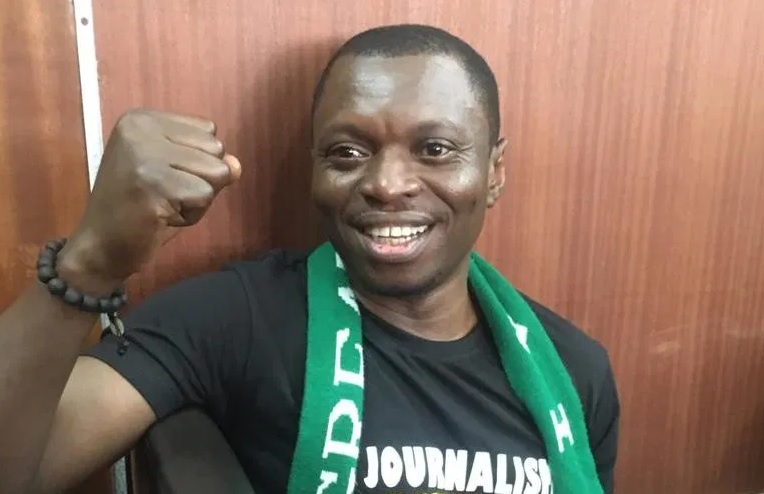
Editor-in-chief of CrossRiverWatch, an online media platform, Agba Jalingo, has been reportedly arrested by the Cross River State Police Command on Friday, over an alleged fake petition which described him as a drug dealer.

According to a report, Jalingo was invited by the Cross River Commissioner of Police Kayode Sikiru for a meeting over a planned June 12 protest. He attended the meeting with CrossRiverWatch News Editor Johnathan Ugbal.

They were urged to ensure that the protest was peaceful as the command would not idly watch its degeneration into a riot.

After the meeting, Jalingo and Ugbal were ushered into the State Intelligence Bureau office by the officer in charge of intelligence Cajetan Onwusor, where they were profiled and their photographs and biometrics, captured.

After waiting for over an hour, an unnamed official of the State Criminal Investigation and Intelligence Department (CIID) invited the duo and the officer in charge of the Human Rights Unit Simeon Nwaguru into his office.

He handed a two-page document to Nwaguru, who read it and passed it on to Jalingo. The document turned out to be a petition by people who described themselves as concerned Cross Riverians.

Efforts by The ICIR to contact the Cross Rivers State Police Command yielded no results as the Spokesperson of the Command Irene Ugbo did not respond to calls or text messages.

Jalingo is presently facing trial for alleged acts of terrorism and attempts to overthrow the Cross River State government, over an article he wrote in 2019 concerning the disappearance of N500 million approved for the floating of the Cross River State Microfinance Bank.