A post circulating on WhatsApp claims the Federal Government of Nigeria has approved free online company registration with the Corporate Affairs Commission (CAC) for all self-employed business owners. This, it said, is inclusive of several benefits.
This registration, the post claims, comes with benefits that include: free trip to the United Kingdom, N50,000 cash, free international trade, among others. The post retrieved from a WhatsApp group on May 21, 2021, asked people to enroll for the registration via an attached web link.
The CAC was established in 1990 with the responsibility of regulating the formation and management of companies in Nigeria.
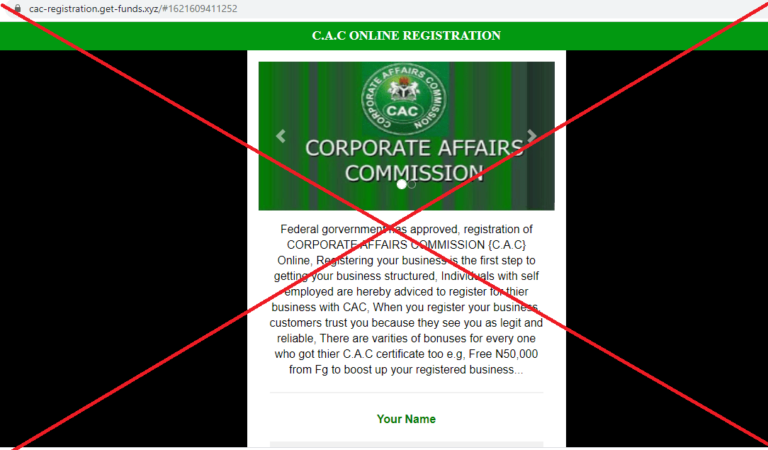
A false post shared on WhatsApp with a dubious website masquerading as the Corporate Affairs Commission (CAC) of Nigeria.
A false post shared on WhatsApp with a dubious website masquerading as the Corporate Affairs Commission (CAC) of Nigeria.
The Claim
The Federal Government of Nigeria has approved registration of companies online for free with benefits such as free trip to the United Kingdom, N50,000 cash, free international trade, among others.
The Findings
The post read: “FEDERAL GORVERNMENT HAS APPROVED All SELF EMPLOYED AND BUSSINESS OWNERS TO CARRY-OUT THEIR C.A.C(CORPORATE AFFAIR COMMISSION) REGISTRATION ONLINE FREE OF CHARGE
BENEFITS OF C.A.Cs are -Free N50,000 cash from FG -Certificate of Incorporation -Legal Liability Protection -Free International Trade -Continuity -Free Trip to UK -Reputation With Customers -Getting on FG Record. ENROL NOW.”
The Federal Government has approved all self-employed and business owners to carry out their Corporate Affairs Commission (CAC) registration online free of charge.
Checks by the FactCheckHub show that the claim is FALSE.
The FactCheckHub observes that the website attached to the claim has similar characteristics of phishing websites attached to claims previously debunked here and here.
The website attached to the claim is different from the official website of the CAC.
The website in the claim seeks to fraudulently acquire people’s information as it asks them to fill their basic information such as email, phone number, name, business name and address.
You can learn how to identify phishing websites through here.
The FactCheckHub findings show that the Federal Government had, in November 2020, declared open free 250,000 business names registration for micro, small and medium enterprises (MSMEs) to mitigate the effect of COVID-19 on the sector.
No fewer than 100,000 MSMEs eventually benefitted from free registration then, an initiative the phishers are probably riding on to bolster their phishing website.
Similarly, spokesperson of the Corporate Affairs Commission Duke Ukaja confirmed to the FactCheckHub that the post in circulation is false.
“It did not emanate from us, it is fake,” Ukaja told the FactCheckHub via a telephone conversation.
Verdict
The claim that Federal Government of Nigeria approved registration of companies online for free with benefits such as free trip to the United Kingdom, N50,000 cash, free international trade, among others, is FALSE. The information is not from the CAC, neither is the provided registration web link that of the CAC.
ALTHOUGH Gov. Ifeanyi Okowa denied using state-owned Delta Line Transport Company concession to reciprocate the kind gestures of God is Good Development Transport Company management for supporting his 2015 election campaign with Mercedes-Benz buses, findings proved otherwise.
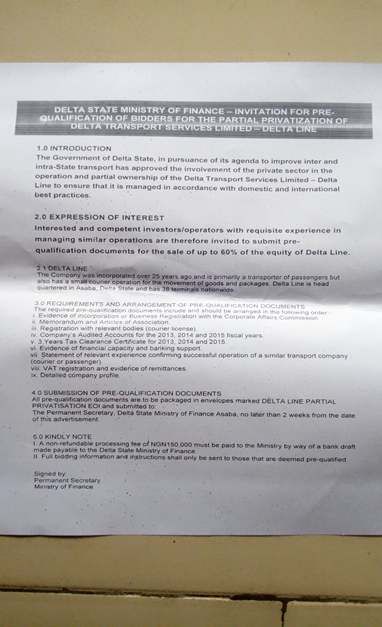
In August, 2017, Delta State Government led by Governor Ifeanyi Okowa buffeted Deltans with semantics such as outright sale, concession, divestment and takeover as part of its policy.
At the time, it was alleged that Governor Okowa had conceived the plan to sell off the only state owned transport company, ‘Delta Line’ to a crony that supported him during his 2015 election, the owner of ‘God is Good Transport Development Company Limited (GTDC), Mr. Chidi Ajaere.
Three years down the lane, Delta Line, one of the casualties of the policy has ceased to exist.
Delta Line was a wholly state-owned Transport Company before it was partially sold to God is Good transport company limited, GIGM, a private transport and logistics company in 2018.
The sale left Delta State with the minority stake of 40 percent and God is Good Motors Limited, 60 percent. Since its establishment almost 40 years ago, Delta Line has undergone multiple phases, including its rebranding in 1991, to improve mobility services to commuters across Nigeria but none compares to Okowa’s audacious sale.
Investigations revealed that despite having a massive goodwill and reputation built over the years, with about 38 terminals across the country and well over 1,200 units of modern buses, Delta Line was sold for N160 million to GIGM as against the N2 Billion offered by Amalgamated Union of Public Corporations, Civil Service Technical and Recreation Services Employees (AUPCTRE), Delta State council, a body under Nigeria Labour Congress (NLC).
Edevbie committee dribbled NLC
Fidel Emeni, a staff of NLC disclosed how the Edevbie – led Delta Line concession committee dribbled them. According to him, NLC offered N2 billion while GTDC made an initial offer of N80 million.
Surprisingly, NLC’s offer was rejected while that of GTDC was accepted and later increased to N160 million to be paid in two installments for 60 percent equity of the company. Investigations revealed that the first disbursement of N100 million was paid into an account whose signatories comprised of one each of finance ministry and GTDC (Escrow Account).
“Although, the union leaders told committee that they have it (the money) they were never invited by the committee again. The committee proposed 60 per cent equity to be sold to the private sector while 40 per cent equity to be retained by the government. Labour offered N2 billion while God is Good Motors offered N80 million but God is Good Motors increased their bid to N160 million to secure the offer while Labour with its N2 billion offer was rejected.”
N500m debt owed by Delta Line untrue
In a feeble attempt to justify the sale of the transport company, the then commissioners of Finance, Information and Transport, Mr. David Edevbie, Patrick Ukah and Vincent Uduaghan, while addressing a joint press briefing, pointed out that it became necessary for government to concession Delta Line because it was mismanaged by a profligate management which was indebted to Zenith and Wetland banks to the tune of N500 million.
However, David Akpemegin, former Accountant-General of Delta Line says that position is disingenuous.
He disclosed that the debt owed by Delta Line was not up to N500 million as claimed by Delta State Government. He stressed that Zenith and Wetland banks bought a total of 40 Hiace buses for Delta Line on hire purchase agreement at the cost of six million naira per bus, amounting to N240 million. He observed that the concession to a private transport company was a bad decision and Delta Line had almost liquidated the debt owed Zenith bank when he left the company.
Findings revealed that Delta Line was sold as a carcass and GTDC was the lucky undertaker. No fewer than 700 workers of the hitherto state-owned transport company were thrown into the labour market, former management staff of Delta Line, Mr. Josiah Isheke disclosed.
Lists of some of the disengaged workers
Procurement process laden with irregularities
The sale of the Delta Transport Company to GTDC was fraught with irregularities from the beginning of the bidding process to the eventual sale.
Nwoye Nwakudi, a member of the All Progressive Congress, APC, in the state said the entire concession was midwifed in secrecy to the detriment of Deltans. He alleged that the State House of Assembly was not kept in the know, a development that a former member who pleaded not to be mentioned confirmed. The former member who represented a constituency in Delta Northsaid that the then speaker of the House, Monday Igbuya, who was curious to know the rationale for the planned sale of Delta Line was impeached in 2017 on spurious allegations of highhandedness instigated by the executive arm.
However our reporter could not confirmed this allegation from the former Speaker as his known phone number was said to be switched off as at when this reporter called him.
How Okowa appointees played their master’s script
Prior to the sale of Delta Line, the Delta State Secretary of AUPCTRE, Comrade Emeni Fidel, stressed during a protest at the Government House, Asaba, that there was no need to concession the transport company. Fidel disclosed that Delta Line monthly wage bill was N26 million with an average Internally Generated Revenue (IGR) of N42 million with which it can service its debt.
But Edevbie, Chief Press Secretary Olisa Ifeajika, Commissioner of Transport, Oviemumo Oghoore and the then economic commissioner, Kingsley Emu, thought otherwise. They supported the sale of Delta Line and did everything possible to favour GIGM, sources conversant with the issue disclosed.
“We don’t need to waste money to pamper government businesses. Government has no business doing any business. That is a statement of fact. Where all of these businesses work, we know. We have continually subsidized that company (Delta Line). That company owes in excess of running into millions in terms of debt. That company is not professionally run,” said Mr. Kingsley Emu while responding to questions from journalists at a press conference in Asaba in August 2017.
Why I am always a major actor in privatization of delta facilities—Edevbie
Findings revealed that Edevbie chaired not only the controversial concession of Delta Line, but also the sale of other state-owned properties including the concession of Asaba Airport, and proposed outright sale of the abandoned multibillion-naira Independent Power Project, IPP, situated in Oghara.
Olorogun David Edevbie
Edevbie said he is always the governor’s favourite for these type of assignments because he is an accomplished economist with experience in privatization. Speaking, on the present state of Delta Line, Edevbie argued that Delta Line is in safe hands amidst the mixed reactions that has greeted the poor management cum controversial sale of the company.
“GIGM took over 46 rickety vehicles. Presently, there are about 110 brand new vehicles, including Toyota Hiace, and Jet movers. Another 60 brand new buses would be bought before the end of the year,” he noted.
He also said that at handover, the staff strength was reduced from 700 to 120 and has now risen to 400.
Poor management of Delta Line terminals
A visit to several Delta Line terminals in Delta State paints a different story. Terminals in Abraka, Effurun, Agbor and Asaba are being poorly managed. There was shortage of vehicles to convey commuters to their various destinations.
At Koka terminal passengers were seen waiting for buses. In what was described by many passengers as a sharp departure from the past, passengers said they often wait for long hours before buses arrive the terminal.
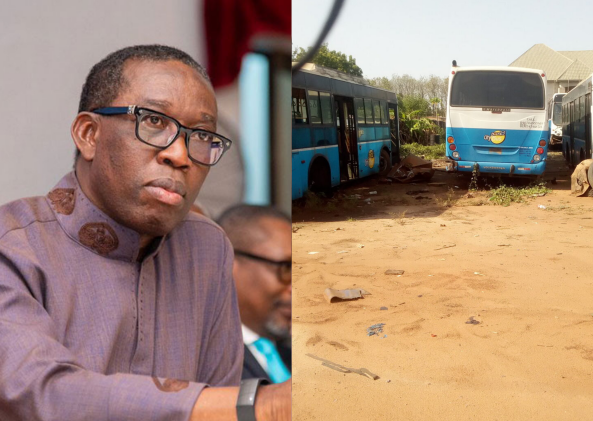
Delta Line luxuroius buses at the agency mechanic workshop
Efforts to speak with management of Koka terminal were unsuccessful. The manager declined to comment on the activities of the transport company under his purview. He asked that queries be forwarded to the head office. At the head office, our correspondent was told to get clearance from the transport ministry before interview request or queries can be attended to.
A visit to Delta Line workshop, along Benin/ Onitsha express revealed a significant decline in the company’s fleet as no fewer than 20 luxurious buses were completely abandoned, and begging for attention.
The workshop provides a conducive atmosphere for reptiles to breed, overgrown by weed. A source who works at the security unit of the workshop disclosed that some of the vehicles had been there for over a year.
I know nothing about sales of Delta Line—Transport Commissioner
Amidst the controversies surrounding the sale of the state-owned transport company, the current transport commissioner, Mr. Oviemumo Oghoore said he knows nothing about the controversial sale of Delta Line and does not have detailed answers to questions put forward to him by our correspondent when contacted. He asked that all questions regarding the sale be forwarded to the finance and justice ministries that drafted the Memorandum of Understanding, MOU, on behalf of the state government.
All efforts to reach the Commissioner of Finance and his Justice counterpart were unsuccessful. However, the Commissioner of Finance, Mr. Tilije Fidelis, replied a text message sent to him that he was out of the country and can only be reached when he returns. Fidelis has since returned to the country but is yet to respond to queries posed to him as at the time of filing this report.
Delta Line sale was not for compensation -Okowa CPS
Gov. Okowa Chief Press Secretary, Olia Ifeajika
Reacting to the allegations of compensating the governor’s crony with the sale of Delta Line, Chief Press Secretary, Olisa Ofejika denied favouritism adding that GTDC offer was accepted based on merit.
“GIGM has vast experience in transportation sector and that was the reason the Delta State Government felt it would manage the state owned Transport Company efficiently and effectively.”
Spiral of silence from government, Delta Line management
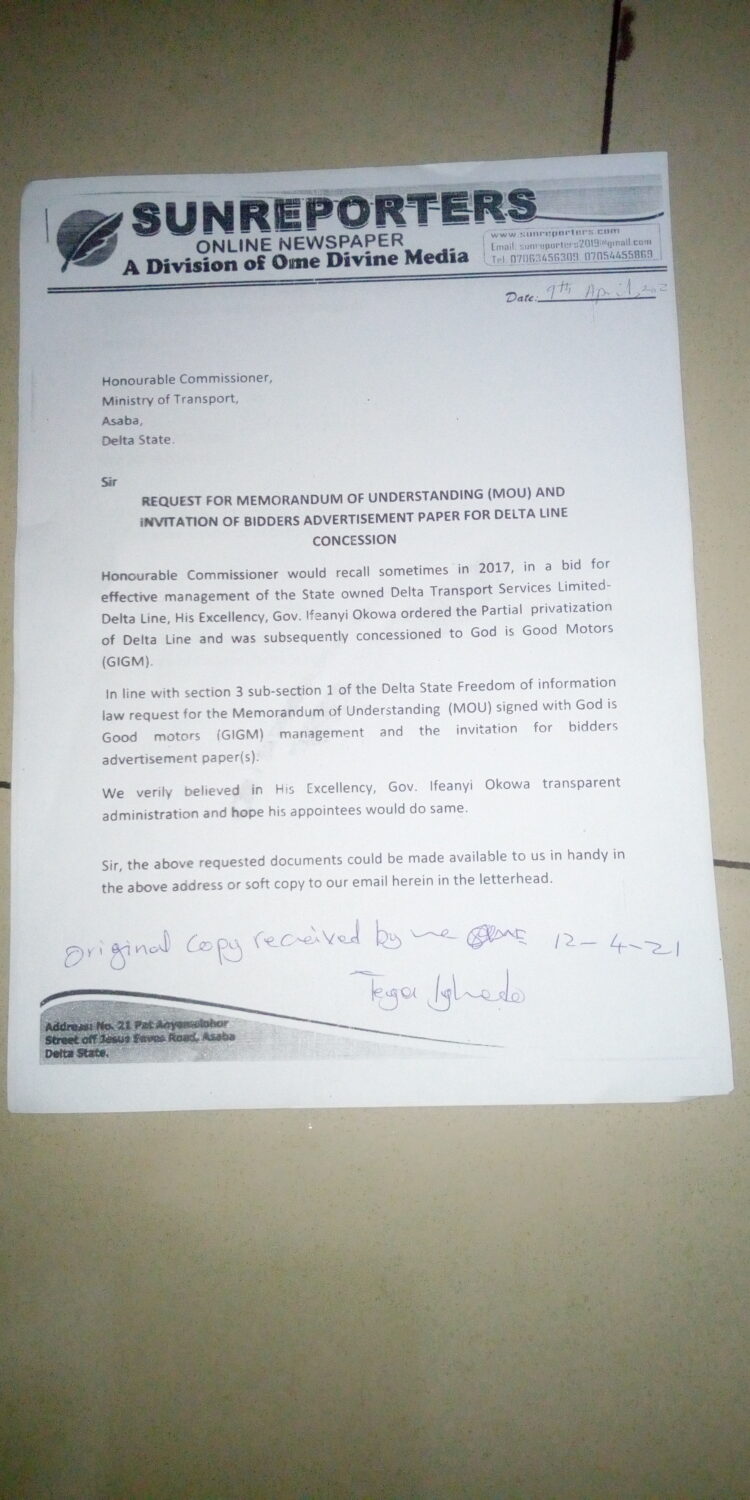
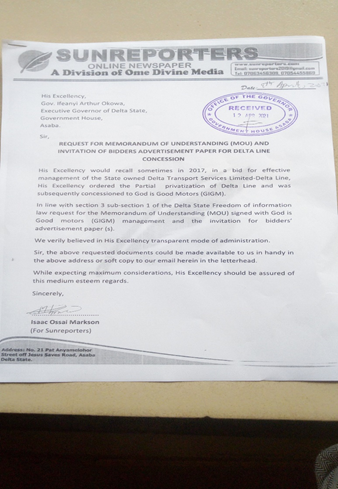
Efforts to get official explanations on the sale of the state owned Transport Company proved abortive. Freedom of Information (FOI) requests made to offices of the governor, finance, transport and justice ministries, were greeted with silence as at the time of filing this report.
Calls and text messages placed across to the two commissioners were neither answered nor responded to. The transport commissioner confirmed to our correspondent that he received the FOI application but didn’t respond within the first 7 days as required by Federal FOIA and Delta State Freedom of Information Act signed into law by Okowa in 2019.
Section 3 sub-section 1 of the Delta State Freedom of Information Act signed into law by Gov. Ifeanyi Okowa in 2019 guaranteed individuals, and cooperate body’s right to have access to public documents.
Experts react
Mr. Victor Ojei, an anti-corruption activist and the coordinator, Young Nigerians Right Civil Society (YNRCS) queried the rationale behind the sale of the company for meagre amount. He added that he had concluded plans to sue the state government over the “fraudulent sale of Delta Line”.
He alleged that the last installment of the N160 million being the sum payable by GTDC for 60 per cent equity in the transport company has not been completed.
Ngozi Anabiroyen, a transportation expert, wondered why the government decided to sell Delta Line to one its biggest competitors. She said that there is no way GIGM management would run Delta Line more than its present business. She argued that no sane individual would prefer to manage another man’s business than his.
“If I may ask, why did Delta State government decided to sell off to a company Delta Line was in competition with?’ she queried.
She admonished Gov. Okowa to review the concession agreement and set up a close monitoring team to monitor the activities of company.
This investigation is supported by the John D. and Catherine T. MacArthur Foundation and the International Centre for Investigative Reporting.
A Catholic priest in Sokoto State Alphonsus Yashim Bello was killed by terrorists on Friday in Malunfashi, close to Kankara in Katsina State.
Communications Director for the Diocese of Sokoto Chris Omotosho disclosed the death of the 33-year-old priest in a memo to the national leadership of the Catholic Church.
The St. Vincent Ferrer Catholic Church Malunfashi, Katsina State, was attacked by terrorists at about 11:30 pm on Thursday and Bello was abducted alongside the former parish priest Joe Keke, a 75-year-old man.
On Friday morning, the lifeless body of Bello was found in the farmland behind the Catechetical Traning School, Malubishnfashi, Katsina State.
Bello was a member of the Kaduna Archdiocese, but was on Secondment in Sokoto Diocese and deployed to the Malumfashi parish in Katsina where he was killed by the terrorists.
The leadership of the Sokoto Diocese said the whereabouts of Keke was still unknown as there had been no contact from the terrorists.
Terrorists abduct former priest, Joe Keke
Sokoto Diocese ChancellorCornelius Tagwai, who announced Bello’s death, noted that he was abducted alongside the most senior priest of the Sokoto Diocese Keke who was still missing.
“This sad event took place at the early hours of today, Friday, May 21, 2021. The late Fr Bello was kidnapped along with Very Rev Fr. Joseph Keke, the most Senior Priest of Sokoto Diocese, but his lifeless body was later found abandoned behind the CTC, Malumfashi. The whereabouts of Fr Keke is not yet known,” Tagwai said.
The killing of the bishop is part of the state of insecurity that has escalated across Nigeria, most especially in the Northern region of Nigeria.
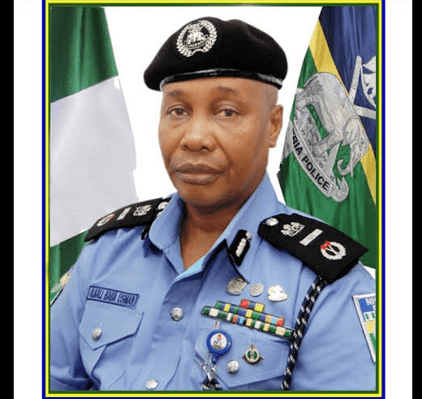
THE Inspector-General of Police Usman Alkali Baba has warned of imminent attacks on major cities in the country by Boko Haram terrorist elements.
He gave the warning in a letter written to Police Commissioners in Jos, Plateau State and the FCT, Abuja on Friday.
In the letter, which was signed by his Principal Staff Officer Idowu Owohunwa and seen by The ICIR, the IGP said that the intelligence report at his disposal has uncovered the plan to attack cities.
The proposed attacks, according to the statement would be coordinated by a Boko Haram Commander, Muhammad Sani, domiciled in Sambisa Forest and his Deputy, Suleiman (fnu), hibernating around Lawan Musa Zango, Gashua, Yobe State.
Baba called on the commissioners to review their “security architecture across all critical Government infrastructures and Police facilities in their jurisdiction with a view to checkmating the dastardly plans of these marauding terrorists.”
Security agencies in the country have been put on alert following the reported killing of the leader of the dreaded leader of the group Abubakar Shekau by the Islamic State in West Africa Province (ISWAP), on Wednesday.
AGAINST common sense and market dynamics, the Nigerian government is set to continue with unsustainable payment of N120 bilion fuel subsidy for the month of June despite calls by the Nigerian Governors’ Forum for full deregulation of the petroleum downstream sector.
The continuation of the subsidy would not only reduce federal allocations to states, but it would also perpetuate an opaque system that robs Nigeria’s poor.
Minister of State for Petroleum Resources Timipre Sylva said in a statement on Friday that the government was not in a hurry to increase the price of the premium motor spirit (PMS) to reflect the current market realities despite the huge burden of ‘under recovery’ on the economy.
President Muhammadu Buhari’s administration has baptised the term ‘subsidy’ to ‘under recovery’ and has been sustaining the payment despite Group Managing Director of the Nigerian National Petroleum Corporation (NNPC) Mele Kyari emphasising that there would be ‘no more subsidy’ payment in the downstream sector.
“The current price of petrol will be retained in the month of June until the ongoing engagement with the organised labour is concluded,” Sylva said in a statement issued on Friday.
The minister noted that the clarification became necessary in the light of the recent reports regarding the resolution of the Nigerian Governors’ Forum to increase the price of petrol.
He called on the petroleum product marketers not to engage in any activity that could jeopardise the seamless supply and distribution system in place while urging the members of the public to avoid panic buying with an assurance that the NNPC had enough petroleum products to keep the nation wet.
Recall that the Nigerian governors, arising from a virtual meeting on Thursday, had advocated full deregulation of the petroleum downstream sector, a move that would put to stop to the payment of N120 billion fuel monthly subsidy payment in the country.
He made the observation while presenting the report on appropriate pricing of PMS during the 30th teleconference meeting of the NGF chaired by Governor Kayode Fayemi.
The ICIR had earlier reported that Fayemi had also raised concern about the sustainability of the overburdening petrol subsidy, stressing that the government’s pro-poor policies would be adversely affected if the government continued with subsidy payment on PMS.
Analysts believe that continuing with PMS subsidy in June is postponing the evil day.
An oil sector governance expert Henry Ademola Adigun told The ICIR that the government was in a serious dilemma of managing a possible outburst of protests and dwindling revenues for states.
“There won’t be subsidy removal till August. Labour’s condition is that you must fix the refineries before subsidy removal. Fixing the refineries could take up to two and a half years. So, the government seems to be marking time and waiting for possible adjustment and growth in the economy to manage the situation,” Adigun said.
He stressed that states’ share from proceeds of crude oil sales in the federation account would keep dwindling if the government kept on with the subsidy payment. He noted that the government had kept shifting the goal post for an unsustainable venture benefitting only the Nigerian elite.
“In the long run. This is a step that the government must find a way and sort out so that we grow our economy and create more opportunities for the people.”
A member of the Presidential Economic Advisory Committee Bismarck Rewane, on his part, faulted the NNPC on the 200 per cent increase in fuel consumption in the country.
Rewane, who described subsidy as ‘reverse taxes’ in a monitored television Arise TV broadcast on Thursday, expressed concern that the spiralling PMS figure did not reflect the current economic reality across the country, stressing that the payment was about N30 million when the economy experienced boom during the previous administration.
“Subsidies are reverse taxes and they distort the allocation of resources. It is said and is believed that we consume daily 93 million litres of fuel. I don’t know where that figure is coming from. For instance, about five to six years ago when the economy was booming and the number of registered vehicles was almost 200 000, then our consumption was nearly 30 million litres.”
He, however, expressed concern that now that the economy was in a decline, consumption was on the increase.
“How could our consumption of petrol go up by 200 per cent?” he asked.
“What it does mean is that petrol is being smuggled out of the country and people are making money at the country’s expense,” he further argued.
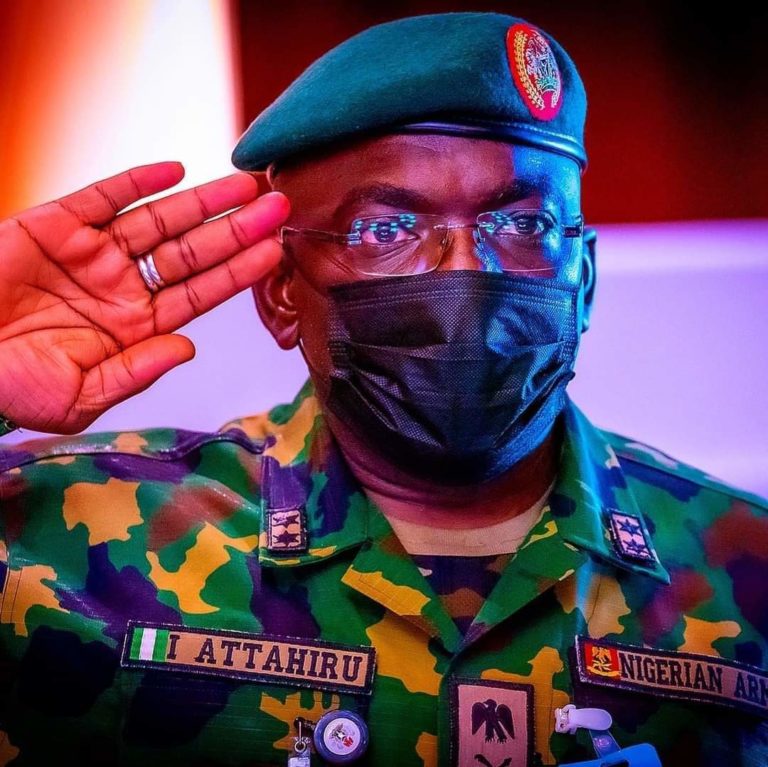
NIGERIA’S Chief of Army Staff Ibrahim Attahiru has died in a plane crash on Friday en route to Kaduna State.
The aircraft was said to be conveying the Chief of Army Staff and 10 others including three brigadier generals, two majors, two flight lieutenants, two sergeants and another crew member.
According to reports, they were traveling to Kaduna State for the passing out parade ceremony of newly recruited military personnel to be held on Saturday.
The Nigeria Airforce has confirmedthat a military aircraft crashed near the Kaduna International Airport on Friday evening.
A statement signed by the Air force spokesperson Edward Gabkwet read that the cause of the crash cannot be ascertained yet.
“An air crash involving a @NigAirForce aircraft occurred this evening near the Kaduna International Airport. The immediate cause of the crash is still being ascertained. More details to follow soon,” the statement read.
Attahiru was appointed as the Service Chief less than four months ago by President Muhammadu Buhari in a bid to rejig the fight against insecurity in Nigeria.
Since January 2021, there has been three fatal aircraft that killed military personnel in Nigeria.
Earlier in February, seven officers of the Nigerian Air force died in a crash close to the Nnamdi Azikwe International Airport in Abuja after reporting an engine failure en-route to Minna, Niger State.
Also in April, two pilots of the Nigerian Air force were killed after a fighter jet belonging to the Force went missing.
Spokesperson for the Nigerian Army, Mohammed Yerima did not respond to calls and text messages to confirm the incident.
List of the deceased include
1. LT Gen. I Attahiru
2. Bri. Gen. MI Abdulkadir
3. Brig. Gen Olayinka
4. Brig Gen Kuliya
5. Maj. LA Hayat.
6. Maj. Hamza.
7. Sgt. Umar.
CREW
8. Flt Lt TO Asaniyi
9. Flt Lt AA Olufade.
10. Sgt Adesina.
11. ACM Oyedepo
THE Nigerian Communications Commission (NCC) says it has no intention of asking Nigerians to submit the International Mobile Equipment Identity (IMEI) of their phones from July, 2021.
The NCC, in a statement signed by Director of Public Affairs Ikechukwu Adindu, stated that the commission did not issue a release regarding the registration of IMEI by subscribers and it had no plans to do so.
The ICIR had earlier reported the Revised National Identity Policy report for sim card registration, which contained the directives.
The commission, however, stated that it was in the the process of deploying a Device Management System (DMS) to eliminate fake devices and protect subscribers against phone theft.
“The system will capture IMEI automatically without any requirement for subscribers to submit same,” the statement further said.
The commission advised the general public to disregard the publications which raised the alarm and created the erroneous impression that telephone subscribers would be required to register their IMEI with their networks.
IT was past noon – lunchtime – but there was only one customer at the bukka. Loretta Eze, the proprietor, surveyed the busy street as she stood by the entrance of her restaurant located by the corner of a street in the Wuse 2 area of Abuja, Nigeria’s Federal Capital Territory. A number of girls in yellow shirts, who worked as attendants in the restaurant, were hanging around waiting for the solitary customer to finish his meal.
“It was not always like this,” Loretta told The ICIR‘s correspondent, who visited the restaurant while investigating the impact of rising prices of foodstuffs on the preparation and consumption of food, especially jollof rice.
“Food items are very expensive these days and the situation is very hard for those of us that are into catering and food business. Things are hard and as a result, we are not getting as many customers as in the past when things were cheaper,” Loretta added.
Higher cost of foodstuffs has forced restaurants, including roadside bukkas and ‘Mama put‘ joints, to increase the prices of different dishes on their menu and Loretta observed that the development had, in turn, forced some customers to stay away because they could not afford meals as in the past.
Loretta’s observations and concerns mirrored the findings in the SBM Jollof Index report for the first quarter of 2021.
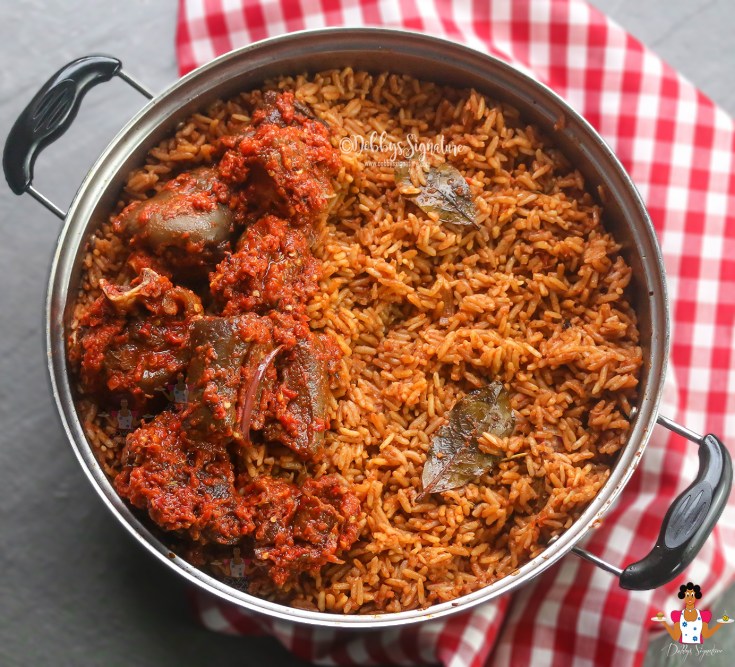
The SBM Jollof Index, developed by SBM Intel, an Africa-focused research firm, simplified the appreciation of food inflationary trends using a common delicacy that most Nigerian households enjoy – jollof rice.
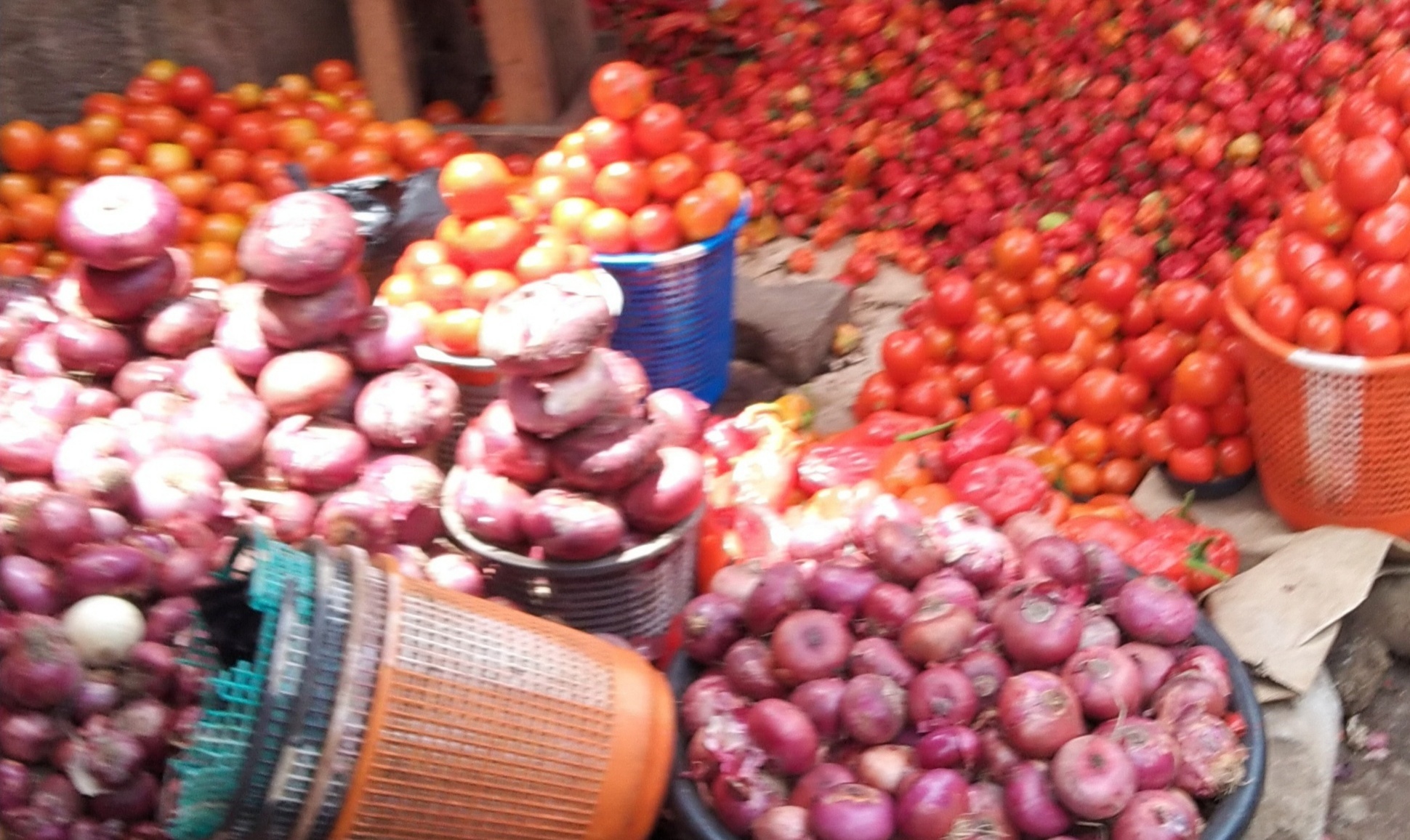
Tomatoes, pepper and onions displayed for sale at a market in Abuja
Across Nigeria’s six geopolitical zones, SBM collects data on the most common ingredients that go into cooking jollof rice in 13 markets on a monthly basis except for December, due to the seasonal spikes caused by Yuletide celebrations. From the prices collated, the cost of making a pot of jollof rice for a family of five or six is averaged and used as a proxy for measuring food inflation across the country.
The commodities that make up the Jollof Index include rice, curry, thyme, seasoning, groundnut oil, chicken/turkey (poultry), beef, pepper, tomatoes, salt and onions.
The SBM Index is published three times a year – at the end of the first three quarters. Data from October and November are reflected in the Quarter 1 Jollof Index of the following year.
Cost of making pot of jollof rice rose between March 2020 and March 2021
According to the latest SBM Jollof Index report, the average cost of making a pot of jollof rice rose by 7.8 per cent between March 2020 and March 2021.
The sharp spike in the cost of preparing the delicacy was attributed to a number of events which impacted on food prices. The negative impacts of the COVID-19 lockdown from March to May 2020, the border closure and foreign exchange restrictions in August 2020 were worsened by a sharp hike in energy tariffs by September of that year.
The situation was further compounded by the #EndSARS protests, as well as the food blockade imposed by northern traders on the southern part of the country, which disrupted agricultural supply chain and the movement of people and goods.
The reopening of land borders in December 2020 did not result in a significant drop in the cost of food items – the price of a bag of rice only dropped slightly by a margin of N1000 to N3000 depending on the market but that did not translate into a drop in the cost of making a pot of jollof rice for the majority of Nigerians who buy from retailers.
A woman selling foodstuffs in the market. The prices of basic food items are going up by the day
The SBM Jollof Index noted that food prices remained high due to factors such as reduced local production, exchange rate fluctuations, poor harvest due to adverse weather, and high cost of energy and transportation.
Insecurity was also a major factor for the increasing cost of preparing a pot of jollof rice, translating into rising food inflation in Nigeria.
“Some of the jollof rice ingredients such as rice, onions and tomatoes have witnessed reduced local production because of protracted conflicts and terrorist attacks on farmers. Out of the 11 main rice producing states in the country, Benue, Borno, Ebonyi and Kaduna have witnessed attacks on farmers with the most gruesome being the execution of about 110 rice farmers in Borno in November 2020,” the report said.
Faced with deaths from terror attacks in insecure agrarian communities, several farmers are leaving the countryside and moving to the cities to take up menial jobs.
Despite recent drop in inflation rate, Nigerians are still groaning over increasing cost of food items
According to latest figures released by the National Bureau of Statistics (NBS), Nigeria’s inflation rate dropped from 18.17 per cent in March 2021 to 18.12 per cent in April 2021.
The 0.05 percentage points decline was the first recorded in headline inflation in about 20 months.
Food inflation also recorded a decline – from 22.95 per cent in March 2021 to 22.72 per cent in April, 2021.
However, while the NBS suggested that inflation might have peaked and could continue to drop, Nigerians are yet to get any reprieve while purchasing foodstuffs.
For Loretta, a food vendor who deals in foodstuffs, the price of food items has continued to spike in the market.
Loretta Eze
Making a comparison of what was obtainable in the past and the present, she told The ICIR, “Before now, I used to buy a small basket of tomatoes between N300 and N500, but now, it is N1500. Some tomatoes even go for N2500 per basket. Also, a basket of fresh pepper is N1500 now. Before now, you could get a pint of groundnut oil for N300, but it is now N650.”
She added, “Before now, with N2500 or N3000, I could prepare a normal pot of soup or stew but now, if you don’t have at least N7000 you will not get the taste you want due to the high cost of food items.”
Further lamenting the daily hike in the price of staple food items, she observed that, not too long ago, a mudu, or regular measure of beans, was between N250 and N300. But a mudu of beans is N800 now.
“It is the same case as meat. Before now, with N6000 or N8000, you could get the quantity of goat meat that would be enough for you, but now, you will have up to N15000 or more for that same quantity.”
According to her, the increase in the price of onions was ‘manageable’. “The quantity we were getting for N100 before is about N400 or N500 at the moment.”
Loretta also pointed to the sharp increase in the price of rice.
“Before now, a mudu of rice was N300, but now, a mudu of local rice is about N800,” a development which she admitted had increased the cost of preparing a pot of regular jollof rice.
Speaking further, Loretta said, “crayfish and stockfish are totally out of the question” due to recent hike in the prices of the food items.
Nkechi Emmanuel, a housewife, had a frown on her face as she walked out of Dutse Market, in the Bwari area of Abuja. She was clutching a handful of food items.
In a brief encounter with The ICIR‘s correspondent, Nkechi explained that the feeding allowance her husband gave her each month, which was never enough in the best of times, was now barely able to provide a pot of stew and soup.
“It has never been this bad and it is getting worse by the day,” the woman said in a frustrated tone.
All types of foodstuffs are becoming out of reach for the poor and the lower middle-class by the day.
Mary Okon-Essien operates a restaurant in the FCT. She took a break from serving a customer to respond to questions by The ICIR‘s correspondent on May 20.
Mary Okon-Essien
Okon-Essien stressed that the increase in the prices of basic food items, which had driven up the cost of food, had resulted in reduced patronage for food vendors.
“Before now, the highest amount you could get egusi is N250 or N300 for a mudu, but now, a mudu of egusi is N700 or N800.
“The situation is very difficult for those of us that are into food business. Due to the high cost of foodstuff, it is not easy to sell and make profit anymore because customers are having problems with the higher prices,” she said.
Garri is generally regarded as ‘poor man’s food,’ but Okon-Essien said that was in the past.
“Garri is longer a poor man’s food. A mudu of garri is now N500,” she told The ICIR.
Okon-Essien also noted that another staple foudstuff – red oil – had become more expensive.
“Before now, you could get a tin of red oil for N200, but now, it is not less than N500,” she said, while observing that the situation was more worrisome because the food items were locally produced and not imported.
Besides becoming more expensive, some food items which Nigerians took for granted, due to their availability, are becoming scarce.
The increase in the price of fufu, a cassava meal, goes with the increasing scarcity of the food item, according to Okon-Essien.
“Fufu is a food item that is loved by Nigerians but right now, fufu is scarce and that has made it very expensive. I don’t know if Nigerians are not planting cassava again. Fish has also become very expensive. People now find it very difficult to afford fish for their meals.”
Okon-Essien corroborated the findings of the SBM Jollof Index for the first quarter of 2021.
“Not too long ago, with as little as N1000, you could prepare a pot of jollof rice for your family because with that amount, you would get rice and some amount of crayfish, onion, maggi and other foodstuff you needed. But now, that N1000 will only be enough for a mudu of foreign rice and if you want to cook local rice, then you will need N700 or N800 to buy a mudu of rice and as a result, you will not have much left for the ingredients needed for the jollof rice.”
Highlighting the dismal impact of high food inflation on the food industry, she observed, “Before now, when it was lunch time, you would see many people coming to eat, but now, lunch time seems like morning time, you hardly see anybody. You only see a few people coming to eat and this is because there is no money and everybody is ‘checking his pocket.’ Before now, they could get a plate of food for N250 or N300, but the least you can get a plate of now is N400 or N500,” the woman said.
The number of customers in restaurants has dropped, Okon-Essien noted.
Inflation rate still very high despite recorded decline
Nigeria’s inflation rate might have recorded a marginal decline in April but it remains very high and this is especially so for food inflation.
This was stated by the Lagos Chamber of Commerce and Industry (LCCI) which decried the current inflation rate of 18.12 per cent.
Director General of LCCI Muda Yusuf noted that despite the recently recorded decline in the inflation rate, “food inflation at over 22 per cent is still very high in spite of the marginal moderation in food prices in April 2021.”
Food items on sale at the market. Traders and customers are complaining about the increasing price of foudstuff across Nigeria
Yusuf said the situation had continued to exert a negative impact on the activities of every economic agents, including households, businesses and investors, with profound impact on the citizenry, particularly the low and middle-income households.
“The high level of inflation continues to dampen consumer purchasing power at a time households incomes are not increasing in proportion to cost,” he said, adding that the development had resulted in rising production costs and depressed margins for businesses.
Nigeria at risk of famine
Meanwhile, the latest SBM Jollof Index report, which said Nigeria was currently on a slippery slope, noted that Nigeria might experience famine in the nearest future if production, consumption and political-economic dynamics remained unchanged from what was currently obtainable.
Noting that decline in food availability, exponential population growth and decline in entitlements were the main contributors to famine, the report observed that “history shows that the famines with the highest mortality rates resulted from poor harvests, natural disasters (droughts, flood), war/conflict, poor governance and policy failures – conditions which Nigeria fulfills easily.”
The SBM Jollof Index noted that over the last 10 years, food production in Nigeria had been dismally affected by continuous conflicts between farmers and herders in the Middle Belt, where more than 62,000 farmers were displaced from their homeland between 2010 and 2015, including terrorist attacks on farmers in the North-East and bandits’ onslaught in the North-West.
Added to these are adverse weather conditions and decreasing agricultural land due to urbanisation, and the effects of governance failure and some government policies, such as border closer, foreign exchange restriction, hike in electricity tariff and petrol pump price.
The SBM Jollof Index stated that the different factors had combined to continuously drive up food prices in Nigeria.
Poverty rising
The 2020 report by World Poverty Clock showed that over 105 million Nigerians lived in extreme poverty – as against 98 million in October 2019. The figure represented more than 51 per cent of the population.
This placed Nigeria as world poverty capital for two years running. Unemployment in Nigeria reached 33.3 per cent in the fourth quarter of 2020. Nigeria is among most miserable countries in Africa, scoring 50.6 points in March 2021, as against 14.8 points in Ghana, 6.9 in Ethiopia, 13 in Kenya and 12.1 points in Egypt, among others.
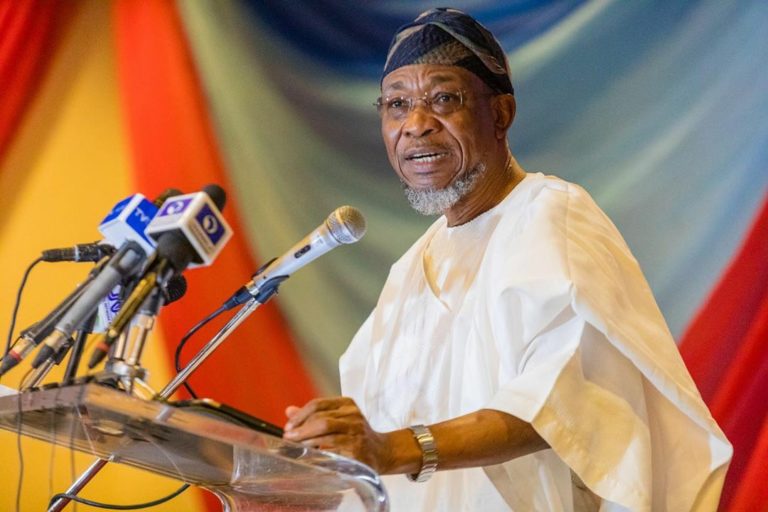
THE Nigerian Minister of Interior Rauf Aregbesola has said that Nigeria Immigration Service, Nigeria Fire Service and other security agencies will establish female squads in the nearest future as a means of mainstreaming the female gender and guaranteeing their dignity in society.
The minister said this in a speech delivered at the passing out parade for members of the newly established Female Squad of the Nigeria Security and Civil Defence Corps (NSCDC) held on Thursday in Katsina State.
“Women are more than half of our population. It makes eminent sense to include them in all aspects of nation- building, including security. For the avoidance of doubt, all our other agencies will soon roll out their own female squads,” he said.
He expressed joy at the initiative and urged the new officers to ensure that Nigeria benefitted from the knowledge they acquired in the course of their training.
Aregbesola noted that the country was going through security challenges occasioned by the activities of terrorists and urged security agencies to rise up to the occasion by re-strategising to provide a more secure environment for Nigerians.
He charged the management team of NSCDC to make training and staff welfare a priority while assuring Nigerians that the security situation in the country was only temporary.
“President Muhammadu Buhari has given the law enforcement agencies a renewed charge to restore peace to every troubled community in Nigeria. We shall not rest or tire until this task is completed,” he said.
FARMERS and agriculture experts have faulted Nigeria’s Ministry of Agriculture and Rural Development for spending N30 million public funds on the construction of a mosque in Borno State.
A memo dated December 10, 2020, with ref. No. FMA/PROC/AHS/SIP/2020/7742/1 containing the award of the contract to El- Shakur went viral on the social media on Thursday.
In response to the viral memo, the ministry’s Director of Information Theodore Ogaziechi, in a statement, confirmed that the contract was awarded to the firm for N30 million.
Memo from Ministry of Agriculture
Ogaziechi said the mosque was constructed for a community of livestock farmers displaced by Boko Haram insurgents and were being resettled in Ngarannam/Mafa Local Government Area of Borno.
Despite the existence of a Ministry of Humanitarian Affairs and Disaster Management, the Agriculture Ministry expended N30 million on constructing a mosque for a community while watching food production dwindle in the country.
Reacting to the report, an agricultural expert Celestine Okeke said for a long time, there had never been a priority for the Ministry of Agriculture.
He said the action of the ministry stemmed from its lack of a national policy on agriculture for more than one year.
“The question is whether they should even put money into it at all, but then the ministry has no policy. The last policy expired in 2020 and from then till now, there is no policy to guide their affairs,” Okeke said.
He noted that the construction of a mosque with N30 million showed that the current leadership of the ministry had lost its focus.
“The new policy would guide their priorities, without that the ministry should not be existing. The policy is meant to provide a guideline, but in the absence of that, there is nothing for them to do. Do not be afraid that tomorrow, they might start constructing a hostel,” Okeke further noted.
On the issue of diversification, Okeke said that there was no diversification happening in Nigeria outside of the Anchor Borrowers Scheme.
He noted that the Anchor Borrowers Scheme was a direct intervention, but the policy should be a condition for other things to happen.
He said there was really no diversification in the generation of funds in Nigeria, adding that if there were, the country would be cutting down on the cost of import.
The National Secretary of the All Farmers Association of Nigeria (AFAN) Yunusa Halidu also faulted the action of the ministry, saying it was a misplaced priority.
Halidu said over the years, the association had tried to drive development in agriculture through the government but it had not yielded results and they were now looking towards the private sector.
He further noted that the Anchor Borrowers Scheme had also not been successful in developing the agricultural sector.
“Even the Anchor Borrowers Scheme, people take loans and there is nothing to show for it. People take loans and they don’t return it, because they think it is national cake,” Halidu said.
On the challenges in the agricultural sector, Halidu said farmers were battling insecurity, high cost of mechanised tools, fertiliser, among others.
A farmer in Ekiti State Shadiya Sodimu, who also spoke with The ICIR, said construction of the mosque was one of the reasons farmers did not feel the impact of government interventions advertised on television.
Sodimu said the government claimed it was spending a huge amount of money on agriculture but the farmers were not feeling the impact.
” A lot of the time, the government has said it is spending much on agriculture, but what are they spending it on? On mosque? How does that help us, we still go to farm with hoes and cutlass, I have never got a fertiliser from the government,” Sodimu lamented.
In 2020, women farmers, under the aegis of Small-Scale Women Farmers Organization in Nigeria (SWOFON), had retired their cutlasses and hoes, demanding a gender-friendly and mechanised way to farming.