Lagos State Commissioner for Physical Planning and Urban Development Idris Salako has announced that the state is providing 260 housing units for players in wood business at Timber Ville in Owu-Ikosi, Agbowa.
Speaking during an inspection tour on Tuesday, Salako said the housing units were expected to be ready by September.
He noted that Lagos State government was carrying out the project in partnership with First World Communities.
In a tweet from the Lagos State government official Twitter account on Tuesday, the government said it was meant to ease the relocation process of Oko-Baba Plank Market to Agbowa Timber Ville, thereby providing settlement for the sellers.
Lagos state commissioner for Physical planning and Urban Development, Dr. Idris Salako
The project has been long time coming
The recent relocation of the residents of the Oko-Baba plank market by the Lagos State Government was formally set in motion in January 2020.
The commissioner had, according to a report, said “the relocation of residents of Oko-Baba Sawmill in Ebute Metta to Agbowa- lkosi will kick off before the end of first quarter of 2020.”
This relocation process is, however, ongoing.
Hopefully, not about to be another abandoned project
In December 2019, assurance was given to traditional ruler of Owu-Ikosi Oba Nelson Olayomi Aderemi Ogunlaru that “the planned relocation of the sawmill to Agbowa-Ikosi would not become an abandoned project,” in a tweet by the Lagos State government.
However, the project preceded the current administration as it was initiated by former Governor of Lagos State Babatunde Fashola in 2014.
The old sawmill at Oko-Baba had experienced a fire incident, according to a report by The News Nigeria, which displaced thousands. In April 2021, another fire accident was reported to have occurred at the same site.
Salako was certain the housing project was going to be realised.
In his words, “as the movement of the plank market from Oko-Baba to Agbowa Timber Ville becomes a reality, we can rest assured that the physical environment at Oko-Baba and Agbowa will benefit from optimal land use to engender a livable, orderly and sustainable environment.”
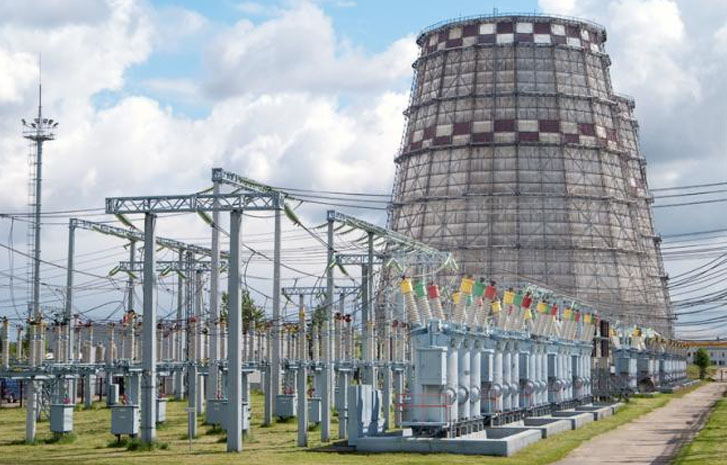
NIGERIANS celebrating the Eid-al-fitr currently have their homes in darkness as the national grid collapsed again on Wednesday morning.
The Transmission Company of Nigeria (TCN) confirmed this development in a statement today.
The grid collapse occurred at about 11.01 am on Wednesday as a result of voltage collapse in parts of the grid.
Voltage collapse often occurs when there is an overbearing surge in the grid, a situation that occurs when there is load rejection and load shedding by the distribution companies, which puts intense pressure on the grid ending up in system collapse.
Ndidi Mbah, the General Manager Public Affairs at the TCN, said the company has commenced grid recovering after the collapse, assuring power restoration, but gave no timeline.
“The grid recovery has commenced from Shiroro Generating Station to Katampe ,TS, Abuja through the Shiroro Generating Station to Kampe, TS, Abuja through the Shiroro-Katampe line at 11:29 am, and through Delta Generating Station to Benin Transmission substation and has reached Oshogbo and part of Lagos,” he wrote in the statement.
Energy analysts have argued that unbundling of the TCN is the way out of the incessant collapse concerns. They believe unbundling would make possible sanctions of any player in the value chain who violates the grid regulations.
“Nigeria cannot be risking its massive power infrastructure to incessant grid collapse, the best bet is for the regulator-NERC to unbundle the transmission company of Nigeria to perform independent role of market operator and system operator.
“This independent role will enforce checks and balances by the market operator. The market operator sanctions any defaulter who rejects loads, and ensures there is more investment into the transmission infrastructure,”energy lawyer and power sector governance expert, Chuks Nwani, told The ICIR.
Emeka Okukpara, a principal partner at NEXIER Power told The ICIR that lack of market discipline by various players who have not been punished for bad behavior by the regulator is part of what has kept the market in a bad shape, albeit reoccurring incidences of grid collapse.
Sam Amadi, a former Chairman of the Nigerian Electricity Regulatory Commission, NERC also expressed concern over the inability of the regulator to unbundle TCN, citing executive manipulation of the regulator as a source of concern.
“This sort of executive manipulation and control is what continue to make TCN efficient.
“It’s unbelievable that a key part of the value chain that ought to be modeled on the most efficient corporate governance practice has no board of directors.
“So, the MD does whatever he likes without policy direction expect from a politician-Minister. This is wrong and the reason that TCN has never been an efficient entity,” Amadi said.
Nigeria has been experiencing grid collapse for a long period.
In 2019, for instance, the national grid collapsed several times across the country with adverse effect on socio-economic activities.
The national grid also recorded partial collapse last February.
The current collapse could have have been averted if TCN is unbundled, energy analysts have said.
Meanwhile, Mbah has assured the public that the cause of the voltage collapse is being investigated, while pleading for patience.
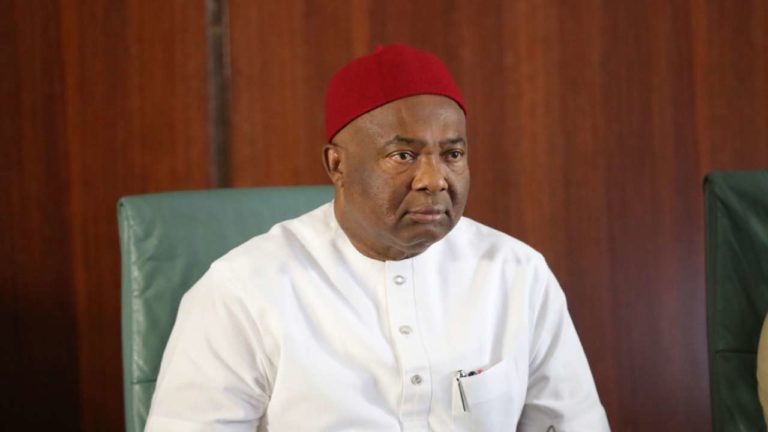
THE Governor of Imo State Hope Uzodimma has sacked twenty of his appointed commissioners.
According to a statement released by the state government on Wednesday, only eight commissioners in the ministries were retained. They are commissioners for Finance, Health, Works, Information, Youths and Sports, Women Affairs, Tourism Science and Technology.
The statement said the action was to re-energise the system for maximum productivity.
The governor thanked the former Commissioners and assured them that they would still be relevant in other areas even if they were not re-appointed.
Uzodimma, however, had alleged two weeks ago that some of his appointees were moles sabotaging his administration.
He became the state governor in 2020 after the Supreme Court sacked Emeka Ihedioha of the Peoples Democratic Party and overruled the Tribunal’s verdicts and the Appeal Court by declaring him (Uzodinma) the winner of the March 2019 governorship election in the state.
Imo recently faced dire and serious security problems as gunmen have attacked the state security apparatus, including security operatives, facilities, and prisons.
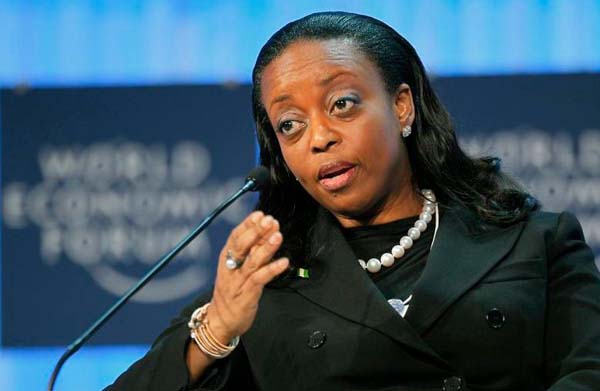
THE Economic and Financial Crimes Commission (EFCC) said it recovered $153 million and 80 houses valued at $80 million from former Minister of Petroleum Diezani Alison-Madueke.
EFCC Chairman Abdulrasheed Bawa stated this in the April edition of the EFCC Alert, a monthly publication of the commission.
Bawa said the commission was still pursuing another case of $115 million INEC bribery by the fleeing minister who had been outside the shores of the country since leaving office in 2015.
He noted that efforts were ongoing to extradite Alison-Madueke to answer to her crimes in the country.
“There are several cases surrounding Diezani’s case. I was part of that investigation, and we have done quite a lot. In one of the cases, we recovered $153 million. We have secured the final forfeiture of over 80 properties in Nigeria valued at about $80 million. We have done quite a bit on that,” he said.
“The other case, as it relates to the $115 million INEC bribery, is also ongoing across the federation. We are looking forward to the time we will, maybe, have her in the country, and, of course, review things and see what will happen going forward. The case has certainly not been abandoned.’’
In 2019, a Federal High Court in Lagos had ordered the final forfeiture of the former minister’s jewellery estimated to be worth $40 million to the Nigerian government.
The EFCC seized the jewellery sets during a raid on Alison-Madueke’s home located at 10 Fredrick Chiluba Close, Asokoro, Abuja, on the suspicion of being acquired with proceeds of unlawful activities.
The anti-graft agency alleged that she started acquiring the jewellery in 2012 while she was already a serving minister.
In challenging the seizure, Alison-Madueke said the EFCC violated her fundamental right to own property.
According to her, the search of her home that led to the seizure was conducted without any court order, hence making it illegal.
Jewellery forfeited included: 419 bangles, 315 rings, 304 earrings, 267 necklaces, 189 wristwatches, 174 necklaces and earrings, 78 bracelets, 77 brooches, and 74 pendants. A customised gold iPhone was also forfeited to the government.
In 2017, Justice Chuka Obiozor of the Federal High Court, Lagos, ordered permanent forfeiture of N7.6 billion linked to Alison-Madueke.
Justice Obiozor, in a separate suit, also ordered the permanent forfeiture of $37.5 million Banana Island mansion linked to the former minister.
In addition to the building, the court also ordered the permanent forfeiture of the sums of $2.740 million and N84.537 million realised as rents on the property.
Since 2015, Alison-Madueke has been holed up in the United Kingdom where she faces a separate probe for alleged bribery, corruption and money laundering.
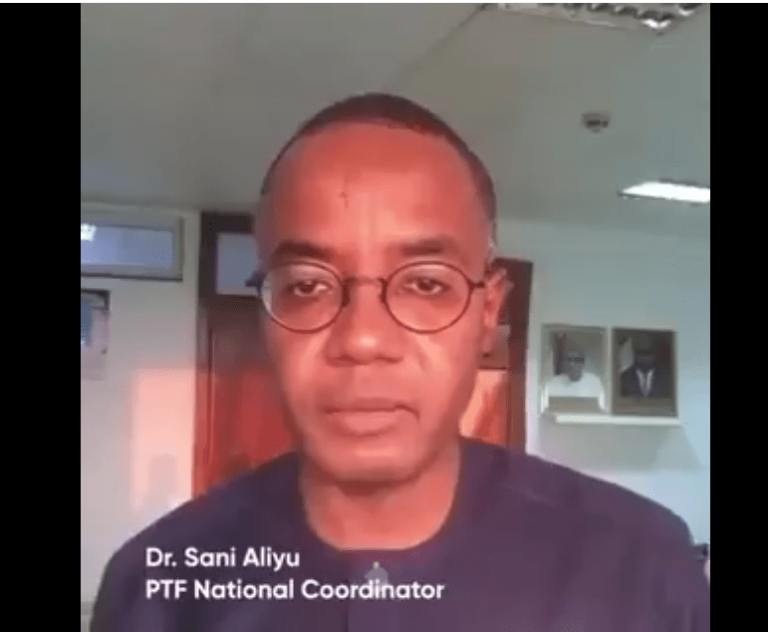
LESS than 24 hours after the announcement of COVID-19 restrictions across Nigeria, a video of the National Coordinator of the Presidential Task Force (PTF) on COVID-19 Sani Aliyu has surfaced online, with him telling the public to ignore lockdown rumours.
The video, which was also shared on Facebook here, has a comment ‘Thanks for sharing, sir,’ connotating the commenter felt it was timely and useful information.
The Claim:
The video shows the PTF National Coordinator Sani Aliyu telling Nigerians to ignore the lockdown as it was fake news.
The Findings:
Findings by the FactCheckHub show that it was an old video that resurfaced online,. Therefore, it is misleading.
In the 51-second video, Aliyu said, “We are aware of the fake message that is going round on WhatsApp that we’ve declared a lockdown in the country. This is absolutely not true. I am calling on the general public to please ignore this message.”
The video circulated online.
This video has been online since January 2021. It was posted here on January 15. On the same date, multiple media reports referenced Aliyu’s message.
Aliyu had made the video following messages shared on social media that the Nigerian government had declared another lockdown due to the COVID-19 spike in the country at the time.
In addition, the FactCheckhub reached out to Aliyu who also debunked the the claim.
“Of course it is not true. It is an old video from January when we had to tackle rumours of a new lockdown”, the doctor said via a text message.
He added that the video talks about a WhatsApp message and has nothing to do with the recent announcement.
Furthermore, Aliyu clarified that the PTF has now transitioned to Presidential Steering Committee (PSC), while noting that he is no longer the coordinator neither does he at the moment work for the Nigeria government. He has resumed a consultancy position at a university in another country.
Aliyu stepped down as the PTF National Coordinator in March 2021.
May 2021 phased movement restrictions
On May 10, 2021, the government announced restrictions across the country. This new directive was to take effect by midnight of May 11, a member of the Presidential Steering Committee (PSC) on COVID-19 Mukhtar Mohammed told the press.
The PSC directive is in light of the rising trend in several countries and the high risk of a surge in cases in Africa.
Although Nigeria has begun her vaccine roll-out, there is a shortage in global supply which translates into a delay in vaccinating a large proportion of the population.
Therefore, non-adherence to COVID-19 prevention protocol can mean a huge outbreak.
The restrictions put in place are largely due to poor compliance to public health and social measures as contained in the COVID-19 Health Protection Regulations, specifically on the use of facemasks, physical distancing, temperature checks in public places, hand washing and limitations placed on large gatherings, the PSC noted.
“In line with the increasing risk of a surge in cases, the PSC is re-instituting the enforcement of the COVID-19 Health Protection Regulations. This is to mitigate the risk of a spike in new cases, while the nationwide vaccine rollout continues,” it said. This was noted in the implementation guideline for the current phased restriction of movement.
The Verdict:
The video in circulation is an old video. It has been online since January 2021, therefore it is MISLEADING.
SENATORS from the southern part of Nigeria have expressed support for 17 governors of the region who agreed to ban open grazing and movement of cattle by foot.
The senators, in a joint statement issued by their chairman Opeyemi Bamidele and Secretary Matthew Urhoghide, said the system of open grazing by herders in the country was outdated.
The statement noted that the ban would help to address growing insecurity, as well as economic and food crises occasioned by activities of herders in the region.
“At this critical point of our national life when the economy is being bedeviled by galloping inflation, youth unemployment and insecurity, food security is very crucial to mitigate the effects of these diverse evils on the citizens,” part of the statement said.
“Available records have shown that attaining food security status would remain a mirage in the south owing to the ravaging effect of outdated livestock grazing policy being unleashed on farmlands by some unscrupulous herders.
“Most appalling were the seemingly unabated kidnapping, raping, and killing of our people by suspected herdsmen, who have become bandits heating up the system.
“With this uniform resolve by our governors to initiate no-open grazing policy, the region will return to its peaceful and agriculturally self -sufficient status it had assumed even long before Nigeria’s amalgamation in 1914.”
The 17 governors of the southern states held a meeting in Asaba, Delta State, on Tuesday, where they agreed to jointly ban open grazing in all the states in the region.
Other key demands are that President Muhammadu Buhari should be fairer in political appointments, convoke a national dialogue, accept the establishment of state police.
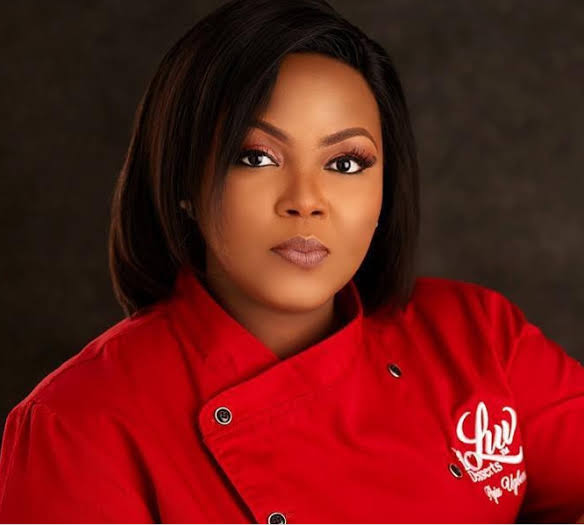
THE Medical and Dental Council of Nigeria (MDCN) Tuesday said it had not received any petition that could make it to investigate the death of popular Lagos pastry chef Peju Ugboma.
Ugboma’s family had last week attributed her death to “gross negligence” by Premier Specialist Medical Centre, a facility at Victoria Island Lagos, where she had an unsuccessful fibroid surgery on April 22, after the family claimed to have spent N3million.
Her death resulted in online protest across Nigeria, with many people calling on relevant authorities, including Lagos State Government, to probe the hospital.
MDCN Registrar Tajudeen Sanusi told The ICIR that the Council could only investigate the incident after it had received a formal complaint from the public.
Among others, MDCN sets standards for medical practice in Nigeria, including investigating and sanctioning erring practitioners.
The Council had in November 2020 suspended Adepoju Anuoluwapo, a Lagos-based doctor, from medical practice after she performed cosmetic surgery on a client who later died as the procedure failed.
The Council had also in April this year punished two medical doctors, Dr. Sullyman Kokori, of Garkuwa Specialist hospital, Kaduna, and Dr. Adolphus Oriaifo of Ajayi Oriaifo memorial hospital, Benin, Edo State, for professional misconduct.
Kokori was reportedly suspended for 12 months, while Oriaifo was handed six months suspension after they were found guilty of professional negligence in the cause of their professional engagements.
Ugboma’s family alleged that the unprofessional conducts of doctors at Premier Hospital during the surgery they carried out on the late chef led to complications resulting in her death.
In a statement signed by Nwabeze Ugboma, younger brother to the deceased husband, the family said it paid two million naira to the hospital before making additional one million naira payment to Evercare Hospital, (another facility at Lekki Phase One, Lagos) where the chef was referred before she eventually died on April 25.
After studying the MDCN Act CAP M8 2004, our reporter contacted former president of Nigerian Medical Association, Omede Idris who confirmed that the Council only acts after it had officially been notified of such incident.
If there are alleged professional misconducts, the registrar had said the normal thing is for someone to complain to the MDCN and the Council’s disciplinary organs, the Medical and Dental Practitioners’ Investigative Panel and Medical and Dental Practitioners Disciplinary Tribunal would investigate the professional misconduct.
“If prima facie evidence is established, the matter is transferred to the tribunal. If not, the matter ends there. In the absence of any complaint, there is nothing MDCN can do. That is the basic truth. All these people shouting on social media; that is not the issue, the issue is for somebody to complain properly to Medical and Dental Council of Nigeria. That is when we can investigate. We don’t just pick up any information.”
Screenshot of Twitter page of Lagos State Health Facility Monitoring and Accreditation Agency, where it vowed to probe Ugboma’s death
Meanwhile, Lagos state government had vowed to launch investigation into the death after an online petition calling on the state government to probe the incident surfaced last weekend.
Similarly, the Federal Competition and Consumer Protection Commission (FCCPC) has begun a probe into the incident after news of Ugboma’s death went viral online.
Hospitals fail to response to enquiries by The ICIR
The ICIR called both hospitals on Friday morning for comment, but they did not respond, despite the assurance of the customer care desks that the management would call back.
Evercare Hospital later demanded a formal letter from this newspaper, promising to respond within hours. The letter was sent Tuesday morning and was followed with a reminder. Yet, the hospital didn’t honour the request.
Allegation by deceased family
A copy of the family’s statement obtained by The ICIR said Mrs Ugboma died after her husband had paid three million naira for her operation for fibroid.
She was transferred to Evercare Hospital, Lekki Phase 1, three days after suffering complications from the surgery; and she allegedly died moments after reaching the hospital on April 25.
The family said independent autopsy conducted on Ugboma at the Lagos State University Teaching Hospital showed the surgery left multiple cuts in her organs, leading to bleeding.
Late Peju Ugboma. Source: The Guardian Newspaper
They added that two litres of blood was discovered in the deceased abdomen and pelvic area.
Her death could have been prevented had the hospital heeded an advice by a doctor-friend to the Ugbomas, based in the UK, the family claimed.
The doctor, a gynaecologist, had suspected the haemorrhage and advised that the hospital return the deceased into theatre for re-examination.
But, the Ugbomas said the hospital ignored the counsel.
The family further accused Premier Hospital of denying independent pathologists of access to the deceased full medical report, adding that the hospital only released the report after it almost engaged in physical confrontation with the hospital’s staff.
Also, medical reports sent to the independent pathologists might have been tampered with.
“It is clear that Peju bled internally from Friday after the surgery till Sunday when she died, and it is shocking to note that Premier Hospital was negligent enough not to pick this up and save her life. Peju’s tragic and unfortunate death has left behind two heartbroken little girls, a grieving husband, an aged mother and loved ones,” the family said.
Late Ugboma walked into hospital unaided, says family
Narrating the events leading to Ugboma death, the family explained that she walked into the hospital unaided on Thursday April 22 on the advice of the hospital that she goes for the operation.
“She walked into the hospital by herself unaided, as it was by no means an emergency surgical procedure. She had concluded all the necessary tests required before the surgery, including ECG, PCV, and COVID -19 tests. Her vitals were okay and she had no pre-existing conditions prior to surgery.
Nigeria’s Minister of Health Osagie Ehanire
“All payments were made for the preliminary tests. The hospital demanded their account be funded to the tune of N1.5 million and the family deposited N1 million immediately. The surgery was carried out on the morning of Friday 23rd April 2021, by Drs. Akinsiku, Iwuh, Asemota, Renner, and some other medical personnel,” the family said.
Shortly after the operation, the deceased allegedly became uncomfortable, as her blood pressure dropped to the range of 50/30.
“Early on Saturday morning, she told her husband that the veins on her hands had collapsed and the hospital wanted to give her fluids on a vein close to her neck and collarbone. She also mentioned that the doctors said her kidneys were not functioning optimally, and a consultant nephrologist had been called in to come in that Saturday morning. This was a shock to them both, as all tests prior to surgery were fine. The consultant eventually came in as scheduled but dismissed both their concerns.”
The family further alleged that by Saturday evening, Ugboma been given three pints of blood, while none of the gynaecologists who performed the surgery attended to her throughout that day, despite all her pain and concerns expressed by her husband.
As her situation allegedly deteriorated, one of the doctors at the hospital advised that she be taken to the intensive care unit (ICU) of the hospital. Her husband was asked to pay another one million naira, which he allegedly paid immediately.
“As this was going on, Peju kept complaining of severe pains, and her eyes had turned yellowish. At about midnight that Saturday, she was sedated intravenously.
Babajide Sanwo-Olu Governor of Lagos State PHOTO: Vanguard
“By 6.30 am on Sunday, her husband was surprised to find out that his wife had been placed on a respirator. Dr Renner told him that her condition had deteriorated through the night. Her husband saw that she looked pale, and her eyes had been taped as if to keep them closed, but she was still breathing and the monitors were still reading.”
In attempt to save her life, late Ugboma was moved to Evercare Hospital, Lekki Phase 1 by Premier Hospital, but it took three hours to get her there, the family further claimed.
The hospital medical team received her and she was moved to the ICU, while her husband was asked to pay yet another one million naira. He promptly did, said the family.
But, all efforts to save her failed as she succumbed to deaths shortly after the payment was made.
Hospital will be charged to court – Family
Speaking with our reporter on Monday, Nwabeze Ugboma said the family would charge Premier Hospital to court.
He said charging the hospital to court would make other hospitals with a similar attitude have a rethink.
Ugboma said the hospitals are expected to offer the best services and value every life that needs care.
He expressed shock that Premier Hospital could behave the way it did despite being paid huge amount of money for his in-law’s surgery.
He however said his family was happy with the attention being given to the case by the Federal Government, Lagos State government, civil society organisations and the general public.
Premium Specialist Medical Centre
When contacted on Tuesday, Director of Hospital Services Federal Ministry of Health Adebimpe Adebiyi referred our reporter to the Lagos State Ministry of Health.
However, public relations officer, Lagos State Police Command, Muyiwa Adejobi said he was unaware of the incident. He promised to find out.
“I will find out, but I doubt it because it’s new to me,” Adejobi said in response to a text message sent to him by The ICIR.
About the deceased
Information about the deceased seen on multiple platforms said she graduated with a BSc in Microbiology from the University of Lagos.
Prior to setting up her “I Luv Desserts”, which she managed in Lagos until her death, she had worked as the Head of Business Strategy at First Independent Global Nigeria for three years.
The Pasta Chef, one of the platforms that provided the information, said in order to advance herself in the dessert industry, she got certification from Gastronimicum, Agde (2007), South of France, Le Notre-(2009), Paris France and The Taste Lab, United Kingdom.(2017).
Since the establishment of I Luv Desserts in 2007, the business won many awards and accolades, including the Wed Awards 2013, Desserts Company of the Year and the Patissier of the year, and Christmas in January Awards 2012. The business was also nominated for Desserts & Sweet Treats company of 2018 and 2019 by the Association of Professional Party Planners and Event Managers of Nigeria (APPOEMN). She was named as one of the 100 women who made impact in 2019 by Guardian Nigeria.
In 2017, she pioneered her range of indigenously produced frozen cookie dough -The ILD Frozen cookie dough range. It was the first in West Africa.
In her spare time, Ugboma, an ardent Manchester United fan, loved soccer game and movie. She also loved reading or exploring a new city. She dreamt of launching an online desserts training school for aspiring chefs, baking enthusiasts and home cooks someday.
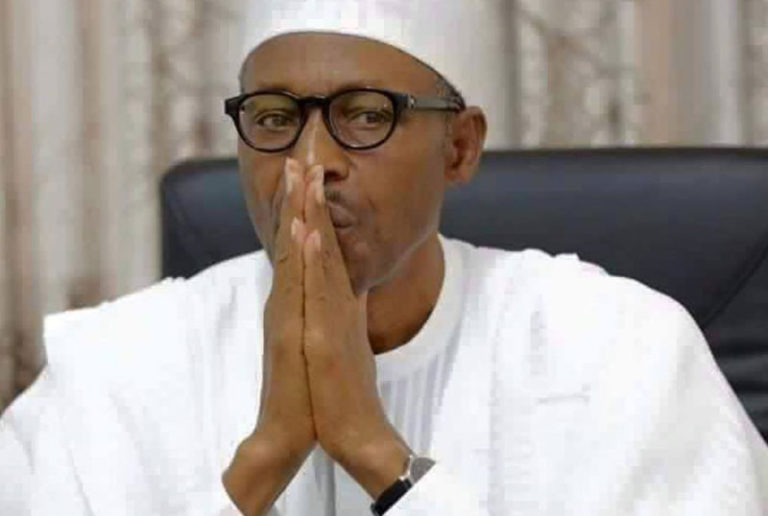
PRESIDENT Muhammadu Buhari has urged Nigerians to pray against banditry, kidnapping and religious division in the country.
Buhari said this in his Eid message to Nigerians posted via a series of tweets by his Special Assistant on Media and Publicity Garba Shehu, on Wednesday.
The president prayed for peace, safety, security, brotherhood and love amongst all Christians and Muslims in Nigeria.
“We should jointly pray against the tragic incidents of kidnapping and banditry and the desperate quest for political power expressed through blackmail against the existence of our country as a united entity,” Buhari said.
He noted that Nigerians must resist the temptation to retreat into their respective communities, charging political and religious leaders as well as traditional rulers to encourage citizens of Nigeria to turn towards one another in love and compassion.
The president said it was noteworthy and delightful to see Christians breaking fast and extending goodwill and gifts to Muslim faithful during the Ramadan.
“This model also shone through with Muslim groups joining Christian festivities. These are practices that promote brotherhood and forgiveness,” said Buhari.
Having placed restrictions on public gatherings and ban pubs across the country, the president urged Nigerians to continue to observe all COVID-19 prevention measures and celebrate responsibly during the holidays.
Insecurity has been a major challenge in Nigeria for over a decade.
The president has increased funding for the military and changed security heads in the country, but the challenges persist.
The capacity of the Buhari administration to decisively tackle insecurity in Nigeria has been questioned by critics, with some advising him to seek help.
Minister of Information Lai Mohammed said that the Federal Government possessed the capacity to end insecurity in Nigeria, but the menace has persisted in the country.
THE Nigerian government has agreed to address the menace of drug abuse, unemployment and criminal justice system reforms to tackle growing insecurity in the country.
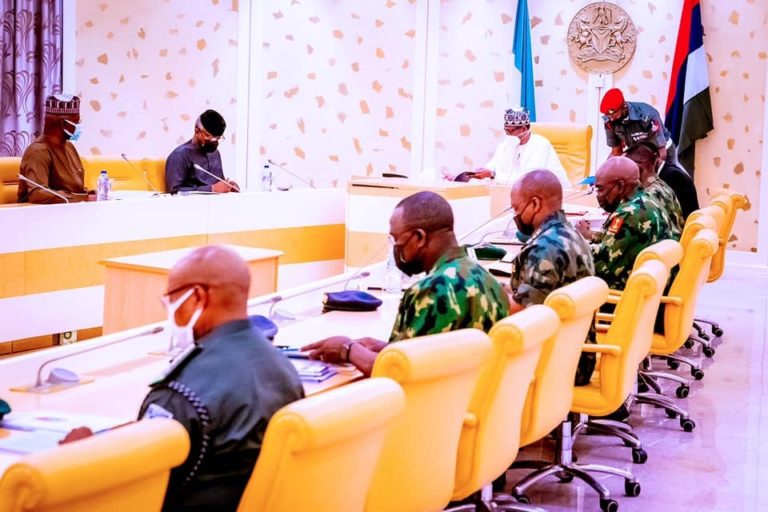
These were parts of the resolutions reached during a meeting between President Muhammadu Buhari and security chiefs at the State House on Tuesday.
National Security Adviser (NSA) Babagana Monguno, who briefed newsmen at the end of the meeting, said Buhari’s administration had approved steps that would help in mitigating the worsening insecurity in the country in the last one month.
“On my part, I briefed the council on the enablers of crime and the need to find quick responses with a view to mitigating the growing threats to society,” he said.
“These enablers are discussed in detail and Mr President has already given direction on how to deal with them, specifically issues of drug abuse as propellants for crime, how to make the criminal justice system much more effective, as well as looking at issues of unemployment, which, of course, the Federal Executive Council (FEC) had given approval, through previous memos, on how to get 100 million people out of poverty.
“Already, the Nigeria Communication Commission (NCC) has been given certain instructions on how to deal with this, but by and by, the council has agreed that the level of insecurity in the country, especially in the last one month, is something that has to be addressed with the immediacy that it requires.
“And at the operational level, of course, the chief of defence staff has been working with the service chiefs and the recommendations they’ve made to the council are already being handled.”
In March, Senate President Ahmed Lawan had blamed the country’s insecurity problems on the activities of some drug barons.
Lawan, who stated this when he hosted the Chairman of the National Drug Law Enforcement Agency (NDLEA) Buba Marwa, had noted that the barons provided funds and ammunition to insurgent groups such as Boko Haram, bandits, kidnappers, and other groups terrorising the country.
While calling for collaborative efforts among all security agencies to enhance border security, Lawan decried the rate of drug abuse among youths.
In April, the NDLEA arrested a Chadian, Adama Uomar Issa, who allegedly supplied illicit drugs to Boko Haram insurgents.
Unemployment
According to the National Bureau of Statistics (NBS), Nigeria’s unemployment rate as of the end of 2020 rose to 33 per cent, from 27.1 per cent recorded in second quarter (Q2) of 2020, indicating that about 23.2 million Nigerians were unemployed.
The report shows that the estimated number of persons in the economically active or working-age population (15 – 64 years of age) during the reference period of the survey, Q4, 2020, was 12.2 million.
A combination of both the unemployment and underemployment rate for the reference period gave a figure of 56.1 per cent. This means that 33.3 per cent of the labour force in Nigeria or 23.2 million persons either did nothing or worked for less than 20 hours a week, making them unemployed by in Nigeria’s definitiona.
Experts have continued to advocate a holistic reform in the nation’s justice system to facilitate a flexible and quick justice delivery.
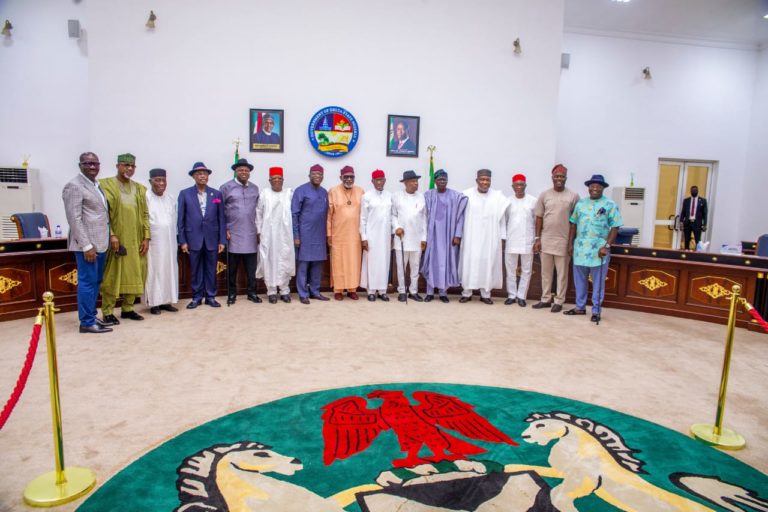
GOVERNORS from the southern region of Nigeria have banned open grazing and canvassed a review of the current security appointments in the country.
These were part of resolutions reached by the southern governors following the end of a meeting held on Tuesday in Asaba, Delta State.
Governor of Oyo State Seyi Makinde disclosed on his official Twitter handle, @seyiamakinde, that during the meeting with other governors, they resolved to advise the Nigerian government to convoke a national dialogue to address greater inclusiveness in existing governance arrangements.
“We also recommended a review of appointments into Federal Government agencies, including security agencies, to reflect federal character,” Makinde said.
He noted that it was also resolved that Nigeria needed to be restructured to reflect true federalism, leading to state policing and a change in the revenue allocation formula of the nation.
The governors also said they recommended the establishment of ports in other states to address congestion at Apapa ports in Lagos State.
On the security issues in the southern part of the country and attacks by armed herders, criminals and bandits, Makinde said the governors had decided to ban open grazing in all of southern Nigeria.
Amid calls for secession from groups in the southern region, the governors reinstated their commitment to the unity of Nigeria, stating that they supported peaceful coexistence between all citizens on the basis of justice, fairness, equity and oneness.