Home Blog Page 1822

A country that is bleeding

 By Eric TENIOLA


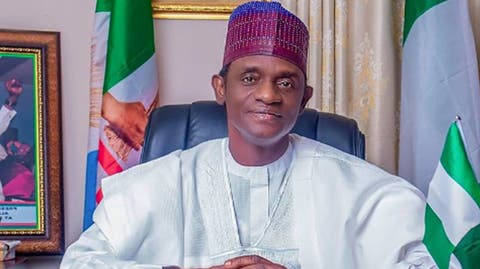
ON April 22 this year, the Minister of Defense,  Bashir Salihi Magashi (71) (rtd), a Major General, was on the spot. He told State House correspondents that “Nigeria is bleeding.”

During the media chat, he informed us all that he had been a lawyer for the past thirty-four years. I guess the country knows him more as a general than a legal practitioner. To bleed is simply a blood loss, you must have been wounded before you can bleed. “Make no mistakes that our nation is bleeding now,” Major- General Magashi declared.

Wikipedia describes bleeding, also known as a haemorrhage, or simply blood loss, as blood escaping from the circulatory system from damaged blood vessels. Bleeding can occur internally, or externally either through a natural opening such as the mouth, nose, ear, urethra, vagina or anus, or through a wound in the skin. Hypovolemia is a massive decrease in blood volume, and death by excessive loss of blood is referred to as exsanguination. Typically, a healthy person can endure a loss of 10–15 per cent of the total blood volume without serious medical difficulties (by comparison, blood donation typically takes 8–10 per cent of the donor’s blood volume).

According to Wikipedia, the stopping or controlling of bleeding is called hemostasis and is an important part of both first aid and surgery. On February 18 this year, the same General Magashi told defenseless Nigerians to defend themselves and appealed to them not to be cowards. While wondering why people were ‘running from minor things,’ referring to attacks by bandits, he said that victims of banditry should resist such attacks and signal to the criminals that “even the villagers have the competency and capability to defend themselves.”

He added that the bandits would sometimes carry only a few rounds of ammunition. “Is it the responsibility of the military alone? It is the responsibility of everybody to keep alert and to find safety when necessary. But we shouldn’t be cowards,” the minister told reporters. “At times, the bandits will only come with three rounds of ammunition. When they fire shots, everybody runs. In our younger days, we stand to fight any aggression coming for us.”

Major General Magashi is not new to controversy. His declaration to “Nigeria is bleeding” captures what is going on in the country at the moment. When he was appointed the Minister of Defence in 2019, I wrote a piece on “ALL EYES ON MAGASHI.” I do not intend to delete what I wrote. Let us look at the schedule of the Minister of Defence. In the past the Ministry of Defence used to have four Ministers. There was Minister of Defence, there was also Minister of State for Navy, Minister of State for Army and Minister of State for Air Force. There was also a time when there was Minister of Defence and Minister of State for Defence. I am referring to post-1999 era. Now General Magashi has no Minister of State. The man who said, “Nigeria is bleeding,” is no doubt a super Minister under President Muhammadu Buhari, GCFR.

Let us examine his schedule and responsibilities as Minister of Defence combined. This include formulation and implementation of policies and programmes on defence, co-ordination of defence programmes that commit the entire military to matters of military operation, ensuring the combat readiness of the Armed Forces, advises the president and commander-in-chief on deployment of troops, strategic doctrines, procurement decisions, and defence policy, co-ordinates the execution of Armed Forces Development Project, and approves the clearance of foreign military aircrafts and warships.

He also signs defence agreements, liaises with Armed Forces of foreign countries, approves the appointment of Defence attaches and is a member, Armed Forces Council/Board, and Chairman, of Armed Forces Tenders Board. He is a member, boards of Armed Forces Training Institutions (NDA, National War College and Staff College); member, Joint Intelligence Board; member, Defence Council and Security Council and any other duties that may be assigned by the president, commander-in-chief.  Other responsibilities are: Welfare of Ex-Service men including Military Pensions Boards; co-ordination of the Armed Forces Resettlement Scheme, matters of war graves, military museums and national cenotaph, and matters of the Nigerian Legions; supervision of the parastatals of the ministry: Defence Industry Corporation and Tafawa Balewa Square Investment Limited.

I must, however, add that he became the military governor of Sokoto State between August 1990 and January 1992. Between September 1985 and August 27, 1993, General  Ibrahim Babangida appointed seventy-four military governors. General Magashi was one of them. He took over from Colonel Ahmed Muhammadu Daku and he was succeeded by Colonel Yahaya AbdulKarim. Military governors appointed by General Babangida at that time were Colonel Danladi Zakari, Colonel John Ewerekumoh Yeri, Wing Commander Mohammed Ndatsu Umaru, Major Abubakar Dangiwa Umar, and Colonel Anthony Ukpo.  Others were Colonel Olayinka Sule, Group Captain Abubakar Salihu, Colonel Raji Alagbe Rasaki, Commander Eben Ibim Princewill, Lt-Colonel Oladayo Popoola, Police Commissioner Fideli Oyakhilome, Colonel Sasaenia Adedeji Oresanya, Colonel Ekundayo Opaleye, Colonel Lawrence Onoja, Group Captain Emeka Omeruah, Lt-Colonel Adetunjii Idowu Olurin, Navy Captain Sunday Abiodun Olukoya, Commander Anthony E. Oguguo, Colonel Jonathan Tunde Ogbeha, Wing Commander I.O. Nkanga, and Colonel Abdullahi Sarki Mukhtar.

There were also: Group Captain Gbolahan Mudashiru, Wing Commander Isa Mohammed, Commander I. E. Mohammed, Colonel Garba Mohammed, Lt-Colonel Garba Ali Mohammed, Lt-Colonel Ahmed Mohammed, Lt-Colonel Abdullahi Mohammed, Colonel Abdul One Mohammed, Lt-Colonel Mohammed Buba Marwa, Lt-Colonel David Bonaventure Mark, Lt-Colonel Fidelis Makka, Colonel Mohammed Maina, Colonel Bashir Salihi Magashi, Navy Captain Allison Madueke, Lt-Colonel Yohanna Ateyan Madaki, Colonel Joshua Mamman Madaki, Colonel John Yahya Madaki, Group Captain M.A. Lawal, Colonel Alwali Jauji Kazir, Lt-Colonel Aliyu Kama, Navy Captain Oladeinde O. Joseph, Group Captain Jonah David Jang, Lt-Colonel John Mark Inienger, Lt-Commander Amadi Ikwecheghi, Lt-Colonel Lawan Gwadabe, Navy Commander Olabode George and Lt-Colonel Chris Abutu Garuba.

Other appointees were: Colonel Idris Garba, Lt-Colonel Herbert O. Eze, Commissioner of Police Sani Ahmed Daura, Colonel Ahmed Mohammed Daku, Colonel Ishaya Bakut, Colonel Patrick Aziza, Colonel Abubakar Tanko Ayuba, Lt-Colonel Ernest Kizito Attah, Navy Captain Ekpo Archibong, Colonel Dan Archibong, Major Abdulmumuni Aminu, Lt-Colonel Mohammed Christopher Alli, Lt-Colonel Abu Ali, Group Captain Ibrahim Alkali, Colonel Robert Akonobi, Navy Captain Mike Okhai Akhigbe, Group Captain Frank Ajobena, Colonel Leo Lapade Ajiborisha, Adeyinka Afolahan, Navy Captain Adeyemi Afolabi, Colonel Abdulkarim Adisa, Group Captain Ernest Olawunmi Adeleye, Group Captain Luke Chijiuba Achulor, Navy Captain Joseph Abulu, Lt-Colonel Ahmed Aboki Abdullahi and Colonel Godwin Osagie Abbe.

In 1997, General Bashir Magashi was appointed a member of the Provisional Ruling Council headed by General Sani Abacha.  It was the council that was to decide on the fate of General Oladipo Diya, Major General Tajudeeen Olanrewaju alias Jasper, Major General Abdulkareem Adisa, Major Seun Fadipe, Colonel Olu Akiode and others. The 22 members of the Provisional Ruling Council included General Sani Abacha, Lt. General Jeremiah Useni, Alhaji Ibrahim Coomasie, Inspector General of Police, Major General John Inienger, Major General Abduallahi Sarki Mukthar, Major General Mufu Balogun, Rear Admiral Taiwo Odedina, Major General Victor Malu, Rear Admiral Rufus Eyitayo, Commodore Victor Ombu, Lt. Gen. B. Haladu, Air Commodore Kamis Uwenwailiri, Major General Felix Mujaperuo, Major General Ishaya Bamaiyi, Major General Peter Shaa, Rear Admiral Mike Akhigbe, Commodore Anthony Oguguo, Major General Bashir Magashi and the Chief of Defence Staff, Major General Abdusalami Abubakar. The Provisional Ruling Council was scheduled to meet on June 8, 1998, but it could not because of General Sani Abacha’s death on that day. If you read the book “THE VINDICATION OF A GENERAL” by General Ishaya Bamaiyi, you will be better informed on who Major General Magashi is.

After General Sani Abacha’s death in 1998, he was appointed as a member of the Provisional Ruling Council headed by General Abdulsalam Abubakar. It was this council that handed power to President Olusegun Obasanjo on May 29, 1999. Other members of the Provisional Ruling Council at that time were Musuliu Smith (Assistant Inspector General of Police, Zonal Headquarters, Kano, Group Captain Ikechukwu Nnamani, Commodore Emmanuel Acholonu, Rear-Admiral Victor Ombu, Major-General Idris Garba, Major General Yunana Nom, Air Vice-Marshall Mohammed Ndatsu Umaru, Air Vice-Marshal Emmanuel Edem, Air Vice-Marshal Isaac Mohammed Alfa, Rear-Admiral Peter Ebhaleme, Rear-Admiral Taiwo Odedina, Rear-Admiral Ibrahim Ogohi, Major-General Samuel Victor Leo Malu, Major-General Oladayo Popoola, Major-General Ekpo Archibong, Major-General Peter Gyang Sha, Major-General Abdullahi Sarki Muktar, Air Vice-Marshal Idi Musa, Major-General Suleiman Said, Major-General Bashir Salihi Magashi, Major-General John Mark Inienger, Major-General Godwin Abbe, Lt-General Rufus Kupolati, Ibrahim Coomasie, Air Marshal Nsikak Eduok, Vice-Admiral Jubril Ayinla, Lt-General Ishaya Rizi Bamaiyi, Air Marshal Al-Amin Daggash, Vice-Admiral Okhai Mike Akhigbe and General Abdusalam Abubakar.

On his assumption of power on May 29, 1999, President Olusegun Obasanjo later retired 93 military officers who had earlier served in various political positions during the military era. General Magashi was one of them. The others were: Major-Generals Leo Ajiborisha, Samud Omlago Ango, Patrick. Aziza, ldris Garba, Joshua Madaki, Bashir Salihi Magashi, Abdul-One Mohammed, Garba Ali Mohammed, Abdullahi Sarki

Mukhtar, Brigadier Generals Yusuf Abubakar, Sule Ahman, Ibrahim Aliyu, Bassey Asuquo, Ernest Attah, Salihu Tunde Bello, Samai!a Bature Chamah, Cletus Komena Emein, Lawal Ja’afaru Isah, Aliyu Kama, Fidelis Makka, Mohammed Buba Marwa, Yakubu Mu’azu, Dominic Oneya, Olagunsoye Oyinlola, John Yeri, Colonels Bzigu Afakirya, Usman Ahmed, Daniel Akintonde, Hameed Ali, Anthony Amebo, Theophilus Bamigboye, John Dungs, Moses Fasanya, Dauda Musa Komo, and Aminu Konragora.

Others were: Mohammed Mana, Musa Mohammed, Anthony Obi, Peter Ogar, Aina Joseph Owoniyi, Habibu Idris Shuaibu, Musa Shehu, Ahmed Usman,  Jibril Bala Yakubu, Tanko Zubairu, Lt-Colonels Joseph Akaagerger, Mohammed Bawa, Ahmadu Garba Hussaini, Abubakar Maimalari, Bawa Mande, Rear-Admiral Afolabi Afolahan, Oladehinde Joseph, Sunday Olukoya, Adetoye Sode, Commodore Emmanuel Acholonu, James Aneke, Temi  Ejoor, Amadi Ikwechegh, Anthony Oguguo, Kayode Olofinmoyin, Navy Captains Adedurotimi  Adeusi, Adewunmi Agbaje, Walter Feghabo, Joe Kalu-Igboamah, Omoniyi Olubolade, Anthony  Onyearugbulem, Christopher Osondu, Rasheed Raji, Anthony Udofia, Atanda Yusuf, Air Vice Marshals Gregory

Agboneni and Frank Ajobena, Air Commodore Ibrahim Dada, Peter Gana, Baba Iyam, Ibrahim Kefas, Ndong Essiet  Nkanga, Abubakar Salihu,  Group Captains John Ebiye, Sam Ewang, Rufai Garba, Lawal Haruna, John Ben-Kalio, Joe Orji, Wing Commander Adamu  Mshelia and EU Ukaegbu, Assistant Inspector General of

Police Dabo Aliyu, Simeon Oduoye, Amen Oyakhire and Commissioner of Police Mustapha Ismail.

After retirement, General Magashi vied to be Governor of Kano state under Democratic People’s Party (DPP) and later became the National Chairman of the Party. Along with President Muhammadu Buhari, he became a member of the All Nigeria Peoples Party (ANPP) and in 2007, he was the Kano’s state governorship candidate of DPP. Major General Bashir Magashi is representing Kano State in the Federal Executive Council and at present Kano State has two ministers of full cabinet rank, including Sabo Nanono, Minister of Agriculture and Rural Development, unlike states like Ondo and Kogi states, who for the two terms of President Muhammadu Buhari have been compensated with just Ministers of State.

Leadership is a lonely job. Very lonely indeed.  The success and failure of a leader is always judged by actions taken or actions not taken. But a leader can only take an action based on information available to him. Sometimes, friends and aides can mislead a leader, because most of the time, leaders are imprisoned by those close around them. General Magashi is not just a Minister; he is a man who has been in power and government for years. He knows the mechanics and rudiments of power structure. For him to say that “Nigeria is bleeding,” we have to take him seriously.

I am told General Magashi is extremely close to his boss and friend, President Muhammadu Buhari. He should tell President Buhari not to allow Nigeria to bleed to death, the consequences of which will be too grave to imagine.
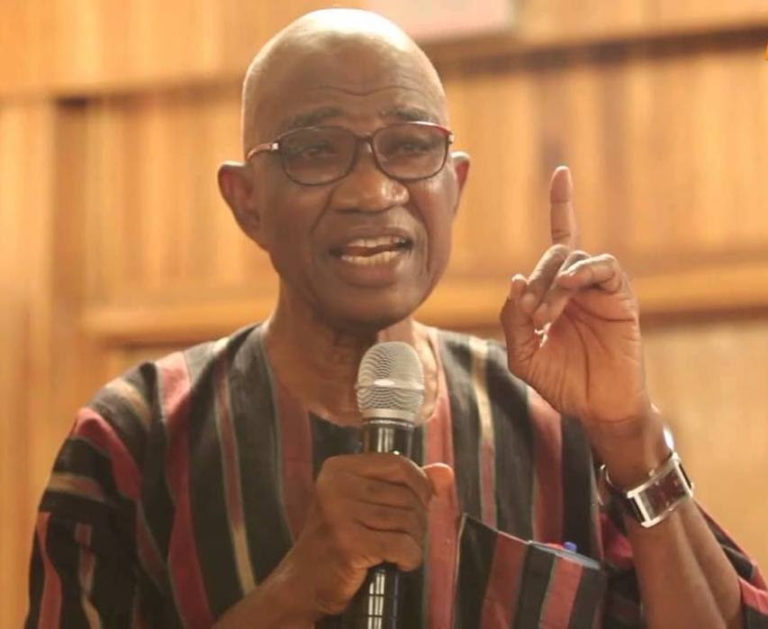
Omotoye Olorode: Theoretician, intellectual, revolutionary extraordinaire

“WE must practice revolutionary democracy in every aspect of our Party life. Every responsible member must have the courage of his responsibilities, exacting from others a proper respect for his work and properly respecting the work of others. Hide nothing from the masses of our people. Tell no lies. Expose lies whenever they are told. Mask no difficulties, mistakes, failures. Claim no easy victories…”
― Amilcar Cabral, Revolution in Guinea: African People’s Struggle

IN one of his speeches to comrades during the struggle for the liberation of Guinea Bissau from the clutches of Portuguese colonial exploitation, Amical Cabral admonished comrades and revolutionaries to take their responsibilities seriously, refrain from telling lies, respect all comrades regardless of their age, admit mistakes when one is made and desist from claiming easy victories. 

All of these characteristics epitomise the life and commitment of Prof. Olorode to the struggle for a better Nigeria—a struggle he has devoted his entire adult life to prosecuting. As we celebrate this scholar, revolutionary intellectual and an ‘iroko’ of the people’s struggle in Nigeria, I want to ponder a moment to reflect on my personal encounter with him. I decided to start with this famous quote from Cabral because Olorode and Cabral have so many things in common – both were trained in the sciences. Cabral trained as an agronomist while Olorode trained as a botanist. Both were theoreticians, intellectual powerhouses, mobilisers of people, and fervently commitment to the ideals of socialism and the emancipation of all Africans, brutally honest and down-to-earth.

Thus, how might one start a write about such an icon and an epitome of modesty in a country where conspicuous consumption and gluttony are the markers of success? In Nigeria today, those who engage in conspicuous consumption of our commonwealth at the expense of the toiling masses are daily celebrated. Pages of our daily newspapers and weekly magazines are often filled up with advertorials celebrating those who daily engage in the pillaging of our national wealth using the same stolen wealth to pay for the advertorials. In the age of neoliberal appurtenances where digital platforms have also become a site for the display of such profligacy, our sensibilities are daily bombarded with different forms of wealth celebration—again stolen wealth—such that the louder your social platforms are, the more pungent your celebration becomes especially in the ‘comments’ and ‘likes’ sections of such platforms. The world of our youths, engineered by the marauding capitalist elite, is now defined by the number of ‘likes’ and emojis you can acquire through your Facebook, Instagram and Snapchat platforms. Today’s youth now measure success by the number of emojis posted and not the degree of iconoclastic ideas that can transform our country. In the midst of the folly where rational beings who put national interest above all else are now considered irrational because of their repugnance at the pursuit of wealth by the ruling elite. It beholds on all of us to roll out the drums in celebration of our icon and champion of the working class and oppressed people of Nigeria, Africa and the world.

As we roll out the drums to celebrate Professor Omotoye Olorode on his 80th birthday, it is imperative to pay attention to the significant contribution that this iconic figure has made to the development of a Nigeria where justice, fairness and equitable distribution of our national wealth mattered. My first encounter with Professor Olorode was in 1989 when I attended a National Association of Nigerian Students (NANS) zonal meeting hosted by the University of Ibadan Students Union. I was a teenager and an undergraduate at the then Ondo State University, Ado-Ekiti (OSUA), and had just been inducted as a member of the Marxist Youth Movement (MYM). Thus, I was selected as part of the delegation to attend the zonal meeting as an observer. On our way to the meeting, we stopped at the Obafemi Awolowo University (OAU), Ile-Ife, to meet with comrades and officials of the union. It was that stop-over at OAU that began a life-long friendship and appreciation for the important contribution that Prof. Olorode continues to make towards making Nigeria a better place for all. As we finished our initial consultation with comrades at OAU that evening, Comrade Yomi Gidado, who was president of the OSUA Students Union, suggested we go see Prof. Toye. As a young and enthusiastic member who was attending a big meeting for the first time, I asked, “who is Prof. Toye?” Yomi responded that he was referring to Professor Olorode, a botanist and Marxist. We all marched to his office in the Department of Botany. On entering the office, Prof. Toye immediately stood up, extended his hands of welcome to all of us with his usual unassuming voice in a way that suggested he had known all of us for a very long time even when people like myself were meeting him for the first time. This amazed me and made say, “If this is how Marxists behave, then I am proud to be one.”  We were in the office for a brief period but his words of encouragement and support for what we were doing endeared him to many of us.

Our path would cross again a year later after his release from over three months of illegal detention by the brutal General Ibrahim Babangida military dictatorship. On April 22nd, 1990, there was a failed coup against the Babangida administration. The coup was led by Major Gideon Orkar, who, in his early morning broadcast, had announced the overthrow of the administration, levelling several allegations including corruption and lack of respect for human rights, against the regime. The coup failed and the Babangida administration used the opportunity to tighten his hold on power by clamping down on many voices of dissent across the country.  Among Babangida’s targets were intellectuals, revolutionaries, human rights and pro-democracy activists. As history has shown, the greatest fear that every authoritarian regime harbour is always the fear of revolutionary intellectuals. Revolutionaries are always ready to defeat might with ideas. To the Babangida administration, Professors Olorode and Idowu Awopetu of the Obafemi Awolowo University represented this threat, hence their decision to illegally detain them. Olorode and Awopetu found company in Professor Obaro Ikime of the University of Ibadan. They were accused of ‘teaching’ the students what they were not being paid to teach. Teaching what they are not being paid to teach is the usual refrain by every successive administration in Nigeria for describing lecturers considered to be radical. Few days before their arrest, Olorode and Awopetu had visited the offices of comrades John Odah and Chom Bagu, both staff members of the Nigeria Labor Congress (NLC) in Lagos. As I recall, the visit led to the suspension of comrades Odah and Bagu by the Paschal Bafyau-led conservative NLC for their audacity to host ‘renegades’ in the Labour House. Comrades Odah and Bagu were later recalled to their position after serving one week of suspension but they were lucky to have escaped the jackboot of the Babangida administration who was desirous of using the opportunity of the coup to ‘destroy’ all voices of opposition in the country. Professors Olorode and Awopetu were not that lucky. They were both detained and summarily dismissed from their job at OAU, Ile-Ife, by the military dictator.

On their release from illegal detention, the Students Union Government of the Ondo State University, Ado-Ekiti, with the support of the Marxist Youth Movement (MYM) organised a symposium in their honour.

Few days before the symposium, the university administration told us to cancel the event for ‘security reasons and order from above’ but we refused. Of course, we knew that the administration was acting on the orders of General Babangida who had declared Olorode and others persona non grata on university campuses and in the country. They refused to be cowed. The symposium held, Olorode and Awopetu spoke and the entire students at the university were appreciative of their knowledge and commitment to the struggle for the emancipation of the people. I remember vividly how thousands of students swarmed around Olorode and Awopetu immediately after the symposium. Fearing for what the state could do to harm them, we quickly ferried them to a ‘safe house’ in the Ado-Ekiti area.

While many of us were fearful for his life, Olorode remained resolute and never stopped talking about the next step in reclaiming the country back from the jackboot of the military. He also made it clear to us that we were not just fighting against the military dictators but that the struggle transcended just ousting Babangida from power. As Olorode told many of us then, “Comrades, our effort would amount to naught f we succeed in sending the military back to the barracks only for them to be replaced by their civilian counterparts”. These words remain indelible as I continue to ruminate about the state of our beloved country, Nigeria today. We succeeded in driving the military back to the barracks, but they have only been replaced by their civilian counterparts who have mastered the practice of pillaging our national wealth and engaging in conspicuous consumption while the majority of our population languish in abject avoidable poverty.

Professor Olorode’s idea about the struggle for a better Nigeria is anchored on three important and interconnected pillars. The first is the notion that a vibrant students’ movement and an educated student represent the pillar of any sustained struggle against oppression. A vibrant students’ movement and an educated students’ population must also see the staff and faculty at the university as an ally in the prosecution of a successful struggle against oppression. Thus, a university community should be seen as a microcosm of how and what a struggle for emancipation should be like in any nation-state. Connected to this is the idea that labour represents a center that welds all sites of struggle together. Labour as a center, Olorode believes, must be the source of inspiration that brings all segments of the Nigerian society together in order to form a solid foundation for a vanguard party that leads the people to freedom from the claws of capitalism. While labour might serve as the bedrock of the vanguard party, the education of the working people, students and peasants on the centrality of power to the attainment of economic power is what would make the vanguard successful. Without the proper education of the masses through a reinvigorated curriculum that shows the fangs of capitalism and its failings, the struggle of the people would stand the chance of being truncated by the bourgeoise. In order to avoid this pitfall, Olorode is of the school of thought that believes strongly in the notion that all the three pillars, the university (students, staff and faculty), labor (workers unions, peasants, farmers unions etc.) and the vanguard (the political party) must act in concert in order to be successful. For many years, Professor Olorode has devoted his life to the actualisation of these three pillars by working tirelessly with labour, students and several other organisations across the country.  Olorode’s ideas, in many ways, resonate with those of Amical Cabral. As Cabral noted during his address to the first Tricontinental Conference of the Peoples of Asia, Africa and Latin America held in Havana in January 1966, “When the African peoples say in their simple language that no matter how hot the water from your well, it will not cook your rice,” they express with singular simplicity a fundamental principle, not only of physics, but also of political science. We know that the development of a phenomenon in movement, whatever its external appearance, depends mainly on its internal characteristics. We also know that on the political level, our own reality — however fine and attractive the reality of others may be — can only be transformed by detailed knowledge of it, by our own efforts, by our own sacrifices” (The Weapon of Theory).

Olorode is not only a theoretician, revolutionary intellectual and a mobiliser of the people, he is a bridge builder who puts into practice Cabral’s notion that we can only transform society if we study it, have adequate knowledge of the reality of the people and are ready to make sacrifices to actualise what we stand for. He is a comrade who embodies the spirit and letter of Marxism. The maxim, do not just do the talk but work the talk, is crucial to him, hence you will not only see him theorising about the revolution, but he will also be in the trenches with you. Age and hierarchical organogram have no place in his lexicon of revolutionary struggle. Everyone, regardless of your race, ethnic origin, age, religious affiliation is welcome in his comity of friends and comrades as long as you are respectful, honest, committed and ready to put into practice what you have read in the books. It is rare in today’s Nigeria finding a comrade like Toye Olorode.  As we gather to celebrate his 80 years of revolutionary commitment to the social transformation of Nigeria, I join many of his admirers and comrades in wishing him good health and many more years of revolutionary service to Nigeria and the world.

Nigeria will overcome security challenges -Buhari


PRESIDENT Muhammadu Buhari has said that Nigeria will overcome security challenges currently facing the country.

National Security Adviser Babangana Monguno made this known in a statement following a National Security Council meeting held on Friday in Abuja over the rising insecurity in the country.

Munguno said the president demanded  further briefings from security chiefs after the meeting.

“At today’s meeting, the President made it abundantly clear that while the insurgents, bandits and criminals are still at it, he has no doubt that the Nigerian Security agencies and all of us as a nation will certainly overcome all the current security problems and defeat the forces of evil marauding about in different parts of the country,” the statement read in part.

According to Monguno, Buhari and the Nigerian government were set and determined to decisively end the assault on the nation and would do anything to defeat insecurity.

He added that the president was prepared to take profound measures in the wider interest of the people and the Nigerian nation.

Subsequently, the Security Council meeting was adjourned to Tuesday.

“There shall be no relenting until peace and security is significantly restored in our communities,” Monguno added.

The ICIR had reported that last week, there were 174 kidnap victims and 154 civilian deaths from 71 violent attacks across the country.

Governor of Benue State Samuel Ortom had  accused Buhari of aiding the Fulani ethnic group to take over Nigeria.

US prioritises visa appointments for Nigerian students

THE United States Mission in Nigeria  announced on Friday that it would prioritise student visa applicants and  ensure that Nigerian students got their appointments well ahead of the programme.

The U.S. Mission Country Consular Coordinator Susan Tuller said in a statement sent to The ICIR that the Embassy in Abuja and Consulate General in Lagos would make every effort to assist applicants in a timely fashion while keeping everyone safe.

According to Tuller, processing students’ visas remained of utmost importance to the US Mission in Nigeria, and appointments would be offered to as many students as possible.

“We will increase the number of student visa appointments in May and June to ensure that we can offer appointments to as many students as possible. If your U.S. studies are scheduled to begin this Fall, we encourage you to schedule your appointment as quickly as possible,” she said.

Tuller explained that the student visa appointments must be booked through the U. S. Travel Docs website at www.ustraveldocs.com/ng/. She advised applicants against the use of third- party agents, as they were more interested in profit making, and might not provide accurate information, which could negatively affect an applicant’s chances of qualifying for the visa.


READ ALSO:


She encouraged applicants to check out EducationUSA Advicing Centers at the American spaces in Abuja, Lagos, Ibadan and Calabar at educationUSA.state.gov to prepare for the US educational opportunity, adding that both Nigeria and the U.S. would benefit when Nigerian students studied at educational institutions in the U. S.

According to records, Nigeria remains one of the largest markets for schools in the U. S. with over 13,000 Nigerians studying in the country in the 2019/2020 academic session.

Mbaka demanded contracts but Buhari refused to give him, Presidency claims

THE Presidency has said that Spiritual Director of Adoration Ministry Ejike Mbaka is angry with Muhammadu Buhari because the president refused to give him contracts.

Senior Special Assistant to the President on Media and Publicity Garba Shehu made  this claim in a statement issued on Friday.

He said during the clergyman’s visit to the president at the State House, he purportedly came with three individuals, demanding contracts from the president in exchange for his support for him during the 2015 election. However, the president declined, asking him to follow the normal procedures, Shehu said.

“An outsider distilling the avalanche of verbiage, will be surprised that after supporting the President two times to win the Presidency, Father Mbaka has made a complete U-Turn, preposterously asking President Buhari to resign or be impeached,” he said.

“Here is the point of departure: Father Mbaka asked for a meeting and to the shock of Presidential Aides, he came accompanied by three contractors. The President graciously allowed them in, and to everyone’s surprise, Father Mbaka asked for contracts as compensation for his support.

“Anyone familiar with President Buhari knows that he doesn’t break the laid down rules in dealing with contracts or any other government business for that matter. He requested the appropriate authorities to deal with the matter in accordance with laid down rules.”

He noted that it was the discretion of the Presidency that pictures showing evidence of Mbaka’s request should not be made public so that he would not be embarrassed before his teeming followers.

“Inside the Villa, discretion prevailed, that if those pictures and requests were made public, the followers will turn against the religious leader. None of it was released. Now, this is what is eating Father Mbaka.”

This came after the All Progressive Congress (APC) released a statement cautioning Mbaka over his recent call on the National Assembly to impeach President Buhari if he failed to resign due to the rising insecurity in the country.

The party also threatened to expose the clergyman before the Vatican and the Pope if he did not desist from making a statement that could cause instability in the country.

In the run-up to the 2015 presidential election, Mbaka, an Enugu-based Catholic priest, had thrown his weight behind Buhari, urging his teeming followers to cast their votes for him as the solution to the pervading corruption and insecurity in the country.

In 2018, he made a controversial claim that plans were being hatched to murder President Buhari over his uncompromising stand on corruption. He then urged his followers to desist from speaking evil against the president.

The same year, he also declared, in his new year message, that Buhari would be totally disgraced if he took a shot at the presidency after his first tenure. Buhari did not only participate, but also won.


Privatisation responsible for electricity tariff increase- Ajaero

THE General Secretary of the National Union of Electrical Employees Joe Ajaero, has said that the privatisation of electrical distribution companies was responsible for the constant hike in electricity tariff in Nigeria.

Speaking in a video interview held on Friday, Ajaero bemoaned the insensitivity of the Nigerian Electricity Regulatory Commission (NERC) towards the plight of Nigerians, saying that there had been over five occasions of tariff increase with only a constant output of about 4000Watts.

Listing privatisation as the key factor informing tariff increase in electricity, he stated that there has been a decline in the electricity situation of Nigeria since the take-over.

Ajaero described tariff increase as the only business going on in the NERC, adding that the increase in tariff has not been matched by an increase in service.

Analysing the effect of an increase in electricity tariff, Ajaero said increment could cause inflation leading to yet another increase in the rates of electricity tariff.

“Each time they increase tariff, they create inflation. The same people that instigate inflation benefit from it. If there is tariff increase today, inflation will go high. So it continues to go in a cycle,” he said.

Increase in electricity tariff rates would continue if the system doesn’t change, he said, describing certain activities of the NERC such as the Service Reflective Tariff, as issues begging for reconciliation.

On the increase in the prices of inputs required for the production of electricity in Nigeria, he said most of the inputs needed were not imported, and thus shouldn’t be quoted as a reason for the increase.

He noted that a reduction in the price of gas would likely lead to a reduction in the tariff rates, and that other options for the production of electricity such as coal and solar, should be explored, as 40per cent of the power generated all over the world was generated through coal.

Recall that the Nigerian power sector was partly privatised to establish competition, and improve the supply of power across the country. However, the generation capacity of the sector and its revenue has dropped drastically.

Five cases of tariff increase have been recorded, as earlier reported by The ICIR in January. There was a purported 50 per cent increase in electricity tariff, which NERC later denied, claiming that tariff rates had only been adjusted, and not increased.

Police ask organisers of ‘Yoruba nation’ rally in Ogun to shelve plan

THE Ogun State Police Command has warned  organisers of  ‘Yoruba nation’ rally on Saturday in the state to shelve their plan.

State Police Spokesperson Abimbola Oyeyemi, in a statement on Thursday, said the rally was not approved by the command due to unpalatable outcomes of previous rallies by the same organisers in the state.

“It will be recalled that the group had on 21/3/2021 staged a public rally at Isara Remo for the actualization of Oduduwa republic, where they blocked highways and made free-flow of traffic very difficult for other road users. The same group staged another rally in Shagamu on 16/4/2021 where they made an attempt to attack Shagamu police station for no reason. Yet, on 25/4/2021, they held another rally at Ajuwon where in the course of stopping them from distributing inciting letters, policemen and other security agents were jeered at and pelted with missiles,” the statement read.

“The same group is again planning to hold another mass rally on 1st May, 2021 at Abeokuta, making it the 4th rally in the State in quick succession.

“The general public should note that the Command had difficulties in preventing hoodlums from infiltrating and hijacking the earlier rallies and preventing what would have been a major breakdown of law and order and disturbance of public peace.”

He noted that the command would no longer stand by and watch public conducts of some citizens hold others to ransom and threaten the corporate existence of the country.

Oyeyemi alleged that the group was being sponsored by some persons outside the state and country to cause chaos and disrupt the state.

“We had also exhibited restraint and absolute calm even in the face of extreme provocations by the organisers of the rallies and their cohorts.

“However, it is important to note that the police will not perpetually stand by and watch public conducts of some citizens hold others to the ransom and threaten the corporate existence of the country. The Command is especially worried that if care is not taken, the pains and agonies that similar agitations and rallies are presently causing in some parts of the country may be repeated in our very peaceful Ogun State.

“It is also instructive to note that available intelligence shows that the organisers of these rallies are being sponsored by certain individuals outside the State and the country to destabilise Ogun State.

“The Command, therefore, wishes to appeal to the leaders of this group to shelve the idea of staging another public rally in any part of the State for now, as such is capable of undermining the relative peace being enjoyed in the entire State. Consequently, the rally slated for Abeokuta on 1st May, 2021, is viewed by the Command as one too many in the State, and therefore not approved.”

#MySARSSTORY: Caught in open fire

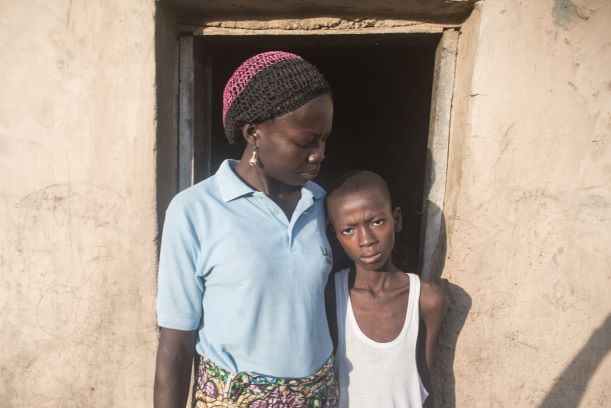
A lively, innocent teenager with big dreams was returning from church with his family when a stray bullet from a police officer changed his life.


AT 13, Isaac already knows what it means to be poor. His dream is to become a lawyer so he can protect his mother, and “take his family out of poverty.”

Isaac’s law ambition was threatened when he was almost killed by the Nigeria Police Force.

The officer responsible for shooting Isaac in the belly remains unknown.

It was one stray bullet from many targeted at young Nigerians who had poured onto the streets of Ogbomoso in Oyo State, demanding an end to police brutality.

Last October, protests against police brutality began across Nigeria. In Ogbomoso on October 10, 2020, hundreds of youth marched to the palace of the paramount ruler in the town, the Soun of Ogbomoso, Jimoh Oyewumi.

“They were welcomed at the palace,” one source reveals. “They were not causing any trouble. They did not have any weapon. They were singing and carrying placards.¨

“They wanted to visit the police station to talk to the DPO, and that was how the trouble started. The police did not want them to come close, so they started shooting at them.”

20-year-old Jimoh Isiaq was killed during the police assault on peaceful protesters. The next day, the protesters, angered by the death of the innocent young man, marched unto the streets once again. They were however greeted with an even greater show of force by the police. More people were shot, and at least three people were killed.

Isaac, in the company of his mother, Mary, and his two younger brothers, was walking back from church on October 11 when they found their path – the Oke Owode road in Ogbomoso – hijacked. Loud, sporadic gunshots from police officers sent everyone scampering for safety.

The family ran in different directions, with all but one of them coming out of the hailstorm of bullets unscathed.

A bullet struck Isaac’s back and knocked him to the ground. But Isaac got up and continued running until the numbing pain in his stomach overwhelmed him and his knees buckled. He slumped.

“I thought that was all,” his mother remembers. “I became so powerless when I saw him fall. I did not know what to do anymore. I was disoriented. People around quickly helped me carry him, put him on a (motor) bike which took him to the hospital. He was receiving blood when I got to the hospital later. Some people were donating blood for him already.”

Mary says she did not think her son would survive when she saw him slump. He seemed lifeless as people rushed him to Bowen University Teaching Hospital.

Yet when Mary got to the hospital and realised that her greatest fear had not happened, that her son was still alive, her fear did not at all dissipate. The mother knew she would be unable to help her son stay alive due to the challenge of settling expensive surgery and treatment bills. She is extremely poor, lives below one dollar a day, and barely has enough to feed herself and her five children.

“I thought I would lose him eventually,” the mother says in Yoruba. ¨I knew it would cost a lot of money to keep him alive, and I knew I would not be able to afford it. I only had the N500 I had planned to use to cook on me.”

‘It was a miracle’

Mary says her child was a healthy, active young boy before the incident. He loved football, and was fond of kicking plastic bottles around the neighbourhood like many children his age. He was obedient and loved attending church.

“Anytime I told him it was time for church, he would follow me without complaint,” she says.

But Isaac is now a shadow of his old exuberant self. Since getting shot, a lot has changed for the 13-year-old.

He is always tired and never leaves their home except with his mother. He has stopped playing. He now moves slowly, cautious not to aggravate the gunshot wound, which is covered with cotton wool and plaster inches above his waistline. His lips are cracked, his eyes sunken. He looks terribly emaciated.

“I just sleep on the bed now,” he says with quivering lips.

After the shooting, Isaac was unconscious for two days, and on hospital admission for four weeks while doctors and nurses fought to keep him alive. He doesn’t remember being in the surgical theatre or the Intensive Care Unit.

At least four people were shot dead during the protests in Ogbomosho. The doctor who removed the bullet lodged in Isaac’s belly told his mother it was a miracle the teenager survived. There are a number of major organs in the stomach, and had the bullet hit one of them, Isaac could have died.

Apart from God, Mary says she owes the miracle of Isaac’s survival to Sunday Dare, Nigeria’s Minister of Youth and Sport, who paid his hospital bills.

“When the hospital gave me the bill for his operation,” she recounts, “I was scared. I did not have that kind of money, but Sunday Dare came, cleared the bill and gave us a note that exempted Isaac from any payment for further treatment at the hospital.”

Isaac begins to cry as he remembers the life-changing incident. He says he would like to go back to school, ride more bicycles and run around the community– all of the carefree, youthful things he used to do before he became one of the many victims of police brutality.

“I stay inside everytime now,” he says, sobbing. “It saddens my heart that I can’t play with my friends anymore.”

Isaac’s mother took him to the hospital when he recently complained about pains in his back and butt, but his doctor said there was nothing to be worried about.

Seyi Makinde, the Governor of Oyo State, has condoled with the families of victims, even as the police have denied continuously that its men shot at peaceful protests.

“The police did not fire a shot or kill any protester as widely circulated,” the police claim.

Mary has no doubt that it was the police who shot her son, but given the fact that they lack the money and the social status to hold the government to account, both mother and child have resolved to leave them to God.

“Only God can judge the police who shot me,” 13-year-old Isaac says, softly.


This story is part of a multimedia project by Tiger Eye Foundation and media partners across Nigeria, documenting police brutality in Nigeria, and advocating for police reform.

APC threatens to expose Mbaka over call for Buhari’s impeachment

THE ruling party, All Progressives Congress (APC) has cautioned the Spiritual Director of Adoration Ministry Ejike Mbaka over his recent call on the National Assembly to impeach President Muhammadu Buhari if he fails to resign due to the rise of insecurity in the country.

APC Deputy National Publicity Secretary Yekini Nabena also threatened to expose, the clergyman before the Vatican and the Pope if he does not desist from making a statement that could cause instability in the country.

Nabena said it was unfortunate for a man of God “who is supposed to deploy all known spiritual means of averting crisis but rather threatening a democratically elected government for his own personal benefits while pretending to be speaking for the people.”

While making reference to the book of Mark 4: 35-40 where Jesus Christ calmed the storm when a wild storm came up and the waves crashed over the boat, Nabena said Jesus did not blame anyone but prayed and calmed the storm.

“One would wonder who Father Mbaka is emulating because the Lord Jesus Christ did not threaten to bring down the government during his own time, in fact, Jesus Christ obeyed and honoured constituted authority. That’s why he paid his tax.”

He urged Father Mbaka to focus on his spiritual calling and stop acting like a politician, saying  “it is better he leaves political message for politicians.”

He described Mbaka’s advice to President Buhari as ‘ungodly’ and warned to report him to the Vatican in Rome if he continues. “Father Mbaka should not, however, take his luck too far because there is a lot to tell the Vatican and the Pope about his person and his sources of inspiration,” Nabena said.

He advised Mbaka to emulate the likes of Pastor Enoch Adejare Adeboye of the Redeemed Christian Church of God RCCG and Pastor WF Kumuyi of the Deeper Life Bible Ministry and “other true men of God who will rather fast and pray to avert a crisis in the country instead of threatening the government of the day”.

Two Nigerians arrested for romance scam in South Korea

TWO Nigerian men have been arrested in Suwon, South Korea, for allegedly swindling South Korean victims, mostly women, of thousands of dollars in romance scams, local police have disclosed.

According to the Gyeonggi Nambu Police Agency, the suspects defrauded four South Koreans, three women and one man of about 120 million won ($107,900) in total after the two befriended the victims online under fake identities.

One of the suspects falsely introduced himself as a U.S. military surgeon based in Yemen to a South Korean woman he met on a social network service in January.

After a month of friendly online exchanges, the Nigerian man allegedly tricked her into sending him a total of 51 million won for his fake project to ship gold bars to South Korea.

The other Nigerian falsely posed as an employee at the U.S. National Aeronautics and Space Administration and a female U.S. soldier to trick one woman and a man, police said.

The police said they were yet to confirm whether the suspects were working together as both men had denied the charges.

The Gyeonggi Nambu Police Agency is currently looking into 57 romance scam cases reported since January and will expand the probe to see if the cases involve any larger fraud organisations.